IAM objectives: To collect information about Israel which relates to, inter alia, activities, publications and presentations of Israeli academics. To monitor their academic activities and publications. Activities for academic freedom and scientific resonance of institutions of higher learning and to prevent abuse of the academic platform for foreign interests. Activities for academic ethics.
Pro-Palestinian scholars have opened a new legal front against Israel. This time around, they demand compensation to Palestinians in the West Bank and Gaza, to give them a right to justice by Israel “just as Israeli citizens do… Accountability for civilian harm should not be avoided by classing law enforcement as combat.”
The project is a collaboration between Dr. Haim Abraham (UCL Faculty of Laws), Prof. Gilat Bachar (Temple University Beasley School of Law), and Ceasefire Centre for Civilian Rights, assisted by Mr. Matan Flum (UCL, Bartlett Development Planning Unit). The results were published on July 20, 2023; they include a database that was made possible through the support of the University of Haifa Minerva Center for the Rule of Law Under Extreme Conditions; UCL Laws; UCL Public Policy; UCL’s Private Law Group; and UKRI Research England.
Titled “Mapping civilian harm claims against Israel and the Palestinian Authority before Israeli courts,” it includes an interactive map that presents some 470 Israeli court cases in which civilians sought compensation under tort law for loss of life, bodily injury, and property damage during armed activities. Most claimants are Palestinian civilians injured by Israeli security forces in the Gaza Strip and the West Bank. The database also includes claims of other nationals and cases of Israeli civilians who sought compensation against Hamas and the Palestinian Authority for the losses incurred during hostilities.
Reliefweb, a pro-Palestinian information organization provided by the UN OCHA, promotes the project. According to this research, the Israeli justice system is “shielding the Israeli Security Forces from accountability for civilian harm caused in the Occupied Palestinian Territories.” The report was conducted by a group named Ceasefire Centre for Civilian Rights, based in the UK.
This project is orchestrated by the OCHA office dealing with the “Occupied Palestinian Territory.” It claims the “protracted political crisis characterized by more than 55 years of Israeli military occupation, 15 years of the Gaza blockade, internal Palestinian divisions, and recurrent escalations of hostilities between Israeli security forces and Palestinian armed groups. The escalating hostilities, blockades and lack of adherence to international humanitarian and human rights law have left many people without access to life-saving medical services, clean water, education and livelihoods, and exposed them to a constant risk of violence and abuse. The humanitarian community is addressing the needs of people in the blockaded Gaza Strip and in the West Bank, where Palestinian households and communities in Area C, East Jerusalem and the H2 area of Hebron city face a coercive environment. At least 2.1 million Palestinians across oPt require humanitarian assistance, representing 58 per cent of Gaza Strip residents and one quarter of West Bank residents.”
Worth noting that OCHA provides food to the Palestinian population of 5.5 million people; they receive assistance from the World Food Program of 309.4K per month. The top five donors are the Government of Germany, $52.6 million; The Government of Japan, $26.7 million; the European Commission, $11.5 million; the Government of the United States of America, $8.3 million; and the Government of Canada, $8.2 million.
The map of civilian harm cases spans over six decades. It illustrates that the Israeli courts awarded ILS 24.4 million in compensation for death, injury, and property damages in seventy-eight successful claims. Yet, over the last ten years, the report claims that access to justice for Palestinians has been severely constrained. By contrast, it claims that Israeli courts have awarded ILS 438.7 million in compensation and costs in 24 successful claims against the Palestinian Authority in recent years. Freedom of information requests revealed that Israel paid approximately USD 94 million in compensation for losses inflicted by its security forces on the Palestinian population in the West Bank and Gaza between 1988 and 2014.
According to this project, the “right to a remedy for the Palestinian population in the West Bank and Gaza has been progressively limited, including through a series of procedural obstacles, high court fees and securities, the denial of entry permits to access court, and the designation of Gaza as enemy territory. The greatest impact, however, has been the growing use of an exception in the law of tort covering ‘combatant activities’, rendering the state of Israel immune from liability in such cases. A series of amendments passed by the Knesset between 2000 and 2012 widened the definition of the combatant activities exception to cover not just combat activities in the normal sense but policing activities and actions of the civil administration in support of security goals.”
Dr. Haim Abraham of the University College London, who co-leads the research on the database, was quoted as saying, “The effects of the expansion of the combatant activities exception are clear… The Israeli legislature repeatedly broadened the scope of Israel’s immunity from liability to the extent that it is nearly impossible for claims against it to succeed and courts have rejected about nine out of ten claims. Simultaneously, Israeli courts have been far more lenient towards claims against the Palestinian Authority.”
Professor Gilat Bachar of Temple University School of Law, who co-leads the research, was quoted as saying, “While Jewish Israeli citizens who are residents of the OPT have a right to claim compensation for losses they sustain from the operations of Israel’s security forces, non-Jewish residents effectively have no corresponding right… That raises serious questions about equality before the law.”
For instance, “The killing of Palestinian journalist Shireen Abu Akleh” in May 2022 prompted a “rare level of international media interest, but was not an isolated event. Already in 2023, 174 Palestinians and 14 Israelis have been killed according to UN OCHA.”
The report continues, The “UN Basic Principles and Guidelines on the Right to a Remedy and Reparation for Victims of Gross Violations of International Human Rights Law and Serious Violations of International Humanitarian Law confirm that victims have a right to equal and effective access to justice, and to adequate, effective and prompt reparation for harm suffered, including in the context of armed conflict or occupation.”
According to this report, “Databases that document the losses suffered by civilians in armed conflict are highly important to the facilitation of reparations and reconciliation. Telling individual stories gives voice to vulnerable populations, and aggregating these accounts in a single resource allows the scope and character of the loss that armed conflict inflicts on a community to become apparent. Having a clear account of the wrongs committed during conflict is key to holding those responsible accountable, and accountability and reparations are cardinal to reconciliation between those who suffered the wrongful loss and those who inflicted it.”
Interestingly, according to the report, “In the context of reparation for losses civilians sustain during armed conflict and occupation, Israel offers a unique perspective. The number of cases in which Israeli courts examine the question of state liability in tort law for losses the Israeli military is alleged to have inflicted exceeds the combined cases of Australia, Canada, the United Kingdom and the United States. The Israeli cases offer a unique insight into legal institutional approaches to urban warfare and counter-terrorism, as well as to attitudes towards prolonged conflict over time.”
As can be expected, it is one-sided. The report suggests reparations for reconciliation based on the UN Basic Principles and Guidelines on the Right to a Remedy and Reparation for Victims of Gross Violations of International Human Rights Law and Serious Violations of International Humanitarian Law. This approach has a major legal problem because it ignores the fact that Hamas, Palestinian Islamic Jihad (PIJ), and others follow the asymmetrical conflict doctrine. Accordingly, when facing a militarily superior adversary, the terror groups are commanded to embed within the civilian population. In other words, non-combatants become human shields to restrict the IDF’s ability to act. It is well known that Hamas and the PIJ have been embedded in civilian spaces and neighborhoods including mosques, hospitals, and schools.
The authors of the report would be well advised to consult the literature on the use of human shields in humanitarian law and revise their project.
The operation of the Israeli justice system is now effectively shielding Israeli Security Forces (ISF) from accountability for civilian harm caused in the Occupied Palestinian Territories (OPT), shows a new map of nearly 500 Israeli court cases published by Ceasefire Centre for Civilian Rights.
The map of civilian harm cases over six decades illustrates that while Israel’s courts awarded ILS 24.4 million in compensation and costs for death, injury and property damage in 78 successful claims,[1] over the last ten years access to justice for Palestinians has been severely constrained. By contrast, in recent years Israeli courts have awarded ILS 438.7 million in compensation and costs in 24 successful claims against the Palestinian Authority.
The right to a remedy for the Palestinian population in the West Bank and Gaza has been progressively limited, including through a series of procedural obstacles, high court fees and securities, the denial of entry permits to access court, and the designation of Gaza as enemy territory. The greatest impact, however, has been the growing use of an exception in the law of tort covering ‘combatant activities’, rendering the state of Israel immune from liability in such cases. A series of amendments passed by the Knesset between 2000 and 2012 widened the definition of the combatant activities exception to cover not just combat activities in the normal sense but policing activities and actions of the civil administration in support of security goals.
‘The effects of the expansion of the combatant activities exception are clear,’ said Dr Haim Abraham of University College London, co-lead researcher on the database. ‘The Israeli legislature repeatedly broadened the scope of Israel’s immunity from liability to the extent that it is nearly impossible for claims against it to succeed and courts have rejected about nine out of ten claims. Simultaneously, Israeli courts have been far more lenient towards claims against the Palestinian Authority.’
‘While Jewish Israeli citizens who are residents of the OPT have a right to claim compensation for losses they sustain from the operations of Israel’s security forces, non-Jewish residents effectively have no corresponding right,’ said Professor Gilat Bachar of Temple University School of Law, co-lead researcher. ‘That raises serious questions about equality before the law.’
The killing of Palestinian journalist Shireen Abu Akleh in May 2022 prompted a rare level of international media interest, but was not an isolated event. Already in 2023, 174 Palestinians and 14 Israelis have been killed according to UN OCHA.
The UN Basic Principles and Guidelines on the Right to a Remedy and Reparation for Victims of Gross Violations of International Human Rights Law and Serious Violations of International Humanitarian Law confirm that victims have a right to equal and effective access to justice, and to adequate, effective and prompt reparation for harm suffered, including in the context of armed conflict or occupation.
‘When Palestinians in the OPT are killed, maimed or see their houses destroyed they have a right to justice, just as Israeli citizens do,’ said Mark Lattimer, Executive Director of Ceasefire. ‘Accountability for civilian harm should not be avoided by classing law enforcement as combat.’
Notes for editors:
Mapping civilian harm claims against Israel and the Palestinian Authority before Israeli courts, published on 19 July 2023 in English, Hebrew and Arabic, presents over 470 Israeli court cases in which civilians sought compensation under tort law for loss of life, bodily injury and property damage inflicted during armed activities. The vast majority of cases involve Palestinian civilians who were injured by Israeli security forces in the Gaza Strip and the West Bank. However, the database includes claims of other nationals, as well as cases in which Israeli civilians sought compensation against Hamas and the Palestinian Authority for losses incurred during hostilities.
The project is a collaboration between Dr Haim Abraham (UCL Faculty of Laws), Prof Gilat Bachar (Temple University Beasley School of Law) and Ceasefire Centre for Civilian Rights. Map designed by Rectangle.
The database has been made possible through support from UCL Laws, UCL Public Policy, UCL’s Private Law Group, UKRI Research England, and the University of Haifa Minerva Center for the Rule of Law Under Extreme Conditions.
[1] These figures do not include claims settled before trial, or any compensation awarded by military courts. Freedom of information requests have revealed that between 1988 and 2014 Israel paid in total approximately USD 94 million in compensation for losses inflicted by its security forces on the Palestinian population in the West Bank and Gaza.
This interactive map presents over 450 Israeli court cases in which civilians sought compensation under tort law for loss of life, bodily injury, and property damage inflicted during armed activities. The vast majority of cases involve Palestinian civilians who were injured by Israeli security forces in the Gaza Strip and the West Bank. However, the database includes claims of other nationals, as well as cases in which Israeli civilians sought compensation against Hamas and the Palestinian Authority for losses incurred during hostilities.Databases that document the losses suffered by civilians in armed conflict are highly important to the facilitation of reparations and reconciliation. Telling individual stories gives voice to vulnerable populations, and aggregating these accounts in a single resource allows the scope and character of the loss that armed conflict inflicts on a community to become apparent. Having a clear account of the wrongs committed during conflict is key to holding those responsible accountable, and accountability and reparations are cardinal to reconciliation between those who suffered the wrongful loss and those who inflicted it.In the context of reparation for losses civilians sustain during armed conflict and occupation, Israel offers a unique perspective. The number of cases in which Israeli courts examine the question of state liability in tort law for losses the Israeli military is alleged to have inflicted exceeds the combined cases of Australia, Canada, the United Kingdom and the United States. The Israeli cases offer a unique insight into legal institutional approaches to urban warfare and counter-terrorism, as well as to attitudes towards prolonged conflict over time.This project is a collaboration between Dr Haim Abraham (UCL Faculty of Laws), Prof. Gilat Bachar (Temple University Beasley School of Law), and Ceasefire Centre for Civilian Rights. We were assisted by Mr. Matan Flum (UCL, Bartlett Development Planning Unit).We are grateful for the supported provided by our sponsors:
IAM reported in early June that the American Anthropological Association (AAA) was about to vote on a petition to boycott Israeli academic institutions. The electronic ballot took place between June 15 and 14 July 2023, when the association endorsed the boycott.
Interestingly, only thirty-seven percent of AAA’s members voted. Supporting the resolution were 2,016 members, that is, 71% of the votes, and opposing the resolution, 835 members, which is 29% of the votes.
AAA President Ramona Pérez said about the vote, “This was indeed a contentious issue, and our differences may have sparked fierce debate, but we have made a collective decision and it is now our duty to forge ahead, united in our commitment to advancing scholarly knowledge, finding solutions to human and social problems, and serving as a guardian of human rights.”
She said that the “AAA’s referendum policies and procedures have been followed closely and without exception, and the outcome will carry the full weight of authorization by AAA’s membership.” The boycott is “limited to AAA—as an association—refraining from formal collaborations with Israeli academic institutions. The resolution pertains only to Israeli academic institutions, and not to individual scholars and students affiliated with these institutions.”
The Executive Board has approved “barring Israeli academic institutions from: being listed in AAA’s published materials, including AAA’s AnthroGuide to Departments advertising in AAA publications, websites, and other communications channels, including the AAA Career Center using AAA conference facilities for job interviews participating in the AAA Graduate School Fair; participating in the AAA Departmental Services Program; participating in joint conferences or events with AAA and its sections, and where within AAA’s control, republishing and reprinting articles from AAA publications in journals and publications owned by Israeli institutions.”
However, the AAA academic institutional boycott does not prevent: “individuals affiliated with Israeli academic institutions from registering for and attending AAA conferences, even if their institutions have paid for their expenses; articles published in AAA journals from being reprinted or republished in journals not owned by Israeli institutions that are edited by individuals affiliated with Israeli academic institutions; individuals affiliated with Israeli academic institutions from serving as journal editors or Section / AAA elected officials, even if their institutions have paid for related expenses (their institution would be identified as being subject to an institutional boycott); individuals affiliated with Israeli academic institutions from publishing in AAA journals, even if their institutions have paid for their expenses, and Israeli university libraries from subscribing to AAA journals, including AnthroSource.”
Lastly, the endorsed resolution “authorizes the Executive Board to come up with an implementation plan, which includes specifying the process by which the Board will consider lifting the boycott. The AAA will lift the institutional boycott when it can be established by a consensus of a group of experts commissioned for this purpose that Israeli academic institutions have substantially ended their complicity in violating Palestinian rights as stipulated in international law. The Executive Board will monitor and evaluate the situation at least every five years, or more frequently as deemed appropriate, and determine whether the boycott should remain in place.”
Perez added, “By means of these actions, AAA will contribute to raising critical awareness of the dynamics of peace and conflict in the region, draw attention to the disproportionate suffering of the Palestinian people as a result of the Occupation and what can be done about it, and expand the space for dialogue on these sensitive and important human rights and academic freedom issues… We believe that these actions can contribute to the enrichment of the health and welfare of all citizens in the region, increase circulation of anthropological scholarship, ease restrictions on scholars’ travel, increase freedom of expression for Palestinian and Israeli anthropologists, and increase dialogue about how archaeology is used in political arguments.”
While the AAA insists it “remains steadfastly committed to the protection of academic freedom and the dissemination of anthropological knowledge,” it boycotts the only democracy in the Middle East and supports the tyrannies in the region.
According to the International Holocaust Remembrance Alliance (IHRA), singling out Israel while ignoring worse cases of abuse is antisemitic. At no time did the AAA condemn Hamas, the Palestinian Islamic Jihad (PIJ), or even the PA for their brutalities committed against their citizens. Arguably, the most egregious act is the so-called embedding where Hezbollah, Hamas, and PIJ, instruct the militias to position its fighters and equipment among civilians, including private homes and public spaces such as schools, mosques, and hospitals. The directive is part of an asymmetrical warfare strategy aimed at limiting the IDF’s ability to respond effectively to the terror groups’ missile and rocket attacks. As a state, Israel is bound by international humanitarian conventions for treating non-combatants, giving the non-state terror organizations an upper hand. This fact is well known but hardly mentioned by academic activists bent on damning Israel.
The group Anthropologists for the Boycott of Israeli Academic Institutions took credit for the success of the boycott vote.
The Jewish members of the AAA announced their intentions to sue the organization legally. IAM will report on the developments in due course.
The American Anthropological Association (AAA) membership has voted to endorse a resolution to boycott Israeli academic institutions. An all-member referendum took place by electronic ballot between June 15 and July 14. Thirty-seven percent of AAA’s eligible members voted, with 2,016 members (71% of the votes) supporting the resolution, and 835 members (29% of the votes) voting to oppose it.
“This was indeed a contentious issue, and our differences may have sparked fierce debate, but we have made a collective decision and it is now our duty to forge ahead, united in our commitment to advancing scholarly knowledge, finding solutions to human and social problems, and serving as a guardian of human rights,” said AAA President Ramona Pérez. “AAA’s referendum policies and procedures have been followed closely and without exception, and the outcome will carry the full weight of authorization by AAA’s membership.”
AAA’s academic institutional boycott is limited to AAA—as an association—refraining from formal collaborations with Israeli academic institutions. The resolution pertains only to Israeli academic institutions, and not to individual scholars and students affiliated with these institutions. The Association remains steadfastly committed to the protection of academic freedom and the dissemination of anthropological knowledge. With this in mind, the Executive Board has approved the following set of actions aligned with the Association’s core values and mission, barring Israeli academic institutions from:
being listed in AAA’s published materials, including AAA’s AnthroGuide to Departments
advertising in AAA publications, websites, and other communications channels, including the AAA Career Center
using AAA conference facilities for job interviews
participating in the AAA Graduate School Fair
participating in the AAA Departmental Services Program
participating in joint conferences or events with AAA and its sections, and
where within AAA’s control, republishing and reprinting articles from AAA publications in journals and publications owned by Israeli institutions.
The AAA academic institutional boycott does not prevent:
individuals affiliated with Israeli academic institutions from registering for and attending AAA conferences, even if their institutions have paid for their expenses
articles published in AAA journals from being reprinted or republished in journals not owned by Israeli institutions that are edited by individuals affiliated with Israeli academic institutions
individuals affiliated with Israeli academic institutions from serving as journal editors or Section / AAA elected officials, even if their institutions have paid for related expenses (their institution would be identified as being subject to an institutional boycott)
individuals affiliated with Israeli academic institutions from publishing in AAA journals, even if their institutions have paid for their expenses, and
Israeli university libraries from subscribing to AAA journals, including AnthroSource.
The resolution authorizes the Executive Board to come up with an implementation plan, which includes specifying the process by which the Board will consider lifting the boycott. The AAA will lift the institutional boycott when it can be established by a consensus of a group of experts commissioned for this purpose that Israeli academic institutions have substantially ended their complicity in violating Palestinian rights as stipulated in international law. The Executive Board will monitor and evaluate the situation at least every five years, or more frequently as deemed appropriate, and determine whether the boycott should remain in place.
“By means of these actions, AAA will contribute to raising critical awareness of the dynamics of peace and conflict in the region, draw attention to the disproportionate suffering of the Palestinian people as a result of the Occupation and what can be done about it, and expand the space for dialogue on these sensitive and important human rights and academic freedom issues,” Pérez added. “We believe that these actions can contribute to the enrichment of the health and welfare of all citizens in the region, increase circulation of anthropological scholarship, ease restrictions on scholars’ travel, increase freedom of expression for Palestinian and Israeli anthropologists, and increase dialogue about how archaeology is used in political arguments.”
BDS advocates hail Israeli boycott by American Anthropological Association
Brooke Anderson Washington, D.C. 25 July, 2023 This move makes AAA the largest US scholarly institution to engage in an academic boycott of Israel, with 71 per cent of the votes supporting the decision.
Palestinian and BDS advocates are hailing the recent resounding decision by the American Anthropological Association to pursue a boycott of Israeli academic institutions.
This move makes AAA the largest US scholarly institution to engage in an academic boycott of Israel, with 71 per cent of the votes supporting the decision. Thirty-seven per cent of AAA’s eligible members, or 2,016 members, took part in the vote, which was cast between mid-June to mid-July and was announced on the 24th.
“This was indeed a contentious issue, and our differences may have sparked fierce debate, but we have made a collective decision, and it is now our duty to forge ahead, united in our commitment to advancing scholarly knowledge, finding solutions to human and social problems, and serving as a guardian of human rights,” said AAA President Ramona Pérez in a public statement.
“AAA’s referendum policies and procedures have been followed closely and without exception, and the outcome will carry the full weight of authorization by AAA’s membership.”
The academic group previously narrowly voted against such a resolution in 2016. Last year, the Middle East Studies Association endorsed an academic boycott of Israel.
Not everyone is celebrating the news. Several pro-Israel advocates have denounced the move, with at least one person threatening a lawsuit last month if the resolution went through.
According to AAA’s public statement, this resolution affects their relationships with Israeli institutions, not individual scholars and those affiliated with them.
The resolution bars Israeli institutions from the following: being listed in AAA’s published materials, advertising in AAA publications and websites; using AAA conference facilities for job interviews; participating in the AAA Graduate School Fair; participating in the AAA Departmental Services Program; participating in joint conferences or events with AAA and its sections; and republishing and reprinting articles from AAA publications in Israeli publications.
On the other hand, the AAA boycott does not prevent individuals affiliated with Israeli academic institutions from attending AAA conferences; articles published in AAA journals from being reprinted or republished in journals not owned by Israeli institutions that affiliated individuals edit; affiliated individuals from serving as journal editors; affiliated individuals from publishing in AAA journals; and Israeli university libraries from subscribing to AAA journals, including AnthroSource.
The statement says that AAA will end its boycott of Israeli academic institutions once they have “substantially ended their complicity in violating Palestinian rights as stipulated in international law.” As such, AAA has said it will regularly monitor the situation.
“By means of these actions, AAA will contribute to raising critical awareness of the dynamics of peace and conflict in the region, draw attention to the disproportionate suffering of the Palestinian people as a result of the Occupation and what can be done about it, and expand the space for dialogue on these sensitive and important human rights and academic freedom issues,” Pérez added in the group’s public statement.
AAA’s announcement comes shortly after a group of Republican lawmakers accused US President Joe Biden’s administration of engaging in an Israeli boycott after it reversed a policy from the previous administration that allowed for US funding of Israeli academic research in the occupied territories.
Just as American Anthropological Association members have started voting on a resolution “to boycott Israeli academic institutions,” a law firm has threatened to sue.
The association said voting on the resolution began Thursday and will continue through July 14.
On Wednesday, Lori Lowenthal Marcus, legal director for the Deborah Project, which represents people “facing discrimination in educational settings because they are Jewish and/or pro-Israel,” wrote to the association’s executive director. Marcus said the firm has clients who are part of the association and are “deeply concerned about the association’s proposed resolution endorsing Boycott, Divestment, Sanctions (BDS) against Israel.”
“We will be closely watching the voting process and the [AAA] board’s response to this proposed resolution,” she wrote. “We will be watching to ensure that AAA members who oppose the proposed AAA BDS resolution are treated fairly and equitably during the voting process as well as after the vote is concluded, and that all applicable provisions of Virginia corporation law and any other applicable law, and of the AAA’s bylaws and other applicable provisions, are complied with. In addition, we will review how the AAA leadership implements the resolution should it pass.”
She wrote, “Should you fail to act consistently with AAA’s bylaws and/or with all relevant federal, state and local laws, we will not hesitate to bring a legal action against the AAA and/or the board.”
She continued to say the “resolution’s explicit call for discrimination against Israeli institutions” violates California and New York law and that it “violates at least” three provisions of the International Holocaust Remembrance Alliance’s antisemitism definition, which the commonwealth of Virginia adopted. One of these she said it violates is “drawing comparisons of contemporary Israeli policy to that of the Nazis.”
The resolution doesn’t mention Nazis. Marcus said Thursday she was referring to phrases in it such as “the Israeli government enshrined the principle of Jewish supremacy.”
Jessica Winegar, a member of the organizing collective Anthropologists for the Boycott of Israeli Academic Institutions, said, “This legal threat really is totally bogus. It’s not based on any sound legal reasoning, and it’s really a baseless attempt at fearmongering both the AAA and its membership.”
Winegar, a professor of anthropology and Middle East and North African studies at Northwestern University, called it a “misuse of baseless legal threats to silence a democratic process within an academic association.”
Ed Liebow, the AAA’s executive director, said, “We are in receipt of this letter; we have referred it to our attorney and don’t have any comment to offer about it except to say that we are scrupulously adhering to the policies and procedures that we have for putting a ballot measure before our members.”
Thousands voted, our voices were heard, and the American Anthropological Association has formally passed the resolution to boycott Israeli academic institutions! This makes the AAA the largest academic association to endorse the Palestinian call for an academic boycott!
This breakthrough would not have been possible without the support and hard work of so many of you.
THANK YOU!
In solidarity,
Anthropologists for the Boycott of Israeli Academic Institutions
American Anthropological Association Endorses Resolution Supporting Palestinian Rights & Boycotting Israeli Apartheid
July 24, 2023 — The American Anthropological Association (AAA), representing thousands of anthropologists and scholars, has passed a historic resolution in support of Palestinian rights and freedom, pledging to boycott Israeli academic institutions that are complicit in maintaining Israel’s oppressive apartheid system. The vote passed with an overwhelming majority following a successful referendum held June 15-July 14, with 71% voting in favor.
Founded in 1902, the 12,000-member AAA is the largest and oldest scholarly body in the United States to endorse a boycott of Israeli academic institutions.
“This resolution is a meaningful demonstration of solidarity by thousands of scholars standing alongside their Palestinian colleagues, whose work and lives are impacted on a daily basis by Israel’s racist, discriminatory policies and brutal military rule,” said Jessica Winegar, an anthropology professor and member of the Anthroboycott collective, which campaigned for the boycott. “As scholars with a long history of studying colonialism, anthropologists are all too familiar with the devastating harm of Israel’s oppression and theft of Palestinian land. This vote is an important step in showing that support for Palestinian rights goes hand in hand with the AAA’s values of human rights for all.”
The resolution precludes the AAA from engaging in any formal relationships with Israeli academic institutions. The resolution does not prevent individual Israeli scholars from participating in AAA activities or collaborating with AAA members.
“As a US-based association, the AAA has a responsibility to speak up against the nearly $4 billion in military funding the United States provides to Israel each year, enabling Israel’s brutal military rule, illegal theft of Palestinian land, and oppressive apartheid system against Palestinians,” said Winegar. “Just as scholars throughout the world came together to put pressure on South Africa to end its violent apartheid system, US academic organizations are following in their footsteps and joining the struggle for Palestinian freedom.”
The Palestinian Campaign for the Cultural and Academic Boycott of Israel (PACBI) celebrated this important win for the movement for Palestinian rights: “We thank those who took the time to learn from and listen to Indigenous Palestinian voices. The AAA membership vote to boycott complicit Israeli universities is wholly consistent with the association’s stated commitment to anti-racism, equality, human rights and social justice and furthers the drive to decolonize anthropology and academia in general.”
The Executive Board of the AAA will now proceed with implementing the resolution, joining the ranks of other scholarly associations that have endorsed a boycott of Israeli academic institutions, including the American Studies Association, the Association for Asian American Studies, the Middle East Studies Association, the National Women’s Studies Association, and the Native American and Indigenous Studies Association.
In 2016, a similar boycott resolution narrowly missed adoption by a mere 39 votes – less than 1% of ballots cast.
This breakthrough comes despite attempts to pressure, intimidate, and misinform anthropologists from outside pro-Israel organizations with no apparent link to the discipline. These efforts included unsolicited and harassing emails sent to all AAA members; lobbying university presidents across the country to intervene in the vote; and frivolous threats of litigation.
Anthroboycott extends its deepest congratulations and heartfelt thanks to everyone who voted, as well as the numerous volunteers who dedicated their time and efforts to persuade and mobilize their colleagues. We also thank the sections of the AAA that formally endorsed the boycott: the Association of Black Anthropologists and the Middle East Section. We are grateful to the boards of the Association for Feminist Anthropology, Association of Latina/o and Latinx Anthropologists, and Critical Urban Anthropology Association for encouraging their members to support the boycott.
Anthroboycott (Anthropologists for the Boycott of Israeli Academic Institutions) is a collective of AAA members, including faculty, contingent labor, and graduate students, working in support of Palestinian human rights.
Anthropologists for the Boycott of Israeli Academic institutions works in support of justice and human rights in Israel/Palestine.
Our organizers and supporters are scholars working in all major sub-fields of the discipline, including tenure-track and adjunct faculty, graduate students, post-docs, and practitioners.
The campaign is managed by an organizing collective, whose members include:
Diana Allan, McGill University
Lori Allen, SOAS
Lara Deeb, Scripps College
Chris Dole, Amherst College
Sami Hermez, Northwestern University-Qatar
Darryl Li, University of Chicago
Lisa Rofel, University of California, Santa Cruz
Jonah Rubin, Knox College
Dan Segal, Pitzer College
Ajantha Subramanian, Harvard University
Jessica Winegar, Northwestern University
For media and other queries, write to anthroboycott [at] gmail dot com.
* Institutions listed for identification purposes only
The resolution before us today is not the first time that the American Anthropological Association has considered the question of our ethical and political responsibility to our Palestinian colleagues. A three-year process of education and engagement began with panels at the AAA in 2013 and culminated in a vote by the membership in spring 2016. Over the course of several annual meetings, numerous panels and roundtables took up the questions of conditions on the ground in Palestine, the denial of academic freedom to Palestinians by Israel, and the complicity of Israeli academic institutions in this denial of rights and freedoms.
More than 1,000 anthropologists signed the statement of Anthropologists for the Boycott of Israeli Academic Institutions pledging support for the boycott.
Seeking to preempt the process of learning and engagement that boycott supporters were engaging in, opponents of the boycott put forth an anti-boycott motion at the 2014 AAA business meeting. The historically well attended meeting (until the next year that is) resoundingly rejected this motion.
Responding to the boycott petition, and recognizing the deep concern of the membership, the AAA organized discussions on these questions and formed a Task Force on American Anthropological Association (AAA) Engagement on Israel/Palestine. After undertaking rigorous research, including 120 interviews, a trip to Israel/Palestine, significant background reading, the Task Force unanimously concluded that “there is a strong case for the Association to take action on this issue, and that the Association should do so.”
At the 2015 AAA meeting, more than 1500 people attended the business meeting and voted on two resolutions. One, a countermotion that rejected the boycott of Israeli academic institutions (and any use of boycott as a political tactic) with the claim to offer “dialogue” as an alternative course of action, was overwhelmingly rejected (196-1173). The membership recognized the motion for what it was: a call for inaction and support of the status-quo under the guise of “moderate” action. The resolution calling on the AAA to endorse and implement the boycott of Israeli academic institutions passed by a remarkable margin of 1,040 votes in favor to 136 against.
Nearly half of the AAA membership participated in the final ratification vote, which was defeated by an incredibly narrow 39 vote margin.
In the ensuing years, the “significant limitations on academic freedom [that] have led to substantial deprivations in the health and welfare of Palestinians in the West Bank, East Jerusalem, and the Gaza Strip, as well as within Israel itself” described by the AAA Task Force have only grown more severe.
For information about the previous campaign of 2014-2016, please find our archived website here.
====================================
Renewing the Call to Boycott
(March, 2023)
On March 3, 2023, 206 members of the American Anthropological Association submitted a petition to the Executive Board requesting a full-membership vote on a resolution to boycott Israeli academic institutions.
As anthropologists who care about academic freedom and social justice, we must speak out in support of our Palestinian colleagues and oppose the systematic effort to make Palestine an exception to free speech.
A similar resolution was endorsed by a vote of 1040-136 at the AAA business meeting in Denver on November 20, 2015, and narrowly missed adoption in the subsequent full membership vote by a margin of only 39 votes (2,384 in favor and 2,423 opposed; 49.6% – 50.4%). The strong participation in that vote indicates that the matter is one of grave concern to AAA members.
Palestinian human rights and civil society organizations have called for the boycott of institutions complicit in Israeli apartheid and violations of international law. Since the last vote, Amnesty International and Human Rights Watch, as well as Israeli human rights organizations, have found Israel to be committing apartheid, a crime against humanity. Several academic associations, including the Middle East Studies Association (MESA) and the British Society for Middle East Studies (BRISMES), have passed boycott resolutions. Within the AAA, the Middle East Section passed a resolution to boycott Israeli academic institutions in 2021, and a Middle East Section Statement on Palestine was endorsed by twenty additional section boards and AAA subcommittees.
The need for this vote in support of Palestinian civil society’s call for Boycott, Divestment, and Sanctions has only gained in urgency since the last boycott vote. The situation in Palestine has deteriorated, deepening the repression of Palestinians through ongoing and intensifying threats to their rights at every level, including the right to an education and to academic freedom. The recent Israeli elections, which installed the most extreme right-wing coalition government to date, suggest that additional restrictions on Palestinians’ academic and broader freedoms are imminent. In the first month of 2023 alone, Israeli military campaigns have killed 35 Palestinians and injured over 500, while settler attacks on Palestinians and their property have significantly increased, emboldened by the new government.
Anthropologists for the Boycott of Israeli Academic institutions works in support of justice and human rights in Israel/Palestine.
Our organizers and supporters are scholars working in all major sub-fields of the discipline, including tenure-track and adjunct faculty, graduate students, post-docs, and practitioners.
The campaign is managed by an organizing collective, whose members include:
The campaign acts in consultation with and under the guidance of an advisory group, whose members include:
Lila Abu-Lughod, Columbia University Talal Asad, CUNY Graduate Center Glenn Bowman, University of Kent Brian Boyd, Columbia University Karen Brodkin, UCLA Steven Caton, Harvard University Partha Chatterjee, Columbia University Donald Donham, UC Davis Abou Farman Farmaian, New School for Social Research James Ferguson, Stanford University Les Field, University of New Mexico Roberto Gonzalez, San Jose State University Sondra Hale, UCLA Thomas Blom Hansen, Stanford University Engseng Ho, Duke University Rhoda Kanaaneh, Columbia University Ahmed Kanna, University of the Pacific J. Kēhaulani Kauanui, Wesleyan University Saba Mahmood, UC Berkeley Joseph Masco, University of Chicago Sunaina Maira, UC Davis Nadine Naber, University of Illinois at Chicago Julie Peteet, University of Louisville Jemima Pierre, UCLA David Price, Saint Martin’s University Junaid Rana, University of Illinois, Urbana-Champaign Daniel Segal, Pitzer College Michael Taussig, Columbia University Erica Williams, Spelman College
* Institutions listed for identification purposes only.
Dr. Nick Riemer from the English Department at Sydney University recently published a book, Boycott Theory and the Struggle for Palestine: Universities, Intellectualism and Liberation.
Riemer discusses in length the academic boycott of Israel led by the pro-Palestinian BDS campaign. The book details how academic BDS relates to a range of controversies in progressive politics, such as disruptive protest, silencing, free speech, the real-world consequences of intellectual work, the rise of the far right, and the nature of grassroots campaigning. The book “presents the fullest justification for the academic boycott yet given, considering BDS efforts on campuses around the world.”
The opening chapters explore the “fundamentals of the academic boycott campaign, detailing the conditions on the ground in Palestinian and Israeli higher education and analyzing debates over the boycott and its adoption or resistance in the west.” The later chapters contextualize the boycott with respect to broader questions about the links between theory and practice in political change. Directly rebutting the arguments of BDS’s opponents,” the book “demonstrates the political and intellectual soundness of a controversial and often misrepresented campaign.”
Riemer hopes that by “defending an original view of the differences between reflecting on politics and doing it in the specific context of the liberation of Palestine, the book’s arguments will have a resonance for many wider debates beyond the context of either universities or the Middle East.”
According to Riemer, “Palestinians cannot expect strong support from a profession that often cannot bring itself to defend its own members: resistance to the boycott is one especially obvious consequence of academics’ general disengagement from politics. The effect of scholarly political quietism is, of course, wholly political in its reinforcement of the status quo.”
The book brings “the hope of contributing to the Boycott Divestment and Sanctions (BDS) campaign—one of the most vital global justice movements there currently is—by advancing it in universities.”
He starts with a “detailed description of the daily reality of university life in occupied Palestine. The effects of Israeli apartheid on Palestinian universities still are not very well known, which is a significant obstacle in the way of international academic solidarity with Palestine.” Riemer explains, “My thought was that if readers can get a detailed account of what Israeli oppression means in a context they are familiar with—universities—then this would be a good way to understand the urgency of justice for Palestine in general. I also give a detailed account of Israeli universities’ responsibility for and involvement in state anti-Palestinianism, which is the justification for boycotting them in the first place.”
Chapter two in the book addresses the central “academic freedom” argument against the boycott of Israel. “My main idea is that, far from a violation of the ordinary norms of the academy, boycotting is actually a constitutive and deeply embedded feature of academic professionalism, albeit a strongly disavowed one.”
In chapter three, “I draw out the ideological and material parallels between neoliberal universities as mechanisms for the enclosure of knowledge, and Israeli apartheid as a mechanism for the enclosure of Palestinians, and I suggest ways in which universities can be seen as “little Israels”—in other words fundamentally coercive regimes that put a veneer of liberalism over basically inegalitarian practices. This chapter particularly considers the humanities and social sciences, the areas in which BDS activities are most vigorous.”
In chapter four, “I change gear to look at one of the best-known hallmarks of BDS activism internationally, the active disruption of Zionists invited to speak at universities. I try to give an account of speech, disruption, and silencing that is anchored in a materialist conception of language, predicated on the fact that disruptive protest has regularly been an instrument of social progress.”
Interestingly, Andrew Riemer, Nick’s father, was a famed author and the son of Holocaust survivors from Hungary.
Riemer promotes an egalitarian society, and in his view, the Palestinians are an egalitarian society. Quite obviously, he projects his own vision of what a social order should be for the Palestinians. He is a veteran academic “social warrior” ensconced in the privileged bubble of Western universities who indulge in fantasies about the superiority of non-Western civilizations. Typical of his “social warrior” cohorts, Riemer totally ignores the breathing corruption and abuse of power in the Palestinian Authority under Yasser Arafat, where regime cronies siphoned millions of dollars in donations from the international community. The governance of the current head of PA, Mahmoud Abbas, is not much better. Even worse, the brutal theocratic rule of Hamas, which has ruled the Gaza Strip since 2007. Monies sent by Arab countries and the international community are diverted to manufacturing weapons and digging tunnels against Israel. In what is a clear violation of international law, Hamas and its partner, Palestinian Islamic Jihad, have embedded their military assets among the civilian population in order to limit Israel’s ability to retaliate.
Riemer’s animus against Israel equals his dislike of the entire Western civilization. For example, in 2019, he objected to the teaching of Western civilization at the Ramsay Center for Western Civilization. Riemer was named a Useful Idiot by a fellow Australian, who wrote, “His arguments — I’m being charitable when I use such a word — are so risible that I’m doubtful that he has persuaded anyone at all.”
The academic boycott of Israel, a branch of the pro-Palestinian Boycott, Divestment and Sanctions (BDS) campaign, is one of the richest—and most divisive—topics in the politics of knowledge today. In Boycott Theory and the Struggle for Palestine, Nick Riemer addresses the most fundamental questions raised by the call to sever ties with Israeli universities, and offers fresh arguments for doing so. More than a narrow study of the boycott campaign, the book details how academic BDS relates to a range of live controversies in progressive politics on questions such as disruptive protest, silencing and free speech, the real-world consequences of intellectual work, the rise of the far right, and the nature of grassroots campaigning.
Written for open-minded readers, the book presents the fullest justification for the academic boycott yet given, considering BDS efforts on campuses around the world. The opening chapters explore the fundamentals of the academic boycott campaign, detailing the conditions on the ground in Palestinian and Israeli higher education and analyzing debates over the boycott and its adoption or resistance in the west. The later chapters contextualize the boycott with respect to broader questions about the links between theory and practice in political change. Directly rebutting the arguments of BDS’s opponents, Boycott Theory and the Struggle for Palestine demonstrates the political and intellectual soundness of a controversial and often misrepresented campaign. In defending an original view of the differences between reflecting on politics and doing it in the specific context of the liberation of Palestine, the book’s arguments will have a resonance for many wider debates beyond the context of either universities or the Middle East.
In his new book Boycott Theory and the Struggle for Palestine: Universities, Intellectualism and Liberation (Rowman and Littlefield, 2023), Nick Riemer mounts a comprehensive argument for the institutional academic boycott of Israel. This edited extract outlines the central rationale for the boycott—Israeli universities’ institutional role in enabling apartheid, occupation and anti-Palestinianism.
In its institutional support for the Zionist project, more than simply being complicit with anti-Palestinianism, Israeli higher education is a central instrument of it. This is a role Israeli universities have played from the outset. Like Palestinian ones, Jewish universities in Palestine were created in an explicit state-building perspective, and the 1948 Zionist takeover of historic Palestine means that university education in Israel takes place in areas from which Palestinians have been expelled, or where they are second-class citizens: Ben Gurion University is located in Beersheba, occupied by Israel on October 21, 1948, with the population of five thousand being driven out at gunpoint to Hebron and many of them shot; the University of Tel Aviv lies on the ground of the destroyed Palestinian village of Al-Shaykh Muwannis, one of whose last remaining houses is now the faculty club; most famously, the Mount Scopus campus of HUJ is on expropriated Palestinian land just beyond the Green Line.
A common narrative today stresses HUJ’s status as ‘a pioneer in establishing contacts with Palestinian scholars’ and a contributor to ‘the political movement towards peace.’ But the very existence of HUJ in Jerusalem, whether beyond or within the Green Line, derives from a project of Palestinian educational dispossession: in 1922, a proposal by the British governor of Jerusalem for an English university intended for a mixed student body of Arabs and Jews alike fell foul of the Zionist movement, which refused to participate on the grounds that it ‘constituted a threat to Hebrew culture in Palestine’ and to the future Hebrew University in particular. Zionists’ preference for exclusivity in education regularly obstructed the creation of mixed Jewish-Arab institutions, creating an obstacle to educational opportunity for Palestinian students by requiring them to go abroad if they wanted to pursue university study. Even today, most Israeli universities lack Arabic signage, and Arabic is largely missing from university websites. Use of Arabic has sometimes even been forbidden on campus, as have displays of the Palestinian flag. Historically, HUJ enacted Palestinian dispossession in other ways, too: after 1948, books plundered from Palestinian households became the core of the Hebrew University’s collection.
Institutional Zionism is matched by intellectual. The scientific and ideological service to the Zionist project provided by disciplines like history, archaeology, sociology and Middle Eastern studies has been documented in detail by many researchers. Archaeology in particular has been identified as central to the ongoing construction of Israel’s origin myth, with pro-settlement organizations regularly fundingdigs, including in the West Bank, in contravention of international law. The Israeli NGO Emek Shaveh opposes the politicization of Israeli archaeology, campaigning against the use of ‘the ruins of the past … [as] … a political tool in the Israeli-Palestinian conflict’ and the fact that, despite the frequent involvement of Israeli universities, ‘archeology in the West Bank is treated as a military activity and not as academic research.’
Criticisms of the Israeli academy’s silence in the face of attacks on Palestinians are frequent: the Israeli academic Chen Misgav reports that ‘it seems oppression and the egregious violation of the freedom of Palestinian academics produce mainly yawns’ from his colleagues. ‘Faculty members,’ a Haaretz journalist commented in 2017, ‘rarely involve themselves in issues not directly related to their employment conditions and responsibilities.’ When the Committee of University Heads in Israel was asked in 2019 by thirty-three academics at the University of Haifa to protest against Israel’s denial of visas to lecturers wanting to visit West Bank universities, it refused.
Israeli universities play a vital role in the development of the material and intellectual supports of Palestinian oppression. In 1963, the occupation of the West Bank was planned at the Hebrew University’s Givat Ram campus. Following the 1967 invasion of the West Bank, eminent Israeli political scientists, sociologists and anthropologists contributed to a large-scale study of the newly occupied territories, designed to provide accurate information on the characteristics of their population with objectives that were ‘not academic but rather aimed to serve state interests,’ such as suppression of resistance and the departure of Palestinians to neighboring Arab countries. Today, research cooperation between universities and weapons manufacturers binds Israeli higher education tightly into the state’s military-industrial complex: Israeli universities are reliant for much of their income on IDF training and research funding. The Technion, for instance, has close institutional links with Elbit Systems and Rafael Advanced Defense Systems, Israel’s biggest arms manufacturers, and developed the remote-controlled bulldozer used to destroy Palestinians’ houses. The university’s aerospace faculty maintains ‘exceptionally close ties’ with these firms, as well as with Ministry of Defense research agencies and army and air force units. During Operation Protective Edge in 2014, the Technion raised half a million dollars for those of its students involved in combat. Ben Gurion University cooperates closely with IDF logistics, cyber-defense, air force technology and computing units, and trains IDF soldiers in engineering and exact sciences. Its robotics lab has the IDF as an important ‘client and stimulus to research.’ The Hebrew University’s technology transfer company, Yissum, takes part in a long-term collaboration with Lockheed Martin, which supplies a very wide range of material, including fighter jets and artillery support, to the IDF. Tel Aviv University facilitates the recruitment of its students by weapons companies, cooperates closely with Elbit Systems and, in 2022, established the Elrom Center, a joint venture with the Israeli Air Force to advance air and space power in Israel. Given that Palestinians are privileged targets of IDF operations – Israel launched full-scale wars against Gaza in 2008, 2012, 2014 and 2021 – Israeli universities’ ties with the military translate directly into attacks on Palestinians.
Universities also train students in the rehabilitation of Israel’s tarnished reputation: the University of Haifa’s ‘Ambassadors Online’ course is aimed at the promotion of Israel’s online international image. The program provides students with training in combatting ‘delegitimization’ efforts online, in collaboration with the Israeli Ministry of Foreign Affairs. At the private Reichmann University, students can study for credit in the ‘Public Diplomacy’ program, which provides training in online activism in favor of Israel and against BDS, in collaboration with Act.IL, an aggressive online hasbara organization which the university started. The Technion’s ‘Defense Strategy for International Markets’ course prepares students to sell the weapons systems tested on Palestinians to global buyers. Students at HUJ can get credit for volunteering with the Zionist organization Im Tirzu, which intimidates and discredits pro-Palestinian academics.
The University of Haifa educates ‘senior officials and high ranking officers’ through the National Security Studies Program and the National Security Studies Centre. Tel Aviv University established and hosts the Institute for National Security Studies (INSS), which aims to shape Israeli national security policy. As at all such institutes in Israel, INSS staff are principally former senior IDF and other state security officers. The INSS’s 2018 ‘Plan’ sketches a proposal for dealing with the ‘Palestinian threat,’ predicated on a unilateral move to ‘serve Israeli interests.’ It recommends completion of the separation wall, ‘ongoing construction in settlement blocs and their definition as essential to Israel in any future situation,’ refusal of Palestinian refugees’ internationally-established right of return, and retention of IDF freedom of action throughout the West Bank – all presentedas compatible with the aim of a ‘just’ Israeli state. Another senior INSS figure, Gabi Siboni, a former IDF colonel and a senior research fellow at the institute, is a proponent of the ‘Dahiya doctrine’ used to devastating effect in Lebanon and Gaza: the doctrine specifies that ‘with an outbreak of hostilities, the IDF will need to act immediately, decisively, and with force that is disproportionate to the enemy’s actions and the threat it poses.’ ‘Such a response,’ it continues, ‘aims at inflicting damage and meting out punishment to an extent that will demand long and expensive reconstruction processes.’
The Moshe Dayan Center (MDC) at Tel Aviv University describes itself as ‘founded, in part, to bridge the gap between the Israeli intelligence apparatus and academia, and to provide research solutions to contemporary issues that the intelligence services did not have the time or capability to pursue.’ According to its website, it continues to ‘play a crucial role in safeguarding Israel’s future,’ undertaking activities that ‘are not merely academic in nature. Instead, the MDC attacks real-world problems and helps to achieve real-world solutions.’ Similarly, the BESA Center – the Begin-Sadat Center for Strategic Studies at Bar-Ilan University – produces policy recommendations for the Israeli political, military and foreign affairs communities, and ‘conducts specialized research on contract to the Israeli foreign affairs and defense establishment.’ Efraim Inbar, the center’s former long-term director, has acknowledged that ‘political neutrality’ is not an option for the center, which is Zionist in orientation. A paper released by the Center in 2018 argued that only ‘a fourth massive round of fighting against Hamas’ would make Hamas realize that ‘that the pain to be suffered is so great, and the chance of eliminating the Jewish state so slim, as to render further violence pointless.’ ‘Now, alas,’ the paper concluded, ‘is the time for war.’ After operation Guardian of the Walls in 2021, one BESA Center paper advocated boycotting Palestinians; another warned against any Israeli withdrawal from the West Bank.
The Israeli army and security apparatus supplies a significant proportion of universities’ senior academic leaders and administrators. IDF soldiers have privileged access to higher education throughout Israel thanks to the ‘Uniform to Studies’ scheme, which provides generous scholarships for discharged combat soldiers, with plans to extend the scheme to anyone who has served in any capacity. Since Palestinian Israelis do not serve in the IDF, they are ineligible for this significant reduction in the cost of university education. Reservists, too, gain automatic academic credit with every eighteen days of annual service. Tel Aviv university offered a year’s free tuition to students who participated in the 2014 Gaza war.
The formal instruction required for positions of responsibility in the IDF is dispensed through the university system, with the University of Haifa responsible for IDF officer-training since 2018. Even before this arrangement started, Haifa offered a Masters program in national security for members of the IDF, the police, Mossad, Shin Bet, and other security and intelligence services. Bar-Ilan University offers a bachelor’s degree for IDF and Shin Bet officers. The Hebrew University of Jerusalem hosts the Talpiot program, which supplies the IDF with elite expertise in technology, as well as the Military Medicine Program, applications for which are assessed by the army, with successful applicants’ tuition fees being waived. During the 2014 war on Gaza, HUJ declared that ‘the university is joining the war effort to support its warrior students, in order to minimize the financial burden’ on them. In 2019, the university took out a full-page newspaper advertisement to stress its commitment to its soldier students. Details of Israeli university graduates have been forwarded by universities to the Shin Bet, allegedly for recruitment purposes. In 2018, HUJ prompted further calls for boycott by hosting a day-long Shin Bet recruitment event for its students.
Israeli universities do not just supply the technical expertise on which the oppression of Palestinians depends, the training for the army that implements it, and the ideological firepower needed to justify it in the battle of world opinion: their own campuses are sites on which Palestinian oppression is enacted. The Hebrew University, for instance, lets its rooftops be used for police surveillance of Palestinians in the adjoining East Jerusalem suburb of Issawiya. Most significantly, this oppression is structural: Palestinian students, already subjected to significant discrimination in their schooling, are significantly under-represented in Israeli higher education, and are marginalized in many ways, including linguistically and in access to dormitories. Israeli Palestinian staff, too, are in a tiny minority: a 2018 appointment of an Arab Christian is thought to be the first Arabic Deanship in Israel ever. Political activity by Arab students on Israeli campuses has often been banned or obstructed, including by Zionist students, as have conferences on topics deemed excessively pro-Palestinian. In 2018, several Israeli universities voluntarily disrupted classes or otherwise supported protests against domestic violence, but nothing anywhere near such levels of institutional support for the Palestinian cause has ever been shown: on the contrary, Israeli universities have blocked prizes being awarded to pro-Palestinian organizations, and regularly suppress pro-Palestine and peace activism. Their heads and other senior officials defend Israeli society against charges of apartheid, discipline or fail to defend pro-Palestinian faculty members, and refuse to protest against violations of Palestinian academic freedom – instead denouncing BDS initiatives and initiating programs to counteract them. Israeli university authorities often criticize and resist government policy on other matters, such as the requirement for gender-segregated programs for ultra-Orthodox students. They have also sometimes asserted the independence of the Israeli faculty, including boycott supporters, against efforts by the state to interfere politically in university business through ethics codes or vetoes on appointments. But they have never officially objected to the overall militarization of Israeli higher education, or asserted the educational rights or academic freedom of Israel’s subject Palestinian population.
Nick Riemer
Nick Riemer works in the English and linguistics departments at the University of Sydney. He is currently president of the Sydney University branch of the National Tertiary Education Union.More by Nick Riemer
Nick Riemer (NR): Most importantly, the hope of contributing to the Boycott Divestment and Sanctions (BDS) campaign—one of the most vital global justice movements there currently is—by advancing it in universities. Usually, writing books is not the best way to advance political causes. But the academic boycott is complex and intensely contested, and it seemed to me that there was a potential political benefit in laying out the arguments for it at length, and in analyzing the uptake and resistance to it in the context of the contemporary “neoliberal” university.
A secondary motivation was simply the very high intrinsic interest of the questions the book addresses about the way that intellectual and political progress might relate. What makes the academic boycott so interesting and important is that it is a case where political advances do not arise from the explicit pursuit of intellectual work, but from its outright suspension, at least in the university. When we implement the institutional academic boycott of Israel and refuse to participate in certain kinds of intellectual exchange, just like when we go on strike, we are saying that there is something more important than engaging in the kinds of organized thinking that universities sponsor. It seems to me there is an important lesson there more broadly—about the responsibility to do more than think and talk, and about the risks of what in the book I call “smartwashing,” in other words the mystifying use of intellectualism or complexity to suppress political action.
The effects of Israeli apartheid on Palestinian universities still are not very well known, which is a significant obstacle in the way of international academic solidarity with Palestine.
J: What particular topics, issues, and literatures does the book address?
NR: The book goes from the most particular issues relating to the academic boycott to the most general. It starts with a detailed description of the daily reality of university life in occupied Palestine. The effects of Israeli apartheid on Palestinian universities still are not very well known, which is a significant obstacle in the way of international academic solidarity with Palestine. My thought was that if readers can get a detailed account of what Israeli oppression means in a context they are familiar with—universities—then this would be a good way to understand the urgency of justice for Palestine in general. I also give a detailed account of Israeli universities’ responsibility for and involvement in state anti-Palestinianism, which is the justification for boycotting them in the first place.
I then go on in chapter two to address the central “academic freedom” argument against the boycott. My main idea is that, far from a violation of the ordinary norms of the academy, boycotting is actually a constitutive and deeply embedded feature of academic professionalism, albeit a strongly disavowed one. In the third chapter I draw out the ideological and material parallels between neoliberal universities as mechanisms for the enclosure of knowledge, and Israeli apartheid as a mechanism for the enclosure of Palestinians, and I suggest ways in which universities can be seen as “little Israels”—in other words fundamentally coercive regimes that put a veneer of liberalism over basically inegalitarian practices. This chapter particularly considers the humanities and social sciences, the areas in which BDS activities are most vigorous.
In chapter four, I change gear to look at one of the best known hallmarks of BDS activism internationally, the active disruption of Zionists invited to speak at universities. I try to give an account of speech, disruption, and silencing that is anchored in a materialist conception of language, predicated on the fact that disruptive protest has regularly been an instrument of social progress.
The last two chapters take up more general questions that the academic boycott raises about the politics of intellectual activity in universities and outside them. Chapter five looks at a couple of case studies of situations where academic work was not boycotted but should have been, and the last chapter, chapter six, explores the ways in which intellectual activity can be reactionary and therefore deserving of boycott.
J: How does this book connect to and/or depart from your previous work?
NR: Boycott Theory is an outlier compared to most of my academic work, which is in (of all things) the history and philosophy of linguistics. But recently, as a result of my involvement with the BDS campaign, I have started to do scholarly work about the academic boycott too. The book expands on some of the ideas in my chapter in David Landy, Ronit Lentin, and Conor McCarthy’s collected volume Enforcing Silence (Zed Books, 2020), which is often referenced in Boycott Theory. One of the book’s chapters (chapter four) actually does draw on scholarship about language in linguistics and elsewhere, which it puts to work for an analysis of disruptive protest of the kind that Palestine activists often engage in. The book is also related to my teaching: I teach a seminar course called “Text, Action and Ideology” which covers many of the broader issues discussed in Boycott Theory.
J: Who do you hope will read this book, and what sort of impact would you like it to have?
NR: The book is polemical as well as scholarly, and I hope it will be a useful resource for the Palestine solidarity movement and will showcase just how solid the arguments for the academic boycott are. Academic research and exchange are prima facie the kind of activities where a boycott is least justifiable, so if a boycott of them does in fact make sense—as it does—that means there is no form of boycott that can be ruled out. So in justifying the academic boycott, the book indirectly justifies the consumer and cultural boycott as well.
Overall, Boycott Theory is probably intended for two main audiences: people—mainly but not just in universities—who are curious about the academic boycott and want to understand it better; and people already in the campaign who are looking for a repository of arguments and ideas about it. I also hope that Zionists will read it. Our side has all the good arguments, and they really need to let that sink in. I would also hope that the last two chapters, which are on the relation between thought and (in)action, might interest a further set of readers who might not otherwise ever open a book on Palestine solidarity.
J: What other projects are you working on now?
NR: I am working on several projects in linguistics—a second edition of an introduction to the field of semantics that first came out over a decade ago, and a large project on the political history of ideas about Western theories of language from World War I onwards. I am also working with a colleague on an article for a forthcoming issue of Middle East Critique on the Zionist repression of Palestine solidarity work in Australian universities.
J: Tell us more about those last two chapters, where you broaden the focus out from the academic boycott.
NR: Chapter five examines two recent debates about the political stakes of intellectual work conducted by academics—a much-reported German scholarly edition of Hitler’s Mein Kampf published in 2016, and a case of institutional collaboration between researchers and security forces responsible for torture. Both these cases raise parallel questions to those raised by the academic boycott about the political effects of research, and they allow us to see more clearly what is at stake in the boycott’s refusal of intellectual engagement. They are both also extremely interesting in their own right, and sharply raise the question of the conditions in which it can be politically regressive to undertake academic research—something we do not think enough about in universities.
In the last chapter, I look more generally at the connections between thinking and political inaction, and explore ways in which intellectual work can exert a conservatizing political impact. We like to think that the work we do as researchers, scholars, and thinkers is inherently progressive, but I think that—unfortunately!—that is clearly an illusion. What makes the academic boycott so interesting and also such an important example for the Left is that it is a case where political advances do not arise from the explicit pursuit of intellectual work, but from the outright suspension of it, or at least its outright suspension in the university. When we boycott certain kinds of intellectual exchange, just like when we go on strike, we are saying that there is something more important than engaging in the kinds of organized thinking that universities sponsor. It seems to me there is an important lesson there more broadly, about the risks of “smartwashing” and about the responsibility to do more than think and talk. So the book ends with a defense of a certain kind of progressive anti-intellectualism.
Excerpt from the book (from Chapter 3, pp. 59-63)
Denying Politics
Academics who encourage their colleagues to implement the institutional boycott of Israel violate one of higher education’s firmest commands: never politicize. In an academy often attacked as in thrall to dangerous “political correctness” – that is, politicized to the point of censorship – and riven by endless “political” disputes, including over Palestine, the claim that politics is regularly taboo will seem ludicrous. It is anything but. Just like any structured, professional activity, academia certainly has its own politics: academics seek power, strategize, form blocs, and make professional choices in ways that they believe further their values or interests, and that sometimes align with political choices they make outside the institution. This is not, however, the kind of politics that is relevant here: university workers are no more or less “political” in this – trivial – sense than are other comparable professionals. It is no more informative to conclude that universities are especially political places because they are the sites of academic or intellectual politics, than it would be to conclude that offices are especially political because they are the sites of office politics. But if academia well and truly has its own politics, that is where politics in universities is supposed to stop. In the imagination of most academics, universities should be undistorted by external political agendas: the objection that supposedly purely academic topics have been “politicized” is one of the right’s main complaints against the academic left.
That doesn’t mean that politics isn’t regularly discussed in universities. When prominent BDS-opponent Cary Nelson claims that “all teaching and research is fundamentally and deeply political,” especially in the humanities and social sciences, what he means, he tells us, is that it is in “dialogue with cultural values and norms that undergo continual change and that are sites of struggle, linked to assumptions about identity that are socially and politically constructed, engaged with social life and the public sphere and thus with the politics of culture, constrained and encouraged by discourses embedded in politics.” This claim of the distinctly political character of academic work amounts to the observation – an uncontroversial one – that universities abound in discussion of political topics: Nelson’s claim that the humanities and social sciences are “in dialogue” with politically important themes means that academics and students often relate their teaching and research to political issues.
The crucial point, however, is that talking about politics is not the same as participating in it. If we understand politics as the effort “to share power or … to influence the distribution of power, either among states or among groups within a state,” then, contrary to Nelson and others’ belief, it plays almost no part in most academics’ professional (as opposed to personal) lives, even when its “political” character is trumpeted. “Academics look at the social world as something to be studied, to be researched, to be analyzed, even to be opined – but not to be acted on,” according to Daniel W. Drezner in his study of the “ideas industry.” This is not to say that academics never act politically: “there comes a time,” one US scholar is quoted as saying in the aftermath of Donald Trump’s election in 2016, “when you have to take your head out of your books and your computers” and “try to come out, as some people say, on the right side of history.” Most of the time, however, books and computers are where academics’ heads stay firmly planted: the distinguishing feature of many kinds of academic professionalism, especially in much of the humanities, is its aspiration to stand imperiously above, and therefore not immediately affect, worldly political matters. To deal with “the broadly defined ‘humanities’,” Said wrote in 1982, “is to deal with the non-political.”
The comment captures an important truth: while academics often debate or invoke politics, sometimes heatedly, academic work rarely engages it: even if academics’ choice of problems to teach or research is informed by political considerations, and academics intend their teaching and research to contribute to advocacy for particular political positions, including Palestine justice, these goals are typically understood as derivative of their more essential academic features. Academic work can serve secondary political purposes only if it is, first and foremost, academic: the expression of political positions cannot, in conventional understandings, be allowed to escalate so far as to jeopardize scholarly objectivity, which is what guarantees universities’ imagined status as independent, non-partisan institutions.
It’s therefore no surprise that the assertion of the political nature of academic work, especially in the humanities and social sciences, is rarely meant to suggest that it could bear any strong relevance, let alone constitute any real challenge, to specific political actors. Politics as a concrete practice – and, even more so, the politics of Palestine justice – is for the most part taboo in universities. Cary Nelson concludes as a result of four decades’ observation that “the overwhelming majority of faculty members are reluctant to reveal their political views to their students”; “[d]uring my last six-year stint in the political science department at DePaul University in Chicago,” Norman Finkelstein tells us, “the country passed through two presidential elections, September 11, and two major wars, yet I can count on the fingers of one hand the number of political conversations with my colleagues.” So while academics do from time to time use their professional personas to take a stand on questions of immediate political moment, they do so mostly in heavily qualified ways, and almost always with the reminder that their students or readers must decide for themselves where they stand. Cushioned in that very typical proviso, the divorce between scholarship and politics is consummated. Politics is constitutively insulated from academic authority. It is the domain of opinion, where participants must ultimately be free to make their own choices: scholarship, safely confined within the seminar room or academic article, is politically inert. Speech in universities simply does not usually aim to mobilize opinion in favor of a concrete political outcome.
Given their general professional aversion to explicit politics, academics’ reluctance to embrace BDS is wholly expected, but it becomes even less surprising when seen in light of the profession’s general unwillingness to seriously defend its own professional milieus from the decades of higher education “reform” that have degraded it in many parts of the west. All around the English-speaking world, and in many places beyond it, neoliberalism in universities has largely won a crushing victory at students’ and academics’ expense. In that light, insistent claims of disciplines’ “political” character stand out in bathetic relief against their inability to accomplish what should be, surely, among their most elementary “political” aims – safeguarding the institutional security of their own practitioners. In relation to an important mechanism of the neoliberalization of higher education, the rise of academic managers, one attentive observer even feels that “the colonization of higher education by management has never been openly discussed.” Another – a London politics academic – says he found his five-year experience as an official of the University and College Union “exhausting and demoralizing, because so few academics seemed willing to participate” in defense of pay, pensions and reforms of higher education governance.
Any number of aspects of the professional culture of higher education support western academics’ unwillingness to acknowledge or confront their own political agency, whether over BDS or over their more immediate self-interest. In The Authoritarian Personality, Adorno identified the tendency of educational systems “to discourage anything supposedly ‘speculative,’ or which cannot be corroborated by surface findings, and stated in terms of ‘facts and figures’.” The analysis is still germane after more than seventy years. As the very agents of the positivistic educational culture Adorno identified, and institutionally immersed in a highly quantified world of enrolment figures, citation counts, grant income, funding formulas and ranking positions, there is nothing surprising in academics’ apparent inability to engage in “speculative” politics by grasping their own potential to act. The investment which academics typically bring to questions of disciplinary, intellectual politics – Which field will a new position be created in? What subjects are to be compulsory for final-year students? – contrasts starkly with their frequent disengagement from the broader issues which set the parameters of their professional life, whether over the Israel boycott or many other macro-questions of institutional politics. There is no lack of precedent for political activity by academics. But it is understood as exceptional, and often viewed with a certain degree of hesitation or embarrassment, even by its participants.
Palestinians cannot expect strong support from a profession that often cannot bring itself to defend its own members: resistance to the boycott is one especially obvious consequence of academics’ general disengagement from politics. The effect of scholarly political quietism is, of course, wholly political in its reinforcement of the status quo.
Boycott Theory and the Struggle for Palestine: Universities, Intellectualism and Liberation by Nick Riemer, Rowman & Littlefield (2023)
Australian scholar Nick Riemer explains the focus of his new in-depth study of the academic boycott of Israel by saying that “almost everything in the politics and culture of higher education works against academics boycotting Israel.”
Indeed, the obstacles presented by that culture are what’s mainly addressed in Boycott Theory and the Struggle for Palestine: Universities, Intellectualism and Liberation as he delves into the history of the academic boycott.
Academics, especially in the United States, have been denied work or tenure because of their advocacy for Palestine, a story presented in We Will Not Be Silenced: The Academic Repression of Israel’s Critics – an anthology of testimonials from repressed scholars published in 2017 but still relevant today.
Riemer describes the origins and early successes of the academic boycott, predating the 2005 Palestinian civil society call for BDS with the formation of the Palestinian Campaign for the Academic and Cultural Boycott of Israel (PACBI) a year earlier.
Even earlier, in 2002, Riemer notes, “several hundred European academics and researchers called for a moratorium on European funding of Israeli cultural and research institutions.” By year’s end, the University of Paris 6, now part of the Sorbonne, called for cutting off the European Union’s research agreement with Israel.
Other victories followed, including the University of Johannesburg in South Africa severing ties with Israel’s Ben-Gurion University in 2011. Numerous academic associations adopted pro-BDS resolutions in solidarity with the Palestinian people.
Ideology of the academy
But unlike the BDS movement against apartheid South Africa, which resulted in many US universities actually divesting from companies doing business with the country, nearly all Western universities and colleges have resisted calls from faculty and students to cut ties with Israel.
Riemer locates many of the reasons why, including university links to the military-industrial complex. But he reserves most of his critique for the dominant ideological narrative of “academic freedom” and the “civility” and “collegiality” reasons given for maintaining ties with Israeli academic institutions.
Riemer notes that from its beginning, PACBI called for the boycott of Israeli institutions, not individual Israeli scholars.
This provision, recognizing Israeli academics who oppose the occupation, differed from the academic boycott call issued in 1958 by the African National Congress – a blanket boycott of both institutions and individuals. Objections were rarely raised about the issue of “academic freedom” when it came to boycotting apartheid South Africa.
Riemer documents numerous examples of academic freedom being denied to Palestinian scholars, rarely acknowledged by hypocritical Western academic institutions.
Israeli troops routinely impose checkpoints outside university entrances, raid Palestinian campuses and arrest and imprison students. Movement restrictions prevent many Palestinian students from studying or teaching abroad or even in other parts of Palestine, and international scholars are restricted from teaching in the West Bank and Gaza.
As of 2022, Israel announced that it would vet all applications from foreign academics to teach at West Bank universities after a long history of limiting the number of foreign academics and refusing entry and re-entry. Israel’s numerous bombing campaigns in Gaza have not only disrupted education for long periods but have often targeted university campuses and buildings.
Outside Palestine, examples abound of “academic freedom” being denied to scholars who lost their positions due to their advocacy for Palestinian rights, such as Norman Finkelstein, Steven Salaita and Cornel West, to name only a few.
More recently, the effort by Israel and its proxies to impose the highly flawed IHRA definition of anti-Semitism on campuses – conflating criticism of Israel and Zionism with anti-Jewish bigotry – has resulted in numerous cancellations of scheduled talks, courses and film screenings in direct contradiction to most notions of academic freedom.
Riemer goes beyond the issue of censorship by asking why academic culture values not just civility and collegiality but actually negates the boycott by elevating thinking above acting. In contrast to the famous quote from Karl Marx, Riemer seems to be saying that for most academics, the point is to just interpret the world, not to change it.
The later chapters of Boycott Theory delve into this and related questions, such as those related to free speech and the right, both morally and politically, to disrupt hate speech aimed at reinforcing “the murderous practices of Israeli apartheid.” Riemer also discusses the role of intellectuals, asking can there be theory without practice, and what are the differences between solitary and collective intelligence.
Riemer couches some of these ideas in provocative phrases, such as the need for “groupthink” and “anti-intellectualism.”
Unfortunately, as intriguing as some of his ideas are, the author fails to convey them in an expository way by explaining the concept in detail, presenting the evidence for it and disrupting contrary claims. As a result, the reader is left unconvinced.
Tactic vs. strategy
Is there a need for a “theory of boycott,” as implied by the book’s title?
There is, but the author’s frequent description of the boycott as a tactic neglects its chief importance as a strategy.
The African National Congress regardedboycott, divestment and sanctions as one of the “four pillars” of South Africa’s liberation struggle, giving it a place of importance equal to its other strategic methods: armed struggle, political mass struggle and clandestine underground struggle.
The BDS movement has become a strategic component of the Palestinian liberation struggle not only because it has united Palestinians (polls show that more than 80 percent of Palestinians support BDS), but also because it has given people around the world a way to support that liberation struggle on a global scale.
It has also been the chief vehicle for changing the once-dominant belief that Israel is a democracy deserving of support, to an insurgent narrative that Israel is an apartheid state and that apartheid must end.
It is an idea that has become a material force. After all, ideas – once they’re grasped by a mass of people – can become a force in their own right.
Rod Such is a former editor for World Book and Encarta encyclopedias. He lives in Portland, Oregon, where he is active in the Demilitarize Portland2Palestine campaign.
In the debate over the establishment of the Ramsay Centre for Western Civilisation, no one has sniped and sneered from the opposing camp with anything quite like the ferocious energy of Dr. Nick Riemer, senior lecturer in English and Linguistics at the University of Sydney. No doubt, his noisy interventions must leave many longing for the days when the musings of academics were only available in the mercifully unreadable journals of the academic Left. Riemer, with his endless tweets, op-eds, essays, and campus protests, has been very difficult to avoid.
Not that I really mind, I have to confess. Surprisingly, whenever I come across Riemer’s latest hissy-fit in the Sydney Morning Herald, I react with wry appreciation rather than annoyance. You see, those of us who support the goals of Ramsay couldn’t have asked for a better enemy. His arguments — I’m being charitable when I use such a word — are so risible that I’m doubtful that he has persuaded anyone at all. If anything, he has powerfully made the case for the Ramsay Centre in a useful albeit unwitting manner.
Although Riemer’s campaign has been running for months, he introduced himself to a wider audience in the aftermath of the massacre in Christchurch. In a much-discussed column, he set out his reflections on that awful event in his characteristically obtuse way:
Many academics have accused Ramsay of being the intellectual face of a Western supremacist politics, and therefore fundamentally incompatible with universities’ obligation to support multiculturalism.
I like the honesty here: indeed, only academics could come up with such a ridiculous notion. The general and far more intelligent public would struggle to find a connection between a fondness for Plato and Aristotle and the horrors of white supremacy. Riemer, though, encouraged his readership to “reflect seriously on how the Ramsay curriculum validates the worldview behind Friday’s massacre.”
How so, exactly?
Well, Riemer seems especially bothered — or “triggered”, as the kids say these days — by the proposed reading list and its suggestion that the Great Books ought to be studied as a whole. That is, one should begin with Homer, stop by Augustine, and follow up with Shakespeare and Nietzsche. For Riemer, this will logically lead students and the Australian society at large to adopt attitudes of European supremacy, and only bloodshed could follow that.
Looking back, it’s obvious Riemer’s case against Ramsay would end up here. He had previously asserted, without any explanation, that the mere existence of Ramsay on campus could be physically harmful and constitute “a threat to students from non-Western backgrounds.”
If all this seems a bit bewildering, then congratulations: you, dear reader, have been spared whatever passes for an education in the humanities at our universities. Riemer apparently sees sinister and bloodthirsty motivations where none exist, and his vision is hard to square with the Ramsay Centre’s humbly stated ambition to “promote an interest in and awareness of Western Civilisation.”
For this reason, his connecting Ramsay with the massacre of innocent Muslims at prayer deserves special condemnation. The thinking here goes something like this: the murderer in Christchurch fretted about the state of the West, and anyone who shares those concerns must similarly share his aims and approve of his methods. This is an inexpensive and asinine trick, and an academic who is allegedly interested in the use of language should know better.
It’s too easy to point out, for example, that Riemer’s rhetorical flaying of the Western world, its heritage, as well as Israel and Zionism (of course) would meet the approval of any hardened jihadist. Let me hasten to add that such a comparison is unfair, of course. Despite some ideological comradeship, Riemer probably wouldn’t make a good recruit for the Islamic State.
No comparison is really necessary, anyway: dealing with Riemer and his shabby arguments is easy enough. Writing for a more ursine audience in Overland, he allowed himself to be even more unpersuasive in a follow-up rant:
In arts faculties themselves, the danger posed by the ‘Western Civilisation’ program has been clear to all but a small group of hold-outs. Driving the opposition to Ramsay has, of course, been the self-evident fact that the whole project is an initiative of the racist right…
One can begin to detect the elements of his strategy here: meet the word count by banging on about xenophobia, chauvinism, and white supremacy without ever saying anything meaningful at all. It’s remarkable, in a way: apparently, you can can easily get a series of non-sequiturs published in national newspapers and magazines. He groped his way towards an argument by drawing attention to the list of speakers for Ramsay’s public lectures, which includes Greg Sheridan of The Australian, the leftie writer and editor of Areo, Helen Pluckrose, and Rod Dreher of The American Conservative, among others.
And? So what? There’s certainly more intellectual diversity here than what you’d find at the typical humanities faculty meeting at, say, Mr Riemer’s Sydney University roost, where I’m sure there are hugely varying levels of commitment to the revolutionary struggle. And that’s the point, after all. Riemer, backed by an army of his colleagues, demonstrates just how corrupt and rotten and censorial the universities have become. The Australian public knows it, too, and Riemer seems to be working hard to convince them further.
That’s why I welcome his efforts. In all his anti-Ramsay whinging, one sees, very clearly, the case for the Ramsay Centre and why it must succeed. I suspect that Riemer may ultimately assist with this project rather than his own. In a small way, the Great Books program will be established not despite his interventions, but because of them.
Nick Riemer and his co-thinkers don’t know it, but their petulance and intolerance of others’ ideas is further proof of the need for the Ramsay Centre. Among the many things they don’t know and can’t understand, he and they are actually helping the right side.
Timothy Cootes has written for Quadrant, Quillette, and The Spectator Australia. He lives in Sydney.
IAM notes that Western scholarship has, by and large, avoided topics that could upset Arabs and Iranians. A substantial academic industry decries Islamophobia, the purported Western fear and loathing of Islam and Muslims. In this view, the 9/11 attacks and the war on terror dramatically increased hatred of all things Muslim in Western discourse. To avoid further inflaming Islamophobia, the famously self-censoring academic community has threaded very lightly on topics of Arab and Iranian antisemitism. Iran, in particular, has so far escaped close scrutiny of its long-standing antisemitic record and persistent denial of the Holocaust.
To provide a more balanced view, IAM has taken the initiative to highlight scholars researching Middle East antisemitism.
Arguably, Dr.Matthias Küntzel, a German historian and political scientist,should be considered a leading voice in this group. He was a non-resident research associate of the Vidal Sassoon Center for the Study of Antisemitism at the Hebrew University between 2004 to 2015. He is currently a member of the German Council on Foreign Relations and the German Historical Association. Kuntzel started his career some thirty years ago by exploring how Auschwitz could happen. He then moved on to investigate the impact of Nazi antisemitism on the Middle East. Küntzel’s earlier books include Germany and Iran; Jihad and Jew Hatred; Bonn & the Bomb, among others. His newest work is Nazis, Islamic Antisemitism and the Middle East: The 1948 Arab War against Israel and the Aftershocks of World War II.
By researching the Nazi archives, Kuntzel discovered that the Ministry of Propaganda of the Third Reich created an extensive propaganda network aimed at the Near and Middle East. Radio Berlin broadcasted daily programs in Arabic and Farsi, which were very popular among the public. As a young theology student, Ruhollah Khomeini listened to the Persian propaganda from Berlin and embraced it when he came to power in 1979. The leaders of the Muslim Brotherhood in Egypt were also influenced. It became clear in their foundational writings. In those days listening to the radio was a public occasion. People sat in cafes in the town square.
In May 1942, Louis Dreyfus, the American ambassador to Iran, wrote thatGerman propaganda“made a deep impression on the masses. The daily radio broadcasts from Berlin had been particularly effective and a film audience in the poor section of Tehran had cheered wildly for Hitler and at decidedly the wrong places when a British war film was shown. At one point, the British pressured the Iranian police to remove all radios from public places, but they were quickly restored.”
In the Arab world, the first Arabic pamphlet, Islam and Judaism, was published in August 1937 in Cairo by the Director of the Palestinian-Arab Bureau of Information in Egypt, who is believed to have had many contacts with Nazi agents. In 1938 a German version of Islam and Judaism was published in Berlin under the title: “Islam – Judaism. Call of the Grand Mufti to the Islamic world in 1937”. Islam and Judaism derailed plans for a two-state solution for Palestine.
Islam and Judaism is significant because it is possibly the very first document to construct a continuity between Muhammad’s confrontation with the Jews in Medina and the contemporary conflict in Palestine, thus linking the seventh to the twentieth century. It is the first written evidence of Islamic antisemitism and the forerunner of Sayyid Qutb’s 1950 pamphlet Our Struggle with the Jews. Islam and Judaism concludes that “the verses from the Qur’an and hadith prove to you that the Jews have been the bitterest enemies of Islam and continue to try to destroy it. Do not believe them, they only know hypocrisy and cunning. Hold together, fight for the Islamic thought, fight for your religion and your existence! Do not rest until your land is free of the Jews.”
According to Kuntzel, the Muslim Brotherhood was the largest antisemitic movement in the world, in 1948, with one million members, and it was determined to continue the war started by Hitler, with the help of the Mufti, to prevent a Jewish state. “Its campaign could draw on the lingering echoes of the antisemitic Nazi propaganda in which preventing the emergence of a Jewish state and wiping out the Jews living in Palestine had been constant themes.”
Kuntzel’s work provides insight into a topic that is hardly discussed.
Broadcasting as a weapon: The Persian-language Nazi propaganda and its consequences
I delivered this speech on June 4, 2023 on the occasion of the Klangteppich V – Festival for Music of the Iranian Diaspora in Berlin
By Matthias Küntzel
Hamburg, 04.07.2023
As a German who doesn’t even read Farsi, why am I dealing with Iran? It is firstly because Iran is a particularly fascinating country with a particularly fascinating history and population. Secondly, it is because I have always followed the great uprisings of the Iranian people against Ali Khamenei and his regime and supported them in my essays: the Green Movement of 2009, the Movement of 2019, and now, of course, the Woman-Life-Freedom Uprising, which continues today while we are here in Berlin. Third, I am also particularly interested in Iran because one of my research interests is the ideology of Islamism and its connection to antisemitism.
In the beginning of my research, more than 30 years ago, I naturally wanted to know how Auschwitz could happen and why my parents were able to love Adolf Hitler as teenagers. To understand this, I focused on Nazi ideology, and specifically Nazi antisemitism.
Since the 9/11 attack in 2001, I began to study Jew-hatred in Islamic societies and especially the Muslim Brotherhood, that is, Sunni Islam. In 2005, the then Iranian President Ahmadinejad demanded that Israel be erased and disappear from the map. That same year, at the Frankfurt Book Fair, I was able to buy from Iranian booksellers an English written copy of The Protocols of the Learned Elders of Zion: the most prominent antisemitic libel and Hitler’s textbook for the Holocaust.
I started to study the reasons and roots of the Iranian regime’s hatred of Israel and its antisemitism. I was especially interested in the influence that Nazi Germany had taken to create and strengthen this hatred also in Iran.
In doing so, I discovered that the Nazis used very well done radio broadcasts to spread their hate propaganda in the Near and Middle East not only in Arabic, but also in Persian language, day after day from 1939 to 1945. After all, Ruhollah Khomeini was one of the regular listeners to the Persian-language propaganda from Berlin. This brings us to our topic – the Persian-language radio propaganda of the Nazis and its after-effects.
German-Iranian cooperation during World War II
Let me start with a few basic facts about the the special relationship between Tehran and Berlin. Since the beginning of the twentieth century, Germany and Persia have made a great team. Persia needed Germany because it distrusted all the other great powers but was dependent on foreign technical assistance. Germany needed Iran because it was the only raw material-rich country as yet unconquered in the nineteenth-century struggle for colonies. These mutual interests produced an unparalleled level of cooperation between a Christian and a Muslim country.
Already in the First World War most Iranians had supported the Germans, who were fighting their common enemies, the British and the Russians. Moreover, the Germans also enjoyed great prestige as technicians and engineers. Since the mid-1920s, Germany had not only laid the foundations of an Iranian industrial infrastructure, but also exported technical education to Iran.
With the start of the Second World War, cooperation became especially close. In 1940 47 percent of all Iranian exports went to Nazi Germany, while Germany’s share of Iranian imports had reached 43 percent. During those years, eighty percent of all machinery in the country came from Germany.
Iran was of strategic importance for the Nazis’ warfare. According to Adolf Hitler’s plan the Wehrmacht would after the assault on the Soviet Union occupy the Caucasus and in so doing, open the way to the Middle East. Then Iran and Iraq would be conquered and the British Empire destroyed from the south. According to the Nazi plan, a pro-German mass-movement in Iran reinforced by a concentrated propaganda effort would prepare for the German invasion of that country. Fortunately, however, the war took a different course.
The Nazi radio at work
At the beginning of World War II German short-wave transmitters were broadcasting in 15 different foreign languages. However, of all the foreign-language broadcasting units, the “Orient Zone” was given “absolute priority”. It broadcast to Arabs and Persians, but also to Turks and Indians and employed about 80 people, including some 20 presenters and translators.
Editorial control was in the hands of the Foreign Office Radio Policy Department and the program content was determined in cooperation with the Propaganda Ministry and the Wehrmacht High Command’s Foreign Propaganda Department. The broadcasts were recorded in Berlin, Kaiserdamm no. 77 and then transferred by a special telephone line to Zeesen, a small village 40 kms south of Berlin.
The transmitter systems in Zeesen were equipped with state-of-the-art directional antennae. The American radio expert César Searchinger described the “huge” short-wave radio complex in Zeesen as “the biggest and most powerful propaganda machine in the world” and its “supremely cunning technology of mass influence” as “the most formidable institution for the dissemination of a political doctrine that the world has ever seen.”
While exaggerated, the assessment is not wholly false. While all the combatant powers in the Second World War used short-wave transmitters in different languages, the Zeesen radio had some special features.
Firstly, in 1936 the Olympics took place in Berlin. The overhaul of the Zeesen short wave equipment carried out in preparation for this event had greatly improved its long-range sound quality. No other station provided a better listening experience than Radio Zeesen.
Secondly, the Orient Zone editors succeeded in recruiting Bahram Shahrokh as their Persian announcer. He was an outstanding speaker with a good voice and excellent diction. A 1941 survey of German propaganda achievements in Iran boasted that “Sharokh [was] always praised as a brilliant speaker and was more popular than even others, including the enemy ones.”
Let me give you an example how Shahrokh’s antisemitic incitement in Berlin had at times a direct impact on the situation of the Jews in Iran. An Iranian Jewish woman, her name is Parvin, who was 17 years old at the time, remembers in particular a speech by Bahram Shahrokh on Radio Zeesen on the occasion of the Jewish Purim festival. Shahrokh urged the audience to exact revenge for the alleged massacre of Persians by Jews that the biblical Purim story mentions. Parvin recalls:
The next day some Muslim friends of my father came into his pharmacy and demanded an explanation. I was with him that day and heard them belittle and mock the Jews. When my father tried to explain the issue … they attacked him and grabbed his neck, whereupon my father told me to run home. I never asked, nor did I ever find out how he got rid of them.
At the same time Shahrokh presented himself as brave and cheeky. He repeatedly made barbed remarks about Reza Shah, the detested Iranian ruler. Following angry protests from Reza Shah, who was a regular listener of the German radio station, at the end of 1940 the German Foreign Office had to take Shahrokh off air, but only temporarily. In August 1941 Britain and the Soviet Union occupied Iran, ousted Reza Shah Pahlavi from his throne and installed his son, Mohammed Reza Shah, in his stead. Shortly thereafter, Shahrokh was back on air.
Thirdly, the Zeesen broadcasts employed a crude and folksy antisemitism. In 1940 Reader Bullard, the British Ambassador to Iran, complained that, “Even if we [the British] do broadcast in Persian, we cannot hope to rival the Germans in interest, as their more violent, abusive style, with exaggerated claims … appeals to the Persian public.”
And indeed: Radio Zeesen’s programs were rabble-rousing rather than factual. Their aim was not to inform, but to incite antisemitism and to boast of German successes. They were targeted at a mass audience rather than intellectuals. Thus, the United Nations was dubbed the “United Jewish Nations,” and the Jordanian king, Emir Abdullah, was mocked as “Rabbi Abdullah” for wanting to negotiate with the Zionists.
The fourth distinguishing feature of this radio propaganda was its adaptation to Islam.
Already during World War I, many Shi’ite clerics had demonstrated reverence for the German Emperor as a protector and a secret convert to Islam. Hitler, for as long as the Germans were winning, was an even better figure upon which to project such a myth. A report on this matter by the German Ambassador in Tehran, Erwin Ettel, of February 1941 is illuminating:
For months, reports have been reaching the Embassy from the most varied sources that throughout the country clerics are speaking out, telling the faithful about old, enigmatic prophesies and dreams which they interpret to mean that God has sent the Twelfth Imam into the world in the shape of Hitler. Wholly without Embassy involvement, an increasingly influential propaganda theme has come into being, in which the Führer and therefore Germany are seen as the deliverers from all evil.
The German short-wave radio station was happy to exploit these fantasies in its Farsi broadcasts. However, Erwin Ettel was not satisfied. The Imam-belief strengthened the love of Germany, but it contributed little to hatred of the Jews. Here was still work for him to do.
It was understood in Berlin that German-style antisemitism would have little resonance in Iran. “The broad masses lack a feeling for the race idea,” explained the propaganda expert of the German embassy in Tehran. He therefore laid “all the emphasis on the religious motif in our propaganda in the Islamic world. This is the only way to win over the Orientals.” But how exactly could Nazi Germany, of all countries, conduct a religious propaganda campaign? Ambassador Ettel had an idea:
“A way to foster this development would be to highlight Muhammad’s struggle against the Jews in ancient times and that of the Führer in modern times,” Ettel recommended to the Foreign Office. “Additionally, by identifying the British with the Jews, an exceptionally effective anti-English propaganda campaign can be conducted among the Shi’ite people.”
Ettel even picked out the appropriate Koranic passages: firstly, sura 5, verse 82: “Truly you will find that the most implacable of men in their enmity to the faithful are the Jews and the pagans”; and, secondly, the final sentence of chapter 2 of Mein Kampf: “In resisting the Jew, I do the work of the Lord.”
Ettel’s proposal demonstrates that the Nazis sought to use religion to create an implacable hostility to the Jews. Again and again the program makers of the Orient Zone repeated only those verses from the Koran that are suitable for presenting the Jews as “enemies of Islam.” Let me quote the historian David Motadel:
Berlin made explicit use of religious rhetoric, terminology, and imagery and sought to … reinterpret religious doctrine and concepts to manipulate Muslims for political and military purposes. … German propaganda combined Islam with anti-Jewish agitation to an extent that had not hitherto been known in the modern Muslim world.
These, then, were the four special characteristics of Radio Zeesen’s Iranian broadcasts: First, the excellent sound quality, second, its popular speaker, third, the populist agitation, and fourth, the use and abuse of religion.
What do we know about the resonance of this propaganda among the Iranian population?
We must keep in mind that during the 1930s short-wave radios offered a medium with a great power of attraction. In his memoirs, Grand Ayatollah Husain Ali Montazeri recalls the installation of a radio in an Isfahan coffee house at the end of the 1930s: “Thousands of people” had come to see and hear the radio including Montazeri himself, who was wondering, “what is a radio?”
In those days listening to the radio was a public occasion. People did so in coffee houses and bazaars. Sometimes the radio would be placed on a pedestal in the town square around which the information hungry would gather. For example, the population in the center of Tehran was regularly bombarded with German news at the Maidan-I-Sepah Square. What had been heard would immediately then be talked about, further extending the reach of the programs’ message. It has been estimated that by the start of the 1940s, “about a million people were regularly listening to the radio in the Middle East and North Africa.”
Obviously, Germany’s Farsi-language wartime broadcasts enjoyed great popularity. Let me quote Iranian writer Amir Hassan Sheheltan:
In many newspapers and private notes of the time we find reports of how in the late 1930s … during the broadcast of the Farsi-language news from Berlin people would gather together on the steps of the tea houses with a radio set in order to listen to the Germans’ reports of their territorial gains on the various fronts. The reports inspired the fantasy of the crowd on the street that every victory corresponded to a defeat for the colonial powers, the Soviet Union and Britain, which they cheered and applauded.
Moreover, after the deposition of Reza Shah in 1941 by Britain and the Soviet Union, many fervently awaited the German invasion of Iran, hoping that it would put an end to the hated British-Soviet occupation. Now the Nazis’ radio propaganda was more than just commentary on the war: it was an instrument in the service of the “liberation” of Iran by German forces.
“In those days”, according to an American journalist, “swastikas were painted on the walls of many houses in Tehran. Bazaar traders sold pictures of Hitler. The new Shah recalled that, ’… the German … propaganda was very effective. … The propagandists always depicted Hitler as a Muslim and descendant of the Prophet. He was said to have been born with a green band around his body’.”
In May 1942, also Louis Dreyfus, the American ambassador to Iran at the time, was alerted:
German propaganda … made a deep impression on the masses. The daily radio broadcasts from Berlin had been particularly effective and a film audience in the poor section of Tehran had cheered wildly for Hitler and at decidedly the wrong places when a British war film was shown. At one point, the British pressured the Iranian police to remove all radios from public places, but they were quickly restored, again at British request, when it was found, strangely, that one could not tune in the British broadcasts either, without a radio.
Finally, in June 1942, the BBC reported: “Although action is been taken to make effective the ban on public listening to Axis broadcasts, it seems that listening in private houses is still widely practiced. As a result it appears that many people are still convinced that the Axis powers will win the war; Hitler, moreover, is said to enjoy great personal popularity.”
At the same time, after the fall of Reza Shah, who, despite his admiration for Hitler, did not share the latter’s antisemitism, Jew-hatred began to play a greater role in the Zeesen broadcasts. Among the regular listeners to this material was a man of whom the world was later to hear much more: Ruhollah Khomeini.
“Germany’s Persian service was, during the war, to enjoy the widest possible audience in Iran and Iraq”, writes Amir Taheri in his biography of Khomeini. When, in winter 1938 Khomeini, then aged thirty-six, returned from Iraq to Qum in Iran, he
had brought with him a radio set made by the British company Pye which he had bought from an Indian Muslim pilgrim. The radio proved a good buy. … It also gave him a certain prestige. Many mullahs and talabehs would gather at his home, often on the terrace, in the evenings to listen to Radio Berlin [= Radio Zeesen] and the BBC.
Even though Khomeini opposed Hitler and National Socialism, it is reasonable to assume that there is a link between the eruption of his Jew-hatred in 1963 and the invective from Berlin that he had imbibed over the radio 20 years previously.
Did Radio Zeesen influence Ayatollah Khomeini?
Research on the impact of the Nazi’s radio propaganda in Iran has just begun and many additional discoveries can be expected. What we can conclude today is that this radio propaganda changed the generell perception of the so-called Jewish danger.
In 1963, the Nazi seeds may have bore fruits when Khomeini enriched his anti-Shah campaign with anti-Jewish slogans. Now his religious warning cry “Attack on Islam” was replaced by the antisemitic battle cry “Jews and foreigners wish to destroy Islam!”
Khomeini’s most important book, The Islamic State, published in 1971, is full of antisemitic invective. Let me quote just one sentence: ”[T]he Jews and their foreign backers are opposed to the very foundations of Islam and wish to establish Jewish domination throughout the world. Since they are a cunning and resourceful group of people, I fear that – God Forbid – they may one day achieve their goal.”
Such fantasies about Jewish world domination were never part of the Shiite tradition. Here Khomeini has adopted a key idea of European antisemitism and linked it to his religion-based anti-Judaism. Khomeini had been a regular listener to the Nazis’ wartime Farsi-language broadcasts and, although it cannot in retrospect be proven, it would seem obvious that his fantasy had at least partly been shaped by this six-year-long barrage of antisemitic Nazi propaganda.
In addition, Radio Zeesen propagated exactly the kind of genocidal anti-Zionism which became prevalent after the Islamic revolution.
We have to keep in mind that between 1906 and 1979 no other Muslim country had such an enlightened religious leadership as Iran; a religious leadership that also accepted Iran’s good relationship with Israel.
As early as 1967, however, Khomeini started to preach a genocidal hatred against Israel. It is the “duty” of all Muslims, he told his followers during that year, “to annihilate unbelieving and inhuman Zionism.”
After the victory of the Islamic Revolution in 1979, three things happend: First, Khomeini ordered the execution of Iran’s most prominent Jew, Habib Elghanian, in a sustained effort to intimidate the Iranian Jewish community.
Second: He moderated his tone and promised to spare Iranian Jews, provided they accepted a subordinate status and radically distanced themselves from Israel.
Third: Iran’s new rulers began to concentrate their anti-Jewish hatred on Israel. They began to use the term “Zionist” the way Hitler used the word “Judas”: as a cipher for all evil in the world. “From the beginning,” Khomeini declared in 1981, “one of our main goals was the destruction of Israel.”
The real aim of Khomeini’s struggle with the Jews was, in my opinion, the wish to fight all aspects of modernity that could undermine his conservative concept of Islam. This connection between antisemitism and anti-modernism also explains the popularity of the Protocols of the Learned Elders of Zion, which is of Russian origin, in the Islamic world.
This text was conceived as a rallying cry against liberalism: in order to drive forward the struggle against individual freedom the latter is denounced as the main tool of a global Jewish conspiracy. Ideas originally disseminated a hundred years previously by Tsarist agents in order to save Tsarism are today being repeated by key leaders of Islam in order to secure the domination of a conservative Islam.
At the beginning of my talk I mentioned the Woman-Life-Freedom Uprising, which continues today while we are here in Berlin. The courage of the women of Iran and their persistent fight for freedom is for me still a bright beacon of hope for the future.
But for this hope to be realized, it is – I think – essential to also look back and answer the question – What went wrong? – which I at least partly tried to do today. Thank you for your attention.
(The sources of the quotes can be found in my book Nazis, Islamic Antisemitism and the Middle East: The 1948 Arab War against Israel and the Aftershocks of World War II, to be published by Routledge in August 2023. Please visit the Homepage of Berlin’s Klangteppich V – Festival for Music of the Iranian Diaspora here.)
The 1948 Arab war against Israel: An aftershock of World War II?
In introduction to some discoveries and arguments of my new book: “Nazis, Islamic Antisemitism and the Middle East: The 1948 Arab War against Israel and the Aftershocks of World War II”.
By Matthias Küntzel
FATHOM, JUNE 2023
Is there any connection between the Nazi war of extermination against the Jews that ended in May 1945 and the war of the Arab armies against Israel which started in May 1948? It’s an obvious question, but one that is rarely asked. Why?
The answer is because – at least this is my assumption – the provable existence of threads of continuity between 1945 and 1948 calls into question cherished certainties: for example, the conviction that the Arab movement against Zionism and Israel had nothing to do with the Nazi fantasies of the previous phase and that Israel, i.e. Jews, were mainly responsible for the 1948 war and antisemitism in the region.
My new book Nazism, Islamic Antisemitism and the Middle East(Routledge, August 2023) challenges this conventional wisdom. It offers a new interpretation of the origins of the Arab-Israel war of 1948.
The central role of Nazi antisemitism in the planning and implementation of the Shoah is well known. The impact of that same Nazi antisemitism on the Middle East, on the other hand, remains gravely under-researched.
My book aims to fill this gap to the extent currently possible. It sets forth the methods used by Nazi Germany from 1937 onwards to disseminate its antisemitism in the Middle East in the Arabic language and the role that this antisemitism would play 11 years later, when the Arab armies fell upon the newly founded Jewish state of Israel. This fateful war triggered the Palestinian refugee catastrophe that has marked the Middle East conflict ever since.
The spread of antisemitism in the Middle East did have something to do with the Zionist movement and the building of the Jewish state. There was, however, more than one way to respond to these developments. There were, for example, Egyptians who welcomed the “victory of the Zionist idea [as] the turning point for … the revival of the Orient”. Others, such as the ruler of Transjordan, Emir Abdullah, sought sometimes more, sometimes less cooperation with the Zionists. A third group may have opposed Zionism, but not Judaism, while initially it was only the supporters of the Mufti of Jerusalem, Amin El-Husseini, who adopted the antisemitic approach.
The Nazis exclusively backed this last group. They saw the clashes in Palestine as an opportunity to promote their form of Jew-hatred and to impose an antisemitic interpretation on the local conflict.
Only in recent years has the significance of the Nazis’ Arabic-language propaganda in the Arab world been brought to light, notably through the pioneering work of Jeffrey Herf. In 2009 he introduced us to the content of the manuscripts of the Nazis’ Arabic-language broadcasts in his book Nazi Propaganda for the Arab World. Five years later, David Motadel published further important findings in his study Islam And Nazi Germany’s War.
Building on these studies, the current book presents a series of new facts that have the potential to change our view of the past and present of the Middle East conflict.
1937: Islam and Judaism
Firstly, I set out what is currently known about the origin and dissemination of the pamphlet Islam and Judaism, which was first published in 1937 in Cairo in order to derail plans for a two-state solution for Palestine. It is a shocking text that uses religion for the sole purpose of inciting Jew-hatred.
Islam and Judaism is significant because it is, as far as we know, the very first document to construct a continuity between Muhammad’s confrontation with the Jews in Medina and the contemporary conflict in Palestine, thus linking the seventh to the twentieth century. It is the first written evidence for what I call Islamic antisemitism and the forerunner of Sayyid Qutb’s 1950 pamphlet Our struggle with the Jews.
Islam and Judaism concludes with the following words:
[T]he verses from the Qur’an and hadith prove to you that the Jews have been the bitterest enemies of Islam and continue to try to destroy it. Do not believe them, they only know hypocrisy and cunning. Hold together, fight for the Islamic thought, fight for your religion and your existence! Do not rest until your land is free of the Jews.
“Free of the Jews” – “Judenfrei” – is a typical Nazi expression which we do not find in early Islamic writing.
The first Arabic version of Islam and Judaism was published in August 1937 in Cairo by the Director of the Palestinian-Arab Bureau of Information in Egypt, who is believed to have had many contacts with Nazi agents.
In 1938 a German version of Islam and Judaism was published in Berlin under the title: “Islam – Judaism. Call of the Grand Mufti to the Islamic world in 1937”.
Finally, during the Second World War, this brochure was printed and distributed in large numbers by German forces and translated into several languages. A translation of this document appears as an appendix to my book.
The very date of the pamphlet’s publication and dissemination – 11 years before the foundation of Israel and 30 years before Israel’s assumption of control in Gaza and the West Bank – is important. It contradicts the widespread assumption that Islamic antisemitism developed as a response to alleged Israeli misdeeds.
It was not the behaviour of the Zionists that prompted the publication of this hostile text but rather the very first attempt to implement a two-state solution for Palestine. This fact suggests that Jew-hatred was a cause, not a consequence of the crises in the Middle East conflict.
1938/39: Goebbels and the Muslim Brotherhood
Secondly, I present new archival discoveries relating to the collaboration between German Nazi agents and the Muslim Brotherhood in Egypt. Documents from the British National Archive reveal that this collaboration was known about at the highest levels in Germany and that, according to one note, “GOEB. [Goebbels] has spoken about it with much praise.”
Nazi agents not only transferred money to the Muslim Brotherhood, but also attended conferences of this organization, held common “Palestine meetings” with it and gave lectures to its members on “the Jewish question”.
After 1945, this Nazi operation paid off when that very same Muslim Brotherhood, now grown into an influential mass movement, pushed the Arab rulers into war against Israel.
1939-1945: Arabic-language radio propaganda
Thirdly, I analyze the six years of antisemitic radio propaganda in Arabic that the Nazis broadcast from the small town of Zeesen near Berlin which – unlike the written text – could reach the Arab masses. Back then, listening to the radio was a public affair: The men listened to it at the bazaar, in marketplaces and in coffee houses. The content of the programs would become the dominant topic of conversation, multiplying their impact.
This is what the British secret service reported on the impact of Radio Zeesen:
In general it may be said that the middle, lower middle and lower classes listen to the Arabic broadcasts from Berlin with a good deal of enjoyment. They like the racy, ‘juicy’ stuff which is put over. … What the average Palestine Arab does imbibe, however, is the anti-Jew material. This he wants to hear and to believe; and he does both. To that extent German propaganda is definitely effective.
The “anti-Jew material” was effective because the Nazis could build on the patterns of early Islamic anti-Judaism and instrumentalize the local conflict with the Zionists. In addition, the BBC and the other Allied broadcasters gave in to the Nazis by failing directly to challenge their anti-Jewish incitement. None of them wanted to be seen as defenders or even “accomplices” of the Jews – thus confirming aspects of the Nazi propaganda.
My book shows that in retrospect, those six years of daily radio propaganda marked a turning point dividing Middle Eastern history into a before and an after. These years worsened the image of the Jews in the Arab world. They fostered an exclusively anti-Jewish reading of the Qur’an. They popularized the European world-conspiracy myths. They shaped a genocidal rhetoric towards Zionism. A consequence of this propaganda was that by 1948 large swathes of the Arab public viewed a Jewish state as a mortal threat that had to be violently destroyed.
1944: weapons “for the battles to follow”
Fourthly, I describe certain measures taken by the Nazis in 1944/45 to prepare for the forthcoming war against Israel. With their own defeat looming, they wished to preserve their antisemitic legacy by taking steps to prevent the future establishment of a Jewish state.
Thus, in his memoirs, Amin el-Husseini, the former Mufti of Jerusalem, relates that in October 1944 the Wehrmacht provided aircraft to store ammunition and weapons in Palestine as “preparations for the days after the end of World War II” and “for their preparation for the battles to follow”.
On 6 October 1944 five Nazi parachutists did indeed fly out from Athens to land in the Jordan valley with the task of hiding crates of weapons that they had previously dropped from the plane. Ten days later they were captured by the British. While this may have been an isolated and ineffective action, it nonetheless provides a direct link between the Nazis’ world war and the “battles to follow” in Palestine.
1947/1948: Arab hesitation, Islamist mobilization
Fifth, my book shows that Arab attitudes toward Zionism were less monolithic than has often been assumed. Thus, already in 1937, there were many Arabs who supported the two-state solution for Palestine. Admittedly, in 1947 the Arab League unanimously opposed the two-state solution for Palestine advocated by the United Nations in November 1947.
Even so, how to react to this decision was disputed until the last minute: on several occasions the Arab League ruled out the possibility of an attack by regular Arab forces on the Jewish state. Egypt, for example, questioned this war, which began on May 15, 1948, only a few days before it began: “We shall never even contemplate entering an official war”, declared General Muhammad Haidar, Egypt’s Defence Minister, at the beginning of May 1948. “We are not mad”.
Why did an “official war” against Israel nevertheless take place? My book provides evidence that it was primarily pressure from the “Arab street” and the antisemitic campaigns of the Muslim Brotherhood that led the Arab rulers to overcome all their doubts and attack Israel.
In 1948 the Muslim Brotherhood was the largest antisemitic movement in the world, with one million members. It was determined to continue the war to prevent a Jewish state started by Hitler and the Mufti. Its campaign could draw on the lingering echoes of the antisemitic Nazi propaganda in which preventing the emergence of a Jewish state and wiping out the Jews living in Palestine had been constant themes.
This war was not inevitable. It took place despite many countervailing considerations because the Nazis’ antisemitic Arabic-language propaganda had shaped the postwar political climate. In this feverish atmosphere, no Arab leader felt able to successfully resist the Brotherhood’s warmongering.
There are, therefore, good grounds for interpreting the Arab war against Israel as a kind of aftershock of the previous Nazi war against the Jews. Amin el-Husseini embodied the continuity of the two events. His religiously packaged antisemitism, which had cost thousands of Jews their lives in 1944, was four years later directed against Israel.
Why the ignorance?
So why then is the role of Nazi propaganda and Nazi policies largely ignored in debates on the roots of antisemitism in the Middle East? A plausible hypothesis is that this pattern of omission reflects a desire to protect a proposition that is accepted as dogma in many academic circles: the idea that Israel, i.e. Jews, bears sole responsibility not only for the war in 1948, but also the antisemitism in the region. Claims such as “The spread of antisemitism in the Arab-Islamic world is the consequence of the Palestine conflict” are widespread.
From this paradigm, numerous Middle East experts derive mitigating circumstances for Arab antisemitism. “Is the fantasy-based hatred of the Jews that was and still is typical of European racists … the equivalent of the hatred felt by Arabs enraged by the occupation and/or destruction of Arab lands?”, is the rhetorical question of the British-Lebanese anti-Zionist Gilbert Achcar. “Arab antisemitism, in contrast to European anti-Semitism, is at least based on a real problem, namely the marginalization of the Palestinians,” insists German Islam researcher Jochen Müller.
This paradigm, which distinguishes between a Nazi-like European antisemitism and an “at least” understandable hatred of Jews in the Middle East, hides the Nazi influence on the image of Jews held by many Muslims in the Middle East. And it has political consequences: The basic assumption that antisemitism in the Arab-Islamic world is merely a response to Israel and can therefore be downplayed as a kind of local custom is one of the foundations of German and European Middle East policy and may be one of the reasons why the latter refuses to decisively combat the Jew-hatred of, for example, Hezbollah and the Iranian regime.
It is, however, necessary to understand how strongly modern Middle East history is shaped by the aftermath of National Socialism. Only then will we be able to properly understand and adequately counter the antisemitism in this region and its echo among Muslims in Europe and address the political realities of the Middle East realistically and effectively.
Image: The Grand Mufti of Jerusalem, Amin al-Husseini, greeting Bosnian Muslim Waffen-SS volunteers with a Nazi salute. November 1943. Source: Wikimedia Commons · Author: Mielke · License: CC BY-SA 3.0 DE · Image is cropped and color graded.
IAM reported in January that Prof. Sari Hanafi, the President of the International Sociological Association (ISA), published a letter to members discussing “the intensification of the settler colonial Israeli project in the Occupied Palestinian territories.”
IAM noted that Hanafi is a Syrian Palestinian who moved to France to pursue an academic career and returned to Lebanon as a Professor of Sociology at the American University of Beirut. He was elected as President of the ISA in 2018. The office of ISA is based in the Faculty of Political Sciences and Sociology at the University Complutense, Madrid, Spain.
At the time, Hanafi discussed the planned ISA’s 20th conference in June 2023 in Australia. Hanafi explained that the conference would feature two presidential panels with “particular interest in connecting sociology to moral and political philosophy.”
Indeed, last week, the ISA held its conference (June 25 to July 1, 2023) at the Melbourne Convention and Exhibition Center.
One of the sessions was titled “Whither the Arab-Israel Conflict?” and took place on Thursday, June 29, 2023, from 12:30 – 13:50. This session was described as, “Some read the Arab-Israeli conflict as a continuous settler-colonial project since 1948 that has ended up establishing an apartheid system against the Palestinians, while others read it as conflicting nationalism between Arabs and Israeli Jews.” Still, “a creeping space-cede process in the Occupied Palestinian territories is obvious at all levels… Many among Israeli and Palestinian scholars argue that the two-state solution has collapsed with the failure of the Oslo process and that one should aim for one secular state for all its citizens.”
The invitation stated clearly “one should aim for one secular state for all its citizens.”
The session organizer was Prof. Rhoda Reddock from the University of the West Indies, who also chaired the session.
The first speaker was Areej Sabbagh-Khoury, from the Hebrew University of Jerusalem, Israel, titled “Decolonizing Epistemology: A Sociology of Persisting Crisis in Palestine/Israel.”
The second speaker was Prof. Ian S. Lustick, University of Pennsylvania, USA, titled “The Future of Israel-Palestine: Solutionism and the One-State Reality.”
The third speaker was Prof. Lev Grinberg, Ben Gurion University, Israel, “From Military Occupation to upgraded Apartheid, a path dependent eventful sociology of the Dynamic Zionist Colonizing Project.”
Prof. Mohammed Bamyeh of the University of Pittsburgh, United States, spoke of “Death to Realism! Toward a Social Psychology of Palestinian Resistance.”
Clearly, the panel was one-sided and biased against Israel, with the Israeli panelists recruited to serve the Palestinian narrative. Not a single academic presented the complex reality in the Middle East. In different ways, they all advocated “for one secular state for all its citizens.”
The panel was typical of the highly politized academic discourse on the Middle East in general and the Palestinian-Israeli discourse in particular. First, there was the ritualized bashing of Israel, accused of a panoply of sins such as colonialism, apartheid, and ethnic cleansing, to mention a few. The charges are never contextualized; as IAM had repeatedly argued, there is hardly a mention of the poor decisions made by the Palestinians, such as the rejection of the 1947 U.N. Partition Proposal or the rejection of the Peace Agreement during the Camp David II meeting in 2001. Second, the solution to the conflict, a secular one-state for the Jews and the Palestinians – is a typical “pie-in-sky” solution. At the very least, they should have considered the religious ideology of Hamas and Palestinian Islamic Jihad that would never settle for a secular state with or without Jews. Considering that the ultra-orthodox Jews are growing exponentially, this would be a hard sale in Israel as well.
Sadly, this is one more case in which liberal arts scholars use academic platforms to sell solutions that are removed from political reality.
Some read the Arab-Israeli conflict as a continuous settler-colonial project since 1948 that has ended up establishing an apartheid system against the Palestinians, while others read it as conflicting nationalism between Arabs and Israeli Jews. No matter how this conflict is read, a creeping space-cede process in the Occupied Palestinian territories is obvious at all levels and the Peace Process (known as the Oslo process) did not stop it. Many among Israeli and Palestinian scholars argue that the two-state solution has collapsed with the failure of the Oslo process and that one should aim for one secular state for all its citizens. Panelists are invited to reflect on this topic.
13 Whither the Arab-Israel Conflict? Rhoda REDDOCK, The University of the West Indies, Trinidad and Tobago and Rhoda REDDOCK, The University of the West Indies, Trinidad and TobagoSession
598 Demography and Religion Jonathan ANSON, Ben-Gurion University of the Negev, Israel and Jonathan ANSON, Ben-Gurion University of the Negev, IsraelSession
112 (Level 1, MCEC)
602 General Population Issues Ofra ANSON, Ben-Gurion University of the Negev, Israel and Ofra ANSON, Ben-Gurion University of the Negev, IsraelSession
595 Contemporary Demographic Transitions Jonathan ANSON, Ben-Gurion University of the Negev, Israel and Ofra ANSON, Ben-Gurion University of the Negev, IsraelSession
JS-140 Digital Urbanism Regev NATHANSOHN1, Miguel Angel MARTINEZ LOPEZ2, Talja BLOKLAND3 and Talja BLOKLAND3, (1)Sapir College, Israel(2)University of Uppsala, Uppsala, Sweden(3)Humboldt Universität zu Berlin, GermanySession
599 Demography and War Jonathan ANSON, Ben-Gurion University of the Negev, Israel and Jonathan ANSON, Ben-Gurion University of the Negev, IsraelSession
601 New Family Structures Ofra ANSON, Ben-Gurion University of the Negev, Israel and Andrzej KULCZYCKI, University of Alabama at Birmingham, United StatesSession
JS-75 The Algorithmic Turn in Visual Studies Regev NATHANSOHN, Sapir College, Israel, Gary BRATCHFORD, The University of Central Lancashire, United Kingdom and Mr. Bartosz SLOSARSKI, MA, University of Warsaw, PolandSession
669 Social Movements Challenges in a Post-Pandemic World: New Agendas, New Dynamics Liana DAHER1, Benjamin TEJERINA2, Tova BENSKI3, Camilo TAMAYO GOMEZ4 and Liana DAHER1, (1)Educational Sciences, University of Catania, Catania, Italy(2)University of the Basque Country, Spain(3)Social Sciences, College of Management Academic Studies, Tel Aviv, Israel(4)The University of Huddersfield, Huddersfield, West Yorkshire, United KingdomSession
597 COVID-19 and the World Population Ofra ANSON, Ben-Gurion University of the Negev, Israel and Prof. Mohammad Mainul Mainul ISLAM, PhD, University of Dhaka, BangladeshSession
3.3 Fear, the Anti-Democratic Emotion Eva ILLOUZ, Ecole des Hautes Etudes en Sciences Sociales-Paris, France; Center of Rationality at Hebrew University and holds the Rose Isaac Chair in Sociology, IsraelAbstract
503 Marginalised Youth, Street Cultures and Mediation Carles FEIXA1, Pam NILAN2, Carmen LECCARDI3, Pam NILAN2, Carmen LECCARDI3 and Carmen LECCARDI3, (1)University Pompeu Fabra, Spain(2)University of Newcastle, Australia(3)University of Milano-Bicocca, ItalySession
103 (Level 1, MCEC)
512 Youth in the Global South: Opportunities, Challenges and Articulations Abeer MUSLEH, Bethlehem University, Palestine, Sharmla RAMA, University of KwaZulu-Natal, South Africa, Rachid JARMOUNI, University Moulay Ismail, Morocco and Kiran ODHAV, Sociology, North West University, Mahikeng, North West Province, South AfricaSession
503 Marginalised Youth, Street Cultures and Mediation Carles FEIXA1, Pam NILAN2, Carmen LECCARDI3, Pam NILAN2, Carmen LECCARDI3 and Carmen LECCARDI3, (1)University Pompeu Fabra, Spain(2)University of Newcastle, Australia(3)University of Milano-Bicocca, ItalySession
Earlier this month, the book, The Pure Essence of Things”? Contingency, Controversy, and the Struggle to Define Antisemitism and Islamophobia was published by Prof. David Feldman, director of the Institute for the Study of Antisemitism at Birkbeck College, University of London, and Dr. Marc Volovici, lecturer at the Department of Jewish History, University of Haifa, and both co-edited the book.
The book discusses definitions of antisemitism and Islamophobia, “two relatively recent terms conveying a lengthy history of animosity and violence.” According to the editors, both have been subjected to “controversy” over their meanings and, as a result, “function in political and legal efforts to combat the spread of bigoted prejudice in society.”
The editors believe that the dynamic nature of the two definitions “stems not only from changing views of the phenomena, but also from the fact that definitions perform a rhetorical function, serving at times to discredit political opponents.” Therefore, the authors “propose three, interrelated, historical trajectories to understand the politics of definition: the long view, which situates the question of definition within a history of political engagements which have aimed to define Jews, Muslims, and the prejudice against them; the short view, focusing on how key events of the twentieth century affected the nature and political role of definitions of racist prejudice in different contexts; and a critical examination of present-day political efforts to advance definition as a purported key to suppress antisemitism and Islamophobia.”
The editors conclude that capturing the “’essence’ of antisemitism and Islamophobia without reckoning with the concepts’ historical and political load neither promotes understanding of the phenomena nor does it effectively help to combat them.”
The volume represents the newest round of advocacy writing popular among activist academics such as Feldman. This time around, the fight is against the International Holocaust Remembrance Alliance (IHRA) Working Definition of antisemitism.
Actually, Feldman is not new to this field. In 2016, in an article in the Guardian, Feldman argued that the term antisemitism was first popularized in Germany, in the late 1870s. “It carries memories of discrimination, violence and genocide.” Yet, Feldman stresses, “now the term also operates in a context created both by the formation of the state of Israel in 1948 and the consequence of its military victory in 1967. Israeli Palestinians possess citizenship rights within the country’s internationally recognized boundaries. Nevertheless, Israel’s relations with the Palestinians have also been characterized by discrimination and occupation, annexation and expropriation.”
Feldman is plainly worried about the IHRA Definition: “there is a danger that the overall effect will place the onus on Israel’s critics to demonstrate they are not antisemitic.”
Feldman moves on to discuss politics and argues that because Amb David Friedman, President Trump’s ambassador to Israel, denounced the “two-state” solution, “The prospect of continued Israeli dominion over disenfranchised Palestinians, supported by a US president whose noisome electoral campaign was sustained by nods and winks to anti-Jewish prejudice, is changing the dynamic of Jewish politics in Israel and across the world. In this new context, the greatest flaw of the IHRA definition is its failure to make any ethical and political connections between the struggle against antisemitism and other sorts of prejudice. On behalf of Jews it dares to spurn solidarity with other groups who are the targets of bigotry and hatred. In the face of resurgent intolerance in the UK, in Europe, the United States and in Israel, this is a luxury none of us can afford.”
For Feldman, antisemitism and Islamophobia are similar, like two branches of the same tree.
In 2020, Feldman published another article in the Guardian against the IHRA Definition of Antisemitism. “We all know how the path to hell is paved,” he wrote, because in Britain, “the secretary of state for education intends to rid universities in England of antisemitism, but his intervention not only threatens to provoke strife and confusion – it also places academic freedom and free speech on campus at risk.”
Feldman argued that this was “misguided” because “structural racism in universities is profound, and racial harassment on campus is widespread. These are problems that universities must address. The imposed adoption of the IHRA working definition will not meet this challenge.”
For Feldman, the IHRA Definition “privilege one group over others by giving them additional protections, and in doing so will divide minorities against each other.”
For Feldman, “universities already have some tools to deal with antisemitism. Universities operate under the Equality Act; they also have internal policies and procedures designed to address discrimination, harassment and victimisation… instead of demanding that universities review and improve their toolkit to address racism in all its dimensions, the secretary of state insists they use a niche widget for antisemitism alone.”
Feldman’s real concern about the IHRA Definition is revealed at the end of the article, “According to the working definition, one example of behavior that ‘could’ be antisemitic is ‘applying double standards’ to Israel… This is consequential for universities because a portion of students and staff support the boycott movement.” In other words, the extensive BDS movement in British universities would be hampered by IHRA.
At the time of that writing, Feldman did not know that the British Government is now working on passing legislation against all forms of BDS.
If Feldman’s strident pro-BDS advocacy is bad enough, the arguments in the co-edited book are worse because they misrepresent the history of antisemitism and Islamophobia. These terms are not “relatively recent,” as the book asserts. The formulation serves Feldman’s goal of producing an epistemic equivalent in the same way that the Nakba and the Holocaust are posited. Nothing could be further from the truth. Over the ages, antisemitism was responsible for countless attacks on Jews, their legal and civic marginalization, and, of course, the murder of six million in the Holocaust. The term Islamophobia first appeared following the 9/11 attacks by Al Qaeda and the brutal terrorism of ISIS. Unlike antisemitism, Muslims in the West did not suffer legal and civic disabilities, nor were they murdered en masse. The anti-terror policies enacted aimed to protect the population from terror attacks, not to punish individual Muslims. Ironically, the number of attacks on Jews in the United States far exceeds the number of attacks on Muslims.
In 2021, the Pears Foundation, which sponsored the Institute for the Study of Antisemitism at Birkbeck, withdrew its name from the Institute because of Feldman’s writings.
This chapter examines the value and limits of definitions in addressing antisemitism and Islamophobia, two relatively recent terms conveying a lengthy history of animosity and violence. Both terms have been subject in recent decades to controversy over their meaning and function in political and legal efforts to combat the spread of bigoted prejudice in society. We trace the various, constantly shifting, meanings of the two terms and point to the contingent political contexts that propelled these shifts over time. The dynamic nature of definitions, we argue, stems not only from changing views of the phenomena, but also from the fact that definitions perform a rhetorical function, serving at times to discredit political opponents. Drawing on the chapters collected in this volume, we propose three, interrelated, historical trajectories to understand the politics of definition: the long view, which situates the question of definition within a history of political engagements which have aimed to define Jews, Muslims, and the prejudice against them; the short view, focusing on how key events of the twentieth century affected the nature and political role of definitions of racist prejudice in different contexts; and a critical examination of present-day political efforts to advance definition as a purported key to suppress antisemitism and Islamophobia. We argue that the wish to capture the “essence” of antisemitism and Islamophobia without reckoning with the concepts’ historical and political load neither promotes understanding of the phenomena nor does it effectively help to combat them.
Charitable trust confirmed the move in wake of an article by the Birkbeck institute’s director, Prof. David Feldman, which criticised the ‘confusing and divisive’ IHRA definition
By LEE HARPIN April 7, 2021, 3:34 pm
The Pears Foundation has withdrawn its name from the Institute for the Study of Antisemitism at Birkbeck.
A statement from the charitable trust confirmed that from May 4 the Institute will no longer bear the Foundation’s name – although it will continue to be one of its funders.
The decision follows the publication of article by the director of the Pears Institute for the Study of Antisemitism at Birkbeck, Professor David Feldman in the Guardian which openly criticised what was described as the “confusing and divisive” IHRA definition of antisemitism.
While the Foundation’ statement did not directly refer to December’s article or name the Professor, it did reference “challenging and divisive issues.”
Amongst those to criticise Professor Feldman over the issue was Dave Rich, the Community Security Trust’s director of policy.
Mr Rich attacked the academic’s criticism of IHRA saying it was “the nuances in the definition’s language that make it so useful.”
In a further debate at the Limmud conference at the end of December Lord Mann, the government’s independent adviser on antisemitism, launched an outspoken attack on Professor Feldman.
He said Professor Feldman had repeatedly said that IHRA “chills free speech”, which was “a myth”.
In 2010 Birkbeck, University of London and Pears Foundation had together established the Pears Institute for the Study of Antisemitism.
It was the first academic institute of its kind in the UK.
But a March 23 statement from the Foundation confirmed: “As the Institute increasingly tackles challenging and divisive issues in the public sphere, the Foundation’s Trustees have decided that continuing to be so closely associated with the Institute is no longer in the Foundation’s best interests.
“The Trustees of Pears Foundation and Birkbeck have, therefore, agreed that going forward the Pears name will no longer be directly associated with the Institute. The Foundation will continue to support its work as one of several funders.”
The Goldsmiths academic and campaigner against antisemitism David Hirsh told the Jewish News: “The institute hosts an infinite debate between those who study antisemitism and those who confer academic legitimacy onto antisemitism.
“People who libel the IHRA definition as a dirty trick to silence criticism of Israel cite the institute’s director as an authority. He supports a wrecking declaration which explicitly legitimises what are in the real world the key elements of contemporary antisemitism, calling them ‘not in and of themselves’ antisemitic.
“If Pears wanted to support the scholarly study of antisemitism, they’ve been wasting their money.”
But Yair Wallach, lecturer in Israel studies at SOAS, accused the Foundation of a “sharp departure” from the principle of not intervening in academic decisions.
Mr Wallach added it was “all but obvious that the Foundation was displeased by a specific intervention of the Institute’s director, Prof David Feldman – his recent Guardian op-ed.”
The Jewish News has contacted the Pears Foundation for comment.
The IHRA ‘working definition’ is confusing and divisive. Forcing its adoption will not help protect Jewish students and staff
David Feldman is director of the Pears Institute for the Study of Antisemitism at Birkbeck, University of London
Wed 2 Dec 2020 06.00 GMT
We all know how the path to hell is paved. But it is a warning worth repeating for Gavin Williamson. The secretary of state for education intends to rid universities in England of antisemitism, but his intervention not only threatens to provoke strife and confusion – it also places academic freedom and free speech on campus at risk.
In October, Williamson wrote to all university vice-chancellors “requesting” they adopt a particular definition of antisemitism: the “working definition” promulgated by the International Holocaust Remembrance Alliance (IHRA) in 2016. Williamson is not the first minister to write to universities on this matter, but he has been more forceful than his predecessors. His letter demands action by Christmas, and threatens swingeing measures against refusenik institutions that later suffer antisemitic incidents. He threatens to remove funding and the power to award degrees from universities that do not share his faith in the efficacy of the IHRA working definition.
This is misguided, for a number of reasons. First, it misconceives the task universities face. As shown in a report released last week by Universities UK – Tackling Racial Harassment in Higher Education – structural racism in universities is profound, and racial harassment on campus is widespread. These are problems that universities must address. The imposed adoption of the IHRA working definition will not meet this challenge. It will, however, privilege one group over others by giving them additional protections, and in doing so will divide minorities against each other. For this reason alone, Williamson should pause and consider how best to protect students and university staff from racism broadly as well as from antisemitism.
Williamson’s strategically ill-considered letter to vice-chancellors is based on two mistaken assumptions about the fight against antisemitism. First, it asserts the IHRA working definition provides a “straightforward” way for universities to show that they do not tolerate antisemitism. Second, it claims that universities that fail to adopt the definition reveal they are willing to tolerate antisemitism. Neither of these claims is true. The IHRA working definition is anything but straightforward, and universities already have some tools to deal with antisemitism.
Universities operate under the Equality Act; they also have internal policies and procedures designed to address discrimination, harassment and victimisation. The damning verdict of the Equality and Human Rights Commission’s recent report on the Labour party provided a clear demonstration that the universalist principles gathered in the Equality Act can be used to hold powerful institutions to account. But instead of demanding that universities review and improve their toolkit to address racism in all its dimensions, the secretary of state insists they use a niche widget for antisemitism alone: one that even its friends concede is not a precision instrument.
It is a puzzling choice, but one that becomes comprehensible once we see that the IHRA working definition acquired symbolic importance in the struggle over antisemitism in the Labour party. Labour’s initial rejection of the definition has led many to regard the working definition as a symbol – a litmus test of whether or not an individual or an organisation reallyopposes antisemitism or just plays lip service to the goal. Symbols are important, but they are no substitute for carefully constructed measures to combat antisemitism and other racisms.
In fact, the IHRA working definition “was never intended to be a campus hate-speech code”, as one of its original authors has explained. It was drafted as a tool for data collectors, although it has rarely been used in this way. But it is one thing for monitoring agencies to adopt the working definition as a rule of thumb; imposing it on universities, which have a duty under law to uphold academic freedom and free speech within the law, is something altogether different.
The working definition chiefly consists of a woolly core statement – “antisemitism is a certain perception of Jews, which may be expressed as hatred of Jews” – and a list of examples that “could, taking into account the overall context”, be instances of antisemitism. The examples cover a range of topics, but six of the 11 deal with discourse on Israel. And it is the emphasis on Israel that is the focus of criticism from the definition’s critics and enthusiasm from its advocates.
The pros and cons of the working definition have been debated on many occasions. For some it provides helpful guidelines; for others it inhibits legitimate criticism of Israel’s policies and practices. But in the light of the secretary of state’s letter, the key point is that it is impossible to know which of these interpretations is correct. And in this context, uncertainty brings danger.
According to the working definition, one example of behaviour that “could” be antisemitic is “applying double standards” to Israel. Some prominent advocacy organisations and political figures accuse those who support a boycott against Israel of doing just this. This is consequential for universities because a portion of students and staff support the boycott movement. So, taking this as a case in point, are boycotts of Israel inherently antisemitic, according to the IHRA working definition?
Unfortunately, the working definition itself doesn’t provide us with a definite answer – and if we turn to the leading public bodies for guidance we find confusing and contradictory advice. The Antisemitism Policy Trust is one such organisation. Esteemed internationally and in the UK, among other functions it provides a special adviser to John Mann, the government’s antisemitism tsar. Earlier this year the trust issued a policy briefing in which it declared, “boycotts are not covered by IHRA”. Some will have been reassured by this, others alarmed.
But in its guide to the IHRA working definition, also published in 2020, the trust leans heavily in the opposite direction. Here, in cloudy prose, it suggests that either boycotts against Israel are antisemitic unless they also condemn all other states that commit similar misdeeds, or that boycott movements are under an obligation to “prove” they are not antisemitic – or both.
If the Antisemitism Policy Trust is in a muddle over the IHRA working definition, how can anyone else be certain what it means? Universities, like everyone else, are sorely in need of good and clear guidance on when speech on Israel or Zionism becomes antisemitic. Sadly, this is not what the working definition provides. In these circumstances, its imposition by the secretary of state appears reckless and brings real dangers.
The working definition’s indeterminacy will provide a standing invitation to individuals and organisations to bring allegations of antisemitism against students and lecturers. Not least because some individuals and advocacy groups genuinely and passionately believe that the movement to boycott Israel is inherently antisemitic.
In the absence of further aggravating factors, the individuals who are the subject of these complaints may not run afoul of university policies and procedures. But the chilling impact on students, on academic and professional staff and on institutions dedicated to debate and robust discussion, will be corrosive and long lasting.
Antisemitism does arise in Britain’s universities. On occasion driven by ideology, this largely reflects a reservoir of images and narratives accumulated over centuries and deeply embedded in our culture. Antisemitism on campus comprises one part of a mosaic of harms and harassment suffered by racial and religious minorities. Jewish students and staff deserve protection, but imposing the working definition will add nothing useful to secure it. The secretary of state’s intervention divides Jews from other minorities. In doing so, he helps neither but instead risks splitting the struggle against antisemitism from the liberal values that have provided its most secure home. Let us hope he will think again.
David Feldman is director of the Pears Institute for the Study of Antisemitism at Birkbeck, University of London
Lectures by David Feldman and Stefanie Schüler-Springorum (video recording available, in German and English)
For several years now, scientists have been discussing the hypothesis of whether the roles of Antisemitism during the formation of nation states in the 19th century and racism against Muslims during the process of European integration can be compared.
The British historian David Feldman searches in his lecture for parallels past and present between Antisemitism and anti-Muslim racism. Against the backdrop of the current shift to the right in Europe, does it make sense to politically address these two phenomena together? Which opportunities for future Jewish-Muslim alliances does this give rise to? Stefanie Schüler-Springorum from the Center for Research on Antisemitism will comment on the lecture from a German perspective.
Moderation: Yasemin Shooman, Head of the Academy Programs.
recording available
Where
W. M. Blumenthal Academy, Klaus Mangold Auditorium Fromet-und-Moses-Mendelssohn-Platz 1, 10969 Berlin (Opposite the Museum)
Where, when, what?
Video recording of the lectures What is the Relationship Between Antisemitism and Islamophobia?; 20 March 2018, in German and Englisch; Jewish Museum Berlin 2018
David Feldman
Prof. David Feldman teaches at the University of London Birkbeck College and is director of the Pears Institute for the Study of Antisemitism. He researches the history of minorities from 1600 to the present day.
Google translate
May 24, 2018 Lecture by David Feldman and Stefanie Schüler-Springorum (in German and English) on March 20, 2018
For several years, academics have been discussing whether the role of anti-Semitism in the formation of nation states in the 19th century can be compared with the role played by racism towards Muslims in the course of European integration.
In his lecture, the British historian David Feldman asks about historical and current parallels between anti-Semitism and anti-Muslim racism. Against the background of the current shift to the right in Europe, does it make sense to address both phenomena together politically? What opportunities for future Jewish-Muslim alliances arise from this? Stefanie Schüler-Springorum from the Center for Research on Antisemitism comments on the lecture from a German perspective. Moderator: Yasemin Shooman, Head of Academy Programs.
Antisemitism is anathema. From Ken Livingstone to Ephraim Mirvis, the chief rabbi, no one has a good word to say for it. For some there has been a crisis in 2016, for others there has been a witch-hunt. Everyone is against antisemitism: we just can’t agree on how to recognise it.
This year there have been no less than three inquiries and reports on antisemitism: Janet Royall’s presented in May, Shami Chakrabarti’s at the end of June (I served as one of the vice-chairs to this inquiry, although the resulting report was Chakrabarti’s alone) and the home affairs committee report published in October. All dealt exclusively or significantly with the issue of antisemitism in the Labour party.
Now, at year’s end, the prime minister has announced that the government has adopted the definition of antisemitism recommended by an inter-governmental body, the International Holocaust Remembrance Alliance (IHRA). Theresa May heralded a single standard with which we can identify and call out antisemitism. The Labour party quickly fell into line and British Jewish leaders welcomed the initiative. Does this promise a new year in which the politics of antisemitism will be less divisive? Or are the issues bound up in antisemitism too complex to be solved by fiat?
The text carries dangers. It trails a list of eleven examples. Some of the points are sensible, some are not
Much of the rancorous debate around antisemitism this year has circulated around three disputed terms: antisemitism, Zionism and anti-racism.
The term antisemitism was first popularised in Germany in the late 1870s. It is closely bound up with the experiences of Jews as a minority group. It carries memories and knowledge of discrimination, violence and genocide. Yet now the term also operates in a context created both by the formation of the state of Israel in 1948 and the consequence of its military victory in 1967. Israeli Palestinians possess citizenship rights within the country’s internationally recognised boundaries. Nevertheless, Israel’s relations with the Palestinians have also been characterised by discrimination and occupation, annexation and expropriation. Those who make Israel the target of criticism for these actions are now denounced as antisemitic by Israel’s leaders and by their supporters around the world.
In this way antisemitism is a term that does service both as a defence of minority rights, and in the context of support for a discriminatory and illiberal state power. Little wonder the word provokes so much disagreement.
At times the debate over antisemitism has been a surrogate for another quarrel: whether the Labour party should be a comfortable place for Zionists. In parts of the left the terms “Zionism” and “Zio” have become part of the lexicon of invective. Zionism and anti-Zionism encompass a range of positions, but in debate they get defined by opponents according to their maximalist connotations: religious and ethnic privilege, occupation and settlement are ascribed to one side, refusal to assent to the legitimacy of the state of Israel by the other. The facts provide a different picture. Many people who think of themselves as Zionists are at the forefront of protest against Israel’s policies. Many who conceive of themselves as anti-Zionists accept the state’s right to exist while they oppose its objectionable laws and policies.
Anti-racism too has generated conflict, not least in the Labour party. Chakrabarti provided a cautious assessment of the extent of antisemitism within Labour. But it is not only the proven incidence of antisemitism that should concern us but also the well of support that exists for people who reveal prejudice or callous insensitivity towards Jews. The last year has been punctuated by a handful of headline-grabbing incidents of this sort.
These incidents provoke debate over individuals. However, the problem also lies in political culture. The commonplace idea that racism expresses relations of power too often leads to the belief that it expresses only that. But racism can inform acts of resistance and solidarity as well as domination. If we fail to recognise this we will be poorly equipped to identify racism when it is directed against a group that is relatively affluent, coded as “white”, and most of whose members feel attached to the strongest power in the Middle East. It will increase the chances that we are blind to bigotry and myth when it is directed against British Jews.
So does the IHRA definition that Britain has adopted provide the answer? I am sceptical. Here is the definition’s key passage: “Antisemitism is a certain perception of Jews, which may be expressed as hatred towards Jews.” This is bewilderingly imprecise.
The text also carries dangers. It trails a list of 11 examples. Seven deal with criticism of Israel. Some of the points are sensible, some are not. Crucially, there is a danger that the overall effect will place the onus on Israel’s critics to demonstrate they are not antisemitic. The home affairs committee advised that the definition required qualification “to ensure that freedom of speech is maintained in the context of discourse on Israel and Palestine”. It was ignored.
The IHRA definition has been circulating for over a decade and has already been buried once. It is almost identical to the European Union monitoring commission’s working definition, formulated in 2005 as part of the global response to the second intifada in the early 2000s. The definition was never accorded any official status by the EUMC and was finally dropped by its successor body, the Fundamental Rights Agency.
The definition has been resurrected just as we are moving to new times. David Friedman, who will soon become President Trump’s ambassador to Israel, has denounced the “two-state” solution. The prospect of continued Israeli dominion over disenfranchised Palestinians, supported by a US president whose noisome electoral campaign was sustained by nods and winks to anti-Jewish prejudice, is changing the dynamic of Jewish politics in Israel and across the world.
In this new context, the greatest flaw of the IHRA definition is its failure to make any ethical and political connections between the struggle against antisemitism and other sorts of prejudice. On behalf of Jews it dares to spurn solidarity with other groups who are the targets of bigotry and hatred. In the face of resurgent intolerance in the UK, in Europe, the United States and in Israel, this is a luxury none of us can afford.
After numerous accusations of antisemitism, some pro-Palestinian campus advocates became vocal in stressing that their critique was merely anti-Zionist. However, according to the International Holocaust Remembrance Alliance (IHRA), the widely-accepted definition of antisemitism, there are clearly antisemitic elements in their activities. In addition to the usual charges of apartheid and colonialism, advocates took to describing those who disagreed with them as “Zionists.”
In March, George Washington University’s chapter of Students for Justice in Palestine (GW SJP) launched the annual Israeli Apartheid Week (IAW) to “combat the university’s ongoing discrimination and suppression of the Palestinian community.” The IAW began with a teach-in, “Confronting Zionism,” that partnered with the Palestinian Youth Movement’s local chapter to help students “resist Zionism on campus.” SJP also set up an apartheid wall, calling for “land back.” Laila, an organizer from GW SJP, said the university “is an incredibly Zionist campus in multiple facets… GW is a very Zionist campus.” The administration is “particularly open about their support for Zionism.” GW also prevented SJP from receiving funds as a student organization. GW SJP believes such actions “make the university complicit in the larger system of Israeli apartheid and settler-colonialism.”
Other protest activities have the same flavor. On Dec 4, 2022, Counterculture Magazine at the University of Richmond (UR) published an article titled “Palestinian Activism on College Campuses.” It detailed how in late 2022, a protest at GWU, led by GW SJP and GW Jewish Voice for Peace, took place outside an event of GW for Israel and GW Hillel groups. The pro-Palestinian students protested a talk by Doron Tenne.” an IDF officer during the First Intifada. The protesters charged that “thousands of Palestinian people were killed during a series of mass protests against the Israeli occupation.”
In other incidents, for example, in late 2022, the University of Maryland’s (UMD) SJP issued a statement regarding a speaker event for Israel Studies on campus. The speaker was Ambassador Michael Herzog, a former general in the IDF. The UMD SJP stated that the IDF “subjugate and ethnically cleanse Palestinians from their ancestral homelands.”
In the academic year 2021-2022, students at the UR established their own chapter of SJP. Razan Khalil, one of the leaders of the effort, vigorously rejected any accusations of antisemitism, ”UR’s chapter has been critiqued constantly for antisemitism while in its mission statement, it simply calls for more awareness about the injustices that Palestinian people face in their homeland. Seeing as opposition to Palestinian activism is present on many campuses, it is clear that there is a distinct pattern of discrimination against Palestinian people as a whole in the administration of many higher education institutions. What is quite interesting is that while Palestinian activist organizations call out the actions of other organizations that may promote the ongoing systemic oppression of Palestinian people worldwide, they oftentimes experience more repercussions than the organizations promoting the ethnic cleansing of Palestine in their choices of events and speakers themselves.”
The pro-Palestinian activists argued that GWU SJP’s protest “elicited a response from the President insinuating that the rhetoric of the protest was discriminatory and therefore needed to be condemned, yet no higher administrative official spoke up about the fact that organizations at the University were hosting speakers that directly contributed to the deaths of innocent Palestinian people. When actions like these add up on a college campus, they promote a subtle message about how little many higher education institutions care about the human rights of Palestinian people, and what lengths they will go to in order to ensure that Palestinian activism is met with vitriol.”
Moreover, for pro-Palestinian activists on campus, the “conflation of antiZionism and anti-semitism… is most certainly present on college campuses. With that conflation comes the restriction of activists’ rights to speak up about the atrocities committed by the state of Israel. It simply does not make sense to acknowledge freedom of speech and then explicitly deny it to a group of people on the false claim of religious discrimination.”
Pro-Palestinian activists claim that they are accused of antisemitism falsely. They pointed out the case of Nerdeen Kiswani, a Law student at CUNY who was described as the “Antisemite of the Year” by the Anti-Defamation League (ADL). They noted “what happened to student Nerdeen Kiswani, who was labeled as antisemite of the year by stopantisemitism.org. Her college eventually had to step in and issue a statement advocating for the protection of the right to free speech.”
However, the ADL published in February a report that described Kiswani as an anti-Israel activist and co-founder and leader of Within Our Lifetime-United for Palestine (WOL), a radical New York-based anti-Israel organization that routinely expresses support for violence against Israel. Kiswani’s antisemitism is clearly expressed via her expressions of extreme anti-Zionist rhetoric, including her calls for all ‘Zionists’ to be vilified and expelled from community spaces, as well as her support for indiscriminate violence against Israel aimed at the country’s dissolution.” Kiswani and her organization “explicitly call for the complete eradication of Israel, including for Israel to be ‘wiped off the map,’ and have called for Israeli Jews to leave the country” WOL and Kiswani expressed support for acts of terror perpetrated by terror groups such as the Popular Front for the Liberation of Palestine (PFLP). On several occasions, Kiswani and WOL have “promulgated classic antisemitic tropes, including those related to ‘Zionist’ control over media and politics.”
In February 2023: when five Hamas members were killed in an Israeli military operation in Jericho, WOL shared an image declaring them “freedom fighters,” stating that the organization was “in rage and mourning.” In November 2014: Following a PFLP shooting in a Jerusalem synagogue, Kiswani shared PFLP’s statement justifying the act of terror as a “natural response” to Israeli actions. in 2022: Kiswani shared a meme reading: “Little Miss telling everyone Israel is[sic] will be wiped off the map inshallah [God willing].” In 2022: Responding to a news story about free vacations to Israelis who live near the Gaza Strip, Kiswani commented that those Israelis should “leave and never come back.” In November 2022, in an appearance on the Iranian news channel Press TV, Kiswani said, “Resistance is the only way.”
On numerous occasions, Kiswani and WOL have shared materials venerating PFLP and Leila Khaled, one of the hijackers of two civilian airliners, TWA Flight 840 in 1969 (from Rome to Tel Aviv) and El Al Flight 219 in 1970 (from Amsterdam to New York City). In September 2016, WOL shared an image of Leila Khaled carrying a rifle alongside a quote justifying violence. In 2017 WOL posted a Facebook post, “From occupied Palestine to Hollywood, israel’s dogs of war find lucrative positions upholding imperialism, sexual violence and misogyny.” In July 2015, Kiswani advertised an event on Facebook: “Please be here tomorrow if you can! It’s the same story of zionists using their political clout to get away from being held accountable for hate based crimes while ironically accusing others of what they have done.” Kiswani personally led chants of “Zionism out of CUNY.” Kiswani has expressed happiness that some places have become “toxic and unwelcome” for “Zionists.” She called Zionists “complete scum.” In March 2017, she wrote, “Im so happy feminism and feminist movements have created a toxic and unwelcome environment for Zionists.” In June 2022, WOL tweeted, “Zionism has no place in CUNY. Attempts to silence us only make us stronger! #ZionismOutOfCUNY.” WOL suggested chants, “Say it loud say it clear, we don’t want zionists here.” In July 2014, Kiswani wrote, “Any person who supports Israel in any way shape or form Any person who apologizes on behalf of Israel Any person who identifies as a Zionist in any way shape or form Is complete scum… Israel as a state needs to be dismantled. It needs to go.”
The above incidents represent the conflation of pro-Palestinian activists and antisemitic sentiments on campus per the IHRA Definition of Antisemitism. They negate the Jews’ right to self-determination and aspire to annihilate the Jewish state.
George Washington University Students Battle Zionist Bullying on Campus
PRIYA ARAVINDHAN NORTH AMERICA POSTED ON JUNE 2, 2023
Washington Report on Middle East Affairs, June/July 2023, pp. 30-31
Special Report
By Priya Aravindhan
IN THE LAST WEEK of March, George Washington University’s chapter of Students for Justice in Palestine (GW SJP) launched Israeli Apartheid Week (IAW) to combat the university’s ongoing discrimination and suppression of the Palestinian community.
The week began on March 27 with a teach-in, “Confronting Zionism.” GW SJP partnered with the Palestinian Youth Movement’s local chapter to help students identify and resist Zionism on campus. In the following days, students held various events, such as a dabke workshop and “A Night in Palestine” cultural celebration.
Throughout the week, SJP set up and maintained an apartheid wall with resistance art and calls for “land back.” IAW culminated in a rally on the school’s Kogan Plaza on March 31, in which various students formed a united front against the university’s ongoing oppression of Palestinian and anti-Zionist students and faculty.
This year’s IAW came at a time when Palestinian identity is becoming increasingly targeted by GW’s administration. A month prior to IAW, GW professor Dr. Lara Sheehi was wrongfully accused of discriminating against Jewish students by StandWithUs, a right-wing pro-Israel activist group. The university cleared Sheehi of all charges. In a statement, the Office of the University President said those bringing the charges “advocated for an expansive view of the definition of anti-Semitism, which, if accepted in the university environment, could infringe on free speech principles and academic freedom.”
Despite this favorable ruling, many feel GW remains a hostile place for Palestinians. Laila, an organizer from GW SJP, said the university “is an incredibly Zionist campus in multiple facets” and that the administration is “particularly open about their support for Zionism.” (The student, like others quoted in this article, wished to remain anonymous due to fears of being slandered by pro-Israel groups, such as Canary Mission, that regularly target those advocating for Palestine on campus.)
Indeed, in 2021 the university removed counseling services for Palestinian students experiencing trauma as a result of Israeli violence due to complaints from a pro-Israel group. The school was later reprimanded by the District of Columbia’s Office for Human Rights for discriminating against Palestinian students. The academic institution has also prevented SJP from receiving funds as a student organization.
GW SJP believes such actions make the university complicit in the larger system of Israeli apartheid and settler-colonialism. “GW’s administration continually puts obstacles in front of the work we’ve been doing,” Laila said.
Last year, SJP held a postering event to protest GW Hillel for inviting Doron Tenne, a former senior intelligence officer in the Israeli military, to speak on campus. In response to a poster pasted on GW Hillel’s bench, the university administration claimed vandalism and threatened SJP with censure and its president with disciplinary probation. The charges, however, were false, as neither the president nor the organization was responsible for the poster pasting, as the university ultimately conceded.
Supporters of Palestine are disinclined to applaud the administration for dismissing accusations in this and other cases. “Our success doesn’t really have to do with the administration,” Laila said. “It is very much a response to the organizing of our community members and the solidarity of our partners.” They pointed to other GW organizations, regional SJP groups and national political groups as being particularly vocal in defending GW SJP from spurious attacks.
“GW is a very Zionist campus,” George, another SJP organizer said, “but there is a lot of silent support for Palestine.” People are often cautious to publicly mobilize for the Palestinian cause “due to certain risks that come with things like your career being threatened or being doxxed online,” he added.
One important event from IAW was the panel “The Palestine Exception,” which discussed the academic suppression of Palestinian and pro-Palestinian voices. Dr. Sheehi, Palestine Legal attorney Dylan Saba and Palestinian GW professor William Youmans spoke on the work they have been doing around Palestine for decades. “It was amazing to see our place within the larger movement for Palestine by seeing how the student movement has evolved,” George stated.
IAW not only served as a time to build a stronger united front against oppression, but also as a safe space for people to speak out against Israeli apartheid and show unapologetic support for Palestine. “We want to show people that there is a place on campus to demonstrate support for Palestinian liberation,” one student said. “We’re here and we’re not going to back down no matter what.”
“Our goal was to engage with people who have never really engaged with Palestine and to consolidate the Palestinian community on campus and create a week for them to celebrate our culture and our resistance,” one organizer expressed. “IAW is a time when we can be extra visible on campus.” With the apartheid wall and numerous cultural and academic events, GW’s SJP successfully asserted their presence on campus and their ongoing resistance to the systems that work against them and all Palestinians.
Priya Aravindhan is a rising senior studying anthropology and international affairs, with an interest in the Middle East and South Asia, at The George Washington University. She interned for the Washington Report this spring.
=====================================
Issue Two of Counterculture Magazine, the University of Richmond’s first publication to focus exclusively on social justice issues.
On October 11, 2022 at George Washington University, a protest led by GW Students for Justice in Palestine and GW Jewish Voice for Peace organizations occurred outside of an ev ent being hosted by the GW for Israel and GW Hillel groups.
The event was called “A Conversation with Doron Tenne.” Doron Tenne held various positions within the Israeli Defense Force during a period known as the First Intifada, when over 2,000 Palestinian people were when thousands of Palestinian people were killed during a series of mass protests against the Israeli occupation of the West Bank and Gaza).
In response to the protest, both GW for Israel and GW Hillel issued statements. GW Hillel’s statement read that the protests “[limited] the ability of our Jewish students to freely learn,” calling the behavior of the protesters “aggressive action.” GW Jewish Voice for Peace responded in their statement that the specific wording of GW Hillel’s statement “[asserted] that the protest targeted Jewish students and the Jewish community on campus at large” when in reality, it “perpetuates the conflation of antiZionism and anti-semitism.” The President of George Washington University also released a letter to all students following the protest, but did not specifically address the event itself or the fact that a former IDF official was being hosted.
George Washington University is only one of many universities where Palestinian activism groups have protested hosting speakers that were directly involved in the oppression of Palestinian people. On October 27, 2022, the University of Maryland’s Students for Justice in Palestine issued a statement regarding a speaker event being hosted by the Joseph and Alma Gildenhorn Institute for Israel Studies on campus. The speaker was Ambassador Michael Herzog, a former general in the Israeli Defense Forces. UMD Students for Justice in Palestine stated that the purpose of the Israeli Defense Forces was to “subjugate and ethnically cleanse Palestinians from their ancestral homelands,” which was their purpose for opposing the event.
As Palestinian activism continues to gain traction on college campuses, concerns about the safety of the students openly participating in the cause rise. On George Washington’s campus, members of GW Hillel leadership argued in their statement that the protest regarding the Doron Tenne event crossed a line threatening the safety of Jewish students. This argument is a symptom of a larger debate occurring on many college campuses: are openly anti-Zionist events and protests inherently antisemitic? Many members of Students for Justice in Palestine chapters respond that they are not; in fact, these members point out that mistaking anti-Zionism for antisemitism is the teal problem, as while some definitions of Zionism state that it is the belief in the development and protection of the Jewish state in Israel, antisemitism is the systemic oppression of Jewish individuals.
On some college campuses, such as the campus of the University of New York, students engaging in Palestinian activism have to think about their actions strategically to protect their academic and professional standing. Some students worry about being listed on the website of the Canary Mission, which lists pro-Palestine students and calls them out for supposedly being anti-semitic. Others worry about campaigns being set up to besmirch their name and prevent them from navigating their campus or job safely.
This was exactly what happened to student Nerdeen Kiswani, who was labeled as antisemite of the year by stopantisemitism.org. Her college eventually had to step in and issue a statement advocating for the protection of the right to free speech.
For some pro-Palestine activists, the threats go so far as to alert the FBI, leading to interrogations that are prompted by their names being on the blacklists of some pro-Israel organizations such as the Canary Mission. All evidence points to an undebatable truth: students advocating for the freedom of Palestine are not necessarily safe on their campuses. They often engage in activist efforts at the expense of their own security.
Students at the University of Richmond established their own chapter of Students for Justice in Palestine in the 2021-2022 academic year. Razan Khalil was at the forefront of this effort, and they mentioned several roadblocks that they experienced while trying to get the club approved. Many of these roadblocks reflected those that the Students for Justice in Palestine chapters at George Washington University and the University of Maryland faced. During the year, Razan had to meet with a committee three times and was “‘interrogated’ on whether Students for Justice in Palestine was exclusive toward Jewish students, whether [it] was antisemitic, and whether [it] would directly target Israeli students.”
Reportedly, one of the members of the committee said that they couldn’t believe the University was allowing such an “antisemitic organization” on campus after one of several meetings with Khalil.
One of the recent events hosted by UR’s Students for Justice in Palestine chapter was a virtual discussion with Dr. Angela Davis, world-renowned scholar and author of Freedom is a Constant Struggle. In an effort to curate a list of questions that students had for Dr. Davis, a form was released online for submissions prior to the event. In this form, Khalil noted that some questions that were submitted seemed to target Students for Justice in Palestine, which was a complete antithesis of the purpose of the event itself. This was only one of many instances of questioning that Students for Justice in Palestine has experienced on campus since its founding, as noted before. Just as on other campuses, UR’s chapter has been critiqued constantly for antisemitism while in its mission statement, it simply calls for more awareness about the injustices that Palestinian people face in their homeland.
Seeing as opposition to Palestinian activism is present on many campuses, it is clear that there is a distinct pattern of discrimination against Palestinian people as a whole in the administration of many higher education institutions.
What is quite interesting is that while Palestinian activist organizations call out the actions of other organizations that may promote the ongoing systemic oppression of Palestinian people worldwide, they oftentimes experience more repercussions than the organizations promoting the ethnic cleansing of Palestine in their choices of events and speakers themselves.
As seen at George Washington University, Students for Justice in Palestine’s protest elicited a response from the President insinuating that the rhetoric of the protest was discriminatory and therefore needed to be condemned, yet no higher administrative official spoke up about the fact that organizations at the University were hosting speakers that directly contributed to the deaths of innocent Palestinian people. When actions like these add up on a college campus, they promote a subtle message about how little many higher education institutions care about the human rights of Palestinian people, and what lengths they will go to in order to ensure that Palestinian activism is met with vitriol.
Another point is to be made about the freedom of speech argument that some organizations will utilize to target pro-Palestine students.
Many of these organizations insist that while students are entitled to freedom of speech, openly criticizing the Israeli government and military for the death of so many Palestinian people is directly correlated with the targeting of all Jewish students on campus. This line of thinking suggests that the conflation of antiZionism and anti-semitism that GW Jewish Voice for Peace addressed in their statement is most certainly present on college campuses.
With that conflation comes the restriction of activists’ rights to speak up about the atrocities committed by the state of Israel. It simply does not make sense to acknowledge freedom of speech and then explicitly deny it to a group of people on the false claim of religious discrimination.
That being said, members of UR’s Students for Justice in Palestine chapter still express hope about the future of their cause. Khalil noted that “with every chapter they have seen, the resistance is met with the support of many,” meaning that an organized collective of students and community members is always ready to defend the organization when accusations of antisemitism begin. However, it is important to note that there are still concerns about the safety of pro-Palestine activists on college campuses such as UR’s, given that GW’s Students for Justice in Palestine chapter is now facing disciplinary charges because of their protest against the Doron Tenne event.
George Washington University charged the organization with misconduct, and a Palestine Legal attorney representing Students for Justice in Palestine rightfully responded to the charge with a poignant statement: “SJP followed all the rules around postering and directed their members and allies to do the same. But GW is selectively targeting this group for punishment, when there is zero evidence of any wrongdoing. This looks like racist, anti-Palestinian profiling and the law does not support it.”
When legality enters the conversation, it becomes obvious that the rights of pro-Palestine activists on college campus are actively being challenged at every level. It just goes to show that Palestinian activism on UR’s campus is likely to continue facing criticism and opposition at every turn, meaning that awareness about the cause must be circulated constantly in order to protect those openly engaging with it.
***
Editor’s Note: This article has undergone revision for clarity. (December 2022)
• Nerdeen Kiswani is an anti-Israel activist and co-founder and leader of Within Our Lifetime-United for Palestine (WOL), a radical New York-based anti-Israel organization that routinely expresses support for violence against Israel. • Kiswani’s antisemitism is clearly expressed via her expressions of extreme anti-Zionist rhetoric, including her calls for all “Zionists” to be vilified and expelled from community spaces, as well as her support for indiscriminate violence against Israel aimed at the country’s dissolution. • Kiswani and WOL (founded in 2015) organize rallies in New York City that have drawn thousands of attendees, including events outside the Israeli consulate and pro-Israel organizations such as the Jewish National Fund (JNF). • Kiswani and her organization explicitly call for the complete eradication of Israel, including for Israel to be “wiped off the map,” and have called for Israeli Jews to leave the country (both from the West Bank and in Israel proper). • WOL and Kiswani frequently express support for acts of terror perpetrated by U.S.-designated terror groups, including the Popular Front for the Liberation of Palestine (PFLP). • Kiswani habitually asserts that all Zionists, including American Jews who support Israel, are inherently bigoted and should be ostracized. • On several occasions, Kiswani and WOL have promulgated classic antisemitic tropes, including those related to “Zionist” control over media and politics. • Kiswani has been platformed by leftist outlets, including Haymarket Books. • Kiswani became widely known after she delivered a May 2022 commencement speech for CUNY Law in which she excoriated “Zionists” and condemned “normalizing” trips to Israel.
Promotion of violence, terrorism and removal of Israelis from Israel
Kiswani and WOL express full, unabashed support for all forms of “resistance” against Israel, regardless of the brutality of the violence. On social media, she and WOL make their veneration of violence against Israelis clear:
• February 2023: After U.S. State Department-designated terror organization Hamas claimed as members all five Palestinians killed in an Israeli military operation in Jericho, WOL shared an image declaring them “freedom fighters” and that WOL was “in rage and mourning.”
• November 2014: Following a PFLP shooting and meat cleaver attack that killed four worshippers in a Jerusalem synagogue, Kiswani shared PFLP’s statement justifying the act of terror as a “natural response” to Israeli actions.
• 2022: Kiswani shared a meme on her Instagram account reading: “Little Miss telling everyone Israel is[sic] will be wiped off the map inshallah [God willing].”
• 2022: Responding to a news story about an airline offering free vacations to Israelis who live near the Gaza Strip, Kiswani commented that those Israelis should “leave and never come back.”
• November 2022: In an appearance on the Iranian government-backed news channel Press TV, Kiswani said, “Resistance is the only way” and that no political process remains that will result in Palestinian liberation.
• On numerous occasions, Kiswani and WOL have shared materials venerating PFLP and one of its leaders, Leila Khaled, known for her role in the hijacking of two civilian airliners, TWA Flight 840 in 1969 (bound for Tel Aviv from Rome) and El Al flight 219 in 1970 (traveling from Amsterdam to New York City). In September 2016, WOL shared an image of Leila Khaled carrying a rifle alongside a quote justifying violence.
• March 2022: For International Women’s Day, WOL posted a collage containing images of at least three women who have engaged in terrorism against Israel, including Leila Khaled and Rasmea Odeh.
Historic/Classic Antisemitic Tropes
On at least four occasions, Kiswani and WOL have used social media to share classic antisemitic tropes related to alleged Israeli and “Zionist” control or nefarious influence over Hollywood, sexual violence against women, politics, media and more.
• 2017: WOL Facebook post: “From occupied Palestine to Hollywood, israel’s[sic] dogs of war find lucrative positions upholding imperialism, sexual violence and misogyny.” • 2016 WOL Facebook post: “When the vast majority of politicians in the US are bought off by the zionist [sic] lobby, talk is cheap.” • July 2015: On Facebook, Kiswani advertised an event: “Please be here tomorrow if you can! It’s the same story of zionists[sic] using their political clout to get away from being held accountable for hate based crimes while ironically accusing others of what they have done…” • 2013: Kiswani shared a quote on Facebook that included: “Despite the almost total control of the major media conglomerates by Global Zionism, the advocates of pro-Palestine are winning the war on social medias[sic].”
Calling for Shunning of “Zionists”
Kiswani personally led chants of “Zionism out of CUNY” as she protested outside the university during her time as a student activist. “Zionism out of CUNY” can be viewed as an antisemitic call against the Jewish community at large, as the vast majority of American Jews identify as Zionist or consider a connection to Israel to be integral to their social, cultural or religious identities. Kiswani has also expressed joy that some spaces have become “toxic and unwelcome” for “Zionists.” In other commentary, she has called Zionists “complete scum.”
• March 2017: “Im[sic] so happy feminism and feminist movements have created a toxic and unwelcome environment for Zionists”
• June 2022: WOL tweet: “Zionism has no place in CUNY. Attempts to silence us only make us stronger! #ZionismOutOfCUNY” • The WOL website lists among its suggested chants for anti-Israel rallies: “Say it loud say it clear, we don’t want zionists here”
• July 2014: “Any person who supports Israel in any way shape or form Any person who apologizes on behalf of Israel Any person who identifies as a Zionist in any way shape or form Is complete scum[sic]… Israel as a state needs to be dismantled. It needs to go.”
Dr. Uri Davis recently published a book, The JNF/KKL a Charity Complicit with Ethnic Cleansing. On June 8, 2023, Prof. Ilan Pappe held a conversation with Davis in Jerusalem at the Palestinian National Theatre – Hakawati.
Davis is a veteran dissenter who made a career bashing Israel. His biography states “Uri Davis is an Honorary Research Fellow at the Institute for Middle Eastern & Islamic Studies at University of Durham, and at the Institute of Arab & Islamic Studies at the University of Exeter. In addition, he is Chairman of Al-Beit, the Association for the Defence of Human Rights in Israel; Founder Member of the Movement Against Israeli Apartheid in Palestine (MAIAP); and an Observer-Member of the Palestine National Council. He has published extensively in the field of democracy and human rights in Israel and Palestine.” Davis has also joined Fatah and converted to Islam.
Davis declared himself a pacifist during his army military service pre-1967, as he wrote in his 1972 article, “Journey out of Zionism: The Radicalization of an Israeli Pacifist.” His new book discusses the JNF. Davis discussed the JNF in many of his works, beginning in 1978.
As stated in the invitation, the academic discipline informing this book is critical Applied Anthropology. Critically applied anthropology “focuses on the evaluation of problematic situations to identify the root causes of problems… Essentially, it provides a critical evaluation of situations to advise on the best solution or way programs can improve their approach to problem-solving.”
According to Davis, while the Jewish National Fund (JNF/KKL) was created by a decision of the 5th Zionist Congress convened in Basel in 1901, incorporated in England in 1907 and in Israel in 1954 – “Some +/- 15% of the territory of 1948 apartheid Israel is registered on the name of the JNF/KKL emerging (in stages) as the second largest land owner in 1948 apartheid Israel after the State (+/-75%) leaving just +/-7% as private property rendering (through the 1961 KKL-JNF – Israeli Government Covenant) just over 90% (+/-93%) of the said territory effectively accessible in law and in practice to ‘Jews’ only.” (There is a disclaimer stating that “In former apartheid Republic of South Africa just under 90% (+/-87%) of the territory of the Republics was accessible in law and in practice to ‘Whites’ only.”) The “land tenure in apartheid Israel is dominated by a State-JNF duopoly.” (The disclaimer here states that “The views of Dr Davis and Prof Pappé do not necessarily represent the views of any of the persons and/or institutions involved with the organization of the launch of this book.”)
For Davis, “the JNF is seen today as a ‘green’ and ecological organization that safeguards Israel’s nature, however, very little known about the role it is playing since the end of 1948 war, when it became a principal divider of the spoils of the lands, villages, towns and houses looted and destroyed by the Israeli army during and after the events of the Nakba.”
Davis’ book “is an incisive exploration of the JNF historical and current work, and a study of the agency complex set-up that eventually, in the 1960s, created the Israel Land Administration (ILA) of which the JNF is a crucial component.”
The JNF/KKL has some 45 offices worldwide registered as tax-exempt charities on the ground inter alia of its “mis-representation” as an environmentally friendly NGO committed to the greening of the environment, that, over 120 years “planted over 240 million trees, creating entire eco-systems in the desert, and Israel has become one of the few countries in the world to grow trees,” For Davis “most of JNF forests and their recreational areas have been planted and developed over the ruins and the lands of 1948 ethnically cleansed Palestinian-Arab villages, thereby rendering the JNF complicit with the crime against humanity of the ethnic cleansing of Palestine.”
The book is destined for three audiences “Academic Staff and students specializing in Middle East/Palestine/Israel Studies”; “concerned Jurists and NGOs considering challenging the charitable/tax exempt status of the JNF in the relevant Courts of the respective States of which they are citizens”; and “visitors to apartheid Israel.”
As many of his fellow activists, including Ilan Pappe, Davis has spent his entire academic career to prove that Israel is an apartheid state like South Africa. He made this point in his book Israel, an apartheid state,Published in 1987.
His second book on this topic, Apartheid Israel: Possibilities for the Struggle Within, was published by Zed Books in 2003. It described Davis as being at the “forefront of the defense of human rights in Israel since the mid-1960s and at the cutting edge of critical research on Israel and the Israeli-Palestinian conflict. In this book, he provides a critical insight into how it was possible for Jewish people, the victims of Nazi genocide in the Second World War, to subject the Palestinian people, beginning with the 1948-49 war, to such criminal policies as mass deportation, population transfers and ethnic cleansing, prolonged military government (with curfews, roadblocks and the like), and economic, social, cultural, civil and political strangulation, punctuated by Apache helicopters strafing civilians and their homes. Since its establishment in 1948 Israel has acted in blatant violation of most UN Security Council and General Assembly resolutions, including amassing weapons of mass destruction in violation of international law. How is it then possible for this country, its apartheid legislation notwithstanding, to still maintain its reputation in the West as the only democracy in the Middle East and effectively to veil the apartheid cruelty it has perpetrated against the Palestinian people? In the course of outlining answers to these questions, Uri Davis traces the departure of the Palestine Liberation Organization (PLO) from its declared political program; its demise beginning with the Oslo peace process; and the struggle within Israel against Israeli apartheid.”
Davis sees no problem with the apartheid regimes of the Palestinians in the West Bank and Gaza, where Jews are not allowed to live.
The new book is published by MEMO Publishers, which trades under Ardi Associates, a UK-based publisher of news, opinion, and other content related to the Middle East and North Africa. Their brands include Middle East Monitor, published in English; Monitor De Oriente, published in Spanish; Monitor Do Oriente, published in Portuguese; Palestine Book Awards, Awards to recognize and honor the best new books in English about any aspect of Palestine. However, the Middle East Monitor has been at the front of anti-Israel attacks. It recruits anti-Israel academics who sing to its tunes. By targeting Israel exclusively, it presents an antisemitic approach.
Book Launch & Conversation Uri Davis | Ilan Pappe Moderated by Inès Abdel Razek Please note the new venue.
The Jewish National Fund (JNF) was incorporated in England in 1907 and was the principal tool of the Zionist project to obtain land in Palestine. From the onset of the agency’s activities, it was destined to become, and officially granted with the task of becoming the custodian of the land in Palestine on behalf of the “Jewish people”. For many, the JNF is seen today as a ‘green’ and ecological organization that safeguards Israel’s nature, however, very little known about the role it is playing since the end of 1948 war, when it became a principal divider of the spoils of the lands, villages, towns and houses looted and destroyed by the Israeli army during and after the evetns of the Nakba.
This book is an incisive exploration of the JNF historical and current work, and a study of the agency complex set-up that eventually, in the 1960s, created the Israel Land Administration (ILA) of which the JNF is a crucial component.
6:00 pm – Thurday 8th June The Palestinian National Theatre – Hakawati
Extra information: The Jewish National Fund/ Keren Kayemeth LeIsrael (JNF/KKL) was created by a decision of the 5th Zionist Congress convened in Basel in 1901, incorporated in England in 1907 as the Juedischer Nationalfonds (Keren Kajemeth LeJisroel) Limited, (changed to Keren Kajemeth Le Jisroel Limited in July 1921 and to Keren Kayemeth Leisrael, Limited in August 1925); and in Israel in 1954 as Keren Kayemeth Leisrael.
Some +/- 15% of the territory of 1948 apartheid Israel is registered on the name of the JNF/KKL emerging (in stages) as the second largest land owner in 1948 apartheid Israel after the State (+/-75%) leaving just +/-7% as private property rendering (through the 1961 KKL-JNF – Israeli Government Covenant) just over 90% (+/-93%) of the said territory effectively accessible in law and in practice to “Jews” only* Thus land tenure in apartheid Israel is dominated by a State-JNF duopoly**.
The JNF/KKL has some 45 offices world-wide registered as tax-exempt charities on the ground inter alia of its mis-representation as an environmentally friendly NGO committed to the greening of the environment, having [f]or over 120 years … planted over 240 million trees, creating entire eco-systems in the desert, and Israel has become one of the few countries in the world to grow trees for over 100 years (https://www.jnf.co.uk/plant-trees-2) – except that most of JNF forests and their recreational areas have been planted and developed over the ruins and the lands of 1948 ethnically cleansed Palestinian-Arab villages, thereby rendering the JNF complicit with the crime against humanity of the ethnic cleansing of Palestine.
The academic discipline informing this book is critical Applied Anthropology. As the Title and the Sub-title suggest, the author*** seeks to address correlatively three specific inter-related audiences (additional to the general public). One: Academic Staff and students specializing in Middle East/Palestine/Israel Studies (utilizing specifically the documentation and other essays); One, concerned Jurists and NGOs considering challenging the charitable/tax exempt status of the JNF in the relevant Courts of the respective States of which they are citizens (utilizing specifically the anthology of the Author’s first-hand eye-witness in situ Reports as supporting evidence); and One, visitors to apartheid Israel (utilising the book in toto as a guide-book on their sojourn in JNF forests and recreational areas).
*In former apartheid Republic of South Africa just under 90% (+/-87%) of the territory of the Republics was accessible in law and in practice to “Whites” only. **The views of Dr Davis and Prof Pappé do not necessarily represent the views of any of the persons and/or institutions involved with the organization of the launch of this book. ***It is Educational Bookshop particular pleasure to have the launch of Dr Uri Davis’ seminal book in Jerusalem coincide with the date of his birth in Jerusalem in 1943 80 years ago. Happy Birthday, Dr Uri & Many Happy Returns !!!
The JNF/KKL: A Charity Complicit with Ethnic Cleansing by academic and civil rights activist Dr Uri Davis is the latest offering by MEMO Publishers and brings to light the on-going “greenwashing” policies of the Apartheid State of Israel, which has been facilitated with the collusion of the Jewish National Fund (JNF), an internationally-recognised charity that pre-dates the establishment of the Jewish state. As such, it is argued that the JNF is complicit in the ethnic cleansing of Palestine.
The “alternative guide-book” to the organisation is a product of Davis’ years of scholarship and field-research and consists of relevant documents and case-studies carried out by the author over the past two decades. An introduction is also provided by esteemed anti-Zionist Israeli historian Ilan Pappé who describes the work as “an exposure of what really lies behind the past, present and future actions of the JNF” and an “exploration of the crimes Israel committed against the Palestinians”, which are continuing to this day.
“The JNF is registered, falsely, with the UN as an NGO, projecting itself abroad as one that is committed to sustainable development,” writes Davis. As a registered charity, the organisation also “benefits from tax exemptions in most member states of the UN.”
The JNF/KKL (Jewish National Fund/Keren Kayemeth Le’Israel) was founded in 1901, projected as a non-profit organisation with the goal of purchasing and developing land in Palestine for Jewish settlement. It was initially registered in Britain as a company limited by guarantee, and following the creation of the State of Israel in 1948, was incorporated as the JNF as it is currently known.
Following the signing of a covenant between the JNF and Israel in 1961, contends Davis, the charity and the state became “partners on an almost equal footing in the administration of 93 percent of the territory” in Israel’s pre-1967 borders. However, the JNF’s activities have extended beyond this, having been implicated in the destruction of several Palestinian Arab villages in the post-67 territories.
As part of its role in the development of Israel, the JNF continues to work on land reclamation, afforestation, and conservation projects. Yet the controversial charity has faced accusations of discriminatory land policies and practices, and of participating in the displacement of Palestinian communities.
These include the forced eviction of Palestinian communities from land that it controls, as well as its involvement in the construction of Jewish-only settlements in the occupied Palestinian territories. According to Davis, the JNF’s environmental projects are used as a cover for these actions. The JNF “hides the core of Israeli apartheid under the cloak of an environmental charity”.
We learn that many of the afforestation projects overseen by the JNF are named after countries, such as Canada Park, British Park and the South African Forest as a part of a public relations scheme for the “only democracy in the Middle East”.
However, the ominous history behind these projects have been omitted by the JNF. Most of the forests planted by the organisation have been established over the ruins of some 500 Palestinian Arab villages, with photographic evidence of their undeniable existence still very much visible, based on Davis’ field research which is included in the book. This is despite the best efforts of the JNF to cover up these documented war crimes.
For example, Canada Park was planted over the ruins of three destroyed Palestinian Arab villages: ‘Imwas, Yalu and Beit Nabu. In the case of ‘Imwas, which has been completely obliterated, the only surviving structure is the shrine of Abu ‘Ubydah Ibn Al-Jarrah.
“The planting of the British Park over the lands of destroyed Palestinian Arab villages, including ‘Ajjur, and the development of recreational facilities in JNF forests cannot be described as ‘charitable’, and should not be granted tax exempt status under British law. Rather it ought to be classified as an act and as a policy of complicity in war crimes,” Davis explains.
The JNF/KKL… is an eye-opening and detailed expose of Israel’s attempt at greenwashing its past and present crimes against Palestinians. As Davis advocates, the JNF must be held accountable with its status as a charity in UN member states amended in reflection and recognition over its complicity in the ethnic cleansing of Palestine. Moreover, the publication sheds light on the complicity of the countries where JNF affiliates are based, whose funding actively contributes to these dubious “environmental” projects.
Davis highlights how the JNF has used setting up parks and planting trees to erase Palestinian villages and forms part of Israel’s apartheid regime
January Muhammad Hussein January 10, 2023 at 8:11 am
MEMO hosted the book launch of JNF/KKL: A Charity Complicit With Ethnic Cleansing, written by Dr Uri Davis, an Israeli academic and independent researcher who is noted to be a defender of Palestinian human rights, in London last night.
Held in London’s P21 Gallery, the event started off with an introduction by MEMO‘s Nasim Ahmed, who highlighted that the book reveals one of the pillars of Israel’s ethnic cleansing, and presented a video produced by Kholoud Al-Ajarma which exposes the Jewish National Fund’s (JNF) key role in that crime.
The JNF/KKL: A Charity Complicit with Ethnic Cleansing
Dr Davis then shed light on the ongoing apartheid that Israel, its government and its forces are imposing on the Palestinian population. He called on people to show him any other member state of the UN which gives its constitutional rights to only one part of its population. “Show me just one more state. And [so far] there hasn’t been any answer.”
Stating that Israel is a racist endeavour, Davis expressed his belief that Jews do not have a specific right to self-determination. His main argument for that is that “there is no Jewish people other than in the framework of Zionist interpretation”, attempting to tackle mainstream Zionist arguments.
Instead, he said, “Zionism politicises Jewish religion”, and the “right of self-determination is the right of the indigenous people of Palestine.” He also submitted the idea that Israel should be constitutionally like Switzerland, which identifies citizens by their respective languages and does not discriminate.
Praising the book, Professor Nur Masalha recalled his travels throughout Palestine and the evidence of ethnic and cultural cleansing he witnessed. The JNF, he said, told Israel that if it doesn’t bulldoze historic Palestinian houses quickly, then Palestinian refugees would return and try to take them back.
The event ended with a lively question and answer session, in which the audience had the chance to discover more about the JNF and the Palestinian history it has erased.
The audience and visitors also had the chance to buy copies of Uri Davis’ book, which Ilan Pappe – professor with the College of Social Sciences and International Studies at the University of Exeter – described as “an exposure of what really lies behind the past, present and future actions of the JNF. But more than anything else, it is an incisive exploration of the crimes Israel committed against the Palestinians and which still today are at best misrepresented and at worst denied outside the state of Israel. This book will be one of the best tools for those wishing to confront these misrepresentation and denial for the sake of peace and justice in the land of Palestine.”
In early May, the Financial Timesbroke a story about the new legislative agenda of Michael Gove, the British Communities Secretary. Gove is about to propose a law to stop UK councils and public bodies from boycotting Israel. In his view, such public bodies adopt “their own foreign policy” and use their power to exert influence in the Middle East. The bill is now at its final stages. “We’re expecting the green light very soon,” officials said. The Communities Department said, “We are firmly opposed to local boycotts which can damage integration and community cohesion, hinder exports, and harm our economic security. The government remains committed to our manifesto pledge to ban public bodies from imposing their own boycotts, disinvestment or sanctions campaigns. We will legislate as soon as parliamentary time allows.” Gove and Oliver Dowden, Deputy Prime Minister, are determined to enact the measure before the next election.
Gove’s action occurs among a severe increase in incidents of antisemitism in Britain, as reported by the Community Security Trust (CST), a charity that monitors antisemitism. To recall, on 12 December 2016, the UK Government formally adopted the International Holocaust Remembrance Alliance’s (IHRA) Working Definition of Antisemitism, which considers a certain attack on Israel antisemitic.
In stark contrast, also in May, UK’s University and College Union (UCU) Congress debated twenty motions. Three of these were directly related to Israel and Palestine and called for BDS against Israel. The UCU represents over 120,000 academics and staff in higher education across the UK. The Congress was held on Saturday, 27 May 2023, from 10:45 to 12:30. Worth noting that observant Jews could not attend the Congress because of the Shabbat.
Motion 7, titled “Solidarity with Palestine,” was brought by the UCU Scotland executive committee. It says, “This year commemorates the 75th anniversary of the Nakba, when 750,000 Palestinians were expelled from their homes by Zionist militia in the establishment of the State of Israel. For 75 years, Israel has denied refugees the right of return, in contravention of UN Security Council Resolution 194. UCU notes with concern the continuing escalation of violence and repression against the Palestinians during this year. UCU reaffirms its commitment to policies in support of the Palestinian struggle against settler colonization, including supporting the campaign for Boycott, Divestment and Sanctions against Israel, and against the IHRA working definition of antisemitism.” This motion was approved.
Motion 8, titled “Israeli oppression and the right to boycott,” was brought by the University of Brighton, Moulsecoomb, and the London regional committee. The Congress notes: “intensifying and murderous pressure to drive Palestinians from Jerusalem and the West Bank, further colonizing Palestine, and the continuing blockade of Gaza plans to annex the illegally occupied territories conditions of Palestinians caused Amnesty International, Human Rights Watch, B’Tselm and the UN to declare the situation a form of apartheid UK Government’s introduction of an anti-BDS Bill, pursuing its Israel alliance, proscribing boycott unless sanctioned by Government policy.”
The Congress stated it believes “civil society boycotts have an honorable tradition from anti-slavery campaigns through boycotts of Nazi trade to isolation of Apartheid South Africa the anti-BDS Bill, together with bans on environmental protest and anti-union laws, is an attempt to suppress civil solidarity and resistance.” The Congress resolves to “fully support the Right to Boycott campaign.” This motion was approved.
Motion 9, titled “Palestinian solidarity and the threat to critical opinion,” was brought by the Black members standing committee. The Congress notes that “the Tuck report in which the NUS is accused of antisemitism through its pro-Palestine stances; the conflation of support with Palestinians or critique of Israeli policies being described as antisemitism; the current Israeli government’s designation of Palestinian human rights organizations designated as ‘terrorist;’ and the attempts in the UK to close down critique of Israel through Prevent, IHRA and rendering BDS unlawful.” The Congress believes this “compounds systematic discrimination against Palestinians in Palestine and critical academics and students in particular in the UK; the isolation of Palestinian universities and undermining higher education.”
The Congress decided that the National Executive Committee should “report on the moral and political consequences of Israeli policies with regards to the attack on academic freedom; authorize all appropriate action from branches to protect students and staff who find themselves under attack for supporting the cause of the Palestinian people; reaffirm UCU policy on BDS.” This motion was approved.
Motion 9A. was brought by the London retired members’ branch, adding to the Congress protocol “the importance of campaigns like the Big Ride for Palestine both in building Palestinian solidarity and raising funds for children’s sports activities in Palestine.” The Congress resolves: “to support, and encourage UCU members to join or support, the Big Ride for Palestine’s South Wales ride in August 2023.” This motion was approved.
Not all were supportive of the negative approach against Israel. The Welsh Bangor University tried to tone down the motion and requested some changes. It asked to delete: “of the Nakba, when 750,000 Palestinians were expelled from their homes by Zionist militia in the establishment of the State of Israel. For 75 years, Israel has denied refugees the right of return, in contravention of UN Security Council Resolution 194.” It asked to replace it with: “of the 1948 Palestine War, which resulted in 750,000 Palestinians and 260,000 Jews being forced from their homes. For 75 years, Israel and its neighbors have denied refugees the right of return” It also asked to delete: “the continuing escalation of violence and repression against the Palestinians during this year.” It asked to replace it with: “the continuing escalation of violence against both Palestinians and Israelis, the continuing repression of the Palestinians, and the global upsurge in antisemitism.” However, these changes were not approved and were withdrawn from the agenda.
The Jewish Chronicle, which reported on the Congress deliberation, noted that the UCU’s legal counsel had already warned the UCU that the motion could get it into trouble because of the incoming UK Government’s BDS and Sanction Bill, which would ban BDS to prevent further boycotts against Israel.
Most crucially, The UCU motion demonstrates that history can be twisted to match the political agenda of academic activists. Nothing in the motion mentions the fact it was the Palestinians, with their allied Arab states, mounted the war against the nascent Jewish state. The Jews won the war, presenting the Palestinian Arabs with the consequences of their acts. Had they accepted the 1947 UN Partition Proposal, as the Jews did, a war would have been prevented. It was precisely to avoid the bloodshed, that David Ben Gurion and his colleagues decided to go with the Partition Proposal. Although Jews won the war, the cost was high, as the community lost one percent of its population, many of them Holocaust survivors.
Equally worrisome, the Congress opposed the IHRA Working Definition of Antisemitism. The Congress’s dismissive approach to Palestinian terrorism against Israelis and the loss of Jewish lives while bashing Israel should be construed as antisemitism.
Business of the strategy and finance committee (open session)
UCU Congress 2023: Saturday 27 May 2023, 10:45-12:30
Motions have been allocated to a section of the NEC’s report to Congress (UCU2068Opens new window). Paragraph headings refer to paragraphs within this report. CBC has added some new paragraph headings to facilitate the ordering of motions.
Section 2: Business of the strategy and finance committee to be taken in open session
(Starting from Section 7)
7 (EP) Solidarity with Palestine – UCU Scotland executive committee
This year commemorates the 75th anniversary of the Nakba, when 750,000 Palestinians were expelled from their homes by Zionist militia in the establishment of the State of Israel. For 75 years, Israel has denied refugees the right of return, in contravention of UN Security Council Resolution 194.
UCU notes with concern the continuing escalation of violence and repression against the Palestinians during this year.
UCU reaffirms its commitment to policies in support of the Palestinian struggle against settler colonisation, including supporting the campaign for Boycott, Divestment and Sanctions against Israel, and against the IHRA working definition of antisemitism.
CARRIED
7A.1 Bangor University
Delete:
‘of the Nakba, when 750,000 Palestinians were expelled from their homes by Zionist militia in the establishment of the State of Israel. For 75 years, Israel has denied refugees the right of return, in contravention of UN Security Council Resolution 194’
Replace with:
‘of the 1948 Palestine War, which resulted in 750,000 Palestinians and 260,000 Jews being forced from their homes. For 75 years, Israel and its neighbours have denied refugees the right of return’
Delete:
‘the continuing escalation of violence and repression against the Palestinians during this year’
Replace with:
‘the continuing escalation of violence against both Palestinians and Israelis, the continuing repression of the Palestinians, and the global upsurge in antisemitism’
WITHDRAWN
8 Israeli oppression and the right to boycott – University of Brighton Moulsecoomb, London regional committee
Congress notes:
intensifying and murderous pressure to drive Palestinians from Jerusalem and the West Bank, further colonising Palestine, and the continuing blockade of Gaza
plans to annex the illegally occupied territories
conditions of Palestinians caused Amnesty International, Human Rights Watch, B’Tselm and the UN to declare the situation a form of apartheid
UK Government’s introduction of an anti-BDS Bill, pursuing its Israel alliance, proscribing boycott unless sanctioned by Government policy.
Congress believes that:
civil society boycotts have an honourable tradition from anti-slavery campaigns through boycotts of Nazi trade to isolation of Apartheid South Africa
the anti-BDS Bill, together with bans on environmental protest and anti-union laws, is an attempt to suppress civil solidarity and resistance.
Congress resolves to:
fully support the Right to Boycott campaign.
CARRIED
9 (EP) Palestinian solidarity and the threat to critical opinion – Black members standing committee
Congress notes
the Tuck report in which the NUS is accused of antisemitism through its pro-Palestine stances
the conflation of support with Palestinians or critique of Israeli policies being described as antisemitism
the current Israeli government’s designation of Palestinian human rights organisations designated as ‘terrorist’ and the attempts in the UK to close down critique of Israel through Prevent, IHRA and rendering BDS unlawful.
Congress believes this compounds
systematic discrimination against Palestinians in Palestine and critical academics and students in particular in the UK
the isolation of Palestinian universities and undermining higher education.
Congress resolves:
for the NEC to report on the moral and political consequences of Israeli policies with regards to the attack on academic freedom.
authorise all appropriate action from branches to protect students and staff who find themselves under attack for supporting the cause of the Palestinian people
reaffirm UCU policy on BDS.
CARRIED AS AMENDED
9A.1 London retired members’ branch
Add to Congress notes:
the importance of campaigns like the Big Ride for Palestine both in building Palestinian solidarity and raising funds for children’s sports activities in Palestine.
Add to Congress resolves:
to support, and encourage UCU members to join or support, the Big Ride for Palestine’s South Wales ride in August 2023.
The motion was passed during the UCU’s four-day annual conference
BY RICHARD PERCIVAL
MAY 31, 2023 12:21
An anti-Israel motion adopted by the university and college lecturers union could be outlawed by proposed new government legislation.
Delegates at the University and College Union’s (UCU) congress in Glasgow confirmed their full support of the boycott, divestment and sanctions (BDS) movement in a right to boycott motion.
The motion was titled “Israel oppression and the right to boycott” and was implies Israel is worthy of boycott because it is comparable to Nazi Germany.
It read: “Congress believes that civil society boycotts have an honourable tradition from anti-slavery campaigns through boycotts of Nazi trade to isolation of Apartheid South Africa.”
However, the UCU’s legal counsel warned it could fall foul of the incoming UK Government’s proposed BDS and Sanction Bill.
The proposed bill would ban BDS to prevent further boycotts against Israel. It also follows a 2019 Conservative Party manifesto commitment to prevent local authorities from “adopting their own approach to international relations”. This move, pro-Palestine activists say, is in place to help businesses profiting from apartheid Israel.
If the proposed bill passed, the motion would be “void” as it would in effect ask members to break the law.
The motion also instructed the UCU national executive to produce a report on what it called “moral and political consequences of Israeli policies with regards to the attack on academic freedom.”
UCU branches were also called on to “authorise all appropriate action to protect students and staff who find themselves under attack for supporting the cause of the Palestinian people.”
The motion also slated “the current Israeli government’s designation of Palestinian human rights organisations as ‘terrorist’ and the attempts in the UK to close down critique of Israel through Prevent, IHRA and rendering BDS unlawful.”
The UCU website said it agreed to “fully support the Right to Boycott campaign” but critics argue the motion featured “grotesque and antisemitic language”.
A spokesperson for Campaign Against Antisemitism (CAA) told the JC: “UCU’s reputation in the Jewish community is in the gutter.
“By making the grotesque comparison between the Nazis and the Jewish state, UCU is shamefully telling Jews, once again, that they are not welcome.”
UCU general secretary Jo Grady was also one of several figures to make pro-Palestine comments at the conference.
She told delegates: “It’s a touchstone of my politics, and my understanding of socialism, internationalism & trade unionism, to always remember that none of us are free until all of us are free.
“Never is that clearer than when it comes to Palestine.”
A UCU spokesman said: “UCU is proud to stand with the Palestinian people and our congress reaffirmed support for BDS as a peaceful campaigning tactic supported by Palestinian civil society.
“Any attempts by the government to prevent UK citizens, post-16 education staff, students or public bodies taking part are an attack on civil liberties.
“The University and College Union is a proudly inclusive union with a long history of fighting antisemitism and is a welcoming place for Jewish members.”
Life is not terribly good these days for most university teachers. Colleges, once centres of collegiate administration run on a principle of de facto equality and open expression of opinion, are now top-down managed by a cadre of bosses more interested in spreadsheets than seminars, and image more than erudition, where an injudicious word can cause serious trouble. To add insult to injury, jobs at the lower end, previously fairly safe, are now precarious and pretty wretchedly paid.
You might have thought the lecturers’ union UCU would be an effective counterweight to all this, especially since universities are to all intents and purposes public sector employers, with union representation correspondingly high, at something over 120,000. Unfortunately you would be disappointed. True, UCU is formally demanding big pay rises and more job security, and backing its demands up with widespread, though not very productive, strike action. But its support for academics’ rights is at times curiously limited. Furthermore, it is diluting its efforts, not to mention its support, by all sorts of other posturing.
Recall, for example, the saga of Kathleen Stock, the philosophy professor who resigned from Sussex in 2021 following threatening student demonstrations and demands that she be prevented from expressing her opinion on trans issues, which the administration did little to counteract. What was UCU’s response to the affair, as an organisation set up to defend academics? The Sussex branch urged her employers to ‘take a clear and strong stance against transphobia at Sussex’, a statement later endorsed by UCU nationally. More recently, Edinburgh UCU has published, presumably approvingly, a letter urging the Provost to row back on a free speech protection project in the institution, arguing that it was a threat to academics’ ‘intellectual and personal safety’ and was apt to encourage a ‘rise of colonial nostalgia’. Nor is this new: Selina Todd, the excellent left-wing Oxford history professor who had at one time to lecture with physical protection against student violence because of her views on the trans issue, curtly tweeted three years ago that she had long left UCU ‘over their terrible attitude to women’s rights.’ With friends like that in the union world, which academic needs enemies?
UCU also makes up for its pusillanimity in supporting academics with views it does not like with a keen embrace of matters most people would think were pretty peripheral to its job of safeguarding its members’ interests. It has, for example, long had an obsession with Israel: at its conference last week, it yet again passed overwhelmingly a motion to boycott Israeli academics and ‘authorise all appropriate action to protect students and staff who find themselves under attack for supporting the cause of the Palestinian people.’ So too with environmentalism: in August last year it voted for the shutting down of university careers advice about careers with companies in the mining and fossil fuel industries.
Most recently, and controversially, last Friday it poked an incredibly clumsy finger into the Ukraine pie. To the understandable disgust of large numbers of its ordinary members, a majority of its annual congress supported a motion, backed by members of Stop the War and other fringe factions, which called for an end to the arming of Ukraine on the basis that this was merely a fight between US and Russian imperialism.
One thing is clear: UCU has been gently taken over by activists more interested in revolution than rational thought, and frankly at times rather obtuse. (The unnamed person filmed speaking in support of the Ukraine motion in a clip later uploaded to social media was decidedly more Citizen Smith than Professor Calculus, something that might worry parents concerned at who is teaching their offspring.)
Why this has happened is anyone’s guess. A plausible reason, though, is that while most academics are opinionated, and a great many excellent and respectable ones on principle back UCU’s efforts to improve their position, as a trade union UCU is pretty ineffective and the only people prepared to give up the time to address its interminable meetings are the blindly committed or the slightly dotty.
What next? The Ukrainian debacle has undoubtedly touched a raw nerve, and a fair number of moderately leftish academics fed up with the latest UCU antics may well resign from it. They are probably right: however much some voices urge them to stay and fight for change from the inside, one suspects the union is now beyond redemption.
Unfortunately sidelining UCU is not likely to be easy. A point often forgotten is that its continued existence as the representative of university staff actually suits university management rather well. It is not a very effective organisation, and does not seriously threaten university structures or the bureaucratic machines that run them; indeed, in practice many of its branch representatives fit in very neatly and happily as useful cogs in those very machines.
And, of course, it is worth remembering that extreme political views such as those expressed by UCU are by no means limited to the union side. They equally affect management itself, whether in individual institutions or in umbrella organisations like Advance HE. Academic top brass accepts without much question, and indeed often embraces with reverential wonder, nostrums such as the need to decolonise curriculums, the idea that British society and institutions are structurally racist, and the necessity for universities to tear down privilege and empower the oppressed.
Ideally we would see a new union, rather on the lines of the Union of Democratic Mineworkers set up in 1985 as an alternative to Arthur Scargill’s NUM, to deal with this ungodly exercise in mutual back-scratching. It may be difficult, but if enough people are prepared to point out the UCU emperor’s decided shortage of clothes and walk away it is not impossible. Here’s to hoping, at least.
WRITTEN BY
Andrew Tettenborn Andrew Tettenborn is a professor of law at Swansea Law School
UNIVERSITIES and Colleges Union (UCU) delegates have voted to stand in solidarity with Palestinians at congress in Glasgow.
UCU congress voted on Saturday to “reaffirm” its position on boycott, divestment and sanctions (BDS) on the Isreali state, and instructed its national executive to produce a report on what it called “moral and political consequences of Israeli policies with regards to the attack on academic freedom.”
The motion also called upon branches to “authorise all appropriate action to protect students and staff who find themselves under attack for supporting the cause of the Palestinian people.”
The motion noted what it referred to as the “conflation of support with Palestinians or critique of Israeli policies as being anti-semitic,” a process it stated “compounds systematic discrimination against Palestinians in Palestine and critical academics and students.
It slammed “the current Israeli government’s designation of Palestinian human rights organisations as ‘terrorist’ and the attempts in the UK to close down critique of Israel through Prevent, IHRA and rendering BDS unlawful.”
The motion received overwhelming backing from delegates, despite a warning to congress from legal counsel that it could fall foul of the Tory Party’s proposed BDS and Sanction Bill.
If the law passed, counsel argued, the motion would be “void” as it would in effect ask members to break the law.
One delegate from University College London said: “As a Jewish UCU member, I’m really proud to move a motion against oppression and support the boycott.
“No country should be able exempt from human rights and international law.
“The right to boycott is an important tool.
“The community I belong to has suffered, and it believes in justice, but not just for one people, for all people.
“The attack on the Palestinians must be opposed.”
****** You can’t buy a revolution, but you can help the only daily paper in Britain that’s fighting for one by donating to the Fighting Fund. The Morning Star is unique, as a lone socialist voice in a sea of corporate media. We offer a platform for those who would otherwise never be listened to, coverage of stories that would otherwise be buried. The rich don’t like us, and they don’t advertise with us, so we rely on you, our readers and friends. With a regular donation to our monthly Fighting Fund, we can continue to thumb our noses at the fat cats and tell truth to power.
The American Anthropological Association (AAA) will vote electronically between June 15, 2023, and July 14, 2023, on a petition to boycott Israeli academic institutions. On March 3, 2023, around two hundred members petitioned the AAA Executive Board requesting a full-membership vote on the resolution.
The full resolution by the AAA states: “Whereas, Israeli academic institutions are complicit in the Israeli state’s regime of oppression against Palestinians… including by providing research and development of military and surveillance technologies used against Palestinians; Whereas, Israeli academic institutions do not provide protections for academic freedom, campus speech in support of Palestinian human and political rights, nor for the freedom of association of Palestinian students on their campuses; Whereas, Israeli academic institutions have failed to support the right to education and academic freedom at Palestinian universities, obstructing Palestinian academic exchanges with academic institutions in the US and elsewhere; Whereas, in 2018, the Israeli government enshrined the principle of Jewish supremacy in a law stating unequivocally that “the right to exercise national self-determination” in Israel is “unique to the Jewish people” and that “Jewish settlement is a national value,” mandating that the state “will labor to encourage and promote its establishment and development,” thus further codifying the second-class status of Palestinians within Israel and normalizing the illegal settlements in the occupied West Bank; Whereas, from the onset of the Nakba, the catastrophic events of 1948 that led to the mass expulsion and displacement of Palestinians from their homes, Palestinians—including activists, artists, intellectuals, human rights organizations, and others—have documented and circulated knowledge of the Israeli state’s apartheid system and ethnic cleansing; Whereas, Amnesty International, Human Rights Watch, B’Tselem, and the UN Special Rapporteur on Human Rights in the Occupied Palestinian Territories have confirmed that Israeli authorities are committing apartheid against the Palestinian people, and have documented the institutionalisation of systematic racial oppression and discrimination, which has been established to maintain the domination of one racial-national-ethnic group over another. These reports corroborate Palestinian knowledge of the Israeli state’s ongoing oppression of Palestinians; Whereas, the United States funds, arms, defends, and otherwise plays a decisive role in enabling and sustaining the Israel state’s apartheid regime (and see also and also), including the Israeli state’s military occupation of the West Bank, its building and expansion of settlements throughout the West Bank, which international law defines as illegal, and its ongoing siege of the Gaza Strip; Whereas, U.S. academic institutions facilitate the complicity and normalization of Israeli apartheid by engaging in academic exchanges with Israeli universities, and otherwise maintaining close, extensive and privileged ties with Israeli universities; Whereas, the Middle East Studies Association, the leading learned society concerned with the region, has extensively debated an academic boycott resolution and passed it, with a super-majority of 80% of its voting members supporting the resolution, indicating a broad scholarly consensus of area experts on this matter; And whereas, the AAA is a leading U.S.-based learned society; And, Anthropological frameworks and methods, ethnographic and archaeological, are actively used by the Israeli state to further its system of apartheid and ethnic cleansing.”
Adding that members of the AAA have, for many years, organized forums for discussions and debates of the Palestinian civil society’s call for BDS against the Israeli state.
The petition intends to resolve the following: “Be it resolved that the AAA as an Association endorses and will honor this call to boycott Israeli academic institutions until such time as these institutions end their complicity in violating Palestinian rights as stipulated in international law; and Be it further resolved that the AAA leadership, in accord with the governance procedures of the Association’s bylaws, is charged with implementing this boycott and determining how to do so with reference to the Association’s own mission; and Be it further resolved that this boycott pertains to Israeli academic institutions only and not to individual scholars, and also that individual anthropologists who are members of the AAA are free to determine whether and how they will apply the boycott in their own professional practice; and Be it further resolved that in implementing this boycott.” It ends by stating that the AAA will “support the rights of all students and scholars everywhere to engage in research and public speaking about Palestine and Israel” and in support of BDS.
In 2015 a similar resolution was voted on and endorsed at the AAA business meeting. It was again voted for but narrowly defeated in 2016.
The petition claimed that “Israeli academic institutions are complicit in the Israeli state’s regime of oppression against Palestinians, including by providing research and development of military and surveillance technologies used against Palestinians. They gave the Tel Aviv University Institute for National Security Studies as an example.
The petition also claims that “Israeli academic institutions do not provide protections for academic freedom, campus speech in support of Palestinian human and political rights, nor for the freedom of association of Palestinian students on their campuses.”
Pro-Israel advocates issued an opposing statement.
Cary Nelson, a professor emeritus of English at the University of Illinois at Urbana-Champaign. Has stated: “Our argument is that people shouldn’t use the opposition to government policies as a reason to attack Israeli universities, which by and large are opposed to those policies.”
The pro-Israel group argued that the call for an academic boycott which “pertains to Israeli academic institutions only and not to individual scholars’ is untenable and has proven inadequate in preventing discrimination against Israeli academics… Indeed, the boycott of Israel’s universities cannot be meaningfully separated from the faculty and students who work, teach and study in them… Israel’s academics have long been among the most vocal critics of the Israeli state and its society… An academic boycott would undercut the important work for peace and social justice being undertaken by many Israeli academics, as well as constructive and potentially transformative efforts to bring Israeli and Palestinian scholars together on joint projects.”
The many Jewish groups opposing a boycott include well-known NGOs such as the American Jewish Committee, the Anti-Defamation League (ADL) B’nai B’rith International, the Combat Antisemitism Movement, Hillel International, the Louis D. Brandeis Center for Human Rights Under Law, the Simon Wiesenthal Center, StandWithUs, StopAntisemitism and Zionist Organization of America, among others.
The renewed boycott activity of the AAA should be viewed in the context of significant political development in the United States in the last few years. The ADL’s Antisemitism Tracker has reported that antisemitic incidents have reached the highest level since the group started the monitoring project in 1979. The situation became so acute that in 2022, the Special Envoy to Monitor and Combat Antisemitism was elevated to the rank of ambassador. Deborah Lipstadt, the renowned historian of the Holocaust, is currently holding the position. In another sign of action, the Biden administration has signaled that it is moving closer to adopting the IHRA Working Definition of Antisemitism, albeit with some possible caveats.
As IAM has repeatedly clarified, pro-Palestinian advocates, including radical Israeli academics, vehemently reject the IHRA Working Definition of Antisemitism because it defines the double standards used to criticize Israel as an antisemitic act. So much so that a group of Israeli scholars acting under the auspices of Van Leer Institute adopted the alternative Jerusalem Declaration on Antisemitism.
Should the Biden administration adopt the IHRA Working Definition, the AAA resolution could face some serious legal headwinds.
On March 3, 2023, 206 members of the American Anthropological Association submitted a petition to the Executive Board requesting a full-membership vote on a resolution to boycott Israeli academic institutions. A similar resolution was endorsed by a vote of 1040-136 at the AAA business meeting in Denver on November 20, 2015, and narrowly missed adoption in the subsequent full membership vote by a margin of only 39 votes. The membership will vote on the resolution from June 15-July 14.
The current resolution is below:
AMERICAN ANTHROPOLOGICAL ASSOCIATION (AAA) RESOLUTION TO BOYCOTT ISRAELI ACADEMIC INSTITUTIONS
Whereas,
In 2005, 175 Palestinian civil society organizations, including the Palestinian Federation of Unions of University Professors and Employees (PFUUPE), issued a call for boycott, divestment, and sanctions (BDS) against the Israeli state, in support of the Palestinian struggle for human and political rights, including the basic right of freedom;
The 1973 International Convention on the Suppression and Punishment of the Crime of Apartheid and the 1998 Rome Statute to the International Criminal Court (ICC) define apartheid as a crime against humanity. (Seealso, and further links below).
Whereas,
Israeli academic institutions are complicit in the Israeli state’s regime of oppression against Palestinians (andsee also andalso), including by providing research and development of military and surveillance technologies used against Palestinians;
Whereas,
Israeli academic institutions do not provide protections for academic freedom, campus speech in support of Palestinian human and political rights, nor for the freedom of association of Palestinian students on their campuses;
Whereas,
Israeli academic institutions have failed to support the right to education and academic freedom at Palestinian universities, obstructing Palestinian academic exchanges with academic institutions in the US and elsewhere;
Whereas,
In 2018,the Israeli government enshrined the principle of Jewish supremacy in a law stating unequivocally that “the right to exercise national self-determination” in Israel is “unique to the Jewish people” and that “Jewish settlement is a national value,” mandating that the state “will labor to encourage and promote its establishment and development,” thus further codifying the second-class status of Palestinians within Israel and normalizing the illegal settlements in the occupied West Bank;
Whereas,
From the onset of the Nakba, the catastrophic events of 1948 that led to the mass expulsion and displacement of Palestinians from their homes, Palestinians—including activists, artists, intellectuals, human rights organizations, and others—have documented and circulated knowledge of the Israeli state’s apartheid system and ethnic cleansing;
Whereas,
Amnesty International, Human Rights Watch, B’Tselem, and theUN Special Rapporteur on Human Rights in the Occupied Palestinian Territories have confirmed that Israeli authorities are committing apartheid against the Palestinian people, and have documented the institutionalisation of systematic racial oppression and discrimination, which has been established to maintain the domination of one racial-national-ethnic group over another. These reports corroborate Palestinian knowledge of the Israeli state’s ongoing oppression of Palestinians;
Whereas,
The United States funds, arms, defends, and otherwise plays a decisive role in enabling and sustaining the Israel state’s apartheid regime (andseealso andalso), including the Israeli state’s military occupation of the West Bank, its building and expansion of settlements throughout the West Bank, which international law defines as illegal, and its ongoing siege of the Gaza Strip;
Whereas,
U.S. academic institutions facilitate the complicity and normalization of Israeli apartheid by engaging in academic exchanges with Israeli universities, and otherwise maintaining close, extensive and privileged ties with Israeli universities;
Whereas,
The Middle East Studies Association, the leading learned society concerned with the region, has extensively debated an academic boycott resolution and passed it, with a super-majority of 80% of its voting members supporting the resolution, indicating a broad scholarly consensus of area experts on this matter;
And whereas,
The AAA is a leading U.S.-based learned society;
And,
Anthropologicalframeworks andmethods, ethnographic and archaeological, are actively used by the Israeli state to further its system of apartheid and ethnic cleansing;
And,
TheAAA’s Statement of Purpose affirms a commitment both to “take action on behalf of the entire profession” and to “promote the… constant improvement of professional standards in anthropology;”
And,
TheAAA’s 1999 Declaration on Anthropology and Human Rights states, “Anthropology as a profession is committed to the promotion and protection of the right of people and peoples everywhere to the full realization of their humanity” and “the AAA has an ethical responsibility to protest and oppose… deprivation;”
And,
The discipline of anthropology, as the study of humanity, bears a distinct and urgent responsibility to stand against all forms of racism and racist practices;
And,
Members of the AAA have organized various forums, over many years, for discussion and debate of Palestinian civil society’s call for BDS against the Israeli state, in full embrace of the AAA’s deep commitment to academic freedom and open debate;
Now therefore,
Be it resolved that the AAA as an Association endorses and will honor this call to boycott Israeli academic institutions until such time as these institutions end their complicity in violating Palestinian rights as stipulated in international law; and
Be it further resolved that the AAA leadership, in accord with the governance procedures of the Association’s bylaws, is charged with implementing this boycott and determining how to do so with reference to the Association’s own mission; and
Be it further resolved that this boycott pertains to Israeli academic institutions only and not to individual scholars, and also that individual anthropologists who are members of the AAA are free to determine whether and how they will apply the boycott in their own professional practice; and
Be it further resolved that in implementing this boycott, the AAA will support the rights of all students and scholars everywhere to engage in research and public speaking about Palestine and Israel and in support of the boycott, divestment and sanctions (BDS) movement.
The Threat to Academic Freedom: From Palestinian Exception to Global Norm
by Lori Allen, SOAS, University of London; and Ajantha Subramanian, Harvard University
Since the American Anthropological Association narrowly missed passing a resolution to boycott Israeli academic institutions in 2014, the conditions of academic life in Palestine have sharply deteriorated. Anthropologists considering support of the 2023 boycott resolution should understand it as an issue of academic freedom that operates at many levels in cross-cutting contexts.
First, within Palestine and Israel, the academic freedom of Palestinian scholars and students is intentionally stifled—both as a direct aim and as a consequence of the Israeli military occupation and the Israeli state’s discrimination against its Palestinian citizens. Palestinian civil society organizations continue to call for a boycott of Israeli institutions as an urgent protest against the systematic repression of Palestinians and as a show of solidarity with their liberation struggle.
Second, the academic freedom of scholars and students advocating for Palestinian rights is being violated, often on spurious grounds with false accusations of antisemitism. A campaign of harassment and surveillance against Palestinian scholars and scholars of Palestine has spread across North America and Europe. Speech about Palestine is a prime target of liberal actors and authoritarian forces alike.
Third, attacks against Palestinian scholarship and advocacy are being orchestrated in a political environment of widespread and increasing right-wing repression of dissent. Violations of academic freedom are on the rise everywhere—as a glance at the American Association of University Professors’ Journal of Academic Freedom attests for the United States and around the world.
That Palestine advocacy stands as a lightning rod at the center of far-right trends in Israel and globally makes passage of the AAA boycott resolution an urgent necessity.
The suppression of people categorized as intellectuals and left-wing elitists. The exclusions of people demonized as “other” to the nation or civilization. The targeting of Jews. That incidents of antisemitism, violations of academic freedom, misogynist legislation, anti-LGBTQ+ legislation, and Islamophobia are on the rise across North America and Europe should come as no surprise. They are manifestations of the far-right turn that has swept much of the globe into its stifling embrace, squeezing the air out of democracy. These are cuffs that authoritarian “strong men” and their supporters have clamped onto their victims in their efforts to reorder the world according to traditional hierarchies. In the spaces where the defense of human rights, democratic freedoms, and civil liberties should be happening, authoritarian politics and supremacist ideologies have muscled in. To vote for the AAA boycott resolution is to push back against these terrifying trends.
Repression of Palestine Scholars and Scholarship
In March 2022, a new Israeli government policy—the “Procedure for Entry and Residency of Foreigners in Judea and Samaria Region”—was passed, granting the Israeli occupation authorities new powers that further infringe on academic freedom. Condemned by the Middle East Studies Association Committee on Academic Freedom “as an attack on the Palestinians’ right to education,” the policy “grants the Israeli military the authority to prevent international faculty, students, and researchers who wish to teach, study, and conduct research at Palestinian universities from entering Occupied Palestinian Territories.” In their call for colleagues to oppose this draconian policy, members of Insaniyyat, the Society of Palestinian Anthropologists, explain that “the regulations will exacerbate the already besieged status of Palestinian higher education, further legitimize its de facto international isolation, while divesting it of the ability to exercise basic decisions that are a fundamental condition for academic freedom.”
In addition to severely restricting interaction between Palestinian and foreign students and scholars, Israel is also actively undermining the legitimacy of Palestinian academic institutions. There is a proposal before the Israeli cabinet to discredit degrees awarded by Palestinian universities on the grounds that students at these institutions “are exposed to anti-Israel materials and messages.” If this proposal is approved, it will extend an earlier December 2018 decision to not recognize degrees from Al-Quds University on the grounds that it “supports terrorism against the state of Israel.” Palestinian students, faculty, university leaders, and campuses are also the direct target of Israeli violence and interference. The blockade of the Gaza Strip in place since 2007 severely restricts freedom of movement, including that of people seeking higher education outside.
Members of the AAA might expect Israeli universities to be vocal in their condemnation of violations of Palestinian rights, including to academic freedom. They are not. Not a single Israeli university has ever spoken out against or condemned the occupation. Nor has the Israeli Anthropological Association.
In fact, Israel’s academic institutions are directly and materially involved in the occupation. Virtually all Israeli universities are involved in defense-related research with the Ministry of Defense. Ben Gurion University, Hebrew University, Tel Aviv University and Haifa University all made explicit statements of support for the summer 2014 assault on Gaza, including providing financial benefits to soldiers. Universities have been part of the colonization of Palestinian territory: part of Hebrew University’s campus is built on confiscated Palestinian land; Ariel University is located in a West Bank settlement.
Israeli universities also discriminate against Palestinians with Israeli citizenship. Some 20% of Israeli citizens are Palestinian, yet they make up only a tiny percentage of university faculty; these scholars face barriers to promotion, especially if they are known as critics of the government. Palestinian students in Israeli universities have less access than their Jewish counterparts to scholarships and campus housing, as a result of privileges offered to those who serve in the military. The freedom of political and cultural expression by Palestinian citizens of Israel is regularly curtailed. The 2018 Jewish Nation-State Basic Law comprised a raft of principles further demoting the status of Palestinian citizens of Israel, granting exclusively to Jews the right to self-determination, and downgrading the Arabic language from an official language to one with “special status.” In the words of the civil society organization, Adalah, it “transforms discrimination into a constitutional, systematic and institutional principle” of Israeli law.” Israeli Jewish faculty members openly critical of state policies are also marginalized and threatened.
In addition to Palestinians in the region, scholars and students who teach about and study Palestinian society and who support Palestinian rights are also targeted. So extensive is the repression of peaceful advocacy for Palestinian rights that two organizations—Palestine Legal (founded in 2012) and the European Legal Support Center (ELSC, founded in 2019)—have come into being to fight back against the criminalization of the Palestine solidarity movement in the United States and Europe.
New Gags on Freedom of Expression
In recent years, the controversial redefinition of antisemitism by the International Holocaust Remembrance Alliance (IHRA) is being used increasingly to facilitate and justify anti-Palestinianism. Ostensibly devised “to address this rise in hate and discrimination” of Jews, the IHRA’s working definition conflates antisemitism with criticism of Israel and Zionism. In doing so, it short-circuits legitimate political debate. As a university working group on racism and prejudice at University College London found, the IHRA definition “may in fact undermine institutional responsibility to enforce [existing university] policies and procedures” to combat antisemitism and other forms of prejudice on campus. With a venomous energy resembling a purge, Palestinian academics in Germany—where the association of public and government-recognized universities has publicly supported the IHRA—are being surveilled and hounded relentlessly. Forty countries have adopted this IHRA definition, despite the fact that it is widely recognized as a method of liberal virtue signalling—attempts to claim social conscience without taking the necessary actions for being moral. The IHRA definition is not a serious tool to combat antisemitism.
Unfortunately, rather than strengthening the fight against antisemitism, the IHRA definition has been weaponized to stifle speech and intimidate scholars and student activists. As evidence of its use in an intensified campaign of lawfare against Palestine scholars and scholarship, the work of Palestine Legal shows how often antisemitism accusations are levelled against faculty and students as a form of legal bullying to suppress speech critical of Israel. The Trump administration’s cynical deployment of the IHRA definition makes obvious the political intent behind its abuse—reasons far from addressing antisemitism meaningfully. Some universities in the US have recognized the flaws of this definition and rejected it as a model for preventing prejudice on their campuses, but this has not stopped frivolous claims and campaigns against Palestine solidarity organizations. A forthcoming briefing paper to be issued by the ELSC and the British Society for Middle Eastern Studies shows that the vast majority of cases accusing Palestine advocates of antisemitism in the UK are false allegations, the main purpose of which is to chill free speech.
A similarly repressive tool is the “Prevent Duty” (originally devised in 2003, revised in 2015 and updated in 2021) part of the UK government’s antiterrorism agenda. It requires public institutions, including institutions of higher education, “to have due regard to the need to prevent people from being drawn into terrorism.” Its terms are vague, and some UK universities have bent over backwards to police student and faculty research and teaching and vet events, narrowing the space for critical public debate. In schools and universities, “Prevent” has encouraged institutional surveillance of Palestine solidarity on campuses. It has given academic administrators motivation and justification to interfere with conferences and other events about Palestinian rights and Israel, sometimes leading to their cancellation.
Why Vote for the AAA boycott
Supporting the AAA boycott resolution is support for anti-racism and for the fight against Islamophobia and xenophobia. But opponents would cast it as something sinister. Since Palestinian advocacy involves criticism of Israel, a state that falsely claims to represent Jews everywhere, a cloud of suspicion can immediately be summoned, especially in this disturbing climate of rising antisemitism. It may be easier, for some, to decry Palestinian advocacy as antisemitic than to address the problems of Israel as a state that deserves scrutiny and criticism as any other state.
But if you stand against racism, antisemitism, Islamophobia, and xenophobia, then you should stand also against anti-Palestinianism as a manifestation of those social ills. It may be easier to ignore violations of Palestinian rights than to speak out for them and risk the label of antisemite. But it is those false accusations of antisemitism that stifle research and shield Israel from analysis and legitimate critique. Jewish Voice for Peace is one among a growing number of organizations that decries antisemitism and the suppression of Palestinians simultaneously. So, too, should the AAA.
Assaults on academic freedom—relentlessly lobbed from every direction—can be stultifying, leaving those who care about rights and democracy unsure how to respond. One modest action by which to stand up and shake the malaise is voting for the boycott of Israeli academic institutions. In standing for Palestinian academic freedom, we anthropologists can do our part to refuse fascism and defend the rights of all.
A RESPONSE TO THE PROPOSED RESOLUTION OF THE AMERICAN ANTHROPOLOGICAL ASSOCIATION (AAA) TO BOYCOTT ISRAELI ACADEMIC INSTITUTIONS
Following a long, divisive struggle on the issue in 2016, on March 3, 2023, 206 members of the American Anthropological Association have again submitted a petition to the Executive Board to boycott Israeli academic institutions.
The Israeli Anthropological Association opposes the boycott of Israeli academic institutions as counterproductive, especially at a time when Israeli academic institutions are at the forefront of the struggle to maintain democracy and equal rights for all citizens against an oppressive right- wing Israeli government. Our opposition is based on the following reasons:
The resolution calls for a ban on Israeli universities specifically but does not distinguish between the actions of the Israeli state and the actions of Israeli universities in its justifications. Israeli academia is very often in an active fight against the actions of the Israeli state, as indeed it is at
the present time. A boycott can only undermine these efforts and weaken the ability of academia to speak truth to power.
Israeli academia has for years been seen by those in power as a major threat to the right-wing administration, as well as the ultra-nationalist parties which currently control the Israeli government. This is due to Israeli academia’s long record of resistance to human rights violations by the Israeli government and the state’s suppression of and discrimination against the Palestinian people and their rights. The right-wing “Israeli Academia Monitor” surveilles and targets wide swaths of Israeli professors for their “anti-Israeli” activities and rhetoric.
Recently, the coalition parties of the Israeli government launched an unprecedented attack on the Israeli judiciary and the democratic nature of the country by threatening to severely limit the independence of the Israeli judiciary which has often intervened to protect civil and human rights. Many anticipate that Palestinians, both citizens and non-citizens of Israel, would be amongst the first to suffer from the government’s legislation. Israeli universities have been at the vanguard of the harrowing struggle to prevent this co-optation of the judiciary. Professors, students, and university administrations marched and protested, and all the universities went on a collective strike to prevent the further degradation of Israeli democracy. The fight is active and ongoing.
The proposed boycott resolution decries Israeli universities’ role in developing weapons for the Israeli military and surveillance technologies used against Palestinians. Many Israeli universities, like hundreds of American universities, and other universities around the world, have Department of Defense contracts that develop weapons which are used in unjust wars. Many of those who organized the boycott resolution belong to universities that also have DoD contracts. Any call for boycott should start at home, and not attack Israeli targets already beleaguered in their defense of minorities.
Contrary to the claims of boycott resolution supporters, the public discourse at Israeli universities and in classrooms is open and free. Palestinian students and the large Jewish community that advocates for Palestinian rights and sovereignty hold organized activities and protests to articulate their positions on campus, educating a new generation on this vital issue and raising awareness among the broader population. Israeli universities also have major campaigns to enroll Palestinian students. They have much higher inclusion rates of Palestinian students than American Ivy League universities have of African American students.
While many of us are critical of the Israeli government, one cannot but note the hypocrisy of the call for a boycott of Israeli academic institutions. When American democracy was under threat by the Trump administration, did American universities collectively go on strike? Are American universities not deeply complicit in the activities of the American military with no end in sight? Do American universities do enough to protect the American minorities targeted by the state? While we are fully aware of our own inadequacies, we nevertheless reject the narrative of American moral superiority.
The Israeli academy has been and continues to be engaged in a desperate struggle against a repressive government that seeks to abrogate the rights of citizens who belong to the Palestinian minority or oppose their policies. Israeli anthropologists stand out for their criticism of the status quo and defense of minorities. An international boycott of the Israeli academy would only aid and abet the government’s attempts to target Israeli universities as the enemy. At this crucial point in the survival of Israeli democracy, we call upon our fellow anthropologists to reject the call for a boycott.
Sincerely,
The Executive Committee of the Israeli Anthropological Association
Many people of all backgrounds oppose the BDS movement, which they consider concerted antisemitism against the Jewish state. So the news that nearly 90 groups, plus a contingent of Israeli anthropologists, signed a letter urging the American Anthropological Association to reject a resolution calling for a boycott of Israeli academic institutions seems to fall in line with that belief.
But there’s a twist: All of these groups cite, in part, the fact that Israeli professors are actively fighting the Jewish state as a reason to avoid the boycott.
This includes the American Jewish Committee, the Anti-Defamation League, B’nai B’rith International, the Combat Antisemitism Movement, Hillel International, the Louis D. Brandeis Center for Human Rights Under Law, the Simon Wiesenthal Center, StandWithUs, StopAntisemitism and Zionist Organization of America.
Morton Klein, national president of the ZOA, told JNS exclusively on May 10 that the ZOA, which just realized that the letter opposes judicial reform in Israel, is now retracting its signature.
“ZOA believes this is an absolute democratic necessity,” he told JNS. “These reforms will make Israel more democratic, not less democratic. More elected officials will be involved in choosing Supreme Court justices, not mainly unelected Supreme Court judges and unelected Israeli bar association members.”
And Israel needs a “reasonable override provision,” Klein said, because “the Supreme Court regularly overrides Knesset-passed Israeli laws.”
Convened by the Alliance for Academic Freedom and the Academic Engagement Network, the letter from the groups urges the American Anthropological Association to “unequivocally reject” the resolution.
“Everyone agrees that it’s absolutely fine to be critical of Israeli policy. The key point is that boycotts—academic boycotts—are simply antithetical to academic principles,” says Miriam Elman, executive director of the Academic Engagement Network
Among the reasons the letter cites is that Israeli academic institutions are not “complicit” in the oppression of Palestinians, but “the reality is that Israeli university leaders and faculty work hard to foster Arab-Jewish coexistence and ensure a diversity of opinion on their campuses, including support for Palestinian voices.”
“Moreover, Israel’s academics have long been among the most vocal critics of the Israeli state and its society. An academic boycott would undercut the important work for peace and social justice being undertaken by many Israeli academics, as well as constructive and potentially transformative efforts to bring Israeli and Palestinian scholars together on joint projects,” it added.
Although Israeli academic institutions “commendably rarely take formal political stands nor do they routinely weigh in on government policy,” recently, upon perceiving “a threat to the democratic character of the state they did not hesitate to act, collectively deciding to shutter their schools in protest,” according to the letter. “Punishing Israeli universities now of all times is nonsensical when the schools have shown themselves to be fierce champions of democracy and democratic principles.”
‘Antithetical to academic principles’
Other signatories of the letter do not interpret it as supporting judicial reform.
“The letter accurately describes the perceptions of the heads of Israel’s research universities, and subsequent actions they have taken,” Roz Rothstein, CEO of StandWithUs, told JNS. “The letter does not take a political position on behalf of the groups that signed the letter.”
Miriam Elman, executive director of the Academic Engagement Network—one of the letter’s organizers—told JNS that the letter’s reference to “most vocal critics” means disagreeing with specific decisions of the Israeli government but not broad critiques of the state or its legitimacy. For example, both supporters and critics of the judicial reform were welcome to sign, she said.
“Everyone agrees that it’s absolutely fine to be critical of Israeli policy,” she said. “The key point, of course, is that boycotts—academic boycotts—are simply antithetical to academic principles.”
Elman noted that left-wing, progressive Zionist groups, rather than conservative ones, were more hesitant to sign initially, due to the letter countering reference to Israel as an “apartheid regime” in the resolution.
“I would suspect that some of the groups on the far-left, who signed this, might be facing flak from others in their space,” Elman told JNS.
In June, members of the American Anthropological Association will vote on the resolution that calls on the organization to boycott Israeli academic institutions.
“The Israeli state operates an apartheid regime from the Jordan River to the Mediterranean Sea, including the internationally recognized state of Israel, the Gaza Strip and the West Bank,” according to the resolution, which adds that “in 2018, the Israeli government enshrined the principle of Jewish supremacy in a law.”
The resolution calls for boycotting “Israeli academic institutions only and not to individual scholars, and also that individual anthropologists who are members of the AAA are free to determine whether and how they will apply the boycott in their own professional practice.”
‘Weaken ability of academia to speak truth to power’
In a March 20 letter, Ramona Pérez, association president, noted that the resolution received the 50 signatures of members in good standing required to move forward, and it will be put to a vote from June 15 to July 14. He noted that the association voted against boycotting Israel in 2016 with the membership “deeply divided on the issue.”
An April 3 letter from the Israeli Anthropological Association, which the American Anthropological Association posted on its website, opposed the resolution and called it “counterproductive, especially at a time when Israeli academic institutions are at the forefront of the struggle to maintain democracy and equal rights for all citizens against an oppressive right-wing Israeli government.”
“Israeli academia is very often in an active fight against the actions of the Israeli state, as indeed it is at the present time,” the Israeli group stated. “A boycott can only undermine these efforts and weaken the ability of academia to speak truth to power.”
The group added that American universities did not collectively go under strike during the Trump administration.
“Are American universities not deeply complicit in the activities of the American military with no end in sight? Do American universities do enough to protect the American minorities targeted by the state? While we are fully aware of our own inadequacies, we nevertheless reject the narrative of American moral superiority,” it stated. “While many of us are critical of the Israeli government, one cannot but note the hypocrisy of the call for a boycott of Israeli academic institutions.”
The association, which is based in Arlington, Va., was founded in 1902 and is “the world’s largest scholarly and professional organization of anthropologists,” per its website. It publishes 22 journals.
In 2016, American Anthropological Association members rejected, by a hair, a resolution “to boycott Israeli academic institutions.” The issue returns this summer.
merican Anthropological Association members will vote this summer on a resolution “to boycott Israeli academic institutions,” after a similar effort failed by just 39 votes in 2016.
A group called the Anthropologists for the Boycott of Israeli Academic Institutions says on its website that 206 members of the American Anthropological Association requested a full membership vote on the new resolution.
“Israeli academic institutions are complicit in the Israeli state’s regime of oppression against Palestinians, including by providing research and development of military and surveillance technologies used against Palestinians,” the proposed resolution states. It links to a boycott, divestment and sanctions (BDS) movement website’s criticism of, among other institutions, Tel Aviv University’s Institute for National Security Studies.
The resolution also says, “Israeli academic institutions do not provide protections for academic freedom, campus speech in support of Palestinian human and political rights, nor for the freedom of association of Palestinian students on their campuses.”
In an email, the group said, “There hasn’t been a simple ‘reviving’ [of the resolution], but the mobilization has been ongoing and intensified by the 2022 and 2023 apartheid reports from mainstream organizations, also due to the ramping up of abuses of Palestinians’ academic freedom by Israel.”
“Should AAA members pass a resolution in support of academic boycott, this would require the AAA as an organization to suspend official ties with Israeli academic institutions—but not individual Israeli scholars and students,” the group says. “For example, this would involve the AAA not running ads or promotions for academic programs at Israeli institutions, such as Haifa University, which has been criticized for its collaborations with the Israeli military and involvement in human rights violations against Palestinians.”
Jeff Martin, spokesman for the American Anthropological Association, said that if at least 50 members petition the organization’s executive board, a resolution can go before the full membership. That’s the route this year’s effort took.
“We are encouraging our members to inform themselves about the likely impacts of their vote on Israeli government policies and practices, on the Palestinian people and on the association, and vote accordingly,” he said. The electronic vote will take place June 15 to July 14.
The 2016 resolution came about differently. At the association’s annual business meeting the prior year, Martin said, there was a 1,040-to-136 vote to put that resolution before the whole membership.
The roughly 4,800 members who then voted in 2016 represented 51 percent of the association’s eligible members, “the largest turnout in AAA history,” Martin said. They rejected the resolution, 2,384 to 2,423.
Cary Nelson, a professor emeritus of English at the University of Illinois at Urbana-Champaign who has been working against the resolution, said adopting “a controversial, divisive political position” with a low voter turnout would be a “hollow” victory that “splits an association.”
The Alliance for Academic Freedom, which he chairs, and the fellow Israel-defending Academic Engagement Network released a joint statement Monday opposing the resolution. It also bears the endorsements of about 90 other groups, including the Anti-Defamation League, the National Association of Scholars, the North Carolina Coalition for Israel, Partners for Progressive Israel and StandWithUs.
“Back in 2016, the AAA’s full membership was also asked to endorse a similarly deeply divisive measure and voted against a boycott,” the statement says. “Seven years later, the principles at stake are unchanged and cutting off relationships with Israeli universities is more ill-advised than ever.”
“The resolution’s claim that an academic boycott ‘pertains to Israeli academic institutions only and not to individual scholars’ is untenable and has proven inadequate in preventing discrimination against Israeli academics,” the statement says. “Indeed, the boycott of Israel’s universities cannot be meaningfully separated from the faculty and students who work, teach and study in them.”
“Israel’s academics have long been among the most vocal critics of the Israeli state and its society,” the statement says. “An academic boycott would undercut the important work for peace and social justice being undertaken by many Israeli academics, as well as constructive and potentially transformative efforts to bring Israeli and Palestinian scholars together on joint projects.”
Nelson did say, “The situation has changed now,” primarily because of opposition to Israeli policies he himself opposes, like the recent proposed judiciary changes that set off protests across Israel.
“Our argument is that people shouldn’t use the opposition to government policies as a reason to attack Israeli universities, which by and large are opposed to those policies,” he argued.
He also said, “We worry that if the AAA votes in favor of an academic boycott, it may spread to other organizations” that have been “quiet” on this issue in recent years.
“This could open the floodgates again, and I personally would like to do my scholarship,” he said.
Anthropologists for the Boycott of Israeli Academic institutions works in support of justice and human rights in Israel/Palestine.
Our organizers and supporters are scholars working in all major sub-fields of the discipline, including tenure-track and adjunct faculty, graduate students, post-docs, and practitioners.
The campaign is managed by an organizing collective, whose members include:
The campaign acts in consultation with and under the guidance of an advisory group, whose members include:
Lila Abu-Lughod, Columbia University Talal Asad, CUNY Graduate Center Glenn Bowman, University of Kent Brian Boyd, Columbia University Karen Brodkin, UCLA Steven Caton, Harvard University Partha Chatterjee, Columbia University Donald Donham, UC Davis Abou Farman Farmaian, New School for Social Research James Ferguson, Stanford University Les Field, University of New Mexico Roberto Gonzalez, San Jose State University Sondra Hale, UCLA Thomas Blom Hansen, Stanford University Engseng Ho, Duke University Rhoda Kanaaneh, Columbia University Ahmed Kanna, University of the Pacific J. Kēhaulani Kauanui, Wesleyan University Saba Mahmood, UC Berkeley Joseph Masco, University of Chicago Sunaina Maira, UC Davis Nadine Naber, University of Illinois at Chicago Julie Peteet, University of Louisville Jemima Pierre, UCLA David Price, Saint Martin’s University Junaid Rana, University of Illinois, Urbana-Champaign Daniel Segal, Pitzer College Michael Taussig, Columbia University Erica Williams, Spelman College
* Institutions listed for identification purposes only
This website is intended to enable and encourage individual anthropologists to join the boycott of Israeli institutions, as called for by Palestinian civil society. We oppose the state of Israel’s widespread, systematic, and long-standing violations of the rights of the Palestinian people, especially the right to education. Those of us with ties to the United States in particular feel compelled to act due to Washington’s unconditional military, financial, and political support for Israel’s acts.
Some colleagues may share the boycott’s concerns but still have reservations about joining. Below we address some of these reservations.
“Yes I oppose Israel’s actions but I don’t want to boycott individual Israeli scholars.”
This objection is unfounded. The boycott targets academic institutions only. The boycott does not apply to individuals. Nor is it directed at Jews or Israelis.
The boycott of Israeli academic institutions entails a “pledge not to collaborate on projects and events involving Israeli academic institutions, not to teach at or to attend conferences and other events at such institutions, and not to publish in academic journals based in Israel.” Cooperation and exchange with individual scholars is encouraged, so long as it does not happen on the grounds of or through the auspices of an Israeli academic institution.
Under the boycott, individual Israeli scholars can still be invited to conferences outside Israel, publish in academic journals outside Israel, and the like. The guidelines are flexible: for example, because we do not call on Israelis to boycott their own institutions, an Israeli scholar with state funds can still be invited to a conference abroad. For more information, see the guidelines published by the Palestinian Campaign for the Academic & Cultural Boycott of Israel.
“Yes I oppose Israel’s actions, but cannot in principle boycott academic institutions.”
This objection is not an argument against this boycott; it is a blanket position against all academic boycotts that would also preclude, for example, the academic boycott against apartheid South Africa. We hold that academic boycotts can be legitimate tools for social change and wish to convince colleagues that this is such an instance.
We are boycotting Israeli academic institutions because they are an extension of a state whose policies we wish to affect and because we take as a starting point for change our own professional location as anthropologists.
Israeli universities are very much part of the state, including its military-security complex. Israeli universities are directly complicit in and at times willingly support violations of Palestinian rights and academic freedom. Some, like Ariel University and parts of Hebrew University in Jerusalem, are built directly on occupied Palestinian lands. Tel Aviv University, Ben Gurion University, and the Technion develop the technological capacities and military doctrines that are used in the occupied Palestinian territories. The Interdisciplinary Center in Herzilya has set up programs where students gain course credit for defending the state’s wars and policies to an increasingly skeptical public. Among the targets of these doctrines and technologies are Palestinian universities.
Israeli academic institutions actively discriminate against their own Palestinian students. Israeli universities provide preferential admissions, scholarship, and even housing on the basis of military service. Because the vast majority of Palestinians do not perform military service, they experience de facto discrimination at all educational levels.
Israel enjoys close ties at the governmental and non-governmental levels with the United States and many countries in Europe, including academic ties. As anthropologists, we are in a position to disrupt those relationships as a means of signaling to Israel that its actions are not legitimate and that we refuse to carry on “business as usual” under these circumstances.
“Yes I oppose Israel’s actions, but a boycott would undermine attempts to change Israeli society from within because many Israeli scholars are critics of the state’s actions.”
This objection assumes that any boycott is invalid if it inconveniences or otherwise adversely affects anyone who is not directly responsible for the harms being protested. We assume that boycotts can still be legitimate if they are reasonable under the circumstances and wish to persuade colleagues that this is the case here.
There are courageous scholars in Israel who oppose their state’s actions. We wish to support these allies and as mentioned above, the boycott does not preclude collaboration with them.
At the same time, critics of the boycott often point to the existence of any dissent within Israeli universities as a blanket argument against all boycott efforts. Yet decades of “engagement” with Israeli academic institutions (often in the name of nurturing dissent) have not succeeded in producing any appreciable positive change from within. Israeli academia is not only part of the state but acts to defend it against outside critique. So far, the Israeli Anthropological Association’s most notable action in this regard has been to attack the American Anthropological Association merely for permitting panels that discuss the boycott. As an important dissenting letter by Israeli colleagues points out, “the IAA [Israeli Anthropological Association] has never, as a body, dissociated itself from the Israeli society-military complex.”
“Yes I oppose Israel’s actions, but this boycott is unbalanced since both sides have done wrong.”
This objection ignores the root lack of “balance” in Israel/Palestine: the state of Israel exercises supreme authority from the Jordan River to the Mediterranean and subjects Palestinians to occupation, exile, or second-class citizenship, not the other way around. Moreover, the United States government provides Israel with advanced weapons, unconditional diplomatic support, and billions of dollars of annual assistance, far more than it does to any other state. Indeed, Israel’s attacks on Palestinian universities are conducted with aircraft and bombs supplied by the United States.
A “balanced” boycott makes no sense in an unbalanced situation. Israeli universities enjoy the legitimacy of close ties with their counterparts in the U.S. and Europe. Palestinian universities must contend with siege, arrest raids, and aerial bombardment by Israeli forces with U.S. military and political assistance. The academic boycott is a protest against this state of affairs.
“Yes I oppose Israel’s actions, but boycotts violate academic freedom.”
This objection is not an argument against this boycott; it is an argument against all academic boycotts.
This argument misconstrues how the boycott works. This boycott involves individuals exercising their right not to collaborate with Israeli academic institutions or participate in their activities. This does not violate anyone’s academic freedom.
Indeed, the boycott seeks to restore academic freedom, not to abridge it. Academic freedom is meaningless if it is enjoyed only by a privileged group. The occupation has made academic freedom and basic educational rights unavailable for students and faculty at Palestinian universities, and has curtailed the rights of Palestinians at Israeli universities. The Israeli government and academic institutions also routinely punish scholars – both Jews and Palestinians – who criticize the state’s policies.
“Yes, I oppose Israel’s actions, but why aren’t you boycotting the United States or other countries that do bad things?”
One of the biggest myths about boycotts is that they are only appropriate in uniquely egregious situations or that boycotts are not valid if they do not encompass every other comparable situation in the world.
This boycott is a specific tactical call expressed in solidarity with the Palestinian Campaign for the Academic & Cultural Boycott of Israel. Supporting this boycott does not automatically entail accepting or rejecting any other boycotts; we encourage everyone to assess each boycott on its own terms. The American Anthropological Association did not examine the record of every hotel or beverage provider in the world before signing on to the Hyatt or Coca-Cola boycotts. Cesar Chavez did not examine every agricultural product in supermarkets before asking us to boycott grapes. When we are called to adopt a particular boycott, we should mainly ask if it is warranted and likely to be effective.
“Yes I oppose Israel’s actions but it isn’t fair to demand that Israeli academic institutions act against their own government in order to avoid a boycott.”
This objection assumes that the main problem is how to help Israeli academic institutions, not how to end the systematic violation of Palestinian human rights.
The question that animates this boycott is not, “What can the universities do to avoid being boycotted?” but rather, “How can we, as engaged academics, support just outcomes in this situation, and put pressure on this regime?” It is true that boycotts, like strikes, are imperfect forms of collective action because they sometimes impose costs on people who are not directly responsible for the harms at issue – but their intent and effect is to call attention to the fundamental responsibility of those in power. And under the current political configuration, such a boycott would impose legitimacy costs on Israel that are worthwhile as well as on universities for their specific forms of complicity.
Positive actions by Israeli institutions would remove them from the boycott list. They could make explicit statements supporting Palestinian rights in their entirety. Rather than coming out in support of the Gaza war and other campaigns, as many Israeli universities did, they could make statements condemning such actions. They could stop cooperating with the Israeli military, stop granting privileges and scholarships to those who have served in the army, and stop employing army officials to teach military strategies.
[Update: Nearly a year after the launch of this boycott campaign, the Israeli Anthropological Association in June 2015 issued a resolution against the boycott that also called in general terms for an end to the occupation, equality for Palestinians in Israel, and for a solution to the Palestinian refugee problem. The resolution did not call for any concrete steps to end Israeli universities’ discriminatory policies or complicity with the occupation. Moreover, its criticism of the government was only issued under pressure from the boycott campaign. For more, see our statement on the IAA resolution as well as the statement of some 30 dissenting Israeli anthropologists.]
It is important to note that the demands of the boycott are purposefully broad because all complicity with the military occupation and discrimination against Palestinians needs to end.
“Yes I oppose Israel’s actions but the boycott’s demands are not feasible. The boycott will be ineffective, since Israeli universities and academics can’t oppose their government.”
No program for political change can predict whether or when it might achieve its goals. This boycott is an attempt to pressure the state of Israel to change its behavior. Lack of accountability for Israel’s systematic discriminatory activity and policies is what has allowed the occupation to persist for forty-seven years. This boycott is a demand for accountability. Taking a public stance in favor of this boycott is also a means for opening up conversation about the United States’ unwavering support of Israel’s occupation.
Of course, no individual Israeli citizen can single-handedly change the behavior of their government. But since Israel claims to be a democracy, it is incumbent upon universities and their scholars to speak out against their government’s decisions and actions that negatively affect academic freedom and other rights of Palestinians living under its rule. Much of the Israeli academy actively supports, and materially and practically nurtures, the military occupation. This boycott is an attempt to put pressure on those institutions.



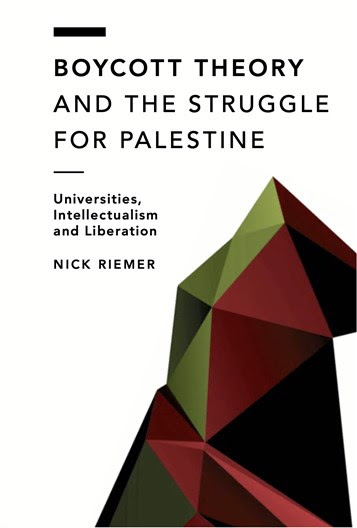

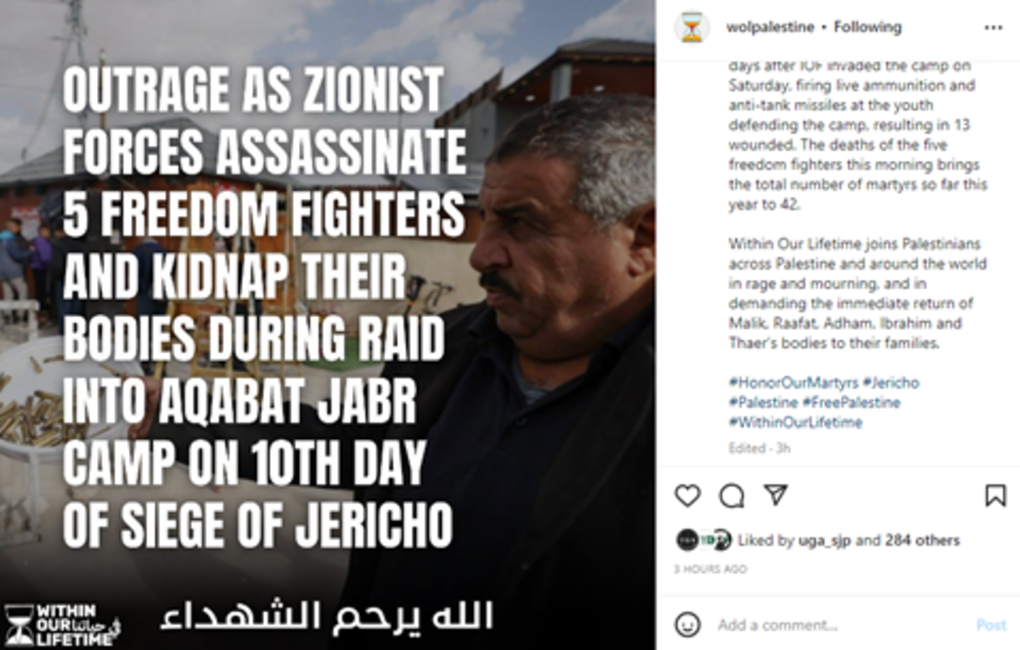
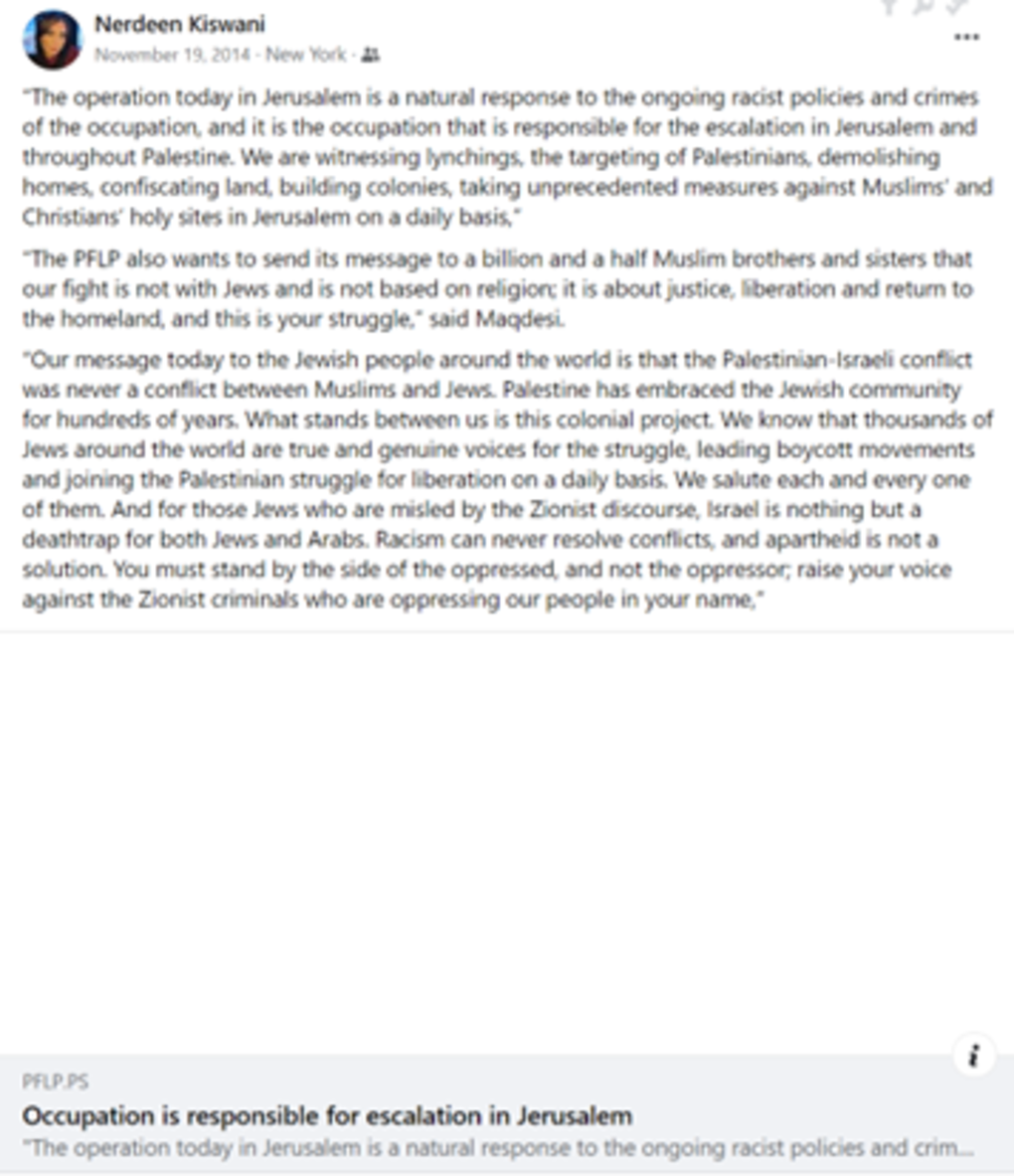

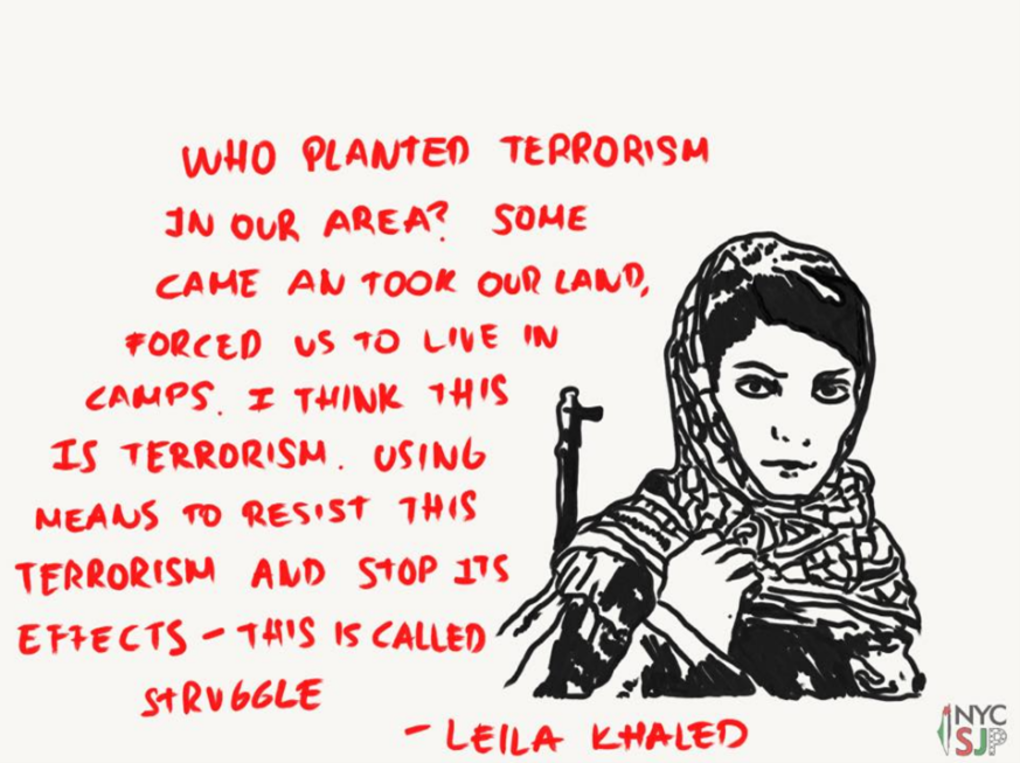


![MEMO launches 'The JNF/KKL: A Charity Complicit With Ethnic Cleansing' by Dr Uri Davis [Middle East Monitor]](https://i0.wp.com/www.middleeastmonitor.com/wp-content/uploads/2023/01/SRV_6429-scaled.jpg?quality=85&strip=all&zoom=1&ssl=1 "SRV_6429")
![MEMO launches 'The JNF/KKL: A Charity Complicit With Ethnic Cleansing' by Dr Uri Davis [Middle East Monitor]](https://i0.wp.com/www.middleeastmonitor.com/wp-content/uploads/2023/01/SRV_6435-scaled.jpg?quality=85&strip=all&zoom=1&ssl=1 "SRV_6435")
![MEMO launches 'The JNF/KKL: A Charity Complicit With Ethnic Cleansing' by Dr Uri Davis [Middle East Monitor]](https://i0.wp.com/www.middleeastmonitor.com/wp-content/uploads/2023/01/SRV_6498-scaled.jpg?quality=85&strip=all&zoom=1&ssl=1 "SRV_6498")
![MEMO launches 'The JNF/KKL: A Charity Complicit With Ethnic Cleansing' by Dr Uri Davis [Middle East Monitor]](https://i0.wp.com/www.middleeastmonitor.com/wp-content/uploads/2023/01/SRV_6425-scaled.jpg?quality=85&strip=all&zoom=1&ssl=1 "SRV_6425")
![MEMO launches 'The JNF/KKL: A Charity Complicit With Ethnic Cleansing' by Dr Uri Davis [Middle East Monitor]](https://i0.wp.com/www.middleeastmonitor.com/wp-content/uploads/2023/01/SRV_6430-scaled.jpg?quality=85&strip=all&zoom=1&ssl=1 "SRV_6430")
![MEMO launches 'The JNF/KKL: A Charity Complicit With Ethnic Cleansing' by Dr Uri Davis [Middle East Monitor]](https://i0.wp.com/www.middleeastmonitor.com/wp-content/uploads/2023/01/SRV_6442-scaled.jpg?quality=85&strip=all&zoom=1&ssl=1 "SRV_6442")
![MEMO launches 'The JNF/KKL: A Charity Complicit With Ethnic Cleansing' by Dr Uri Davis [Middle East Monitor]](https://i0.wp.com/www.middleeastmonitor.com/wp-content/uploads/2023/01/SRV_6490-scaled.jpg?quality=85&strip=all&zoom=1&ssl=1 "SRV_6490")
![MEMO launches 'The JNF/KKL: A Charity Complicit With Ethnic Cleansing' by Dr Uri Davis [Middle East Monitor]](https://i0.wp.com/www.middleeastmonitor.com/wp-content/uploads/2023/01/SRV_6449-scaled.jpg?quality=85&strip=all&zoom=1&ssl=1 "SRV_6449")
![MEMO launches 'The JNF/KKL: A Charity Complicit With Ethnic Cleansing' by Dr Uri Davis [Middle East Monitor]](https://i0.wp.com/www.middleeastmonitor.com/wp-content/uploads/2023/01/SRV_6494-scaled.jpg?quality=85&strip=all&zoom=1&ssl=1 "SRV_6494")
 israel-academia-monitor.com