The queer scholar Corinne Blackmer published a new book, Queering Anti-Zionism: Academic Freedom, LGBTQ Intellectuals, and Israel/Palestine Campus Activism.
The book offers a pointed critique of LGBTQ scholars whose anti-Israel bias pervades their academic work. Blackmer demonstrates how the BDS movement has become a central part of social justice advocacy on campus, such as gender and sexuality studies. The book focuses on the work of Sarah Schulman, Jasbir Puar, Angela Davis, Dean Spade, and Judith Butler. Blackmer demonstrates how these scholars misapply critical theory in their writings of the State of Israel. Blackmer shows how these LGBTQ scholars mobilize the queer and intersectionality studies to support the BDS movement – eager to delegitimize, isolate, de-normalize, and extirpate Israel – at the expense of academic standards.
Blackmer notes that the word “Pinkwashing” refers to Israel’s “putatively dishonest abuse of its sterling record on LGBT human rights” to “whitewash” its crimes against the Palestinians. Accusing Israel of “Pinkwashing” is part of the strategy of the BDS movement. According to Blackmer, “Pinkwashing” derives from the seventeenth-century verb “whitewashing,” which means to hide crimes and vices.
Blackmer discusses the work of Sarah Schulman, a Jewish American lesbian BDS activist and academic, and mentions Aeyal Gross, an associate professor of Law at Tel-Aviv University. She quotes Gross, who asserts, “the term Pinkwashing is not very successful. It causes people to misunderstand the situation.” Unlike the use of the word Greenwashing to describe false environmental claims, Israel has real LGBT rights. BDS activists failed to make such crucial distinctions and conflated LGBT Israelis with their government. This negates the premises of “Pinkwashing,” Blackmer sums up.
By mentioning Gross briefly, Blackmer does not give the full scope of Gross’s involvement in advancing the narrative of “Israeli Pinkwashing.”
LGBT journalist Michael Luongo broadened the picture in an article published in The Gay City News journal, where he discussed the term’s origin. He quoted Gross, who said “Pinkwashing” dates back to 2001. Gross admitted he was part of this early movement of Israeli LGBT activists who created Black Laundry (Kvisa Shchora, in Hebrew), to protest the Israeli military crackdown following the Second Intifada. Gross presented a paper at Amsterdam Sexual Nationalism Conference stating, “I will explore the politics of sexual freedom apparent in Israel’s attempt to brand itself as ‘gay friendly,’ and as a ‘western’ and ‘European’ country, as opposed to supposedly ‘backwards,’ ‘homophobic’ Islamic countries which surround it in the Middle East… One should not deny the progress in sexual freedoms in Israel, but address the way they serve to cover and legitimize the denial of other freedoms, especially from Palestinians.”
Luongo disclosed that Gross told him that after long battles for LGBT equality in Israel, “It is a way for Netanyahu to talk about gay rights, but not too much… He would use it against Iran and the Palestinians in the UN.”
It was Gross who helped to advance the false “Pinkwashing” narrative. In 2011, Sarah Schulman wrote an op-ed in the New York Times, accusing Israel of “Pinkwashing.” She wrote, “The growing global gay movement against the Israeli occupation has named these tactics ‘pinkwashing’: a deliberate strategy to conceal the continuing violations of Palestinians’ human rights behind an image of modernity signified by Israeli gay life.” She then quoted Aeyal Gross who confirmed that “gay rights have essentially become a public-relations tool… conservative and especially religious politicians remain fiercely homophobic.”
Not surprising that holding negative views of Israel fits well with the agenda of SOAS University of London, where Gross has been holding an academic position.
Charges of “Pinkwashing are still rampant today. Last week, a Palestinian student, Sarah Dajani published an article, “Pinkwashing”: Disguising Oppression as Progression in the student newspaper of Trinity College in Hartford, Connecticut. She stated: “The world is not a safe haven, especially for minority groups; however, countries that promote progression at the cost of human rights avoid and neglect dealing with violations and, sometimes, war crimes. Pinkwashing is the promotion of LGBTQIA+ rights of a corporate or a political entity to conceal ‘negative’ aspects of that entity. These aspects can range from human rights violations to war crimes.
She added that “Pinkwashing spreads ingenuine sympathy messages that are exploited to continue ‘The Burden of the White Man’ or ‘The Civilizing Mission’ propaganda.” She also mentioned Sarah Schulman and Aeyal Gross as researchers on the topic. Dajani ended by stating that as someone living in the West, “We still have a lot of work to be done when it comes to challenging the inequalities of our modern society, but we need to be aware of using the LGBTQIA+ community as a marker for civilization and a justification for violence and human rights abuses.”
As a Palestinian, Dajani fails to mention Ahmad Abu-Marhia, a gay Palestinian who was beheaded in the West Bank in early October. Abu-Marhia was seeking asylum in Israel and had spent two years in Israel. How he ended up in his home city of Hebron is unclear. His body was found decapitated. Video of the murder was circulating social media. His friends told the press he was kidnapped to the West Bank, where homosexuality is rejected by Palestinian society. Some 90 Palestinians who identify as LGBTQ live as asylum seekers in Israel.
The UN Human Rights Council published a written statement for 22 February–19 March 2021, submitted by United Nations Watch, a consulting NGO. “Torture of lesbian, gay, bisexual, transgender and queer (LGBTQ),” examines Palestinian Authority and Hamas human rights violations. It found that Palestinian LGBTQ living under PA and Hamas “suffer severe persecution and ostracism. Many Palestinian homosexuals end up fleeing to Israel.” The testimonies of gay Palestinians who escaped recounted “harrowing torture by both family and PA/Hamas security forces, often successful attempts to coerce them to inform on others, forced marriages and death threats.” The report discusses a gay Gazan Palestinian who lives in exile in Turkey. He described his arrest and torture by Hamas. “They arrested me, hanged me from the ceiling, beat me up and interrogated me for five days,” on suspicion of him being gay. Similarly, in February 2016, Mahmoud Ishtiwi, a Hamas commander, was “executed” by his former comrades for “crimes against morality, such as homosexuality.” He was subjected to severe torture by Hamas while in custody for over a year. He suffered “beatings, hanging from the ceiling for long hours and sleep deprivation.” In a note which his wife sneaked out, he wrote, “They nearly killed me, I confessed to things I have never done in my life,” the report stated.
Accusing Israel of “Pinkwashing” is a falsification of reality and a tactic to deflect from the brutal human rights record of the Palestinian Authority. Israel is a promoter of human rights, not only for Israelis but also for Palestinian civilians. Of course, the situation is complex, and Israel is not perfect. But Israel tries hard to protect all civilians, including Palestinians, even during a war. Scholars who are delegitimizing Israel instead of criticizing the two Palestinian regimes’ murderous policies are wrong and misleading. Therefore, Blackmer should be commended for her brave act of uncovering the truth.
Wayne State University Press, 8 Nov 2022 – Social Science – 256 pages
With engaged scholarship and an exciting contribution to the field of Israel/Palestine studies, queer scholar-activist Corinne Blackmer stages a pointed critique of scholars whose anti-Israel bias pervades their activism as well as their academic work. Blackmer demonstrates how the Boycott, Divestment, and Sanctions (BDS) movement that seeks to delegitimize and isolate Israel has become a central part of social justice advocacy on campus, particularly within gender and sexuality studies programs. The chapters focus on the intellectual work of Sarah Schulman, Jasbir Puar, Angela Davis, Dean Spade, and Judith Butler, demonstrating how they misapply critical theory in their discussions of the State of Israel. Blackmer shows how these LGBTQ intellectuals mobilize queer theory and intersectionality to support the BDS movement at the expense of academic freedom and open discourse.
WHEN USED IN RELATION TO THE ISRAELI-PALESTINIAN CONFLICT, the word “pinkwashing” refers to Israel’s putatively dishonest abuse of its sterling record on LGBT human rights to conceal or “whitewash” its struggles with the Palestinians. Alleged to constitute an invidious “cover up”, pinkwashing actually represents a term of art deployed to deceive and fabricate fallacious arguments about the Israeli-Palestinian conflict. It comprises part of the larger strategy of delegitimization of Israel by the Boycott, Divestment, and Sanctions (BDS) movement, which aims to isolate, de-normalize and, eventually, extirpate Israel as a democratic Jewish State. Despite the deceptive misuse of this term in this context, however, the word originated in other loci where it had different—as well as politically legitimate and rhetorically lucid—meanings.
HISTORY OF THE TERM PINKWASHING
The portmanteau compound term pinkwashing derives from the seventeenth century verb to whitewash, which means to hide crimes and vices, or to exonerate through biased presentation of evidence. The Nazis forced gay male concentration camp inmates to wear inverted pink triangles to shame them for their “inverse” gender identification. Subsequently, in the LGBT activist ACT-UP movement, the pink triangle was repurposed to symbolize political resistance to homophobia and the plight of HIV+ people and those living with AIDS.1
In the 1980s, the now iconic pink ribbon logo became a form of so-called “cause marketing” that companies used to advertise their support for breast cancer survivors, victims, and charities. These logos became ideal means to promote products and sell merchandise. However, in a classic case of false advertising, research revealed that many products sold by these companies contained carcinogenic ingredients linked with the increased risk of [End Page 171] breast and other forms of cancer. In addition, the focus on mammograms, prevention, and “the cure” ignored environmental factors and the fact that poor women of color suffered disproportionately from breast cancer. Accordingly, in 1985, the organization Breast Cancer Action (BCA) coined the term “pinkwashing” to characterize this fraudulent and deceptive form of cause marketing.2 In 2002, BCA inaugurated its Think Before You Pink®3 campaign as an impassioned feminist protest against the indiscriminate and disingenuous abuse of pink ribbon logos to turn profits and, according to Cary Nelson, “hid[e] the ways they are actually contributing to cancer through their manufacturing processes”.4
As applied to anti-Israel movements, the Jewish American lesbian BDS activist, writer, and academic Sarah Schulman claims that the term “pinkwashing” emerged informally in the United States in 2010 as a nonce blending of whitewashing and “greenwashing”, or the marketing of products on the pretense that they were environmentally friendly.5 However, according to Aeyal Gross, Associate Professor of Law at Tel-Aviv University, the pinkwashing moniker actually originated in Israel in 2001 when leftwing queer activists created the group Black Laundry (Kvisa Shchora in Hebrew) to protest the Israeli Defense Forces’ crackdown on Palestinians following the Second Intifada. After long struggles for LGBT equality in Israel—often against the determined opposition from the government and Orthodox Judaism—the right-wing government of Benjamin Netanyahu cynically appropriated LGBT rights to advance its own agendas against Iran and the Palestinian Territories at the United Nations.6 He presented Israel as a gay-friendly, progressive, democratic country that protected human rights, as opposed to other benighted and homophobic Middle Eastern nations.7 Although the claims he made were accurate, and he therefore did not engage in pinkwashing, Netanyahu hypocritically supports parties and organizations abroad (particularly in the United States) that discriminate against LGBT people. Therefore, as Gross asserts, “the term Pinkwashing is not very successful. It causes people to misunderstand the situation,” because unlike the use of the word Greenwashing to describe false environmental claims, Israel has had real LGBT rights advances.8
BDS activists not only failed to make such crucial distinctions but also conflated LGBT Israelis with their government and denied the “real LGBT rights advances (emphasis mine)” made in Israel, which negate the premises of pinkwashing and, in the case of the pink logo, “cause marketing” for breast cancer, both of which rest on fraudulent claims.
Academic Freedom, LGBTQ Intellectuals, and Israel/Palestine Campus Activism
WAYNE STATE UNIVERSITY PRESS 2022
Why do some scholars sacrifice truth and logic to political ideology and peer acceptance?
With courage and intellectual integrity, queer scholar-activist Corinne Blackmer stages a pointed critique of scholars whose anti-Israel bias pervades their activism as well as their academic work. In contrast to the posturing that characterizes her colleagues’ work, this work demonstrates true scholarship and makes an important contribution to the field of Israel studies.
In Queering Anti-Zionism: Academic Freedom, LGBTQ Intellectuals, and Israel/Palestine Campus Activism (Wayne State UP, 2022), Blackmer demonstrates how the Boycott, Divestment, and Sanctions (BDS) movement that seeks to delegitimize and isolate Israel has become a central part of social justice advocacy on campus, particularly within gender and sexuality studies programs. The chapters focus on the intellectual work of Sarah Schulman, Jasbir Puar, Angela Davis, Dean Spade, and Judith Butler, demonstrating how they misapply critical theory in their discussions of the State of Israel.
Blackmer shows how these LGBTQ intellectuals mobilize queer theory and intersectionality to support the BDS movement at the expense of academic freedom, open discourse, and intellectual integrity.
The world is not a safe haven, especially for minority groups; however, countries that promote progression at the cost of human rights avoid and neglect dealing with violations and, sometimes, war crimes.
Pinkwashing is the promotion of LGBTQIA+ rights of a corporate or a political entity to conceal ‘negative’ aspects of that entity. These aspects can range from human rights violations to war crimes. Pinkwashing spreads ungenuine sympathy messages that are exploited to continue “The Burden of the White Man” or “The Civilizing Mission” propaganda, which depend on spreading the ideas that are seen as ‘progressive’ and ‘civilized’ through violence, conquest, and military intervention.
Like whitewashing, the term is supposed to indicate hiding crimes with a humane and progressive ‘color.’ The American novelist Sarah Schulman claims that the term “pinkwashing” was used in the United States in 2010 when talking about products that are falsely advertised as eco-friendly. However, according to the Israeli author Aeyal Gross, the term originated in Israel in 2001 by the queer activist group Black Laundry, Kvisa Shchora in Hebrew, to protest the Israeli violence against Palestinians following the Second Intifada. In his book Queer Palestine and the Empire of Critique, Palestinian Anthropologist Sa’ed Atshan mentions how during the panels he has given around U.S. universities, the interventions that were related to Palestine focused on “Palestine homophobia with the existence of queer spaces and expression in Israel.” He emphasizes that this should not distract from “condemning patriarchy and homophobia in my [the Palestinian] society.” Despite the common association of the term with Israel, pinkwashing is all around us.
The Pink Dollar is a term used for profit made off of the LGBTQIA+ community. Companies that promote the rights of marginalized groups were considered fighters for equity and peace. However, in countries like the United States, where political power is in the hands of corporate CEOs, one should question the disparity between the popularizing of these causes and the actual legislation passed. The American experimental writer Alexandra Chasin said that “going to the market” means “abandoning the effort to challenge inequalities in society.” This propaganda, whether promoted by corporates or political entities, supports the abuse of human rights and dismantles the struggle for equity.
In 2014, the Israeli court convicted Ben David of murdering and kidnapping Mohammed Abu Khdeir, a 16-year-old Palestinian boy. Before the case was considered ‘solved,’ rumors were spread speculating that the murder was an ‘honor killing,’ reports Haartz, the longest running Israeli newspaper. People spread that the victim was gay because he was known at the Jerusalem Open House for Pride and Tolerance (an LGBT organization in Jerusalem that had supposedly released a statement about his death). The executive director of Open House denied this claim, but images entitled, “The Arabs killed him for being gay,” were still widely spread.
The certainty in the messages spread show the strength of the propaganda in portraying ‘Arabs’ as barbaric and intolerant; this is no different than the European propaganda that dehumanized indigenous people. Similarly, Jasbir Puar, an American philosopher and queer theorist, suggests that the subsequent human rights abuses following the invasion of Iraq were disguised as “sexually progressive multiculturalism justifying foreign intervention.”
We still have a lot of work to be done when it comes to challenging the inequalities of our modern society, but we need to be aware of using the LGBTQIA+ community as a marker for civilization and a justification for violence and human rights abuses. When we support organizations that promote ‘inclusivity’ while still maintaining inhumane labor practices, biased hiring processes, and support for discriminatory organizations, we are part of the problem.
It is not clear how Ahmad Abu Marhia ended up in his home city of Hebron
Palestinian police have arrested a suspect in the killing of a 25-year-old man after his body was found decapitated in the occupied West Bank.
LGBTQ groups in Israel, where Ahmad Abu Marhia was seeking asylum, say he had received threats because he was gay.
Video of the murder scene in Hebron has spread widely on social media raising speculation about the motive, but police say nothing is confirmed.
It is unclear for now how Mr Abu Marhia ended up in the city.
LGBTQ groups say he had spent two years in Israel waiting on an asylum claim to flee abroad after receiving death threats from within his community.
Israeli media quote friends of the victim as saying he was kidnapped to the West Bank.
His family, however, said he regularly visited Hebron to see them and to work. They described the claims about the motive as rumour.
Homosexuality is rejected within the most socially and religiously conservative parts of both Palestinian and Israeli societies but gay people in Israel can freely lead their lives. The reports suggest he had fled his home on a humanitarian permit while hoping to go to Canada.
Activist Natali Farah told Israel’s Haaretz newspaper Mr Abu Marhia was well known and liked and the whole LGBTQ community was “crying now”.
“Everyone is scared,” she added.
Palestinians also expressed revulsion at the beheading.
A presenter for Karama radio station, quoted by the Times of Israel, said the crime had “crossed every single red line in our society, whether in terms of morals, customs, or basic humanity”.
Some 90 Palestinians who identify as LGBT currently live as asylum seekers in Israel, the newspaper said, after suffering discrimination in their home communities. They have only been allowed to seek work in Israel since July.
Following the IAM post last week, another recent report needs attention. It was conducted by the National Association of Scholars (NAS) on the politically-motivated investments of Qatar in Western Universities. This second report provides a case study of Northwestern University-Qatar (NU-Q), that is, Northwestern University’s branch in Qatar. IAM is especially concerned because Qatar has shown hostility to Israel throughout the years. In particular, Qatar wants to influence American policy toward Israel.
The second NAS report notes that in 2013, NU-Q entered a formal agreement with the Qatari-owned news outlet Al Jazeera to train journalists to work for the outlet. They even created the Al Jazeera scholarships for NU-Q students and started exchange journalism programs and training for students. Moreover, NU-Q helped Al Jazeera in reaching the American media market.
Qatar has also used its influence to support its friends, which include Iran, the Muslim Brotherhood, and Hamas. The NAS report explicitly states that “American universities have invested substantial time and manpower to aid the development of an illiberal regime that funds and befriends entities hostile to American national interests.”
As the report states, Northwestern University’s only interest in the liaison with Qatar is financial. Qatar can preserve its “illiberal quasi-absolute monarchy and traditional Islamic mores and still escape criticism.” The report notes that “this cozy arrangement only further corrupts American universities and serves neither American interests nor ideals.” The report titled this arrangement the “new progressive illiberalism.”
From its inception in 2006, Al Jazeera has been extremely hostile to Israel and Zionism. As a rule, its reports focus on the negative to delegitimize the Jewish state.
For example, the Al Jazeera website defines Ζionism as a “colonial movement,” which, “as the likes of Israeli historian Ilan Pappe have argued, Zionist leaders were well aware that implementing their project would necessitate the ethnic cleansing of the indigenous Palestinian population. In 1948, David Ben-Gurion, then head of the World Zionist Organisation, proclaimed the founding of the state of Israel in Palestine. Zionists argued that Israel would provide a safe national home for Jews, allowing any Jewish person from anywhere in the world to immigrate there and claim citizenship. Critics, however, argue that Zionism has functioned like colonialism, pointing to the violent ethnic cleansing of the indigenous Palestinian population and the building of illegal settlements in the Occupied Palestinian Territories as evidence.”
Of course, Al Jazeera does not mention the 1948 war when five Arab armies attacked nascent Israel or the Palestinian Arabs riots against the Jews between 1936-9 which were influenced by Nazi Germany.
As IAM repeatedly reported, Iran, Qatar, and other enemies of Zionism have recruited Israeli academics to tarnish Israel. Ilan Pappe was one of the first among these guns for hire, followed by Neve Gordon, Shlomo Sand, Ariella Azoulay, and others.
However, Al-Jazeera should be reminded that Qatar is a more colonialist creation than Israel. Mohammed bin Thani, the ruler of Qatar, signed a treaty with Britain in 1868 to recognize it as a separate entity. Qatar became a British protectorate from the early 20th century until its independence in 1971. Contrary to Qatar, the Jews were promised a national home by the League of Nations, and Britain was given the Mandate to create the national home for the Jewish People in Palestine.
While the Abraham Accords changed much of the negative attitude that Arabs generally held against the Jewish State, hostility driven mainly by the Palestinians and their backers, such as Qatar and Iran, is still around. Since Qatar is a significant funder of Western universities, it is not surprising that antisemitism is skyrocketing, and so is anti-Israelism.
Saudi Arabia has historically provided the largest amount of funding to American universities out of all the Middle Eastern countries. In recent years, however, neighboring Qatar has emerged as a significant rival. A small but wealthy Persian Gulf petrostate, Qatar recently became the top foreign funder of American universities, donating at least $4.7 billion between 2001 and 2021.1 Qataris fund research projects in many different fields, including medical research, cybersecurity, and economic development.
The top recipients of Qatari funds have something in common: they all have branch campuses in the country. According to the Department of Education, Northwestern University received more than $600 million in Qatari gifts and contracts since it opened a branch campus in the country in 2007. The Illinois-based university is one of six American campuses in Qatar, each of which has a particular specialization. Cornell University, for example, focuses on medical education, while Georgetown University specializes in government and politics. Northwestern University’s branch campus in Qatar (NU-Q) primarily covers journalism.
Figure 1: American Campuses in Qatar
Name
Year Established
Total Funds from Qatar
Specialization
Virginia Commonwealth University
1997
$103,362,261.08
Fine Arts
Cornell University
2001
$1,793,025,926.00
Medicine
Texas A&M University
2003
$6,96,412,859.00
Engineering
Carnegie Mellon University
2004
$740,910,072.80
Computer Science and Technology
Georgetown University
2005
$760,562,241.00
Politics
Northwestern University
2008
$601,958,863.00
Journalism
The Qatar Foundation (QF), a state-led non-profit founded in 1995 by Qatar’s ruling family to improve Qatari society, funded this educational complex. Through the QF, the country hopes to 1) increase the workforce participation rate among Qataris; 2) equip Qataris to replace the foreigners who dominate many sectors of their current workforce; 3) prevent the “brain drain” that results when Qataris study abroad and fail to return home; and 4) maintain the strength of Qatar’s Islamic religious customs and traditions.2
After founding QF, Qatar began to recruit Western universities to build branch campuses in Education City, Doha, so that the nation could provide its youth with educational opportunities.3 The first branch campus, established by Virginia Commonwealth University, opened in 1997. NU-Q opened in 2008, largely due to the work of Carnegie Foundation of New York president Vartan Gregorian, who was both a member of QF’s board of trustees and a close friend of one of Northwestern’s trustees.4
About Vartan GregorianVartan Gregorian held many prominent leadership positions throughout his life—ranging from president of Brown University to CEO of the New York Public Library (NYPL). He was born in Iran in 1934 to Armenian parents and moved to the United States in the 1950s to pursue higher education.Gregorian’s immigrant background shaped his approach throughout his career. Prior to his leadership roles, Gregorian worked as a professor and specialized in Middle Eastern and European affairs. As the CEO of the NYPL during the 1980s, he increased circulation of multicultural materials. When Gregorian served as Brown’s 16th president from 1989 to 1997, he worked to increase the university’s international reputation and expand its influence abroad. And during his presidency for the Carnegie Corporation of New York from 1997 until his death in 2021, Gregorian expressed interest in projects that celebrated Islamic culture and society. In 2003, Gregorian published Islam: A Mosaic, Not A Monolith, which rebutted Samuel Huntington’s “clash of civilizations” thesis.5Gregorian’s interest to change Western perceptions of Islam and his expansive influence in the academic world made him an ideal candidate for QF’s board of trustees.
QF recruited Northwestern to establish a Qatari branch campus in the hopes that the university would train future journalists who could build Qatar’s media presence abroad. At first, this purpose was largely unstated. In 2013, however, NU-Q entered a formal agreement with the Qatari-owned news outlet Al Jazeera designed to train journalists for the outlet. NU-Q and Al Jazeera signed a Memorandum of Understanding that created Al Jazeera scholarships for NU-Q students and established journalist exchange programs and training workshops in which the students could participate. As part of the agreement, NU-Q committed to help Al Jazeera expand into the American media market via its Al Jazeera America (AJA) news channel:
NU-Q will conduct consultations with Al Jazeera leadership based on its faculty research interests and expertise in the American media industry, as the news network moves forward with its planning for Al Jazeera America.6
AJA shut down in 2016, but Al Jazeera continues to reach American audiences via its social media platform AJ+.7
Nearly 500 students have graduated since NU-Q’s founding; the number of graduates increased from 35 for the class of 2012 to somewhere between 75-80 in the 2021 class.8
Universities that enter into agreements with Qatar receive significant criticism because of the emirate’s illiberal practices. Qatar is a quasi-absolute monarchy that offers little in the way of protections for workers, women’s rights, or freedom of the press. Critics of the Qatari government frequently end up in jail, so academic freedom for professors at branch campuses remains a major concern—as does the willingness of American universities to turn a blind eye to Qatar’s illiberal practices.9 Qatar’s National Vision, a development plan, emphasizes its intention to modernize to keep up with globalization, but modernization does not mean liberalization. Indeed, the National Vision clearly stipulates that Qatar will not compromise its local and traditional values for the sake of modernization.
Qatar’s stipulation prompts a natural concern about whether American universities should enter partnerships with the Qatari government, since American values differ considerably from those of Qatar. Former Northwestern professor and faculty senate president Stephen Eisenman raised these concerns after visiting the NU-Q campus in 2015.10 He published a report that offered nine proposals for reform, including the three that follow:
— Expanding scholarship programs for lower-income and non-Qatari students
— Creating a shared-governance structure for NU-Q faculty
— Informing the Qatari government that relaxed speech and press restrictions are preconditions for the university’s continued operation in the country
In an email to the author, Eisenman stated that, as of 2021, university administrators have not implemented any of his recommendations.11
Censorship meanwhile continues in full force in Qatar. In 2020, Northwestern moved an event featuring Lebanese Indie rock band Mashrou’ Leila, whose lead singer is gay, from its Qatari campus to its American campus. Qatar makes homosexual relations illegal, and perpetrators can go to prison. Northwestern claimed that they moved the event due to “security concerns.” The QF, however, contradicted Northwestern’s claim and stated that the NU-Q event was canceled because it did not adhere to Qatari social customs.12
The Qatari government also insists on maintaining heavy-handed oversight of the reading lists on its American branch campuses.13 In 2015, the Qatar banned a question in a media use survey that asked participants whether they believed the country was “headed in the right direction.” Then-Northwestern dean Dennis Everett led the Qatar National Research Fund (QNRF)-backed survey.14
It’s clear that Qatari values differ significantly from American values—in fact, the two belief systems often explicitly contradict. Furthermore, Eisenman’s report indicates that Northwestern has received negligible profits from its Qatari branch campus. So, the question arises: why would Northwestern bother to operate in Qatar?
One of Northwestern’s motivations seems to be a desire to exercise its influence to liberalize Qatar. In America, universities routinely use their authority, knowledge, and position to mold moral, political, and social decisions.15 Especially following the Arab Spring in the early 2010s, many American academics hoped that Middle Eastern countries would liberalize—and that they could assist with this transformation. As Everett said, “When we conducted our first study in 2013, there was enthusiasm for the idea that the Arab Spring might mark the start of a movement toward more freedom of expression.”16
Eisenman recalls the blind enthusiasm that Northwestern administrators had for NU-Q prior to his trip:
The president and then provost thought they were doing “God’s work” in establishing and supporting NU-Q, as they told me before my visit, and evidently felt no need to interfere with the Divine plan.17
In other words, it appears that Northwestern believed its branch campus would influence Qatar rather than become subject to Qatari influence.
The courses that NU-Q offers certainly disseminate the predominant ideologies of American universities.18 “Multiethnic American Literature” examines minority writers who challenged the “dominant narratives of America.” Courses such as “Social Construction” and “Children’s Literature” address gender constraints and propagate elements of gender studies.19 “Journalism in the Digital World,” a mandatory course for first-year Journalism and Media Industry & Technology majors, blends instruction in the craft of journalism with strictures to mistrust Breitbart News, an American conservative publication, because the publication has a “long history of distorting facts to suit a far-right agenda.”20 The course description fails to include instances of journalistic malpractice by left-wing media.21
Northwestern’s partnership with Qatar also provides the university with opportunities to expand both its reach and its revenue. In 2019, for instance, Northwestern Medicine announced that it would open a hospital in Qatar in partnership with Alfardan Medicine, a part of the Alfardan Group.22 The Alfardan Group is led by Omar Hussain Alfardan, who happens to serve on the Board of Trustees of Hamad Bin Khalifa University (HBKU). HBKU is also a partner of NU-Q.23 Northwestern’s connection with Qatar has also helped at home, as demonstrated by the five Qatari-funded professorships that the university now boasts.24
Through its relationship with Qatar, Northwestern has also gained access to a privilege only a handful of universities enjoy: Qatari research funds. Grants from the government-run QNRF are only available to institutions located in Qatar; but Northwestern’s branch campus in Qatar, therefore makes the university eligible to apply for QNRF grants.25 As of 2019, NU-Q received 11 QNRF grants, most of which addressed policy-relevant issues such as “driving behaviors in Qatar, Qatar’s foreign aid strategy, and…the development of the Qatar national identity.”26
As is often the case with government-funded research, QNRF proposals must address how the research benefits Qatar or aligns with the Gulf State’s National Vision. For instance, one of Northwestern’s accepted research proposals, “Assessing Qatari Emerging Media Engagement: A Study of How AR, VR, and other Emerging Media are Being Utilized in Qatar,” asks Qatari residents about their perception of media in the country. The proposal specifically states that the project will result in “increased opportunities to enhance Qatar’s regional and global reputation in the development of and engagement with technological innovation.”27
It is difficult to determine the full extent to which Northwestern has benefitted from Qatari research funds, as the university’s reports to the Department of Education have remained vague. The university, however, has revealed some of the dollar amounts itself via its celebratory announcements. In 2012, Northwestern announced that its Engineering and Arts School received two research grants from QNRF, both worth $1,050,000 over the course of three years.28 It remains unclear whether Northwestern has reported all QNRF grants to the Education Department.
National Museums and the Public Imagination: A Longitudinal Study of the National Museum of Qatar
University College London (UCL) – QatarNorthwestern University in QatarQatar UniversityUniversity of Puget Sound
$800,521
Assessing Qatari Emerging Media Engagement: A Study of How AR, VR and other Emerging Media Are Being Utilized in Qatar
Northwestern University in QatarNorthwestern UniversityQatar UniversityRutgers University
$482,986
Qatari Women: Engagement and Empowerment
Northwestern University in Qatar
$150,000
Qatar and the World Values Survey: Ensuring Conceptual Validity and Cross-Cultural Comparability
Northwestern University in Qatar
$99,836
Hashtag Blockade: Exploring the Digital Landscape of the Gulf Crisis
Northwestern University in Qatar
$30,000
Fresh Global Media Players: Redistributing Media Power?
Northwestern University in Qatar
N/A
Media Use in the Arab Gulf: A Longitudinal Study
Northwestern University in Qatar
N/A
Content Innovation Strategies for Mobile Media in Qatar
Northwestern University in QatarNorthwestern UniversityQatar UniversityRutgers University
N/A
Media Use in the Middle East: Qatar in a Changing Region
Northwestern University
N/A
Assessing the Qatari news media’s capacities for fostering public understanding of and engagement with science: issues, challenges, opportunities and their socio-political implications
Northwestern University in QatarUniversity of SharjahBournemouth University
N/A
Qatari adolescents: How do they use digital technologies for health information and health monitoring?
Northwestern University in QatarNorthwestern UniversityQatar University
N/A
Virtual Reality as a Hybrid Learning Solution for Education in Peri-and-Post COVID-19 Qatar
Northwestern University in Qatar
N/A
Catalysts and constraints: Women’s and girls’ experience of physical activity and sport in Qatar
Northwestern University in Qatar
N/A
Qatar and the World Values Survey: Enhancing the Validity and Cross-Cultural Comparability of Survey Research Measurement
Northwestern University in QatarQatar University
N/A
Development of a survey based tool to measure digital literacy for Arabic Internet users: A new model of assessment.
Northwestern University in QatarQatar University
N/A
Chicken is for the birds: Changing the deadly driving behaviors of young Qatari men
Northwestern University in Qatar
N/A
Global Regulation of Parody & Satire as Policy Guidance on the Implementation of Qatar’s Cyberlaw
Northwestern University in Qatar
N/A
Arab Children and Youth Television: A Study of Role Models
Northwestern University in Qatar
N/A
Cultivating a Science-Based Community and Scientific Culture in Qatar
Northwestern University in QatarHamad Bin Khalifa University
N/A
Helping Oneself by Helping Who Needs: the discourses and practices of Qatari Foreign Aid to developing countries
Northwestern University in Qatar
N/A
Assessing and Improving Migrant Workers Access to and Utilization of Health Information and Resources
Northwestern University in Qatar
N/A
Entrepreneurship and Economic Sustainability: contribution of migrant entrepreneurs in Qatar
Northwestern University in Qatar
N/A
Keep Them Safe: A Child Car Seats Persuasive Campaign
Northwestern University in Qatar
N/A
Surviving the Covid-19 Pandemic: Socio-cultural impacts of coronavirus outbreak on migrants in Qatar
Northwestern University in Qatar
N/A
Observations
NU-Q provides an important case study in the unique way that Qatar-funded branch campuses operate. These types of partnerships are relatively new forms of foreign funding for American universities, but they have grown in popularity. NU-Q illustrates how foreign relationships can develop: the Qatari government went from paying for the operation of a branch campus to funding American fellowships, research, and even hospitals. By cultivating its relationship with the host country, the university gains the potential to rake in cash through initiatives that extend well beyond the walls of the original branch campus.
Qatar is unique compared to other Gulf States, and partnerships with Qatar pose a unique threat to American higher education. Unlike Saudi Arabia, Qatar exercises extensive bureaucratic oversight into university operations. The Qatari government also owns all the national partner organizations, including the Doha Film Institute, the Qatar National Research Fund, and Al Jazeera. Northwestern’s branch campus increases Qatar’s influence abroad—and Qatar uses its influence to aid its own friends, which include Western adversaries such as Iran, the Muslim Brotherhood, and Hamas. American universities have invested substantial time and manpower to aid the development of an illiberal regime that funds and befriends entities hostile to American national interests.
Branch campuses and other partnerships give American universities a stake in Qatar’s future, regardless of whether Qatar promotes or opposes American interests. Northwestern particularly seems eager to remain in Qatar whatever the costs. The university benefits from increased funding and the opportunity to expand—and, subject to Qatari censorship to preserve traditional mores, it can spread the modern brand of illiberal progressivism and identity politics that American academics think constitutes democracy.
American universities profit from Middle East branch campuses, and so do Middle Eastern countries such as Qatar. Northwestern requires nothing of Qatar beyond its money: the nation can preserve its illiberal quasi-absolute monarchy and traditional Islamic mores and still escape criticism. American universities meanwhile gain access to a new “mission field” in which they can work to export American identity politics and the new progressive illiberalism. But this cozy arrangement only further corrupts American universities and serves neither American interests nor ideals.
A colonial movement supporting the establishment by any means necessary of a national state for Jews in historic Palestine
Zionism is a nationalist, political ideology that called for the creation of a Jewish state, and now supports the continued existence of Israel as such a state. Theodor Herzl, an Austrian Jew, is considered the “father” of political Zionism. The Zionist movement started in the late 19th century, amidst growing European anti-Semitism. The movement secured support among Western European governments, particularly after Zionists agreed to create their Jewish state in historic Palestine. The Zionists’ early objective was to claim as much of historic Palestine as possible, by driving out the Palestinian population. Zionists actively encouraged the mass migration of European Jews to Palestine during the first half of the 20th century. Despite their efforts, and the sharp rise in anti-Semitism in Europe culminating in the Nazi persecution, Arabs still outnumbered Jews in Palestine. Thus, as the likes of Israeli historian Ilan Pappe have argued, Zionist leaders were well aware that implementing their project would necessitate the ethnic cleansing of the indigenous Palestinian population. In 1948, David Ben-Gurion, then head of the World Zionist Organisation, proclaimed the founding of the state of Israel in Palestine. Zionists argued that Israel would provide a safe national home for Jews, allowing any Jewish person from anywhere in the world to immigrate there and claim citizenship. Critics, however, argue that Zionism has functioned like colonialism, pointing to the violent ethnic cleansing of the indigenous Palestinian population and the building of illegal settlements in the Occupied Palestinian Territories as evidence.
If I speak of Zionism as a colonialist ideology supported by imperialist countries then the struggle against Zionism is not only a Palestinian struggle.Palestina Amore
Since Zionism is a dynamic movement they knew that there was no finality about the borders then they knew that opportunities would arise in due course to take the rest of it and they did this in 1967.Al Nakba 3
Israel has to give up Zionism and the racist ideologies on which it was founded It has to take a path of reconciliation As in South Africa between the blacks and the minority whites when the blacks used to live in isolated islands.Palestina Amore
The Arabs and Palestinians were aware of the concept of Zionism from day one It’s a racist movement seeking capital to colonise land and exploit religion to create a homeland for the remaining Jews of the world This was clear in the writings of Najib Azuri and Najib Nassar.Al Nakba 1
The National Association of Scholars (NAS) published a new report on the American Middle East Studies Centers. NAS is a non-profit organization that seeks to reform American higher education. The Report was written by Neetu Arnold, a senior research associate at NAS. Titled “Hijacked: The Capture of America’s Middle East Studies Centers,” it was published on September 28, 2022.
“Hijacked” gives a brief history of the U.S. government’s involvement in the 1950s and 1960s with the newly established Middle East Studies Centers (MESC) as part of the effort to improve national security. Academics were encouraged to produce policy-relevant information that benefited the American national interest. These Centers also trained students in various languages of the region so that alums could work for the government.
However, according to the NAS Report, critics accused the Centers of “propagandizing for their foreign sponsors instead of pursuing disinterested academic study and serving the American national interest.” In 1986, the US Congress included a foreign donation disclosure requirement in the Higher Education Amendments. Still, the Department of Education (ED) rarely enforced this requirement. Only in 2019, administration-initiated investigations were conducted into several prominent universities, prompting them to disclose more than $6.5 billion in foreign donations from governments, institutions, and individuals, mainly from Saudi Arabia and Qatar.
Wealthy Arab nations realized these centers could be valuable tools to influence American policy in the aftermath of the Six-Day and the Yom Kippur Wars. For example, Georgetown University academics and administrators collaborated with government officials from the United Arab Emirates (UAE), Oman, and Libya to establish Georgetown’s Center for Contemporary Arab Studies. Moreover, academics have repurposed critical theory to galvanize activism on Middle East issues. The Report shows how the Israel–Palestine debate has been reframed as a fight for “’indigenous rights’ against the supposed evils of colonialism.”
The Report illustrates the radicalization of the MESCs in the 1960s and 1970s. The New Left movement in academia, which propagated the neo-Marxist, critical theory, drew inspiration from critical theorists of the 1930s and 1940s, such as Herbert Marcuse, Max Horkheimer, Jurgen Habermas, Michel Foucault, and Frantz Fanon.
Edward Said, the Palestinian-American professor of literature at Columbia University, contributed significantly to the popularity of the new movement with his work Orientalism, published in 1978. Influenced by Foucault and Fanon, a bitter critic of colonialism, Orientalism offered a scathing critique of Western perceptions of the Orient. In his view, the Orientalist perception was nurtured by the old generation of Middle East experts whom he accused of supporting colonialism in its various forms. His hugely popular book discredited the allegedly Orientalist approach of the early scholars at MESCs. The Report notes how scholars, such as British historian Bernard Lewis, strongly critiqued Said’s work, but to no avail. Said’s school of thought ultimately emerged victorious and influenced most Middle East scholarship to this day.
The new paradigm went hand in hand with an activist view of scholarship. In particular, many scholars began to engage in political advocacy on behalf of the Palestinians, who became, per Said and his followers, the poster children of Western colonialism. With the increased immigration from the Middle Eastern, MESCs welcomed the growing number of Arab scholars and students, many of whom brought local political ambitions and grievances to the field.
As the Report notes, certain Middle Eastern governments and their representatives benefited from the activities conducted at the Centers. It became evident that the Centers worked hard to eliminate negative perceptions of Muslims and Arabs. After 9/11, the Centers, flushed with new money, were actively pushing back on criticism of radical Islam by claiming that it was part of Western Islamophobia.
More consequentially, the neo-Marxist, critical paradigm that the Centers adopted had led to the so-called “Pro-Muslim Subjectivism” on campus. In plain English, scholarships cannot be objective as they are tasked with countering the negative views of Muslims and the Middle East by teaching the subject from an exclusively regional perspective. As well known, many, if not most Middle Eastern countries are very conservative; women are frequently treated as second-class citizens, homosexuality is punishable by death, and transgender individuals are never mentioned, let alone allowed, to publicly express their identity. Working within the framework of pro-Muslim subjectivity, activist academics try to avoid a discussion of such subjects. For instance, the current protest in Iran following the death of a young woman killed by the chastity police for not wearing her hijab in a sanctioned manner had hardly provoked a response because of “pro-Muslim subjectivity.”
This reluctance to react stands in sharp contrast to the Centers’ prolific condemnation of Israelis and pro-Israel Jews. The Centers, reflecting the larger trend in the field of Middle East studies, have disproportionally focused on the Palestinians. The Middle East Studies Association (MESA), the largest professional group in the field, has prioritized the Palestinian issue above other subjects. Martin Kramer’s in-depth analysis of the same subject, in his Ivory Towers on Sand(2001), noted that the profession as a whole is vehemently anti-Israel. If anything, the current situation is even more troubling. The NAS Report found that “Many of the faculty at MESCs support or are affiliated with the Boycott, Divestment, and Sanctions movement (BDS), which advocates for an aggressive economic embargo against Israel due to perceived injustices against Palestinians.”
The NAS analysis concludes that Middle East Centers deprive students of “proper education about the region by using a progressive policy agenda to deliberately pick and choose which facts to present to students. Students should learn and understand the Arab world accurately, regardless of what reactions proceed from that knowledge. The academics’ fear of allowing students to form negative reactions prevents them from providing proper scholarship and instruction.”
Clearly, this approach does not help to nurture Middle East experts who would be charged with the security of the US. The region is extremely chaotic, and examining the fast-paced developments requires a sophisticated knowledge well beyond what the Centers provide. A radical reform of the field is urgently needed to achieve this goal. Such a reform is also crucial for Israel, as the situation has impacted its standing for over three decades.
In the 1950s, a constellation of philanthropic foundations, multinational corporations, interested scholars, and the U.S. government established the first Middle East Studies Centers (MESC) as part of an effort to improve national security during the Cold War. These centers belonged to a class of newly created academic units called “area studies,” which grouped scholars together by a geographic area of focus rather than by discipline. The founders of these centers intended to shift research and instruction away from ancient history and languages and toward the modern Middle East. They encouraged academics to produce policy-relevant information that benefited the American national interest. Centers also trained students in the languages of the region so that their alumni could work for the government as liaisons in this strategically important area.1
In the aftermath of the Six-Day War (1967) and the Yom Kippur War (1973), whose outcomes turned significantly upon American diplomatic and military support for Israel, wealthy Arab nations realized these centers could be useful tools to influence American policy in the region.
In 1975, Georgetown University academics and administrators collaborated with government officials from the United Arab Emirates (UAE), Oman, and Libya to establish Georgetown’s Center for Contemporary Arab Studies (CCAS). Critics quickly accused the center of propagandizing for their foreign sponsors instead of pursuing disinterested academic study and serving the American national interest.
Concerns over Georgetown’s CCAS prompted Congress to include a foreign donation disclosure requirement in the Higher Education Amendments of 1986. Proponents of this provision believed that a transparency mandate would at least increase public awareness of the extent and nature of foreign influence, even if it failed to stop it entirely. The Department of Education (ED) rarely enforced this requirement until the Trump administration initiated investigations into several prominent universities in 2019. These investigations prompted universities to back-report more than $6.5 billion in foreign donations. Many of the donations came from governments, institutions, and individuals from Saudi Arabia and Qatar.
Concerns over foreign influence generated the bulk of public interest in MESCs over the last two generations. This report is no exception. We began this project to provide an up-to-date and comprehensive account of the history, character, and structure of the centers and to uncover the degree to which foreign funding has corrupted the study of the Middle East.
Previous investigations of the centers found few smoking guns to link foreign funding to the alteration of academic content, but they revealed a troubling pattern of bias, obfuscation, and opacity in the centers’ policies and finances. Our report finds that MESCs still suffer from endemic bias, obfuscation, and opacity to this day. We also discover and explain two far more worrisome developments:
Centers with little to no foreign involvement teach and research with the same extensive bias as those with significant foreign involvement.
Foreign governments typically do not fund the most harmful materials produced by the centers, such as critical race theory (CRT) workshops for local K–12 educators. Instead, the U.S. government subsidizes these materials through Title VI of the Higher Education Act.
In other words, the same leftist hysteria which has consumed the humanities and social sciences since the 1960s has spread to MESCs—subsidized by American taxpayer dollars. Academics have repurposed critical theory to galvanize activism on Middle East issues. For instance, they have recast the Israel–Palestine debate as a fight for “indigenous rights” against the supposed evils of colonialism.
Edward Said’s Orientalism (1978) became the basis for justifying the application of critical theory to Middle East studies. Said transposed the philosophy of critical theorists such as Frantz Fanon and Michel Foucault onto relations between the Eastern and Western worlds, establishing the neo-Marxist framework that underlies much of the scholarship in the field today. Though Said was not a Middle East studies professor himself, his analysis severely damaged the content and structure of Middle East studies for decades to come.
Said’s framework enabled subjectivity to dominate the study of the Middle East. Centers now focus on notions such as “taking back our stories,” propping up select Middle Eastern groups who putatively suffer from “Western oppression,” and dismissing any criticism of these groups as biased. In fact, they explicitly eschew most criticism of the various cultures, religions, and ethnicities in the region—with Israelis as the notable exception. Affiliated faculty agitate for political causes in their instruction and research, as well as in the outreach materials they create for the local community.
Certain Middle Eastern governments and their representatives clearly benefit from the activities conducted at these centers. The centers aim to dismantle all negative perceptions of Muslims, Arabs, and other Middle Eastern groups.
It is no surprise that foreign governments and individuals fund these centers. But foreign sponsors rarely need to exercise active influence, for the faculty and staff willingly do their bidding unasked. Donors can thus take a hands-off approach, leaving almost no paper trail other than a dollar amount and a few signatures. The funding still serves their interests: continued production of biased material that promotes the political interests of the donors.
Some funds from Middle Eastern donors are not political in nature and support benign projects such as scientific research. But without transparency, it is difficult for Americans to understand the nature of foreign funds to universities.
This report aims to clarify the complex interplay between foreign governments, the U.S. government, private foundations, and scholars at these centers. Figure 1 lists all American Middle East Studies Centers. We provide the necessary historical context to explain how homegrown radicalism in American universities led prominent Middle East scholars to willingly promote the interests of foreign, often anti-American, groups. We demonstrate how foreign governments took advantage of these academics’ ideological commitment over the decades to propagandize Americans. We also show that the scholars are more loyal to their ideologies than to the foreign governments, which explains the apparent tension between their views and those of their foreign sponsors on certain social and political issues. Finally, we examine how the federal government has subsidized harmful material through the centers in recent years.
The corruption of these centers, however, does not mean that we should eliminate the study of the Arab world. Prior to the establishment of these centers, American scholars accomplished important feats through their study of the Middle East, such as the authentication of the Dead Sea Scrolls and discoveries of Sumerian cuneiform tablets.2 American scholars continue to make major contributions in archeology, and American institutional sponsorship (and Bahraini subsidy) makes possible such fine contributions as the New York University Press’ Library of Arabic Literature. Even now, the centers still teach some useful knowledge. They shine particularly in their language instruction, where students can learn both modern and ancient languages.
Scholars increasingly preoccupied with social justice activism, however, cheapen the quality of instruction. Serious changes must be made to restore the rigorous study of Islam and the Middle East. When Middle East studies returns to its roots, American students will receive the robust Middle East education that they desire—and that American taxpayers deserve.
Institute for the Study of Muslim Societies and Civilizations
Brandeis University
Crown Center for Middle East Studies
Brown University
Center for Middle East Studies
California State University at San Bernardino
Center for the Study of Muslim & Arab Worlds
Columbia University
Center for Palestine Studies
Columbia University
Sakıp Sabancı Center for Turkish Studies
Columbia University
Middle East Institute
Duke University-University of North Carolina at Chapel Hill
North Carolina Consortium for Middle East Studies
Florida State University
Middle East Center
George Mason University
AbuSulayman Center for Global Islamic Studies
George Washington University
Institute for Middle East Studies
Georgetown University
Center for Contemporary Arab Studies
Georgetown University
Prince Alwaleed Bin Talal Center for Muslim-Christian Understanding
Harvard University
Center for Middle Eastern Studies
Harvard University
Prince Alwaleed Bin Talal Islamic Studies Program
Harvard University
Aga Khan Program for Islamic Architecture
Indiana University Bloomington
Center for the Study of the Middle East
Lehigh University
Center for Global Islamic Studies
Merrimack College
Center for the Study of Jewish-Christian-Muslim Relations
New York University
Hagop Kevorkian Center for Near Eastern Studies
Northeastern University
Middle East Center
Northwestern University
Institute for the Study of Islamic Thought in Africa
The Ohio State University
Middle East Studies Center
Portland State University
Middle East Studies Center
Princeton University
The Institute for the Transregional Study of the Contemporary Middle East, North Africa and Central Asia
Rutgers University
Center for Middle Eastern Studies
San Diego State University
Center for Islamic and Arabic Studies
Shenandoah University
Center for Islam in the Contemporary World
St. Bonaventure University
Center for Arab and Islamic Studies
Tufts University
Fares Center for Eastern Mediterranean Studies
University of Arizona
Center for Middle Eastern Studies
University of Arizona
School of Middle Eastern and North African Studies
University of Arizona
American Institute for Maghrib Studies
University of Arkansas
King Fahd Center for Middle East Studies
University of California at Berkeley
Center for Middle Eastern Studies
University of California at Irvine
Samuel Jordan Center for Persian Studies and Culture
University of California at Los Angeles
Center for Near Eastern Studies
University of California at Santa Barbara
Center for Middle Eastern Studies
University of Chicago
Center for Middle Eastern Studies
University of Denver
Center for Middle East Studies
University of Florida
Center for Global Islamic Studies
University of Illinois
Center for South Asian & Middle Eastern Studies
University of Maryland
Roshan Institute for Persian Studies
University of Michigan
Center for Middle Eastern and North African Studies
University of Oklahoma
Center for Middle East Studies
University of Pennsylvania
Middle East Center
University of Texas at Austin
Center for Middle Eastern Studies
University of Utah
Middle East Center
University of Washington
Middle East Center
Villanova University
Center for Arab and Islamic Studies
Washington University in St. Louis
Jewish, Islamic, and Middle Eastern Studies
Yale University
Council on Middle East Studies
Yale University
Abdallah S. Kamel Center for the Study of Islamic Law and Civilization
Methods
More than 50 academic centers in the U.S. focus on some aspect of the Islamic world. We provide in-depth information through case studies of Middle East and/or Islamic studies centers at eight universities: Harvard University, Georgetown University, George Mason University, University of Arkansas, Duke University/University of North Carolina-Chapel Hill Consortium, University of Texas at Austin, and Yale University.
Figure 2: Our Case Studies
Institution Name
Units
Year First Unit was Founded
Harvard University
Center for Middle Eastern Studies; Prince Alwaleed Bin Talal Islamic Studies Program; Aga Khan Program for Islamic Architecture
1954
University of Texas-Austin
Center for Middle Eastern Studies
1960
Yale University
Council on Middle East Studies; Abdallah S. Kamel Center for the Study of Islamic Law and Civilization
1970
Georgetown University
Center for Contemporary Arab Studies; Prince Alwaleed Bin Talal Center for Muslim-Christian Understanding
1975
University of Arkansas
King Fahd Center for Middle East Studies
1993
Duke University/University of North Carolina-Chapel Hill
North Carolina Consortium for Middle East Studies
2005
George Mason University
AbuSulayman Center for Global Islamic Studies
2009
As of 2022, Duke-UNC has a National Resource Centers (NRCs), a special designation that allows universities to receive federal funds. UT-Austin and Yale had NRCs up until the 2022-2025 funding cycle. The University of Arkansas, Harvard, and George Mason do not have NRCs. Georgetown has a combination of NRCs and non-NRCs. The mixture of NRCs and non-NRCs enables us to compare whether federal funds make any difference in the activities of the centers.
Each case study in our report will include a general history of the centers and a detailed investigation into the extent of foreign donations. This will be particularly useful for scholars and policymakers who wish to understand the basic facts about these centers. We also address a literature gap by providing in-depth histories aggregated in one place. The histories, especially of the financial support for each center, offer Americans an understanding of each center’s fundraising strategy today. Case study lengths will vary, based on the information that was publicly available and information the author gained through interviews.
Our case studies provide an even mix of public and private universities. Harvard, Yale, Duke, and Georgetown are all private and prestigious universities that attract major foreign donations and headlines. In the past decade, Harvard, Georgetown, and Yale have received prominent media attention for their foreign donations. Our analysis goes beyond the headlines to provide an in-depth analysis of outreach and course materials at these elite institutions.
It is equally important to observe how public institutions benefit from foreign funds. These institutions are frequently overlooked, since public attention often focuses on their elite, private counterparts. But, as this report details, public universities also engage in opaque financial practices. More students attend public four-year universities than private ones, and thus bring in more federal funds through student aid. Public institutions which fail to provide transparency in finances and operations fail their students and the states which give them additional funding outside of federal support.
Our investigation intentionally includes centers supported by donations that originated from different countries. Prior studies have focused on Saudi Arabian funds, which account for a majority of foreign donations to American universities. Our research considers two universities which benefited substantially from non-Saudi donations. Georgetown’s Center for Contemporary Arab Studies received a hodge-podge of gifts from the UAE, Oman, and Libya during the 1970s, and George Mason’s Center for Global Islamic Studies heavily relied on donations from Turkish businessman Ali Vural Ak, in 2009. Regardless of the originating country, it is vital to assess whether foreign funds affect the academic focus of individual centers or university courses.
In addition to the case studies, our study analyzes both the content that MESCs produce and the financial systems that enable them to operate. We base our findings on an examination of financial data, course syllabi, and interviews with administrators, faculty, and students. We also use archived materials to provide insight into the reasons why these centers were established in the first place. We are also the first, to our knowledge, to provide a broader overview of all Middle East NRCs between academic years 2000 and 2019 based on information from the International Resource Information System (IRIS).
We offer five recommendations, subdivided into two categories:
I. Federal Proposals
Public university foundations should be subject to Freedom of Information Act (FOIA) requests, while protecting the anonymity of domestic donors.
The Department of Education should require universities to report all foreign donations prior to the 2019 guidance.
The federal government should consider withdrawing financial support for National Resource Centers.
II. University Proposals
Universities should publish details about contracts, memoranda of understanding, and other deals with foreign countries in an easily accessible location on their websites.
Advisory boards for MESCs should not include members who represent the interests of a foreign country.
Origins & Purpose
The American discipline of Middle East studies was born out of a Western impulse to understand the region, its culture, and its people. Some were captivated by intellectual curiosity: from Jean-François Champollion’s decipherment of Egyptian hieroglyphics to Richard Francis Burton’s translation of the One Thousand and One Nights. In other instances, the impulse to study the Middle East was driven by the imperial pursuits of English and French scholars.
Any thorough study of Middle East education requires a historical analysis of the academic and external contexts in which the field developed. We must understand how developments inside and outside of academia have shaped the discipline of Middle East studies, especially over the past several decades, to accurately interpret the current behavior of MESCs. The past, more importantly, provides a standard of comparison by which we can assess the current quality and ideological bent of Middle East education.
What’s in a Name?The discipline of Middle East studies typically focuses on the modern development, culture, and people of present-day countries in the Middle East, including but not limited to Saudi Arabia, Lebanon, and Egypt. But the region was not always called the “Middle East.” The most antiquated term is the “Orient,” which referred to countries in the Islamic world and Asia. The terms “Near East” and “Far East,” however, were later used to denote the difference between the two areas.4 In our report, we use the term “Middle East” throughout, as this is the most common way to refer to the region today.
New Beginnings (1600–1880s)
In America, the formal study of the Middle East can be traced as far back as the 1600s. Harvard University was the first higher education institution in the new commonwealth to teach Semitic and Arabic languages, mainly for the purposes of biblical exegesis.5 Other colonial colleges followed Harvard’s example: Yale University introduced Arabic in 1700, the University of Pennsylvania in 1788, Andover Theological Seminary and Dartmouth College in 1807, and Princeton University in 1822.6
Academic and public interest in the region grew significantly after Napoleon discovered the Rosetta Stone in 1799.7 In the aftermath of the Great Awakenings, many American churches launched efforts to evangelize the Islamic world. The missionaries, who were often graduates of universities such as Yale, Dartmouth, and Princeton, gained a first-hand understanding of the region and its people.8 The missionaries’ primary purpose was evangelical, but their contributions in education proved to be vital to the development of Middle East studies in America.
In the 1860s, the missionaries established the Syrian Protestant College in Beirut, Lebanon (renamed the American University of Beirut in 1920) and Robert College in Istanbul, Turkey.9 Decades later, when American political objectives in the Middle East began to expand, scholars at these institutions lent their expertise in the region to both political and academic pursuits.
A Time of Transition (1880–1940)
American universities expanded their curricula to incorporate several new fields at the turn of the 20th century. American industrialists such as Johns Hopkins, Andrew Carnegie, and John Rockefeller spearheaded these endeavors and established well-funded educational institutions. Smaller donors, meanwhile, eagerly looked to sponsor research projects. This era of expansion led to a new approach in Middle East studies and research that extended beyond the earlier emphasis on Semitic languages and religious texts.10
Donors sought to sponsor attention-grabbing projects that would have practical results, which encouraged researchers to depart from the classical style of scholarship.11 In the early 1880s, the American Oriental Society (AOS) organized the first American archaeological expedition to ancient Babylon and Assyria to collect interesting artifacts to display back home.12 The AOS’s successful mission inspired others in higher education to conduct excavations of their own. The University of Pennsylvania organized a trip to Sumer, from which researchers recovered and translated many cuneiform tablets. The University of California, Berkeley, meanwhile, led digs in the Egyptian town of Qift and established an anthropology department at the turn of the 20th century.
The American public became increasingly interested in studying Middle Eastern languages and cultures in the first half of the 20th century. Social and geopolitical developments, such as Britain’s discovery of oil in Persia and the burgeoning Zionist movement among recent Jewish immigrants, likely contributed to the increased public interest.13 But America’s infrastructure for Middle East education was highly underdeveloped at the time and was not immediately prepared to meet the increased interest.
Two leading figures would change that: archeologist James Henry Breasted and professor Philip Hitti.
The University of Chicago hired Breasted as a lecturer in 1905 after he returned from studying Egyptology in Germany.14 During Breasted’s tenure, the Ottoman Empire’s collapse presented archaeologists with an array of new opportunities in lands now under European control. Breasted used his connection to the oil-wealthy Rockefeller family to launch a massive archeological expedition in the Middle East. Breasted’s expedition and his subsequent tenure as director of the Oriental Institute established the University of Chicago as one of the foremost hubs for Middle East scholarship prior to World War II. His connection with the Rockefellers also ushered in an era of significant Rockefeller funding for Middle East research.15
The second mover and shaker in Middle East scholarship in the interwar period was Philip Hitti, a young Lebanese professor who studied at both Columbia and the missionary-founded Syrian Protestant College. In 1926, Princeton recruited Hitti and appointed him as an assistant professor of Semitic philology. Princeton had a glut of untranslated manuscripts from previous archaeological expeditions at the time. Hitti seemed the perfect choice to make use of the findings. Hitti proceeded to assemble a group of scholars at Princeton to study Semitic languages and literature, and through his work, he almost single-handedly established Arabic studies in its modern form.16
Many orientalists continued down the path forged by Breasted and Hitti, studying Semitic philology and applying the knowledge to archeology and anthropology. The motivation for studying the region varied from scholar to scholar. Some scholars undoubtedly desired to catch up with European scholars, who had pioneered the academic study of the Middle East. Others had an academic interest in uncovering the connections that linked the ancient civilizations of Mesopotamia and Egypt with those of Greece and Rome.17
Whatever the motivations of individual scholars, Semitic studies and archaeology ultimately served as the precursors to modern Middle East area studies. The field’s roots significantly influenced its development: the early emphasis on archaeology over anthropology shaped how American scholars studied the Middle East for many years. Archaeologists focused on the region’s distant past, whereas anthropologists were more interested in studying contemporary Middle Easterners. With archaeologists at the helm, the field of Middle East studies was thus more concerned with the history of the region and its people than with contemporary political and social issues.
When the region became politically significant during World War II, the entire field of contemporary Middle East studies was reoriented to serve America’s political interests. Much of the excitement surrounding Middle East studies during the first quarter of the century had slowed down once the Great Depression began in the 1930s. Funding—even from the wealthy Rockefellers—had dried up, and many scholars had become desperate for work. When the government came knocking during World War II, archaeologists, linguists, anthropologists, and other academics eagerly joined the cause.18
New Power, New Problems (1940–1990)
The period between World War II and the end of the Cold War witnessed major developments in American Middle East studies—with decidedly mixed effects. On the one hand, scholars’ careful work during those years led to many great discoveries and academic contributions, including the translation of the Dead Sea Scrolls; continued archaeological expeditions in Turkey, Iraq, and Iran; and new research on pre-Islamic sites.19 But the period also introduced significant government entanglement into the study of the Middle East, which has had a lasting effect on the discipline.
In 1942, President Franklin D. Roosevelt created the CIA’s precursor, the Office of Strategic Services (OSS). The OSS recruited scholars to gather information on foreign nations with which the United States was currently involved or anticipated future involvement. The Near East division of the OSS, however, quickly discovered that most researchers were unfamiliar with modern political affairs in the region. As future Middle East studies director for the University of Pennsylvania E.A. Speiser put it, “It was not unusual for an Egyptologist to serve as an Arab affairs specialist or for a cuneiformist to investigate the manifold problems in Afghanistan.”20
The federal government and a plethora of external organizations had realized that more Americans needed to receive a robust education in modern world affairs by the end of World War II. The OSS’s structure, which had had divisions based on world region, provided the blueprint for modern area studies in academia.21
But it was the Social Science Research Council (SSRC) and its affiliates who first advocated, in 1947, for a “national program for area studies” that would encompass knowledge about the entire world.22 Two years later, the SSRC’s humanities counterpart, the American Council of Learned Societies (ACLS), noted the lack of American academic expertise on the contemporary Middle East.23
The Rockefeller Foundation and the Carnegie Corporation, which had close ties to the SSRC and ACLS, were also interested in funding area studies. The Cold War prompted them to focus initially on sponsoring research on Russia and East Asia. But after Israel secured its independence in 1948, and with an eye to the Middle East as a site of existing and potential Cold War conflict, Rockefeller and Carnegie turned their attention to the lands between Casablanca and Kabul.
Modern Middle East studies faced several challenges in its early days. First, it was not easy to reorient a field that had historically focused on producing more traditional scholarship toward scholarship that supported the American government’s strategic political aims. John Wilson tried to push through such a transformation at the University of Chicago in the mid 1940s, but he was forced to scrap the project due to heavy resistance from other scholars.24 Government interference with academic research was also a major concern, especially in the years following the creation of the CIA in 1947. Some academics were quite enthusiastic about the new funding and research opportunities that partnership with the CIA presented.25 Others, however, feared that the agency’s involvement in higher education would compromise the integrity of the academic research conducted in American universities.26
Regardless of these concerns, the field of Middle East studies proceeded to develop and expand in the following years. Philip Hitti managed to transform Princeton’s Department of Oriental Studies from traditional to modern scholarship, and Princeton provided the blueprint for future Middle East area studies departments.27 Many of the early leaders in Middle East studies secured new opportunities for their departments by maintaining connections with the CIA.
Figure 3: Middle East Scholars’ Connections to Intelligence Agencies
Name
Role(s)
OSS?
CIA?
William Langer
Director of Harvard’s Center for Middle East Studies
Yes
Yes
Richard Frye
Helped create Harvard’s Center for Middle East Studies; Chair of Iranian Studies
Yes
Not confirmed
Nadav Safran
Director of Harvard’s Center for Middle East Studies
No
Yes
T. Cuyler Young
Chairman of Princeton’s Department of Oriental Studies
Yes
Yes
Morroe Berger
Director of Princeton’s program in Near Eastern Studies
Yes
Yes
Ephraim Avigdor Speiser
Chairman of the University of Pennsylvania’s Department of Oriental Studies
Yes
Not Confirmed
Carleton Coon
Professor at the University of Pennsylvania
Yes
Yes
Franz Rosenthal
Yale’s Louis M. Rabinowitz professor of Semitic languages
Yes
Yes
Walter L. Wright
Turkish Language and History Professor at Princeton
Yes
Not Confirmed
Lewis V. Thomas
Professor of Oriental Studies at Princeton
Yes
Not Confirmed
The first Middle East Studies Centers in America received much of their funding from the Rockefeller Foundation and the Carnegie Corporation. In the 1950s, the Ford Foundation became one of the primary funders of MESCs as well. Because these private organizations enjoyed close relationships with the government, it is difficult to say whether MESCs were privately or publicly funded in those days. The Ford Foundation (technically a private foundation), for example, actively collaborated with the CIA and appointed a three-person board to funnel CIA funds through its organization to desired targets. Between 1959 and 1963, the Ford Foundation gave $42 million in donations to fifteen universities, with 60% dedicated to area studies and language education.28
Congress soon became interested in these Middle East studies programs. In 1958, Congress passed the National Defense in Education Act (NDEA), an emergency Cold War measure designed to support education initiatives that assisted America’s national defense. As President Eisenhower noted:
The American people generally are deficient in foreign languages, particularly those of the emerging nations in Asia, Africa, and the Near East. It is important to our national security that such deficiencies be promptly overcome.29
In its first year, the NDEA established nineteen National Resource Centers (NRCs), three of which were devoted to the Middle East. The NRCs provided education about a region’s culture and politics. NRCs also offered instruction in “critical languages,” which included Arabic, Hindi-Urdu, Russian, Japanese, Portuguese, and Chinese.30 The government encouraged the NRCs to bring in social scientists, such as anthropologists, political scientists, sociologists, and economists, to aid with the instruction and research conducted at the centers. The inclusion of social scientists reinforced the private foundations’ goals of producing practical, policy-relevant information about the region.
MESCs quickly supplied the deficit of scholars in the field. But they also became hotbeds of political controversy. Not everybody supported Israel’s independence, for example, and fierce debates broke out between scholars at centers across the country. Many prominent figures, such as Philip Hitti and William Wright, vocally supported the Arab contenders. Others, such as William Brinner (who later became president of the Middle East Studies Association), firmly supported Israel. The controversy only increased throughout the 1950s, which saw both the CIA-backed Iranian coup and the Suez Crisis. The temperature of these scholarly quarrels at last reached a boiling point in the wake of the Six-Day War in 1967. The Middle East Studies Association (MESA) was formed partially with the goal of resolving the field’s political rifts.31
It did not, however, prevent continuing radicalization of MESCs in the 1960s and 1970s. Pro-Palestinian pressure emerged from the growing New Left movement in academia, driven by student activist groups such as Students for a Democratic Society. The New Left drew its inspiration from critical theorists of the 1930s and 1940s such as Herbert Marcuse and Max Horkheimer, and later it was greatly influenced by thinkers such as Frantz Fanon and Michel Foucault.32 These New Left thinkers not only provided the intellectual foundation for the sexual revolution of the 1960s but also inspired both the decolonization movement and its “postcolonial” successor.33
At first, New Left students (and, in time, professors) primarily supported African decolonization in states such as Algeria. The decolonization movement, though, adopted a broader stance as the 1960s and 1970s progressed.34 Students began to criticize American interventions in the Third World and launched an extensive campaign against the United States’ involvement in the Vietnam War. Postcolonial thinkers soon turned their attention to the conflict between Israel and Palestine, in which they compared Israel’s expansion in the region to previous European colonial empires around the world.35 Although European and American support in the late 1940s for the establishment of Israel was strongest among the radical left, within a generation the European and American radical left became the most virulent critics of Israel in the Western world. Supporters of the decolonization movement also criticized U.S. economic and military interventions in the Middle East as neocolonialist actions motivated by the desire to secure American access to oil.
MESCs acquiesced in the extension of the new postmodernist thought throughout their discipline. Partly they believed they could not exclude the New Left, which provided such a large proportion of the younger cohort of scholars.
Perhaps more importantly, in 1975, the Church Committee exposed the shocking activities of the CIA and its affiliates such as the Ford Foundation, which included covert funding of academic research.36 The findings created a rift between academics and the CIA, which led the CIA and its affiliates to significantly decrease their support of and involvement with American academic centers.
The New Left soon received major intellectual reinforcements. In 1978, Palestinian-American literature professor Edward Said published his seminal work Orientalism, which provided a scathing philosophical critique of Western perceptions of the nations of the Orient.37 Said was strongly influenced by thinkers such as Foucault and Fanon and drew his methodology from the critical theory of Theodor Adorno and the Frankfurt School.38 His work strove to discredit the Orientalist approach of the early scholars at MESCs, and the resulting controversy caused another major rift in the field. Older scholars such as British historian Bernard Lewis, who later served as doctoral advisor to Middle East studies critic Martin Kramer, strongly critiqued Said’s work and his dismissal of the existing scholarship on the Middle East as the biased handmaiden of European imperial power—but Said’s school of thought ultimately emerged victorious among American Middle East scholars. Lewis, though well-connected politically and a sought-after advisor during the Bush administration of 2001-2009, became a pariah in the field.39 Said’s book continues to influence most Middle East scholars today, and it has inspired many similar critiques of Western perceptions of other parts of the world.
Amid this broader philosophical shift, many scholars within the field of Middle East studies began to engage in more explicit political activism on behalf of Palestine. As immigration from Middle Eastern nations increased, MESCs welcomed a growing number of Arabic scholars and students, many of whom brought local political ambitions and grievances with them to the field. The new scholars’ penchant for activism only increased the existing enmity between the political establishment and the academics, which had begun to set in after the Church Committee’s revelation of the extent of CIA involvement in the field.
It became highly unpopular for academics to work with the CIA. For example, Harvard’s Center for Middle Eastern Studies director Nadav Safran failed to report CIA funds for an academic conference in 1985 on Islamic fundamentalism. Harvard’s CMES received significant criticism, and Safran eventually resigned from the center, though he remained a professor at the university.40
Ironically, a major American Middle Eastern foreign policy triumph occurred just as academics began to disengage themselves from the CIA. The Reagan administration partnered with Saudi and Pakistani intelligence to arm Islamist Afghan rebels in the fight against the Soviets, and the consequent Soviet–Afghan War served as the final proxy battle of the Cold War. The U.S. Agency for International Development (USAID) went so far as to publish and disseminate jihadist textbooks to the Afghan rebels, which remained in use for years to come.41 America’s adroit support for the Afghan rebels played a central role in bringing about a victory beyond the dreams of most American policymakers: the collapse of the Soviet Union.
That victory created a new range of facts on the ground in the Middle East, which would set the agenda for the next generation of MESCs—above all, how to address anti-Western Islamic sentiment and Islamist terrorism, both within the Middle East itself and among the Middle Eastern diasporas of Europe and America.42
Reinvention (1990–Present)
Americans generally greeted the dissolution of the Soviet Union and the end of the Cold War with joy and relief. Yet the end of the Cold War also ended the primary rationale for government funding of MESCs, which now faced a financial crisis. Directors worried that the centers might be headed toward dissolution if they could not find a new purpose.43
To make matters worse, many Americans began to look upon the Arab world with suspicion. The 1973 oil crisis was still an unpleasant memory, while the 1979 Iranian Revolution, along with the resulting hostage crisis, evoked further concerns about the anti-Americanism of Middle Eastern nations. American citizens, in addition, were growing aware of the specific dangers posed by Islamic fundamentalism. The Islamic militants who committed the 1993 World Trade Center bombing were revealed to be disciples of a sheikh who had been brought to the U.S. by the CIA due to his assistance in the Soviet–Afghan War.44 Fears of Islamic radicalism multiplied following the attack, and Middle East scholars grew concerned about the possible repercussions for the discipline and for the Arab world.
Concern about backlash against Arab peoples dominated most Middle East scholars’ responses to pre-9/11 Islamic terrorism. The field’s understanding of contemporary history came to be shaped by its grievances against American foreign policy, whether Palestinian, Iranian, or otherwise. Other critics of MESCs, such as Martin Kramer, have noted the same patterns and wrote critiques of the grievance-oriented approach to studying the region. As a result of their obsession with criticizing American foreign policy, Middle East scholars have consistently downplayed the influence of Islamist leaders such as Osama bin Laden, an approach which Kramer argues has left the U.S. vulnerable to terrorist attacks.45
On the other hand, Middle East scholars did warn with some accuracy of the possibility of a large-scale war in the Middle East, and of untoward consequences that might follow from such a conflict. Middle East scholars tended to believe that America (perhaps prompted by Israel) simply sought a pretext for neo-colonial adventurism in the Middle East to revitalize the American military–industrial complex, though they discounted the possibility of an event such as the 9/11 terrorist attacks.46 Yet the Middle East academics did anticipate that large-scale American military involvement, whether justified or not,47 might bring about a host of unanticipated consequences—an anticipation that was sufficiently justified by events such as the rise of ISIS, the Middle Eastern refugee crisis, the Israeli–Iranian proxy war in Syria, and the American retreat from Afghanistan.48 If the MESCs were blind to the dangers posed to America by Islamic fundamentalism, they should receive credit for realizing that any substantial American intervention would have unforeseen negative consequences.
Over the past thirty years, MESCs have attempted to resurrect themselves by taking an oppositional approach to American foreign policy in the Middle East. In the 1990s, Arab states again began to offer significant foreign funding to American MESCs, even establishing entire centers in some cases (e.g., the Saudi-funded King Fahd Center for Middle East Studies at the University of Arkansas). This foreign funding continued to flow in abundance throughout the 2000s.49 It is, thus, unsurprising that the scholars at MESCs continued to oppose American intervention in the region, as such a stance aligns with the interests of the countries that fund them.
In the years following 9/11, the federal government once again became interested in supporting MESCs, this time as part of its broader effort to combat terrorism. But many of the scholars at the centers were less interested in military development than they were in increasing Americans’ understanding of Muslims—or perhaps more accurately, sympathy for Muslims and Muslim-majority nations.
By the 2010s, the discipline of Middle East studies substantially broadened its range of topics. As this report will show, MESCs now offer a plethora of courses and content about North African countries, which previously were not considered within the scope of Middle East studies. In the aftermath of the Arab Spring, the discipline additionally turned its attention to immigration and refugee issues, which have remained part of the standard curriculum at MESCs ever since.
Overall, the expanded scope of Middle East studies allowed centers to move away from “Euro-centric” perspectives and to highlight the experiences of those in other regions. Melinda McClimans, assistant director of the MESC at The Ohio State University, perfectly captures this new emphasis:
When I talk to classes, I say, “Before we start talking about the Middle East, let’s just ask Middle of where? East of where?” And just, you know, recognize the Euro-centric nature of that term. But I think the other problem with that term is [that], whenever you are studying an area, you’re kind of objectifying it … I don’t know if we should still be called Middle East Studies Centers. I don’t know if we should still call it area studies or maybe just chuck that out the window and talk about something like diverse global perspectives or contexts.50
The discipline of Middle East studies has abandoned its early focus on American national security and has, instead, turned its attention to propagating “diverse” views on American foreign policy.
What Makes a Good MESC?The National Defense Education Act (NDEA) intended Middle East National Resource Centers to produce policy-relevant research and train students to work in the American government. Specifically, research would align with and strengthen American foreign policy initiatives. These centers would also address staffing gaps for the government by training students for key areas where America possessed few trained professionals.These two goals, however, are more properly the work of think tanks or job training programs. Neither is really a component of the true purpose of higher education—the pursuit of truth.National resource centers were created as an emergency measure during a time when America possessed little intellectual infrastructure to support its Middle Eastern policies. But emergencies should be temporary. Americans have more foreign language knowledge today than in 1958, when the NDEA was enacted into law. Technological advances such as the internet also have made a great deal of information that was previously known only to trained scholars easily accessible for the public—and for government officials who can receive sufficient information to make policy from dedicated professional training rather than a degree in Middle East Studies.Americans can debate what the government most needs from national resource centers—but they also should debate whether we still need them at all. The Cold War is long over. Higher education’s values are fundamentally different from those of MESCs, and we no longer have a compelling reason to deform America’s system of higher education to facilitate the production of government briefing papers.
Trends in Middle East and Islamic Studies
In our case studies, we provide a detailed analysis of seven American universities with Middle East or Islamic studies centers. But many more such centers exist throughout the United States. We have identified almost 50 of them, some established as recently as 2015. In this section, we use data collected from a large portion of these programs to analyze their operations and areas of focus.
Most of the programs analyzed in this section receive financial support from the Department of Education under Title VI of the Higher Education Act, which makes them National Resource Centers (NRCs). We have focused on NRCs for two primary reasons: first, because it is difficult to obtain reliable data on non-Title VI funded programs, as we can only analyze the data that is made publicly available on their websites; and second, because NRCs disproportionately influence the trajectory of MESCs throughout the United States.
Current and former NRCs include Harvard’s Center for Middle Eastern Studies (CMES), Georgetown’s Center for Contemporary Arab Studies (CCAS), and the University of Chicago’s Center for Middle Eastern Studies (CMES). Other non-NRC centers typically imitate the actions of these prominent programs, albeit on a smaller scale. By studying the behavior of NRCs, we can thus increase our understanding of non-NRCs.
Practical reasons aside, we have also chosen to focus on NRCs because we believe that the standard of accountability should be higher for NRCs than non-NRCs due to the federal funding they receive. Taxpayers should be made aware of the types of research, course materials, and outreach activities that these centers produce so that they may judge whether NRCs use the funds appropriately. Privately funded or foreign-funded centers still remain a concern, as these centers must consider the interests of countries whose goals sometimes conflict with those of the United States. Nevertheless, it is startling to realize the degree to which government-funded centers engage in the types of activism and propagandization that would be expected of a center funded by a hostile foreign government.
Our analysis of the data available from academic years 2000 to 2019 reveals several major trends in MESCs:
Analysis of Title VI–Funded Programs
Title VI of the Higher Education Act authorizes funding for the ten international education and foreign language studies grant programs that currently exist. The Department of Education’s International and Foreign Language Education (IFLE) division administers these programs. They include Language Resource Centers, Foreign Language and Area Studies Fellowships, National Resource Centers, and several other grant programs both for institutions of higher education and for individuals interested in topics related to international education and foreign languages.
Recipient institutions must provide the Department of Education with reports on their operations and their use of federal funding. IFLE grants are contingent on compliance with regulations set forth in Title VI, and the reports are intended to ensure that these provisions are met. The Department makes the reported information publicly available through the International Resource Information System (IRIS) website to provide a measure of transparency and accountability. We used this database to obtain most of our information on Title VI–funded MESCs.51
IRIS provides information on grant titles, amounts, and recipients for each Title VI grant. The database also includes a rough breakdown of the use of Title VI funds at each NRC, such as how much was allocated to personnel expenditures or to supplies. IRIS additionally provides program-level data on outreach programs, including titles, descriptions, and intended audiences, along with similar data on funded instructional materials and course offerings.
IRIS’s data has some limitations. NRCs have existed since the 1960s, but IRIS only provides detailed data as far back as the 2000-2001 academic year. Thus, we can only draw conclusions about the behavior of these centers in the past two decades. Comparisons with the early days of the centers can only be made using limited supplemental information provided by the schools themselves. IRIS also relies on self-reported data, which subjects it to the usual caveats of reporting bias and human error. Centers may report data in slightly different formats or use different data collection methods, so comparisons between centers must take a loose rather than a precise interpretation. We believe, nevertheless, that the overall patterns and trends are accurate, and that they reflect important changes over time and differences across centers.
Figure 4: All Middle East National Resource Centers Academic Years 2000-2019
Columbia University
Duke University
Emory University
Georgetown University
George Washington University (GWU)
Georgia State University
Harvard University
Indiana University Bloomington (IU-Bloomington)
New York University (NYU)
The Ohio State University
Portland State University
Princeton University
University of Arizona
University of California, Berkeley (UC-Berkeley)
University of California, Los Angeles (UCLA)
University of California, Santa Barbara (UCSB)
University of Chicago
University of Illinois Urbana-Champaign (UIUC)
University of Michigan-Ann Arbor (UM-Ann Arbor)
University of North Carolina at Chapel Hill (UNC-Chapel Hill)
University of Pennsylvania
University of Texas at Austin (UT-Austin)
University of Utah
Yale University
Middle East National Resource Centers: Basic Facts
As of December 2021, fourteen National Resource Centers focus on the Middle East. The makeup of the list has changed over the years, even though the same number of Middle East NRCs existed in 2000. Several new NRCs have joined, such as the North Carolina Consortium in 2010, while others ceased to receive Title VI funding, such as Harvard’s CMES. The number of NRCs peaked at 19 and remained at that level between 2010 and 2013 before dropping again in 2014, as demonstrated by Figure 5.52
Figure 5
Our case studies include five of the more active NRCs during the 2000–2019 period. The selected NRCs were all active and well-established prior to 2000, apart from the North Carolina Consortium. Figure 6 shows the years of activity for all Middle East NRCs, with the ones included in our case studies highlighted in red.
Figure 6
Title VI–funded Middle East NRCs receive an average grant amount of approximately $260,000 annually. Across the fourteen funded centers, this comes to a total of $3.6 million in Department of Education funding. This number, however, only accounts for the direct funding of program operations. The centers also receive government funding through research grants and fellowships for students.
Another source of funding for these centers is direct funding from the university coffers, which may include private donations and foreign funds. This is known as “Other sources.” In our case studies, Harvard and Georgetown used some combination of foreign and private domestic funds to establish their centers. The Middle East studies departments at Duke and UNC have also accepted foreign funds in the past, but no information is available about whether the Consortium currently receives foreign funding. Thus, the distinction between American government-funded NRCs like UT-Austin’s Center for Middle Eastern Studies and foreign-funded centers such as the University of Arkansas’ King Fahd Center is not as stark as it may seem.
Figure 7
Figure 7 demonstrates that funding for all Title VI NRCs (not just those focused on the Middle East) has varied significantly since it began under the National Defense Education Act in 1958. The funding increased quickly after the program’s launch to a peak of $129 million (in 2021 dollars) in 1967, followed by a steep decline between 1968 and 1971. The funding level stabilized in the late 1970s and hovered around $58–70 million (2021 dollars) until the 1990s. The decrease in overall funding corresponded with a decreased interest in the NRC program, as its initial goal of training foreign language speakers had been realized and the Cold War era politics surrounding its inception had wound down. The post-9/11 Bush era, however, saw a revived interest in national security, leading the program to reach its all-time high in funding at $140 million in 2003 (2021 dollars).
The high level of funding persisted throughout the 2000s, but both overall NRC funding and Middle East–specific NRC funding dropped off steeply in 2011. Our analysis shows an almost 50% drop in Middle East–specific NRC funding between 2010 and 2011, from $6.1 million in 2010 to $3.2 million in 2011. The pattern remains the same when we account for the number of centers: in 2010, each Middle East center received an average of $320,000, while in 2011, each Middle East center received an average of $170,000.
The significant decline in funding for international education in the early 2010s can likely be attributed, at least in part, to a delayed response to the 2008 financial crash. The resulting recession led to funding decreases across the board for higher education and many other government programs, and the NRC program was no exception.
According to North Carolina Consortium director Charles Kurzman, the Obama administration’s focus on K–12 education also contributed to the decline in funding for international education, as the administration deemed the university-level programs a lower priority.53
International education leaders and proponents began to advocate for an increase in Title VI funds in the next congressional budget to reverse these trends.54 Thanks to their lobbying, support for Middle East NRCs increased from $3 million to around $3.8 million between 2013 and 2014. The increase was more pronounced at the center level, as some institutions had dropped out of the program: the average funding per center during those years increased from about $150,000 to about $250,000. Figure 8 shows that funding remained fairly stable at these levels since 2014, resting just below its level in 2000.
Figure 8
Title VI funding for NRCs has varied greatly based on the political circumstances at hand. Nearly every time the funding decreases, NRC advocates respond with apocalyptic predictions about irreversible educational deficiencies that can only be avoided by the immediate restoration of funds.
Taxpayers should be skeptical of these apocalyptic claims. The Coalition for International Education listed the many ways in which its constituents, mainly NRCs and other Title VI–funded programs, purportedly contributed to America’s national security and economic capabilities in a 2012 letter to Obama administration officials.55 The letter emphasized NRC language training capabilities and highlighted the work that NRC graduates have done in business and government.
The websites of many Middle East NRCs, however, reveal a different vision—one that attempts to separate itself from the security-oriented education that first earned these centers federal funding.
Rather than focusing on national security or economic issues, most Middle East NRCs now see themselves as builders of “cultural bridges of understanding” between the East and West who have been appointed to tear down negative stereotypes of Muslims. The stark difference between the way NRCs portray themselves to their peers and the way they portray themselves to the government reveals a fundamental disconnect between the purpose of NRC funding and the intentions of current NRC leaders.
NRC Budgets
Each NRC reports its budget to the Department of Education annually and provides a breakdown of its usage of the Title VI funds that year. The NRCs, however, are not required to submit the budgets for the centers or departments that house them, even though those budgets are often far larger than their own. The reported budgets, therefore, only show how the centers use their Title VI funding and not how they allocate their overall expenditures.
Figure 9 shows that, across all Middle East NRCs, most Title VI funding is used to pay for personnel, including both salaries and fringe benefits. These categories together amount to around 60% of the total budget each year. Personnel expenditures at NRCs mainly go toward the administrative staff who support the center’s operations, as most NRC-affiliated faculty receive their salary and benefits from appointments in other departments or named professorships.
Figure 9
Other than personnel, Title VI funds mainly go toward supplies and travel, with some small expenditures on contracts and equipment appearing intermittently. Centers also report a large, but vague, category of expenditures labeled “Other,” which typically accounts for around 20% of their budget. We can presume that expenditures labeled “Other,” along with “Supplies,” are often related to the organization of events and other programs, since centers are required to use Title VI funds to produce outreach programs and instructional material.
We can infer from the reported budgets that most NRCs use the majority of their Title VI funding to maintain a small administrative staff, with perhaps one or two employees. After this, small amounts of funding, in the low thousands, go toward the supplies for outreach materials and travel for students and faculty. Absent institutional and donor funding, the expenditure budgets paint a picture of small-scale operations in which most of the crucial employees (faculty) receive support through non-Title VI funds. The NRCs do, however, produce a substantial number of instructional materials, and they each facilitate numerous outreach programs. Both categories deserve analyses of their own.
NRC Instructional Materials
National Resource Centers produce a wide variety of instructional materials each year, both for use in their own classrooms and for the use of other educators, particularly K–12 teachers. The centers are intended to serve as resources on the Middle East for the surrounding community, and their work is supposed to increase knowledge about the region among both younger students and college-aged students. Thus, by analyzing these instructional materials, we can determine whether centers are using their Title VI funding in a way that fulfills the statutory purpose of the program.
Since 2000, Middle East NRCs have produced over 2,500 instructional materials, with an average of around 130 new materials across all NRCs per year. These materials range from curricula for undergraduate courses to podcasts and videos for the public.
Figure 10 captures the distribution of intended audiences for these materials over time. The instructional materials produced by Middle East NRCs generally cater to K–12 audiences, a focus that has only increased over the past two decades. In recent years, over 70% of the instructional materials have targeted K–12 educators, while the percentage of materials intended for use in higher education settings has dipped below 40%.
Figure 10
The type of materials produced by Middle East NRCs has also changed over time, as demonstrated by Figure 11. Curricula have consistently accounted for a plurality of the instructional materials produced, but in recent years, they have almost reached a majority. A new category, “Toolkits and instructional materials,” emerged around 2008 and has constituted a large portion of the instructional materials produced since then. Toolkits generally consist of physical or digital resources used for lesson plans, and they often overlap significantly with the resources in the curricula category.
Figure 11
The curricula and toolkits produced by Middle East NRCs mostly target K–12 education, with over 60% of curricula and 70% of toolkits designed for use in elementary and secondary education settings. Many of these materials aim to increase cultural literacy and “globalize the classroom” by exposing children to different cultures and “decentering” the European, Western, and American cultural experiences.
The instructional materials produced by Middle East NRCs often aggressively push a very specific political agenda to accomplish these aims. Consider, for example, a 2017 toolkit produced by the University of North Carolina at Chapel Hill titled, “‘Women and Gender in the Middle East’ Reading Guide.” The toolkit consists of a set of readings and questions that directs students to resources such as a video on Edward Said’s Orientalism posted by the YouTube channel “Invictapalestina,” speeches from a conference on “pan-Arab feminism,” and an anthology of Arab feminist writing. This list of resources hardly provides a balanced perspective on women’s social issues in the region.56
Other materials encourage the use of controversial educational approaches, such as critical pedagogy, and push harmful ideologies in the classroom, including critical race theory. For example, UT-Austin’s CMES has participated for at least three years in a workshop for K–12 teachers called the “Critical Literacy for Global Citizens Summer Institute.” The university’s Hemispheres Consortium sponsored the event, which is made up of the various Title VI–funded area studies centers at the university. On its website, Hemispheres states that it provides educational resources about “diverse world regions” to educators “under the aegis of [its] Title VI mission.”57
UT-Austin claimed in its 2018 report to the Department of Education that the critical literacy workshop supported “instructional goals for literacy standards for the State of Texas” by “explor[ing] the use of critical literacies and international children’s literature.” Yet so-called “critical literacy” has very little to do with actual literacy. Critical literacy, an approach that falls under the broader umbrella of critical pedagogy, encourages children to find embedded power structures within the texts they read. Children are then taught to relate these power structures to ideas of equity and social justice. Rather than teaching students the basic skills required for reading comprehension, critical literacy trains students to espouse the tenets of critical theory.58
A perusal of the Summer Institute at UT-Austin reveals further evidence of the political agenda behind the program. The webpage for the June 2021 event included the following session topics:59
Although the Hemispheres Consortium claims to have a “Title VI mission,” the material presented at its annual Summer Institute clearly does not promote language acquisition or national security. In 2019, UT-Austin’s CMES contributed ten instructional materials to the Summer Institute, including materials on “Kindergarten Global Citizenship,” “Understanding & Enacting Culturally Sustaining Pedagogy,” and “Starting and Sustaining Critical Race Literacy in the Classroom.”
The ideological bias in Title VI–funded events and materials highlights the need for greater oversight of recipients of government funding, as well as a broader re-evaluation of the state and federal programs that provide support to these centers.
NRC Outreach
In addition to creating instructional materials, NRCs also organize outreach programs for their local communities, which primarily consist of events that engage scholars and the public on topics related to a specific region. All NRCs must report a list of their outreach programs annually to the Department of Education, along with the intended audience for each program and a brief description of its content. Middle East NRCs must justify the utility of their outreach efforts in their annual report and explain how their programs further the public’s education about the region to continue to receive outreach funds.
From 2000 to 2019, NRCs at twenty-five colleges conducted over 22,000 outreach programs. While the average is around 1,100 outreach programs per year, the actual number of programs conducted each year varied significantly, with an early peak in 2005 at just over 1,600. The peak came during a year in which funding for NRCs was quite high, and the number of programs was greater than in previous (and subsequent) years.
Outreach activity also varies significantly across NRCs. Yale’s CMES tops the list with almost 120 outreach programs per year, whereas Georgetown’s CCAS holds fewer than thirty. The variation cannot be attributed to differences in funding: a simple correlation test between the yearly funding levels and the number of outreach programs across NRCs does not yield a statistically significant correlation. The lack of a correlation suggests that the centers decide for themselves how many outreach programs to hold per year rather than deciding based on funding constraints or a mandate from the Department of Education.
Figure 12
Figure 12 shows that many outreach programs at Middle East NRCs, around 60%, target higher education or the public; this holds true for all years studied. Outreach programs for these audiences primarily consist of lectures from resident or visiting scholars, discussions of books and films, and faculty workshops.
Elementary and secondary school educators are the next most common audience. The scholars at Middle East NRCs typically do not interact with K–12 students directly; instead, the centers hold K–12 teacher workshops in which they discuss curricula and lesson plans that the teachers can implement in their classrooms. These programs help to expose younger students to different cultures and encourage them to study foreign languages. But they also promote certain political and social agendas, as observed in our case studies.
Figure 13 shows the words that most distinguish K–12 programming from non-K–12 programming.60 Non-K–12 programming, which focuses primarily on academia, fixates on more specific topics and regions of the Middle East, as demonstrated by words such as “Persian” and “Turkish.” K–12 programming, on the other hand, focuses more on cultural literacy and understanding while placing less of an emphasis on learning specific facts about the region. The left-hand side of Figure 13 demonstrates the prominence of broad terms like “global” and “cultures” in the titles of K–12 outreach programs
Figure 13
NRCs sometimes partner with local organizations to conduct outreach activities, and they often tailor these programs to a specific audience that is of interest to the local partner. Duke Divinity School’s Muslim Chaplain, for example, organized a program in 2004 that “provided training to 80+ health care providers on culturally sensitive health care delivery to Muslims.”
Figure 14 shows the distribution of outreach programs by audience type at each of the Middle East NRCs from our case studies. Our analysis includes seven types of audiences: business, government, foreign government, higher education, K–12, the public, and “other,” which consists of miscellaneous groups such as health or policy professionals, ethnic communities, and libraries.
Figure 14
Harvard, which has conducted outreach programs since the 1970s, focuses primarily on K–12 outreach. Yale, meanwhile, offers more academically oriented outreach programs that cater to higher education audiences. Georgetown, given its location in Washington, D.C., organizes significantly more programs intended for government officials than other NRCs.
Across all our case studies, only a small number of outreach programs cater to the interests of business leaders and government officials. Programs designed for these audiences tend to focus more on practical issues. For example, an outreach program for businessmen could discuss how American businesses can better understand and work with the Islamic financial and monetary systems. The practical bent of the business world may explain why Middle East NRCs focus more of their outreach on other audiences. In general, K–12 educators and academics seem to be more receptive to the bread-and-butter of MESCs: cultural literacy workshops and other diversity-oriented training.
Outreach Topics
NRC outreach programs tend to be very responsive to contemporaneous political events. An analysis of the coverage of specific topics by NRC outreach programs over time shows that their content rapidly changes to “keep up with the times.” NRCs dramatically shift their coverage of politically charged topics as public interest in the issues waxes and wanes.
Figure 15
Figure 15 shows the results of a LASSO regression model in which the presence of a word in an outreach program title is used to predict the year in which that program took place. The words with the largest negative coefficients, which predict an earlier year, and the largest positive coefficients, which predict a later year, are shown on the left- and right-hand sides of the chart, respectively. The model excludes words with no topical content, such as “speaker,” “program,” or “Saturday,” to improve the interpretability of the results.
An analysis of the earlier years shows a distinct focus on terrorism, Iraq and Afghanistan, and other topics related to the conflicts and events of the early 2000s. Frustrated by an aggressive American foreign policy agenda in the Middle East, many academics focused significant time and attention on the deconstruction of Muslim stereotypes. They also advocated against the War on Terror. The interests of academics during that time were reflected in the outreach programs sponsored by MESCs, which focused more on American foreign policy and the aftermath of 9/11.
In later years, centers responded to the events of the 2010s and 2020s and shifted their programming accordingly. For example, “Covid” was one of the most predictive words for later programming. The term “mena,” or more properly “MENA,” also appears as an important predictive word of newer programs. The prevalence of the term, a neologism for “Middle East and North Africa,” reflects a growing interest among academics to expand the geographic scope of MESCs to include North African countries such as Algeria and Morocco. These countries do have religious and cultural ties to the Middle East, but they have not historically been considered within the formal scope of Middle East studies.
We also see the introduction of political and social issues such as refugees and Islamophobia in later programs. The shift in focus corresponds with the massive increase in Muslim migration, particularly in Europe, during the 2010s. MESCs generally responded to the waves of refugees and migrants by promoting the integration of Muslims into Western countries. Many academics characterized concerns about this migration from more conservative political figures as “Islamophobic.”
The remainder of this section analyzes the prevalence of specific topics across all of the outreach programs studied. These topics were chosen based on their connection to important social issues related to the Middle East or to America. We created a “dictionary” of terms related to each topic to capture the full scope of the topic’s prevalence across the outreach programs. Each dictionary contains a list of words that are associated with the topic at hand.61
We provide the dictionary for “terrorism” as an example below:
terrorism
terror
terrorist
terrorists
counterterrorism
jihad
jihadism
jihadi
jihadis
jihadist
bomb
bombing
bombings
hijack
hijacking
hijackings
hijacker
qaeda
osama
Next, we matched the dictionary terms with the words found in outreach program titles. This process was not an exact science, and the results should be taken as approximate rather than precise. The overall trends and patterns that emerge from this process, however, reflect the differences in coverage of these topics across schools and over time.
First, let us consider the topic of terrorism. This topic became closely associated with the Middle East, and more specifically with Islam, in the wake of the 9/11 terror attacks, which sparked the so-called “War on Terror” and the Iraq and Afghanistan wars. Middle East scholars devoted significant time and resources to the subject, as the association of terrorism with Islam caused great controversy in the years following 9/11.
Figure 16
Figure 16 shows the prevalence of terrorism-related terms in outreach program titles from 2000 to 2019. We see a significant downward trend, with less than 0.5% of outreach programs mentioning terrorism or related terms by 2019. Unsurprisingly, coverage spiked in 2001, when 5% of outreach programs discussed terrorism, but it dropped rapidly in later years. The steep decline likely reflects a general desire among the centers to avoid the topic of terrorism, despite its importance for national security and its relevance to the Middle East. Programs and courses at MESCs often mention 9/11, but they tend to consider the attacks in the context of their effects on Muslims rather than the context of terrorism more broadly.
Some programs, nevertheless, discuss terrorism more than others. The University of North Carolina at Chapel Hill addressed terrorism far more often than other NRCs, as shown by Figure 17. The focus likely reflects the priorities of the center’s leadership: North Carolina Consortium director Charles Kurzman insisted in an interview that the issue of Islamic terrorism is overblown.62 UNC takes a different approach than centers such as Georgetown’s CCAS, which avoids the terrorism issue almost altogether, but its coverage of terrorism is not motivated by concern for American national security.
Figure 17
The trend in Middle East NRCs’ coverage of the Israel–Palestine debate is also revealing. This debate began in the early 20th century and remains a highly contentious issue in the Middle East today. The discipline of Middle East studies has received significant scrutiny for its pro-Palestinian partisanship, especially in recent years. Many of the faculty at MESCs support or are affiliated with the Boycott, Divestment, and Sanctions movement (BDS), which advocates for an aggressive economic embargo against Israel due to perceived injustices against Palestinians.
Figure 18
Figure 18 shows how coverage of the Israel–Palestine topic has evolved over time at NRCs. Somewhat surprisingly, coverage of the topic dropped from over 10% of outreach programs in the early 2000s to below 4% in 2019. One possible explanation is that public interest in the Israel–Palestine conflict has declined in favor of other issues, perhaps because the degree of conflict in the region has diminished over time. Some scholars have suggested that this could explain the broader pattern of declining coverage of Israel in American newspapers during the 2000s.63 Whatever the reasons for the decline, the decrease in web and newspaper coverage during the same time frame provides credence to the trend we see in the outreach program data. It also supports the hypothesis that MESCs adjust their programming according to the degree of news coverage of a topic.
Figure 19 shows which programs focused more or less than average on Israel and Palestine. Again, UNC comes out on top, which provides further evidence of its willingness to address politically charged topics directly. Yale also falls on the “more than average” side, although significantly lower in the distribution than UNC, while the remainder of the NRCs in our case studies discuss Israel and Palestine significantly less often than the average NRC.
Figure 19
Finally, we consider NRCs’ coverage of the topic of immigration. Events such as the Syrian refugee crisis have brought the immigration issue to the forefront of political discussions about the Middle East over the past decade. Politicians from Western countries debate passionately about how to handle the influx of immigrants from Muslim-majority countries and whether to impose additional immigration restrictions. Former President Donald Trump’s so-called “Muslim ban” provoked serious backlash from pro-immigration and pro-Muslim advocates during the 2016 election.
Figure 20
Figure 20 shows the trend in the coverage of immigration-related issues over time. The data reveals a significant rise in coverage between 2000 and 2019, with a peak in 2015, which corresponds with public concern about the refugee crisis that year. While coverage of immigration issues at NRCs has mostly decreased since 2015, it remains almost double what it was two decades ago.
Figure 21 shows which centers focused the most on immigration between 2000 and 2019. Yale and UNC are once again close to the top, as was the case in the analysis of terrorism coverage. This suggests that the centers at Yale and UNC tend to closely follow current events and use their programs to weigh in on controversial issues. UT-Austin is also near the top of the chart, with a significantly greater focus on immigration than other NRCs. This is likely because immigration is a major issue in Texas, and UT-Austin works closely with refugees in the local community.
Figure 21
Our analysis of the trends in topic coverage at MESCs shows that the centers have replaced issues that have historically been associated with the region with new, politically relevant topics. The shift to topics such as immigration and climate change is not unique to the field of Middle East studies—academics and policymakers now emphasize these topics in discussions about any and all regions of the world. This finding highlights yet another feature of globalism and globalization: the consolidation of the political conversation around a small set of one-size-fits-all issues. The globalist framework dissolves many particularities of the world and its cultures.
Who Donates to NRCs?
Middle East NRCs receive funding from a variety of sources, some of which may be foreign. Universities often support these centers out of their own budgets, but the centers also seek external donations to increase their revenue. While federal and state programs provide a reliable source of funding, donations from private companies, individuals, or foreign countries can often exceed the amount of federal funding available through Title VI.
It is difficult to track down donor information for MESCs, even though many are housed within public universities. The Freedom of Information Act (FOIA) laws that typically allow us to obtain this kind of information fall flat due to clever workarounds created by universities to avoid disclosure. Public universities now deposit most private donations into an affiliated 501(c)(3) foundation, which manages the money and allocates it to the corresponding departments as necessary. These foundations generally enable universities to bypass FOIA rules because they exist as separate, private entities. Almost all major public universities have affiliated private foundations, which they use to hide donor information that would otherwise be available to the public.
Despite the difficulties, we still obtained donor information for one NRC at the University of California, Los Angeles (UCLA), the Center for Near Eastern Studies. California’s public information laws are more robust than those in other states, and the university’s public information officers willingly provided us with the donor information for their center.64
Figure 22 provides a breakdown of the donations to the UCLA center by source. Private individuals gave the most donations, for a total of $808,000. But this is somewhat misleading. One individual accounted for much of the total: a donor named Ann Zwicker Kerr contributed over $500,000 to the center in 2017. Most of the other individual donors gave around $100, though some gave as little as $20.
Figure 22
Foreign governments gave the second largest amount to UCLA’s Near Eastern studies center over the past 20 years. These donations came entirely from the Emirate of Abu Dhabi (though the university misleadingly categorized this country as a “Non-Profit Organization” in their donor information file). The two donations, which both occurred in 2002 and totaled $300,000 (in 2002 dollars), supported programming and research.65
Donor Spotlight: Ann Zwicker KerrAnn Zwicker Kerr led the Fulbright Scholar Enrichment Program at UCLA. Through her work, she aspired to clear misconceptions between foreigners and Americans, especially after 9/11.Prior to leading the UCLA program, Kerr spent an extensive amount of time in the Middle East. She studied and later taught at the American University of Beirut and the American University of Cairo, and she met her husband, Malcolm H. Kerr, in one of her classes in Beirut. Malcolm and Ann were married in 1956.In 1982, Malcolm became president of the American University of Beirut. The environment in Lebanon was highly dangerous at the time due to the ongoing Lebanese Civil War, and Malcolm was assassinated by the Islamic Jihad in 1984, just seventeen months after becoming university president.66The Kerr family received settlement money from a wrongful death suit against Iran in the 2010s. Ann Kerr used the funds to establish a scholarship at UCLA for Middle Eastern students who study the humanities or liberal arts.67
The “Other” category contained a couple of significant recent donations from anonymous donors, earmarked for faculty and student support. Non-profit organizations trailed closely behind in dollar amount, with a large recent donation from the Mellon Foundation, a prominent supporter of MESCs. The category also included a $50,000 donation from the Social Science Research Council and several moderately sized donations from the Farhang Foundation, an Iranian cultural organization based in Southern California.68
The corporate category was the smallest category of donations by dollar amount. The number included donations from Aramco, a historically common donor to Middle East centers. The oil giant was among the first donors to support centers such as Harvard’s CMES in the 1950s, though it has not been as large of a supporter in recent years. Aramco only gave UCLA two small donations: a gift of $5,000 in 2001, and another of $15,000 in 2010.
Figure 23
Figure 23 shows how non-Title VI funding compares across time with Title VI funding at UCLA’s Center for Near Eastern Studies. The graph illustrates the volatility of private donations: while some years saw large increases in donations, many years brought zero or near zero private donations to the center. The precipitous rise in donations post-2015 coincides with the period in which UCLA briefly stopped receiving Title VI funding, which began in 2014. Private donations to the center serendipitously increased shortly after the loss of Title VI funding, in no small part due to the large anonymous donations dedicated to “Faculty Support” and “Student Support.”
Because the donors were anonymous, it is impossible to draw any firm conclusions about the motivation for the donations. However, the increase in donations post-2015 indicates that UCLA’s center quickly raised the funds needed to support its operations without Title VI assistance. In fact, the donations the center received during those years far exceeded the annual amount it had previously received in Title VI funding. It is difficult to say how long this fundraising success would have lasted, however, had the center not begun to receive Title VI funding again. Government funding provides a level of stability that private donations cannot offer, which is why centers prefer to rely primarily on Title VI support.
Country Profiles
In this section, we provide background information about the countries that came up most often in our analysis: Saudi Arabia, Turkey, and the Gulf states. While not exhaustive, these profiles describe the features that are most important for understanding each country’s motivations and interests.
Saudi Arabia
Saudi Arabia’s main priorities are energy and religion. Donors, therefore, reflect these goals. Some donors, such as Alwaleed bin Talal and Faisal Fahd, obtained their wealth through direct connections with Saudi’s Royal Family. Others built their wealth through companies. Saudi businessman and philanthropist Nasser Al-Rashid, for example, earned his fortune by founding the engineering firm Rashid Engineering, which handles many construction projects for the Saudi Arabian government.69
Another consistent Saudi donor to American universities is oil company Saudi Aramco. The oil company, whose predecessors were the Arabian American Oil Company (Aramco) and Standard Oil of California, was partly owned by the United States during the first few decades after its founding in the 1930s. The Saudi Arabian government, however, initiated a gradual buyout of the company in the 1950s, which was completed in 1980.70 Aramco was an early supporter of MESCs and invested in Harvard’s CMES during the 1950s, but Saudi Aramco’s donations to Middle East studies have been more limited in recent decades. Nonetheless, the company does continue to donate semi-regularly to American universities. In addition to the 2001 and 2010 donations to UCLA, Saudi Aramco donated to several universities between 2014 and 2020, including the Georgia Institute of Technology, Texas A&M, and the University of Colorado Boulder.71
Donors affiliated with the Saudi government likely give to American universities for three reasons. First, and perhaps most fundamentally, they are interested in preserving and spreading Islam. Saudi Arabia is a theocracy and practices Wahhabism, a strict interpretation of Islam that is closely intertwined with the government. It should, therefore, be expected that government officials who donate to American universities intend for their gifts to further the spread of Islam abroad. Talal’s gifts to Harvard and Georgetown, for example, established Islamic studies centers. Second, members of the Royal Family may donate to American universities for diplomatic purposes, such as with King Fahd’s gift to the University of Arkansas, which notably followed Bill Clinton’s rise to presidency. Finally, the Saudi government has an interest in funding scholarships for Saudi Arabian students through entities such as the Saudi Arabian Cultural Mission.
Turkey
The underlying motivations behind Turkish donations to American universities vary significantly based on whether the donor comes from “old” or “new” money. Old-money donors include the Koç and Sabancı families, who helped build modern Turkey out of the rubble of the Ottoman Empire post-1923.72 After the Islamic world’s collapse, Turkish leaders instituted various reforms aimed at secularization and industrialization to align the nation more closely with Western norms. The Koç and Sabancı families accordingly established secular business groups and focused their energy and resources on aiding Turkey’s development. Both families also founded prestigious namesake universities, which some academics consider to be the Turkish equivalents to Stanford and Carnegie Mellon given the analogous relationships with their wealthy founding families.73
New-money donors, on the other hand, wish to preserve Islam as a part of Turkey’s national identity. This mission represents a departure from the ongoing secularization of Turkey and is motivated by a desire to return to the nation’s Islamic roots. Most new-money donors, including businessman Ali Vural Ak, attained their wealth through entrepreneurial activities and did not come from established backgrounds.
The differences between the two types of donors are reflected in their decisions about which American universities to support. The Koç family funded a chair in Turkish Studies at Harvard, and the Sabancı family supported Columbia’s Sakıp Sabancı Center for Turkish Studies. Ak, meanwhile, funded the Center for Global Islamic Studies at a less established institution, George Mason University.
The Gulf States
The Arab League identifies seven countries as members of the Persian Gulf: Bahrain, Kuwait, Iraq, Oman, Qatar, Saudi Arabia, and the United Arab Emirates (UAE). Since the first section already addressed Saudi Arabia, we will now focus on the other Persian Gulf states. Most of the Persian Gulf states (except for Iraq) accumulated their wealth through energy production. Oman also receives a substantial amount of revenue through its role as a trading hub.
Besides Saudi Arabia, the most active Gulf state donors to American universities come from Oman and Qatar. Oman’s relationship with the United States goes back 200 years, and most donations from Oman are likely motivated by a desire to maintain the nation’s friendship with the United States.74
Qatar, on the other hand, is simultaneously an adversary of the United States and the largest foreign donor to American universities in recent years. Qatar maintains a highly centralized donor structure. Every organization—be it the Qatar Foundation, the Doha Film Institute, or the Qatar National Research Fund—is an arm of the Qatari government. Like Saudi Arabia, Qatar observes Wahhabism; the religion, however, does not dominate the government to the same extent as in Saudi Arabia.75 Qatar has struggled to maintain its Islamic religious customs and traditions due to its large population of immigrant workers, and it has also struggled to retain its citizens, who often study abroad and never come back. Qatar’s massive gifts, therefore, focus primarily on strengthening the country internally to make it a key player in the region. The largest Qatari donations established branch campuses in Doha, which were designed to offer Qataris a world-class American education without compromising on Islamic mores (for example, American free-speech norms do not apply).76 Qatar’s connections with American universities have also expanded beyond the branch campuses in recent years, as evidenced by the Qatar Foundation’s support of events at UT-Austin’s Center for Middle Eastern Studies.
Harvard University
Harvard University houses an extensive apparatus for the study of the Middle East and the Islamic world. The university boasts a Center for Middle Eastern Studies (CMES), an Islamic Studies program, an Islamic Architecture program, and an Islamic Legal Studies program.
Harvard established CMES in 1954. CMES, along with peer institutions at Princeton and the University of Chicago, was one of the first area studies centers dedicated to the Middle East. CMES originally focused on practical research and instruction about the modern Middle East, with an emphasis on the social sciences. Its initial goal was to “train selected men for service in the private industry and in government and at the same time to encourage scholarly research on the modern Middle East in the fields of economics, political science, anthropology, history, and social relations including social psychology.”77
Many of CMES’s early leaders held connections with intelligence agencies, which shaped the research priorities of the Center. CMES’s first director, history professor William Langer, had previously directed the research and analysis portion of the Office of Strategic Services (OSS), the Central Intelligence Agency’s (CIA) predecessor. Historian and linguist Richard Frye, who helped launch CMES, served in the OSS as well. The connection between CMES’s early leaders and the intelligence community reflects an interest in knowledge production that was practically applicable for American policy makers. Early doctoral dissertations at CMES focused on modern aspects of the region, with titles such as “Islamic Constitutional Theory and Politics in Pakistan (1956)” and “Modern Egypt in Search of Ideology (1959).”78
Concern about the Soviet Union’s growing influence in the Middle East undoubtedly played a role in the creation of Harvard’s CMES. But there were other American national interests at stake as well. Middle Eastern oil became a vital economic interest for the United States upon the discovery of oil in Saudi Arabia in 1938.79 Unsurprisingly, prominent early donors to Harvard’s CMES included American and international oil companies such as Aramco, Near East Development Corporation, and Gulf Oil Corporation.80
The 1950s and 1960s were CMES’s “golden years.” The Carnegie Corporation, Rockefeller Foundation, and Ford Foundation gave major donations to CMES, which funded its first great institutional expansion. CMES was also one of the few Middle East centers to receive Title VI funds through the National Defense Education Act in 1958. Title VI funds developed language and area studies centers.81 In 1955, Harvard recruited renowned historian Sir Hamilton Gibb to serve as CMES’s director. Gibb, who previously taught at Oxford, already had a prominent reputation in the field as “the leading Arabist in the West”; his many publications included Mohammedanism (1949) and Islamic Society and the West (1950). Gibb’s presence at CMES attracted significant funding from external donors, and his close relationship with Harvard President Nathan Pusey secured Harvard’s support for increasing the number of professorships. Gibb conceived of CMES as an interdisciplinary center with “history and language as the core.” He hoped to strengthen CMES’s History and Near East Languages and Literatures departments. Gibb’s work greatly increased CMES’s reputation among faculty, students, administrators, and donors.82
CMES faced setbacks between the late 1960s and the early 1980s. Gibb’s health deteriorated, and he began to take a less active role at CMES. Gibb’s absence gravely weakened CMES’s ties with Harvard’s Department of History: the Center temporarily suspended its joint doctoral program with the department in the late 1960s.83 The Ford and Rockefeller foundations also reduced their support to CMES as part of a general reduction in their funding of American Middle East centers. In the 1970s, American policymakers began to wonder whether National Resource Centers (NRC) such as CMES had outlived their usefulness.84 The Center faced a number of challenges to its fiscal health—and even to its survival.
The Center initiated major changes in its structure to compensate for the losses and gain new sources of support. In 1974, CMES began to offer outreach programs for the public. It initially offered workshops for Boston-area K–12 teachers that provided introductory surveys of Middle East studies. These workshops, in line with the general radicalization of American K–12 instruction, eventually incorporated special emphases on “inclusive teaching” and “deconstructing stereotypes of Middle Eastern peoples.”85
More importantly, at least in terms of financial support, CMES began to establish new relationships with Middle Eastern individuals, countries, and corporations—now much wealthier in the aftermath of the oil price hikes of the 1960s and 1970s. Harvard economics lecturer A. J. Meyer, who directed CMES for several years, pioneered this transformation. He leveraged his own economic consulting services to various Middle Eastern countries, primarily Saudi Arabia, to cultivate interest in and donations to CMES. Meyer helped increase CMES’s corporate donor list from five firms to more than thirty.86
CMES simultaneously expanded its intellectual scope. The Center partnered with the Harvard Law School to offer a year-long colloquium on Islamic Law in the 1978–79 academic year.87 In 1979, Shia (Nizari Ismaili) religious leader Aga Khan IV endowed the Aga Khan Program for Islamic Architecture (AKPIA) at Harvard and the Massachusetts Institute of Technology (MIT), which focused on increasing the visibility of the Islamic cultural heritage of art and architecture.88 Khan founded the program as one of several initiatives intended to help the Nizari Ismailis who fled East Africa for Canada, the United Kingdom, and the United States during the 1970s. The imam hoped to improve the refugees’ security by investing in their new homes.89
Donor Spotlight: Aga Khan Development NetworkThe Aga Khan Development Network (AKDN) is a family of institutions founded by Aga Khan IV. The network’s mission includes promoting pluralism, embracing gender equality, searching for sustainable environmental solutions, and preserving Islamic art and architecture. The AKDN primarily works in developing countries. The American branch of the Aga Khan Foundation was founded in 1981. Agencies within the network include the Aga Khan Trust for Culture, Aga Khan Academies, and the Aga Khan University in Pakistan. Besides Harvard and MIT, the AKDN has partnered with the states of California, Illinois, and Texas.90 These Agreements of Cooperation with the states typically deal with faculty exchange programs and research collaborations in areas such as “culture,” “environmental stewardship and management,” and “health sciences.”91
CMES also expanded its curriculum in the 1980s to cover non-Arab Middle Eastern countries—a departure from the institutional focus bequeathed by the Arabist Gibb. In 1981, CMES launched the Iranian Oral History Project in the aftermath of the Iranian Revolution. The project featured a collection of interviews with eyewitnesses to the most important political events in Iran between the 1920s and the 1980s. The Center also secured a grant from the Moroccan government and instituted a Moroccan Studies Program—the first American program dedicated exclusively to North African studies.92
Government professor Nadav Safran took over as CMES director in 1983—the first non-historian to hold the position. Safran, who received his own doctorate from CMES, sought to refocus the Center on contemporary Middle Eastern issues of interest to American policymakers. He hoped CMES would regain cachet with policymakers in Boston and Washington, D.C. During Safran’s tenure as director, CMES bolstered ties with Harvard’s government and economics departments and instituted a joint program with the Kennedy School of Government.93 Safran also accepted, and failed to properly report, a $50,000 grant from the CIA to support a 1985 conference on Islamic fundamentalism.94 The ensuing scandal led Safran to resign as CMES director in 1986, although he remained a professor at Harvard.95 OSS veterans had founded CMES, but changing academic mores now rendered covert ties with the CIA disgraceful—and overt ones an embarrassment.
The changing academic environment prompted a larger shift in CMES’s self-conception. In the 1990s, Harvard concentrated its efforts to address the “most pressing” societal problems in an “increasingly globalized society.” These issues included “global climatic change,” “the changing roles of women in different societies,” and “the persistence of ethnic and racial conflicts.” In other words, Harvard attempted to participate in the policy initiatives of the new global elite, which melded the protection of wealth with progressive social policies.96 Harvard’s larger priorities trickled down to CMES.
Aware that the end of the Cold War rendered its previous mission less relevant, CMES welcomed the new emphasis on social issues. According to Roy Mottahedeh, the medieval Islamic history specialist who succeeded Safran as CMES director, Harvard Dean Michael Spence warned that, “if the Center seemed to serve no purpose, he [Spence] would disband it.” CMES now struggled to obtain the level of funding it had received in its golden years. Even a $750,000, five-year grant from the Mellon Foundation was insufficient to maintain the Center. Many of CMES’s former donors shifted their benefactions to the Harvard Kennedy School’s Institute for Social and Economic Policy in the Middle East, which focused on the Arab–Israeli conflict.97
CMES needed to expand if it hoped to survive past the 1990s. The Center soon ventured into Turkish studies, which enabled CMES to take advantage of a $2.5 million gift the university received from the Republic of Turkey and Koç Holding to establish the Vehbi Koç Chair of Turkish Studies. During that same period, Harvard began to expand its study of Middle Eastern issues through other endeavors. The university created a formal program on Islamic Law in 1991, funded by various Middle Eastern countries and American companies such as Boeing.98 The government of Saudi Arabia contributed $5 million to Harvard’s Islamic law program soon after in 1993, with some funds dedicated to an endowed professorship in Islamic law.99 Harvard also established an Islamic Studies Committee to expand the university’s modern study of Islam.100
Harvard’s new focus on Islamic studies bore its greatest fruit in 2005, when Saudi Prince Alwaleed bin Talal donated $20 million to Harvard—one of six gifts Talal made to universities around the world to strengthen Islamic studies.101 Another identical gift was given to Georgetown University. Mottahedeh, who became the inaugural director of the Prince Alwaleed bin Talal Islamic Studies Program, made clear that Talal had a specific vision in mind for Harvard, as opposed to Georgetown:
Prince Alwaleed wanted to strengthen Islamic studies in American universities. He gave some money to Georgetown, without any kind of [direction]; he more or less left them to shape it. But in our case, he wanted to say, “we should teach the Islamic world,” which has always been an ambition of mine.102
Directors at each of the six Talal-funded centers convene annually to report on the work conducted at their respective institutions and to receive strategic direction from Talal. As of the 2016 annual meeting, which provided the latest available records, Talal’s centers at American universities led research on the theoretical “implications of Islamophobia in their regions.” The president of the Alwaleed Center at the American University in Cairo noted that Talal was especially interested in “US Foreign [sic] policy issues and their repercussions on Egypt and the MENA region.”103
Donor Spotlight: Alwaleed bin TalalAlwaleed bin Talal is a businessman and member of the Saudi Royal Family whose net worth was $19 billion in 2017. Talal established a philanthropic organization called the Kingdom Foundation in 1995. At the time, the foundation listed five areas of concern: “interfaith dialogue,” “leadership development,” “Saudi Arabia development,” “poverty alleviation,” and “natural disaster relief.” Through its focus on interfaith dialogue in particular, the Kingdom Foundation sought to reframe “perceptions of Islam and the West through dialogue, programs, forums, and educational centres around the world.”Talal established six centers to increase understanding between the East and the West at:Harvard University (U.S.)Georgetown University (U.S.)Cambridge University (U.K.)University of Edinburgh (U.K.)merican University of Beirut (Lebanon)American University in Cairo (Egypt)Talal eventually consolidated many of his organizations under the name Alwaleed Philanthropies. Alwaleed Philanthropies works to advance a single mission: “contributing to a world of tolerance, equality, and opportunity for all.”In 2017, the Saudi government arrested Talal as part of an anti-corruption crackdown.
The Alwaleed Centers provide an illustration of how foreign governments can influence the research and academic materials at American universities. But the establishment of the Alwaleed Center at Harvard did not occur in a vacuum. Harvard’s long-standing relationship with Middle Eastern individuals and institutions made it easier to attract a major gift from Talal. The university’s apparent sympathy with Arab causes undoubtedly helped as well. CMES, for example, chose to disseminate Saudi materials on Islam to K–12 teachers and students in the aftermath of 9/11, even though the materials tendentiously attributed most of the problems in the Middle East to Western colonization.104 Harvard faculty members’ ideological predisposition to embrace Islamic propaganda made the university an obvious focus for Middle Eastern donors.
CMES displays a continued, if increasingly vestigial, commitment to teach the history and languages of the Middle East, but CMES’s founders intended it to focus on policy-related research and to further America’s national interests. CMES has retained its policy focus even after it abandoned its support of the national interest. CMES’s intellectual shift, in part, reflects the larger transformation of the American intellectual and policymaking elite into a globalist regime that melds an embrace of massive wealth with radical social commitments. Some part of the shift also reflects the self-interest of an institution that lost much of its domestic financial support and saw an opportunity to replenish its coffers by attracting foreign donors.
CMES, in consequence, increasingly realigned its studies toward an all-embracing globalist perspective that benefitted donors and the American elite.
Figure 24: Foreign-Funded Chairs at Harvard
Title
Year Established
Donors
Funding Amount
Aga Khan Professor of Islamic Art
1979
Likely part of an Aga Khan Development Network gift
Unclear
Rafiq Hariri Professorship of International Political Economy
1991
Hariri Foundation
Unclear
Mohamed Kamal Senior Lecturer in Negotiation and Public Policy
1992
Joint funds created by Kennedy School of Government & Farouk Kamal, son of former Jordan ambassador Mohamed Kamal
Unclear
Shawwaf Visiting Professorship
1992
Saudi Ambassador Ziad Mohammed Ali Shawwaf’s family
Unclear
Custodian of the Two Holy Mosques Islamic Legal Studies Professor
1993
Government of Saudi Arabia
$5 million
Hasib Sabbagh Professorship of Cell Biology
1997
Sabbagh Foundation
Unclear
Vehbi Koç Chair of Turkish Studies
1997
Republic of Turkey and Koç Holding
$2.5 million
Sultan of Oman Chair in International Relations
2003
Oman
Unclear
Prince Alwaleed Bin Talal Professor in Contemporary Islamic Religion & Society
2005
Alwaleed bin Talal
Part of $20 million gift
Prince Alwaleed Bin Talal Professor in Contemporary Islamic Thought & Life
2005
Alwaleed bin Talal
Part of $20 million gift
Prince Alwaleed Bin Talal Professor of Islamic Art History
2005
Alwaleed bin Talal
Part of $20 million gift
Khalid Bin Abdullah Bin Abdulrahman Al Saud Professor of Contemporary Arab Studies
Unclear
Unclear
Unclear
King Hussein Bin Talal Senior Lecturer in Public Leadership
Unclear
Unclear
Unclear
Courses
Harvard’s coverage of the Middle East and Islam spans multiple departments. In the Fall 2021 semester, the Near Eastern Languages & Civilizations (NELC) department provided more than 50% of courses on the subject. NELC, which works closely with CMES, offers many Middle Eastern languages, including Arabic, Hebrew, Turkish, Persian, and Akkadian. Students can also learn dialects of Arabic, such as the Egyptian and the Sudanese, in courses offered by the African & African American Studies department. History courses supplied the second most coverage on the Middle East or Islam, which included classes such as “Jews in the Modern World,” “Ottoman State and Society II (1550-1920),” and “Introduction to Islamic History: From the Rise of Islam to the Mongol Conquests, 620-1258.”
Figure 25
The disciplinary distribution of Fall 2021 courses reflects Gibb’s vision of “history and language as the core.” The actual content of the courses, however, is far less academically salubrious. The course “Islam in Early America,” for example, teaches students a revisionist version of American history that fabricates a martyrology of the first Muslims who came to America:
Some Muslims came from Spain to escape persecution at the hands of the Inquisition for continuing to practice their religion, while others were taken captive and forcibly crammed into the hulls of ships on the West African coast and transported across the Atlantic.105
The sources cited in the course description are all fictional, written in the 21st century, or based on tendentious claims. Laila Lalami’s The Moor’s Account (2014), for instance, relies on the “invented memoirs” of a fictional Spanish slave. The course also highlights Thomas Jefferson’s copy of the Quran, a typical attempt to suggest that Christianity was not the primary influence in early American society. (The fact that Jefferson strategically owned a copy for diplomatic purposes is usually ignored.) Taken together, the content of “Islam in Early America” demonstrates how so-called history courses can conveniently ignore the actual history of Islam, whether in America or elsewhere. Certain facts presented in the course may not be entirely untrue, but their importance is surely exaggerated, and their interpretation is heavily agenda-driven.
The courses often use progressive ideology to camouflage how they pander to the interests of Middle Eastern donors and go out of their way to present a caricature of Middle Eastern culture to American students. “The Arab American Experience in Fiction, Film, and Popular Culture,” for example, depicts contemporary Arab-American culture in ways that combine identity politics with a soft-focus lens. The course includes sections such as “The Arab-American on TV” and “Growing Up Queer in Arab America,” which dismiss any criticisms of Arab culture or politics as “negative stereotypes.” The course material almost exclusively presents Arab-American culture from Arab-American perspectives, exemplified by books such as Moustafa Bayoumi’s How Does It Feel to Be a Problem? (2009) and Zaina Arafat’s You Exist Too Much (2020). These books, and others like them, spend pages bemoaning jokes about Islamic terrorists while completely ignoring the fact that Islamic terrorists do, in fact, exist. Sidestepping the primary issues related to Islam in America, the course instead spends its time advocating for an “intersectional” approach that concentrates on LGBT perspectives. (Arafat’s book in particular highlights her experience as a bisexual Arab.)
What is Intersectionality?Columbia Law professor Kimberlé Crenshaw coined the term “intersectionality” in a 1989 paper in which she used the term to describe the “oppression of Black women.” According to Crenshaw, intersectionality identifies the areas “where power comes and collides, where it interlocks and intersects” based on a person’s characteristics. The concept is typically used to argue that different groups face different levels of oppression and to justify an identity-based hierarchy in which the most oppressed receive the most benefits.
The architecture course “Landscape Fieldwork: People, Politics, and Practice,” which has affiliations with CMES and the Aga Khan Program for Islamic Architecture, incorporates critical theory, a social philosophy meant to deconstruct and challenge power structures. “Landscape Fieldwork”scants actual inquiry into landscape architecture and instead explores architecture’s “ethical and political power to shape the world.” The course also teaches students that “social and cultural conflicts can only begin to be resolved through a critical understanding of our experiences, values, dreams, ambitions, and practices.” Students experiment with the “lived experiences of spaces” and read books sponsored by the Graduate School of Design’s Racial Equity and Anti-Racism Fund. “Landscape Fieldwork” provides yet another example of how critical theory and social justice ideology now permeate Middle East studies and associated disciplines.
“France-North Africa, Encounters in Literature and Film: Cultures of Protest and Violence” focuses on conflicts between France, Algeria, and Morocco. The course takes a postmodernist approach and builds upon required readings from the oeuvre of Jacques Derrida. It also nonchalantly emphasizes artistic material intended to justify terrorism, such as Nabil Ayouch’s film Les chevaux de Dieu (Horses of God). Ayouch provides justifications rather than moral accountability for Muslim terrorists:
Young Muslims have the same aspirations as young Westerners, we must stop believing that they come from a planet with distant customs…But the environment around them makes everything fall apart. There is a feeling of abandonment: These young people have the impression of being second-class citizens. This is what can lead, in the Arab world and in Morocco in particular, to a drift for those who live in these lawless areas where only religious mafias are able to meet needs that no one else takes.106
Both Ayouch and “France-North Africa” embrace the neo-Marxist extenuation of Islamic terrorism so popular among modern scholars of the Middle East: society is to blame, and Islamic terrorism has little to do with Islamic belief.
Many Harvard courses that deal with the Arab world appear to educate students about the history of the Middle East. Students may indeed leave classes with more knowledge of Islamic traditions and customs or with awareness of events such as the Arab Spring. Their knowledge, however, is skewed by the postmodernist, Marxist, and post-colonial ideologies deeply embedded in many of the courses. Professors routinely denigrate the great tradition of Western scholarship—the foundation of rigorous academic study of the Islamic world—as outmoded “Orientalism.” The courses so intermingle ideology with their fact-based content that students must struggle to separate the two. The courses work to pass on these Middle East experts’ radical views to the next generation.
Outreach and Events
Harvard’s four Middle East and Islamic studies centers sponsored a combined 60 events in the Spring 2021 and Fall 2021 semesters. Their penchant for joint sponsorship makes it difficult to analyze trends in the type of event sponsored by each department. That said, the Alwaleed Bin Talal Center tends to sponsor events with a religious focus, including topics such as Islamic philosophy, history, and modern thought; the Aga Khan program sponsors seminars that explore Islamic art; the Program in Islamic Law sponsors events on legal history and interpretation; and the CMES cosponsors almost every event sponsored by the four departments.
The events tend to follow the political fashions and controversies of the moment. For instance, in 2021, following extensive media coverage of the United States’ relationship with Turkey, the departments sponsored numerous events on the country, including “The Armenians of Aintab: The Economics of Genocide in an Ottoman Province,” “The European Court of Human Rights and Turkey’s Kurdish Conflict,” and “Rethinking the Relationship between Neoliberalism, Corporate Welfare and Cronyism: Lessons from Turkey.” Most of the events presented a negative view of Turkey unless the discussion concerned higher education development such as in “Academic Autonomy and Freedom in Turkey: The Case of Boğaziçi University.” These events corresponded with the public discussion of Turkey-related issues such as Biden’s acknowledgement of the Armenian genocide and the ongoing debate over America’s relationship with the Kurds.
Many of the sponsored events also focused on issues related to Palestine. Featured topics included “Continuous Trauma: The State of Children’s Health in the Palestinian Territory,” “The Latest Chapter in the Hundred Years War on Palestine,” and “Foreign Donor Assistance and the Political Economy of Marginalization and Inclusion in Palestine, Iraq and El Salvador.” As with most MESCs, Harvard’s coverage of the Israeli–Palestinian conflict is decidedly sympathetic toward Palestine.
The perspective on Turkey and Palestine that is advanced in these events generally conforms with the neo-Marxist dichotomy of oppressor and oppressed. The (Marxist-led) Kurds and the Palestinians are declared to be helplessly oppressed, while the Turks and Israelis are painted as oppressive villains. The presenters seem more intent to offer an ideological critique of the very concept of Turkish and Israeli nationalism than to provide students with a lucid exposition of Kurdish and Palestinian misfortunes.
Taken together, the events sponsored by Harvard’s Middle East and Islamic studies departments highlight the extent to which academics’ ideologies override the interests of foreign funders. Even though the university has received large gifts from Turkey in the past, the departments regularly sponsor ideologically driven events that portray the country in a negative light.
Observations
Harvard’s case study demonstrates how the unique interplay between domestic and foreign organizations has created modern Middle East studies. CMES was primarily founded by American corporations and multinational companies that worked closely with the American government. These organizations helped CMES become a leader in the discipline. CMES eventually attracted foreign funds and developed an enduring relationship with the Saudi government.
Our study reveals that such foreign donations do not guarantee promotion of a foreign country’s interests. Harvard academics only advocate for the issues that Middle Eastern donors support to the extent that the donors’ interests coincide with the academics’ own ideologies. Even after Harvard received massive donations from Turkey, the university’s Middle East studies departments continued to sponsor events that portrayed the country in a negative light.
But the academics’ ideologies and foreign interests coincide quite often, especially in recent years. When Harvard’s CMES was caught distributing Saudi propaganda in 2003, the offending message was that Islamic radicalism was the fault of Western colonialism. Back then, Americans were shocked by this anti-American claim. Today, it is par for the course in American universities: a donor probably would have to pay Harvard academics not to promote this type of message. Removing foreign funding would not stop Harvard academics from spreading their harmful ideologies.
The guiding principles behind Harvard’s CMES today derive from social justice and critical theory, which build upon anti-Western polemics drawn from the Middle East’s public debates. These principles conflict with the search for truth and are antithetical to the American national interest.
Harvard academics actively spread their ideologies to other institutions and similar centers. Graduates of CMES frequently assume leadership roles at other Middle East centers. In the past, Nadav Safran and Leonard Binder both earned their doctorates at Harvard’s CMES. Safran returned to lead CMES while Binder led a MESC at the University of California, Los Angeles. More recent Harvard graduates Roy Mottahedeh and Cemil Aydin played important roles to lead Middle East and Islamic centers at Harvard and George Mason University. Through the work of its graduates, CMES exerts a strong indirect influence on the discipline of Middle East studies.
As an institution, Harvard affects Middle East studies far more strongly than does any individual donor—and very much for the worse.
Georgetown University
Georgetown University, located in one of the wealthiest neighborhoods in Washington, D.C., attracts ambitious students who hope to use Georgetown’s proximity to the federal government’s political and administrative hub to land prestigious internships and launch their political careers. The university boasts many successful alumni, including Lyndon B. Johnson, Bill Clinton, and Ivanka Trump.
Alwaleed bin Talal Center for Muslim Christian Understanding wing in Georgetown’s School of Foreign Services
Georgetown specializes in policy-related studies and houses several departments and centers focused on the Middle East. The D.C. campus houses the Department of Arabic and Islamic Studies, the Center for Contemporary Arab Studies (CCAS), and the Alwaleed Bin Talal Center for Muslim-Christian Understanding (ACMCU). From 1982 to 2020, the university also hosted the Institute of Turkish Studies. Georgetown additionally possesses an international branch campus in Qatar and a center on Turkish language and culture in Turkey.
Georgetown developed much of its Middle East studies programming as a strategic response to challenges the university faced in the 1970s. The CCAS was created in response to staffing and curricular problems in the Walsh School of Foreign Services (SFS) throughout the 1960s. The SFS was in such rough shape in 1969 that the university’s accreditor nearly denied accreditation to the program. In 1970, Georgetown appointed Peter Krogh as dean of the SFS to fix the school and its academic reputation. Krogh hoped to “reestablish the school with a strong curriculum, strong faculty, its own financial means and its own self-confidence.” During his tenure, Krogh oversaw the creation of several region-specific programs, such as Asian Studies and African Studies.107
Shortly after Krogh arrived at Georgetown, the university considered opening a center devoted to Arab studies. In the wake of surging oil prices in the 1970s, donors and policymakers alike began to turn their eyes to the Arab world, and student interest in the region grew significantly. During the 1972–1973 academic year, the university initiated discussions with key players in the Arab and American academic communities about the creation of an Arab studies center at Georgetown. Not long after, the university established the CCAS.
In a 1975 letter to Senator William Fulbright, Peter Krogh enclosed an outline of CCAS’s goals. Those goals included:
CCAS pursued these goals through two sub-divisions: the Institute of Arab Development and International Relations and the Center for Contemporary Arab Studies. The Institute aimed to “increase and disseminate knowledge” about the Arab world and focused its efforts on public affairs, research, and publications. The Center for Contemporary Arab Studies, on the other hand, focused primarily on instruction, with the goal of placing graduates in influential positions in government, business, and education. In its early years, CCAS’s programming covered topics such as U.S.–Palestinian policy, Arab economic systems, Arab foreign policy perspectives, and petroleum studies.
Krogh hoped to secure funds that would give CCAS a “lease on life.” He solicited donations both from American companies with interests in the Arab world and from foreign states, organizations, and individuals. In fact, Krogh formally inquired with representatives from every single Arab country to see if they would support CCAS.109 CCAS’s early directors and faculty were heavily involved in the internal politics of the countries they studied. Economics professor Ibrahim Oweiss served as CCAS’s first program chairman; in 1977, he took a leave of absence to serve in the Egyptian cabinet. That same year, Hisham Sharabi, a co-founder of CCAS, started the Jerusalem Fund for Education and Community Development to give Palestinians access to social and educational assistance.110
Despite Krogh’s efforts, it was no easy task to secure funds for CCAS. Krogh eventually enlisted Senator Fulbright to assist with fundraising efforts. Fulbright was a fierce advocate of international education, and his efforts were crucial to the success of the operation. He facilitated communications with an international donor network and connected Georgetown with many powerful individuals, including Saudi Ambassador Ali Alireza and Saudi Prince Saud Al-Faisal.
Krogh eventually established an Advisory Board composed of high-profile individuals from countries such as Oman, the United Arab Emirates (UAE), and Egypt to attract substantial donations to the center. CCAS advisory board members—selected based on their prominence, ability to fundraise, and knowledge of the Middle East—reviewed programs and activities annually to “improve their quality and effect.”111 Krogh invited Senator Fulbright to serve on CCAS’s first advisory board. Fulbright initially accepted the invitation, but, in the wake of controversy over his work as legal counsel for the UAE, later withdrew his acceptance to protect CCAS from adverse media attention.112
Krogh to FulbrightI mentioned to you the difficulty I have been having raising money from the private sector. Part of the problem is while we have a good idea we have not had, to date, well known individuals identified with the Center. The establishment of our Advisory Board corrects this deficiency and gives us greater visibility and credibility in funding circles.—Peter Krogh in a letter to William Fulbright, January 26, 1976
Krogh’s diligent fundraising efforts helped CCAS stay afloat during the center’s early years. The center had an initial operating budget of $500,000 per year (excluding grants and contracts), and it claimed to need an additional $6.1 million in capital to achieve longevity.113 Although the goal was lofty, Krogh’s ambitious fundraising plan proved successful. His outreach to foreign entities was particularly fruitful, and Arab countries contributed two-thirds of the funding needed to start the center. (American businesses provided the remainder.) The Libyan government gave $750,000 to establish the al-Mukhtar Chair of Arab Culture, the UAE gave $250,000 to support a visiting professorship of Arab civilization, and Sultan Qaboos of Oman gave $100,000 directly to CCAS.114
Foreign support shrank sharply during the 1980s, when the price of oil collapsed and many Middle Eastern countries therefore suffered severe economic downturns. By 1989, Georgetown was concerned about the long-term solvency of CCAS and warned that it would not bail out the center if it ran out of funds.115 According to internal documents, CCAS considered three possible strategies for survival during this period:
In the end, the timing of the crisis worked in CCAS’s favor. A massive donation to support Georgetown’s Middle East studies programming helped the center recover from its financial troubles.
Palestinian businessman Hasib Sabbagh and Palestinian historian Walid Khalidi wished to establish a new MESC at Georgetown around the same time that CCAS sought a path forward. Sabbagh and Khalidi feared that, with the fall of the Soviet Union, American policymakers would turn their attention to the Middle East and paint the region as the new enemy. Americans already held a dim view of the Middle East due to Islamic terrorism, the Iranian Revolution, Wahabi radicalism throughout the Sunni world, and corrupt Arab regimes. Sabbagh, Khalidi, and their colleagues hoped that an academic center would ward off negative sentiment toward the Middle East and promote positive engagement with the region. Georgetown quickly became the obvious choice as Sabbagh and Khalidi searched for a home for their new center. The university’s support of CCAS over the years demonstrated its willingness and capacity to study the Islamic world. As a Catholic, Sabbagh also appreciated the university’s Jesuit roots.116Gold plaque honoring Hasib Sabbagh, one of the co-founders of the Center for Muslim-Christian Understanding
In 1993, Georgetown University partnered with Sabbagh’s Fondation pour l’Entente entre Chrétiens et Musulmans (located in Geneva, Switzerland) to establish the Center for Muslim-Christian Understanding (CMCU).117 The Switzerland foundation’s board members included Lebanon’s then-prime minister, Rafik Hariri, and Saudi businessman Shaykh Suliman Olayan.118 Thanks to a $2.9 million donation from the Swiss foundation and a $1 million gift from Sabbagh himself, CMCU was born with nearly $4 million to its name.119
This generosity allowed CCAS to accomplish its third fiscal strategy: a massive donation that allowed major expansion. While CMCU was not formally connected to CCAS, its establishment brought a renewed energy to Middle East studies at Georgetown and, in turn, expanded the reach and visibility of CCAS. By 1997, CCAS was formally designated as a National Resource Center, which substantially increased its revenue and alleviated many of its budgetary woes.
Georgetown recruited John Esposito, a professor of religious studies and a prominent Middle East scholar, to serve as CMCU’s first director. Esposito had stellar credentials and brought an abundance of experience to the role: he previously served as president of the Middle East Studies Association and as a consultant for the State Department, and he boasted an extensive list of publications.120
CMCU’s influence grew substantially in the early 2000s, in large part due to America’s increased interest in the study of Islam following the 9/11 terrorist attacks. Between the 2000–2001 and 2001–2002 academic years, CMCU’s media interviews and consultations more than tripled, from 91 to 300.121 In 2005, CMCU received a $20 million gift from Alwaleed bin Talal, which enabled the center to expand its programming even further (Talal gave an identical gift to Harvard that same year). Talal’s generous donation prompted Georgetown to rename CMCU the Alwaleed Bin Talal Center for Muslim-Christian Understanding (ACMCU).
ACMCU continues to focus on the September 11 attacks to this day—but coverage emphasizes how 9/11 and the War on Terror hurt Muslim-Americans. The center’s 2021 programming also reflects an increased interest in the legacies of slavery and colonialism in the Middle East and in the “racialization” of ethnic minorities in the Islamic world.122
Georgetown’s extensive connections to Arab donors paid off substantially over time, and many of the donors continued to fund other Georgetown programs outside of Middle East studies. (For instance, Saad Hariri, Rafik’s son, gave $20 million to support the construction of the university’s business school in 2009.) Generous support from Arab donors also enabled the university to add several chairs and professorships to the Center over the years, as detailed in Figure 26.
Figure 26: Foreign-Funded Chairs at Georgetown
Title
Year Established
Honoree
Donors
Funding Amount
al-Mukhtar Chair of Arab Culture
1977
Umar Al-Mukhtar, fought for Libyan independence from Italy
Libya
$750,000
Seif Ghobash Chair in Arab Studies
1980
Seif Ghobash, UAE deputy foreign minister
UAE
$750,000
Sheikh Sabah Al Salem Al Sabah Chair*
1980
H.R.H. Sheikh Sabah Al-Salem Al-Sabah, Kuwait Emir
Kuwait
$3 million
Sultan Qaboos bin Said Professor of Arabic and Islamic Studies
1980
Architect Sultan Qaboos bin Said
Oman
$1 million
Sultanate of Oman Chair
1993
Architect Sultan Qaboos bin Said
Oman
Unclear
Prince Al-Waleed bin Talal Chair of Islamic Civilization
2006
Businessman Alwaleed bin Talal
Saudi Arabia
Part of $20 million donation to create ACMCU
Clovis and Hala Salaam Maksoud Chair in Arab Studies
2007
Clovis Maksoud, served as Ambassador of the League of Arab States and Special Representative to the United Nations; Hala Salaam, president of the American-Arab Anti-Discrimination Committee
Unclear
$2 million
Hamad bin Khalifa Al-Thani Professor in the History of Islam
Unclear
Hamad bin Khalifa Al-Thani, Qatar Emir
Qatar
Unclear
Hamad bin Khalifa Professor of Indian Politics**
Unclear
Hamad bin Khalifa Al-Thani, Qatar Emir
Qatar
Unclear
* Initial endowment was $1 million, but in 2013 gift was renewed for another $2 million ** Professorship is part of another department in SFS
Courses
Because Georgetown prepares students for policy careers, the university offers an unusually large number of courses on topics related to the Middle East compared to other universities.123 For the Fall 2021 semester, CCAS offered more than 70 courses, and Georgetown’s regular course catalog listed more than 300 additional courses related to the Middle East. (See Course Distribution in Appendix A.)124
Figure 27
ACMCU advertised six courses that semester, five associated with the International Affairs department and one with the History department. In this section, we analyze the content of the courses from each of the three subdivisions, starting with ACMCU.
ACMCU focuses more on public outreach than education, though it offers a minor which putatively promotes its goal of increasing “Muslim-Christian understanding.”125 Students must take one course focused on the Islamic world and another course that studies Christianity and its relations with other religions. While the center advertises courses focused solely on Islam, it only discusses Christianity in the context of its relationship to Islam (or other religions) and does not separately analyze Christian theology and ecclesiology for its own sake. As a result, ACMCU’s courses help Christians to “understand” Muslims, but they do little to help Muslims understand Christians.
ACMCU focuses on changing negative perceptions of Islam into positive ones. The course “Islamic World,” taught by ACMCU’s director Jonathan Brown, explores how Islam became known to the West historically through “caricatures of terrorists and despots”—which makes it seem as if these views are unfounded or unreasonable to hold. “Sharia Law & Its Discontents,” also taught by Brown, aims to correct Americans’ “poorly understood” perceptions of Islamic legal tradition and to teach the “actual nature and history” of Sharia law.126
CCAS offers a much broader range of courses than ACMCU. Many CCAS courses complement standard Arabic courses and give students the opportunity to apply their knowledge of the Arabic language to the study of Arabic culture. While language instruction takes the forefront, these courses sometimes incorporate political topics. “Arab Politics Through Literature,” for instance, introduces students to literary works with political messages and has students analyze their political content. Other CCAS courses address politics directly and cover topics such as foreign policy, revolutions, and Islamic political thought. The department also offers several highly specialized courses focused on specific regions, including courses on Syrian politics, Palestinian politics, Egyptian politics, and Chinese–Arab relations.
Interspersed with its courses on Arabic culture and politics, CCAS lists a number of courses that advance the ideological agenda of contemporary American progressives. These courses focus on topics such as migration, minority rights, and youth movements, and possess course descriptions riddled with progressive jargon. The course “Refugees: Middle East & North Africa,” for example, refers to refugees and migrants as “displaced people”—a term reminiscent of “undocumented immigrants,” which removes agency from migrants and emphasizes their passivity in the face of uncontrollable forces. The course teaches students to “advocate” for “displaced people” however they can. This blend of academic study with political advocacy, far too frequent at Georgetown and its peers, betrays the basic academic mission to pursue truth dispassionately.
Despite its extensive catalog of courses related to the Arabic world, the center offers few courses on terrorism. Georgetown students notice this omission. An undergraduate student in the department noted in an interview that CCAS tried to focus more on culture and deliberately avoided terms such as “terrorist.”127 Indeed, CCAS’s Fall 2021 course titles and descriptions included only a single reference to “counterterrorism” and no mentions of “terrorism” or “terrorist.” Only one course in Fall 2021, “Advanced Arabic Topics: Syrian Revolution” explicitly mentions that students will learn about the rise of ISIS. This is an astonishing absence for a center that receives Title VI funds.
Georgetown does offer some courses on terrorism through the Walsh School of Foreign Service and other departments, though the treatment of the subject varies greatly from course to course. Some courses focus on security and do not shy away from discussion about the threat of terrorism. The course description of “Terrorism and Counterterrorism,” offered by the International Affairs department, states bluntly that 9/11 demonstrated that “terrorists can and will kill thousands to pursue their ends.” The course highlights Islamic terrorist groups such as Hezbollah, Hamas, and Al-Qaeda and teaches students methods of how to combat terrorism. Other courses, however, attempt to erase any negative perceptions students may have of Islam or Muslims, regardless of how well-founded the perceptions are in reality. “Islam and Terrorism,” for example, attempts to demonstrate the “profound differences” between terrorists and mainstream Muslims to ensure that students understand that “terrorism is not an Islamic phenomenon.” Such an approach attempts to diminish the unique danger Islamic terrorism poses to Europe and America.
Other courses—even within the same department—bizarrely avoid any mention of terrorism in their discussion of the legal and cultural effects of the September 11 attacks and suggest that the worst effect of 9/11 was discrimination against innocent Muslim-Americans in its aftermath. “Muslims, Civil Rights & The War on Terror” advances the notion that the American government uses its power to “marginalize, disenfranchise, and erase Muslims and Arabs both in the U.S. and abroad.” The course emphasizes the perspective of Muslims to inculcate an unquestioning sympathy for the “plight” of Muslim-Americans: it elevates claims of discriminatory treatment after the 9/11 attacks, condemns the “unlawful invasion and war,” and decries the Trump-era “Muslim ban.” The course also shoehorns unrelated issues such as climate change and Black Lives Matter protests into class discussions.
It is worth repeating that Georgetown graduates frequently enter federal service or join non-governmental organizations that inform the American public and influence government policy. America’s national security depends on these graduates. Islamic studies courses should not downplay terrorism and counterterrorism, yet the university commits a disservice to its country when it teaches students radical political agendas instead of a comprehensive instruction in the nature of the Islamic world. When it leaves its students ignorant of the nature and the sources of Islamic terrorism, it endangers the lives of Americans, who depend on properly educated experts to serve in American government and civil society. We need public officials who can assess threats and advise on strategy, not those who regurgitate the latest progressive talking points. If students spend enough time in Georgetown’s more radical courses, they may not even enter public service at all, for the classes teach students to despise the very country they should seek to protect.
Outreach and Programs
Both CCAS and ACMCU offer workshops for K–12 teachers, often in collaboration with one another. These workshops supposedly equip teachers to educate children about the history and culture of the Middle East in an age-appropriate manner. However, given the clear ideological focus of both centers’ Middle East-related courses, it should come as no surprise that their K–12 workshops mainly function as yet another propaganda outlet.
CCAS and ACMCU professors use K–12 workshops to promote simplemindedly positive perceptions of Islam and to deconstruct and correct “ignorant misconceptions” about the Islamic world. The workshops cover topics such as Muslim representation in the media, cultural interactions between the East and the West, and children’s literature in the classroom. Georgetown’s centers sometimes collaborate on these workshops with organizations like Islamic Networks Group, which aims to dispel negative stereotypes of Muslims.128 In addition to their K–12 workshops, CCAS and ACMCU occasionally offer programs for non-educators, such as a workshop on “cultural competency” for healthcare professionals.
ACMCU also funds a “research” project known as the Bridge Initiative (BI). BI seeks to “inform the general public about Islamophobia” through the dissemination of “reports, articles, and other media.” One of its projects is quite similar to the Southern Poverty Law Center’s blog Hatewatch and features profiles of prominent individuals whom BI claims are anti-Muslim. (Profiled individuals include talk show host Tucker Carlson, congresswoman Tulsi Gabbard, and former Trump administration official Mike Pompeo).129 BI also writes reports critical of U.S. policies such as the Trump administration’s 2017 travel ban or the continued use of Guantanamo Bay detention facilities.130 This type of political advocacy is more appropriate behavior for a think tank or an advocacy organization than for a university—but it is typical of ACMCU, which regularly trades on Georgetown’s academic reputation to promote its own ideological agenda.
Observations
Georgetown’s prominent role in the education of future government employees means the university should be held to a particularly high standard. The stakes are higher than those at other institutions: the miseducation of future political leaders endangers America’s national security.
CCAS, as part of the Walsh School of Foreign Service, should aim to produce effective diplomats and politicians who will serve the United States as public servants, not activists who sympathize intensely with foreign countries and peoples and disdain their own. Yet CCAS pursues the latter course, even as they receive hundreds of thousands of taxpayer dollars annually from the federal government as a result of their NRC designation—and millions more from federal student grants and loans.
The professors themselves sometimes have particularly questionable overseas ties. Take professor and ACMCU director Jonathan Brown as an example. He has several personal ties to the Middle East. Brown’s wife is a well-known journalist for Qatari media outlet Al Jazeera,131 while his father-in-law was investigated in the 2000s for alleged links to Islamic terrorist organizations.132 Compromising family ties aside, Brown himself came under fire in 2017 for minimizing the moral gravity of Islamic slavery in a lecture.133 In 2019, he responded to his critics by writing a book that elaborated on his lecture’s exercise in minimization. Literary Review contributor Barnaby Crowcroft noted, however, that Brown attempted to redefine slavery to make it easier to compare Eastern and Western culture:
He [Brown] dismisses the most broadly accepted definition of slavery as the legal status of owning a human being as property, common to both Western practice and the sharia, by offering quite ludicrously trivial remarks on how divorce proceedings in US courts reveal that people in the West ‘own’ each other, sort of.134
Such politically motivated redefinition of language exemplifies the underlying biases of academics in the field. Brown’s deep-rooted reluctance to criticize Islam and Middle Easterners is entirely understandable—however he arrived at his views, he must also feel professional gratitude toward Alwaleed bin Talal and honor his family’s deep ties with the region. Brown’s biased reluctance may be understandable, but it has no place in an institution of higher education or in the instruction of future public officials.
Georgetown’s foreign ties extend beyond the professoriate. As of 2022, government officials from Saudi Arabia, Qatar, and Oman still hold positions on the advisory board of CCAS.135 Georgetown clearly profits from such an arrangement, and it once again demonstrates how MESCs survive and thrive. They teach Americans to act entirely congenially toward the interests of foreign nations. Georgetown’s centers have the greatest effect among MESCs when they do so, for they inculcate this deep-seated indifference toward American interests among student elites in the nation’s own capital.
George Mason University
The AbuSulayman Center for Global Islamic Studies at George Mason University (GMU) is one of the newer Islamic studies centers in the country. It was originally founded as the Ali Vural Ak Center in 2009, and its name was changed to the AbuSulayman Center sometime during Summer 2022.136 George Mason, like many universities close to Washington, D.C., touts its proximity to the federal government as an advantage for students, donors, and faculty. For the AbuSulayman Center in particular, the ties to government go beyond its location: Peter Mandaville, the current director, held several positions in the State Department during the Obama administration.137
GMU was an obvious candidate for an Islamic Studies center due to the large Muslim population in the surrounding area, which would provide a pool of potential students for the center.138 Indeed, the university already had an Islamic studies program prior to the creation of the Center. That program has been a source of controversy for GMU. In 2008, the program came under scrutiny after GMU accepted a $1.5 million grant from the International Institute of Islamic Thought (IIIT), which was the subject of a federal investigation for alleged ties to terrorism, to create an IIIT Chair in Islamic Studies.139
The AbuSulayman Center also owes its existence to an unusual source of funding. Gulf States, such as Saudi Arabia and Qatar, are the primary foreign donors to American universities in general and to MESCs in particular. These donors often have ties to foreign governments that have a vested interest in furthering the study of their culture abroad—with an appreciative slant. By contrast, Turkish businessman Ali Vural Ak founded the Center through a $3.1 million gift—but Ak is an entrepreneur with no formal connections to the Turkish government.140
Ali Vural Ak’s gift was not at random. Dr. Cemil Aydin, a prominent professor at the Center at the time of its founding, was Ak’s classmate and friend when they attended Boğaziçi University in Istanbul, Turkey.141 The GMU Center might never have been created without Aydin’s connection to Ak.
The Center’s original funding source is unusual, but George Mason’s lack of transparency about that funding is all too typical. The university’s administrators simultaneously bragged to their colleagues about their success at foreign fundraising and hid the records of the foreign gifts from the public. GMU’s website retains the university’s original press release announcing Ak’s $4 million commitment (Ak only donated $3.1 million out of his $4 million commitment due to an economic downturn in Turkey, though the university never corrected the discrepancy).142 It also proudly reports that Recep Tayyip Erdogan, then-prime minister of Turkey, gave the inaugural address for the Center.143 Yet the gift was conspicuously absent from the U.S. Department of Education’s Section 117 foreign funds reporting portal, where foreign donations to American higher education institutions must be reported. The Center attempted to justify the omission by saying that the gift was received by the university’s private foundation, a type of pass-through institution that many universities use to legally transform foreign money into domestic money.144
Since its founding, the Center has retained a close connection with its Turkish roots and has hired several Turkish professors and visiting scholars. In 2017, the university also began a partnership with Ibn Haldun University in Istanbul, which enabled the two universities to exchange students, share resources, and conduct joint studies.145
Courses
In the Fall 2021 semester, George Mason offered more than 30 courses related to Islam and the Middle East.146 More than a third of the courses focused on language education, with Arabic as the most common subject matter. The Religion department offered the second largest number of courses on Islam and the Middle East, while the Government department offered the third largest number. The Middle East and Islamic Studies department itself only offered two classes.
Figure 28
As with most instruction and research on Middle East and Islamic studies, GMU’s Middle Eastern language and religion courses do not shy from current events and political issues. One Arabic course discusses “Black and minority cultural productions,” “diaspora studies,” and “post-colonialism.” Hatim El-Hibri, a media studies professor affiliated with the Center, noted that research at GMU closely tracked current events; in recent years, for example, GMU professors focused on the Arab Spring and related political movements.147
The university’s course catalog does not provide many details about the content of the courses. The author, however, received some context from talking to a global affairs student at GMU who took multiple Middle East and Islamic studies courses. The student mentioned that his Palestinian heritage shapes his beliefs, and he explained that he had long known that many American beliefs about the Middle East were “lies.” GMU courses simply provided him with more “depth” with which to confirm his certainty that they were falsehoods. He specifically mentioned how he had learned that Western involvement destabilized the Middle East, capitalism is generally harmful, and social democracy and socialism are superior systems.148
One student’s personal political journey is admittedly an imperfect signal for the content of the courses at the AbuSulayman Center. But given the subject matter and perspectives at GMU and other schools, it hardly appears out of place. A university funded by American taxpayers should not confirm disaffected students in their prejudices about America.
Programs & Outreach
The AbuSulayman Center, like many Middle East and Islamic studies centers, offers several programs that foreground identity-group theory, especially regarding race. Identity politics hijacked academia long ago, but the promotion of “anti-racism” in higher education has reached new heights since the riots triggered by George Floyd’s death in 2020. In 2021, for example, the Center sponsored a conference titled “Race and Islam” that called for academic papers on topics such as “Media racialization of protest movements,” “Race and Islamophobia in Europe and the West,” and “Wars on terror and racism against Muslims.”149 The Center also hosted a lecture, “Making the US: Muslims, Race, and Class,” which described America as a country opposed to “groups and ideas” and discussed “how the country [the United States] defined itself at its founding, against Muslims and against Blackness.”150
Other events sponsored by the Center respond more generally to current affairs. “Ramadan in Lockdown: Personal Reflection and Communal Activities” focused on how Muslims celebrated Ramadan during the coronavirus pandemic, while “American Muslim Voters: Also not a Monolith” attempted to explain why some Muslims voted for Joe Biden while others voted for Donald Trump in the 2020 presidential election.
A glaring omission in the Center’s programming relative to other Middle East and Islamic studies centers can be seen in its coverage (or lack thereof) of recent political controversies surrounding Turkey. Harvard, by contrast, offered several events that addressed the ongoing Turkish–Kurdish conflict, while GMU’s center did not advertise a single event that discussed the issue. The Center also consistently fails even to mention the Turks’ genocide of the Armenians—a lacuna that has become even more peculiar since 2021, when Biden provided official American acknowledgment that it was indeed a genocide.
One possible explanation for the lack of coverage is that the Center focuses on Islam rather than on geopolitical issues, a focus that reflects the goals of the newer generations of Turkish donors.151
Regardless of the Center’s purported focus, its continued connection with Turkey undoubtedly contributes to its hesitancy to address the Armenian genocide. Turkey still does not acknowledge the genocide, and citizens of Turkey can be and have been legally punished for mentioning it. The nation has justified this punishment by declaring that references to the genocide “insult Turkishness.”152
When questioned about the Center’s minimal coverage of the Armenian genocide, Director Peter Mandaville stated that he had “no hesitation in recognizing the horrors” of the genocide in his capacity as an individual scholar. But the Center “does not take institutional positions on such issues.”153
To the extent that the Center does discuss Turkish–Armenian relations, it appeared rather dismissive of well-known facts. The Center’s “Turks in America” initiative, a digital project that documents “Turkish-American experiences,” published a piece by visiting scholar Isil Acehan that portrays post–World War I agitation by Armenian-Americans and Greek-Americans to prevent the re-establishment of American–Turkish diplomatic ties as the result of “extremist Armenian and Greek propaganda.”154 Acehan’s analysis primarily relies on the autobiography of American ambassador to Turkey Joseph Grew, in which he complains about the threats he received while meeting with Turkish ambassador Ahmet Muhtar. Her description, however, entirely ignores the context for the negative response from the Greeks and Armenians: Turkish persecution.
Due to Turkish laws, we cannot reasonably expect Turks to fully acknowledge the Armenian genocide. But we can expect American centers to speak fully and fearlessly of all matters of historical truth—and not to trade their intellectual freedom for Turkish lucre.
Observations
George Mason’s AbuSulayman Center is different from other Middle East and Islamic studies centers because it was funded by an atypical foreign donor: an entrepreneur from Turkey. As a result of its unique funder and focus, the center attracts a larger proportion of people affiliated with Turkey, and it appears hesitant to address the Armenian genocide. Overall, however, the tone of the center is similar to centers funded by Saudi Arabia or the U.S. government.
Like most centers of its kind, the AbuSulayman Center focuses primarily on Islamophobia, anti-racism, and immigration issues. While the work of these newer centers supports the interests of Middle East donors, the push to combat negative views of Islam and Muslims is driven primarily by academics rather than by their foreign sponsors. Middle East donors have no need to interfere in the operations of the centers they support, as the academics promote foreign interests without any prompting. As long as American academics continue to produce the typical, left-wing research to support their xenophilia, the donors are satisfied. Wealthy Middle Easterners such as Ali Vural Ak are the main ones who benefit from these arrangements, in which the centers promote Islam and support globalization by discouraging the articulation and pursuit of the American national interest.
The University of Arkansas
The University of Arkansas-Fayetteville, nestled in the northwest corner of the Natural State, seems like an unlikely recipient of eight-figure donations from Saudi royalty. Fayetteville is a typical southern city with a college town flair—there’s plenty of sweet tea and cardinal red to cheer on the Arkansas Razorbacks, as well as a church steeple or two. Yet housed in the picturesque Old Main, the oldest building on campus, is the Saudi-funded King Fahd Center for Middle East Studies.
In the 1990s, Middle Eastern nations paid significant attention—and money—to the University of Arkansas. First, the university received a $21.5 million endowment from Saudi Arabia to establish the King Fahd Center for Middle East Studies in the early 1990s. Several years later, in 1999, the university used funds from Middle Eastern donors to build the J. William Fulbright Memorial Peace Fountain to honor Fulbright’s legacy of international education. The memorial fountain attracted donations from the Kingdom of Saudi Arabia ($300,000), the Sultanate of Oman ($100,000), and the Republic of Turkey ($10,000).155Old Main is a state-designated historic site and the oldest building at the University of Arkansas. It houses many departments for the Fulbright College, including the King Fahd Center.The Fulbright Peace Fountain attracted donations from several countries.
Although it may seem peculiar at first glance, the lavish attention the University of Arkansas received from Middle Eastern nations is no mystery to those familiar with American politics in the 1990s. Former Arkansas governor Bill Clinton was elected President of the United States in 1992 and held this position for the remainder of the decade. Clinton’s influence and connections played a large role in the Fahd Center’s establishment.
The Fahd Center’s beginnings date back to 1989, when then-Fulbright College dean Bernard Madison and then-Arkansas governor Clinton first discussed the idea for the Center. The exact reasons for Dean Madison and the university’s interest to establish a Middle Eastern studies center remain unclear. However, the surrounding documentation provides a couple of clues as to the underlying motivations.156
First, Dean Madison expressed interest in fulfilling William Fulbright’s legacy of international education (The College of Arts and Sciences was renamed after Fulbright in 1981 and is now called the J. William Fulbright College of Arts and Sciences, or Fulbright College for short).157 William Fulbright, then an Arkansas senator, helped establish the Fulbright Program, a prestigious educational exchange program intended to improve the intercultural relations between the U.S. and other countries. Given Fulbright’s extensive work in international affairs, particularly with the Arab world, establishing an international education program focused on the Middle East would be a good way for Fulbright College to honor the legacy of its namesake.
Second, the University of Arkansas desired greater academic prominence, both regionally and nationally. Fulbright College faculty were frustrated that the university was primarily known for its Greek life and sports, rather than its research and teaching, and they believed that the surrounding community did not understand or care about their academic work.158 University leadership hoped that a multimillion-dollar Saudi-funded center would boost the college’s reputation among their academic peers and within the community.
Third, according to an internal 1992 draft, Fulbright College faced financial struggles, partially due to an alleged misallocation of funds toward “unnecessary administrative positions,” which made the prospect of a sudden and substantial influx of funding especially attractive. Dean Madison believed that Arkansas could obtain a financial windfall by pursuing a Middle East center, since the Saudis had already provided financial support to centers at other universities.159
After Dean Madison came up with the idea to establish a MESC, Bill Clinton helped put the plan in motion. His motivations went beyond mere gubernatorial benevolence: the Clintons had expressed a personal interest in the success of the university since they both worked as professors at the university during the 1970s and 1980s.160 Fulbright had also served as Bill Clinton’s mentor while the future president was still an undergraduate at Georgetown, and Fulbright inspired Clinton’s approach to foreign policy and diplomacy.161 Clinton’s personal connection to Fulbright likely contributed to his desire to help establish the Center.
While Bill Clinton himself possessed limited connections in the Middle East at the time, he used connections within his network to gain an introduction to Prince Bandar of Saudi Arabia. Clinton drew particularly upon his relationships with David Edwards, an international currency trader, and Stephens Inc., a large investing firm responsible for Walmart and Tyson Food’s meteoric rise (Edwards and Stephens Inc. both had extensive contacts in the Middle East). Clinton also contacted Saudi intelligence officer Turki Al Faisal, who had attended Georgetown at the same time as him. Clinton capitalized on all these connections to send a proposal for a Middle East Studies Center, drafted by Dean Madison, to Prince Bandar in 1990.162
Bandar, however, did not take the proposal seriously until 1992, when Clinton became a presidential front-runner. Bandar had a history of donating to the causes of U.S. presidents. He agreed to provide the seed money for a MESC at the University of Arkansas only after it became clear that Clinton would likely win the election.163
The Saudis gave an initial gift of $3.5 million in bonds and stocks to the University of Arkansas’s flagship campus in Fayetteville in 1992. Edwards secured another $20 million from Saudi Arabia following Clinton’s inauguration. Arkansas State University’s and the University of Arkansas’s campuses in Little Rock and Pine Bluff, respectively, received approximately $2 million of the funds. The rest of the $18 million went toward the creation of a robust Middle East studies program at the flagship campus. The King Fahd Center for Middle Eastern Studies was born from the $21.5 million it received in two installments, in 1992 and 1994.164
Very little documentation exists from the King Fahd Center’s early years. The College of Arts and Sciences provided only a meager update on the King Fahd Center in its 1995–1996 annual report and included no mention of the Center’s funding sources or status.165 For the first seven years, the Center itself barely kept any records of its financial activity. In the meantime, professors and students from the Center traveled back and forth between Arkansas and the Middle East extensively.166
While the lack of records makes it difficult to determine the extent of the disarray, it evidently became clear to university officials that the King Fahd Center would need to organize itself better if it hoped to survive. It took a professional accountant seven months to balance the books for the “most serious budgetary problems.” The chaos of the Center’s early years had mostly been cleaned up by 2001.
Fulbright College released an annual report in 2001 that detailed the King Fahd Center’s activity in the 2000–2001 fiscal year as part of its effort to bring some order to the Middle East Studies program. The college notably attempted to use the report to minimize its apparent dependence on Saudi Arabia. Specifically, the report claimed that the wording of the initial proposal confused onlookers about the actual nature of the university’s relationship with Saudi Arabia. The partnership with Saudi Arabia was only informal, according to the college, and the funds in the endowment should not be considered to be Saudi funds:
The endowment principal presently resides in an account established and maintained by the University of Arkansas Foundation. Despite certain terminological usage in the 1993 proposal, neither these funds, nor the income generated from them can properly be understood as “Saudi.” The endowment principal belongs entirely to the state of Arkansas and cannot be transferred or reallocated by any outside party.167
This reclassification of funding sources is reminiscent of George Mason University’s excuse for why it chose not to report its donation from Turkey: the money had entered the university-affiliated foundation, so when it reached the university, it was no longer “foreign.”
Contrary to Fulbright College’s claims in the 2000–2001 annual report, the college had maintained several formal partnerships with the Saudis throughout the late 1990s. Saud Shawwaf, Saudi legal counsel to the United Nations, had served on the King Fahd Center’s advisory board during its early years, and a group of Saudi educators visited the campus in 1996 to check on the Center’s development.168 In 1999, the university initiated partnerships with the Saudi Ministry of Education and four Saudi universities: King Saud University, King Abdulaziz University, King Faisal University, and King Fahd University for Petroleum and Minerals.169
In the 2000s, the Center sought to achieve long-term financial security by expanding its partnerships to include universities in Yemen, Morocco, Syria, and other Middle Eastern nations. The first half of the decade was marked by financial uncertainty following the 2001 stock market crash, and the Center was forced to cut study abroad programs, conferences, and scholarships. University officials quickly realized that the Center needed to find new sources of funding to remain solvent, and they began to solicit donations from wealthy individuals and institutions across the Middle East. In addition to contacting foreign universities, staff from the Center also pursued connections with Middle Eastern business officials. Their relationship with Qatar proved particularly fruitful: representatives from the nation went on to sponsor 60 scholarships for up to two years of Arabic study for students at the Center.170
In more recent years, the university has established partnerships with institutions of higher education in Morocco, Tunisia, Jordan, and Russia, and it works closely with the Aga Khan Humanities Project in Central Asia, the Middle East Institute in Washington, D.C., and the Elijah School for the Study of Wisdom in World Religions in Jerusalem.171 Former Fulbright College Dean Todd Shields had also stated that he would like to see the King Fahd Center develop intra-institutional partnerships with colleges such as the Walton College of Business.172
The university experienced controversy in 2017 when the King Fahd Center canceled feminist scholar Phyllis Chesler’s appearance at a conference on honor killings. Professors Mohja Kahf, Joel Gordon, and Ted Swedenburg penned a joint letter to center director Tom Paradise that demanded the Fahd Center pull funds from the conference due to Chesler’s presence. These professors believed Chesler’s criticism of some Islamic practices “promote[d] bigotry.”173 Paradise revoked Chesler’s invitation to speak altogether. He initially did not want to cancel the event and disagreed with “stifling free speech.” But Paradise described the environment in Fayetteville as “heated and crazy complicated.”174 Police, for example, investigated a shattered window at Paradise’s house.175 Paradise mentioned in the same email regarding the shattered window that a “Muslim RSO [Registered Student Organization] might be involved too.”176 The university suspended Paradise from his director role for mishandling the controversy. Paradise later resigned from the position.177
Courses
The King Fahd Center oversees the University of Arkansas’s Middle East studies major. Students can obtain a Middle East studies major only if they pair it with another major at the university.178 In Fall 2021, the course catalog listed only about 20 courses that touched on the Middle East or related subjects. The Middle East studies department offered two of the courses, “Introduction to Middle East Studies” and “Arab Culture and Civilization.” The rest were spread across other departments, such as Arabic Language and Literature, Political Science, and History. The courses do not vary much from year to year, except for “Topics of the Middle East,” which covers a different topic each semester. In 2021, the “Topics” courses focused on “War, Migration and Refugees in the Middle East” and “Arab Culture and Civilization.”179
Figure 29
Students who take these courses typically have a relevant cultural or vocational interest in the region. An Arabic lecturer at the university said that many of the students who enrolled in the university’s Arabic courses had a cultural connection, wanted to study abroad, or wished to work in business or immigration services. The lecturer also emphasized that by promoting Arabic instruction, the university could help make immigrants in the surrounding community feel welcome.180
Dean Shields expressed similar sentiments about the value of the courses. Many companies, such as Procter & Gamble, seek out applicants who speak Arabic to fill positions in their overseas offices. For these companies, it is much easier to teach business principles to a new employee than it is to teach a foreign language. Thus, in addition to whatever personal motivations they may have, many students choose to study foreign languages for the sake of the financial benefit they will receive throughout their careers.181
It was difficult to obtain information about the content of the courses offered through the King Fahd Center; however, the author gained a sense of the Center’s overall approach to Middle East studies by visiting the campus. Some professors hung political posters on doors, which revealed a strong political bias that likely influences the course content. On Professor Joel Gordon’s door, the author noticed movie posters, a sign opposing the so-called Muslim ban under the Trump administration, and a Spanish-language poster that expressed support for Palestine. In the Spring 2021 semester, Gordon taught “New Women in the Middle East,” a course that examines the social and cultural role of women in the region since the 19th century.Fliers on Professor Joel Gordon’s door
Professor Mohja Kahf’s door displayed comic strips about Muslim stereotypes. Some of the comics were light-hearted, such as a joke about the various pronunciations of Iran and Iraq. But others were more serious and revealed a strong political bias—the worst offender was a joke likening Israel to the Ku Klux Klan. Given her sense of humor, it should come as no surprise that Kahf supports the BDS movement against Israeli universities.182 She also was one of the professors (along with Gordon) who penned the letter opposing Chesler’s lecture in 2017. In the spring of 2021, Kahf taught “Introduction to Islam.”Flier “I’m not a terrorist (But if you mess with me, I will hurt you)” on Professor Mohja Kahf’s door
To be sure, professors in the United States are free to express their political views on their doors and in their personal lives. However, the posters scattered by these professors suggest a bias toward one group of people or cause over others, which is likely reflected in its courses and activities.
Programs and Outreach
For the past couple of years, the King Fahd Center has significantly cut back its programming due to the coronavirus pandemic. Under normal circumstances, however, the Center facilitates several programs each year focused on building appreciation for Middle Eastern culture. Prior to the pandemic, the Center had a multi-year agreement with the university’s performing arts center to host regular events showcasing Middle Eastern artists.183
The King Fahd Center also supports the Etel Adnan Poetry Series, created in 2015 in honor of Lebanese poet Etel Adnan.184 The University of Arkansas Press and the Radius of Arab American Writers work together to solicit submissions, while the King Fahd Center supports the “prize and publication of the winning book through promotion, event hosting, and financial contributions.” The winner, who must be of Arab heritage, is awarded a $1,000 prize.185 While private organizations may distribute awards in whatever way they please, it is unbecoming—and unlawful for a public university under Title VI of the Civil Rights Act of 1964—to officially advertise or support a contest that restricts eligibility based on ethnicity.186
“Discrimination on the basis of race, color, or national origin includes discrimination based on a person’s actual or perceived race, color, national origin, ethnicity, or ancestry. This includes discrimination based on the country, world region, or place where a person or his or her ancestors come from; a person’s limited English proficiency or English learner status; or a person’s actual or perceived shared ancestry or ethnic characteristics, including membership in a religion that may be perceived to exhibit such characteristics (such as Hindu, Jewish, Muslim, and Sikh individuals)”– Office for Civil Rights
The Center’s programs clearly focus their attention on students with an Arab background. Indeed, the professors and administrators the author spoke with unanimously praised the Center for its contributions to cultural exchange. Communications professor Frank Scheide stated that the Center served as a cultural bridge through which foreign students and American students could learn about each other’s cultures and values.187 Dean Shields concurred, adding that the Center attracted a community of people from other parts of the world who otherwise would not have considered Arkansas home. The mosque built close to the university serves as a testament to the persisting influence of the Arabic community formed by the Center.188
Dean Shields further noted that the Center’s fellowships and programs have made it easier to recruit students from Middle Eastern countries.189 Recruiting these students substantially increases the university’s revenue, as foreign students (or the countries sponsoring them) typically pay the full price of out-of-state tuition to attend. For instance, as a result (in large part) of the university’s efforts to recruit Iraqi students,190 the University of Arkansas received $42 million from Iraq between 2013 and 2018, making it the largest recipient of Iraqi funds of all American universities.191 The university has clearly benefited financially from tailoring the King Fahd Center’s programming toward the interests of Arab students, so it is no surprise that it continues to do so.
Observations
The University of Arkansas case study illustrates the great lengths to which a university with an appetite for prominence and wealth will go to achieve its goals. The King Fahd Center clearly uses the University of Arkansas’s name and Arab funds to benefit Arabs materially. The Center’s support of an ethnocentric poetry contest that only gives awards to those of Arab heritage underscores its adopted purpose.
The University of Arkansas used suspicious practices to establish the King Fahd Center. The disarray of the Center’s records from the early years makes it difficult to determine how far these practices extended. While it appears that the university made some improvements to its reporting procedures since then, more reforms must be made to address the deeply rooted transparency issues.
The university’s treatment of the start-up donation from Saudi Arabia highlights the extent of its transparency issues. To this day, the university argues that it was not required to report the initial $3.5 million gift:
The College Foreign Contract and Gift Report only includes gifts from foreign countries. If a gift was from a private individual, foundation or organization, it would not be recorded there. Also keep in mind it’s been 30-plus years, and in looking into this it appears those bonds may have been given anonymously by individuals.192
A 1995 document, however, clearly denotes that the gifts came from Saudi Arabia.193
The flagship Fayetteville campus is not the only campus in the university system that failed to report its Saudi funds. Arkansas State University and the University of Arkansas at Little Rock still have not reported the combined $850,000 (plus accrued interest) that they received as part of the Saudi gift.194
The King Fahd Center continued to obscure the actual nature of the Saudi gifts until the author probed the university to clarify the discrepancies. In December 2021, the university quietly made changes to its website to reflect that the Center had received $21 million from the Saudi government, not $20 million. Fulbright College Communications Director Andra Liwag said the discrepancy was a “typo.” But Joel Gordon, also a prior center director, reiterated this “typo” in a 2014 report.195
Before:
After:
Some professors directly associated with the Center also repudiated interviews around the same time that FOIA requests were made on behalf of the author. During her visit in mid-October 2021, the author spoke with both an Arabic-language lecturer and the Center’s first director, Adnan Haydar. While the lecturer initially agreed to an on-the-record interview, she sent a frantic email several weeks later demanding that her name and statements not be used in the report (the information discussed during the interview was mostly benign). The author only spoke with Haydar for a few minutes while she was on campus; however, he enthusiastically invited her to reach out to continue the conversation at a later date. When the author attempted to schedule a call with Haydar following her visit, he turned the conversation over to Liwag due to a “conflict.”196 The “conflict” appeared only a day after Liwag requested to speak to Haydar over the phone about a FOIA request that directly cited his name.197
It remains unclear whether these public information requests were completely fulfilled. The university’s FOIA office relied on the individuals cited in the requests to search and transfer internal communications (i.e., emails) themselves. This practice easily lends itself to errors and evasion. Professors and administrators can accidentally miss documents when they sift through troves of emails. They can also purposefully “miss” or delete emails to avoid scrutiny. Other universities have more efficient systems in place, where either the FOIA office or the IT department directly acquire and disseminate the requested documents. It is vital for the University of Arkansas to institute a more comprehensive and efficient system, especially given that the King Fahd Center has a history of failing to track expenses properly that spans nearly a decade.
Sidewalks etched with the names of University of Arkansas graduates clearly show that the university prizes its history and traditions. Arkansas’s conservative and Christian culture still influences much of the atmosphere on campus. Nonetheless, the decision to house the King Fahd Center in a state-designated historic site sends a clear message that the university aspires to displace the state’s current cultural mores. The King Fahd Center reflects the modern shift in Middle East studies in that it focuses on self-study and advocacy of Arab students rather than benefit to American citizens.
The University of Texas at Austin
The University of Texas at Austin (UT-Austin) established its Center for Middle Eastern Studies (CMES) as a National Resource Center in 1960. Since its founding, CMES focused heavily on foreign language instruction. Faculty who taught Arabic and Hebrew founded CMES, and its first leader was linguistics professor W.P. Lehmann.198 The Center still focuses its courses and programming primarily on advanced language instruction and the nature and history of the contemporary Middle East.
UT-Austin’s CMES engaged in regular activity in the decades after its founding, but it was especially active during the 1970s. Like many other National Resource Centers, CMES established an outreach program in the mid-1970s that continues to this day. Beginning in 1975, the university also took part in an archaeological excavation led by Middle Eastern Studies professor Harold Liebowitz in Tel Yin’am (located in northern Israel). The excavation was a great success: Liebowitz and his team discovered remnants of Bronze Age buildings and an iron smelter, both of which were considered highly significant archaeological findings.199
As is often the case, CMES began to attract political attention and controversy as it grew in prominence. Unlike other MESCs, however, the CMES at UT-Austin made a concerted effort to avoid politicization during the 1980s. In 1980, for example, the Center invited Arab League representative Clovis Maksoud to speak at an event. An Israeli organization in the area, in response, requested that CMES invite a speaker with pro-Israel views to present the university community with balanced perspectives. CMES proceeded to ask a local rabbi for speaker recommendations. But university officials soured on the idea and expressed fears that the CMES would become embroiled in sterile arguments over Arab–Israeli foreign policy. They stated that they were “not here for Arabs or Israelis” and that “anyone who has an official position should not be invited,” adding that “a representative of the Arab League will represent the Arab League.”200
Taken together, CMES’s focus on archaeology and languages and its aversion to politics made the Center somewhat of an anachronism in the 1980s, whose intellectual tone was reminiscent of the pre–World War II Middle East studies of Hitti and Breasted. The Center’s more traditional academic approach, while noteworthy, did not endure. In 2022, UT-Austin’s courses and programs related to the Middle East appear much the same as those at other MESCs in that they are riddled with activist goals. The insatiable desire for funds and the perceived need for conformity within the discipline has eliminated CMES’s individuality.
Like many other leaders of area studies centers founded under the National Defense Education Act, CMES administrators were concerned about the Center’s financial longevity during the 1980s and 1990s. In 1980, word spread that the federal government might only fund four National Resource Centers for the Middle East.201 CMES decided to pursue alternate sources of funding. The university initially planned to contact Saudi businessman Nasser Al-Rashid, a wealthy UT-Austin alumnus and frequent donor to the university’s engineering school, to propose the idea of a permanent endowment for the Middle East studies program.202 CMES, however, ultimately decided to pursue more traditional funding options. Since 2000, the Center has secured over $7 million in external grant funding, which has enabled it to maintain one of the largest Middle East studies programs in America.203
Courses
UT-Austin offers a variety of undergraduate and graduate degrees related to Middle East studies. Since 1997, the university has also been one of the few institutions in the country to offer a stand-alone undergraduate major in Islamic Studies. During the Fall 2021 semester, the university offered more than 40 courses related to the Middle East.204
Figure 30
Language instruction remains a core part of the Middle East Studies curriculum, and the university still provides extensive instruction in Arabic and Hebrew to this day. The university also offers courses on Persian, Turkish, and older languages such as Akkadian and Aramaic. Courses typically limit enrollment in its modern language courses to non-native speakers. Other courses, which are open to foreign students and American students alike, focus on contemporary issues. Coverage includes cultural, historical, and political topics, from the Arab Spring to Israeli pop culture.
Some of the courses teach students important information about the history and nature of the Middle East, such as “Dead Sea Scrolls,” “Islam in the Early Modern World: Religion and Culture,” and “Introduction to the Old Testament.” But others blend their instruction with the political indoctrination that has become typical of the modern American academy. Scholars design designs its courses to counter or “deconstruct” what they see as Eurocentric or pro-Western narratives about the Middle East, such as Samuel Huntington’s famous “clash of civilizations” theory.
The course “French Empire: The West and Islam” attempts to debunk the notion that Muslim societies are incompatible with secular European society (a “clash of civilizations” view of the world).205 Students read books such as Europe and the Islamic World, a sizable text that outlines the purported historical links and common roots between European and Islamic societies. Students also spend a considerable amount of time reading Said’s Orientalism and evaluating his critiques of Western views of the Middle East. The course “Arabs and Modernity,” meanwhile, focuses primarily on positive contributions from Arabs in an attempt to combat “negative stereotypes about Arabs” that have been reinforced by “the [W]estern media on issues of war and injustice.” The class discussions eschew fact-based instruction and instead focus on winning converts to the professor’s ideological agenda.
Even courses with a historical focus bring in modern post-colonial theory as an interpretive filter. “Africa and Rome” is supposed to provide a historical analysis of Africa during the Roman Empire.206 Instead of considering both Roman and African perspectives, however, the course dismisses the Roman accounts as “colonial mythologies” that “cast Africa as barbaric” and focuses its attention on the African accounts. The course “Ideas of East,” similarly, elevates the perspective of those from Asia and dismisses European or Western perspectives on Asian history and ideas as Orientalist.207
Other courses reveal that CMES has moved away from its previous desire to avoid political disputes. Linguistics professor Mohammad Mohammad, for example, teaches “Palestine and the Palestinians: A Journey through Time,” which gives students an overview of Palestinian history and culture with an emphasis on the “Palestinian experience.”208 Mohammad is Palestinian himself and grew up in Iksal, Jordan, which he describes as an “insignificant ancestral village in historical Palestine.” The course heavily relies on a newer concept in academia known as lived experiences. Mohammad’s “lived experience” presumably lies behind his use of the Arabic term nakba (catastrophe) in reference to the First and Second Arab–Israeli wars. The term is emotive and partisan—the equivalent of using The War for Southern Independence or The Great Rebellion to refer to the Civil War. It illustrates precisely why “lived experience” should not be the basis of scholarship.
CMES’s curriculum maintains a strong language core, as intended by the Center’s founders. But just as at other university centers, the professors at UT-Austin’s CMES routinely intertwine their personal political agendas with their instruction in the classroom. In leaving this politicization unchecked, the Center has rejected its academic roots and has instead entered the business of political indoctrination.
Outreach and Events
Most of the external programming at UT-Austin’s CMES focuses on K–12 education, with a special emphasis on the intersection between K–12 education and immigration and refugee issues. CMES frequently provides input on Texas public school curricula. CMES representatives regularly attend the annual meetings of organizations such as the Texas Council for the Social Studies, the Texas Alliance for Geographic Education, and the National Council for the Social Studies.209
One program unique to UT-Austin’s CMES is the Refugee Student Mentor Program, which provides mentorship and remedial language instruction for Texas’s swiftly increasing refugee population (Texas accepted more refugees than any other state between 2010 and 2019).210 The program helps refugee children acclimate to American schools. The program began in 2015 as a joint project between the university’s Arabic Flagship program and the Austin Independent School District. While many public schools offer English as a Second Language programs, UT-Austin claims that these programs often do not cater to students who speak Arabic. The university claims that the mentorship program helps to fill the gap for refugee students. Mentors come from the pool of undergraduate and graduate students at UT-Austin and typically spend 2–5 hours each week with their mentees.211
CMES has also worked closely with the Qatar Foundation, an educational donor organization controlled by the Qatari government, to develop several of its external initiatives. In 2013, UT-Austin received around $165,000 from the Qatar Foundation to promote Arab language instruction in a local school district.212 The university also created the Teacher Leadership Program in partnership with the Qatar Foundation to prepare K–12 teachers to address topics related to the Middle East in their classrooms. Teachers in the social sciences, humanities, and arts may partake in the two-year training program. Topic coverage ranges from religion to geography.213
CMES also organizes travel abroad trips for K–12 teachers to locations such as Morocco, Turkey, and Moorish Spain.214 An academic representative from the university accompanies teachers on the trip and offers insights on how they can incorporate what they have learned on the trip into their classroom instruction. Teachers pay for expenses such as airfare and travel health insurance, while the university arranges the itinerary and subsidizes activities such as guided tours and hotels.
Observations
UT-Austin’s CMES offers a wide selection of courses and a unique mixture of outreach programs. Like many other MESCs today, CMES has adopted an activist approach to education: its scholars get involved in the community and attempt to influence policy and change perspectives. Many CMES courses, in addition, rely on subjective personal experiences rather than fact-based instruction.
The Center’s involvement in refugee issues, in particular, has no clear connection to its public mission. UT-Austin is an institution supported by taxpayer funds, yet CMES spends a significant amount of time and resources to improve the welfare of non-citizens. The devotion of resources to humanitarian causes may be appropriate for charities, but CMES is not a charity. The university’s obsession with refugee issues results in the diversion of taxpayer funds away from their intended purpose: the education of citizens.
UT-Austin’s case study demonstrates the shift in the mission and focus of Middle Eastern National Resource Centers. Many of these institutions dedicated themselves to strong language instruction and the advancement of American national security interests in the early years. Centers have since shifted from fact-based instruction to outright political advocacy. They now seek to peddle their influence in as many places as possible—from the ivory towers to elementary school classrooms. It is disappointing to see UT-Austin’s CMES stray from its earlier commitment to nonpartisanship. But it is unfortunately expected given the remarkably homogeneous landscape of Middle East studies today.
Duke University/University of North Carolina at Chapel Hill
The North Carolina Consortium for Middle East Studies is a unique collaboration between Duke University and the University of North Carolina at Chapel Hill (UNC). Both universities have departments that study the Middle East and Islam, but the Consortium enables them to pool their resources. The Consortium was founded in 2005, but collaboration between the two universities on Middle East studies programming dates back to at least 1994.215
In 1997, Duke, UNC, and Emory University in Georgia created the Carolina-Duke-Emory Institute for the Study of Islam, which claims to be the first institute dedicated to the study of Islam in the United States. Graduate students from the three universities could receive in-depth training on the history and culture of Islam through the Institute. The universities eventually dissolved their collaboration, and Duke took over the ownership of the Institute, renaming it first the Center for the Study of Muslim Networks and later the Duke Islamic Studies Center.216
In 2005, the Duke Islamic Studies Center received a $1.5 million gift from James P. and Audrey Gorter for an endowed professorship in Islamic studies. The Gorters were connected to Duke through their children, two of whom had attended the university.217
UNC, meanwhile, established a formal MESC of its own in 2002. The university funded the Center’s operations by reaching out to private foundations, applying for Title VI funding, and taking advantage of fundraisers held by cultural groups such as the Turkish Women’s Cultural Association (based in Turkey).218 In 2009, UNC’s College of Arts & Sciences received a $666,000 gift from the Turkish Women’s Cultural Association to establish the Kenan Rifai Chair, which focuses on Sufism and Islamic spirituality.219 This donation was not reported to the Department of Education.
Donor Spotlight: Turkish Women’s Cultural AssociationThe Turkish Women’s Cultural Association (TURKKAD) was established in 1966 by Turkish writer and Sufi mystic Samiha Ayverdi. TURKKAD promotes education and research of Sufism and has established several chairs and centers in honor of the prominent Sufi thinker Kenan Rifai. In addition to the UNC chair, TURKKAD has established a Kenan Rifai Islamic Studies Chair at Peking University in China and a Kenan Rifai Center for Sufi Studies at Kyoto University in Japan.220
The two institutions decided to pool their resources in 2005 and created the Duke-UNC Consortium for Middle East Studies. It later became a National Resource Center in 2010. In 2022, the Consortium changed its name to the North Carolina Consortium for Middle East Studies, and it now serves all Middle East studies departments in North Carolina.
The Consortium received significant attention after an ED probe in 2019 accused it of misusing federal funds to teach materials outside of the intended national security purpose. ED questioned whether courses within the Consortium, such as those on Iranian film and art, related to the dissemination of language instruction and whether the Consortium’s curriculum sufficiently covered topics related to national security.221 Some believe ED’s letter was sparked after a 2019 UNC event, “Conflict Over Gaza: People, Politics and Possibilities,” which featured an anti-Semitic song by a Palestinian rapper.222
The probe stirred considerable debate over ED’s public approach. Some believed ED’s letter threatened academic freedom because it placed external pressures on the university.223 Another worry was that ED’s criticisms, such as those that claimed the Centers should offer a “balance” of perspectives, was difficult to enforce. As the Foundation for Individual Rights and Expression (FIRE), then called the Foundation for Individual Rights in Education, wrote:
To what extent is “balance” required to “fully understand” an area? The contours of what constitutes a “full understanding” of a subject of study are properly determined by an academic institution, not the federal government. 224
Whether or not the law created an unconstitutional condition on federal funding, the probe did not cause the Consortium to lose its NRC status. UNC did, however, amend its anti-bias training to include anti-Semitic behavior.225
Courses
In Fall 2021, Duke University and UNC offered more than 75 courses that covered topics related to the Middle East.226 Language courses account for close to 40% of the total, with a focus on Arabic and Hindi–Urdu instruction. The two schools’ Asian and Middle Eastern Studies departments offered a fifth of the courses, which covered topics such as “Transnational Feminisms of the Middle East and South Asia,” “Special Topics in Critical Asian Humanities Methodologies,” and “Introduction to Islamic Civilizations.” The third-most represented discipline was religion: students could take classes such as “Muslim Ethics and Islamic Law: Issues and Debates,” “Religion and Culture in Iran,” and “Gender and Sexuality in Islam.”
Figure 31
As at other institutions, many of the courses offered through both universities avowedly aim to minimize the differences between the East and the West. This motivation likely drives the Consortium’s disproportionate focus on Sufism—Islamic mysticism. Sufism’s emphasis on the inarticulately mystical makes it a more attractive subject for those looking to bridge cultural divides between the East and the West than, for example, Wahhabism.227
Duke and UNC place a significantly stronger emphasis on instruction about Sufism than many of its peer programs. The former co-director for UNC’s Center for Middle East and Islamic Studies, Carl Ernst, specialized in contemporary Sufism and published extensively on the subject, with books such as Refractions of Islam in India: Situating Sufism and Yoga (2016), Teachings of Sufism (1999), and Words of Ecstasy in Sufism (1985).228 A 2019 job posting for the Kenan Rifai Fellow in Islamic Studies at UNC, additionally, specified that the applicant should have a focus in Sufism or other specializations such as critical race theory, gender and sexuality, and ethnography of religion.229
Duke and UNC also offer a number of courses that discuss Sufism, including “Sufism,” “Islam and Islamic Art in South Asia,” and “Modern Muslim Societies.” Even some of the language courses at the universities engage with Sufism; “Advanced Hindi-Urdu II,” for example, has students read and translate medieval Sufi poetry.
Sufism deserves its scholars. It should be noted, however, that a study of Christianity would be somewhat distorted if it focused on mystics George Fox and Teresa of Ávila more than theologians such as St. Augustine and Martin Luther. Mysticism is an essential component of most religions—but even more so are the expositors of doctrine.
Besides Sufism, the two universities specialize in courses that reiterate social justice talking points. These courses fall into two main categories: those that challenge borders and those that focus on identity issues such as sexuality or race. One unnamed course at UNC had students examine “bordering practices” in the Arab world through film, literature, and art. Students addressed the following question throughout the class: “What can imaginative works do to process, mitigate or undermine bordering practices?” The course overview polemicized against borders, portraying them as inherently evil and brutal. A more sophisticated approach might note that a border has no intrinsic moral valence, and that walls usually become attractive when enemies approach and communities require self-definition.
An example of a course that focused on identity issues was a first-year seminar, “Pop Culture in the Arab World.” The course looks at the positive aspects of Arab culture and intentionally shies away from depictions of “dictators,” “the land of ISIS,” and oppressed women in veils. That’s because the class is particularly concerned with what it deems to be negative and dated portrayal of Arabs and hopes to provide a more contemporary and positive outlook. By the end of the course, students are supposed to understand terms such as “popular culture,” “subculture,” and “mainstream culture,” and to possess the skills to make “an informed opinion about current representations of the region.” The class seeks to shape students’ opinions according to the professor’s biases rather than equipping students to form their own opinions based on factual material.
Outreach and Events
Like many other MESCs, the North Carolina Consortium’s programming focuses on “cultural exposure” to make Islam palatable to the average American and to deconstruct stereotypes of Muslims. The Consortium achieves this goal primarily through K–12 materials and teacher training workshops. The Teacher Fellows Programs provides 10–15 teachers from various school districts in North Carolina with “intensive, professional development opportunities [intended] to expand their expertise in Middle East studies.” As part of the programs, teachers create lesson plans for their classrooms that are then posted online for other teachers to reference. Previous lesson plans posted on the Consortium’s website include “Lesson for K-5: The Smelling Spice Test,” “Refugee Survival and Success,” and “Power of Poetry-Sufi Poets, Past to Present.”230
Through the Teacher Fellows Programs, teachers design lessons that acclimate students to different cultures. “Using Food to Unite and Understand Cultures,” a curriculum designed for Grade 3 students, teaches children about Middle Eastern cuisine. Students read Queen Consort of Jordan Rania Al-Abdullah’s The Sandwich Swap, a story of two friends who share many similarities but who get into a food fight because they eat very different types of food.231 The book, while it may teach some important lessons about curiosity and friendship, may also teach students to conflate respect with agreement.
The Sandwich Swap’s lesson plan outlines several discussion questions for the book, including the following:
The first question is particularly loaded: The phrasing assumes that diversity is important and discourages students to ask whether diversity is good in and of itself. A better prompt would pose questions such as “Is diversity important?” or “What are the advantages and disadvantages of diversity?” These questions do not assume a correct answer and allow different perspectives in the classroom. But our recommendations are more appropriate for older students. It’s likely that third graders do not know what diversity means. The subject, therefore, gives teachers the opportunity to push diversity, equity, and inclusion (DEI) propaganda on impressionable children.
The lesson plan also includes an optional activity that teaches students how to show respect for others’ food choices. Teachers discourage students from labeling foods they dislike with impolite words such as “yucky” or “gross.” But what happens when a child tries a new food and legitimately dislikes it? Students could either remain silent or respond along the lines of, “My food looks different than yours. How does my food look to you?” The activity rewards students who are open to new experiences and discourages those who express negative reactions—but it never teaches students how to handle actual disagreement. The week-long lesson plan does, however, carve out time for students to try hummus and pita sandwiches and learn a Lebanese dance called dabke.
Lessons of this nature expose students to a superficial form of diversity that avoids more vital questions related to faith, politics, and national identity. In any case, teachers should not waste precious classroom hours on diverse eating habits when more than 50% of North Carolina elementary and middle school students struggle with reading and math on statewide exams.232
Other lesson plans, such as “Deconstructing Stereotypes of Islam and Muslims,” “Stories in Poetry-Filling in the Gaps,” and “Humanizing the ‘Other’ in Shakespeare’s Plays: The Tragedy of Othello: The Moor of Venice,” focus on breaking stereotypes and combating Islamophobia.233 In their effort to “break down stereotypes,” the lesson plans minimize the elements of truth that underlie many common perceptions about Muslims.234 A presenter note for “Deconstructing Stereotypes,” for instance, acknowledges that Muslim women face oppression; however, it instructs the presenter to highlight the oppression of women that occurs in other religious contexts to demonstrate that the phenomenon is not unique to Islam. The lesson plans use these sorts of tactics to distract from the more dangerous aspects of Islam. As a result of this biased coverage, students may never learn about atrocities such as Muslim honor-killings of women, acid attacks, or female genital mutilation.235 The Teacher Fellows Programs’ “lesson plans” actually instruct teachers not to teach about vitally important elements of Islamic history and culture.
The lesson plans distort instruction about the Middle East and Islam even further by importing concepts from modern American identity politics. The lesson plan “Humanizing the Other,” for instance, has students study Shakespeare’s Othello to “define the concept of ‘other’ during Elizabethan times and connect to contemporary, modern examples of ‘other-ing.’”236 Students only receive “an initial overview and quick read of Othello for plot and character familiarity.” Students spend much more time on pseudo-science such as “implicit biases.” Not only does the lesson plan misapply Shakespeare, but it teaches students to view the Islamic world through a distorted lens of social justice.
The Consortium also produces “Middle East Explained” videos in which university professors provide brief introductions to Middle East–related topics that teachers can use in the classroom. Most of the information in these videos is relatively straightforward and factual—albeit with no added value beyond what can be found through a casual Google search. Yet there are telling absences. A video titled “The Aftermath of 9/11,” for example, describes the September 11 attacks and outlines the national security initiatives that followed, such as the establishment of the Transportation Security Administration and the Global War on Terror. The video includes discussion prompts about topics such as al-Qaeda’s role in the attacks, the passage of the Patriot Act, and the effect on American Muslims post-9/11. But the video and the prompts ignore the effect that 9/11 had on the families of the victims and never mentions their lawsuits against Saudi Arabia for its culpability in the attacks.237
Taken together, the North Carolina Consortium’s resources and materials for K–12 teachers inculcate selective blindness about the reality of Islam and discourage curiosity about politically inconvenient subjects.
Observations
Given the ubiquitous bias in the Consortium’s coverage of subjects related to the Middle East, it is no surprise that ED chose to investigate UNC’s activities. ED’s probe identified several problems with Duke-UNC’s MESC:
Our analysis of the Consortium’s materials confirms many of ED’s concerns. ED, however, understated the deeply rooted and broader nature of these problems. Political and religious bias permeate the course materials, even those that ostensibly focus on required subjects such as language and culture. Moreover, the bias extends beyond Duke and UNC’s curriculum—the Consortium’s outreach programs for K–12 educators fail to offer useful knowledge about the Middle East. Outreach materials, instead, push radical social agendas onto children.
This deviation from the national security mission of Title VI National Resource Centers is likely purposeful. The current director of the consortium, Charles Kurzman, wanted the Obama administration to increase funding for National Resource Centers and view them as necessities in society. In a 2013 blog post, he wrote:
This need goes beyond the logic of national security, which was the original rationale for the National Resource Centers (the Higher Education Act was originally called the National Defense Education Act). This need goes beyond the logic of economic globalization, the other major rationale, which views international education in terms of workforce preparation. The greatest need for international education is to promote global understanding in an era when radical movements on all sides are encouraging us to shrink our horizons of empathy.238
Used in this context, “global understanding” typically refers to being positive and non-judgmental—not possessing the deeper knowledge that prepares students to engage with complex ideas. Such hollow “understanding” betrays higher education, which should be aimed at the pursuit of truth and informed judgment, not the inculcation of positive perceptions. The desire to use education to promote or suppress social movements distracts from higher education’s purpose.
ED’s suggestions to develop a more balanced approach may have been well-intended, but they failed to address the deeper issues within biased programs. A surface-level solution would likely worsen the underlying problems, as NRCs could simply replace pro-Islam pablum with ecumenical pablum to avoid future probes. Universities should seek truth, wisdom, and understanding. But enforcing political “balance” is not a rigorous way to do so, even if the law nominally requires it. Instead, we should expect universities to follow the spirit of the law: to investigate and present facts and to pose questions that make it possible to subject emotional responses to rational evaluation. Such objectivity requires a change in the professional standards in the field (not to mention larger sectors of academia) rather than a change in regulations.
Also, ED’s concern about students lacking vocational support appears to be correct, yet this complaint, too, is not unique to Middle East studies departments. It is intrinsic to the American model of higher education. Higher education traditionally did not concern itself with vocational training. Even today, the skills students (especially graduate students) learn in higher education tend to prepare them better for an academic career than for other jobs.
Nevertheless, the examples of curricular bias brought to light by the ED probe and confirmed in our analysis of Duke-UNC’s materials are troubling. They are not just the work of a few rogue scholars. These examples reflect a deeply ingrained institutional agenda, created and enforced by our own scholars—not by foreign interests. When UNC received Turkish money for an Islamic Chair, the university—not the Turkish donors—took the initiative to add critical race theory as a job requirement. The social and cultural priorities of today’s academics have rerouted Title VI funding away from serving the American national interest and toward political and ideological activism. Only a thorough replacement of personnel at these centers, together with genuine institutional support for objective teaching and research, could turn the tide.
Yale University
Yale University in New Haven, Connecticut, established its first Arabic and Islamic Studies Program in 1841.239 Given this long history, it should come as no surprise that Yale continues to provide a robust study of the Middle East and related subjects to this day. The university still offers an Arabic program, in addition to programs in Iranian studies and Near East studies, courses in Modern Hebrew, and a Council on Middle East Studies.
The Council on Middle East Studies (CMES) is part of the larger MacMillan Center for International and Area Studies, which focuses on education and research for international affairs. The MacMillan Center, which was founded in 1960 to provide an interdisciplinary approach to area studies, established the CMES in 1970.240
During the early 2010s, the MacMillan Center began to consider external donors after the federal government made major cuts to Title VI funds. The CMES, along with councils in African and Latin American studies, relied particularly heavily on these federal funds.241
Beginning in 2013, Saudi businessman Abdallah S. Kamel gave Yale Law School regular donations to offer lectures on Islamic law and civilization.242 In 2015, Kamel gave the school a $10 million gift to create a center for Islamic law.243
Donor Spotlight: The Kamel FamilySaleh Kamel (1941-2020) was a Saudi businessman whose net worth was $2.3 billion in 2017. Kamel established the Dallah Al-Baraka Holding Company (DBHC) in 1969. In just one decade, his banking and real estate enterprise became one of the largest contractors for the Saudi government.He previously worked for the Saudi government’s Ministry of Finance.Kamel was named in a lawsuit filed by the families of 9/11 victims, but the lawsuit was eventually dismissed.In 2017, Kamel was arrested as part of an anti-corruption crackdown by the Saudi government. He died in 2020. The DBHC is currently run by his son Abdallah S. Kamel.Some have speculated that Saleh Kamel was the real donor behind Yale’s Islamic law program, acting via his son Abdallah. Yale removed the announcement of Kamel’s 2015 gift from its website after various groups criticized the university’s decision to accept funds from Kamel, whose company DBHC allegedly funded Al-Qaeda.244
Courses
Yale offered more than 60 courses related to Islam, the Middle East, and associated topics during the Fall 2021 semester. The Modern Middle East Studies (MMES) and Near Eastern Languages & Civilizations (NELC) departments offered most of the courses. While the content covered by the two departments overlaps, MMES courses focus on teaching information that students can apply directly in government and policy fields, while NELC courses focus on the ancient study of the region. In Fall 2021, MMES courses included “Making of Modern Iran,” “Advanced Modern Hebrew: Daily Life in Israel,” and “Social Change in Middle East Cinemas.” NELC courses emphasize language instruction, and students can learn anything from a Levantine dialect of Arabic to the endangered language of Aramaic. The NELC department also offers graduate degrees in Assyriology and Egyptology. Examples of NELC courses in Fall 2021 included “The Ancient Egyptian Empire of the New Kingdom,” “From Gilgamesh to Persepolis: Introduction to Near Eastern Literatures,” and “Reading, Editing, and Copying Cuneiform Tablets.”
Figure 32
As is typical of courses that tackle contemporary issues, MMES courses are often riddled with progressive dogmas. Students in “Introduction to Maghrebi Literature and Culture” study concepts such as “social justice,” “anticolonialism,” and “feminism” through the lens of Moroccan, Algerian, and Tunisian media. “Middle East Uprisings” teaches students how the 2011 uprisings in Middle Eastern and North African countries were “classed, sexed, and gendered.” The course is cross-listed with the Women’s, Gender, and Sexuality Studies department and incorporates feminist theory and jargon—to wit, the use of “class,” “sex,” and “gender” as verbs.
Other MMES courses clearly demonstrate an anti-Western bias. “Islam Today: Jihad and Fundamentalism” introduces students to the Muslim religion and addresses topics such as the “ideals of Shari’a and jihad” and the political ideology of Islam. The course does not shy away from negative perceptions of Islam, but it attempts to reframe the most dangerous aspects of Islam as a “reactive force to Western colonialism.” Critical theory–inspired pedagogy even attributes negative aspects of Islam to the West.
Some MMES courses feign historical salience while abandoning historical rigor. The literature course “Decolonizing Memory: Africa & the Politics of Testimony,”245 which is cross-listed with several departments including MMES, teaches students to take personal testimonies of Western “colonial violence” as historical evidence rather than as exercises in literary polemic. They justify this approach by claiming that they are correcting so-called “archival silences”—a progressive euphemism for lack of evidence. Yet authors covered in the course such as Antjie Krog should hardly be taken at face value:
The uncertainty as to whether one is reading a transcription of actual utterances [before South Africa’s post-apartheid Truth and Reconciliation Committee], a reconstruction of what Krog remembers, or testimony she has simply invented, increases when Antjie in one instance comments on the understanding of truth that lies behind the form of Country of My Skull. She stresses that she has taken creative licen[s]e in many respects, including inventing an entire character.246
MMES imports into Middle Eastern studies the progressive academic fashion that blurs the distinction between fact and fiction and teaches radical polemic as history.
Events & Outreach Programs
Between 2000 and 2019, Yale’s Council on Middle East Studies hosted more outreach activities than any other National Resource Center. The CMES uses its prolific outreach program to promote the pet issues of progressive ideologues.
The CMES engages in extensive K–12 outreach and hosts an annual Summer Institute for Teachers as part of its outreach efforts. The theme for the 2021 Summer Institute was “Expect the Unexpected.” The four-day event featured a keynote address on “BLM in the MENA: The Global Impact of an American Movement,” a musical retelling of the Palestinian and Syrian diasporas, and a presentation on the Sephardic & Mizrahi Jewish experiences.247
The 2021 Summer Institute aimed to “flip the script” on how educators talk about Middle Easterners. Teachers from New Haven Public Schools who attended the conference received a “special set of book resources” for their classrooms. The list of 37 recommended resources included books such as Moustafa Bayoumi’s How Does It Feel to Be a Problem?: Being Young and Arab in America (2009), Sara Saedi’s Americanized: Rebel Without a Green Card (2018), and Thomas Borstelmann’s Just Like Us: The American Struggle to Understand Foreigners (2020).248Many of these stories purport to help Americans understand the immigrant experience and appreciate non-Western cultures and customs, but they present immigrants as plaster saints and advocate for loose immigration policies and/or immigration amnesties. Saedi’s Americanized, for instance,details the author’s path to American citizenship after she discovered her parents had overstayed their visas. Saedi explicitly stated that she wrote the book to “challenge [existing] narratives” and to counteract “negative descriptions of immigrants and undocumented immigrants” that had come up during the 2016 presidential election.249
By only presenting students with books that advance a pro-immigration agenda, educators sidestep meaningful debate on the issue and bias students toward their own progressive views. Books such as Americanized try to elicit sympathy for immigrants by evoking irrelevancies such as the shared adolescent experiences of acne and preparing for the SATs and simply ignoring the complexities and the substance of the immigration debate. By exclusively recommending these types of books, without any consideration of opposing arguments, educators shape the way their students view the United States and sway them to support progressive policies.
The university also hosts a number of events through the Kamel Center. The Center opens its lectures to the public, and many of its presentations are available to view online. Past presentations covered topics such as “Islamic Family Law in American Courts,” “Internationalism or Revolt against the West? Pan-Islamism and the Crisis of World Order,” and “The Normalization of Saudi Law.”
Observations
The financial history of Yale’s CMES provides another illustration of universities’ active pursuit of foreign support. As we noted earlier, Yale officials promptly sought external donors after the federal government reduced Title VI funding for the 2010–2013 cycle. MacMillan Center director Ian Shapiro said many thought that federal support of NRCs would end. But an unexpected $2.5 million gift from a Broadway producer to Yale’s Council on African Studies more than made up for losses in federal funds. Shapiro, thus, pursued private donations from foundations and individual donors because, “It’s a model of what we’re going to have to be doing going forward.”250
Soon after, Kamel gave sizable donations to Yale’s Law School to establish the Islamic law program, an affiliated program of CMES. There were no apparent connections between the Kamel family and Yale prior to 2013. As with Georgetown and the University of Arkansas, the university actively sought out foreign donors.
Yale’s center also further illustrates that MESCs have become highly politicized and intensively promote progressive ideologies. The scholars at Yale’s CMES explicitly incorporate social justice ideology and support for progressive social movements into their teaching. So too do Yale’s outreach programs, which thrust this aggressive political agenda into local community institutions, particularly public schools. Legislators did not have this outcome in mind when they made it possible for Yale to receive federal funding to promote national security and economic progress.
Yale’s Near Eastern Languages & Civilizations (NELC) department, in contrast, provides a more promising example of what a Middle East studies department can and should be. Students receive a robust education in subjects they may not encounter elsewhere. For instance, students may take courses on ancient languages such as Akkadian, training them in the translation of important historical documents. Therefore, it is possible for Yale to provide a rigorous curriculum on the Middle East and related subjects. The best way for Yale to do this would be to eliminate the overly political CMES and focus resources instead on the more academically rigorous NELC.
Themes
Several themes emerge from our analysis of the data and case studies of Middle East centers. These themes reflect the self-conception of Middle East scholars as educator-activists rather than just educators and researchers. Middle East scholars, in other words, view their occupation as a calling to enact social and political change by altering beliefs about the Middle East, rather than the disinterested pursuit of truth.
Because of their activist tendency, modern MESCs fail to uphold their academic and security missions. Centers not only fail to fulfill these missions, but they also actively do the opposite and deceive taxpayers about their intentions.
Middle East scholars attempt to accomplish their activist goals through carefully crafted, seemingly anodyne messages of “understanding.” These messages avoid anything remotely negative toward Islam or Muslims, making academic study more concerned about perceptions than truth. Academics at American universities also diminish Western and American concerns by fixating on pro-Muslim perspectives. These platitudes and PR campaigns, created in the academy, are then disseminated through the K–12 system to impressionable young minds. Much of this operation is supported by American taxpayer dollars. Still, centers displeased with their level of public funding look to wealthy foreign donors to provide immense financial support. Foreign donors do not constantly push centers to support policies that favor Middle Eastern priorities; the academics already serve as their advocates.
Americans lose from this entire arrangement. Students do not receive an essential understanding of the cultures, politics, and social realities of the Middle East—a grave misfortune for the academy and American national security.
False Understanding & Bridges to Nowhere
One of the major themes that emerged from our case studies was the intense focus on “bridging” cultural divides between the East and the West. Centers diminish cultural differences to “break barriers.” By doing so, Middle East scholars hope that people will shed negative perceptions of Arabs, Muslims, and other groups part of the Middle East. This outlook represents a shift away from the older Orientalist approach, which did not concern itself with countering negative public perceptions when learning about a religion, culture, and region. The more traditional approach to studying the Arab world, instead, attempted to provide objective, factual information about the region’s cultures, religions, and peoples, and to encourage students to come to their own conclusions. Scholars did not always achieve perfect objectivity, but objectivity was the aim nonetheless—married to liberty of judgment.
Several centers in our case studies use the language of “bridging” or “understanding” in their mission statements or titles. Georgetown’s Center for Muslim-Christian Understanding states in the “History” section of its website that it “promote[s] improved understanding between Muslim and Christian communities worldwide.” The word “promote” or “promotion” is crucial to the activities of these centers: scholars do not exist to simply research and teach; scholars want to elevate a particular worldview.
Discussions about the hijab use similar techniques of cultural bridging and understanding. Lessons on the Muslim headgear for women at UNC-Chapel Hill and UT-Austin attempt to establish an equivalency between its use by Muslims and similar headgears in other religions. A speaker’s note for a North Carolina K–12 lesson plan advised teachers to tell students that oppression of women is not a unique phenomenon to the Arab world. In the UT-Austin course, “French Empire: The West and Islam,” students must read Joan Scott’s The Politics of the Veil, which discusses the “hijab ban” in France during the early 2000s. Based on the course syllabus, there appeared to be no discussion of the fact that countries such as Saudi Arabia require women to wear veils, regardless of whether they observe Islam. This exclusion makes it seem as if the West uniquely imposes dress-code laws when they are far more prevalent and intrusive in non-Western countries.
These approaches mislead Westerners: the extent to which a headgear is required in other world religions is not nearly as significant as it is in Islamic societies, and many Muslim women welcome freedom from the hijab.251 Yet academics, with feminist American audiences in mind, frame wearing the hijab as a women’s empowerment issue—even though discarding the hijab would seem to be a more intuitively feminist policy. That Middle East scholars present wearing the hijab rather than discarding the hijab as a “feminist” policy is a measure of how badly their ideological commitments distort a straightforward understanding of the Middle East.
Another important way Middle East studies scholars promote cultural bridging is through their disproportionate emphasis on Islam’s mystical tradition of Sufism. Sufism became popular among American graduate students (and eventually academics) during the counterculture movements of the 1960s and 1970s.252 This Islamic school of thought is generally perceived by Westerners as more moderate and peaceful, and thus a useful tool to counter perceptions of Islam as rigid, violent, and repressive. However, Sufism is not within the mainstream of Islamic thought, and its adherents are not typical Muslims. Indeed, Sufis themselves have been the subject of persecution by other Muslims.253 But Sufism is taught in almost all universities with MESCs we examined. Many of the most prominent scholars of Islam at the centers, such as Carl Ernst at UNC, specialize in Sufism. On the other hand, a much smaller number of classes are devoted to discussing the more fundamentalist forms of Islam like Wahhabism and Salafism, even though these schools of thought are more representative of Islam in the Middle East today. Also, since these schools of thought animate the more violent forms of anti-American sentiment, it is far more urgent for American policymakers to know their tenets and sociocultural dynamics. This disproportionate emphasis on Sufism gives students a false impression about the nature of Islamic societies—and illustrates how the educator-activist agenda cuts against the traditional academic ethic to know and speak the truth.
Much of the academic focus on cultural bridging is driven by a social agenda to decrease what academics perceive as hostility to and fear of Muslims in the West—sentiments that they reduce to “discrimination,” even when a more accurate rendition might be prudential caution inspired by consideration of the relevant facts. In doing so, academics must work against the often-negative reactions by Westerners to events such as 9/11, the refugee crisis in Europe, and continued Islamic terror attacks. Scholars at these centers work from the assumption that these negative reactions and prudential cautions are unwarranted, should be eliminated, and should have no effect upon public policy.254 These presumptions are those of ideological activists rather than of scholars. Such activism and true scholarly research cannot coexist.
Pro-Muslim Subjectivism
Edward Said’s Orientalism, which critiqued previous Middle East scholarship because of its perceived Eurocentrism, has heavily influenced study of the region. Said and his followers argued that this Eurocentrism had produced systemically biased scholarship of the Middle East, where negative interpretations of Middle Easterners served both Western interests and Western self-regard. But the response in the Middle East studies field was not to seek a more objective perspective. Instead, scholars adopted a postmodern view that no scholarship could possibly be objective; therefore, they must lean into subjectivity and counter what they saw as negative views of the Middle East and Muslims by attempting to teach and study the region from an exclusively Middle Eastern perspective.
The consequence has been that their portrayal of current events involving America and the Middle East is quite unusual, sometimes in a way which reveals a pathological anti-American bias. 9/11 is a powerful example: instead of focusing on the horrific suffering of Americans, Middle East scholars have presented the attacks as tragic mainly because they resulted in increased discrimination against Muslims. They could just as easily present the Iraq War as tragic because it created negative perceptions of Americans among Middle Easterners—yet they do not. Their interest in Middle Eastern perspectives is clearly selective and tendentious.
This process of assuming the perspective of the “other” is referred to as “de-centering” the curriculum away from a Western lens. The centers are quite proud of this approach and mention it in many of their activities and lessons. Yet the de-centering and cultural bridging goals can conflict with one another. Many Middle Eastern countries are quite conservative and traditional, and treat homosexuals, women, and other disfavored groups in sometimes brutal ways. Adopting the Muslim perspective on these issues would require a defense of this treatment, which American Middle East scholars conspicuously fail to do. Most of the time, academics instead try to avoid discussion of these subjects. When they do discuss LGBT issues or feminism, they cherry-pick their sources to find opinions by Muslims who agree with these primarily Western movements—the native collaborators of the new woke imperial order.
Middle East centers deprive students of a proper education about the region by using a progressive policy agenda to deliberately pick and choose which facts to present to students. Students should learn and understand the Arab world accurately, regardless of what reactions proceed from that knowledge. The academics’ fear of allowing students to form negative reactions prevents them from providing proper scholarship and instruction.
K–12 Propaganda
The original purpose of Middle East NRC outreach programs, introduced in the 1970s, was to help K–12 educators encourage young students to pursue foreign language education and improve knowledge of the Middle East. NRCs provided K–12 educators with professionally assembled resources that contained accurate information about the region, along with foreign language expertise that was unlikely to be found elsewhere.
Yet since that time, educator-activists have transformed Middle East NRCs’ K–12 outreach programs into another venue for propaganda, in this case targeted at young children. The materials they provide to K–12 educators focus on the propaganda themes of cultural bridging and Muslim perspective rather than providing actual knowledge about the Middle East. Children are taught to anathematize free debate and differing views, and to believe that understanding is synonymous with approbation.
Even worse, Middle East NRCs provide instructional materials that actively promote pernicious ideologies such as critical race theory. As mentioned earlier, UT-Austin’s Middle East center participates in an annual conference, for which its doctoral students produced instructional materials geared toward “sustaining critical race literacy.” Outreach program after outreach program pushes DEI (diversity, equity, and inclusion) ideology, which “challenge stereotypes” and “break down misconceptions.”
MESCs are not the only parts of the university that promote these ideologies. But their influence is more potent than most of their peers because they conduct outreach to K–12 educators, who then pass along such teachings to minor children, who are even less prepared than college students to recognize propaganda. There is no reason such programs should be introduced into K–12 schools, and the government certainly should not reward centers engaged in these activities with federal funds.
Foreign Influence
Many Americans already have raised concerns about the considerable degree of foreign funding of MESCs. They were right to do so—not least because they only knew about the tip of the iceberg. We still do not know the full extent of this foreign funding, but current evidence suggests that it is far more widespread than previously realized. Significant amounts of funds have gone unreported to the Department of Education, including the University of Arkansas King Fahd Center’s initial $3 million donation and the entirety of the George Mason University Islamic Center’s founding donation.
Many of these gifts come directly from foreign governments and government officials, particularly the Saudi Royal Family. Even when donations come from private individuals, the high degree of government control over the economy in many Middle Eastern countries makes the distinction between public and private quite fuzzy. In any case, these individuals and governments must receive something of value by donating to these centers. We may be skeptical that the benefit consists entirely of a reputation for philanthropy.
It is this undefined quid pro quo that creates most of the concern about foreign funding of MESCs. What precisely do the centers provide in return? Do they create and promote government propaganda for the Saudi Royal Family? Do they produce biased research which omits important facts to benefit the donors? Do they create American foreign policy elites incapable of conducting Middle East policy with a realistic sense of the region and a prudential desire to forward the American national interest?
To answer these questions, it is helpful to compare these centers to another set of centers funded by a foreign government: Confucius Institutes (CIs).255 The Chinese government set up and funded CIs at American universities to promote Chinese government propaganda. CIs have created issues with academic freedom at the host universities. While some MESCs broadly resemble CIs, they convey foreign influence in a subtle and distinctive manner.
They do so not least because the relationship between the U.S. and China is different from the relationship between the U.S. and Saudi Arabia. The U.S. and China view each other as geopolitical rivals and potential adversaries, while Saudi Arabia’s relationship to America is economic partnership, military dependence, and a thread of underlying popular hostility expressed by endemic nongovernmental Saudi support for anti-American terror groups such as Al-Qaeda. The Saudi extension of influence upon America registers the complexities of Saudi power, dependence, and rancor.
These complexities, as well as the more loose-jointed political structure of the Arab states, have led Saudi Arabia and the other Gulf States to create foreign funding agreements that usually differ substantially from those that China makes with American universities. Middle Eastern funding agreements are looser, with fewer concrete stipulations, and often take the form of partnerships. Major gifts to American universities establish positive ties with American politicians, such as the Saudi gift to the King Fahd Center at the University of Arkansas after Bill Clinton was elected president. The Saudis are not very concerned about how precisely the universities use the gifts. They focus rather on the political capital they accrue in Washington by establishing these friendly relationships.
MESCs also differ from CIs because Islamic countries in the Middle East are committed to their state religion rather than to Communist ideology and Chinese national culture. They therefore aim to promote Islam more generally, rather than a state ideology, national interests, and national culture. Syrian or Iraqi Ba’athists in their heyday might have supported MESCs with a commitment to a secular ideology and a national culture, and Turkish support for MESCs includes some support for Turkish nationalist policy—but the Ba’athist moment has passed, and Turkish nationalism now also has an Islamic cast. MESCs, less tightly directed than Confucius Institutes, instead loosely promote positive perceptions of Islam and Muslims to a Western audience, not least to facilitate the spread of Islam in Western countries. This soft-focus publicity campaign complements rather than replaces direct lobbying of politicians and close relationships with Western leaders, which is the main means Middle Eastern countries use to secure specific national interests.
American Middle East studies scholars are in any case strangely eager, of their own volition and even without the benefit of foreign cash, to promote the interests of Middle Eastern countries and peoples, even at the expense of American interests. All MESCs forward the same type of activist propaganda, whether or not they receive foreign funds. That is not to say, however, that these foreign funds are not a problem. If they do not create the anti-American animus of Middle East scholars, they give it a megaphone and a lifeline. Foreign support creates new MESCs, strengthens existing ones, and prevents the dissolution of MESCs that have fallen on hard times. Foreign support makes MESC anti-Americanism a permanent influence upon American public opinion and elite education.
The best way to disrupt foreign-funded MESCs, and to weaken or eliminate their influence, is to end their federal funding.
Recommendations
MESCs’ three main contributions to Middle East studies have been to fund archaeological expeditions and analysis, to subsidize the study of rare languages for translation purposes, and to increase the number of Americans proficient in a modern foreign language. Universities that study the Middle East should continue these achievements. In contrast, MESCs have failed to prepare graduates to serve American interests by providing a genuine understanding of Middle East societies and cultures. The MESCs dissemination of political ideology by means of course materials and classroom instruction have compromised their ability to contribute to the rigorous study of the Middle East, or to assist in the formation of American foreign policy to secure the national interest. Furthermore, their lack of financial transparency, and that of their host universities, raises further questions about whose national interests they actually promote. American policymakers should not allow the MESC status quo to continue any longer.
We provide the following recommendations for policy reform:
Federal Policy
Foreign funds to public universities often are funneled through university foundations, institutions which manage university assets. However, these foundations are legally separated from their affiliated institutions and thus escape public scrutiny. There is no reason that foundations created for the sole purpose of managing assets of a public university should be treated differently. Congress should require, as a condition for federal funding, any “funnel” institution for a public university to be subject to Freedom of Information Act requests, so as to strengthen public university’s accountability to the American public. Domestic donors who wish to remain anonymous should continue to enjoy that privilege, but because of national security interests, foreign donors (whether governments, organizations, or individuals) should not.
The U.S. Department of Education reiterated in a 2019 letter that higher education institutions must declare transparently all foreign gifts of more than $250,000 in a calendar year.256 Federal lawmakers should build on this first step. The law should require all colleges and universities participating in federal programs (that is, nearly all of them) and their associated foundations to report all foreign donations above $50,000 received since 2000; to report all foreign gifts and grants more than $50,000 in a calendar year; and to include in their report all gifts and grants received via “funnel” institutions, including but not limited to their associated foundations. Universities should also be required to report the purpose of the funding and the donor’s name.
The Cold War ended a generation ago with the collapse of the Soviet Union; we no longer face the kind of security threat that requires federal support for National Resource Centers. America in any case now possesses an extensive and well-financed academic infrastructure for study of the Middle East and of its languages. Much of it, alas, has degenerated into activism for progressive and anti-American ideologies. Federal funding is not well suited to impose reform on Middle East studies, but neither should the American public be required to fund a system of education antithetical to the national interest. Federal lawmakers should end federal funding for Middle East studies. The end of the NRC system will keep faculty focused on their individual departments—which at worst will do no harm, and at best will reintroduce academic rigor to a field softened by “interdisciplinarity.”
If America still needs specific investment in modern study of foreign languages, that should be supported by means of federal funding for Language Resource Centers.
Since lawmakers may not act for several years, the Department of Education should use its existing compliance tools to strip funding from resource centers that are failing to serve the letter and spirit of Title VI.
University Policy
Regardless of whether a university is publicly or privately operated, dealings with other countries should be easily accessible, without cost, to the public. No college or university should have secret deals with foreign governments.
American universities funded by American taxpayers should serve American interests—proudly and voluntarily. This reform will provide a signal to the American public that universities, and particularly Middle East Studies Centers, have reaffirmed their civic mission.
Appendix A
Trends Section Methodology
Most of the data in this report, particularly in the “Trends in Middle East and Islamic Studies” section, comes from the International Resource Information System (IRIS). The Department of Education’s International and Foreign Language Education (IFLE) division provides this online database. IFLE oversees Middle East National Resource Centers, among other Title VI–funded programs. IRIS is a compilation of the information that IFLE receives through the various mandatory reports made by these centers.
We supplemented the IRIS database with NRC funding information from the Department of Education’s Office of Postsecondary Education (OPE). OPE provides annual summaries of total awards made to NRCs under the International Education program. However, the current version of the website (as of May 2022) only provides this information from 2014 onward. We, therefore, used archived versions of the website from the Wayback Machine to obtain the funding data between 2000 and 2014.
Finally, unless indicated, all dollar values are inflation-adjusted using the monthly Consumer Price Index for All Urban Consumers (CPI-U) series from the Federal Reserve Economic Data (FRED) database provided by the Federal Reserve Bank of St. Louis. We average the values by year to create an annual series.
We used the current and archived OPE data to infer years of activity for Middle East NRCs. We define a center as “active” if it received a Title VI grant during that academic year. We also tried other definitions of activity, such as whether a center conducted any outreach programs or reported expenditures during the academic year. However, missing data for those items led us to conclude that the funding-based definition was the most accurate. Figures 5 and 6 use this definition of activity. Figure 8 uses the funding amounts from the OPE data.
Data for the budget section comes from the IRIS database. The categories shown in Figure 9 are exactly as reported in the data. Data for the instructional materials comes from the corresponding section of the IRIS database and is organized according to the categories provided. Finally, data for the outreach section also comes from the corresponding section of the IRIS database.
Area studies centers report intended audiences for each instructional material and outreach program. While many types of audiences are reported, we group them into seven categories: business, government, foreign government, higher education, K–12, other, and public. For most events or materials, there were slight alterations of one of the category names we used. In some instances, it was clear under which event the category fell (i.e., “military” was placed in the “government” category). The “other” category includes many uncommon audience types such as healthcare or legal professionals.
We used these categories to create Figures 10 and 11, which show the intended audiences of instructional materials and outreach programs over time. An important note for interpreting these charts is that many materials and programs have multiple audiences reported in the data. Thus, the percentages for each year sum to greater than 100. This does not present a problem for interpreting the percentages over time. But it could cause issues for cross-sectional comparisons if some types of audiences are systematically overreported. To check if this was the case, we examined the written descriptions of a sample of materials and programs, which often contain more specific information about the types of audience members in attendance. We did not find any systematic bias in the audience reporting for the sample we examined.257
We used the outreach programs database from IRIS to analyze topic coverage trends across time. We could have also used IRIS data on language or area studies courses. But many courses are repeated over several years and use the exact same wording. Thus, course data does not provide useful variation. In addition, the titles and descriptions of outreach programs are significantly more detailed than those of courses.
Ideally, we would use outreach program titles and descriptions to form estimates of topic prevalence. However, many outreach programs lacked event descriptions. Some schools were more likely to include descriptions than others. Therefore, relying on this data would bias our results toward the handful of schools which did report descriptions. It would also reduce our effective sample size. Thus, we use only the program titles for our statistical analyses.
We use simple dictionary methods to construct estimates of the prevalence of certain topics among NRC outreach programs. Specifically, for any topic of interest, we construct a list of words (a “dictionary”) that reasonably pertain to that topic. We then match these words with each outreach program title, assigning a “1” if the title contains one or more words in the dictionary and a “0” if not. The proportion of programs assigned a value of “1” in any given year is our measure for how much that topic was covered that year.
There are several potential pitfalls to these methods. One issue is that the same word may have different meanings in different contexts. This is a typical objection to the use of dictionary-based methods for sentiment analysis—words perceived as positive in some contexts may carry negative connotations in others. However, we think that this objection carries relatively little weight in this setting. Our dictionaries are designed specifically for this dataset, and the words in our dictionaries tend to have specific meanings. Terms such as “terrorism” or “feminism,” for example, have relatively unambiguous meanings.
Another potential issue is underestimation—human error could lead to the neglect of important words for a given topic. That’s because the dictionaries were constructed in a somewhat ad hoc fashion. We worked to mitigate this possibility by constructing the dictionaries in an iterative fashion. We created a starting list of words and examined the titles selected by those words. Many titles contained other words that were not in our original list. But these words were clearly relevant to the topic of interest. We added these words to the list and repeated the process until no new words were found. Finally, we searched the entire dataset for portions of words to find any typing errors. As a result, our dictionaries contain misspelled words.
We created dictionaries for the following topics: climate change, feminism, Israel & Palestine, immigration, LGBT, pluralism, and terrorism. We provide the full set of dictionaries below:
Climate Change
Feminism
Israel/Palestine
Immigration
LGBT
Pluralism
Terrorism
climate
feminine
israel
immigrant
lesbian
pluralism
terrorism
sustainable
femininity
israeli
immigrants
lesbians
pluralist
terrorist
sustainability
femininities
israelis
immigration
lesbianism
multiculturalism
terrorists
environment
female
israelite
immigrations
lesbianisms
multicultural
terror
environmental
females
israelism
transmigration
homosexuality
multiethnic
counterterrorism
environmentalist
femaleness
israelites
migratory
homosexual
diversity
jihad
environmentalism
feminisms
iisrael
migrant
homosexuals
diverse
jihadism
environments
feminism
israelenis
migrants
homoerotic
tolerance
jihadi
carbon
femme
israelfest
migration
sexualities
intolerance
jihadis
green
femmes
yisrael
migrations
sexuality
islamophobic
jihadist
recycle
feminist
zionism
refugee
gay
islamophobia
bomb
feminists
zionist
refugees
gayness
xenophobia
bombing
woman
jerusalem
emigrant
gays
intercultural
bombings
women
knesset
emigrants
bisexual
transcultural
hijack
womxn
netanyahu
emigration
bisexuals
transculturation
hijacking
gender
golan
emigrations
bisexuality
interculture
hijackings
genders
1967
immigres
transgender
interfaith
hijacker
sex
bds
immigre
transgenders
antisemitism
osama
sexual
balfour
immigrate
transgendered
antisemite
qaeda
sexuality
oslo
immigrates
transgenderism
hate
sexes
settlements
immigrating
transsexual
coexistence
sexism
divestment
migrating
transsexuals
coexistance
misogyny
palestine
migrate
transsexuality
togetherness
misogynist
palestinian
emigrate
lgbt
misogynists
palestinians
lgbtq
girl
gaza
girls
palestininans
feminity
palestina
femnists
hamas
womanhood
plo
wombs
nakba
womb
nakbas
eurowomen
settler
womenomics
settlers
heroine
israel’s
sister
israel’s
sisters
jerusalem’s
sisterhood
bride
brides
hijab
hijabi
headscarf
headscarves
burkinis
veil
veiling
veiled
veils
gendered
gendering
women’s
woman’s
*Misspelled words are intentional
We calculated the average and standard deviation of coverage for each topic by year to compare topic coverage across schools. Then, we used these estimates to calculate a z-score for each school in each year andt averaged the z-scores across years. We used this method to control for the fact that some NRCs only existed for a portion of the period analyzed, and topic coverage varies systematically by year. For example, the topic “terrorism” reached its peak coverage in 2001 and declined steadily afterwards. Emory University’s NRC was only active from 2000 to 2003. If we compare Emory’s total coverage of terrorism to that of an NRC which was active from academic years 2000 to 2019, we would likely overestimate Emory’s coverage of terrorism. Instead, our method compares Emory’s coverage of terrorism during its years of activity only to other active NRCs in those years.
Figures 13 and 15 are based on the output of two LASSO-based models trained on a random sample of outreach program titles. In this section, we describe the procedure used for these models.258
LASSO is an acronym for Least Absolute Shrinkage and Selection Operator. It was originally proposed by statistician Robert Tibshirani in a 1996 paper.259 It is a prediction model, which means given input variables Xi, it returns a prediction f(xj) of some output variable Y. The original LASSO model is a regression model, so Y must be continuous. Newer variations such as the LASSO-logistic model used to produce Figure 13 (K–12) extend the technique to allow for discrete Y.
The LASSO procedure was developed to deal with high-dimensional data, where the number of predictors (k) is large compared to the number of observations (n). A typical linear regression model estimated using Ordinary Least Squares suffers from overfitting once k approaches n, and is not feasible once k>n. The LASSO model introduces a penalty term to the least squares loss function that shrinks the fitted coefficients to control for overfitting. The specific penalty LASSO imposes has the added benefit of shrinking many coefficients to zero, meaning that it adaptively performs variable selection.
These properties are particularly useful for text data. We use a bag-of-words approach to process the outreach program titles, meaning that each unique word in the corpus of text receives its own column of data. Thus, there are many predictors relative to the number of observations, and LASSO-style regularization is necessary to avoid overfitting.260
Before fitting the model, we preprocess the data. The titles are tokenized at the individual word level. That is, each outreach program corresponds to a row of data, each unique word corresponds to a column, and each cell is “1” if the word is present at least once in the title of the outreach program and “0” otherwise. We then drop all tokens corresponding to a customized list of “stop words,” which include typical uninformative words like “the” and “of.” We also include topic-irrelevant words such as “Friday” and “lecture.” We, additionally, restrict the number of tokens to the 1,000 most common words, after removing stop words.
Next, we replace the 1s and 0s in the data with TF-IDF statistics, which are often used in text modeling to measure the relative “importance” of words in a corpus of text.261 TF-IDF stands for term frequency-inverse document frequency and is the product of the two measures with those names. Term frequency is calculated by dividing the total number of occurrences of a particular word by the total number of words in the document. Inverse document frequency is the logarithm of the inverse ratio of the number of documents containing a given term to the total number of documents. In our case, a document corresponds to a single outreach program, and the set of all outreach programs constitutes the corpus of text. The formula is written below:
Here t is a word, dis a document (outreach program title), and Dis the corpus (the set of all outreach program titles).
After calculating TF-IDF statistics, we normalize all the columns of data so that the shrinkage and selection operation is not biased due to the different scales of the predictors. In the K–12 model, we finish the preprocessing by using the Synthetic Minority Oversampling Technique (SMOTE) to oversample K–12 titles, since these titles only represent a minority of all program titles.262 For both models, we randomly split the data 75–25 into a training set and a test set.
After preprocessing, we tune and fit the model to the training set. The model is fit by minimizing the LASSO loss function for the year-of-program model:
Or the LASSO-logistic loss function for the K-12 model:
Here Y is the vector of output values, either a dummy variable for K–12 in the K–12 model or the year in the year-of-program model. X is the matrix of predictors, β is the vector of coefficients to be estimated, and λ is the hyperparameter to be tuned. The i subscript refers to the vector or scalar value of the corresponding variable for individual outreach program i. A larger λ means a harsher penalty and will result in more shrinkage and fewer variables with non-zero coefficients. We fit the model using the glmnet package in the programming language R, which uses highly efficient optimization routines to compute the optimal β vector.263
Tuning is performed using 25 bootstrap resamples and a grid of 50 values for λ. The booststrap resamples are stratified by K–12 in the K–12 model and by the year of the program in the year-of-program model. All of these procedures are performed using the tidymodels family of packages in R, using the built-in defaults.264 After fitting the model to the resampled data, the optimal value for λ is chosen according to the receiver operating curve-area under the ROC curve (ROC-AUC) score for the K–12 model and the root-mean-square error (RMSE) for the year-of-program model.
We fit the model one final time to the training data using the optimal λ. The charts in the report show the largest (in absolute value) positive and negative coefficients that result from this final fit.
Course Distribution
For each of our case studies, apart from Georgetown, we consider subject matter coverage of courses. We used university websites and course rosters to collect information for the Fall 2021 semester. For comparability purposes, we classified courses into the following groups: Middle East and Islamic Studies (MEIS), Language, History, Government, Religion, and Other. “Other” consists of relatively uncommon categories (among Middle East courses) such as Women’s Studies and Music. Below is a crosswalk between the university departments which offer the courses and our categorizations:
University Department
Our Categorization
African and African American Studies
Other
African, African American, and Diaspora Studies
Other
American Studies
Other
Anthropology
Other
Arabic
Language
Architecture
Other
Art History
Other
Asian and Middle Eastern Studies
MEIS
Asian Studies
MEIS
Classical Archeology
Other
Comparative Literature
Other
Cultural Anthropology
Other
Divinity School
Religion
Economics
Other
Freshman Seminar
Other
Gender and Sexuality Studies
Other
General Education
Other
Geography and Geoinformation Science
Other
Global Affairs
Other
Government
Government
Hebrew
Language
Hindi
Language
Hindi–Urdu
Language
History
History
Humanities
Other
Islamic Studies
MEIS
Medieval Studies
Other
Middle East and Islamic Studies
MEIS
Middle East Studies
MEIS
Middle Eastern Languages
Language
Middle Eastern Studies
MEIS
Modern Middle East Studies
MEIS
Music
Other
NELC
Language
Persian
Language
Policy and Government
Government
Political Science
Government
Public Policy
Government
Religion
Religion
Sociology
Other
Turkish
Language
Women’s Studies
Other
At UT-Austin, many courses were listed under the Middle Eastern Studies department instead of the department that most closely corresponded to the course’s subject matter. We used course titles and descriptions when available to further categorize UT-Austin’s Middle Eastern studies courses in a comparable way to other centers. We provide our categorization below:
University Categorization
Course Title
Our Classification
Middle Eastern Studies
Gateway To The Middle East
MEIS
Middle Eastern Studies
Mid East: Rel/Cul/Hist Fnd-Wb
History
Middle Eastern Studies
Intro Mus In World Cultures
MEIS
Middle Eastern Studies
Intro To Jewish Studies
Religion
Middle Eastern Studies
Jewish Civ: Begin To 1492
History
Middle Eastern Studies
Revltn/Decoloniztn N Africa
History
Middle Eastern Studies
Intro To The Old Testament
Religion
Middle Eastern Studies
History Of Israel
History
Middle Eastern Studies
US Foreign Policy/Mid East
MEIS
Middle Eastern Studies
Art/Archeo Ancient Near East
Other
Middle Eastern Studies
Divn Persasn Bibl Time/Plce
Religion
Middle Eastern Studies
Soundtrack Of Revolutions
Other
Middle Eastern Studies
The Arabian Nights-Wb
MEIS
Middle Eastern Studies
Youth/Violence Mid East/Eur
MEIS
Middle Eastern Studies
Arabs/Vikings Art/Culture
Other
Middle Eastern Studies
Islm Early Mod Rlg/Cul-Wb
Religion
Middle Eastern Studies
Modern Iran
History
Middle Eastern Studies
Global Iran
MEIS
Middle Eastern Studies
Modern Arabic Poetry
Language
Middle Eastern Studies
Reading Arabic Literature-Wb
Language
Middle Eastern Studies
Shii Islam: History & Resis
Religion
Middle Eastern Studies
The Islamic City
MEIS
Georgetown offers an abundance of Middle East–focused courses across many different departments. Because of the richness of the information, we decided to report the more granular department distribution for Georgetown’s Middle East courses instead of categorizing it like we did for our other case studies. We consolidated very close departments into one, but this was a relatively uncommon occurrence (e.g., Law consists of “Law (Graduate)” and “Law (JD).”
Figures and Tables
This section provides sources for figures and tables in our report that were not already cited.
Figure 1: American Middle East and Islamic Centers
1 The scope of Middle East studies expanded over time to include study of Iran (Persia) and Turkey (the Ottoman Empire). Islamic studies also became popular over time and can overlap with study of the Middle East. Some universities simply have departments as opposed to centers, which typically administer public outreach activities. In our study, we include centers that are not strictly focused on just the Middle Eastern region. To keep the terminology simple, we have chosen to refer to the different types of centers under the umbrella term of Middle East Studies Centers (MESC).
4 Zachary Lockman, Contending Visions of the Middle East: The History and Politics of Orientalism (Cambridge: Cambridge University Press, 2010), 96–99.
6 Ernest N. McCarus, “The Study of Arabic in the United States: A History of its Development,” Al-‘Arabiyya 20, no.1/2 (1987): 13–27, https://www.jstor.org/stable/43191685.
8 Michael P. Zirinsky, “A Panacea for the Ills of the Country: American Presbyterian Education in Inter-War Iran,” Iranian Studies 26, no.1/2 (Winter/Spring 1993): 119–37, https://www.jstor.org/stable/4310827; Necrological Reports and Annual Proceedings of the Alumni Association, vol. 3 (Princeton: C. S. Robinson & Co., 1900), 134.
11 Daniel A. Wren, “American Business Philanthropy and Higher Education in the Nineteenth Century,” Business History Review 57, no. 3 (Autumn 1983): 321–46, https://www.jstor.org/stable/3114047.
12 W. H. Ward, “The Wolfe Expedition,” Journal of the Society of Biblical Literature and Exegesis 5, no. 1/2 (1885): 56–60, https://www.jstor.org/stable/3268628.
15 Ludlow Bull, Ephraim A. Speiser, and Albert Ten Eyck Olmstead, “James Henry Breasted 1865–1935,” Journal of the American Oriental Society 56, no. 2 (June 1936): 113–120, https://www.jstor.org/stable/594659.
18 Matthew August Kohlstedt, “From Artifacts to People Facts: Archaeologists, World War II, and the Origins of Middle East Area Studies” (PhD diss., George Washington University, 2015), https://scholarspace.library.gwu.edu/etd/zs25x8631; Lockman, Field Notes.
21 It should be noted that it was likely many of the Middle East academics who worked in the OSS were not interested or educated in politics, but were more likely dragged into these positions because of their knowledge or expertise in a language or culture of relevance.
29 Dwight D. Eisenhower, “Special Message to the Congress on Education” (speech, Washington, DC, January 27, 1958), American Presidency Project, https://www.presidency.ucsb.edu/node/233942.
30 Donald N. Bigelow and Lyman H. Legters, NDEA Language and Area Centers: A Report on the First 5 Years (Washington, DC: U.S. Department of Health, Education, and Welfare, Office of Education, 1964).
37 Edward Said, Orientalism (New York: Vintage Books, 1978).
38 Amy Allen, “Adorno, Foucault, and the End of Progress: Critical Theory in Postcolonial Times,” in Critical Theory in Critical Times, eds. Penelope Deutscher and Cristina Lafont (New York: Columbia University Press, 2017).
43 Dale F. Eickelman, “The Re-Imagination of the Middle East: Political and Academic Frontiers (1991 Presidential Address),” Middle East Studies Association Bulletin 26, no. 1 (July 1992): 3–12, https://www.jstor.org/stable/23060861; Yvonne Y. Haddad, “Presidential Address 1990: Middle East Area Studies: Current Concerns and Future Directions,” Middle East Studies Association Bulletin 25, no. 1 (July 1991): 1–13, https://www.jstor.org/stable/23060979.
46 “Making the Arab World Collapse,” Journal of Palestine Studies 11/12 (Summer/Autumn 1982): 209–14, https://www.jstor.org/stable/2538350; Rebuilding America’s Defenses: Strategy, Forces and Resources for a New Century (Washington, DC: Project for a New American Century, 2000); Study Group on a New Israeli Strategy Toward 2000, “A Clean Break: A New Strategy for Securing the Realm,” Institute for Advanced Strategic and Political Studies, 1996.
49 Charles Kurzman and Carl W. Ernst, “Islamic Studies in U.S. Universities,” Review of Middle East Studies 46, no. 1 (Summer 2012): 24–46, https://www.jstor.org/stable/41762480.
60 We would like to thank Jonathan Arnold for his contributions to the Lasso Models in this section. For more information on the methods, please see the Trends Section Methodology in Appendix A.
61 Dictionaries covered the following topics: terrorism, Israel & Palestine, immigration, climate change, feminism, and pluralism. Dictionaries do include misspelled words. This section includes analyses of a few illustrative topics; however, readers interested in more findings related to our dictionaries should see the Trends Section Methodology in Appendix A.
63 Amnon Cavari, Moran Yarchi, and Shira Pindyck. “Foreign News on US Media: A Longitudinal Analysis of News Coverage of Israel,” Israel Studies 22, no. 1 (Spring 2017): 24–49, https://doi.org/10.2979/israelstudies.22.1.02.
64 UCLA’s center is actually called the Center for Near Eastern Studies, but the categories of Middle Eastern and Near Eastern studies both fall under the Middle East category in Title VI funding administration.
65 Figure 22 shows $443K as the amount received from the UAE because the donation amounts have been adjusted for inflation.
71 Section 117 of the Higher Education Act – Public Records, Foreign Funding Disclosure Reports, All public records (through 06/01/2021), https://sites.ed.gov/foreigngifts/.
77 Don Babai, ed., Center for Middle Eastern Studies, Harvard University: Reflections on the Past, Visions for the Future (Cambridge: Harvard University Press, 2006), 3.
81 The Higher Education Act’s Title VI initially funded area studies and language centers. Later iterations now include overseas research centers, international business education, and grants for students. See Higher Education Act of 1965, 20 U.S.C. §§ 1121 et seq. (2022).
89 Akiva Weisinger, “Religious Dictatorship: A Solution for Modernity? The Case of the Aga Khan,” accessed October 26, 2021, https://www.academia.edu/6200305.
90 AKDN agreements are with the states and may include university partnerships. But they can also include other entities. The Agreement of Cooperation with Illinois, for example, allows AKDN to partner with Chicago Public Schools.
94 Safran clarified that he tried to acquire funds from other sources before accepting the CIA funds, in consideration of the public’s “peace of mind.” See Babai, Center for Middle Eastern Studies, 47.
108 Peter Krogh to William Fulbright, August 5, 1975, in J. William Fulbright Post-Senatorial Papers, University of Arkansas Libraries, Fayetteville.
109 Peter Krogh to William Fulbright, January 26, 1976, in J. William Fulbright Post-Senatorial Papers, University of Arkansas Libraries, Fayetteville.
111 Peter Krogh to William Fulbright, December 8, 1975, in J. William Fulbright Post-Senatorial Papers, University of Arkansas Libraries, Fayetteville.
117 John L. Esposito, “The Prince Alwaleed Center for Muslim-Christian Understanding,” Islamic Studies 45, no. 1 (Spring 2006): 121–28, https://www.jstor.org/stable/20839004.
124 We considered courses offered by the Arab Studies department as CCAS courses due to the department’s close affiliation with the center. In addition, many Arab Studies courses fulfill core requirements for the Master of Arts in Arab Studies (MAAS), which is supported by CCAS.
130 In 2017, the Trump administration banned travel from seven Muslim-majority countries over terrorism concerns. Critics of this policy called it a “Muslim ban,” accusing the Trump administration for primarily instituting such a ban due to hatred of Muslims. Guantanamo Bay detention facilities detain terrorists. The facilities have been accused of abuse and mistreatment of detainees, and most detainees are Muslim men. See William Roberts, “Why is Guantanamo Bay Prison Still Open 20 Years after 9/11?,” Al Jazeera, September 11, 2021, https://www.aljazeera.com/news/2021/9/11/why-is-guantanamo-bay-prison-still-open-20-years-after-9.
142 B.J. Koubaroulis, “Mason Receives $4 Million Commitment to Islamic Studies Center,” AbuSulayman Center for Global Islamic Studies, George Mason University, November 10, 2009, accessed November 15, 2021, https://islamicstudiescenter.gmu.edu/articles/2321.
143 James Greif, “On Trip to Nuclear Security Summit, Turkish Prime Minister Speaks at Mason,” AbuSulayman Center for Global Islamic Studies, George Mason University, April 15, 2010, accessed November 15, 2021, https://islamicstudiescenter.gmu.edu/articles/2322.
144 Robin Parker, email to author, October 8, 2021.
147 Hatim El-Hibri, interview with author at George Mason University, September 13, 2021.
148 Confidential, interview with author at George Mason University, September 13, 2021.
149 “Race and Islam: Global Histories, Contemporary Legacies,” AbuSulayman Center for Global Islamic Studies, George Mason University, accessed November 15, 2021, https://islamicstudiescenter.gmu.edu/events/12490.
151 Established Turkish families, such as the Kocs and the Sabancis, focused on advancing the country of Turkey, whereas newer generations of donors, which tend to get their riches from entrepreneurial activities, focus on promoting Islam and Islamic nations.
156 We discussed the theories with former Fulbright College Dean Todd Shields, who served as the interim director of the Fahd Center up until 2022. (As of August 2022, Shields works at Arkansas State University as its chancellor.) Of the theories proposed, he provided definite confirmation for the first. Regarding the other theories, he cautioned that he could not speak with full assurance of the ideas since he had just graduated in 1994, but said the theories seemed reasonable.
158 Report of the Fulbright College Task Force on Directions, June 1992, in DeDe Long International Education Papers, Special Collections, University of Arkansas Libraries, Fayetteville.
159 Report of the Fulbright College Task Force on Directions; Tilley, “Madison Forges.”
161 John M. Broder, “President Eulogizes Former Mentor–William Fulbright : Memorial: Clinton Calls the Late Arkansan a Lifelong Student and Teacher and Credits Him with Making the World a Better Place,” Los Angeles Times, February 18, 1995, https://www.latimes.com/archives/la-xpm-1995-02-18-mn-33379-story.html.
165 Annual Report, fiscal year 1995–1996 (Fayetteville: University of Arkansas, 1996).
166 Middle East Studies Program Annual Report Fiscal Year 2000–2001 (Fayetteville: University of Arkansas, 2001), Special Collections, University of Arkansas Libraries, Fayetteville.
167Middle East Studies Program Annual Report Fiscal Year 2000–2001.
168 Committee of the Fulbright College Cabinet, “An Examination of the Middle East Studies Program Steering Committee,” February 26, 1997, FOIA request obtained December 8, 2021.
170 King Fahd Center for Middle East and Islamic Studies Academic Year 2002-2003(Fayetteville: University of Arkansas, 2003), Special Collections, University of Arkansas Libraries, Fayetteville.
174 Thomas Paradise to Lisa Avalos, April 7, 2017.
175 Thomas Paradise to Lisa Avalos, April 7, 2017.
176 Swedenburg postulated that a “rock flying from a lawn mower” could have broken Paradise’s window and did not understand why “this [broken window] non-fact got circulated.” Winfield Myers of Middle East Forum and Chesler herself reported on the broken window. We can confirm the shattered window at Paradise’s private residence along with its relation to the surrounding controversy. Perpetrators remain unknown. The shattered window, along with the overall panicked tone of Paradise’s communications, demonstrates that fear and intimidation pushed Paradise to disinvite Chesler. Threats may have come from more than one source. Chesler wrote in an article that Paradise was warned by “an administrator that funding to the Center would be cut and/or the entire conference cancelled if I [Chesler] were not dis-invited.” See Winfield Myers, “Academic Malfeasance: U. of Arkansas Disinvites Phyllis Chesler,” Daily Caller, April 27, 2017, https://dailycaller.com/2017/04/27/academic-malfeasance-u-of-arkansas-disinvites-phyllis-chesler/; Phyllis Chesler, “Being a Zionist Is Even Worse Than Being an Islamophobe,” Israel National News, April 26, 2017, https://www.israelnationalnews.com/Articles/Article.aspx/20439; “Note from Ted Swedenburg,” Arkansas Times, obtained April 26, 2021, https://arktimes.com/wp-content/uploads/2019/03/pdf-note_from_ted_swedenburg.pdf.
192 Andra Liwag, email to author, December 2, 2021.
193 “As you recall, the Kind Fahd Program is supported by an endowment established by two gifts from the Kingdom of Saudi Arabia. The first gift, in 1992, consisted of bonds with face value of approximately $3.5 million and was presented to the University of Arkansas Foundation. The second gift, in 1994, amounted to approximately $18 million and was awarded to the University of Arkansas Foundation by the State Board of Higher Education Foundation from the $20 million gift from the Kingdom to the State of Arkansas.” Letter from Fulbright Dean Bernard Madison to Georgia Elrod, President of Arkansas Board of Higher Education, August 31, 1995, FOIA request received October 28, 2021.
194 Bernard Madison, The King Fahd Middle East Studies Program Progress Report, September 1995, FOIA request received October 28, 2021.
199 Harold Liebowitz, “Excavations at Tel Yin’am: The 1976 and 1977 Seasons: Preliminary Report,” Bulletin of the American School of Oriental Research 243 (1981): 79–94, https://doi.org/10.2307/1356660.
200 CMES decided that in the future they only would sponsor scholars. See “Minutes of CMES Executive Committee,” Center for Middle Eastern Studies, March 4, 1980, University of Texas Archives.
201 Ian Manners to James Bill, “Critical Issues Discussed at the Conference of NDEA Center Directors, Washington, March 23-24, 1980,” March 27, 1980, University of Texas Archives.
202 According to Karen Ginsburg, the current CMES director, it does not appear that Al-Rashid ended up donating to the center. See Karen Ginsburg, email to author, November 22, 2021; “Nasser Ibrahim Al-Rashid,” University of Texas at Austin, Cockrell School of Engineering, accessed December 14, 2021, https://www.caee.utexas.edu/alumni/academy/49-alumni/academy/122-alrashid.
203 Center for Middle East Studies, pamphlet, retrieved October 15, 2021.
219 “Proposal for the Establishment of the Kenan-Rifai Distinguished Professorship of Islamic Studies in the College of Arts and Sciences,” July 2, 2010, FOIA request received January 13, 2021.
226 Course information was retrieved from the following website: https://mideast.unc.edu/students/courses/. We also relied on syllabi obtained through a FOIA request for UNC courses offered between Spring 2020 and Fall 2021.
227 Marcia Hermansen, “The Academic Study of Sufism at American Universities,” American Journal of Islam and Society 24, no. 3 (2007): 24–45, https://doi.org/10.35632/ajis.v24i3.423.
234 Lee Jussim et al., “Stereotype Accuracy: One of the Largest and Most Replicable Effects in All of Social Psychology,” in Handbook of Prejudice, Stereotyping, and Discrimination, ed. Todd D. Nelson (New York: Psychology Press, 2016).
243 In the DOE’s Section 117 reports, it is unclear whether Yale reported the full gift for its Islamic law center. Between 2015 and 2020, Yale reported that it received $2 million each year, which totals $10 million. Donations for 2020 clearly denote that the funds were earmarked for the center, but the purpose of the funds for the other years was not stated. The exact amount given for the Kamel lecture series is also unclear. In 2013, Yale only reported $100,000 from Saudi Arabia. No donations from Saudi Arabia were reported for 2014.
246 Alexandra Effe, “Postcolonial Criticism and Cognitive Literary Studies: A New Formalist Approach to Antjie Krog’s Country of My Skull,” Journal of Postcolonial Writing 56, no. 1 (2020): 97–109, https://doi.org/10.1080/17449855.2019.1702084.
251 We can infer this based on the choices of Muslim women in Western countries that do not restrict clothing such as the United States. According to the Pew Research Center, the majority of Muslim women in the U.S. did not wear or only sometimes wore the hijab. See “Religious Beliefs and Practices,” Pew Research Center, July 26, 2017, https://www.pewresearch.org/religion/2017/07/26/religious-beliefs-and-practices/.
252 Robert Irwin, Memoirs of a Dervish: Sufis, Mystics and the Sixties (London: Profile Books, 2011).
257 We did correct for some reporting errors. For example, between academic years 2006 and 2012, and in academic year 2018, UC-Berkeley reported all types of audiences for every single outreach program. In addition, the specific audiences reported were identical for all programs, leading us to believe that this anomaly was due to reporting error. Thus, we excluded all audience data from UC-Berkeley in those years.
258 Jonathan Arnold helped write the portion of the appendix concerning the LASSO models.
262 N. V. Chawla et al., “SMOTE: Synthetic Minority Over-sampling Technique,” Journal of Artificial Intelligence Research 16 (2002): 321–57, https://doi.org/10.1613/jair.953.
263 Noah Simon et al., “Regularization Paths for Cox’s Proportional Hazards Model via Coordinate Descent,” Journal of Statistical Software 39, no. 5 (2011): 1–13, https://doi.org/10.18637/jss.v039.i05.
Last week IAM reported that pro-Palestinian groups have been using the “kidnapped” Yemenite Children Affair to bash Israel. The IAM post stressed that not a single case of a kidnapped child was evidenced. The accusations of kidnapped children came from Israeli activists, among them academics. A lively debate took place on the Academia IL Network in 2020.
Dr. Nathan Shifriss, University of Haifa, one of the academic leaders of the accusers, blamed the Israeli establishment for kidnapping the missing Yemenite children. He wrote an email with the headline, “Indeed, a campaign of silence on the case of the kidnapped children of Israel.” Shifriss attached his summary of research from 2019, titled “The case of the Yemeni children as a case of systematic removal, banish and disappearance of healthy toddlers from their families.” Shifriss began by quoting David Ben Gurion, the then Prime Minister and Minister of Defense. They spoke in a government meeting on 7/6/1949, just a few weeks before the beginning of the great wave of immigration from Yemen, and said: “After learning about the high mortality among children, and hearing the opinion of Prof. [Shaul] Adler, that the army should intervene, I contacted the head of the medical service. I told him that this was not a military matter but a question of saving children. You have to approach the thing like an army matter… Several actions are needed to save the children. Most of the children are of Mizrahi descent, whose parents don’t know what hygiene, cleanliness, or medical treatment is. Not only do they not know it, but they don’t allow doctors or medics to go to see the children. There were cases where nurses were attacked, beaten, and driven away when they wanted to take the children to be treated. To correct the situation, three things are necessary: A. Hygienic action is necessary to destroy the flies, mosquitoes, and other creepers that transmit the diseases; B. an educational training operation for parents that they know how to take care of children; C. Hospitalization of the children, taking the children out of the camps, isolating them from the mothers, because they prevent help to the children (emphasis mine, N.S.).
Shifriss stated, “there is an institutionalized kidnapping, showing the methods of defrauding the families, taking the children away, making them disappear, and suppressing protests. One by one, the parents negate all the ‘reassuring’ explanations of the establishment according to which things never happened. In particular, based on several assertions by the State’s Commission of Inquiry, I demonstrate that the report issued is clearly false. I am often asked how I dare to go against the conclusions of three commissions of inquiry, the last of which is a state commission. The very question dumbfounds every time: Should the world of academia stand up to the government and its investigative courts, which, as we know in many cases, produce investigations on behalf of it?”
According to Shifriss, a total of 2,050 cases of disappearance have been recorded. The affair lasted close to 100 years: the disappearance of children spanned about 45 years, starting in 1934 amid the British mandate period and ending in 1980, about three decades after the establishment of the state. Of the known kidnapped cases, approximately 115 (6%) occurred in medical institutions of the Jewish community from before the establishment of the state to its first days; about 1,760 (86%) in the first decade – to the state, of which about 925 in the years 1949-1950; and about 170 (8%) between 1959 and 1980. The children were hospitalized, the healthy ones for preventive medicine purposes, the sick for healing, and those born right after birth in at least 65 institutions all over the country. The disappearance of the children from the sight of their parents, and above all when the families still lived in the camps, usually took place according to a fixed pattern. A structured three-station traffic route, beginning in medical institutions in the camps, mostly nurseries, continued in hospitals in the cities and ended in children’s institutions of the women’s organizations.
For Shifriss, it was sudden death notifications for children in normal medical conditions while refraining from showing parents a body, participating in the funeral, or showing them a grave.
Several academics countered these arguments. Dr. Dov Levitan, Ashkelon Academic College, has researched this issue for over 35 years. He explained that the problem was the failure to report to the Ministry of the Interior, the children who died. This resulted in the children continuing to be registered as if they were still alive, hence the sending of army conscription orders to children who had passed away a long time ago. In a census conducted in 1961, dozens of cases appeared again in which, on the one hand, the missing child had a file (because it was not recorded that he died), and on the other hand, the child was not absent (because he died). In his stupidity, an official at the Ministry of Interior recorded in the files that these children (who were born 8-12 years earlier) had ‘left the country’ in 1961 (or around that time)… So family members who saw this listing in the relevant files at the Ministry of Interior, and received conscription orders for the missing child, had no doubt: the child was smuggled out and adopted abroad in 1961 or at a nearby date. However, since then, the State of Israel has tried to correct the terrible mistakes and established three commissions of inquiry. These commissions all concluded that not a single child was abducted or adopted illegally.” Still, family members are convinced that in the early days of the State of Israel, terrible crimes were committed, and children were kidnapped for adoption or to conduct medical experiments on them. Levitan says this is a”blood libel against the State of Israel.”
Prof. Esther Meir-Glitzenstein, Ben Gurion University, wrote, “I researched the case of Yemenite Jews immigrating to Israel. In light of the findings of my research on the considerable extent of diseases and mortality during the aliyah journey in Yemen and the transit camp in Aden, and knowing the conditions that prevailed in the immigrant camps in Israel, including the polio disease that broke out at the same time, I argued that the high mortality is the explanation for the disappearance of most of the children. These things are in line with the main conclusions of the State Commission of Inquiry.“
Prof. Yechiel Michael Bar-Ilan, Tel Aviv University, wrote an academic article about the case. He summarized, “The tragedy of the Yemeni immigrants was the infant mortality which reached over 60%. The average at that time was 3%. Today’s mortality in Israel is 3 per thousand. These are almost unimaginable numbers. The mourning of death was suppressed and replaced by an ethos of institutionalized kidnappings. This baseless ethos degrades and hides the true grief and the price paid by the immigrants from Yemen and Aden. The health policy regarding all immigrants (not necessarily those from Yemen, and no less concerning Holocaust survivors) was to isolate the babies as much as possible, and certainly the sick babies and children, in open or closed institutions (with accommodation), i.e., children’s homes. Many parents refused to hand over sick children to hospitals, and there is clear documentation that the babies died in the orphanages. In many cases, the sick or suspected ill babies were taken by stealth or force to the hospital. Under these circumstances, it is not true to say that the doctors ‘kidnapped’ or ‘stolen’ babies, just as it is not true to say that the unwilling parents ‘neglected’ the children and ‘abused’ them.
Bar Ilan argued that ‘In my research, I have gathered diverse testimonies about babies who died in a tent in the passage after their parents refused to hospitalize them or after no place for hospitalization could be found for them. Focusing only on babies who were hospitalized and disappeared or died is flawed. Military medicine tried to promote stronger measures to control epidemics. The medical corps demanded that doctors and medical teams be mobilized by emergency order, that the immigrant camps be quarantined (as was sometimes imposed on residences of permanent servants and kibbutzim when epidemics broke out in them), and that all babies be removed from the camps. The Ministry of Health, the immigrant medical service (on behalf of the Ministry of Health and in cooperation with Hadassa), opposed this policy and, in fact, created sub-hospitalization for sick babies among the immigrants. Delegations from abroad in the children’s homes in the immigrant camps were of medical consultants and benefactors from abroad for donations. Unlike the babies’ parents, these guests were not carriers of typhoid and other contagious diseases, so they had more access to the babies than family members. However, doctors tried to limit their access to babies. The doctors had severe criticism both towards the health habits of Ashkenazi immigrants and also towards the veterans. Terrible (relatively) outbreaks of paralysis of children occurred in kibbutzim that refused to obey the instructions of the Ministry of Health.”
Bar-Ilan conducted a detailed study of the documents of institutions which shows the total numbers of “children’s arrangements” during the Great Aliya period – “what were the criteria for ‘outside the family’ arrangement and where were the children transferred (to institutions and not to adoption or foster care).” The news of the death of these children was a “surprise only to the hopeful parents and researchers who did not check medical records but declared that the children were in a ‘reasonable’ condition, with ‘mild diarrhea’ and so on. In the state archives, you can find complete lists of all the children in the Jerusalem Wizo dormitory, etc. Names are blacked out, but the birth dates and weights of the babies are recorded, as well as medical diagnoses. It can be seen that these children suffered from serious illnesses and were significantly underweight. They are not babies that anyone would be interested in buying. On the contrary, orphaned and abandoned babies of veterans (not new immigrants) stayed for many months without finding a place for them. There is documentation of many orphaned babies staying in institutions, and it is not clear why it was necessary to wait for Yemeni immigrants to kidnap children for adoption.”
Bar-Ilan then argued that “it was not acceptable to show a pregnant mother the dead baby in those days. Death certificates were not routinely issued, and there was no need to ask the family for consent for an autopsy. Licensed burials were also carried out without family members. There were no procedures for identifying babies and newborns, etc.”
The studies quoted above have highlighted the possible sources of the problems with the Yemenite (Mizrachi and Balkan) children affair. Cultural clashes, the chaos in the state’s early days, which was overwhelmed with waves of mass migration, and bureaucratic mistakes combined created the phenomenon. This is not mentioned in the work of activist scholars like Shifriss, who constructed their work around a theory that the Yemenite babies were stolen and given by Ashkenazi clerks to Ashkenazi parents or sent abroad. Not incidentally, this story fits well with the narrative that the “hegemonic” Ashkenazim abused the non-European Jews and the Palestinians. As well known, this is part of the metanarrative used to demonize the Jewish state.
מול מופעי המכחישנות והמשתיקנות, הליצנות והכזב, כולל ברשת אקדמיה, אביא בצרופה הראשונה שוב את תקציר מחקרי, בסימן עשרת ימי תשובה הממשמשים ובאים; ובצרופה השנייה – הזמנה לאירוע זום על הפרשה בימים הקרובים, בסימן מחאה על תביעת ההשתקה הנ”ל.
בייחולים להוצאת האמת הכואבת לאור השמש המטהרת,
נתן שיפריס
פרשת ילדי תימן כפרשה של הוצאה שיטתית, הרחקה והעלמה של פעוטות בריאים ממשפחותיהם נתן שיפריס לאחר שנודע על התמותה הרבה בין ילדים, ושמעתי חוות דעתו של פרופ’ ]שאול[ אדלר, שהצבא צריך להתערב, פניתי לראש השירות הרפואי. 1 אמרתי לו שזה אינו עניין צבאי, זוהי שאלת הצלת ילדים. יש לגשת לדבר כמו שניגשים לעניין צבאי. ]…[ להצלת הילדים דרושות כמה פעולות. רוב הילדים הם מעדות המזרח, שההורים אינם יודעים מה זאת היגיינה, ניקיון, טיפול רפואי, לא רק שאינם יודעים זאת, אלא אינם נותנים לרופא או לחובשת לגשת לילדים, היו מקרים שהתנפלו על אחיות, היכו אותן, גירשו אותן כאשר רצו לקחת את הילדים לטיפול, ולתקנת המצב נחוצים שלושה דברים: א. נחוצה פעולה היגיינית להשמדת הזבובים, היתושים ושאר הרמשים המעבירים את המחלות; ב. פעולת הדרכה חינוכית להורים שהם ידעו לטפל בילדים; ג. אישפוז הילדים, הוצאת הילדים מהמחנות, בידודם מהאמהות, כי הן מונעות עזרה מהילדים )ההדגשות שלי(. )ראש הממשלה ושר הביטחון דוד בן גוריון, ישיבת ממשלה מ – – 6.7.1949 , שבועות ספורים לפני תחילת הגל הגדול של העלייה מתימן( “היתה תקופה שבאו כמות אנשים מאמריקה למחנה ]עין שמר[ א’, ג’, ה’, ושיחקו עם הילדים. אחת ישבה עם – ילדה, צלצלה לה באוזן, עשתה לה כל מיני תנועות. ראיתי בדיקת רופאה שישבה לידה. הבנתי שהיא באה לבדוק אם היא רואה טוב, אם היא שומעת טוב. באו, הביאו שק של בובות. אז חילקו לכל ילד למיטה. הם בעצמם נכנסו, לא אמרו מאיפה באו, לא כלום. כמו זרם של גשם, לא יותר משבועיים. לא דיברו איתנו מילה. צעירות, נגיד בגיל 30 , 32 , 20 , נראות יפה, אלגנטיות. היו חוזרים למחרת ובאים לאותו ילד, לאותה מיטה. מנהל המחנה לא בא איתם. ]…[ המנהלת לא באה, ]…[ האחראית לא באה. רק הם נכנסו לבד לכל המחלקות. נעלמו הרבה באותה תקופה, היה כל יום חסר ילד. איפה הוא? חולה, שלחו לחיפה. והוא היה בריא, אכל ארוחת ערב ולא היה לו כלום. גם בביתן א’ סיפרו לי חברות שהיו שמה עוד יותר אנשים, הביאו המון מתנות לילדים”. )יהודית דורני, מטפלת בבית תינוקות במחנה עין שמר, עדות בוועדת – החקירה הממלכתית, 7.10.1996 ) “הגיעו מכוניות יפות ומהמכוניות היו יוצאים אנשים, לבושים יפה, לבושים עירוני. דיברו בשפה זרה. האחיות היו מתעסקות איתם. לקחו תינוק או תינוקת. עטפו אותם, לקחו אותם ונסעו איתם במכוניות. ]…[ שאלתי את האחיות: רגע, לאן לוקחים אותם? למה לוקחים את התינוקות? אז הן אמרו: לוקחים אותם לבתים יותר טובים כדי לשפר את המצב שלהם, לתת להם תנאים יותר טובים. הם הולכים להיות במשפחה אחרת ששמה יש להם סיכוי להישאר בחיים, שלא יקרה להם עוד פעם מצב רפואי, שלא יתייבשו. שייתנו להם נוזלים, שייתנו להם אוכל. שיהיה להם טיפול יותר טוב והם יישארו בחיים. כשבאו ההורים הביולוגיים, שיקרו להם שהילדים מתו. יש פה הורים שבוכים על הילדים שנעלמו להם ואין להם כל סיכוי למצוא אותם. היינו עדוֹת לזה. אבל לא היה טעם להגיד אחרת, מפני שזה מה שאמרו המנהלות של המקום, שהילדים מתו, קברנו אותם. ]…[ אנחנו ידענו איפה הילדים! שהם לקחו אותם במכוניות יפות ובבגדים מערביים. הבנו שקורה פה משהו מלוכלך. ידענו שהולכת שם רמאות. אבל מה יכולנו לעשות בקשר לזה? לא היתה לנו שום סמכות להתערב. היינו בסך הכל עוזרות”. )שושנה שחם, מטפלת מתלמדת בבית תינוקות במחנה ראש העין, – ראיון עיתונאי עם תמר קפלינסקי, ‘ידיעות אחרונות’, 5.10.2018 ) חלפו כבר שבעים שנה מתקופת הגאות ב’פרשת ילדי תימן’, בימי העלייה הגדולה של ראשית המדינה, ובעיקר מתימן; עשרים וחמש שנים מגל המחאה העיקרי על הפרשה בהובלתו של הרב עוזי משולם ז”ל ) 1994 (, שנפטר לפני שש שנים )גילוי נאות: התחלתי לעסוק בחקר הפרשה בראשית שנות ה- 90 , ופעלתי להבאתה לציבור דרך תזכירים והחתמה על עצומה להקמת ועדת חקירה ממלכתית, עם פרוץ המחאה הצטרפתי אליה ואף נעצרתי עקב כך ונכלאתי לשלוש שנים(; וכשנות דור מסיום פעילותה של ועדת החקירה הממלכתית בדלתיים פתוחות, שהוקמה הודות לאותה מחאה ופסקה בתום פעילותה שרובם המכריע של הילדים היו חולים ונפטרו. אף שברקע למינויה ניצבו חשדות כבדים מצד משפחות הנעדרים שהילדים נחטפו בתהליך שיטתי ומאורגן, ואם כך מתבקש שלתהליך יתלוו רישומי פטירה תואמים, השתיתה הוועדה את תזת הפטירות על סמך מסמכים ורישומים מבלי להטיל כל ספק בתוקפם ובאמינותם. וכבר עמד על כשל בסיסי זה ביחס לכלל תפקודה של הוועדה המשפטן פרופ’ בועז סנג’רו, שטען כי היא לקתה בליקוי הבסיסי ביותר שחקירה יכולה ללקות בו, היעדר חשד. 2 1 ד”ר חיים שיבר )שיבא(, מייסד השירות הרפואה הצבאי וקצין הרפואה הראשי הראשון של צה”ל דאז, מקורבו של דוד בן גוריון. – 2 סנג’רו בועז, ‘באין חשד אין חקירה אמיתית: ‘דו”ח ועדת החקירה הממלכתית בעניין פרשת היעלמותם של ילדים מבין עולי תימן”, תיאוריה וביקורת, 21 ( 2002 ,) 47 — 76 . עתה, אומנם מאוחר מידי, ובכל זאת, הגיע שלב המחקר האקדמי של הפרשה, שביטויו בהופעתם באחרונה של שני הספרים המחקריים הראשונים על אודותיה: א. קובץ המאמרים ‘ילדים של הלב: היבטים חדשים בחקר פרשת ילדי תימן’, בעריכה של פרופ’ טובה גמליאל ושלי )רסלינג והאגודה לטיפוח חברה ותרבות(; ב. הספר ‘ילדי הלך לאן? פרשת ילדי תימן: החטיפה וההשתקה’, מחקרי על הפרשה )ספרי עליית הגג וידיעות ספרים(. בספרי, כמו גם במאמר שכתבתי לקובץ המאמרים, אני מוכיח בשורה ארוכה של טיעונים שמאחורי פרשת ילדי תימן עומדת חטיפה ממוסדת, מציג את השיטות להונאת המשפחות, להרחקת הילדים מהן, להעלמתם ולדיכוי מחאות ההורים, מפרק אחד לאחד את כל ההסברים ה”מרגיעים” של הממסד שלפיהם לא היו דברים מעולם ובפרט מדגים על סמך שלל קביעות של ועדת החקירה הממלכתית שהדו”ח שניפקה הוא כוזב במובהק. רבות אני נשאל כיצד אני מעז לצאת נגד מסקנותיהן של שלוש ועדות חקירה, האחרונה שבהן ממלכתית, וכל פעם מחדש משתומם על עצם השאלה: האם על עולם האקדמיה לכוף קומה מול השלטון ומול ערכאות החקירה שלו, שכידוע במקרים רבים מייצרות חקירות מטעם? האם בסיס ההצדקה לקיומה של האקדמיה אינו להקשות על המוסכמות, להטיל ספק, לתהות על אמינותו של ידע/ “ידע” הגמוני, לחתור להעמיק לחקר האמת ללא מורא וללא כחל ושרק? קובץ המאמרים ‘ילדים של הלב’ הרקע לפרשה בשני מרחבי הקשר – עם כ- 15 מאמרי הקובץ, הבוחנים בשלל דיסציפלינות ושאלות מחקר את הפרשה וממשקיה, נמנים ארבעה מאמרים המציגים את הרקע לה, על האווירה החברתית והתרבותית ועל המעשים הפוליטיים והציבוריים שנגזרו ממנה, אווירה ומעשים שקדמו לפרשה, שנכחו במהלכה ושהשתלשלו ממנה. רקע זה, החיוני להבנתה, כולל שני הקשרים מרכזיים שבתוכם היא שזורה: א. ההקשר המקומי החברתי עדתי שלושה מאמרים בקובץ נדרשים להקשר זה. מאמרה של פרופ’ בת ציון עראקי – – – קלורמן מתאר את הדימויים האוריינטליסטים השליליים שראשי היישוב ואנשי תנועת הפועלים ייחסו לעולים מתימן. מ”תוקף” דימויים פטרונליים אלו יועד לעולים תפקיד נחות של “פועלים טבעיים” הנחוצים למיזם “כיבוש העבודה”, והם הופלו לרעה ביחס לעולים מאירופה בהקצאת משאבים, קרקעות ושכר. מאמרן של ד”ר דפנה הירש וד”ר סמדר שרון מפנה את הזרקור מהדימויים השליליים הכלליים שרחשה ההגמוניה האשכנזית בתקופת המנדט ובראשית ימי המדינה כלפי העולים מהמזרח, ובפרט מתימן, למרכיב מרכזי אחד מדימויים אלו, תפישת עולים אלו כנעדרי כשירות הורית ראויה. מ”תוקף” שיח ההורות הלקויה נגזרה הקריאה הרווחת להציל את ילדי העולים וננקטו פרקטיקות הגמוניות, בעיקר בתחומי הבריאות והרווחה, של התערבות בחיי משפחותיהם בהתאם לתאוריות הטיפוליות המערביות בנות הזמן. ומאמרה של פרופ’ אסתר הרצוג, המתחקה אחר מדיניות הרווחה של מדינת ישראל מאז הפרשה ועד ימינו בסוגיית ‘קטינים בסיכון’. מדיניות זו “מצדיקה” במקרים לא מעטים מעורבות מערכתית, והפעם בגלוי ובגיבוי בית המשפט, בהוצאה כפויה של תינוקות, ילדים ובני נוער מקבוצות מוחלשות ובהעברתם לאימוץ במשפחות מבוססות יותר או בהשמתם הכפויה במוסדות רווחה; בבחינת אותה גברת בשינוי אדרת. ב. ההקשר העולמי מאמרה של ד”ר רות אמיר ממקם את פרשת ילדי תימן של ראשית ימי המדינה בהקשר הרחב – של מפעלי העברה בכפייה של ילדים בני שכבות כלכליות ו/ או חברתיות מוחלשות, שנעשו בעת ההיא על ידי קבוצות הגמוניות בשורה של מדינות בעולם. בקנדה ובאוסטרליה הממסד כבר הודה במעשים, קיבל אחריות ופעל לתיקון. ואילו אצלנו? יוק! הספר ‘ילדי הלך לאן’ הפרשה בעשרה פרקים – המחקר מתבסס על מגוון סוגי מקורות, אולם מושתת בעיקר על כ- 980 העדויות שנמסרו בוועדת החקירה הממלכתית ותומללו לפרוטוקולים רשמיים המשתרעים על פני יותר מ- 17,000 עמודים. מבין עדויות אלה נעשה שימוש במיוחד בשני מכלולי עדויות מרכזיים: כ- 815 מצד משפחות הנעדרים וכ- 90 מפי אנשי מערך הקליטה בשנות העלייה הגדולה. שאלת המחקר הראשית מוקדשת להתחקות אחר מסלולי התנועה של הילדים למן השלב שבו הוצאו מחיק משפחותיהם למוסדות רפואה ורפואה מונעת ועד לשלב שנעלמו מאופק ראייתם; והודות לעדויות הקולטים ולחומר נוסף מתאפשרת אף “הצצה” חטופה לשלב שמעבר לכך. שאלת רוחב זו של מסלולי התנועה נבדקת לפי שלל שאלות עומק המתייחסות לתחנות השונות במסלול זה ולמגוון סוגיות בכל תחנה ותחנה: האם הילדים נלקחו או נמסרו? מה היה מצבם הרפואי? איך נרשמו? כיצד טופלו? אילו דפוסי תקשורת התקיימו בין הקולטים לעולים סביב אשפוז הילדים? מה היו מאפייני הזיקה בין ההורים לילדיהם המאושפזים בתחנת המוצא ובתחנות הבאות? מה היו משכי האשפוז בכל תחנה? כיצד הילדים הועברו מתחנה אחת לאחרת? האם להורים הייתה מעורבות בהעברות אלה, ואם כן מה היה אופייה? מה נמסר להם על יעדי השיגור של ילדיהם? מה נמסר להם בעל פה ושמא אף בכתב בסוף – ההתרחשויות על גורל ילדיהם פטירה או היעלמות? אילו ראיות נמסרו להם או הוצגו בפניהם ביחס לפטירה? מול – אלו מערכות פעלו ההורים לאחר בשורת הפטירה או ההיעלמות? שאלות אלה, ואחרות, שרובן טרם לובנו עד כה במחקר, נדונו בדרך כלל תוך שילוב בין מחקר איכותני למחקר כמותי, ונבחנו במספר רמות: טענות המשפחות, טענות הקולטים, סוגי מקורות רלבנטיים נוספים, ההשוואה בין כל אלו, קביעות הוועדה בנדון, השוואה בין סוגי המקורות השונים לבין גרסת הוועדה, ולבסוף מסקנותיי שלי. הספר מורכב מחמישה חלקים. שלושת הראשונים מוקדשים לשלוש תחנות מרכזיות בדרכם של הילדים: בתי תינוקות במחנות, בתי חולים מחוץ למחנות ומעונות ילדים של אירגוני הנשים. ביחס לכל אחת מתחנות אלה נבחר כמקרה מבחן עיקרי המחנה או המוסד שביחס אליו נמסר מספר העדויות הרב ביותר, מצד המשפחות ו/ או מצד הקולטים. כך למשל ביחס לתחנה הראשונה נבחר אחד משני מחנות עולי תימן הראשיים, עין שמר, על בתי התינוקות – שלו. ביחס אליו נמסרו בוועדה 127 עדויות משפחות על היעלמות ילדים ו- 13 עדויות מצד עובדי המחנה. אולם הדיון כלל לכל אורכו התייחסויות גם למחנה הראשי הנוסף, ראש העין, וליתר המחנות, הן של עולי תימן הן של יוצאי יתר התפוצות. שני החלקים האחרונים של הספר מתייחסים לשתי סוגיות מובחנות, האחד להתרחשויות לאחר בשורת הפטירה או ההיעלמות, ובעיקר למאמצי ההורים לזהות גופה, להשתתף בלוויה ולראות קבר, והאחר לעניין האימוצים, שלב שכבר היה מחוץ לטווח הידיעה של ההורים. להלן עיקרי הממצאים: א. היקף הנעדרים יותר מאלפיים: בפני שלוש ועדות החקירה שהמדינה הקימה לפרשה ) – 1967 — 2001 (, הוצגו כ- 1,100 תלונות על היעלמות ילדים; מאז נאספו עוד כ- 950 תלונות, חלקן במסגרת מחקרי וחלקן האחר בעיקר על ידי עמותות ‘עמרם’ ‘ו’אחים וקיימים’, העוסקות במסירות בהנכחת הפרשה בציבוריות הישראלית ובדרישה לפתרונה. בסך הכול תועדו כבר 2,050 מקרי היעלמות. לנוכח העובדה שכמעט חצי מהתלונות לא הוצגו בפני ועדות המדינה, ומכיוון שכל הזמן נחשפים מקרים נוספים, ברי כי היקף הפרשה רחב משמעותית מהידוע עתה. ב. פרשה שנמשכה קרוב ליובל שנים: תופעת היעלמות ילדים השתרעה על פני כ- 45 שנים, החל מ- 1934 , בעיצומה של תקופת המנדט, וגמור ב- 1980 , כשלושה עשורים לאחר קום המדינה. מבין המקרים הידועים התרחשו כ- 115 ( 6% ) במוסדות רפואה של היישוב היהודי מלפני קום המדינה ועד לימיה הראשונים; כ- 1,760 ( 86% ( בעשור הראשון – למדינה, שמהם כ- 925 בשנים 1949 — 1950 ; וכ- 170 ( 8% ( בין – 1959 ל- 1980 . ג. מרכזיות העולים מה’מזרח’, ובמיוחד מתימן: הנעדרים היו מגיל לידה ועד ארבע, ורובם המכריע מהעולים בראשית ימי המדינה, בעיקר מארצות ה’מזרח’ ולרוב מתימן. ההתפלגות לפי מוצא של 2,050 מקרי ההיעלמות הידועים היא: מתימן כ – – 1,160 ( 57% (; מיתר ארצות ה’מזרח’ כ – – 740 ( 36% (; מ’אשכנז’ כ – – 150 ( 7% (. שיעור הנעדרים המקורב מתוך קבוצת המוצא הגילית שלהם הוא: ‘אשכנז’ אחד מכל – 255 ילדים; ‘מזרח’ אחד מכל – 53 )בערך פי 5 (; תימן – אחד מכל 5 )פי 10 משאר יוצאי ‘מזרח’ ופי 50 מיוצאי ‘אשכנז'(. ד. עשרות מוסדות ציבור כתחנות בנתיב ההיעלמות: הילדים אושפזו, הבריאים למטרות רפואה מונעת, החולים לריפוי והנולדים לאחר לידתם, ב- 65 מוסדות לפחות בכל רחבי הארץ )ובמחנה היציאה מתימן(, בתי תינוקות, מרפאות, בתי חולים ומעונות ילדים באתרי הקליטה ובערים הוותיקות. המוסדות היו כפופים לממשלה, לסוכנות, לג’וינט, להסתדרות, לרשויות העירוניות ולארגוני נשים. בין בתי החולים המרכזיים בפרשה: רמב”ם, חיפה; הדסה בתל אביב, בירושלים ובבאר שבע; צריפין; צהלון, יפו; בילינסון, פתח תקוה; העמק, עפולה. – – – ה. דפוס היעלמות קבוע לפי מסלולי תנועה מובנים: היעלמות הילדים מאופק ראייתם של הוריהם, ובעיקר כשהמשפחות גרו עדיין במחנות, התרחשה לרוב לפי דפוס קבוע, במסלול תנועה מובנה משולש תחנות, שתחילתו במוסדות רפואה במחנות, לרוב בתי תינוקות, המשכו בבתי חולים בערים וסיומו במוסדות ילדים של ארגוני הנשים. 1 ( בתי תינוקות: במחנות עולי תימן הונהגה בשנות העלייה הגדולה, ובעיקר ב- 1949 — 1950 , מדיניות אשפוז ייחודית כלפי הילדים הבריאים הרכים בשנים. הם הוצאו בשיטתיות מהוריהם סמוך ככל האפשר לעלייתם או ללידתם, תכופות אף בכפייה, כדי להכניסם לבתי תינוקות ששכנו במבני קבע, בטענה ששם שוררים תנאים נאותים יותר לשמירה על בריאותם מאשר באוהלים, וזאת עד צאת משפחותיהם ליישובי הקבע. לקיחת התינוקת מלכה יעקב )שרעבי( ממשפחתה לבית תינוקות במחנה ראש העין במעמד רישום המשפחה במחנה עם העלייה, אוקטובר – 1949 )הצלם: טד בראונר, לשכת העיתונות הממשלתית(; לאחר כעשרים יום המשפחה התבשרה על פטירתה עם הכנסתם לבתי התינוקות הוזמנו האימהות להניקם מספר פעמים ביום. לפי רוב העדויות של סגל בתי התינוקות, ככלל הילדים שם היו בריאים, במיעוט מקרים לקו במחלות קלות שטופלו תרופתית במקום, ולא היו שם פטירות. התינוקות היו אמורים להימצא במוסדות אלו לפחות מספר חודשים, במקביל לתקופת השהייה הממוצעת בת כחמישה החודשים של המשפחות במחנות עד צאתן להתיישבות. אולם בכשלושה רבעים מהמקרים הילדים שהו שם משכי זמן קצרים בהרבה, מימים ספורים ועד חודש! שכן ממוסדות אלו ומהמחנות בכלל נשלחו מאות ילדים בשיטתיות ובפתאומיות, ללא עילה רפואית ברורה, לבתי חולים מרוחקים בתואנה שחלו ונזקקים לטיפול. הוצאת הילדים התרחשה כמעט תמיד באישון לילה, ללא אישור ההורים וללא יידועם מראש. 2 ( בתי החולים בערים: מיד עם העברת הילדים מהמחנות לבתי החולים החלו הורים רבים לתור אחריהם. עבור העולים החדשים, חסרי הכול, שלא שלטו בשפה המדוברת ולא הכירו את מפת הארץ ואת מערך התחבורה הציבורית, הייתה זו משימה מורכבת מאוד. אולם בעיות פיזיות אלה היו משניות ביחס לקשיים הגדולים שהקולטים ערמו עליהם, במקרים שלא הנחיתו עליהם עוד במחנות בשורת פטירה מידית: במקרים רבים לא נמסרו להם יעדי השיגור; כשהופנו לבתי חולים מוגדרים, לרוב התבשרו על פטירה ילדם עם הגיעם, או שהוכחש בפניהם הימצאותו שם, או שהם הופנו ליעדים אחרים; כך טורטרו ממוסד אחד למשנהו ופניהם הושבו ריקם בשיטתיות; רק הורים מעטים הצליחו למצוא את ילדיהם בבתי החולים ולראותם, וכמעט תמיד במצב רפואי תקין או לפחות רחוק מסכנת חיים, אך גם אז בתוך יום עד מספר ימים, בביקור הבא שם או במוסדות המחנה התבשרו – על פטירתם. לפי עדויות המשפחות, בכ- 77% מהמקרים הילדים שהו בבתי החולים עד שבוע, ובכ- 90% עד שבועיים. עדויות – אלה נתמכות בתיעוד הרפואי שהציגו ועדות החקירה, שלפיו הילדים אכן שהו בבתי החולים תקופות קצרות ביותר. גרסה מנוגדת מסרו רוב העדים מסגל בתי החולים, שלפיה ילדים רבים היו מאושפזים שם שבועות וחודשים, ההורים כמעט שלא באו לבקרם, ואפילו בתום האשפוז לא באו לאוספם; לפי גרסה זו גדשו הילדים את המחלקות עד מחנק, הניסיונות להחזירם למחנות כשלו, ובלית ברירה נאלצו הקולטים במקרים רבים לשגר את הילדים הרכים לכתובת חדשה, מעונות הילדים של ארגוני הנשים הציוניות. 3 ( מעונות הילדים של ארגוני הנשים: לפי שלל עדויות ומסמכים, רבים מילדי העולים, ובפרט מתימן, הועברו מבתי החולים למעונות ילדים של ארגוני הנשים הציוניות, ובראשם המוסדות של ויצ”ו ושל ארגון אימהות עובדות, תנועת הנשים של מפא”י. בחלק ניכר מהעדויות הוסברו שיגורים אלו בהיעדר יכולת לאתר את המשפחות ולהשיב להן את הילדים. ברם, בעוד שבמקרים רבים ההורים סבבו את הארץ והקיפוה במאמציהם העילאיים למצוא בבתי החולים את ילדיהם, הרי שהתחנה הבאה במסלול תנועתם, אותם מעונות, הוסתרה מהם באופן גורף. עובדים מאותם מוסדות העידו כי דייריהם היו לרוב ילדי עולים, חלק משמעותי מהם מתימן, שהוגדרו “מנותקי קשר” מהוריהם, ולכן לא היה מנוס אלא לשגרם לאימוץ. לפי עדויות ממעון ויצ”ו צפת המרוחק, לא דרכה שם כף רגל של אף הורה ולפי אחת העדות תירצה זאת מנהלת המוסד בטענה שההורים “לא רוצים את הילדים שלהם, יש להם עומס, ובעד זה לא באים לקחת אותם. אנחנו רוצים להחזיר אותם והם לא רוצים אותם”. מנגד, מעדויות המשפחות עולה כי ההורים לא ביקרו במוסד זה ודומיו משום שבמקום להודיע להם שילדיהם נשלחים לאותם מוסדות הודיעו להם שהם כבר נפטרו או שנעלמו. ואפילו במקרים נדירים, פחות מאחוז, שהורים הצליחו לאתר מוסדות אלו שלא דרך המערכת הרשמית ולבקר בהם, הם לא זכו לשיתוף פעולה מצד עובדיהם. נוכח העובדה שכתובתם החדשה של הילדים אותם מעונות ילדים של ארגוני הנשים הוסתרה מהוריהם – – בעקביות, מתבקשת המסקנה שמגמת אותו תהליך סדור הייתה מלכתחילה להפקיעם מהם, החל מאיסופם השיטתי של מאות ילדים בריאים מחיקן החם של משפחותיהם לבתי התינוקות במחנות, דרך הוצאתם השיטתית ללא עילה רפואית ראויה מהמחנות ושיגורם מהמחנות לבתי חולים מרוחקים, יישום אחד לאחד של דברי בן גוריון – המצוטטים לעיל, תוך הכשלת ההורים להגיע אליהם, וגמור בהפנייתם כ”מנותקי קשר” ממשפחותיהם וללא יידוע ההורים למעונות הילדים. בתחנה זו האחרונה הם הפכו בין לילה ל”נטושים” ולמועמדים “כשרים” לאימוץ. ו. מוסדות סגורים ומאובטחים: מוסדות הרפואה שבהם הילדים אושפזו היו בעיקרון סגורים בפני המשפחות, כאשר לבתי התינוקות רק האימהות המניקות הורשו להיכנס, בשעות קבועות; בבתי החולים שלטה מדיניות ביקורים נוקשה; ומעונות הילדים של ארגוני הנשים היו בכלל מחוץ לתחום, שכן כאמור המידע על תפקודם במסלול העברת הילדים מתחנה לתחנה מודר מההורים. הסגירות הכמעט הרמטית בפני ההורים של המוסדות הושגה באמצעות מערך אבטחה שסבבם. מעדויות המשפחות מתברר כי מערך זה הופעל פחות על מנת לשמור על הילדים עבור הוריהם עד צאת המשפחה במלואה מהמחנה, ויותר כדי להגן על הילדים מהוריהם, ובמשתמע להוות מרכיב חיוני בתכנית הניתוק ובמסלול ההרחקה. כך התייצבו שומרים ושוטרים במלוא “עוזם”, כולל תוך שימוש בכוח, נגד הורים שניסו מסיבות שונות להוציא/ “לחטוף” את ילדיהם שלהם מבתי התינוקות. ומנגד, כשהילדים נעלמו בהיחבא באישון לילה מאותם מוסדות מתחת לאף של הוריהם ליעדים בלתי ברורים, אותם אנשי אבטחה לפתע פתאום נעמדו מנגד מבלי לסייע להורים, ובחלק מהמקרים אף התגייסו לסלק מהמוסדות את אותם הורים “טורדנים”. ז. נהלי רישום קפדניים: נהלי הרישום של המשפחות בקליטתן במחנות ובהעברתן להתיישבות הקבע, כמו גם של הילדים באשפוזם במוסדות הרפואה ובשיגורם ממוסד ולמוסד, היה מוקפד מאוד, וכלל שלל טפסים לרישום ולמעקב, ובמקרה של העוללים אף הוצמד לזרועם צמיד זיהוי אישי )ראו תצלום(, ש אפשר זיהוי ומעקב קבוע, לכל אורך מסלול תנועתם. הנהלים הקפדניים של רישום ילדים רכים בשנים גובשו במערכת הקליטה עוד בהקמת בית תינוקות ראשון לעולי קפריסין ב- 1947 , ומאז ואילך רווחו בכל המערכת. ובכלל, בשנות השיא של הפרשה מזרק שהוכנס לבית תינוקות או מגבת שהוצאה לכביסה משם לוו בתיעוד, וספל או מזלג שנופקו לעולים נרשמו בדקדקנות להתחשבנות עתידית. טיפול בתינוק עם צמיד זיהוי במתקן רפואי במחנה היציאה של עולי תימן, שליד עדן )החוברת ‘יציאת תימן’, קרן היסוד( ח. בשורת פטירה פתאומית “סיטונאית” לילדים במצב רפואי תקין: לפי חלק ניכר מעדויות המשפחות חלף פרק זמן קצר ביותר, ממספר שעות ועד יממה, מהפעם האחרונה שהילדים נראו בעיני הוריהם בריאים, או לכל היותר לוקים בליקוי רפואי קל, ובמקרים רבים אף ינקו מאימהותיהם, לבין בשורת הפטירה. תופעה זו אינה מוכרת בעולם הרפואה. על סוגיית המוות הפתאומי העידו בוועדה שני רופאים בלשון זו: “מישהו שהיה בריא ויונק, ולמחרת נפטר, לא מתקבל על הדעת הרפואית”; “ילד שינק בערב, לא צריך למות בבוקר. אם הוא ינק, זה מצביע על כך שיש לו מספיק חיות להחזיק מעמד עוד 24 שעות. המצב התזונתי והתברואתי היה ירוד ביותר, ואף על פי כן אינני מקבל מוות תוך 12 או 18 שעות בקנה מידה גדול. מאוד קשה מבחינה רפואית לשער שזה קרה בממדים גדולים”. ט. הימנעות מלהראות להורים גופה, לשתף בלוויה ולהראות קבר: בעדויות המשפחות ביחס לשורה ארוכה של מוסדות, הסתיים אשפוז הילדים בדיווח לקוני על פטירה או על היעלמות. מסירת הדיווח התאפיינה במקרים רבים בהודעות סותרות בדבר גורלם של הילדים, בהתחמקות, בהתעלמות ובהתנערות מאחריות, לעתים תוך סילוק אלים של ההורים ממוסדות הרפואה ומהמשרדים. ומכ- 95% מעדויות המשפחות משתמעת שלילה סדרתית של זכות ההורים לראות את גופות ילדיהם, ללוותם בדרכם האחרונה ולראות את קבריהם. ואפילו במקרים המועטים שבהם לכאורה התאפשר להורים לראות גופה או קבר או להשתתף בלוויה, בחלקם היה מדובר בגופה/ בחבילה שאינה ניתנת לזיהוי, או בגיבוב סמרטוטים. כשהוצגה גופה בת זיהוי, לטענת ההורים היא לא – התאימה לילדם, מבחינת הגיל, המין ומצב ההשתמרות. כשזומנו ללוויה, בחלק ניכר מהמקרים נמנעה מהם לבסוף ההשתתפות במעמד. כשהופנו לחברה קדישא ו/ או נשלחו לבית קברות, לרוב הקבר לא נמצא או לא זוהה. כך, אף באותם מקרים מעטים שבהם הוצגו בפני ההורים ראיות לכאורה לפטירת הילד, הועצם חשדם לעתים אף עד ידיעה – שאין מדובר לא בגופה, לא בלוויה ולא בקבר של ילדם. – י. היסטוריה שכנגד “תחיית המתים”: לצד עדויות המשפחות על היעדרות ילדיהן תועדו כבר שורה של מקרים – שלפיהם הורים שנלחמו בחירוף נפש לאחר בשורת הפטירה לראות את גופות ילדיהם, שאיימו והשתוללו, חזו ב”תחיית המתים” כשילדיהם הוחזרו להם לפתע פתאום בריאים ושלמים מחדר צדדי או ממוסד מרוחק. “היסטוריה שכנגד” זו חותרת תחת אמינות בשורת הפטירה, בשעתה, ותחת תוקפן של תעודות הפטירה, שהוצגו ברובן המכריע בפני המשפחות רק שנים הרבה לאחר האירועים על ידי ועדות החקירה השונות. הפרשה במבט היסטורי שנים אחדות לאחר השואה, וזמן קצר לאחר שהיישוב היהודי בארץ ישראל הצליח סוף סוף להקים מדינה ריבונית, – ניצלו בכירים במערכות הקליטה והרפואה וסביבן, בסיוע עובדים צייתנים, את כוחם הפוליטי והמעשי להרחיק המוני עוללים ממשפחות שזה מקרוב עלו ארצה, לנתקם ממשפחתם וממורשתם ולהעלימם. חטיפה כזאת, שרקעה תשתית רעיונית גזענית אוריינטליסטית בדבר היעדר מסוגלות הורית ביהדות המזרח, מוגדרת במשפט הבין לאומי “פשע נגד – האנושות”. לאחר כאלפיים שנות גלות, כשהקמת המדינה ונחשולי העולים מקצות תבל הצטיירו כקרובים ביותר להתגשמות נבואות הגאולה בדבר שיבת ציון, קיבוץ הנידחים והתקומה, דווקא בתוך אותו עם שראה את ייעודו הרוחני כאור לגויים וכמגדלור מוסרי אירעה מפולת מוסרית. תהום נפערה בין ערכי היסוד שעל אדניהם נוסדה המדינה לבין המעשה המחפיר. חסרי אונים ניצבו העולים העשוקים מילדיהם מול כוחה העצום של המדינה. מתוך כיסופים לציון, אהבת ישראל, הכרת הטוב מול הקולטים וראייתם כשליחים בתהליך הגאולה, רחשו רוב העולים אמון מוחלט בהם, ולכן האמינו לבשורת הפטירה. רק לאחר כשנות דור מאז ההתרחשויות החלו המשפחות להיוודע לכך שמדובר בתופעה הכוללת מקרי היעלמות רבים באותם דפוסים ולקשר בין המקרים, והתעורר חשדן שמאחורי ההתרחשויות עמדה יד מכוונת. מחקרי, הצורף יחדיו את עדויות המשפחות, עדויות הקולטים ויתר סוגי המקורות למקשה אחת, מוכיח שחשדן של המשפחות לא היה לשווא, חושף כיצד פעלה מערכת הקליטה לנכס את הילדים ולהרחיקם לצמיתות מהוריהם וקורא להכרה מדינתית בפשע ולתיקונו. נספח: תכני העניינים של שני הספרים א. תוכן העניינים של קובץ המאמרים ‘ילדים של הלב’ טובה גמליאל, הקדמה: מעמדה האינטלקטואלי של הפרשה שער ראשון: קצוות בטווח הטרגדיה בת ציון עראקי קלורמן, יחס מנהיגות היישוב ליוצאי תימן כרקע להבנת תופעת היעלמות הילדים לאחר קום המדינה – סיגל עוזרי רויטברג, המחאה המתמשכת על פרשת ילדי תימן: בין ‘עדה’ ל’מדינה’ – רות אמיר, פרשת ילדי תימן בראי תופעת ההעברה בכפייה של ילדים במאה ה – 20 אסתר הרצוג, הפקעת הורות מפרשת ילדי תימן ועד היום – שער שני: מוראותיה של מעבריות אסתר מאיר גליצנשטיין, בין תימן לישראל: מ’מרבד הקסמים’ לפרשת ‘ילדי תימן’ – דפנה הירש וסמדר שרון, “אמהות מזניחות”: הבניית האמהוּת של נשים מזרחיות בתקופת המנדט ובראשית שנות החמישים נתן שיפריס, בעקבות הילדים הנעדרים בנתיב היעלמותם, או: כיצד פעלה השיטה? טובה גמליאל, ‘חַ ק’הוּם להוּם’: על אובדן ומלנכוליה אזרחית שער שלישי: לימבו: בין אין מוצא לתקווה מנשה ענזי, “אם אח אני, איה אחוָתי?”: על גל המחאה הראשון שהובילו ‘הוועדה הציבורית לגילוי ילדי תימן’ ועיתון ‘אפיקים’ – דב לויטן, מדוע נחקרה פרשת ‘ילדי תימן הנעדרים’ לראשונה רק בשנים 1967 — 1968 ? בועז סנג’רו, ‘באין חשד אין חקירה אמיתית’: על דו”ח ועדת החקירה הממלכתית לעניין העלמות ילדי תימן שושנה מדמוני גרבר, דיווח או טיוח? פרשת ילדי תימן בראי התקשורת הישראלית – נסים ליאון ואורי כהן, מעמד הביניים המזרחי ושאלת מיצוי הבירור הממלכתי בפרשת ילדי תימן עדות אישית שושי זייד, אירועי יהוד: מס עי כעדה חוקרת אל האמת והצדק שמאחורי ה”כת התימהונית” יוסף ויילר, אפילוג דיאלוגי ב. תוכן העניינים של הספר ‘ילדי הלך לאן’ פתח דבר מפה: יישובים ומוסדות הקשורים לפרשת ילדי תימן מבוא: לחשוף את האמת בפרשת ילדי תימן ועדת החקירה הממלכתית יוצאת לדרך המאפיינים של מקרה ההיעלמות הפרטי איך הצטברו התלונות ליותר מ־ 2,000 מקרים מקורות המידע העיקריים קירבת העדים לאירועים ומהימנות העדויות הרקע ההיסטורי גורמי הקליטה: אחריות, סמכויות, תקשורת עם העולים התפלגות מקרי ההיעדרות לפי תקופות תחנות היציאה בדרכם של הילדים התפלגות מקרי ההיעדרות לפי קבוצות מוצא גודלן של משפחות העולים מתימן קריסת ההסברים המימסדיים ההקשרים הרחבים של הפרשה תפיסת “ההוֹרוּת הלקויה” חלק ראשון: בתי התינוקות במחנות מחנה עין שמר כמקרה מבחן פרק א: הכנסת הילדים למוסדות הרפואה במחנות לאן הועברו הילדים במחנות, ואיך נעשה הדבר? מצבם של הילדים במוסדות הרפואה במחנות נוהלי רישום הילדים במוסדות הרפואה במחנות פרק ב: השהייה בבתי התינוקות תקופות האישפוז בית התינוקות כמוסד סגור פרק ג: הפינוי מבתי התינוקות אל מחוץ למחנות המצב הרפואי של הילדים ערב הפינוי נוהלי פינוי הילדים מהמחנות יעדי שיגור הילדים ממוסדות הרפואה במחנות הוצאת הילדים ממחנה עין שמר המידע שנמסר להורים וביקוריהם – ביקורי הורים ממחנות אחרים בבתי החולים יעדי השיגור של ילדים מראש העין גירסת הקולטים — פרק ד: יעדי שיגור נוספים: אימוצים ומעונות ויצ”ו שיגורי ילדים מהמחנות ישירות לאימוץ גירסת ד”ר שטרנברג: העברה המונית של ילדים מהמחנות למוסדות ויצ”ו בית התינוקות של ויצ”ו בראש העין עוד עדויות על העברת ילדים מהמחנות למוסדות ויצ”ו בערים סיכום: בית התינוקות כמכשיר להוצאת ילדים מרשות הוריהם חלק שני: בתי החולים מחוץ למחנות בית החולים רמב”ם כמקרה מבחן פרק א: הכנסת הילדים לבתי החולים מסלולי הילדים בדרך לבתי החולים מאין הגיעו הילדים לבית החולים רמב”ם נוהל קבלת הילדים לאישפוז שאלת הרישום גירסאות הוועדה — פרק ב: תקופת האישפוז בבתי החולים משך האישפוז בבתי החולים הקשר בין ההורים לילדיהם בתקופת האישפוז המצב הרפואי של המאושפזים ושיעורי הפטירה פרק ג: הוצאת הילדים מבתי החולים נוהל שיחרור הילדים לאחר האישפוז בעיות בהחזרת הילדים למשפחות האחריות על החזרת הילדים להורים ריכוז סודי של ילדים ברמב”ם? דיווח כוזב על פטירה ברמב”ם ושיגור לאימוץ: סיפור צבי עמירי אל מעונות הילדים של אירגוני הנשים בדרך לאימוץ — גורלם של הילדים מנותקי הקשר גירסת הוועדה — סיכום: הפניה סידרתית של ילדים מבתי החולים למעונות ילדים חלק שלישי: מעונות הילדים של אירגוני הנשים המוסד לאם ולילד של ויצ”ו בתל־אביב כמקרה מבחן פרק א: מוסד אומנה של אירגון אמהות עובדות בחיפה פרק ב: מעונות הילדים של ויצ”ו מעון ילדים/בית הבראה של ויצ”ו בצפת המוסד לאם ולילד של ויצ”ו בתל־אביב עדויות המשפחות סיכום: מעון הילדים כמוסד להסתרת ילדי העולים מהוריהם חלק רביעי: לאחר בשורת הפטירה או ההיעלמות סיום האישפוז מה נמסר להורים — פרק א: בטרם בשורה תיחקור ההורים על מצבם המשפחתי והכלכלי מסרים מן הקולטים: הורים צעירים, ילדים רבים מקרים נוספים של התעניינות בילדים מצד אנשי הסגל הרפואי ואחרים בשורות פטירה לאחר הזמנה לשיחרור או לאחד משני אחים סיכום פרק ב: היחס להורים עם בשורת הפטירה או ההיעלמות מסירת ההודעה למשפחות במחנות: מידע מפוקפק, הרחקה וסילוק בבתי החולים: הדרה וסילוק סיכום פרק ג: הצגת גופה, שיתוף בלוויה, הפניה לקבר דחיית הבקשה לראות גופה וקבר: בית החולים צריפין היענות חלקית לבקשת ההורים לראות גופה וקבר הלוויה והקבורה גירסת ועדת החקירה — סיכום פרק ד: ענייני רישום הפטירה ובירורים במעגלים רחבים רישום ותיעוד בסוף האירוע בירורים מצד המשפחות מול גורמים נוספים סיכום: מידור עקבי של ההורים לאחר בשורת הפטירה חלק חמישי: אימוצים אימוצים בראשית ימי המדינה: בין תיאוריה למעשה פרק א: התחיקה בתחום האימוץ פרק ב: תופעת האימוצים והיקפה פרק ג: האימוצים למעשה פרק ד: הוצאת ילדים לאימוץ ממעונות הילדים פרק ה: סחר בילדים לאימוץ פרק ו: אימוץ ילדים מהארץ בחו”ל פרק ז: אימוצים גירסת הוועדה — סיכום: ילדי האימוצים כמשאב יקר אחרית דבר רשימת 2,050 הילדים הנעדרים מי ומי בפרשה וסביבה מקורות והפניות לקריאה נוספת שלמי תודה מפתח
———- Forwarded message ——— From: Michael Barilan<ymbarilan@gmail.com> Date: Tue, Jan 7, 2020 at 4:02 PM Subject: [Academia-IL] ילדי תימן – תקציר מחקר גדול היוצא כעת לאור על סמך חומרים רפואיים ומנקודת מבט של המשפט הרפואי בזמנו To: <academia-il@listserver.cc.huji.ac.il>
בימים הקרובים יוצא לאור מאמר בן למעלה מ60 עמודים הסוקר את פרשת “ילדי תימן וכו'” מנקודת מבט רפואית ומשפט רפואי. המאמר מגובה במסמכים ובספרות רפואית רבה ומקורית, אשר עד כה לא נעשה בה שימוש בדיון בפרשה.
המאמר יופיע בגליון הבא של משפט רפואי וביאותיקה היוצא על ידי הקריה האקדמית אונו.
עיקרי הממצאים:
1. הטרגדיה הנוראית של עולי תימן היתה תמותת התינוקות שהגיעה למעלה מ 60% . הממוצע בישוב המבוסס אז היה 3%. התמותה כיום בישראל היא 3 לאלף. אלו הם מספרים בלתי נתפסים כמעט. שכול המוות הודחק והוחלף באתוס של חטיפות ממוסדות. האתוס חסר הבסיס הזה מוזיל ומסתיר את השכול האמיתי ואת המחיר היחידאי ששילמו עולי תימן ועדן לעליה ארצה.
2. מדיניות הבריאות בנוגע לעולים כולם (לאו דווקא יוצאי תימן, ולא פחות ביחס לניצולי שואה) היתה לבודד ככל הניתן את התינוקות ובוודאי שאת התינוקות והילדים החולים, במוסדות פתוחים או סגורים (עם לינה), היינו בתי ילדים.
3. הורים רבים סרבו למסור ילדים חולים לאשפוז, ויש תיעוד ברור כי התינוקות מתו באהלים. במקרים רבים התינוקות החולים או החשודים כחולים נלקחו בעורמה או בכח לאשפוז. בנסיבות אלו אין זה נכון לומר שהרופאים “חטפו” או “גנבו” תינוקות, כמו שאין זה נכון לומר שההורים הסרבנים “הזניחו” את הילדים ו”התעללו” בהם. העיסוק בפרשה לוקה באנכרוניזם קשה. במחקרי אספתי עדויות מגוונות על תינוקות שמתו באוהל במעברה לאחר שהוריהם סרבו לאשפזם או לאחר שלא נמצא להם מקום אשפוז. ההתמקדות רק בתינוקות שאושפזו ונעלמו או מתו הינה לוקה בחסר.
4. הרפואה הצבאית ניסתה לקדם אמצעים יותר תקיפים להשתלטות על המגפות. חיל הרופאה דרש לגייס בצו חירום רופאים וצוותים רפואיים, להטיל הסגר על מחנות העולים (כפי שהוטל לעתים על שיכונים של משרתי קבע, וקיבוצים בעת שפרצו בהן מגפות), ולהעביר את כל התינוקות מחוץ למחנות. משרד הבריאות, השירות הרפואי לעולה (מטעם משרד הבריאות ושיתוף פעולה עם “הדסה”) התנגדו למדיניות זו ולמעשה יצרו תת אשפוז של תינוקות חולים מקרב העולים.
5. משלחות מחו”ל בבתי הילדים במחנות העולים היו של יועצים רפואיים ושל נדבנים מחו”ל _”שנור”. בניגוד להורי התינוקות, האורחים הללו לא היו נשאים של טיפואיד ומחלות מדבקות אחרות, ולכן היתה להם גישה לתינוקות יותר מבני משפחה. אולם, הרופאים ניסו לצמצם את הגישה שלהם לתינוקות.
6. לרופאים היתה ביקורת קשה גם כלפי הרגלי הבריאות של עולים אשכנזים, וגם כלפי הוותיקים. התפרצויות נוראיות (יחסית) של שיתוק ילדים אירעו בקיבוצים שסרבו להשמע להנחיות משרד הבריאות.
7. עיון מפורט במסמכים של מוסדות, משרד הרווחה ומשרד הסעד מציג את המספרים המלאים של “סדור ילדים” בתקופת העליה הגדולה – מה היו הקריטריונים לסידור “מחוץ למשפחה” ולאן הועברו הילדים (למוסדות ולא לאימוץ או אומנה).
8. בחינה פרטנית של המצב הרפואי של ילדים רבים, כפי שמביא שיפריס בספרו, מעלה כי מדובר במקרים רפואיים קשים עם פרוגנוזה רעה ביותר. הבשורה על מותם של ילדים אלו הייתה הפתעה רק להורים מלאי התקווה ולחוקרים שלא בדקו כלל את הספרות הרפואית, אך חזרו והצהירו כי מדובר בילדים במצב “סביר”, עם “שלשולים קלים” וכד’.
9. בארכיון המדינה ניתן למצא רשימות מלאות של כל הילדים במעונות ויצ”ו ירושלים ועוד. השמות מושחרים, אך תאריכי לידה ומשקל התינוקות רשומים וכן אבחנות רפואיות. ניתן לראות כי הילדים הללו סבלו ממחלות קשות ותת משקל משמעותי. אין הם תינוקות שמישהו יהיה מעוניין לקנות. אדרבא, תינוקות יתומים ונטושים של ותיקים (לא עולים חדשים) שהו חודשים ארוכים מבלי שנמצא להם סידור. יש תיעוד על תינוקות יתומים רבים ששהו במוסדות, ולא ברור למה היה צריך לחכות לעולי תימן על מנת לחטוף ילדים לאימוץ – מוסד שלא היה ממש קיים בזמנו.
10. עד לחקיקתו של חוק אימוץ ילדים (1959), לא הייתה כל מסגרת אימוץ בה מתקיים ניתוק קשר בין המשפחה הביולוגית לזו המאמצת. לא ניתן היה להשיג תלושי מזון לילדים מאומצים ללא העתק של תעודת הלידה המקורית, ועל כן (ומסבות נוספות המבוארות במאמר) חטיפה לשם אימוץ היתה התנהלות בלתי סבירה עד בלתי אפשרית, גם אם מישהו חשב לעשות זאת.
11. התנהלויות רבות הנראות לנו כיום כבלתי אפשריות או אנושיות, היו מקובלות, וחוקיות באותם ימים – לא היה מקובל להראות לאם שכולה את התינוק המת, לא הונפקו תעודות פטירה דרך שגרה, לא היה כל צורך לבקש מן המשפחה הסכמה לשם נתיחה שלאחר המוות, רשיונות קבורה הוצאו גם ללא נוכחות בני משפחה, לא היו כל נהלים לזיהוי תינוקות וילודים, ועוד.
12. כאשר הוחלט לסגור את בית החולים של ראש העין, פנו עשרות רבני ונכבדי העדה לממשלה בעצומות והפגנות בדרישה להשאיר את המוסד על מכונו. מנהיגי העדה התימנית כתבו בעצמם כי יהיה חשש לילדים חולים משום שהורים רבים יסרבו לאשפז אותם. מקדמי אתוס החטיפה והקיפוח מתייחסים בזלזול והתנשאות כלפי מנהיגי העולים אז, כאילו אין הם יודעים כי עשרות (מאות?) ילדים נחטפו כבר (לכאורה) באמצעות בית החולים של ראש העין.
13. כמו במקרה זה, גם במקרים אחרים, טענות לגבי “מסוגלות הורית” הושמעו כל ידי מנהיגי העולים עצמם. בכל מקרה, הרופאים דחו את הטענות (מכיוון התקשורת והרווחה) על פיהן פיגור תרבותי הוא המפתח לתחלואה והתמותה הגבוהה. המדיניות הרפואיות התייחסה לתנאים החומריים ולא לרקע התרבותי של העולים.
14. לא היה מחסור ברופאים בישראל הצעירה. היה מחסור משווע ברופאים שהיו מוכנים לשרת את העולים, ובעובדים מיומנים באפן כללי. בבית החולים בעין שמר (130 מיטות) ממנו “נעלמו” תינוקות רבים, היה עובד אחד בלבד ששלט בעברית, והוא ביצע את כל מטלות הרישום והפקידות. בחדרה גרו 8000 איש, מתוכם 20 רופאים. במעברת חדרה שהו 18000 עולים ולהם רופא אחד בלבד. במחנות לא שהו רופאים בשעות הלילה, רק אחיות (מה הפלא שתינוקות רבים פונו לבתי חולים בשעות הלילה). הפעילים החברתיים האמיתיים בסיפור היו צוותי הרפואה שהתמסרו לעולים.
15. הספורים על ניסויים רפואיים בילדים עולים הם עורבא פרח. מקורם באי הבנות ובעגה לקויה. למשל, בדיקות לבירור הימצאותו של “דם כושי” בילדי תימן היו בדיקות רפואיות חדשניות ביותר הנוגעות לאנמיה חרמשית ואשר היו רלוונטיות למגפת המלריה שהכתה שמות בעולים. בשל חוסר הבנה רפואי, ההנגשה של אמצעי הרפואה המתקדמים ביותר לטובת עולי תימן מתוארת כניסויים אכזריים בבני אדם ר”ל.
16. כשהמגפות השתוללו במחנות והתמותה הרקיעה שחקים, הממשלה עסקה במריבות על חינוך ילדי עולים (חרדי, דתי או חילוני) ואף הוקמה ועדת חקירה בנושא (ועדת פרומקין). הירידה החדה בתמותת התינוקות בעשור הראשון למדינה היא עדות ניצחת לחוב שכולנו (כולל עולי תימן) חבים לבירוקרטיה של המדינה הצעירה, לבריאות הציבור, מפעלי הדסה וויצו ולרופאים שהתמסרו לעליה.
לסיכום, ההתנהלויות התמוהות לכאורה של הצוותים הרפואיים, כלל אינן תמוהות למי שמכיר את הרפואה ואת החוק בימיים ההם. תרחיש החטיפה הינו בלתי סביר בעליל להסבר ההתנהלויות התמוהות שכלל אינן תמוהות. שיעור הנעלמים הינו זעום ביחס למספר התינוקות שלא חלו תקלות קריטיות ברישומם.
מסקנות מעשיות העולות מן המאמר הינן רלוונטיות גם כיום, בעיקר בסוגיות של אסון המוני רח”ל:
1. נוהלים וטכנולוגיה של זיהוי ושיוך תינוקות (וחסרי אונים בכלל) הינו קריטי לניהול משבר פליטים וכל אסון.
2. נוהלי אחריות מוגדרים ביחס לכל מי ש”שוחרר מאשפוז” אך עדיין לא חבר עם משפחתו הינם קריטים. העדרם בימים ההם פתחו פתח לצרות.
3. עד היום אין הסדרה בחקיקה ראשית של ניהול העורף במצבי אסון. חס וחלילה, שוב יעמדו צוותי ההצלה מול האחריות להצלת חיים, מבלי שיש להם סמכויות ברורות, והם יטלטלו בין ויתור (ומחיר בחיי אדם) לבין שימוש באמצעי אכיפה ומניפולציות ללא סמכויות ונהלים ברורים.
4. כל ביקורת על מפעל אנושי, צריכה לצאת מאמות מידה ריאליות על פיהן שופטים מפעל זה. למשל: כיצד אמורים להודיע על שחרור מאושפזים ועל פטירות כאשר במחנה עולים אחד יש קו טלפון בודד שלא תמיד מתפקד, אין אמבולנסים, והאחראי על הרכב של המחנה מסרב בעקביות להקצות אותו לשם פינוי חולים ויולדות.
מה ניתן לעשות מן הבחינה המחקרית?
האתגר המשמעותי ביותר הוא תיקי האימוצים הרבים. אלו הם חסויים על מנת להגן על פרטיות האמהות (חלקן אמהות נוטשות ומרקע קשה כגילוי עריות וכד’) וממילא הילדים. אבל נראה לי שוועדה מקצועית של הרווחה יכולה לעבור על התיקים וליצור מסד נתונים אנונימי לעיבוד סטטיסטי. השאלות הבאות הינן קריטיות לדיון:
1. כמה צווי אימוץ הוצאו, כמה על ידי בתי משפט וכמה על ידי בתי דין רבניים?
2. כמה צווי אימוץ ניתנו שלא במעמד אחד ההורים ומבלי שיש תיעוד חד משמעי כי ההורים מתו?
3. כמה צווי אימוץ הוצאו לטובת קרובי משפחה (היינו דוד המאמץ אחיין וכד’. אלו היו רוב האימוצים לפני קום המדינה)?
4. כמה צווי אימוץ הוצאו על פי התפלגות עדתית (ילדים והורים) וגילית?
5. כמה צווי אימוץ הוצאו לטובת מאמצים תושבי חו”ל (ככל הידוע, בכל פעם שנציג המדינה השתתף בדיון כזה, הוא התנגד לכך)?
למרות כל הכתוב לעיל, עצם החסיון על תיקי אימוץ ימשיך להערכתי ללבות את להבת אתוס החטיפות. לכן, יש חשיבות מיוחדת לנסות וללמוד קצת יותר על פרק זה בהיסטוריה החברתית של המדינה הצעירה.
א. מכתב התגובה שכתב ד”ר נתן שיפריס רווי ביטויים לא מכבדים כמו “קפצה כנשוכת נחש”, “לבי לבי עליה” בצד האשמות ב”השתלחויות בוטות”, “התרת דם אקדמית”, “סיכול ממוקד”, “התקפה מתלהמת” ו”חוסר יושרה אקדמית”. הביטויים הללו לא רלוונטיים לוויכוח המתנהל כאן, אבל הם מזכירים לי מדוע במשך תקופה כל כך ארוכה נמנעתי מלהשתתף בוויכוח.
ב. נכונים הדברים שאני עצמי הצהרתי על כך שמעולם לא חקרתי את פרשת ילדי תימן, אכן כך. אבל כן חקרתי את פרשת עלייתם של יהודי תימן לישראל. לאור ממצאי המחקר שלי על ההיקף הכל כך גדול של מחלות ותמותה בזמן מסע העלייה בתימן ובזמן השהות במחנה המעבר בעדן, ומתוך ידיעת התנאים ששררו במחנות העולים בישראל, כולל מחלת הפוליו שפרצה באותו זמן, טענתי שתמותה גדולה היא ההסבר להיעלמותם של רוב הילדים. הדברים הללו עולים בקנה אחד עם עיקרי מסקנותיה של וועדת החקירה הממלכתית. חבל שאף הסבר שאינו תואם את עמדותיו המוקדמות של ד”ר שיפריס לא התקבל על דעתו.
ג. עם כל הכבוד להורים התימנים ועם כל הכבוד לניצולי השואה, המחקר ההיסטורי אינו מסתמך על עדויותיהם כדי להוכיח מדיניות של ממשלות, לא של השמדה וגם לא של חטיפות. וחבל שד”ר שיפריס נדרש לעניין השואה בהקשר לפרשה זו.
ד. מוזרה גם הטענה שדווקא ילדיהם של ניצולי השואה היו אמורים להיות במצב רפואי פחות טוב מזה של עולי המזרח. הרי ילדיהם של ניצולי השואה לא נולדו במהלך המלחמה אלא אחריה.
ה. אבל הדבר החשוב מכל הוא שמכתב התשובה הזה בעצם מיותר. מאמרו של פרופ’ יחיאל בר-אילן, העתיד להתפרסם בקרוב, עוסק במצב הרפואי במחנות של עולי תימן ומתאר את ההיקף העצום של התמותה במחנות העולים ואת התנהלות הצוותים הרפואיים. זהו המחקר המיוחל – מחקר המתבסס על המסמכים הרבים המצויים בארכיונים הישראליים. המחקר הזה גם מוכיח שנכונים דבריו של ד”ר לזוביק, שכל החומר בנושא זה פתוח לעיון הציבור. כל שיש לעשות – לחקור.
אסתר מאיר-גליצנשטיין, אוניברסיטת בן גוריון.
4. הודעתו של ד”ר דב לויטן, ראש החוג הרב-תחומי במדעי החברה, המכללה האקדמית אשקלון
הדיון המעניין והערני שהתנהל בשבועות האחרונים ב”רשת אקדמיה” בפרשת “ילדי תימן” מלמד, כי מדובר בפרשה מיוחדת שאין לה מקבילה בהיסטוריה הפוליטית של מדינת ישראל. הפרשה שתחילתה בשנים הראשונות מדינת ישראל ואשר נחקרה בידי שלוש ועדת חקירה, האחרונה שבהן ועדת חקירה ממלכתית, ממשיכה להעסיק את הציבור היום כ-70 שנים לאחר התרחשותה.
במשך למעלה מ-35 שנים אני חוקר את הפרשה. פרסמתי ארבעה מאמרים אקדמיים בסוגיה זו והחמישי בדרך. במהלך השנים ראיינתי מאות בני משפחה, רופאים ואחיות, עובדי ומנהלים במערכות העלייה והקליטה, ראשי וחוקרי שלוש ועדות החקירה, ילדים מאומצים ומשפחות מאמצות. כמו-כן נסעתי לארה”ב כדי לבחון את הטענה לפיה ילדים תימניים אומצו בדי משפחות יהודיות בצפון אמריקה. בעקבות זאת הגעתי למסקנות חד-משמעיות:
ילדי תימן לא נחטפו ולא נמכרו לאימוץ בארץ או בחו”ל וכי כמעט כל הילדים נפטרו במהלך קליטת העלייה הגדולה.
אין זאת אומרת שמדינת ישראל פעלה בצורה נכונה והגונה בפרשה כאובה זו: אפשר להצביע על כמה משגים חמורים שנעשו בידי קברניטי ופקידי המדינה ומערכת הקליטה ואשר הזינו וממשיכים להזין את המיתוס ש”ילדי תימן” כביכול חיים היום. אזכיר כמה מהם בקצרה:
1. הגישה המתנשאת כלפי העולים מארצות המזרח בכלל וכלפי עולי תימן בפרט.
2. אי-חקירת הפרשה בראשית שנות ה-50 כאשר כבר היה ברור כי קיימת פרשה ציבורית שדורשת בירור וחקירה. אם הגורמים האחראים היו עושים זאת, הפרשה לא הייתה מתפתחת כפי שהיא אכן התפתחה, ואפשר היה לחקור ולסיים את הפרשה כאשר כל המסמכים ועדויות עדיין היו נגישות. הדבר היה מביא לסגירת כמעט כל התיקים והנפקת תעודות פטירה וקבורה בהתאם. אולם מסיבות פוליטיות הדבר לא נעשה, כפי שהוכחתי במאמר האחרון שפרסמתי בנדון.
3. אי דיווח למשרד הפנים (“גנזך ההורדות) לגבי ילדים שנפטרו. הדבר הביא לכך שהילדים המשיכו להיות רשומים כאילו הם עדיין בחיים ומכאן משלוח צווי גיוס (צווי התייצבות) לילדים שנפטרו מזמן.
4. במפקד האוכלוסין שנערך בשנת 1961 הופיעו שוב עשרות מקרים בהם מצד אחד היה לילד הנעדר תיק (כי לא נרשם שהוא נפטר) ומצד שני “הילד” לא נפקד (כי הוא נפטר). פקיד במשרד הפנים רשם, ברוב טיפשותו, בתיקים של הילדים האלו (שנולדו 12-8 שנים קודם לכן) “עזב את הארץ” בשנת 1961 (או במועד קרוב לכך). על-כן נאמר שעשרה חכמים לא יכולים להוציא אבן אחת שטיפש השליך לבור. לגבי בני המשפחה שראו את הרישום הזה בתיקים הרלוונטיים במשרד הפנים, וחלקם אף קבלו צווי גיוס-התייצבות עבור הילד הנעדר” אין ספק: הילד הוברח ואומץ בחו”ל בשנת 1961 או במועד סמוך.
אולם, מאז מדינת ישראל ניסתה לתקן את הטעויות המצערות והטרגיות והקימה שלשו ועדות חקירה. הועדות האלו הגיעו כולן למסקנה כי לא נמצא ולו ילד אחד שנחטף או אומץ בדרך לא חוקית.
למה אם כן ממשיכים גורמים שונים לטעון שאלפי ילדים נחטפו ואומצו ו/או הוברחו לחו”ל? למה הפרשה לא נסגרה בעקבות פרסום מסקנות ועדת החקירה הממלכתית בשנת 2001?
הסיבה העיקרית היא פעילותם של עוזי משולם וחסידיו ממשיכי דרכו. “באירועי יהוד” (1994) הפגינו עוזי משולם וחסידיו סלידה ושנאה כלפי מדינת ישראל היהודית-ציונית, ויחד עם זה התבצרות אלימה וצבירת נשק שהופעל נגד אנשי המשטרה. פעילותם של עוזי משולם שהיה עבריין אלים, והטענות שלו ושל תומכיו שהופצו בתזכירים ובאלונים, בהם נטען כי 4500 ילדים נחטפו ואומצו , ממשיכים להזין את חסידי “הקונספירציה” עד היום הזה.
פעילי העמותות שמשמעים את קולם היום בנושא “ילדי תימן” ממשיכים את דרכו של עוזי משולם ואף “מקדשים” את זכרו. הם דורשים לתת לו ריהביליטציה ולהכיר בצדקת דרכו וטענותיו. כמה פוליטיקאים, דוגמת השרה גילה גמליאל, מיישרים קו והצטרפו לדרישה “לטהר את שמו” של משולם.
האווירה המתלהמת שמוצאת את ביטויה בהפגנות ובעיקר בשיח אלים ברשתות החברתיות פוגעת בראש ובראשונה בהורים ובבני המשפחה מהדור השני והשלישי. הם, בני המשפחה, משוכנעים כי בימיה הראשונים של מדינת ישראל אכן בוצעו פשעים נוראים ונחטפו ילדים לצורכי אימוץ, או כדי לערוך בהם ניסויים רפואיים. באשר לפעילי העמותות ותומכיהם, חשוב להדגיש כי לא מדובר באמת היסטורית או בוויכוח עניני אלא בעלילת דם נגד מדינת ישראל.
כמי שעוסק בפרשה שנים כה רבות, אני יודע לצערי הרב כי את רוב בני המשפחות כבר לא ניתן לשכנע. אי לכך היום חשוב היום לעודד את המחקר האקדמי בסוגיה. המחקר הזה חייב להיות מחקר שעומד בסטנדרטים האקדמיים המקובלים, ולא בפרסומים שלא עברו את הביקורת האקדמית המקובלת כפי שקרה לגבי כמה ספרים שפורסמו בפרשה.
מי שמעוניין בפרסומים אקדמיים בנושא מוזמן לפנות אלי:
Last week, Academia for Equality, an anti-Israel academic group based at Tel Aviv University, announced a new exhibition at the School of Oriental and African Studies (SOAS) Brunei Gallery. The exhibition explores “The Missing Yemenite, Mizrahi and Balkan Children Affair.” Academia for Equality advertised “Now in Brunei Gallery at SOAS London: an exhibition on the case of the disappearance of children of Yemen, the Mizrachi, and the Balkans. The exhibition shows documents, testimonies, and photographs revealing the policy of separating children from their parents and how this policy led to disappearances and uncertainty about the fate of these children. The exhibition also presents the role of children’s institutions in the case – and the involvement of international organizations. For our friends in London – we strongly recommend visiting the exhibition, which will be on display at the museum until December 10th.”
Prof. Avshalom Elitzur and his peers founded a website for those unfamiliar with the “Affair of the Kidnapped Yemenite, Mizrahi and Balkan Children.” The website aims to “gather comprehensive and reliable information on the subject, to correct a distorted public discourse that developed around it, and to help grieving families find information regarding the fate of their loved ones.”
As the website explains, in the early years when the State of Israel was established, during an existential war and times of austerity, the young country of some 600,000 inhabitants absorbed close to a million new immigrants. The new immigrants were accommodated in temporary camps, in harsh sanitary conditions, and under raging epidemics. As a result, many difficult human tragedies occurred. Especially tragic was the case of immigrants from Yemen who arrived in Israel after arduous journeys while many arrived in poor medical conditions. In this reality, hundreds of families lost their children to deadly diseases. About a decade later, various sources spread rumors that the children did not die but were victims of kidnappings and were given up for adoption. These claims led to “The Affair of the Kidnapped Children” or “The Missing Yemenite, Mizrahi and Balkan Children Affair.”
The SOAS exhibition, titled “Empty Cradles: Israel’s Disappeared Children,” explains that “The disappeared children belonged to Jewish families who migrated to Israel from the Middle East and North Africa in the 1940s and 50s and were staying in temporary immigration camps. Over half of the children were from Yemen. The state officially maintains that the children died, but the families were never shown bodies, graves, or death certificates. Instead, they believe their children were sent away to homes run by women’s organizations and in many cases illicitly adopted, perhaps even abroad. A growing body of evidence, much of which is assembled in the new exhibition, has been uncovered to support the families claims. The exhibition shares moving testimonies from mothers who had their children taken from them, often by force. It also reveals their experiences of condescension and racism by the Israeli authorities towards them, and how they were frequently accused of being unfit to raise their own children.”
The exhibition records “the policy of systematically separating Yemenite children from their parents, and how this led to their disconnection and disappearance. The exhibition also charts the role of so-called ‘baby homes’ in housing ‘lost’ children and putting them up for adoption. While the disappearances took place in Israel, the exhibition documents how international women’s organizations, including some based in the United Kingdom, were also a crucial part of the story. Publicity material from the time shows that volunteers, donors, tourists, and members of the public around the world were aware of, and involved with work, with the children and shared assumptions about the ‘unfitness’ of the parents, and even visited the ‘baby homes’ when many parents could not. The organizations involved still operate today, and many of the disappeared children could still be alive. Now families, campaigners, and researchers are hoping that conversations and awareness generated by the Empty Cradles exhibition may encourage members of the public with knowledge about these events to come forward.”
The SOAS exhibition is a blatant misrepresentation of the story. Worth noting that not a single case of any kidnapped child has ever been identified. Each time there was uncertainty, the authorities went so far as to exhume a child buried in a Tel Aviv cemetery and conducted DNA testing. The test proved that the child was of Yemenite origin, had died, and was not kidnapped, as the theory suggested.
Clearly, the exhibition is not interested in unraveling the tragedy of the children’s death from diseases. The purpose is to delegitimize Israel.
SOAS’s Brunei Gallery is pleased to present a major new exhibition, Empty Cradles: Israel’s Disappeared Children on display from 23 September to 10 December 2022.
The disappeared children belonged to Jewish families who migrated to Israel from the Middle East and North Africa in the 1940s and 50s and were staying in temporary immigration camps. Over half of the children were from Yemen. The state officially maintains that the children died, but the families were never shown bodies, graves, or death certificates. Instead, they believe their children were sent away to homes run by women’s organisations and in many cases illicitly adopted, perhaps even abroad.
A growing body of evidence, much of which is assembled in the new exhibition, has been uncovered to support the families’ claims. The exhibition shares moving testimonies from mothers who had their children taken from them, often by force. It also reveals their experiences of condescension and racism by the Israeli authorities towards them, and how they were frequently accused of being unfit to raise their own children.
Documents and photographs reproduced in the exhibition record the policy of systematically separating Yemenite children from their parents, and how this led to their disconnection and disappearance. The exhibition also charts the role of so-called “baby homes” in housing “lost” children and putting them up for adoption.
While the disappearances took place in Israel, the exhibition documents how international women’s organisations, including some based in the United Kingdom, were also a crucial part of the story. Publicity material from the time shows that volunteers, donors, tourists, and members of the public around the world were aware of, and involved with work, with the children and shared assumptions about the “unfitness” of the parents, and even visited the “baby homes” when many parents could not.
The organisations involved still operate today, and many of the disappeared children could still be alive. Now families, campaigners, and researchers are hoping that conversations and awareness generated by the Empty Cradles exhibition may encourage members of the public with knowledge about these events to come forward.
This exhibition is produced by researchers at Queen Mary University of London and funded by the Arts and Humanities Research Council (grant reference AH/S012982/1). For press enquiries please email Lindsey Frodsham at l.frodsham@qmul.ac.uk
Organiser: Queen Mary University, Brunei Gallery SOAS
A new exhibition opening at the Brunei Gallery will share stories of how the children of Jewish migrants in Israel were systematically removed from their parents in the 1940s and 50s.
On display from Friday 23 September to Saturday 10 December, Empty Cradles: Israel’s Disappeared Children brings together documents and photographs exposing the Israeli State policy of systematically separating Yemenite children from their parents and explains the role of so-called “baby homes” in housing these “lost” children and putting them up for adoption. The exhibition will also feature moving testimonies by mothers whose children were taken away by force, detailing the racism and condescension they experienced from the authorities.
To mark the opening of this groundbreaking exhibition, we spoke to one of the curators of the exhibition, Dr James Eastwood. James’s research concentrates on Israeli politics and society. We asked him a few questions about the importance of sharing these stories and what he hopes visitors will take away from the exhibition.
When did you first learn of the disappearances of children in Israel? What were your aims when you started this research?
I first learned of the disappearances from the work of the Amram Association, an Israeli organisation that campaigns for justice and recognition. They have done vital work in collecting testimonies from the affected families and raising awareness.
My aim with the research was initially to find out why this happened and what it could tell us about the nature of Israeli society. I’m still very interested in those questions. But as I worked more closely with Amram, they made me appreciate that we still need to investigate something much more fundamental: what actually happened to these children? Thousands of families have never received a satisfactory answer to this question, and there is much that we still do not know. The exhibition is an attempt to raise public awareness, but it is also an attempt to gather information. There are people and organisations, including some potentially based in the UK and around the world, who might know something – however small – which could help us uncover more of the truth.
What do you think were the reasons behind the widespread removal of children?
The immediate reason was a widespread belief among the Israeli medical and welfare authorities that these children would be better off away from their parents and placed in somebody else’s care. Their parents were seen as unfit to look after their own children, and even as a danger to them. The narrative of needing to “rescue” the children was very strong. But I think this immediate rationale also needs to be put in a wider political context, not only of racism towards the families but of the project of trying to build a new state and populate it with the “right kind” of people. There are strong parallels with comparable colonial projects – in the United States, Canada, or Australia, for example.
The new Israeli state was trying to establish its control over territory that it had recently conquered in war, and it was also absorbing a huge number of new Jewish immigrants – many of them from the Middle East and North Africa. These immigrants brought with them ways of life that the founders of the state viewed with suspicion and condescension. While the parents were often seen as beyond redemption, their children were seen as a malleable new generation who could make more of a contribution to the state – if they could be wrestled from their families.
How did racism play into the narrative of ‘unfit’ parents?
Racism is really crucial for understanding how this narrative operated. Modern hygiene was seen as a crucial component of European and Western identity, and this is the kind of society that the Zionist movement believed it was trying to build in Israel. Women’s organisations, in particular, believed in pursuing Western standards of cleanliness, infant care, and nutrition as a means of “civilising” new immigrants to the state. In addition, they stigmatised parents – and especially mothers – from the Middle East and North Africa as ignorant, unhygienic, neglectful, superstitious, and also often abusive.
The research of Dafna Hirsch in particular has been crucial for helping me understand this. The authorities also believed that centuries of living in Islamic societies had bred problematic attitudes towards infant welfare and had led to racial degeneration, which even manifested itself in the physical weakness of the children. When they removed the children from their parents, they believed they were rescuing them from racial deterioration and raising them in a modern setting. You can see this clearly in the literature they produced about their work, some of which we show in the exhibition. They emphasised the cleanliness and order of the “baby homes” they ran, highlighted the deficiencies of the mothers, and contrasted the babies’ brown skin with the whiteness of the linen and nurses’ aprons.
Have there been instances in other historical contexts of this happening? What makes this case particularly unique?
Yes, such instances were unfortunately common in the history of the twentieth century. Canada, the United States, and Australia systematically removed Indigenous families from their parents and placed them in boarding schools or gave them up for adoption. Britain removed working class children from their parents and sent them to the colonies to work as farm labourers. Many Latin American regimes also removed children from political dissidents, Indigenous communities, and the working classes. There are many more cases besides this – Spain, Ireland, Switzerland, the list is sadly long.
Israel is not the only country with a difficult past to confront. But there are a few unusual features of the Israeli case which make it distinctive. The first is the prominent role of medical institutions, including hospitals, in the removals – this is not something we commonly see elsewhere, where churches, schools, and prisons were the usual settings. The second is the fact that, unlike similar colonial contexts, the principal target for the removals was not the existing Palestinian population, but a racialised group of new Jewish arrivals to the state. We don’t often see this pattern elsewhere. And finally, Israel is also unusual because a full reckoning with the past has yet to take place. Thorough investigations, truth and reconciliation, apologies, and compensation have generally taken place elsewhere. While this has not always been to the fullest extent needed, in Israel, the process has been particularly lagging and inadequate. The problem is still commonly denied.
What do you think justice looks like for the families and children involved?
This is not really for me to say. But the demands which have been put forward by the Amram Association and others representing the families have included: a call for official recognition of the affair and its racist background; a public investigation of the medical aspects and scientific evidence, including DNA; adding the affair to school curricula in Israel; transparency in releasing relevant archival material; establishing a professional body to locate the children; compensation; and clearing the name of campaigners who struggled for recognition in the past who were vilified, including the late Rabbi Uzi Meshulam. Above all, whatever steps are taken need to be agreed with the families and satisfy their demand for answers.
Why did you feel it was important to tell/show people this story through an exhibition?
Exhibitions allow people to imagine and empathise with situations that they have not encountered themselves, but also to make connections with their own knowledge or experiences. For this exhibition, we wanted to connect people with a very unusual and difficult set of circumstances in a place and time quite far removed from them. But also to encourage them to see how this could relate to attitudes or practices, and perhaps even institutions and people they might recognise. Even though the events depicted took place in Israel, some of the organisations involved were founded and funded worldwide, including in the UK. One of the things that surprised us when researching the exhibition was how much material about these children was available in English and produced for English-speaking audiences and how much access people from Europe and North America had to the spaces to which the children were taken. And one theory that we wanted to explore and seek information about is the possibility that some of these children may have ended up abroad, as many people suspect.
What do you hope people take away from this exhibition?
Most fundamentally I hope the exhibition will raise awareness and persuade people of the injustice that took place. I want people to hear the voices of the families affected, and to understand the experiences and evidence which give weight to their concerns. I hope that people will leave the exhibition better informed about this story, with a sense that serious and legitimate questions still need to be answered about what happened to these children.
Do you hope that some of the children and families involved in this come forward after seeing the exhibition?
This is exactly what we are hoping for, even though we recognise this could be very difficult to achieve. More stories of disappearances and more accounts from people with questions about their childhood are coming to light all the time. With each person that comes forward to share their experience, we learn something new and important. But adoption and family reunion are complex processes. Some will wish these matters to remain private, and that is their right. We do not pretend that coming forward would be easy for those affected, and we want to be as respectful as possible of the pain and trauma this can involve, as well as of the positive experiences people have with their adoptive families.
Beyond the families and children directly affected, there may also be those with information or knowledge which could help others to answer their burning questions. A growing number of people who worked in the organisations where the disappearances took place have also given testimonies. Coming forward does not necessarily mean making a public disclosure. We encourage anyone who has a story or information to share to contact the Amram Association.
In the early years of the State of Israel, and especially in the fifties, thousands of babies and toddlers disappeared from their families – families of immigrants who came to Israel and were housed in transit and absorption camps. About two-thirds of the children were from families of Yemenite immigrants. According to low estimates, in those years every eighth child of a Yemenite family disappeared. The remaining third of the children were from other Mizrachi families – Tunisian, Moroccan, Libyan, Iraqi and others – and a small number were children of families who immigrated from the Balkans. Thousands of testimonies by parents indicate a similar method: parents were asked to give their children to nurseries or hospitals under the pretext that there “they will be given more appropriate care.” Sometimes children were violently taken by social workers or nurses, placed in ambulances and forcibly transferred to these institutions. The parents were not allowed to stay with their children and were told to go home and to return only to breastfeed their babies. A few days later the parents were told that their child had died. The parents never saw their child’s body and were not allowed to take their child to be buried. In many cases, parents did not receive a death certificate or received it much later, retroactively. A few dozen children were returned to their parents after the latter’s fierce protests, but the fate of most of the children is unknown. Many appeals to law enforcement agencies, government offices and various officials were unsuccessful. The children were not located and proof of their deaths was not found. On the contrary: some of them were found years later in the bosom of other families.
The affair came to light again a few years later, when most of the families received draft orders from the IDF for the children pronounced as “dead.” Over the years, and only after strong public criticism, official inquiries were conducted by the state. The first was an inter-ministerial joint committee of the Departments of Justice and Police, which operated between 1967 and 1968 (the Bahlul- Minkowski Committee). The Shalgi Committee, which was defined as a committee of inquiry and operated between 1984 and 1988, was the second committee. Only in the late nineties, after the protest of the late Rabbi Uzi Meshulam was the official investigative committee established, and it published its findings in 2001. Later a gag order was placed on all the committee’s materials, until 2066. All the committees concluded that most of the babies had died, and that the fate of about a dozen babies is unknown. The fact that the important materials of the investigation remained inaccessible and confidential for another seventy years creates serious resentment.
The manner in which the investigation committee dismissed the children’s disappearance is deeply disturbing. The Committee found it necessary to note that in those years official records were improperly taken and were in evident disarray, in order to dismiss the records in which it was documented that the babies had not died. At the same time, it relied upon lists of infants’ deaths that were composed retroactively, and accepted such records as a credible and reliable source of information. The committee did not see fit to investigate why two important archives related to the affair were destroyed around the time this committee operated, and it was satisfied with the explanation that the archives were destroyed “by mistake.” Moreover, the Committee focused on examining the claim of “establishment kidnappings,” but did not consider that it is highly possible that the disappearance of the children was a phenomenon which took place in parallel channels, under the auspices of an indifferent establishment which looked the other way, rather than being a result of a direct instruction or an expressed intention of the establishment (for further reading see Prof. Boaz Sangero’s article – Hebrew).
The adoptees and the missing adoption flies
Over the years we learn of more and more stories of children who went missing, and at the same time – of adults who have discovered they are adopted, and are trying to locate their biological parents. The adoptees all speak of a similar experience – on the one hand the desire to find out who their real parents are, and on the other hand – the great difficulty of confronting their adoptive parents, who perceive this move as ingratitude and distrust. Even those who manage to overcome these difficulties, tell us that in fact it is impossible for them to locate the biological family – adoption files do not exist, or exist but contain only partial records, and this does not enable them to locate the biological family. Families seeking to locate their children who disappeared encounter similar problems: non-existent documents, incomplete records, forged signatures and procedures which block access to information (especially in the Ministry of the Interior). Even in cases where parents were able to locate their child, they cannot force the disclosure on the child, for both legal and emotional reasons.
The tragedy of the families and the adopted children is manifold – the many parents whose child was taken away and have passed away in recent years without ever learning of his/her fate; children who were separated from their parents and families, many forced into institutions and orphanages, believing that they were abandoned by their parents; siblings and entire communities that grew up in the shadow of this tragedy. The families continue to bear the pain of this affair even now – when the denial and concealment prevent them from finding out what happened to their loved ones, or from the chance of finding some comfort in discovering what occurred, and perhaps reuniting with their disappeared children and siblings. (For further reading about the adoptees see Shlomi Hatuka’s investigative report).
Similar affairs from around the world
Similar affairs in the Western world, of removing babies and children from their parents, and handing them over to “more worthy” families or to institutions, have come to light in recent years. In Canada, Australia, and Switzerland children were taken out of families perceived as “backward,” and given to adoption or sent to an institution, as part of a policy of “assimilation” designed to re-educate those groups and eliminate their spiritual and cultural existence. In Ireland, young women who gave birth out of wedlock were forced to give their children up for adoption, imposed by Catholic institutions with the state’s approval. About 1,500 children and infants were taken from their families in the colony of Reunion and sent to France. They were falsely promised education and welfare there, but in practice they served as cheap labor, suffered psychological , physical, and sexual abuse, and were entirely cut off from their families. In Argentine, hundreds of babies of dissident parents were kidnapped during the military dictatorship from 1976 to 1983. In Spain thousands of babies were kidnapped close to their birth and sold for adoption after the parents were told that their child had died. The kidnapping was committed for financial gain, and it involved nurses, doctors, private hospitals and nuns. In many cases, exposing the affairs resulted in media exposure and heavy public pressure that eventually led to procedures of inquiry, recognition and the acceptance of responsibility by the state.
In the affairs referred to here, several factors that enabled the deeds exist simultaneously – racism, and a patronizing attitude that assumes there are parents and families who especially deserve to raise children, and on the other hand – there are families who do not deserve to raise their children, “inferior” people from whom it is acceptable and even desirable to take away the children. Families from the “wrong” groups – poor families, families of low social status, single mothers or families with a different culture or a different political outlook – all these are seen as groups that cannot and do not deserve to raise their children. These affairs, like the disappearance of the children of Yemen, the East and the Balkans, can be termed “crimes of racism and patronising”.
Demands and Goals
Official recognition of the affair of the children’s disappearance – infants and toddlers were taken from their parents by fraud and coercion. The children were given to adoption, sometimes sold for money, sometimes transferred to orphanages, all without their parents’ knowledge or approval.
Official recognition of the of the racist background of the affair – these actions became possible in the context of a racist and discriminatory perception of the immigrant families, most of them immigrants from the East, as families that are incapable and do not deserve to raise their children.
A public investigation of the medical and scientific aspects of the affair. The state must come clean regarding the nature of the medical treatments used on the immigrants, including experimental treatments for scientific research which were used on the immigrants without their consent.
Adding the affair of the children of Yemen, the East and the Balkans to secondary school curricula.
Complete public transparency regarding the affair, and the release of all the relevant materials and documents which are in government and private archives, in order to enable the children to be located and all the levels of the truth about the affair to be exposed.
Setting up a professional body for locating each of the children, including funding DNA tests for the families and the adoptees, and examining adoption and late registration files.
Clearing the name of Rabbi Uzi Meshulam.
Compensation for the victims of the affair
We have a number of purposes for re-igniting the public debate on the affair:
Providing a space for the families and their stories, for the enormous pain and suffering that was their lot, which continues to be denied by Israeli society. Even today the families are treated as suffering from “hallucinations,” and sometimes parents are even accused of abandoning their children. The families, who lost hope that the affair will be handled appropriately by the establishment, continued carrying the open wound without being able to speak legitimately about the tragedy that struck them. Therefore, the primary goal of our consciousness-raising evenings is “community healing” – not to wait for recognition by the establishment but to work within the community and for the community to alleviate even a little of the suffering of the families.
Carrying out the wishes of the deceased parents- many parents whose children disappeared continued to search for them, and they left us a will: “We want our children to know we did not abandon them.” Knowing this is important not only for the families but also for adopted children who grew up with a serious feeling of abandonment.
Applying public pressure to open the archives that are closed to the public. We demand to open the relevant files to any family and anyone who requests them, in order to understand what happened to their missing children, as well as full access to the testimonies given to the investigation committee by the different agents involved in the affair.
Israeli society must recognize the case as a serious crime of patronizing. The removal of children from their families by force and deceit is defined by the UN as genocide. Israeli society must learn from this affair of the dangers of racist and patronizing attitudes, and conduct some serious soul-searching concerning the past and present of this society.
Naama Katiee on the Kidnapped Children Affair (from the web series, “Prophets” – with English subtitles)
Last week, an interesting article was posted on the Bashaar-IL forum from Times Higher Education, titled “Do universities teach critical thinking skills?”
The article attracted considerable attention, and scholars debated what universities provide their students.
The article discusses a book that was recently published, which claims that “There’s a discrepancy in that people are qualified – they have the stamp from universities that says they can do certain occupations – but then employers find they don’t have the skills needed for the workplace.”
The book discusses the results of tests conducted by the OECD that were published on 30 August under the question ‘Does Higher Education Teach Students to Think Critically?’ The results were disappointing since only 45 percent of the students were proficient in critical thinking.
One of the book authors said, “Critical thinking is a skill that I think [many people] just assume is taught… Universities, at least the ones that we have talked to, have said ‘It is not our job; they should have learned these things in high school’…everyone feels like it is somebody else’s responsibility to teach these things.”
The book suggests that some of the world’s “largest employers are losing faith that a good university qualification guarantees a candidate of a certain quality.”
Interestingly, however, none of the scholars mentioned the case of the critical theory, the postmodern theory that permeated the social sciences along with the neo-Marxist scholarship.
The two theories hijacked the liberal arts education in favor of a dogmatic view of reality comporting with the left-leaning political agenda of scholar-activists.
Hundreds of Israeli scholar-activists have been recruited to teach critical, neo-Marxist themes in the last three decades. They have been promoting each other.
For example, when Neve Gordon, then a professor at Ben Gurion University Department of Politics and Government, wrote his book Israel’s Occupation at UC Berkeley under the guidance of Nezar AlSayyad in 2005, he wrote that since 1967, during the Israeli occupation’s first two decades, in the health field, “practices were introduced to encourage women to give birth at hospitals (a means of decreasing infant mortality rates and monitoring population growth) and to promote vaccinations (in order to decrease the incidence of contagious and noncontagious diseases). Palestinian teachers were sent to seminars in Jerusalem, where they were instructed in methods of ‘correct’ teaching. A series of vocational schools were established to prepare Palestinians who wished to join the Israeli workforce, and model plots were created to train farmers. Many of these controlling devices aimed to increase the economic productivity of the Palestinian inhabitants and to secure the well-being of the population.”
Most unbiased readers would applaud Israel for helping the Palestinians to improve their living standards. But for Gordon, all these good measures were “Biopower,” a term taken from critical theory denoting the means of governing and control.
As for promoting each other, Professor Yehouda Shenhav, another critical scholar who was recruited to research the Sociology of Organizations but shifted to exploring the “Arab Jews,” helped to recruit Yael Berda to the Sociology Department at the Hebrew University. Berda has recently published an article about Queen Elizabeth II’s legacy, that “British colonialism here is not a thing of the past.” She writes. “Israel-Palestine is one of the few remaining places in the world where the organizing principles of British colonialism form the basis for present-day bureaucratic, legal, and political mechanisms. One of the central characteristics of British colonialism is the combination of racial hierarchy and extreme violence meted out against non-European subjects.”
According to Berda, Queen Elizabeth II’s legacy “looms large over the Israeli regime’s obsession with separation and segregation of communities and its racial discrimination against native and ‘uncultured’ groups.”
Berda’s article is another example of “critical” theory.
,
Using the term “critical” scholarship for denoting leftist agenda robbed students of engaging in critical thinking.
Professional services giant PwC’s recent announcement that new recruits will no longer require at least a 2:1 degree was seen by many as the latest sign that some of the world’s largest employers are losing faith that a good university qualification guarantees a candidate of a certain quality.
The firm is by no means the first to look for new ways of determining the talent and potential of recent graduates as employers become increasingly vocal about the supposed failures of even the top universities to ensure that those entering the workforce have obtained the status of being “job-ready”.
In response, governments and policymakers around the world have emphasised the need for more practical, vocational degree courses that are closely tied to real-world experiences. But a new publication from the Organisation for Economic Cooperation and Development (OECD) argues that it is in the teaching of more generic critical thinking skills where universities can make the most difference.
“There’s a discrepancy in that people are qualified – they have the stamp from universities that says they can do certain occupations – but then employers find they don’t have the skills needed for the workplace,” said Dirk Van Damme, who co-edited the new book and recently retired as the OECD’s head of innovation.
“The assessment done by universities doesn’t guarantee that candidates have the problem-solving skills that employers think are important, and so they have to find ways to test this themselves.”
The notion that institutions are lacking in this regard has long been suspected, and the researchers behind the study think they may finally have come up with a way to prove it.
If all this sounds familiar, it is because it is. Many of those involved in the research also worked on the OECD’s aborted Assessment of Higher Education Learning Outcomes (Ahelo) project, which sought to establish a global system for assessing students’ skills at the end of their degrees.
Billed as a university-level equivalent of the highly influential Programme for International Student Assessment (Pisa) tests for school pupils, the scheme faced stiff opposition from elite institutions – some of which were arguably motivated by fears for their positions at the top of the hierarchy if teaching outcomes were to become better known.
More fundamental questions were also raised about whether such skills could accurately be assessed across institutions and borders, and the project fell apart in 2015.
A handful of countries remained committed to the idea, however, and have been testing students’ critical thinking skills ever since using the Collegiate Learning Assessment (CLA+), developed by the Council for Aid to Education (CAE), a US-based non-profit. The assessment includes a performance task and set of questions designed to test a student’s cognitive thinking, rather than their ability to recall knowledge.
“There’s no way that any one specific assessment can measure all of critical thinking,” acknowledged Doris Zahner, CAE’s chief academic officer and the co-editor of the new book.
“What we do really well is measure a specific, well-defined component of critical thinking: namely, analytical reasoning and evaluation and problem-solving,” she said.
“That includes data literacy, understanding quantitative information, being able to gather information from various sources and then making a decision based on this and crafting an answer that supports your argument and refutes the opposite – that’s what the assessment does.”
The results of the tests, published by the OECD on 30 August in the book Does Higher Education Teach Students to Think Critically?, are stark: on average, only 45 per cent of tested university students were proficient in critical thinking, while one in five demonstrated only “emerging” talent in this area.
What’s more, the “learning gain” of students between the start and the end of their courses was found to be small on average, while there were big discrepancies between courses, with those studying fields closely aligned to real-world occupations – such as business, agriculture and health – scoring the worst.
For Dr Van Damme, the results reflect a move away from the teaching of critical thinking in higher education, with less emphasis being placed on engaging with content and with some sectors abandoning exercises such as essay writing.
“Critical thinking is a skill that I think [many people] just assume is taught,” Dr Zahner said. But she pointed out that it has never been reported in university transcripts, so there has traditionally been no way of knowing if a student has developed these skills. “Universities, at least the ones that we have talked to, have said ‘It is not our job; they should have learned these things in high school’…everyone feels like it is somebody else’s responsibility to teach these things,” she said.
The authors recognise the limitations of the research, particularly the self-selecting sample of students, confined mostly to campuses in the US, with only a fraction coming from the other five countries taking part – Chile, Finland, Italy, Mexico and the UK – meaning that data for these countries could not be said to be representative.
But the authors believe they have demonstrated that “an international, cross-cultural, comparative assessment of generic learning outcomes of higher education is feasible”.
While the OECD does not yet seem to have mustered the will for another go at instigating an Ahelo-type project, the study’s repercussions could be major.
“What I personally believe this will do is lay the foundations for placing greater weight on the quality of teaching in higher education,” Andreas Schleicher, the OECD’s director for education and skills, told a launch event for the book in Hamburg.
He said that employers had “seen through” the degree system and that students were becoming more discerning consumers because they were having to shoulder more of the cost of their education.
Therefore, he continued, it was getting harder to “hide poor teaching behind great research”, while demand for skills that were easiest to test and teach – such as memorising and regurgitating knowledge – were exactly the areas that were losing value most quickly.
“Teaching excellence needs to obtain the same status – the same recognition – as academic research, which is still the dominant metric for valuing academic institutions, whether you look at rankings, research assessment frameworks or performance-based funding,” Mr Schleicher said.
To critics, all this sounds suspiciously like groundwork for the creation of a new ranking, something that was never an aim of Ahelo even though many thought its data were likely to eventually feed into institutions’ scores in global league tables.
Dr Van Damme said that while many criticisms of rankings were justified, there should be a recognition that they are not going to go away and, therefore, it would be better to find ways to ensure that they accurately reflect the quality of teaching – something that could change the complexion of league tables completely.
“In an ideal world, where you have as much transparency for teaching and learning as you have for research, there would be a profound impact not only on rankings but the hierarchy and landscape of the system,” he said.
“It is certainly not the case that universities that are excellent in research are also automatically excellent in teaching and learning; and if you placed greater weight on teaching, you would get different results [in rankings].”
As well as an upheaval in institutional reputation, greater focus on the teaching of critical thinking could fundamentally alter the types of courses that are seen as necessary for societies and economies to thrive, according to Dr Van Damme.
Politically influenced drives towards utilitarian approaches to education that produce students who are immediately employable in a certain occupation – which tend to favour the STEM subjects – neglect to consider volatility in the labour market and the need to train young people for their entire lifetime, he said.
“The economy and labour market are in transformation because of digitalisation, and so the job reality in 10 years’ time will be completely different from today. There should be more interest in teaching the generic skills that matter in the long term,” he added.
In this world, it is the much-maligned humanities that truly come into their own, and the CLA+ results showed that those students pursuing these fields displayed much higher levels of critical thinking, according to Dr Van Damme.
He said studies have demonstrated that while vocational training produces better employability results in the short term, these wane after five years and “those with better generic skills have much better employability and earning prospects over a lifetime”.
Dr Zahner said universities would likely come under increased pressure from industry and governments to address these issues, whether they like it or not.
“Hopefully the universities will hear this messaging. It’s great if you can graduate your students, but it is not so great if you graduate all these students and they don’t have success in their careers. We’re hoping being able to increase critical thinking skills will be able to close that gap.”
The Queen is dead, but her colonial legacy lives on in Israel-Palestine
While the British Mandate ended 74 years ago, its legacy of racial hierarchy, divide and rule, and emergency regulations is still visible in Israeli policy.
By Yael Berda September 20, 2022
This article was published in partnership with Local Call.
Of all the countries Queen Elizabeth II visited over the course of her 70-year reign — of which there were over 120 — she never once set foot in Israel. But she needn’t have; the legacy of the British Mandate continues to have a tangible impact on the day-to-day management of the Israeli regime.
Israelis tend to think about the British Mandate as a historical remnant, and the rule of the Monarchy as a brief moment in time that belongs in the past. Israeli Jews who hold liberal views often joke that they hope for the “return of the British Mandate,” as if British rule over Palestine ushered in an era of infrastructure and efficiency, replete with cars, maps, statistics, and electricity. The implication is that ever since the British left, things have only gone downhill.
While they may say these things in jest, British colonialism here is not a thing of the past. In fact, Israel-Palestine is one of the few remaining places in the world where the organizing principles of British colonialism form the basis for present-day bureaucratic, legal, and political mechanisms.
One of the central characteristics of British colonialism is the combination of racial hierarchy and extreme violence meted out against non-European subjects, with a near-obsessive preoccupation with political legitimacy and legal normativity. In other words: a fixation on the rule of law.
Since the days of the East India Company— which was the first to use emergency legislation to establish the death penalty and the practice of deportation — this obsession meant that as long as there was some semblance of procedure, any violence against a given population could be justified under the pretext of warding off “security risks.” As “hostile” natives increasingly resisted the violence of empire, however, the definition of “security risks” had to be muddied further.
In recent years, historians of the British Empire from across the political spectrum have come to understand that colonialism and liberalism — including the importance of the “rule of law” as a supreme value — cannot be separated. But while the world tries to rid itself of this legacy and begins to think about decolonization in the realm of politics, society, and even the economy, it ignores the fact that British colonialism continues to shape the lives of citizens, residents, and subjects between the river and the sea.
The British administrators in the colonies realized fairly quickly that they could not maintain control over native people through force alone. Therefore, they began to adopt advanced population management methods, including the classification of different populations in accordance with their supposed level of security risk. This is the first organizing principle of colonial bureaucracy: the systematic separation of populations, followed by the creation of separate governing practices for each group.
Another key tool used by the British was the restriction of movement. This was done through declaring closed military zones; administrative detentions; preventing passage from one colony or subdistrict to another; and permit regimes, which blocked, limited, and slowed the movement of the population. British surveillance systems turned not only policemen and soldiers into sources of control and intelligence, but also teachers, postal clerks, and medical staff.
One can recognize some of these colonial organizing principles in Israel-Palestine today. They are, of course, most strongly expressed in the privileged treatment of Jewish settlements on both sides of the Green Line — whether the kibbutzim and moshavim inside Israel, or the settlements in the occupied West Bank.
The first principle is racial hierarchy: initially between Europeans and natives, and later within Jewish population groups— Mizrahim, Ethiopians, Jews from former Soviet states — according to how “cultured” they are. The second principle is administrative flexibility, meaning the management by officials in the field, due to their proximity to the subject population, rather than by laws passed in parliament.
The third is secrecy. While most bureaucracies work with published laws, colonial bureaucracy uses secret laws, unknown decrees, directives, and internal regulations that even colonial officials don’t know about, cloaked under the guise of threats to security or “the order of the colony.” The fourth is personalization. A person’s identity determines the laws or the practices that will be applied to him — the exact opposite of equality before the law. The fifth is the creation of exceptions. This form of control is actually based on a collection of exceptions, which constantly change in a routine manner, as opposed to long-term planning.
Legacies of racial separation and partition
In Israel, the historical relationship between Zionism and British colonialism is usually considered through two prisms. The first is that of the final two years of the British Mandate, during which the three Jewish underground organizations — Haganah, Etzel, and Lehi — declared armed struggle against British rule to expel the occupiers, which the colonial authorities deemed “terrorism.”
The second prism through which the relationship is viewed is that of one of the main tools of the executive authority in Israel: emergency legislation. We tend to forget that both the construction of relations between Jews and Palestinians as one of racial hierarchy, as well as the 1947 Partition Plan — which sought to split Palestine between Palestinians, who made up the majority of the population at the time, and mostly Jewish settlers — were both born out of an imperial desire to manage the conflict while maintaining its control and influence over the region.
When the British Mandate came to an end, the newly established State of Israel adopted the (Emergency) Defense Regulations, enacted by the British during its rule, which grant extraordinary powers to Israel’s executive authority. In fact, a declared state of emergency has been in effect ever since the founding of the state.|
There is no doubt that these regulations are the beating heart of the Israeli regime, nor is there any doubt that their abolition is an essential step on the way to the establishment of a truly democratic regime. In practice, the Defense Regulations shaped how Israel’s first governments treated its Jewish opposition, but most importantly it shaped the military government that ruled over Palestinian citizens of Israel between 1949 and 1966, allowing the government to seize Palestinian land and property under the guise of “military necessity,” and prevent Palestinian refugees and internally displaced persons from returning to the homes that the state expropriated after 1948 as “absentee property.”
The organizational infrastructure of the occupation is also based on the emergency regulations. While preparing military orders for a possible future military occupation in 1963, four whole years before Israel would come to control the West Bank, Gaza, East Jerusalem, the army cut out the words “His Majesty” as the ultimate sovereign in the region, and replaced them with “the military commander of the area.” Israel’s Supreme Court, far from questioning the existence of these regulations, has continually upheld their legitimacy and the military occupation that derived from it.
Israel’s anti-terrorism law, which was passed by the Knesset in 2016 and which contains broad and vague definitions of terrorism while entrenching many of these emergency regulations into law, turned British colonial legal tools that had been in use for 80 years into legislation. This same logic — which transforms any political risk into a security risk — was the motivation behind the decision by Defense Ministry Benny Gantz to declare six Palestinian civil society organizations as terrorist groupsand try to have them shut down.
Queen Elizabeth II’s legacy is not only seen in Israel’s emergency regulations. It looms large over the Israeli regime’s obsession with separation and segregation of communities and its racial discrimination against native and “uncultured” groups living between the river and sea under a single government, without fixed borders of sovereignty. In that sense, even in her passing, the empire she represented is still very much with us.
A version of this article first appeared in Hebrew on Local Call. Read it here.
Yael Berda is an assistant professor of sociology and anthropology at Hebrew University and a visiting researcher at Harvard Kennedy School. She is the author of ‘The Bureaucracy of the Occupation’ and ‘Living Emergency: Israel’s Permit Regime in the Occupied West Bank.’
Recently, a group of thirty-eight Jewish scholars, among them prominent figures of the radical political left, have written “A letter from Jewish Scholars to the UN.” The group, which describes itself as “scholars, experts and Jewish leaders,” addressed their letter to Mr. Federico Villegas, President of the UN Human Rights Council, with copies sent to Mr. António Guterres, UN Security-General, and Mr. Miguel Ángel Moratinos, UN High Representative for the United Nations Alliance of Civilizations (UNAOC).
They expressed concern over the “instrumentalization of antisemitism against UN Commission of Inquiry.”
The letter was triggered by an interview with Miloon Kothari, a member of a commission to investigate human rights abuses in the Occupied Palestinian Territories. The U.N. Human Rights Council created the commission during the Israel-Gaza conflict in May 2021. In the interview published by the anti-Zionist website Mondoweiss, Kothari used the phrase “Jewish lobby,” a well-worn antisemitic trope. Kothari said: “We are very disheartened by the social media that is controlled largely by – whether it is the Jewish lobby or specific NGOs, a lot of money is being thrown into trying to discredit us, but the important thing is our mandate is based on international human rights and humanitarian standards and that we are all seeking the truth… the Israeli government does not respect its own obligations as a U.N. member state. They, in fact, consistently, either directly or through the United States, try to undermine U.N. mechanisms.” After a storm of protest, Kothari was forced to apologize.
In their letter, the Jewish scholars and activists praised Kothari’s apology: “we agree that ’s words in a recent interview about Israel’s UN status and ‘the Jewish lobby’ were mistaken and poorly chosen. We therefore welcome Mr. Kothari’s letter to you, in which he clarified his intentions and expressed regret about the offense his words have caused.”
However, the signatories agree with Kothari’s message: “Mr. Kothari was specifically criticizing Israel’s systematic refusal to cooperate with UN investigations and the escalating campaigns by politically-motivated groups to discredit and delegitimize the work of the UN Human Rights Council in general and the UN Commission of Inquiry in particular. Neither of these critiques are in and of themselves antisemitic, although both should have been articulated appropriately and with more sensitivity.”
The letter states, “In recent years, right-wing advocates, representing both Jewish and non-Jewish groups, have invested enormous energy and resources to frame legitimate criticism of Israel and attempts to hold Israel accountable for its ongoing violations of international law as inherently antisemitic. Regrettably, the Israeli government has been applying the same approach.”
For the Jewish scholars and activists, right-wing groups and the Israeli government are “seizing this opportunity to leverage allegations of antisemitism, in order to divert attention from the gross human rights violations taking place in Israel-Palestine.” The group ends by urging the Human Rights Council “not let this political instrumentalization, which targets the human rights mandate and mission of the UN as such, succeed. Undermining and blocking human rights investigations in such circumstances neither helps the global fight against antisemitism, nor international efforts to secure and protect the human rights and well-being of Palestinians and Israelis alike. Human rights in Israel and Palestine and the safety and well-being of Jews across the world must both be advanced. Indeed, these are two mutually reinforcing goals.”
Among the group are several well-known radical Israeli political activists, including Moshe Behar, Alon Confino, Amos Goldberg, Eva Illouz, Anat Matar, Atalia Omer, Adi Ophir, Raz Segal, Oren Yiftachel, and Moshe Zuckermann. The group includes prominent Jewish figures, among them Peter Beinart and scholars such as Sara Roy, Ian S. Lustick, and Libby Lenkinski, the vice-president of the New Israel Fund.
There are several problems with their letter. The group’s concern is with the charge of antisemitism in the words that Kothari expressed. They don’t see any problem with an investigator’s biased views against the subject of his inquiry. It is unacceptable that an investigator is selected when it is known he holds biased and prejudiced views before his investigation.
Some of the scholars have held anti-Israel and anti-semitic views themselves. Prof. Adi Ophir once described Israel in a co-authored article, “the garbage heap of Europe.” Prof. Moshe Zuckermann once called the Israeli soldier “Kalgas,” loosely translated as a Nazi-like soldier. Prof. Oren Yiftachel pioneered the accusation that Israel is an apartheid state. Dr. Anat Matar has been calling for BDS against Israel for two decades. Profs. Alon Confino and Amos Goldberg often equate the Holocaust to the self-inflicted Palestinian Nakba. Moreover, by negating the right of “right-wing” views, the group aligns itself with left-wing views, suggesting that right-wing views are not morally accepted. Clearly, expressing concerns about human rights abuses is not truly what motivates the group.
There are often reports on human rights abuses by the two Palestinian dictatorships against the Palestinian people, such as the hanging of dissenters, physical abuses, and the abuse of children by turning them into soldiers. Not once did these Jewish and Israeli scholars express their dismay. For that matter, neither did the UN Human Rights body.
More to the point, the scholars failed to discuss the broader issue of antisemitic and anti-Zionist sentiments in the United Nations High Commission for Human Rights. For once, the Palestinian probe is unprecedented in the sense that it is open-ended. No other country, even the most egregious human rights violators, was subjected to an open-ended examination of its record. Navi Pillay, the former High Commission for Human Rights and the head of the Palestinian commission, has lobbied for sanctions against the “Israeli apartheid state.”
To recall, the widely adopted International Holocaust Remembrance Alliance (IHRA) states that using double standards to target the Jewish state alone is antisemitic. Just because these scholars are Jewish or Israelis does not absolve them from the charge of antisemitism. Even worse, they are being used as stooges by antisemitic and anti-Zionist regimes eager to prove that Israelis share their views.
Genuine concern for human rights is based on equality. By singling out Israel, the UN Human Rights Council (and the signatories of the letter) are politicizing human rights advocacy and robbing it of the legitimacy needed for success.
TO: UN Human Rights Council Mr. Federico Villegas, President
CC: Mr. António Guterres, UN Security-General Mr. Miguel Ángel Moratinos, UN High Representative for the UNAOC
Concerns: instrumentalization of antisemitism against UN Commission of Inquiry
Dear President of the Human Rights Council,
As scholars, experts and Jewish leaders, we agree that Miloon Kothari’s words in a recent interview about Israel’s UN status and “the Jewish lobby” were mistaken and poorly chosen. We therefore welcome Mr. Kothari’s letter to you, in which he clarified his intentions and expressed regret about the offense his words have caused.
At the same time, the response to Mr. Kothari’s words deserves our careful attention. Since being aired, his words have been repeatedly misrepresented and mischaracterized.
In his interview, Mr. Kothari was specifically criticizing Israel’s systematic refusal to cooperate with UN investigations and the escalating campaigns by politically-motivated groups to discredit and delegitimize the work of the UN Human Rights Council in general and the UN Commission of Inquiry in particular. Neither of these critiques are in and of themselves antisemitic, although both should have been articulated appropriately and with more sensitivity.
Human rights defenders must apply a level of care and precision in their language when raising their concerns. This is true in every case, including and perhaps especially when it comes to sensitive issues such as the situation in Israel-Palestine. But a parallel responsibility rests on civil society organizations, opinion leaders and governments to honestly reflect the concerns of human rights defenders and to fairly address the context in which they operate.
In recent years, right-wing advocates, representing both Jewish and non-Jewish groups, have invested enormous energy and resources to frame legitimate criticism of Israel and attempts to hold Israel accountable for its ongoing violations of international law as inherently antisemitic. Regrettably, the Israeli government has been applying the same approach.
With the recent escalating call from Israeli Prime Minister Yair Lapid to “disband” the Commission of Inquiry in response to Mr. Kothari’s statements, the Israeli government and groups politically aligned with it are doing exactly that — seizing this opportunity to leverage allegations of antisemitism, in order to divert attention from the gross human rights violations taking place in Israel-Palestine.
We strongly urge you to not let this political instrumentalization, which targets the human rights mandate and mission of the UN as such, succeed.
Undermining and blocking human rights investigations in such circumstances neither helps the global fight against antisemitism, nor international efforts to secure and protect the human rights and well-being of Palestinians and Israelis alike.
Human rights in Israel and Palestine and the safety and well-being of Jews across the world must both be advanced. Indeed, these are two mutually reinforcing goals.
We also welcome the clarifications of Commissioner Navi Pillay in her letter to you and call on all UN Member States, including Israel, to support and protect the Commission of Inquiry in its important work.
Yours respectfully,
Anita Altman, co-founder ReelAbilities Meir Amor, Dr. (ret.), Concordia University, Montreal Leora Auslander, Professor, Associate Chair, Department of Race, Diaspora and Indigeneity; Professor, Department of History; Arthur and Joann Rasmussen Professor of Western Civilization, University of Chicago Moshe Behar, Dr., Programme Director, Arabic & Middle Eastern Studies, School of Arts, Languages & Cultures, The University of Manchester Peter Beinart, Associate Professor of Journalism, Craig Newmark Graduate School of Journalism; Associate Professor of Political Science, City University of New York Seyla Benhabib, Eugene Meyer Professor of Political Science and Philosophy, Emerita, Yale University; Senior Research Associate, Columbia Law School David Biale, Emanuel Ringelblum Distinguished Professor Emeritus, Department of History, UC Davis Avraham Burg, former Speaker of Knesset and Head of the Jewish Agency Alon Confino, Pen Tishkach Chair of Holocaust Studies, Professor of History and Jewish Studies, Director Institute for Holocaust, Genocide and Memory Studies, University of Massachusetts, Amherst Hasia R. Diner, Paul And Sylvia Steinberg Professor of American Jewish History, New York University Debórah Dwork, Director, Center for the Study of the Holocaust, Genocide and Crimes Against Humanity, Graduate Center, City University of New York Efrat Gal-Ed, Professor Dr., Heinrich Heine University, Düsseldorf Katharina Galor, Hirschfeld Senior Lecturer in Judaic Studies, Brown University Amos Goldberg, Professor of Holocaust Studies, The Hebrew University of Jerusalem Atina Grossmann, Professor of History, Cooper Union, New York Eva Illouz, Professor, School of Advanced Studies, Paris Natasha Josette, Director, Breathe (UK) Marion Kaplan, Skirball Professor of Modern Jewish History, New York University Brian Klug, Dr., Emeritus Fellow in Philosophy, St. Benet’s Hall, University of Oxford Daniel Levy, President, US/Middle East Project Libby Lenkinski, Vice-President, New Israel Fund Ian S. Lustick, Professor Emeritus, Bess W. Heyman Chair, Department of Political Science, University of Pennsylvania Anat Matar, Dr., Department of Philosophy, Tel Aviv University Paul Mendes-Flohr, Professor Emeritus of History and Religious Thought, University of Chicago; Professor Emeritus at the Divinity School, The Hebrew University of Jerusalem Atalia Omer, Professor, The Keough School of Global Affairs, The University of Notre Dame; Dermot TJ Dunphy Visiting Professor of Religion, Violence, and Peace Building, Harvard Divinity School Adi Ophir, Professor Emeritus, The Cohn Institute, Tel Aviv University, Visiting Professor, The Cogut Institute, Brown University Katheen Peratis, Co-chair, Jewish Currents Na’ama Rokem, Associate Professor of Hebrew and Comparative Literature, Director the Joyce Z. and Jacob Greenberg Center for Jewish Studies, University of Chicago Michael Rothberg, Professor, 1939 Society Samuel Goetz Chair in Holocaust Studies, UCLA Sara Roy, Dr., Senior Research Scholar, Center for Middle Eastern Studies, Harvard University Raz Segal, Associate Professor of Holocaust and Genocide Studies and Endowed Professor in the Study of Modern Genocide, Stockton University Rachel Shabi, Journalist and Author Simone Susskind, Former Belgian Senator and Former Member of the Brussels Parliament Jessy Tolkan, Founder and President, Drive Agency Barry Trachtenberg, Associate Professor, Rubin Presidential Chair of Jewish History, Wake Forest University Enzo Traverso, Susan and Barton Winokur Professor in the Humanities, Department of Romance Studies, Cornell University Oren Yiftachel, Professor, Lynn and Lloyd Hurst Family Chair of Urban Studies, Geography Department Ben-Gurion University of the Negev, Beersheba; University College London (Hon.) Moshe Zuckermann, Emeritus Professor in History and Philosophy, Tel Aviv University
(JTA) — A United Nations investigator has apologized for recently using the phrase “Jewish lobby” and suggesting that Israel could lose its U.N. membership, comments that drew widespread condemnation, including from U.S. officials.
Miloon Kothari sent an apology letter on Thursday to Federico Villegas, head of the U.N. Human Rights Council, for statements he made during a podcast interview last week with the anti-Zionist Mondoweiss site.
Kothari is a member of the Human Rights Council’s commission to investigate human rights abuses in the Occupied Palestinain Territories that was formed following Israel-Gaza violence in the spring of 2021.
In the interview, he said, “We are very disheartened by the social media that is controlled largely by – whether it is the Jewish lobby or specific NGOs, a lot of money is being thrown into trying to discredit us, but the important thing is our mandate is based on international human rights and humanitarian standards and that we are all seeking the truth.”
He added that “the Israeli government does not respect its own obligations as a U.N. member state. They, in fact, consistently, either directly or through the United States, try to undermine U.N. mechanisms.”
At the time, the head of the commission, Navi Pillay, defended Kothari’s comments as being taken out of context. Deborah Lipstadt, the State Department’s special envoy on antisemitism, and Michèle Taylor, the U.S. ambassador to the U.N. Human Rights Council, both condemned Kothari’s rhetoric.
“We are outraged by recent antisemitic, anti-Israel comments made by a member of the Israel COI,” Taylor tweeted last week.
In his letter sent Thursday, Kothari wrote that “It was completely wrong for me to describe the social media as ‘being controlled largely by the Jewish lobby.’ This choice of words was incorrect, inappropriate, and insensitive.”
Israel, which has refused to participate in the U.N. commission’s inquiry, was unsatisfied with Kothari’s apology. A deputy director general at the Israeli Ministry of Foreign Affairs called the statement “pitiful” and “unconvincing.”
Dozens of Jewish scholars around the world signed a letter sent to the United Nations which urges member countries to support the UN’s probe into Israeli war crimes against Palestinians.
The letter comes after the UN Human Rights Council (UNHRC) has come under attack from Israeli groups who accuse the body of being biased and antisemitic in its targeting of Israel.
“In recent years, right-wing advocates, representing both Jewish and non-Jewish groups, have invested enormous energy and resources to frame legitimate criticism of Israel and attempts to hold Israel accountable for its ongoing violations of international law as inherently antisemitic,” the letter read.
The latest pressure on the UN body comes after commissioner Miloon Kothari gave an interview chastising Israel for not cooperating with the investigation, adding that if Israel wants to be part of the UN, it has to abide by its rules.
“I would go as far to raise the question of why are they even a member of the United Nations, because the Israeli government does not respect its own obligations as a UN member state. They in fact consistently, either directly or through the United States, try to undermine UN mechanisms,” he told Mondoweiss.
The UN investigation’s primary critics, Israel and the US, pounced on the statement as evidence of the body’s apparent bias. One pro-Israeli organisation went as far as to accuse Kothari of questioning Israel’s right to exist and antisemitism, charges he denies.
Kothari recently also faced accusations of antisemitism after claiming social media was “being controlled largely by the Jewish lobby”. Kothari later apologised for his remarks, saying his choice of words was “incorrect, inappropriate, and insensitive”.
But the letter’s signatories say that Israel and pro-Israel groups are capitalising on the special rappartour’s remarks to attack the validity of the probe and taint it with claims of antisemitism.
“I signed the letter because I strongly object to practices, all to common, by Israel advocacy groups and by the Israeli government, to avoid substantive discussion of real issues by making ad hominem attacks on critics,” said Ian Lustick, a professor at the University of Pennsylvania.
Atalia Omer, a signatory to the letter and a professor of religion, conflict and peace studies at the University of Notre Dame, told Middle East Eye that the “accusation of antisemitism undergirds and entrenches Israeli impunity”.
“It needs to be called out, especially when deployed to demobilise an inquiry into Israeli state violence at the level of the United Nations.
“The letter is significant because it again demonstrates that many Jewish scholars and public intellectuals reject the weaponisation of antisemitism to avoid holding Israel accountable for its policies and actions while also recognizing that antisemitism is a real phenomenon.”
Last year, the UNHRC agreed to launch an investigation – with a broad mandate – to probe all alleged violations Israel had committed against Palestinians following its May offensive on Gaza, which killed 260 Palestinians, including 66 children, according to the UN.
The first of its findings which came out this June said that Israel’s occupation and discrimination against Palestinians are the main causes of the endless cycles of violence in Israel and Israeli-occupied territory, UN investigators have concluded.
Earlier this year, the UN special rapporteur on human rights in the occupied Palestinian territories also submitted a report to the UNHRC that concluded that Israel’s treatment of Palestinians amounts to apartheid.
By the end of last month, Omar Barghouti, the BDS movement’s leader, sent his followers a request for donations.
Barghouti writes, “We need more BDS power to dismantle Israeli apartheid.” We are “escalating our cultural, academic & sports boycott campaigns.” He declares that “To achieve justice and dismantle Israel’s decades-old regime of settler-colonialism and apartheid, we need to keep building massive grassroots power to affect a radical policy change. Power comes in diverse shapes and forms. We in the BDS movement for Palestinian rights have always understood that we must continue building our powerful, principled, intersectional and strategic movement to contribute significantly to Palestinian liberation.” We urge you to “push even harder to end international complicity in Israeli apartheid, starting with pressuring the UN to assume its responsibility for investigating and then ending this regime. Further strengthen our global, nonviolent movement for freedom, justice and equality. U.S. and European hypocrisy, endless support for apartheid Israel, and deep-seated anti-Palestinian racism make our struggle that much more challenging. Needless to say. Israel and its Western allies are allocating massive resources and becoming even more repressive in their war on BDS, which they regard as a top priority in their desperate attempts to shield apartheid from serious international accountability.”
According to Barghouti, the Palestinian movement is “supported by mass movements representing tens of millions worldwide… our campaigns targeting the most complicit corporations and institutions, our divestment campaigns focusing on churches and large pension funds, and our pressure for state and inter-state accountability measures. We shall continue to build our movement’s power to #DismantleApartheid; until we end occupation, siege, massacres and ethnic cleansing; until our refugees can return and receive reparations; and until the entire Indigenous Palestinian people can finally live in justice, peace and dignity.”
To prove his case, Barghouti asks supporters to donate to the Alliance for Global Justice (AFGJ), an extensive network of social justice groups. Interestingly, the Alliance does not list the BDS movement on its website but does include other pro-boycott groups such as Samidoun Palestinian Prisoner Solidarity Network; Ta’ayush; Legal Defense for Palestine; Coalition of Women for Peace; and Arizona Palestine Solidarity Alliance.
Although Barghouti sounds like his usual triumphalist note, the BDS and its antecedent – the notion that Israel is an apartheid state – are more difficult to sell today than in the early 2000s. This particular narrative was successfully pushed by the Islamist regime of Iran and adopted by the NGOs which met on the side of the UN-sponsored meeting in Durban in 2001. The so-called “Durban strategy” inspired Barghouti, a Qatar-born Palestinian, to organize the Palestinian Campaign for the Academic and Cultural Boycott of Palestine (PACBI) in 2004.
While accusing Israel of apartheid, Barghouti, an electrical engineer, was a postgraduate student of Ethics in the Department of Philosophy at Tel Aviv University between 2000 and 2009. Even before, Barghouti married an Israeli Arab, Safa Tamish, a health worker who was previously an Israeli government employee through the Ministry of Health. In 1993 the couple moved to Israel and forced the Israeli authorities, through a legal battle in the Israeli courts, to provide Barghouti with residency in Israel, as his wife detailed on Israeli TV.
Barghouti, who co-founded PACBI in 2004, positioned PACBI as a founding member of the BDS National Committee in 2005. The BDS manifesto took an extremist position on the Palestinian-Israeli conflict. It advocates for a one-state solution and the return of all the 1948 refugees and their descendants.
Almost a quarter century after Durban, the BDS does not resonate as much, undermined by a regional geopolitical shift. The signing of the Abraham Accords has launched a flourishing economic exchange between Israel and key Arab countries in the Middle East and North Africa, belying the claim that Israel is an apartheid state and a no-go zone for investment. More to the point, with the support of the United States, Israel took the lead in a budding strategic coalition of the Abraham Accords countries that some compared to a Middle East NATO. The coalition is directed at Iran, the self-proclaimed defender of the Palestinians, which has used drones and missiles to undermine the stability of the Gulf States and Saudi Arabia and the shipping lines of the region.
In the United States and Great Britain, two key centers of the BDS movement, the increasingly violent and antisemitic anti-Israel protests have exacted a high price on the organizers. Many constituencies where BDS operates adopted the International Holocaust Remembrance Alliance (IHRA), which defines certain forms of anti-Israel critique, including allegations of mass massacres and Nazi-like treatment of the Palestinians as antisemitic. Public opinion and law would make it more difficult to spread scurrilous propaganda to justify BDS. For instance, Berkeley University Professor Hatem Bazian, the founder of Students for Justice for Palestine (SJP) and a major leader in the BDS movement, retweeted a cartoon showing a Jewish man declaring, “I can now kill, rape, smuggle organs and steal the land of Palestinians.” He was roundly denounced for antisemitism and was forced to apologize.
It is too early to know whether the BDS movement is winding down. What is clear, however, is that the “Durban strategy” has met with very strong headwinds.
Subject: We need more BDS power to dismantle Israeli apartheid
It’s all about people power and moral consistency. To achieve justice and dismantle Israel’s decades-old regime of settler-colonialism and apartheid, we need to keep building massive grassroots power to affect a radical policy change. Power comes in diverse shapes and forms. We in the BDS movement for Palestinian rights have always understood that we must continue building our powerful, principled, intersectional and strategic movement to contribute significantly to Palestinian liberation. With your collective efforts, the BDS movement has played the leading role in mainstreaming the apartheid analysis of Israel’s regime of oppression and in charting the most effective form of solidarity with our struggle for justice. We are winning increasing support from mass movements, trade unions, progressive political parties and even governments. We thank you dearly for all your support and urge you to help push even harder to end international complicity in Israeli apartheid, starting with pressuring the UN to assume its responsibility for investigating and then ending this regime. Further strengthen our global, nonviolent movement for freedom, justice and equality. DONATE U.S. and European hypocrisy, endless support for apartheid Israel, and deep-seated anti-Palestinian racism make our struggle that much more challenging. Needless to say. Israel and its Western allies are allocating massive resources and becoming even more repressive in their war on BDS, which they regard as a top priority in their desperate attempts to shield apartheid from serious international accountability. This all attests to our movement’s fast rising impact. Rooted in a long heritage of Palestinian popular resistance and supported by mass movements representing tens of millions worldwide, the BDS movement is undeterred by this repression. With your support, we shall march on, escalating our cultural, academic & sports boycott campaigns, our campaigns targeting the most complicit corporations and institutions, our divestment campaigns focusing on churches and large pension funds, and our pressure for state and inter-state accountability measures.We shall continue to build our movement’s power to #DismantleApartheid; until we end occupation, siege, massacres and ethnic cleansing; until our refugees can return and receive reparations; and until the entire Indigenous Palestinian people can finally live in justice, peace and dignity. Please consider becoming one of our monthly sustainers who donate $15 per month. DONATE Truly, Omar Barghouti Co-founder of the BDS movement and co-recipient of the 2017 Gandhi Peace Award.The nonviolent BDS movement for freedom, justice and equality is supported by the absolute majority in Palestinian society. BDS rejects all forms of racism and racial discrimination.
The Alliance for Global Justice fiscally sponsor organizations and projects with a local focus to organizations with a global focus, as well as organizations not based in the U.S. We sponsor humanitarian aid projects, direct service organizations, networks and coalitions, racial and social justice organizations, international human rights accompaniment work, legal defense projects, the list goes on.
Last week, the Canadian McGill University launched the Sylvan Adams Sports Science Institute (SASSI). The new Institute aims to advance world-leading research into sports science and human performance. McGill received a $29-million donation gift from Sylvan Adams, a Quebec-born entrepreneur. The largest-ever gift given to a faculty of education in Canada. The Institute is the home of McGill’s Department of Kinesiology and Physical Education in the Faculty of Education, “ushering research and discovery in sports science with a long-term goal of improving elite human performance and promoting healthier living across the human lifespan. Through its support for the science of high performance, Adams’ gift also promotes a new lens through which to conduct health research – one that focuses on learning from the study of optimal health rather than disease,” per McGill’s website.
McGill also reports that SASSI will comprise “state-of-the-art testing labs, training suites, research offices, and meeting rooms, in a new facility neighboring the Montreal Neurological Institute… Approximately $24.4 million will be used to build the facility and purchase equipment, while $4.6 million will be allocated to the development of the Institute’s sports science research program through the creation of research grants, scientific conferences, student fellowships, and international exchanges.”
In particular, the sports scientists will focus on “human performance during intense training, leveraging their respective and complementary research strengths in physiology, biomechanics, motor control, psychology, nutrition, and molecular biology.”
Overall, SASSI sounds very promising. It will focus on “studying elite athletes using evidence-based approaches with best practices, knowledge transfer, and scientific innovations.”
This is, of course, great news for Canada in general and the sports field in particular.
Suzanne Fortier, McGill Principal, commented, “We are deeply grateful to Mr. Sylvan Adams for his generous gift in support of McGill’s Faculty of Education and its Department of Kinesiology and Physical Education… This contribution will allow McGill researchers and students to develop new insights into sports science education, research and practice, elevate the performance of Canadian athletes and improve our understanding of human health.”
John McCall MacBain, McGill’s Chancellor, said, “Sylvan Adams’s extraordinary gift is a testament to his passion for sport and innovation… Thanks to his vision and support, the Sylvan Adams Sports Science Institute will position McGill as a leader in academic sports science research in Canada and internationally, with the resources to optimize performance, recovery, and health, not just in the world’s elite athletes, but in all of us.”
However, Palestinian BDS activists targeted SASSI because its researchers will partner with other leading institutions, notably the Sylvan Adams Sports Institute (SASI) at Tel Aviv University (TAU), established in 2017. Adams, who is Jewish, is a respected philanthropist and passionate supporter of both countries’ sports, healthcare, education, and social programs. He also excels as a champion cyclist.
However, on behalf of the BDS movement, Yves Engler, a pro-Palestinian activist, interrupted the inauguration ceremony of SASSI on August 31, 2022, by shouting, “whether students have right to oppose killing of Palestinian children.” Engler wrote on his Twitter account, “I interrupted a big funding announcement today… The funding announcement was for a project that partners McGill and Tel Aviv university. The money was from arch anti-Palestinian Sylvan Adams, who has spent tens of millions of dollars with the explicit intent of white washing apartheid & violence.” The Palestinian media outlet Palestine Chronicle published an account by Engler on the incident.
Canada, like Australia – as IAM reported recently – is targeted by Palestinian and pro-Palestinian activists by using the connection to Israel. The allegations are scurrilous and come from the same playbook BDS operatives have used over the years: The notion that Israel is an apartheid state that the highly antisemitic NGOs Forum first propagated at Durban in 2001. Adams did not donate the money to Tel Aviv University to “whitewashing apartheid and violence.” Like McGill, Tel Aviv University has an outstanding academic reputation, and the collaboration between the two schools would benefit society at large.
The BDS protestors should be reminded that following the Abraham Accords, the UAE, Morocco, and other Arab countries signed academic agreements with Israeli universities. The scientific cooperation between them and Israel is not for “whitewashing apartheid and violence.” It is a recognition that scientific collaboration would benefit the region and its people.
Harassing McGill’s new science project is a cheap virtue signaling tactic to generate more headlines about Israel’s “apartheid state.” It does not benefit Canada’s higher education system; it aims to harm it. Even worse, it does not benefit the Palestinians who are caught in a cycle of “perpetual victimhood” and Iranian-sponsored jihadist violence known as the “Axis of Resistance.”
$29-million donation is largest-ever gift to a faculty of education in Canada
By McGill University Advancement
2022-08-31
A $29-million gift from Quebec-born entrepreneur Sylvan Adams will launch an exciting venture for McGill’s Department of Kinesiology and Physical Education in the Faculty of Education, ushering in a new era of world-leading research and discovery in sports science, with the long-term goal of improving elite human performance, and promoting healthier living across the human lifespan. Through its support for the science of high performance, Adams’ gift also promotes a new lens through which to conduct health research – one that focuses on learning from the study of optimal health, rather than disease.
The donation will support the creation of the Sylvan Adams Sports Science Institute (SASSI) comprising state-of-the-art testing labs, training suites, research offices, and meeting rooms, in a new facility neighbouring the Montreal Neurological Institute and adjacent to the Sir Arthur Currie Memorial Gymnasium on Pine Avenue West. Approximately $24.4 million will be used to build the facility and purchase equipment, while $4.6 million will be allocated to the development of the Institute’s sports science research program through the creation of research grants, scientific conferences, student fellowships, and international exchanges.
This gift represents the largest donation ever to a faculty of education in Canada.
“We are deeply grateful to Mr. Sylvan Adams for his generous gift in support of McGill’s Faculty of Education and its Department of Kinesiology and Physical Education,” said McGill Principal Suzanne Fortier. “This contribution will allow McGill researchers and students to develop new insights into sports science education, research and practice, elevate the performance of Canadian athletes and improve our understanding of human health.”
“Sylvan Adams’s extraordinary gift is a testament to his passion for sport and innovation,” said McGill’s Chancellor, John McCall MacBain. “Thanks to his vision and support, the Sylvan Adams Sports Science Institute will position McGill as a leader in academic sports science research in Canada and internationally, with the resources to optimize performance, recovery, and health, not just in the world’s elite athletes, but in all of us.”
Putting the focus on elite athletes
The new Institute at McGill will focus on studying elite athletes, using evidence-based approaches and best practices, knowledge transfer, and scientific innovations. SASSI researchers will partner with those at other leading institutions, notably the Sylvan Adams Sports Institute (SASI) at Tel Aviv University (TAU), established in 2017.
Sylvan Adams noted: “I am pleased to support McGill’s work in sports science research. As a former Montrealer, I am especially proud to have this opportunity to invest in McGill’s track record of research excellence and potential for innovation – and contribute to building a culture of collaboration between McGill and Tel Aviv University.”
Together, McGill and TAU sports scientists will focus on human performance during intense training, leveraging their respective and complementary research strengths in physiology, biomechanics, motor control, psychology, nutrition, and molecular biology.
“Collaboration will be one of the key pillars for the success of this institute,” said Dilson Rassier, Dean of McGill’s Faculty of Education. “This gift from Sylvan Adams will be the catalyst that will enable McGill, Tel Aviv University, and other collaborating universities from around the world to share information and ideas integral to research on sports science and advancing human performance.”
About Sylvan Adams
A former Montrealer who led one of Canada’s largest real estate development companies, Sylvan Adams now lives in Tel Aviv, Israel. A respected philanthropist and passionate supporter of sports, healthcare, education and social programs in both countries, Adams boasts an impressive and diverse resume of accomplishments. In 2015, Sylvan Adams signed the Giving Pledge, established by Warren Buffett, Bill Gates, and Melinda French Gates, for philanthropists devoted to giving away a majority of their wealth to charitable causes. He also excels as a champion cyclist, having won multiple World Masters Championships, Canadian Masters championships and Quebec Masters titles.
On Wednesday, August 31, I interrupted a major funding announcement at McGill to ask the head of the university about her suppression of Palestine solidarity.
As she spoke from the Faculty Club’s stage I asked Principal Suzanne Fortier, “Do McGill students have the right to oppose the killing of Palestinian children? Do they have the right to oppose Israeli colonialism and apartheid?” McGill’s principal failed to respond.
I then stated that her administration’s threat to cancel the student union’s funding after students voted overwhelmingly for a “Palestine Solidarity Policy” was “anti-democratic and anti-Palestinian”. I added it was “shameful” and made her “complicit in Israeli colonialism and violence”.
In 24 hours, my 70-second video has been viewed 80,000 times on Twitter. Though multiple corporate media outlets were in the room, they all appear to have ignored my disruption, which included me holding up a “Free Palestine” placard in the front of the room.
In March 71% of undergraduate students voted for a “Palestine Solidarity Policy” committing the Students’ Society of McGill University (SSMU) to take a stand against Israel’s system of racial discrimination. The resolution called for a host of measures including SSMU divesting from and boycotting “corporations and institutions complicit in settler-colonial apartheid against Palestinians.”
In March 71% of McGill undergrads voted to boycott firms complicit in Israeli apartheid. Admin responded by threatening student union funding. I interrupted a big funding announcement today to ask McGill’s head whether students have right to oppose killing of Palestinian children pic.twitter.com/No39BrI3lL
In response, B’nai B’rith “called on McGill University to immediately cease funding SSMU until it rescinds this bogus referendum result.” McGill’s administration acted by threatening to terminate its Memorandum of Agreement with SSMU, which regulates fees, use of the name, and other matters between the university and the student union.
In response, students organized rallies and outside groups petitioned the administration with over a thousand individuals emailing Fortier. Rock legend Roger Waters, author Yann Martel, former MP Libby Davies, author Chris Hedges, and 200 others signed a public letter criticizing the administration’s threats as anti-democratic and anti-Palestinian. On the eve of his July 15 performance at Montreal’s Bell Centre, Waters participated in a well-mediatized online rally in support of McGill’s Palestine solidarity activists.
McGill is the site of the most important campus battles over Canadian complicity in Palestinian dispossession. On one side are those promoting student democracy, academic freedom, and universalist values. On the other side of the fence, there are powerful outside pressure groups, wealthy donors, and proponents of apartheid.
The event I disrupted highlights one element of the power balance. It was a funding announcement for a project that partners McGill with Tel Aviv University. In another step in the corporatization of higher education, Canadian-Israeli billionaire Sylvan Adams put up $29 million to establish the Sylvan Adams Sports Science Institute. In recent years Adams has plowed tens of millions of dollars into various sports and cultural initiatives explicitly designed to whitewash Israeli apartheid and violence.
Zionist donors have significant influence at McGill. Pro-Israel individuals have contributed far more money to the university than pro-Palestinian voices, which has greatly strengthened anti-Palestinianism among administrators focused on funding.
The Israel lobby understands the fundraising dynamic. As I detailed here, it’s not uncommon for pro-apartheid voices to publicly call on the Jewish community to withhold donations to universities to pressure them to clamp down on pro-Palestinian activism. An understanding of fundraising dynamics partly explains why B’nai B’rith is so emboldened in their reaction to McGill.
Last month B’nai Brith announced a lawsuit against McGill University, SSMU and student group Solidarity for Palestinian Human Rights (SPHR), which sponsored the Palestine Solidarity Policy. B’nai Brith is suing an administration that effectively did what was asked of them by threatening SSMU’s funding arrangement. For their part, SSMU buckled in the face of administrative pressure and refused to ratify a Palestine solidarity policy backed by 71% of undergraduate voters.
In an interview with Rabble.ca, SPHR member Leila Kanafani labeled the suit “laughable”. She noted, “it’s ridiculous for B’nai Brith to also sue the McGill administration and the SSMU when they’re actually on their side and they’ve succeeded in stopping the policy from being implemented.” (SPHR says they haven’t been served with court documents so it’s unclear if B’nai Brith’s lawsuit announcement was simply a public relations exercise.)
Irrespective, B’nai Brith’s over-the-top response to student democracy has offered the Palestine solidarity movement a unique opportunity to talk about growing opposition to apartheid at Canada’s most famous university (and among youth more generally). Student activists have pushed back against the wealthy, pro-apartheid, forces dictating McGill’s policy.
SPHR says it won’t back down in the face of B’nai Brith’s legal threat. “I’m really not worried at all. In fact, it’s the opposite, we’re quite proud,” Kanafani told Rabble. “We’re going to walk on this campus with our heads held high. If this lawsuit is an attempt to intimidate us, to try and make us cower and afraid of bringing anything on, it’s invigorating us to do quite the opposite.”
– Yves Engler is the author of Canada and Israel: Building Apartheid and a number of other books. He contributed this article to The Palestine Chronicle. Visit his website: yvesengler.com
In March 71% of McGill undergrads voted to boycott firms complicit in Israeli apartheid. Admin responded by threatening student union funding. I interrupted a big funding announcement today to ask McGill’s head whether students have right to oppose killing of Palestinian children
The funding announcement was for a project that partners McGill and Tel Aviv university. The money was from arch anti-Palestinian Sylvan Adams who has spent tens of millions of dollars with the explicit intent of white washing apartheid & violence
Last week, the University of Melbourne Student Union council voted in favor of BDS against Israel in solidarity with the Palestinians.
In their statement, the union declared that the University of Melbourne proudly supports Israel. The University “works hand in glove with Lockheed Martin, the world’s largest weapons manufacturer and a major collaborator with Israel.” The University of Melbourne opened up a research and development center for Lockheed Martin in 2016, “which is used to advance research in military technology and channel students into the military sector. In partnership with Lockheed Martin, Melbourne University is funding the creation of drones and missiles that will be used to attack Gaza and the West Bank. Another partnership the University maintains is with the Hebrew University of Jerusalem, which offers programs to train up future Israeli Defense Force soldiers, the same people who go on to terrorize, brutalize and kill Palestinians. In 2014, the Hebrew University publicly declared its support for Israel’s war on Gaza and called for donations to bolster the war effort. More than 2,000 Palestinians were murdered during this eight-week onslaught. The Hebrew University administration called the cops on Palestinian students as they protested the war.”
For the Student Union, the Israeli Apartheid Week activities on campus “demonstrate that there is support for the Palestinian struggle, and that people will not easily be intimidated by legal threats from Liberal students. Around 65 students and staff attended a speak-out in solidarity with the people of Gaza, where Victorian Socialists candidate for Northern Metro Jerome Small spoke about Israel’s recent attack on the Gaza Strip. The attack killed more than 47 Palestinians, among them 16 children, and 360 people were injured. Just prior to launching the attack, Israel ramped up its long-standing blockade of Gaza, cutting off access to fuel and electricity and bringing an already strained hospital system to the brink of collapse.”
It is customary that pro-Palestinian advocates de-contextualize the events. shey do not discuss the background of the conflagration, which was triggered by the Palestinian Islamic Jihad operating under orders from Iran. They don’t mention that the PIJ launched hundreds of missiles into Israel. The declaration conveniently omitted that more than half of those killed were PIJ operatives. Many civilians were killed when the rockets misfired and landed in urban centers from the jihadist operation. Hiding among the civilian population is against international war conventions, which all Palestinian terror groups have ignored.
The student union runs other activities including a forum on “Why you should oppose Israeli Apartheid” and an artwork on the university’s South Lawn that encouraged students to write solidarity messages on Palestinian flags. The union’s official endorsement of BDS “means there is an opening for students and staff to further demonstrate their solidarity with Palestinians. Given there have been threats of further legal action, continuing to unapologetically stand with the oppressed against Israel will be important.”
Already a BDS motion was passed before. On April 29, the University of Melbourne Student Union passed a motion calling for BDS against Israel entitled “UMSU stands with Palestine – BDS and Student Policy.” The motion condemned Zionism as a “racist, colonial ideology” and called for the University to cut ties with Israel and divest from companies associated with Israel. The resolution was followed by a similar resolution attacking Israel passed by the Sydney University Students’ Representative Council and a resolution in support of a student at the Australian National University. But on May 27, 2022, the student union rescinded the motion following complaints that it was antisemitic and caused Jewish students to feel unsafe on campus, as described by the University of Melbourne.
Indeed, these are not spontaneous activities. Last year, WAFA, the official Palestinian news agency, following the war between Gaza and Israel, announced that “More than 400 Australian scholars and academics have released an open letter in solidarity with Palestine, and called on the Australian government to condemn Israel and its actions. “As scholars, academics and students in Australia, we stand in solidarity with Palestinians in their struggle for liberation and against Israeli settler colonialism,” the letter said. “In the past month, Palestinians have faced brutal Israeli settler colonial violence in the Sheikh Jarrah neighborhood of East Jerusalem and al-Aqsa mosque, the West Bank, Gaza, and in Palestinian cities and towns in Israel. This violence is rooted in a century of colonization and Palestinian dispossession.” And that “Israel has declared a war on Palestinians. We have seen worshipers attacked in al-Aqsa mosque during the holy month of Ramadan, families facing the threat of forced removal from their homes, protestors shot and tear gassed, Israeli security forces and Israeli-Jewish mobs attacking Palestinians in Lydda, Jaffa and Haifa. We have witnessed massacres in Gaza, with entire families obliterated.”
It means that the Palestinian Authority is pulling the strings in Australia.
The petition by the scholars and academics also stated that “As scholars, academics and students in Australia, a settler colony built on the dispossession of Aboriginal and Torres Strait Islander peoples.”
Also, as mentioned before, in 2016, the University of Melbourne opened up a research and development center for Lockheed Martin, “which is used to advance research in military technology and channel students into the military sector.” As if such development is negative.
In other words, the Palestinians are working on the delegitimization of Australia, not only Israel. The student union accuses the University of Melbourne of “anti-colonial posturing and pink-washing. “The University shrouds itself in progressive gloss—from the huge WOMENJIKA sign at one entrance to the campus (Womenjika is the Woi-wurrung word for welcome) to the array of pride and trans flags scattered throughout campus.”
Worth noting that the two Palestinian entities, Gaza and the West Bank, persecute the LGBTQ community, forcing them to seek refuge in Israel.
Although small, the Palestinian diaspora community in the West is highly busy trying to delegitimize the West. Australia is a good example of this trend.
The University of Melbourne Student Union council for the second time voted in favour of the Boycott, Divestment and Sanctions campaign against Israel and in solidarity with Palestine on 15 August.
The motion, which was passed 16 votes to three, was moved by Palestinian international student and activist Dana Alshaer, and recognised that “the growth of the Israeli economy and land is built on the exploitation and colonisation of Palestinians” and called for the university to “divest from corporations complicit in and profit from the Israeli apartheid and that operate on illegally occupied Palestinian land”.
This follows a months-long battle between Zionists and Palestine solidarity activists over a previous pro-Palestine motion passed in April. That motion provoked a significant backlash from Zionists on campus, as well as from the University administration and the Murdoch press. Threats from a Liberal Party-aligned student to launch a class action against the union resulted in the council rescinding the motion in June.
The union then hired a consultancy firm to survey the student body on the question of Palestine. A large majority—73 of 124 surveyed—believed the union should adopt a motion endorsing the Boycott Divestment and Sanctions campaign against Israel. This was an important factor in strengthening the council’s resolve.
The successful vote also followed the Israeli Apartheid Week event on campus, organised by Students for Palestine. The central demand of the week was for the University of Melbourne to sever its ties with Israel. The University shrouds itself in progressive gloss—from the huge WOMENJIKA sign at one entrance to the campus (Womenjika is the Woi-wurrung word for welcome) to the array of pride and trans flags scattered throughout campus. But despite this anti-colonial posturing and pink-washing, the University proudly supports Israel.
The University works hand in glove with Lockheed Martin, the world’s largest weapons manufacturer and a major collaborator with Israel. According to a Lockheed Martin information webpage, the value of “collaboration between Lockheed Martin and Israeli industries [from 2004 to today] is expected to exceed $4 billion”. The University of Melbourne opened up a research and development centre for Lockheed Martin in 2016, which is used to advance research in military technology and channel students into the military sector. In partnership with Lockheed Martin, Melbourne University is funding the creation of drones and missiles that will be used to attack Gaza and the West Bank.
Another partnership the University maintains is with the Hebrew University of Jerusalem, which offers programmes to train up future Israeli Defence Force soldiers, the same people who go on to terrorise, brutalise and kill Palestinians. In 2014, the Hebrew University publicly declared its support for Israel’s war on Gaza and called for donations to bolster the war effort. More than 2,000 Palestinians were murdered during this eight-week onslaught. The Hebrew University administration called the cops on Palestinian students as they protested the war.
Israeli Apartheid Week activities on campus demonstrate that there is support for the Palestinian struggle, and that people will not easily be intimidated by legal threats from Liberal students. Around 65 students and staff attended a speak-out in solidarity with the people of Gaza, where Victorian Socialists candidate for Northern Metro Jerome Small spoke about Israel’s recent attack on the Gaza Strip. The attack killed more than 47 Palestinians, among them 16 children, and 360 people were injured. Just prior to launching the attack, Israel ramped up its long-standing blockade of Gaza, cutting off access to fuel and electricity and bringing an already strained hospital system to the brink of collapse.
Other activities included a forum on “Why you should oppose Israeli Apartheid” and an artwork on the university’s South Lawn that encouraged students to write solidarity messages on Palestinian flags.
The union’s official endorsement of the Boycott, Divestment and Sanctions campaign means there is an opening for students and staff to further demonstrate their solidarity with Palestinians. Given there have been threats of further legal action, continuing to unapologetically stand with the oppressed against Israel will be important.
+400 Australian academics send open letter in solidarity with Palestine, call for action
RAMALLAH, Tuesday, May 25, 2021 (WAFA) – More than 400 Australian scholars and academics have released an open letter in solidarity with Palestine, and called on the Australian government to condemn Israel and its actions.
“As scholars, academics and students in Australia, we stand in solidarity with Palestinians in their struggle for liberation and against Israeli settler colonialism,” the letter said. “In the past month, Palestinians have faced brutal Israeli settler colonial violence in the Sheikh Jarrah neighbourhood of East Jerusalem and al-Aqsa mosque, the West Bank, Gaza, and in Palestinian cities and towns in Israel. This violence is rooted in a century of colonisation and Palestinian dispossession.”
“Israel has declared a war on Palestinians. We have seen worshipers attacked in al-Aqsa mosque during the holy month of Ramadan, families facing the threat of forced removal from their homes, protestors shot and tear gassed, Israeli security forces and Israeli-Jewish mobs attacking Palestinians in Lydda, Jaffa and Haifa. We have witnessed massacres in Gaza, with entire families obliterated.
Israel’s actions are in violation of international law. East Jerusalem, the West Bank, and Gaza are considered occupied under international law and Israel is responsible to guarantee Palestinian residents of these territories special protection. Instead, Israel is confiscating Palestinian land and homes, committing ethnic cleansing, and engaging in war crimes and grave breaches of the Geneva Convention. The recent report of Human Rights Watch has concluded that Israeli actions towards Palestinians in territories it controls, from both sides of the Green Line, amount “to the crimes against humanity of apartheid and persecution.”
“The shelling of Gaza from air, sea and land; the mob violence enacted against Palestinians within Israel; and Israeli military and settler violence against Palestinians in the West Bank and East Jerusalem should not go unanswered by the international community. While ceasefire with Hamas in Gaza has been declared, we remind the world that Palestinians across all historic Palestine continue to be subject to Israeli colonisation, apartheid and occupation,” the statement added.
The letter emphasized that ‘silence is not an option.’
“We call on the Australian government to condemn the state of Israel and its actions, and re-evaluate its current and proposed trade agreements. We also call on the Australian government to suspend its defence cooperation with Israel and halt acquisitions of Israeli military equipment. As scholars, academics and students committed to decolonising knowledge, it is our responsibility to speak up and stand with Palestinians against the forces of colonialism, injustice and inequality and for an immediate cessation of Israeli violence in all its forms,” the letter concluded.
AUSTRALIAN ACADEMICS OPEN LETTER IN SOLIDARITY WITH PALESTINE AND CALL FOR ACTION
SIGN HERE As scholars, academics and students in Australia, a settler colony built on the dispossession of Aboriginal and Torres Strait Islander peoples, we stand in solidarity with Palestinians in their struggle for liberation and against Israeli settler colonialism. In the past month, Palestinians have faced brutal Israeli settler colonial violence in the Sheikh Jarrah neighbourhood of East Jerusalem and al-Aqsa mosque, the West Bank, Gaza, and in Palestinian cities and towns in Israel. This violence is rooted in a century of colonisation and Palestinian dispossession.
Israel has declared a war on Palestinians. We have seen worshipers attacked in al-Aqsa mosque during the holy month of Ramadan, families facing the threat of forced removal from their homes, protestors shot and tear gassed, Israeli security forces and Israeli-Jewish mobs attacking Palestinians in Lydda, Jaffa and Haifa. We have witnessed massacres in Gaza, with entire families obliterated.
Israel’s actions are in violation of international law. East Jerusalem, the West Bank, and Gaza are considered occupied under international law and Israel is responsible to guarantee Palestinian residents of these territories special protection. Instead, Israel is confiscating Palestinian land and homes, committing ethnic cleansing, and engaging in war crimes and grave breaches of the Geneva Convention. The recent report of Human Rights Watch has concluded that Israeli actions towards Palestinians in territories it controls, from both sides of the Green Line, amount “to the crimes against humanity of apartheid and persecution.”
The shelling of Gaza from air, sea and land; the mob violence enacted against Palestinians within Israel; and Israeli military and settler violence against Palestinians in the West Bank and East Jerusalem should not go unanswered by the international community. While ceasefire with Hamas in Gaza has been declared, we remind the world that Palestinians across all historic Palestine continue to be subject to Israeli colonisation, apartheid and occupation.
Silence is not an option.
We call on the Australian government to condemn the state of Israel and its actions, and re-evaluate its current and proposed trade agreements. We also call on the Australian government to suspend its defence cooperation with Israel and halt acquisitions of Israeli military equipment. As scholars, academics and students committed to decolonising knowledge, it is our responsibility to speak up and stand with Palestinians against the forces of colonialism, injustice and inequality and for an immediate cessation of Israeli violence in all its forms. SIGN HERE PLEASE NOTE: signatories are being uploaded manually by a few volunteers. Please be patient with us while we continue to update the list daily. Thank you for your support! Signatories:
Aileen Moreton-Robinson, RMIT Randa Abdel Fattah, Macquarie University Gary Foley, Victoria University Lana Tatour, University of New South Wales Amy McQuire, University of Queensland Ghassan Hage, The University of Melbourne Tony Birch, Academic and Author Samah Sabawi, Independent Scholar Crystal McKinnon, RMIT Sara Saleh, University of New South Wales Alison Whittaker, University Technology Sydney Suvendrini Perera, Curtin University Jane Lydon, The University of Western Australia Joseph Pugliese, Macquarie University Chelsea Bond, The University of Queensland Karima Laachir, Australian National University Fethi Mansoori, Deakin University Evelyn Araluen, The University of Sydney Micaela Sahhar, The University of Melbourne Tasnim Mahmoud Sammak, Monash University Mohamad Abdalla, Griffith University Sameeha Elwan, Curtin University Anas Iqtait, Australian National University Lucia Sorbera, University of Sydney Paula Abood, University of New South Wales Michael Mohammed Ahmad, Western Sydney University Bassam Dally, The University of Adelaide Eugenia Flynn, Queensland University of Technology Ryan Al-Natour, Charles Sturt University Sary Zananiri, Leiden University Ahmad Shboul, The University of Sydney Amin Saikal, University of Western Australia Halim Rane, Griffith University Muhammad Sulaiman, University of South Australia Andrew Brooks, University of New South Wales Nick Riemer, University of Sydney Alana Lentin, Western Sydney University Na’ama Carlin, University of New South Wales Ayman Qwaider Debbie Bargallie, Griffith University Jumana Bayeh, Macquarie University Samya Jabbour, Curtin University Ben Golder, University of New South Wales Tanja Dreher, University of New South Wales David Brophy, University of Sydney Liyana Kayali, Australian National University Adel Yousif, University of Tasmania Farah Fayyad, Macquarie University Jessie Moritz, Australian National University Andy Kaladelfos, University of New South Wales Leila Kouatly, Australian National University Janja Peric, Australian National University Esther Armanious, Australian National University Philip Etches, Australian National University Ian Parmeter, Australian National University Amro Ali, American University in Cairo Nesrine Basheer, The University of Sydney Ali Aldahesh, The University of Sydney Kirill Nourzhanov, Australian National University Stephanie Hemelryk Donald, Monash University Scheherazade Bloul, Deakin University Eda Gunaydin, University of Sydney Mariam Farida, University of New South Wales Azima Akhmatova, Australian National University Dara Conduit, Deakin University Marika Sosnowski, GIGA Hamburg Hadeel Abdelhameed, Deakin University Sarah Philips, The University of Sydney Nora Amath, Griffith University Meaghan Morris, The University of Sydney Nasser Ghobadzadeh, Australian National University Peter Manning, UTS Burcu Cevik-Compiegne, Australian National University France Meyer, Australian National University Jonathan Dunk, Deakin University Giovanni Tiso, Overland Literary Journal Toby Fitch, The University of Sydney Claire Corbett, UTS Souheir Edelbi, University of New South Wales Mike Griffiths, University of Wollongong Samy Akil, Australian National University Khalid AlBostanji, Australian National University Mona Albluwi, Australian National University Eva Nisa, Australian National University Firouzeh Khoshnoudiparast, Australian National University Muath Amayreh, Australian National University Geir Henning Presterudstuen, Western Sydney University Laura Smith-Khan, UTS Linda Briskman, Western Sydney University Intan Paramaditha, Macquarie University Carolyn D’Cruz, La Trobe University Jordana Silverstein, La Trobe University. James Godfrey, Independent Scholar Fahad Ali, Sydney University Felicity Gray, ANU Roanna Gonsalves Scott Poynting, QUT and Charies Sturt Jess Whyte, UNSW Maria Giannacopoulos, Flinders University John Maynard, University of Newcastle Justine Lloyd, Macquarie University Dave McDonald, The University of Melbourne Margaret Mayhew, Independent Scholar Samina Yasmeen, University of Western Australia Mehal Krayem, UTS Paul Tabar, Western Sydney University Faisal Al-Asaad, Melbourne University Lobna Yassine, Australian Catholic University Dilnoza Ubaydullaeva, Australian National University James Trevelyan, University of Western Australia Nafiseh Ghafournia, University of Newcastle Anisa Buckley, University of Melbourne George Morgan, Western Sydney University Noah Basil, Macquarie University Maree Pardy, Deakin University Julia Dehm, LaTrobe University Randi Irwin, The University of Newcastle Rifaie Tammas, University of Sydney Baden Offord, Curtin University Zora Simic, University of New South Wales Anastasia Murney. University of New South Wales Brigitta Olubas, University of New South Wales Anne Monsour. University of Queensland Padraic Gibson, University of Technology Sydney Effie Karageorgos. The University of Newcastle Scott Burchill, Deakin University Marcelo Svirsky, University of Wollongong Helen Groth, University of New South Wales Rusaila Bazlamit, Curtin University Julian Murphet, The University of Adelaide Freya Higgins-Desbiolles, University of South Australia Suzannah Henty, University of Melbourne Ben Silverstein, Australian National University Kathryn Daley, RMIT University Sara Dehm, University of Technology Sherene Idriss, Deakin University Anjali Walisinghe Barbara Bloch, Independent Scholar S A Hamed Hosseini, University of Newcastle Nisha Thapliyal, University of Newcastle Debbi Long, University of Newcastle Sharlene Leroy-Dyer, University of Queensland Timothy Laurie, University of Technology Sydney Benjamin Kelly, University of New South Wales Nadia David, RMIT Tristan Dunning, University of Queensland Adis Duderija, Griffith University Jan A. Ali, Western Sydney University Ned Curthoys, University of Western Australia Una Stone, RMIT Peta Malins, RMIT Meghan A. Bohren, Melbourne University Martin Kear, University of Sydney Evan Smith, Flinders University Heba Al Adawy, Australian National University Ari Jerrems, Independent scholar Kurt Sengul, University of Newcastle Leila Khaled, Charles Sturt University Indigo Willing, Griffith Centre for Social and Cultural Research Fiona Lee, University of Sydney Sarah Attfield, University of Technology Sydney Max Kaiser, University of Melbourne Eugenia Demuro, Deakin University Lara Palombo, Macquarie University Briony Neilson, The University of Sydney Kate Clark, Monash University Paige Donaghy, University of Queensland Gok-Lim Finch, University of Western Australia Yves Rees, La Trobe University Jarrod Hore, UNSW Priya Kunjan, University of Melbourne Carlos Morreo, Institute of Postcolonial Studies Sulagna Basu, University of Sydney Nicholas Harrigan, Macquarie University Claire Parfitt, Independent Giles Fielke University of Melbourne Ingrid Matthews, Western Sydney University Emma Mitchell, Western Sydney University Amanda Wise, Macquarie University Melanie Ashe Monash University Radha O’Meara, University of Melbourne Francesco Ricatti, Monash University Padraic Gibson, University of Technology Sydney Jack Shield, University of Queensland Melissa Fagan, Curtin University Alistair Sisson, University of Wollongong Sarah McDonald, University of South Australia Anastasia Kanjere, La Trobe University Raihan Ismail, Australian National University Lina Koleilat, Australian National University Jack Buckley, Independent Tyler Gleason, University of Melbourne Iain Davidson, University of New England Arathi Sriprakash, University of Bristol (formerly USyd) Dashiell Moore, University of Sydney Flávia Julius, Macquarie University Alissa Macoun, QUT Rachel Coghlan, Deakin University Peter Slezak, University of New South Wales Abdul Rahman, Deakin University Catherine Weiss, RMIT Umut Ozguc, Deakin University Sophie Rudolph, University of Melbourne Beth Marsden, La Trobe University Tony Allison, Australian National University Rebecca Sheehan, Macquarie University Jordan Mcswiney, The University of Sydney Abdulla Al-Etaibi, Australian National University Jane Carey, University of Wollongong Joel Stern, Monash University Caitlin Biddolph, UNSW Mohammed Afefy, Latrobe University Zainab Mourad, Western Sydney University Megan Weier, University of New South Wales Mhamed Biygautane, The University of Melbourne Ayda Succarie, Western Sydney University Khalil Al Jerjawi, Western Sydney University Chin Jou, University of Sydney Elisabeth Yarbakhsh, Australian National University Isabella Gullifer-Laurie, The University of Melbourne Lauren Piko, Independent scholar Valentina Baú, University of New South Wales Lindsay Kelley, UNSW Phillip Wadds, UNSW Hana Assafiri, APAN Verónica Tello, UNSW George (Kev) Dertadian, UNSW Shakira Hussein, The University of Melbourne Dan Tout, Federation University Rafa Marjan, Australian National University Ismail Albayrak, ACU Fleur Johns, UNSW Astrid Lorange, UNSW Benjamin Richmond, Swinburne University of Technology Mohamed Ibrahim, Swinburne University Jessa Rogers, Macquarie University Mahmood Nathie, University South Australia Heather Gaye Anderson, Griffith University Mary Anne Kenny, Murdoch University Ihsan Yilmaz, Deakin University Jon Piccini, Australian Catholic University Monika Barthwal-Datta, University of New South Wales Ntina Tzouvala, ANU Cin Webb, Western Sydney University Lucas Lixinski, UNSW Peter Burdon, University of Adelaide Cait Storr, University of Technology Sydney Ghena Krayem, University of Sydney Jeff sparrow, University of Melbourne Jessica Gannaway, University of Melbourne Salmaan Parkar, Charles Sturt University Camilla Palmer, UNSW/Curtin Jessica Mamons, Griffith University Muhammad Ashraf, Islamic medical association of QLD Lara Daley, University of Newcastle Sara Cheikh, Deakin University Jason Hartley, Griffith University Justine Lloyd, Macquarie University Hannah Carey, Griffith University Lisa Hartley, Curtin University Hakan Coruh, CISAC Dina Afrianty, La Trobe University Elizabeth Strakosch, University of Queensland Gaala Watson, University of Queensland Martin Clark, University of Tasmania Jonathan Dunk, Deakin University Rosalind Bellamy, La Trobe University Saffaa, University of Sydney Stephanie Green, Griffith University Katie Maher, University of South Australia Larry Stillman, Monash University Enya Moore, University of Technology Sydney Noah Riseman, Australian Catholic University Hanan Dover, Psychcentral PTY LTD Tobia Fattore, Macquarie University Lindsay McCabe, University of Sydney Marc Mierowsky, University of Melbourne Mark LeVine, Sydney University Alexia Derbas, Western Sydney University Mainul Islam, University of Southern Queensland Rosalie Atie, Western Sydney University Christopher Mayes, Deakin University Eman Taleb, University of Sydney Shawna Tang, University of Sydney Claire Akhbari, University of Melbourne Michael Richardson, UNSW Anna Copeland, Murdoch University Simeon Gready, University of Melbourne Katie Brennan, University of Queensland Zarlasht Sarwari, Western Sydney University Zuleyha Keskin, Charles Sturt University Sigi Jottkandt, UNSW David Pritchard, University of Queensland Erick Viramontes, Australian National University Mehal, University of Technology Sydney Aidan Craney, La Trobe University Isobel Beasley, University of Melbourne Amanda Porter, Melbourne law school Rosi Aryal Lees, Monash University Matt Partridge, Australian National University Ahmad Hassan, Charles Sturt University Zeynep Nevzat, University of Technology Sydney Fia Hamid-Walker, University of Melbourne Claerwen O’Hara, University of Melbourne Natalie Osborne, Griffith University Dirk Moses, University of Sydney Mohammed Rashidh, Jamia Madeenathunnoor Shahjahan Khan, University of Southern Queensland Nazanin Zadeh-Cummings, Deakin University Selvaraj Velayutham, Macquarie University Susan Forde, Griffith University Cai Fong, University of Queensland Brady Robards, Monash University Joshua Badge, Swinburne University Susie Latham, Western Sydney University Batool Moussa, Swinburne University of Technology Gavin Trewella, Charles Darwin University Exequiel Sepulveda Escobedo, The University of Adelaide Taylor Redwood, University of Sydney Dylan Lino, University of Queensland Bridget Backhaus, Griffith University Jaime Pineda-Araneda, Griffith University Aysun Veliefendi Jamal Nabulsi, University of Queensland Lila Moosad, University of Melbourne Georgina Mulcahy, University of Sydney Dhakshayini Sooriyakumaran, Australian National University Ika Willis, University of Wollongong Sertan Saral, University of Sydney Catherine Greenhill, UNSW Freya Moran, Griffith University Ksenia Arapko, University of New South Wales Anna Carlson, University of Queensland Helen McCue, Sydney University Leticia Anderson, Southern Cross University Kyle Harvey, University of Tasmania David Singh, University of Queensland Edwin Kwong, University of Melbourne Emily Hogan, JMC Academy Tooran Alizadeh, The University of Sydney Quah Ee Ling, University of Wollongong Abdul Hadi Shah-Idil, Charles Sturt University Zahra Taheri, Australian National University Andrew Whelan, University of Wollongong Kathryn Henne, Australian National University Cristina Rocha, Western Sydney University Greg Giannis, La Trobe University Bonnie Jane Gordon, University of Melbourne Rhiannon Bandiera, Maynooth University Sophie Hardcastle, UNSW Niall Edwards-FitzSimons, The University of Sydney Mouna Elmir, University of Sydney Achini Imesha Munasinghe Vitanege, Swinburne Online Emma Rayward, Western Sydney University Felicity Royds, Monash Robert Brennan, University of Sydney Adam Brown, Mt Maria College Mitchelton Emma Ismawi, Collarts Wahib Ali, RMIT University Charlotte Mertens, University of Melbourne Lisa L. Wynn, Macquarie University Cyma Hibri, The University of Sydney Tony Williams, Monash University Rawah, Independent Karla Elliott, Monash University Joe Hughes, University of Melbourne Yung En Chee, University of Melbourne Mykaela Saunders, The University of Sydney Lysander Wilkins, RMIT Ben Howard, Southern Cross University Lydia Mardirian, University of Melbourne Richard S. Lyons, YAQUI Tribe Siti Nur Hidayah, University of South Australia Nadeem Memon, University of South Australia Berhan M Ahmed, The university of Melbourne Ramila Chanisheff, University of South Australia Imad Mustafa, Iwaa aged care Husnia Underabi, Western Sydney University Arzu Yilmaz, Your Community Health Sven Schottmann, Griffith University Ania Anderst, The George Institute for Global Health Alanna Kamp, Western Sydney University Karen Burd, Griffith University Mokh. Arif Bakhtiyar, Curtin University Taelah Daley, UOW Jane Brophy, University of Melbourne Siti Rohmanatin Fitriani, University of South Australia Sky Croeser, Curtin University Lara Fielding, University of Melbourne Sujatha Fernandes, University of Sydney Annie Werner, University of Wollongong Pekeri Ruska, RMIT Maria Ishaq Bhatti, Western Sydney University Tartila, Murdoch university Sabrina Islam, University of Melbourne Rebecca Scott Bray, The University of Sydney Naama Blatman, The University of Sydney Fuad Fudiyartanto, University of South Australia Paul Kelaita, University of Sydney Liz Conor, La Trobe University Merve Onder, ICMG Kazi S Rashid, Western Sydney University Anna Dunn, University of Sydney Jeremy George, The University of Melbourne Fahim said Hashimy, University of South Australia Sherine Al Shallah, University of New South Wales Rhonda Itaoui, Western Sydney University Noam Peleg, University of New South Wales Abdul Rahman, University of South Australia Suleyman Sertkaya, Charles Sturt University Aisya, University of Queensland Mostafa El-Gashingi, Charles Sturt University Christine Hatton, Newcastle University Elliot Dolan-Evans, Monash University Paul Russell, Victoria University Geoffrey Mead, The University of Melbourne Elizabeth Dowding, UNSW Brett Woods, Victoria University Cat Hope, Monash University Sam Coulter, Griffith University Helen Keane, Australian National University David Carter, University of Queensland Niro Kandasamy, Australian Catholic University Amy Thomas, UTS Liam o’sullivan, Griffith University Effie Sfrantzis, Indepdendent Charlotte Epstein, The University of Sydney Mary Lou Rasmussen, ANU Aisha Ismail, Monash University Daud Batchelor, Australasian Muslim Times Alison Holland, Macquarie university Elias Nasser, University of Wollongong Jake Lynch, University of Sydney Cut Dhia Fadhilah, University of South Australia Ann El Khoury, University of Sydney Mark Bahnisch, Intercultural Communication Australia Kate Clayton, La Trobe University Michael Clarke, Australian National University Alexis Bergantz, RMIT Daphne Arapakis, The University of Melbourne Janelle Low, RMIT Tinonee Pym, Swinburne University of Technology Amin Rahman, BUET Megan Tighe, University of Tasmania Jasmine Westendorf, La Trobe University Karen Crawley, Griffith University Muhammad Mus’ab Yusof, ANU Kareem Akila, ANU Deborah Cleland, ANU Sahiba Maqbool, La Trobe Law School Tulsi Achia, University of Queensland Cheuk Yui Kwong, Australian National University Mandy Truong, Monash University Mathew Marques, La Trobe University David Au, Victoria University Michelle Ryan, Australian Naional University Ayema Samnakay Chad Toprak, RMIT University Patrick Thomsen, Griffith University Brian p Brophy, University of Adelaide Nadeen Madkour, University of New South Wales Anastasia Gramatakos, University of Melbourne Edward Clarke, Federation University Australia Poppy de Souza, Griffith University and University of New South Wales Jacob Ian Forsyth, Western Sydney University Winnifred Louis, University of Queensland Kathy Bowrey, University of New South Wales Micah Goldwater, University of Sydney Simon Farley, University of Melbourne Paul Byron, UTS Shaazia Esat, Murdoch University Connie Musolino, Flinders University Lana Laham, Victoria University Kirk Graham, UQ Hafsa Pirzada, Griffith University Zelmarie Cantillon, Western Sydney University Darren Austin, La Trobe University Maria Elander, La Trobe University Jessica Gerrard, University of Melbourne Teresa Jopson, Australian National University Louise Olliff, University of Melbourne and Western Sydney University Jan Breckenridge, UNSW Reema Alqassem, Monash University Adrian Farrugia, La Trobe University Elene Papazoglou, RMIT University Sarah Maddison, University of Melbourne Mia Martin Hobbs, University of Melbourne Gabrielle Appleby, UNSW Sianan Healy, La Trobe University Naser Alziyadat, Murdoch University Eden Bywater, University of Queensland Sonia Qadir, UNSW Sydney Kyle Smith, Queensland University of Technology Bonnie Evans, University of Queensland Angela Smith, UNSW Anita Trezona, Deakin University Christopher Teuma Tash Reynolds, University of Adelaide Mark Clayton, University of Queensland Sharon Honeywood, Sydney university Katimarie Finn, La Trobe University Alice Gorman, Flinders University Rawan abuyosef, UQ Emma Green, University of Technology Sydney Evan Lawless, Curtin University Felicity Castagna, Western Sydney University Rajni Gamage, University of Queensland Cormac Opdebeeck, Wilson University of Queensland Eloise Rapp, UNSW Mel Robinson, Griffith University Hasan, Curtin University Ruth De Souza, RMIT University Muhammad Ibrahim Shaikh, ANU Hafsa Pirzada, Griffith University Rerose Roro, Monash University Halima Goss, Griffith University Sidrah Samnakay, University of Western Australia Jane Haggis, Flinders University Alison Pullen, Macquarie University Richard Joyce, Monash University Daniel Palmer, RMIT Madelaine Chiam, La Trobe University Ali Asgher Ali Formerly, Macquarie University Leah Williams Veazey, University of Sydney Maria, University SA Stephen Morgan, Queen Mary University of London Yasmin Chilmeran, Swedish Institute of International Affairs, Monash GPS Blair Williams, The Australian National University Cass Lynch, Curtin University Areej Yousef, Griffith University Sabah Rind, Curtin University Natalia Figueroa, University of Technology Sydney Noor, University of Queensland Nazar Imam Khan, Jamia Millia Islamia Monica Campo, Women’s Legal Service Victoria Fulya Seker, Southern Cross University Kelly, University of Wollongong Shaun Wilson, Macquarie University Jason MacLeod, The University of Sydney Laura Roberts, Flinders University Nida Denson, Western Sydney University Shannon Kurt Brincat, University of the Sunshine Coast Sumaiya Muyeen, University of Melbourne Paola Balla, Victoria University Sam Bowker, Charles Sturt University Roxanne Moore, University of WA/ New York University John Keane, University of Sydney Jade Mcgarry, Griffith University Nadia Niaz, The University of Melbourne Julia Pelosi, ACU Lu Lin, RMIT University Wajeehah Aayeshah, University of Melbourne Marianne van Galen Dickie, USQ Abigail Fisher, University of Melbourne Cameron Hurst, University of Melbourne Kirsty Fentiman, Murdoch University David Charles Harris, Monash University Nicholas Anderson, University of Melbourne Lara Kawtarani, University of Sydney Jacqueline Mackaway, Macquarie University Mehrnosh Lajevardi Fatemi, Western Sydney University Justine Poon, Australian National University Dianty Ningrum, Monash University Kathleen Ann Butler, Victoria University Shoshana Rosenberg, Curtin University Nick Apoifis, UNSW Ben Spies-Butcher, Macquarie University Dadung Muktiono, University of Sydney William Clapton, University of New South Wales Jawad Al Majedi, Griffith University Debra Kunda, Swinburne University of Technology Gary Foley, Victoria University Brett Martin, University of Western Australia. Kim Munro, RMIT University Lisa Radford, University of Melbourne Charlie Sofo, Monash University Clare Land, Victoria University Benji Doyle, La Trobe University David Baker, Griffith University Tay Pitts, Swinburne University Antonio J Traverso, Curtin University Can Yalcinkaya, Macquarie University Amanda Lourie, Deakin University Eliza Crespis, Macquarie University Rachel Sharples, Western Sydney University David H McKinnon Edith, Cowan University Kathleen Dunning Zoë Jay, University of Tasmania Semra Mese, Australian Catholic University Hanne Worsoe, University of Queensland Hadil Albarqi, University of Melbourne Christian Meng Fai Liu, Monash University Monica Keily, La Trobe University Chloe Sinclair, University of Sydney Steve Bell, University of Queensland Maazuza Othman, RMIT University Jyhene kebsi, Macquarie University Claire Weiss, La Trobe University Nur Shkembi, University of Melbourne Mahmut Temurci, University of Melbourne Jessica Kirk, Griffith University Amelia Johns, UTS Timothy Thornton Molly Murphy, University of Queensland Sahar Bajis, UNSW Will Bracks, Victoria University Mohammed Moishin, University of Southern Queensland Souha Korbatieh, Monash University Chris Rodd, Indeoendent Lubna HADDAD, Macquarie University Emad E Soliman, Independent David Ellison, Griffith University Diana El Masri, UWS Rini Akmeliawati, University of Adelaide Rosanna Taylor, UTS Catalina Labra Odde, La Trobe University France Karrubee, Independent Tim King, Independent Mary Goring, Independent Jordan Wood, Griffith University Tim Calabria, La Trobe University Georgina Murray, Griffith University Zehra La, Trobe University Alan Hill, RMIT Kamran Khalid, University of Sydney Andrew Dougall, University of Queensland Heather Valerio, University of New South Wales Alexandra Roginski, Deakin University Bianca Ibrahim, Western Sydney University Rami AR, University of Tasmania Omar AlMutoteh, University of Warwick Leticia Funston, Sydney University Yasmin Khan, Griffith University Bilquis Ghani, University of Technology Sydney Shabana khan, Western Sydney University Rossella Tisci, Macquarie University Tania Canas, University of Melbourne Sadiq Abubakar, UNSW Samira alimi, Deakin university Diarmaid Harkin, Deakin University Dalia Bajis, University of Sydney Derya Iner Charles Sturt University Marissa Dooris, University of Queensland Azeem Mushtaq, NCBAE Peter Klostos, University of Sydney Sen Ada, Victoria University Antonina Gentile, Macquarie University Rosario Citriniti Karim, Bologna University Susannah Ostojic, La Trobe University Moorina Bonini, Monash University Andrew Tang, La Trobe University Iroda Sodikova, LMU Tung Tran, UMONS Ahmed Alabadla, Australian National University Mohammad Abdul-hwas, University of Canberra Omar quiader, Independent Elias adam, Independent Maria Pia Lima, Italian Miur Michael Fox, AM Access Australia William Collins, University of Tasmania Michael McKinley, Australian National University Doug Hewitt, Formerly Australian Catholic University Ian Hamilton McNicol Ala MOHD Mustafa, Queensland University Chris Nyland, Monash University Elspeth Liberty, University of New England Wendy Michaels, University of Newcastle Margaret Scally Oscar Granowski, Deakin University Marie kennefy-burdekin Barry Matthew Dale Raymond Markey, Macquarie University John Mester Chris Geraghty Henry Reynolds, University of Tasmania Hans Rijsdijk Terrry Mcauliffe, UNE John Wallace Bob Aikenhead, La Trobe University Wayne Sanderson, UQ Scott MacWilliam, ANU Ron A Witton, University of Wollongong John BRENNAN Eberhard Frank, Adelaide University Joyce Priest Ginny Dixon Lowndes, Griffith University Aaron Flanagan, RMIT Alice Beauchamp, University of Sydney Joseph Anthony Camilleri, La Trobe University Paul Dickie Ronald Kenneth Chute, Charles Darwin University Martin Munz, Independent Leslie Bravery Judy Hemming, University of Canberra and Australian National University BURT JOHNS Haskell Musry, University of Technology Sydney Sidney James Boucher Raymond Millikin Maria P Harries, University of Western Australia Mac Halliday David Coady, University of Tasmania Terence Frank Jane Kenway, Monash University Rory McGuire Lama Al Ramahi, Notre Dame University & University of New England Claude Mostowik Elizabeth Dale, University of Sydney Michael Melki, University of Technology Sydney Mike Callanan Jack Dale, Ikon institute Francis Flannery Mark Diesendorf, UNSW Amarjit Kaur, University of New England Olivia Tasevski, University of Melbourne Megan Evans, UNSW Maryam Alizada, Flinders University Roma Lois Dix Paul Duffill, The University of Sydney Jack Desbiolles, University of South Australia Ben Nunquam, Federation University Bouchra Chikhi Jaguar Stevenson, Holmesglen Institute Shakira Ali, Western Sydney University Taibah Roberts, Salford university
Australian Academics Open Letter in Solidarity with Palestine and Call for Action
As scholars, academics and students in Australia, a settler colony built on the dispossession of Aboriginal and Torres Strait Islander peoples, we stand in solidarity with Palestinians in their struggle for liberation and against Israeli settler colonialism. In the past month, Palestinians have faced brutal Israeli settler colonial violence in the Sheikh Jarrah neighbourhood of East Jerusalem and al-Aqsa mosque, the West Bank, Gaza, and in Palestinian cities and towns in Israel. This violence is rooted in a century of colonisation and Palestinian dispossession.
Israel has declared a war on Palestinians. We have seen worshipers attacked in al-Aqsa mosque during the holy month of Ramadan, families facing the threat of forced removal from their homes, protestors shot and tear gassed, Israeli security forces and Israeli-Jewish mobs attacking Palestinians in Lydda, Jaffa and Haifa. We have witnessed massacres in Gaza, with entire families obliterated.
Israel’s actions are in violation of international law. East Jerusalem, the West Bank, and Gaza are considered occupied under international law and Israel is responsible to guarantee Palestinian residents of these territories special protection. Instead, Israel is confiscating Palestinian land and homes, committing ethnic cleansing, and engaging in war crimes and grave breaches of the Geneva Convention. The recent report of Human Rights Watch has concluded that Israeli actions towards Palestinians in territories it controls, from both sides of the Green Line, amount “to the crimes against humanity of apartheid and persecution.”
The shelling of Gaza from air, sea and land; the mob violence enacted against Palestinians within Israel; and Israeli military and settler violence against Palestinians in the West Bank and East Jerusalem should not go unanswered by the international community. While ceasefire with Hamas in Gaza has been declared, we remind the world that Palestinians across all historic Palestine continue to be subject to Israeli colonisation, apartheid and occupation.
Silence is not an option.
We call on the Australian government to condemn the state of Israel and its actions, and re-evaluate its current and proposed trade agreements. We also call on the Australian government to suspend its defence cooperation with Israel and halt acquisitions of Israeli military equipment. As scholars, academics and students committed to decolonising knowledge, it is our responsibility to speak up and stand with Palestinians against the forces of colonialism, injustice and inequality and for an immediate cessation of Israeli violence in all its forms.
Melbourne University students have rescinded a motion calling for Boycotts, Divestments and Sanctions (BDS) against Israel
The University of Melbourne Student Union (UMSU) has voted to rescind the motion it passed on April 29 following complaints it was antisemitic and caused Jewish students to feel unsafe on campus.
The motion entitled “UMSU stands with Palestine – BDS and Student Policy” condemned Zionism as a “racist, colonial ideology” and called for the University to cut ties with Israel and divest from companies associated with Israel.
The resolution was followed by a similar resolution attacking Israel passed by the Sydney University Students’ Representative Council and a resolution in support by student at the Australian National University.
The decision to rescind the motion comes after extensive meetings between the Australian Union of Jewish Students (AUJS) and UMSU and after a legal action launched by Melbourne University student Justin Riazaty against UMSU for racial discrimination.
AUJS welcomed the decision to rescind the motion and released a statement asking that Jewish students be consulted on motions that affect them.
“AUJS calls on UMSU and other student unions to ensure that unions represent the viewpoints of all students. Universities and their student representative bodies should be places for well-informed, nuanced and open dialogue rather than hectoring polemics.
“The original UMSU motion was put forward over the objections of Jewish students. UMSU attempted to define Judaism, Zionism and antisemitism in a way that solely reflects the views of a fringe group of Israel-haters but bears no relationship to the lived experience of the Jewish people.
“We simply ask that student unions consult AUJS and relevant Jewish bodies on campus before putting forward motions impacting Jewish students on campus.”
The decision to revoke the motion was condemned by many students at the meeting. Palestinian advocate Fahad Ali wrote on Twitter, “UMSU has just voted to rescind a motion in solidarity with Palestine, following a legal threat from a Young Liberal. This sets a dangerous precedent by validating lawfare tactics against student organisations, and leaves UMSU open to legal attack in the future.
“One can conceive of a situation where any ideological group — TERFs, homophobes, white nationalists, etc. — can sue UMSU in response to any motion they don’t like. By taking this decision today, UMSU has given those groups a green light.
Ali reported the UMSU was considering passing an amended motion in supported of Palestine.
Deborah Stone is Editor-in Chief of Plus61J. She has more than 30 years experience as a journalist and editor, including experience as a reporter and feature writer on The Age, and as editor of the Australian Jewish News and ArtsHub.


 Alwaleed bin Talal Center for Muslim Christian Understanding wing in Georgetown’s School of Foreign Services
 Gold plaque honoring Hasib Sabbagh, one of the co-founders of the Center for Muslim-Christian Understanding
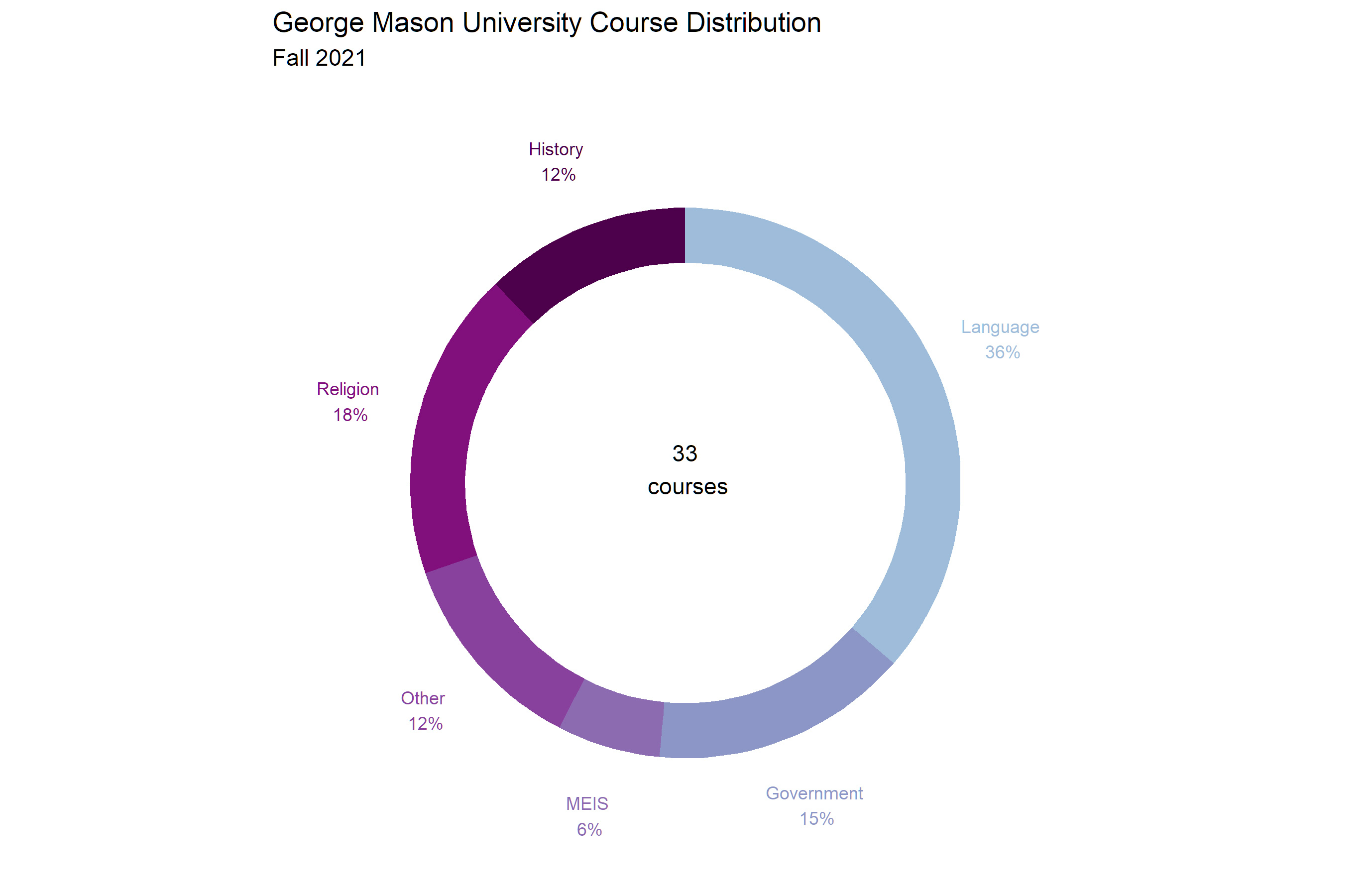
 Old Main is a state-designated historic site and the oldest building at the University of Arkansas. It houses many departments for the Fulbright College, including the King Fahd Center.
 The Fulbright Peace Fountain attracted donations from several countries.
 Fliers on Professor Joel Gordon’s door
 Flier “I’m not a terrorist (But if you mess with me, I will hurt you)” on Professor Mohja Kahf’s door


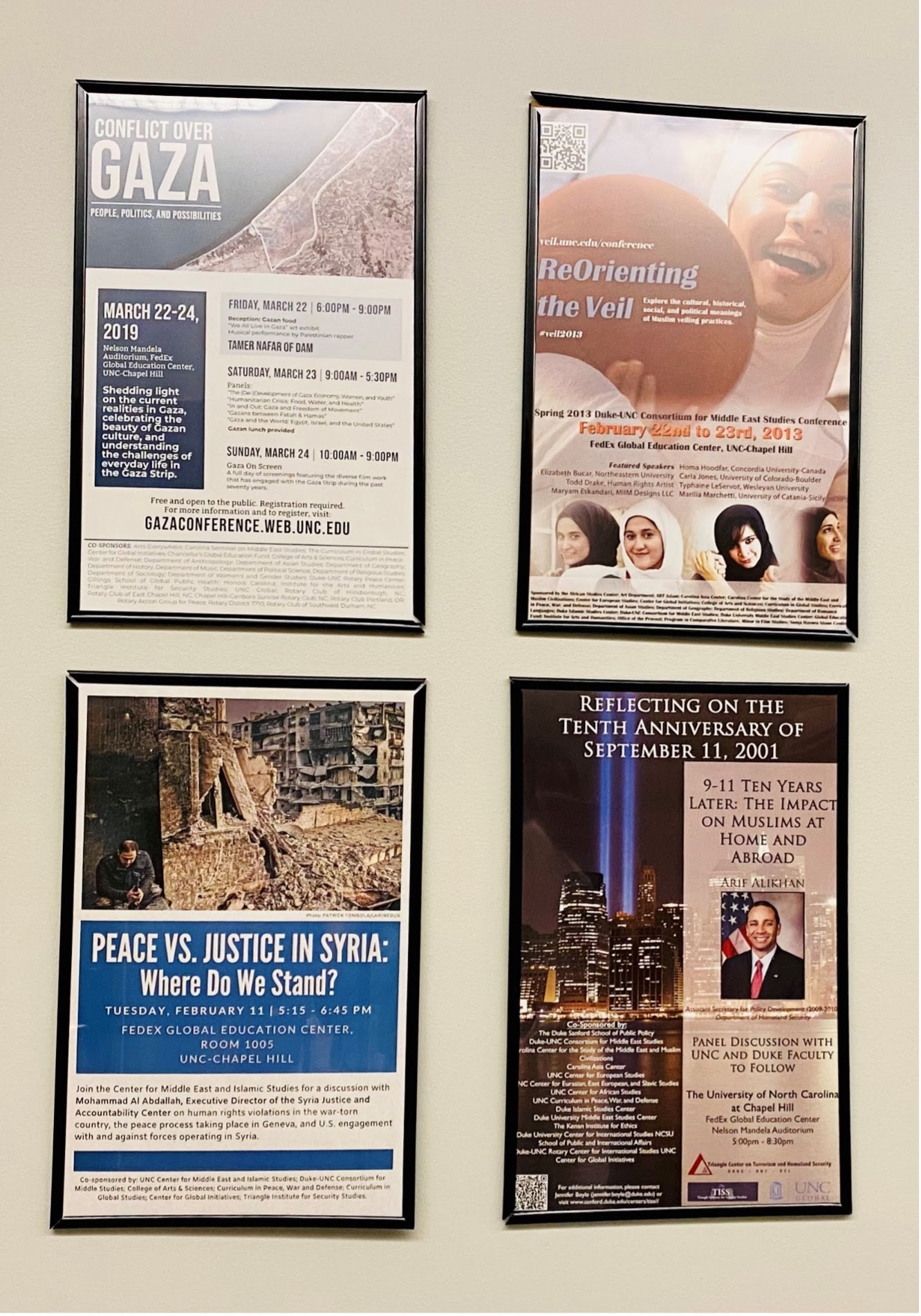


 Canadian activist and writer Yves Engler. (Photo: Yves Engler website)

 israel-academia-monitor.com