The current surge in antisemitism on campuses in the West since the Black Sabbath brutal attack on Jewish communities near the border of Gaza on October 7, showed that antisemitism and hatred of Israel, the collective embodiment of the Jewish people, are the same.
IAM reported that efforts to adopt IHRA, the authoritative document defining modern antisemitism have met with strong resistance from many scholars. They stridently protested that the document conflates antisemitic speech with legitimate criticism of Israel. Indeed, a group of radical scholars met at Van Leer Institute in Jerusalem in 2020, to issue the so-called Jerusalem Declaration on Antisemitism.
Even before October 7, Hamas and Palestinian Islamic Jihad spewed venomous antisemitic propaganda based on the writings of the Muslim Brotherhood founders Hassan al-Banna and Sayyid Qutb. Both were greatly influenced by the Nazi propaganda beamed to the Middle East from Berlin during WWII. Haj Amin al Husseini, the Grand Mufti of Jerusalem, traveled to Berlin to discuss with Hitler a Final Solution to the Jews of Palestine. Abdullah Azzam, the Palestinian preacher and co-founder of al Qaeda, published an antisemitic treatise that draws on the same materials. He pushed Sheik Ahmed Yassin to create Hamas, and his view that Jews are evil and need to be eliminated by a global Jihad shaped the organization’s 1988 Charter. Still, the pro-Palestinian activists considered Hamas a national liberation movement. To the extent that when its notorious antisemitism was acknowledged, it was brushed off as performative, that is, a rhetorical device to mobilize support. The massacre of innocent civilians, the burning of people alive, the raping of women, decapitating babies and adults, and taking hostages, demonstrated that for Hamas, like their Nazi role models, the goal is elimination. Few doubt that, given the opportunity, Hamas would try to exterminate all Israeli Jews. Indeed, Hamas threatens Israel with more massacres to come until it is annihilated, as reported recently on Lebanon TV.
More to the point, the war with Hamas had created a huge wave of antisemitism. The number of incidents has risen daily. In Sydney, Australia, there were chants in the streets calling to “Gas the Jews.”
Academics and students from Ivy League Universities, including Harvard, Columbia, Princeton, and others, have issued statements supporting the “Palestinian resistance” – their term for the October 7 massacre.
At Cornell University, an online student group conversation stated, “Watch out pig Jews. Jihad is coming. Nowhere is safe. your synagogues will become graveyards. Your women will be raped and your children will be beheaded. Glory to Allah.” Signed by Hamas Soldier.
Another post said, “If I see another Jew on campus…if I see a pig male Jew I will stab you and slit your throat. If I see another pig female Jew I will drag you away and rape you and throw you off a cliff. If I see another pig baby Jew I will behead you in front of your parents. If I see another synagogue another rally for the Zionist globalist genocidal apartheid dictatorial entity known as “Israel”, I will bring an assault rifle to campus and shoot all you pig Jews. Jews are human animals and deserve a pig’s death. Liberation by any means. From the river to the sea Palestine will be free!”
On another campus, Drew University, SJP published a poster spreading lies against Israel. “Addressing the circulation of kidnapping posters” claimed that the flyers of the people “kidnapped by Hamas,” posted on Drew Campus and across the county, are “serving the Zionist army” and that these kidnapped people are not innocent civilians but former or current Israeli soldiers. If, according to the Israelis, the captives were wounded, murdered, beaten, and raped by Hamas, according to Drew SJP, “There is not one iota of evidence that any of these prisoners of war have endured such brutalization.” Such “false claims and tropes perpetuate the propaganda used to silence, dehumanize, and threaten the livelihood of Palestinians who have been victims of the occupation and genocide that have been taking place in their homeland for over 75 years. They delegitimize the need for Palestinian resistance.” They added their disappointment that the Office of Student Life approved the flyers.
Failing to comprehend the antisemitic nature of the Hamas attack, even in Israel, the “Statement of the Israeli Sociological Association October 2023,” published in Hebrew, this is not clear. While it begins by discussing the horrific attack on October 7, it moves to attack “Extreme right-wing organizations” that “are abusing these emotional developments for actions of persecution and silencing of those who express positions that deviate from the consensus, and in particular positions critical of the Israeli response. These right-wing organizations started working several years ago and during the war accelerated their undemocratic action.”
It then discusses cases of “personal persecution of civilians, in particular of Palestinian citizens of Israel, against the background of statements that support violence and terrorism have nothing in common.” Surely, when a person is accused for no reason, the case is closed.
According to the Sociologists, some events continue to occur and be reported in the media and “create an atmosphere of violent silence and McCarthyist persecution, directed mainly towards the Palestinian citizens of Israel, but also towards citizens from the entire spectrum of the population who ‘dare’ to raise their voices regarding the Palestinian suffering in Gaza, the West Bank, the Jordan Valley and East Jerusalem… in the current atmosphere, even expressions of legitimate criticism of official Israeli policy or identification with the suffering of innocent civilians in Gaza are labeled – often as ‘support for terrorism’. As mentioned, there are those who take advantage of the explosive situation to incite and sow enmity and division by monitoring the statements of students, and lecturers on social media, harassing and demanding the administrations to act. Some of the institutions not only do not work to prevent the transformation of the campus into a space of supervisors, but cooperate with it and a number of lecturers, including a peace activist, have already been fired.” Furthermore, “The Israeli Sociological Association sees these developments as a danger to the Israeli academy and society as a whole. Apart from the question of whether monitoring the private activity of students on social networks is the role of the academic institutions, freedom of expression is the lifeblood of the academy and no scientific and intellectual activity worthy of its name would be possible without it. Academic institutions have an obligation to protect the freedom of expression of lecturers and students, even in times of emergency, as long as their words do not constitute an offense against the law. These revelations of persecution and silencing do not only concern freedom of expression. The academic communities are heterogeneous communities from a national, religious, ethnic and political point of view.”
This letter coincides with a Haaretz opinion piece, “The Original Sin was the Disengagement,” by Ben Gurion Sociologist Prof. Lev Grinberg, who is the president of the Israeli Sociology Association, and his colleague, Daniel De Malach, on October 30, 2023. They wrote, “The original sin that led to the current systemic collapse is the unilateral exit from Gaza, misleadingly known as ‘disengagement’. The withdrawal was planned with the aim of thwarting the establishment of a Palestinian state, knowing that following the separation from the West Bank and Israel and the blockade, serious distress would arise in Gaza, which would lead to violence against Israel. Israeli policy since then has been based on a repeated violent response to attacks from the Strip, which has been nicknamed ‘mowing the lawn’, putting up with the firing of rockets, which abandons the residents of southern Israel, and an attempt to force Egypt to ‘accept responsibility’ for the residents of Gaza.”
People need to understand that since the creation of Israel, antisemitic attacks against Jews around the world have been bolstered by an assault on the Jewish State. Antisemitism and anti-Zionism are the same.
Watch out Jews, jihad is coming’: FBI investigate Cornell University messaging board after vile anti-Semitic threats are made against students
By Stephen M. Lepore For Dailymail.Com04:53 30 Oct 2023, updated 13:08 30 Oct 2023
Cornell President Martha E. Pollack wrote a letter to students where she announced she’s contacted the FBI about ‘a potential hate crime’
Threatening messages with the headlines ‘Eliminate Jewish living from Cornell Campus’ or ‘Israel deserved 10/7’ were made against a Jewish living center
Authorities were investigating at the school’s Center for Jewish Living Sunday night after revolting anti-Jewish threats were discovered online.
Some of the abhorrent comments threatened violence – including rape – in the most grotesque terms. There was repeated use of the word ‘pig’ – an anti-Semitic slur.
Cornell President Martha E. Pollack wrote a letter to students where she announced she’s contacted the FBI about ‘a potential hate crime.’
Cornell University, the site of many anti-Israel sentiment in the wake of the October 7 attack, is on high alert about ‘a potential hate crime ‘ toward a Jewish community center on campus Sunday nightOf the several messages left on the school’s Greekrank page – a forum meant for fraternity and sorority reviews – were messages with the headlines ‘Eliminate Jewish living from Cornell Campus’ or ‘Israel deserved 10/7’
Of the several messages left on the school’s Greekrank page – a forum meant for fraternity and sorority reviews – were messages with the headlines ‘Eliminate Jewish living from Cornell Campus’ or ‘Israel deserved 10/7.’
One member wrote: ‘Watch out Jews, jihad is coming.’
Another was even more revolting, writing: ‘I will bring an assault rifle to campus and shoot all you pig Jews. Jews are human animals and deserve a pigs death.’
The commenter, who went by username ‘hamas‘ and also made threats of sexual violence toward female students, added: ‘Liberation by any means. From the river to the sea, Palestine will be free!’
One specific message singled out the Center for Jewish Living, which also includes the school’s Kosher dining hall.
‘Earlier today, a series of horrendous, antisemitic messages threatening violence to our Jewish community and specifically naming 104 West – the home of the Center for Jewish Living – was posted on a website unaffiliated with Cornell,’ wrote President Pollack in a statement.
She added that ‘law enforcement was immediately notified.
‘Threats of violence are absolutely intolerable, and we will work to ensure that the person or people who posted them are punished to the full extent of the law. Our immediate focus is on keeping the community safe; we will continue to prioritize that,’ Pollack added.
Cornel’s Hillel organization told students to stay away from the Center for Jewish Living in a statement of their own.
‘The Cornell University administration has been made aware of this concerning language, and the Cornell University Police Department is monitoring the situation and is on site at 104West! to provide additional security as a precaution. At this time, we advise that students and staff avoid the building out of an abundance of caution.’
Cornell Police said that the ‘targeted locations were intentionally selected’ in a threat alert for the entire city of Ithaca Sunday night, according to the Cornell Sun.
They reported parents trying to convince their students to leave campus and others attempting to find different places to stay the night to feel safe.
Cornell President Martha E. Pollack wrote a letter to students where she announced she’s contacted the FBI about ‘a potential hate crime’
Governor Kathy Hochul, a Democrat, made a lengthy post on X Sunday slamming the attacks.
‘The disgusting & hateful posts on a message board about Jewish @Cornell students is the latest in a series of concerning incidents on college campuses. While it is unclear if these are credible threats, @nyspolice is engaged & we’ll take any steps needed to keep students safe,’ she wrote.
She notified various state universities that the state police was being called to monitor any threats, while attempting to reassert a commitment to ‘free speech’ on campus.
New York’s Attorney General Letitia James also condemned the remarks in a post on X Sunday night.
‘These threats targeting Jewish students at Cornell are absolutely horrific. There is no space for antisemitism or violence of any kind. Campuses must remain safe spaces for our students.’
Cornell, like many liberal campuses, has been a hotbed for anti-Israel demonstrations in the wake of the state’s response to the Hamas terror attacks, which killed 1,400 Israelis on October 7.
The school was defaced with antisemitic graffiti reading ‘f**k Israel’ just days after a professor, who had described a Hamas attack as ‘exhilarating’ and ‘energizing,’ took a leave of absence.
Spray-painted messages such as ‘Zionism equals Racism’ and ‘Israel is Fascist’ began appearing on the sidewalks of Cornell University’s upstate New York campus on Wednesday morning.
The vandalism occurred amid a heated campus controversy surrounding the Israel-Palestine dispute, following Professor Russell Rickford’s leave of absence after his comments on Hamas’ brutal attack.
The graffiti, bearing messages like ‘Israel is Fascist,’ ‘Zionism equals Racism,’ ‘Free Palestine,’ and ‘F**k Israel,’ were first noticed just before 9am but have since been cleaned up by university staff.
It’s unclear who painted the appalling messages in red and white on Campus Road which is known to have a lot of foot and vehicle traffic through the day.Spray-painted messages such as ‘Zionism equals Racism’ and ‘Israel is Fascist’ began appearing on the sidewalks of Cornell University’s upstate New York campus on WednesdayIt remains unknow who left the messagesThe graffiti was painted on one of the busiest area on campus
A Cornell professor with a history of radical left-wing views called the Hamas terror attacks in Israel ‘exhilarating’ and ‘energizing’ at a pro-Palestine rally on October 15. He apologized on October 18, but on October 20 announced he was taking a leave of absence
The aggressive graffiti comes after Rickford told an October 15 rally at Ithaca Commons, the downtown shopping district in the upstate New York city, that he was thrilled by Hamas’ October 7 attack on Israel, in which 1,400 Israelis were killed.
He said he condemned the killing of any civilians, but said he was angered by ‘the injustice and the hypocrisy of Western support in celebration of Israeli war crimes, and the equation of any form of Palestinian resistance with terrorism.’
Rickford later apologized, saying on October 18 that he was sorry ‘for the horrible choice of words that I used’, and calling his language ‘reprehensible’.
It emerged later Rickford had pulled out of teaching his history class for the rest of the semester, and the Cornell Review confirmed that he has gone on leave.
ב-7 באוקטובר ישראל חוותה את מתקפת הטרור הקשה בתולדותיה. מספר הנרצחים, הפצועים, החטופים ושורדי הטבח, גם בקרב בדואים, הוא כה גדול, עד שאין כמעט אדם בישראל שאין לו נגיעה אישית כלשהי לאירוע. מדובר במתקפה נפשעת ואכזרית הראויה לכל לשון של גינוי. מאז, רבים פונו מבתיהם, נותרו עקורים באי וודאות לגבי העתיד. הטבח והאובדן העצום שנגרם למשפחות רבות, ולצידו המאבק הקשה של משפחות החטופים ורבים למען השבת יקיריהם, קשים להתמודדות והכלה. בהקשר זה, פחד זעם וחשדנות התחזקו ביחסים בין יהודים וערבים בקמפוסים ומחוצה להם. ארגוני ימין קיצוניים מנצלים לרעה התפתחויות רגשיות אלו לפעולות של רדיפה והשתקה של מי שמבטאים עמדות החורגות מן הקונצנזוס, ובפרט עמדות ביקורתיות כלפי התגובה הישראלית. ארגוני ימין אלו החלו פועלים לפני מספר שנים ובמלחמה האיצו את פעולתם הלא-דמוקרטית.
הרצון והצורך להוקיע את מעשי החמאס ולעמוד איתן נגד ניסיונות להצדיקם ברור ומובן, ורבים מאיתנו עוסקים במלאכה זו. יחד עם זאת, מאז ה – 7 באוקטובר נרשמו מקרים של רדיפה אישית של אזרחים ואזרחיות, בפרט של פלסטינים אזרחי ישראל על רקע התבטאויות שבינן לבין תמיכה באלימות ובטרור אין דבר וחצי דבר. דוגמא אחת היא של רופא בבית החולים הדסה שהושעה מעבודתו עקב פוסט שלכאורה הביע “תמיכה בחמאס” ועד מהרה הסתבר שמדובר בפוסט ישן עם תוכן דתי מוסלמי (הרופא הוא מוסלמי מאמין) שלא קשור בשום דרך לחמאס או למתקפת הטרור; דוגמא אחרת היא של פיטורי עובדת מערכת החינוך בחיפה ששינתה את תמונת הפרופיל שלה לרקע שחור (בלבד!) ביום של הפיצוץ בבית החולים בעזה שגבה עשרות קורבנות. אירועים דומים ממשיכים להתרחש ולהיות מדווחים בתקשורת כמעט מדי יום ומייצרים אווירה של השתקה אלימה ורדיפה מקארתיסטית, המכוונת בעיקר כלפי אזרחי ישראל הפלסטינים, אך גם כלפי אזרחים מכל קשת האוכלוסייה אשר ‘מעיזים’ להשמיע את קולם ביחס לסבל הפלסטיני בעזה, בגדה, בבקעת הירדן ובמזרח ירושלים.
כמוסד האמון על ערכים של שוויון וכבוד האדם, מובן שהאקדמיה אינה יכולה להסכין עם ביטויים של תמיכה בטרור, אלימות, הסתה וגזענות. אלא שבאווירה הנוכחית, גם ביטויים של ביקורת לגיטימית כלפי המדיניות הישראלית הרשמית או הזדהות עם הסבל של אזרחים חפים מפשע בעזה, מסומנים – לא פעם כ”תמיכה בטרור”. כאמור, יש מי שמנצלים את המצב הנפיץ כדי להתסיס ולזרוע איבה ופירוד באמצעות מעקב אחר התבטאויות של סטודנטים וסטודנטיות, מרצים ומרצות ברשתות החברתיות, התנכלויות ודרישה מההנהלות לפעול. חלק מהמוסדות לא רק שאינם פועלים למניעת ההפיכה של הקמפוס למרחב של מפקחים ומפוקחים, אלא משתפים עמה פעולה ומספר מרצים, ביניהם פעילת שלום, כבר פוטרו.
האגודה הסוציולוגית הישראלית רואה בהתפתחויות אלה סכנה לאקדמיה הישראלית ולחברה בכללותה. מלבד השאלה, האם ניטור פעילות פרטית של סטודנטים ברשתות החברתיות הוא מתפקידם של המוסדות האקדמיים, חופש הביטוי הוא נשמת אפה של האקדמיה ולא תיתכן פעילות מדעית ואינטלקטואלית ראויה לשמה בלעדיו. למוסדות האקדמיים יש חובה להגן על חופש הביטוי של המרצים והסטודנטים, גם בעתות חירום, כל עוד דבריהם אינם בגדר עבירה על החוק.
גילויים אלה של רדיפה והשתקה אינם נוגעים רק לחופש הביטוי. הקהילות האקדמיות הן קהילות הטרוגניות מבחינה לאומית, דתית, אתנית ופוליטית. יצירת אווירה של קבלה, אמון ופתיחות כלפי מגזרים שונים ודעות שונות היא הכרחית לשם שמירה על קהילה אקדמית חיונית ומתפקדת. הפיכת הקהילות האקדמיות לקהילות של חשד, מעקב, הלשנה והשתקה פוגעת פגיעה אנושה במרקם היחסים העדין בין קבוצות שונות בקמפוס, אשר ספק אם אפשר יהיה לשקם גם לאחר שתסתיים הלחימה.
יתרה מכך: למרות שההנהלות של חלק מהמוסדות פרסמו הצהרות המגנות תמיכה בטרור ובאלימות מכל סוג שהוא, עד כה ננקטו הליכים כמעט אך ורק כלפי סטודנטים וחברי סגל פלסטינים. לעומת זאת, כאשר ביטויים של תמיכה באלימות ובטרור כלפי פלסטינים מגיעים מצד סטודנטים ומרצים יהודים, הם אינם זוכים לאותו טיפול. בכך יש פגיעה בערך השוויון ומסר לסטודנטים פלסטינים לפיו רק יהודים זכאים להגנה.
האקדמיה היא אחד מן המרחבים המרכזיים בישראל בהם מתנהל מפגש מתמשך בין יהודים לערבים. שמירה על המוסדות האקדמיים כמרחב בטוח של חיים משותפים היא בנפשנו. בימים אלה של שידוד מערכות כולל, על האקדמיה להוות מופת של סובלנות, שוויון, פתיחות וצדק. ראשי האוניברסיטאות סרבו לשתף פעולה עם החלטת המל”ג המחייבת אותם לדווח על אופן הטיפול בתלונות על “תמיכה בטרור” מצד סטודנטים והבליטו את מחוייבותם לשמירה על החוק. זהו צעד חשוב אולם אין להסתפק בכך. האגודה הסוציולוגית קוראת לראשי המוסדות האקדמיים – אוניברסיטאות ומכללות – לנקוט בפעולה אקטיבית כדי להבטיח שמירה על הקמפוסים כמרחב חופשי ומכבד לסטודנטים וסטודנטיות, חברות וחברי סגל מכל הקבוצות, בכל זמן ובמיוחד בשעה קשה זו.
לצד זאת, באופן שאינו מפחית כהוא זה מהנאמר לעיל, אנו קוראים לכולם – מוסדות ופרטים כאחד – להימנע מקריאות המעודדות פגיעה בגוף, בנפש או ברכוש וכן להימנע מפרסומים ומקריאות המצדיקים פגיעות כאלה ונותנים להן לגיטימציה – לא בקרב ישראלים ולא בקרב פלסטינים.
A new petition titled “Sociologists in Solidarity with Gaza and the Palestinian People” was posted recently, with some two thousand signatures from students and staff. It includes many Arabs and some Jews, including David Feldman, Professor of Sociology at Oberlin College, and two Israelis, Eliran Arazi from the Hebrew University and Ecole des hautes études en sciences sociales, and Dr. Eliran Bar-El, Lecturer in Sociology, University of York.
The petition states, “Sociology as a discipline is rooted in a recognition of relationships of power and inequality. As sociologists and human beings, we unreservedly condemn the latest violence against the Palestinian people in Gaza and the West Bank at the hands of the Israeli regime. Over the past seven days, the government of Israel has undertaken, in its own words, a ‘complete siege’ of Gaza—the second most densely populated place on the planet, home to 2.1 million residents, of which 1.7 million are refugees.”
Since Israel “claims” its actions are justifiable responses to the Hamas violence against Israeli civilians, “it has targeted the civilian Palestinian population of Gaza, while exhibiting little regard for the loss of human life. Using racist and dehumanizing language.” It then quotes Israel’s Defense Minister, Yoav Gallant, who remarked, “We are fighting human animals and we act accordingly.” Because in just ten days, “Israel has dropped over 6,000 bombs on Gaza, hit the Rafah crossing on the border to Egypt several times, targeted hospitals and ambulances, members of the press, universities, United Nations’ schools and relief offices, and used white phosphorus, a highly flammable munition that the United Nations has banned for use in dense civilian areas. Israeli forces have also cut off water, food, electricity, and medical supplies, which has pushed hospitals to a breaking point. This is an act of collective punishment.”
This, “in contravention of international law threatens the lives of over two million people, half of whom are children, with unimaginable violence and displacement.”
As of writing, ״over 4,385 Palestinians have been murdered, including a staggering 1,756 children, and over 13,561 injured. Israel’s military campaign has also displaced nearly half of Gaza’s population. It has unconscionably demanded that 1.1 million residents relocate from Northern to Southern Gaza in 24 hours, while simultaneously bombing caravans of those attempting to evacuate, and continuing to bomb the Southern part of Gaza. Calls for “evacuation” parallel the military offenses of 1948 and 1967, when Palestinians were forced to leave their homes and never allowed to return. The majority of people in Gaza are long-term refugees, and now again face genocide and ethnic cleansing. At the same time, Israeli settlers across the West Bank, recently armed by the Israeli government with 10,000 assault rifles, have targeted Palestinian civilians, with over 50 already murdered and two villages depopulated in the last week. We are witnessing internationally supported genocide. This latest siege comes as a continuation and escalation of the daily violence Palestinians faced for decades from Israeli colonization; an apartheid regime whose occupation is in clear violation of international law, but persists with the support of powerful governments globally. “
The petitioners are upset that the Western world sides with Israel and protest the “increased harassment of pro-Palestinian voices around the globe. We join people around the world who are raising their voices in protest of this assault on human life.”
They conclude that “As educators, it is our duty to stand by the principles of critical inquiry and learning, to hold the university as a space for conversation that foregrounds historical truths, and that contextualizes this past week’s violence in the context of 75 years of settler colonial occupation and European empire. We are also deeply troubled by the lack of concern and care for Palestinian and Muslim students at many of our universities, as well as efforts to clamp down on student organizing and free speech. We cannot sit back and witness the continuation of this genocidal war. We demand that our governments push for an immediate ceasefire. This stance follows in the tradition of the civil rights movement, anti-war and anti-apartheid protests of decades past. Aligning ourselves with these freedom struggles, we call on all of our colleagues to stand in solidarity with Palestinians and against settler colonialism, imperialism, and genocide.”
The petition is a classic example of the anti-Israeli activists in the academy. First, it decontextualizes the Israeli action from any empirical reality. Nowhere does the petition mention the brutal, ISIS-style attack of Hamas on the civilian population in the border communities. One would not know from the text that the terrorists burned people, raped women, beheaded babies, and kidnapped more than two hundred people to serve as hostages.
Second, Hamas is also hurting the civilian population in Gaza. The organization is in complete control of the enclave and, over the years, siphoned billions of dollars of international aid to build a virtual military fortress replete with missiles, rockets, drones, and miles of tunnel. Most egregiously, many, if not most, of the installations are built in or under public buildings, mosques, schools, and hospitals. This turns the civilians into human shields, a practice strictly prohibited in International Humanitarian Law (IHL). On the other hand, Israel has always tried to comport with IHL, even warning civilians to leave the premises before a strike.
As for the Israeli signatories, Eliran Arazi is a “PhD researcher at the Hebrew University of Jerusalem and the Advanced School in the Social Sciences (EHESS-Paris). He is currently also a research fellow at the Musée du quai Branly. Already in 2012, he signed a BDS petition.
Dr. Eliran Bar-El is a lecturer in Sociology at the University of York. In 2016, he also signed a BDS petition.
Clearly, by signing the sociologists petition, Arazi and Bar-El are signaling to Arab peers they are on their side, like many anti-Israel Israeli academics who are recruited to Western Universities.
Sociologists in Solidarity with Gaza and the Palestinian People
Sociology as a discipline is rooted in a recognition of relationships of power and inequality. As sociologists and human beings, we unreservedly condemn the latest violence against the Palestinian people in Gaza and the West Bank at the hands of the Israeli regime.
Over the past seven days, the government of Israel has undertaken, in its own words, a “complete siege” of Gaza—the second most densely populated place on the planet, home to 2.1 million residents, of which 1.7 million are refugees. While claiming its actions are a justifiable response to recent Hamas violence against Israeli civilians, it has targeted the civilian Palestinian population of Gaza, while exhibiting little regard for the loss of human life. Using racist and dehumanizing language, Israel’s Defence Minister, Yoav Gallant, remarked, “We are fighting human animals and we act accordingly.”
In just ten days, Israel has dropped over 6,000 bombs on Gaza, hit the Rafah crossing on the border to Egypt several times, targeted hospitals and ambulances, members of the press, universities, United Nations’ schools and relief offices, and used white phosphorus, a highly flammable munition that the United Nations has banned for use in dense civilian areas. Israeli forces have also cut off water, food, electricity, and medical supplies, which has pushed hospitals to a breaking point. This is an act of collective punishment, in contravention of international law, which threatens the lives of over two million people, half of whom are children, with unimaginable violence and displacement. As of writing, over 4,385 Palestinians have been murdered, including a staggering 1,756 children, and over 13,561 injured.
Israel’s military campaign has also displaced nearly half of Gaza’s population. It has unconscionably demanded that 1.1 million residents relocate from Northern to Southern Gaza in 24 hours, while simultaneously bombing caravans of those attempting to evacuate, and continuing to bomb the Southern part of Gaza. Calls for “evacuation” parallel the military offenses of 1948 and 1967, when Palestinians were forced to leave their homes and never allowed to return. The majority of people in Gaza are long-term refugees, and now again face genocide and ethnic cleansing. At the same time, Israeli settlers across the West Bank, recently armed by the Israeli government with 10,000 assault rifles, have targeted Palestinian civilians, with over 50 already murdered and two villages depopulated in the last week.
We are witnessing internationally supported genocide. This latest siege comes as a continuation and escalation of the daily violence Palestinians faced for decades from Israeli colonization; an apartheid regime whose occupation is in clear violation of international law, but persists with the support of powerful governments globally. In 2023 alone, the United States has sent $3.8 billion to prop up the Israeli military and consistently legitimized Israel’s human rights violations on a global stage. The European Union too has brazenly supported Israel’s aggression, while failing to reflect on the historical irony to “never again” commit genocide.
Furthermore, the dehumanizing language used by heads of state, military leaders, and journalists throughout the West, has begun to increase anti-Palestinian and anti-Muslim sentiment and violence. This has already led to horrible consequences, like the stabbing murder of Wadea Al-Fayoume, a six-year old Palestinian American child, a hate crime against a Sikh teen, and increased harassment of pro-Palestinian voices around the globe.
We join people around the world who are raising their voices in protest of this assault on human life. As educators, it is our duty to stand by the principles of critical inquiry and learning, to hold the university as a space for conversation that foregrounds historical truths, and that contextualizes this past week’s violence in the context of 75 years of settler colonial occupation and European empire. We are also deeply troubled by the lack of concern and care for Palestinian and Muslim students at many of our universities, as well as efforts to clamp down on student organizing and free speech.
We cannot sit back and witness the continuation of this genocidal war. We demand that our governments push for an immediate ceasefire. This stance follows in the tradition of the civil rights movement, anti-war and anti-apartheid protests of decades past. Aligning ourselves with these freedom struggles, we call on all of our colleagues to stand in solidarity with Palestinians and against settler colonialism, imperialism, and genocide.
Mary Romero, Professor of Justice Studies and Social Inquiry, Arizona State University
Aldon Morris, Emeritus Professor of Sociology and Black Studies Northwestern University
Ruth Milkman, Distinguished Professor of Sociology, CUNY
Dorothy Roberts, George A. Weiss University Professor of Law & Sociology, Raymond Pace & Sadie Tanner Mossell Alexander Professor of Civil Rights, University of Pennsylvania
Julian Go, Professor of Sociology, University of Chicago
Jessica Halliday Hardie, Professor of Sociology, Hunter College and the Graduate Center, CUNY
José Itzigsohn, Professor of Sociology, Brown University
Michael Burawoy, Professor of Sociology, Emeritus, University of California Berkeley
Craig Calhoun, University Professor, Arizona State University
Eric Margolis, Arizona State University
Fatma Müge Göçek, Professor, University of Michigan
Moon-Kie Jung, Professor, University of Massachusetts
David Cook-Martín, Professor, CU Boulder
Michael Rodríguez-Muñiz, Associate Professor of Sociology, University of California, Berkeley
Jessie Daniels, Professor of Sociology, CUNY
Gianpaolo Baiocchi, Professor of Sociology and Individualized Studies, New York University
Arathi Sriprakash, Professor of Sociology and Education, University of Oxford
Howard Winant, Distinguished Professor of Sociology Emeritus
Anna Guevarra, Professor and Founding Director, Global Asian Studies, University of Illinois Chicago
Melissa Weiner, Professor, College of the Holy Cross
Tianna Paschel, Associate Professor of Sociology and African American Studies, University of California, Berkeley
Mara Loveman, Professor, UC Berkeley
Cedric de Leon, Professor of Sociology and Labor Studies, UMass Amherst
William I Robinson, Distinguished Professor of Sociology, University of California at Santa Barbara
Joe Feagin, Professor of Sociology, Texas A&M University
Tanya Golash-Boza, Professor of Sociology at UC Merced
Deborah Gould, Professor of Sociology, UC Santa Cruz
Ranita Ray, Associate Professor, University of New Mexico
Brandon Andrew Robinson, Chair and Associate Professor of Gender & Sexuality Studies, UCR
Ruth McAreavey, Professor of Sociology, Newcastle University
Rebecca Elliott, Associate Professor of Sociology, London School of Economics
Heba Gowayed, Assistant Professor of Sociology, Boston University
Eman Abdelhadi, Assistant Professor of Comparative Human Development, University of Chicago
James M. Thomas, Associate Professor, University of Mississippi
Heather Randell, Assistant Professor, University of Minnesota
Shay-Akil McLean
Vaclav Masek, USC PhD Student
Evangeline Warren, PhD Candidate, The Ohio State University
Yannick Coenders, Postdoctoral Fellow/Assistant Professor of Sociology, Washington University in St. Louis
A Johnson
Julien Larregue, Assistant Professor of Sociology, Université Laval
Chen Liang, Ph.D. Candidate, University of Texas at Austin
Jack Thornton, PhD candidate, University of Pennsylvania
Victoria Reyes, Associate Professor, University of California, Riverside
Muhammad Ridha, PhD Candidate, Northwestern University
Gabriel Hetland, Associate Professor, SUNY Albany
Ricarda Hammer, Assistant Professor of Sociology, UC Berkeley
Daniel R. Morrison, Associate Professor of Sociology, University of Alabama in Huntsville
Christy Thornton, Assistant Professor, Johns Hopkins University
Cihan Tugal, Sociology, UC Berkeley
Nabila Islam, Doctoral Candidate, Brown University
Andrea Constant, PhD Student, The Ohio State University
Saida Grundy, Associate Professor of Sociology, Boston University
Patricia McIsaac. Elementary Teacher
Irene Pang, Assistant Professor, School for International Studies, Simon Fraser University
Veda Hyunjin Kim, Assistant Professor of Sociology-Anthropology, Ohio Wesleyan University
Shantel Gabrieal Buggs, Assistant Professor, Florida State University
Zachary Levenson, Assistant Professor of Sociology, Florida International University
Benjamin Bradlow, Assistant Professor of Sociology and International Affairs, Princeton University
Raquel Douglas, Ph.D. student, Brown University
Amaka Okechukwu, Assistant Professor, George Mason University
Jamie O’Quinn, Assistant Professor of Sociology, California State University San Bernardino
Shannon Malone Gonzalez, Assistant Professor, University North Carolina-Chapel Hill
Semassa Boko, Graduate Candidate, University of California Irvine
Danielle E. Midgyett, PhD Student, University of Delaware
Daniel Aldana Cohen, Assistant Professor of Sociology, UC Berkeley
Katie Kaufman Rogers, Assistant Professor, Regis University
Salma Mostafa, graduate Sociology student at Northwestern University
Pilar Gonalons Pons, Associate Professor University of Pennsylvania
Paloma E Villegas, Associate Professor, California State University, San Bernardino
Yichen Shen, graduate student, Department of Sociology, Northwestern University
Cati Connell, Associate Professor of Sociology at Boston University
Karin Yndestad, PhD Candidate, Northwestern University
christina ong, PhD Candidate, University of Pittsburgh
Vivian Shaw, Mellon Assistant Professor, Vanderbilt University
Santiago J. Molina, Assistant Professor, Northwestern University
Archana Ramanujam, PhD student, Brown University
Carolina Hernandez, M.A., University of Pittsburgh
Spyros Sofos, Assistant Professor, Simon Fraser University
Nicole Jenkins, Assistant Professor Howard University
Madeleine Govia, MSDS
Carilee Osborne, PhD Student, Brown University
Xianni Zhang, PhD Student, University of Michigan
Brett Kellett, PhD Student, University of Michigan
Yeneca Lee, PhD student, University of Pittsburgh
Cat Dang Ton, PhD Student, Department of Sociology
Jean Beaman, Associate Professor, University of California-Santa Barbara
Lanora Johnson, PhD Candidate, University of Michigan
Eyako Heh, Sociology PhD Student, Northwestern University
Erika Kim, PhD Student, University of Michigan
Xavier Durham, UC Berkeley
Georgiann Davis, Associate Professor, University of New Mexico
Katie Jensen, Assistant Professor of Sociology and International Studies, UW-Madison
Sonia Planson, Postdoctoral Fellow, Brown University
Kalyani Jayasankar, Postdoctoral Scholar, University of Southern California
Laura Garbes, Assistant Professor, University of Minnesota
Kelsey Weymouth-Little, PhD Student, UC Irvine
Dr Babalwa Magoqwana- Nelson Mandela University
Mo Torres, Assistant Professor, University of Michigan
Carmen Gutierrez, Assistant Professor, University of North Carolina at Chapel Hill
Charles Bradley, PhD student, University of Virginia
Edlin Veras, V.A.P., Swarthmore College
Liora O’Donnell Goldensher, Assistant Professor, Virginia Tech
Parker Martin, PhD Candidate, University of Michigan
Karina Santellano, Research Postdoctoral Scholar, Arizona State University
Rahim Kurwa, UIC
Iolanthe Brooks, Graduate Student, Northwestern University
Saher Selod, Associate Professor, Simmons University
Sosi Segal Lepejian, PhD student, University of Michigan
Joshua Eisenstat, PhD Candidate, New York University
Kayonne Christy, PhD Candidate, The University of Michigan – Ann Arbor
Juan D. Delgado, Postdoctoral Fellow, University of Michigan
Kate Averett, Associate Professor, University at Albany, SUNY
Racheal Pinkham, PhD Student, University of Pittsburgh
Anna Palmer, PhD Student, UC Berkeley
Susila Gurusami, assistant professor, UIC CLJ
Amy Zhang, Ph.D. Candidate, University of Texas at Austin
Ryan Thombs, PhD Candidate, Boston College
Andrea Beltran-Lizarazo, PhD candidate, Boston University
Jessica Law, PhD Student, UC Berkeley
Eylem Taylan, PhD Student, UC Berkeley
Janna Huang, PhD Student, UC Berkeley Sociology
Steven Herrera Tenorio, Ph.D. Student, University of California-Berkeley
Prashasti Bhatnagar, Sociology PhD Student, UCLA
Hajar Yazdiha, Assistant Professor, USC
Gözde Güran, Assistant Professor, Georgetown University
Dialika Sall, Asst. Professor, CUNY-Lehman College
prabhdeep singh kehal, Postdoctoral Associate, University of Wisconsin-Madison
Abi Ocobock, Assistant Professor of Sociology, University of Notre Dame
katrina quisumbing king, Assistant Professor, Northwestern University
Kirsten Vinyeta, Assistant Professor, Utah State University
Stephanie L. Canizales
Dori-Taylor Carter, PhD Student, UC Berkeley
Mishal Khan, Postdoctoral Fellow, Yale University
Grey Rochon, PhD Student, University of California Irvine
Roi Livne, Associate Professor, University of Michigan
Hashem Alrefai, PhD Candidate Department of Sociology University of Pittsburgh
Nicholas Occhiuto, Assistant Professor, Hunter College-CUNY
Wynn Strange, PhD Candidate, Portland State University
Amelia Roskin-Frazee, Sociology PhD Student, University of California, Irvine
Vera Parra, PhD Student, UC Berkeley
Kayla Thomas, Sociology PhD Candidate, Yale University
Mushtaq Ahmad Wani, Doctoral Student, IBN Haldun Üniversite
Rachid Benbih, faculté des Langues, des Arts et des Sciences humaines Ait Melloul, Université Ibn Eohr
Marianne Madoré, PhD Candidate CUNY
Mustafa Koc, Professor, Department of Sociology, Toronto Metropolitan University
Viviththa Shrirajh, Year 3 Nursing Student
Chantrey J. Murphy, Associate Professor, California State University, Long Beach
Alex Kempler, Graduate Student, The Ohio State University
Merve Reyhan Ekinci, PhD student, Ibn Haldun University
Bogumila Hall, PhD, Polish Academy of Sciences
Imogen Tyler, Professor of Sociology, Lancaster University
M’hammed Belarbi, Professor / Public Law and Political science Faculty of Law / University Cadi Ayyad Marrakech, Morocco
Fatimah
Víctor Manuel Quintana Silveyram Doctor in Sociology. Professor-researcher, Universidad Autónoma de Ciudad Juárez, MEXICO
Thomas Serres, UC Santa Cruz
Aharmouche Fatima Zahra, Professeure universitaire sociologue. Université Ibn Zohr.
Chantal Figueroa, Assistant professor of Sociology, Colorado College
Irene Shankar, Associate Professor, Mount Royal University
Betül Babacan Sevim, PhD student, Boğaziçi University
Zeynel Hakan Aser, PhD cand.
Matthew Fritzler, PhD Candidate, Sociology, UC Santa Barbara
Ala Sirriyeh, Lancaster University
Kimberly Higuera, Assistant Professor of Sociology, Cal Poly, SLO
Sehel fidan
Mara Viveos Vigoya, Universidad Nacional de Colombia
Caroline Martínez, Graduate Student, UC Irvine
Zahra Ali, Assistant Professor, Rutgers University-Newark
Vanessa Nunez
Jyoti Puri, Simmons University
Mel Mahmoudi, Undergraduate Student
Ronit Lentin (ret) Associate Professor Sociology, Trinity College Dublin
Farah Hamouda, PhD student , Vanderbilt University
Melanie E L Bush, Professor, Adelphi University
Amanda Hernandez, Assistant Professor of Sociology, Southwestern University
Anjerrika Bean, Ph.D., Assistant Director, Howard University Center for Women, Gender, and Global Leadership
Fernanda Rios Petrarca, PHd Sociology, professor at Universidade Federal de Sergipe
Arezki Ighemat, Ph.D in economics and Master of Francophone Literature (Purdue University)
Lesley Schneider, Assistant Professor, North Carolina State University
Dip Kapoor, Professor, University of Alberta
Monserat Rodríguez Rico, grad student UIC
DR.KHALID HANTOOSH
Haider zwwer. Iraq
Tania Élias Magno da Silva
Mirebeigi Vahid
Kari Marie Norgaard, Professor, University of Oregon
Majid, iran
Dr. Katarzyna Rukszto, Sheridan College
Hye Jee Kim, PhD Candidate, Stanford University
Dr. Yahya AYDIN-Ankara Yildirim Beyazit University
Jay Arena, Associate Professor, College of Staten Island-CUNY
Cawo Abdi, Associate Professor, University of Minnesota-Twin Cities
Mark Thomas, Professor, Department of Sociology, York University (Toronto)
Artchil B. Fernandez, sociology graduate student, University of the Philippines (UP) – Diliman
Isabella Irtifa, Sociology PhD student, University of Minnesota – Twin Cities
FATIM ZAHRA RAFALI, Ph.D. Student, IBN ZOHR AGADIR/Morocco
Kriti Budhiraja, PhD candidate, University of Minnesota Twin CIties
Ms. Sherine Seoudi. B.A in Business Administration, Fresno State University
Uriel Serrano, UC Irvine
Anindita Adhikari, Postdoctoral fellow, University of Michigan
Zahra Baghdari
Snigdha Kumar, PhD candidate, University of Minnesota
Hassan Abdel Salam, Prof., Sociology
Mark Goodman, Sociology, York University
Hyunjae Kwon, Graduate Student, University of Minnesota
Daniel Curto-Villalobos, University of Minnesota
Michael Goldman, Sociology and Global Studies, University of Minnesota
Marisol Zarate, PhD Candidate, Stanford University
Caity Curry, PhD Candidate, University of Minnesota
Mary Hovsepian, Duke University
Shuhruh Akhand, undergraduate student at the University of Toronto
Dr. Oscar Fabian Soto, postdoctoral fellow, UC Irvine
Vanessa Jimenez-Read, PhD student, University of Michigan
Frances Hasso, Professor, Duke University
Daniel Cueto-Villalobos, PhD Candidate, University of Minnesota
Fatma Zehra Hamarat, MA Student, Ibn Haldun University
Maghraoui Driss Associate Professor, AlAkhawayn University, Ifrane, Morocco
José Anazagasty, PhD
GeorgePatrick J. Hutchins, MD/PhD Student, Harvard University
Shania Kuo, PhD Student, University of Minnesota
Brieanna Watters, PhD Candidate, UMN
Redy Wilson Lima, PhD Candidate, CEsA/CSG/ISEG-ULisboa
Labiba Chowdhury, Bachelors student at Toronto Metropolitan University
Deborah Brock, Associate Professor, York University
Farifta Rahman, University of Toronto
Marta Maria Maldonado
Antonia Randolph, Assistant Professor, University of North Carolina- Chapel Hill
Mary Shi, PhD Candidate, UC Berkeley
LaToya Baldwin Clark, Professor, UCLA
Brandon Sward, PhD
Dr Sherene Idriss, Lecturer in Culture and Society, Western Sydney University
Monica J. Sanchez-Flores, Associate Professor, ECS, Thompson Rivers University
Oton De Souza, Undergraduate, UC Berkeley Sociology
Dr Ben Green, Research Fellow, Griffith University
Madina Tahiri
Brian Sargent, Assistant Professor, University of Massachusetts Amherst
Jacob Ginn, PhD Student, University of North Carolina at Chapel Hill
Hyun Ok Park, Professor of Sociology, York University
Tennille Allen, Professor, Lewis University
Maura Toro-Morn, Sociology, Illinois State University
Joss Greene, Assistant Professor of Sociology, UC Davis
Rowan Greywolf Moore, M.A.; PhD Student, Arizona State University; Adjunct Faculty, Pima Community College
Dr Eve Mayes, Senior Research Fellow, Deakin University
Aziz Hlaoua, anthropologue, université Mohamed V de Rabat
Sylvie Tuder, PhD student at UNC Chapel Hill
César Ayala, Professor, University of California, Los Angeles
Emily Fox, PhD student, University of California Santa Barbara
Associate Professor Joanne Bryant, UNSW
Alicia Torres, PhD History, FLACSO Sede Ecuador
Yolé Tiangbe, Student, Rollins College
Professor michaeline Crichlow Duke University
Erin Wright, PhD Student, University of North Carolina – Chapel Hill
Dr Adrian Farrugia, La Trobe University
Courtney Allen, PhD student, University of Washington
Fatemeh Javaheri, Associate Professor of Sociology ,Kharazmi University of Iran
Rose Werth, PhD Candidate in Sociology at Northwestern
Nuri Can Akin, PhD Candidate, The New School for Social Research
Dr Randa Abdel-Fattah, Future Fellow, Macquarie University
Dr Robbie McVeigh
Sarah McGill Brown, MA. PhD student in sociology at UNC Chapel Hill
Maria Antonieta Barron, Profesor de Carrera de la Facultad de Economía, UNAM, México
Blu Buchanan, Assistant Professor, UNC Asheville
Chinyere Odim, Doctoral Student, Brown University
Jeylan Mortimer, Professor Emeritus, University of Minnesota
Jeffrey Broadbent, Professor Emeritus, University of Minnesota
Allison McKim, Associate Professor of Sociology, Bard College
Kimberly Kay Hoang
David Pellow, Professor, UC Santa Barbara
Lara Schiffrin-Sands, PhD Candidate, UC Berkeley
Houa Vang, Assistant Professor, CSU Stanislaus
Jasmine L. Harris, Associate Professor of African American Studies at the University of Texas at San Antonio
Allahshokrhatamzadeh, Teacher
Erika Busse, Associate Professor, Macalester College
Salsabil kassem /suriyeliyim /türkiye
Rebecca Ewert, Assistant Professor of Instruction, Sociology, Northwestern University
Elizabeth Nagib, Student, Students Justice for Palestine
Rosa Navarro, PhD Student, Sociology- UC Santa Cruz
Prof. Concepicón Martinez-Maske
Corinne Tam, Graduate Student, UC Santa Barbara
Shania Montúfar, Ph.D. Student, The University of Texas at Austin
Timothy Haney, Professor of Sociology, Mount Royal University
Gert Van Hecken, associate professor, university of Antwerp
Amanda Burroughs, PhD Student, Virginia Tech
Karen Crespo Triveño, PhD Student at UCSC
Annasel Dugenia, MSW, J&J
Francisco Martínez Gómez Dr en Ciencias Sociales. Centro de Investigaciones Socioeconómicas de la Universidad Autónoma de Coahuila. Saltillo, Coahuila México
Summer Sullivan, PhD Student, University of California, Santa Cruz
Sidra Kamran, Assistant Professor, Lewis & Clark College
Ahmet ASLAN, PhD, Sociologist
Mirian Martínez-Aranda, Assistant Professor at the University of California, Irvine
Alejandra Navarro – independent researcher
Andrew Woolford, Professor of Sociology and Criminology, University of Manitoba
Blair Sackett, Brown University
Amr M Mostafa, student at Fresno State University
Mohammadali
Saoud El Mawla. Professor.retired. Lebanese university, and Doha Institute for Graduate Studies
Yang Vincent Liu, PhD Candidate, Michigan State University
Benjamin Klasche, PhD, Tallinn University
Nida Ahmad, Independent researcher
Dalal Bajes Salem
Zahra
AJ Likosar, Graduate Student in Sociology, Virginia Tech
Elif Akçadaşoğlu
Vajihe Armanmehr, PhD Student in Economic Sociology and Development. Research Assistant, Social Development & Health Promotion Research Center. Gonabad University of Medical Sciences, Iran
Rae Willis-Conger, UC Berkeley
Mx. Robin Lawson, VT
Samantha Agarwal, postdoc, American University
Jess Robinson, PhD Student, Columbia University
Alexander Means, Associate Professor, University of Hawaii
Somayeh Tohidlou, Assistant Professor, Department of Social Studies, Institute for Humanities and Cultural Studies (IHCS), Iran
Arous Zoubir Professor of Sociology, University of Algiers 2, Algeria
Siyabulela Tonono, Coordinator of the Centre for Black Thought and African Studies
Boussaïd Khadidja, Sociological researcher, CREAD, University of Algiers 2, Algeria
Sarah Armstrong, University of Glasgow
منير السعيداني Mounir SAIDANI Centre for Economic and Social Studies and Research CERES Tunisia
Catherine Oliver, Lecturer in Sociology, Lancaster University
Sobia Kapadia, senior research manager, Middlesex University
Dr Fatima Rajina, Senior Research Fellow, Stephen Lawrence Research Centre, De Montfort University
Arous zoubir professor of sociogy university of algeries 2
Simina Dragos, PhD Candidate, University of Cambridge
Salem elabbassi Moulay Ismail university
Marta Mascarenhas, CES
Saide Mobayed, PhD Candidate, University of Cambridge
Aziz Hlaoua, anthropologue, université Mohamed V de Rabat
Irina Velicu, Dr. Resercher CES
Walaa Ammar, Ghent University
Seyed Mohammad Karbasi, Assistant Professor, Electrical Engineering Department
Joana Sousa, Researcher, Centre for Social Studies, Univ Coimbra
Kirsty Finn University of Manchester
Burhan Ghalioun, professeur de sociologie et auteur
Giovanni Allegretti, PhD, Reseracher at the Centre for Social Studies of Coimbra University, Portugal
Arous ZoubirProfessor of Sociology- University of Algiers 2
Dr Rebecca Gordon, Lecturer in Social Sciences University of the West of Scotland
Jaouad Agudal, Professor of Sociology, University of Hassan First
Ana Louback, PHD candidate, Centro de Estudos Sociais – CES
Rose Barboza, Research and professor, Centre for Social Studies, Univ. Coimbra/ Universidade de Brasília (UnB)
Michela Giovannini, Researcher Center for Social Studies (Coimbra, PT) and University of Trento (Italy)
Rose Barboza, Researcher and professor, Centre for Social Studies, Univ. Coimbra/ Universidade de Brasília (UnB)
Conor Wilson, University of the West of Scotland
Rachel Carvalho, PhD candidate, University of Coimbra/Ces
Patrícia Ferreira, posdoc researcher, Centre for Social Studies (Coimbra, Portugal)
Rachid Jarmouni professor of sociology university Moulay Ismail Meknes Morocco
Daniela Jorge, University of Coimbra
Rita Silva, PhD student, Centro de Estudos Sociais, Universidade de Coimbra
Laura Brito (Phd candidate, CES-UC)
Patrícia Branco, CES-UC
Francisco Venes, PhD Candidate, Centro de Estudos Sociais
Catriona Gray, University of Bath
Spoorthi Gangadikar, PhD, Université Paris 8
Gwendal Roblin, PHD Student, Poitiers University
Diego Antolinos-Basso, research engineer, CEVIPOF / médialab, Sciences Po Paris
Hestia Delibas, PhD student, CES
Wiame Idrissi Alami, PhD, Grenoble Alps University
María Fernanda Rodríguez, PhD Candidate, University of Cambridge
Laure Tisseyre, Docteure, Université libre de Bruxelles
Hippolyte Regnault, PhD student, Paris-Dauphine University & Aix-Marseille University
Julie Castro, MD, PhD, Postdoc at HETS Geneva
Paola Di Nunzio, Research Manager, Centre for Social Studies
Breanna J. McDaniel, PhD
YOUSEF GONSETH Flora P.h.D candidate University Paris VIII
Meghna Nag Chowdhuri, Research Fellow, UCL
Sérgio Barbosa, PhD candidate, Centre for Social Studies (CES), University of Coimbra / Research Fellow, Institute for Advanced Studies on Science, Technology and Society (IAS-STS), TU Graz
Iman EL FEKI, PhD candidate, Université de Strasbourg, France
Ahmed Mousa badawi, Freelance Sociological Researcher, Egypt
Dr Kate Herrity, Kings College
Siwar Harrabi – Researcher in Sociology /Criminology
Alec Cali, Postdoctoral Researcher, University of Amsterdam
Carlotta Benvegnù, Associate professor, Université d’Evry – Paris Saclay
Dr Saskia Papadakis, Royal Holloway, University of London
Scott T. Grether, Assistant Professor of Sociology, Longwood University
Ceren Şengül
Sirine Al hachimi, PhD, University Abdelmalek Essaâdi
Kostani ben Mohamed
BACHI Jasmine, étudiante à l’Ecole Normale Supérieur de Lyon
Cami Touloukian, Doctoral Candidate, Teachers College, Columbia University
Saadeddine IGAMANE, professor researcher, Sidi Mohamed Ben Abdellah University, Morocco
Marie Trossat, PhD candidate, Swiss Federal Institute of Technology Lausanne
Zouhair JEBBAR, SOCIOLOGY-PHD CANDIDATE, IBN TOFAIL UNIVERSITY, MOROCCO
Boutaleb kouider, professor of economy, University of Tlemcen (Algeria )
Faika Tahir Jan, Ph.D Candidate, Virginia Tech.
Ozlem Goner, Associate Professor, City University of New York
Caterina Peroni Research associate CNR Italy
Ahmed Jemaa, MA, University of Tunis (Central European University alumni)
Xu Liu, PhD Candidate, Goldsmiths, University of London
Marianne Quirouette, assistant professor, Université de Montréal
Aerin Lai, PhD researcher, University of Edinburgh
Matteo Bortolini, Università of Padova, Italy
Mouhssine AITBA
Ronja Walther, MSc, Trinity College Dublin
Faika Tahir Jan, Ph.D Candidate, Virginia Tech
Gaetano Marco Latronico, PhD Student, Centre for Social Studies, University of Coimbra
IULIUS-CEZAR MACARIE, PhD | University College Cork
Xuan Thuy Nguyen, Associate Professor, Carleton University
Aidan O’Sullivan, Lecturer in Criminology, Birmingham City University
Joana Monbaron, PhD candidate, Centre for Social Studies of the University of Coimbra
Aneira J. Edmunds
Dr Vinod Sartape, Assistant Professor of Sociology, MIT World Peace University, Pune
Kirsty Morrin, UoL
Mohamed Saib Musette – Sociologist, Algeria
Sara Araújo, researcher, Centre for Social Studies – University of Coimbra
Djamila Belhouari Musette, Sociologist- Algeria
Ignasi Bernat Molina, postdoctoral scholar, University of Barcelona
Dr Emily Luise Hart, Leeds Beckett University
Somia Bibi Independent Researcher
Patrick Heller, Professor of Sociology, Brown University
Fatema Abdulhusein, student
Samiha Salhi, Professor of sociology, Moulay Ismail University, Morocco.
Stefano Barone, Lecturer, University of Central Lancashire
Jeff Stilley, Instructor, Virginia Tech
Dr Martin Myers, University of Nottingham
Wardah Alkatiri, Ph.D. , Universitas Nahdlatul Ulama Surabaya (UNUSA), Indonesia.
Damiano De Facci, Temporary lecturer and research assistant, Paris-Dauphine University
Masoud Zamani-moghadam, PhD in Sociology, Iran
Samira Jarrar, PhD student, Aix-Marseille University
Professor Kalwant Bhopal
Carolina Triana-Cuéllar, Doctoral researcher, University of Sussex
abdullah rezai
Christina Hughes, Assistant Professor, Macalester College
Julia Legrand, researcher at centre de recherche sociologique et politique de Paris
Elorri Harriet, Phd student, Geneva University
Adrián Groglopo, PhD in sociology and senior lecturer, University of Gothenburg
Mahvish Ahmad, Assistant Professor, Department of Sociology, London School of Economics
Marc Mason, Senior Lecturer, University of Westminster
Sophia Woodman, senior lecturer, School of Social and Political Science, University of Edinburgh
Aurora Escudero, Universitat Autònoma de Barcelona
Ana Teixeira de Melo, Researcher, Psychologist, Centre for Social Studies, University of Coimbra, Portugal
Sambhavi Ganesh, PhD candidate (South Asian Studies), University of Edinburgh
hazal tural, University of Edinburgh
Professor Manali Desai, Sociology, Cambridge
Marta Kowalewska, PhD Student, University of Edinburgh
Yentl de Lange, PhD candidate, University of Amsterdam
Ruba Al-Hassani, Lancaster University
Hanaa Mustafa
Whitney Hayes, Virginia Tech
Victoria Redclift, Associate Professor of Political Sociology, UCL
Matea Senkic, PhD researcher, University of Edinburgh
Rima EL HERFI, architect
Karen Gregory, Senior Lecturer, Sociology, University of Edinburgh
Robert D. Weide, California State University, Los Angeles
Michael Twomey, Professor Emeritus of Economics, Univ. Michigan, Dearborn
Adel Bousnina, Professor, University of Tunis
Dmytro Kozak, CEU PhD candidate
Kubra kocabas
Anna Fox, PhD Student, University of Chicago
Sam Mousa
Inês Nascimento Rodrigues, Researcher, CES
Seyma Yetkin , PhD student at CEU
Zerrin Bulut , Adjunct, DePaul University
liam weikart / VA Tech sociology instructor
Dr Faye Wade, University of Edinburgh
Professor Colin Clark, Professor of Sociology and Social Policy, Associate Dean (Research and Innovation), University of the West of Scotland
Dِr Ahmed Abozaid, University of Southampton
Sue Renton, University of Edinburgh
Cara Hunter, PhD Candidate, Edinburgh University
Elif Buse Doyuran, PhD student, University of Edinburgh
Anthony Jimenez, Assistant Professor of Sociology, RIT
Youness Loukili
Dr. Lisa Howard, University of Edinburgh
Nour El Houda Bennama, Mrs, Arab (Muslim)
Hyeyun Jeong, PhD student, University of Minnesota- Twin Cities
David L. Brunsma
Roger Jeffery, Professor, University of Edinburgh
Suvi Keskinen, Professor in Ethnic Relations, University of Helsinki (Finland)
Nour El Houda, Mrs, School of Education, University of Leeds
Hana Mustafa, University of Leeds
Sidi Moussa Khaled, Mr, School of Art, University of Leicester
Kaitlin Shartle, Associate in Research, Duke University
Hayat Kallas
Claudia Howald, PhD Student, CES-UC Portugal
Llibert Mendez de Vigo Arnau, PhD Candidate in Sociology, University of Edinburgh
Ulrika Mårtensson, Professor, The Norwegian University of Science and Technology
Nathan Pécout–Le Bras, PhD student in Anthropology, University of Ottawa
Risa Murase, PhD student, University of North Carolina Chapel Hill
Michalis Lianos, Professor of Sociology, University of Rouen
Dr Merve Sancak- Loughborough University
Nematollah Nemati . Associate professor Islamic Azad University Damghan branch
Muhammad Ahsan Qureshi, Researcher, Tampere University, Finland
Elena Shih, Assistant Professor of American Studies, Brown University
Atiya Husain, Assistant Professor, Carleton University
Sofia Laine, PhD, Research Professor
Alaa A, PhD Student, York University
Caro Carter, Erasmus University Rotterdam
Theresa O’Keefe, Senior Lecturer, University College Cork, Ireland.
Erykah Benson, Graduate Student, University of Michigan
Melodi Var Ongel, PhD student, Syracuse University
Tayler Nelson, PhD candidate, University of Minnesota-Twin Cities
Janae Renten
Stellan Vinthagen, Endowed professor, University of Massachusetts, Amherst
Dr D J Crewe. Leeds Beckett University
Dr Eleni Dimou, Lecturer in Criminology, Open University UK
Lacey Kostishack
Alexandra Arraiz Matute, Carleton University
Nick Thoburn, Professor of Sociology, University of Manchester
Priyanka K, PhD candidate, Sociology, Cambridge
Fionnghuala Nic Roibeaird, PhD Candidate, Queen’s University Belfast
Elías García Rosas. Doctor en Derecho y psicólogo. universidad Autónoma del Estado de México.
Anaïs Duong-Pedica, PhD candidate, Åbo Akademi University
Forrest Lovette, PhD Student, University of Minnesota
Pyar Seth, Doctoral Candidate, Johns Hopkins University
Simone Schneider, PhD candidate, Department of Sociology, University of Cambridge
Daniel Colligan, Ph.D Candidate, CUNY Graduate Center
Srila Roy, Professor of Sociology, Wits University, South Africa
John C. Antush, Student, CUNY Graduate Center, Dept. of Sociology
Remi Joseph-Salisbury, Reader, University of Manchester
Jasmien Meeson, Undergraduate, Toronto Metropolitan University
Peter McMylor, Department of Sociology, University of Manchester
Alishya Dhir, Researcher, Durham University
Mohsen Saboorian, Assistant Professor, University if Tehran
Egla Martinez, Social Justice and Human Rights, IIS, Carleton University, Canada
Cathy Hu, PhD student, UC Berkeley
Nicole Muffitt, PhD Student, University of Illinois Chicago
Connor Strobel, Harper-Schmidt Fellow and Collegiate Assistant Professor, University of Chicago
Simranjit Steel, Assistant Professor, University of Memphis
Marite Fregoso. City Colleges of Chicago-HWC
Dr Mark Bahnisch, University of New South Wales
Ellen Frank Delgado- PhD Student, University of Edinburgh
Sebastien Roux, Research Director in Sociology, CNRS (France)
Heidi Nicholls, Postdoctoral Fellow, Johns Hopkins University
Rachel Bergman, PhD student, University of Minnesota Department of Sociology
Dr. David Scott, The Open University
parviz Ejlali retired associate professor IMPS Tehran
Katie Rainwater, Visiting Assistant Teaching Professor, Florida International University
Françoise Bartiaux, Em. Prof., Université catholique de Louvain (Belgium)
Chiara Bertone, Associate Professore, University of Eastern Piedmont (Italy)
Khalid Lahsika, sociologue université Mohamed V de Rabat
Richard Tardanico, Florida International University
Dr Alke Jenss
Farhan Qazi
Dr. Derek Morris, University of Edinburgh
Karim Mitha, University of Glasgow
Conrad Jacober, PhD Candidate in Sociology, Johns Hopkins
Aseel Ibrahim, MA student, York University
Jenn Sims, Associate Professor, University of Alabama in Huntsville
Edmund Coleman-Fountain, Lecturer in Sociology, University of York
James Cummings, Lecturer in Sociology, University of York
Selene Diaz, visiting assistant professor
Sean Chabot, Professor of Sociology, Eastern Washington University
Roxana Pessoa Cavalcanti, Dr, University of Brighton
Simin Fadaee, Senior Lecturer in Sociology, University of Manchester
Can Owen, UX Researcher, UC Irvine PhD
amin allal Researcher CNRS Lille France
Nacira GUENIF, Professor, University Paris 8
Justen Hamilton, Ph.D., University of California, Riverside
Iman Afify, Research Assistant, American University in Cairo
Jeremy F. Walton, University of Rijeka
Baker Khuder Jasem
Lisa S. Park, Professor, University of California, Santa Barbara
Sulafa Nofal, University of Brasilia (UNB)
Calvin John Smiley, PhD, Associate Professor, Sociology, Hunter College-CUNY
Agnese Battista, Master Student, Crisis and Security Management
Amelia Wallace, PhD student, UNC-Chapel Hill
Grayson Bodenheimer, Graduate Student, Indiana University
Sinda Garziz, Master student at the school of social innovation – Ottawa
Dr Kristina Saunders, University of Glasgow
Julian Mezarina, sociólogo, independiente
Kawtar Lebdaoui, Professor of sociology, Morocco
Glenda Babe, Western University
Mia Smith, PhD student, UNC
Pavithra Sarma, SGSSS ESRC-funded PhD student (Education and rooted in trans-disciplinary work), Moray House School of Education and Sport, University of Edinburgh
AbdullMajeed salah dawood, university of anbar
Dr James Beirne, Maynooth University, Ireland
Niamh Moore, Senior Lecturer, Sociology, University of Edinburgh
Abi O’Connor, PhD candidate, University of Liverpool
Marta Araújo, Senior Researcher, Centre for Social Studies – University of Coimbra
Sajjad Moghayyad, Sociology MA student, University of Tarbiat modares, Tehran
Sagynzhan Abduakhap, BSc Public Administration, Erasmus School of Social and Behavioural Sciences
Alice Corble, Leverhulme EC Research Fellow, University of Sussex
Ryan Moore, Lecturer Faculty, San Francisco State University
Alireza Ghadimi
Tania Tosta, Sociology professor, Federal University of Goias
Eyyup YILMAZ – Loyola University Chicago
Begum Zareefa Islam, PhD student, Virginia Tech
Stefanie Doebler, lecturer, Lancaster University
Associate Professor Caroline Lenette, University of New South Wales
Alexia Palomino-Cortez, PhD Student, University of Illinois at Chicago
Alf Nilsen, Director, Centre for Asian Studies in Africa, University of Pretoria
Kerry Woodward, Professor, California State University, Long Beach
Su-ming Khoo, Associate Professor and Head of Sociology, University of Galway, Ireland
Maryam AlHajri, University of Edinburgh
Siri Neerchal, PhD Student, Harvard University
Baptiste Brossard, University of York
Katy Sian, Dr, University of York
Dr Julius Elster, Senior Lecturer in Sociology and Youth, London Metropolitan University
Ankit, PhD Candidate, Sociology dept, UC Santa Cruz
Robin Gabriel, Ph.D. Candidate, University of California Santa Cruz
Ja Bulsombut, Ph.D. Student, University of California, Santa Cruz
Tim Gill
Allen Magaña, PhD student, Sociology Department, UC Santa Cruz
Erin Arikan
Emma Grove, University of Edinburgh
Hafedh Abderrahim ISAM, université de Gabes
Dr Viji Kuppan, Centre For Hate Studies, University of Leicester
Claudia M. Prado-Meza, PhD. Assistant professor, University of Colima, Mexico
Zahra Bei, PhD Candidate, University College London/IoE
Hossein Mirzaei,Associate Professor of Sociology,University of Tehran,Iran.
Dr Debra Ferreday, Lancaster University, UK
Tyler McDaniel, PhD Candidate, Stanford University
Mohammad Ali Dadgostarnia, PhD student of Political Sociology, Allameh Tabataba’i university
Sofia Butnaru, PhD Student, University of Chicago
Nikoleta Sremac, PhD Candidate, University of Minnesota Sociology
Fatima Sajjad, associate Professor , UMT Lahore
Jennifer J. Casolo, Pluriversidad Maya Ch’orti’
James Karabin, PhD Student, University of California Santa Cruz
Shaira Vadasaria, Assistant Professor, University of Edinburgh
Veronica Lerma, Assistant Professor, UC Davis
Mai Awad, PhD student in Sociology at University of California Santa Cruz
Mohamed Jahah. Sociologue
Michelle Gomez Parra, PhD Candidate, The University of California, Santa Cruz
Hannah Pullen-Blasnik, PhD Candidate, Columbia University
Jonas Van Vossole, Post-doc, Center for Social Studies, Coimbra University
Charles Post, Professor, City University of New York
Katy H, Columbia University
Marie-Claude Haince, Visiting Researcher, Université de Montréal
Jessie Miller, University of Illinois Chicago
Jayati Lal, College of Holy Cross
Peggy Watson, University of Cambridge
Cierra Raine Sorin, Doctoral Candidate in Sociology at UC Santa Barbara
Mahdi.hasanzadeh
Eva Jewell, Assistant Professor, Department of Sociology, Toronto Metropolitan University
Giulia Selmi, assistant professor, university of Parma (IT)
Catherine Stinton, PhD Student, University of York
Idir SMAIL, docteur en sociologie, université de bejaia
Professor Jo Littler, Goldsmiths
Luisa Farah Schwartzman , University of Toronto
Steven Roberts, Professor of Education and Social Justice, Monash University
Tawfik Sultan, Center for Educational Research and Development – Yemen
Aïsha Lehmann, PhD Student, University of Illinois Chicago
Amanda Lu, Postdoctoral Scholar, Stanford University
Dr Cath Lambert, University of Warwick
Coco, graduate student, UCSB
Juan Duchesne Winter, Emeritus Professor, University of Pittsburgh
Carrie Hamilton, PhD Student, University of California Santa Cruz
Ahmet Zahit Ekren, Graduate Student, Sabancı University-Cultural Studies
SABAHETA, Assoc. Professor, Luke FINLAND
Daniela Cherubini, assistant professor, university of Parma, italy
Aziz Iraki professeur à l institut national d aménagement et d urbanisme de Rabat, Maroc
Savannah Salato, PhD Student, University of North Carolina at Chapel Hill
Radhika Mongia, Associate Professor, Sociology, York University
Kelly Jones, PhD Student, UC San Diego
Dr. R. Hoyng, Lancaster University
Hanna Goldberg, Graduate Assistant, CUNY Graduate Center
Amin bozorgiyan, Phd candidate at department of anthropology in university of Nice (Côte d’azur) France
Daanika Gordon, Assistant Professor, Tufts University
Rose Porter, Doctoral Student and Adjunct Instructor, Sociology
Joseph Kaplan, PhD Student, UCLA
Naina Bawri, PhD candidate, University of Sussex
Naomi Smith, Lecturer, Sociology, University of the Sunshine Coast
Elizabeth Wrigley-Field, Associate Professor of Sociology, University of Minnesota, Twin Cities (affiliation for identification only)
Iam Chong Ip, Associate Professor, Institute of Social Research and Cultural Studies, National Yang Ming Chiao Tung University
Steph O. Landeros–Ph.D. student at University of Nevada, Las Vegas
Jean Halley, Professor of Sociology, College of Staten Island and Graduate Center of the City University of New York
Christopher Santiago, Doctoral Lecturer of Sociocultural Anthropology, College of Staten Island (CUNY)
Ryan DeCarsky, PhD Student, University of Washington
Claire Sieffert, PhD Candidate, New York University
Jacob Conley, Grad Student, UNC-CH
Katharina Klaunig, PhD Student, University of North Carolina – Chapel Hill
Meredith Riley, Grad Student UNC-CH
Jorge Mancilla, Graduate Student, UNC Chapel-Hill
Anna Gardner, Graduate Student, UNC Chapel Hill
Yunlin Li, Graduate Student, UNC-Chapel Hill
Raphael Porteilla, Profess, University of Bourgogne, France
Claudia Prestel, Professor, University of Leicester and Monash University
Imad, Teaching Assistant, UNC
Roland Prefferkorn, Professor Emeritus, Université de Strasbourg
H. Jacob Carlson, Assistant Professor, Kean University
Dr Shah, University of London
Priyanjali Mitra, PhD student, UChicago
Katie Beekman, PhD student, Vanderbilt University
Nantina Vgontzas, Assistant Professor of Labor Studies, City University of New York
Jarvis Benson, PhD Student, University of North Carolina at Chapel Hill
Alexandra Ro, PhD Student, University of North Carolina at Chapel Hill
Zakia Salime Rutgers
Annisa P. Rochadiat, Assistant Professor of Communication, California State University Stanislaus
Shre Kapoor
Derek Sayer, Professor Emeritus, University of Alberta
Meeta Rani Jha, Lecturer, UC, Berkeley
Michael Quiboloy, UC Berkeley
Johanna Quinn, Assistant Professor, Fordham University
Jessica Lopez Espino, Assistant Professor, University of California, Santa Barbara
Mehmet Soyer, Assistant Professor, Utah State University
Robert D. Weide, Associate Professor, Cal State LA
Dr. Sajjad Ali
Nicholas Vargas
Joshua Kalemba, Dr Western Sydney University
Dr Andrew Whelan, University of Wollongong
Dr. Fabricio Rodríguez, ABI Freiburg
Abdullah Çiftçi, Akdeniz University, Turkey
George Kalivis, PhD Candidate in Visual Sociology, Goldsmiths, University of London
Vina Adriany, Universitas Pendidikan Indonesia
Atty. Emmanuel S. Caliwan, Sociology Graduate student, University of the Philippines Los Baños
Dr. Alfian Helmi, IPB University Indonesia
Sara Goldrick-Rab
Jason Contino, PhD Student, UCLA
Mohammad Hossein Bahrani PhD .
Asyanadiva Fazrary, Sociology, University of Edinburgh
Yusuf Şahin
Dr. Şeyma Ayyıldız, Manisa Celal Bayar University
Sara Bragg, Associate Professor sociology of education, IoE, University College London
Mohammed Ababou, Laboratoire de Sociologie et Psychologie. USMBA, FÈS
Raviteja Rambarki, PhD Student, University of Hyderabad
Joowon Yuk, Associate Professor of Sociology, Kyungpook National University
Inseo Son, National Research Foundation of Korea Academic Research Professor, Korea University
Roh, Joongkee professor Hanshin University
Gabriella Paolucci Associate professor of Sociology University of Florence, Italy
Kim-taeyoung, Master, Kyungpook National University
Dr. Gunmin Yi, Research Fellow, Institute for Political & Economic Alternatives
Qonita, M.Pd, Universitas Pendidikan Indonesia
Chin Yong Chong, Ph.D candidate, Gyeongsang National University Dept. of Political Economy, South Korea
Fatemeh Sajjdi
Dr Marcus Maloney, Coventry University
Melissa Nolas, Reader – Goldsmiths, University of London
HEO KYEUNGJIN
May Geelani
Dr Aileen O’Carroll
Teresa Cunha Centre for Social Studies, University of Coimbra
Rosalba Altopiedi ricercatrice
Umut Erel, Open University
Muh. Khaerul Watoni A., M. Pd
Mufti Fauzi
Inhwa Kang, BK Assistant Professor, Seoul National University
Dr Eva Cabrejas/ Spanish and Latin American Studies/ Zapatista indigenous women/
sina aminizadeh, Assistant Processor of Social Sciences, Shahid Bahonar University, Kerman. iran
Merve Reyhan Baygeldi
Brenda Mondragon (University College Cork)
Dana L Givan Early Years Practitioner CEC
Asma alipor
نرجس فرحبخش
Sonia Dayan-Herzbrun, Professor emerita Paris
Reza Mansour Khanaki, Master of Sociology, Islamic Azad University, Iran
Reza alipour, phd student, the university of Ferdowsi, Iran
B Camminga
Dr Lucy Bryant, Open University
Thuraya AL-NASERI, Master student. Ibn Haldun University.
Young Hee Lee, Professor, The Catholic University of Korea
Mr. Damianos Tzoupis, PhD student at the University of Edinburgh
Weeam Hammoudeh, Assistant Professor, Birzeit University
Dr Stephanie Ejegi-Memeh, University of Sheffield
Dr Leah Gilman, University of Sheffield
Dr Matthew Hanchard, signed in a personal capacity and not representative of any stance taken by my employing institution.
Dr Laura Connelly, Lecturer, University of Sheffield
Forouhar Farzaneh, Professor, Sharif University of Technology
Ebru YILMAZ
Diana Prasatya
Osama Seyhali, PhD student at sociology department, Ibn Haldun University
Astrid Brodén, Alumni of University of Cambridge
Heba Attallah, master student in sociology department, Ibn Haldun University
Schmitt Lalia, PhD student, EPHE-PSL, France
Catrinel Toncu, MA student in Sociology and Social Anthropology at Central European University
Hye Min Oh, Lecturer at Korea National University of Arts
Luciane Lucas dos Santos, researcher, Centre for Social Studies
Katalin Halasz, Brunel University London
Faida Nur Rachmawati, Student at Gadjah Mada University
Hwansuk Kim, Professor, Kookmin University, South Korea
Ouasmani Fatima ,professor-researcher
Lesley Hustinx, Associate Professor Sociology, Ghent University
Hwanhee Kim, Dr, Inmuyeon
Jennifer Bouek, Assistant Professor of Sociology, University of Delaware
Francesca Romana Ammaturo, Senior Lecturer, London Metropolitan University
Ben Spies-Butcher, Macquarie University
Ginevra Floridi, Lecturer in Sociology and Quantitative Methods, University of Edinburgh
Laura Sochas, University of Edinburgh
Jessica Gagnon, University of Manchester
Mark Doidge, Loughborough University
Il-hwan Kim
Seo Dongjin, Professor, Kaywon University of Art and Design
Aziz Hlaoua, anthropologist, Mohamed V university of Rabat Morocco
Gemma Gibson, Teaching Associate, University of Sheffield
Dr Catherine Hartung
Annalisa Frisina (University of Padova)
Chansook Hong, Dr., SNU
Narzanin Massoumi, Senior Lecturer, University of Exeter
Miray Philips, Assistant Professor, University of Toronto
Aline Courtois, Senior Lecturer, University of Bath
HyangKoo Shon, Professor, Dongguk University
Kwang-Yeong Shin, Fellow, Chung-Yeong University
Dr Claire Dorrity, University College Cork
Tara Dourian, PhD candidate in sociology, France/Canada
Jarron Bowman, Postdoctoral Fellow, Kalamazoo College
Barbara Santibanez, PhD, University of Bordeaux
Dr Rachele Salvatelli, Research Fellow, Northumbria University
Fatemeh yazdani
Mahdi tavazoni
Professor Maggie O’Neill, University College Cork
Hanane Essaydi, African Studies, Marrakesh university
Mahla Takallou
Seyede kowsar hashemizadeh
Yao Xu, PhD Student, Stanford Sociology
Dan Kitson, PhD student, Brown University
Esther Moraes
Caoimhe McDonald
A. Jaidery
Pooya jamali, sociology student in atu
Abdessabour lagramate. Professor of Sociology. University ibn tofail.
Matin sharifi culture and communication studies researcher, allameh tabatabaei univ.
Ali Askari
Hyukkyoo, CHOI
Madeleine Straubel, PhD Candidate, UNC Chapel Hill
Hocine LABDELAOUI/Université Alger 2
Karis Campion, City, University of London
Lars Hulgaard, Professor PhD
Chun Wonkeun, Assistant Professor, Jeju University
Vincenza Pellegrino, University of Parma, Italy
Ana Margarida Esteves, Integrated Researcher, ISCTE-Lisbon University Institute
Jasper Cattell, PhD Student, Brown University
Professor Yasmin Gunaratnam, Kings College (London)
Jenny Thatcher
Braxton Brewington, Phd Student, UNC-CH
Andrew Keefe, JD/PhD Student, Harvard University
Jesse Wozniak, Associate Professor, West Virginia University
Jasmine Gani, University of St Andrews
Asriani Noer Afifah PCA
Gwendolyn Zugarek, Lecturer, Appalachian State University
Sohoon Yi, Assistant Professor, College of International Studies, Korea University
Alf Nilsen, Director, Centre for Asian Studies in Africa, University of Pretoria
Rogier van Reekum, Erasmus University
Ayşe Çandır sociologist, Phd Candidate Kadir Has University
Johnnie Lotesta, Assistant Professor of Sociology, Appalachian State University
Samira kooshki
Felicia Arriaga, Assistant professor, Baruch College
Annavittoria Sarli, Dr, University of Parma
Eli Melby, PhD candidate, University of Bergen
فاطمه شیخ زاده
Muhammad Fahmi Nurcahyo, S.Sosio / Student at Magister Media and Cultural Studies Gadjah Mada University
Muhammad Zahid Lecturer in Sociology at Abdul Wali Khan University Mardan Pakistan
Karen Hammond, Lecturer in Criminal justice and criminology, University of the West of Scotland
Zaid, Asstt Prof, Sociology AWKUM
Evan Cui, PhD Student, UCLA
Scarlet Harris, University of Cambridge
Mohammad reza ghaemi nik. Associate professor of sociology of razavi university in mashhad iran
Asif Mushtaq, PhD Candidate, IIT Bombay
Tom Boland, University College Cork
Jai, PhD scholar at IIT-Bombay
Tia Dafnos, Associate Professor, University of New Brunswick
Daryl Martin, University of York
Ebru Yılmaz, PhD Student at Ankara Social Sciences University, Women and family studies
Simab Khan
Shaikh maseera Abu sufiyan
Olivia Jin, PhD Student, Stanford University
Kasey Henricks
Sarah Ellis, Senior Lecturer
Anindya Kundu, professor, FIU
Dr Kavita Maya, Research Fellow, Gender Institute, Royal Holloway University of London
Swan Ye Htut, PhD Student, Stanford University
Sarah Philipson Isaac, PhD student, Dept. of sociology, Gothenburg university
ShakournematiSociology doctoral student
Senior Professor Diana Mulinari. Lunds University. Sweden
Pedro Hespanha, PhD in Sociology, Centro de Estudos Sociais Universidsde de Coimbra
Benlarbi Driss professeur de sociologie université Moulay Ismail Meknes Maroc
Suchisree Chatterjee, Indian Institute of Technology, Bombay
Andrew J. Shapiro, PhD Candidate, CUNY Graduate Center
Hannes Lagerlöf, PhD in Sociology, University of Gothenburg
Md Saquib Firdosi
Büşra Işık, Msc Student, Yildiz Technical University
Nargis khan
Julia Suárez-Krabbe, Associate Professor, Roskilde University
Mauricio Rogat, PhD, REMESO
Dr N Kennedy
Shaikh Mobasshir
Khan Ayesha Mobasshir
Katy Fox, PhD – Mycelium Design
Iznallah, Student, IIT Bombay
Davood Taleghani, Phd candidate of Social Knowledge of Muslims, University of Tehran
Mohammad soltanieh
Michael Marten, University of Aberdeen
Emina Zoletic, PhD student, University of Warsaw, Fulbright fellow Syracuse University
Steven W. Thrasher, PhD, CPT, former board member of CONTEXTS
Emily Ernst, Sociology PhD Student at University of California, Merced
Christian Maddox, PhD Student, Washington University in St. Louis
Dana Kornberg, Assistant Professor, UC-Santa Barbara
Armin Sauermann, PhD Student, Washington University in St. Louis
Rene Iwo, PhD Student, UNC Chapel Hill
Iteoluwakiishi (Rebecca) Arigbabu, Ph.D. Student, Washington University in St. Louis
Abhiti Gupta
Lynne Turner, PhD Candidate, The Graduate Center, CUNY
Dr Ashli Mullen, University of Glasgow
Alejandra Ledesma, UC Berkley former student
Siddartha Aradhya, PhD, Stockholm University
Dr. Darcy Tetreault, Universidad Autónoma de Zacatecas
Alejandro Abisambra, Northwestern University
Dr Kathryn Daley, RMIT University
Carl Cassegard, Professor, University of Gothenburg
Julia Willén, assistant lecturer, REMESO, Linköping university
Joseph van der Naald, PhD Candidate, CUNY Graduate Center
Karin Skill, Assistant professor, Linköping university, Sweden
Anders Neergaard, Professor, Linköping University
Lisa Karlsson Blom, PhD candidate, Linköping university
Mythili Rajiva, Associate Professor, University of Ottawa
Susmit, Grad Student, IIT Bombay
Amir NodehFarahani, Sociologist, Allame tabatabai University
Joti Sekhon, retired
Mahsa Saadati, university student, French language and literature
Victoria Brockett, Graduate Student, University of Illinois at Chicago
Sam Neylon, PhD Student, CUNY Graduate Center
Han Koehle, MSW, Washington University in St. Louis
Tom Haseloff, PhD Candidate, UC Berkeley
Brian Connor, Senior Lecturer of sociology, University of Maryland
Esmaeil Khalili; Freelance researcher in Sociology of Knowledge; Former researcher in ISCS; Member of Iranian Sociological Association
Patrik Zapata, professor in Public administration, University of Gothenburg
Susanna Lundberg, senior lecturer of sociology/social work/labour science, Malmö University Sweden
Greg Wolfman, independent researcher
Lydia Dana, PhD Student in Sociology, University of Illinois Chicago
Saadia Toor, City University of New York
Priyanka Das, IIT Bombay
Nid. S – Student – UofT
Efşan Çelikçi
Fatemeh Motalleb
Sam Maron, Lecturer of Sociology, Emmanuel College
Serena Coppolino Perfumi, PhD student, Stockholm University
Asha Larson-Baldwin, PhD student at Washington University in St. Louis
Marilia Verissimo Veronese
Anthony Palafox, PhD Student, UC Berkeley
Blythe George, Assistant Professor, UC Merced
KIM Myeongsoo, Chonnam National University, Republic of Korea
Roderick A. Ferguson, William Robertson Coe Professor of WGSS and American Studies
Kallan Larsen, Graduate Student, UNC-Chapel Hill
Baranmogharabian
Jose B. Castiblanco, PhD Student, The New School for Social Research
Yoke Sum Wong, Associate Professor, Alberta University of the Arts
Dr Nisha Biswas, Scientist, CSIR
Ellen Berrey, Associate Professor, University of Toronto
Sanjana, student, Ashoka University
Mohd Shaban Khan
Swatija Manorama FAOW member activists
Dr. Mehmet Baris Kuymulu, Assistant Prof., Middle East Technical University, Dept. of Sociology
Anuradha Kapoor, Feminist Activist
Mohammad Hossein Saei, Assistant Professor, in Journalism and news Department of Communication and Media, Faculty of Islamic Republic of Iran Radio and Television Broadcasting University (IRIBU) – Tehran, Iran
Fauziah Rahmat
Mohammadsadegh Karbalaeizadeh, Phd candidate of Sociology, University of Tehran
Abdus Salam Sociologist
Rajni Palriwala, Professor (retd.) University of Delhi
Papori Bora, Assistant Professor, Jawaharlal Nehru University
Nandini Sundar, University of Delhi
Ambika Tandon, University of Cambridge
Maitrayee Chaudhuri . Retired Professor. Jawaharlal Nehru University. New Delhi
Sujata Patel
Said Moidfar Tehran University
Amrita, University of Cape Town
Satish Deshpande, Professor (Retired), University of Delhi
Waldo Campos Undergraduate Student at UC Berkeley
Ferdose Idris PhD Candidate Princeton University
Suranjan Sinha, independent researcher, formerly University of Delhi, Sociology faculty.
Ruchi Chaturvedi Associate Professor, University of Cape Town
Asanda Benya, University of Cape Town
Fatemeh mohammad beigi, Economics student of Allameh Tabatabai University of Iran
Giselle EL RAHEB, Chargée d’enseignement pédagogie & andragogie, collectif SOS Palestine La Rochelle
Alexandra D’Urso, PhD, independent scholar
Francesca Esposito, Border Criminologies
SJ Cooper-Knock, University of Sheffield
AbdelMadjid Ben Habib, Associate professor in the department of psychology in the faculty of human and social sciences in university of Tlemcen in Algeria
Rushikesh, PhD student in Sociology, Indian Institute of Technology Bombay
Sadie Pendaz-Foster, Inver Hills Community College
Faisal Garba, Senior Lecturer, University of Cape Town
Dilar Dirik, PhD, independent researcher
Abhijit Dasgupta, Professor of Sociology (Retd)
Kenna Sim, PhD student, Linköping University
Kennouche Tayeb sociologue Alger Algerie
Maaz Shaikh, Doctor, Dentist
Zahra Kheirkhah
Areesh Ahmad, Ramjas College, DU
Almas Saeed, Research scholar, University of Delhi
Angela M. Toffanin, researcher, Italy
Karen Engle, Professor, University of Windsor
Marcello Maneri, Professor of Sociology, Università di Milano-Bicocca
Madhusree Dutta, MS, Filmmaker
Walaa, PhD candidate, GOLDSMITHS UNIVERSITY OF london
Raka Sen, PhD Candidate, University of Pennsylvania
Michaela Benson, Professor in Public Sociology, Lancaster University
Jungyoon Park, graduate student, kyungpook national university
Mohammad Sohrab, Professor, MMAJ Academy of International Studies, Jamia Millia Islamia, New Delhi, India
Sheeba Naaz, research scholar, Jamia Millia Islamia, India
Dr Mary Robson
Paran Amitava, Alumni of School of Social Work, Tata Institute of Social Sciences
Daniel Breslau, Associate Professor, Science and Technology Studies, Virginia Tech
Sheena Sood, Assistant Professor of Sociology, Delaware Valley University
Mustajab Khatir, Assistant Professor, MANUU
Asia jan, Post Graduate Student at Aligarh Muslim University
MSc. Sociology. Yasmin
Samina Hossain, PhD student, University of Wisconsin
Mouldi Guessoumi, Professor of Sociology, University of Tunis.
Asadolah Naghdi. Professor of Sociology .basu.ac.ir
Stephen Wulff, PhD candidate, University of Minnesota-Twin Cities
Nicolás Torres-Echeverry, Ph.D. Candidate, Univrsity of Chicago
Nadia Ahmad, PG student
Changez khan
Jasmine Hill, Assistant Professor, UCLA
Paige DePasquale, PhD Student, Northeastern University
Olivia Hu, Ph.D. Candidate, University of Pennsylvania
Taisto Witt, PhD Student, McGill University
Charlotte Gaudreau, PhD candidate, McGill University
Yi-Cheng Hsieh, PhD Student, McGill University
Hannah Zawahri, Jordanian/Palestinian- American
Tokarieva Marharyta, MA student in Sociology and Social Anthropology
Christopher Thorén, PhD student, department of sociology and work science, Gothenburg university
André Kaysel Velasco e Cruz, assistent professor, Universidade Estadual de Campinas (Brazil) and visiting scholar, UC Berkeley.
Ann-Marie, PhD Candidate, McGill University
Seunghan Paek, Assistant Professor, Pusan National University
Shannon Bucci, Graduate Student, CU Denver
Dr Ali kassem, National University of Singapore
Catherine Tan, Assistant Professor, Vassar College
Sumaira Sociologist
Areeg Faisal
Chan-Jong Park, Assistant Professor, Chung-Nam National University
Reiko Ogawa, Professor, Chiba University
Patricia Uberoi, Professor of Sociology (Rtd), Institute of Economic Growth, Delhi, India
Chulhee Chung Professor Chonbuk National Universityniversity
Sevdulje Ramadani, MA graduate in sociology and social anthropology (CEU)
David Sanchez Garcia, MPhil University of Cambridge, MA The New School
Amy Verdun, PhD in Political and Social Sciences
Veronica Grönlund, phd student, Gothenburg university
Helena Håkansson, University of Gothenburg
Sofya Aptekar, Associate professor, CUNY School of Labor and Urban Studies
Mabrouka Ben M’Barek, University of Massachusetts Amherst
José David López Blanco , PhD Student, Universidad Carlos III
Shannon Gleeson, Edmund Ezra Day Professor, Cornell University
Patrick Bond, Distinguished Professor, University of Johannesburg Department of Sociology
Erin Michaels, Assistant Professor of Sociology, UNCW
Rommy Morales Olivares. University of Barcelona
Annie Hikido, Assistant Professor of Sociology, Colby College
Victoria Sánchez Belando, Adjunct Prof. University of Barcelona.
Jacklyn cock, professor emeritus, wits university,
Bru Lain, associate professor. Universitat de Barcelona
Amat Saeed
Abrar Alshammari, PhD student, Princeton University
Melanie Samson, Associate Professor of Sociology, University of Johannesburg
Yomna ElSharony, PhD Student, Cornell University
Meghan Tinsley, Senior Lecturer, University of Manchester
SUZAN ILCAN, Professor, University of Waterloo, Canada
Aoife Dare, DSocSc candidate, University College Cork, Ireland
Rania Tfaily, Associate Professor, Carleton University
Alice Corble, Research Fellow, University of Sussex
Fahmo Rage, Teacher K-12 education
Srushti Upadhyay, PhD Candidate, University at Buffalo
Tamara Humphrey, Assistant Professor, Sociology, University of Victoria
Abigail A. Fuller, Lecturer, University of Southern Maine
Kathryn Wiley, PhD Candidate, University of Texas at Austin
Jules, Soupault, PhD Student; University of Victoria
Arman Zakeri; Assistant Prof. Tarbiat Modares University(۲۰۱۹-۲۰۲۳)
Clinton Nichols, Assistant Professor, Dominican University
Azim Hasanzadeh, M.Cs. in social research, social researcher in minority, ethnicity, gender and inequality
Khaled aboudouh, sohag University, egypt
Robyn Smith, Lecturer, Brunel University London
SeyedAlireza Afshani, Professor of Sociology, Department of Social Sciences, Yazd University, Yazd, Iran
Prof. Ari Sitas, University of Cape Town
Jin Ding
Taylor E. Hartson, PhD Student, University of Notre Dame
Keyhan safari, social researcher and lecturer
Katharine Rockwell
Aarti Ratna, Associate Professor, Northumbria University
David Webber, Solent University, Southampton
P Prakash University of Toronto
Ansh Sharma, MA student, Ambedkar University Delhi
Kenyon Cavender, Grad Student, Binghamton University Sociology
Rabab Abdulhadi, Professor of Ethnic Studies and Director of the Arab and Muslim Ethnicities and Diasporas Studies Program, San Fransisco State University
Sonia Chabane, Consultant, SC Rights Consultancy
Katie Moran, PhD Student, Princeton University
Muath Abudalu, Humboldt University in Berlin
Subini Annamma, Associate Professor, Stanford University
Sadia Habib, Lecturer, University of Manchester
Luke Yates, University of Manchester
Margaux Neve PhD student- EHESS
Dr Saleema Burney, Research Fellow, University of Birmingham
Professor Sariya Cheruvallil-Contractor
Daniel Chai, UCLA Sociology PhD Student
W. Carson Byrd, University of Michigan
Giti khazaie, University of Tehran
Christina Jackson, Associate Professor of Sociology
Waqas Tufail, Reader, Leeds Beckett University
Dr Fauzia Ahmad, Goldsmiths
Gargi Bhattacharyya, University of the Arts
Kiran Grewal, Professor of Sociology, Goldsmiths, University of London
Samia Rahman, PhD Student, Goldsmith’s University of London
Kasia Paprocki, Associate Professor, London School of Economics and Political Science
Brandon Saucedo Pita, PhD Student, University of Southern California
zohre soroushfar, PHD Candidate, Alzahra university
Dr. Evelyn Callahan, UCL
Mohamed Shedeed, PhD Candidate, Political Science, Ohio State University
Carmela Muzio Dormani, Assistant Professor of Sociology, Mercy University
Loubna BELAID
Ben Frymer, Associate Professor, Sonoma State University
Letisha Brown, Assistant Professor, University of Cincinnati
RA Saxton, PhD Candidate, George Mason University
Ji-Eun Ahn, University of Edinburgh
Sadia Saeed, Associate Professor, University of San Francisco
Jeffrey Parker, Assistant Professor, University of New Orleans
Maxwell Roberts, Graduate Student, UCI
Preethi Krishnan, Associate Professor, O.P.Jindal Global University, India
Karida Brown, Professor, Emory University
Tim Winzler, Tutor, University of Glasgow
Shahrokni, Shirin, Associate Professor, York University
Nicolette Manglos-Weber, Associate Professor of Religion & Society, Boston University
Ali Kadivar, Assistant professor of sociology and international studies, Boston College
Mackenzie Niness, Graduate Student, University of Delaware
Dalton Lackey, Doctoral Candidate, University of Maryland
Jonah Stuart Brundage, Assistant Professor, University of Michigan
Jon Blum, PhD Candidate, Boston College
LaTrina Johnson-Brown, EdD Student, American University
Ning Hsieh, Associate Professor, Michigan State University
Kourtney Nham, PhD Student, UC San Francisco
Özgün Aksakal, PhD Candidate, LSE
Crystal Eddins, Associate Professor, University of Pittsburgh
Dylan Farrell-Bryan, PhD, Yale University
Atef Said, Associate Professor , University of Illinois at Chicago
Sophie Webb, PhD Candidate, UCSD
Vicky Walters, Lecturer, Massey University
Soibam Haripriya
Dr Shaida Nabi Independent
Ehab Asfari
Anthony Alvarez, assoc prof, csuf
Samara Merhi, Undergraduate Student, University of Calgary
Nima Shojaei, PhD in Political Sociology, Iran.
Siphelo Ngcwangu, Prof, University of Johannesburg Sociology Department
John O’Brien, Associate Professor, Social Research and Public Policy, NYU Abu Dhabi
Roger Southall, Emeritus Professor, Sociology, University of the Witwatersrand.
Kezia Lewins, Senior Lecturer, University of the Witwatersrand, Johannesburg
Irfan Ahmad, Professor Dr, Ibn Haldun University, Turkey
Niknejat , Phd candidate
Diane Pranzo, Assistant Professor IHU, Istanbul
Luisa Gandolfo, Senior Lecturer, University of Aberdeen
Nthabiseng Motsemme, Associate Professor of Sociology, University of Johannesburg
Emilia Howker, Senior Tutor, University of Manchester
Michael Kwet, Dr, University of Johannesburg
Sophina Choudry, Senior Lecturer, University of Manchester
Mina Jafarisabet, PhD Candidate, Freie Universität Berlin & the University of Helsinki
Professor Jimi Adesina – University of South Africa (South Africa)
Laura Lucia Parolin
Ozge Ozduzen, Lecturer, University of Sheffield
Dr Carol Stephenson
Karina Vabson, PhD student, Estonian Academy of Arts
Zainab Gaffoor, University of Cape Town
Sara Farris, Reader, Goldsmiths University of London
Dr Svenja Bromberg, Lecturer, Goldsmiths, University of London
Vikki Bell, Professor of Sociology, Goldsmiths, University of London
Dr Jacqui O’Riordan, University College Cork
Virinder Kalra
Anastasia Yang, Dr, University of Edinburgh
Atiyeh. Gaza. Graduated in sociology from Iran
Zuhan Azad, Lecturer, F.C College Lahore
Martin Savransky, Reader, Goldsmiths, University of London
Anas Askar, PhD, Bowie State University
Rashida Bibi, Research Associate, Faculty of Social Science
Marie Larsson, PhD student Lund University
Zeynep üner, İbn Haldun Sosyoloji öğrencisi
Diane Reay University of Cambridge
پرویز بگ رضایی دکترای جامعه شناسی ، ایران ، ایلام
Jingyu Mao, Edinburgh University
Angeliki Sifaki, MSCA Fellow, CES, University of Coimbra, Portugal
Gayatri Nair, Asst Prof Sociology
Gabreella Friday, Postdoctoral Researcher at Brown University
Ms Ragi Bashonga, University of Johannesburg
Diana Cordoba, Assistant professor, Queen’s University, Canada
Julian Hartman, Postdoctoral Fellow, Cornell University
Heather Schoenfeld, Associate Professor, Boston University
Dr Amy Cortvriend, lecturer in criminology, Loughborough University
Matthew Jerome Schneider, Assistant Professor of Sociology, University of North Carolina at Pembroke
zeinab ahmadi, M. A. in women’s studies
Amin Asfari, Regis University
Luqman Muraina, PhD candidate, University of York
Dr Uttara Shahani, University of Oxford
Aminath Rooshan Zuhury, Graduate, Monash University
Kamilia Al-Eriani, University of Melbourne
zohre ahmadloo sociology student
Martin Preston, PhD Researcher, University of Bristol
Dominic Walker, PhD Candidate, Columbia University
Nathan Kalman-Lamb, Assistant Professor, University of New Brunswick
Kate Cairns, Associate Professor of Childhood Studies, Rutgers University-Camden
Cécile Jouhanneau, Associate Professor, Political Science, University Paul Valéry Montpellier (France)
Rodrigo C. Bulamah, Professor of Anthropology, University of the State of Rio de Janeiro (Brazil)
Dr Hil Aked, author ‘Friends of Israel: the backlash against Palestine Solidarity‘
Megan Linton, Carleton PhD student
Aaron Doyle, Professor, Sociology and Anthropology, Carleton University
Tonya Davidson, Carleton University
Xiaobei Chen, Professor of Sociology, Carleton University, Canada
Cihan Erdal, PhD Candidate, Department of Sociology and Anthropology, Carleton University
Yukiko Tanaka, Postdoctoral Fellow, University of Toronto Scarborough
Jamilah Dei-Sharpe, Course Instructor, Carleton University
Dr. Jacqueline Kennelly, Professor, Sociology, Carleton University
Mariya Khan, University Illinois Chicago
Alexandra P. Gelbard, Ph.D., Florida International University
Afaf NAIMI, Graduate Student, Ibn Haldun University, Istanbul
Hala Abdelgawad, Doctoral Tutor, University of Sussex
Lecho Kibinimat, University of Surrey
Erin Madden, assistant professor, Wayne state University
Dr Sabreena Ghaffar-Siddiqui, Sheridan College
Carlos Sedano, Sociologo, Mexico
Professor Kate Hardy, Professor of Global Labour, University of Leeds, UK
Maria Siddiqui, PhD student at Virginia Tech
Professor Beverley Skeggs, Lancaster University
Dina Ali, Graduate Student, Carleton University
Amy Argenal, Assistant Teaching Professor, UC Santa Cruz
Hanna Uddbäck, PhD, Malmö university
Fozia Mir
Laura Bullon-Cassis, Albert Hirschman Centre on Democracy, Geneva Graduate Institute
Mrs Michelle Graffagnino
Karen Ashikeh . EarthNeighborhood.com
Walner Osna, sociologue, University of Ottawa
Angharad Morgan, University of Lancaster, PhD candidate in Education and Social Justice
My Nguyen, Sociology PhD student, University of Minnesota – Twin Cities
Shaista Chishty, PhD student, Cardiff university
Richelle Swan, Professor, CSUSM
Adeola Young
Ahmad Amir Zulhafiz atudent UniSHAMS
V. Kantzara, Panteion University
Alessia Dalceggio, PhD student, London Metropolitan Universit
Dr. Masha Kardashevskaya, Peace and Conflict Studies, University of Manitoba
Po-Han Lee, Assistant Professor, National Taiwan University
Keely Grossman, PhD Student, Carleton University
Alison Wiggins, UCL
Benjamin Foley, PhD, The Q StudioLab, Middle School Teacher
Bhumika M, PhD Candidate, The New School
Dr. Joy Meyer
Melanie Bush, Professor, Adelphi University, MFMT, USSEN
Kayla Genereux, Graduate Student in Sociology, Carleton University
Sajedeh Allameh, Social Researcher
Saurabh Arora, University of Sussex
Jan Nespor, Professor, The Ohio State University
Roxanna Villalobos, Sociology, UC Santa Cruz
Dr. Vahid Shalchi Associate Professor of Sociology, Allameh Tabataba’i University
Christina Chica, Doctoral Candidate, UCLA
Shaila Wadhwani (PhD Candidate), Marquette University
Jess Rubin, MycoEvolve, Roots and Trails
Simeon J. Newman, postdoc, Max-Weber-Institut für Soziologie, Universität Heidelberg
Eliran Arazi, Hebrew University of Jerusalem and Ecole des hautes études en sciences sociales (EHESS)
Dr Sharon Walker, University of Bristol
Dr Sobia Ahmad Kaker, Department of Sociology, University of Essex
Dr Ana Tomičić, ARETE Institute for sustainable prosperity
Calla Brugmans, Graduate Student, McGill University
Thalia Anthony, Professor of Law, University of Technology Sydney
Sneha Singh, Doctoral Candidate, University of Auckland
Monisha Jackson, PhD Student, Georgia State University
CC Cannon, PhD Student, Georgia State University
Kayland Arrington, PhD Student, Georgia State University
Angela-Faith Thomas, PhD Student, Georgia State University
Matthew Harmon, MA Student, Georgia State University
Amanda Porter
Laila Reshad, Sociologist, UC Berkeley
Iris Pissaride, PhD candidate, University of Cambridge
Saeedeh Amini, associate professor of sociology, Allameh Tabataba’i university
sharmila, academic, IIT Bombay
Nadia Fotouhi
Judith Jordà Frias, PhD candidate, University of Coimbra
Samine Joudat, PhD candidate, Claremont Colleges
Syed Arabi Idid, IIUM, Malaysia
Klara Pölzl, PhD Candidate, University of Edinburgh
Alison Chiadzwa
Professor Carole Elliott, University of Sheffield
Ilich Ramírez Sánchez, Sociology, University of Barcelona
Samer Alatout, Buttel-Sewell Professor, Associate Professor, University of Wisconsin, Madison, WI
Harshad Keval, Lecturer, Edinburgh Napier University
Dr April-Louise Pennant
Wayej Kuruni, MA Student, Ibn Haldun University, Turkiye.
Azam Ravadrad, Professor, University of Tehran
Dr Anamika Twyman-Ghoshal, Senior Lecturer, Brunel University London
Dr Amani Hassani, Brunel University
Shirin Assa
Linda Lapina, Roskilde University
Oscar Dirlewagner, Associate Professor, Northwestern University of New Mexico
Dr Esther Muddiman, Lecturer in Sociology of Education, Cardiff University (UK)
Diana E. Lopez, Gender Advisor, KIT
Dr Giulia Champion, The University of Southampton
Dominic Dinh, PhD-Student, University of Cologne
Yasmiyn Irizarry, Associate Professor, UT Austin
Antonio Álvarez-Benavides, Ph. D, National University of Distance Education (UNED) – Spain
Andrea Grippo, Ph.D., Institut für das künstlerische Lehramt, Akademie der Bildenden Künste Wien.
Mahvish Ahmad, Assistant Professor in Human Rights and Politics, Department of Sociology, London School of Economics
Dr Farah Ahmed, Senior Research Associate, University of Cambridge
Paul O’Connor, Associate Professor, Department of Government and Society, United Arab Emirates University
Adele Phillips, PhD student at Canterbury Christ Church University
Kim hye-ok, Kyungpook National University
Simone, Lecturer, university of Sussex
Miguel Chavez, PhD Student, Department of Sociology at Northwestern University
Phillip Primeau, Carleton University
Karlia Brown, Postdoctoral Research Associate, University of Illinois at Chicago
Dr. Katerina Manevska, Radboud University, The Netherlands
Demar Lewis IV, Visiting Assistant Professor, University of Maryland
Miranda Dotson, PhD Student Northeastern
Meghan Daniel, University of Illinois at Chicago
Catherine Atkinson, Lecturer, University of Manchester
Blanka Koffer, Dr., historian and anthropologist, Berlin
Alessandro Giuseppe Drago, Ph.D. Candidate, McGill University
Dr. Erin O’Callaghan, Assistant Professor of Sociology, Colorado State University
Angelique Golding PhD Candidate QMUL
Addison Malone, Ph.D. Student, Sociology of Technology and Science, Georgia Institute of Technology
Fabio de Nardis, Professor of Political Sociology, University of Salento
Giulio Pitroso, PhD Candidate, Griffith University
*Editor’s Note (requested by Dr. Elisabet Barrios Dugenia)
Dr. Elisabet Barrios Dugenia has informed Israel Academia Monitor that she is a pacifist and has never expressed or endorsed support for Hamas or any other organization engaged in violence. Her name appeared in reference to a document that has since been removed from the internet.
Last week, the University of Haifa Rector, Prof. Gur Elroey, suspended six students due to expressions of support for Hamas on social media. The students are members of Hadash, the Israeli Communist Party. Elroey sent a letter of “suspension from studying,” to these students which stated, “In light of your statements on social media and your support for the terrorist attack on the Jewish communities surrounding Gaza and the murder of innocents, you are suspended from your studies at the University of Haifa until the issue is investigated.”
Shortly afterward, twenty-five senior lecturers at the University of Haifa appealed against the rector’s decision in a letter, claiming that the suspension was “illegal.”
This letter was signed by Prof. Zohar Eviatar, Prof. Dafna Birenboim-Carmeli, Prof. David Blank, Prof. Ayelet Ben-Yishay, Prof. Asad Ghanem, Prof. Avner Gilady, Dr. Dalia Sachs, Prof. Meir Hemmo, Prof. Yuval Yonay, Prof Meir Yaish, Dr. Cedric Cohen-Skalli, Prof. Tamar Katriel, Dr. Lior Levy, Dr. Aran Livio, Prof. Micah Leshem, Dr. Ilan Saban, Dr. Uri Simonson, Dr. Amid Saabneh, Prof. Amalia Saar, Prof. Avraham Oz, Prof. Kobi Peter (Peterzil), Prof. Sandy Kedar, Dr. Ram Reshef, Prof. Zohar Segev, and Dr. Ido Shachar.
Elroey responded harshly to the lecturers: “Women and men, young and old, IDF soldiers and minor girls were raped, kidnapped and murdered,” Prof. Elroey answered, “Young people were shot in the back and the fate of the women, the victims of the festival, was the same as that of the female soldiers and girls. Heads were chopped off. Bodies were dismembered and mutilated. Humans were burned alive. Children were taken captive without their parents. Entire families were wiped out. Wiped out! Hundreds of families are anxious about the fate of their missing, and you are busy with the issue of whether I exceeded my duty and acted contrary to the regulations after suspending six students until it is clarified. We are working to comply with the regulations along with the officer in charge of disciplinary actions.”
The storm surrounding the twenty-five professors has not abated. Over ten thousand students from the University of Haifa signed a petition demanding the dismissal of the twenty-five lecturers. Soon after, the same lecturers addressed another letter to the Reactor.
In the new letter, the professors sought to clarify their position. They claimed: “We are shocked by the dance of demons that developed around the previous letter we sent you demanding to cancel the suspension of the students who allegedly expressed identification with Hamas. The uproar against the letter resulted from an effort, not by you, but by others, to blacken it and paint it as a defense of the right to support terrorism in the name of the right to freedom of expression. Our only argument in the letter: the defense of a fair procedure. Our letter to you did not touch on questions of freedom of expression or freedom of opinion at all. All we believed was that before taking harsh measures such as suspension and removal from the dormitories, a transparent and fair procedure should be held, in accordance with university regulations. On the contrary, we thought that precisely in such a difficult and tragic reality, where the danger of deterioration into incitement, persecution and violence is huge, it is of particular importance to adhere to a proper, transparent and fair procedure. In the end, or rather in the beginning, we are all human beings. The signatories of the letter, the rector, the president and the entire university community, we were all filled with grief and astonishment, and we all acted in a sub-optimal way. It might have been more appropriate to contact you directly before sending the letter, to express and hear your position. We are sorry for that. We hope that together we will find a way to return a proper balanced discourse to our university community.”
Not surprisingly, according to the Arab anti-Israel media outlet in London, The New Arab, “Israel’s Haifa University expels five Palestinian students over social media posts.” The New Arab did not report that the students were suspended until further inquiry, but stated they were “expelled.” According to the New Arab, the students say they did nothing wrong, they only posted “pro-Palestinian content.” One of the students claimed she was “expelled” after “sharing a video interview of Palestinian writer Ghassan Kanafani, decades old, centered on the Palestinian cause and was not directly related to the current escalation of violence in Gaza.” Another “expelled” student said, “On Saturday, I posted a story on Instagram featuring a tank image.” The second student said, “It’s becoming evident that the last remaining freedom of expression for Arab students is only permissible if it favors the Israeli perspective.”
Academia for Equality (A4E), a group of radical-leftist activist academics IAM has covered before, jumped into the fray. It offers support to the suspended students.
The brutal attack on Israelis along the border with Gaza is crunch time for those who would like to turn praising Hamas into a free speech issue. Hamas is a terror group and has been considered as such in the West. Accordingly, supporting the group and those accused of inciting terror is illegal. But there is a larger moral issue involved here. Those who support Hamas have failed to make a moral distinction between national terrorism and the ISIS-type brutality of the terrorists who buttered innocent civilians and kidnapped others to serve as human shields. There was no support in the West for ISIS; the same should be applied to Hamas.
Universities in the West should pay attention to supporters of Hamas on their campuses.
https://www.colbonews.co.il/academy/158265/ 10,000 כבר חתמו: עצומה לפיטורי המרציםבעצומה נכתב: “אנחנו, סטודנטים באוניברסיטת חיפה, דורשים לפטר לאלתר את 25 המרצים החתומים על המכתב שלפיו אין להשעות סטודנטים שהביעו תמיכה במעשי הטבח. אנחנו לא מוכנים לשבת בהרצאות של אותם מרצים, שמשתמשים בתירוץ של ‘חופש הביטוי’ כהצדקה לתמיכה בטרור רצחני”
פורסם בתאריך: 14.10.23 08:25
מאת: שושן מנולהיותר מ-10,000 אנשים חתמו על עצומה שפרסמו סטודנטים באוניברסיטת חיפה אשר דורשים לפטר לאלתר 25 מרצים במוסד האקדמי. כפי שפורסם לראשונה ב”כלבו – חיפה והקריות”, בתחילת השבוע השעתה האוניברסיטה ארבעה סטודנטים בגלל פוסטים שפרסמו ברשתות החברתיות, ובהם תמיכה במתקפת הטרור של חמאס על ישראל וברצח ישראלים. במכתב ששלח הרקטור פרופ’ גור אלרואי לסטודנטים אלה נכתב: “לאור התבטאותך ברשתות החברתיות ותמיכתך במתקפת הטרור על יושבי עוטף עזה ורצח חפים מפשע, הנך מושעה מלימודיך באוניברסיטת חיפה עד לבדיקת הנושא”. בתגובה, בעיצומם של הקרבות המשתוללים בדרום ובעוד ישראל כולה מתאבלת על מתיה, חתמו 25 מרצים בכירים באוניברסיטה על מכתב שמכנה את ההשעיה “לא חוקית”. במכתב שנשלח לאלרועי נטען כי “אין לך סמכות להשעות סטודנטים. החלטה כזו מפרה את התקנונים של האוניברסיטה ופוגעת בזכויות אזרח ובזכויות סטודנטים המוקנות להם הן על פי משפט המדינה והן על פי תקנון משמעת האוניברסיטה”.
כעת, לאחר שסטודנטים בחוג למזרח תיכון פנו לאוניברסיטה בדרישה לפטר את המרצים ולבטל את הרשמתם לסמינריונים ולשיעורים המתקדמים שמלמדים שלושה מרצים בחוג אשר חתמו על המכתב, מגיעה גם העצומה.
“אנחנו, סטודנטים הלומדים באוניברסיטת חיפה, דורשים לפטר לאלתר ולצמיתות את 25 המרצים תומכי הטרור החתומים על המכתב שטוען כי אין להשעות סטודנטים אשר הביעו תמיכה במעשי הטבח המזעזעים המתרחשים בימים אלו”, נכתב בעצומה שפורסמה באתר “עצומה”, “אנחנו לא מוכנים לשבת בהרצאות של אותם מרצים, ולא ייתכן שהאוניברסיטה שממומנת על ידינו, הסטודנטים, תיתן יד להמשך ההעסקה של אותם המרצים שמשתמשים בתירוץ של ‘חופש הביטוי’ כהצדקה לתמיכה בטרור רצחני, שנחשבת בחוק לעבירה פלילית”.
מהאוניברסיטה נכתב בתגובה: “עמדת האוניברסיטה למכתב המרצים היתה ברורה, אך חשוב להדגיש שהמכתב עסק אך ורק בנהלים פנימיים של האוניברסיטה ובשום אופן לא בעמדת הסטודנטים שהושעו. האוניברסיטה, כמו כל החברה הישראלית, עוסקת כעת בהירתמות מלאה לטובת סיוע לתושבי העוטף, לצה”ל ולכוחות הביטחון, וזה הנושא היחיד שמעסיק אותנו כעת”.
המרצים מאוניברסיטת חיפה שהתנגדו להשעיית סטודנטים תומכי חמאס: “פעלנו באופן לא מיטבי”
25 המרצים באוניברסיטת חיפה שכינו את השעייתם של סטודנטים שהביעו תמיכה בחמאס וברצח ישראלים “בלתי חוקית”, נדהמו מעוצמת התגובה של האוניברסיטה ושל הציבור ומיהרו לשלוח מכתב הבהרה שבו הם אומרים: “אנו המומים ממחול השדים”
הסערה סביב 25 המרצים באוניברסיטת חיפה שהתנגדו להשעיית סטודנטים שהביעו תמיכה בחמאס, ממשיכה להכות גלים. אותם מרצים פנו במכתב לרקטור האוניברסיטה פרופ’ גור אלרואי, וביקשו לתרץ את מעשיהם בכל ש:”כולנו היינו שרויים באבל ותדהמה, וכולנו פעלנו באופן לא מיטבי”
בשבוע שעבר השעה פרופ’ אלרואי מלימודים באוניברסיטת חיפה שישה סטודנטים שהביעו תמיכה במעשי הרצח של ארגון החמאס. מיד לאחר מכן פנו 25 מרצים בכירים באוניברסיטה נגד החלטת הרקטור להשעות את הסטודנטים בטענה שההשעיה “לא חוקית”.
מכתב רקטור אוניברסיטת חיפה, פרופ’ גור אלרואי
פרופ’ אלרואי ענה להם בחריפות: ” נשים וגברים, צעירים וזקנים, חיילות צה”ל וילדות קטינות נאנסו, נחטפו ונרצחו” ענה פרופ’ אלרואי לאותם מרצים. צעירים נורו בגבם וגורל הנשים, קורבנות המסיבה, היה זהה לזה של החיילות והילדות. ראשים נערפו. גופות בותרו וחוללו. בני אדם נשרפו בחיים. ילדים נלקחו בשבי ללא הוריהם. משפחות שלמות נמחקו. נמחקו! מאות משפחות חרדות לגורל נעדריהן ואתם עסוקים בסוגיה האם חרגתי מתפקידי ופעלתי בניגוד לתקנון לאחר שהשעיתי שישה סטודנטים מלימודים עד לבירור שאנחנו פועלים לקיים בהתאם לתקנון יחד עם הממונה על המשמעת”.
התגובה החריפה של האוניברסיטה והכעס הציבורי שהתעורר, הביאו את אותם 25 מרצים לשלוח אמש (שבת) מכתב הבהרה לפרופ’ אלרואי שבו הם טוענים כי פעלו באופן לא מיטבי. “אנו המומים ממחול השדים שהתפתח סביב המכתב הקודם ששלחנו לך בדרישה לבטל את השעיית הסטודנטים שהביעו לכאורה הזדהות עם החמאס. הסערה כנגד המכתב נבעה ממאמץ, לא שלך, אך של אחרים, להשחירו ולציירו ככתב הגנה על הזכות לתמוך בטרור בשם הזכות לחופש ביטוי. בכך נמחק הטיעון היחיד במכתב: הגנה על הליך הוגן”.
מכתב ההבהרה של המרצים מאוניברסיטת חיפה
מכתבנו אליך לא נגע בשאלות של חופש ביטוי או מרחב הדעה כלל. כל שסברנו הוא שבטרם נוקטים צעדים קשים כמו השעיה והרחקה מהמעונות, יש לקיים הליך שקוף והוגן, בהתאם לתקנון אוניברסיטה. אדרבה, חשבנו כי דווקא במציאות קשה וטראגית כל כך, שבה הסכנה להידרדרות להסתה, לרדיפה ולאלימות גדולה, יש חשיבות מיוחדת לדבוק בהליך תקין, שקוף והוגן. בסופו של דבר , או ליתר דיוק בתחילתו של דבר, אנחנו בני אדם. חותמי המכתב, הרקטור, הנשיא וכל קהילת האוניברסיטה, כולנו היינו שרויים באבל ותדהמה, וכולנו פעלנו באופן לא מיטבי. ייתכן שהיה ראוי לפנות ישירות אליך קודם לשליחת המכתב, להשמיע ולשמוע את עמדתך. על כך אנו מצרים. אנחנו מקווים שנמצא יחד את הדרך להחזיר שיח שקול ראוי לקהילת האוניברסיטה שלנו”.
The New Arab Staff 10 October, 2023Palestinian students at Haifa University in Israel say they were suspended from the institution after posting pro-Palestinian content to social media and messaging platforms.
Israel’s Haifa University expelled five Palestinian students on Sunday over their social media posts on the Gaza war.
Speaking to The New Arab’s Arabic-language sister site, Al-Araby Al-Jadeed about her experience, one of the students said she was expelled after sharing a video interview of Palestinian writer Ghassan Kanafani through messaging service WhatsApp’s Story feature.
The interview, now decades old, centred on the Palestinian cause and was not directly related to the current escalation of violence in Gaza.
“Someone took a screenshot of my post and sent it to the university,” the student said. “I haven’t done anything wrong. I’m only expressing my opinion.”
Another expelled student said: “I was notified last evening about my removal and suspension from the university due to my expressed solidarity with Gaza. On Saturday, I posted a story on Instagram featuring a tank image. However, just hours later, I removed it upon hearing of potential monitoring and the risks associated with such expressions.”
“It’s becoming evident that the last remaining freedom of expression for Arab students is only permissible if it favours the Israeli perspective,” the second student said.
Adalah, a legal organisation for Palestinian rights in Israel, released a statement Monday addressing the concerns of several students from Haifa University who had received notices of expulsion or suspension from the university’s administration.
The centre, represented by attorney Adi Mansour, communicated with the university on behalf of the affected students. They emphasised that the dismissals are potentially unlawful, and that the students were not summoned or heard before such decisions were made.
Referring to the university’s internal guidelines, Adalah said the students’ rights cannot be violated without a process in which they can address allegations against them and defend their position.
About 800 Palestinians and 900 Israelis have been killed since Saturday, when fighters from the Palestinian group Hamas launched a surprise large-scale attack on Israeli territory. Israel has been bombarding Gaza since, killing mostly civilians. Hamas has continued to fire rockets into Israel.
קבוצה של מרצים פנתה אתמול (שני) אל פרופ’ גור אלרואי, רקטור אוניברסיטת חיפה, בעקבות השעייתם של סטודנטים פעילי חד”ש ללא הליך משמעתי תקין. הם דורשים לבטל מיידית את הצעד המשמעתי. במכתבם המרצים כתבו “שמענו שמספר סטודנטים וסטודנטיות קיבלו ממך הודעה שהם מושעים מהאוניברסיטה, וחלקם אף נדרש לפנות את חדרם במעונות, בשל פרסומים שלהם לכאורה ברשתות החברתיות. אנו סבורים שאין לך סמכות להשעות סטודנטים, ושהחלטה כזו מפרה את התקנונים של האוניברסיטה ופוגעת בזכויות אזרח ובזכויות סטודנטים המוקנות להם הן על פי משפט המדינה והן על פי תקנון משמעת האוניברסיטה”.
לדבריהם, “לא ברור כלל אלו סעיפים אתה סבור שהסטודנטים המושעים הפרו, ואיזה הליך של בירור עובדות הספקת להפעיל בזמן הקצר עד לנקיטה בפעולה החריפה של השעיה וגירוש מהמעונות, כאשר ככל הידוע לנו, הסטודנטים שהושעו לא קיבלו אפילו זכות להשמיע את גרסתם”.
כאמור, המרצים קראו לבטל מידית את ההשעיה ואת הגירוש של סטודנטים מהמעונות. “בכל מקרה בו מתעורר חשש להפרת תקנון המשמעת יש לפעול על פי החוק ותקנוני האוניברסיטה באופן שוויוני ותוך מתן משקל ראוי לשיקולים של חופש ביטוי וזכויות אדם ואזרח. בשעה שהחברה הישראלית נאבקת על שמירת שלטון חוק והפרדת הרשויות, אנו מקווים שתדע לשמור על עליונות החוק גם באוניברסיטת חיפה”, הדגישו. בין הפונים אל הרקטור הפרופסורים זהר אביתר, איילת בן-ישי, אסעד גאנם, אבנר גלעדי, מאיר חמו, יובל יונאי, תמר כתריאל, מיכה לשם, עמליה סער, אברהם עוז, קובי פתר (פטרזיל), סנדי קדר וזהר שגב.
גם אקדמיה לשוויון, ארגון של כ-800 מרצים יהודים וערבים המחויבים לשוויון, זכויות וסולידריות בכל המוסדות להשכלה גבוהה שיגר מכתב לפרופ’ אלרואי. במכתב נאמר “על פי איזו סמכות הושעתה הסטודנטית באופן מיידי כאשר טרם הואשמה בעבירת משמעת וטרם נשמע עניינה בפני ועדת משמעת? האם נבחנה האפשרות לאפשר לסטודנטית להציג את טענותיה בטרם ההשעיה? מהי ההתבטאות שבה מדובר, ועל איזו עבירה בתקנון האוניברסיטה מתבססות הטענות כנגד הסטודנטית? לא מצאנו בתקנון עבירה רלוונטית. מהיכן קיבלה האוניברסיטה את המידע על הפרסום ברשתות החברתיות ולכמה סטודנטים נשלחו הודעות דומות?”.
“בתקופות מתיחות קודמות למדנו כי סטודנטים ערבים הפכו מטרה להסתה ולהאשמות שבמקרים רבים התבררו כחסרות בסיס עם שוך הסערה. נדגיש כי גם אם ועדת משמעת שתכונס בעתיד תמצא שלא נפל פגם בהתנהגותה של הסטודנטית, או שהתנהגות זו לא הצדיקה השעיה מלימודים, השעיה מיידית כזו גורמת נזק שלא יירפא לסטודנטית, לסביבת הלימודים באוניברסיטה, ולזכויות המוגנות במשטר דמוקרטי”, הדגישו.
יצוין שפעילי אקדמיה לשוויון הקימו מערך תמיכה לסטודנטים ערבים-פלסטינים בכל האוניברסיטאות והמכללות בכל היבט הקשור למצב הנוכחי, החל מעניינים הקשורים לביטחון האישי ועד לפניות אקדמיות.
ניתן לפנות בעברית או ערבית למערך התמיכה של אקדמיה לשווין באמצעות הטלפון:
קבוצה של מרצים פנתה אתמול (שני) אל פרופ’ גור אלרואי, רקטור אוניברסיטת חיפה, בעקבות השעייתם של סטודנטים פעילי חד”ש ללא הליך משמעתי תקין. הם דורשים לבטל מיידית את הצעד המשמעתי. במכתבם המרצים כתבו “שמענו שמספר סטודנטים וסטודנטיות קיבלו ממך הודעה שהם מושעים מהאוניברסיטה, וחלקם אף נדרש לפנות את חדרם במעונות, בשל פרסומים שלהם לכאורה ברשתות החברתיות. אנו סבורים שאין לך סמכות להשעות סטודנטים, ושהחלטה כזו מפרה את התקנונים של האוניברסיטה ופוגעת בזכויות אזרח ובזכויות סטודנטים המוקנות להם הן על פי משפט המדינה והן על פי תקנון משמעת האוניברסיטה”.
לדבריהם, “לא ברור כלל אלו סעיפים אתה סבור שהסטודנטים המושעים הפרו, ואיזה הליך של בירור עובדות הספקת להפעיל בזמן הקצר עד לנקיטה בפעולה החריפה של השעיה וגירוש מהמעונות, כאשר ככל הידוע לנו, הסטודנטים שהושעו לא קיבלו אפילו זכות להשמיע את גרסתם”.
כאמור, המרצים קראו לבטל מידית את ההשעיה ואת הגירוש של סטודנטים מהמעונות. “בכל מקרה בו מתעורר חשש להפרת תקנון המשמעת יש לפעול על פי החוק ותקנוני האוניברסיטה באופן שוויוני ותוך מתן משקל ראוי לשיקולים של חופש ביטוי וזכויות אדם ואזרח. בשעה שהחברה הישראלית נאבקת על שמירת שלטון חוק והפרדת הרשויות, אנו מקווים שתדע לשמור על עליונות החוק גם באוניברסיטת חיפה”, הדגישו. בין הפונים אל הרקטור הפרופסורים זהר אביתר, איילת בן-ישי, אסעד גאנם, אבנר גלעדי, מאיר חמו, יובל יונאי, תמר כתריאל, מיכה לשם, עמליה סער, אברהם עוז, קובי פתר (פטרזיל), סנדי קדר וזהר שגב.
גם אקדמיה לשוויון, ארגון של כ-800 מרצים יהודים וערבים המחויבים לשוויון, זכויות וסולידריות בכל המוסדות להשכלה גבוהה שיגר מכתב לפרופ’ אלרואי. במכתב נאמר “על פי איזו סמכות הושעתה הסטודנטית באופן מיידי כאשר טרם הואשמה בעבירת משמעת וטרם נשמע עניינה בפני ועדת משמעת? האם נבחנה האפשרות לאפשר לסטודנטית להציג את טענותיה בטרם ההשעיה? מהי ההתבטאות שבה מדובר, ועל איזו עבירה בתקנון האוניברסיטה מתבססות הטענות כנגד הסטודנטית? לא מצאנו בתקנון עבירה רלוונטית. מהיכן קיבלה האוניברסיטה את המידע על הפרסום ברשתות החברתיות ולכמה סטודנטים נשלחו הודעות דומות?”.
“בתקופות מתיחות קודמות למדנו כי סטודנטים ערבים הפכו מטרה להסתה ולהאשמות שבמקרים רבים התבררו כחסרות בסיס עם שוך הסערה. נדגיש כי גם אם ועדת משמעת שתכונס בעתיד תמצא שלא נפל פגם בהתנהגותה של הסטודנטית, או שהתנהגות זו לא הצדיקה השעיה מלימודים, השעיה מיידית כזו גורמת נזק שלא יירפא לסטודנטית, לסביבת הלימודים באוניברסיטה, ולזכויות המוגנות במשטר דמוקרטי”, הדגישו.
יצוין שפעילי אקדמיה לשוויון הקימו מערך תמיכה לסטודנטים ערבים-פלסטינים בכל האוניברסיטאות והמכללות בכל היבט הקשור למצב הנוכחי, החל מעניינים הקשורים לביטחון האישי ועד לפניות אקדמיות.
ניתן לפנות בעברית או ערבית למערך התמיכה של אקדמיה לשווין באמצעות הטלפון:
במכתב ששלחו 25 מרצים בכירים באוניברסיטת חיפה לנשיא אוניברסיטת חיפה ולרקטור בעקבות השעייתם של שישה סטודנטים שהביעו תמיכה בחמאס, הם כתבו: “אין לך סמכות להשעות סטודנטים. החלטה כזו מפרה את התקנונים של האוניברסיטה ופוגעת בזכויות אזרח”
פורסם בתאריך: 11.10.23 15:37 מאת: שושן מנולה
25 מרצים בכירים באוניברסיטת חיפה יוצאים נגד החלטת הרקטור פרופ’ גור אלרואי להשעות מהלימודים שישה סטודנטים, לנוכח פרסומים שלהם ברשתות החברתיות שבהם הם הביעו תמיכה בחמאס וברצח ישראלים, ומכנים את ההשעיה “לא חוקית”.
כפי שפורסם ביום שני ב”כלבו – חיפה והקריות”, ביום ראשון השעתה האוניברסיטה ארבעה סטודנטים ערבים בגלל פוסטים שפרסמו ברשתות החברתיות ובהם תמיכה במתקפת הטרור של חמאס על ישראל. במכתב ששלח אלרואי לארבעה נכתב: “לאור התבטאותך ברשתות החברתיות ותמיכתך במתקפת הטרור על יושבי עוטף עזה ורצח חפים מפשע, הנך מושעה מלימודיך באוניברסיטת חיפה עד לבדיקת הנושא”. מאז נשלחו מכתבים דומים לשני סטודנטים נוספים.
במכתב ששלחו לרקטור כתבו המרצים: “שמענו שמספר סטודנטים קיבלו ממך הודעה שהם מושעים מהאוניברסיטה, וחלקם אף נדרש לפנות את חדרם במעונות, בשל פרסומים שלהם לכאורה ברשתות החברתיות. אנו סבורים שאין לך סמכות להשעות סטודנטים, ושהחלטה כזו מפרה את התקנונים של האוניברסיטה ופוגעת בזכויות אזרח ובזכויות סטודנטים המוקנות להם הן על פי משפט המדינה והן על פי תקנון משמעת האוניברסיטה”.
עוד כתבו המרצים: “לא ברור כלל אלו סעיפים אתה סבור שהסטודנטים המושעים הפרו, ואיזה הליך של בירור עובדות הספקת להפעיל בזמן הקצר עד לנקיטת הפעולה החריפה של השעיה וגירוש מהמעונות, כאשר ככל הידוע לנו, הסטודנטים שהושעו לא קיבלו אפילו זכות להשמיע את גרסתם. אנו קוראים לך לבטל מידית את ההשעיה ואת הגירוש של סטודנטים מהמעונות. בכל מקרה שבו מתעורר חשש להפרת תקנון המשמעת יש לפעול על פי החוק ותקנוני האוניברסיטה באופן שוויוני ותוך מתן משקל ראוי לשיקולים של חופש ביטוי וזכויות אדם ואזרח. בשעה שהחברה הישראלית נאבקת על שמירת שלטון חוק והפרדת הרשויות, אנו מקווים שתדע לשמור על עליונות החוק גם באוניברסיטת חיפה”.
אלרואי השיב למרצים במכתב זועם שבו הוא כתב: “קראתי בהשתאות ובאי אמון את מכתבכם המנותק מכל מציאות. החברה הישראלית (או כמסתבר, חלקים גדולים ממנה) עוברת תקופה קשה שלא נודעה כמותה. טרוריסטים רצחניים חצו את הגבול ורצחו כ־1,200 (או יותר) בני אדם. האירוע המתגלגל שאנו עדים לו מאז שבת השחורה הוא בגדר פשע נגד האנושות ואחד ממעשי הטבח הקשים של המאה ה-21. נשים וגברים, צעירים וזקנים, חיילות צה”ל וילדות קטינות נאנסו, נחטפו ונרצחו. צעירים נורו בגבם, וגורל הנשים קורבנות המסיבה היה זהה לזה של החיילות והילדות. ראשים נערפו, גופות בותרו וחוללו, בני אדם נשרפו חיים, ילדים נלקחו בשבי ללא הוריהם, מאות משפחות חרדות לגורל נעדריהן, משפחות שלמות נמחקו – נמחקו! – ואתם עסוקים בסוגיה אם חרגתי מתפקידי ופעלתי בניגוד לתקנון לאחר שהשעתי שישה סטודנטים מלימודים עד לבירור שאנחנו פועלים לקיים בהתאם לתקנון ביחד עם הממונה על המשמעת”.
עוד כתב הרקטור כי “הסטודנטים הושעו בגלל שפרסמו פוסטים שביטאו תמיכה ברורה בטרור החמאס וברצח חפים מפשע. מכתבי ההשעיה יצאו לסטודנטים תומכי חמאס, תומכי אויב בזמן מלחמה. עמדה בפניי אפשרות אחרת, והיא להגיש נגדם תלונה במשטרה. בחרתי באפשרות הראשונה – השעיה. באוניברסיטת חיפה לומדים סטודנטים יהודים, נוצרים, דרוזים וגם מוסלמים, שנתקלו בפרסומים ברשתות החברתיות של חלק מחבריהם ללימודים והם מתקשים לחזור לאוניברסיטה לאחר שצפו בגילויי השמחה. אותם סטודנטים שחלקו איתם את אותו ספסל לימודים עד לפני שבוע. זה פשוט לא נתפש. מחובתנו, כפי שכתב גם נשיא האוניברסיטה, להגן על קהיליית אוניברסיטת חיפה כולה – סטודנטים, סגל אקדמי וסגל מינהלי, וסטודנטים נפגעי המלחמה זקוקים להגנתנו ולתמיכתנו כעת, יותר מכולם”.
גם נשיא האוניברסיטה פרופ’ רון רובין שלח מכתב תשובה למרצים וכתב: “תקנון האוניברסיטה הוא מורה דרך שלנו לטיפול בחיים השגרתיים של המוסד והוא משרת אותנו נאמנה. התקנון לא עונה על מצבים שהם מעבר לדמיון, לא כל שכן אותו שבר חסר תקדים שחווינו. אף מסמך – גם לא התקנון שלנו – לא יכול להכיל את אשר עברנו באותו יום נורא של טבח חסר אבחנה וחסר תקדים. כמנהיגי הקהילה הנבחרים מוטלת עלינו החובה להגן על הקהילה שלנו בעתות משבר ולנקוט צעדים שאמורים לשמור על המרקם השברירי של היום שאחרי. על כן, גילויי שמחה ותמיכה באותם שונאים שביצעו מעשי רצח המונים, שחשבנו שהם נחלת העבר, יזכו לתגובה מיידית שלנו. על כך לא נתפשר. מתינו מוטלים לפנינו, ויש לנו חובה ערכית לכבד אותם. לסטודנטים שמורה זכות הערעור, ואנחנו מוכנים גם להגן על החלטותינו בכל פורום – משפטי וציבורי”.
פרופ’ יובל יונאי מחותמי המכתב: “נראה לי שאנחנו נסחפים מהר מאוד בכיוונים לא רצויים, ותוך כדי כך עושים דמוניזציה של סטודנטים ערבים ופוגעים במו ידינו בשמה הטוב של האוניברסיטה. יורשה לי להעלות ספקולציה שאני לא יכול להוכיח אבל נראית לי אמינה וסבירה – אין אף סטודנט שהתבטא בעד הטבח הנורא ואין אף סטודנט שרקד על הדם. ההשעיה של הסטודנטים יוצרת תחושה שזה המצב, אבל אף אחד מאיתנו, לבד מהרקטור, לא ראה מה נכתב והופץ על ידי הסטודנטים המושעים. סיבה אחת לביטחון היחסי שלי בטענה הזו היא שאף אחד לא ידע בשבת על הטבח הנורא. ידענו שהיתה חדירה של אנשי חמאס אבל מימדיה לא היו ברורים, ובטח לא הפרטים המזוויעים שהחלו להיחשף רק ביום שני, אחרי שהתלמידים כבר הושעו. סיבה נוספת היא שאני מכיר את הסטודנטים באוניברסיטה. אני לא מכיר כל אחד באופן אישי, אבל אני שומע ועוקב אחרי דעותיהם באופן ישיר ועקיף, וקשה לי להאמין שמישהו מהם יתמוך במעשים הברבריים שנעשו”.
לדבריו, “סטודנטית אחת שהושעתה מוכרת לי מקורס שלימדתי. אני לא יודע מה דעותיה הפוליטיות, אבל אני מכיר את אישיותה ואת מזגה, וברור לי שהיא לא היתה מעלה על דעתה לתמוך בטבח אזרחים. במקרה אחר, ראיתי שני פוסטים שבעטיים כנראה הושעתה סטודנטית אחרת. בשני המקרים מדובר בפוסטים שמסתובבים זמן רב ברשת ולא בדברים שהופצו ביום הטבח. באחד מהם יש ריאיון עם ע’סאן כנאפני, שכזכור חוסל על ידי ישראל לפני כ-50 שנה. אפשר לשאול למה היא עשתה שיתוף לפוסט הזה ביום שבת הנורא, אבל מכאן ועד להגיד שהיא ‘רקדה על הדם’ הדרך ארוכה. כמובן, הכל ספקולציות. אני לא יכול להיות בטוח, אבל איך אפשר להגיע למסקנות אם אפילו לא שאלו אותה, וההחלטה התקבלה בחופזה ביום ראשון שבו כולנו עוד היינו בהלם, והרקטור מן הסתם היה טרוד באלף ואחת בעיות דוחקות? אף אחד מהמושעים לא קיבל הזדמנות להגן על עצמו. למיטב ידיעתי הם שמעו לראשונה על כך שהם חשודים בדבר נורא עם קבלת מכתב ההשעיה”.
יונאי הוסיף כי “אין שום הצדקה לפגוע בזכויות של סטודנט בלי לתת לו אפשרות להתגונן. ברור גם שלרקטור אין סמכות להשעות סטודנטים. יש תקנון מחייב שנותן תשובה למקרים של צורך בהרחקה בשל נזק מיידי. פוסט שמישהו כותב זה לא ‘פצצה מתקתקת’. סטודנטים יהודים כותבים דברים נוראיים על ערבים וקוראים להרוג את כל תושבי עזה, וחלקם גם מאיימים על פלסטינים אזרחי ישראל. אם נתחיל לפשפש בעמוד האישי של כל סטודנט נגלה הרבה דברים לא נעימים, ולפי קנה המידה של הרקטור נצטרך להשעות רבע או שליש מהסטודנטים שלנו. אנו צריכים לחנך אותם, לא להשעות אותם. הטענה שזה לא נורא כי זה משהו זמני ולא נגרם נזק בלתי הפיך היא פשוט לא נכונה. השעיה כזו יכולה להרוס את עתידה של סטודנטית שהגיעה מהרבדים החלשים ביותר של החברה הישראלית, שגם כך קשה לה להתמודד בסביבה זרה ועוינת, וגם השעיה יכולה להשפיע על ההליך המשמעתי שיבוא אחריו, כי כבר ידוע שהרקטור חרץ את דינה. העצמאות של שופטים ושל דיינים במקרה המשמעתי היא דבר קדוש, ואסור לבעלי סמכויות ביצועיות להתערב בתהליך. הרקטור שגה שגיאה רצינית. האוניברסיטה מתפארת בכך שלא רק אוניברסיטת חיפה נקטה את זה. לצערי, זו לא הוכחה, ונראה שעוד כמה מוסדות נסחפו בכיוון לא טוב. אלפי הלייקים שהחלטת האוניברסיטה קיבלה ברשתות החברתיות היא לדעתי סימן שלילי ולא משהו להתגאות בו. אנו צריכים לחנך לסובלנות ולשמירת החוק, לא למצוא תירוצים במצב הקשה להפקעת זכויות אזרח בסיסיות. אני רוצה להאמין שהאוניברסיטה היא אי של שפיות, אבל השעיית הסטודנטים וחריצת גורלם גם בחילופי הדברים כאן מעידה על אובדן שפיות. זמנית אני מקווה”.
פרופ’ אסעד ע’נאם, מרצה נוסף שחתם על המכתב: “לא קראתי את הפוסטים שכתבו הסטודנטים אבל המכתב שלנו מכוון לתגובה הפזיזה והלא אחראית של רקטור האוניברסיטה, שאמור להיות אמון על חופש הביטוי ועל זכותם של הסטודנטים שלו לקבל הליך הוגן. הרקטור, ברגל גסה, מתנהג כמו סופרמן או טרזן שיכול להוציא סטודנטים לחופשה או להפסיק את לימודיהם בגלל שהוא סבור שלמשפט כזה או אחר יש משמעות של תמיכה בטרור. לדברים הנוראיים שקרו בעוטף עזה ועכשיו קורים בעזה יש משמעויות רחבות גם של טרור. גם בצד הפלסטיני כל צעד ישראלי נתפש כפשע מלחמה או טרור. כל משפט של גינוי לתקיפות ישראליות בעזה נתפש בצד הישראלי כתמיכה בטרור. כמובן שאי אפשר לקבל את מה שנעשה על ידי אנשי חמאס, אבל העניין של לשתף או לא לשתף – אני לא יודע עד כמה זו אכן עבירה. נניח שזה עבירה ונניח שנכתבו דברים קשים, חובתו של הרקטור לפנות לערכאה האחראית, שזו ועדת המשמעת, ולזמן את הסטודנטים לבירור, לתת להם להשמיע את דבריהם ואחר כך לקבל החלטה”.
לדבריו, ההשעיה המיידית של הסטודנטים לא נעשתה במקרה: “לדעתי, כל העניין הזה קורה בגלל שהאוניברסיטה כבר הרבה שנים רוצה להראות שהיא לא אוניברסיטה ערבית ולא שלוחה של אוניברסיטת ביר זית, אז הרקטור משתמש בהזדמנות הזאת כדי לתקוף כל גילוי של דברים שאולי הוא לא מסכים איתם. יכול להיות שאני גם לא מסכים להם, אבל לתקוף כל דבר על מנת להראות שהוא נאמן ואיש ימין זה לא מקובל. אנחנו אומרים גם לסטודנטים שלנו ביום יום – תבדקו מהו מקור הידע שלכם, תהיו בטוחים שזה הכוונה של הטקסט. כמובן שזה גם רלוונטי לרקטור כאדם שאמון על מערכת סטודנטיאלית. אין לי ספק שהסטודנטים יחזרו ללימודים ובית המשפט יבטל את ההשעיה. ככה לא נוהגים. זו עדות לכך שיש פה הנהלה שלא מתייחסת לסטודנטים הערבים. כאשר היו תקיפות על פלסטינים בחווארה לא ראיתי שהאוניברסיטה עשתה בירור אם היו סטודנטים יהודים שלה השתתפו בזה. זה אומר שכאשר מדובר באוכלוסייה חלשה שהרקטור יכול לרמוס את הזכויות שלה ברגל גסה, הוא עושה זאת בלא להניד עפעף”.
אקדמיה לשוויון תקיים הערב (ראשון) מפגש מקוון של אנשי סגל במוסדות להשכלה גבוהה בעקבות אווירת ההסתה המופנית כלפי הסטודנטים הערבים-הפלסטינים בימים האחרונים ואיומים בהשעיה מהלימודים במספר אוניברסיטאות ומכללות.
“אקדמיה לשוויון מתנגדת לפגיעה בכל צורה בחופש הביטוי ובחופש האקדמי והפוליטי של הסטודנטיות והסטודנטים הערבים ומטרת המפגש לשמוע, להפגין סולידיות ולדון בדרכי הפעולה ובצעדים העתידיים המבטיחים חופש ביטוי וחופש האקדמי לכל”, נמסר.
המפגש יתקיים הערב בשעה 19:30בהשתתפות ד”ר אריז’ סבאע’-ח’ורי, האוניברסיטה העברית בירושלים; עו”ד עדי מנסור, עדאלה – המרכז המשפטי לזכויות המיעוט הערבי בישראל; עו”ד סוסאן זהר היועצת המשפטית של קואליציית הארגונים למצב חירום בחברה הערבית; וטן מאדי-סטודנטית וחברה תא חד”ש באוניברסיטת בן גוריון וד”ר תמר ברגר, האקדמיה לאמנות בצלאל.
באקדמיה לשוויון פעילים מאות מרצים יהודים וערבים המחויבים לשוויון, זכויות וסולידריות והארגון הקים מערך תמיכה לסטודנטים ערבים בכל האוניברסיטאות והמכללות “בכל היבט הקשור למצב הנוכחי, החל מעניינים הקשורים לביטחון ועד לפניות אקדמיות. אל תהססו לפנות אלינו, בעברית או בערבית”.
פניות למערך התמיכה של אקדמיה לשוויון: באמצעות הטלפון 079-6106559.
الطلاب والطالبات الأعزاء، منظمة أكادميون من أجل المساواة هي منظمة مكونة من محاضرين يهود وعرب الملتزمين.ات بالمساواة، بالحقوق، والتضامن. أقمنا شبكة دعم للطلاب.ات العرب في كل الجامعات والكليات ونحن هنا لخدمتكم.ن، بكل توجه يتعلق بالوضع الحالي، بدءًا بالامور المتعلقة بأمنكم.ن الشخصي وحتى الاستفسارات الأكاديمية. لا تتردد.ي في التوجه الينا، بالعبرية أو العربية، عبر الهاتف في الرقم 079-6106559 أو ال “واتس-اب” على الرابط
סטודנטים וסטודנטיות יקרים, אקדמיה לשוויון הוא ארגון המורכב ממרצים יהודים וערבים המחויבים לשוויון, זכויות וסולידריות. הקמנו מערך תמיכה לסטודנטים ערבים בכל האוניברסיטאות והמכללות ואנו כאן לרשותכם, בכל היבט הקשור למצב הנוכחי, החל מעניינים הקשורים לביטחון האישי שלכם ועד לפניות אקדמיות. אל תהססו לפנות אלינו, בעברית או ערבית, בטלפון 079-6106559 או בוואטסאפ בקישור Dear Students, Academia for Equality is an organization of Jewish and Arab lecturers deeply committed to the principles of equality, rights, and solidarity. We are united in our mission to support students during these challenging times. To that end, we’ve established an emergency support line specifically for Arab students and colleagues across all universities and colleges. Our aim is to assist you with any concerns related to the current political situation, whether they pertain to personal safety or academic inquiries. Please do not hesitate to reach out to us in either Hebrew or Arabic. You can contact us via phone at 079-6106559 or connect with us on WhatsApp using the following link:
================================================
https://www.colbonews.co.il/academy/157776/ בגלל תמיכה בחמאס: האוניברסיטה השעתה ארבעה סטודנטיםארבעה סטודנטים ערבים קיבלו מכתב מרקטור אוניברסיטת חיפה פרופ’ גור אלרואי שבו נכתב: “לאור התבטאותך ברשתות החברתיות ותמיכתך במתקפת הטרור על יושבי עוטף עזה ורצח חפים מפשע, הנך מושעה מלימודיך עד לבדיקת הנושא”. האוניברסיטה: “מגלים אפס סובלנות”
פורסם בתאריך: 9.10.23 09:23
מאת: שושן מנולה
אוניברסיטת חיפה השעתה אתמול (ראשון) מהלימודים ארבעה סטודנטים בגלל פוסטים שפרסמו ברשתות החברתיות ובהם תמיכה במתקפת הטרור של חמאס על ישראל.
במכתב ששלח הרקטור פרופ’ גור אלרואי לארבעת הסטודנטים נכתב: “לאור התבטאותך ברשתות החברתיות ותמיכתך במתקפת הטרור על יושבי עוטף עזה ורצח חפים מפשע, הנך מושעה מלימודיך באוניברסיטת חיפה עד לבדיקת הנושא”.
ל”כלבו – חיפה והקריות” נודע כי ארבעת הסטודנטים שהושעו הם ערבים. השעייתם תהיה בתוקף עד לבירור הנושא על ידי האוניברסיטה. כפי שפורסם אתמול, פתיחת שנת הלימודים באוניברסיטאות נדחתה בשבוע ליום ראשון, 22 באוקטובר.
מאוניברסיטת חיפה נמסר בתגובה: “האוניברסיטה מגלה אפס סובלנות לסטודנטים שמביעים תמיכה בהתקפת הטרור על יישובי עוטף עזה וברצח אזרחים ישראלים חפים מפשע. מכתבי השעיה כבר יצאו לקומץ סטודנטים שאינו מייצג את הכלל”.
Harvard Palestine Solidarity Groups published a statement on the conflict in the Gaza Strip soon after the massacre of some 1300 Israeli citizens in communities surrounding the Palestinian enclave. It stated, “We, the undersigned student organizations, hold the Israeli regime entirely responsible for all unfolding violence. Today’s events did not occur in a vacuum. For the last two decades, millions of Palestinians in Gaza have been forced to live in an open-air prison. Israeli officials promise to ‘open the gates of hell,’ and the massacres in Gaza have already commenced. Palestinians in Gaza have no shelters for refuge and nowhere to escape. In the coming days, Palestinians will be forced to bear the full brunt of Israel’s violence. The apartheid regime is the only one to blame. Israeli violence has structured every aspect of Palestinian existence for 75 years. From systematized land seizures to routine airstrikes, arbitrary detentions to military checkpoints, and enforced family separations to targeted killings, Palestinians have been forced to live in a state of death, both slow and sudden. Today, the Palestinian ordeal enters into uncharted territory. The coming days will require a firm stand against colonial retaliation. We call on the Harvard community to take action to stop the ongoing annihilation of Palestinians.”
The groups supporting this statement include: African American Resistance Organization; Bengali Association of Students at Harvard College; Harvard Act on a Dream; Harvard Arab Medical and Dental Student Association; Harvard Chan Muslim Student Association; Harvard Chan Students for Health Equity and Justice in Palestine; Harvard College Pakistan Student Association; Harvard Divinity School Muslim Association; Harvard Middle Eastern and North African Law Student Association; Harvard Graduate School of Education Islamic Society; Harvard Graduate Students for Palestine; Harvard Islamic Society; Harvard Law School Justice for Palestine; Harvard Divinity School Students for Justice in Palestine; Harvard Jews for Liberation; Harvard Kennedy School Bangladesh Caucus; Harvard Kennedy School Muslim Caucus; Harvard Kennedy School Muslim Women’s Caucus; Harvard Kennedy School Palestine Caucus; Harvard Muslim Law School Association; Harvard Pakistan Forum; Harvard Prison Divest Coalition; Harvard South Asian Law Students Association; Harvard South Asians for Forward-Thinking Advocacy and Research; Harvard TPS Coalition; Harvard Undergraduate Arab Women’s Collective; Harvard Undergraduate Ghungroo; Harvard Undergraduate Muslim Women’s Medical Alliance; Harvard Undergraduate Nepali Students Association; Harvard Undergraduate Palestine Solidarity Committee; Middle East and North African Graduate School of Design; Student Society Neighbor Program; Cambridge Sikhs and Companions of Harvard; Undergraduates Society of Arab Students.
The Harvard groups were not the only ones. Columbia University students put out a statement in which Hamas’ brutality was not even acknowledged. The head of the New York University Law School Student Bar Association stated, “I will not condemn Palestinian resistance.” Other academics who made a career of bashing Israel lined up to condemn Israel as well.
The moral callousness and intellectual obtuseness of students and faculty that mobilized to support “Palestinian resistance” in the form of a wholesale butchery of innocent civilians should not surprise anyone familiar with Western universities’ trends. The critical, neo-Marxist paradigm, which became dominant in all social sciences, sees Israel as a colonial, apartheid state and the Palestinians as the quintessential victims. In this ideologically driven paradigm, facts of history do not matter, and if they collide with the sanctioned narrative, they are either disregarded or twisted. Since its inception in 2004, IAM has brought countless examples of academic writings that demonized Israel and sanitized the “Palestinian resistance” of Hamas and the Palestinian Islamic Jihad. IAM has also pointed numerous times to the Palestinians who had the opportunities, on several occasions, including the 1993 Oslo agreement, to receive statehood. The latter was sabotaged by a campaign of suicide bombers from Hamas and PIJ orchestrated by the Islamist regime in Iran. Between 2000 and the end of the Second Intifada in 2005, over one thousand Israeli civilians died, and over eight thousand were wounded. Peace between Israel and the Palestinians threatened the Iranian mullahs on two levels. It threatened to take away their legitimacy as a self-appointed protector of the Palestinians and, more importantly, impeded the liberation of Jerusalem, which, according to Shiite theology, was a precondition to the return of the twelve Imam, the Mahdi.
Be this as it may, the willful blindness of the academic cohorts exceeded all boundaries of decency and morality, not to mention intellectual integrity, this time around. In massacring the more than a thousand civilians in the Gaza adjacent communities, the Hamas and PIJ adopted the ISIS playbook, killing babies by decapitating them, killing parents in front of their children, raping women, burning people in their own homes, and massacring young people who attended a music festival. Women, children, and older people were torn from their families and taken to Gaza to serve as hostages. As President Biden said, “Women raped and paraded like trophies.” Rear Admiral John Kirby, who serves as White House spokesman, broke down and cried during a press conference when he talked about women bloodied by multiple rapes were paraded. The President and many others noted that not since the Holocaust were so many Jews murdered in such a brutal way in one day.
And there is one more important thing to remember. IAM repeatedly emphasized that the pro-Palestinian advocates are not doing any favors to Palestinians. As many Palestinian critics observed, Hamas has ruled with an iron hand over the two million people, giving them no choice in how they are governed and no opportunity to live a decent life. The billions of dollars in foreign aid given to Gaza ended up in the hands of Hamas and were used for building an extensive military apparatus. The rest was spent on extravagant houses and other perks of power. The neighborhood of Al-Rimal, where the bigwigs of Hamas and PIJ live, was described as the “Beverly Hill of Gaza.”
It has been said that those who do not speak out against evil are complicit in evil. The Harvard groups and other advocates raise a new question: What should we call those who distort reality to support evil by describing it as “virtuous resistance”?
Joint Statement by Harvard Palestine Solidarity Groups on the Situation in Palestine
We, the undersigned student organizations, hold the Israeli regime entirely responsible for all unfolding violence.
Today’s events did not occur in a vacuum. For the last two decades, millions of Palestinians in Gaza have been forced to live in an open-air prison. Israeli officials promise to “open the gates of hell,” and the massacres in Gaza have already commenced. Palestinians in Gaza have no shelters for refuge and nowhere to escape. In the coming days, Palestinians will be forced to bear the full brunt of Israel’s violence.
The apartheid regime is the only one to blame. Israeli violence has structured every aspect of Palestinian existence for 75 years. From systematized land seizures to routine airstrikes, arbitrary detentions to military checkpoints, and enforced family separations to targeted killings, Palestinians have been forced to live in a state of death, both slow and sudden.
Today, the Palestinian ordeal enters into uncharted territory. The coming days will require a firm stand against colonial retaliation. We call on the Harvard community to take action to stop the ongoing annihilation of Palestinians.
African American Resistance Organization
Bengali Association of Students at Harvard College
Harvard Act on a Dream
Harvard Arab Medical and Dental Student Association
Harvard Chan Muslim Student Association
Harvard Chan Students for Health Equity and Justice in Palestine
Harvard College Pakistan Student Association
Harvard Divinity School Muslim Association
Harvard Middle Eastern and North African Law Student Association
Harvard Graduate School of Education Islamic Society
Harvard Graduate Students for Palestine
Harvard Islamic Society
Harvard Law School Justice for Palestine
Harvard Divinity School Students for Justice in Palestine
Harvard Jews for Liberation
Harvard Kennedy School Bangladesh Caucus
Harvard Kennedy School Muslim Caucus
Harvard Kennedy School Muslim Women’s Caucus
Harvard Kennedy School Palestine Caucus
Harvard Muslim Law School Association
Harvard Pakistan Forum
Harvard Prison Divest Coalition
Harvard South Asian Law Students Association
Harvard South Asians for Forward-Thinking Advocacy and Research
Harvard TPS Coalition
Harvard Undergraduate Arab Women’s Collective
Harvard Undergraduate Ghungroo
Harvard Undergraduate Muslim Women’s Medical Alliance
OCTOBER 10, 2023Remarks by President Biden on the Terrorist Attacks in Israel
State Dining Room
2:24 P.M. EDT
THE PRESIDENT: Good afternoon.
You know, there are moments in this life — and I mean this literally — when the pure, unadulterated evil is unleashed on this world.
The people of Israel lived through one such moment this weekend. The bloody hands of the terrorist organization Hamas — a group whose stated purpose for being is to kill Jews.
This was an act of sheer evil.
More than 1,000 civilians slaughtered — not just killed, slaughtered — in Israel. Among them, at least 14 American citizens killed.
Parents butchered using their bodies to try to protect their children.
Stomach-turning reports of being — babies being killed.
Entire families slain.
Young people massacred while attending a musical festival to celebrate peace — to celebrate peace.
Women raped, assaulted, paraded as trophies.
Families hid their fear for hours and hours, desperately trying to keep their children quiet to avoid drawing attention.
And thousands of wounded, alive but carrying with them the bullet holes and the shrapnel wounds and the memory of what they endured.
You all know these traumas never go away.
There are still so many families desperately waiting to hear the fate of their loved ones, not knowing if they’re alive or dead or hostages.
Infants in their mothers’ arms, grandparents in wheelchairs, Holocaust survivors abducted and held hostage — hostages whom Hamas has now threatened to execute in violation of every code of human morality.
It’s abhorrent.
The brutality of Hamas — this bloodthirstiness — brings to mind the worst — the worst rampages of ISIS.
This is terrorism.
But sadly, for the Jewish people, it’s not new.
This attack has brought to the surface painful memories and the scars left by a millennia of antisemitism and genocide of the Jewish people.
So, in this moment, we must be crystal clear: We stand with Israel. We stand with Israel. And we will make sure Israel has what it needs to take care of its citizens, defend itself, and respond to this attack.
There is no justification for terrorism. There is no excuse.
Hamas does not stand for the Palestinian people’s right to dignity and self-determination. Its stated purpose is the annihilation of the State of Israel and the murder of Jewish people.
They use Palestinian civilians as human shields.
Hamas offers nothing but terror and bloodshed with no regard to who pays the price.
The loss of innocent life is heartbreaking.
Like every nation in the world, Israel has the right to respond — indeed has a duty to respond — to these vicious attacks.
I just got off the phone with — the third call with Prime Minister Netanyahu. And I told him if the United States experienced what Israel is experiencing, our response would be swift, decisive, and overwhelming.
We also discussed how democracies like Israel and the United States are stronger and more secure when we act according to the rule of law.
Terrorists purpo- — purposefully target civilians, kill them. We uphold the laws of war — the law of war. It matters. There’s a difference.
Today, Americans across the country are praying for all those families that have been ripped apart. A lot of us know how it feels. It leaves a black hole in your chest when you lose family, feeling like you’re being sucked in. The anger, the pain, the sense of hopelessness.
This is what they mean by a “human tragedy” — an atrocity on an appalling scale.
But we’re going to s- — continue to stand united, supporting the people of Israel who are suffering unspeakable losses and opposing the hatred and violence of terrorism.
My team has been in near constant communication with our Israeli partners and partners all across the region and the world from the moment this crisis began.
We’re surging additional military assistance, including ammunition and interceptors to replenish Iron Dome.
We’re going to make sure that Israel does not run out of these critical assets to defend its cities and its citizens.
My administration has consulted closely with Congress throughout this crisis. And when Congress returns, we’re going to ask them to take urgent action to fund the national security requirements of our critical partners.
This is not about party or politics. This is about the security of our world, the security of the United States of America.
We now know that American citizens are among those being held by Hamas.
I’ve directed my team to share intelligence and deploy additional experts from across the United States government to consult with and advise the Israeli counterparts on hostage recover- — recovery efforts, because as president I have no higher priority than the safety of Americans being held hostage around the world.
The United States has also enhanced our military force posture in the region to strengthen our deterrence.
The Department of Defense has moved the USS Gerald R. Ford Carrier Strike Group to the Eastern Mediterranean and bolstered our fighter aircraft presence. And we stand ready to move in additional assets as needed.
Let me say again — to any country, any organization, anyone thinking of taking advantage of this situation, I have one word: Don’t. Don’t.
Our hearts may be broken, but our resolve is clear.
Yesterday, I also spoke with the leaders of France, Germany, Italy, and the UK to discuss the latest developments with our European allies and coordinate our united response.
This comes on top of days of steady engagement with partners across the region.
We’re also taking steps at home. In cities across the United States of America, police departments have stepped up security around centers for — of Jewish life.
And the Department of Homeland Security and the Federal Bureau of Investigation are working closely with state and local law enforcement and Jewish community partners to identify and disrupt any domestic threat that could emerge in connection with these horrific attacks.
This is a moment for the United States to come together, to grieve with those who are mourning.
Let’s be real clear: There is no place for hate in America — not against Jews, not against Muslims, not against anybody. We reject — we reject — what we reject is terrorism. We condemn the indiscriminate evil, just as we’ve always done.
That’s what America stands for.
You know, just over 50 years ago — I was thinking about it this morning, talking with the Secretary of State, the Vice President in my office and — over 50 years ago, as a young senator, I visited Israel for the first time, as a newly elected senator.
And I had a long, long trip — or meeting with Golda Meir in her office just before the Yom Kippur War. And I guess she could see the consternation on my face as she described what was being faced — they were facing.
We walked outside in that — that sort of hallway outside her office to have some photos. She looked at me and w- — all of a sudden and said, “Would you like to have a photograph?” And so, I got up and followed her out.
We were standing there silent, looking at the press. She could tell, I guess, I was concerned. She leaned over and whispered to me — she said, “Don’t worry, Senator Biden. We have a secret weapon here in Israel” — my word this is what she said — “We have no place else to go.” “We have no place else to go.”
For 75 years, Israel has stood as the ultimate guarantor of security of Jewish people around the world so that the atrocities of the past could never happen again.
And let there be no doubt: The United States has Israel’s back.
We will make sure the Jewish and democratic State of Israel can defend itself today, tomorrow, as we always have. It’s as simple as that.
On previous occasions, IAM mentioned Mada al-Carmel, the Arab Center for Applied Social Research founded in Haifa in 2000. According to its website, Mada “works to further the human, civil and political rights of Palestinian citizens of Israel through applied social research and policy analysis. Mada amplifies Palestinian perspectives in Israeli civil and political discourse, aiming to stimulate alternatives to state policies that privilege one national group over another.”
Recently, Mada al-Carmel published an edited volume in Arabic titled “Zionism and Settler Colonialism: Palestinian Approaches,” portraying Israel negatively and as a settler-colonial entity. The volume is edited by Nadim Rouhana, former Director of Mada al-Carmel and professor of International Affairs and Conflict Studies at Tufs University, and Areen Hawari, the Director of the Gender Studies Program at Mada al-Carmel. This book results from academic workshops by Mada al-Carmel, Palestinian scholars, and graduate students in Palestine. The workshops focused on the “study of Zionism as a settler-colonial project, examined its practices, and studied its foundational assumptions and its intellectual, religious, and political worldviews.” According to Mada, the workshops addressed “Zionism’s settler colonial underpinnings, also addressed the transformations that the Zionist project has undergone, as a result of its continued failure to subjugate the ongoing Palestinian resistance.”
Mada explains that the book “contributes to the debate about the position of the settler-colonial studies in understanding the nature of the Israeli State and in developing Palestinian strategies for liberation in light of this understanding. Thus, the book is a contribution to the growing literature on decolonization in the context of Palestine studies. The contributors to this volume come from different disciplines, live in different geographical areas with different political and legal status within Palestine and work in and study in diverse academic contexts. Some of the writers approached Zionism and its colonial project from a historical perspective, others focused on both its historical and current practices, and some chapters investigated the resistance to the project.”
As Mada describes it, the volume also includes chapters that analyze the “colonial structure itself, and the overlap between Zionism’s settler-colonial dimension with the religious and national ones. In addition, the volume addressed the knowledge production around the question of Zionism as a settler colonialism by Israeli academic institutions and by Zionism’s opponents.”
Worth noting that many of the authors are employees in Israeli academic institutions. Moreover, Mada’s negation of Jews to their rights to self-determination in their ancestral homeland is nothing but antisemitic.
Mada al Carmel is also active abroad. The Arab Center Washington DC, a research organization dedicated to furthering the political, economic, and social understanding of the Arab world in the United States and addresses fundamental aspects of US-Arab relations, has recently published an article titled “Political Persecution of Palestinians Using the Education System and Israeli Universities” written by Mada al-Carmel. It claims that the current government in Israel is deepening “the country’s structurally racist policies toward Palestinian citizens of Israel,” and “poses more of a threat than previous governments… it will directly and openly reduce the space for democracy in Israel while directing ever stronger doses of racism at Palestinian society.”
To prove its case, Mada al-Carmel charged Israel with “growing police hostility and repression toward Palestinian citizens, further restrictions on public and individual freedoms, moves to rein in the judiciary, deeper “Zionization” of academic curricula and the education system in general, and restrictions on the political activity and struggle of Palestinians within the country.” The government, according to Mada al-Carmel, “advanced policies and laws that have grave impacts for the Palestinian education system and the political activities of Palestinian students at Israeli universities.” Such measures have been “proposed or passed” without serious opposition.
The Knesset approved two such bills in preliminary readings: The first, the Supervision of Schools Bill (Amendment—Prohibition on Employment of Terrorist Convicts and Supporters and Supervision of Study Content for Prevention of Incitement) aims to support the firing of teachers supporting “terrorist organizations.” The second bill is the Student Rights Bill (Amendment – Removal of Students Who Support Terror From Educational Institutions and the Dismantling of Terror-Supporting Cells).
For Mada, the bills “clearly target the Palestinian education system in general and Palestinian teachers in particular.” Because they “bolster security supervision at education facilities and give the domestic security apparatus the power to investigate the political backgrounds of teachers before they are appointed, and would also make it easier to dismiss them.”
Mada claims that the bills’ reference to “solidarity with a terrorist organization” is “a vague term that is clearly intended to target teachers who express support for Palestinian patriotic causes, or for any other political cause, and even to target those who mark national occasions. In Israeli eyes, such acts are seen as tantamount to support for terrorism.”
According to Mada, “Palestinian students have been brought before university disciplinary committees and Palestinian staff have been fired over posts on social media.” And that “Israel’s clampdown on Palestinian students, teachers, and education staff predates these proposed legal changes.”
For Mada, “There has been a marked increase in surveillance and monitoring of Palestinians’ statements, writings, and activities since the Israeli attack on the Gaza Strip in 2014. Palestinian students have been brought before university disciplinary committees and Palestinian staff have been fired over posts on social media.” The proposed amendments would “give legal cover to these practices targeting the Palestinian education system, its staff, and its students.”
Mada claims that the draft law would punish Palestinian students at Israeli universities for raising the Palestinian flag. The bill was titled the Student Rights Bill (Amendment – Removal of Students Who Support Terror from Educational Institutions and the Dismantling of Terror-Supporting Cells). For Mada, the draft law targets student union activity and the national student movement active at Israeli universities. It punishes Palestinian students, activists, and student organizations on the grounds of “terrorism,” up to and including expulsion.
Mada al-Carmel concluded that the Israeli legislation “targets the Palestinian education system and Palestinian students from primary school to university.” The Israeli government is also “working to stamp out any political or national expression by students of all ages, as well as by Palestinian teachers.” Adding, “the current administration aims to implement in order to control and politically harass Palestinians, restricting their struggle, their protests, and their ability to express their political opinions and their national identity… through the intimidation of teachers and the securitization of Palestinian education.”
Contrarily, when reading the proposed law on the Knesset website, the bill proposes “that the guidelines of the Israeli curriculum, according to circulars issued by the Ministry of Education Director General, be binding for all schools that operate by law in Israel and are subject to the ministry’s supervision. It is further proposed to restrict the employment of an education worker who is linked to terrorist activity, including the following: Making the issuance of an employment permit conditional upon the lack of a security record with such linkage; suspension of the permit if the worker is indicted for a terrorist offense or if the Director General is convinced that the worker has displayed identification with a terrorist organization or with an act of terrorism; revoking the permit if the worker has been convicted of a terrorist offense.” The explanatory notes to the bill state: “Two children, aged 13–14, have recently participated in murderous acts of terrorism. These acts did not arise in a vacuum, but rather grew on the fertile soil of unbridled incitement taking place in schools in which the Palestinian curriculum is studied in east Jerusalem. This curriculum includes delegitimization and demonization of the Jewish people and the State of Israel, and glorification of terrorists and acts of terrorism against [the Jewish people and the State of Israel]. When this content is part of the education system from a young age, it has a destructive and long-term effect. “Today, supervision of the Palestinian study content is deficient, and the arrangement according to which teaching personnel can be suspended or dismissed is largely to be found in circulars of the Ministry of Education Director General. According to the existing arrangement, the possibility of suspending or dismissing teaching personnel is complicated, limited and liable to take years.”
Mada’s dismissal of “terrorism” should raise an alarm.
It must be said that there is a steady increase of Arab students at Israeli universities, most of whom come to study, not to cause trouble.
Political Persecution of Palestinians Using the Education System and Israeli Universities
Sep 21, 2023
Mada al-Carmel
Since the formation of Israeli Prime Minister Benyamin Netanyahu’s sixth government December 29, 2022, it has become clear—as outlined in previous papers from Mada al-Carmel—that this administration will deepen the country’s structurally racist policies toward Palestinian citizens of Israel, that it poses more of a threat than previous governments, and that it will directly and openly reduce the space for democracy in Israel while directing ever stronger doses of racism at Palestinian society.1
Examples of this trend include growing police hostility and repression toward Palestinian citizens, further restrictions on public and individual freedoms, moves to rein in the judiciary, deeper “Zionization” of academic curricula and the education system in general, and restrictions on the political activity and struggle of Palestinians within the country. In recent months, the government has advanced policies and laws that have grave impacts for the Palestinian education system and the political activities of Palestinian students at Israeli universities. These measures have been proposed or passed with no serious opposition from within the Israeli political and party systems, or in the public sphere, and have only stirred modest responses from Palestinians themselves.
Clamping Down on the Palestinian Education System
The Knesset has recently approved two such bills in preliminary readings. The first, the Supervision of Schools Bill (Amendment—Prohibition on Employment of Terrorist Convicts and Supporters and Supervision of Study Content for Prevention of Incitement) aims to facilitate the firing of teachers who express support for “terrorist organizations.”2 The second, the Student Rights Bill (Amendment – Removal of Students Who Support Terror From Educational Institutions and the Dismantling of Terror-Supporting Cells), stipulates that a representative of the Shin Bet domestic security service should once again be deployed at the Ministry of Education, a post that was previously scrapped, officially at least, in 2005.3 The first bill was approved on its preliminary reading on May 31, by 45 votes against 25.
The second bill was tabled by Jewish Power MK Zvika Fogel, who gained notoriety a few months ago when he suggested that he wanted to see the West Bank Palestinian village of Huwwara “closed” and “burnt,” and that violence carried out there by Israeli settlers against Palestinians was legitimate as it helped to deter Palestinian attacks. His bill was approved on its preliminary reading on July 19 by 52 votes to 30, and would create a committee at the Education Ministry made up of five members, including a representative of Shin Bet, to oversee appointments within the education system.
The two bills were tabled following approval by the Ministerial Committee for Legislation, and clearly target the Palestinian education system in general and Palestinian teachers in particular. They would bolster security supervision at education facilities and give the domestic security apparatus the power to investigate the political backgrounds of teachers before they are appointed, and would also make it easier to dismiss them. The bills’ reference to “solidarity with a terrorist organization” is a vague term that is clearly intended to target teachers who express support for Palestinian patriotic causes, or for any other political cause, and even to target those who mark national occasions. In Israeli eyes, such acts are seen as tantamount to support for terrorism.
Palestinian students have been brought before university disciplinary committees and Palestinian staff have been fired over posts on social media.
Israel’s clampdown on Palestinian students, teachers, and education staff predates these proposed legal changes. There has been a marked increase in surveillance and monitoring of Palestinians’ statements, writings, and activities since the Israeli attack on the Gaza Strip in 2014. Palestinian students have been brought before university disciplinary committees and Palestinian staff have been fired over posts on social media. Government-funded primary and preparatory schools have been banned from marking national occasions or observing strikes called for by the High Follow-up Committee for Arab citizens of Israel (HFC). The proposed amendments would help give legal cover to these practices targeting the Palestinian education system, its staff, and its students.
In response to the proposed amendment to the Supervision of Schools Bill, human rights organization Adalah and the regional Follow-up Committee on Educational Affairs issued a joint statement saying, “The law is another attempt to deepen the regime of control over the Palestinian education system and to return us to the period of military rule that was imposed on Palestinians in Israel from 1948 to 1966.” The statement added that, “The proposed law is unconstitutional, as it allows for surveillance of education system staff on the assumption that they pose a security threat simply on the grounds of being Arab, and treats Palestinian Arab citizens as enemies.” It also warned that even the act of making such proposals is damaging, as it sows fear among staff. The statement called for increased awareness, and for efforts to counter the stir caused by the proposals by raising education employees’ awareness of their legal rights when dealing with such issues in a professional and principled way, and with a sense of ownership. “Teachers are caregivers whose role is not limited to delivering set curricula,” the statement read, urging Palestinian teachers to organize.4
The Association for Civil Rights in Israel (ACRI), meanwhile, said the main aim of the proposed laws is to impose surveillance and securitization on the Palestinian education system and to prepare for the return of a Shin Bet representative to the ministry, as well as to allow for non-education personnel to seize control of the education system. It said that the proposals represent implicit incitement against an entire community on the grounds that it supports “terrorism.” In ACRI’s view, the vague text of the law adds to the atmosphere of persecution, fear, and repression facing Palestinian education staff, part of a trend of censorship and a silencing of critics within the education system as a whole.5
Attempts to Repress Palestinian Students’ National Identity at Israeli Universities
In mid-July, the Ministerial Committee for Legislation approved the tabling of a draft law that would see Palestinian students at Israeli universities punished for raising the Palestinian flag. The bill was titled the Student Rights Bill (Amendment – Removal of Students Who Support Terror from Educational Institutions and the Dismantling of Terror-Supporting Cells). On July 19, the Knesset approved it on its preliminary reading, by 50 votes in favor to 32 against.6
The draft law targets student union activity and the national student movement that is active at Israeli universities, and would provide for punishments against Palestinian students, activists, and student organizations on the grounds of “terrorism,” up to and including expulsion. It would also punish students caught raising the Palestinian flag. According to ACRI, the law would oblige academic institutions to halt the education of students found guilty of making statements deemed to be supportive of “terrorism” and to permanently expel them. In addition, any academic degree they had gained outside the country would not be recognized.7
The Student Coalition (al-Tajammu al-Tullabi) released a statement condemning the bill, which reads, “This law intensifies the political persecution that Palestinians inside Israel and national activism in general have faced since the Nakba.” It goes on to say, “What 75 years of persecution, harassment, and attempts at erasure and ‘Israelization’ have failed to achieve will not succeed against a generation that is proud of its identity, its belonging to its people, and the justness of its cause, and that refuses to submit in any way.”8
The Student Front said in its own statement that, “The bill that would ban raising the Palestinian flag at universities and expel students who do so reflects utter hysteria over the student movement, its popularity, and the way students have gathered under the Palestinian flag, as well as Arab-Jewish partnership and struggle in recent years.”9 Aside from these statements, Palestinian political parties, the HFC, and rights groups have not responded in any serious way to these proposed laws, which represent a fundamental shift in the tools of repression and political persecution against the Palestinian community in Israel.
Conclusion
The legislation described above targets the Palestinian education system and Palestinian students from primary school to university. It aims to wipe out their national identity and remove their national affiliation and political stances from the education sphere. The Israeli political right is making efforts to bring Jewish identity and Zionist values into the Jewish education system, with the blessing of the current government. A minister has even been appointed in the prime minister’s office to work on this issue. The government is also working to stamp out any political or national expression by students of all ages, as well as by Palestinian teachers.
The Israeli political right is making efforts to bring Jewish identity and Zionist values into the Jewish education system.
The bills outlined above fit within a broader legislative program that aims to impose government control and censorship over Palestinians in Israel. They add to a string of laws and measures that the current administration aims to implement in order to control and politically harass Palestinians, restricting their struggle, their protests, and their ability to express their political opinions and their national identity. These bills are also a direct extension of the government’s move to make Zionism the “guiding principle of the government’s activities,” which would “make Zionist values a guiding and decisive principle in all the activities of government ministries,” in the spirit of both the 2018 Basic Law: Israel as the Nation-State of the Jewish People and the agreement on which the current coalition government was formed.
Moreover, these laws revive Israeli policies from the era of military government, which sought to remake Palestinian identity through the education system, and through the intimidation of teachers and the securitization of Palestinian education. Mada al-Carmel believes that these proposals reflect the general outlook of this government, are an interpretation of the coalition agreement, and represent the government’s efforts to turn the 2018 basic law into government policy, transforming it from a declarative law into a legal reality. Furthermore, the Palestinian community’s reaction to these laws and policies has not been commensurate with their seriousness and the political threat that they represent.
The views expressed in this publication are the authors’ own and do not necessarily reflect the position of Arab Center Washington DC, its staff, or its Board of Directors.
This position paper was first published in Arabic by Mada al-Carmel, Arab Center for Applied Social Research, Haifa, Israel.
******
1 “Projections of the Sixth Netanyahu Government’s Treatment of Arab Citizens” (in Arabic), Mada al-Carmel, December 2022, https://tinyurl.com/3svhxzv4.; “The Justice Minister’s Plan: Harming the Rights of Palestinians in Israel” (in Arabic), Mada al-Carmel, January 2023, https://tinyurl.com/47tu5vr4.
2 “Approved in Preliminary Reading: Restricting Employment of Education Worker Who Is Linked to Terrorist Activity,” Israeli Knesset, June 1, 2023, https://main.knesset.gov.il/en/news/pressreleases/pages/press1623w.aspx. 3 “Approved in Preliminary Reading: Bill to Remove Students Who Support Terrorism from Universities,” Israeli Knesset, July 20, 2023, https://main.knesset.gov.il/en/news/pressreleases/pages/press20723q.aspx. 4 “Adalah and the Follow-Up Committee on Educational Affairs Comment on the Supervision of Schools Bill: Racist Proposals That We Will Challenge Publicly, Legally and Internationally” (in Arabic), Adalah (the Legal Center for Arab Minority Rights In Israel), June 1, 2023, https://www.adalah.org/ar/content/view/10832. 5 “Position Paper regarding the School Inspection Bill” (in Hebrew), ACRI, May 26, 2023, https://01368b10-57e4-4138-acc3-01373134d221.usrfiles.com/ugd/01368b_a2a2196260fa416dab47dfbc2436c175.pdf. 6 “Approved in Preliminary Reading: Bill Targeting Arab Political Activity at Universities on Grounds of ‘Supporting Terrorism’” (in Arabic), Arab48, July 19, 2023, https://tinyurl.com/ye2av462. 7 ACRI, “Position Paper regarding the School Inspection Bill.” 8Arab48, “Approved in Preliminary Reading.” 9 “Student Front: We Will Continue to Raise the Palestinian Flag at Universities, and Our Students Will Stomp on the Flag-Raising Law” (in Arabic), Alittihad, May 25, 2023, https://tinyurl.com/yff2tuzm.
Zionism and Settler Colonialism: Palestinian approaches New book published by Mada al-Carmel.
Mada al-Carmel – The Arab Center for Applied Social Research published an edited volume in Arabic titled “Zionism and Settler Colonialism: Palestinian Approaches”. The volume is edited by Nadim Rouhana, the former Director of Mada al-Carmel and professor of International Affairs and Conflict Studies at the Fletcher School at Tufs University, and Areen Hawari the Director of the Gender Studies Program at Mada al-Carmel.
This book is the result of an academic workshop at which Mada al-Carmel brought together a group of Palestinian scholars and graduate students in Palestine for four two-day workshops over a year and a half. The workshops focused on the study of Zionism as a settler-colonial project, examined its practices, and studied its foundational assumptions and its intellectual, religious, and political worldviews. The workshops, while addressing Zionism’s settler colonial underpinnings, also addressed the transformations that the Zionist project has undergone, as a result of its continued failure to subjugate the ongoing Palestinian resistance.
The book contributes to the debate about the position of the settler-colonial studies in understanding the nature of the Israeli State and in developing Palestinian strategies for liberation in light of this understanding. Thus, the book is a contribution to the growing literature on decolonization in the context of Palestine studies.
The contributors to this volume come from different disciplines, live in different geographical areas with different political and legal status within Palestine and work in and study in diverse academic contexts. Some of the writers approached Zionism and its colonial project from a historical perspective, others focused on both its historical and current practices, and some chapters investigated the resistance to the project. The volume also includes chapters that analyzed the colonial structure itself, and the overlap between Zionism’s settler-colonial dimension with the religious and national ones. In addition, the volume addressed the knowledge production around the question of Zionism as a settler colonialism by Israeli academic institutions and by Zionism’s opponents.
Contributors and chapters as they appear in the volume are:
Introduction
Nadim Rouhana and Areen Hawari
The first section: Settler Colonialism: Theoretical approaches
The Palestinian Resistance and the Dilemma of Legitimacy of Settler Colonialism in Palestine: Zionism Responds with Religious Narratives.
Nadim Rouhana
The Dialectic of the Colonial and Exploitative Dimension in the Structure of Israeli Colonialism: The Colonized Lands of 1967 as an Example.
Ahmad Iz Addin Asaad
A Comparative Reading between the Colonial Cases in Palestine and Algeria.
Abaher al-Sakka
Settler Colonialism in the Israeli-Palestinian Context, Decolonization, and the Sociology of Knowledge Production in Israel
Areej Sabbagh Khoury
Benjamin Netanyahu and the Reproduction of the Zionist Project within the Paradigm of the Clash of Civilizations.
Mohannad Mustafa
The second section: The Settler-Colonial Policies of the Zionist Project
The Political Economy Under the Colonial Regime and the Outbreak of the 1936 Revolution.
Mahmoud Yazbek
In Search for the Biblical Golan: Jewish Imaginaries and Settlement in the 19th-Century
Aamer Ibraheem
The Unchilding Politics: Tracing the Israeli Colonialism.
Nadera Shalhoub-Kevorkian
The Biopolitics of Palestinian Class Elimination in the Colonial Labor Market.
Sarab Abu Rabia
The third section: On the Agency of the Colonized
Ms. Keren Kayemet: The Formation of Palestinian Masculine Identities Under Military Regime.
Areen Hawari
The Normalization within the Structure of Settler Colonialism in Palestine: The Duality of Rejection and Acceptance.
Mai Al-Bazour
The Concept of Normalization within the Structure of Settler Colonialism in Palestine: Between the Duality of Rejection and Acceptance
Heba Yazbak
Liberating the Past from the Captivity of a Colonized Present: The Memory as a Site of Resistance.
Amira Silmi
The presence of the Settler Project in the political folk Songs: A Reading in the Palestinian Revolutionary oral text
The Anti-Defamation League (ADL) recently formed the J7 Global Task Force Against Antisemitism, responding to increasing numbers of antisemitic incidents worldwide. The Task Force will include the following countries and organizations: The United States – ADL and the Conference of Presidents of Major American Jewish Organizations; The United Kingdom – Board of Deputies of British Jews; France – Conseil Représentatif des Institutions Juives de France (CRIF); Germany- Central Council of Jews in Germany; Canada – Centre for Israel and Jewish Affairs (CIJA); Argentina – Delegación de Asociaciones Israelitas Argentinas (DAIA); Australia- Executive Council of Australian Jewry (ECAJ). According to the ADL, in addition to top-level consultations, the J7 will organize a number of working groups comprised of experts from each community and develop strategies and action plans such as policy and advocacy, tech policy, security, extremism, and education against antisemitism. “The formation of the J7 Global Task Force comes at a time when data from around the world indicates a rise in antisemitic incidents and attitudes, and growing concern within our Jewish communities who are confronting this rise,” the ADL stated.
Some Arab and Iranian media responded with antisemitic rants. These sources accuse the Jews of using the label of antisemitism to silence the legitimate voices of the Palestinians and scuttle their struggle against the “Jewish colonialists.” One example is Al-Mayadeen, a Beirut-based Arab language satellite news channel associated with Iran and Hezbollah.
Al Mayadeenstated that the Global Task Force, formed by several leading “pro-Israeli, Zionist organizations,” is an alliance “pedaling pro-Israeli sentiment under the guise of fighting antisemitism.” These organizations are “staunch supporters of the Israeli occupation… it is well-known that the organizations would spin the narrative and make the whole thing revolve around defending the Israeli occupation and attacking occupied Palestine.”
According to the Al Mayadeen, the list of members raises questions about the “so-called fight against anti-Semitism,” as it includes “the notorious Anti-Defamation League, a notorious organization known for its Zionist ideals, support for the Israeli occupation, and vilification of Pro-Palestine activists.” Al Mayadeen reached this conclusion because the ADL holds Zionism as “the movement for the self-determination and statehood for the Jewish people in their ancestral homeland, the land of Israel.” For Al Mayadeen, it means, “intentionally ignoring its roots that stem from European colonialism and the pursuit of expansion at the expense of third countries.”
Furthermore, for Al Mayadeen, the claim that anti-Zionism is anti-Semitism is “a sort of umbrella phrase that seeks to demonize anyone who opposes the Israeli occupation and the crime it commits against the Palestinian people and Arabs.”
For Al Mayadeen, the Board of Deputies of British Jews, another prominent J7 member, is “another Zionist organization that supports the Israeli occupation of Palestine. The board also asserts that Zionism is ‘the belief that the Jewish people have the right to self-determination in our ancestral homeland.’ The board also in May 2018 criticized the Palestinian resistance movement Hamas for its response to Israeli aggression on the Gaza Strip, without acknowledging that the Israeli occupation forces killed scores of Palestinians and used disproportionate force against them.”
That Al-Mayadeen is a mouthpiece for Hezbollah and Iran is hardly debatable. The outlet trumpets its dedication to the “Palestinian resistance movement,” echoing Hezbollah’s 1985 foundational charter that mentions the goal of fighting “the Zionist enemy.” The Jewish Chronicleaccused Al Mayadeen of antisemitism because of articles like “The Holocaust — that great deception”; “Why do the Jews rejoice at the burning of Notre Dame in Paris?”; “Jews and Freemasons in the Arabs’ revolutions”; and “The Jews of ‘Israel’ — this is why their end is certain.”
The Middle East Monitor (MEMO), the anti-Israel Arab media outlet based in London, is also a case in point. Widely distributed in the Middle East, it is considered a mouthpiece for the Muslim Brotherhood. MEMOpublished an article presenting the battle against antisemitism negatively, stating that ADL’s “Greenblatt is one of the key proponents of the idea that anti-Zionism and legitimate criticism of the state of Israel equate to anti-Semitism. He is spearheading the initiative.” According to MEMO, “The collaboration comes as Israel faces sharp criticism for its political shift to the far-right. Internally the occupation state is facing the prospect of a ‘civil war’, according to former Prime Minister Ehud Olmert; internationally, a consensus is emerging about Israel’s practice of apartheid. With the highly controversial IHRA definition of anti-Semitism conflating criticism of Israel with anti-Jewish racism, the increased focus and concern over Israeli policy has reinforced the false narrative with every condemnation of the occupation state and every voice in support of Palestine.”
Traditional discourse on antisemitism has been largely limited to the West – where both right-wing and left-wing varieties of the phenomenon are to be found. The tremendous growth of antisemitic propaganda of the Islamist regime of Iran propagated through its myriad outlets in the Middle East and Asia, such as Al Mayadeen, should be examined. Iran’s antisemitic propaganda has also taken root in Latin and South America, where Hezbollah is embedded in the large Lebanese diaspora. The modern versions of Arab and Palestinian antisemitism, which peaked during the Nazi era, also need to be scrutinized.
IAM would report on the progress of the J7 Global Task Force.
In response to increasing rates of antisemitism around the world, major Jewish organizations in the United States, Canada, the United Kingdom, Germany, France, Argentina and Australia formed the J7, the Large Communities’ Task Force Against Antisemitism.
The task force will consist of the following member organizations and nations represented:
The United States: ADL and the Conference of Presidents of Major American Jewish Organizations
The United Kingdom: Board of Deputies of British Jews
France: Conseil Représentatif des Institutions Juives de France (CRIF)
Germany: Central Council of Jews in Germany
Canada: Centre for Israel and Jewish Affairs (CIJA)
Argentina: Delegación de Asociaciones Israelitas Argentinas (DAIA)
Australia: Executive Council of Australian Jewry (ECAJ)
In addition to top-level consultations, the J7 will organize a number of working groups comprised of subject matter experts from each community to develop strategies and action plans within areas such as policy and advocacy, tech policy, security, extremism and education against antisemitism.
The formation of the J7 Global Task Force comes at a time when data from around the world indicates a rise in antisemitic incidents and attitudes, and growing concern within our Jewish communities who are confronting this rise.
New initiative will bring together leaders of seven large Diaspora Jewish communities to discuss common challenges, develop coordinated strategies and share best practices
New York, NY, July 25, 2023 … In response to increasing rates of antisemitism around the world, major Jewish organizations in the United States, Canada, the United Kingdom, Germany, France, Argentina and Australia announced today the formation of the J7, the Large Communities’ Task Force Against Antisemitism.
The task force will consist of the following member organizations and nations represented:
The United States: ADL (the Anti-Defamation League) and the Conference of Presidents of Major American Jewish Organizations
The United Kingdom: Board of Deputies of British Jews
France: Conseil Représentatif des Institutions Juives de France (CRIF)
Germany: Central Council of Jews in Germany
Canada: Centre for Israel and Jewish Affairs (CIJA)
Argentina: Delegación de Asociaciones Israelitas Argentinas (DAIA)
Australia: Executive Council of Australian Jewry (ECAJ)
In addition to top-level consultations, the J7 will organize a number of working groups comprised of subject matter experts from each community to develop strategies and action plans within areas such as policy and advocacy, tech policy, security, extremism, and education against antisemitism.
The formation of the J7 Global Task Force comes at a time when data from around the world indicates a rise in antisemitic incidents and attitudes, and growing concern within our Jewish communities who are confronting this rise.
Leaders of these seven communities shared their perspectives of the importance of this collaboration:
Argentina – Jorge Knoblovits, President, DAIA: “To be part of J7, represents for the DAIA a great responsibility as one of the world’s largest Jewish communities and the only one in Latin America. J7 will allow us to have a greater understanding of the challenges faced by world Jewry in the areas of antisemitism, Holocaust remembrance and other hate-related topics. To be part of J7, led by ADL, ensures that the perspective of Latin American Jews will have a global reach.”
Australia – Peter Wertheim, Co-CEO, Executive Council of Australian Jewry: “Antisemitism is a disease of the human spirit that eats away at the foundations of civilisation everywhere. It is not limited by geographical borders, ideology or creed. It is a global phenomenon that requires a global response. As the elected peak representative body of the Australian Jewish community, we are pleased to join our colleagues from organisations representing other major Jewish communities in the diaspora to co-ordinate our efforts to combat antisemitism and maximise our impact.”
Canada – Shimon Fogel, President and CEO, CIJA: “What starts with the Jews, never ends with the Jews. There is a global imperative to confront antisemitism and drawing on the expertise and strength of the J7 coalition is an important catalyst for universal action.”
France – Robert J. Ejnes, Executive Director, CRIF: “If antisemitism exists everywhere in the world, it is in Europe that it has been brought to its climax. Together with the J7 task force, we will look at the resurgence of antisemitism in all its forms, whether Islamist, conspiratorial, hatred of Israel or Holocaust denial, from wherever it originates. Together, we will monitor the expressions of hate and fight for a better tomorrow.”
Germany – Dr. Josef Schuster, President, Central Council of Jews in Germany: “The internet, as a means of fast and easy communication, increasingly blurs national borders. Similarly, antisemitic networks, tactics and developments don’t stop at national borders either. We endorse this additional opportunity for exchange in the J7 format, which will facilitate interaction between representatives of Jewish communities at this level. Together we will approach globally operating institutions or companies and unite our efforts in combatting antisemitism.”
UK – Marie van der Zyl OBE, President, Board of Deputies of British Jews: “Antisemitism knows no geographic boundaries. The Board of Deputies looks forward to being part of this international coalition of leading Jewish organisations, each at the forefront of the fight against the challenges posed by the rise of this global hatred. By working together, we strengthen our ability to tackle antisemitism wherever it emerges.”
U.S. – William C. Daroff, CEO, Conference of Presidents of Major American Jewish Organizations: “Antisemitism, which is the world’s oldest hatred, no longer looks or spreads the way it did in the past. The vitriol once felt for individual Jews or Jewish practice, has metastasized into blaming the Jewish people and the Jewish state for the ills of the world. Social media enables antisemitic hate to cross borders, where it spreads faster than ever before. It is therefore imperative for the largest diaspora Jewish communities to engage in regular conversation to develop strategies to combat the pernicious spread of antisemitism. Including our Conference of Presidents member organizations that are engaged in combatting antisemitism will bring great synergies to this effort. What impacts one community, impacts us all. ”
U.S. — Jonathan A. Greenblatt, ADL CEO: “Antisemitism is rising around the world, especially in countries where there are large Jewish populations. And threats to our communities are not contained by continents and borders. We needed to meet these challenges through coordinated action. This new coalition of major organizations representing seven large Jewish Diaspora communities in liberal democracies will provide a formal framework for coordination, consultation and formulating global responses to antisemitic threats against the Jewish people.”
The J7 leadership will meet periodically virtually and in-person, including at ADL’s 2024 Never is Now Summit on March 4-7, 2024.
Notorious Zionist group ADL forms task force to ‘address antisemitism’
By Al Mayadeen English Source: Agencies 25 Jul 2023 14:09
Several leading pro-Israeli, Zionist organizations have taken to form an alliance of their own in a bid to “address antisemitism” while pedaling pro-Israeli sentiment.
Organizations from seven nations, most of whom are staunch supporters of the Israeli occupation, have come together to form a “global task force” that would try and tackle “anti-Semitism”, though not much was specified regarding this topic, as it is well-known that the organizations would spin the narrative and make the whole thing revolve around defending the Israeli occupation and attacking occupied Palestine.
The initiative will “unite leaders from the world’s most significant Jewish communities to devise coordinated strategies, discuss mutual challenges, and share best practices,” a statement published Tuesday by the J7 Global Task Force Against Antisemitism said.
However, the list of the task force’s members raises many questions about this so-called fight against anti-Semitism, as it includes the notorious Anti-Defamation League, a notorious organization known for its Zionist ideals, support for the Israeli occupation, and vilification of Pro-Palestine activists.
The ADL proclaims Zionism to be “the movement for the self-determination and statehood for the Jewish people in their ancestral homeland, the land of Israel”, intentionally ignoring its roots that stem from European colonialism and the pursuit of expansion at the expense of third countries.
Moreover, ADL CEO Jonathan Greenblatt claimed in May that anti-Zionism was anti-Semitism, a sort of umbrella phrase that seeks to demonize anyone who opposes the Israeli occupation and the crime it commits against the Palestinian people and Arabs.
Another member is the Board of Deputies of British Jews, another Zionist organization that supports the Israeli occupation of Palestine.
The board also asserts that Zionism is “the belief that the Jewish people have the right to self-determination in our ancestral homeland.”
The board also in May 2018 criticized the Palestinian resistance movement Hamas for its response to Israeli aggression on the Gaza Strip, without acknowledging that the Israeli occupation forces killed scores of Palestinians and used disproportionate force against them.
Eight major pro-Israel Jewish organisations from seven different countries have united to create a new task force to defend Israel under the guides of combatting anti-Semitism. The groups in the Task Force Against Anti-Semitism have all embraced the controversial International Holocaust Remembrance Alliance (IHRA) definition of anti-Semitism and placed defending Israel from criticism at the centre of their work.
Calling themselves J7, the anti-Palestinian taskforce comprises prominent Jewish organisations from the US, the UK, France, Germany, Canada, Argentina and Australia: the Anti-Defamation League (ADL); the Conference of Presidents of American Jewish Organisations; the Board of Deputies of British Jews; Conseil Représentatif des Institutions Juives de France (CRIF); the Central Council of Jews in Germany; the Centre for Israel and Jewish Affairs (CIJA); Delegación de Asociaciones Israelitas Argentinas (DAIA); and the Executive Council of Australian Jewry (ECAJ).
“Anti-Semitism is rising around the world, especially in countries where there are large Jewish populations. We needed to meet these challenges through coordinated action,” ADL head Jonathan Greenblatt told Haaretz. “This new coalition of major organisations representing seven large Jewish Diaspora communities in liberal democracies will provide a formal framework for coordination, consultation and formulating global responses to anti-Semitic threats against the Jewish people.”
Greenblatt is one of the key proponents of the idea that anti-Zionism and legitimate criticism of the state of Israel equate to anti-Semitism. He is spearheading the initiative. “The idea for the J7 came out of conversations I had with partners in France over our shared challenges and concerns. When we reached out to these seven communities, there was instant enthusiasm about the importance of the seven of us consulting, and what we might achieve working together.”
The collaboration comes as Israel faces sharp criticism for its political shift to the far-right. Internally the occupation state is facing the prospect of a “civil war”, according to former Prime Minister Ehud Olmert; internationally, a consensus is emerging about Israel’s practice of apartheid. With the highly controversial IHRA definition of anti-Semitism conflating criticism of Israel with anti-Jewish racism, the increased focus and concern over Israeli policy has reinforced the false narrative with every condemnation of the occupation state and every voice in support of Palestine.
In a recent interview, legal expert Giovanni Fassina spoke to MEMO about the IHRA definition’s chilling repercussions. Fassina uncovered shocking examples of its weaponisation against critics of Israel and the suppression of free speech under the guise of combatting anti-Semitism.
The J7 group says that it will monitor and address expressions of hate from all origins. The leadership of J7 will meet regularly, both virtually and in person, with a significant event scheduled for ADL’s Never is Now Summit in March 2024.
The initiative joins UN and White House initiatives to address a worldwide rise in antisemitic incidents
Ben Samuels, Washington Jul 25, 2023
WASHINGTON — Major Jewish establishment organizations in seven countries announced on Tuesday the formation of a landmark task force to combat rising antisemitism at nearly unprecedented levels, both within their respective countries and on a global level.
Known as the J7, the Large Communities’ Task Force Against Antisemitism, the first-of-its-kind alliance will bring together Jewish organizations from the U.S., the U.K., France, Germany, Canada, Argentina and Australia to develop strategies and actions plans within areas such as policy and advocacy, tech policy, security, extremism and education.
“Antisemitism is rising around the world, especially in countries where there are large Jewish populations. We needed to meet these challenges through coordinated action,” Anti-Defamation League CEO Jonathan Greenblatt told Haaretz.
“This new coalition of major organizations representing seven large Jewish Diaspora communities in liberal democracies will provide a formal framework for coordination, consultation and formulating global responses to antisemitic threats against the Jewish people,” he noted.
The member groups, alongside the ADL, include the Conference of Presidents of American Jewish Organizations, the Board of Deputies of British Jews, Conseil Représentatif des Institutions Juives de France (CRIF), the Central Council of Jews in Germany, the Centre for Israel and Jewish Affairs (CIJA), Delegación de Asociaciones Israelitas Argentinas (DAIA) and the Executive Council of Australian Jewry (ECAJ).
“The idea for the J7 came out of conversations I had with partners in France over our shared challenges and concerns,” Greenblatt said.
“When we reached out to these seven communities — Argentina, Australia, Canada, France, Germany, the U.K. and the U.S. — there was instant enthusiasm about the importance of the seven of us consulting, and what we might achieve working together,” he continued.
“These large Jewish Diaspora communities around the world are all experiencing rising antisemitic incidents, and in many cases, attitudes — on the streets and online. We are confronted with the normalization of antisemitism and anti-Zionism on the left and right,” he added.
Greenblatt’s comments reflect a widely shared position amongst Jewish establishment figures around the world concerning the role of anti-Israel sentiment in fomenting anti-Jewish hatred.
The Biden administration recently unveiled a landmark plan to combat antisemitism, widely hailed despite deep internal infighting about how to properly define antisemitism in relation to criticism of Israel and pro-Palestinian advocacy.
After the Biden administration managed to land the plane and please both sides of the debate, the United Nations is similarly deep in working toward creating its own action plan while wrestling with the same issues and external pressures.
The J7 organizations, it bears mentioning, have all passionately embraced and subsequently advocated for the International Holocaust Remembrance Alliance’s (IHRA) working definition of antisemitism, which progressives caution too easily conflates criticism of Israel with antisemitism.
CRIF Executive Director Robert J. Ejnes, meanwhile, flagged anti-Israel sentiment as one of many forms of anti-Jewish hatred the alliance plans to combat.
“If antisemitism exists everywhere in the world, it is in Europe that it has been brought to its climax. Together with the J7 task force, we will look at the resurgence of antisemitism in all its forms, whether Islamist, conspiratorial, hatred of Israel or Holocaust denial, from wherever it originates. Together, we will monitor the expressions of hate and fight for a better tomorrow,” he said.
The J7 leadership will meet periodically virtually and in-person, including at ADL’s 2024 Never is Now Summit on March 4-7, 2024.
A new report was published by the British Society for Middle East Studies (BRISMES) together with the Palestinian group, the European Legal Support Center (ELSC). BRISMES and ELSC have rejected the adoption of The International Holocaust Remembrance Alliance Working Definition of Antisemitism. In their words, “UK higher education institutions should rescind the adoption of the IHRA Definition of Antisemitism.”
BRISMES is holding a conference to promote the report’s findings, on September 28, 2023.
The report is based on an analysis of 40 cases recorded between 2017 and 2022, where university staff and students were accused of antisemitism, based on the IHRA Working Definition. Except in two ongoing cases, the accusations of antisemitism have all been rejected. The final two have yet to be substantiated. According to the authors, “The findings demonstrate that the IHRA definition is undermining academic freedom and freedom of expression in relation to discussions of Israel and Palestine and risks being used in a way that discriminates against Palestinians and others on campuses who wish to teach, research, study, discuss, or speak out against the oppression of Palestinians.”
In a common technique to camouflage their antisemitic agenda and legitimize their findings, the two organizations recruited an anti-Israel Israeli academic to lead the campaign, Prof. Neve Gordon. The journal Times Higher Education published his interview. Gordon is the chair of BRISMES’ committee on academic freedom and a professor of international human rights and humanitarian law at Queen Mary University of London. Formerly of Ben Gurion University’s Department of Politics and Government who called for the boycott of Israel in 2009. Gordon claims that “BRISMES and the European Legal Support Centre received many requests of support from staff and students who have been accused of antisemitism because they criticized the policies of the Israeli government or just ‘liked’ some tweets about Israel or about the Labor Party… We began noticing a pattern of what appeared to be spurious accusations which are causing considerable stress and reputational damage to individuals in academia and decided to investigate the matter.” Gordon added: “As a Jewish parent, whose children have experienced antisemitism in a London school, it is clear to me that the IHRA definition of antisemitism is diverting our attention from real manifestations of antisemitism in UK higher education and society more generally. Instead of combating antisemitism, the IHRA definition has become a political tool to undermine and punish protected speech voiced by Palestinian and other students and staff who criticize Israeli policies.”
Gordon also stated: “What has been framed as a tool to classify and assess a particular form of discriminatory violations of protected characteristics, has instead been used as a tool to undermine and punish protected speech and to punish those in academia who voice criticism of the Israeli state’s policies.”
Contrary to Gordon’s claim, the IHRA Definition states clearly, “However, criticism of Israel similar to that leveled against any other country cannot be regarded as antisemitic.”
The report delves primarily into incidents relating to anti-Zionism, the boycott movement, Israeli Apartheid Week, or comments on former leaders in the Labor Party accused of antisemitism, which many universities are unsure how to handle as these are sometimes considered borderline cases of antisemitism. Clearly, negating the Jewish right to self-determination in the ancestral homeland is antisemitic.
In January, the Community Security Trust (CST), a charity that protects British Jews from antisemitism, published a report, “Campus Antisemitism in Britain 2020-2022,” that showed a 22% increase in university-related antisemitic hate incidents reported to CST over the past two academic years.
Ironically, the attack on IHRA occurred during a dramatic increase in antisemitism in the West. The Palestinian Authority has contributed its fair share to the denigration of Jews. As widely reported, Mahmoud Abbas, the PA head with a long history of Holocaust distortion and denial, stated that Hitler killed the Jews because of their ‘social functions’ related to money. ” Abbas said, “They say that Hitler killed the Jews for being Jews and that Europe hated the Jews because they were Jews. No. It was clearly explained that they fought them because of their social role and not their religion.” Abbas later clarified that he was referring to “usury, money and so on.”
The official Palestinian news agency recently published an antisemitic item negating Jews’s rights to their religion, stating, “On what is called ‘Yom Kippur,’ the settlers seek to simulate the sacrifice and set a record number of people storming Al-Aqsa Mosque and the day after it… The so-called ‘Feast of the Throne’ begins on September 30 and extends until October 17. It is one of the biblical pilgrimage holidays associated with the ‘alleged Temple,’ during which the settlers attempt to bring plant sacrifices into Al-Aqsa Mosque and raise the number of intruders to more than 1,500 intruders over successive days. Jerusalemite warnings continue about the danger of settlement rituals in the Blessed Al-Aqsa Mosque and the city of Jerusalem, during the Jewish holidays, and calls for the necessity of traveling to Al-Aqsa to thwart the settlers’ plans and the ongoing Judaization efforts against the Blessed Mosque and the occupied city of Jerusalem.”
WAFA, the official PA news agency, published the following statement on July 27, 2023, “The Islamic organizations in Jerusalem… called on every Palestinian and Muslim who can carry out Ribat (i.e., religious conflict over land claimed to be Islamic) in the alleys, houses of worship, benches, and plazas of the blessed Al-Aqsa Mosque / the Noble Jerusalem Sanctuary, with its entire territory that stands at 144 dunams, so that it will remain pure of the infidels’ defilement and precious and pure for the Muslims only, as Allah granted them in the holy Quran.”
In another report, the PA Minister of Religious Affairs, Hatem Al-Bakri, was recorded on PA Television on September 15, 2023, saying, “Allah, purify the Al-Aqsa Mosque and the Ibrahimi Mosque from the defilement of the criminal infidels, O Master of the Universe.”
The British Foreign Secretary who spoke at the International Counter-Terrorism Conference in Israel on September 12, 2023, said, “when I meet with the leadership of the Palestinian Authority, and I will make it clear that rather than spreading disgusting, anti-Semitic tropes, and outrageous distortions of history, they should be clear in their denouncement of violence. They should be clear that there is no acceptance for brutality and terrorists. And they should be clear there is no excuse to target Israelis, particularly Israeli civilians.”
The IHRA Definition of Antisemitism is an essential tool for fighting the growing antisemitic movement. Many countries and institutions have voluntarily accepted the document. The anti-IHRA advocates are fighting a rearguard battle, which hopefully they cannot win.
As the controversial IHRA Definition of Antisemitism that conflates criticisms of Israel with antisemitism has been adopted by UK universities, a new report conducted by the British Society for Middle Eastern Studies (BRISMES), the largest academic association in Europe focused on the study of the Middle East and North Africa, and the European Legal Support Center (ELSC), examines its consequences for academics and students. The report demonstrates that the definition is not fit for purpose and is infringing on academic freedom and freedom of speech, while also harming the mental health, reputation and career prospects of students and staff.
Akram Salhab is a PhD student in politics at Queen Mary University of London, focusing on Palestinian history, sovereignty and anticolonialism. He is a longstanding organiser for democratic rights in Palestine, and for freedom of speech on Palestine at UK universities, including working to counter the impact of the Prevent legislation and the IHRA. He presented and helped produce a news item for Channel 4 News on these topics, and the wider Palestinian experience of colonialism: https://www.channel4.com/news/activist-akram-salhab-on-the-palestinian-experience-of-british-colonialism
Gabriel Frankel is the European Legal Support Center (ELSC) Legal Officer in the UK. He provides legal assistance to individuals and groups – including academics and students – facing restrictions on their fundamental freedoms due to their speech or activities related to Palestine.
Hagit Borer is a Professor of Linguistics at Queen Mary University of London. She is a Fellow of the Linguistic Society of America (2014), and of the British Academy (2018). Originally from Israel, she has lectured extensively on the Israeli-Palestinian conflict to community and academic audiences in the US and in the UK. In 2021 she became active in the campaign against the adoption of the IHRA definition of Antisemitism by British HE, and in that context, published an article against that definition in Times of Higher Education.
Ben Jamal has been Director of Palestine Solidarity Campaign (PSC), the largest organisation in the UK campaigning for the rights of the Palestinian people, since 2016. He is a British Palestinian and a member of the British Palestinian Committe.
Chair
Paola Rivetti is Associate Professor in Politics in the School of Law and Government, Dublin City University. She is author of Political participation in Iran from Khatami to the Green Movement (2020) and an Associate Editor of the journals Iranian Studies and Partecipazione e Conflitto. She is a member of the Brismes Council and the newly-formed Committee for Academic Freedom of the Italian Society for Middle East Studies SeSaMO.
Press Release | New Report Highlights Major Free Speech Issues in UK Universities
Posted: 13/09/2023
Report published today reveals breaches of fundamental rights in UK Higher Education through the use of the ‘IHRA definition of antisemitism’
London, 13 September 2023
A controversial definition of antisemitism that conflates criticisms of Israel with antisemitism has been used on campuses, leading to restrictions on the freedom of speech of staff and students, the new report reveals. This is the first study to expose the harmful implications of the IHRA Definition of Antisemitism following its adoption in UK universities. It was conducted by the British Society for Middle Eastern Studies (BRISMES), the largest academic association in Europe focused on the study of the Middle East and North Africa, and the European Legal Support Center (ELSC). The report demonstrates that the definition is not fit for purpose and is infringing on academic freedom and freedom of speech, while also harming the mental health, reputation and career prospects of students and staff.
The report is based on an analysis of 40 cases, recorded between 2017 and 2022, in which university staff and students were accused of antisemitism based on the IHRA definition. In all instances, except in two ongoing cases, the accusations of antisemitism have been rejected. The final two have yet to be substantiated.
The findings demonstrate that the IHRA definition is undermining academic freedom and freedom of expression in relation to discussions of Israel and Palestine and risks being used in a way that discriminates against Palestinians and others on campuses who wish to teach, research, study, discuss, or speak out against the oppression of Palestinians.
The accusations have, in some cases, led to the cancellation of events that discuss the situation in Palestine and/or take a critical stance on Zionism, or the imposition of unreasonable conditions on the format of events. A common feature across several cases is the occurrence of significant and sustained levels of monitoring and surveillance by complainants including recording student speeches and staff lectures; monitoring student or staff social media posts; and reviewing academic publications, course syllabi and reading lists.
Staff and students who were subject to investigations and, in some cases, disciplinary hearings registered varying levels of stress and anxiety caused by these processes, despite being exonerated.
The reflections of one academic who went on leave due to stress are illustrative:
When you are in the process, you don’t understand how stressed you are. My nerves made me hyper vigilant for two years. The impact of the cases, continual media coverage, and constant communication to deal with the case resulted in chronic stress.
Another targeted academic expressed concerns about their reputation and career:
I feel like I’m on this emotional roller-coaster. I feel like I won’t get a job anywhere else. If I apply for another job, they might not hire me. Not that they would think that I’m antisemitic but because they would want to avoid controversy. That’s the reality for me now. It’s different for the people whose investigations didn’t go public. Reputation is everything for academics.
One student explained how the accusations interfered with their studies and threatened their future education:
It was really difficult to hear that you might be kicked out of university. It was very hard for me to focus on my studies. I had to do re-sits in the summer, so I didn’t graduate until recently. I nearly didn’t get into Oxford. I missed the deadline by two months. If it wasn’t for Oxford being really flexible, I wouldn’t be sitting here right now.
These cases are creating a chilling effect among staff and students, deterring individuals from speaking about or organising events that discuss Palestine out of fear that they will be subject to complaints, or else will face considerable bureaucratic hurdles and even costly legal action. Academics employed on temporary contracts and students are particularly susceptible to self-censorship out of fear that any sort of accusations, even if not upheld, could jeopardise their future ability to obtain permanent employment or impact their mental health.
The authors of the report recommend that UK higher education institutions should rescind the adoption of the IHRA Definition of Antisemitism.
Neve Gordon, the Chair of BRISMES’s Committee on Academic Freedom and a professor of human rights law in the School of Law at Queen Mary University of London said:
What has been framed as a tool to classify and assess a particular form of discriminatory violations of protected characteristics, has instead been used as a tool to undermine and punish protected speech and to punish those in academia who voice criticism of the Israeli state’s policies.
Giovanni Fassina, Director of the ELSC added:
Not only does the documented pattern call into question the compliance of UK universities with their legal obligation to protect academic freedom and freedom of expression, but it is leading universities away from their core mission of nurturing critical thought, facilitating unhindered research, and encouraging wide-ranging debate.
Background
In 2016, the International Holocaust Remembrance Alliance (IHRA) adopted a working definition of antisemitism (‘the IHRA definition’), to which was appended a list of examples of antisemitism, several of which mention Israel, thereby conflating criticisms of the State of Israel, its policies, practices and political ideology with antisemitism. In practice, these examples have been used in UK higher education institutions to delegitimise points of view critical of Israel by making false accusations of antisemitism.
As pointed out by one of the main drafters of the IHRA definition, Kenneth Stern, writing in The Guardian in 2019, “It was never intended to be a campus hate speech code”.
While antisemitism exists within UK society and incidents of anti-Jewish prejudice occur in higher education institutions, just as in other institutional contexts, the findings of this new report provide concrete evidence that the IHRA definition of antisemitism is not fit for purpose. The history and instrumentalisation of the IHRA definition of antisemitism should be understood in a wider context of attacks on advocates for Palestinian rights, as explained in a previous report published by the ELSC. Additional resources produced in the USA and Canada demonstrate similar harmful consequences for the rights of advocates for Palestine, while several human rights organisations, like Human Rights Watch and Amnesty International, have asked the UN to reject the IHRA definition because its use and implementation “chill and sometimes suppress non-violent protest, activism and speech”. Such misuse has also been criticised by the former UN Special Rapporteur on Racism E. Tendayi Achiume.
In the UK, other efforts are being deployed at the institutional level to try and undermine advocacy for Palestine. In June 2023, the government tabled a bill aimed at preventing public bodies from making investment decisions that align with their human rights responsibilities and obligations. The bill was designed to target, in particular, boycotts, divestment and sanctions of Israel and, therefore, the Palestinian-led BDS movement. In response, a coalition of more than 70 civil society organisations in the UK declared that this bill represents a further attack on freedom of expression. Human Rights Watch called the bill “the latest in a growing list of measures which fundamentally undermine free speech and democratic rights in the country.”
The British Society for Middle Eastern Studies (BRISMES) is the largest academic association in Europe focused on the study of the Middle East and North Africa. Through its Committee on Academic Freedom, it is committed to supporting academic freedom and freedom of expression, both within the region and in connection with the study of the region, both in the UK and globally.
The European Legal Support Center (ELSC)is the only organisation providing free legal support to individuals, groups and organisations advocating for Palestinian rights in Europe, including the UK. ELSC also documents incidents of repression and analyses and challenges the restrictive policies that result in shrinking space.
Freedom of Speech and Academic Freedom in UK Higher Education: The Adverse Impact of the IHRA Definition of Antisemitism
The European Legal Support Center is the first organisation of movement lawyers mandated to defend and empower the Palestine solidarity movement in mainland Europe and the UK. ELSC provides free legal advice and assistance to associations, human rights organisations, groups, individuals, students and academics advocating for Palestinian rights. Founded in 1973, the British Society for Middle Eastern Studies is a forum for educators and researchers working to promote Middle Eastern studies, and to raise awareness of the region and its interconnection with the world, and with the UK. It is the publisher of the British Journal of Middle Eastern Studies. It advocates on behalf of its members, supporting research and education, disseminating knowledge, deepening public understanding, and defending academic freedom.
Executive summary 04 Introduction 07 Section 1: Legal Perspectives on the IHRA Definition of Antisemitsm 10 1.1 Legal Opinions 1.2 Universities’ Duties to Protect Freedom of Speech Section 2: Unfounded Allegations: Targeting Staff, Students, and Events 16 2.1 The Cases 2.2 Consequences for Individual Staff and Students 2.3 The Chilling Effect Section 3: University and Staff Responses 34 Section 4: Conclusions and Recommendations 37 4.1 Summary of Findings 4.2 Recommendations Appendices 42 3
Executive summary
We are committed to the struggle against antisemitism and all forms of racism. Antisemitism exists within UK society and incidents of anti-Jewish prejudice occur in higher education institutions, just as in other institutional contexts. Antisemitism must be addressed, and institutions should seek to prevent it. However, universities must do so in a way that does not discriminate directly or indirectly against others or undermine academic freedom and freedom of speech. This report demonstrates that accusations of antisemitism levelled against students and staff in UK universities are often based on a definition of antisemitism that is not fit for purpose and, in practice, is undercutting academic freedom and the rights to lawful speech of students and staff, and causing harm to the reputations and careers of those accused. This report was produced by the European Legal Support Center (ELSC) and the British Society for Middle Eastern Studies (BRISMES), Europe’s leading scholarly association concerned with the study of the Middle East and North Africa. The report is based on an analysis of 40 cases that were reported to the ELSC and in which UK university staff and/or students were accused of antisemitism on the basis of the ‘IHRA working definition of antisemitism’ (‘IHRA definition’), between 2017 and 2022. In all instances, except for two ongoing cases, the accusations of antisemitism were rejected. The final two have yet to be substantiated. On the basis of these findings, this report recommends against the adoption and use of the IHRA definition in a higher education setting. However it is beyond the remit of the report to suggest alternative definitions while the Human Rights Act of 1998 and the 2010 Equality Act provide the necessary legal tools to combat antisemitism and hate speech more generally. In 2016, the International Holocaust Remembrance Alliance (IHRA) adopted a ‘working definition of antisemitism’, to which was appended a list of illustrative examples. Several of the examples conflate criticisms of Israel, its illegal policies, practices and the political ideology on which the state was founded, with antisemitism. These examples contradict the IHRA definition itself and reflect positions advanced by advocates of Israeli policies towards Palestinians.1 4 The definition and illustrative examples have been invoked in many contexts in the UK. This report shows that since its adoption by UK higher education institutions, the IHRA definition has been used in ways that delegitimise points of view critical of Israel and/or in support of Palestinian rights, in violation of academic freedom and freedom of speech. It is noteworthy that the UN Special Rapporteur on contemporary forms of racism, racial discrimination, xenophobia and related intolerance, E. Tendayi Achiume, has warned against the use of the definition ‘owing to its susceptibility to being politically instrumentalised and the harm done to human rights resulting from such instrumentalization.’ 2 There is widespread agreement among scholars and legal experts (including the lead drafter of the IHRA definition, Kenneth Stern)3 that the IHRA definition is not appropriate for university settings where critical thought and free debate are paramount. Nevertheless, in 2020, the then Secretary of State for Education threatened university leaders with punitive financial consequences if their institutions did not adopt the IHRA definition.4 As a result, 119 universities (almost 75% of UK universities) have adopted some version of the definition as a basis for campus policies.5 Contrary to what many institutions seem to believe, it is simply not possible to use the IHRA definition to determine whether or not an individual incident or statement is antisemitic, whilst simultaneously protecting freedom of speech and academic freedom and preventing discrimination. To attempt to do so inevitably leads to damaging and iniquitous consequences for staff and students. 5 This report highlights four major consequences of the IHRA definition’s adoption: Key findings 1. Advocates of Palestinian human rights, critics of the Israeli state and its policies and those researching and teaching about the history of and current situation in Israel-Palestine have been targeted with false accusations of antisemitism. 2. University staff and students are being subjected to unreasonable investigations and disciplinary proceedings based on the IHRA definition. These proceedings have harmed the wellbeing of the staff and students subjected to false allegations of antisemitism. Those falsely accused have felt their reputations to have been sullied, and they are anxious about possible damage caused to their education and careers. 3. The complaints have had an adverse effect on academic freedom and freedom of speech on campuses, leading, in some cases, to the cancellation of events or the imposition of spurious conditions on the format of events. 4. From testimonies received, it is clear that these cases are creating a chilling effect among staff and students, deterring individuals from speaking about or organising events that discuss Palestinian human rights and Palestinian self-determination out of fear that they will be subject to complaints, or else will face considerable bureaucratic hurdles and even costly legal action in order to allow events to take place. Academics employed on temporary contracts (who constitute a significant proportion of university teaching staff), as well as students, are particularly susceptible to self-censorship out of fear that any sort of accusations, even if not upheld, could jeopardise their future ability to obtain permanent employment. Hence, overall, we conclude that the adoption and deployment of the IHRA definition in UK universities has already dealt a blow to academic freedom and freedom of speech. This not only threatens the ability of higher education institutions to meet their legal obligations in this regard, but is also preventing students from engaging in nuanced discussions about the Middle East, global politics, and the question of Palestine, which are also necessary as part of efforts to combat antisemitism. 6 Introduction The International Holocaust Remembrance Alliance (IHRA) is an intergovernmental body whose stated purpose is ‘to strengthen, advance and promote Holocaust education, research and remembrance’. The IHRA definition is intended by its authors to be a practical educational tool that help ‘raise awareness of key issues’. It defines antisemitism as: a certain perception of Jews, which may be expressed as hatred toward Jews. Rhetorical and physical manifestations of antisemitism are directed toward Jewish or non-Jewish individuals and/or their property, toward Jewish community institutions and religious facilities.6 Advocates of the definition argue that its adoption is necessary to combat antisemitism in UK universities and assert that the definition ensures the safety and security of Jewish students and staff.7 Further, they argue that as it is framed as ‘nonlegally binding’ it will not impinge on freedom of speech, academic freedom or anti-discrimination law. Yet, there are repeated concerns raised by academics, activists and legal experts that the IHRA definition is suppressing lawful speech on Palestinian human rights and criticisms of the Israeli state. There are seven references to Israel in the illustrative examples accompanying the definition. Several of these examples effectively conflate criticism of Israel and Zionism with racism and discrimination directed at Jews, for example, ‘Denying the Jewish people their right to self-determination, e.g., by claiming that the existence of a State of Israel is a racist endeavor’. This example not only erroneously essentialises Jewish self-determination as indistinguishable from the State of Israel (a historically-contingent position particular to Zionist ideology) but also delegitimises Palestinian claims to self-determination and opposition to Israel’s discriminatory policies against Palestinians as antisemitism. Most worryingly, it suppresses documented evidence of Israeli crimes against Palestinians. The promotion of the IHRA definition in UK universities and its use in complaints against staff and students is part of a wider context and history of false accusations of antisemitism being levelled against those concerned with Israel’s human rights violations. In 2022, after publishing its report entitled Israel’s Apartheid Against Palestinians: Cruel System of Domination and Crime Against Humanity, Amnesty International was accused of deploying ‘antisemitic tropes’.8 In 2019, Tower Hamlets council refused permission for the Big Ride for Palestine, a charity event in aid of Palestinian 7 children, because of fears that it could breach the IHRA definition.9 As such, this reconceptualisation of antisemitism serves to erase Palestinian existence and narratives and shield the rights-abusive policies of the State of Israel – and the structural basis for these actions – from criticism. It further prevents Palestinians from speaking about their oppression and silencing support for Palestinian rights.10 According to a recent report produced by the Taskforce on Antisemitism in Higher Education (established by the UK Government’s Independent Adviser on Antisemitism, Lord Mann), that questioned 56 universities across the UK about their experience of using the IHRA definition: None knew of or could provide a single example in which the IHRA definition had in any ways restricted freedom of speech or academic research, or where its adoption had chilled academic freedom, research or freedom of expression. All these 56 institutions were using the definition and were seen to be listening to the Jewish community about how it experiences antisemitism. 11 Yet, the 40 incidents examined in this study contradict the above claims and raise serious questions about the findings of the Taskforce on Antisemitism in Higher Education. This report confirms the views of recognised experts on antisemitism, Jewish history and related subjects that the IHRA definition is unsuitable for universities.12 Scholars have expressed concern that research and teaching on Israel and Palestine has become increasingly difficult because of the IHRA definition’s widespread adoption.13 The case studies analysed in this report demonstrate that the imposition of the IHRA definition, in its varied forms in UK higher education institutions (regardless of the caveats included in some universities’ policies), stifles free speech within the law in relation to teaching, research and discussion of Israeli government policies, the nature of the formation of the Israeli state, and the nature of Zionism as an ideology and movement. It has served to unfairly damage the reputation and careers of staff and students who speak about the violations of Palestinian human rights and crimes committed by Israel. Most egregiously, it erases the experiences of the Palestinian people, hides from public view documented evidence of the crimes committed against them and thereby prevents universities, staff and students from contributing to informed public debate on the matter. 8 Methodology This report draws on the work of the European Legal Support Center (ELSC), which has advised and represented people in UK higher education who have been affected by the adoption of the IHRA definition. The report has been produced together with experts from the British Society for Middle Eastern Studies (BRISMES), Europe’s leading scholarly association concerned with the Middle East. Since 2019, BRISMES has been monitoring the impact of the IHRA definition through its Committee on Academic Freedom.14 The analysis in this report is based on 40 cases involving the use of the IHRA working definition of antisemitism. These cases occurred in 14 universities, of which 11 are part of the Russell Group. Of these 40 cases, 24 involved members of university staff, nine involved university students and seven involved student societies/unions. In all instances, except for two ongoing cases, the accusations of antisemitism have been rejected. The final two have yet to be substantiated. The cases represent all the incidents recorded by the ELSC occurring between January 2017 and May 2022 and in which university staff and/or students were accused of antisemitism on the basis of the IHRA definition. In some cases, individuals and groups impacted by complaints reached out to the ELSC for support or to the Palestine Solidarity Campaign (PSC), which then referred them to ELSC.15 In other cases, the ELSC reached out to individuals and groups after becoming aware of the incident either via the media, including social media, and after assessing the relevance of the case to the ELSC mandate. All data related to the incidents were collected by means of Incident Report Forms, which were filled out by affected individuals or groups. Information was fact checked and completed by means of interviews and/or desk research carried out by ELSC staff. The evidence analysed in this report reveals that the adoption of the IHRA definition by UK universities has led to complaints of antisemitism being levelled on the assumption or assertion that criticisms of Israel and/or of Zionism are forms of antisemitism. Our findings demonstrate that the IHRA definition is undermining academic freedom and freedom of expression in relation to discussions of Israel and Palestine and risks being used in a way that discriminates against Palestinians and others on campuses who wish to speak out against the oppression of Palestinians. Section 1 explains why the IHRA definition is inadequate for challenging antisemitism. Section 2 analyses the cases supported by the ELSC. It details the nature of the accusations made against staff and students, the outcome of investigations and disciplinary hearings, and how they have affected the people accused. Section 3 summarises the responses to the IHRA definition by universities and university staff. Section 4 summarises the findings of this research and provides recommendations for the UK government, university leadership and other relevant constituencies. 9 Section 1: Legal Perspectives on the IHRA Definition of Antisemitism 10 1.1 Legal Opinions Lawyers and legal scholars have argued that the IHRA definition, including some of its illustrative examples, threatens legally guaranteed rights of freedom of expression and assembly by conflating anti-Zionism (a political standpoint) with antisemitism (a form of racism against Jews). The legal opinion of Hugh Tomlinson KC stresses that the definition has no legal standing in the UK; that public bodies have statutory duties to respect and ensure the right of freedom of expression and assembly; and that reliance on this definition to ban or restrict events which are accused of being ‘anti-Israel’ but which express no hatred of Jews would be unlawful.16 Tomlinson concluded that a public authority which sought to apply the definition to prohibit or sanction ‘activities such as describing Israel as a state enacting policies of apartheid, as practising settler colonialism or calling for policies of boycott, divestment or sanctions against Israel… [which cannot] properly be characterised as antisemitic … would be acting unlawfully’.17 11 Similarly, in a letter published in January 2021, distinguished lawyers in the UK, including Sir Stephen Sedley and Sir Anthony Hooper, two retired Lord Justices of Appeal, stated: The legally entrenched right to free expression is being undermined by [the IHRA definition]. Its promotion by public bodies is leading to the curtailment of debate. Universities and others who reject the instruction of the [former] secretary of state for education, Gavin Williamson, to adopt it should be supported in so doing.18 The letter’s authors urged the Government to withdraw its pressure on universities to adopt the IHRA definition. Moreover, some have questioned the effectiveness of the definition itself. The legal opinion of Geoffrey Robertson KC points to the definition’s inadequacy as a mechanism to protect Jews from antisemitism, arguing that ‘The definition does not cover the most insidious forms of hostility to Jewish people and the looseness of the definition is liable to chill legitimate criticisms of the State of Israel and coverage of human rights abuses against Palestinians’.19 Even the principal drafter of the text that became the IHRA definition, Kenneth Stern, has deplored the misuse of the definition as a tool to target or chill speech on college campuses. He called it not just misuse, but abuse.20 Stern is a US attorney and the Director of the Bard Center for the Study of Hate. For 25 years he was a national staff member of the American Jewish Committee, acting as its antisemitism expert. As chief author of the definition, he is on record as criticising the vague wording of the core definition drafted by someone else, noting that it ‘doesn’t really say much’.21 It is also noteworthy that the UN Special Rapporteur on contemporary forms of racism, racial discrimination, xenophobia and related intolerance, E. Tendayi Achiume, has stated that: Notwithstanding the political endorsement of the International Holocaust Remembrance Alliance working definition across Europe and in North America, it has become highly controversial and divisive owing to its susceptibility to being politically instrumentalized and the harm done to human rights resulting from such instrumentalization. As a result, the Special Rapporteur cautions against reliance on the working definition as a guiding instrument for and at the United Nations and its constituent entities.22 12 1.2 Universities’ Duties to Protect Freedom of Speech Freedom of speech and expression is generally protected by Article 10 of the European Convention on Human Rights (ECHR), to which the UK is a party. Article 10(1) of the ECHR provides that: Everyone has the right to freedom of expression. This right shall include freedom to hold opinions and to receive and impart information and ideas without interference by public authority.23 13 Interference with the rights contained in Article 10(1) are only permitted in the strictly defined circumstances set out under Article 10(2) and must be ‘established convincingly’.24 The protections under the ECHR on the right to freedom of expression and assembly are incorporated into domestic law by the Human Rights Act of 1998, which states that UK courts must interpret primary and secondary legislation in a manner that is compatible with Convention rights (including case law of the European Court of Human Rights) insofar as possible. The Human Rights Act requires that public authorities, including universities, act in compliance with the ECHR. Therefore, generally speaking, universities must refrain from interfering with the right to freedom of expression granted to individuals.25 Moreover, they have duties to actively uphold these rights. Specifically, Section 43(1) of the Education (No.2) Act 1986 places an obligation on universities in England and Wales to ‘take such steps as are reasonably practicable to ensure that freedom of speech within the law is secured for members, students and employees of the establishment and for visiting speakers’.26 On 11 May 2023, the UK Parliament enacted the Higher Education (Freedom of Speech) Act 2023, which further requires higher education institutions to ‘take the steps that, having particular regard to the importance of freedom of speech, are reasonably practicable’ to achieve freedom of speech for staff, students and visiting speakers.27 Academic freedom is a specific and reinforced protection of the more general freedom of expression applicable to universities. Specifically, academic staff have freedom within the law ‘(i) to question and test received wisdom, and (ii) to put forward new ideas and controversial or unpopular opinions, without placing themselves in jeopardy of losing their jobs or privileges 14 they may have at the providers.’28 Political speech also benefits from heightened legal protection under Article 10 of the ECHR given that Article 10(2) has limited application to speech which can be categorised as political or pertaining to matters of public interest.29 The UK High Court has stressed that the right to freedom of expression ‘includes not only the inoffensive but the irritating, the contentious, the eccentric, the heretical, the unwelcome and the provocative provided it does not tend to provoke violence’ as ‘[f]reedom only to speak inoffensively is not worth having’.30 In light of the above, Israel’s history and politics, like the history and politics of any state, are legitimate matters for discussion and debate in universities. No institution has the right to limit or forbid lawful criticism of Israel or anti-Zionist views. Similarly, the history and politics of Palestine, and the conditions of life of Palestinians, are also matters of institutional, national, and international public interest. They are all legitimate matters of public discussion and debate, just as discussions of human rights, international law, and related matters in other contexts. However, as this report demonstrates, the IHRA definition of antisemitism, and in particular its illustrative examples that conflate statements critical of the State of Israel with antisemitism, have been deployed in ways that undermine academic freedom and freedom of speech and expression in UK universities. 15 Section 2: Unfounded Allegations: Targeting Staff, Students, and Events 16 In this section, we present an overview of the 40 cases that the ELSC recorded between 2017 and 2022, which demonstrate how the definition has been used as a basis for claiming that lectures, research, speeches, social media posts and campus activism amount to antisemitism for simply being critical of Israel and/or Zionism. The deployment of the IHRA definition in these ways confirms Geoffrey Robertson KC’s 2018 prediction: it is likely in practice to chill free speech, by raising expectations of pro-Israeli groups that they can successfully object to legitimate criticism of Israel and correspondingly arouse fears in NGOs and student bodies that they will have events banned, or else will have to incur considerable expense to protect them by taking legal action. 31 Accusations of antisemitism that depend upon the IHRA definition have been largely targeted at staff teaching and researching the Middle East, and at Palestinian students and others concerned with advocating Palestinian human rights. In many of the cases, the complainants make reference to the IHRA definition to produce poor faith interpretations or misinterpretations of statements, often taking particular phrases or terms out of context. Another common feature across several cases is the occurrence of significant levels of monitoring and surveillance of any publicly expressed analysis or opinion about Israel or Palestine. This includes recording student speeches, staff lectures, and other presentations; monitoring student or staff social media posts (including the collection of social media posts several years after they were written); reviewing academic publications; and reviewing course syllabi and reading lists. Those responsible for disciplinary processes at universities often do not possess the necessary tools or background to assess independently the merits of such allegations. In most cases, members of staff co-opted into judging whether a student, society or colleague have made statements that are antisemitic have extremely little, or no understanding of the IsraelPalestine question. 17 2.1 The Cases For all 40 cases analysed, except two ongoing cases, the accusations of antisemitism have been rejected. The final two have yet to be substantiated. Attempts to restrict academic freedom and freedom of expression on campuses by means of the IHRA definition of antisemitism have directly affected 24 staff members, nine students and seven student groups. The cases occurred in fourteen universities, of which eleven are part of the Russell Group. There were various outcomes for the individuals or groups affected: two have faced threats of legal action; 27 have faced investigations including, for many, long disciplinary processes; in four cases, events have been prevented from taking place on campus and, in seven cases, there was institutional interference in the respective events and/or scholarship.32 There were various outcomes for the individuals or groups affected: two have faced threats of legal action; 27 have faced investigations including, for many, long disciplinary processes; in four cases, events have been prevented from taking place on campus and, in seven cases, there was institutional interference in the respective events and/or scholarship.32 18 MAIN OUTCOMES OF THE INCIDENTS MAIN OUTCOMES OF THE INCIDENTS 19 WHAT DO THE ALLEGATIONS TARGET When looking at the objects of the allegations: in 24 cases, individuals were targeted mainly based on their online political commentary; in nine cases, allegations were made against an individual’s respective scholarship; and in seven cases, the targets were Israeli Apartheid Week events33 or other Palestine-related student activism. 20 Of the nine accusations made against individual students, seven cases were investigated through university inquiries or hearings, and the students were found to have no case to answer or were cleared of allegations. In one case, no investigation or disciplinary process was launched. One case is still ongoing. Of those cases in which investigations or disciplinary hearings occurred, they took several months, resulting in prolonged student stress and anxiety, thereby undermining universities’ duty of care to the students. In seven cases, student societies and student unions were accused of antisemitism and/ or experienced disruptions of events or initiatives in support of Palestinian rights. One of the cases is ongoing, and a complaint has been filed with the Office of the Independent Adjudicator for Higher Education, following substantial procedural errors in a lengthy year-long complaints procedure. The underlying allegation of antisemitism has yet to be substantiated. Student Cases 21 In June 2021, a university received an anonymous complaint and opened an investigation into alleged antisemitism against a student who had posted on their social media a Human Rights Watch infographic about Israel’s system of apartheid in the West Bank. They referred to the latter as ‘ethnic cleansing’ and that it was ‘reminiscent of South African apartheid’. According to the complainant, the post was antisemitic because it was in breach of examples of the IHRA definition. Following legal support, the university found that there was no case to answer but it took two months before it decided to drop the investigation. how the IHRA definition is used to misrepresent criticisms of Israel An illustrative case: 22 Of the 24 cases against university staff, 18 led to an investigation or to a formal disciplinary hearing. In the case of investigations, all resulted in findings of ‘no case to answer’. In the case of formal hearings, all staff were ‘exonerated of all charges’. In other words, every allegation of antisemitism was found to be false. In six cases, either a formal complaint was never lodged, the university decided not to open an investigation or the complaint was dismissed. STAFF CASES 23 In December 2020, an academic staff member teaching on the Middle East received a notification from their university management that a recent graduate, whom the academic had never taught, had submitted complaints for antisemitism against them and that an investigation had been opened. The complaints concerned more than 20 social media posts, some of which were posted by the academic, whilst others were merely shared or liked, dating from 2016 to 2020. The posts consisted of criticism of Zionism as a political ideology; a media article about the Nakba, and comments about the allegations of antisemitism made against members of the Labour Party. The complainant argued that the posts breached the IHRA definition. The academic was cleared of all allegations but not before being subjected to a lengthy disciplinary process. This caused a considerable amount of stress and represented a significant burden on the academic, who had to request legal advice. The university referred to the IHRA definition as part of their policies to include in the disciplinary proceedings. An illustrative case: how an anonymous complainant screened an academic’s social media activity from 2016 to place them under a 6-month-long investigation for alleged antisemitism 24 Obstruction and Prevention of Events Among the case studies, 10 events between 2017 and 2022 were targeted with demands for their cancellation. The interference with and curtailment of meetings and events took many forms. Four of these cases involved the actual cancellation of events by universities, including two events that went ahead outside of the university. In one case, the university imposed unreasonable vetting conditions on the speaker, including that he declare in advance his support for the IHRA definition. After he refused, the event was cancelled by the university. However, other organisations agreed to host it. In two other cases, a similar vetting was imposed on academics, who also refused to endorse the IHRA definition. The events still went ahead after an exchange between the respective academics and the universities. In one case, the university asked lecturers to attend several events organised by a Palestine student society to make sure the content would not contravene the IHRA definition, creating a chilling effect on the students and speakers. In two cases, the event was allowed to go ahead but subject to many conditions, which included changing the title of the event, recording it, refusing access to the public and imposing security staff and checks. In another case, the event still went ahead, but speakers and organisers were subjected to smears, causing fear and leading the student society that had organised the event to lose members. 25 Dr. Somdeep Sen, Associate Professor at Roskilde University, was invited to deliver a lecture on his book Decolonizing Palestine: Hamas between the Anticolonial and the Postcolonial (Cornell University Press, 2020) at the University of Glasgow. Following the announcement of the lecture in autumn 2021, the university received a complaint from the university’s Jewish student society, claiming that the lecture’s topic was antisemitic and expressing concerns that the event might lead to negative repercussions for Jewish students. In response, the university asked Dr. Sen to provide information about the talk’s content in advance of the event and to confirm that he would not say anything during the presentation that would contravene the IHRA’s working definition of antisemitism. Since the university’s requests were discriminatory and undermined academic freedom, Dr. Sen decided to pull out and the event was cancelled. how a spurious complaint filed by the University of Glasgow Jewish Student Society led to potentially illegal university reaction and the cancellation of an academic event An illustrative case: 26 Five of the cases involved the defamation of external speakers, including, Omar Barghouti, a scholar and founder of the Palestinian campaign for Boycott, Divestment and Sanctions; Marika Sherwood, a Jewish historian and Holocaust survivor; Dr. Somdeep Sen, an academic from Roskilde University; and a Local Government Councillor and Liverpool Hope University Professor, Michael Lavalette. One case involved intense smears against a students’ union for promoting Israeli Apartheid Week events on campus. Two other cases involved smears by pro-Israel media or watchdog groups against Palestine student society events that were due to happen during Israeli Apartheid Week but that were cancelled by the universities, citing the IHRA definition. In all these cases, allegations of antisemitism were found to be spurious. They were made by complainants who disagreed with the objectives and/or content of the event or the politics of one or more of the event’s participants or organisers. The IHRA definition, which was explicitly referenced in all of these cases, undermined academic freedom and freedom of expression on UK campuses and in some instances had damaging repercussions for student organisers, student societies and invited speakers. 27 2.2 Consequences for Individual Staff and Students Stress, Anxiety and Personal Distress All of the staff and students who were subject to disciplinary investigations followed by disciplinary hearings, registered varying levels of stress and anxiety caused by these processes. Many of those targeted specifically identified the protracted nature of the investigations or disciplinary processes as an exacerbating factor. Lack of regular communication from those conducting the investigations and lack of support from their respective institutions contributed to their distress. When you are in the process, you don’t understand how stressed you are. My nerves made me hyper vigilant for two years. The impact of the cases, continual media coverage, and constant communication to deal with the case resulted in chronic stress. The reflection of one academic staff who went on leave due to stress is illustrative: 28 While the case was going on, it was really terrible. It was on my mind all the time. Really stressful. I was very angry and anxious. I never really thought I’d lose my job, but I couldn’t rule it out. I felt betrayed by the university. As a tactic of intimidation, these accusations are effective because the university did put me through the [disciplinary] process. It will remain a big problem until the university is willing to put more measures in place to protect us from these accusations. During the first investigation with the media smears, I felt really helpless and powerless at that point as the university was looking out for its own interests. They kept telling me not to say anything to the media. At that point I just kept quiet. I felt really alone. It was just me. Another member of staff explained their loss of confidence in her university as an employer: An academic staff member described their sense of isolation and anxiety about their future career: Of the 16 staff whose cases involved investigations or investigations leading to hearings, a majority cited adverse consequences for their teaching preparation and research. 29 It affected me mentally, it took a lot of time and mental effort. It caused a lot of stress. It served as a distraction from other important things in my life. Still another student reported: A targeted student described the negative effects of accusations on their studies: For many of the students and staff whose cases are analysed here, allegations of antisemitism are experienced as a personal assault on their identity, given that they have been engaged with anti-racist activism over a number of years. In some cases, the scholarship of accused staff focuses on antiracism. Being targeted in this way has had damaging psychological and sometimes physical effects. They make you waste time, sap your energy and make you exhausted. They make you not perform to your ability because you have other things to think about… You learn that [the University] is not there for you. Different interests trump your rights. All of the students whose cases were analysed noted the adverse effects on their studies. Some became concerned about the consequences for their education, academic progress and career plans. One student explained how the accusations interfered with their studies and threatened their further education: It was really difficult to hear that you might be kicked out of university. It was very hard for me to focus on my studies. I had to do resits in the summer, so I didn’t graduate until recently. I nearly didn’t get into my Masters programme. I missed the deadline by two months. If it wasn’t for Oxford University being really flexible, I wouldn’t be sitting here right now. 30 I feel like I’m on this emotional roller-coaster. I feel like I won’t get a job anywhere else. If I apply for another job, they might not hire me. Not that they would think that I’m antisemitic but because they would want to avoid controversy. That’s the reality for me now. It’s different for the people whose investigations didn’t go public. Reputation is everything for academics. It was very stressful. [It required] a lot of time out from my parental leave to go to meetings, look at documents, collect evidence. It was very disruptive [and] contributed to pushing me away from academia. There was also the context of government attacks on higher education, that was another reason, but this on top made me think the university sector is not the best place to stay. It is not possible to assess the precise long-term damage to the reputations and careers of students and staff who have been falsely accused of antisemitism, given the short timeframe of the incidents. What is demonstrable, however, is that those falsely accused of antisemitism are very concerned that the accusations will have an adverse effect on their standing in their universities and communities. This fear is exacerbated when the accusations begin to circulate on social media and the internet. Of the cases in which individuals were represented or advised by the ELSC from 2017 to 2022, over half of those accused expressed concern about their reputations. Slightly fewer than half were equally concerned about their careers. One targeted academic expressed this concern poignantly: Damage to Reputation and Career Another found that the accusations and the subsequent university process deterred them from continuing their academic career: 31 2.3 The ‘Chilling Effect’ The spate of allegations of antisemitism is damaging academic freedom, curtailing freedom of debate and discussion on campuses, leading to self-censorship among those who research and study IsraelPalestine, and, in some cases, harming personal and professional lives and livelihoods. In addition to these harms, it is likely that the IHRA definition and its use has a much wider chilling effect, causing others to avoid discussing issues related to Palestine, thereby acting as a form of self-censorship. The difficulty for academic teaching staff is clear. Academic staff who lecture and write about Palestinian and Israeli history, society and politics believe that the IHRA definition, and specifically the examples that reference Israel, constrain what they can teach and write about to such a degree that it results in self-censorship. One member of staff asks pointedly: Similarly, an academic staff member described the cloud of potential threats that hang over their scholarship: How should I discuss the 1948 colonial, ethnic cleansing that led to the creation of the State of Israel? Wasn’t that—to use the words of one of the examples of ‘antisemitism’ included in the definition—an ‘endeavour’ to create a state based on a racist deployment of violence? And how should I approach the persistence of these practices of violence along racial lines carried out by the State of Israel? How should I discuss the endeavour of Israel’s state courts to expel Palestinians from their homes? Can I raise the question with my students, or with guest speakers, or in my research? Am I even allowed to talk about these things? I rewrote the title of a chapter and the abstract so it is not that easy to find it online. This is the chilling effect, and it is an unacceptable restriction on academic freedom. My book will be online for free … easily accessible, and I’m particularly nervous. … I already thought about arguments in case I’m 32 I do know now that I have support behind me, but the effect of the litigation is that it has had a chilling effect—not wanting to be overly visible, doubting statements, and things like that. What’s also chilling is that it’s all very secret. You have a sense that it’s also happening elsewhere in other universities, but that you cannot say anything. I would still advocate but maybe not on such a big platform [namely, Facebook or Twitter]. Another academic provided details of how the chilling effect silenced them: An external speaker who was pressured by a university to endorse the IHRA also noted a sharp decline of invitations to speak at Palestinerelated events in universities. The chilling effect also serves to intimidate those who may wish to advocate for Palestinian rights. One targeted student described how they have limited their public support for Palestinian rights: After incidents targeting their events, one Palestine student society lost almost the entirety of its membership (from 30 to 2 members) because, as a member testified, ‘everyone was scared’. attacked, and I wrote the book thinking about how I could be attacked. It is an unreasonable situation. I do not even work directly on the Middle East. So, I cannot imagine what it must be like for people who work on Israel-Palestine. It’s a horrible environment to have to try to think how your academic work could be … misused. 33 Section 3: University and Staff Responses to the IHRA definition 34 There is widespread assessment among scholars and legal experts that the IHRA definition of antisemitism is not appropriate for university settings—where critical thought and free debate are paramount and must be safeguarded. Nevertheless, in 2020, the then Secretary of State for Education threatened university leaders with punitive financial consequences if their institutions did not adopt the IHRA definition,34 resulting in 119 universities (almost 75% of UK universities) adopting the definition as a basis for their campus policies.35 Adoption of the IHRA definition has typically been imposed by Senior Management, Council, or another governing body, most often without meaningful staff, student or trade union consultation, despite the disciplinary and other contractual implications of adoption, and contrary to objections raised by university staff, students and other stakeholders. These decisions have also been taken without consultation with academic experts in the relevant fields of law, Jewish and Palestinian studies and Middle East studies in their own institutions, nor with all students who may be affected, specifically, Palestinian students and advocates of Palestinian rights. There has been a failure to conduct risk assessments regarding the impact on Palestinian staff and students as well as on staff and students who study and carry out research on Israel-Palestine. Whilst in many universities, management has consulted with Jewish student societies when considering adoption of the IHRA definition, they have failed to consult with Palestinian student societies or other societies that might be affected by the adoption of the definition (for example, anti-racism societies or societies concerned with decolonising the university). University leaders’ failure to confer with their own academic experts as well as with the vast majority of relevant stakeholders runs contrary to obligations to create an inclusive environment and is anathema to academic freedom and democratic practice. 35 Staff at some universities have demanded that the IHRA definition be withdrawn from university policy, and in some cases, prevented the definition’s adoption. As part of their opposition, in addition to raising concerns about academic freedom and freedom of expression, staff have highlighted the need to address all forms of racism equally in university policy and procedure, and that universities should educate staff and students about racism in its various forms, including antisemitism. Some universities have attempted to safeguard against potential negative impacts of the IHRA definition by introducing caveats to protect academic freedom, such as the clarifications made by the UK Home Affairs Select Committee.36 Some universities have adopted the IHRA definition alongside the Jerusalem Declaration on Antisemitism, despite the fact that the latter contradicts some aspects of the IHRA definition.37 Significantly, the authors of the Jerusalem Declaration on Antisemitism developed this document to provide clearer guidance ‘to identify and fight antisemitism while protecting free expression’.38 Such caveats and other attempts to mitigate the negative effects of the IHRA definition have not prevented it from being used to target students and staff for their criticisms of Israel, nor prevented it from being used to suppress Palestine-related events. 36 Section 4: Conclusions and recommendations 37 4.1 Summary of Findings Overall, this report finds that the IHRA definition of antisemitism is undermining academic freedom and freedom of expression on campuses through its use in complaints processes against protected speech in relation to Israel-Palestine. In all cases recorded by the ELSC, except for two ongoing cases, the accusations of antisemitism with reference to the IHRA definition have been rejected. The final two have yet to be substantiated. University leaders may conclude that their disciplinary procedures are working properly. Yet, the pursuit of lengthy investigations and disciplinary processes against staff and students is creating a chilling effect, leading to self-censorship when teaching, researching, studying and discussing the question of Israel-Palestine. Moreover, these investigations have negative impacts on the wellbeing of staff and students, whilst unfounded allegations also have the potential to damage the reputations and careers of those who have been wrongfully accused of antisemitism. It is particularly concerning that certain groups of staff and students, who are under-represented and marginalised within UK academia, are targeted with complaints that rely on the IHRA definition. Specifically, Palestinian students and staff who express their respective experiences of oppression and discrimination, and who talk about the history of the oppression of their people are among those targeted, alongside other students and staff–who are frequently Black and Minority Ethnic–who express solidarity with the plight of Palestinians. University management and its leadership bodies have a duty of care to these students and staff as they do to all others. These constituencies, no less than any others, have the right to protections afforded by university non-discrimination and equality policies.
38 4.2 Recommendations
To the UK government: We recommend that the UK government should retract its instruction to universities to adopt the IHRA definition of antisemitism, as it is inappropriate for higher education institutions, which have legal obligations to secure academic freedom and freedom of speech. To university management: We recommend that the IHRA definition should not be adopted, implemented or promoted by any higher education institution. Where it has been adopted, the decision should be rescinded. If it is not rescinded, we recommend that it not be applied, formally or informally, in any disciplinary proceedings, due to its vagueness affnd its potential to be used to stigmatise lawful speech and undermine academic freedom concerning Israel and its policies, in violation of legal obligations to ensure academic freedom and freedom of speech. We also call on universities to be mindful of their obligations to uphold academic freedom and freedom of expression when considering whether to take forward complaints related to political speech or academic expression. Finally, we remind universities that they have a duty of care to their staff and students, which includes not subjecting them to unnecessary disciplinary processes due to the negative impact they have on an individual’s wellbeing. 39 To student unions and societies: We recommend to student unions not to adopt or endorse the IHRA definition, nor to use it to assess antisemitism in relation to complaints raised. Where it has been adopted, the decision should be rescinded. We recommend that student unions and societies lobby university management to protect the academic freedom and freedom of expression of all members of their campus community. We recommend that academic boards and senates call on university managers to rescind the IHRA definition and to ensure protection of academic freedom and freedom of expression for the entire university community. We also recommend that academic boards and senates consider developing detailed guidance and procedures for the protection of academic freedom and freedom of expression. To academic boards and senates: 40 To the National Union of Students (NUS): We recommend that the NUS should retract its adoption of the IHRA definition of antisemitism and not use the definition as a tool to assess antisemitism in complaints raised. To the Office for Students (OfS): The IHRA definition is not a useful tool for interpreting and tackling antisemitism on campuses and, therefore, we call on the OfS to stop recommending the use of the definition by UK universities.
APPENDICES
41 1. A table of all the cases informing this report can be found here: https://bit.ly/evidenceihra 2. A list of all open letters written by the BRISMES Committeeon Academic Freedom since 2019 that raise concerns about academic freedom and freedom of expression in relation to Israel-Palestine in UK universities can be found here: LETTER TO PROFESSOR SIR CHRIS HUSBANDS Vice-Chancellor of Sheffield Hallam University regarding the investigation of Shahd Abusalama and cancellation of the class she was scheduled to teach 25 January 2022
Academic Freedom and Freedom of Speech in UK Higher Education: The Adverse Impact of the IHRA Definition of Antisemitism APPENDIX 1 – TABLE OF EVIDENCE
This table lists all cases recorded by the ELSC in which UK university staff and students were accused of antisemitism on the basis of the IHRA definition, between 2017 and 2022. In all cases, freedom of expression and/or academic freedom of students and staff was restricted.
Date
Type of individual or entity affected
Type and description of incident
Outcome
Incident code
Staff
Dec 2021-Oct 2022
Staff
Complaints of alleged antisemitism and a smear campaign following a social media post commenting on a student’s banner and the expression of anti-Zionist views to an online news outlet.
The university dropped the first investigation and rejected the second complaint.
21AS1
Oct-21
Academic (external from the university in which the incident occurred)
Complaint of alleged antisemitism based on a book’s title and topic of a book launch; vetting and attempt to disrupt or cancel the event.
The university did not investigate but sought to vet the speaker’s speech; the speaker withdrew and the event was cancelled and hosted by another organisation.
21AS2
May-July 2021
Staff
Complaint of alleged antisemitism because the staff signed an open letter in 2016 in support of a former elected student union official who faced allegations of antisemitism for their criticisms of Israel and Zionism.
The investigation led to no case to answer; no disciplinary hearing was held.
21AS3
May-June 2021
Staff
Several complaints of alleged antisemitism for: signing an open letter in 2016 in support of a former elected student union official who faced allegations of antisemitism for their criticisms of Israel/Zionism; liking social media posts by well-known Palestinian rights advocates; liking a social media post from former leader of the Labour Party; liking social media posts commenting on the Labour Party.
The investigation led to no case to answer; no disciplinary hearing was held.
21AS4
May-June 2021
Staff
Complaint of alleged antisemitism for liking a social media post in support of former leader of the Labour Party.
The investigation led to no case to answer; no disciplinary hearing was held.
21AS5
May-July 2021
Staff
Complaint of alleged antisemitism for posting and liking social media posts commenting on the Labour Party.
The investigation led to no case to answer; no disciplinary hearing was held.
21AS6
May-July 2021
Staff
Complaint of alleged antisemitism for signing a letter opposing unfounded allegations against a former elected student union official.
The investigation led to no case to answer; no disciplinary hearing was held.
21AS7
May-June 2021
Staff
Complaint of alleged antisemitism for posting a social media post in support of former leader of the Labour Party.
The investigation led to no case to answer; no disciplinary hearing was held.
21AS8
Feb-21
Staff
Two complaints of alleged antisemitism for participating in Palestinian rights protests and expressing antizionist political positions, and smear campaign by a British NGO combating antisemitism.
The disciplinary process led to a rejection of allegations of antisemitism.
21AS9
Jan-July 2021
Staff
Complaints of alleged antisemitism for: liking and sharing social media posts commenting on the Labour Party or former leader of the Party; commenting on social media about allegations of antisemitism made against a British filmmaker; sharing a social media post referring to Israel’s training of the US police.
The investigation led to no case to answer; no disciplinary hearing was held.
21AS10
Jan-June 2021
Staff
Complaints of alleged antisemitism for the content of a book published by the staff member more than 15 years ago; and because the staff member signed an open letter in 2016 in support of a former elected student union official who faced allegations of antisemitism for their criticisms of Israel/Zionism.
The investigation led to no case to answer; no disciplinary hearing was held.
21AS11
Jan-May 2021
Staff
Complaint of alleged antisemitism for liking a social media post commenting on Donald Trump and antisemitism.
The investigation led to no case to answer; no disciplinary hearing was held.
21AS12
Jan-May 2021
Staff
Complaint of alleged antisemitism for liking a social media post commenting on UK politics and the Labour Party.
The investigation led to no case to answer; no disciplinary hearing was held.
21AS13
Jan-21
Staff
Complaint of alleged antisemitism for criticising Zionism and settler colonialism. The Jewish student society called on the university to sanction the academic for breaching the IHRA definition of antisemitism. A British NGO combating antisemitism wrote to the university calling for the same. The staff member also faced smears in various media, including on social media.
The investigation led to no case to answer; no disciplinary hearing was held.
21AS14
Nov-20
Staff
Complaint of alleged antisemitism for posting and liking social media posts published over the previous four years including: commenting on the Labour Party; criticising Zionism; sharing an article about the Nakba; expressing solidarity with a Labour Party member who was expelled for ‘bringing the party into disrepute’.
The disciplinary process led to a rejection of allegations of antisemitism.
20AS1
Nov-20
Staff
Complaint of alleged antisemitism for posting and liking social media posts commenting on the Labour Party, criticising Zionism and describing pro-Israel actors as a ‘Zionist lobby’.
The disciplinary process led to a rejection of allegations of antisemitism.
20AS2
Nov-20
Staff
Complaint of alleged antisemitism for liking social media posts commenting on the Labour Party, on pro-Zionist organisations or criticising Zionism; for signing a petition in support of Palestinian rights and criticising Israeli policies.
The disciplinary process led to a rejection of allegations of antisemitism.
20AS3
Nov-20
Staff
Complaint for alleged antisemitism for: liking, sharing and posting social media posts denouncing unfounded allegations of antisemitism (including against Labour Party members); criticising Israeli policies; and for describing increased cooperation between the governments of India and Israel as the collaboration of two extremist governments.
The disciplinary process led to a rejection of allegations of antisemitism.
20AS4
Jan-20
Academic (external from the university in which the incident occurred)
Attempt to disrupt and cancel an event; complaint of alleged antisemitism for being featured as a speaker in an upcoming event entitled ‘Building a United Anti-racism Front’. Calls to cancel the event and allegations of antisemitism were published in media. A former member of the body that complained claimed that the political position of the academic (‘calling for a one-state solution’) was antisemitic according to the IHRA definition.
The university did not open any investigation. The event was heavily monitored, security staff were hired just for the event and the attendees’ identities were checked multiple times.
20AS5
Nov-19
Staff
Complaint for alleged antisemitism for parts of a lecture on Israel-Palestine that included comments on the Labour Party. The complainant sent recordings of the lecture to pro-Israel platforms, where a smear campaign was conducted against the academic, defaming them as antisemitic and supportive of terrorism.
The academic was cleared of allegations of antisemitism after an investigation.
19AS1
Mar-17
Academic (external from the university in which the incident occurred)
Attempt to disrupt and cancel event. The day before a lecture on Israel-Palestine, the university informed the academic that their talk would be vetted. They also faced questioning by the university, which included questions about whether they supported the IHRA definition.
The academic submitted an outline of their talk but did not express support for the IHRA definition. After a lengthy discussion between the academic and the university and only two hours before the event’s start, it was authorised.
17A1
Mar-17
Academic (external from the university in which the incident occurred)
Attempt to disrupt and cancel event. After an Israeli embassy official in the UK alerted the university about the title of a lecture to be given by the academic, the university censored the title.
The event went ahead with another title, and the university imposed conditions: requiring that it be recorded, that the chairs be replaced, and that it be open only to students.
17A2
Feb/March 2017
Academic (external from the university in which the incident occurred)
Attempt to disrupt and cancel event. The afternoon before the academic was due to speak at the university, they were told that the event would go ahead only if they agreed to complete a ‘risk assessment’, which included their written acceptance of the IHRA definition.
The academic refused to confirm their acceptance of the IHRA definition; after an exchange of emails with the university explaining their views, the event went ahead.
17A3
Feb-17
Staff
Complaint of alleged antisemitism for publishing an article about antisemitism in a left-leaning on-line political magazine. A British NGO focused on antisemitism threatened the university and demanded that they take action; national media published smears against the academic, repeating the allegations of antisemitism.
The university declared that it would not discipline the academic because the article was not found to be antisemitic. Nevertheless, the university convened a panel that reviewed the article with reference to examples in the IHRA definition and found areas of concern. A university manager later strongly suggested to the academic that they take down their article and advised them not to write about Palestine in an online format.
17AS4
Students
Jun-21
Student
Complaint of alleged antisemitism for comments on a social media post that compared the actions of the State of Israel and Nazism.
The investigating officer found no case to answer.
21S1
Jun-21
Student
Complaint of alleged antisemitism for posting on social media a Human Rights Watch infographic about Israel’s system of apartheid in the West Bank, with comments referring to ‘ethnic cleansing’ and ‘reminiscent of South African apartheid’.
The investigating officer found no case to answer.
21S2
May-21
Student
Complaint of alleged antisemitism for posting and liking social media posts criticising Zionism or Israeli policies.
The student was cleared of allegations of antisemitism after an investigation and disciplinary hearing.
21S3
May-21
Student
Complaint of alleged antisemitism for liking social media posts criticising Zionism or commenting on the Labour Party.
The student was cleared of allegations of antisemitism after an investigation and disciplinary hearing.
21S4
Apr-21
Student
Complaint of alleged antisemitism for liking a social media post containing a satirical comment about the alliance between Washington DC and Israel.
The student was cleared of allegations of antisemitism after an investigation and disciplinary hearing.
21S5
Apr-21
Student
Complaint of alleged antisemitism for liking a social media post from a Jewish cartoonist and activist, and liking social media posts criticising Zionism or commenting on the Labour Party.
The student was cleared of allegations of antisemitism after an investigation and disciplinary hearing.
21S6
Feb-21
Student
Complaint of alleged antisemitism and smear campaign for attending a Black Lives Matter protest, reposting literature by a prominent Palestinian poet and publishing social media posts critical of the Israeli army.
The student was cleared of allegations of antisemitism after an investigation and disciplinary hearing.
21S7
Dec 2020-Aug 2022
Student
A peer-reviewed article about pro-Israel advocacy in the UK, and its affect on pro-Palestinian sympathy, led to accusations of antisemitism against the author. Complaints about the article followed smears published in a blog.
The university opened an investigation in response to complaints about the article which included the commission of an anonymously authored ‘expert report’. This report was not shown to the author but formed the basis of the preface of the article, which apologised for offending people and insinuated that the article was antisemitic without providing evidence for these claims. Despite receiving a number of complaints about the preface, the university has not removed it.
20S1
Sep-18
Student
Complaint of alleged antisemitism for sharing a social media post mentioning that ’the establishment of Israel was a racist endeavour’.
The university did not investigate the case.
18S1
Student groups
Dec-21
Palestine Student Society
Complaint of alleged antisemitism sent to the student union for a statement—’End the Palestinian Holocaust’—made during a Palestine Student Society event.
The case is ongoing. The decision was not upheld, but a adequate remedy was not provided and a complaint has been filed with the Office of the Independent Adjudicator for Higher Education.
21SOC1
Nov-20
Two members of the Students’ Union
Threat of legal action from a pro-Israel lawfare group against student union trustees for a motion on divestment that referred to Israel as an apartheid state.
The case was left unresolved after the complainant’s barrister did not respond to proposals for a settlement.
20SU1
Feb-19
Palestine Student Society
Disruption and vetting of event; complaint of alleged antisemitism; and smear campaign. During an educational panel about the difference between antizionism and antisemitism, some students recorded the panel and disrupted it through verbal and physical violence and making allegations of antisemitism referring to the IHRA definition. After the event, the complainants cyber-harrassed the organisers and asked the university to take action.
After a meeting with the students, the university did not open an investigation, but the student society lost almost all of its members because this incident intimidated them. Lecturers attended several subsequent events organised by the student society to ensure that content would not breach the IHRA definition.
19SOC1
Feb-18
Student Union
Attempt to disrupt and cancel event with threat of legal action and smear campaign. After a student union promoted Israeli Apartheid Week on campus, the Israel Student Society threatened the union with legal action, claiming that the event was discriminatory and that its slogan was in breach of the IHRA definition. A pro-Israel watchdog amplified the allegations on their platform.
The events went ahead without any investigation opened nor any legal action taken.
18SU1
Feb-17
Palestine Student Society
Attempt to cancel event planned during Israeli Apartheid Week and smear campaigns. The event included a mock Israeli checkpoint to raise awareness about the Israeli occupation.
The university cancelled the event, despite several appeals made by the student society.
17SOC1
Feb-17
Palestine Student Society
Attempt to cancel event with complaint of alleged antisemitism for raising awareness about Israeli occupation during Israeli Apartheid Week.
The university cancelled the event.
17SOC2
Feb-17
Palestine Student Society
Attempt to cancel event planned during Israeli Apartheid Week.
The university cancelled the event, but it took place off campus.
In the spirit of the Stockholm Declaration that states: “With humanity still scarred by …antisemitism and xenophobia the international community shares a solemn responsibility to fight those evils” the committee on Antisemitism and Holocaust Denial called the IHRA Plenary in Budapest 2015 to adopt the following working definition of antisemitism.
On 26 May 2016, the Plenary in Bucharest decided to:
Adopt the following non-legally binding working definition of antisemitism:
“Antisemitism is a certain perception of Jews, which may be expressed as hatred toward Jews. Rhetorical and physical manifestations of antisemitism are directed toward Jewish or non-Jewish individuals and/or their property, toward Jewish community institutions and religious facilities.”
To guide IHRA in its work, the following examples may serve as illustrations:
Manifestations might include the targeting of the state of Israel, conceived as a Jewish collectivity. However, criticism of Israel similar to that leveled against any other country cannot be regarded as antisemitic. Antisemitism frequently charges Jews with conspiring to harm humanity, and it is often used to blame Jews for “why things go wrong.” It is expressed in speech, writing, visual forms and action, and employs sinister stereotypes and negative character traits.
Contemporary examples of antisemitism in public life, the media, schools, the workplace, and in the religious sphere could, taking into account the overall context, include, but are not limited to:
Calling for, aiding, or justifying the killing or harming of Jews in the name of a radical ideology or an extremist view of religion. Making mendacious, dehumanizing, demonizing, or stereotypical allegations about Jews as such or the power of Jews as collective — such as, especially but not exclusively, the myth about a world Jewish conspiracy or of Jews controlling the media, economy, government or other societal institutions. Accusing Jews as a people of being responsible for real or imagined wrongdoing committed by a single Jewish person or group, or even for acts committed by non-Jews. Denying the fact, scope, mechanisms (e.g. gas chambers) or intentionality of the genocide of the Jewish people at the hands of National Socialist Germany and its supporters and accomplices during World War II (the Holocaust). Accusing the Jews as a people, or Israel as a state, of inventing or exaggerating the Holocaust. Accusing Jewish citizens of being more loyal to Israel, or to the alleged priorities of Jews worldwide, than to the interests of their own nations. Denying the Jewish people their right to self-determination, e.g., by claiming that the existence of a State of Israel is a racist endeavor. Applying double standards by requiring of it a behavior not expected or demanded of any other democratic nation. Using the symbols and images associated with classic antisemitism (e.g., claims of Jews killing Jesus or blood libel) to characterize Israel or Israelis. Drawing comparisons of contemporary Israeli policy to that of the Nazis. Holding Jews collectively responsible for actions of the state of Israel.
Antisemitic acts are criminal when they are so defined by law (for example, denial of the Holocaust or distribution of antisemitic materials in some countries).
Criminal acts are antisemitic when the targets of attacks, whether they are people or property – such as buildings, schools, places of worship and cemeteries – are selected because they are, or are perceived to be, Jewish or linked to Jews.
Antisemitic discrimination is the denial to Jews of opportunities or services available to others and is illegal in many countries.
Occupied Jerusalem – Palestinian Information Center Dozens of settlers stormed, Thursday morning, the courtyards of the blessed Al-Aqsa Mosque, under heavy protection from the occupation forces.
Groups of settlers carried out provocative tours of the mosque’s courtyards, and performed Talmudic rituals in its courtyards, after storming it from the Mughariba Gate side.
Coinciding with the settlers’ incursions into the mosque, the occupation forces pursued and harassed the stationed men and women, as the Jerusalem station arrested Nafisa Khwais from Omar Bin Al-Khattab Square and took her to the investigation center.
Extremist Temple groups continue to mobilize settlers to carry out more incursions into the blessed Al-Aqsa Mosque, during three Jewish holidays that began several days ago and extend until mid-October.
Temple groups take advantage of Jewish holidays to practice their Talmudic and Torah rituals in Al-Aqsa Mosque, most notably prayers, supplications, fasting, slaughtering sacrifices, blowing the trumpet, and others, in efforts to Judaize it, impose a new reality in it, and divide it in time and space.
The “Jewish New Year” is followed by the so-called “Days of Repentance,” in which the settlers violate Al-Aqsa wearing biblical white clothing, leading to the second Jewish holiday during this period, which is called the biblical “Feast of Atonement” on September 25.
On what is called “Yom Kippur,” the settlers seek to simulate the sacrifice and set a record number of people storming Al-Aqsa Mosque and the day after it, as well as attempting to blow the trumpet at the “Tanqaziyya” school.
The so-called “Feast of the Throne” begins on September 30 and extends until October 17. It is one of the biblical pilgrimage holidays associated with the “alleged Temple,” during which the settlers attempt to bring plant sacrifices into Al-Aqsa Mosque and raise the number of intruders to more than 1,500 intruders over successive days.
Jerusalemite warnings continue about the danger of settlement rituals in the Blessed Al-Aqsa Mosque and the city of Jerusalem, during the Jewish holidays, and calls for the necessity of traveling to Al-Aqsa to thwart the settlers’ plans and the ongoing Judaization efforts against the Blessed Mosque and the occupied city of Jerusalem.
In another context, the occupation forces stormed Al-Eizariya Girls Basic School in occupied Jerusalem after blowing up its doors, searched it, seized its surveillance camera recordings, destroyed part of its contents, and caused major material damage.
PA minister: Jews are “criminal infidels” who “defile” Muslim holy sites
Itamar Marcus and Nan Jacques Zilberdik | Sep 20, 2023
PA Minister of Religious Affairs asks Allah to “purify” Muslim holy sites “from the defilement of the criminal infidels” – on eve of Jewish New Year
PA: Jews at the Temple Mount are “infidels” who invade the Al-Aqsa Mosque
Abbas’ spokesman: The Western Wall and the Temple Mount are “a pure right of the Muslims only”
PA minister repeats libel: Israel wants to “eliminate the Al-Aqsa Mosque”
Fatah: Jews are openly planning to destroy the Al-Aqsa Mosque
In anticipation of the large number of Jews who would visit the Western Wall to celebrate the Jewish New Year this past weekend, the Palestinian Authority attacked Jews as “infidels” who would “defile” the Al-Aqsa Mosque.
In a televised sermon on the eve of the Jewish New Year, PA Minister of Religious Affairs Hatem Al-Bakri preached that “criminal” Jewish “infidels” would “defile” the Muslim holy sites and prayed that Allah would purify the Al-Aqsa Mosque and the Cave of the Patriarchs:
PA Minister of Religious Affairs Hatem Al-Bakri: “Allah, purify the Al-Aqsa Mosque and the Ibrahimi Mosque (i.e., Cave of the Patriarchs) from the defilement of the criminal infidels, O Master of the Universe.”
[Official PA TV, Sept. 15 2023]
A Fatah’s spokesperson stated that the Jews have always “secretly plotted” to harm the Al-Aqsa Mosque and warned that they are now planning to destroy it:
“Fatah Spokesperson in Jerusalem Muhammad Rabia: “[In the past the Jews] secretly plotted and prepared projects and plans, which targeted the Al-Aqsa Mosque. Today this is being carried out openly by bringing the red heifers that they [the Jews] will slaughter and scatter their ashes… to purify themselves and allow them to break into the blessed Al-Aqsa Mosque. They are dividing [the mosque] according to time and area, and now they are planning to destroy the blessed Al-Aqsa Mosque.”
[Official PA TV, Topic of the Day, Sept. 4, 2023]
PA minister Al-Bakri repeated this recently:
PA Minister of Religious Affairs Hatem Al-Bakri: “There is a plan by the occupation that has targeted this site [the Al-Aqsa Mosque]. This plan was prepared 50 years before the establishment of the State of Israel [in 1948]. They prepared these plans, and they are carrying them out every day. They are attempting to reach the final point, which iseliminating the blessed Al-Aqsa Mosque, and the acts of harm are continuing against all the Christian and Muslim holy sites.”
[Official PA TV News, Aug. 21, 2023]
The Islamic religious leadership in Jerusalem has also exhorted Palestinians to take actions to prevent Jews from “defiling” the Muslim sites, completely ignoring the fact that the Temple Mount is one of Judaism’s holy sites:
“The Islamic organizations in Jerusalem… called on every Palestinian and Muslim who can to carry out Ribat (i.e., religious conflict over land claimed to be Islamic) in the alleys, houses of worship, benches, and plazas of the blessed Al-Aqsa Mosque / the Noble Jerusalem Sanctuary (i.e., the Temple Mount), with its entire territory that stands at 144 dunams (144,000 sq. meters), so that it will remain pure of the infidels’ defilement and precious and pure for the Muslims only, as Allah granted them in the holy Quran.”
[WAFA, official PA news agency, July 27, 2023]
Spokesperson for PA Chairman Mahmoud Abbas, Nabil Abu Rudeina, has likewise denied Jews any right to pray at the Western Wall or visit the Temple Mount, categorizing the sites as “a pure right of the Muslims only”:
“Official Spokesperson for the [PA] Presidential Office Nabil Abu Rudeina… emphasized that the Israeli attempts to change the historical status quo in Jerusalem are unacceptable and fated to fail. He also emphasized that the blessed Al-Aqsa Mosque isa pure right of the Muslims only.”
[WAFA, official PA news agency, July 27, 2023]
Similarly, Abbas’ Fatah condemned Jews at the Western Wall who were part of an anti-judicial reform group, as “invading settlers”:
Posted text: “Settlers invade the Al-Buraq Wall (i.e., the Western Wall of the Temple Mount) and hold Talmudic (i.e., Jewish) prayers this morning in occupied Jerusalem.”
[Fatah Commission of Information and Culture, Facebook page, July 23, 2023]
Palestinian Media Watch has shown that the PA intentionally mislabels Judaism’s holiest site – the entire Temple Mount and the Western Wall – as “the Al-Aqsa Mosque,” and defines all Jews who visit or come to pray as “invading settlers” who “break in” and “defile” the mosque.
Additionally, it should be noted that Jews who visit the Temple Mount are restricted to specific sections of the open areas and are barred from entering the Al-Aqsa Mosque or the Dome of the Rock. Jewish prayer at the Temple Mount is prohibited because of threats of terrorism by Palestinians.
To combat the “defilement” of “extremist settlers,” the Palestinian National Council – the legislative body of the PLO – called for violence and terror, using the PA euphemism “resistance,” vowing that “Palestine” will be liberated.
The following are longer excerpts of the statements cited above:
Headline: “The Islamic organizations in Jerusalem condemned the invasion of the Al-Aqsa Mosque by the occupation and its settlers”
“The Islamic organizations in Jerusalem… emphasized their insistence on opposing the unfair Israeli measures against the blessed Al-Aqsa Mosque, its visitors, its guards, and the worshippers. The organizations called on every Palestinian and Muslim who can to carry out Ribat (i.e., religious conflict over land claimed to be Islamic) in the alleys, houses of worship, benches, and plazas of the blessed Al-Aqsa Mosque / the Noble Jerusalem Sanctuary (i.e., the Temple Mount), with its entire territory that stands at 144 dunams (144,000 sq. meters -Ed.), so that it will remain pure of the infidels’ defilement and precious and pure for the Muslims only, as Allah granted them in the holy Quran.”
[WAFA, official PA news agency, July 27, 2023]
The Islamic organizations in Jerusalem are:
The Islamic Waqf Council (Jordanian)
The PA’s Supreme Muslim Council
The Palestinian Dar Al-Ifta (i.e., the official PA body for issuing religious rulings headed PA Mufti Muhammad Hussein)
The Office of the PA Supreme Shari’ah Judge
The PA’s Islamic Waqf and blessed Al-Aqsa Mosque Affairs Department
The PA and its leaders misrepresent all of the Temple Mount as an integral part of the Al-Aqsa Mosque. Therefore, they vilify any presence of Jews on the mount as an “invasion.” It should be noted that Jews who visit the Temple Mount only enter some sections of the open areas, and do not enter the Al-Aqsa Mosque or the Dome of the Rock. Israeli police ban Jewish prayer at the Temple Mount because of threats of violence by Palestinians.
“Official Spokesperson for the [PA] Presidential Office Nabil Abu Rudeina… emphasized that the Israeli attempts to change the historical status quo in Jerusalem are unacceptable and fated to fail. He also emphasized that the blessed Al-Aqsa Mosque is a pure right of the Muslims only, and Jerusalem and the holy sites are a red line that cannot be allowed to be crossed under any circumstances.”
[WAFA, official PA news agency, July 27, 2023]
Nabil Abu Rudeina also serves as PA Deputy Prime Minister, PA Minister of Information, Fatah Commissioner of Information, Culture, and Ideology, and Fatah Central Committee member.
The PA and its leaders misrepresent all of the Temple Mount as an integral part of the Al-Aqsa Mosque. Therefore, they vilify any presence of Jews on the mount as a “break-in.” It should be noted that Jews who visit the Temple Mount only enter some sections of the open areas, and do not enter the Al-Aqsa Mosque or the Dome of the Rock. Israeli police ban Jewish prayer at the Temple Mount because of threats of violence by Palestinians.
“Division according to areas and times” refers to a submission of a “private bill” by Israeli MP Uri Ariel in March 2003. The bill suggested ensuring freedom of religious worship by allowing both Jews and Muslims to pray on the Temple Mount – what the Palestinians call the Al-Aqsa Mosque plaza. The bill sought to designate separate prayer times and areas of the site for Muslims and Jews. The bill never progressed past the initial legislatory stage. While there was additional discussion on the subject in 2012, no legislation was ever passed.
In response to the incessant PA claims that the “division according to areas and times” of the Temple Mount is an operative Israeli plan, former Israeli PM Netanyahu stated on many occasions that the Israeli government has no intention of changing the so-called status quo on the Temple Mount, which de facto is interpreted to mean Jews are only allowed to enter the Temple Mount, but not to conduct individual or communal prayers there.
In July 2021, former Israeli PM Naftali Bennett said Muslims and Jews have freedom of worship at the Temple Mount, which was understood by many as a hint to changing the status quo at the site, but the following day his office backtracked and said he misspoke and did not mean Jews would have freedom of worship, but rather would have freedom to visit. “There is no change in the status quo,” a statement from PM Bennett’s office confirmed.
CST REPORT SHOWS 22% INCREASE IN CAMPUS ANTISEMITISM
19 January 2023
Today CST publishes a new report, Campus Antisemitism in Britain 2020-2022, that shows a 22% increase in university-related antisemitic hate incidents reported to CST over the past two academic years. This is the second investigation of its kind by CST looking exclusively at the experiences of Jewish students, as well as staff and campus organisations around the country.
CST’s new report reveals 150 university related antisemitic incidents were reported to CST in the last two academic years across 30 towns and cities in the UK.
Jewish life on campus is vibrant and there are a wealth of opportunities available that contribute to the overwhelmingly positive experiences of Jewish students at university. Most Jewish students will not encounter any antisemitism during their studies, but anti-Jewish hatred can still present a significant challenge for Jewish staff and students.
In 2020/2021, CST recorded 95 university related antisemitic incidents; the highest total recorded for a single academic year. Fifty-five of these incidents took place in a single month, May 2021, when there was a significant escalation of conflict in Israel and Gaza. This was a period when national levels of anti-Jewish hate crimes increased, and university campuses were disproportionally affected. For Jewish staff and students, online spaces were especially hostile during this time with three quarters of the incidents reported in May 2021 occurring on social media platforms or messaging apps. In times of heightened tensions such as this, universities are urged to consider the impact on Jewish staff and students and show an increased level of support.
The 150 incidents reported to CST during the past two academic years included seven threats, three of which were death threats sent to Jewish students, and three physical assaults. The remaining 140 incidents were in the category of Abusive Behaviour, which includes verbal abuse, antisemitic graffiti on non-Jewish property, and online or offline written abuse. Eighty-two incidents took place online, 47 incidents occurred on campus, and 21 took place off campus.
This report shows the challenges faced by students when universities, who have a duty of care to protect all students at university, do not always provide robust support to Jewish students or staff. This is sometimes seen in how some academic institutions handle complaints of antisemitism. In some cases, CST found that investigations into complaints of antisemitism have been marred by slow responses, a breakdown in communication, a lack of impartiality or objectivity from investigating officers, and a failure to use the International Holocaust Remembrance Alliance (IHRA) working definition of antisemitism in an appropriate way.
CST’s recommendations for universities:
Maintain a fair, independent and impartial complaints process that consults external advisors with specialist expertise in the type of discrimination or bigotry being alleged
Offer a timely response to students and update them on any progress made, delays that may be inavoidable and when they can expect an outcome to the investigation
Allow for anonymity for students in the reporting of a hate crime and the involvement of third party representation
Ensure that adoption of the IHRA definition of antisemitism is accompanied by training for staff who will be investigating the complaint so that they know how to use the definition, and have a wider understanding of the nature, language and impact of antisemitism on British campuses
CST works alongside the Union of Jewish Students (UJS) and other campus-based organisations to support students, academics and others who experience antisemitism in a higher education setting. CST’s campus team gives advice to Jewish students and Jewish societies on campus regarding how to organise events safely. CST also works with different organisations to teach students about topics relating to antisemitism and extremism on campus. It is hoped, as with all CST’s work, that this will contribute to the building of a safer and more inclusive environment for Jewish students and staff.
In response to CST’s new report, CST Chief Executive Mark Gardner said:
“Antisemitism at our universities has been a running sore for decades and these new findings show that far too many Jewish students suffer hatred and bias. This study also reinforces last week’s National Union of Students’ own report into antisemitism, including the link between anti-Israel hatred and racist treatment of British Jews. Students’ Unions and university authorities need to better support their Jewish students, taking concerns seriously and acting against antisemitism, whether it comes from students or academics.”
HM Government’s Independent Adviser on Antisemitism, Lord Mann, said:
“Antisemitism on campus has long been a concern for parents and students, and the reported rise in university-related antisemitic incidents over the past few years is both worrying and unacceptable. It is imperative that more is done to protect Jewish students and staff from the scourge of antisemitism and both the Community Security Trust and the Union of Jewish Students are at the forefront of this work. Together with the leadership of the All-Party Parliamentary Group Against Antisemitism, I have recently set up a Taskforce to hold hearings and focus groups at a wide and diverse number of universities across the UK, to meet with student unions’ representatives, Jewish students and staff. The taskforce will examine the Jewish experience at Higher Education institutions and provide recommendations about what measures could be implemented to help tackle antisemitism and support the Jewish community within the sector. All Jewish students have a right to be themselves on campus without any negative impact on their university experience.”
Union of Jewish Students President Joel Rosen said:
“Jewish students living away from home for the first time have the right to be who they are and to feel safe where they live and study. These incidents have a detrimental impact on the community, leading some to hide their identity and disengage from parts of university life. Jewish students are resilient and won’t let themselves be defined by the prejudice of others. In spite of the odds, Jewish life on campus continues. Our answer to those who would uproot our thriving student communities is to ensure that they continue to grow and flourish.”
The newly-founded Institute for the Critical Study of Zionism (ICSZ) is planning a conference in October 2023. It aims to battle “the IHRA definition of antisemitism” and to show how it “amplifies and hides repressive power and state violence.” The meeting invites those researching and confronting the “repressive” use of the IHRA definition, to “foreclose critical discussion and scholarship on Zionism.” The conference is looking for ways to “support resistance” to the IHRA campaign by “mapping the ways IHRA is making incursions internationally.”
The ICSZ, “aims to support the delinking of the study of Zionism from Jewish Studies, and to reclaim academia and public discourse for the study of Zionism as a political, ideological, and racial and gendered knowledge project, intersecting with Palestine and decolonial studies, critical terrorism studies, settler colonial studies, and related scholarship and activism. The Institute approaches Zionism as a broad set of colonial and repressive work and solidarities, efforts to curate knowledge and identities, and to dismantle movements that resist it. In other words, Zionism’s project extends beyond the borders of Palestine. Many scholars and activists are working to illuminate such ‘other work’ of Zionist institutions and discourses, historically and in the present, to shape the material conditions of life, the movement of capital, the construction of racial identity, and more.”
According to the invitation, the meeting will take place in the intellectual space of UC Santa Cruz (Oct. 13) and NYU (Oct. 14). However, NYU Law and UC Santa Cruz already announced their refusal to host this conference. UC Santa Cruz published a “Statement on conference organized by the Institute for the Critical Study of Zionism” on September 05, 2023. It stated that “UC Santa Cruz does not endorse the upcoming conference organized by the Institute for the Critical Study of Zionism and no events of the conference are scheduled to take place on the UC Santa Cruz campus. The reference to the ‘intellectual space of UC Santa Cruz,’ and the listing of select individual UC Santa Cruz academic departments and centers purportedly as sponsors, is not, and should not be interpreted as, a university endorsement. At no point in time has UC Santa Cruz endorsed the upcoming conference.” Likewise, New York University (NYU) School of Law has told the Jewish Journal that they will not be hosting the Institute for the Critical Study of Zionism’s (ICSZ) upcoming conference on campus.
In a radio program, Arab Talk with Jess and Jamal, Dr. Rabab Abdulhadi from the Department of Ethnic Studies at San Francisco State University, the founder of ICSZ, discussed a recent article she posted on Mondoweiss entitled “Why we created the Institute for the Critical Study of Zionism.” Abdulhadi, a leading Palestinian activist, explained (5:30) that they are “part of a founding Collective of the institute for the critical study of Zionism and this was our responsibility to write this article. One of the reasons why we thought that it was really important is because historically, the “legitimate” academic study of Zionism, anti-Semitism, and Israel studies, housed in Departments of Jewish studies, Israeli studies, and at the Israeli Academy, so “anybody who cares about human rights and justice for all who speaks about this, is labeled as antisemitic and there is the attempt by the pro-Israeli lobby industry to label anyone who criticizes Israel, who criticizes Zionism and considers it a settler colonial project as antisemitic, in order to dismantle us, to remove us, erase our presence and delegitimize what we’re doing and label us as a politics of hate.” (6:40).
For Abdulhadi, the Zionist project, “is a settler colonial project that was built in Palestine, created, realized in Palestine, although there were other options the Zionist movement received from the British colonial powers in Palestine, for example, Argentina or parts of Africa, but the Zionist movement rejected that, they created it in Palestine and the project itself was built on the erasure of the Palestinian people from their land and erasing their very presence as a people, including their embodiment as humans, as well as their culture, their language, their food, the music, that includes everything else, because you need for Zionism to exist and legitimize itself as a legitimate movement, it needed to erase, exactly like the U.S and our other settler colonial states did to indigenous people, you have to eliminate the presence of the indigenous people, in order to justify why is it that there was a land without people for a people without the land which we know is a Zionist myth.” (8:09)
According to Abdulhadi, the conference is “going to focus on battling the IHRA, which is the definition of antisemitism as created by the Holocaust group within Europe. That is very problematic because one of the ways in which it identifies anti-Semitism is by criticizing Israel and criticizing Zionism, and actually, you can understand that one of the people who created this definition himself says this is problematic. He regretted it, unfortunately, at the time when they decided that he didn’t pass it, and it has been legitimate in multiple central European and Western spaces. However, there is a very strong tide against that, that challenges this kind of equation and actually says that criticizing Israel, first of all, Israel is like any other state, then there is no such thing as singling out Israel. You’re actually treating Israel as any state that should be subject to accountability to human rights conventions, to behavior like any other state, so there is no singling out Israel. Secondly, criticizing Zionism as a settler colonial movement and ideology is totally legitimate and actually has preceded the creation of Israel as such that colonial project has been propagated by many Jewish scholars themselves and thinkers and so on, and today there are many and there is also more and more and more broadening spaces within Jewish communities across, including younger generations, who do not want Israel to speak in their name, who do not accept this definition of anti-Semitism.” (13:18)
Abdulhadi stated, “I should say that we are 100 percent committed to the struggle against antisemitism. We are 100 percent committed to speaking about the Holocaust as a huge tragedy of human life. We are very much committed to standing for justice for all and freedom for all and all forms of anti-racism, and we want to make sure that we are not exceptionalizing Zionism and saying that Israel is above the law and Israel is exceptional to any other state.” (13:46)
For Abdulhadi, the purpose of Zionism is to erase the Palestinians. She said, “there has been a Palestinian village and a community that has been erased so we know at least 530 Palestinian communities have been erased in 1948 before and after actually the creation of the state of Israel which argues against the Israeli and Zionist claim that it was needed in order to be able to save themselves from Arab attacks and Palestinians and that it continued to erase Palestinians to realize the Zionist project… one of the main targets and actually objectives of the Zionist movement, realized through the Jewish National Fund, was to erase, uproot trees that are indigenous to the environment and put in their places, plant trees that come from Europe and elsewhere, which is also explains why there are constantly fires that take place because the trees that they planted are foreign, they’re not indigenous to the land and they are meant to hide the presence of Palestinian agriculture, so we are putting this to challenge the Zionist narrative that makes certain claims that are not really based in reality they are not factual and also to uplift [sic] the Palestinian persons in Palestine and Palestinian indigenous relationship to the land, to the environment to the culture around them.” (15:54)
Abdulhadi revealed her antisemitic views by declaring that Zionism aims to erase the Palestinians’ embodiment and that the JNF aims to erase Palestinian agriculture. Both claims are baseless, malicious, and used to demonize the Jews. The name “Institute for the Critical Study of Zionism” is a clue. As IAM has emphasized, the term “critical” is part of the neo-Marxist, critical approach in social sciences, which rejects the positivist, empirical paradigm based on facts. In the eyes of “critical scholars,” facts and statistical data are suspect because they are generated by the “dominant, colonial or imperialist powers.” However, the Ottoman Empire’s colonialism was legitimate for them.
Abdulhadi is not alone. In the past three decades, many American scholars of Arab and Palestinian descent have turned their scholarships into a platform of anti-Israel, anti-Jewish, and anti-Zionist propaganda. For example, The Middle East Scholars Association (MESA) passed a BDS resolution last year.
Mixing ideology and scholarship discredits the field of Middle East studies. Worse, it negates the original goal of the federal government to create objective Middle East programs in various universities. Evidently, the government, which supports many of these programs through Title VI grants, is not getting its money’s worth.
We are thrilled to announce the first convening of the Institute for the Critical Study of Zionism in October 2023! This inaugural gathering will bring together ICSZ’s community of scholars and activists to build and share knowledge about how “the IHRA definition of antisemitism” both amplifies and hides repressive power and state violence.
As detailed below, this is a working meeting for scholars and activists of ICSZ’s community, particularly those engaged in researching and confronting the repressive use of “the IHRA definition” to foreclose critical discussion and scholarship on Zionism. A selection of papers and videos of presentations will, however, be published after the event.
We will update this page as details about the convening are finalized. The program will be linked here as soon as it is published.
What it’s about: Sessions will explore the political, historical, and cultural conditions that enable IHRA campaigns, and share theoretical insights and organizing tools to support resistance. This event focuses on North American academia, government, and institutions while additionally mapping the ways IHRA is making incursions internationally. It will highlight victories, successful strategies, and paths of ongoing organizing.
Registering: Please use this form if you’re interested in attending. Due to limitations on attendance, filling out this form does not immediately register you for the convening. You will receive a response as quickly as possible from our volunteer team to confirm the status of your registration. Deadline: October 9.
Who should come: This is an ICSZ organizational convening for academics and activists who are battling the “IHRA definition” — including students, researchers, faculty, organizers, artists, and activists — to build knowledge and develop strategies to advance that work. ICSZ warmly welcomes allied scholars and activists to join our research community.
Presenting research by activists and academics: The convening is structured by eight panels dedicated to theorizing, mapping, and political education. Presentations draw from the rich, wide-ranging landscape of academic, activist and community work that focuses not only on the “IHRA definition” itself, but also on the cultural, intellectual and political conditions that lend it power, its impacts, and our modes of resistance to it.
Building our organizing: The convening will include an organizing lunch on both days for local activist groups to connect individuals and organizations, share materials, and focus on building attendees’ support networks to push back on IHRA campaigns.
Starting points: This convening is the inaugural event of the Institute for the Critical Study of Zionism. We invite you to read the Institute’s points of unity which are the basis for the Institute’s research community. We anticipate that our discussions will be accompanied by a set of materials that share essential information, definitions, and other knowledge. The purpose is to be able to bring together attendees from a range of backgrounds, without assuming that everyone is well-versed in all areas of the work to battle IHRA. We hope these materials will allow presenters tow bring us in-depth discussion of their topics. (If your activist organization would like to co-sponsor and help curate these materials, please be in touch!)
Updates & deadlines: The call for proposals is now closed.
Logistics: The convening will take place in the intellectual space of UC Santa Cruz (Oct. 13) and NYU (Oct. 14). Participants at each site will be invited to join the other site remotely.
Online attendance: When you register for in-person attendance in either Santa Cruz or New York, you will be invited (and strongly encouraged) to attend the other day online. The meeting is not organized as an all-remote event — we are trying to build our community and ideas in ways that work much better when we’re together! However, for comrades who are involved in this work but can’t make it, we will have limited slots for all-online attendance.
Organizational co-sponsors: The organizing collective is thrilled to be working with such an incredible, powerful, and varied set of co-sponsors. Below is a current list. If your organization is interested, please reach out at info@criticalzionismstudies.org, and see this co-sponsorship form for some initial information.
Current co-sponsors:
Institute for the Critical Study of Zionism
American Friends Service Committee
Center for Creative Ecologies, UC Santa Cruz
Center for Racial Justice, UC Santa Cruz
Critical Race & Ethnic Studies Department, UC Santa Cruz
DSA Santa Cruz’s BDS and Palestine Solidarity Working Group
Friends of Sabeel North America (FOSNA)
Jewish Voice for Peace
National Students for Justice in Palestine (NSJP)
NYU Law Students for Justice in Palestine
ReThinking Foreign Policy
Sparkplug Foundation
Teaching Palestine: Pedagogical Praxis and the Indivisibility of Justice
UC Ethnic Studies Faculty Council
U.S. Campaign for the Academic and Cultural Boycott of Israel (USACBI)
2023 “Battling IHRA: Theory & Activism” Planning Collective (partial/in formation):
Rabab Abdulhadi, AMED Studies Program, San Francisco State University/Teaching Palestine
M. Muhannad Ayyash, Mount Royal University
Dov Baum, PhD
Kat Cui, NYU Law
Arlo Fosberg, Feminist Studies, UC Santa Cruz
Emmaia Gelman, Sarah Lawrence College
Yulia Gilich
Terri Ginsberg, USACBI
Christine Hong, Critical Race & Ethnic Studies and Literature, UC Santa Cruz
Jennifer Kelly, Feminist Studies and Critical Race & Ethnic Studies, UC Santa Cruz
Arun Kundnani
Sean L. Malloy, University of California, Merced
Jennifer Mogannam, Critical Race & Ethnic Studies, UC Santa Cruz
Sheryl Nestel, Independent Jewish Voices
Lisa Rofel, National Board, Jewish Voice for Peace; Professor Emerita, University of California, Santa Cruz
The Institute for the Critical Study of Zionism aims to support the delinking of the study of Zionism from Jewish Studies, and to reclaim academia and public discourse for the study of Zionism as a political, ideological, and racial and gendered knowledge project, intersecting with Palestine and decolonial studies, critical terrorism studies, settler colonial studies, and related scholarship and activism.
The Institute approaches Zionism as a broad set of colonial and repressive work and solidarities, efforts to curate knowledge and identities, and to dismantle movements that resist it. In other words, Zionism’s project extends beyond the borders of Palestine.
Many scholars and activists are working to illuminate such “other work” of Zionist institutions and discourses, historically and in the present, to shape the material conditions of life, the movement of capital, the construction of racial identity, and more.
The Institute supports this expansive work with fellowships to support academic and activist work, conferences, and publications that expand the reach of scholars’ and activists’ work into political culture.
Statement on conference organized by the Institute for the Critical Study of Zionism
September 05, 2023
Updated Sept. 8, 2023
UC Santa Cruz does not endorse the upcoming conference organized by the Institute for the Critical Study of Zionism and no events of the conference are scheduled to take place on the UC Santa Cruz campus. The reference to the “intellectual space of UC Santa Cruz,” and the listing of select individual UC Santa Cruz academic departments and centers purportedly as sponsors, is not, and should not be interpreted as, a university endorsement. At no point in time has UC Santa Cruz endorsed the upcoming conference.
We note that the conference organizers no longer require individuals to confirm their agreement with the Institute’s “points of unity” before registering. The removal of the points of unity condition is a welcome change, and the University did not and does not endorse in any way its use. Affirmation with those points of unity, as a condition to registering, were on the website and may have been operative throughout the conference registration period, and thus have had the effect of framing the conference in this context. A conference that limits participation based on political ideology is antithetical to UC Santa Cruz values as a public university and constitutes potential viewpoint discrimination in violation of the First Amendment along with potentially impinging on the academic freedom of prospective attendees.
We are vigorous proponents of free inquiry and the free exchange of ideas, and believe that more speech is the best approach to countering speech we find troubling. Both by policy and in practice, the university rigorously honors the freedom to present the widest range of viewpoints irrespective of agreement on those viewpoints. The presentation of the conference’s goals and approach is provoking disagreement as to whether the goals and approach are antisemitic or not antisemitic. This disagreement, like many other disagreements, should be discussed and debated freely and openly in a scholarly community. Amid a sharp rise in antisemitism in the United States, we urge our campus community to understand the impact of their individual views and the expressions of those views on others in the community.
Prof. Avi Shlaim, the Iraqi-born British-Israeli historian, published a book, Three Worlds: Memoirs of an Arab-Jew. Shlaim was a so-called “New Historian” who, together with Ilan Pappe and Benny Morris, provided a revisionist view of the Zionist movement and the circumstances surrounding the birth of Israel. As expected, the Arab anti-Israel media outlet Middle East Monitor (MEMO) praised the book in a review. MEMO is considered pro-Palestinian in an orientation that strongly promotes pro-Hamas content. Also, MEMO supports various Islamist causes and is regarded as an outlet for the Muslim Brotherhood.
According to the MEMO review, Shlaim highlights a period in modern history before the establishment of Israel, when “indigenous Jews residing in Muslim-majority lands—known as Mizrahim—lived harmoniously alongside their Muslim and Christian neighbors. They played a significant role in the diverse societies.”
For Shlaim, Baghdad was often referred to as the metropolitan “Abode of Peace.” Shlaim delves into his formative years across three distinct countries. He vividly portrays his privileged upbringing within an affluent, well-connected Iraqi Jewish family. However, their lives were dramatically altered when they and other Jews “faced the difficult decision to migrate to the newly established state of Israel. This decision was influenced, not only by the profound implications of the 1948 Palestinian Nakba, or ‘catastrophe’ which saw the displacement of some 700,000 Palestinians from their land but also by the combined pressures of rising Arab and Jewish nationalism with Arab-Jews caught in the middle. In Israel, Shlaim struggled to assimilate “the Ashkenazi-dominated society of the Zionist settler-colonial state.”
Shlaim argues that the “majority of Israel’s Iraqi Jewish community, including himself, were not willing ideologues of Zionism” because this ideology “spawned a state whose cultural and geopolitical orientation identified it almost exclusively with the West.”
For Shlaim, the departure of Iraq’s ancient Jewish community was “conscripted into the Zionist project,” to bolster a “demographic majority in Occupied Palestine.” While “Initially, the movement turned to the European Ashkenazi Jews, who occupied a higher social status within the nascent community, and arguably still do to this day.”
For Shlaim, “while the primary victims of Zionism are the Palestinians, the Jews of the Arab lands are the second category of victims… Aside from rising tensions and ‘one infamous pogrom.'”
For Shlaim, “By endowing Judaism with a territorial dimension that it did not have previously, it accentuated the difference between Jews and Muslims in Arab spaces. [It] not only turned the Palestinians into refugees; it turned Jews of the East into strangers in their own land.”
Again, like many other anti-Israel activists, Shlaim claims he possesses “undeniable proof of Zionist involvement in terrorist attacks” against Jewish sites in Baghdad, orchestrated by the Zionist underground, to pressure the hesitant Jewish community to immigrate to Israel. These allegations have been denied to this day.
According to MEMO, the book is a “captivating and enlightening read that highlights the complex intersection of identities within the context of the Israeli-Palestinian conflict. In doing so, it offers a poignant exploration of the victimization and discrimination experienced by Arab-Jews, who, like the Palestinians, were compelled to leave their homelands, albeit with significant nuanced differences.”
To describe the Farhud as a “one infamous pogrom” is to falsify history.
Contrary to Shlaim, Prof. Esther Meir-Glitzenstein, an expert on Iraqi Jews, has written an article about the Farhud. She wrote that the outbreak of mob violence against Baghdad Jewry on June 1, 1941, was a turning point in the history of the Jews in Iraq. In the 1940s, about 135,000 Jews lived in Iraq. The Jews shared the Arab culture with their Muslim and Christian neighbors but lived in separate communities. Jewish assimilation into Muslim society was rare. With the establishment of the Iraqi state under the British Mandate in 1921, Jews became full-fledged citizens and enjoyed the right to vote and hold elected office. Its elite included high-ranking officials, prominent attorneys, dignitaries, and wealthy merchants. In the spring of 1941, Britain was enduring one of its worst periods in World War II. Most of Europe had fallen to the Axis forces. British chances of winning the war appeared slim. Rashid ‘Ali al-Kailani, an anti-British nationalist politician from one of the leading families in Baghdad, carried out a military coup against the pro-British government in Iraq on April 2, 1941. He was supported by the former Mufti of Jerusalem, Hajj Amin al-Husayni. Since his arrival in Baghdad in October 1939 as a refugee from the failed Palestinian revolt (1936-1939), al-Husayni had been at the forefront of anti-British activity. Rashid ‘Ali al-Kailani formed a pro-German government, winning the support of the Iraqi Army and administration. He hoped the Axis victory in the war would facilitate complete independence for Iraq. The rise of this pro-German government threatened the Jews in Iraq. Nazi influence and antisemitism were already widespread in Iraq with Arabic-language radio broadcasts from Berlin. Mein Kampf had been translated into Arabic and was published in local newspapers. A pre-military youth movement influenced by the Hitlerjugend (Hitler Youth) started operating.
However, after occupying Basra in the middle of May, the British refused to enter the city. Consequently, there was a widespread looting of goods in the shops in the bazaars, many of which were owned by Jews. Arab notables sent night guards to protect Jewish possessions, and many gave asylum in their homes to Jews.
In Baghdad, on the afternoon of June 1, 1941, when the Regent and his entourage returned to Baghdad and British troops surrounded the city, the Jews believed that the danger from the pro-Nazi regime had passed. They ventured out to celebrate the traditional Jewish holiday of Shavuot. Riots broke out, targeting the Jews of Baghdad. These riots, known as the Farhud, lasted two days, ending on June 2, 1941. Iraqi soldiers and police officers who supported Rashid Ali al-Gailani’s coup d’etat in April and Futtuwa youths sympathetic to the Axis incited and led the riots. Unlike in previous incidents, rioters focused on killing. Many civilians in Baghdad and Bedouins from the city’s outskirts joined the rioters, participating in the violence and helping themselves to a share in the booty. During the two days of violence, rioters murdered 150 or 180 Jews, injured 600 others, and raped an undetermined number of women. They also looted some 1,500 stores and homes. The community leaders estimated that about 2,500 families—15 percent of the Jewish community in Baghdad—suffered directly from the pogrom.
Meir-Glitzenstein ends her article by stating, “By 1951, ten years after the Farhud, most of the Iraqi Jewish community (about 124,000 Jews out of 135,000) had immigrated to the State of Israel.”
As can be seen, Iraq’s collaboration with the Nazis is what caused the Jews to leave Iraq.
MEMO is hosting Shlaim for a book launch in October to spread more falsities. According to the invitation, “Shlaim will discuss his experiences of living in Iraq, Israel and Britain with Prof. Jacqueline Rose. This is a ‘penetrating reflection on the misfortune of the ‘other victims’ of Zionism: Jews exiled from their old Arab homelands where they were well integrated, and transplanted to Israel, to serve as a subaltern class of the Hebrew settler nation,’ explains Israeli philosopher Moshé Machover.”
Shlaim was a rather unremarkable senior lecturer at Reading University when he realized that bashing Israel would improve his status and bring him to Oxford University. Unfortunately, some British Universities promote the falsification of history.
The term “Arab-Jew” is often considered contradictory, as it seemingly represents conflicting identities within the geopolitics of the Middle East. However, Avi Shlaim, an Iraqi-born British-Israeli historian, challenges this notion in his personal story, Three Worlds: Memoirs of an Arab-Jew. Shlaim argues that this designation should not be viewed as a dichotomy. Instead, he highlights a period in modern history, prior to the establishment of the state of Israel, when indigenous Jews residing in Muslim-majority lands—known as Mizrahim—lived harmoniously alongside their Muslim and Christian neighbours. They played a significant role in the diverse societies, as was the case for Shlaim, growing up in Baghdad, often referred to as the metropolitan “Abode of Peace”.
The title Three Worlds aptly captures the essence of Shlaim’s memoir, as it delves into his formative years across three distinct countries, “from the vantage point of a scholar of the Arab-Israeli conflict.” He vividly portrays his privileged upbringing within an affluent and well-connected Iraqi Jewish family. However, their lives were dramatically altered when they, along with other fellow Jews in Iraq and the region, faced the difficult decision to migrate to the newly established state of Israel.
This decision was influenced, not only by the profound implications of the 1948 Palestinian Nakba, or “catastrophe” which saw the displacement of some 700,000 Palestinians from their land, but also by the combined pressures of rising Arab and Jewish nationalism with Arab-Jews caught in the middle. Shlaim’s adolescence was then shaped by his experiences studying in London, a world apart from both his native Iraq and the struggles of assimilating into the Ashkenazi-dominated society of the Zionist settler-colonial state.
However, Shlaim highlights that the majority of Israel’s Iraqi Jewish community, including himself, were not willing ideologues of Zionism – an ideology, which “spawned a state whose cultural and geopolitical orientation identified it almost exclusively with the West.” According to Shlaim, the exodus of Iraq’s ancient Jewish community, which had long-standing ties to the land dating back to the Babylonian times and even earlier through their connection to the Patriarch and Prophet Abraham, was not simply a migration.
He suggests they were “conscripted into the Zionist project”, as the Eurocentric movement sought to bolster the numbers of Jewish immigrants in order to establish and maintain a demographic majority in Occupied Palestine. Initially, the movement turned to the European Ashkenazi Jews, who occupied a higher social status within the nascent community, and arguably still do to this day.
The author goes as far as to assert that, while the primary victims of Zionism are the Palestinians, the Jews of the Arab lands are “the second category of victims”, who are seldom thought of as such. Aside from rising tensions and “one infamous pogrom”, Iraq, much like the rest of the modern Middle East and unlike Europe, never had a “Jewish Question”.
For Shlaim, Zionism changed this, “By endowing Judaism with a territorial dimension that it did not have previously, it accentuated the difference between Jews and Muslims in Arab spaces.” This ideology “not only turned the Palestinians into refugees; it turned Jews of the East into strangers in their own land.”
A significant portion of the book sheds light on the author’s early life in Baghdad and portrays his family’s seemingly idyllic existence in 1940s Iraq, prior to the establishment of Israel. The reader gains insight into the author’s familial roots and extended relatives, some of whom are mentioned repeatedly throughout the book. In fact, the narrative delves so deeply into these family connections that the inclusion of a family tree before the prologue would have been beneficial. This aspect of the book provides valuable insights into the dynamics of the once-vibrant Iraqi Jewish community, albeit one that belonged to the upper middle class. However, as the narrative unfolds, the frequent references to social gatherings, including activities like playing cards, may become repetitive and potentially tiresome for some readers.
Nevertheless, one particularly striking and controversial aspect of the book, which has already garnered attention and discussion on social media, is Avi Shlaim’s claim to possess “undeniable proof of Zionist involvement in terrorist attacks” targeting Jewish sites in Baghdad. Shlaim argues that these attacks were orchestrated by the Zionist underground within the country, with the aim of pressuring the hesitant Jewish community to participate in the Aliyah (Jewish immigration) to Israel. The coverage of these events, although not entirely new, has been deemed a “bombshell” in both literal and metaphorical senses. Without the arrival of Iraqi Jews (who formed the majority of Mizrahim “refugees”), Israel “would have ended up in poorer shape, demographically, economically, and in terms of security.”
Such accusations, are hardly surprising in light of similar controversies such as the Lavon Affair and the actions of certain Jewish extremist groups, notably the Irgun and the Stern Gang that carried out attacks against British authorities and Palestinian civilians during the pre-state period.
As a valuable addition to the budding literature on the experience of Arab-Jews, such as the 2019 memoir When We Were Arabs: A Jewish Family’s Forgotten History by Massoud Hayoun, Three Worlds: Memoirs of an Arab-Jew is a captivating and enlightening read that highlights the complex intersection of identities within the context of the Israeli-Palestinian conflict. In doing so, it offers a poignant exploration of the victimization and discrimination experienced by Arab-Jews, who, like the Palestinians, were compelled to leave their homelands, albeit with significant nuanced differences.
The wrong kind of Israeli: Avi Shlaim on life as an Iraqi Jew
Join MEMO as we launch Prof Avi Shlaim’s memoir Three Worlds: Memoirs of an Arab-Jew.
By Middle East Monitor
388followers
Date and time
Fri, 13 Oct 2023 18:30 – 20:00 BST
Location
Central London (To be announced)TBC London WC2N 5DU United KingdomShow map
About this event
1 hour 30 minutes
Mobile eTicket
Shlaim will discuss his experiences of living in Iraq, Israel and Britain with Prof. Jacqueline Rose.
This is an “penetrating reflection on the misfortune of the “other victims” of Zionism: Jews exiled from their old Arab homelands where they were well integrated, and transplanted to Israel, to serve as a subaltern class of the Hebrew settler nation,” explains Israeli philosopher Moshé Machover.
About the panel:
Prof Avi Shlaim is an Emeritus Professor of International Relations at Oxford University and the author of The Iron Wall: Israel and the Arab World (2014) and Israel and Palestine: Reappraisals, Revisions, Refutations (2009).
Prof. Jacqueline Rose is internationally known for her writing on feminism, psychoanalysis, literature, and the Israeli-Palestinian conflict and is currently Professor of Humanities at the Birkbeck Institute for the Humanities.
The outbreak of mob violence against Baghdad Jewry known as the Farhud (Farhud is an Arabic term best translated as “pogrom” or “violent dispossession”) erupted on June 1, 1941. It was a turning point in the history of the Jews in Iraq.
In the 1940s about 135,000 Jews lived in Iraq (nearly 3 percent of the total population), with about 90,000 in Baghdad, 10,000 in Basra, and the remainder scattered throughout many small towns and villages. Jewish communities had existed in this region since the 6th century BCE, hundreds of years before Muslim communities established a presence in Iraq during the 7th century. The Jews shared the Arab culture with their Muslim and Christian neighbors, but they lived in separate communities. Jewish assimilation into Muslim society was rare.
With the establishment of the Iraqi state under the British Mandate in 1921, Jews became full-fledged citizens and enjoyed the right to vote and hold elected office. The Jewish community had between four and six representatives in the Parliament and one member in the Senate. The community was headed by a president, Rabbi Sasson Khedhuri (1933-1949; 1954-1971), an elected council of 60 members, and two executive committees—the spiritual committee for religious issues and the secular committee for managing the secular affairs of the community organizations. Its elite included also high-ranking officials, prominent attorneys and dignitaries, and wealthy merchants. This status of the Jews did not change in 1932, when Iraq gained independence under British informal rule.
In the spring of 1941, Britain was enduring one of its worst periods in World War II. Most of Europe had fallen to the Axis forces, German planes were bombing British cities in the Blitz, and German submarines were exacting a tremendous toll on British shipping. Having driven the British out of Libya, the Afrika Korps under General Erwin Rommel was camped along the Egyptian border and poised to thrust eastward to the Suez Canal. The German Wehrmacht (armed forces) had driven the British out of Greece and Crete, eliminating their last beachhead on continental Europe. British chances of winning the war appeared slim.
Such catastrophic setbacks severely impacted Britain’s presence in the Middle East. Since June 1940, the Vichy government had controlled Syria and Lebanon, and pro-Axis sentiment was prevalent among Egypt’s indigenous government bureaucracy.
In this context, Rashid ‘Ali al-Kailani, an anti-British nationalist politician from one of the leading families in Baghdad, carried out a military coup against the pro-British government in Iraq on April 2, 1941. He was supported by four high-ranking army officers nicknamed the “Golden Square,” and by the former Mufti of Jerusalem, Hajj Amin al-Husayni. Since his arrival in Baghdad in October 1939 as a refugee from the failed Palestinian revolt (1936-1939), al-Husayni had been at the forefront of anti-British activity. Following the coup, the supporters of the deposed pro-British rule, headed by the Regent, Abd al-Ilah, and foreign minister, Nuri al-Said, fled to Transjordan. In Iraq, Rashid ‘Ali al-Kailani formed a pro-German government, winning the support of the Iraqi Army and administration. He hoped an Axis victory in the war would facilitate full independence for Iraq.
The rise of this pro-German government threatened the Jews in Iraq. Nazi influence and antisemitism already were widespread in Iraq, due in large part to the German legation’s presence in Baghdad as well as influential Nazi propaganda, which took the form of Arabic-language radio broadcasts from Berlin. Mein Kampf had been translated into Arabic by Yunis al-Sab’awi, and was published in a local newspaper, Al Alam al Arabi (The Arab World), in Baghdad during 1933-1934. Yunis al-Sab’awi also headed the Futtuwa, a pre-military youth movement influenced by the Hitlerjugend (Hitler Youth) in Germany. After the coup d’etat, al-Sab’awi became a minister in the new Iraqi government.
Concerned that Iraq, as a pro-Axis bridgehead in the Middle East, would inspire other Arab nations, and increasingly worried that their access to oil supplies as well as their communications and transportation routes to India were now seriously threatened, the British decided to occupy the country. On April 19, British Army units from India landed in Basra while the British-led Arab Legion troops (Habforce) moved east into Iraq from Transjordan. By the end of May, the Iraqi regime collapsed and its leaders fled first to Iran and from there to German-occupied Europe.
Because the British did not wish to appear to be intervening in Iraq’s internal affairs, they preferred Iraqi troops, who were loyal to Regent Abd al-Ilah, to be the first to enter Iraq’s cities. British authorities also hoped to transfer control of Iraq directly to the Regent and his government. After occupying Basra in the middle of May, the British refused to enter the city and, as a consequence, there occurred widespread looting of goods in the shops in the bazaars, many of which were owned by Jews. Arab notables sent night watchmen to protect Jewish possessions and many gave asylum in their homes to Jews.
In Baghdad the results of this policy were much more severe. On the afternoon of June 1, 1941, when the Regent and his entourage returned to Baghdad and British troops surrounded the city, the Jews believed that the danger from the pro-Nazi regime had passed. They ventured out to celebrate the traditional Jewish harvest festival holiday of Shavuot. Riots broke out, targeting the Jews of Baghdad. These riots, known as the Farhud, lasted for two days, ending on June 2, 1941.
Iraqi soldiers and policemen who had supported Rashid Ali al-Gailani’s coup d’etat in April and Futtuwa youths who were sympathetic to the Axis incited and led the riots. Unlike in previous incidents, rioters focused on killing. Many civilians in Baghdad and Bedouins from the city’s outskirts joined the rioters, taking part in the violence and helping themselves to a share in the booty. During the two days of violence, rioters murdered between 150 and 180 Jews, injured 600 others, and raped an undetermined number of women. They also looted some 1,500 stores and homes. The community leaders estimated that about 2,500 families—15 percent of the Jewish community in Baghdad—suffered directly from the pogrom. View This Term in the Glossary According to the official report of the commission investigating the incident, 128 Jews were killed, 210 were injured, and over 1,500 businesses and homes were damaged. Rioting ended at midday on Monday, June 2, 1941, when Iraqi troops entered Baghdad, killed some hundreds of the mob in the streets and reestablished order in Baghdad.
The causes of the Farhud were political and ideological. On the one hand, the leaders of this pogrom identified the Jews as collaborators with the British authorities and justified violence against Jewish civilians by linking it to the struggle of the Iraqi national movement against British colonialism. Other Arab nationalists also perceived the Baghdad Jews as Zionists or Zionist sympathizers and justified the attacks as a response to Arab-Jewish conflict in Palestine. Nevertheless, killing helpless Jews, including women and children, was an unprecedented phenomenon that contradicted Muslim law. In this situation, antisemitic ideology, derived in part from Nazi propaganda, helped to legitimize murdering Jews in Iraq.
The consequences of this pogrom View This Term in the Glossary stunned the Jewish community in Baghdad. Generally unarmed and lacking military training and self-defense skills, Baghdad Jews felt vulnerable and helpless. Many decided to leave Iraq. Hundreds fled to Iran, others went to Beirut, Lebanon, and some even obtained temporary visas for India. A few hundred Jews tried to reach Palestine, but most of them were forced to stop at some point on the way, either by the Iraqi police, which did not allow Jews to immigrate to Palestine, or by Palestinian police, enforcing strict immigration quotas (the White Paper of 1939). Most of the refugees, however, returned to Baghdad after the political situation had stabilized and the Iraqi economy had begun to prosper again.
The Jewish community in Baghdad experienced a rapid return to economic prosperity under British occupation during the remainder of the war years. Wealthy Baghdad Jews and the remittances of Iraqi Jewish émigrés contributed significantly to the reestablishment of commerce and restoration of property. As a further incentive to returning refugees, the Iraqi government paid compensation to the victims of the community in the sum of 20,000 dinars. The emotional and psychological wounds following the Farhud, however, were not so easily healed. Many members of the community remained in a state of profound shock that undermined their sense of security and stability, eventually prompting them to question their place within Baghdad’s society.
Following the Farhud, Jewish leaders also faced a difficult political dilemma. The Farhud had demonstrated that Jews were perceived by many in the Arab nationalist movement and the religious and conservative right as collaborators with and beneficiaries of British colonialism and its alleged Iraqi puppets. On the other hand, Jewish leaders were in fact well-integrated in urban society in Baghdad. Some held public office, others were prominent in economic life, and many had friendly relations with politicians and leaders. Moreover, the hostility of the Arab nationalists toward the Jews only increased their dependence on the pro-British regime. Jewish leaders therefore chose to downplay the potential for danger and tended to dissuade community activists from steps that might have incited an Arab nationalist response. Jewish leaders preferred quiet, personal, indirect diplomacy to overt political activism. The Jews in Parliament adopted the same policy: they never voted against the Iraqi government and never publicly defended the rights of the Jewish minority.
The middle-class intelligentsia in the Jewish community also faced a profound political and cultural crisis. Educated, generally well-to-do, and active as journalists, authors, and poets, Jewish intellectuals in Baghdad had perceived themselves as partners in creating Iraqi culture; they now felt rejected and betrayed. Their faith in the prospect of Jewish integration in Iraqi society had suffered a severe shock. More profound still was the sense of disillusionment among the youth. The bloodshed prompted many of them to reject the cautious policies of the traditional leadership and to respond in a radical fashion. The nationalists among them were attracted to the Zionist movement; young Jewish socialists sought meaning in the Communist party. While the former envisioned the future in Palestine, the latter imagined a just and socialist order for all people with the triumph of socialism in Iraq. Young people who did not identify with either camp sought to emigrate to the United States, England, France, Canada, and elsewhere in the West. In Iraq itself, a few groups of young people formed self-defense organizations and sought to arm themselves. These organizations had been the basis of the ‘Haganah’ (defense) Organization in Iraq, which functioned until 1951.
The Farhud ultimately intensified anxiety among Baghdad’s Jews, who now worried about Axis victories in the war, escalating violence in Palestine, growing Iraqi nationalist opposition, and the departure of the British from Iraq. The Farhud also marked a new era of Muslim-Jewish relations in Iraq, when discrimination and humiliation became further compounded by concerns about a direct physical threat to Jews’ survival.
Among Arabs the whole event was repressed and nearly forgotten. Arab writers of the time mentioned the Farhud only vaguely, and explained it as a consequence of Zionist activity in the Middle East. In contrast, Iraq’s Jews now perceived that threats to Jewish lives existed not only in Europe but also in the Middle East. In 1943, because of both the ongoing murder of European Jewry as well as antisemitism in Arab countries, Iraq’s Jewish communities were included in Zionist plans for immigration and establishing the Jewish state.
By 1951, ten years after the Farhud, most of the Iraqi Jewish community (about 124,000 Jews out of 135,000) had immigrated to the State of Israel.
Articles in the Palestinian media in Arabic reveal that the PLO, which established an anti-apartheid department last year, as IAM reported in December 2022, is sending delegations to meet European officials to escalate the fight against Israel.
The delegation included Ramzi Rabah, a member of the Executive Committee of the PLO, the Head of the Anti-Apartheid Department, and Dr. Maher Amer, the Director General of the Department. The Department’s delegation concluded its visits to several European countries in June. It is part of a plan to form a “global front against apartheid and Israeli settler colonialism” in preparation for holding an international conference against apartheid.
The Department had organized several visits to countries such as Germany, Belgium, the Netherlands, and France to meet with the German Left Party, the German and Belgian Ministries of Foreign Affairs, the Rosa Luxemburg Foundation, the German “Kobe” Foundation, representatives of the Labor and Green parties, the Belgian Socialist Party, the ECCP Foundation and solidarity institutions with the Palestinian cause, representatives of the “Sinn Féin” party, the official of the Left Bloc in the European Parliament, the Center for Human Rights Support in the Netherlands, and the European Center for Legal Support.
During these visits, the delegation discussed the “most important developments” in the Palestinian arena, notably the “policies of the extreme right-wing occupation government, which are based on displacement and ethnic cleansing against the Palestinian people, and control over the Palestinian land according to a systematic policy, based on the annexation of more than 60% of the occupied West Bank, and the intensification of settlement within the framework of a project to undermine the possibility of establishing an independent Palestinian state, and liquidating the legitimate national rights of the Palestinian people.”
During its visits, the delegation touched on the need to hold European forums at all levels to convene an international legal conference to “combat the system of apartheid and Israeli colonialism.” During its visits, the delegation explained the Anti-Apartheid action plan and the Department’s international movements to combat the “system of apartheid and settler colonialism.” During this series of visits, the delegation delivered a “detailed document on settlement operations and the annexation of Palestinian lands, and a list of the names of ministers and Knesset members residing in settlements established on occupied Palestinian lands in flagrant violation of international law, in addition to the appeal issued by the first national conference against the apartheid system and Israeli settler colonialism.”
The Department’s delegation has met with Dr. George Rishmawi, Hamdan Al Damiri, and Dieter Lewin Bergker of the European Palestinian Initiative against Apartheid, representatives of the Palestinian embassies in Germany and Belgium, and the Palestinian ambassador to the European Parliament. At the end of the meetings, the Palestinian community in Germany and the Palestinian and Arab Youth Gathering in Belgium organized several political gatherings with members of the community and its frameworks, on the developments of the Palestinian cause in Berlin, Cologne, and Bonn in Germany, and Brussels in Belgium. During this visit, Ramzi Rabah, spoke on the current Palestinian situation, and the dangerous developments of the Palestinian cause, as a “result of the Israeli occupation policy through displacement, annexation and settlement expansion, adding that the Palestinian people will remain steadfast in the face of the racist plans of the occupation, through popular resistance in all its forms.” During the meetings, Rabah saluted the Palestinian community in Germany and Belgium for their distinguished role in supporting the Palestinian cause, calling for coordinating their efforts and developing their work through integration and influence with European frameworks and parties. He praised the support for the Palestinian cause and the historical role of the Palestinian community in Europe in general and in Germany in particular.
Ramzi Rabah has met with Hubert Corman, the Middle East Department official of the Belgian Ministry of Foreign Affairs, to discuss “forming a global front against apartheid and Israeli settler colonialism.” The meeting was attended by Frederick, responsible for the Palestine file at the Belgian Foreign Ministry, Counselor Hassan Balawi, the Consul of the Palestinian Embassy in Belgium, Dr. Maher Amer, and Dr. George Rishmawi, a member of the European Palestinian Initiative Against Apartheid. Ramzi Rabah presented the situation “under the extremist Israeli ‘troika’ government, which pursues a policy of annexation, ethnic cleansing and settlement strengthening in the West Bank, calling for besieging this government, and the need to expose its brutal and racist policy and practices, and link the Palestinian struggle in the face of apartheid with other means of struggle, until the occupation is defeated and its demise, and its independent state is established with Jerusalem as its capital. Escalation of killings, arrests and land confiscation,” Ramzi Rabah explained, “The racist, far-right occupation government, led by Netanyahu, continues its aggressive policy against the Palestinian people, noting that the years 2022 and 2023 were among the bloodiest years against the Palestinian people, according to the testimony of international human rights and humanitarian organizations, as killings, arrests, and land confiscation escalated, and the expansion of settlements, in addition to the demolitions and destruction of homes, the enactment of a number of racist laws in the Israeli Knesset and the Israeli courts, and the demand of this racist government to impose the death penalty on Palestinian prisoners, and other racist laws that violate international humanitarian law and human rights law.”
Ramzi Rabah, referred to “the important European role in confronting the apartheid system, by unifying the efforts of all European human rights and humanitarian institutions, in order to achieve accountability for the Israeli apartheid state.” Ramzi Rabah explained, “The anti-apartheid department’s work strategy is represented by building a global front to end apartheid and settler colonialism, and to work with everyone who advocates international human rights law and Palestinian national rights.”
As IAM noted before, Settler Colonialism is a construct originally adopted by academic circles in the 1970s, while recently, Palestinian officials adopted the term.
However, some Israeli academics are still promoting the delegitimization of Israel in Europe and backing the baseless Palestinian accusations of apartheid.
One such example comes from a recent article titled “Apartheid is real in Israel,” published by the German paperFrankfurter Allgemeine Zeitung and authored by Professor Amos Goldberg of the Hebrew University’s Holocaust Studies. He wrote that “Blaming Israel apartheid is not anti-Semitic. It describes the reality. The Israeli government fights human rights, democracy, equality and promotes the opposite: authoritarianism, discrimination, racism and apartheid.” Iranian Press TV and Al-Jazeera celebrated Goldberg.
According to the Palestinian press, Hubert Corman, the official of the Middle East Department at the Belgian Ministry of Foreign Affairs, affirmed his government’s “continuous support for the Palestinian cause, to preserve the option of a two-state solution.” Corman pointed to “the importance of holding the Palestinian general elections, and improving and strengthening democratic performance in the internal issues of the Palestinian people, as they are a key to self-determination and state building for the Palestinian people.”
Corman’s short statement explains the essence of the Palestinian-Israeli dispute. In a recently declassified report from a meeting of the Israeli cabinet in August 1993, Prime Minister Yitzhak Rabin expressed serious doubts about the ability of Yasser Arafat and the Palestinian Authority to conduct a democratic election as the Oslo Peace Agreement stipulated or stop terrorism. Despite such misgivings, the Israelis signed the agreement in September 1993. Soon after, under the tutelage of Iran, Hamas and Palestinian Islamic Jihad (PIJ) started a wave of suicide bombings that killed scores of Israelis and undermined the faith of Israelis in the peace process. As is well known, after the unilateral Israeli withdrawal from Gaza in 2005, the Strip became a terrorist citadel. Lately, Hamas and the PIJ have tried to set up a terror infrastructure in the West Bank, again with support from Iran and its proxy Hezbollah. Hezbollah is also involved in drug trafficking across the border and mobilizes Israeli Arabs to smuggle both weapons and drugs. There has been a sharp increase in terror attacks associated with the West Bank and a dramatic increase in gang violence in the Arab sector.
Goldberg, like other Israeli academic activists, has never acknowledged what Rabin feared: the Palestinians, led by the Islamists beholden to Iran and Hezbollah, have zero interest in democracy or a two-state solution. Their only interest is to dismantle Israel.
The Organization’s Anti-Apartheid Department ends its visit to Europe
2023-06-26
The delegation of the Department against Apartheid in the Palestine Liberation Organization concluded its visits to several European countries, within the framework of the department’s work to form a global front against apartheid and Israeli settler colonialism, and in preparation for holding an international conference against apartheid.
The department had organized several visits to the countries of Germany, Belgium, the Netherlands and France, to meet with the German Left Party, the German and Belgian Ministries of Foreign Affairs, the Rosa Luxemburg Foundation, the German “Kobe” Foundation, representatives of the Labor and Green parties, the Belgian Socialist Party, the ECCP Foundation and solidarity institutions with The Palestinian cause, representatives of the “Sinn Féin” party, the official of the Left Bloc in the European Parliament, the Center for Human Rights Support in the Netherlands, and the European Center for Legal Support.
The delegation included a member of the Executive Committee of the Palestine Liberation Organization, Head of the Anti-Apartheid Department, Ramzi Rabah, and Director General of the Department, Maher Amer.
During his visit, the delegation discussed the most prominent developments in the Palestinian cause, and the policies of the extreme right-wing occupation government, which are based on displacement and ethnic cleansing against the Palestinian people, and control over the Palestinian land according to a systematic policy, based on the annexation of more than 60% of the occupied West Bank, and the intensification of settlement within the framework of a project to undermine The possibility of establishing an independent Palestinian state, and liquidating the legitimate national rights of the Palestinian people.
During the meetings, the department’s delegation discussed the conditions of the United Nations Relief and Works Agency for Palestinian Refugees (UNRWA), and the US-Israeli policy, which aims to liquidate UNRWA’s work, by drying up its funding sources, in order to end its tasks and services to the Palestinian people in all refugee camps, where the delegation demanded The necessity of continuing stable and sustainable funding for the Agency.
During its visits, the delegation touched on the need to hold European forums at all levels, in order to convene an international legal conference, to combat the system of apartheid and Israeli colonialism.
During its visits, the delegation explained the action plan of the Anti-Apartheid Department, in addition to the department’s movements at the international level in order to combat the system of apartheid and settler colonialism.
During his series of visits, the delegation of the department delivered; A detailed document on settlement operations and the annexation of Palestinian lands, and a list of the names of ministers and Knesset members residing in settlements established on occupied Palestinian lands in flagrant violation of international law, in addition to the appeal issued by the first national conference against the apartheid system and Israeli settler colonialism.
The department’s delegation participated during its series of visits; Dr. George Rishmawi, Hamdan Al Damiri and Dieter Lewin Bergker of the European Palestinian Initiative against Apartheid, representatives of the Palestinian embassies in Germany and Belgium, and the Palestinian ambassador to the European Parliament.
At the end of the meetings, the Palestinian community in Germany and the Palestinian and Arab Youth Gathering in Belgium organized several political meetings with members of the community and its frameworks, on the developments of the Palestinian cause in Berlin, Cologne and Bonn in Germany, and Brussels in Belgium, during which a member of the Executive Committee of the Palestine Liberation Organization spoke. Ramzi Rabah on the current Palestinian situation, and the dangerous developments of the Palestinian cause, as a result of the Israeli occupation policy through displacement, annexation and settlement expansion, adding that the Palestinian people will remain steadfast in the face of the racist plans of the occupation, through popular resistance in all its forms.
During the meetings, Rabah saluted the Palestinian community in Germany and Belgium for their distinguished role in supporting the Palestinian cause, calling for coordinating their efforts and developing their work, through integration and influence with European frameworks and parties. Support for the Palestinian cause, praising the historical role of the Palestinian community in Europe in general and in Germany in particular.
A delegation from the Anti-Apartheid Department of the PLO meets the Belgian Foreign Ministry
Panet website and Panorama newspaper 17-06-2023 09:54:26 Last update: 17-06-2023 23:02:00
Ramzi Rabah, member of the Executive Committee of the Palestine Liberation Organization, head of the Anti-Apartheid Department, recently met with the Middle East Department official.
In the Belgian Ministry of Foreign Affairs, “Herbert Corman”, as part of the department’s delegation’s visit to several European countries, to discuss “forming a global front against apartheid and Israeli settler colonialism.” The meeting was attended by Frederick, responsible for the Palestine file at the Belgian Foreign Ministry, Counselor Hassan Balawi, the Consul of the Palestinian Embassy in Belgium, Director General of the Department Dr. Maher Amer, and a member of the European Palestinian Initiative Against Apartheid Dr. George Rishmawi. A member of the Executive Committee of the PLO presented the situation in the Palestinian territories under the extremist Israeli “troika” government, which pursues a policy of annexation, ethnic cleansing and settlement strengthening in the West Bank, calling for besieging this government, and the need to expose its brutal and racist policy and practices, and link the Palestinian struggle in the face of apartheid With other means of struggle, until the occupation is defeated and its demise, and its independent state is established with Jerusalem as its capital.
Escalation of killings, arrests and land confiscation Ramzi Rabah explained, “The racist, far-right occupation government, led by Netanyahu, continues its aggressive policy against the Palestinian people, noting that the years 2022 and 2023 were among the bloodiest years against the Palestinian people, according to the testimony of international human rights and humanitarian organizations, as killings, arrests, and land confiscation escalated, And the expansion of settlements, in addition to the demolitions and destruction of homes, the enactment of a number of racist laws in the Israeli Knesset and the Israeli courts, and the demand of this racist government to impose the death penalty on Palestinian prisoners, and other racist laws that violate international humanitarian law and human rights law.
The head of the Anti-Apartheid Department referred to “the important European role in confronting the apartheid system, by unifying the efforts of all European human rights and humanitarian institutions, in order to achieve accountability for the Israeli apartheid state.” A member of the Executive Committee of the PLO explained, “The anti-apartheid department’s work strategy is represented by building a global front to end apartheid and settler colonialism, and to work with everyone who advocates international human rights law and Palestinian national rights.”
Problems faced by UNRWA The head of the Anti-Apartheid Department addressed “the problems faced by the United Nations Relief and Works Agency for Palestinian Refugees (UNRWA), and the pressures it is exposed to from some parties to reduce its budget and reduce its services related to the needs and rights of Palestinian refugees, noting the need for European support to maintain the continuity of its provision.” Health, education and relief services.
In turn, the official of the Middle East Department at the Belgian Ministry of Foreign Affairs, Tarbit Kormana, affirmed his government’s “continuous support for the Palestinian cause, to preserve the option of a two-state solution.” The official in the Middle East department pointed to “the importance of holding the Palestinian general elections, and improving and strengthening democratic performance in the internal issues of the Palestinian people, as they are a key to self-determination and state building for the Palestinian people.”
Israel has been protected for a long time from the accusation of apartheid. In light of recent events in my hometown, this cannot be maintained. Therefore, the formula that anyone who talks about apartheid is anti-Semitic doesn’t apply anymore.
By Amos Goldberg
Felix Klein, the anti-Semitism representative of the federal government, recently, on the occasion of an insightful interview with German Middle East expert Muriel Asseburg, made the claim that whoever supports Israel apartheid delegates the Jewish state. Because that is an anti semitic narrative. The thesis is questionable. Because Felix Klein was right, some of the most well-known Holocaust and Antisemitism researchers from Israel, America, Europe and around the world would be Antisemites.
In a recently published petition co-initiated by Omer Bartov, one of the most respected holocaust and genocide researchers, it says “there can be no democracy for Jews in Israel as long as Palestinians live under an apartheid regime that Israeli jurists have characterized.” The petition has been signed by more than 1900 scientists, mostly Jews and Israelis, including Saul Friedländer, Shulamit Volkov, Eva Illouz, Dan Diner and Christopher Browning. They are all well-known in Germany. Many signatories consider themselves Zionists – such as Benny Morris, who has repeated in the past that the term apartheid cannot be applied to Israel.
The petition and its international appeal are extraordinary. But in the light of recent developments in Israel, many people in Israel and around the world, Jews and non-Jews, are changing their minds. This is how Benjamin Pogrund, a Jewish Israeli from South Africa and a sharp critic of all those who call Israel an apartheid state, wrote in a guest article for the Israeli newspaper “Haaretz”: “For decades I have protected Israel from the accusation of apartheid.” I can’t do this anymore. “
A comparison with South Africa
Pogrund backs his argument with facts, including a detailed comparison between Israel and South Africa. Former Major General Amiram Levin, former high commander of the Israeli army, called Israel’s sovereignty over West Bank “fifty-seven years of absolute apartheid,” and Barak Medina, renowned law professor at the Hebrew University of Jerusalem and former Supreme Court candidate, wrote that the false statements of finance and second ministers at the ministry of security Bezalel Smotrich served to justify an apartheid regime in occupied East Jerusalem. Israel is changing before our very eyes, and many people are responding. So how is Felix Klein’s illiteracy to understand? Hannah Arendt might be able to help. As described in “elements and origins of totalitarian rule”, “ideological thinking” is characterized by the fact that it functions “regardless of any experience”, so to say “emancipated from reality”. In Arendt’s opinion, Felix Klein is an ideologist who closes his eyes to reality and doesn’t make it a secret.
In his criticism of Muriel Asseburg formulated in the newspaper “Die Welt”, he is not only trying to refute the argument that Israel practices apartheid. He simply explains that apartheid contradicts the ideological understanding of a “Jewish state” and therefore the corresponding accusations are anti-Semitic. What would he say if Israel can be shown as an apartheid state? That the political reality in the occupied territories and even within Israel corresponds to the criteria, as defined in international law, i.e. in the Roman Statute of the International Criminal Court, which was ratified by Germany in 2000? It would probably be irrelevant for the little one. Israel cannot be accused of apartheid a priori, regardless of the facts, because Israel is a Jewish state.
Contradictory statements
And since the anti-Semitism envoy with a view of Israel refuses to talk about apartheid because it would ignore the Jewish character of the state of Israel, he basically recognizes that a Jewish state can, maybe even should be, an apartheid state. From his point of view, this is not a problem, but a preference, as a “Jewish state”, and if it is an apartheid state that upholds Jewish supremacy, is an even higher value that we are morally obligated to defend and to criticize is anti-Semitic. In other words: Klein recognizes that Israel, as a Jewish state, could be an apartheid state, but finds it anti-Semitic to talk about apartheid in relation to Israel. With this attitude, he is no longer far away from those far-right politicians who belong to the current Israeli coalition government and openly demand that the Jewish character of the state should be above its democratic character.
Even if Israel, according to this logic, again carried out ethnic cleansing as during the Nakba 1948 and would deport countless Palestinians from the State of Israel or West Bank – as the journalist Amira Hass and many experienced observers warn and as threatened by some ministers of the Likud Party and ministers Smotrich is more or less explicitly formulated in his “decisive plan” -, even then Felix Klein would probably say that it is anti-Semitic to call this action an ethnic cleansing, because it helps to strengthen Israel’s character as a “Jewish state”. Perhaps he would agree that you could criticize such a crime without being anti-Semitic, well-known provided Israel’s legitimate security interests are taken into account, as he recently explained with regard to criticism of the illegal barrier wall.
Not surprisingly, that recent developments in Israel have not caused even a trace of irritation at Klein since the formation of the openly racist and anti-democratic government that practices its apartheid policies on a daily basis. And that, while the government continues to push the actual annexation of the occupied territories and deprives the millions of Palestinians living there of their rights, while the Israeli inhabitants of those territories, the settlers, enjoy full civil rights. Although the parallel legal systems are being expanded in West Bank – civil rights for Jews, war rights for Palestinians. Although the government is converting Israel into an authoritarian, anti-democratic state to enable the annexation of the West Bank without being legally challenged.
Although Itamar Ben-Gvir is the Minister of National Security, a man convicted of racism and supporting a terrorist organization in 2008 and an admirer of Jewish terrorist Baruch Goldstein who massacred 29 Palestinians in the Patriarch’s Cave in Hebron 1994. Although terrorist attacks on Palestinians — such as the pogrom in the Palestinian village of Huwara or the murder of a Palestinian in the village of Burqa — occur almost daily. Although Minister Smotrich publicly declares that the Palestinian village of Huwara should be wiped out, and Minister Ben-Gvir justifies the murder in Burqa. And yet minister Smotrich Gelder is cancelling Arab students in East Jerusalem and Arab communities, just like that. Klein can’t shake all that. Reality has no effect on your positions. Therefore, he is probably interested neither in the arguments of the Israeli human rights lawyer Michael Sfard, who pointed out in a detailed 2020 report that apartheid is practiced in West Bank, nor the reports of the Human Rights Watch from 2021, which also find that apartheid was practiced in the occupied territories. He is also not interested in the legal case analyses of the human rights organization B’Tselem (2021) and Amnesty International (2022), which yield the same result.
Felix Klein dismisses the allegations as anti-Semitic because they question Israel’s Jewish character. How slanted. Like a stranger to reality. How ideological. Small may not be receptive to reality, but reality is stronger, and more and more people in the world and in Israel are beginning to see it. Blaming Israel apartheid is not anti-Semitic. It describes the reality. The Israeli government fights human rights, democracy, equality and promotes the opposite: authoritarianism, discrimination, racism and apartheid. Felix Klein and all decent people need to decide on which side of history they want to stand in the fight against antisemitism.
Amos Goldberg is a professor of Holocaust History at the Hebrew University of Jerusalem. As a co-editor, he last published “The Holocaust and the Nakba: A New Grammar of Trauma and History” (Columbia University)
Hebrew University professor: Calling Israel apartheid is ‘describing reality’
Saturday, 26 August 2023 8:04 AM [ Last Update: Saturday, 26 August 2023 8:16 AM ]
Calling Israel an apartheid regime has nothing to do with anti-Semitism but is the description of what is happening in reality, according to an Israeli university professor.
Amos Goldberg, a leading professor of the Holocaust at Hebrew University in the occupied al-Quds, made the comment in response to an earlier statement by Germany’s anti-Semitism commissioner Felix Klein, who said applying the framework of apartheid to discuss Israel’s treatment of Palestinians is “an anti-Semitic narrative.”
In an interview with the German daily newspaper Frankfurter Allgemeine Zeitung (FAZ), Goldberg rejected Klein’s remarks and said, “Accusing Israel of apartheid is not anti-Semitic—it’s describing reality.”
In a veiled reference to Klein, Goldberg added, “All decent people must decide which side of history they want to be on.”
The Israeli university professor also warned against the conflation of anti-Semitism with anti-Zionism, describing the issue as a “disturbing” phenomenon as he argued that some of the harshest opponents of Zionism were Jews.
“These identifications are serious because they are derived from alleged lessons of the Holocaust,” he added. “And so it appears that any substantial criticism of Israel and Zionism is perceived in public opinion, and especially among national and international political and cultural institutions, as an ideological continuation of the Holocaust.”
“From the moment Zionism appeared on the stage of history at the end of the 19th century, opposition to it was born within the Jewish world.”
In an open letter earlier in the month, hundreds of academics and public figures from across occupied Palestine and other nations equated the Israeli regime’s decades-long occupation of Palestinian territories with apartheid.
The signatories complained that the Palestinian people “lack almost all basic rights, including the right to vote and protest. They face constant violence: this year alone, Israeli forces have killed over 190 Palestinians in the West Bank and Gaza and demolished over 590 structures. Settler vigilantes burn, loot, and kill with impunity.”
The Israeli oppression of Palestinians has witnessed a sharp rise under Prime Minister Benjamin Netanyahu’s extremist coalition cabinet, which is composed of far-right Zionist parties that oppose Palestinian statehood and support the expansion of illegal settlements in the occupied lands.
Over the past months, the usurping regime has intensified attacks against Palestinian towns. As a result of these attacks, dozens of Palestinians have lost their lives and many others have been arrested.
According to the United Nations, 2023 is already the deadliest year for Palestinians in the West Bank since it began recording fatalities in 2005. The previous year, 2022, had been the most lethal year with 150 Palestinians killed, of whom 33 were minors, as reported by the United Nations.
Press TV’s website can also be accessed at the following alternate addresses:
‘Accusing Israel of apartheid is not anti-Semitic’: Holocaust historian
A growing number of Jewish academics are using the term apartheid to describe Israel’s treatment of Palestinians.
Published On 27 Aug 202327 Aug 2023
Amos Goldberg, a leading professor of the Holocaust at Hebrew University in Jerusalem, has published a scathing retort saying that describing Israel’s treatment of Palestinians as “apartheid” is not anti-Semitic, in a guest post in the Frankfurter Allgemeine Zeitung (FAZ).
Felix Klein, Germany’s commissioner for Jewish Life and the Fight Against Anti-Semitism, said using “apartheid” in such scenarios is “an anti-Semitic narrative” in an interview with Die Welt, one of Germany’s most-read newspapers.
The Israeli government, Goldberg stated, fights against human rights, democracy and equality and propagates the opposite: “authoritarianism, discrimination, racism and apartheid”.
“Accusing Israel of apartheid is not anti-Semitic. It describes reality,” he said.
‘The elephant in the room’
Goldberg’s standpoint was not an outlier, he urged Klein to understand. Rather, it represented a growing chorus of voices, including leading Israeli academics propagating the term apartheid to describe the treatment of Palestinians by the current regime.
In fact, if Klein were right, Goldberg wrote, then some of the best-known Holocaust and anti-Semitism researchers from Israel, the United States, Europe and worldwide would be anti-Semites.
He referenced a petition co-initiated by Omer Bartov, the Israeli-born historian and professor of Holocaust and genocide studies at Brown University, titled The Elephant in the Room, which states: “There can be no democracy for Jews in Israel while Palestinians live under an apartheid regime”.
The petition has been signed by more than 2,000 academics, clergy, and other public figures at the time of writing and is emblazoned with an illustration that includes a large elephant with the words “Israeli occupation” alongside a speech bubble that reads “Let’s just ignore it”, and surrounded by dozens of people freely waving placards for various social justice movements.
“Palestinian people lack almost all basic rights, including the right to vote and protest,” the petition reads, “Settler vigilantes burn, loot, and kill with impunity.”
A rhetorical shift in Israeli academia
This represents a significant shift in rhetoric among many Jewish and non-Jewish academics, Goldberg wrote in FAZ.
The recent judicial changes proposal that Israeli Prime Minister Benjamin Netanyahu recently pushed through has forced many people to change their perception of the Israeli regime, including Zionists, he states.
Goldberg referenced Benjamin Pogrund, a South African-born Israeli author who was once quoted as saying anyone who labelled Israel an apartheid regime “is at best ignorant and naive and at worst cynical and manipulative”.
Pogrund recently wrote an op-ed for the Israeli newspaper Haaretz in which he described his new position: “I have argued with all my might against the accusation that Israel is an apartheid state: in lectures, newspaper articles, on TV and in a book. However, the accusation is becoming fact.”
“We deny Palestinians any hope of freedom and normal lives. We believe our own propaganda that a few million people will meekly accept perpetual inferiority and oppression,” he wrote.
Goldberg also cited Barak Medina, a law professor at the Hebrew University of Jerusalem and a former Supreme Court nominee, who wrote that the untrue statements of Finance Minister and Second Minister of Security Bezalel Smotrich served to justify an apartheid regime in occupied East Jerusalem.
‘Accusing Israel of apartheid is not anti-Semitic’
Klein’s statement that accusing Israel of apartheid is anti-Semitic is not far removed from the position of the right-wing extremist politicians in the Israeli coalition government who demand that the Jewish character of the state take precedence over its democratic character, Goldberg argues.
It is a position shared by Bartov, who recently told the Washington Post: “You can call me a self-hating Jew, call me an antisemite … People use those terms to cover up the reality, either to deceive themselves or to deceive others. You have to look at what’s happening on the ground.”
Klein may not be “receptive to reality”, Goldberg concludes in his FAZ article, “but reality is stronger and more and more people around the world and in Israel are beginning to see it”.
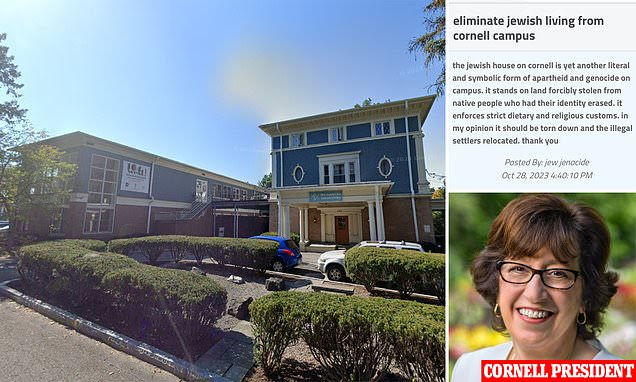
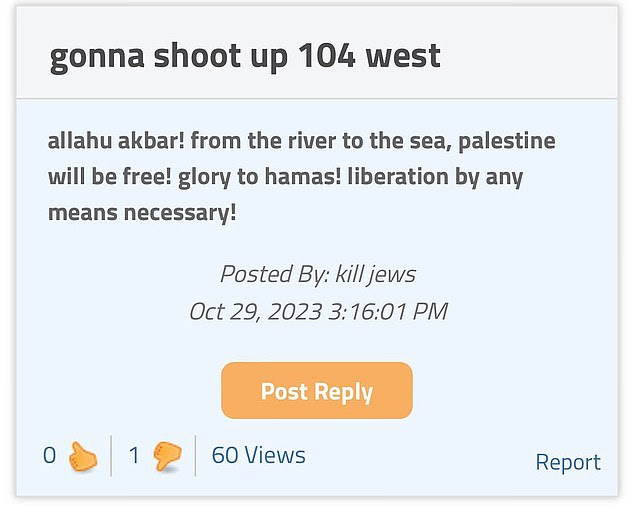 Of the several messages left on the school’s Greekrank page – a forum meant for fraternity and sorority reviews – were messages with the headlines ‘Eliminate Jewish living from Cornell Campus’ or ‘Israel deserved 10/7’
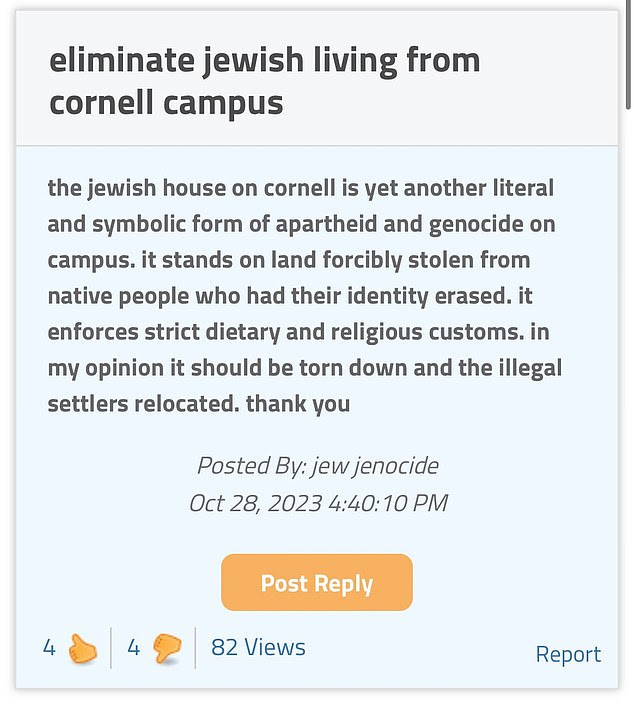
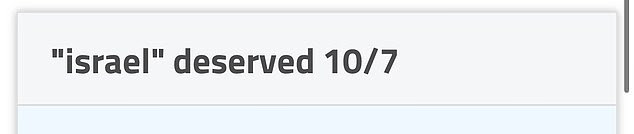
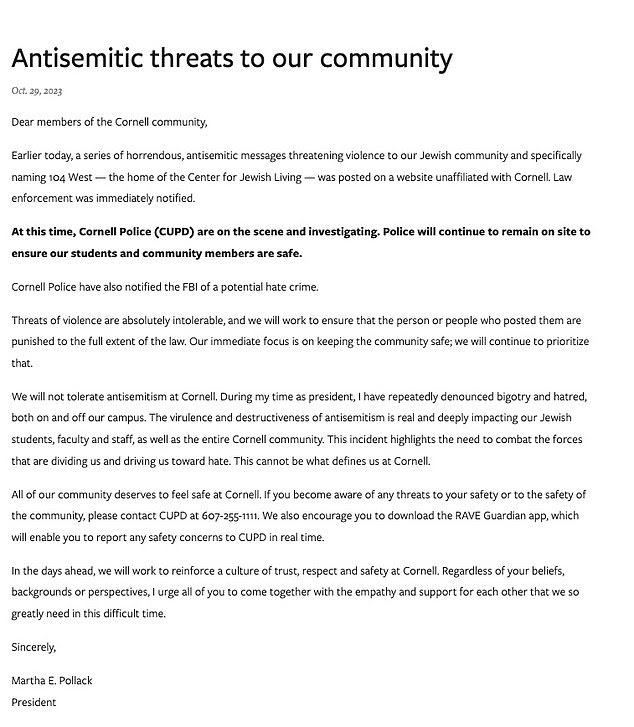
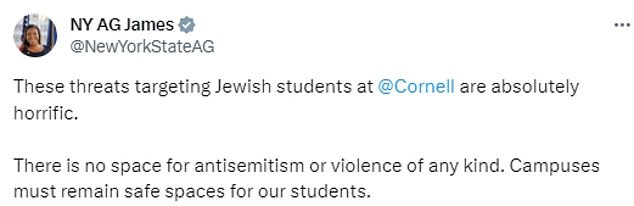
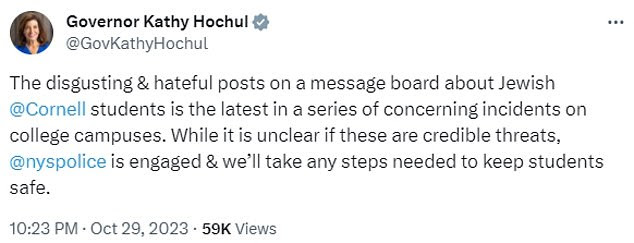
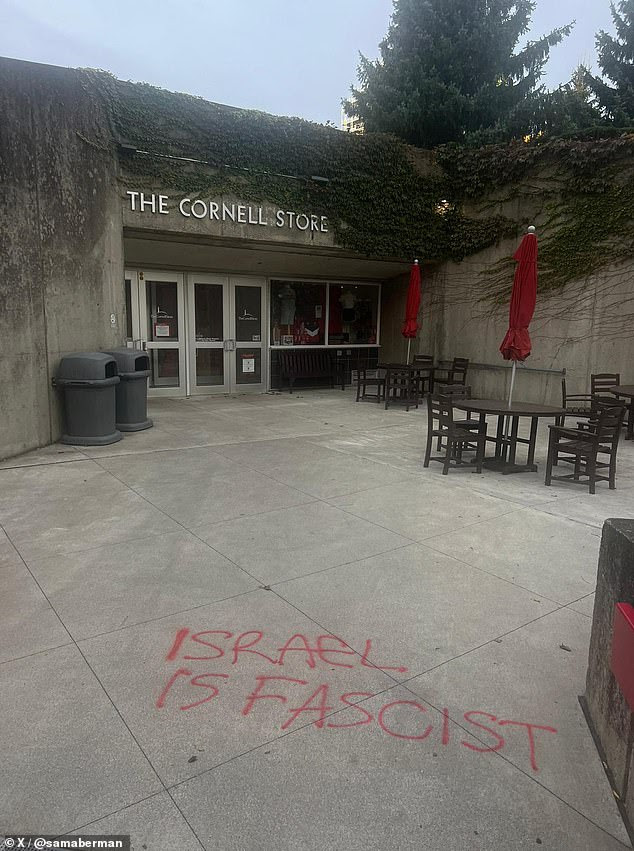 Spray-painted messages such as ‘Zionism equals Racism’ and ‘Israel is Fascist’ began appearing on the sidewalks of Cornell University’s upstate New York campus on Wednesday
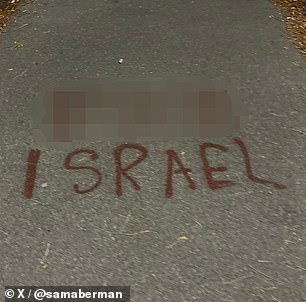 It remains unknow who left the messages
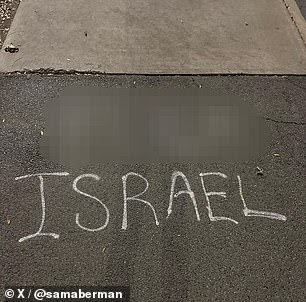 The graffiti was painted on one of the busiest area on campus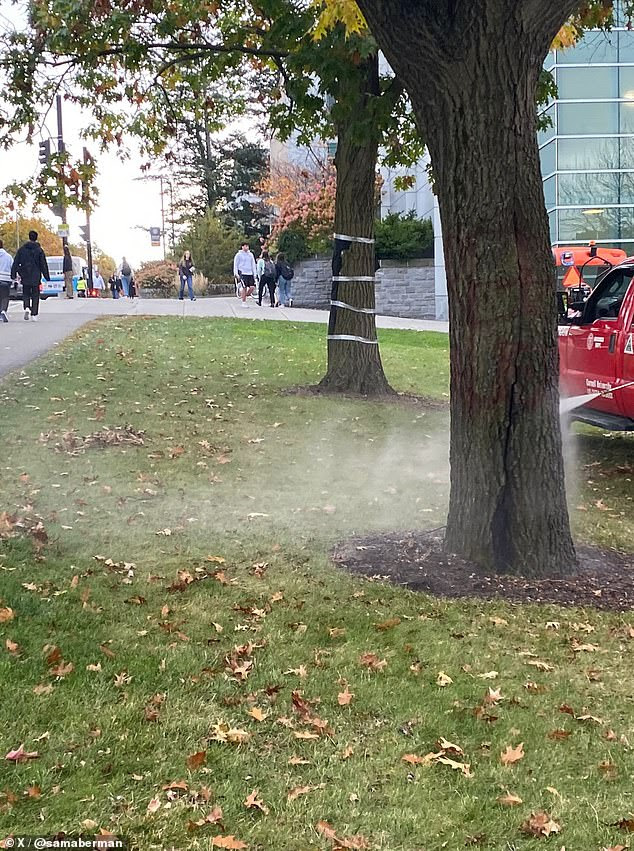
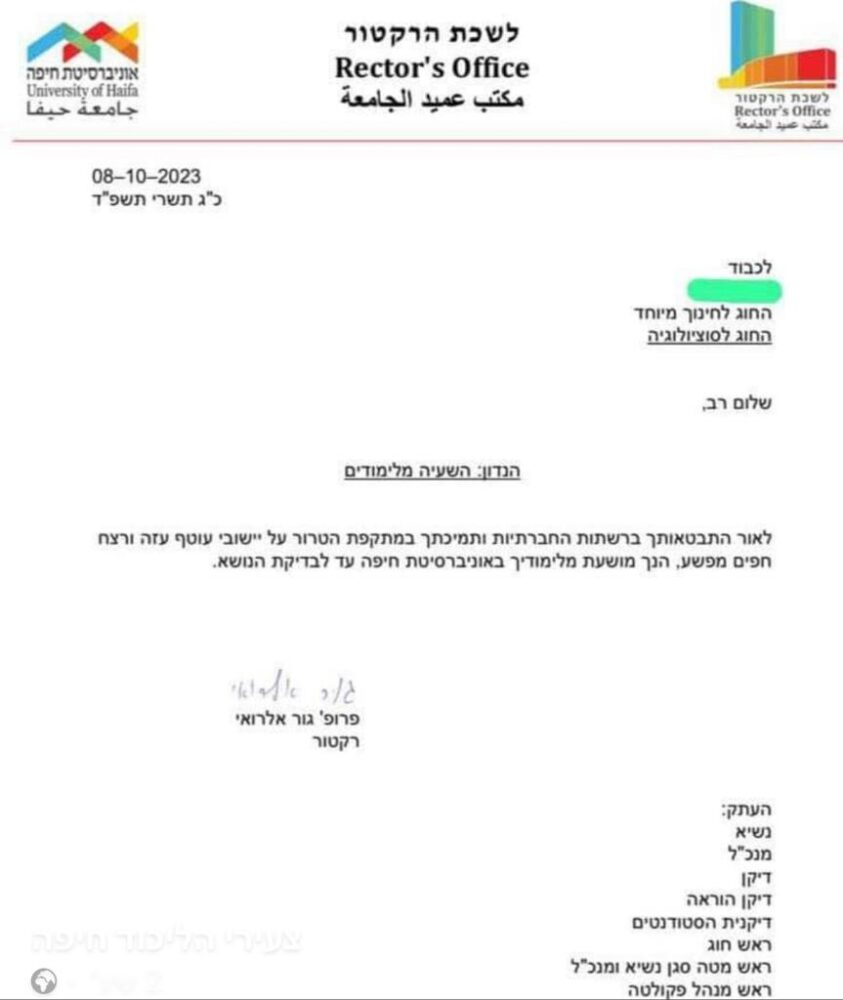
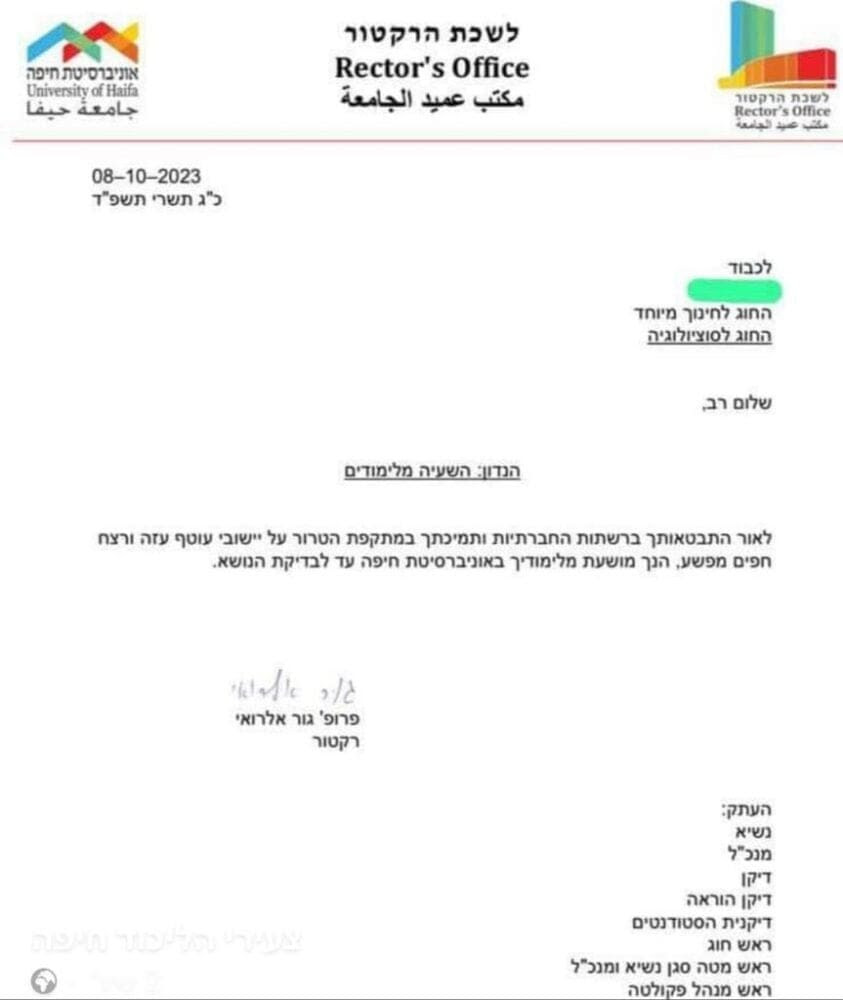

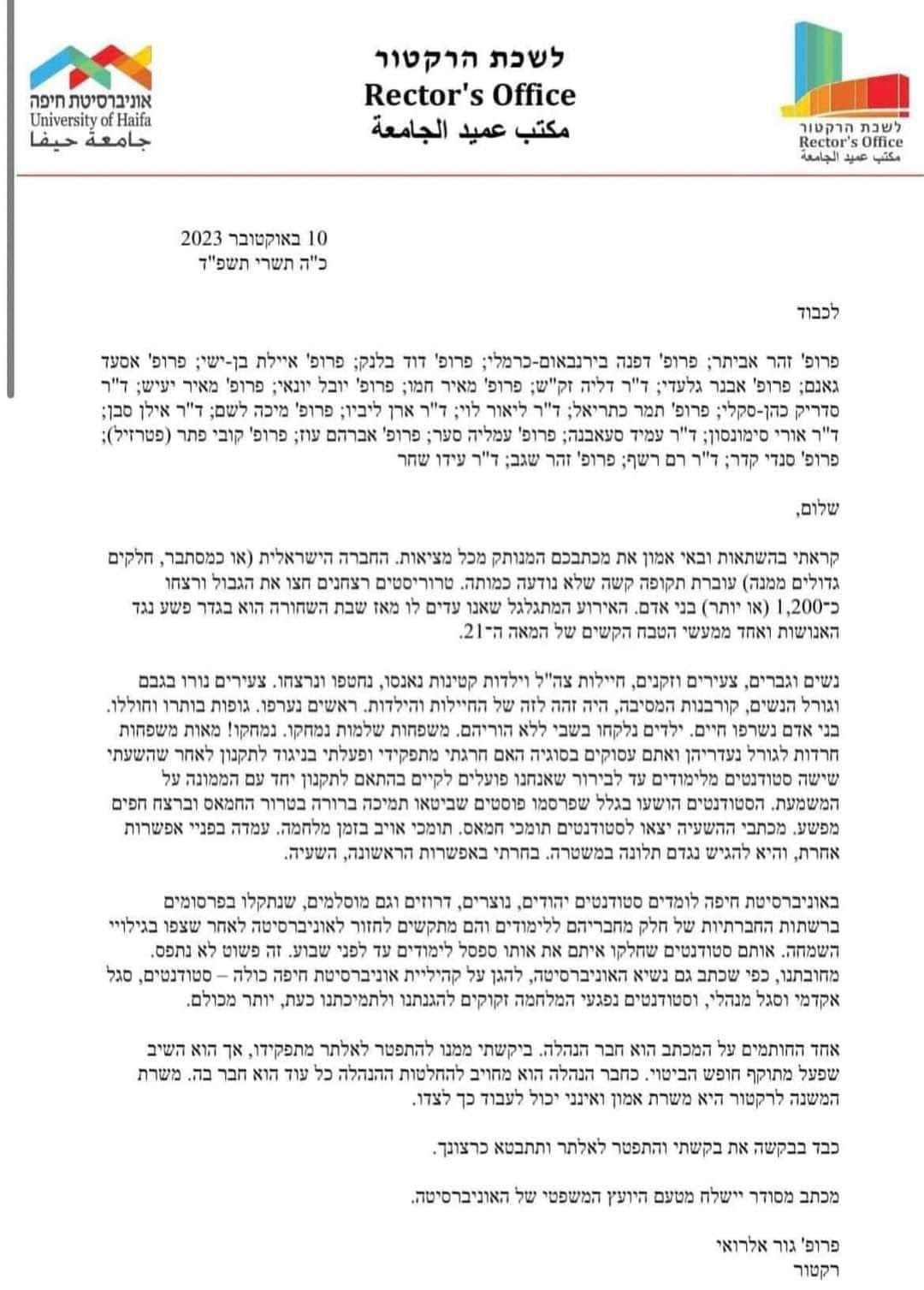
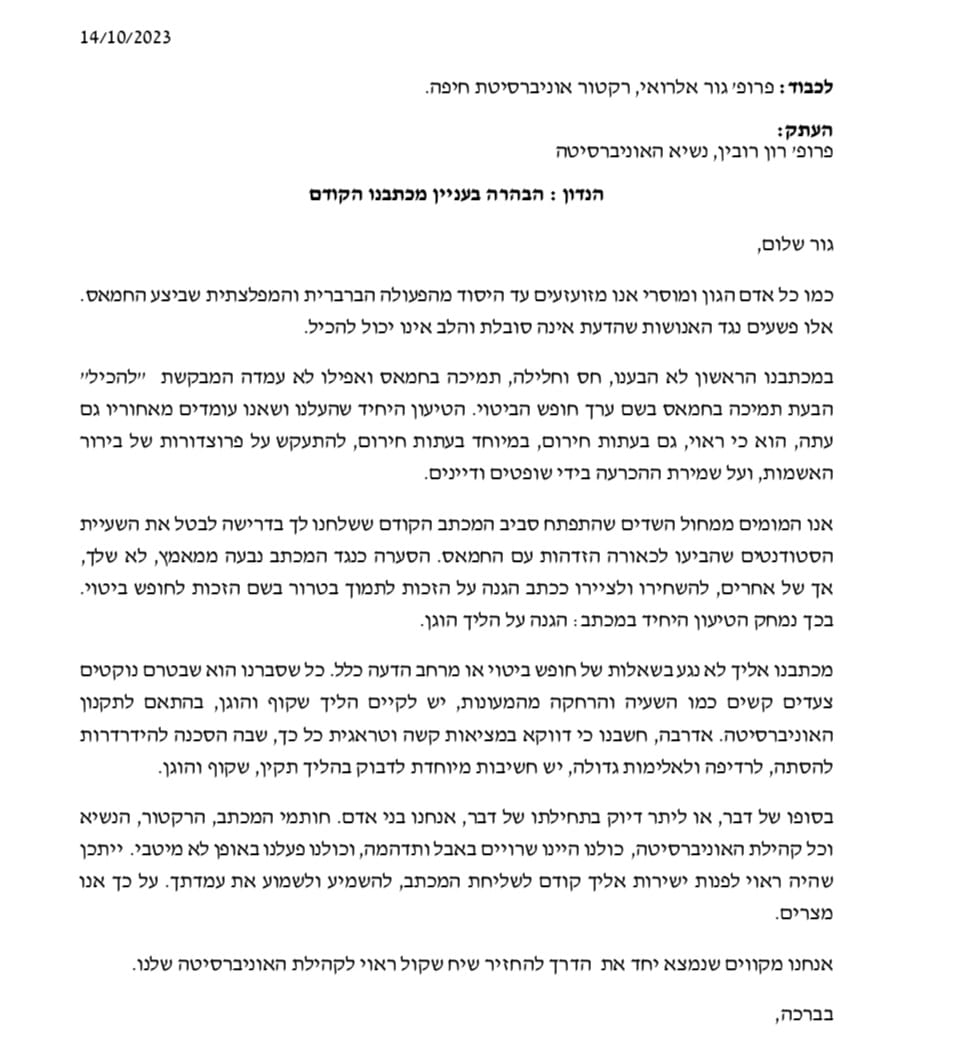
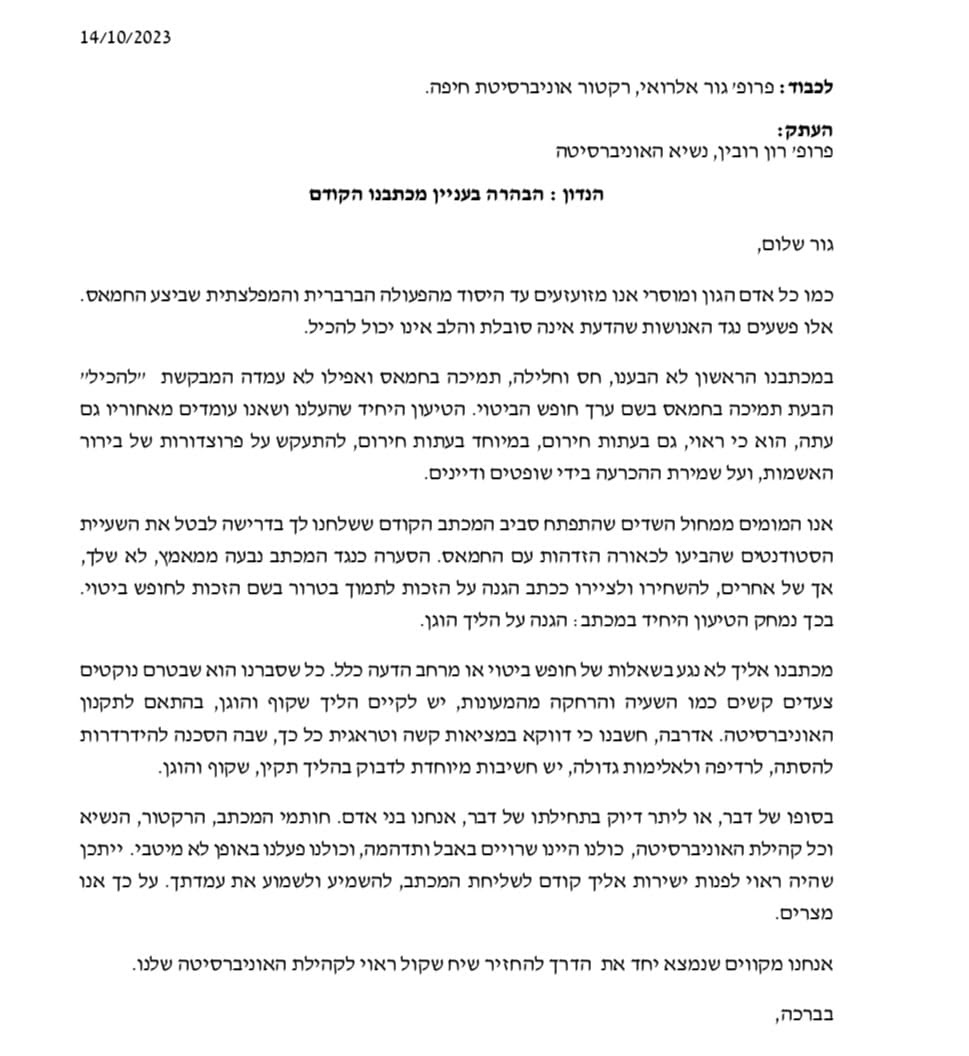
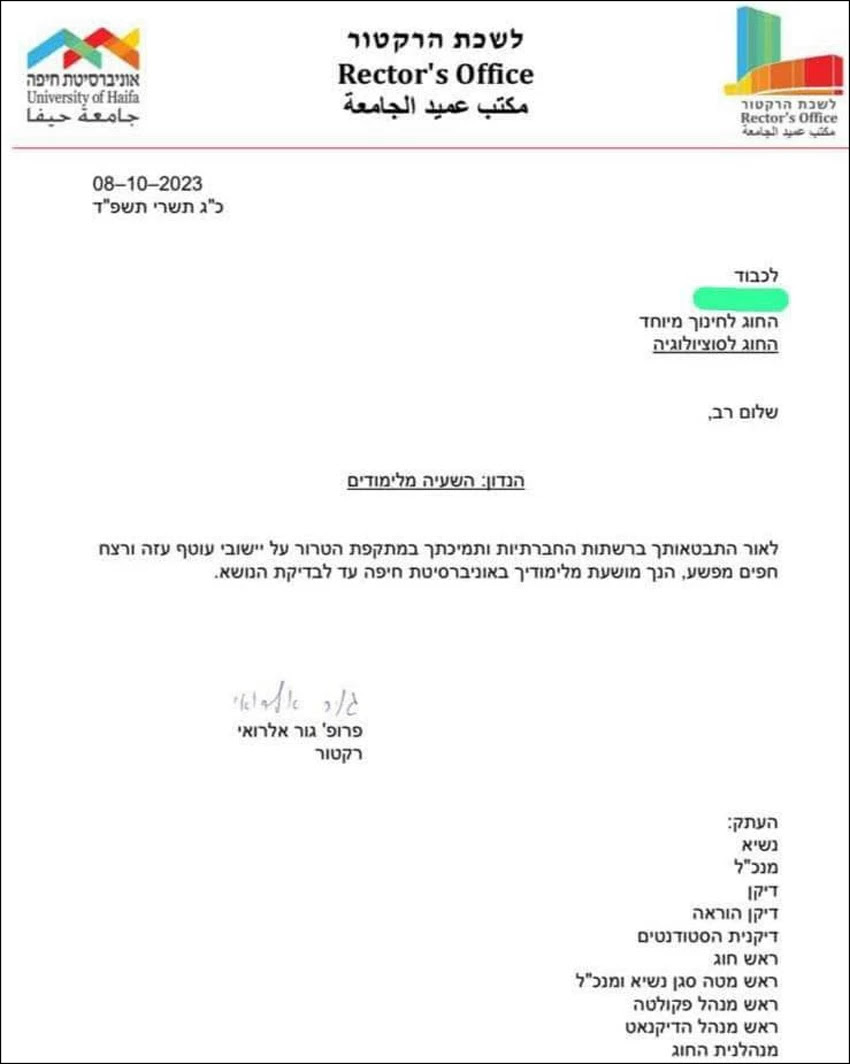



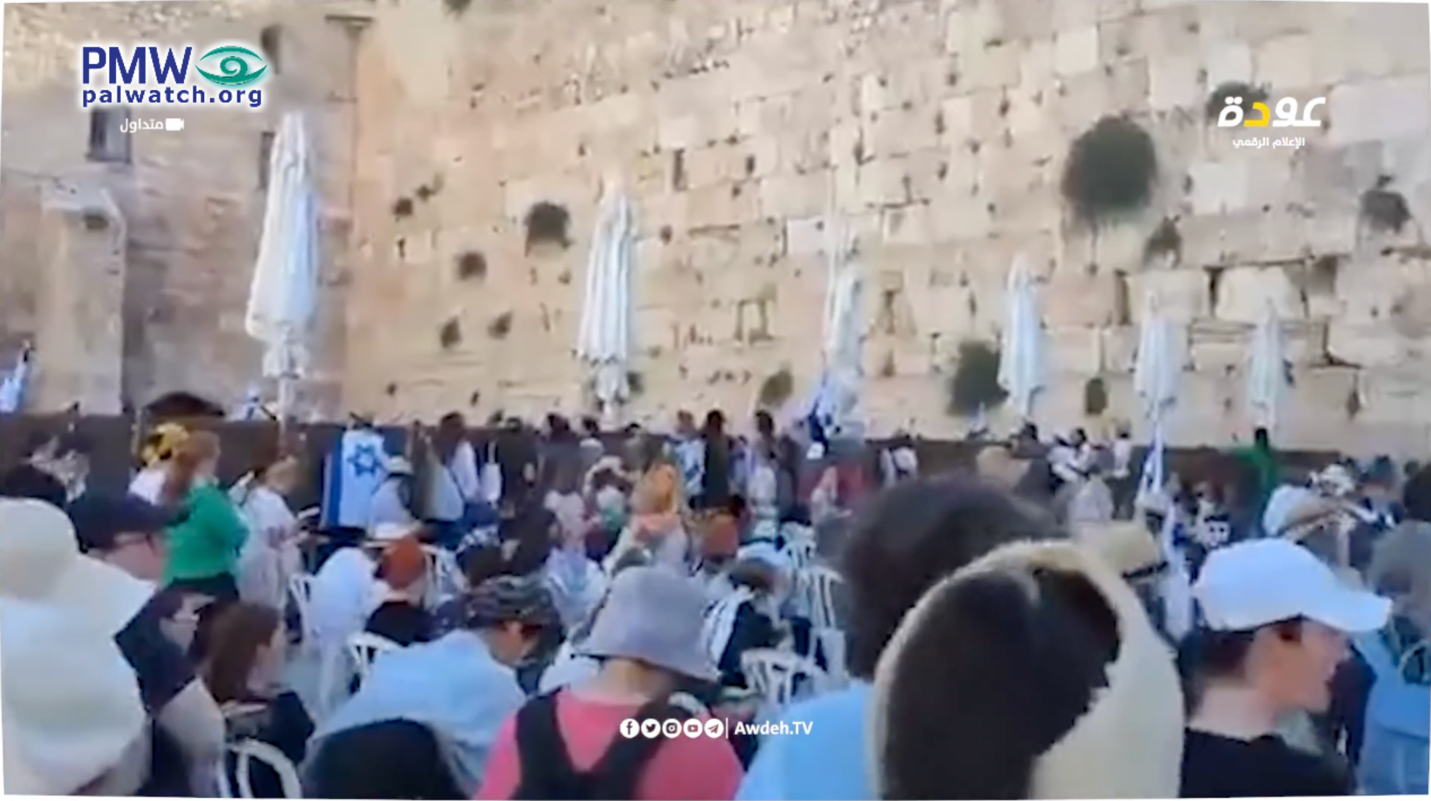
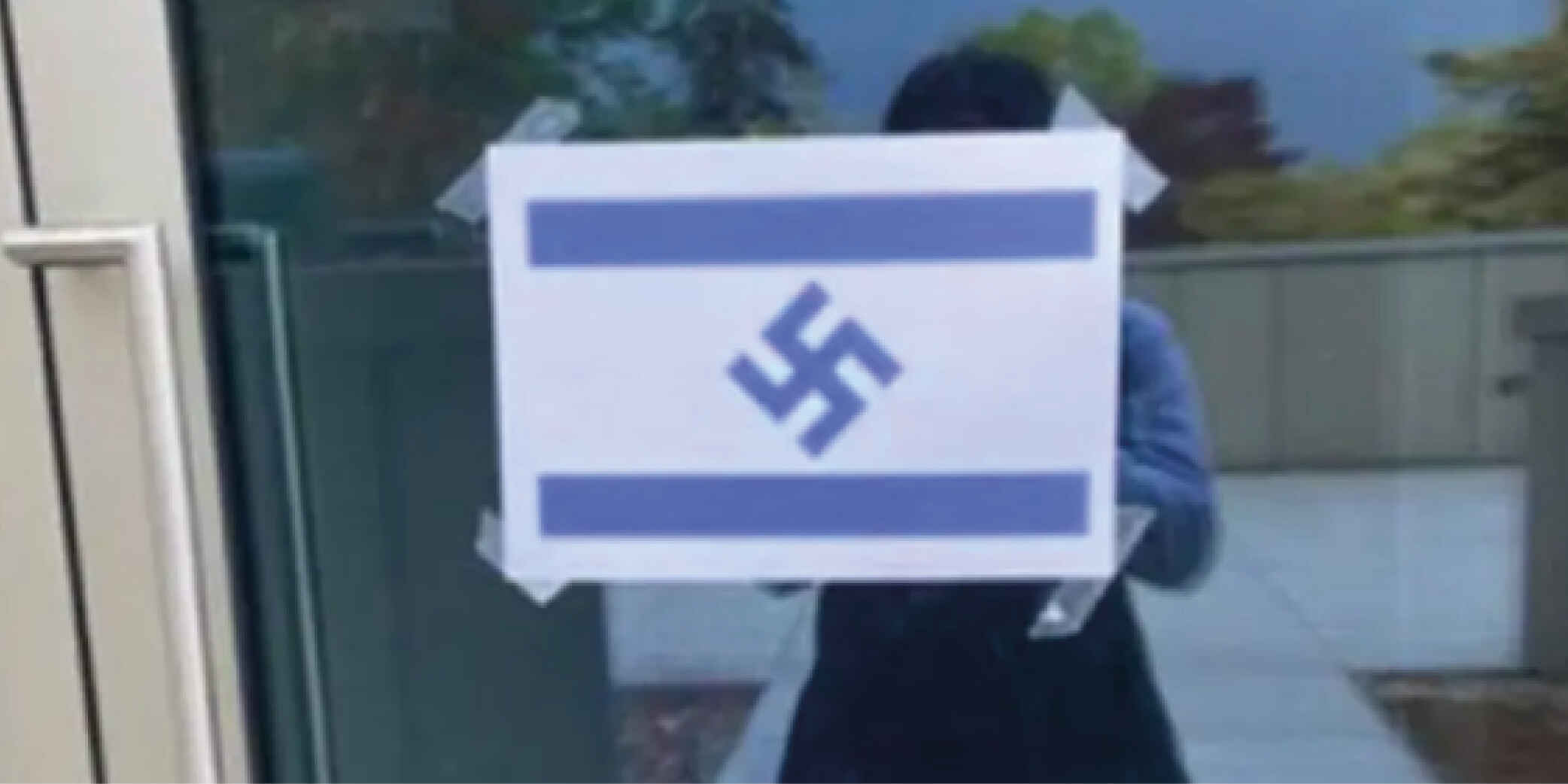


 israel-academia-monitor.com