In early January, the General Assembly of the American Historical Association (AHA) debated a resolution against Israel. The resolution was titled “Resolution to Oppose Scholasticide in Gaza,” and stated: “Whereas the US government has underwritten the Israel Defense Forces (IDF) campaign in Gaza with over $12.5 billion in military aid between October 2023 and June 2024; Whereas that campaign, beyond causing massive death and injury to Palestinian civilians and the collapse of basic life structures, has effectively obliterated Gaza’s education system; Whereas in April 2024, UN experts expressed “grave concern over… an action known as scholasticide.” The group Historians for Peace and Democracy were the driving force behind the resolution.
According to the resolution, the bases for such charges include the following: “The IDF’s destruction of 80 percent of schools in Gaza, leaving 625,000 children with no educational access; The IDF’s destruction of all 12 Gaza university campuses; The IDF’s destruction of Gaza’s archives, libraries, cultural centers, museums, and bookstores, including 195 heritage sites, 227 mosques, three churches, and the al-Aqsa University library, which preserved crucial documents and other materials related to the history and culture of Gaza; The IDF’s repeated violent displacements of Gaza’s people, leading to the irreplaceable loss of students’ and teachers’ educational and research materials, which will extinguish the future study of Palestinian history.”
The resolution concluded that “Whereas the United States government has supplied Israel with the weapons being used to commit this scholasticide; Therefore, be it resolved that the AHA, which supports the right of all peoples to freely teach and learn about their past, condemns the Israeli violence in Gaza that undermines that right; Be it further resolved that the AHA calls for a permanent ceasefire to halt the scholasticide documented above; Finally, be it resolved that the AHA form a committee to assist in rebuilding Gaza’s educational infrastructure.”
ָAfter the debate and the vote in favor; the resolution was forwarded to the AHA Council for the final examination. However, the AHA Council vetoed the resolution on January 17, 2025, stating: “After careful deliberation and consideration, the AHA Council has vetoed the Resolution to Oppose Scholasticide in Gaza.” They explained that “The AHA Council deplores any intentional destruction of Palestinian educational institutions, libraries, universities, and archives in Gaza. The Council considers the ‘Resolution to Oppose Scholasticide in Gaza,’ however, to contravene the Association’s Constitution and Bylaws, because it lies outside the scope of the Association’s mission and purpose, defined in its Constitution.”
According to the AHA constitution, “the promotion of historical studies through the encouragement of research, teaching, and publication; the collection and preservation of historical documents and artifacts; the dissemination of historical records and information; the broadening of historical knowledge among the general public; and the pursuit of kindred activities in the interest of history.” The Council ended by stating, “The AHA Council appreciates the work of Historians for Peace and Democracy and recognizes the diversity of perspectives, concerns, and commitments among AHA members.”
Upon hearing the news, the Steering Committee of Historians for Peace and Democracy (H-PAD) was very upset. It published a response to the AHA veto on behalf of Historians for Peace and Democracy. It stated, “The American Historical Association Council’s decision to veto our resolution is a shocking decision. It overturns an unprecedented landslide vote at the January 5 Business Meeting, where 82% of the 520 members present voted for our resolution. Given that Council itself was clearly divided, with four of the sixteen members opposing the veto and one abstaining, Council should have allowed the entire membership to vote, as was the case with the 2007 resolution opposing the war in Iraq. Instead, the Council majority have arrogated the decision to themselves in a profoundly undemocratic way.”
They argued, “This veto is also in bad faith: if Council believes this resolution violates the AHA’s Constitution, it should not have let it come to a vote in the first place. To decide that after the fact—and after Council put considerable effort into structuring a democratic process for handling resolutions—is just wrong. It suggests that the actual reasons for overturning the members’ decision are unstated, and the continuing weight of the ‘Palestine exception’ to free speech, as we have seen on campuses across the U.S. in the past year, is also inside our own Association.”
They further argued, “if this resolution violates the Constitution, then so do the following: The 2007 decision to censure the war in Iraq, which the membership approved overwhelmingly after Council sent it out for a vote; Council’s March 2022 statement condemning the Russian invasion of Ukraine; Other statements Council has made in recent years, including criticisms of the governments of China and Poland.”
They ended their protest by stating, “We do not accept in any way the false argument that our resolution lies outside of the AHA’s purview and mission. We are defending the right of Palestinians and people everywhere to study their own history. We are denouncing the crime of Israel’s scholasticide— the deliberate destruction of universities, schools, libraries, archives and cultural sites. We believe Council’s majority has acted in this way because they have good reason to believe the membership as a whole would support our resolution, and therefore they suppressed a democratic decision-making process. Let us hope this is not a foretaste of the ‘anticipatory obedience’ to the current wave of authoritarianism that is sweeping our campuses. We will urge our members to write Council directly calling for an immediate reconsideration. In the next week we will also convene an online mass meeting of our 1,950 members to discuss further action.”
Interestingly, the mission of Historians for Peace & Democracy, under the banner of “Organizing for Justice and Honest History,” is to “stand up for peace and diplomacy internationally, and for democracy and human rights at home. We mobilize activists on campuses and in communities across the United States of America, create educational resources for students, teachers and parents, and network with other organizations working for peace and democracy at home and abroad.”
This is quite surprising; for a group that promotes peace and democracy, the Palestinian Authority and Hamas do not serve as good examples.
Clearly, the H-PAD and other activists turned the AHA meeting into a pro-Palestinian rally, with participants wearing kaffiyehs and chanting “Free Palestine.” This opened the AHA to criticism that, like liberal arts in general, it became politicized and lost its legitimacy. Indeed, Van Gosse, a retired historian who serves as H-PAD’s Co-Chair, claims, it is “my work to understand and combat US imperialism.”
Already in 2014, Haaretzpublished an article on BDS, where Gosse was mentioned as the co-organizer of a roundtable discussion at the AHA meeting by historians “critical of Israeli policy.” His group proposed two resolutions condemning Israel. Their resolutions reprimand Israel for “acts of violence and intimidation by the State of Israel against Palestinian researchers and their archival collections, acts which can destroy Palestinians’ sense of historical identity as well as the historical record itself,” for “refusing to allow students from Gaza to travel in order to pursue higher education abroad, and even at West Bank universities” and its “policy of denying entry to foreign nationals seeking to promote educational development in the Occupied Palestinian Territories,” He said. “If you move a large body like the AHA, which has real standing, that changes consciousness and opinion… If we stimulate debate on these issues, that’s what we’re seeking to do.” Gosse personally donated money to JVP.
There are more cases. On July 21, 2024, Stone Peterson, a history doctoral student posted a request on Facebook on behalf of the Israel Palestine Working Group of Historians for Peace and Democracy, urging “Stop AIPAC and its influence over US politics. Boycott Netanyahu’s visit to Congress.”
Not unexpectedly, the resolution bears the hallmarks of academic activism. First, there are the double standards; the AHA has to charge even the most brutal dictatorship that erased the history and scholarship of ethnic, religious, and class groups deemed to be enemies of the regime. The list is very long, but the historians would be well-advised to look at the eradication of entire parts of history and scholarship of Iran and respiting other parts to fit the worldview of the theocratic regime in Tehran.
Second, the fact that Hamas, which has practiced radical embedding in schools, universities, and other public venues, turning civilians into human shields – a clear violation of the laws of war – was not mentioned in the proposed resolution. IAM has repeatedly noted that this type of omission is deliberate. It presents the Palestinians as lacking in agency, that is, not responsible for their own acts and decisions, the “forever victims” of the “nefarious Israelis and Jews.” Leaving out Hamas is essential to preserving the long-standing moral perversion that Israelis (and Jews) can do nothing right and the Palestinians can do nothing wrong. While this approach is wrong in any academic discourse, it is most galling when used by historians whose authority and legitimacy lie in the careful pursuit of facts.
Update as of January 17, 2025: After careful deliberation and consideration, the AHA Council has vetoed the “Resolution to Oppose Scholasticide in Gaza.” More information can be found here.
Update as of January 17, 2025: The AHA Council deplores any intentional destruction of Palestinian educational institutions, libraries, universities, and archives in Gaza. The Council considers the “Resolution to Oppose Scholasticide in Gaza,” however, to contravene the Association’s Constitution and Bylaws, because it lies outside the scope of the Association’s mission and purpose, defined in its Constitution as “the promotion of historical studies through the encouragement of research, teaching, and publication; the collection and preservation of historical documents and artifacts; the dissemination of historical records and information; the broadening of historical knowledge among the general public; and the pursuit of kindred activities in the interest of history.” After careful deliberation and consideration, the AHA Council vetoes the resolution. The AHA Council appreciates the work of Historians for Peace and Democracy and recognizes the diversity of perspectives, concerns, and commitments among AHA members.
The American Historical Association Council’s decision to veto our resolution is a shocking decision. It overturns an unprecedented landslide vote at the January 5 Business Meeting, where 82% of the 520 members present voted for our resolution. Given that Council itself was clearly divided, with four of the sixteen members opposing the veto and one abstaining, Council should have allowed the entire membership to vote, as was the case with the 2007 resolution opposing the war in Iraq. Instead, the Council majority have arrogated the decision to themselves in a profoundly undemocratic way.
This veto is also in bad faith: if Council believes this resolution violates the AHA’s Constitution, it should not have let it come to a vote in the first place. To decide that after the fact—and after Council put considerable effort into structuring a democratic process for handling resolutions—is just wrong. It suggests that the actual reasons for overturning the members’ decision are unstated, and the continuing weight of the “Palestine exception” to free speech, as we have seen on campuses across the U.S. in the past year, is also inside our own Association.
Further, if this resolution violates the Constitution, then so do the following:
The 2007 decision to censure the war in Iraq, which the membership approved overwhelmingly after Council sent it out for a vote;
Council’s March 2022 statement condemning the Russian invasion of Ukraine;
Other statements Council has made in recent years, including criticisms of the governments of China and Poland.
We do not accept in any way the false argument that our resolution lies outside of the AHA’s purview and mission. We are defending the right of Palestinians and people everywhere to study their own history. We are denouncing the crime of Israel’s scholasticide— the deliberate destruction of universities, schools, libraries, archives and cultural sites. We believe Council’s majority has acted in this way because they have good reason to believe the membership as a whole would support our resolution, and therefore they suppressed a democratic decision-making process. Let us hope this is not a foretaste of the “anticipatory obedience” to the current wave of authoritarianism that is sweeping our campuses.
We will urge our members to write Council directly calling for an immediate reconsideration. In the next week we will also convene an online mass meeting of our 1,950 members to discuss further action.
Steering Committee of Historians for Peace and Democracy
Update as of January 6, 2025: The “Resolution to Oppose Scholasticide in Gaza” was passed by members attending the business meeting. As per the AHA’s Constitution, article 7(3–5), all measures passed by the business meeting shall come before the AHA Council for acceptance, nonconcurrence, or veto. The AHA Council has begun a thoughtful and vigorous conversation and will make a decision at its next meeting, which will take place within the month.
RESOLUTION FOR CONSIDERATION AT THE JANUARY 2025 BUSINESS MEETING
The following resolution, signed by 252 AHA members in good standing as of October 1, 2024, was submitted to the executive director for consideration at the January 5, 2025, business meeting. A full list of signatories can be viewed online at historians.org/business-mtg.
Resolution to Oppose Scholasticide in Gaza
Whereas the US government has underwritten the Israel Defense Forces (IDF) campaign in Gaza with over $12.5 billion in military aid between October 2023 and June 2024; Whereas that campaign, beyond causing massive death and injury to Palestinian civilians and the collapse of basic life structures, has effectively obliterated Gaza’s education system; Whereas in April 2024, UN experts expressed “grave concern over the pattern of attacks on schools, universities, teachers, and students in the Gaza Strip” including “the killing of 261 teachers and 95 university professors . . . which may constitute an intentional effort to comprehensively destroy the Palestinian education system, an action known as scholasticide.”
The bases for this charge include:
• The IDF’s destruction of 80 percent of schools in Gaza, leaving 625,000 children with no educational access;
• The IDF’s destruction of all 12 Gaza university campuses;
• The IDF’s destruction of Gaza’s archives, libraries, cultural centers, museums, and bookstores, including 195 heritage sites, 227 mosques, three churches, and the al-Aqsa University library, which preserved crucial documents and other materials related to the history and culture of Gaza;
• The IDF’s repeated violent displacements of Gaza’s people, leading to the irreplaceable loss of students’ and teachers’ educational and research materials, which will extinguish the future study of Palestinian history;
Whereas the United States government has supplied Israel with the weapons being used to commit this scholasticide; Therefore, be it resolved that the AHA, which supports the right of all peoples to freely teach and learn about their past, condemns the Israeli violence in Gaza that undermines that right; Be it further resolved that the AHA calls for a permanent ceasefire to halt the scholasticide documented above;
Finally, be it resolved that the AHA form a committee to assist in rebuilding Gaza’s educational infrastructure.
The mission of Historians for Peace &Democracy (H-PAD) is to stand up for peace and diplomacy internationally, and for democracy and human rights at home. We mobilize activists on campuses and in communities across the United States of America, create educational resources for students, teachers and parents, and network with other organizations working for peace and democracy at home and abroad. First formed in 2003 as Historians Against the War, we reorganized as H-PAD in 2018.
Every year historians from the U.S. and abroad gather for the annual meeting of the American Historical Association. In January of 2025 Historians for Peace and Democracy asked their colleagues to join with us to pass a resolution condemning the ongoing Israeli destruction of the Palestinian education system, and the killing of its staff and students.
Our colleagues responded with overwhelming support, voting 428 to 88 in favor of the resolution. This was the culmination of a lot of work by H-PAD members and many others outraged by the destruction of the education system in Gaza, and the death of thousands of its teachers and students. Since the passage of the resolution there has been coverage in Haaretz, in The New York Times, Inside Higher Education, on Democracy Now!, and elsewhere. If you support the resolution but weren’t able to attend the meeting, we urge you to help us prepare for what comes next.
495 views Oct 30, 2024This slideshow is a visual representation of the “Resolution to Oppose Scholasticide in Gaza” presented by Historians for Peace and Democracy to the American Historical Association. The text of this resolution is available at historiansforpeace.org: https://historiansforpeace.org/2024/0… If you are a member of the AHA come to the Business Meeting on Sunday January 5, 2025, from 5:15-6:30PM in the Mercury Ballroom (New York Hilton, Third Floor) and vote to pass this resolution. This slideshow was produced by the The Israel Palestine Working Group of Historians for Peace and Democracy.
The Israel Palestine Working Group of H-PAD has been working since October 2023 to promote a ceasefire and humanitarian aid to Gaza. We also oppose U.S. military aid to Israel, which only serves to prolong the war and increase the suffering of Palestinians and the destruction of Gaza.
To get our message across we have written letters to elected legislators, to the editors of the Chicago Tribune, the Orlando Sentinel, and the Daytona Beach News-Journal, and published articles in The Nation and El Espectador (Bogota, Colombia).
We have also produced two short videos (designed to be shared!) on why people should support the ceasefire, and another on why criticism of Israeli policy is NOT anti-Semitic.
You can view (and share!) them on youtube or other social media platforms:
We hope you will join us in our work! If you think you can contribute, please Margaret Power at cochairs@historiansforpeace.org.
Watch the new video produced by the Israel Palestine Working Group of Historians for Peace and Democracy, Stand Against AIPAC
Stop AIPAC and its influence over US politics. Boycott Netanyahu’s visit to Congress.The Israel Palestine Working Group of Historians for Peace and Democracy…
Stop AIPAC and its influence over US politics. Boycott Netanyahu’s visit to Congress. To support Cori Bush, contact Seed the Vote at https://www.mobilize.us/seedthevote/e… The Israel Palestine Working Group of Historians for Peace and Democracy produced this video. Let us know what you think of it. And please share!
IAM reported several times on Brown University Center for Middle East Studies and its head, Professor Beshara Doumani. Among others, Doumani, a known anti-Israel activist, recruited anti-Israel Israeli academics, such as Prof. Ariella Azoulay, to espouse anti-Israel themes. He later took time out to lead Bir-Zeit University in the West Bank but recently resumed his Brown position.
One of his latest ventures is a February conference co-sponsored by Brown University’s Cogut Institute for the Humanities and the Departments of History and Religious Studies. Titled “Non-Zionist Jewish Traditions,” the conference will question the “contemporary conflations of Judaism and Zionism.” It will examine “non-Zionist Jewish traditions throughout history and across different regions.”
According to the conference invitation, the speakers are going to address the “changing relation to Zionism and the State of Israel in various Orthodox communities, in socialist and communist Jewish traditions, in the U.S. and Europe, among Ottoman and Arab Jews critical of the Zionist idea before 1948, among those who refused to immigrate to Israel or who lived there as dissidents, and among disillusioned Zionists in Israel and abroad.” The conference intends to look at “the spectrum of non-Zionist forms of Jewish thinking, activism, and organizing in their historical, ideological, theological, and theoretical contexts.”
The conference features a large number of themes: Shaul Magid, “Zionism as Assimilation: Aaron Shmuel Tamares on the Hypnosis of Nationalism.” Omer Bartov, “Yankel, Victor, and Manfred: Antisemitism and Zionism Before the Holocaust — Lived Reality and the Literary Imagination.” Sarah Hammerschlag, “The Post-war Irremissibility of Being Jewish: Non-Zionist possibilities beyond Diasporism.” Geoffrey Levin, “American Jewish Non-Zionism: A History — and a Future?” Jonathan Boyarin, “The Making of a Non-Zionist.” Michelle Campos, “Anti-Zionism in an Ottoman Turkish Key: David Fresko between Empire and Republic.” Orit Bashkin, “Zionism, Arabism, and MENA Jews, 1846–1956.” Ariella Aïsha Azoulay, “Ima, Why Didn’t You Love Me in Ladino?” Harry Merritt, “Jewish Sons of Latvia: Latvian Jews and Non-Zionist National Identity in War and Peace.” Michael Steinberg, “The Confederative Imagination.” David Myers, “A Taxonomy of Jewish Anti-Zionisms: From the ‘Lost Atlantis’ to the New Jerusalem.” Jonathan Judaken, “Judith Butler, Hannah Arendt, and the Tradition of the Conscious Pariah.” Daniel Boyarin, “Eretz-Yisroel [Is] Wherever You Are: Zionism Against the Jews.” Omri Boehm, “Beyond Zionism and Anti-Zionism.” Adi M. Ophir, “Jewish Anti-Zionism: Reflection on Its Context, Meaning, and Political Imagination.” Roundtable: “Anti-Zionism, Anti-Semitism, and the Stakes of the Debate,” Aslı Ü. Bâli, Omer Bartov, Mari Cohen, Beshara Doumani. Moderator: Shaul Magid.
Even if these offerings look somewhat confusing, the conference’s sole purpose is propagandists, notably to prove that anti-Zionism is not anti-Semitism. As the organizers stated: the goal is to question the “contemporary conflations of Judaism and Zionism.” The reason is quite obvious. After the October 7 attack of Hamas on the Jewish communities bordering Gaza, campuses erupted in violence against Jews, which was clearly antisemitic in nature according to the International Holocaust Remembrance Alliance (IHRA) Definition that was adopted by many countries. In the United States, it has been adopted by several states, counties, and cities, and the State Department uses it. Most consequentially, as a result of the disturbances, scores of colleges and universities have been sued for failing to protect Jewish students against antisemitic attacks.
No one has ever claimed that Jews throughout the ages were universally Zionists. There still exist Jews who do not identify with Zionism, and some, like some extreme ultraorthodox groups, do not recognize Israel. But, during its seven decades of existence, the majority of Jews have supported the state of Israel, and, according to repeated opinion surveys, Zionism and its embodiment, the State of Israel, has been an important part of Jewish identity.
Not unexpectedly, a considerable number of scholars who appear on the panels are known as prominent critics of Israel. Some, like Adi Ophir and Ariella Azulay, have been profiled numerous times by IAM. In his book The Necessity of Exile: Essays from a Distance, Shaul Magid, a professor of Jewish studies at Dartmouth College,argues that Jews “should consider anew the benefits of living in exile.” It is bitterly ironic that the powerful anti-Zionist Jewish elite in America made the same argument before WWII. Maybe Magid needs to be reminded that there are perils of living in exile, as the tremendous increase in violent attacks on Jews in Europe and the United States illustrates.
A second conference at Brown University also needs attention. Organized by New Directions in Palestinian Studies (NDPS), with equally propagandist goals. It took place in March 2024, and was titled “Palestine and the Palestinians After October 7.” The conference was advertised as intending to “bring together three generations (emerging, established, senior) of engaged scholars to envision how to move forward conceptually and practically as a community. Roughly two dozen attendees will discuss, in a closed seminar setting, twelve short think pieces. In line with the NDPS mission, which centers Palestinians in research projects, the think pieces—diverse in terms of topic, themes, disciplines, and theoretical approaches—are expected to focus on the internal landscape of the Palestinian body politic within regional and global contexts.”
The two-day program, introduced by Beshara Doumani, covered a number of issues. Sherene Seikaly “Ruins and Abundance”; Ruba Salih, “Palestinian Refugees: Reflecting on a Politics of Return”; Beshara Doumani “Rebuilding from the Rubble Yet Again: Towards the Fourth Phase of Palestinian Collective Action”, Nada Elia “Uplifting Palestine’s Indigenous Feminism” Amahl Bishara , “A New Nakba, and Reconstituting Collectivities” Sarah Ihmoud “I will weep for my beautiful city”: Palestinian Women’s Testimonies of Genocide in Gaza: Leila Farsakh, Noura Erakat, “Nakba Peace: Israel’s Demand for Exception to the Prohibition on Genocide,” Nasir al-Masri The “Day After” and Palestinian Self-Determination,” Abdel Razzaq Takriti “Genocide and the National Unity Question,” Ali Musleh, “Seeing the World From the Mouth of a Tunnel,” Bassam Haddad, “Only the Most Important Thing,”: Loubna Qutami, Nasser Abourahme, “In Tune with Their Time,” Mjriam Abu Samra, “New Horizons in Struggle: The Role of Transnational Palestinian Youth in Decolonial Politics,” Samar Al-Saleh, and Tamar Ghabin, “Reflections on the Post October 7 Era: The University, Labor and the Need for Engaged Intellectuals.”
Several factors are worth noting. First, there is a strong emphasis on the alleged “genocide” in Gaza. As IAM repeatedly demonstrated, Palestinians and their supporters have made a tremendous effort to propagate the idea that Israel has committed genocide in Gaza. As the previous IAM post stressed, the war in Gaza is not a case of genocide per the international humanitarian convention. Second, there is a conspicuous omission of the Hamas brutal attack on the Jewish communities on October 7, which featured extraordinary violence, including murder, rape, and kidnappings of innocent civilians. The failure to mention Hamas and its misdeeds is crucial to the “genocide” narrative spun by pro-Palestinian activists. For that matter, the speakers shy away from commenting on the brutal rule of Hamas in Gaza, which became clear after the IDF uncovered the terror group’s documents in the tunnels. For decades, Hamas oppressed the population with a combination of punitive economic policies and imprisoned and tortured those who complained. The contents of the international aid tracks have been stolen by Hamas terrorists and sold on the black market for huge profits. Third, there is no mention of the fact that Hamas is embedded in public places, turning civilians into human shields.
The participants in this conference, like others before them, are probably aware that the brutal Islamist ideology of Hamas and its sponsor, Iran, did Palestinians no good. But they cannot admit to any of it because it would hurt the image of Palestinians as the innocent victims of Jewish “genocidal and apartheid policy.” To sustain this paradigm, history and reality have to be denied.
The Brown University leadership should be alerted.
This academic conference sets into question contemporary conflations of Judaism and Zionism by exploring a rainbow of non-Zionist Jewish traditions throughout history and across different regions. Speakers at the conference will address the changing relation to Zionism and the State of Israel in various Orthodox communities, in socialist and communist Jewish traditions, in the U.S. and Europe, among Ottoman and Arab Jews critical of the Zionist idea before 1948, among those who refused to immigrate to Israel or who lived there as dissidents, and among disillusioned Zionists in Israel and abroad. Together they will give an account of the spectrum of non-Zionist forms of Jewish thinking, activism, and organizing in their historical, ideological, theological, and theoretical contexts.
Free and open to the public, but please register. For questions or to request special services, accommodations, or assistance, please contact humanities-institute@brown.edu or (401) 863-6070.
The event is cosponsored by the Cogut Institute for the Humanities and the Departments of History and Religious Studies. It is convened by Omer Bartov, Holly Case, Shaul Magid, Adi M. Ophir, and Peter Szendy.
Speakers and Moderators
Ariella Aïsha Azoulay (Brown University)
Aslı Ü. Bâli (Yale Law School)
Omer Bartov (Brown University)
Orit Bashkin (University of Chicago)
Omri Boehm (New School for Social Research)
Daniel Boyarin (University of California, Berkeley)
Jonathan Boyarin (Cornell University)
Michelle Campos (Penn State University)
Holly Case (Brown University)
Mari Cohen (Jewish Currents)
Beshara Doumani (Brown University)
Sarah Hammerschlag (University of Chicago)
Jonathan Judaken (Washington University, St. Louis)
Geoffrey Levin (Emory University)
Shaul Magid (Harvard Divinity School)
Harry Merritt (University of Vermont)
David Myers (University of California, Los Angeles)
Adi M. Ophir (Brown University)
Michael Steinberg (Brown University)
Peter Szendy (Brown University)
Max Weiss (Princeton University)
Schedule
Monday, February 3
8:30 am – 9:00 am
Opening Remarks
9:00 am – 10:50 am
Panel: In EuropeShaul Magid,“Zionism as Assimilation: Aaron Shmuel Tamares on the Hypnosis of Nationalism”Omer Bartov, “Yankel, Victor, and Manfred: Antisemitism and Zionism Before the Holocaust — Lived Reality and the Literary Imagination”Sarah Hammerschlag, “The Post-war Irremissibility of Being Jewish: Non-Zionist possibilities beyond Diasporism”Moderator: Adi M. Ophir
10:50 am – 11:10 am
Break
11:10 am – 1:00 pm
Panel: Non-Zionists, Old and NewHarry Merritt, “Jewish Sons of Latvia: Latvian Jews and Non-Zionist National Identity in War and Peace”Geoffrey Levin, “American Jewish Non-Zionism: A History — and a Future?”Jonathan Boyarin, “The Making of a Non-Zionist”Moderator: Omer Bartov
2:30 pm – 4:20 pm
Panel: In the Wake of the Ottoman WorldMichelle Campos, “Anti-Zionism in an Ottoman Turkish Key: David Fresko between Empire and Republic.”Orit Bashkin, “Zionism, Arabism, and MENA Jews, 1846–1956”Ariella Aïsha Azoulay, “Ima, Why Didn’t You Love Me in Ladino?”Moderator: Max Weiss
4:20 pm – 4:40 pm
Break
4:40 pm – 6:30 pm
Roundtable: On Recently Published BooksShaul MagidDaniel BoyarinJonathan JudakenModerator: Peter Szendy
Tuesday, February 4
8:45 am – 10:35 am
Panel: On and Over the MarginsMichael Steinberg, “The Confederative Imagination”David Myers, “A Taxonomy of Jewish Anti-Zionisms: From the ‘Lost Atlantis’ to the New Jerusalem”Jonathan Judaken, “Judith Butler, Hannah Arendt, and the Tradition of the Conscious Pariah”
10:40 am – 12:40 pm
Panel: Disillusioned ZionistsDaniel Boyarin, “Eretz-Yisroel [Is] Wherever You Are: Zionism Against the Jews”Omri Boehm, “Beyond Zionism and Anti-Zionism”Adi M. Ophir, “Jewish Anti-Zionism: Reflection on Its Context, Meaning, and Political Imagination”Moderator: Holly Case
2:00 pm – 4:00 pm
Roundtable: Anti-Zionism, Anti-Semitism, and the Stakes of the DebateAslı Ü. BâliOmer BartovMari CohenBeshara DoumaniModerator: Shaul Magid
The ninth annual workshop of New Directions in Palestinian Studies (NDPS) is to be held at Brown University on March 8–9, 2024, on the theme, “Palestine and the Palestinians after October 7.”
The workshop will bring together three generations (emerging, established, senior) of engaged scholars to envision how to move forward conceptually and practically as a community. Roughly two dozen attendees will discuss, in a closed seminar setting, twelve short think pieces. In line with the NDPS mission, which centers Palestinians in research projects, the think pieces—diverse in terms of topic, themes, disciplines, and theoretical approaches—are expected to focus on the internal landscape of the Palestinian body politic within regional and global contexts.
Venue: Joukowsky Forum, Watson Institute By invitation
LETTER OF INVITATION
The 2024 NDPS theme, “Palestine and the Palestinians after October 7,” simply asks: How did we get here? And where are we going?
The workshop will bring together three generations (emerging, established, senior) of engaged scholars to envision how to move forward conceptually and practically as a community. Roughly two dozen attendees will discuss, in a closed seminar setting, ten short think pieces that will be circulated at the end of February 2024. In line with the NDPS mission which centers Palestinians in research projects, the think pieces –diverse in terms of topic, themes, disciplines, and theoretical approaches– are expected to focus on the internal landscape of the Palestinian body politic within regional and global contexts.
Some of the general questions for discussion include: How does this moment challenge dominant paradigms – nationalist, relational, settler colonial, and indigeneity—and their associated conceptual vocabularies? How can we critically re-evaluate our visions for Palestinian futures both beyond and between the interstices of the state-centric and human rights approaches? What are the horizons and priorities for knowledge production, intra-Palestinian activism, and intersectional solidarities? What Palestinian institutions and networks, existing or imagined, can constitute scaffolding for these futures? As the first day of the workshop falls on March 8, International Women’s Day, the afternoon panel on that day will focus on feminist approaches to rethinking Palestine and the Palestinians.
Last September, a group of members of the Modern Language Association (MLA), an international association of scholars, submitted a BDS resolution against Israel titled “Resolution to Endorse the 2005 Palestinian BDS Call.” They included supporting documentation to the Resolution. Among the supporters of the BDS resolution was Prof. Mona Baker, who, in 2002, dismissed from her publications two scholars because they were Israelis.
The authors of the Resolution come from a number of American universities. Anthony Alessandrini, Professor of English and Middle Eastern Studies at the City University of New York; Raj Chetty, Associate Professor of English at St. John’s University; Cynthia Franklin, Professor of English at the University of Hawai’i at Mānoa; Hannah Manshel, Assistant Professor of English at the University of Hawaiʻi at Mānoa; David Palumbo-Liu, Louise Hewlett Nixon Professor of Comparative Literature at Stanford University; Neelofer Qadir, Assistant Professor of English at Georgia State University; S. Shankar is Professor of English at the University of Hawai’i at Mānoa.
As a rule, the MLA’s Delegate Assembly (DA), representing all members, debates a resolution at the annual convention and votes for or against it. The MLA’s Executive Council (EC), an elected governing body, reviews all resolutions for any legal, financial, or similar issues.
This year, however, upon receiving advice from MLA counsel, the EC decided not to forward the BDS Resolution to the DA for the likelihood of damages to the MLA and its partners from anti-BDS legislation in various states.
Blocking the debate on the Resolution spurred anger among members. The authors of the Resolution protested the decision by writing “A Call to the Modern Language Association to Let Members Decide About BDS.” They declared, “We are seven of the dozens of Modern Language Association members who came together to write a resolution in support of the Palestinian call for Boycott, Divestment, and Sanctions. Some of us have been involved in organizing around that call since it was issued by 170 Palestinian civil society organizations in 2005; others have come to Palestine solidarity work more recently. All of us feel the urgency imposed by the ongoing Israeli genocide in Gaza, funded and supported in every way by the U.S. government. It’s crucial for the Modern Language Association, the world’s largest association for humanities students, teachers, and researchers, to take a clear and meaningful stance against this genocide. We were heartened by the fact that an increasing number of academic and professional organizations have voted to stand with the Palestinian BDS call.”
The authors gave examples of the various professional associations that endorsed BDS. They then explained how they created the resolution, “we spoke with Palestinian scholars who have faced forms of repression those of us in North America can only imagine, and were continually inspired by their courage, resourcefulness, and steadfastness. Recognizing that we came to this work as educators, we compiled extensive documentation in support of the resolution. This meant poring over expert sources enumerating the horrors of the ongoing genocide in Gaza. It meant engaging with the work of Palestinian, Israeli, and international scholars who have documented the decades-long Israeli campaign of scholasticide—the systematic attempt to destroy the Palestinian education system—that has most recently involved destroying every university in Gaza. And it meant coming to terms with the workings of the apartheid system that affects every Palestinian, as documented by the International Court of Justice, Amnesty International, Human Rights Watch, and B’Tselem.”
The authors argued that the right to boycott is based on the MLA’s mission statement, which states that the MLA “supports and encourages… justice throughout the humanities ecosystem.”
The authors accused the MLA leadership of succumbing to the fear that the penalty for passing the Resolution would result in a loss of revenue. “Instead of repressing a resolution against genocide—and setting a precedent by which any democratic deliberation over ‘unpopular’ political issues can be suppressed in the name of maintaining the profit margin—perhaps we need to re-think the priorities of the MLA, and of our academic institutions more generally. Perhaps the MLA doesn’t need a slew of upper-level administrators earning six-figure salaries while the majority of those teaching in the humanities—our adjunct and graduate student worker colleagues—don’t even earn a living wage. Perhaps we don’t need lavish conferences with massive carbon footprints, or shiny data-driven reports that tell us that the humanities are in crisis. Perhaps this is exactly why the humanities are in crisis. The MLA can choose a different path…. the MLA is today actively silencing those who wish to take a stand against genocide and scholasticide in Palestine.”
They ended by stressing, “Nevertheless, the organizers of this resolution will continue to push for what it represents: taking a stand with our Palestinian colleagues against genocide and scholasticide, and ending the institutional complicity that enables them. The results of the recent U.S. elections will make the organizing environment for MLA members, and for our students and colleagues everywhere, much more difficult. That’s all the more reason for our professional organizations to show some backbone, rather than responding with anticipatory obedience. Most important, at the upcoming convention and beyond, we will center the voices of Palestinian scholars and students who continue to resist their erasure.”
The authors concluded, “Some of us became teachers of literature because we believe it helps keep us human, even in a world of genocide, of schoolchildren targeted by snipers and poets murdered by missiles, of unjust laws and profit motives and complicity where there should be courage. It’s not too late for the world’s largest organization of professional humanists to find its voice, stand against genocide alongside our Palestinian colleagues, and recall what it means to be human.”
The MLA annual convention is taking place on January 9-12, 2025, in New Orleans. The framers of the Resolution already announced their plans to “protest the anti-democratic practices of Krebs and the MLA, and will highlight over 40 panels at the convention devoted to Palestine.” The authors of the Resolution also disclosed that “over 100 MLA members have signed a pledge to quit the association to protest the repression of the BDS resolution, and some members have taken to social media to announce they are boycotting the convention.” The framers of the Resolution urged, “Supporters of the resolution who plan to attend are being asked to read a solidarity statement expressing their support.”
Interestingly, these scholars who feel so passionately about the Palestinians, fail to understand the hypocrisy that they practice when dealing with Israel. First, they neglect to mention that the current war in Gaza started because of the horrific attack on October 7, 2023, with the atrocities perpetuated by Hamas on innocent civilians, including murder, rape, and kidnapping. More so, since the Israeli military left Gaza in 2005, Hamas shelled Israeli communities with an ever-improving arsenal of rockets and missiles supplied by its patron, Iran. Second, accusations of genocide are false. After the Holocaust, Raphael Lemkin, a Polish Jewish lawyer, defined genocide as “the destruction of a nation or of an ethnic group.” His work was key in creating the United Nations Convention on the Prevention and Punishment of the Crime of Genocide in 1948. What has happened in Gaza is not the destruction of all Palestinians. Rather, it is an outcome of Hamas’s decision to radically embed themselves among the civilian population, notably in hospitals, schools, mosques, and other public venues, effectively turning civilians into human shields to make it harder for the IDF to operate. Characteristically, both Hezbollah and Hamas have refused to release separate death counts for terrorists and noncombatants. According to the IDF, about half of the more than 40.000 killed in Gaza were terrorists. While the death of the human shields is tragic, it does not amount to genocide based on the Geneva Convention.
Also, in a BBCinterview in April 2024, the International Court of Justice (ICJ) then-president Joan Donoghue said that the purpose of the ICJ genocide ruling was to declare that South Africa had a right to bring its case against Israel and that Palestinians had “plausible rights to protection from genocide.” She said the judges did not need to say for now whether a genocide had occurred.
Third, the MLA scholars, as well as other professional associations in humanities and social sciences who push for BDS, have never criticized any of the brutal dictatorships that commit horrific abuses against their populations. Judging Jews by a different standard is the quintessential characteristic of antisemitism as defined by the International Holocaust Remembrance Alliance (IHRA), which has been widely accepted in Europe and the United States. The countries and organizations that follow the IHRA Definition of Antisemitism explain that it is their moral obligation to correct the historical wrong against the Jews.
As IAM stated before, pro-Palestinian activists hijack professional academic associations to promote their agenda at the expense of members.
Report to the MLA Delegate Assembly from the Executive Council on Resolution 2025-1
16 December 2024
The MLA’s Executive Council, like many of its members, is appalled by the continued attack on Gaza. The council hopes that this document will help members understand its recent inability to forward a resolution on the Boycott, Divestment, Sanctions movement to the Delegate Assembly (DA) for a vote and help members to consider other methods of responding to Israel’s destruction in Palestine.
The MLA’s Executive Council met twice this fall to consider the proposed Resolution 2025-1 endorsing the 2005 Palestinian BDS call. After serious deliberation, the council acknowledged that for legal and fiduciary reasons, supporting a BDS resolution was not a possible way forward for the association to address the crisis in Gaza, and that therefore it could not forward Resolution 2025-1 to the Delegate Assembly for a vote in January. A number of our members, including a group of former MLA presidents, have expressed their puzzlement and distress over this decision, both on substantive and procedural grounds. They ask, is the council bowing to political pressure, overly concerned with possible financial harms? Are we retreating from a commitment to advocacy on pressing public issues affecting scholars and scholarship, keeping our members from taking a collective stand against the destruction, including that of academic institutions, in Gaza? Procedurally, in acting on this resolution prior to the Delegate Assembly’s January meeting, has the council gone against prior practice and stifled debate by the assembly? Regardless of the timing of the council’s review, should the council have consulted with the resolution’s proposers before reaching a negative decision?
In what follows, we hope to address these questions. Importantly, too, we propose some concrete steps that our members, and the MLA itself, can take to further debate and advocacy on matters of great concern to all of us.
Look for these four main points in the explanation below:
The MLA Constitution was changed in 2019, after a full membership vote, so that all resolutions must now pass a legal and fiduciary review before they can be voted on in the DA. This was not the case the last time the DA debated BDS. At that time, the council’s legal and fiduciary review happened after the DA discussion and vote.
The laws in many states have changed in recent years, and these laws directly affect the MLA’s ability to do business in those states, business that enables us to serve members by carrying out the mission of the organization.
The MLA Constitution is clear that a resolution is an official statement from the organization, not simply a statement by its members. A BDS resolution would put the organization into conflict with state laws.
A vote on a resolution supporting BDS is not the only way to discuss the tragedies in Palestine; not having a vote is not the same as forbidding discussion. The convention, including the Delegate Assembly meeting, and the association offer many spaces for discussing Palestine, Israel, the situation in Gaza, and the content of this resolution, and the governance process offers options for motions calling for statements, as happened with Emergency Motion 2024-1, about pro-Palestinian protests on campuses.
The council met in person on 25 October to consider the resolution and all the documentation surrounding it and decided at that point that the council couldn’t move the resolution forward for a vote. After receiving feedback on this decision, we met again, over Zoom, on 25 November for further discussion. We reluctantly concluded once again that we couldn’t advance this resolution, and we made this decision even though individually the council’s members are horrified by the level of violence employed by the Israeli government in Gaza during the conflict, including the destruction of the education infrastructure and the severe restriction or outright denial of basic services like food, medical attention, electricity, and water. The council encourages a robust discussion about this topic both during the Delegate Assembly meeting and across multiple planned sessions at the convention, and we remain as concerned as ever with promoting academic freedom in difficult times. As those who attended the MLA’s Delegate Assembly in 2024 in Philadelphia will recall, the DA voted to change the agenda of its meeting to allow more time for discussion of the motions on the floor. The extended discussion of Emergency Motion 2024-1 focused on protecting the rights of students, faculty, and staff to express their academic freedom and individual rights to free speech to protest, teach, and inform about the Israeli attacks on Gaza and the region’s history. The DA debated, refined, and passed Emergency Motion 2024-1, and the Executive Council issued a response and commissioned an issue of Profession to address the topic of campus protest and academic freedom. The council’s response affirmed the following:
As an organization, our support of academic freedom is unwavering. We also support our members’ right to protest and their right to feel safe on their own campuses. The current political climate in the United States has resulted in restrictions on free speech and on the right to protest on campus, especially restrictions directed at opponents of the actions of Israel against civilians in Gaza. Many MLA members have reported suffering harassment, doxing, and threats related to their teaching, writing, and speech on issues related to Palestine. US campuses must defend all faculty members, staff members, and students, particularly those who have been targeted for speaking out against the actions of Israel in Gaza, from these threats, which often originate outside the university.
This statement continues to reflect our views. Resolution 2025-1, on the other hand, is a specific call for the MLA to support the Boycott, Divestment, Sanctions movement aimed at Israel. This focus on BDS makes it substantively different from Emergency Motion 2024-1. Moreover, the wider legal landscape in the US has changed considerably since 2017, when the Delegate Assembly voted against a BDS resolution. Since then, many states have instituted laws and regulations forbidding any state-funded entity from entering into commercial relationships with companies or organizations that support BDS. If the MLA, or its collective membership, issued a statement in support of a boycott, that statement would breach existing contracts for services that are central to our mission and would prevent us from signing future contracts with colleges and universities and their libraries in those states.
The amount of revenue loss that would be caused by the passage of Resolution 2025-1, and thus loss of ability to operate, is substantial. As of now, the MLA has contracts for the current year that include clauses in which we have affirmed that our association is not supporting BDS. If the membership were to pass a resolution to the contrary, we would be unable to renew these contracts. This would deny faculty members and students access to things like the MLA Bibliography and scholarship we all value, and endanger our ability to serve our members and users of our services. The services provided by the MLA, most of which are not provided by any other humanities organization, include the publication of twenty books by members per year, focusing on pedagogy; the publication of the MLA International Bibliography; summer seminars, online institutes, and year-round resources for department chairs and program leaders; the publication of the MLA Job List; grants and fellowships for graduate students and contingent faculty members as well as for departments working on recruitment, retention, or career readiness, especially for students of color, first-generation students, and Pell Grant recipients; MLA style resources for teachers and students; and many more professional development offerings such as Public Humanities Incubators, Sit and Write sessions, and one-on one job counseling. It would also directly impact our advocacy efforts to help campuses sustain academic programs in literature, languages, and culture, which are under continued attack. The known direct cost to the MLA would already be considerable.
The board members of any nonprofit corporation are by law, among their other duties, required to act as fiduciaries for the organization, charged with reviewing policies and procedures, motions and resolutions, to ensure that they do not either violate laws or endanger the ability of the association to meet its mission or maintain its 501(c)3 status. As fiduciaries, they are responsible for carefully stewarding the resources that allow the association to meet the needs of its members and other users of its services, now and in the future. The council is elected by the membership to fulfill the role of fiduciary in the governance process and cannot cede that role to the members of the Delegate Assembly or the membership at large.
Some Governance History and Context
Traditionally, the Executive Council only conducted a legal and fiduciary review of a resolution once it had actually been passed by the Delegate Assembly. Members who recall this process have seen the council’s action this fall as a breach of our established process. The present procedure, however, was put in place in 2019 by vote of the membership, on the grounds that it would be better to first determine a proposal’s viability before debating and voting on it. So this is a change since the Delegate Assembly voted on the BDS resolution in 2017. The process in effect in 2017 meant that resolutions went to the Delegate Assembly straight from the Delegate Assembly Organizing Committee, only proceeding to the Executive Council for its legal and fiduciary review if they passed a vote in the Delegate Assembly. Because the BDS resolution didn’t pass the DA vote in 2017, it wasn’t subject to council review.
After the 2017 Delegate Assembly meeting, an Ad Hoc Committee on Advocacy Policies and Procedures was commissioned. The new resolutions process designed by that committee was voted on and approved by the membership in 2019. It situates the Executive Council’s legal and fiduciary review of a resolution before the Delegate Assembly meeting, to ensure that no resolution can go for a vote to the DA if passing that resolution would cause the association to be in violation of the law or would endanger the association’s ability to carry out its work. In deciding not to forward Resolution 2025-1 for a vote, the Executive Council fulfilled its constitutional role as the body charged with legal and fiduciary responsibility for the association and ensured that the governance processes of the MLA were followed in relation to this resolution.
Under current rules, once a resolution is submitted it can’t be modified, and so we didn’t see any basis for further consultation at that point, particularly as the proposal was clearly and carefully worded, and seemed fully ready for our legal and fiduciary review. The resolution’s proposers had discussed the resolution with MLA staff and revised its wording prior to submitting it for consideration by the Executive Council. When communicating with the proposer of the resolution, MLA staff members were unaware of the legal and fiduciary effects of the resolution and advised the proposer in good faith. The MLA staff did not learn about the laws’ direct applicability to the operations of the MLA until the legal opinions came in, just before the council meeting. We address below the question of whether the current process could be improved for the future; doing so will take further discussion and then a vote by our membership. When Resolution 2025-1 was originally submitted, with supporting materials that did not contain information about the anti-boycott legislation, we anticipated that it would go to the DA for a vote until we received the review from the association’s attorneys. However, the day before the council meeting, the attorneys warned us that contracts we had already signed, which affirmed that the MLA did not participate in or support boycotts, were in danger of cancellation if Resolution 2025-1 were to pass. Further, no future contracts in states with anti-boycott laws could be signed in good faith.
Legal Considerations
As noted above, a fundamental difference between the situation in 2017 and the situation now is that the legal landscape has significantly changed during the past eight years. No fewer than twenty-seven states now have laws or regulations forbidding any state entity from purchasing goods or services from any company that engages in or that merely supports boycotts around the world. These include blue as well as red states.
These laws and regulations are in the process of being challenged by the ACLU and other organizations, and several federal courts have struck down some of them, while others have been upheld. Appeals are currently making their way through the system. In the only case that has yet reached the Supreme Court, in February 2023, the court declined to review a ruling by the Eighth Circuit that upheld a law in Arkansas. It is possible that the Supreme Court will revisit the issue in the event that a different appeals court upholds a lower-court ruling striking down such a law, but as of now, these laws are widely in force, and there is no reason to expect that a further decision by the Supreme Court will differ in effect from their (non)action in the Arkansas case.
In any event, the Executive Council is guided by our lawyers’ assessment, which is that these statutes have been carefully crafted to withstand any challenges that assert that they restrict free speech. These laws focus not on speech but instead on a state’s right to contract only with the vendors of their choice for the purchase of goods and services. The laws thus don’t openly restrict anyone’s speech; any organization can choose to support boycotts against Israel or any other country. However, no company has a constitutional right to a contract with a state-funded entity. If a state has forbidden dealings with boycott-supporting companies, then a state agency, including a university or a library, must not contract with such a company. In addition to these state laws, some private institutions and major library consortia have prohibitions against doing business with organizations that have enacted BDS resolutions.
Fiduciary Considerations
The MLA has a very different financial profile than most of the other humanities member organizations. While we, like they, collect dues and conference registrations, these funds are only a small portion of the revenues on which the MLA relies to pursue its mission in publishing, convening, professional development, and advocacy for humanities teaching and research. Fully two-thirds of the operating budget of the MLA comes from sales of resources to universities and libraries, including the MLA International Bibliography. States with anti-BDS laws have already begun requiring their contractors to affirm in writing that they do not participate in or support boycotts, and the MLA has signed such contracts. Universities, colleges, libraries, and consortia purchase MLA books and subscription resources. In addition, the MLA does business with states in other ways, including the annual convention, on-site summer seminars, and MLA memberships, which are often funded by institutional resources. Losing the ability to engage with members in those ways or to distribute our resources in those states would also mean that students and teachers in those states would lose access to these resources. If we lose subscription income, our very ability to produce these resources for anyone would be in jeopardy.
The proposed Resolution 2025-1 sought to mitigate these dangers by phrasing the resolution such that it focused on the members of the MLA as distinct from the organization. However, in conducting its review the council noted that the MLA Constitution itself, in section 9.C.10, indicates that “It is understood that resolutions are not intended to limit the conduct of MLA members acting in their individual capacities but are statements that reflect the views of the organization, as voted on by the membership.” The MLA Constitution is clear that a resolution is a statement from the organization.
Paths Forward for Advocacy and Debate
The Executive Council wrote last year in support of our members’ academic freedom, their right to protest, and their right to feel safe on their own campuses. We have shown and continue to show that members can debate, challenge, and speak out against difficult topics. The council commits to creating spaces through events and publications for scholars, teachers, and students to discuss these and other important issues, as we have in the past. We will continue to advocate for the important perspectives from our constituents who bring deep historical and cultural knowledge to timely and necessary topics.
There are ways in which the MLA membership might wish to express its sentiments about the events in Gaza that would not endanger the association’s ability to provide publications and services. Could not a motion calling for a statement protesting scholasticide in Gaza, while not focusing on BDS, be a powerful expression of solidarity? In addition, if members would like to move Executive Council legal and fiduciary review to take place after DA discussion of resolutions, so that resolutions can be debated whether or not they meet legal or fiduciary standards, they can propose a constitutional amendment to that effect. If members would like to propose any other changes in the consideration process for resolutions, such as a pre-submission legal and fiduciary conversation with members of council while the wording on resolutions can still be changed, they can do so as well.
We acknowledge that phrases such as “fiduciary review” and conversations about revenue can sound callous in the face of atrocity, especially when framed as though our aim is to protect revenue alone. But as the Executive Council, we witness daily the work of the MLA on behalf of vulnerable programs and scholars, supporting graduate students, advancing research and supporting teachers, and creating opportunities for scholars, teachers, and students to learn from and teach one another on topics of crucial importance. Although we cannot engage in boycott, we invite you to explore the many ways that we can daily engage in advocacy together.
Resolution to Endorse the 2005 Palestinian BDS Call
Whereas, international law experts, including UN officials, describe the Israeli war on Gaza as a genocide;
Whereas, human rights organizations and the International Court of Justice have determined that Israel is maintaining a system of apartheid;
Whereas, in April 2024 the United Nations documented that Israel’s campaign of scholasticide has destroyed every university in Gaza and killed at least 5,479 students and 356 educators;
Whereas, the complicity of Israeli academic institutions in denying Palestinian human rights has been comprehensively documented;
Whereas, in 2005, 170 Palestinian civil society organizations called for boycott, divestment, and sanctions against Israel;
Whereas, that call is to boycott institutions, not individual Israeli academics, and to support academic freedom;
Whereas the American Association of University Professors declared academic boycotts “legitimate tactical responses to conditions that are fundamentally incompatible with the mission of higher education”;
Whereas, the MLA’s commitment to “justice throughout the humanities ecosystem” requires ending institutional complicity with genocide and supporting Palestinian colleagues; therefore
Be it resolved that we, the members of the MLA, endorse the 2005 BDS call.
Resolution to Endorse the 2005 Palestinian BDS Call: Supporting Documentation
1. Whereas, international law experts, including UN officials, describe the Israeli war on Gaza as a genocide;
From United Nation’s Human Rights Council, Anatomy of a Genocide: Report of the SpecialRapporteur on the Situation of Human Rights in the Palestinian Territories Occupied since 1967(March 25, 2024), p. 24.
“93. The overwhelming nature and scale of Israel’s assault on Gaza and the destructive conditions of life it has inflicted reveal an intent to physically destroy Palestinians as a group. This report finds that there are reasonable grounds to believe that the threshold indicating the commission of the following acts of genocide against Palestinians in Gaza has been met: killing members of the group; causing serious bodily or mental harm to groups’ members; and deliberately inflicting on the group conditions of life calculated to bring about its physical destruction in whole or in part. Genocidal acts were approved and given effect following statements of genocidal intent issued by senior military and government officials.
“94. Israel has sought to conceal its eliminationist conduct of hostilities sanctioning the commission of international crimes as IHL-abiding. Distorting IHL customary rules, including distinction, proportionality and precautions, Israel has de facto treated an entire protected group and its life-sustaining infrastructure as ‘terrorist’ or ‘terrorist-supporting’, thus transforming everything and everyone into either a target or collateral damage, hence killable or destroyable. In this way, no Palestinian in Gaza is safe by definition. This has had devastating, intentional effects, costing the lives of tens of thousands of Palestinians, destroying the fabric of life in Gaza and causing irreparable harm to its entire population.
“95. Israel’s genocide on the Palestinians in Gaza is an escalatory stage of a long-standing settler colonial process of erasure. For over seven decades this process has suffocated the Palestinian people as a group – demographically, culturally, economically and politically – seeking to displace it and expropriate and control its land and resources. The ongoing Nakba must be stopped and remedied once and for all. This is an imperative owed to the victims of this highly preventable tragedy, and to future generations in that land.
“96. The Special Rapporteur urges member states to enforce the prohibition of genocide in accordance with their non-derogable obligations. Israel and those states that have been complicit in what can be reasonably concluded to constitute genocide must be held accountable and deliver reparations commensurate with the destruction, death and harm inflicted on the Palestinian people.”
From University Network for Human Rights, Genocide in Gaza: Analysis of International Law andits Application to Israel’s Military Actions since October 7, 2023 (May 15, 2024), p. 105
[co-signed by International Human Rights Clinic, Boston University School of Law; International
Human Rights Clinic, Cornell Law School; Centre for Human Rights, University of Pretoria;
Lowenstein Human Rights Project, Yale Law School]
“263. This report has demonstrated that actions—past and continuing—taken by Israel’s government and military in and regarding Gaza following the Hamas attacks in Israel on October 7, 2023, constitute breaches of the international legal prohibitions on the commission of genocide, incitement to genocide, and failure to prevent and punish genocide.
“264. This report has shown that Israel has committed the genocidal acts of killing, causing serious harm to, and inflicting conditions of life calculated to bring about the physical destruction of Palestinians in Gaza, a protected group that forms a substantial part of the Palestinian people. These genocidal acts have been motivated by the requisite genocidal intent, as evidenced in this report by the statements of Israeli leaders, the character of the State and its forces’ conduct against and relating to Palestinians in Gaza, and the direct nexus between them.
“265. Israel’s violations of the international legal prohibition of genocide and other related crimes amount to grave breaches of peremptory norms of international law that must be ceased immediately. Furthermore, these violations give rise to obligations by all other States: to refrain from recognizing Israel’s breaches as legal or taking any actions that may amount to complicity in these breaches; and to take positive steps to suppress, prevent, and punish the commission by Israel of further genocidal acts against the Palestinian people in Gaza.”
From Amnesty International, “Israel Defying ICJ Ruling to Prevent Genocide by Failing to AllowAdequate Humanitarian Aid to Reach Gaza” (February 26, 2024):
“One month after the International Court of Justice (ICJ) ordered ‘immediate and effective measures’ to protect Palestinians in the occupied Gaza Strip from the risk of genocide by ensuring sufficient humanitarian assistance and enabling basic services, Israel has failed to take even the bare minimum steps to comply, Amnesty International said today.
“The order to provide aid was one of six provisional measures ordered by the Court on 26 January and Israel was given one month to report back on its compliance with the measures. Over that period Israel has continued to disregard its obligation as the occupying power to ensure the basic needs of Palestinians in Gaza are met.
“Israeli authorities have failed to ensure sufficient life-saving goods and services are reaching a population at risk of genocide and on the brink of famine due to Israel’s relentless bombardment and the tightening of its 16-year-long illegal blockade. They have also failed to lift restrictions on the entry of life-saving goods, or open additional aid access points and crossings or put in place an effective system to protect humanitarians from attack.
From Center for Constitutional Rights, “U.S. Court Concludes Israel’s Assault on Gaza IsPlausible Case of Genocide” (January 31, 2024):
“After a federal court heard arguments and testimony in the case Defense for Children International – Palestine v. Biden on Friday, January 26, charging the Biden administration with failing in its duty to prevent, and otherwise aiding and abetting, the unfolding genocide in Gaza, a federal judge found that Israel is plausibly engaging in genocide of the Palestinian people in Gaza and that the United States is providing ‘unflagging support’ for the massive attacks on Palestinian civilians in contravention of international law. The court’s decision follows a historic ruling by the International Court of Justice last Friday, which also found the Israeli government was plausibly engaged in a genocide of the Palestinian people in Gaza, and which issued a series of emergency measures Israel must take to end its genocidal campaign….
“Delivering a historic rebuke of Israel and the United States for its flouting of the Genocide Convention, the court wrote:
Both the uncontroverted testimony of the Plaintiffs and the expert opinion proffered at the hearing on these motions as well as statements made by various officers of the Israeli government indicate that the ongoing military siege in Gaza is intended to eradicate a whole people and therefore plausibly falls within the international prohibition against genocide.
The court recognized the substantial role of the United States in furthering the genocide and noted that ‘as the ICJ has found, it is plausible that Israel’s conduct amounts to genocide’ and, therefore, the ‘Court implores Defendants to examine the results of their unflagging support of the military siege against the Palestinians in Gaza.’”
We note also that scholars of international law warned about the commission of genocide by Israeli forces against Palestinians in Gaza as early as October 2023:
From “Public Statement: Scholars Warn of Potential Genocide in Gaza” (October 17, 2023), signed by more than 800 scholars of genocide studies, international law, and international studies:
“As scholars and practitioners of international law, conflict studies and genocide studies, we are compelled to sound the alarm about the possibility of the crime of genocide being perpetrated by Israeli forces against Palestinians in the Gaza Strip. We do not do so lightly, recognizing the weight of this crime, but the gravity of the current situation demands it….
“Statements of Israeli officials since 7 October 2023 suggest that beyond the killings and restriction of basic conditions for life perpetrated against Palestinians in Gaza, there are also indications that the ongoing and imminent Israeli attacks on the Gaza Strip are being conducted with potentially genocidal intent. Language used by Israeli political and military figures appears to reproduce rhetoric and tropes associated with genocide and incitement to genocide. Dehumanizing descriptions of Palestinians have been prevalent. Israeli Defense Minister Yoav Gallant declared on 9 October that ‘we are fighting human animals and we act accordingly.’ He subsequently announced that Israel was moving to ‘a fullscale response’ and that he had ‘removed every restriction’ on Israeli forces, as well as stating: ‘Gaza won’t return to what it was before. We will eliminate everything.’ On 10 October, the head of the Israeli army’s Coordinator of Government Activities in the Territories (COGAT), Maj. Gen. Ghassan Alian, addressed a message directly to Gaza residents: ‘Human animals must be treated as such. There will be no electricity and no water, there will only be destruction. You wanted hell, you will get hell.’ The same day, Israeli army spokesperson Daniel Hagari acknowledged the wanton and intentionally destructive nature of
Israel’s bombing campaign in Gaza: ‘The emphasis is on damage and not on accuracy.’[…]
“The Palestinian people constitute a national group for the purposes of the Convention on the
Prevention and Punishment of the Crime of Genocide (the Genocide Convention). The Palestinians of the Gaza Strip constitute a substantial proportion of the Palestinian nation, and are being targeted by Israel because they are Palestinian. The Palestinian population of Gaza appears to be presently subjected by the Israeli forces and authorities to widespread killing, bodily and mental harm, and unviable conditions of life – against a backdrop of Israeli statements which evidence signs of intent to physically destroy the population….
“Palestinian human rights organizations, Jewish civil society groups, Holocaust and genocide studies scholars and others have by now warned of an imminent genocide against the Palestinian population in Gaza. We emphasize the existence of a serious risk of genocide being committed in the Gaza Strip.”
Raz Segal, Associate Professor of Holocaust and Genocide Studies, Stockton University [From “A Textbook Case of Genocide,” Jewish Currents (October 13, 2023)]:
“…the assault on Gaza can also be understood in other terms: as a textbook case of genocide unfolding in front of our eyes. I say this as a scholar of genocide, who has spent many years writing about Israeli mass violence against Palestinians….
“The UN Genocide Convention lists five acts that fall under its definition. Israel is currently perpetrating three of these in Gaza: ‘1. Killing members of the group. 2. Causing serious bodily or mental harm to members of the group. 3. Deliberately inflicting on the group conditions of life calculated to bring about its physical destruction in whole or in part.’ The Israeli Air Force, by its own account, has so far dropped more than 6,000 bombs on Gaza, which is one of the most densely populated areas in the world—almost as many bombs as the US dropped on all of Afghanistan during record-breaking years of its war there. Human Rights Watch has confirmed that the weapons used included phosphorous bombs, which set fire to bodies and buildings, creating flames that aren’t extinguished on contact with water. This demonstrates clearly what Gallant means by ‘act accordingly’: not targeting individual Hamas militants, as Israel claims, but unleashing deadly violence against Palestinians in Gaza ‘as such,’ in the language of the UN Genocide Convention. Israel has also intensified its 16-year siege of Gaza—the longest in modern history, in clear violation of international humanitarian law—to a ‘complete siege,’ in Gallant’s words. This turn of phrase that explicitly indexes a plan to bring the siege to its final destination of systematic destruction of Palestinians and Palestinian society in Gaza, by killing them, starving them, cutting off their water supplies, and bombing their hospitals….
“Indeed, Israel’s genocidal assault on Gaza is quite explicit, open, and unashamed. Perpetrators of genocide usually do not express their intentions so clearly…Israel’s goal is to destroy the Palestinians of Gaza. And those of us watching around the world are derelict in our responsibility to prevent them from doing so.”
In a November 2023 guest editorial for the New York Times, “What I Believe as a Historian of
Genocide,” Israeli-American scholar Omer Bartov, the Samuel Pisar Professor of Holocaust and Genocide Studies at Brown University, warned of an impending genocide: “while we cannot say that the military is explicitly targeting civilians, functionally and rhetorically we may be watching an ethnic cleansing operation that could quickly devolve into genocide.” In August 2024, after further study, he asserted that Israeli forces are in fact committing genocide in Gaza:
From Omer Bartov, “As a Former IDF Soldier and Historian of Genocide, I Was Deeply Disturbedby My Recent Visit to Israel,”The Guardian (August 13, 2024):
“On 10 November 2023, I wrote in the New York Times: ‘As a historian of genocide, I believe that there is no proof that genocide is now taking place in Gaza, although it is very likely that war crimes, and even crimes against humanity, are happening. […] We know from history that it is crucial to warn of the potential for genocide before it occurs, rather than belatedly condemn it after it has taken place. I think we still have that time.’
“I no longer believe that. By the time I travelled to Israel, I had become convinced that at least since the attack by the IDF on Rafah on 6 May 2024, it was no longer possible to deny that Israel was engaged in systematic war crimes, crimes against humanity and genocidal actions. It was not just that this attack against the last concentration of Gazans – most of them displaced already several times by the IDF, which now once again pushed them to a so-called safe zone – demonstrated a total disregard of any humanitarian standards. It also clearly indicated that the ultimate goal of this entire undertaking from the very beginning had been to make the entire Gaza Strip uninhabitable, and to debilitate its population to such a degree that it would either die out or seek all possible options to flee the territory. In other words, the rhetoric spouted by Israeli leaders since 7 October was now being translated into reality – namely, as the 1948 UN Genocide Convention puts it, that Israel was acting ‘with intent to destroy, in whole or in part,’ the Palestinian population in Gaza, ‘as such, by killing, causing serious harm, or inflicting conditions of life meant to bring about the group’s destruction.’”
ADDITIONAL SOURCES:
• John Quigley, “The Lancet and Genocide By ‘Slow Death’ in Gaza,” Arab Center Report (July 12, 2024)
• “UN Experts Declare Famine Has Spread Throughout Gaza Strip,” UN Special Procedures of the Human Rights Council Report (July 9, 2024)
• Emma Farge, “UN Expert Says Israel Has Committed Genocide in Gaza, Calls for Arms Embargo,” Reuters (March 26, 2024)
• MESA Board Joint Statement with CAF Regarding the Ongoing Genocidal Violence against the Palestinian People and Their Cultural Heritage in Gaza (March 11, 2024)
• International Court of Justice, Application of the Convention on the Prevention and Punishmentof the Crime of Genocide in the Gaza Strip (January 26, 2024)
• Defense for Children International – Palestine v. Biden (November 13, 2023)
2. Whereas, human rights organizations and the International Court of Justice have determined that Israel is maintaining a system of apartheid;
From International Court of Justice, Legal Consequences Arising from the Policies and Practices ofIsrael in the Occupied Palestinian Territory, Including East Jerusalem (July 19, 2024):
“223. For the reasons above, the Court concludes that a broad array of legislation adopted and measures taken by Israel in its capacity as an occupying Power treat Palestinians differently on grounds specified by international law. As the Court has noted, this differentiation of treatment cannot be justified with reference to reasonable and objective criteria nor to a legitimate public aim (see paragraphs 196, 205, 213 and 222). Accordingly, the Court is of the view that the régime of comprehensive restrictions imposed by Israel on Palestinians in the Occupied Palestinian Territory constitutes systemic discrimination based on, inter alia, race, religion or ethnic origin, in violation of Articles 2, paragraph 1, and 26 of the ICCPR, Article 2, paragraph 2, of the ICESCR, and Article 2 of CERD.
“224. A number of participants have argued that Israel’s policies and practices in the Occupied Palestinian Territory amount to segregation or apartheid, in breach of Article 3 of CERD.
“225. Article 3 of CERD provides as follows: ‘States Parties particularly condemn racial segregation and apartheid and undertake to prevent, prohibit and eradicate all practices of this nature in territories under their jurisdiction.’ This provision refers to two particularly severe forms of racial discrimination: racial segregation and apartheid.
“226. The Court observes that Israel’s policies and practices in the West Bank and East Jerusalem implement a separation between the Palestinian population and the settlers transferred by Israel to the territory.
“227. This separation is first and foremost physical: Israel’s settlement policy furthers the fragmentation of the West Bank and East Jerusalem, and the encirclement of Palestinian communities into enclaves. As a result of discriminatory policies and practices such as the imposition of a residence permit system and the use of distinct road networks, which the Court has discussed above, Palestinian communities remain physically isolated from each other and separated from the communities of settlers (see, for example, paragraphs 200 and 219).
“228. The separation between the settler and Palestinian communities is also juridical. As a result of the partial extension of Israeli law to the West Bank and East Jerusalem, settlers and Palestinians are subject to distinct legal systems in the Occupied Palestinian Territory (see paragraphs 135-137 above). To the extent that Israeli law applies to Palestinians, it imposes on them restrictions, such as the requirement for a permit to reside in East Jerusalem, from which settlers are exempt. In addition, Israel’s legislation and measures that have been applicable for decades treat Palestinians differently from settlers in a wide range of fields of individual and social activity in the West Bank and East Jerusalem (see paragraphs 192-222 above).
“229. The Court observes that Israel’s legislation and measures impose and serve to maintain a nearcomplete separation in the West Bank and East Jerusalem between the settler and Palestinian communities. For this reason, the Court considers that Israel’s legislation and measures constitute a breach of Article 3 of CERD. […]
“279. Moreover, the Court considers that, in view of the character and importance of the rights and obligations involved, all States are under an obligation not to recognize as legal the situation arising from the unlawful presence of Israel in the Occupied Palestinian Territory. They are also under an obligation not to render aid or assistance in maintaining the situation created by Israel’s illegal presence in the Occupied Palestinian Territory. It is for all States, while respecting the Charter of the United Nations and international law, to ensure that any impediment resulting from the illegal presence of Israel in the Occupied Palestinian Territory to the exercise of the Palestinian people of its right to self-determination is brought to an end. In addition, all the States parties to the Fourth Geneva Convention have the obligation, while respecting the Charter of the United Nations and international law, to ensure compliance by Israel with international humanitarian law as embodied in that Convention.” (p. 64-65, 73-74, 74-76)
From Amnesty International, Israel’s Apartheid Against Palestinians: Cruel System of Dominationand Crime Against Humanity (February 1, 2022), p. 266-67, 271
“The totality of the regime of laws, policies and practices described in this report demonstrates that Israel has established and maintained an institutionalized regime of oppression and domination of the Palestinian population for the benefit of Jewish Israelis – a system of apartheid – wherever it has exercised control over Palestinians’ lives since 1948. The report concludes that the State of Israel considers and treats Palestinians as an inferior non-Jewish racial group. The segregation is conducted in a systematic and highly institutionalized manner through laws, policies and practices, all of which are intended to prevent Palestinians from claiming and enjoying equal rights with Jewish Israelis within the territory of Israel and within the OPT, and thus are intended to oppress and dominate the Palestinian people. This has been complemented by a legal regime that controls (by negating) the rights of Palestinian refugees residing outside Israel and the OPT to return to their homes.
“Israel has ensured that the Palestinian people are segmented into different geographical areas and treated differently with the intention and effect of dividing the population while consistently preventing its members from exercising their fundamental human rights. Thus, the legal fragmentation of the Palestinian population between Israel, East Jerusalem, the rest of the West Bank, the Gaza Strip and the refugee communities serves as a foundational element of the regime of oppression and domination of Palestinians. This legal fragmentation denies Palestinians the possibility of realizing equality within Israel and the OPT….The outcome of these legal regimes has been the prolonged and cruel violation of the human rights of individual Palestinians wherever Israel exercises control over their enjoyment of these rights.
“Israel’s system of institutionalized segregation and discrimination against Palestinians, as a racial group, in all areas under its control amounts to a system of apartheid, and a serious violation of Israel’s human rights obligations. Almost all of Israel’s civilian administration and military authorities, as well as governmental and quasi-governmental institutions, are involved in the enforcement of a system of apartheid against Palestinians across Israel and the OPT and against Palestinian refugees and their descendants outside the territory. The intention to maintain this system has been explicitly declared by successive Israeli political leaders, emphasizing the overarching objective of maintaining Jewish Israeli domination by excluding, segregating and expelling Palestinians. The intention was clearly crystallized in the 2018 nation state law, which constitutionally enshrined racial discrimination against non-Jewish people in Israel and the OPT. Senior civilian and military officials have also issued numerous public statements and directives over the years that reveal, maintain and enforce the institutionalized regime of systematic oppression and domination of Palestinians, being fully aware of, and therefore fully responsible for, the atrocious consequences the regime has for the lives of the Palestinian population…. “Amnesty International has examined specifically the inhumane acts of forcible transfer, administrative detention and torture, unlawful killings and serious injuries, and the denial of basic freedoms or persecution committed against the Palestinian population in Israel and the OPT. The organization has concluded that the patterns of proscribed acts perpetrated by Israel form part of a systematic as well as widespread attack directed against the Palestinian population, and that the inhuman or inhumane acts committed within the context of this attack have been committed with the intention to maintain this system and amount to the crime against humanity of apartheid under both the Apartheid Convention and the Rome Statute….
“Without taking any meaningful action to hold Israel to account for its systematic and widespread violations and crimes under international law against the Palestinian population, the international community has contributed to undermining the international legal order and has emboldened Israel to continue perpetrating crimes with impunity. In fact, some states have actively supported Israel’s violations by supplying it with arms, equipment and other tools to perpetrate crimes under international law and by providing diplomatic cover, including at the UN Security Council, to shield it from
accountability. By doing so, they have completely failed the Palestinian people and have only exacerbated Palestinians’ lived experience as people with lesser rights and inferior status to Jewish Israelis.”
From Human Rights Watch, A Threshold Crossed: Israeli Authorities and the Crimes of Apartheidand Persecution (April 27, 2021), p. 203-04
“Israeli authorities have deprived millions of people of their basic rights by virtue of their identity as Palestinians. These longstanding policies and systematic practices box in, dispossess, forcibly separate, marginalize, and otherwise inflict suffering on Palestinians.
“In the OPT, movement restrictions, land expropriation, forcible transfer, denial of residency and nationality, and the mass suspension of civil rights constitute ‘inhuman[e] acts’ set out under the Apartheid Convention and the Rome Statute. Under both legal standards, inhumane acts when carried out amid systematic oppression and with the intent to maintain domination make up the crime against humanity of apartheid. Collectively, these policies and practices in the OPT severely deprive Palestinians of fundamental human rights, including to residency, private property, and access to land, services, and resources, on a widespread and systematic basis. When committed with discriminatory intent, on the basis of the victims’ identity as part of a group or collectivity, they amount to the crime against humanity of persecution under the Rome Statute and customary international law.
“Separately from the inhumane acts carried out in the OPT, the Israeli government violates the rights of Palestinians inside Israel on account of their identity, including measures that have made it virtually impossible for tens of thousands of Palestinian Bedouins living in the Negev to live lawfully in the communities; the denial to hundreds of thousands of Palestinians of the ability to access or use land confiscated from them historically; the effective bar on citizens and residents obtaining long-term legal status to and thereby living permanently together in Israel with spouses from the West Bank and Gaza, which deprives them of the ability to live together permanently in Israel; and the denial of residency rights to Palestinians who fled or were expelled from their homes in the events around the establishment of the state.
“These abuses continue and there is no indication that authorities have investigated, much less held accountable, anyone involved in their commission.”
From B’Tselem, A Regime of Jewish Supremacy from the Jordan River to the Mediterranean Sea:
This Is Apartheid (January 12, 2021), p. 7
“The Israeli regime, which controls all the territory between the Jordan River and the Mediterranean Sea, seeks to advance and cement Jewish supremacy throughout the entire area. To that end, it has divided the area into several units, each with a different set of rights for Palestinians – always inferior to the rights of Jews. As part of this policy, Palestinians are denied many rights, including the right to self-determination.
“This policy is advanced in several ways. Israel demographically engineers the space through laws and orders that allow any Jew in the world or their relatives to obtain Israeli citizenship, but almost completely deny Palestinians this possibility. It has physically engineered the entire area by taking over of millions of dunams of land and establishing Jewish-only communities, while driving Palestinians into small enclaves. Movement is engineered through restrictions on Palestinian subjects, and political engineering excludes millions of Palestinians from participating in the processes that determine their lives and futures while holding them under military occupation.
“A regime that uses laws, practices and organized violence to cement the supremacy of one group over another is an apartheid regime. Israeli apartheid, which promotes the supremacy of Jews over Palestinians, was not born in one day or of a single speech. It is a process that has gradually grown more institutionalized and explicit, with mechanisms introduced over time in law and practice to promote Jewish supremacy. These accumulated measures, their pervasiveness in legislation and political practice, and the public and judicial support they receive – all form the basis for our conclusion that the bar for labeling the Israeli regime as apartheid has been met.”
From Yesh Din, The Israeli Occupation of the West Bank and the Crime of Apartheid: Legal Opinion (Septemember 7, 2020), p. 57-58
“It is a difficult statement to make, but the conclusion of this opinion is that the crime against humanity of apartheid is being committed in the West Bank. The perpetrators are Israelis, and the victims are Palestinians.
“The crime is committed because the Israeli occupation is no ‘ordinary’ occupation regime (or a regime of domination and oppression), but one that comes with a gargantuan colonization project that has created a community of citizens of the occupying power in the occupied territory. The crime is committed because, in addition to colonizing the occupied territory, the occupying power has also gone to great lengths to cement its domination over the occupied residents and ensure their inferior status. The crime of apartheid is being committed in the West Bank because, in this context of a regime of domination and oppression of one national group by another, the Israeli authorities implement policies and practices that constitute inhuman acts as the term is defined in international law: Denial of rights from a national group, denial of resources from one group and their transfer to another, physical and legal separation between the two groups and the institution of a different legal system for each of them. This is an inexhaustive list of the inhuman acts.
“The alibi used by successive Israeli governments that the situation is temporary and there is no desire or intent to maintain the domination and oppression of Palestinians in the area or preserve their inferior status falls apart in the face of the clear evidence that the separate policies and practices Israel applies in the occupied territory are designed to maintain and cement the domination and oppression of Palestinians and the supremacy of the Israelis who migrated to the area.
“That is not all. As described in this opinion, the government of Israel is carrying out a process of ‘gradual annexation’ in the West Bank. From an administrative perspective, annexation means the revocation of military rule in the annexed area and the territorial extension of powers held by Israeli authorities deep into the West Bank.
“Continued creeping legal annexation, let alone official annexation of a particular part of the West Bank through legislation that would apply Israeli law and administration there, is an amalgamation of the regimes. This could mean strengthening the argument, which already is being heard, that the crime of Apartheid is not committed only in the West Bank. That the Israeli regime in its entirety is an apartheid regime. That Israel is an Apartheid state.
“That is distressing and shameful. And even if not all Israelis are guilty of the crime, we are all responsible for it. It is our duty, each and every one of us, to take resolute action to stop the commission of this crime.”
ADDITIONAL SOURCES:
• Human Rights Watch, West Bank: New Entry Rules Further Isolate Palestinians (January 23, 2023)
• Dania Abul Haj and Ilora Choudhury, Fenced Off: Israel’s 2022 Rules of Entry of ForeignNationals into the West Bank. London: International Centre of Justice for Palestinians, 2023.
• The Israeli Government’s New Restrictions of Entry for Foreigners into the West Bank. Applied Research Institute-Jerusalem Report (September 2022).
3. Whereas, in April 2024 the United Nations documented that Israel’s campaign of scholasticide has destroyed every university in Gaza and killed at least 5,479 students and 356 educators;
From UN Special Procedures of the Human Rights Council, “UN Experts Deeply Concerned Over ‘Scholasticide’ in Gaza” (April 18, 2024):
“UN experts today expressed grave concern over the pattern of attacks on schools, universities, teachers, and students in the Gaza Strip, raising serious alarm over the systemic destruction of the Palestinian education system.
“‘With more than 80% of schools in Gaza damaged or destroyed, it may be reasonable to ask if there is an intentional effort to comprehensively destroy the Palestinian education system, an action known as “scholasticide”,’ the experts said.
“The term refers to the systemic obliteration of education through the arrest, detention or killing of teachers, students and staff, and the destruction of educational infrastructure.
“After six months of military assault, more than 5,479 students, 261 teachers and 95 university professors have been killed in Gaza, and over 7,819 students and 756 teachers have been injured – with numbers growing each day. At least 60 per cent of educational facilities, including 13 public libraries, have been damaged or destroyed and at least 625,000 students have no access to education. Another 195 heritage sites, 227 mosques and three churches have also been damaged or destroyed, including the Central Archives of Gaza, containing 150 years of history. Israa University, the last remaining university in Gaza was demolished by the Israeli military on 17 January 2024….
“Even UN schools sheltering forcibly displaced civilians are being bombed, including in Israeli military-designated ‘safe zones.’
“‘These attacks are not isolated incidents. They present a systematic pattern of violence aimed at dismantling the very foundation of Palestinian society,’ the experts said….
“‘Attacks on education cannot be tolerated. The international community must send a clear message that those who target schools and universities will be held responsible,’ the experts said, adding that accountability for these violations includes an obligation to finance and rebuild the education system.”
From Emergency Committee of Universities in Gaza, “Unified Emergency Statement by Palestinian
Academics and Administrators of Gaza Universities” (May 29, 2024)
“We have come together as Palestinian academics and staff of Gaza universities to affirm our existence, the existence of our colleagues and our students, and the insistence on our future, in the face of all current attempts to erase us. The Israeli occupation forces have demolished our buildings but our universities live on. We reaffirm our collective determination to remain on our land and to resume teaching, study, and research in Gaza, at our own Palestinian universities, at the earliest opportunity.
“We call upon our friends and colleagues around the world to resist the ongoing campaign of scholasticide in occupied Palestine, to work alongside us in rebuilding our demolished universities, and to refuse all plans seeking to bypass, erase, or weaken the integrity of our academic institutions. The future of our young people in Gaza depends upon us, and our ability to remain on our land in order to continue to serve the coming generations of our people.
“We issue this call from beneath the bombs of the occupation forces across Occupied Gaza, in the refugee camps of Rafah, and from the sites of temporary new exile in Egypt and other host countries. We are disseminating it as the Israeli occupation continues to wage its genocidal campaign against our people daily, in its attempt to eliminate every aspect of our collective and individual life. Our families, colleagues, and students are being assassinated, while we have once again been rendered homeless, reliving the experiences of our parents and grandparents during the massacres and mass expulsions by Zionist armed forces in 1947 and 1948. Our civic infrastructure – universities, schools, hospitals, libraries, museums and cultural centres – built by generations of our people, lies in ruins from this deliberate continuous Nakba. The deliberate targeting of our educational infrastructure is a blatant attempt to render Gaza uninhabitable and erode the intellectual and cultural fabric of our society. However, we refuse to allow such acts to extinguish the flame of knowledge and resilience that burns within us….
“We emphasize the urgent need to re-operate Gaza’s education institutions, not merely to support current students, but to ensure the long-term resilience and sustainability of our higher education system. Education is not just a means of imparting knowledge; it is a vital pillar of our existence and a beacon of hope for the Palestinian people.
“The fate of higher education in Gaza belongs to the universities in Gaza, their faculty, staff, and students and to the Palestinian people as a whole. We appreciate the efforts of peoples and citizens around the world to bring an end to this ongoing genocide. We call upon our colleagues in the homeland and internationally to support our steadfast attempts to defend and preserve our universities for the sake of the future of our people, and our ability to remain on our Palestinian land in Gaza. We built these universities from tents. And from tents, with the support of our friends, we will rebuild them once again.”
From Birzeit University Right to Education Campaign, “Statement to the American Federation of Teachers” (July 22, 2024)
“Today, in what the International Court of Justice has ruled is plausibly genocide against 2.3 million Palestinians in the occupied Gaza Strip, depriving Palestinians of their rights to exist and live, the Israeli assault on Palestinian education persists. The entire higher education system in Gaza has been disrupted or destroyed. Universities have been bombed, resulting in the deaths of over 100 professors and thousands of university students. More than 88,000 students have been deprived of their education since the beginning of this aggression. In the West Bank, escalating violations and fear of Israeli settler attacks have forced all 34 higher education institutions to switch to distance learning for months, impacting over 138,800 students.
“The Israeli occupation imposes severe restrictions on movement, with 645 permanent blockades across the West Bank, hindering accessibility and fragmenting Palestinian society. These blockades force students and faculty to navigate dangerous and obstructed routes daily, threatening their lives and educational pursuits. Moreover, the criminalization of Palestinian education extends to the harassment and arrest of students and faculty members. Additionally, the isolation of Palestinian universities through directives restricts academic freedom and undermines the autonomy of our educational institutions and the Palestinian intellectuals who shape them….
“In this dire context, we call upon the AFT to support the resolution to divest from Israel State bonds. This act of divestment is not only a financial decision but a moral imperative. It aligns with the legacy of solidarity shown by US teachers and unions during the struggle against apartheid in South Africa. Ending the funding for Israel’s crimes against Palestinians is an essential form of solidarity that we urgently need.
“We hope you will heed our call and act with the urgency and moral clarity that this situation demands. Stand with us, stand with our Palestinian colleagues, and help put an end to these egregious violations of human rights. Together, as workers and educators, we can make a difference.”
From Palestinian Feminist Collective, “A Feminist Praxis for Academic Freedom in the Context ofGenocide in Gaza” (April 11, 2024)
“As members of the Palestinian Feminist Collective and scholars at North American universities, we are steadfast in our commitment to the intellectual pursuit of knowledge, truth, and justice in environments free from systemic oppression….escalated genocide in Gaza has meant the annihilation of intellectual and cultural sources of wisdom, or sophicide.
“Sophicide refers to the…deliberate annihilation of Indigenous knowledge traditions inspired by the land itself, as well as the carriers of that knowledge, including elders and women. It involves the crushing of Palestinian life and learning through the systematic murder of Palestinian students, mentors, teachers, researchers, scholars, academics, writers, librarians, archivists, spiritual leaders,
historiographers, creatives, poets, interns, lecturers, professors, staff, and lab technicians. Such attacks on these Indigenous knowledge carriers impacts entire generations of learners, crushing their aspirations and dreams.
“Sophicide also includes scholasticide, a Palestinian concept that refers to the physical destruction of centers of knowledge, educational resources, infrastructures, and archives as well as the silencing, censorship, and repression of Palestinian history, epistemology, scholarship, and subjectivity….
“The obliteration of Palestine’s schools, universities, and libraries furthers the settler-colonial project of erasure because these are spaces that nurtured the creation and transmission of knowledge. Since October 2023, the IOF have destroyed over 378 schools, public libraries, laboratories, classrooms, and research facilities, depriving Palestinians of the histories and knowledges housed in these institutions. Understanding this form of genocide as sophicide elucidates how schools, universities, and learning spaces are not just physical structures; they are ‘the fabric of life.’ These were places of realizing the aspirations of Palestinian youth who had been under siege in Gaza their entire lives….
“The IOF’s calculated killings of knowledge producers and destruction of spaces of teaching and learning deprives Palestinians in Gaza, one million of whom are children under eighteen, of their ‘past, present, and future,’ by attacking their education and their dreams, hopes, and ambitions. One clear example is the martyrdom of Dr. Refaat Alareer, a prominent Palestinian writer and teacher of medieval literature, whose lyrical genius was expressed through his poetry as well as his non-profit ‘We Are Not Numbers,’ which aimed to bring dignity to the people of Gaza and Palestine. Alareer was killed by an Israeli airstrike in northern Gaza on December 7, 2023, alongside his brother, sister, nephew, and three nieces. We mourn the profound loss and honor the martyrdom of Dr. Alareer as a valuable mentor and knowledge producer whose final poem ‘If I Should Die’ has come to mark the precarity of Gazan life….
“Similarly, in the West Bank, the IOF are systematically attacking Palestinian universities and other educational spaces. On November 8, 2023, they stormed Birzeit University in Ramallah with six military vehicles, raiding the Student Council and shooting a young Palestinian. Also in November, settlers set fire to two classrooms in Khirbet Zanuta, depriving dozens of Palestinian children of their schooling. These assaults on academic infrastructure extend beyond physical buildings, affecting the foundations that support learning and intellectual growth throughout Palestine
“In the occupied West Bank, the systematic murder of teachers, mentors, and students, as well as the deliberate destruction of learning infrastructure is also upheld by the silencing, censorship, harassment, desecrating, devaluing, intimidation, sabotage, and repression of educators and learners. In these ways, sophicide functions to destroy and erase Palestinian histories, intellectual memory, and wisdom.” We note that Israel’s campaign of scholasticide did not begin in 2023; it has been ongoing for decades.
From Riham Barghouti, “The Struggle for an Equal Right to Academic Freedom,”International Institute of Social Studies (June 7, 2011)
“The term ‘scholasticide’ has been coined to describe the systematic destruction by Israeli forces of centers of education…. These attacks on civilians and buildings, including educational institutions, should not be seen as isolated occurrences. Rather, the attacks reflect a systematic policy by Israel to target the Palestinian education system, persisting throughout the history of the occupation.… Attacks against education have come in the form of closure of institutions, denial of access to education, the killing and injuring of students and teachers, arrests and deportations, and the destruction of academic institutions.
“Starting in 1967, the Israeli occupation of the West Bank and Gaza Strip resulted in severe travel restrictions. This denied Palestinians the right to travel to pursue higher education in neighboring Arab countries or further abroad. These restrictions spurred the emergence of a number of universities in the Occupied Territories, including Hebron (1971), Bethlehem (1973), Birzeit (1973), Al Najah (1977) and the Islamic University (1978).
“However, almost immediately after their establishment, these Palestinian institutions of higher education came under attack by the Israeli occupation. For example, in 1973, just as Birzeit was nearing completion as a fully-fledged university, the Israeli authorities closed down the campus by military order, a measure that was repeated on several other occasions. A year later, in 1974, the president of Birzeit University, Dr. Hanna Nasir, was arrested by the Israeli authorities and deported to Lebanon….
“Within weeks of the start of the first Intifada in December 1987, Israel closed down all six Palestinian universities, 13 colleges and five training centers. On 2 February 1988, the Israeli Army ordered the closure of all 1,194 schools in the West Bank until further notice. Less than a year later, the kindergartens were also closed down by military order. Despite these disturbances, the effort to maintain continuity in the education system persisted. For example, Palestinian education went underground with classes being held in churches, mosques and living rooms. However, the Israeli army frequently raided these makeshift classes, arresting those in attendance….
“All six universities mentioned earlier remained closed under military order for four years. As always, the Israeli justification was ‘security.’ The authorities argued that schools and universities were sites of student demonstrations and unrest, so therefore all educational institutions had to be closed down. This security rationale was invoked time and again by Israel, despite its illegal use as a form of collective punishment, and more so, its wholesale violation of the human right to education provided under international law. In fact, Israeli military and security officials defended the bombing of the Islamic University in Gaza on 29 December 2009 by stating that ‘universities historically have been breeding grounds for radical thought, free speech and protest.’”
“In addition to the attacks and closures of academic institutions, Israel continuously violates Palestinian academic freedom by impeding access to academic institutions and isolating the entire Palestinian academic community. First, Palestinian students from Gaza have been denied permission to travel abroad to continue their education, even when awarded international scholarships. Second, Gaza students have been denied permission to travel to the West Bank to study since 2005. Due to the existence of several hundred checkpoints and closures and the Israeli separation wall, it has become increasingly difficult for Palestinian students living in one area of the West Bank to travel to another area of the West Bank to attend university. Furthermore, Palestinian citizens and residents of Israel are threatened with withdrawal of their residence rights in Israel if they are found in the West Bank or Gaza Strip, prohibiting them from studying at Palestinian universities. At the same time, Palestinian citizens of Israel who choose to study at Israeli universities face numerous discriminatory practices including being denied scholarships, housing opportunities or admission to certain programs based on failure to serve in the military.
“Beyond aspiring students, Palestinian academics are also regularly denied the right to travel abroad to attend conferences or to carry out joint projects with international institutions. International academics are routinely denied visas and, as such, are unable to travel to the West Bank and the Gaza Strip to attend conferences, give lectures, or teach at these institutions. Foreign passport holders of Palestinian and non-Palestinian origin living in Palestinian territories and working at Palestinian universities are often denied re-entry visas or threatened with deportation.”
ADDITIONAL SOURCES:
• Samar Saeed, “Scholasticide in Gaza: Israel’s Continued Colonial Policy of Eradicating Palestinian Knowledge,” Center for Contemporary Arab Studies Newsletter (Spring 2024)
• Ashley Smith, “Resisting Israeli Scholasticide and Academic Apartheid: Interview with Maya Wind,” Spectre Journal (July 9, 2024)
• Marcy Newman, “Academic Institutions in the West Can No Longer Remain Silent on Gaza.” Truthout (3 March 2024).
• Chandni Desai, “The War in Gaza Is Wiping Out Palestine’s Education and Knowledge Systems” (The Conversation, February 8, 2024)
• Patrick Jack, “Academia in Gaza ‘Has Been Destroyed’ by Israeli ‘Educide,’” Times Higher Education Supplement (January 29, 2024)
• Chris Havergal, “Gaza University President Killed in Israeli Air Strike,” Times Higher Education Supplement (December 4, 2023)
• Pula Lem, “Palestinian Campuses Head into Abyss as Israeli Retaliation Grows.” Times Higher Education Supplement (26 October 2023).
• Joint Statement against the Military Targeting of Cultural Sites: Targeting Cultural Sites Is a War Crime (2020) [Endorsed by MLA Executive Council]
• Ameera Ahmad and Ed Vulliamy, “In Gaza, the Schools Are Dying Too” (Guardian, January 10, 2009)
• Karma Nabulsi, “The Role of Palestinian Intellectuals,” in Waiting for the Barbarians: A Tributeto Edward W. Said, ed. Basak Ertür and Müge Gürsoy Sökmen (New York: Verso, 2008)
4. Whereas, the complicity of Israeli academic institutions in denying Palestinian human rights has been comprehensively documented;
In this document, we can only begin to hint at the enormous body of work documenting the active complicity of Israeli academic institutions in denying Palestinian human rights, including the rights to life, liberty, security of person, and freedom from arbitrary arrest or detention; the rights to freedom of thought, conscience, and religion; the right to hold opinions without interference; the right to freedom of expression; the right to participate in public affairs; the right to equal protection and effective protection against discrimination; the right to freedom of association; the right to peaceful assembly; the right to work; the right to participate in cultural life; the right to education; and the rights to liberty of movement and freedom to choose one’s residence. We note that Palestinian scholars, academic organizations, and human rights groups have been documenting this complicity for decades. Detailed reports can be found on the websites of the Right to Education Campaign at Birzeit University; Adalah Legal Center for ArabMinority Rights in Israel; Al-Haq; and Addameer Prisoner Support and Human Rights Association.
Most recently, we note the publication of Towers of Ivory and Steel: How Israeli Universities Deny
Palestinian Freedom (2024), by the Israeli-American scholar Maya Wind. It is impossible to summarize Wind’s almost 200 pages of evidence, or her wealth of sources, many of them in Arabic or Hebrew, and we recommend those interested in the basis of this resolution read her book, along with the many other sources we provide below. What follows is a fraction of the evidence of complicity by Israeli universities.
From Maya Wind, Towers of Ivory and Steel: How Israeli Universities Deny Palestinian Freedom (New York: Verso, 2024)
“Tel Aviv University announced in July 2023 that it is embarking on another partnership with the Israeli military. The university had won the Ministry of Defense bid to house the prestigious ‘Erez’ BA program for officers in combat military units….In the Erez program, the military explains, ‘military and academic training are intertwined,’ wherein the cadets are transformed ‘from civilians to elite fighters.’” (p. 3)
“In the lead-up to the 1948 war, these three institutions [Hebrew University, the Technion, and the Weizmann Institute] were directly recruited to support the violent dispossession required for Zionist territorial expansion. The leading Zionist militia, the Haganah, established a Science Corps, which opened bases on all three campuses to research and refine military capabilities. Throughout the 1948 war, the universities helped sustain the Haganah and other militias in their mass expulsion of Palestinians… Faculty and students developed and manufactured weapons, as their campuses, equipment, and expertise were put to the service of Zionist militias. With the establishment of Israel, the Technion and the
Weizmann Institute came to anchor the state’s scientific-military capabilities.” (p. 13-14)
“Israeli archaeological theft and appropriation through occupation is a longstanding practice. It is also often publicly conducted, and Israel openly displays stolen artifacts in its own museums…. The Palestinian Ministry of Tourism and Antiquities and Israeli sources estimate that between 1967 and 1992 approximately 200,000 artifacts were removed annually from the OPT.” (p. 28, 216-17n4)
“Israeli universities run programs that conceptualize academic and military training as one and the same. All public universities offer their facilities, faculty, and expertise for Israeli military training, advancing the career development of soldiers and security state personnel through specialized degreegranting programs. Atuda (academic reserve) is a specialized academic program for soldiers—run by the Israeli military and Ministry of Defense, in collaboration with weapons manufacturers and the
Administration for the Development of Weapons and Technological Infrastructure—that is administered through the Israeli university system. The Atuda program was developed to offer the Israeli military a cadre of highly educated and specialized soldiers, amid a national draft of high school seniors.…
“The boundaries are blurred between military training bases and Israeli university campuses. In some elite programs, soldiers complete specialized degree programs throughout their active military service, such as with Ben-Gurion University’s accelerated BA for fighter pilots designed to complement their professional training. In others, military and academic training are intertwined and carried out across both university campuses and military bases, such as with Hebrew University’s Talpiot combined BSc in physics, computer science, and math. Under the auspices of the Administration for the Development of Weapons and Technological Infrastructure and the Israeli Air Force, the program fosters leadership in ‘technological research’ for the maintenance and development of weapon systems for the Israeli military and the security establishment. Most of the training takes place at the Air Force Command and Leadership School at Hebrew University’s Giv’at Ram Campus, but soldiers are also trained in military bases and security state facilities.” (p. 99-101)
“All Israeli universities work closely with the Israeli government to develop the state’s military industries and technologies for the military. Israel’s Administration for the Development of Weapons and Technological Infrastructure (MAFAT), the R&D directorate of Israel’s Ministry of Defense, maintains close ties with university administrations. MAFAT’s stated aim is to ‘ensure Israel’s ability to develop weapons to build its strength and to continue to maintain its qualitative advantage.’ MAFAT is therefore responsible for weapons and technology infrastructure, cultivating technological research personnel, soliciting and funding research from Israeli universities, and collaborating with academic institutions and military industries on development for the Israeli military.” (p. 107)
“The Technion not only facilitated the birth of the Israeli military industry but also continues to support the international sales of its weapons, even going so far as to explicitly offer courses on arms and security marketing and export.” (p. 110)
“Palestinian citizens of Israel across Israeli universities face attacks on their critical research and writing. This is particularly the case for those who wish to explore the history and present conditions of Palestinians under Israeli rule, both within the Israeli state and in the OPT. Israeli universities have long constrained the right of Palestinian faculty and scholars to investigate the subjects and events most central to the Palestinian experience: the founding of the state of Israel in 1948 and, with it, the mass expulsion, dispossession, and fragmentation of the Palestinian people, thereafter divided into refugees living in the diaspora, those living under Israeli military rule in the OPT, and those living as citizens within Israel’s pre-1967 borders.” (p. 117)
“A senior university administrator [at Ben Gurion University in 2010] assured the press that the university was ‘Zionist,’ reminding the public that the Department of Politics and Government trains active-duty Israeli Air Force personnel. Meanwhile, the university senate passed a directive that faculty must refrain from mentioning their university by name if expressing their own ‘political opinions.’ The institutional message was clear: critical analyses of the Israeli occupation could in no way be associated with the university. Faculty at Ben-Gurion University and at other institutions took notice and began taking new precautions. They reported excluding critical scholarship on their syllabi, making explicit requests not to record their classes, and censoring their own commentary in the classroom. The Israeli consensus on the boundaries of acceptable critique was becoming more strictly enforced.” (p. 127)
“On March 28, 2022, two Palestinian students of Hebrew University sat on the Mt. Scopus campus lawn and sang in Arabic. They were approached by Jewish-Israeli students who demanded to know what they were singing. The Israeli students—who were also off-duty police officers—accused the Palestinian students of singing ‘nationalist’ songs, forcefully escorted them to the campus gates, and summoned active-duty officers to arrest them…. Across Israeli campuses, university administrations marginalize and criminalize Palestinian students by scrutinizing them for signs of national, religious, or political expression.” (p. 150)
“Permits for Palestinian events are commonly refused or rescinded across Israeli university campuses. The Hebrew University administration canceled an academic conference about Palestinian political prisoners in 2017. At Ben-Gurion University that same year, a Palestinian student group organized an exhibit on Israeli demolitions of Bedouin Palestinian homes in the Naqab. Following complaints from the student union, the university reversed its earlier decision to authorize the exhibit, citing ‘security constraints.’ The administration demanded that students present the content of the exhibit in advance and ultimately authorized the display for only one day. In 2018, the Tel Aviv University administration canceled a previously authorized series of meetings, tabling, and events scheduled as part of a ‘Week to End the Occupation’ organized by a joint Palestinian-Jewish student group shortly before the week commenced.” (p. 165)
“Israeli universities serve as part of the state apparatus to quell Palestinian student dissent. Defying the Israeli security state comes at a heavy cost in Palestinian universities, but so does challenging it on Israeli campuses. Universities in the OPT have been physically isolated, financially suffocated, raided by the military, and bombarded with heavy fire. In the face of this repression by the Israeli state, not only have Israeli universities continued to willingly collaborate with the Israeli military and security apparatuses, on their own campuses their administrations actively repress Palestinian student mobilization to protest these injustices.” (p. 187)
“Built on indigenous Palestinian land and designed as vehicles of Jewish settlement expansion and Palestinian dispossession, Israeli institutions of higher education were founded in the tradition of land-grab universities. Like other settler institutions, Israeli universities were established to uphold the colonial infrastructure of the Israeli state. Where they stand apart, however, is in their explicit and ongoing role in sustaining a regime now overwhelmingly recognized by the international community as apartheid. Israeli universities continue not only to actively participate in the violence of the Israeli state against Palestinians but also to contribute their resources, research, and scholarship to maintain, defend, and justify this oppression.” (p. 195)
From Adalah Legal Center for Arab Minority Rights in Israel, The Persecution of Palestinian
Students in Israeli Universities and Colleges during the War on Gaza (March 25, 2024), p. 1-4
“Since the beginning of the War on 7 October 2023, dozens of Israeli universities and colleges initiated disciplinary actions mainly and overwhelmingly against Palestinian students both citizens of Israel and residents of East Jerusalem, based on their social media posts….these proceedings have created a hostile, inciting, and unsafe academic environment for many Palestinian students and faculty…. Surveys conducted among Palestinian students indicate that they feel unsafe on campus and a high percentage consider dropping out….
“Sometimes, students were held accountable for content they did not share themselves but for content that had been created by a user they had shared content from in the past. Additionally, even the posting of basic national symbols, such as the Palestinian flag, at times served as basis for disciplinary action. This strictness was also evident in cases opened against students solely for their expression of views that might challenge the Israeli consensus….For instance, articles criticizing the actions of the Israeli military or casting doubt on the accuracy of some descriptions of the events in the Gaza envelope were often the basis for some complaints, even if the source was Israeli media in Hebrew. Effectively, the use of terms like ‘ethnic cleansing,’ ‘massacre,’ or ‘genocide’ to describe the events in Gaza was banned.
“According to Adalah Center’s review of these posts and the proceedings, there is a clear pattern of racist viewpoints which attribute charges of support for terrorism solely based on the identity of the publishers. Effectively, they have assumed that every Arab student is a terrorist unless they prove themselves otherwise.”
From Anthony Alessandrini, “The Academic and Cultural Boycott of Israel as a Defense ofAcademic Freedom,”Academe Blog (August 20, 2024)
“Today, [Israeli] universities closely collaborate with Israeli weapons manufacturers to develop technology for the Israeli military and security state. To give only a few examples: Bar Ilan University works closely with Israel’s security services, condemned by the UN Committee against Torture for their use of illegal interrogation tactics; Ben Gurion University hosts the Homeland Security Institute whose partnerships include Israeli weapons companies and the Israeli Ministry of Defense; Technion has numerous joint academic programs with the Israeli military and developed technology for the Caterpillar D9 armored bulldozer used to demolish Palestinian homes (one killed Rachel Corrie in Gaza in 2003); Tel Aviv University runs joint centers with the Israeli military and arms industry; the University of Haifa hosts the Israeli Military Academic Complex that trains senior military staff; and Ariel University is located in an illegal settlement in the occupied West Bank.”
From Alternative Information Center, Academic Boycott of Israel and the Complicity of Israeli
Academic Institutions in Occupation of Palestinian Territories (Jerusalem: AIC, 2009)
“The Technion, the Israeli institution most renowned for applied sciences such as engineering and computer science, has all but enlisted itself in the military. The Technion, like most other Israeli universities, takes pride in projects of research and development conducted for the Israeli security forces. Examples of the more brutal of these are the development of a remote-controlled ‘D9’ bulldozer used by the Israeli army to demolish Palestinian houses and the development of a method for detecting underground tunnels, specifically developed in order to assist the Israeli army in its continued siege on the Gaza Strip. The extent of cooperation between the Technion and Israeli military was demonstrated when the Technion opened a center for the development of electro-optics in complete partnership with Elbit, one of the biggest Israeli private weapons’ research companies which is also heavily involved in development for the Israeli military.
“Though the Technion is the most notorious and prestigious academic institution that cooperates with the Israeli military in developing military technologies, it is not the only Israeli university to do so…Tel-Aviv University has participated in no less than 55 joint technological projects with the Israeli army, particularly in the field of electro-optics….Bar-Ilan University has also participated in joint research with the army, specifically in developing artificial intelligence for unmanned combat vehicles.
“Other academic institutes such as the Weizman Institute have also been involved in development in service of the Israeli army. Academic institutions such as the Interdisciplinary Center in Herzliya or Holon College take pride in the fact that their students later work in weapons manufacturing companies such as Elbit and RAFAEL. The Wingate Institute also has joint research projects with the Israeli security forces, although more related to physical fitness rather than to weapon development.” (p. 9-10)
“Being an important part of a militarized war-like society in which army service is a fundamental mainstream consensus, Israeli universities and academic institutes tend to provide preferential treatment to current soldiers, ex-soldiers and reserve-soldier students.
“Israeli law itself stipulates that universities give special treatment to reservist students and none of the universities themselves have ever expressed even symbolic opposition to this political interference in the academic sphere; on the contrary, almost all of them have come up with their own original ways of supporting soldiers and the Israeli war-like agenda (way beyond what they are required to by law). The most common method for this is the granting of scholarships and academic benefits based, sometimes solely, on past, present or future military service. Many scholarships, including some university sponsored ones, grant credit to applicants who have served in the army, and it is also easy to find scholarships granted solely to soldiers….
“Conscription to the Israeli army is mandatory, but there are numerous Israeli youth exempt from service because of religious beliefs and health reasons. There are also a small but important number of conscientious objectors who are sometimes imprisoned because of their refusal to enlist. Any favorable or preferential treatment to soldiers is discrimination against both these groups, but the starkest discrimination is against Palestinian citizens of Israel who, unlike most other ethnic populations, are not conscripted to the Israeli army. In the past this fact has been used in numerous cases to discriminate against Palestinian citizens, especially in matters of employment. Since any preferential treatment of soldiers and ex-soldiers must necessarily be seen as practical discrimination against Palestinians, the Israeli system of higher education is rife with such mistreatment.” (p. 12, 15)
“Several universities have taken a step further and have become directly involved with the Israeli occupation. The starkest example of this is the Judea and Samaria College, founded by Bar Ilan University in Ariel, an Israeli settlement on Palestinian territory….
Jerusalem’s Hebrew University has also become an accomplice in building in settlements on Palestinian lands. Its Mount Scopus campus is situated inside the Green Line, but bordering on
Palestinian land in virtually all directions. Since the 1970s, the university has attempted to oust nine Palestinian families who live in nearby lands in order to expand its campus. Hebrew University has already built on lands belonging to the Palestinian villages of Lifta, al-Issawiya, and Wadi al-Joz. In 2004 the university began expansion onto another area that belongs to Palestinians, in order to build parking lots, offices and student housing.” (p. 18-19)
ADDITIONAL SOURCES:
• Ilan Pappé, “Israeli Universities Are Complicit,” Guardian (June 1, 2024)
• Maya Wind, “The Settler University: Israeli Academic Has Always Been Part of Israel’s Territorial Objectives in Palestine,” Mail & Guardian (April 27, 2024)
• Pola Lem, “Palestinian Students Suspended by Israeli Universities,” Times Higher Education Supplement (October 31, 2023)
• Or Kashti, “In About-face, Israeli University Heads Decide to Admit Settlement University to Joint Body.” Haaretz (10 April 2021).
• MLA Letter to Israeli Authorities about Restrictions on International Academics Working in Palestinian Universities (2019)
• United Nations Committee against Torture, Convention against Torture and Other Cruel,Inhuman or Degrading Treatment or Punishment Concluding Observations on the Fifth PeriodicReport of Israel(June 3, 2016)
• Riham Barghouti, “The Struggle for an Equal Right to Academic Freedom,” International Institute of Social Studies (7 June 2011).
• Gabi Baramki, Peaceful Resistance: Building a Palestinian University Under Occupation. New York: Pluto Press, 2010.
• Marcy Jane Knopf-Newman, “The Fallacy of Academic Freedom and the Academic Boycott of Israel.” CR: The New Centennial Review 8.2 (2008).
• Keith Hammond, “Palestinian Universities and the Israeli Occupation,” Policy Futures in Education 5.2 (2007).
• Tanya Reinhart, “Academic Boycott: In Support of Paris VI.” ZNet (4 February 2003).
• Anthony Sullivan, Palestinian Universities Under Occupation. Cairo: Cairo Papers in Social Science, 1988.
5. Whereas, in 2005, 170 Palestinian civil society organizations called for boycott, divestment, and sanctions against Israel;
Due to frequent misrepresentations of the 2005 BDS call, we reproduce the full document here:
Palestinian Civil Society Calls for Boycott, Divestment and Sanctions against Israel Until it Complies with International Law and Universal Principles of Human Rights (July 9, 2005)
“One year after the historic Advisory Opinion of the International Court of Justice (ICJ) which found Israel’s Wall built on occupied Palestinian territory to be illegal, Israel continues its construction of the colonial Wall with total disregard to the Court’s decision. Thirty-eight years into Israel’s occupation of the Palestinian West Bank (including East Jerusalem), Gaza Strip and the Syrian Golan Heights, Israel continues to expand Jewish colonies. It has unilaterally annexed occupied East Jerusalem and the Golan Heights and is now de facto annexing large parts of the West Bank by means of the Wall. Israel is also preparing—in the shadow of its planned redeployment from the Gaza Strip—to build and expand colonies in the West Bank. Fifty-seven years after the state of Israel was built mainly on land ethnically cleansed of its Palestinian owners, a majority of Palestinians are refugees, most of whom are stateless. Moreover, Israel’s entrenched system of racial discrimination against its own Arab-Palestinian citizens remains intact.
“In light of Israel’s persistent violations of international law; and
“Given that, since 1948, hundreds of UN resolutions have condemned Israel’s colonial and discriminatory policies as illegal and called for immediate, adequate and effective remedies; and
“Given that all forms of international intervention and peace-making have until now failed to convince or force Israel to comply with humanitarian law, to respect fundamental human rights and to end its occupation and oppression of the people of Palestine; and
“In view of the fact that people of conscience in the international community have historically shouldered the moral responsibility to fight injustice, as exemplified in the struggle to abolish apartheid in South Africa through diverse forms of boycott, divestment and sanctions; and
“Inspired by the struggle of South Africans against apartheid and in the spirit of international solidarity, moral consistency and resistance to injustice and oppression;
“We, representatives of Palestinian civil society, call upon international civil society organizations and people of conscience all over the world to impose broad boycotts and implement divestment initiatives against Israel similar to those applied to South Africa in the apartheid era. We appeal to you to pressure your respective states to impose embargoes and sanctions against Israel. We also invite conscientious Israelis to support this Call, for the sake of justice and genuine peace.
“These non-violent punitive measures should be maintained until Israel meets its obligation to recognize the Palestinian people’s inalienable right to self-determination and fully complies with the precepts of international law by:
1. Ending its occupation and colonization of all Arab lands and dismantling the Wall
2. Recognizing the fundamental rights of the Arab-Palestinian citizens of Israel to full equality; and 3. Respecting, protecting and promoting the rights of Palestinian refugees to return to their homes and properties as stipulated in UN Resolution 194.
[A full list of the 170 Palestinian civil society organizations endorsing the call can be found here.]
ADDITIONAL SOURCES:
• Palestinian Civil Society Call for BDS
• Call for an Academic and Cultural Boycott of Israel
• Implementing the Academic Boycott: Individuals vs. Institutions
• PACBI Guidelines for the International Cultural Boycott of Israel
• Anthropologists for the Boycott of Israeli Academic Institutions, “Frequently Asked Questions”
• American Studies Association, “What Does the Boycott Mean?”
• Maya Wind, “What Are Academic Boycotts For?” Africa Is a Country (April 18, 2024)
• Paul Di Stefano and Mostafa Henaway, “Boycotting Apartheid: From South Africa to Palestine,” Peace Review 26.1 (2014).
• David Lloyd and Malini Johar Schueller, “The Israeli State of Exception and the Case for Academic Boycott,” AAUP Journal of Academic Freedom 4 (2013)
• Tanya Reinhart, “Academic Boycott: In Support of Paris VI.” ZNet (4 February 2003).
6. Whereas, that call is to boycott institutions, not individual Israeli academics, and to support academic freedom;
Due to frequent misrepresentations of the 2004 Palestinian call for an academic and cultural boycott of Israel, we reproduce the full document here:
Call for an Academic and Cultural Boycott of Israel (July 6, 2004)
“Whereas Israel’s colonial oppression of the Palestinian people, which is based on Zionist ideology, comprises the following:
• Denial of its responsibility for the Nakba—in particular the waves of ethnic cleansing and dispossession that created the Palestinian refugee problem—and therefore refusal to accept the inalienable rights of the refugees and displaced stipulated in and protected by international law;
• Military occupation and colonization of the West Bank (including East Jerusalem) and Gaza since 1967, in violation of international law and UN resolutions;
• The entrenched system of racial discrimination and segregation against the Palestinian citizens of Israel, which resembles the defunct apartheid system in South Africa;
“Since Israeli academic institutions (mostly state controlled) and the vast majority of Israeli intellectuals and academics have either contributed directly to maintaining, defending or otherwise justifying the above forms of oppression, or have been complicit in them through their silence,
“Given that all forms of international intervention have until now failed to force Israel to comply with international law or to end its repression of the Palestinians, which has manifested itself in many forms, including siege, indiscriminate killing, wanton destruction and the racist colonial wall,
“In view of the fact that people of conscience in the international community of scholars and intellectuals have historically shouldered the moral responsibility to fight injustice, as exemplified in their struggle to abolish apartheid in South Africa through diverse forms of boycott,
“Recognizing that the growing international boycott movement against Israel has expressed the need for a Palestinian frame of reference outlining guiding principles,
“In the spirit of international solidarity, moral consistency and resistance to injustice and oppression,
“We, Palestinian academics and intellectuals, call upon our colleagues in the international community to comprehensively and consistently boycott all Israeli academic and cultural institutions as a contribution to the struggle to end Israel’s occupation, colonization and system of apartheid, by applying the following:
1. Refrain from participation in any form of academic and cultural cooperation, collaboration or joint projects with Israeli institutions;
2. Advocate a comprehensive boycott of Israeli institutions at the national and international levels, including suspension of all forms of funding and subsidies to these institutions;
3. Promote divestment and disinvestment from Israel by international academic institutions;
4. Work toward the condemnation of Israeli policies by pressing for resolutions to be adopted by academic, professional and cultural associations and organizations;
5. Support Palestinian academic and cultural institutions directly without requiring them to partner with Israeli counterparts as an explicit or implicit condition for such support.
“Endorsed byPalestinian Federation of Unions of University Professors and Employees; Palestinian
General Federation of Trade Unions; Palestinian NGO Network, West Bank; Teachers’ Federation;
Palestinian Writers’ Federation; Palestinian League of Artists; Palestinian Journalists’ Federation; General Union of Palestinian Women; Palestinian Lawyers’ Association; and tens of other Palestinian federations, associations, and civil society organizations.”
From “PACBI Guidelines for the International Cultural Boycott of Israel” (2014):
“Given that the BNC [Palestinian BDS National Committee], through the PACBI guidelines presented below, rejects censorship and upholds the universal right to freedom of expression, the institutional boycott called for by Palestinian civil society does not conflict with such freedom. PACBI subscribes to the internationally-accepted definition of freedom of expression as stipulated in the United Nations’ International Covenant on Civil and Political Rights (ICCPR).
“Anchored in precepts of international law and universal human rights, the BDS movement, including PACBI, rejects on principle boycotts of individuals based on their identity (such as citizenship, race, gender, or religion) or opinion. Mere affiliation of Israeli cultural workers to an Israeli cultural institution is therefore not grounds for applying the boycott.”
ADDITIONAL SOURCES:
• Implementing the Academic Boycott: Individuals vs. Institutions
• Anthropologists for the Boycott of Israeli Academic Institutions, “But, What About…”
• American Studies Association, “What Does the Boycott Mean?”
• Anthony Alessandrini, “The Academic and Cultural Boycott of Israel as a Defense of Academic Freedom,” Academe Blog (August 20, 2024)
• Joan W. Scott, “Changing My Mind About the Boycott.” AAUP Journal of Academic Freedom 4 (2013)
• Tanya Reinhart, “Academic Boycott: In Support of Paris VI.” ZNet (4 February 2003).
7. Whereas the AAUP declared academic boycotts “legitimate tactical responses to conditions that are fundamentally incompatible with the mission of higher education”;
From American Association of University Professors, “Statement on Academic Boycotts” (August 2024)
“Committee A recognizes that when faculty members choose to support academic boycotts, they can legitimately seek to protect and advance the academic freedom and fundamental rights of colleagues and students who are living and working under circumstances that violate that freedom and one or more of those rights. In such contexts, academic boycotts are not in themselves violations of academic freedom; rather, they can be considered legitimate tactical responses to conditions that are fundamentally incompatible with the mission of higher education. The freedom to produce and exchange knowledge depends upon the guarantee of other basic freedoms, including the rights to life, liberty, security of person, and freedom from arbitrary arrest or detention; the rights to freedom of thought, conscience, and religion; the right to hold opinions without interference; the right to freedom of expression; the right to participate in public affairs; the right to equal protection and effective protection against discrimination; the right to freedom of association; the right to peaceful assembly; the right to work; the right to participate in cultural life; the right to education; and the rights to liberty of movement and freedom to choose one’s residence. Not all of our academic colleagues and students in the United States and around the world are afforded these fundamental rights.
“Committee A therefore holds that individual faculty members and students should be free to weigh, assess, and debate the specific circumstances giving rise to calls for systematic academic boycotts and to make their own choices regarding their participation in them. To do otherwise contravenes academic freedom.”
ADDITIONAL SOURCES:
• Rana Jaleel and Todd Wolfson, “The AAUP Has Always Defended Academic Freedom. We Still Do,” Chronicle of Higher Education (August 21, 2024)
• Joan W. Scott, “The AAUP Is Right. Supporting Boycotts Is Academic Freedom,” Chronicle of Higher Education (August 20, 2024)
• Ryan Quinn, “AAUP Ends Two-Decade Opposition to Academic Boycotts,” Inside Higher Ed (August 12, 2024)
• Anthony Alessandrini, “The Academic and Cultural Boycott of Israel as a Defense of Academic Freedom,” Academe Blog (August 20, 2024)
• David Lloyd and Malini Johar Schueller, “The Israeli State of Exception and the Case for Academic Boycott,” AAUP Journal of Academic Freedom 4 (2013)
8. Whereas, the MLA’s commitment to “justice throughout the humanities ecosystem” requires ending institutional complicity with genocide and supporting Palestinian colleagues; therefore
From MLA Mission and Strategic Priorities:
“This is an especially important time for the MLA to define its values. The values on which the MLA bases its decision-making are
Equity: The MLA supports and encourages impartiality, fairness, and justice throughout the humanities ecosystem.
Inclusion: The MLA recognizes that all members should feel a sense of belonging within the association—that they are accepted, supported, and valued in word and in actions and that the association’s resources are accessible to them.
Advocacy: The MLA champions intellectual freedom; fair working conditions; and the value of scholarship in, pedagogy of, and public engagement with the humanities.”
As the preceding evidence indicates, the values of equity, inclusion, and advocacy have not been extended in any form to our Palestinian colleagues. In 1997, Nelson Mandela famously declared: “we know too well that our freedom is incomplete without the freedom of the Palestinians.” So too, in 2024, the MLA’s commitment to “justice throughout the humanities ecosystem” remains incomplete without justice for Palestinian scholars and students subjected to scholasticide. We believe that this resolution is absolutely consistent with the MLA’s stated values.
What follows is a sample of additional MLA statements related to justice throughout the humanities ecosystem, both domestically and on an international basis, over the past decade, which are consistent with the intent of the current Resolution to Endorse the 2005 Palestinian BDS Call:
• MLA Statement Endorsing the AAUP’s Statement “Legislative Threats to Academic Freedom: Redefinitions of Antisemitism and Racism” (2022)
• Letter of Appeal for Colleagues in Afghanistan (2021)
• Updated MLA Statement on Continuing Threats to Academic Freedom and Higher Education in Turkey (2021)
• Joint Statement Opposing New Policy on Virtual Scholarly Exchanges in India (2021)
• MLA Statement Deploring Systemic Racism (2020)
• Statement Opposing Xenophobic Visa Regulations Imposed on International Students and Scholars (2020)
• Joint Statement against the Military Targeting of Cultural Sites: Targeting Cultural Sites Is a War Crime (2020)
• Statement on Violence against Students and Teachers in India (2020)
• Statement on the Violent Repression of Political Protest (2019)
• Letter to Israeli Authorities about Restrictions on International Academics Working in Palestinian Universities (2019)
• Statement on Continuing Threats to Academic Freedom and Higher Education in Turkey (2019)
• MLA Statement on the Closing of the Central European University (2018)
• MLA Statement of Support for Turkish Academics (2016)
• MLA Statement on Islamophobia (2015)
• MLA Statement on Exclusion of Refugees (2015)
• MLA Condemns Violence against Teachers and Students in Mexico (2015)
Be it resolved that we, the members of the MLA, endorse the 2005 BDS call.
Below are some of the scholarly organizations, including MLA Allied Organizations, which have endorsed the PACBI call for an academic boycott of Israeli academic institutions and/or the 2005 Palestinian BDS call:
• African Literature Association Resolution: The ALA Supports the Academic Boycott of Israeli Academic Institutions (2014)
• American Anthropological Association Resolution to Boycott Israeli Academic Institutions (2023)
• American Comparative Literature Association, Endorsement of the 2005 Call of Palestinian Civil Society for BDS (2024)
• American Studies Association Resolution: Boycott of Israeli Academic Institutions (2013)
• Association for Asian American Studies Resolution to Support the Boycott of Israeli Academic Institutions (2013)
• Association for Humanist Sociology Statement in Support of the Academic and Cultural Boycott of Israel (2013)
• Critical Ethnic Studies Association Resolution on Academic Boycott of Israeli Academic Institutions (2014)
• Middle East Studies Association Resolution Regarding BDS (2022)
• Native American and Indigenous Studies Association Declaration in Support of the Boycott of Israeli Academic Institutions (2013)
• National Association of Chicana and Chicano Studies Resolution to Support the Boycott of Israeli Academic Institutions (2015)
• National Women’s Studies Association Resolution in Support of BDS (2015)
• Peace and Justice Studies Association Endorsement of BDS (2014)
Modern Language Association Leadership Refuses to Allow BDS Resolution
The leadership of the Modern Language Association, a scholarly organization representing scholars of languages and literatures, has, arbitrarily and without explanation, refused to forward a member’s motion to the Delegate Assembly for discussion. This motion called upon the MLA to endorse the call for Boycott, Divestment and Sanctions against Israel that was made in 2005 by 170 Palestinian civil society organizations.
The member who submitted the motion, Anthony Alessandrini of Kingsborough Community College and the CUNY Graduate Center, went through a lengthy vetting process with MLA Executive Director Paula Krebs and other staff in order to ensure that the motion was appropriately worded and that it did not target individual scholars. Dr. Alessandrini was given written assurances that the motion was proper and would be forwarded to the delegates, who represent the broader MLA membership, through the usual channels. The motion was well supported: 39 members co-signed the initial submission, and over 100 members subsequently signed to indicate their support, meaning that it had cleared all hurdles for discussion at the upcoming January convention. Nevertheless, in an act that may be unprecedented in the history of the organization, it was quashed by MLA’s Executive Council. Dr. Krebs, in a three-sentence email sent on Tuesday, October 29th, cited vague “financial and legal effects” as the reason that it could not be discussed. The MLA leadership has subsequently censored attempts by elected delegates to discuss the resolution on an official email list.
The refusal even to allow discussion of BDS is highly unusual for a scholarly organization. MLA is well behind its peers: numerous other organizations, including the American Studies Association, the American Anthropological Association, and the Middle East Studies Association, have endorsed BDS; some did so a decade ago. In 2017, the MLA’s Executive Council permitted a similar resolution to be considered by the Delegate Assembly, although it did not pass.
The MLA’s refusal to allow discussion of BDS at its 2025 convention is indicative of the climate of increasing political repression and censorship within North American academia today. It starkly demonstrates the insidiousness of the “Palestine exception” wherein considerations of free speech and academic freedom are suspended when the topic of Palestine arises. It indicates a shameful abandonment of Palestinian scholars, especially those who are members of the MLA and are scheduled to present at the upcoming convention, at a time when Israel’s campaign of scholasticide has destroyed every university in Gaza, killed at least 11,000 students and 529 educators in the West Bank and Gaza (as of September 2024), and prevented at least 718,000 Palestinian students from attending their schools and universities since October 2023.
At the annual convention in New Orleans, framers of the resolution plan to protest the anti-democratic practices of Krebs and the MLA, and will highlight over 40 panels at the convention devoted to Palestine.
Submitted by Anthony Alessandrini (Kingsborough Community Coll., NY)
Whereas, international law experts, including UN officials, describe the Israeli war on Gaza as a genocide;
Whereas, human rights organizations and the International Court of Justice have determined that Israel is maintaining a system of apartheid;
Whereas, in April 2024 the United Nations documented that Israel’s campaign of scholasticide has destroyed every university in Gaza and killed at least 5,479 students and 356 educators;
Whereas, the complicity of Israeli academic institutions in denying Palestinian human rights has been comprehensively documented;
Whereas, in 2005, 170 Palestinian civil society organizations called for boycott, divestment, and sanctions against Israel;
Whereas, that call is to boycott institutions, not individual Israeli academics, and to support academic freedom;
Whereas the American Association of University Professors declared academic boycotts “legitimate tactical responses to conditions that are fundamentally incompatible with the mission of higher education”;
Whereas, the MLA’s commitment to “justice throughout the humanities ecosystem” requires ending institutional complicity with genocide and supporting Palestinian colleagues; therefore
Be it resolved that we, the members of the MLA, endorse the 2005 BDS call.
MLA and BDS 1: The Resolution, the Blocked Debate, Some Responses, Two Resignations
Austin, Texas MLA Convention on January 8, 2016
Chris here with the Story Thus Far.
A group of members of the Modern Language Association (MLA) submitted a “Resolution to Endorse the 2005 Palestinian BDS Call” to the Association. The normal process would be for the MLA’s Delegate Assembly (DA), which represents the membership, to debate the Resolution at the annual convention in January 2025 and vote it up or down. The Association’s Executive Council (EC), an elected governing body, is charged with reviewing resolutions for legal, financial and related problems before forwarding it to the DA.
I am part of a group of MLA ex-presidents who objected to blocking the resolution debate. Our letter to the MLA president and Executive Council is also posted at Lit Hub.
Two members of the Executive Council resigned over the decision. Rebecca Colesworthy and Esther Allen have allowed me to post their resignation letters below.
***
December 6, 2024
Dear Officers and Members of the MLA Executive Council,
Yesterday, I submitted the co-authored introduction to the special issue of Profession born of Emergency Motion 2024-1. The essays we selected are at once informed and impassioned. That we had so many submissions from which to choose is indicative of how much MLA members are struggling under—and mobilizing their skills as humanists to work against—current threats to academic freedom and the spread of hatred and hostility on campus and off.
On Wednesday, in my role as the EC adviser to the Committee on the Status of Graduate Students in the Humanities, I participated in a pre-convention Zoom meeting for graduate students along with Paula and staff. The meeting was a welcome reminder of how much the organization and “the profession” have changed since I first attended the convention nearly 20 years ago while serving as the grad student representative on a search committee. While the endless withering of the tenure-track job market is decidedly bad, the organization’s efforts to further engage and support scholars at all stages and to focus more intently on labor issues are undoubtedly good.
The special issue and the warm, welcoming Zoom are exemplary of the many, many things MLA does spectacularly well. I am genuinely honored to have been a part of them, as I have so many committees, activities, and actions during my time on the EC.
I write now, regrettably but necessarily, to resign from my role as a member of the Executive Council. I hasten to add: I remain as committed as ever to the organization and to members.
Nevertheless, I cannot remain on the Executive Council.
Needless to say, I, along with the rest of the voting members present at October’s meeting, voted not to advance Resolution 2025-1 to the Delegate Assembly for debate and a vote. I do not stand by my vote in the meeting and remain troubled by the—indeed, by our—lack of communication and transparency with the proposers and members, as if the supporters of the resolution were not fellow humanities workers with precisely the kind of commitment, conviction, and coordination our fields desperately need right now. These should be our partners—not people we shun.
I try to be proactive. I thought about looking for a procedural path forward. But the problem is that I don’t stand by my vote and cannot defend our decision. It may be the “right” decision based on a narrow construal of the EC’s fiduciary duty. But members are also right to ask: What does this say or, indeed, not say about the organization’s values and principles? Where will the organization draw the line? It’s a slippery slope. I wonder: Will we aim to carry on business as usual in states that, in the near future, may adopt anti-DEI or anti-gender laws that allow institutions not to do business with vendors such as the MLA that are openly committed to equity and inclusion? Will we sign contracts that say, “We do not support DEI”? What happens if MLA’s own publications on social justice become a target?
If I had one, two, or three years left on the EC, I would stay on to try to push and work within established channels. I resign now knowing it’s essentially a symbolic gesture. I don’t think I’m special or unique in feeling torn about this or having “personal” views that deviate from the EC’s decision. I worry that all of you will think I’m a coward if not traitorous for not standing by my initial vote. As I said to Dana [Williams, MLA President] under separate cover recently: relationships—and I really mean relationships, not “connections”—are everything to me. I remain committed to the organization. But I cannot defend our decision.
Above all, this is my way of standing in solidarity with members who have been working with admirable devotion and diligence to mobilize the MLA’s not insubstantial machinery to take collective stands. I cannot bracket my horror at the scholasticide and genocide in Gaza. And I think members committed not only to this particular cause but also to the broader principles of academic freedom and democracy deserve better representation, more open engagement and communication, and more transparency than we’ve given them.
The penultimate sentence of the introduction to the special issue of Profession reads: “it has never been more important for all of us, as MLA members, to come together, support each other, and draw strength from our solidarity.” I can’t take full credit for the words, but I stand by every one of them.
Respectfully,
Rebecca Colesworthy
***
December 6 2024
Dear Executive Council colleagues,
Many people, and many MLA members, see democracy under attack right now, along with academic freedom and campus free speech, and want to work towards a future where genocide ends, democracy, justice, free speech, & academic freedom are powerfully defended, and strong communities and institutions act with collective moral authority to reject and defeat authoritarianism.
As part of that work, some scholarly organizations in the humanities afford their members ways of taking collective action—with regard to US complicity in the annihilation of academic institutions, fellow scholars, students, historic monuments and so much else in Gaza, and with regard to the ongoing attacks on academic, intellectual and personal freedom in this country: the book bannings, anti-LGBTQ, anti-CRT, anti-BDS, anti-trans, anti-abortion and other kinds of harmful laws, abuses, and outrages that are only going to intensify under the incoming administration.
The decision not to allow the Delegate Assembly to vote on 2025-1 risks being perceived by MLA members and others as a declaration that the MLA is not the place for such collective action. Indeed, the decision may seem intended to effect a permanent, definitive squelching of any activism members might think of engaging in via the MLA.
If the fiduciary responsibility of the Executive Council consists exclusively in protecting the MLA’s corporate revenue—the only rationale the EC has offered for this decision—then the MLA is a for-profit corporation, like any other.
The decision not to allow the DA to vote on this may, I fear, do more damage to the MLA than any drop-off in revenue could. I can’t defend it, and hereby resign from the Executive Council.
MLA Members to Protest Suppression of BDS Resolution at Convention
At the annual convention in New Orleans on January 9-12, MLA members will engage in multiple actions to protest MLA leadership’s censorship of a resolution endorsing BDS
January 3, 2025 – In an unprecedented move, the leadership of the Modern Language Association, one of the largest humanities organizations in the United States, is refusing to allow members to vote on a resolution endorsing the 2005 Palestinian call for Boycott, Divestment, and Sanctions. In response, supporters of the resolution are planning protests at the MLA’s annual convention in New Orleans, culminating in an action at the Delegate Assembly meeting on Saturday, January 11 at 12:30pm at the Hilton New Orleans Riverside.
Thirty-nine MLA members introduced the resolution in September. It was on track for a vote by the MLA’s Delegate Assembly at the convention, after more than 100 additional members signed on in support. But on October 29, MLA Executive Director Paula Krebs emailed Anthony Alessandrini, who submitted the resolution, stating that the Executive Council had refused to approve it.
“I was shocked,” Alessandrini, an elected MLA delegate, said. “We followed all the rules and crafted a resolution modeled on those passed by other academic organizations, but after weeks of consultation with MLA leadership, it was rejected with no explanation.”
MLA leadership eventually issued a statement defending the decision, emphasizing the hypothetical fallout from anti-BDS laws in several states. The Executive Council claimed that the resolution could adversely affect “sales of products to universities and libraries” and the MLA’s larger “financial profile.” In 2023, the MLA reported $17 million in revenue and $38.9 million in total assets.
But Zoha Khalili, a Senior Staff Attorney at Palestine Legal, called this a “flawed legal analysis.” “A purely expressive resolution like this one is protected speech that is beyond the reach of any anti-BDS law, even under the most repressive interpretation of our constitutional rights,” Khalili said.
“The MLA Executive Council’s decision to prevent the Delegate Assembly from voting on the BDS resolution is a cowardly, anti-democratic move,” Khalili added. “It is also a misguided one: Even if the MLA chooses to prioritize mercenary interests over Palestinian lives, its flawed legal analysis fails to acknowledge that the resolution is simply an endorsement of the Palestinian call for BDS and does not bind the MLA itself to engage in a boycott.”
In addition, over 100 MLA members have signed a pledge to quit the association to protest the repression of the BDS resolution, and some members have taken to social media to announce they are boycotting the convention. Supporters of the resolution who plan to attend are being asked to read a solidarity statement expressing their support.
“I cannot, in good conscience, continue to be a dues paying member of an organization that both suppresses the free speech of its members and prioritizes its own financial interests over the lives of Palestinians,” said Hannah Manshel, one of the submitters of the resolution and a member of the Executive Committee for the MLA Forum on Indigenous Literatures of the United States and Canada. “It is hypocritical, at best, for the MLA to claim to have an investment in Indigenous literatures while suppressing actions in support of the Indigenous people of Palestine.”
Krebs and the Executive Council have failed to respond, except to state that the resolution will be “discussed”—but not voted on—at the convention in New Orleans.
“The MLA’s Report on the Current State of Academic Freedom, approved by the Executive Council in May of last year, singles out administrative usurpation of shared governance as a principal area of tension,” said Esther Allen, one of the two Council members who resigned in protest. “It defines shared governance as meaningful participation in decisions, that is: voting. So the MLA purports to advocate for its members’ participation in decision-making at their universities, and then turns around and prevents members from taking a vote in their own organization?”
Supporters have called for protests at the convention in New Orleans next week, with a major action at the Delegate Assembly meeting where the resolution would have been voted upon. Other actions, including a pop up poetry reading, will highlight the ongoing genocide and scholasticide being carried out by Israel and supported by the United States. Many of the resolution’s supporters are also taking part in conference sessions dedicated to Palestine.
“The MLA leadership has been advertising the presence of Palestine panels, and we want to make clear that we see this as a calculated effort to cover over the suppression of our BDS resolution,” noted Cynthia Franklin, who also organized for the MLA academic boycott resolution in 2017. “We denounce this shameful attempt at cooptation. And these sessions, many of which have been organized by and feature Palestinian scholars, will include attention to the MLA’s complicity in the ongoing genocide in Palestine.”
More information about upcoming actions at the MLA convention in New Orleans from January 9-12 can be found at https://linktr.ee/mla4pal or by following @mlamjp2025 on Instagram.
In late October, the leadership of the Modern Language Association (MLA)—one of the largest and wealthiest US scholarly organizations in the humanities—refused to allow the organization’s Delegate Assembly to vote on a resolution stating that members support the Boycott, Divest, Sanctions (BDS) movement, on the grounds that this would potentially lead to a drop-off in revenue in states with anti-BDS laws. On December 12, in response to this refusal, seven of the MLA members who proposed the resolution released this statement, calling for the organization to let members decide about BDS. Below is a letter from eight former presidents of the MLA (introduced by former president Judith Butler) calling for a vote on the resolution.
_____________________________
Some of the former presidents of the MLA object to the current Executive Council decision not to forward a resolution on the boycott for discussion. We believe that a topic as important as this should be openly debated. Open debate is one of the tasks of the Delegate Assembly as stipulated in the bylaws of the organization. In refusing to forward the motion, the MLA undermines its own structure of shared governance and the value of free and open discussion. We have various views on the boycott but collectively refuse the unsubstantiated claims made by the Director and the Executive Council that fiduciary concerns prohibit open debate about this topic by the Delegate Assembly.”
–Judith Butler, MLA President 2021-22.
*
Dear Paula, Dear Members of the Executive Council,
As former presidents and Executive Council members of the MLA who were highly concerned with the fiduciary obligations of officers during our tenure at the association, we strongly oppose the decision to refuse Delegate Assembly debate on proposed Resolution 2025-1. We request that the Executive Council re-convene to reconsider its decision in the light of widespread and legitimate public criticism. Having studied the reasons given in the EC’s message and its FAQ’s, and having reviewed the Executive Council’s exhaustive report to the Delegate Assembly issued on December 16, 2024, we urge, once again, that members of the Delegate Assembly be permitted to discuss and exercise their right to vote on Resolution 2025:1.
While we respect the work and thoughtfulness that went into the Council’s recently released documents, we do not see the rationale provided as strong or persuasive enough to merit the action taken. We do not, in particular, judge the financial risks mentioned as having been fully explained or, as currently described, worthy of taking precedence over the MLA’s commitment to open debate on urgent issues presented by its members. Indeed, we note that the MLA has itself recommended that administrators of universities and colleges defend dissenting or “unpopular” speech and confront courageously those who would quell speech–which would include deliberative procedures. These principles can be found in our Association’s published statements on Academic Freedom and in the well-formulated letter that the Executive Council released last March about Emergency Motion 2024-1. That letter emphasized the Association’s “unwavering” support for academic freedom and for the right of faculty, student, and staff members to “speak out against Israel’s violence in Gaza.”
The EC makes several claims without supplying substantiation:
1. The EC writes that “fully two-thirds of the operating budget of the MLA comes from sales of products to universities and libraries. If states with anti-BDS laws began refusing to allow their universities, colleges, and libraries to purchase MLA subscription products, the MLA could lose two-thirds of what enables it to carry out its mission, and students and teachers would lose access to these resources.”
We note the apparent assumption that states would be able to invalidate contracts or refuse renewal on the basis of the membership resolution. Some states might attempt this. On the other hand, cancellation would pose a case of viewpoint discrimination that would involve legal and even constitutional questions that could be challenged. We note, as well, the lack of evidence of your core claim that passage of the resolution could put 2/3rds of the MLA’s revenues at risk. You are not procedurally obligated to withhold the financial data that might make your argument more convincing. We are concerned that the lawyers and financial team have been given a de facto veto prior to any discussion of the issues with the DA as representatives of the membership. This is indeed neither democratic nor respectful of the position of the membership as the substance of the Association.
We urge you, once again, to reconsider your decision, and to present at the Delegate Assembly meeting a projection of possible costs based on the evidence we have asked you to supply.
It would be most helpful to have a list of colleges, universities, and libraries to whom MLA sells its products, and what percentage of MLA total revenue would be at risk. Without evidence to assess the scope and validity of the claim, the representation of danger to the MLA appears to amplify fears that are already quelling discussion in the academy. We caution against capitulating to censorship before it happens.
2. The EC states that “The proposed Resolution 2025-1 sought to mitigate this danger by phrasing the resolution such that it focused on the members of the MLA as distinct from the organization. But we cannot count on legislators and their constituents to make that distinction or recognize it as a meaningful one. News articles proclaiming that ‘MLA supports BDS’ wouldn’t likely highlight the distinction between a resolution expressing a majority of members’ individual views and a policy being supported and adopted by the MLA itself. Moreover, in various of these laws and policies, the language in the resolution on ‘support’ for BDS is sufficiently general that a vote by the Delegate Assembly could be taken by many legislatures as prima facie running afoul of the statute by advancing the BDS movement.”
These arguments are fully conjectural, again imagining scenarios in which the MLA has no power to stand up to those who might misconstrue its proceedings. They forebode an unwillingness to defend any future action that the Delegate Assembly might take as its right and to rebut any possible distortions of the precise language of the resolution. On the contrary, anticipating a misreading, the EC concedes spectral allegations in advance of their actual emergence in the public media.
The Chronicle of Higher Education cites Lara Friedman, president of the Foundation for Middle East Peace, who tracks anti-BDS state initiatives. She does not believe that “a resolution expressing members’ sentiments toward BDS would violate anti-boycott laws, but that ‘doesn’t mean that you won’t see blowback.’ Friedman said these contract laws are weaponized by lawmakers to impose a chilling effect on companies. ‘Folks who are behind these laws, to some extent, are counting on [organizations] not being willing or able to defend their free-speech rights in court,’ she said.”
We urge you, once again, to reconsider your decision, and to present at the Delegate Assembly meeting a projection of possible costs based on the evidence we have asked you to supply. Debating a resolution does not and cannot predict its outcome. An affirmative vote would not alter MLA policy. And the right to open debate is as central to academic freedom as it is to declared MLA principles. We expect the MLA to counter any possible critics and threats with an affirmation of the right to assemble, debate, and decide. These are the basics of deliberative democracy and the guiding mandate of the Delegate Assembly.
Now is surely the time to stand up to unjustifiable censorship and retaliation, given how many faculty have been charged, suspended, or terminated for expressing their extra-mural commitments and how many books are being banned while the attack on the humanities and critical thought continues. At a moment when academic freedom is being seriously undermined in our universities and colleges and a new authoritarianism is taking hold, we look to our professional organizations to act not from the fears that increasingly pervade US academia, but from the courage our members will need to continue our work.
With all best wishes, and with thanks for considering our requests,
Judith Butler • Frieda Ekotto • Margaret Ferguson • Marianne Hirsch • Christopher Newfield • Mary Louise Pratt • Sidonie Smith • Diana Taylor
In late October, the leadership of the Modern Language Association (MLA)—one of the largest and wealthiest US scholarly organizations in the humanities—refused to allow the organization’s Delegate Assembly to vote on a resolution stating that members support the Boycott, Divest, Sanctions (BDS) movement, on the grounds that this would potentially lead to a drop-off in revenue in states with anti-BDS laws. In response to this refusal, seven of the MLA members who proposed the resolution have written the following.
*
We are seven of the dozens of Modern Language Association members who came together to write a resolution in support of the Palestinian call for Boycott, Divestment, and Sanctions.
Some of us have been involved in organizing around that call since it was issued by 170 Palestinian civil society organizations in 2005; others have come to Palestine solidarity work more recently. All of us feel the urgency imposed by the ongoing Israeli genocide in Gaza, funded and supported in every way by the U.S. government. It’s crucial for the Modern Language Association, the world’s largest association for humanities students, teachers, and researchers, to take a clear and meaningful stance against this genocide.
Many of us have watched our students and colleagues being arrested for exercising their right to non-violently protest institutional complicity with genocide.
Another important consideration was the American Association of University Professors’ new Statement on Academic Boycotts issued this past August. The AAUP statement affirms that academic boycotts like the 2005 Palestinian BDS call “can be considered legitimate tactical responses to conditions that are fundamentally incompatible with the mission of higher education.” Humanities associations like the MLA should be emboldened by such a statement, particularly because the MLA’s own mission statement declares that our organization “supports and encourages . . . justice throughout the humanities ecosystem.”
Of course we knew this wouldn’t be an easy step to take. We were aware that this resolution comes amidst unprecedented repression. Many of us have watched our students and colleagues being arrested for exercising their right to non-violently protest institutional complicity with genocide.
So we studied the web of local, state, and federal laws designed to repress pro-Palestine organizing, specifically organizing around the Palestinian BDS call. Thanks to the work of legal scholars at organizations like Palestine Legal, the Foundation for Middle East Peace, and the ACLU, we know that the majority of these laws do not apply to universities or professional organizations like the MLA.
In fact, most of these laws are designed to stop short of actually suppressing civil liberties, since the U.S. Supreme Court has long held that boycotts to bring about political, economic, and social change are protected by the First Amendment. The goal of these laws is to give the impression that they “outlaw” support for BDS, in order to trick us into self-censorship. As a Palestine Legal briefing points out, the most common response when such laws have faced constitutional challenges is just to narrow the wording so that they do not apply to whatever entity has brought the lawsuit. For all their roar, they are mostly paper tigers.
The sole purpose of our resolution is to give MLA members the opportunity to support the 2005 Palestinian BDS call.
Nevertheless, we worked hard to craft our resolution responsibly. We consulted with legal scholars, and with colleagues in leadership positions at professional associations that have endorsed BDS, to weigh how to best address potential legal challenges. Most of all, we spoke with Palestinian scholars who have faced forms of repression those of us in North America can only imagine, and were continually inspired by their courage, resourcefulness, and steadfastness.
When the time came to bring our resolution to MLA leadership, we made it clear that we wanted to work with them as the resolution made its way through the organization’s complex governance procedures. We exchanged many, many emails with the organization’s Executive Director, Paula Krebs, as well as the Director of Governance. We heeded their suggestions for rewording the resolution to better protect the organization from legal challenges. What’s more, we believed them when they said that legal concerns were irrelevant to the resolution, since MLA resolutions are expressions of members’ sentiment, and thus non-binding to the organization. The sole purpose of our resolution is to give MLA members the opportunity to support the 2005 Palestinian BDS call.
Shocking as MLA leadership’s initial decision was, we are much more taken aback by the cowardice and nakedly corporate, unethical, and anti-intellectual nature of their statement.
Finally, we made it clear that we would be happy to meet with the MLA’s Executive Council—a meeting that is in fact mandated by the MLA constitution as part of the approval process for resolutions. Knowing that the Council must review proposed resolutions for their potential financial and legal effects on the association (and not being naïve about the political landscape we inhabit), we offered to consult with them to discuss any concerns they might have. We were told by Dr. Krebs that such a meeting was not possible, thus making the handling of our resolution fundamentally unconstitutional from the beginning—although she assured us that despite our concerns, “the resolution should go through the governance process just like every other resolution.” In retrospect, we believe that if Council members had the opportunity to become more informed about the resolution, they would have reached a different decision.
We were shocked when Dr. Krebs informed us several weeks later that the Council refused to allow the resolution to proceed to the Delegate Assembly—a decision that is unprecedented in the history of the organization. It took another week before MLA leadership finally offered an explanation of this decision—not to us directly, but rather to a journalist at Inside Higher Ed. The Executive Council’s statement on the resolution, along with an FAQ, was eventually posted on the MLA website (although it is only accessible to members), and the rationale was summed up by the Executive Director in two recent articles.
Shocking as MLA leadership’s initial decision was, we are much more taken aback by the cowardice and nakedly corporate, unethical, and anti-intellectual nature of their statement. You would be hard pressed to believe that it was written by teachers and scholars of literature; it seems more like a document drafted by a team of lawyers and signed off by a CEO. It has nothing to say about our mission as professional humanists or about the MLA’s own mission and values, and it doesn’t even pretend to be interested in questions of justice (needless to say, the word “Palestine” does not appear). It has much to say, on the other hand, about the MLA’s “financial profile,” our “operating budget,” and, most important, the sales of MLA “products.”
the leadership of the world’s most powerful association of writers and teachers has decided that words no longer have any meaning when confronted by unjust laws.
The argument against allowing MLA members to consider our resolution boils down to this: there are many anti-BDS laws; some of these laws restrict state contracts (although no specific examples are given); two-thirds of the MLA’s operating budget comes from “sales of products to universities and libraries”; therefore, this resolution cannot even be discussed. Or, rather, MLA leadership will “allow” our elected delegates to discuss the resolution at the upcoming convention, but not vote on it. As a colleague rightly noted, this is not a democratic process—it’s an elementary school civics lesson.
Even by its own logic, the argument put forward by MLA leadership doesn’t hold water. They admit that anti-BDS laws do not prohibit an organization like the MLA from supporting the Palestinian BDS call. Moreover, they note that the phrasing of our resolution—“we, the members of the MLA, endorse the 2005 BDS call”—makes it very clear that this is not an official position being taken by the organization. But they nevertheless fret that this will not be enough, and that the laws somehow are even more powerful than those who made them claim them to be.
In short, the leadership of the world’s most powerful association of writers and teachers has decided that words no longer have any meaning when confronted by unjust laws. MLA leadership has summarily censored members from speaking with the voice of conscience, making it clear that to be a member of MLA is to be silenced on the matter of Palestine.
This is an argument driven by fear rather than logic. But let’s imagine that as many as half of the twenty-seven anti-BDS state laws that MLA leadership cites—again, most of these are not even applicable, but let’s go with it—somehow get enforced, and the MLA loses one-third of its income from the sale of “MLA products.” In 2023, the MLA reported $17 million in revenue ($1.3 million net) and $38.9 million in total assets. We really couldn’t function if those numbers were cut by a third?
To quote from an email sent to MLA leadership by a graduate student colleague in protest of the decision: “What does safeguarding our surplus resources matter, when our peers in Gaza do not even have the resources to stay alive and study in safety?”
There is one point worth taking seriously: if anti-BDS laws were to prevent the MLA from selling its products in certain states, students and teachers there could lose access to these resources. To that, we offer a simple solution: make MLA resources free and open source in those states. An MLA actually committed to justice could do as the New York Public Library system did in 2022 when it offered free nationwide e-access to banned books. Furthermore, many states that have anti-BDS laws also have laws repressing Critical Race Theory and other anti-racist pedagogy, criminalizing access to gender-affirming care, and restricting women’s reproductive rights. In these states, it is particularly important that MLA resources be made available in a manner that is not bound by political or financial restrictions; offering free access to students and teachers in states with such restrictions would be more in keeping with the MLA’s mission than constantly trying to keep the lawmakers happy.
Instead of repressing a resolution against genocide—and setting a precedent by which any democratic deliberation over “unpopular” political issues can be suppressed in the name of maintaining the profit margin—perhaps we need to re-think the priorities of the MLA, and of our academic institutions more generally. Perhaps the MLA doesn’t need a slew of upper-level administrators earning six-figure salaries while the majority of those teaching in the humanities—our adjunct and graduate student worker colleagues—don’t even earn a living wage. Perhaps we don’t need lavish conferences with massive carbon footprints, or shiny data-driven reports that tell us that the humanities are in crisis. Perhaps this is exactly why the humanities are in crisis.
The MLA can choose a different path. We can, for example, recall the legacy of Edward Said, who served as MLA president not long before his untimely death in 2003. In his final essay, after dwelling on the horrors being inflicted upon Gaza—he described it over twenty years ago as “a human nightmare”—Said condemned the cowardly silence of academic organizations that refused to stand against the “profound abrogation of the Palestinian right to knowledge, to learning, to attend school.” Since then, many academic organizations have in fact spoken out, endorsed the call from our Palestinian colleagues, and taken a stand against genocide. Yet, even beyond the silence that Said condemned, the MLA is today actively silencing those who wish to take a stand against genocide and scholasticide in Palestine
Some of us became teachers of literature because we believe it helps keep us human, even in a world of genocide.
The Presidential Address that Said delivered at the MLA convention in 1999 was entitled “Humanism and Heroism.” Today’s MLA leadership lacks both.
Nevertheless, the organizers of this resolution will continue to push for what it represents: taking a stand with our Palestinian colleagues against genocide and scholasticide, and ending the institutional complicity that enables them. The results of the recent U.S. elections will make the organizing environment for MLA members, and for our students and colleagues everywhere, much more difficult. That’s all the more reason for our professional organizations to show some backbone, rather than responding with anticipatory obedience.
Most important, at the upcoming convention and beyond, we will center the voices of Palestinian scholars and students who continue to resist their erasure. We stand with Shahed Abu Omar, a student at Al Azhar University in Gaza until it was destroyed by the Israeli military; you may have seen images of her sitting among the rubble of a destroyed house, risking her life so she can find the secure internet connection that enables her to take online classes on her phone. We guard the memories of our murdered Palestinian colleagues like the Gazan poet, novelist, and teacher Hiba Abu Nada, killed by an Israeli missile at the age of thirty-two, who with her dying words recorded scenes from her neighborhood, where “teachers, despite their grievances, embrace their little pupils.”
Some of us became teachers of literature because we believe it helps keep us human, even in a world of genocide, of schoolchildren targeted by snipers and poets murdered by missiles, of unjust laws and profit motives and complicity where there should be courage. It’s not too late for the world’s largest organization of professional humanists to find its voice, stand against genocide alongside our Palestinian colleagues, and recall what it means to be human.
*
Anthony Alessandrini is Professor of English and Middle Eastern Studies at the City University of New York Raj Chetty is Associate Professor of English at St. John’s University Cynthia Franklin is Professor of English at the University of Hawai’i at Mānoa Hannah Manshel is Assistant Professor of English at the University of Hawaiʻi at Mānoa David Palumbo-Liu is Louise Hewlett Nixon Professor of Comparative Literature at Stanford University Neelofer Qadir is Assistant Professor of English at Georgia State University
S. Shankar is Professor of English at the University of Hawai’i at Mānoa
On September 26, 2024, Harvard Divinity School (HDS) hosted its 209th Convocation ceremony. HDS Dean Marla F. Frederick delivered her address “And, Yet…We Hope” to the HDS and Harvard community, friends, alumni, and distinguished guests.
Dean Frederick began her speech by discussing what the descendants of the African slave trade call the Maafa, which caused great destruction, suffering, and catastrophe, starting in 1441 with the Portuguese and ending in 1867. She then moved on to discuss the catastrophe during World War II, what the descendants call the Holocaust, where 6 million Jews perished in Europe. “Men, women, children, entire families gathered and put to death between 1941 and 1945 in Auschwitz, Treblinka, Belzec, Sobibor, Chelmno in the occupied Poland. It started with mass shootings, gathering Jews from their homes, taking them to places beyond the city, forcing them to dig mass graves, and then executing them. In time, they used gas vans and later built entire extermination camps. For those able to say goodbye, mothers kiss their children, husbands hug their wives knowing they would never see one another again. In those moments, hopelessness,” She stated.
However, she then moved on to discuss the Palestinian’s Nakba, saying, “Descendants of Palestinians who were displaced for the creation of the state of Israel call it the Nakba, catastrophe in Arabic, referring to the mass displacement and dispossession of Palestinians during the 1948 Arab-Israeli war. Men, women, children, entire families forcibly removed from their homes in order to help establish a safe haven and fulfill the dream of a religious homeland for Jewish people, many fleeing persecutions. The solemn history of Nakba Day reported by time tells us that of the 1.4 million strong Palestinian population at the time, 800,000 were displaced, suffering the loss of life, and approximately 15,000 killed alongside the loss of communities, including homes, schools, and sacred sites. Again, hopelessness. These are just a few, brief, incomplete examples of monumental historical events that have shaped the lives of so many.”
Unfortunately, Dean Frederick got her history wrong. In short, during the British Mandate right after World War I, the Arabs of Palestine fought the British and the Palestinian Jews. They collaborated with Nazi Germany during the riots of 1936-9. Less than a decade later, in 1947, when the League of Nations partitioned the land, the Jews of Palestine accepted the partition and declared the foundation of the Jewish state of Israel. The Arabs of Palestine joined the Arab states and rejected the partition. They started a war in 1948 and attacked the nascent Jewish state, a war which they had the misfortune to lose. This is what the Nakba was all about.
Dean Frederick should remember that the Palestinians were displaced as a result of their own bad decisions, while other Arabs stayed after the creation of the state of Israel and later enjoyed equal rights as the Jews of Israel. Had the Palestinians, together with their Arab Allied states, not started the 1948 Arab-Israeli war, the descendants of Palestinians could not have called it the Nakba. Bearing the consequences of the belligerents, Palestinian men, women, children, and entire families were, indeed, either forcibly removed from their homes or evacuated as requested by the Arab Allied states because of their bombing. They relocated to refugee camps in the West Bank, Gaza, Lebanon, Syria, and Jordan. The West Bank was occupied by Jordan, and Gaza was occupied by Egypt. Both countries did not grant the Palestinians an independent state between 1948 and 1967. In Syria and Lebanon, Palestinians have lived as refugees without citizenship.
As Dean Frederick stated, “of the 1.4 million strong Palestinian population at the time, 800,000 were displaced, suffering the loss of life, and approximately 15,000 killed alongside the loss of communities, including homes, schools, and sacred sites.”
Dean Frederick should be reminded that a similar tragedy had befallen Jews living in Arab lands. Some 800,000 were displaced, dispossessed, and suffered the loss of life. All these tragedies were caused by the Arabs starting a war in Palestine.
It is easy to see why Dean Frederick gets things wrong. As she says, “why emphasize descendants? I do so because descendants generally don’t deny. They want others to hear and appreciate their stories. They write about it. They talk about it. They don’t ban books about it because they want other people to remember it as they are the ones who have to live in the pain of its aftermath.”
Dean Frederick explains, “As an anthropologist, I know that stories matter. They are, in essence, the foundation of our lives, how we understand who we are. These stories, however, are not value-free. They often represent competing and contested truths. The mission and challenge of the university, especially of one whose motto is Veritas, is to make room for these narratives, to excavate them, to weigh them, to critique them, and to be informed by them.”
Dean Frederick ends her address by stating, “The Maafa, the Trail of Tears, the Holocaust, the Nakba. It is impossible to compare the real human toll of devastation. And my point is not to engage in endless comparisons or claims of uniqueness of any of these tragedies. Despite differences in scale, historical context, and impact, they all hold one thing in common for their descendants who tell their stories.”
And that, “even as I mentioned these events, time truly fails to really tell of the traumatic destruction and the devastating losses of life that have taken place throughout history, continuing into our present day. As recorded by the Geneva Academy, today, there are more than 110 armed conflicts happening across the globe… the grief that visions for peace seem as distant as they ever have as wars erupt around the world and acts of violence continue to afflict our nation here at home. In the years ahead, what will we even call October 7 and its aftermath? How will we explain the ongoing violence and destruction to future generations?”
Dean Frederick should be aware that sometimes there are differences between facts and stories.
In her letter to the community soon after the HDS Convocation, Dean Frederick announced a continuation of dialogues. “As we continue to work together to understand the world events of last year—the storm of violence, grief, and uncertainty stemming from the October 7 Hamas attack on Israel, the tens of thousands of lives lost and upended in Gaza, and the long history of struggle within the region—I have asked my colleagues at HDS to help launch a new series, ‘People of Faith in Times of Crisis.’ I hope that community members can sit together with the issues posed by the ongoing Israel-Palestine conflict and the reverberations felt across college campuses. The series includes a collective read of three books: one providing an Israeli perspective, another from a Palestinian perspective, and the final described as ‘an epic novel rooted in the real-life friendship between two men united by loss.’ We will meet in February and April to discuss these works. The books for this year include Letters to My Palestinian Neighbor by Yossi Klein Halevi; Where the Line Is Drawn: A Tale of Crossings, Friendships, and Fifty Years of Occupation in Israel-Palestine by Raja Shehadeh; and Apeirogon: A Novel by Colum McCann. The Dean’s Office is also planning a symposium to discuss these topics.”
So far, Dean Frederick has had enough time to correct her errors in the history of Israel and the Palestinians, but she has not. Since she announced a series and a symposium on the Palestinian-Israeli dispute, she should raise the issue of falsifying history to meet a narrative and insist that the symposium participants should stick to facts. She should include discussions about the failure of the Palestinian leadership before the 1948 war. Haj Amin al Husseini, the Mufti of Jerusalem, was an avid supporter of Hitler. Al Husseini hoped that, after completing the killing of the Jews in Europe, the Nazi regime would replicate the Final Solution in Palestine to murder some 600,000 Jews there. He even spent time in Berlin, but his hopes for a mini Final Solution were shattered when the British won a decisive battle against the Nazis in El Alamein in November 1942. Even so, al Husseini continued his ardent anti-Zionist campaign from exile, first in Egypt and later in Lebanon. He was a leading voice in persuading the Arab countries to reject the UN Partition Plan and attack the newly created State of Israel.
Dean Frederick should include discussions of the later history of the Palestinians, notably their reaction to the Oslo Peace Accord. Negotiated by the Israelis and Yasser Arafat in 1993, the agreement was viewed as a severe danger by the theocratic regime in Iran, the self-appointed guardian of the Palestinians. The Islamist regime also adhered to the eschatological belief that the return of the disappeared twelfth Imam, the Mahdi, would only occur after Jerusalem was liberated. Iran and its proxies, Hezbollah, Hamas, and Palestinian Islamic Jihad, mounted a campaign to destroy the Oslo Peace Accord through extreme violence including brutal suicide bombings that killed and wounded thousands before it ended in 2004. Equally important, the Hamas Covenant of 1988 committed the organization to destroy Israel through the holy Jihad.
Such facts are necessary to discuss historical events even if they would damage the narrative of Palestinians as the eternal victims of “Israeli apartheid and genocide.” This narrative has driven antisemitic campaigns on campuses across the United States.
However, as an educator, Dean Frederick must be aware that such outlandish narratives have turned liberal arts departments into bubbles protected from reality, degrading the legitimacy of higher education.
Harvard Divinity School Dean Marla F. Frederick / Photo: Liesl Clark
At Harvard Divinity School’s 209th Convocation ceremony, HDS Dean Marla F. Frederick delivered the address “And, Yet…We Hope” to the HDS and Harvard community, friends, alumni, and distinguished guests.
The event also featured remarks from David F. Holland, Associate Dean for Faculty and Academic Affairs, and John A. Bartlett Professor of New England Church History, the Rev. Taylon E. Lancaster, MDiv candidate, Jonathan Lee Walton, President, Princeton Theological Seminary, and vocal performances from Teddy Hickman-Maynard, Associate Dean for Ministry Studies, Lecturer on Ministry.
Readings were provided by Khushi Choudhary, MTS candidate, and Eliza Harmon Rockefeller, MDiv candidate.
Convocation took place on September 26, 2024.
Full video and transcript below.
SPEAKER 1: Harvard Divinity School.
SPEAKER 2: Convocation of Harvard Divinity School at the Opening of the 209th Year, September 26, 2024.
DAVID HOLLAND: Welcome to the 209th Convocation of Harvard Divinity School. My name is David Holland, and I currently serve as the Academic Dean and Professor of American Religious History here at HDS. Dean Marla Frederick has asked me to open this evening’s events with a few words of welcome. I want to begin by thanking our marvelous musicians, Yui Jit Kwong, Craig Rusert, Matt Kinnemore, and Chris Hossfeld, who have literally gotten us off on the right note tonight. What a beautiful way to begin a convocation. Thank you so much.
Convocation is, without fail, one of the best things on an astonishingly full and rich calendar of community events at Harvard Divinity School. It is an opportunity at the opening of each new year to convene, to connect, to reflect, and to project a vision for the coming year. One of the best things about academic life is this steady rhythm of beginnings and completions like the reliable beat of waves surging onto the shore and then returning to the sea.
A school like ours receives an annual rush of new students, and new faculty, new energy, and new possibilities, a flow of people, and perspectives that fill these spaces and then return to other places carrying the elements that they’ve acquired here. Both parts of that process are rewarding, the beginnings and the completions. But today is a celebration of one of them. The ingathering, the uptake, the beginning.
And the gathering before me from my perspective, is beautiful tonight. It’s a wondrous sight to behold. And thank you for being here. I see so many different people here who contribute to this school in so many different ways.
Students, and staff, and faculty, and friends, and supporters from across Harvard and friends and supporters from beyond Harvard and graduates and guests. Welcome to all of you. And thank you each for bringing your thread into the weave of this celebration and another new beginning.
Not all new beginnings, of course, are equally auspicious. I’m reminded of a story my colleague and our former dean, David Hempton, told me this very week as we shared a late commuter train out of Cambridge. He mentioned an American tourist in Ireland, who was a bit lost in the countryside. When he stopped to ask for directions to Dublin, the local farmer replied, if you want to get to Dublin, I wouldn’t start from here.
[LAUGHTER]
By contrast, tonight’s gathering strikes me as the perfect place to start for the next chapter of this remarkable community. This celebration is particularly momentous as it marks the first convocation of our new dean, Marla Frederick, whose arrival has already brought its own surge of possibility and optimism. It’s been a true gift to watch her have such a Swift and positive effect on this community.
And I’m so very happy to have this chance to ring in the start of her first full year at the head of our school. It is one of the great privileges of my professional life to serve under her leadership in this current administration. We’ll have the blessing of hearing from her shortly.
But for now, to begin, we will have an acknowledgment of the land and people by Reverend Taylon E. Lancaster, a student in our Master’s of Divinity program. Following the acknowledgment, Reverend Lancaster will also provide our first reading. Reverend Lancaster.
TAYLON E. LANCASTER: Thank you, Dr. Holland, for that heartfelt introduction. The acknowledgment of land and people. Harvard University is located on the traditional and ancestral land of the Massachusett, the original inhabitants of what is now known as Boston and Cambridge.
We pay respect to the people of the Massachusett tribe, past and present, and honor the land itself, which remains sacred to the Massachusett people. My brothers, my sisters, all of us gathered, do not lose hope, nor be sad. You will surely be victorious if you are true in faith: Surah Ali Imran Chapter 3 Verses 139 out of the Quran.
Where there is ruin, there is hope for a treasure by Rumi. Out of the book of Lamentations cries out these words Chapter 3 verses 21 through verse 29. But this do I call to mind. Therefore, I have hope. The kindness of the Lord has not ended. His mercies are not spent. They are renewed every morning. Ample is your grace.
In declaring this year, the year of 2025, the year of hope, the Pope undergirds his statement using several scriptures from the New Testament. And among them are these two from Romans Chapter 5. Hope does not disappoint because God’s love has been poured into our hearts through the Holy Spirit that has been given to us. Romans 5 verses 2 through 5. We boast in our sufferings knowing that suffering produces endurance, and endurance produces character, and character produces hope. Thank you.
DAVID HOLLAND: Thank you, Taylon. We’ll now be pleased to have a reading from Khushi Choudhary, an MTS candidate. And Khushi will be followed by Eliza Harmon Rockefeller, an MDiv candidate. Khushi.
KHUSHI CHOUDHARY: A poem by Rabindranath Tagore, a famous twentieth-century Hindu and contemporary of Gandhi from his Nobel Prize volume, Gitanjali that expresses hope for a new and free India in the early 20th-century. Where the mind is without fear and the head is held high. Where knowledge is free. Where the world has not been broken up into fragments by narrow domestic walls.
Where words come out from the depth of truth. Where tireless striving stretches its arms towards perfection. Where the clear stream of reason has not lost its way into the dreary desert sand of dead habit. Where the mind is led forward by into ever widening thought and action into that heaven of freedom. My father let my country awake.
ELIZA HARMON ROCKEFELLER: Hello. I’ll be sharing two readings. A reading from A House For Hope, a brief systematic theology written by two leading UU theologians, Rebecca Parker and John Burens.
Hope rises. It rises from the heart of life here and now beating with joy and sorrow. Hope longs. It longs for good to be affirmed, for justice and love to prevail, for suffering to be alleviated, and for life to flourish in peace.
Hope remembers the dreams of those who have gone before and reaches for connection with them across the boundary of death. Hope acts to bless, to protest, and to repair. Hope can be disappointed, especially when it is individual rather than shared, or when even as a shared aspiration, it encounters entrenched opposition.
To thrive, hope requires a home. A sustaining structure of community, meaning, and ritual. A reading from James Baldwin. No name in the street. The hope of the world lies in what one demands not of others, but of oneself.
DAVID HOLLAND: Thank you, Khushi, and thank you, Eliza. We’ll have a slight adjustment to our program. We will now be pleased to hear a vocal performance by Dean Teddy Hickman-Maynard, who will be performing “Come Thou Fount of Every Blessing.” Dean Teddy.
[PIANO PLAYING]
[VOCAL PERFORMANCE]
[APPLAUSE]
What a gift you are, Teddy. Thank you so very much. One of the great benefits of having Marla Frederick as our Dean is that she is a person of irresistible gravitational pull who brings people together and makes friends easily.
Dean Frederick has associates literally all over the globe who admire her and trust her and like her. And HDS gets the benefit of the goodwill she generates everywhere she goes. Tonight, we have the opportunity to hear from one of her many well-placed good friends who also happens to be the president of Princeton Theological Seminary and who also happens to have been an important and influential member of the HDS community not that long ago.
President Jonathan Lee Walton assumed the presidency at PTS in 2023. Princeton Theological Seminary is President Walton’s doctoral alma mater. And his return was a source of much celebration.
Prior to his appointment at PTS, President Walton served as the Dean of Wake Forest University School of Divinity. And prior to that, he was the Plummer Professor of Christian Morals and Pusey Minister in the Memorial Church at Harvard University. Before and during his time at Memorial Church, Jonathan was also a dedicated teacher and colleague and scholar right here at Harvard Divinity School.
President Walton’s widely read scholarship engages especially pressing questions of social ethics focusing on the intersection of evangelical Christianity, mass media, and political culture. His wide-ranging insight into this side of converging cultural forces is on display in a rich corpus of writings, including Watch This: The Ethics and Aesthetics of Black Televangelism, which was published in 2009, and A Lens Of Love: Reading the Bible in Its World for Our World from 2018.
President Walton is also a sought-after commentator on contemporary events and an effective communicator to diverse audiences who’s been featured in the New York Times and Time Magazine, as well as on CNN, and CBS, and any number of other outlets. I know it means the world to our new dean to have President Walton here to introduce her as our keynote convocation speaker. President Walton.
[APPLAUSE]
JONATHAN LEE WALTON: How are you all doing?
[LAUGHTER]
The historic appointment of Dr. Marla Frederick as dean of this school speaks volumes. It speaks to this community’s confidence and trust in her competence and her capacity. And it would be easy to attribute this appointment solely to the usual markers of academic success and distinction.
Some may argue that her distinguished reputation as a scholar makes her uniquely qualified. Marla Fredrick’s work has been nothing less than groundbreaking. Her first book, for example, Between Sundays: Black Women and Everyday Struggles of Faith. It was the first to engage African-American religious broadcasting as a vehicle through which Black women navigated the challenges of everyday life while finding a powerful, though at times, problematic tool of empowerment.
Today, due to her subsequent books and many essays and articles, an entire generation of social scientists and theologians, regard religion, race, gender, and mass media as co-constitutive categories of analysis. We’re all drinking from her wells. Yet even this remarkable scholarly contribution is only part of the story. Maybe to better understand why Marla Frederick is uniquely situated to lead this institution, we might also look to her intellectual and administrative leadership in the scholarly guild.
Her presidency of the Association of Black Anthropologists and later serving as president of the American Academy of Religion. It marked her as a trailblazing and transformative figure across multiple fields. Yet Marla’s actual distinction lies not in her titles, but I would argue, in her task.
Her fearless commitment to naming and challenging the forces that perpetuate evil, injustice, and inequality. Recall her American Academy of Religion presidential address in 2021. She invoked the powerful words of Baby Suggs from Toni Morrison’s Beloved lamenting the relentless drive of those in power. Baby Suggs declares, “They just don’t know when to stop.”
Dean Frederick appealed to this admonition to illumine unchecked dominance of white supremacy, religious bigotry, and unbridled capitalist greed that defines so much of our world today. With wisdom and warmth, conviction and courage, Dean Frederick called on scholars of religion to pause. She called us to reflect. She called us to recognize how we in higher education are complicit in systems of power that perpetuate exploitation and exclusion.
Her leadership calls us to reconsider our roles defining institutional standards of excellence, not based on the percentages of those we can keep outside of the gates, but rather according to the avenues of opportunity and access that we might establish. But maybe this isn’t it. Maybe we should look to her days at Spelman College to truly understand what shapes Marla Frederick.
It was here that she was surrounded by brilliant, and beautiful, distinguished, and dignified, responsible, and respectable Black women, women who are unashamed and unapologetic in their brilliance under the motto our whole school for Christ. And it was a Spelman that Marla developed her deep appreciation for institutions.
For Dean Frederick, Black churches and historically Black colleges and universities are more than spaces of worship and learning. They are the anchors that sustain Black dignity in the persistent face of dehumanization, degradation, and dismissal of Black humanity. And, therefore, higher education writ large. No matter where we serve, we must support and protect these institutional pillars of productivity and democracy.
But even this deep institutional commitment is only part of the reason she’s so uniquely qualified. I would say today that to truly understand what has prepared Marla Frederick for this moment, we have to remember her roots in Sumter, South Carolina. It is here, Sumter, South Carolina, that shaped Mary McLeod Bethune, the county that shaped the two Black deans of Harvard Divinity School, Preston Williams and Marla Frederick.
This community shaped Marla, including her recently departed parents, L.C. and Carolyn Frederick. Parents who instilled in her the values of love, service, kindness, and tenderness. At First Baptist Missionary Church in Sumter, she witnessed the power of love and grace by people who fertilized her faith and tended to her future.
And I would argue that this is the environment and environment full of affection that gave Marla Frederick her greatest asset as an anthropologist, the ability to see the world through another’s eyes. The ability to empathize with the struggles, hopes, and dreams of others, and the ability to give voice to the often unheard. It’s this empathy that has defined your scholarship. It’s defined your leadership.
Dean Frederick’s gift is her capacity to recognize the humanity of those in whom she encounters as she wrote in between Sundays, to understand the spiritual life of a community, one must first sit with its women, those who know the heartbeats, its rhythms, and its wounds. And only then can one truly begin to grasp the depth of the faith that sustains its people.
So this, my dear friends, is why Marla Frederick is uniquely situated to lead Harvard Divinity School. It’s the foundation of Sumter, Spelman, and Bethel AME Church, a foundation that has taught her that leadership is about seeing, about serving, about standing alongside those whose voices are too often muted.
So please join me in celebrating Elsie and Carolyn Frederick’s daughter, Brenda and Frederica sisters, Erik’s partner, Miles’s parent, Ray and Gloria Hammond’s parishioner, and all of our dear friend. I present to you, Dean Marla Faye Frederick.
[APPLAUSE]
MARLA F. FREDERICK: Thank you. Thank you. Thank you. I want to thank President Walton for that so gracious and kind and wonderful introduction. I don’t know how to repay him.
When you say Jonathan have to say Cecily. So Jonathan and Cecily, dear friends of mine who have loved and supported me throughout my time here at Harvard. And I say I don’t know how to repay him because I still owe him for all the food I ate at their house. So I feel like I still need to pay on that grocery bill.
But I’m just so grateful for the introduction. Thank you so much. And David Holland, thank you so much for the way you have led this program so graciously.
Teddy Hickman Maynard, thank you so much for leading us and “Come Thou Fount Of Every Blessing.” That is my favorite hymn. And for me it speaks to this moment, prone to wander. Lord, I feel it. Prone to leave the God I love.
It’s in times of great distress and hopelessness that we often tend to want to leave. And so thank you for the way you ministered that song to us. And thank you to all of the student readers. And thank you, HDS community, for your love, and support, and for so graciously welcoming me here as your new dean.
And I want to say a word of thanks to my sisters, Brenda and Frederica, my brother-in-law, my nieces that are here, my husband Eric, and my son Miles. I so greatly appreciate your love and support through all the years and through all the ups and all the sad times that we have recently shared.
Convocation. I want to say one more thing. And that is to all of my friends who have traveled near and far to be here. I have special words that I want to share with them a bit later.
But I want to say a word about Convocation. Dean Hempton has iterated in previous ceremonies that Convocation is a time to reflect on the past and imagine a way forward. This year’s Convocation offers us the same opportunity as we imagine what future possibilities lie ahead for the work of Harvard Divinity School.
And given the many events locally, nationally, and internationally that raise questions, cause concern, and bring grief to so many, I thought I might speak on the topic, And yet, we hope.
It is futile to try to compare the human cost of various tragedies. For the families and communities affected, they are singular. And yet the emotions they create can be shared. There is a word for hopelessness. In fact, there are several words and phrases that come to mind when one thinks of historical events that engender utter despair.
Descendants of the African slave trade call it the Maafa, the great destruction, the great suffering, the great catastrophe. It began in 1441 with the Portuguese and ended in 1867 lasting 426 years. The United Nations reports that more than 15 million men, women, and children were the victims of the trans-Atlantic slave trade. Estimates suggest that 15 percent died at sea in the middle passage sickened, thrown overboard, often eaten by sharks who followed closely behind ships.
Millions more survived and disembarked, entering a process of mass dehumanization, enslavement alongside the forced destruction of their language, customs, religions, and ways of knowing hopelessness. Descendants of those who were forced from their land by the Indian Removal Act of 1830 call it the Trail of Tears. The Cherokee Historical Association tells us that upwards of 100,000 Indigenous people lost their homes after Congress under President Andrew Jackson passed the act by a slim and controversial margin.
Tribes such as the Cherokee, the Muscogee, the Seminole, the Chickasaw, and the Choctaw were removed mostly from the southeastern United States and relocated to land out west. Thousands died, many succumbing to the ravages of disease and starvation in just this instance. Again, hopelessness.
Descendants of the 6 million Jews who perished in Europe during the World War II call it the Holocaust or the Shoah in Hebrew, catastrophe. Men, women, children, entire families gathered and put to death between 1941 and 1945 in Auschwitz, Treblinka, Belzec, Sobibor, Chelmno in the occupied Poland. It started with mass shootings, gathering Jews from their homes, taking them to places beyond the city, forcing them to dig mass graves, and then executing them.
In time, they used gas vans and later built entire extermination camps. For those able to say goodbye, mothers kiss their children, husbands hug their wives knowing they would never see one another again. In those moments, hopelessness.
Descendants of Palestinians who were displaced for the creation of the state of Israel call it the Nakba, catastrophe in Arabic, referring to the mass displacement and dispossession of Palestinians during the 1948 Arab-Israeli war. Men, women, children, entire families forcibly removed from their homes in order to help establish a safe haven and fulfill the dream of a religious homeland for Jewish people, many fleeing persecution.
The solemn history of Nakba Day reported by time tells us that of the 1.4 million strong Palestinian population at the time, 800,000 were displaced, suffering the loss of life, and approximately 15,000 killed alongside the loss of communities, including homes, schools, and sacred sites. Again, hopelessness.
These are just a few, brief, incomplete examples of monumental historical events that have shaped the lives of so many. The Maafa, the Trail of Tears, the Holocaust, the Nakba. It is impossible to compare the real human toll of devastation. And my point is not to engage in endless comparisons or claims of uniqueness of any of these tragedies.
Despite differences in scale, historical context, and impact, they all hold one thing in common for their descendants who tell their stories. Hopelessness. And why emphasize descendants?
I do so because descendants generally don’t deny. They want others to hear and appreciate their stories. They write about it. They talk about it.
They don’t ban books about it because they want other people to remember it as they are the ones who have to live in the pain of its aftermath. As an anthropologist, I know that stories matter. They are, in essence, the foundation of our lives, how we understand who we are.
These stories, however, are not value-free. They often represent competing and contested truths. The mission and challenge of the university, especially of one whose motto is Veritas, is to make room for these narratives, to excavate them, to weigh them, to critique them, and to be informed by them.
And even as I mentioned these events, time truly fails to really tell of the traumatic destruction and the devastating losses of life that have taken place throughout history, continuing into our present day. As recorded by the Geneva Academy, today, there are more than 110 armed conflicts happening across the globe in Asia, Africa, Europe, Latin America, and the Middle East. And those are just the recorded armed conflicts.
We are also grappling with overwhelming crises, including the lingering effects of a global pandemic, the existential threat of climate change, the persistent reality of inequality in both resources and rights, and the grief that visions for peace seem as distant as they ever have as wars erupt around the world and acts of violence continue to afflict our nation here at home.
In the years ahead, what will we even call October 7 and its aftermath? How will we explain the ongoing violence and destruction to future generations? What words will the scholars, journalists, public officials, and religious leaders use to help us make sense of this moment? I don’t know. Only time will tell.
The history is still being written. But what remains clear is that in each of these events, the Maafa, the Trail of Tears, the Holocaust, the Nakba, or the many wars underway in the world. What’s clear is that they each produce cause for hopelessness, cause for dystopian imaginations about the future.
After all, religion has often been front and center in these moments and movements. As anthropologist Talal Asad argues in genealogies of religion, religious discourse depends on practices and discourses that are often not religious at all. Religion, one might argue, is as much about the ethereal concerns of spirit and its afterlife, the so-called intangible world of faith as it is about the very tangible, corporeal conditions that define our everyday lives. Struggles over land, geography, politics, power, and control.
Religion with its hierarchies, its chosenness, its sacred geographies, its blessed and cursed peoples can inspire the worst of human compulsions towards war and exclusion. At the very same time, religion can inspire the best of humanity compelling us towards hope in the midst of great despair.
In preparing for our HDS Community Read, we’re over the course of this year, we will read both Israeli and Palestinian perspectives on the conflict. I was moved by a passage from Yossi Halevi’s letters to my Palestinian neighbor, one of our reads. Halevi, who is Jewish and Israeli, writes of his hope for Israel and Palestine.
His hope, distinct from some other Zionists, he explains, is that Israel will stop the expansion of settlements and the two peoples can live peaceably alongside one another. Yet he writes this while also describing the many failed attempts over the decades at peace. The bombs by Israel, the intifadas by Palestine, the deaths, the destruction.
He writes, quote, “As a religious person, I am forbidden to accept this abyss between us as permanent, forbidden to make peace with despair. As the Qur’an so powerfully notes, despair is equivalent to disbelief in God. To doubt the possibility of reconciliation is to limit God’s power, the possibility of miracle, especially in this land. The Torah commands me, seek peace and pursue it. Even when peace appears impossible. Perhaps, especially then.”
And so in the midst of great tragedy, when people work to build back the ruins of history, they are often compelled to move forward because of the very faith that brought contention. The challenge in doing that work, however, is often the open wounds of discord, the need to reach beyond existential pain to possibility. We are indeed asking grieving people to find solutions. And this indeed is possibly the greatest challenge.
Over the past year, as universities across the nation, including our own, were engulfed in conflict and burdened with the weight of the moment, I’ve had little time to truly process the range of emotions that accompanied my start as dean. As the year began in August of 2023, as many of you know, my father passed away unexpectedly. Then October 7, I wasn’t here yet, but I was processing grief. And grief compounded by the heartbreak of what was unfolding internationally.
When I arrived in January to begin this historic journey as the first woman to lead Harvard Divinity School, I was struck by yet another great and surprising grief. My mother died in her sleep the day after attending my welcome reception. Amid both of what I have called Great Grief. I’m so sorry.
In hindsight, I see that my sisters and I were, in fact, extended great grace. In their deaths, we were allowed space to grieve and remember an opportunity for some form of tenuous closure.
For weeks, people came to my parents’ home bringing food, telling stories, deeply fond memories of my parents. Their funerals were attended by hundreds of people from across the community who celebrated their lives with us and told stories that even at their funerals, made us laugh.
The pastor of our home church offered heartwarming eulogies that spoke to their great humanity. And we all sang praises to God for the gift of their lives. They were somber, yet beautiful experiences, great graces, I call them today.
The people of Israel, whose parents, children, and loved ones were lost or taken captive do not have that grace. Many don’t even know if their loved ones are dead or alive. Though they walk daily with an open wound of the most humankind, the people of Gaza, parents, children, and loved ones who have been lost to war.
Homes and lives destroyed. Their families, too, do not have that grace. The people of war-torn communities around the world do not have that grace.
Many are literally on the run, sitting in grief, unable to process the devastation of family, home, school, and community. How do you mourn with such uncertainty? What happens when grief has no place to go, no place to be honored? Sadly, we have seen that lived out over this past year.
Our great and common humanity, however, calls us to something better to manifest hope in the midst of despair. This is aspirational to be sure. But history has shown us time and time again that humanity has the propensity to persist despite catastrophe.
As we grapple with our modern-day challenges and complexities, especially at a place like Harvard, we must focus on what is within our control to build toward a better future for all. How do we create space in the world for greater dialogue across our differences? How can a respect for difference mitigate violence and ultimately lead us to a world without war?
How do we develop leaders who are attuned to the concerns of others, even as they advocate and work towards the concerns of their own communities? How do we develop leaders who are deeply informed about history, and culture, and cultivate scholars who excel at examining the most intricate details of religious life and meaning? Here at Harvard Divinity School, we have a high calling, a lofty vision, a truly grand idea.
We study and teach the world’s great traditions. We know and seek to understand the great sorrow and bitterness wrought by religion and religious divides. And at the same time, we pursue and celebrate the great joy and connection inspired by faith and faith communities.
I returned to Harvard and to HDS, in particular, in part, because of the hope found here in these hallowed halls. The sense of possibility about what Harvard Divinity School has to offer the world in need. And we know that long before last year, there were already a plethora of issues that could benefit from the promise of our mission and vision.
Here in the United States, religion continues to play a role in our political debates and in society, whether we were debating climate change, or reproductive rights, gun laws, LGBTQIA issues, or the efficacy of public health, health efforts such as masking during a pandemic or the value of vaccinations. Religion too often was wielded as a way to instigate social fracture.
The things we label today as culture wars from the banning of books, to the fierce debates over the border, to the rise of particular forms of nationalism around the globe are often rooted in issues of religious interpretation, religious difference, and ideas of dominance. There is a way in which we as scholars of religion can take for granted the idea that everyone holds dear the values of pluralism and tolerance. These are often bedrock ideals in the humanities, and in the social sciences, in particular.
Indeed, as a form of practice, we scholars of religion intentionally think about the makings of our multifaceted religious worlds. The extensive histories, the sacred texts, the diverse communities, the balances or imbalances of power and resources, the affinities that make for religious devotion and care.
How do we share these insights with a broader public amidst increasing social divisions? Especially given that our hope for a multiracial and multi-religious democracy depends upon our openness to others. There is no shortage of reasoning as to why we need Harvard Divinity School and our many counterparts. Schools, programs and associations that focus on the study of religion.
I’ve said many times as dean in these last months that HDS is a multireligious divinity school where we teach a multitude of traditions Christianity, Islam, Judaism, Buddhism, Hinduism, African, and Indigenous traditional religions. And we do so within a community that represents dozens of different faiths, including people who ascribe to multiple denominations or none at all. People who are discerning their beliefs and those who practice their faith religiously.
This respect for pluralism within our community is intentional. It is intended to serve as a model for how to lead by example here at Harvard and beyond. People from every background, belief system, family structure, class, creed, and ability are part of our shared humanity, especially here in the US.
Ours is a multiracial and multi-religious democracy. And this is not by accident, but by struggle and sacrifice. And as a government for the people and by the people, the United States offers us a unique model, a representative democracy, where the ideal of democracy is that everyone gets a vote and everyone has a voice.
But with that promise, we must also recognize that democracy is not a guarantee. It is a grand experiment that men and women have struggled to bring into being, and one that we have to struggle to keep. I learned this while conducting ethnographic research in Eastern North Carolina among Black Baptist women and men who advocated daily for the concerns of their community, whether for clean drinking water, justice for Black farmers, or educational parity.
I learned at watching women in Georgia rally to register citizens to vote as civil rights workers had done generations before them trying to bring all of God’s people to the table. And I learned it in reading the works of Mary McLeod Bethune, who having dedicated her life to building Bethune Cookman College, argued that, quote, “Education is the great American adventure. The world’s most colossal Democratic experiment.”
We must participate in the process of democracy to protect and defend this way of life. This includes protecting and defending the foundation of education, which includes academic freedom and open inquiry. The very idea of this monumental institution, the historic Harvard University, incorporated before our nation was even founded, would not be possible without the ideals of democracy to guide us.
Our ability to honor our diversity and background and diversity and beliefs will determine the future of our democracy and the potential for democracies around the globe. If we are to ensure that this multiracial, multireligious democracy that we ascribe to not only survives, but thrives, we need the foresight that is at the heart of Harvard Divinity School’s vision statement, which is to provide an intellectual home where scholars and professionals from around the globe research and teach the varieties of religion in service of just world at peace across religious and cultural divides.
And so as we move into this new year, I hold hope. Thanks to all of the good work HDS has already put into the world by way of our excellent faculty, our dedicated staff, our inspiring students, our remarkable alumni, and our supportive friends. And I hold hope for how HDS will grow into the future.
I hope for HDS continued commitment to intellectual excellence. May we hold a sustained focus on the rigorous and engaged study of religion to delve mindfully into the literature and sacred texts that inform religious communities to excavate the unique and complex histories that explain their development, to wrestle with the anthropological and sociological matters that inform our contemporary realities, to always explore the ethical implications of their practices. And this is only the start of our academic inquiries.
Intellectual excellence is instrumental here at HDS for each degree program and each area of study, as well as throughout the field as scholarly networks are built and strengthened. I hope for HDS continued commitment to character. May we have the foresight to engage in intellectual rigor that makes room for difference and honest debate.
The type of character that holds and honor the humanities of those with whom we differ. The type of humanity that grieves with those who grieve and cares for those in need, regardless of our differences. As I was reading Reverend Warnock’s memoir in preparation for tomorrow’s symposium, I came across a passage where he recounts a similar concern about character as he explains his decision to attend Morehouse College, his alma mater, which he holds in high regard for its commitment to the cultivation of what he calls mind and heart.
As he considered matriculation at Morehouse, he came across a written reflection by a then 18-year-old Martin Luther King Jr. in the school newspaper, where King shared his thoughts on education. King had observed that Eugene Tarmac, the quote “hate-filled segregationist governor of Georgia held a Phi Beta Kappa key.” King reflected, by all measuring rods, Mr. Talmadge could think critically and intensively.
Yet he contends that I am an inferior being. Are those the types of men we call educated? We must remember that intelligence is not enough.
Intelligence plus character. That is the true goal of education. Training the head and tuning the heart exemplifies this essential element of teaching and learning.
We will need character now more than ever to get through these dark days of discord. The type of character that insists on seeing and valuing the full humanity, even of those with whom we disagree. And maybe especially. This was, in part, the great genius of the Civil Rights Movement.
Finally, I hope for HDS continued commitment to beloved community. May we have faith in ourselves and each other that we can tend to our scholarly pursuits, our spiritual callings, our dreams for a better future with care. May we work toward the possibility of a better future by creating more light and causing less harm.
May we find solace in our sacred teachings, in our shared humanity, in the many ways that faith may sustain the spirit. And may we protect the privilege and the promise that education provides. Please know that these hopes are ones I carry with me as a leader, as a scholar, as a mother, as a partner, and in each of the relationships I’ve been blessed with in my life.
This emphasis on excellence, and character, and community comes from the values my parents instilled in me. I might say, since I was knee-high to a tadpole.
[LAUGHTER]
In the face of adversity, particularly living through the Jim Crow era in the South, my parents held fast to their faith and the promise of a better future. They taught me the importance of education, the meaning of character, and the necessity of tending to one another with care. My parents may not be here with us today, but they are guiding me in spirit. And I pray that you feel that grace as I lead this extraordinary school.
In closing, I would like to invoke Zora Neale Hurston, a writer and anthropologist who inspired my love of stories with her keen observation. We are all storytellers, weaving the threads of our experiences into the grand tapestry of life. May we listen to and truly hear one another’s stories, and may our commitment to intellectual excellence, character, and beloved community guide us now and always. And yet, we hope. Thank you.
[APPLAUSE]
[MUSIC PLAYING]
Thank you so much, Teddy. And this wonderful band. Can we give them a hand?
[APPLAUSE]
Thank you. Thank you all so much for being here with us today. Please join us for a reception downstairs. And please join us tomorrow for our symposium in here on religion and democracy. See you downstairs.
[APPLAUSE]
DAVID HOLLAND: Closing music. Yui Jit Kwong, MTS Candidate, tenor saxophone. Craig Rusert, MDiv candidate, bass. Jay Matthew Kinnemore, DIB Office, drums. Chris Hossfeld, Director of Music and Ritual, piano.
Copyright 2020, the President and Fellows of Harvard College.
At the beginning of my first full year as Dean here at Harvard Divinity School, I write to you with a full heart and a mind awash with thoughts. The fall semester brought the exciting energy of new possibilities and reminders of all we weathered as a community last year. As an anthropologist, I approach my work with an emphasis on the human condition and how storytelling informs how we see the world. With that background, I want to acknowledge the joy of looking forward to a new chapter for the School—one that we will be writing together—while also recognizing the grief of living through ongoing conflicts at home and abroad.
To revel with hope for the future while also reckoning with pain is a profoundly human experience. Time and time again, history has shown us how one dream can become a catalyst for decades of progress, and how one idea can change the world for generations to come. This is our calling as teachers, scholars, and individuals who care deeply about education—to ensure that hopes, dreams, and big ideas have a place where they can be nurtured. This is why I believe so deeply in the mission and the vision of Harvard Divinity School.
The intention for this annual publication is to offer a look back on the previous academic year and a view of what is in store for the future. As I hope you will see throughout this report, the study of religion and the work of ministry continue to flourish. With thanks to our students, staff, faculty, alumni, and friends, HDS remains a top-tier divinity school. Our rich multifaith offerings and strong networks of scholars create ripple effects of good work happening across the globe.
Dean Marla F. Frederick delivered her address “And Yet, We Hope . . . ” at Harvard Divinity School’s 209th Convocation in September 2024. Photo: @lieslclarkphotography
Reflections and Profound Appreciation
In the spirit of reflection, I would like to share my gratitude for the heartfelt welcome bestowed upon me in January 2024, including the joyful gathering held in the beautiful James Room. I am grateful to President Alan Garber for his warm words of welcome and his ongoing support. I also have profound appreciation for President Claudine Gay for extending me the invitation to return to Harvard as Dean of HDS and for all that she continues to teach us about leadership.
With leadership in mind, I want to recognize the exceptional deans who have guided the School before me. Harvard Divinity School would not be the fine institution it is today without their thoughtful support and excellent care. I am especially thankful for Dean David Hempton’s emphasis on growing the School’s multifaith offerings. He also extended the reach of HDS internationally, strengthening scholarly networks here in Cambridge and around the world.
This foundation is one I intend to build upon as we continue to expand HDS’s academic depth and breadth. (And I would like to offer David a heartfelt welcome back to the classroom after a well-deserved sabbatical!)
David Holland also deserves a world of thanks. He deftly led the School as Interim Dean in the fall of 2023. For this—and his many accomplishments as a scholar, a teacher, and a religious leader—David was honored with the 2024 Dean’s Distinguished Service Award in May. As of July, David has also taken on the role of associate dean for faculty and academic affairs to help guide us into our next chapter. He will be building on the excellent work of Janet Gyatso, who served in this role with distinction from July 2014 to June 2024. Janet’s unwavering dedication to excellence has profoundly shaped the academic experience here at HDS, particularly with the advancement of Buddhist studies and the establishment of the Buddhist Ministry Initiative.
Some of the many highlights of my first semester include getting to know HDS students, staff, faculty, alumni, and friends; getting reacquainted with colleagues from across Harvard; and enjoying a number of lovely events, such as the Dean’s Leadership Forum, Gomes Alumni Honors, and Commencement (to name just a few). It was a joy to have my family here with me at our campus welcome celebration in January and to meet so many of your happy families at our graduation ceremonies in May. Here’s to many more joyous occasions and exuberant reunions.
There was also much work to be done as our community contended with how to address challenges on campus, in the country, and around the globe. As I noted in my message to the community in January and will reaffirm now: I believe in the mission and vision of Harvard Divinity School. I believe we need to nurture and train students to lead in our increasingly multireligious and multiracial world. As a School, we are committed to interreligious dialogue and anti-racism, and together we will continue to cultivate a community that is vibrant and intellectually rigorous, as well as sensitive to the core issues of what it means to be human.
Keeping to our mission of teaching and learning is imperative to our work—particularly during difficult or disruptive times. The “Dialogue Across Difference” discussion led by Jocelyne Cesari, Gloria White-Hammond, and Diana Eck in January set a powerful example for how we can explore and investigate complex topics while also practicing our community values. HDS has a long history of demonstrating how the study of religion can be a force for good. And this is why I am ever grateful for the continuity of Harvard Divinity School’s mission—made possible by the dedication and support of this exceptional community.
HDS Deans past and present: Former Dean William Graham (2002–12), former Acting and Interim Dean David Holland (spring 2021 and fall 2023), Dean Marla F. Frederick, former Acting Dean Preston Williams (1974–75), and former Dean David Hempton (2012–23) at Dean Frederick’s welcome reception in January 2024. Photo: Julia Zhogina Photography
Academic Expertise and Reach
This year’s report highlights academic expertise across disciplines—including the work of scholars who have recently joined the community and those who have been steadfast in their commitments to HDS for decades. Harvard Divinity faculty continue to engage in rigorous research and exceptional teaching through course offerings, public lectures, and leadership throughout the field. The following “Year in Review” content illustrates the range of book publications, awards, and events happening across the School.
During academic year 2023–24, we saw several exciting updates to the HDS Faculty of Divinity. Michelle Sanchez, MDiv ’09, PhD ’14, was promoted to Professor of Theology with tenure, and Teren Sevea was promoted to Prince Alwaleed bin Talal Associate Professor of Islamic Studies. Additionally, Swayam Bagaria was appointed as Assistant Professor of Hindu Studies. We also welcomed several new faculty members for academic year 2024–25.
Nikki Hoskins, MDiv ’12, Assistant Professor of Religion and Ecology Joining us from The University of Scranton, Nikki Hoskins focuses her research on Christian histories of colonial, racial, and environmental domination.
Stephanie Sears, Lecturer on Spiritual Care Joining us from Clark Atlanta University Stephanie Sears is a practitioner and theorist of decolonial spiritual care whose research centers on the religion of Africana women through the critical lenses of womanist and Black feminist thought.
Raúl E. Zegarra, Assistant Professor of Roman Catholic Theological Studies Joining us from Pontificia Universidad Católica del Perú, Raúl Zegarra’s research focuses on the relationship between faith and politics.
Along with our outstanding faculty members, a wide range of visiting scholars bolster the academic offerings at HDS and across the University. I want to recognize the fellows, research associates, and visiting monastics who become integral members of the HDS community by way of the Office of Ministry Studies (OMS), the Center for the Study of World Religions (CSWR), Religion and Public Life (RPL), and the Women’s Studies in Religion Program (WSRP). From visiting Hindu monastics, to Buddhist ministry fellows, to the Yang Visiting Scholars in World Christianity, and beyond, support for multireligious education helps strengthen vital connections with leaders and scholars around the world.
I am also grateful for the expertise of the visiting faculty who are joining us for academic year 2024–25:
The Very Reverend Kelly Brown Douglas joins HDS as Visiting Professor of Theology. Her academic work focuses on womanist theology, racial justice issues, sexuality, and the Black church, and her course offerings at HDS include “Exploring the Moral Imaginary in Black Women’s Fictional Literature.”
Rabbi Shaul Magid is returning to HDS for a second year as the Visiting Professor of Modern Jewish Studies to teach “Jewish Mysticism and Heresy: From Sabbateanism to Hasidism” and “Jewish Religion and Politics in the 20th Century: Europe, America, and Israel.”
Robert Warrior joins HDS as Visiting Professor of Native American Culture and Traditions. Robert Warrior, a Native American scholar and member/citizen of the Osage Nation, is currently teaching two courses: “Religion and Theology in Indigenous Intellectual History” and “Body, Spirit, and Indigenous Expressive Culture.”
Gina A. Zurlo joins HDS as Visiting Lecturer on World Christianity after spending last year as a Yang Visiting Scholar in World Christianity. Her research focuses on the demography of religion, the sociology of religion, and women’s studies, and she is teaching “History of Pentecostal/Charismatic Christianity” this fall.
I hope you will extend a warm welcome to our newest community members. Each addition to the faculty and increase in our visiting scholar opportunities at the School is an investment in the future of teaching and learning.
One of the more bittersweet elements of academia is when cherished colleagues transition from their day-to-day work at the School. In May, we celebrated several faculty members who announced their intentions to retire.
Diana L. Eck, PhD ’76, Professor of Comparative Religion and Indian Studies, Fredric Wertham Professor of Law and Psychiatry in Society (FAS)
Cheryl A. Giles, MDiv ’79, Francis Greenwood Peabody Senior Lecturer on Pastoral Care and Counseling
Ousmane Oumar Kane, Prince Alwaleed bin Talal Professor of Contemporary Islamic Religion and Society, Professor of African and African American Studies (FAS)
Karen L. King, Hollis Professor of Divinity
Kevin J. Madigan, Winn Professor of Ecclesiastical History and Faculty Dean, Eliot House, Harvard College
Stephanie Paulsell, Susan Shallcross Swartz Professor of the Practice of Christian Studies and Faculty Dean, Eliot House, Harvard College (planned for December 2024)
We owe each of our dedicated faculty members a debt of gratitude for expanding and deepening the curriculum here at HDS and for their many contributions to the broader field of religious studies. To each colleague embarking on this next chapter, congratulations and thank you!
I also want to acknowledge Diane L. Moore, MDiv ’80, who has been an exceptional leader here at the School since she was a student. After 24 years of teaching, she has decided to retire in June 2025. We will have ample time to celebrate Professor Moore’s impressive career—including her role in establishing the Religion and Public Life program at HDS—before she says farewell. In the meantime, I am grateful for her guidance and for her willingness to help our future director of the program, Professor Terrence L. Johnson, MDiv ’00, become familiar with his new role.
Dean Frederick with HDS faculty celebrating the School’s 209th Convocation in September 2024. Photo: @lieslclarkphotography
Campus Updates
As we celebrated one generation of scholars, the HDS admissions team was hard at work preparing to welcome another. The School saw a strong showing of prospective students, with the second highest number of applications since 2008. The incoming class for fall 2024 is composed of 146 students hailing from 114 different undergraduate institutions. Collectively, they speak 47 languages, represent 34 faith traditions (including none and non/interdenominational), and range in age from 21 to 66. Roughly one-quarter of the class is made up of international students, more than half of the MTS candidates intend to pursue careers in education, and nearly two-thirds of MDiv candidates plan to pursue ministry vocations.
Continuing the trend from past years, 90 percent of MTS and MDiv students receive financial aid—making their education at Harvard possible. Thank you to everyone who supports our students through gifts to financial aid and the HDS Fund. Your generosity creates worlds of possibility by eliminating barriers to education and supporting the future of this vital field of study.
HDS students, staff, faculty, visiting scholars, and alumni continue to lead an array of events. In addition to the School’s many community gatherings—such as Tuesday Morning Eucharist, Wednesday Noon Service, and weekly meditation sessions in the Multifaith Space—you can find a lecture, reading group, or musical performance on any given day. The opportunities to learn and connect are seemingly endless.
Last year, the Women’s Studies in Religion Program hosted six exceptional research associates who explored topics ranging from the Spanish Inquisition, Black spiritual performances in the Caribbean, contraception and faith, and feminist connections to sacred texts and traditions. The Center for the Study of World Religions continued to expand the Transcendence and Transformation initiative, which you can read about in more depth in the “Doors in Every Direction” story featured later in this report. Religion and Public Life facilitated a faculty discussion series, “Religion in Times of Earth Crisis,” among many other offerings.
As we continue to work together to understand the world events of last year—the storm of violence, grief, and uncertainty stemming from the October 7 Hamas attack on Israel, the tens of thousands of lives lost and upended in Gaza, and the long history of struggle within the region—I have asked my colleagues at HDS to help launch a new series, “People of Faith in Times of Crisis.” I hope that community members can sit together with the issues posed by the ongoing Israel-Palestine conflict and the reverberations felt across college campuses. The series includes a collective read of three books: one providing an Israeli perspective, another from a Palestinian perspective, and the final described as “an epic novel rooted in the real-life friendship between two men united by loss.” We will meet in February and April to discuss these works.
The books for this year include Letters to My Palestinian Neighbor by Yossi Klein Halevi; Where the Line Is Drawn: A Tale of Crossings, Friendships, and Fifty Years of Occupation in Israel-Palestine by Raja Shehadeh; and Apeirogon: A Novel by Colum McCann. The Dean’s Office is also planning a symposium to discuss these topics (additional details to come). For more information about this series, and the many happenings across HDS, please sign up for the School’s newsletters and follow our social media channels.
A Selection of Spring 2024 Events at HDS
HDS Common Read Gatherings for All About Love: New Visions by bell hooks
PBS Gospel Special Event
Black Mental Health Symposium
“Refuge in the Storm” Buddhist Ministry Series
South Asian Devotional Music Event
Chaplaincy Across Fields: Nurturing Resilience and Compassion Alumni Webinar
Becoming a New Saint: Exploring the Path of Emerging as Warriors from Our Broken Hearts Book Event with Lama RodOwens, MDiv ’17
“Framing the Light: Quaker Meetinghouses as Space and Spirit” Photography Exhibit by Jean Schnell
HDS Climate Justice Week
Creating Connections Across the University and Across the Globe
There are a number of ways our many community members create connections locally, nationally, and internationally. As I begin my first full year at HDS, I want to highlight three key examples of impact.
In May 2024, Swartz Hall hosted a beautiful celebration for the 50th anniversary of the concentration in the comparative study of religion. This undergraduate program at Harvard has provided five decades of collaboration between the Faculty of Arts and Sciences and the Divinity School. Moreover, the establishment of this concentration in 1974 strengthened the entire field of study. I encourage you to read more about this work—and the exceptional leaders who made this work possible—in the “Cultivating Generations of Religious Scholars” story found later in this report.
As we grapple with complex issues from the past year, the University has convened several working groups and task forces, which include HDS faculty. David Hempton was named as a representative for the institutional voice working group; Andrew Teeter was named as a representative for the antisemitism task force; and Diana Eck and Khalil Abdur-Rashid were named as representatives for the anti-Muslim and anti-Arab bias task force. I deeply appreciate each of these leaders for sharing their expertise and for connecting our work at the School to broader efforts across Harvard. Furthermore, I am continually heartened by the many members of our community—students, staff, faculty, alumni, and friends—who have engaged with thoughtfulness and nuance during these difficult times. Our ability to disagree civilly while honoring our shared humanity can be a guiding light through the darkness.
Looking forward, I also want to recognize our School’s work related to climate and care for nature. HDS has an abundance of experience and insight to offer—from a focus on justice to chaplaincy for grief to wisdom from sacred traditions. This critical area of study necessitates an understanding of the human condition, an appreciation for the natural world, and a reverence for hope in the face of despair. The Divinity School is poised to make significant contributions, and I welcome ideas for how we can make more of a difference.
On Hope and Looking Forward
The HDS community celebrated our 209th Convocation on September 26. During this event, and the “Symposium on Religion and American Democracy” that followed the next day, I was moved by the exceptional leaders in our community—those who are connected to the School by degree, by scholarship, and by a dedication to the belief that the study of religion can be a force for good in the world.
I invite you to read more about our 2024 Convocation and the symposium, which included a powerful conversation with the Honorable Reverend Raphael G. Warnock, PhD, on the crossroads of religion and democracy. I want to extend my deepest thanks to Rev. Warnock, as well as our wonderful panelists who joined us for the symposium. To my fellow past American Academy of Religion presidents, your insights bring a vibrancy to the study of religion that is nothing short of brilliant; and to my colleagues who have worked tirelessly in support of Historically Black Colleges and Universities, you have strengthened and expanded the foundation of education. I appreciate each of you beyond words.
Dean Marla F. Frederick, PhD, and Rev. Raphael G. Warnock, PhD, during their symposium conversation, “Religion and Democracy at the Crossroads,” in September 2024. Photo: @lieslclarkphotography
“Symposium on Religion and American Democracy.”
On September 27, 2024, HDS hosted the “Symposium on Religion and American Democracy.” The day included several remarkable conversations connecting scholars and religious leaders from around the country with the HDS community.
Is a Multireligious Democracy Possible? A Conversation with Past Presidents of the American Academy of Religion (AAR)
Diana L. Eck, PhD ’76, Professor of Comparative Religion and Indian Studies, Emerita; Fredric Wertham Research Professor of Law and Psychiatry in Society in the Faculty of Arts and Sciences
Amir Hussain, Professor of Theological Studies, Loyola Marymount University
Emilie M. Townes, Martin Luther King, Jr. Professor of Religion and Black Studies, Boston University School of Theology
Moderated by Mayra Rivera, Andrew W. Mellon Professor of Religion and Latinx Studies, Harvard Divinity School
The Importance of HBCUs in the Making of American Democracy
Jelani M. Favors, Henry E. Frye Distinguished Professor of History, North Carolina Agricultural and Technical State University
Tony Frazier, Assistant Professor of History, The Pennsylvania State University
Crystal R. Sanders, Associate Professor of African American Studies, Emory University
John Silvanus Wilson, Jr., MTS ’81, EdM ’82, EdD ’85, Managing Director, Open Leadership Program at the Massachusetts Institute of Technology and 11th President of Morehouse College
Moderated by Dean Marla F. Frederick, Harvard Divinity School
Religion and Democracy at the Crossroads: A Conversation with Rev. Raphael G. Warnock, PhD
Marla F. Frederick, Dean of the Faculty of Divinity, Harvard Divinity School
Rev. Raphael G. Warnock, PhD, Senior Pastor of the historic Ebenezer Baptist Church, spiritual home of Rev. Dr. Martin Luther King, Jr.; junior United States Senator from Georgia
Read more about Convocation and the symposium in the October 2024 HDS news article “Lessons from the Past, Hope for the Future.” Additional coverage is also available via the HDS social media channels.
I also want to reiterate what I shared at Convocation in my address titled “And Yet, We Hope . . . ” on the vital need to protect our vision for a better future as we grapple with a fractured past. As we move into this new school year, I hold hope thanks to all of the good work HDS has already put into the world by way of our excellent faculty, our dedicated staff, our inspiring students, our remarkable alumni, and our supportive friends. And I hold hope for how HDS will grow into the future.
I hope for HDS . . . the continued commitment to intellectual excellence. May we hold a sustained focus on the rigorous and engaged study of religion: to delve mindfully into the literature and sacred texts that inform religious communities; to excavate the unique and complex histories that explain their development; to wrestle with the anthropological and sociological matters that inform their contemporary realities; to always explore the ethical implication of their practices. And this is only the start of our academic inquiries. Intellectual excellence is critical to the HDS experience for each degree program and area of study, as well as throughout the field as knowledge and ideas are shared across scholarly networks.
I hope for HDS . . . the continued commitment to character. May we have the foresight to engage in intellectual rigor that makes room for difference and honest debate; the type of character that holds in honor the humanity of those with whom we differ. The type of humanity that grieves with those who grieve, and cares for those in need regardless of our differences. . . . In the words of Dr. King, “We must remember that intelligence is not enough. Intelligence plus character— that is the goal of true education.”
I hope for HDS . . . the continued commitment to beloved community. May we have faith in ourselves and in each other that we can tend to our scholarly pursuits, our spiritual callings, and our dreams for a better future with care. May we work toward the possibility of a better future by creating more light and causing less harm. May we find solace in our sacred teachings, in our shared humanity, and in the many ways that faith uniquely sustains the spirit. And may we protect the privilege and the promise that education provides.
Please know that these hopes are ones I carry with me as a leader, a scholar, a family member, a friend, and in each of the relationships I’ve been blessed with in my life. This emphasis on excellence, character, and community comes from the values my parents instilled in my sisters and me. In the face of adversity—particularly living through the Jim Crow era in the South—my parents held fast to their faith in the promise of a better future. They taught me the importance of education, the meaning of integrity, and the necessity of tending to one another with care. My parents may not be with us today, but they are guiding me in spirit, and I pray that you feel that grace as I lead this extraordinary School.
In closing, I would like to invoke Zora Neale Hurston, a writer and anthropologist who helped inspire my love of stories. In her 1942 memoir, Dust Tracks on a Road, Hurston offers a poignant note on education that I believe resonates deeply with our work here at Harvard Divinity School: “Research is formalized curiosity. It is poking and prying with a purpose. It is a seeking that he who wishes may know the cosmic secrets of the world and they that dwell therein.”
May we listen to and truly hear one another’s stories. And may our commitments to intellectual excellence, character, and beloved community guide us now and always.
With appreciation for each of you and your support of Harvard Divinity School,
Marla F. Frederick, PhD Dean of Harvard Divinity School John Lord O’Brian Professor of Divinity Professor of Religion and Culture Professor of African and African American Studies
The Geneva Graduate Institute has been taken over by pro-Palestinian faculty who push for an anti-Israel agenda without interference. To bolster their unbalanced anti-Israel arguments, they invite radical anti-Israel Israeli activists such as the revisionist Prof. Ilan Pappe and Prof. Hagar Kotef, among others.
Last month, the Geneva Graduate Institute hosted a conference on Zionism. “Confronting And Unpacking The Truth: Conference on Zionism,” a report detailing the event was published on December 3, 2024, by the Graduate Press. The event was organized by the Middle East and North Africa Initiative (MENA) and supported by the Graduate Institute. It “featured eight distinguished speakers across three panels, diving deeply into the historical, theological, and political dimensions of Zionism. Attendees from within and beyond the Institute came together to engage in rigorous discussions on the evolving paradigms and future implications of Zionism as its project commits an ongoing genocide against the Palestinian people.”
The first panel, “The Power Paradigm of Zionism,” included Hagar Kotef, professor of political theory at SOAS, University of London. She emphasized that “Zionism’s dual identity as a liberation movement for Jews and a settler-colonial project, the foundations of expansionism in the ideology of creating a ‘homeland’ through displacing native populations, and its long history of dependence on tropes of vacant land that can be captured through occupation, demolition and eventually ethnic cleansing – a distinction that was later challenged by other panelists. She voiced the fact that although 7 October 2023 was the worst event for Jewish people since the Holocaust, the last 14 months have been the worst event for Palestinians, probably even worse than the Nakba in 1948. Discussing the operations of the Zionist project, she highlighted that in their effort to establish themselves as indigenous to the land, settlers have systematically displaced existing populations through expulsion or, as witnessed today, acts of genocide.”
The panel was preceded by the screening of a documentary “And There Was Israel” (2018). The documentary “traces the use of force, propaganda, ideology, and financial backing behind the establishment of the Jewish state of Israel.” According to the film storyline, “The film returns to the origins of the creation of the State of Israel and looks at historical facts under the very specific angle of the responsibility of the Western World. Through the analysis of internationally renowned scholars and astonishing cinematographic archives, the film shows that in adopting the zionist project, Great Britain and other Western countries have been guided mainly by their own agenda. Thus the West does not only bears a heavy responsibility in terms of the fate of Jews in Europe at the time, but also in terms of the fate of the Palestinians today.” The top 7 cast are, Ilan Pappe, Eugene Rogan, Shlomo Sand, Henry Laurens, Sahar Huneidi, Susan Akram, and Riccardo Bocco.
The discussants for the second panel, “The History of Zionism (late 1800s – 1948),” were Prof. Cyrus Schayegh, Chair of the Department of International History and Political Science, and Prof. Riccardo Bocco, professor emeritus of Anthropology and Sociology at the Institute. The panel “looked into the intricate entanglement of Zionist history with Western imperialism, framing it as both an ethno-nationalist project and a colonial ideology. Professor Bocco emphasized that Zionism was rooted in Jewish nationalism and reliant on imperial powers of the West for its establishment and survival. He highlighted the role of Western powers in creating Israel as a solution to the ‘Jewish problem’, using Palestine as a colonial site for settlement while failing to define the exact contours of a ‘Jewish state.’ The United States emerged as Israel’s steadfast patron by the end of the 1960s, not only through military and financial support but also as a partner in shaping geopolitical narratives.” Professor Schayegh noted that “historically colonial projects have always needed to work with locals in order to be successful, which is why the simultaneous ‘Europeanness’ of the new Israelis and their critical ‘Otherness’ from their European backers created the perfect combination for Zionism to achieve success in creating Israel.”
Ilan Pappe was the keynote speaker. He re-emphasized “the origins of Zionism in European colonialism,” describing it as a “solution to a Jewish problem” that was “imposed on Palestine by external powers.” Pappe stated that the events of the 7th of October “happened in a context, even though, as he noted, the use of the word ‘context’ has become associated with terrorism and antisemitism.” He said “Israel is a failed state,” and “we can see the beginning of the collapse of the Zionist project…. This is reflected through the growing cracks in Israeli society, growing distrust in the state institutions, and the rise of fascism.” Pappe continued, “The Zionist project is failing Israelis and killing Palestinians.” This is not surprising since, according to him, “Zionism has always been a modus operandi that can only be implemented by force.” Pappe also stated that “without British support, the Zionist project would have failed.” For Pappe, the occupied Palestinian territories are “the two biggest prisons on earth.”
In the final session, Francesca Albanese, the UN Special Rapporteur for the Occupied Palestinian Territories, spoke virtually. Albanese stated that “Israel is committing not only genocide, but also ecocide, domicide, and scholasticide. She emphasized the systemic nature of colonial erasure perpetrated by the Israeli government.” She “advocated for restorative justice and holding perpetrators accountable, framing Palestinian liberation as integral to global struggles against structural injustice. She expanded on how the system sustains its ‘colonial practises’ and reproduces systemic injustices.” For her, Palestine is “a metaphor to understand the injustices of the system.” Albanese “emphasized the need to reform the international law order to pressurise states to take accountability for the genocide happening in Gaza for the past 14 months.” The panel “took a pragmatic perspective in understanding the real-world implications of Zionism and a potential post-Zionist future. The panel discussion highlighted the urgent need for decolonization and a reimagined framework of justice.”
The Graduate Press report of the conference concluded that “while the future remains uncertain, yet for the unbreakable people of Palestine, this ability to dream must endure, and the world should do better.”
The Geneva Graduate Institute provides a distorted reality of the Middle East and Israel through its anti-Israel members of staff such Bocco and Schayegh. For example, a 2016 NGO Monitor’s report titled “German Federal Frameworks Involving Civil Society in the Arab-Israeli Conflict” discussed the German Ministry for Economic Cooperation and Development (BMZ) – the primary German federal donor to civil society organizations and activities. It found that “In 2011, BMZ commissioned Riccardo Bocco – a Swiss development expert who has questioned Israel’s status as a democracy, accused Israel of ‘state terrorism’ equating it with Hamas, and has ties with fringe anti-Israel BDS groups – to evaluate projects in Israel, the West Bank, and Gaza.” According to NGO Monitor, Bocco “recommended the Popular Struggle Coordination Committee (PSCC), a Palestinian organization involved in violent activities, as a local partner for BMZ.” NGO Monitor revealed that in a 2011 interview for Swissinfo, “Bocco equated the Israeli government with Hamas, accusing it of ‘state terrorism targeting the Palestinian civilian population;’ questioned whether democracy ‘really exists in Israel;’ and argued against boycotting Hamas, claiming that ‘this just sends a message to al-Qaida and other extremist groups that following the path of democracy to achieve power gets you nowhere”.’ In 2014, Bocco claimed that “The killing of Palestinian civilians in the Gaza Strip during Operation Protective Edge had a clear economic motive – the Israeli security industries are the ones who prospered from Protective Edge.”
Prof. Bocco is currently pushing for an Israel-Palestinian Federation. Anything that can dismantle Israel is an option. In a recent paper he co-authored, titled “An Israeli/Palestinian Federation An Alternative Approach to Peace,” he advised that a “suggested first step in following up on this paper would be for the Graduate Institute of Geneva and the Arditi Foundation to convene meetings of Israelis and Palestinians already interested in the model to discuss and improve upon these ideas. These meetings could then provide the basis for approaches to policy-makers in the international community and in Israel and Palestine. The essential messages behind the initiative are that the Oslo version of the two-state solution is dead, that avoiding the search for a better solution plays into the hands of extremists and zealots, and that an approach that tackles the twin hydra of settlements and refugees is central to any forward progress.”
Likewise, Schayegh published an article in March 2023, “It’s the Occupation, Stupid,” where he explored “potential root causes for the far-right leanings of Israel’s current government.” He concluded that “Jewish Israelis who are now for very good reason protesting are still not addressing the Occupation. (Few Palestinian Israelis are joining them.) But without equality for Palestinian Israeli citizens, and without a solution to the century-long drama of Palestinian statelessness, now more remote than ever, Israel will never be a liberal democracy, even though it is a trusted US partner and – let’s not forget – an Associated Member of the European Union.”
The Geneva Graduate Institute plans to host a conference on January 20, 2025, titled “The Cold War in the Middle East and North Africa.” In a panel titled “Islam – Arab-Israeli Conflict,” the speaker who will present the topic of “The Arab-Israeli Conflict” is Prof. Jeremy Pressman, a political scientist at the University of Connecticut. But Pressman is not a neutral researcher. Last month, he responded to a tweet on X by Jonathan Greenblatt, the CEO of the Anti-Defamation League, an organization focusing on antisemitism. He wrote to Greenblatt, that it is “Deeply concerning to see Greenblatt pretending that opposing AIPAC is scapegoating Jews. This is part of his continued effort to block criticism of Israel’s military conduct and political policy.” This was a response to Greenblatt’s tweet after the US elections, “Unsurprising, but still deeply concerning to see AOC react to the election by blaming @AIPAC for ‘overly influencing’ Congress and falsely claiming that supporting Israel is ‘wildly unpopular.’ Scapegoating the Jews for one’s failure is unreflective and a truly pathetic and ugly.”
This upcoming conference, like the other Geneva Graduate Institute activities, is likely to espouse anti-Israel themes.
The Geneva Graduate Institute is just the latest example of how institutions of higher education in the West have come to confuse teaching and research with full-time pro-Palestinian advocacy. Many engage in political work openly because some of their faculty are of Middle Eastern origin. Others, like the anti-Israel Israeli academics, have obtained positions in Western universities where they serve as the “fig leaf” for the antisemitic and anti-Zionist agenda in many liberal arts and Middle East departments. Many of the pro-Palestinian advocates, both professors and students, have created a successful infrastructure to bash Israel and support Hamas. Known as the “Red-Green Alliance,” a coalition of radical leftists and Islamists is underpinning this infrastructure. They use the neo-Marxist, critical theory to posit the existence of two groups, the “oppressed” and the “oppressors.” Israel is always considered the oppressor and the Palestinians are the victims, absolved of their actions. In this reality, Hamas, which perpetuated the largest attack on Jews since the Holocaust, is considered a victim, and its acts on October 7, 2023, including murder, rape, torture, and hostage-taking, as legitimate “resistance.”
By Sreelakshmi Sajeev, News Editor of The Graduate Press and Nora Sullivan, Advocacy Strategist of MENA
Last Thursday, Maison de la Paix’s auditorium was abuzz with intellectual energy as hundreds of students, academics, activists, and professionals gathered for the Conference on Zionism. Organized by the Middle East and North Africa Initiative (MENA) and supported by the Graduate Institute, the event featured eight distinguished speakers across three panels, diving deeply into the historical, theological, and political dimensions of Zionism. Attendees from within and beyond the Institute came together to engage in rigorous discussions on the evolving paradigms and future implications of Zionism as its project commits an ongoing genocide against the Palestinian people.The conference served as a rare space for critical inquiry, which, as Professor Ilan Pappé remarked in his keynote speech, exemplified the type of academic commitment to truth and justice that is glaringly absent in most Western universities today.
“The power paradigm of zionism and its practices”
The first panel on the Power Paradigm of Zionism featured Hagar Kotef, professor of political theory at SOAS, University of London, Joseph Daher, visiting professor at Lausanne University, and Dr. Raouf Salti, urological surgeon and founder of Children’s Right to Healthcare.
Professor Kotef started her discussion by emphasising Zionism’s dual identity as a liberation movement for Jews and a settler-colonial project, the foundations of expansionism in the ideology of creating a ‘homeland’ through displacing native populations, and its long history of dependence on tropes of vacant land that can be captured through occupation, demolition and eventually ethnic cleansing – a distinction that was later challenged by other panellists. She voiced the fact that although 7 October 2023 was the worst event for Jewish people since the Holocaust, the last 14 months have been the worst event for Palestinians, probably even worse than the Nakba in 1948. Discussing the operations of the Zionist project, she highlighted that in their effort to establish themselves as indigenous to the land, settlers have systematically displaced existing populations through expulsion or, as witnessed today, acts of genocide. Professor Daher’s opening remarks followed Kotef’s and were just as strong. He appreciated the event organisers for defending academic freedom and went on to elaborate on the imperialist colonial objectives of the ideology and extended on how the rise of right-wing populist regimes across the world contributes to or impacts what’s happening in Israel and Gaza. He explained the sort of symbiotic relationship between Israel and the West and how it is sustained through mutual economic and security benefits. According to him, Western imperialism is deeply tied to the oil and gas economy, with Israel’s presence in the region offering a degree of strategic control over it.
Dr. Raouf Salti shared his insights on the medical challenges Palestinians face both in Gaza and outside. He is the founder of Children’s Right to Healthcare, an NGO that works to bring children who have been injured in Gaza for essential operations in Switzerland. Tragically, the long wait for the Swiss medical visas and the battles with Swiss bureaucracy took too long and most of the children he had hoped to bring did not survive the wait. He continued his efforts, stood firm, and eventually managed to bring eight children to Geneva for treatment. He also narrated evocative stories about Israel’s medical apartheid system that treats Palestinians as second-class citizens. The panel concluded by Dr. Salti underscoring the fundamental choice of humanity over everything, the need to find courage to persevere and not allow humanity to perish at this moment.
“Zionism is not one thing but it’s many things“
The first session drew people in, and the second session gave them necessary context and a historical grounding to fully understand the complexity of the topic. The panel was preceded by a documentary screening of “And There Was Israel” (2018), directed by Romed Wyder. The documentary traces the use of force, propaganda, ideology, and financial backing behind the establishment of the Jewish state of Israel.
The discussants for the next panel on The History of Zionism (late 1800s – 1948) were Cyrus Schayegh, Chair of the Department of International History and Political Science and Riccardo Bocco, Professor Emeritus of Anthropology and Sociology. The panel looked into the intricate entanglement of Zionist history with Western imperialism, framing it as both an ethno-nationalist project and a colonial ideology. Professor Bocco emphasized that Zionism was rooted in Jewish nationalism and reliant on imperial powers of the West for its establishment and survival. He highlighted the role of Western powers in creating Israel as a solution to the ‘Jewish problem’, using Palestine as a colonial site for settlement while failing to define the exact contours of a ‘Jewish state’. The United States emerged as Israel’s steadfast patron by the end of the 1960s, not only through military and financial support but also as a partner in shaping geopolitical narratives. Professor Schayegh noted that historically colonial projects have always needed to work with locals in order to be successful, which is why the simultaneous ‘Europeanness’ of the new Israelis and their critical ‘Otherness’ from their European backers created the perfect combination for Zionism to achieve success in creating Israel. The discussion concluded with important questions of identity dilemmas, including the erasure of Arab-Jewish identities and highlighting how Israel continues to ‘give back to the West’.
“Towards alternative solutions and the future of the Zionist Paradigm”
The first two panels had nearly full attendance, but ushers were turning people away at the door for Ilan Pappé’s keynote. Among thunderous applause, Ilan Pappé took the stage. He started his speech by re-emphasizing the origins of Zionism in European colonialism, describing it as a “solution to a Jewish problem” imposed on Palestine by external powers. Pappé did not hesitate to speak truths, including that the events of the 7th of October happened in a context, even though, as he noted, the use of the word ‘context’ has become associated with terrorism and antisemitism. In his words, “Israel is a failed state” and “we can see the beginning of the collapse of the Zionist project”. This is reflected through the growing cracks in Israeli society, growing distrust in the state institutions, and the rise of fascism. “The Zionist project is failing Israelis and killing Palestinians” Pappé commented. This is, according to him, not a surprise, since Zionism has always been a modus operandi that can only be implemented by force. His speech called back to what other panellists had mentioned, including the Evangelical Christian support of the Zionist project due to their belief that the ‘restoration’ of the Jewish people to Palestine would lead to the second coming of Christ, and the fact that “without British support, the Zionist project would have failed” anyway. Pappé used strong language to label the occupied Palestinian territories as “the two biggest prisons on earth.”
In the final session, Ilan Pappé was joined by Nur Masalha, Palestinian historian and Francesca Albanese, UN Special Rapporteur for the Occupied Palestinian Territories (virtually). The panel took a pragmatic perspective in understanding the real-world implications of Zionism and a potential post-Zionist future. The panel discussion highlighted the urgent need for decolonization and a reimagined framework of justice. Professor Masalha reflected on the genocidal policies of the Israeli state and its transformation into a fascist regime, cautioning against its implications for both Palestinians and global stability. He emphasized the expulsion of the Palestinians from their native land, a concept Professor Pappé famously called ethnic cleansing. Much like Dr. Salti earlier, the perspective he brought was not just academic but personal. He stated that the last 14 months have been traumatic for all Palestinians, himself included. Referencing Pappé’s idea of a one-state solution, he states, “It is very difficult for Palestinians to go through Genocide and think about living jointly with their genocider”. However, he urged us to imagine Palestine 7000 years into the future. In response to a question related to his research on Zionism making itself native in the land of Israel, Masalha pointed out that when he says Palestinians are indigenous to the land, he does not just mean Arabs, Muslims and Christians. Palestine, Professor explained, has a history going back more than 4000 years and has always been a multilayered, multicultural, and tolerant society; Gaza has been one of the greatest cities of the ancient world, a city of trade and academia.
Francesca Albanese started off her opening remarks by powerfully stating that Israel is committing not only genocide, but also ecocide, domicide, and scholasticide. She emphasized the systemic nature of colonial erasure perpetrated by the Israeli government. Replying to a question on the role of international law in determining the conditions for genocide to have been met, she advocated for restorative justice and holding perpetrators accountable, framing Palestinian liberation as integral to global struggles against structural injustice. She expanded on how the system sustains its ‘colonial practises’ and reproduces systemic injustices and that Palestine is, for her, “a metaphor to understand the injustices of the system”. Albanese’s remarks emphasised the need to reform the international law order to pressurise states to take accountability for the genocide happening in Gaza for the past 14 months.
On Thursday night, Ivan Pictet A1 transformed into a powerful space of solidarity as the panel concluded with a call to abandon ‘the two-state solution’ and urging a global shift towards accountability and restorative justice for the Palestinians. Because Prof Masalha invoked poet Mahmoud Darwish in his discussion, we are concluding with his words: “No night is long enough for us to dream twice”, a poignant reminder that while the future remains uncertain, yet for the unbreakable people of Palestine, this ability to dream must endure, and the world should do better.
Conference on Zionism: History, Ideology, and its Manifestations
28 November 2024, 12:00 – 21:00
Auditorium Ivan Pictet A1 | Maison de la paix, Geneva
This event, organised by students at the Geneva Graduate Institute, brings together prominent scholars and advocates and creates a space to critically examine the history, power structures, and future of Zionism, focusing on its profound and often devastating impact on the Palestinian people.
The discussion will comprise Israeli, Palestinian, and other scholars with diverse backgrounds bringing a multifaceted approach to the discussion.
Hagar Kotef, Professor of Political Theory at SOAS, University of London
Dr. Raouf Salti, Urological surgeon in Geneva, and founder of the Children’s Right to Healthcare
Joseph Daher, Visiting Professor at the University of Lausanne
This panel will provide insights into the manifestations of Zionism in historic Palestine, highlighting the interplay of soft and hard power within Israeli institutions and their impacts on medical, academic, and social realms. It will explore themes of identity, displacement, and control, linking violence and the human experience.
Moderator: Reine Radwan, MINT Master’s student at the Geneva Graduate Institute
15:00 – Panel II: The History of Zionism (Late 1800s -1948)
Riccardo Bocco, Former Research Director at the Geneva Graduate Institute and Director of the French Center for Research on the Contemporary Middle East
Cyrus Schayegh, Professor of International History and Politics at the Geneva Graduate Institute
The focus of this panel will be on the history of Zionism from its inception in the late 1800s, its spread and adoption as an ideology, and its culmination in 1948 with the creation of the state of Israel. It will begin with a short documentary screening titled: “And There was Israel” (2018). Following this, the panelists will enter into an enlightening discussion where they add vital perspectives to the historical materials revealed in the documentary.
Moderator: Julie Billaud, Associate Professor in the department of Anthropology and Sociology at the Geneva Graduate Institute
17:45 – Panel III: The Future of Zionism and the role of International law
Ilan Pappé, Professor at the College of Social Sciences and International Studies and Director of the Centre for Palestine Studies at Exeter University (UK)
Nur Masalha, Member of the Centre of Palestine Studies, SOAS, University of London and former Director of the Centre for Religion and History at St. Mary’s University
Francesca Albanese, United Nations Special Rapporteur on the situation of human rights in the Palestinian Territory occupied since 1967
This final part of the conversation will bring together the insights of the previous two talks linking the history of the Zionist movement to today’s reality. This third panel aims to focus on enriching the audience’s understanding of Zionism, potential pathways towards justice, and the future of the Zionist project. Professor Ilan Pappé and Professor Nur Masalha, both incredibly successful historians, will be complemented by UN Special Rapporteur, Francesca Albanese’s profound understanding of international law.
Moderator: Alexa Burk, PhD researcher in International History and Politics at the Geneva Graduate Institute
Riccardo Bocco, Former Research Director at the Geneva Graduate Institute and Director of the French Center for Research on the Contemporary Middle East
Cyrus Schayegh, Professor of International History and Politics at the Geneva Graduate Institute
On Thursday, 28 November, students at the Geneva Graduate Institute hosted a MENA Initiative Conference on Zionism: History, Ideology, and Its Manifestations. The focus of this panel is on the history of Zionism from its inception in the late 1800s, its spread and adoption as an ideology, and its culmination in 1948 with the creation of the state of Israel. It will begin with a short documentary screening titled: “And There was Israel” (2018). Following this, the panelists will enter into an enlightening discussion where they add vital perspectives to the historical materials revealed in the documentary. Moderator: Julie Billaud, Associate Professor in the department of Anthropology and Sociology at the Geneva Graduate Institute.
Deeply concerning to see Greenblatt pretending that opposing AIPAC is scapegoating Jews. This is part of his continued effort to block criticism of Israel's military conduct and political policy. https://t.co/j6zuLuBG98
Deeply concerning to see Greenblatt pretending that opposing AIPAC is scapegoating Jews. This is part of his continued effort to block criticism of Israel’s military conduct and political policy.
Jonathan Greenblatt
@JGreenblattADL· Nov 18
Unsurprising, but still deeply concerning to see AOC react to the election by blaming @AIPAC for “overly influencing” Congress and falsely claiming that supporting Israel is “wildly unpopular.” Scapegoating the Jews for one’s failure is unreflective and a truly pathetic and ugly x.com/AOC/status/185…
Original title: Et Israël fut TV Movie 2018 52m Documentary The film returns to the origins of the creation of the State of Israel (from 1896 to 1948) and highlights the responsibility of the Western World. Director: Romed Wyder Writer: Romed Wyder Top cast 7: Ilan Pappe, Eugene Rogan, Shlomo Sand, Henry Laurens, Sahar Huneidi, Susan Akram, Riccardo Bocco
Storyline: The film returns to the origins of the creation of the State of Israel and looks at historical facts under the very specific angle of the responsibility of the Western World. Through the analysis of internationally renowned scholars and astonishing cinematographic archives, the film shows that in adopting the zionist project, Great Britain and other Western countries have been guided mainly by their own agenda. Thus the West does not only bears a heavy responsibility in terms of the fate of Jews in Europe at the time, but also in terms of the fate of the Palestinians today.
Cyrus Schaeygh, Professor of International History and Politics, assesses the situation in Israel as the 7 October attacks and the war on Gaza cause uncertainty and division amongst the Israeli population on matters of military funding, politics and perception.
Hamas’ massacre and Israel’s war on Gaza are jolting Israel. Uncertainty reigns; Jews see reality unlike much of the rest of the world; and the country may face considerable long-term problems.
Take military expenses. The war has already increased the budget by US$23 billion. Politically vulnerable at home, the government has borrowed much of this sum abroad. This carries economic risks, doubly as growth and tax prognoses are not good. Moreover, the military wants a permanent budgetary increase and longer mandatory service and reserve duty, partly to better protect towns close to Israel’s borders. This will have economic consequences, too, and socio-political ones to boot, for the ultra-Orthodox are to remain exempt from service. Thus, although Israelis feel acutely insecure, 53% said no to the military’s plans in a February poll.
Politics are complex, too. In late October, a Tel Aviv University (TAU) poll showed a clear Jewish-Israeli majority opposes all key Israeli-Palestinian scenarios, i.e. two states, a binational state, annexation, and status quo: a helpless “no future” view. Moreover, in polls, Benny Gantz’s centre-right National Unity party has tripled its seats to 36 although it is in principle open to two “entities” and although the massacre and war are strengthening a long-term shift further to the right. In fact, the fascist Otzmah Yehudit party is up in polls, too, from 6 to circa 9 seats; the most audible discourse on Gaza has at its worst been genocidal (mot clé:“nukes”); and support for peace negotiations and a two-state solution decreased to c. 25% and 28%, respectively, in the TAU poll. (Palestinian support is minimal as well.)
Last, there is the issue of perceptions. Jewish Israeli trust in the military’s wartime conduct is high, as is support for eradicating Hamas; only a minority believes securing the hostages’ release should be Israel’s primary objective. Hamas’ unjustifiable, horrific war crime of a massacre is accentuating a sense of victimhood vis-à-visboth Arabs and the world. Even fewer people than before 7 October “see” Palestinian suffering, whether figuratively or literally on TV and in social media. Few believe the half-century-long occupation of the West Bank and Gaza and Prime Minister Benjamin Netanyahu and his governing Likud Party’s no-negotiation attitude to Palestinians are a relevant background to the massacre. Instead, many draw a direct line to pogroms if not to the Holocaust. But it is the war on Gaza that is genocidal—and Israel is finding itself in court for how officials’ rhetoric matches domicide, mind-boggling casualty figures, and the long-term health catastrophe caused by a deliberately induced severe water, food, electricity, and medication shortage. Consequently, views of Israel abroad are becoming ever more scathing, now also amongst some potentially important segments of US voters. Additionally, disconnect from Israel is growing in some quarters of the Jewish diaspora, as well.
In the fog of war, uncertainty reigns in Israel, and belligerent certainties come at an unbearable price.
Israel’s current, 37th government is the most far-right of its history. Even conservatives like ex-Defence Minister Moshe Ya‘alon think especially one coalition party, Itamar Ben-Gvir’s Otzma Yehudit (Jewish Strength), is “fascist.” Its platform calls for “total war on Israel’s enemies.”
The government has been materialising a rightwing drift since the 2000s. This drift has a basic cause. It’s not the Orthodox community’s growth, though its youth like voting for non-Orthodox ultra-nationalist religious parties. Nor is it Prime Minister (PM) Benjamin Netanyahu’s legal troubles, since 2019, though these have made him legitimise ultra-nationalism and fascism to remain PM and evade judgment by hook or crook. And while the Israeli centre-left’s disunity matters, and though the illiberal drift of democracies like Hungary, Poland, Turkey, and India play a contextual international role, they are not key either.
What’s key is the 1967 occupation and following settlement of Gaza and the West Bank. Sure, Israel was not a perfect democracy before: in 1948-66 Palestinian Israeli citizens lived under military rule. But since 1967, state-supported settlement has both slowly radicalised and mainstreamed some religious forms of Zionism, a process accentuated by the traumas of the 1990s Oslo Peace Process, the 2000-2005 Second Intifada, and the Gaza settlements’ evacuation in 2005. Hardline settlers have been formidable political organisers too.
By the later 2010s, their worldview had reshaped the Likud Party, marginalising old-style liberal nationalists like Benny Begin, producing laws like “Israel as the Nation-State of the Jewish People” (2018), and preparing the ground for Naftali Bennett to become Prime Minister in 2021-22.
Now, occupation-cum-settlement has fully boomeranged, taking over Israel. The religious-nationalistic and by now fascist impulses resulting from hundreds of thousands of settlers’ and soldiers’ decades-long daily confrontation with occupied Palestinians are shaping Israel’s government to an unprecedented degree.
And now, the illiberalism innate to these impulses is threatening the foremost check in Israel, which lacks a constitution and has only one parliamentary chamber, on a majoritarian democracy: the judicial system, in particular the Supreme Court.
Yes, Jewish Israelis who are now for very good reason protesting are still not addressing the Occupation. (Few Palestinian Israelis are joining them.) But without equality for Palestinian Israeli citizens, and without a solution to the century-long drama of Palestinian statelessness, now more remote than ever, Israel will never be a liberal democracy, even though it is a trusted US partner and – let’s not forget – an Associated Member of the European Union.
This article was published in Globe #31, the Institute Review.
Earlier this month, Tel Aviv University (TAU) hosted a DefenseTech Summit 2025, titled “Shaping the future of defense technologies.” The event’s website stated that the summit draws “Lessons from the frontline: Highlighting complex, real-world scenarios, this summit will go beyond theoretical discussion to provide invaluable lessons from Israel’s cutting-edge technologies and strategies addressing global security challenges and shaping the future of defense technology.”
Academia for Equality (A4E), a group of radical anti-Israel academic activists that IAM reported on before, was quick to respond. In a recent post, it attacked TAU’s DefenseTech Summit, stating, “Ironically, while universities in Israel are pushing back against calls for academic boycott, their collaboration with the military seems to have never been more visible. Last week, for example, Tel Aviv University hosted a conference showcasing ‘Israel’s latest innovations in the field of defense.’ The conference included sessions on AI warfare and drone technology that appear to be directly derived from Israel’s ongoing war of annihilation in Gaza. The university, which is supposed to promote scientific breakthroughs that will improve humanity’s future, now takes pride in designing ‘The Warfare of Tomorrow’ (the title of one session), a war in which ‘innovative,’ robotic and faceless, technologies are used to sow destruction and death at unprecedented levels.”
In particular, A4E bemoaned that “Alongside the conference, the School of Engineering recently released a video about the ‘Engineering School Operations Center’ where they have been ‘inventing solutions for a year now for the challenges faced by our combat soldiers on the frontline,’ or, in other words, improving the killing apparatus that has already took the lives of tens thousands of children, deemed collateral damage.”
A4E added that the university’s Entrepreneurship and Innovation Center held a hackathon on “battlefield emergency”, when “groups of students and faculty members competed in developing ‘innovative solutions’ for challenges in combat. Are Palestinian lives a technical problem in need of ‘efficient solution’? Is improving the ‘efficiency and safety’ of carrying out the crime of mass annihilation a worthy intellectual mission for members of Tel Aviv University’s academic community?”
A4E used in their post an image provided by Abir Kopty, a PhD student at the Free University of Berlin, who, in 2010, was a “native of Nazareth, a graduate of Haifa University, a council member in Nazareth, and works as a spokeswoman for the Palestinian government.” She later worked in Haifa and Ramallah as a communication officer/ spokesperson for Palestinian human rights organizations.
In another post from November, A4E wrote, “The war that began with Hamas’s brutal attack on October 7, 2023, has almost immediately turned into a relentless and horrifying assault on the Palestinian civilian population of the Gaza Strip. Time and again, the Israeli government has shown that its declared war objectives — returning hostages and dismantling Hamas’s rule — are a pretext for erasing Palestinian existence in the Gaza Strip, or at the very least, large parts of it. This is being done by destroying all systems of life, health, education, culture, and religious beliefs; by extensive harm to journalists and media; repeated transfer and displacement of populations between different areas; by denying basic living conditions, starvation, and killing of thousands, including a high number of children and women.”
Arguing that, “As an organization of 900 academics who are citizens of Israel, we promptly sounded an alarm about Israel’s war crimes and the heavy toll they are taking, including the destruction of Gaza’s higher education system. As the criminal offensive has expanded to Lebanon and intensified in Gaza and the West Bank, we are even more committed to raising our voices now. The current attack on the northern Gaza Strip, which began on October 5 this year, aims to clear the area of its Palestinian residents and clearly constitutes a crime against humanity. At this moment, the Israeli military, under orders from the Israeli government, is committing severe and unprecedented crimes against a civilian population. Whether defined as ethnic cleansing, extermination, or genocide, it is the duty of every Israeli citizen to do all they can to stop these crimes. In addition to the immediate victims, these heinous actions are disastrous for people of both nations and the entire region.”
They continued, “Most of us live in Israel and speak Hebrew. We see how the government, popular media outlets, and large parts of civil society have rallied into a propaganda machine, manufacturing broad public consent in Israel and silencing dissenters and protestors, including survivors of October 7 and families of hostages, both Jewish and Arab. We are confident that our actions serve our loved ones and the long-term interests of everyone living between the river and the sea. As members of the academic community, we urge intellectuals, higher education institutions, and academic associations to join this call. We call on the international community, especially the United States that continues to arm and support Israel’s actions, to change course and do everything possible to stop these horrific crimes.”
As can be seen, the IDF, which protects everybody’s life in Israel, including Arab and Jewish members of A4E, is vilified by them. Evidently, A4E is a pro-Palestinian group inside the Israeli academy that openly proclaims its goals.
Moreover, their posts are a gross misrepresentation of the IDF’s action in the Gaza Strip and beyond. It is well documented that all of Iran’s proxies have adopted the “radical embedding” doctrine. This tactic orders terror groups to embed their fighters within the civilian population, notably in public sites like hospitals, mosques, and schools. These civilians are then used as human shields when the IDF responds to terror attacks. Interestingly, neither Hezbollah nor Hamas, which use radical embedding, allow their medical authorities to provide separate counts for civilian and combatant casualties, thus inflating the numbers of noncombatants killed. A recent report by a respectable British think tank, the Henry Jackson Society, discusses this issue.
As expected, A4E ignores these and other findings to present Israel as a country dedicated to indiscriminate killing.
באופן אירוני בעוד האוניברסיטאות בארץ הודפות את הקריאות לחרם אקדמי, נדמה ששיתוף הפעולה שלהן עם הצבא מעולם לא היה גלוי יותר. בשבוע שעבר, למשל, התקיים באוניברסיטת תל אביב כנס שבו הוצגו לראווה ״הפיתוחים האחרונים של ישראל בתחום ההגנה.” הכנס כלל מושבים על לוחמה באמצעות בינה מלאכותית וחידושים בתחום הכטב”ם שנראה כי הם שאובים מהניסיון שנצבר תוך כדי מלחמת ההשמדה שמנהלת ישראל ברצועת עזה. אמנם, האוניברסיטה, שאמורה לקדם פריצות דרך מדעיות שישפרו את חיי האנושות בעתיד, מתגאה כיום בעיצוב “המלחמה של המחר” (כותרת אחד המושבים), מלחמה שבה טכנולוגיות “חדשניות,” רובוטיות וחסרות פנים, משמשות לזריעת הרס ומוות בשיעורים חסרי תקדים.
לצד הכנס, פרסמה לאחרונה הפקולטה להנדסה סרטון על ה״חמ״ל של הפקולטה להנדסה באונ׳ תל אביב״ בו ״ממציאים כבר שנה פתרונות לאתגרים של לוחמים ולוחמות שלנו בחזית״, או במילים אחרות, שיפור מערכות נשק קטלניות שחיסלו עשרות אלפי ילדים תוך כדי שהם מגדירים אותם ״נזק אגבי״.
כמו כן, מרכז היזמות והאתגרים של האוניברסיטה ערך בשבוע שעבר האקתון בנושא חירום בשדה הקרב שבו קבוצות סטודנטים וחברי סגל התחרו בפיתוח “פתרונות חדשניים” לאתגרים בשדה הקרב, תוך הפיכת חיי אדם פלסטיניים לבעיה טכנית שצריך “לייעל”. האם שיפור “היעילות והבטיחות” של ביצוע פשע של השמדת המונים הוא משימה אינטלקטואלית ראוייה לחברי הקהילה האקדמית באוניברסיטת ת”א?
Ironically, while universities in Israel are pushing back against calls for academic boycott, their collaboration with the military seems to have never been more visible. Last week, for example, Tel Aviv University hosted a conference showcasing “Israel’s latest innovations in the field of defense.” The conference included sessions on AI warfare and drone technology that appear to be directly derived from Israel’s ongoing war of annihilation in Gaza. The university, which is supposed to promote scientific breakthroughs that will improve humanity’s future, now takes pride in designing “The Warfare of Tomorrow” (the title of one session), a war in which “innovative,” robotic and faceless, technologies are used to sow destruction and death at unprecedented levels.
Alongside the conference, the School of Engineering recently released a video about the “Engineering School Operations Center” where they have been “inventing solutions for a year now for the challenges faced by our combat soldiers on the frontline,” or, in other words, improving the killing apparatus that has already took the lives of tens thousands of children, deemed collateral damage
Additionally, the university’s Entrepreneurship and Innovation Center held a hackathon last week on “battlefield emergency”, where groups of students and faculty members competed in developing “innovative solutions” for challenges in combat. Are Palestinian lives a technical problem in need of “efficient solution”? Is improving the “efficiency and safety” of carrying out the crime of mass annihilation a worthy intellectual mission for members of Tel Aviv University’s academic community?
תמונה 1: Abir Kopty
תמונה 2: הזמנה להאקתון מתוך האתר של ״דיפנס טק סאמיט״
21 November at 13:55What lessons can Israel’s defense technologies teach the world? Explore the latest in defense tech at the DefenseTech Summit, a two-day event with expert discussions, real-world insights, and exclusive networking. Top speakers from Israel and worldwide will showcase how Israeli innovations tackle global challenges.
The war that began with Hamas’s brutal attack on October 7, 2023, has almost immediately turned into a relentless and horrifying assault on the Palestinian civilian population of the Gaza Strip. Time and again, the Israeli government has shown that its declared war objectives — returning hostages and dismantling Hamas’s rule — are a pretext for erasing Palestinian existence in the Gaza Strip, or at the very least, large parts of it. This is being done by destroying all systems of life, health, education, culture, and religious beliefs; by extensive harm to journalists and media; repeated transfer and displacement of populations between different areas; by denying basic living conditions, starvation, and killing of thousands, including a high number of children and women. As an organization of 900 academics who are citizens of Israel, we promptly sounded an alarm about Israel’s war crimes and the heavy toll they are taking, including the destruction of Gaza’s higher education system. As the criminal offensive has expanded to Lebanon and intensified in Gaza and the West Bank, we are even more committed to raising our voices now.
The current attack on the northern Gaza Strip, which began on October 5 this year, aims to clear the area of its Palestinian residents and clearly constitutes a crime against humanity. At this moment, the Israeli military, under orders from the Israeli government, is committing severe and unprecedented crimes against a civilian population. Whether defined as ethnic cleansing, extermination, or genocide, it is the duty of every Israeli citizen to do all they can to stop these crimes. In addition to the immediate victims, these heinous actions are disastrous for people of both nations and the entire region.
Most of us live in Israel and speak Hebrew. We see how the government, popular media outlets, and large parts of civil society have rallied into a propaganda machine, manufacturing broad public consent in Israel and silencing dissenters and protestors, including survivors of October 7 and families of hostages, both Jewish and Arab. We are confident that our actions serve our loved ones and the long-term interests of everyone living between the river and the sea. As members of the academic community, we urge intellectuals, higher education institutions, and academic associations to join this call. We call on the international community, especially the United States that continues to arm and support Israel’s actions, to change course and do everything possible to stop these horrific crimes.
Last week, a new document of 124 pages titled “Bearing Witness to the Israel-Gaza War” was published by Dr. Lee Mordechai, a Hebrew University historian specializing in Premodern, Byzantine and Environmental History. Most of his recent research deals with environmental history. Mordechai is one of the directors of the CCHRI at Princeton University, a research group that deals with society and the environment in the pre-modern period. His doctoral thesis deals with minorities in the Eastern Roman Empire during the 11th century, before the arrival of the Crusades in the region. His 2023 book is titled Diseased Cinema: Plagues, Pandemics and Zombies in American Movies.
The document provides his understanding of the war in Gaza. Mordechai wishes to “bear witness in this document to the situation in Gaza as events are unfolding. The enormous amount of evidence I have seen, much of it referenced later in this document, has been enough for me to believe that Israel is committing genocide against the Palestinian population in Gaza. I explain why I chose to use the term below. Israel’s campaign is ostensibly its reaction to the Hamas massacre of Oct. 7, 2023, in which war crimes and crimes against humanity were committed within the context of the longstanding conflict between Israelis and Palestinians that can be dated back to 1917 or 1948 (or other dates). In all cases, historical grievances and atrocities do not justify additional atrocities in the present. Therefore, I consider Israel’s response to Hamas’ actions on Oct. 7 utterly disproportionate and criminal.”
He begins his document by stating, “A few words about myself and my expertise. I grew up in Israel and am a member of Israeli civil society. I have been trained as a professional historian with degrees from the Hebrew University of Jerusalem (BA) and Princeton University (PhD), and currently have a faculty position at a leading Israeli university. My relevant professional skills include conducting thorough research, evaluating written sources and their reliability, critical thinking, and synthesizing much material into a coherent narrative. My work on this document is very similar in nature to the professional work I conduct daily. Although the present war began as a new topic for me, I have invested in it far more work than I invest in an average scholarly article.”
In his introduction, Mordechai notes: “The following document represents my understanding of the war in Gaza. It was compiled by me alone, except for a subsection on healthcare (marked below) which I wrote together with a colleague, Liat Kozma. I have not received any payment for writing this document and I have written it out of a sense of commitment to human rights, my profession, and my country. The vast majority of this document is written in dry unemotional language to avoid trying to sway readers’ opinion based on emotion, a known bias. I attempted to stick to the facts as I understand them.”
Mordechai argues that “In depth investigations of the Israeli smear campaign against UNRWA and the persistent doubts towards the Palestinian death counts reveal that both are cases of unfounded propaganda. All of the above normalizes Israeli violence and actions by portraying them as legitimate, deflects attention away from the reality in Gaza, and contributes to the de-humanization of Palestinians.”
Mordechai expresses reservations about the ZAKA (humanitarian volunteer organization that provides a response to mass casualty disasters) accounts of the horrors of Oct. 7. That this “was a primary source that drew much attention early in the war. As an NGO, I believed the ZAKA accounts at first, but a few months after the beginning of the war investigative reports revealed that some of the worst atrocities they reported, which also drew the most attention, were fake. Furthermore, ZAKA did not admit that this information was fake. As a result, ZAKA lost its credibility in my eyes.”
Speaking of authentic sources, Mordechai states that “Throughout the war there has been a very large number of videos and images that claim to show the survivors or victims of Israeli attacks. These are often bloodied and sometimes include gory details. They are shared by individuals from Gaza and outside of Gaza, some NGO members and some media outlets such as al-Jazeera. There have been only a few cases in which this kind of material has been claimed to be fake, false or misleading. The massacres and deaths corroborate written and statistical information about the results of Israeli attacks, for example in investigative reports and NGO publications. While one cannot be completely certain that all this material is reliable, there has been enough of it coming from independent sources for me to judge most of it as reliable.”
Yet, contrary to Mordechai’s assertions, The New York Times recently reported that secret internal Hamas documents which the Israeli government shared, reveal that Ahmad al-Khatib, a deputy principal at an elementary school in Gaza – run by the United Nations agency for Palestinian refugees – was a member of Hamas. al-Khatib “held the rank of squad commander, was an expert in ground combat and had been given at least a dozen weapons, including a Kalashnikov and hand grenades.” According to The NYT, “al-Khatib was one of at least 24 people employed by UNRWA — in 24 different schools — who were members of Hamas or Islamic Jihad, another militant group. Before the war, the agency was responsible for a total of 288 schools, housed in 200 different building compounds, in Gaza. A majority were top administrators at the schools.”
Moreover, in April 2024, the BBCspoke with Joan Donoghue, who has just retired as president of the International Court of Justice (ICJ), “about the case brought by South Africa to the ICJ over alleged violations of the Genocide Convention by Israel. Ms Donoghue explained that the court decided the Palestinians had a ‘plausible right’ to be protected from genocide and that South Africa had the right to present that claim in the court. She said that, contrary to some reporting, the court did not make a ruling on whether the claim of genocide was plausible, but it did emphasize in its order that there was a risk of irreparable harm to the Palestinian right to be protected from genocide.”
IAM reported on Mordechai before. In March 2024, he signed the letter to President Biden, titled “Genocide is plausible; stop arms to Israel,” when the “undersigned academics and supporters, call on the US to stop transfer of all offensive arms and related funds to Israel, immediately.” In October 2024, IAM reported that Mordechai was a signatory in another petition, stating that “Israeli citizens calling for true international pressure on Israel for an immediate ceasefire.”
The Mordechai document is flawed at many levels; it focuses on Israel alone without taking into consideration the Palestinian militants’ actions and accidents, which often killed Palestinian citizens. Equally important, contrary to Mordechai’s claim, he is not “bearing witness” since he has not witnessed anything but has watched videos and read reports written by the UN agencies and international media. In other words, Mordechai is “searching for his keys under the street light.”
IAM noticed this pattern before. By writing documents favorable to the Palestinians, Mordechai seems to be signaling to his pro-Palestinian academic peers in the West that he is ready to find a job in a prestigious university abroad.
In early November, Prof. Haim Bresheeth who teaches Film Studies at the School of Oriental and African Studies (SOAS), was detained by the police in the UK for delivering a hate speech. He was held overnight by the police and then released. Bresheeth, wearing a keffiyeh, spoke in a pro-Palestinian rally on behalf of the group Jewish Network for Palestine, which he co-founded.
In his speech, Bresheeth said that Israel “has not achieved any of its declared aims either in Gaza, in Lebanon, in Iran, or anywhere else. What has it achieved? Murder, mayhem, genocide, racism, destruction. This is what they’re good at. They’re really good at killing babies. They are really good at killing women and old men.”
He further stated, “We will continue to come here. We will continue to be arrested when the people who are actually doing the genocide are protected by all the police and armies and the governments of the West everywhere. This is no longer about Gaza. This has turned into the West against the rest. And the rest—the whole of the world—knows exactly, for the first time, what Israel is, what it is about, what it is going to do, and we are going to stop it! Now, to know how to stop your enemy you have to understand how it works. Israel is not just colonizing Palestine. If it was just colonizing Palestine it would be much easier to stop them. They have colonized every government in the West. They have colonized the minds of Western governments, politicians, governments everywhere who support them. Without that support, without the US arming and paying for this genocide, it would stop overnight. And instead of stopping it, those governments—which I hope will be represented soon in the ICC and ICJ—are continuing, including our government, and including Sir Keir who is a Zionist through-and-through, and is supporting genocide now, as he supported it before. So, we have to fight colonialism everywhere because Israel has colonized the American mind, the British mind, the European mind. More importantly, they’ve colonized the Jewish people everywhere. They have colonized Judaism—the tradition, the beliefs, the religion, the experience of Jews for 2,000 years—was colonized by Zionism. And these Jews are supporting, in great numbers, not just here, but everywhere in the West, they are supporting the genocide. Shame on them!”
Interestingly, he ended by stating, “The other area that I’m very worried about—because I’m an academic—is that they have colonized all the universities in the West. And we are not able to speak there. Even academics are not allowed to speak in universities if they are speaking against Zionism. We must decolonize the higher education system and the whole education system. And last but not least, I think we must decolonize the whole system of the media which is supporting, which is aiding and abetting Israel and its genocide everywhere.”
Since the incident, Bresheeth, who is under investigation, was interviewed by anti-Israel Iranian and Qatari owned media outlets, where he insisted that his speech was not a hate speech and was crafted to state that “Israel has not achieved any of its declared aims, either in Gaza in Lebanon in, in Iran or anywhere else… they cannot fight the resistance, they have lost every single time.”
In another recent interview, the high-profile pro-Palestinian activist said: “The main and sometimes only machinery of repressing, killing, genociding and ethnically cleansing Palestinians is the IDF… This is an illegal, immoral army… It’s the organization that dictates identity in Israel.” Bresheeth laments how Zionism — which he calls “a replacement of Judaism” and “basically a non-religious religion” — has become the dominant force shaping Jewish identity, replacing previous values of cosmopolitanism, progressivism and “even socialism.” He says the “main tenet” of American Jewish support for Israel pivots around the military. “They are supporting the instrument of suppression, of murder, of destruction, of genocide.”
In an interview with the Iranian PressTV titled “Is the West selling its future for Israel?” Bresheeth talked about his arrest, which he considers illegal. He said, “think about it as a method of breaking the law by using legal means. What Britain is doing is not that different from what the Nazis invented in order to apprehend, arrest, and later even destroy the lives of millions, they passed laws that were illegal basically because they took the rights away from a whole group of people. Britain doesn’t do it to Millions, it does it to people who are actually upholding the law, the international law, which is the law in Britain, the law everywhere, which says that we should do everything we can to stop genocide where it happens, we should do all we can to prevent it happening and we should actually bring the people who are committing genocide which is the crime of crimes, to Justice. Britain is actually supporting genocide, financing genocide, arming the Israeli genocide in Gaza… the government is breaking international law by committing genocide, so instead of the news media doing this work when we are doing that for them, instead of them, we are arrested. This is a system which is against, not just us and the people of Gaza and the people of Lebanon etc., this is the West against the rest. The West is using illegal methods to break its own law because what we are saying is not acceptable to them, it exposes their methods, it exposes their illegality and they don’t want that to happen.”
Bresheeth and his colleagues accused the British police of antisemitism for arresting a Jewish man and a son of Holocaust survivors who participated in a demonstration. This declaration is shameful because Bresheeth uses his ethnicity and background to cast aspiration on the policy.
As IAM has repeatedly pointed out, the widely-used International Holocaust Remembrance Alliance (IHRA) Definition of Antisemitism states that it is the content of a given speech or text – rather than the ethnicity of the speaker or author – that determines antisemitic intent. Hiding behind his Jewish identity and the family’s Holocaust background demonstrates Bresheeth’s moral and intellectual cowardice.
His other accusation that the Zionists colonized the universities, is equally specious. Indeed, this is an inversion of reality. As is well known, for decades now, Muslim countries poured millions of dollars into Western universities, especially in liberal arts and Middle East studies, creating a narrative deeply hostile to Zionism and the Jews. IAM has discussed numerous cases where Western universities hired former Israeli scholars who had a proven record of Israel bashing. Bresheeth himself is an example of this trend.
The October 7 attack revealed how this decades-long indoctrination morphed into the widespread support for Hamas and a wholesale condemnation of Israel as a genocidal state intent to wipe out the Palestinians. All this despite the fact that Hamas launched an unprovoked and extremely brutal attack replete with wanton murder of men, women, and children, rape, torture, and kidnappings. More to the point, the Gaza War demonstrated that Hamas used Palestinian civilians as human shields by embedding them in public places like hospitals, mosques, and UNRWA schools, a practice that violates humanitarian conventions.
The widespread support of Hamas on Western campuses demonstrates the blindness of Bresheeth and his fellow pro-Palestinian advocates.
“Thank you for inviting me to speak on behalf of Jewish Network for Palestine and for all of you coming here for 13 months. And please don’t lose heart because it is going to be a while before we can celebrate, unfortunately. But Israel cannot celebrate either. It has not achieved any of its declared aims either in Gaza, in Lebanon, in Iran, or anywhere else. What has it achieved? Murder, mayhem, genocide, racism, destruction. This is what they’re good at. They’re really good at killing babies. They are really good at killing women and old men. But they cannot fight the resistance. They have lost every single time. Now, Israel has won a number of wars against very big and successful armies. You remember that? They cannot win against Hamas. They cannot win against Hezbollah. They cannot win against the Houthis. They cannot win against the united resistance to the genocide that they have started. So, we will continue to come here. We will continue to be arrested when the people who are actually doing the genocide are protected by all the police and armies and the governments of the West everywhere. This is no longer about Gaza. This has turned into the West against the rest. And the rest—the whole of the world—knows exactly, for the first time, what Israel is, what it is about, what it is going to do, and we are going to stop it! Now, to know how to stop your enemy you have to understand how it works. Israel is not just colonizing Palestine. If it was just colonizing Palestine it would be much easier to stop them. They have colonized every government in the West. They have colonized the minds of Western governments, politicians, governments everywhere who support them. Without that support, without the US arming and paying for this genocide, it would stop overnight. And instead of stopping it, those governments—which I hope will be represented soon in the ICC and ICJ—are continuing, including our government, and including Sir Keir who is a Zionist through-and-through, and is supporting genocide now, as he supported it before. So, we have to fight colonialism everywhere because Israel has colonized the American mind, the British mind, the European mind. More importantly, they’ve colonized the Jewish people everywhere. They have colonized Judaism—the tradition, the beliefs, the religion, the experience of Jews for 2,000 years—was colonized by Zionism. And these Jews are supporting, in great numbers, not just here, but everywhere in the West, they are supporting the genocide. Shame on them! They are not real Jews. We are here because we know the history of Judaism. And they are actually making sure that Jewish people will suffer from anti-Semitism everywhere. They are helping anti-Semitism every day with their genocide and with their ‘Hasbara’ and with their crimes. So, I want to say, to end, there are three other types of colonialism that we have to fight. They have colonized the Western governments and we need to bring an end to that. We—the people in the West—must stand up against our own governments. No one, who supported genocide, should sit in government anywhere. They should sit in jail! Now, the other area that I’m very worried about—because I’m an academic—is that they have colonized all the universities in the West. And we are not able to speak there. Even academics are not allowed to speak in universities if they are speaking against Zionism. We must decolonize the higher education system and the whole education system. And last but not least, I think we must decolonize the whole system of the media which is supporting, which is aiding and abetting Israel and its genocide everywhere. Thank you very much.” — Haim Bresheeth, son of Holocaust survivors and founder of Jewish Network for Palestine 6:16 7:18 AM · Nov 9, 2024·
An array of speakers will participate in International Jewish Anti-Zionist Network panel
A group of prominent speakers will sit as panellists for a landmark event by the International Jewish Anti-Zionist Network (IJAN) on Wednesday in London’s Bethnal Green including Prof Haim Bresheeth, who was wrongfully arrested earlier this month at an anti-genocide protest outside the Swiss Cottage residence of Israel’s far-right ambassador, Tzipi Hotovely.
The event will take place from 7-9pm at Pelican House, Bethnal Green. Speakers are shown below and the event will also include an opening performance by rapper and poet Usaama:
Admission is free, but a collection will no doubt be taken for the cause of Palestinian freedom and the fight against genocide and racist Zionism.
Tuesday, 19 November 2024 6:59 PM [ Last Update: Tuesday]
In this episode of Have It Out with Galloway, George Galloway explores the political and strategic consequences of the West’s relationship with Israel.
George is joined by Professor Haim Bresheeth-Zabner, founder of Jewish Network for Palestine, and a live audience. To become a part of the live audience in the next episode, apply on our website at haveitoutwithgalloway.com.
George welcomes any views and questions, so come and have a go if you think you’re hard enough!
Press TV’s website can also be accessed at the following alternate addresses:
Jewish Anti-Zionist Activist Describes His Arrest Under UK’s Anti-Terror Law
Activist Haim Bresheeth, the son of Holocaust survivors and founder of the Jewish Network for Palestine, speaks out.By Derek Seidman , TruthoutPublishedNovember 23, 2024
Haim Bresheeth, center, at a national demonstration in London, U.K., in March 2024, with a group of Holocaust survivors and survivor descendants against the Gaza genocide.Sarah Sheriff
On November 1, author and activist Haim Bresheeth was arrested in London after giving a speech at a pro-Palestine rally outside the home of Tzipi Hotovely, the Israeli ambassador to the United Kingdom. The 79-year-old Bresheeth, a Jewish Israeli who has lived mostly in London since the 1970s, is an outspoken critic of Zionism and Israel and a supporter of Palestinian rights. He is the son of Holocaust survivors and a founder of the Jewish Network for Palestine.
In his speech, Bresheeth said Israel is unable to win against Hamas, Hezbollah and the Houthis. According to Bresheeth, the police told him he was being arrested under Section 12 of the Terrorism Act 2000, which forbids expressing support for proscribed organizations stated in the law. Bresheeth denies breaking any law, and, he says, was released the morning after his arrest and subsequently had his case closed without charge.
Bresheeth’s arrest joins a risingwaveofpersecution against pro-Palestinian protesters and journalists in the U.K. Since October 7, British authorities have used the Terrorism Act 2000 invoked during Bresheeth’s arrest to crack down on critics of Israel’s genocidal war on Gaza. The law is the cornerstone of British counterterrorism legislation, and has been criticized by Amnesty International as contributing to an “ever-expanding security state in the UK” that “appears to single out Muslims,” with vague and expanding definitions of what constitutes “terrorist activity.”
Bresheeth is a filmmaker, photographer, historian and retired professor at the School of Oriental and African Studies (SOAS). His books include An Army Like No Other: How the Israel Defense Forces Made a Nation and The Holocaust for Beginners. Truthout spoke to Bresheeth to get his account of his arrest, the growing repression of critics of Israel in the U.K., and why, as an Israeli Jewish son of Holocaust survivors, he feels compelled to speak out against Zionism and in support of Palestine.
Derek Seidman: What’s the background behind the protest you were arrested at?
Haim Bresheeth: In an interview after October 7, the Israeli ambassador to Britain, Tzipi Hotovely, said Israel might have to kill 600,000 civilians in Gaza, like the United States and the U.K. did in Germany at the end of the Second World War.
I am one of the founders of Jewish Network for Palestine, an anti-Zionist organization arguing for one state in Palestine with equal rights for all, and an end of apartheid and Zionism. Together with the International Jewish Anti-Zionist Network, we have called for the expulsion of Hotovely from the U.K., which is not a big punishment for what she said. She should actually be in the International Criminal Court for advocating genocide.
After her comments, we started weekly protests on the other side of the road outside her residence. We protested every Friday evening for the Shabbat, and the protests gradually grew. The police then moved us to a main road that actually made the protest more visible. This has been going on for just over a year.
I’m an Israeli Jew. It’s well known that both my parents survived Auschwitz. Like Tony Greenstein, I’m a “problem.” We’re both anti-Zionist Jews who are active for Palestinians’ rights.
There are very large national demonstrations for Palestine happening every week. Tory Home Secretary Suella Braverman called them “hate marches” and asked the police to not allow them. But they were never stopped.
I’ve spoken at these demonstrations a number of times. There was no problem until about seven weeks ago, when a dear friend and a colleague from Jewish Network for Palestine, Tony Greenstein, a well-known activist in Britain, was arrested for saying something that the police called hate speech. [Note: Greenstein’s speech compared Israel’s actions in Gaza to the Nazis.]
Tony was released the next day. He is not allowed to come to the demonstration now because the bail conditions specified that. So we knew that they were on to us and that they are going to limit what we can say.
Can you discuss your arrest?
I was arrested on Friday evening, November 1, because I said that it’s clear that, despite the fact that Israel has won wars against large and strong state armies, it seems unable to win against Hamas, Hezbollah and the Houthis. That is the sum total of what I said.
I was stopped by the police at the end of the demonstration and they told me that I was being arrested for hate speech. I told them I didn’t utter hate speech, nor did anyone else at the demonstration.
There were a lot of phone calls and arguments. After about 45 minutes, their story changed from hate speech to that they were moving to charge me under the Terrorism Act 2000, Section 12, which forbids expressing support for proscribed organizations. The policeman that arrested me told me that it all came from on high.
They kept me waiting under duress in a car park for a few hours. In the end, they brought me to the station.
What happened after they took you to the station?
They took my telephone and they put me into a filthy cell. There was a plastic sheet on the floor where you’re supposed to sit or lie down. I’m 79 and I suffer from heart disease and cancer and can’t easily get up from the floor.
I asked for my medications. Somebody went to my home and collected the medications from my wife, but they didn’t give them to me when I needed to take them at 8:00 in the evening. At 1:00 am, I insisted that I needed to get my medication, and after an hour, they allowed me to take them.Haim Bresheeth, right, at a national demonstration in London, U.K., in October 2024.Yosefa Loshitky
So it wasn’t fun. In the end, two people from the Terror Squad interviewed me for about an hour and a half. I gave my statement that said, in very great detail, why what I’ve done is totally normal, because I’m reporting facts. You can read it in the New York Times or Haaretz. I said that I have been a peace activist all my life, and claimed that they don’t have a case.
It was clear they had nothing to charge me on. After almost two hours of questioning, I told them I’m not going to say anything anymore.
After all this, they said they were not charging me today, and that they were passing my case to the Crown Prosecution Service. They tried to keep my phone, but I told them they couldn’t. I have daily cancer treatments and the only way I am told when to come is by this telephone. If you take my telephone, I said, you might as well leave me here to die. They gave me the telephone.
At first light, I arrived home. A few days later, my solicitor contacted me and said they got a “No Further Action” decision. In other words, they closed the case without any charge. So they admitted that they didn’t have anything.
Why do you think they targeted you?
Ever since October 7, I have published articles and done dozens of interviews on what’s happening. I have spoken at numerous locations, both in Europe and in Britain.
I’m an Israeli Jew. It’s well known that both my parents survived Auschwitz. Like Tony Greenstein, I’m a “problem.” We’re both anti-Zionist Jews who are active for Palestinians’ rights and against Zionism’s crimes. It’s difficult to criticize us as antisemites, because we’ve written books on antisemitism and written about the Holocaust profusely.
I used to know all the other anti-Zionists Jews in Britain. Now there are tens of thousands, if not more.
This is just a way of frightening, intimidating, silencing and criminalizing us in the pro-Palestine camp. This is happening everywhere in the EU and it’s happening in Britain. Germany and Britain are the worst places.
In Britain, the police broke into the home of journalist Sarah Wilkinson and turned it upside down. Her electronic devices were taken. Another journalist, Richard Medhurst, was stopped in Heathrow Airport and all his stuff was taken. There are others. So this is now becoming a method.
Can you talk about your background more?
My parents survived the train to Auschwitz in which a third of the people died. People who were already starving in the ghettos were put on the train, and many of them died from suffocation, starvation and weakness. My parents survived this trip and survived eight months in Auschwitz.
Both of them were then death marched from Auschwitz. There was a first march of the men to Mauthausen in Austria, and to a specific terrifying subcamp of Mauthausen called Gusen II, which the Nazis themselves called the “hell of hells.”
Gusen II was made of very long tunnels that the Nazis had paneled into the mouth of Mauthausen. They built a production line deep into that mountain for Messerschmidt plane parts. There were narrow tunnels for providing and taking out the parts. These tunnels were too small for horses, and so they instead used humans as animals of burden, pushing and pulling the trolleys the half-kilometer through the tunnels to where the production was.
My father worked in there from January 21 until May 8, 1945, the last day of the war. He was freed by the Americans. He weighed 32 kilos (around 70 pounds) when he was freed. My mother was marched to Bergen-Belsen. She had typhoid, and she was saved by a British doctor after the liberation.
My parents found their way to Italy, where they married, and I was born in a refugee camp in Rome. This is my background. I come from destruction, death, genocide.
My parents were not Zionist. They talked to me and my sister about their history because they never wanted this to happen to anyone else. Not just to Jews, but to anyone. For them, never again meant never again for anyone.
Can you elaborate more about your anti-Zionist commitments?
When I came to Britain in the early 1970s, I joined the Israeli anti-Zionist organization called Matzpen. It had a big branch in London of people who exiled from Israel because they did not want to partake in Zionist activities.
I used to know all the other anti-Zionists Jews in Britain. Now there are tens of thousands, if not more. They were produced by Israel, because Israel is carrying out its crimes in our name, and we don’t agree to that. We are fighting for the rights of the Palestinians, to return the refugees, to have a peaceful society in Palestine for Jews, Muslims and Christians.
Zionism replaced the religion, the tradition, the values, the cosmopolitanism, that Jews held for 2,000 years. They were scientists, authors, musicians and workers, but they were not involved in genocide, apart from the genocide enacted against them.
In Britain, we had Islamophobic race riots this year where white working-class people attacked mosques, schools, private homes and community clubs that were Muslim. Muslims are the largest minority in Europe, and like the Jews in the 20th century, they are suffering enormous hatred.
As a Jew, as an Israeli, as a human being, I will not agree to that. I’m doing what I can against it, and Palestine is part of that.
Can you discuss the situation in Britain a bit more?
Prime Minister Keir Starmer has said he supports Zionism “without qualification.” He’s been chucking Jews out of the Labour Party. I was a member of the Labour Party, and so were all my friends. They were chucked out because they were supposedly antisemites. In fact, I self-referred myself to the Labour Party’s Compliance Unit for “antisemitism” just to show the absurdity of it all. I resigned in 2021 after I heard that my friend Ken Loach was expelled from the party.
I was an officer in the Israeli army and fought in totally unnecessary wars. Most of my early research is about antisemitism. But now I’m told that I’m an antisemite when I just say what is written in the papers.
What we have now, and what you will probably have under Trump, is an even worse system of Zionist values, which claim that to support genocide is okay, but to speak out against genocide is against the law.
This is unacceptable and immoral. And it’s un-Jewish. It’s against the values of Judaism of 2,000 years. There is nothing in Judaism that justifies what is happening in Gaza. This is a travesty of history.
This interview has been lightly edited for clarity.
Derek Seidman is a writer, researcher and historian living in Buffalo, New York. He is a regular contributor for Truthout and a contributing writer for LittleSis.
Jewish Israeli academic was arrested for this as Starmer government’s assault on anti-genocide speech continues
As Skwawkbox reported on Friday night, Israeli Jewish academic Prof Haim Bresheeth was arrested by the Metropolitan Police as he spoke to the weekly anti-genocide demonstration, sponsored by Jewish groups IJAN (International Jewish Anti-Zionist Network) and and JNP (Jewish Network for Palestine), outside the London residence of far-right Israeli Ambassador Tzipi Hotovely.
Hotovely, an extremist described by Israeli paper Haaretz as ‘the ugly, extremist face of Israel’ who has attempted to justify Israel’s flattening of Gaza and mass killing of civilians, is feted by the government of Keir Starmer.
Yet Bresheeth was arrested for a speech in which he factually slammed Israel for its colonialism, racism and violence, including the mass murder of civilians including tens of thousands of children and eight hundred babies:
A Met Police spokeswoman, in a statement to Skwawkbox, claimed the force is engaged in “a constant balancing act” and that it was acting to “prevent intimidation and serious disruption to communities”. She confirmed that ‘one man’ – Bresheeth – had been arrested for supposedly supporting a proscribed organisation:
One man was arrested on suspicion of showing support for a proscribed organisation. This person had been a speaker at the demonstration. He has been released under investigation.
In fact, as a hearing of his speech immediately reveals, rather than supporting any group Bresheeth made the factual observation that Israel has proven unable to defeat Hamas, Hezbollah and the Houthis – the first two have been proscribed by the British state – however many civilians it kills.
In October, police raided the home of journalist Asa Winstanley, seizing his electronic devices even though he was not arrested. In August, police detained journalist Richard Medhurst citing the Terrorism Act as his plane arrived in the UK, before stripping him of his electronic devices and forcing him to disclose passwords under threat of imprisonment – refusal to hand over logins or to answer any questions is an automatic offence under the legislation – and denying him access to legal advice and even water.
A week later, journalist Sarah Wilkinson was arrested as masked officers raided her home in the early hours of the morning, forced to hand over passwords, and police attempted to make her hand over details of her contacts in Palestine, a gross violation of journalistic privilege.
Onlookers shout ‘Shame on you!’ as Prof Haim Bresheeth taken away by Met Police under Terrorism Act after anti-genocide speech
As Skwawkbox has reported, Professor Haim Bresheeth – an Israeli Jew – was arrested on Friday and is still under investigation, after being accused of hate speech under the Terrorism Act 2000 for a speech (video) to an anti-genocide demonstration outside the residence of far-right extremist ambassador Tzipi Hotovely.
Now Skwawkbox can exclusively reveal the arrest itself – part of a campaign of repression and intimidation of pro-Palestinian voices by the Starmer government – and the horror of onlookers, who compared it to the martial law imposed by Israel during the 1990s:
Professor Bresheeth, who is in his seventies, was released the following morning without charge but remains under investigation, according to the Metropolitan Police. Skwawkbox is trying to obtain footage of the arrest of a second man, which witnesses described as done with violence.
UK police detain Jewish scholar Haim Bresheeth following pro-Palestine address
Tuesday, 05 November 2024 6:53 AM [ Last Update: Tuesday, 05 November 2024 6:53 AM ]
Haim Bresheeth, an anti-Zionist activist delivers a speech in a pro-Palestine protest held in London on November 1, 2024. (Via screengrab)
A Jewish historian and retired professor has been arrested by London’s Metropolitan Police after delivering remarks at a weekly anti-genocide protest, where he said that Israel “cannot win against Hamas.”
Haim Bresheeth, an academic and filmmaker who established the Jewish Network for Palestine, was taken into custody during a protest outside the home of Israeli ambassador Tzipi Hotovely in north London on Friday, only to be released the following day after his arrest.
“They cannot win against Hamas, they cannot win against Hezbollah, they cannot win against the Houthis. They cannot win against the united resistance to the genocide they have started,” Bresheeth said in his speech.
He has been charged with supporting a “proscribed organization,” as confirmed by a police spokesperson in a media statement, who also noted that he has been released pending further investigation.
The British government has classified the Palestinian and Lebanese resistance movements as proscribed.
A video capturing the arrest of the anti-Zionist and anti-racist activist reveals a police officer stating that he is being detained under the Terrorism Act 2000 for allegedly delivering a “hate speech.”
However, the content of Bresheeth’s speech criticized Israel’s actions, highlighting issues of colonialism, racism, and violence, which included the mass murder of numerous civilians, among them tens of thousands of children.
“Israel has not achieved any of its declared aims, either in Gaza in Lebanon in, in Iran or anywhere else,” Bresheeth said, adding that “they cannot fight the resistance, they have lost every single time.”
Bresheeth, a retired Jewish professor of the UK’s School of Oriental and African Studies (SOAS), is an author and filmmaker who, for the last few decades, has been a vocal critic of Israel’s genocide against Palestinians.
Reports indicate that British authorities are increasingly utilizing anti-terrorism and anti-mafia legislation to detain and prosecute pro-Palestine activists and journalists.
Recent legislative changes, including the Police, Crime, Sentencing and Courts Bill 2022(PCSC) and the Public Order Act 2023, have significantly expanded police powers and allowed the Crown Prosecution Service (CPS) to curtail the rights of protesters.
The laws have made it easier for law enforcement to pursue harsher charges against demonstrators, while the Court of Appeal has removed essential defenses previously available to them, leading to increasingly severe penalties for those facing trial.
The situation has escalated to the point where counter-terrorism officers have executed search warrants against journalists, such as Asa Winstanley of Electronic Intifada, under the Terrorism Act, further illustrating the extent of the crackdown on dissent.
Pro-Palestine solidarity groups have raised alarms, viewing the crackdown as an attempt to silence dissenting voices and undermine their right to free expression.
Press TV’s website can also be accessed at the following alternate addresses:
A few days ago, Koen Vanlaer, an associate professor of the Faculty of Business Economics at the University of Hasselt, Belgium, hosted an academic event, “Attacks on Academia in Palestine and beyond.” He introduced Israeli anthropologist Dr. Regev Nathansohn of Sapir College, who presented “his work on the Israeli occupation & reflect on academic freedom in Israel, where his anti-war stance ended his career.” This event is part of the series “Academic discussions on Educide and threats to academic freedom.” According to the invitation, “In this academic series which take place at Hasselt University, we will dig deeper into attacks on academia, academics and academic freedom amidst the ongoing genocide.” The event was organized by UHasselt Palestine Solidarity Network and the School of Social Sciences UHasselt (SSW).
IAM reported on Nathansohn before since he was a Kafiyah-wearing pro-Palestinian student at the University of Michigan.
Nathansohn was also invited to speak at the European Parliament – Liaison Office in Belgium on behalf of Academia for Equality, a group calling to democratize Israel. In his speech, Nathansohn said, “I did not come here to talk about those Israeli Jews who seek revenge and brutally push for the expansion of their control, supremacy, and exclusivity in the land between the river and the sea, nor did I come here to talk about their countless victims. I came here to talk about Israelis who are considered liberals, those who you would expect to care about universal humanistic values and to stand against genocide, particularly those in Academia and in media, those who may see themselves as liberal democratic, as enlightened but in fact, they are privileging Jewish supremacy over rational reason, their facade of liberalism is maintained by a dual move, they may criticize the Israeli government on its anti-democratic moves against Jewish citizens, but at the same time, they silence critical voices against the war and genocide.” He discussed how he was dismissed from teaching after signing a petition “opposing Israel’s actions in Gaza.”
He continued, “the Hamas-lead attack did not cloud my vision that there could not be a military solution. As evidence of atrocities from the Gaza strip came in, I signed several petitions, one of which was presented by academics from all over the world, calling on US President Biden to stop the transfer of all offensive arms and related funds to Israel, to stop the genocide deemed as plausible.”
He said that during his dismissal, “the vast majority of my colleagues in the department chose to keep silent, by doing so, they helped sweep the case under the rug and gave our students, soon-to-be journalists, a horrifying lesson on silence and silencing. To be honest, I, too, have refrained from speaking up on certain occasions. I did not say anything when the department took pride in lecturers wearing their reservist uniform while teaching journalism. I was also afraid to suggest that my department, the Department of Communication, would condemn the killing of about 100 journalists in Gaza.”
Nathansohn argued that all this is not new. “According to Academia for Equality, a members’ organization for the democratization of Israeli Academia and society, Palestinian and Jewish students and faculty experience a growing sense of fear and silencing, more than ever before. They self-censure and refrain from publicly expressing critical views because of the increasing potential of being sanctioned, called supporters of terrorism, or just considered a threat to campus community. This primarily affects Palestinian faculty and students, and it directly leads to a significant drop in the registration of Palestinian students in Israeli institutions. Their fear is based on concrete cases of suspension of students and faculty and even the dismissal of faculty members who were critical against the war. Things are not the way they seem under the liberal facade of Israeli academic institutions, there are impossible conditions for academic life if you are a Palestinian student or a faculty member with critical views regarding the ongoing war and genocide, under such conditions, there is almost no chance for change from within. Under such conditions, only International pressure can effectively save human lives from the river to the sea.”
Nathansohn is part of a larger group that recently signed a petition titled “Israeli citizens calling for true international pressure on Israel for an immediate ceasefire.” Some 3700 Israelis signed this petition, including many Israeli academics.
The group briefly admits, “We have been horrified by the war crimes committed by Hamas and other organizations on October 7th.”
Yet, they limit their criticism to Israel alone, stating how they are “horrified by the countless war crimes that Israel is committing. Unfortunately, the majority of Israelis support the continuation of the war and massacres, and a change from within is not currently feasible. The state of Israel is on a suicidal path and sows destruction and devastation that increase day by day. The government of Israel has abandoned its citizens who are hostages (and has killed some), it has neglected the residents of the south and north of Israel, and it has forsaken the fate and future of all of its citizens. Israel’s Palestinian citizens are persecuted and silenced by state authorities and by the wider public. It is our opinion that the repression, intimidation, and political persecution prevent many who share our views from joining this call. Every day that goes by further distances any possible horizon for a regional agreement and reconciliation, a future where Jewish Israelis can live with security in this place. Achieving these will require lengthy processes, but the constant massacres and destruction must be stopped immediately! The lack of true international pressure, the continuation of arms supplies to Israel, economic and security partnerships, and scientific and cultural collaborations, bring most Israelis to believe that Israel’s policies enjoy international support… Please, for our futures and the futures of all of the residents of Israel and the region, save us from ourselves, and use real pressure on Israel for an immediate ceasefire.”
The academic signatories include, Anat Matar, Yael Berda, Smadar Ben-Natan, Tamir Sorek, Shira Klein, Amos Goldberg, Menachem Klein, Oded Goldreich, Leena Dallasheh, Moshé Behar, Ilana Hammerman, Avner Giladi, Amiram Goldblum, Eran Tzidkiyahu, Yagil Levy, Rafi Greenberg, Asad Ghanem, Naama Farjoun, Idan Landau, Michal Ben-Naftali, Avner Ben Amos, Sidra DeKoven Ezrahi, Emmanuel Farjoun, Matan Kaminer, Lior Sternfeld, Rachel Elior, Lev Grinberg, Ofer Cassif, Ophira Gamliel, Hilla Dayan, Regev Nathansohn, Uri Hadar, Snait Gissis, Amalia Saar, Avishai Ehrlich, Efraim Davidi, Maya Rosenfeld, Avraham Oz, Ronnen Ben-Arie, Anat Biletzki, Hannan Hever, Orly Lubin, Raz Chen-Morris, Hannah Safran, Revital Madar, Ilana Hairston, Tamar Hager, Miriam Eliav-Feldon, Noga Kadman, Diana Dolev, Yossef Schwartz, Jerome Bourdon, Erella Grassiani, Sinai Peter, Itamar Mann, Yosef Grodzinsky, Nomi Erteschik-Shir, Kobi Peterzil, Nitza Berkovitch, Dalit Simchai, Yuval Halperin, Tamar Barkay, Dudy Tzfati, Rona Sela, Orna Ben-Naftali, Yuval Yonay, Yigal Bronner, Daphna Golan Tamar Katriel, Micha Leshem, Gerardo Leibner, Tommy Dreyfus, Nomika Zion, Lee Mordechai, Neve Gordon, Isaac Nevo, Edy Kaufman, Nir Gov, Outi Bat-El Foux, Haim Yacobi, Tamar Rapoport, Omer Bartov, Dov Baum, Arie Dubnov, Norma Musih, Noa Shaindlinger, Marcelo Svirsky, Nurit Peled Elhanan, Niza Yanay, Eilat Maoz, Joseph Zeira, Ran HaCohen, Ehud Shem Tov, Hagar Kotef, Liat Kozma, Tal Arbel, Roy Wagner, Uri Ram, Edith Zertal Charles Greenbaum, Efrat Ben-Zeev, Adi Ophir, Sigalit Landau, Hillel Schocken, José Brunner, Yehouda Shenhav-Shahrabani, Yair Wallach, Yoav Beirach, Chen Misgav, Yeela Raanan, Dana Ron, Itay Snir, Ofra Goldstein Gidoni, Yael Sternhell, Yali Hashash, Yoav Peled, Oren Yiftachel, Ruthie Ginsburg, Shlomo Sand, Hagit Borer, Catherine Rottenberg, and Ishai Menuchin.
Long-time IAM readers would note that some of the signatories are veteran activists who are now retired. Other petitioners, however, represent the younger generation of their followers who are equally misguided about how deterrence in international relations works. The group is urging international pressure on Israel alone, not on the belligerent Hezbollah, Hamas, or Iran. Most troubling is their complaint about “The lack of true international pressure, the continuation of arms supplies to Israel, economic and security partnerships, and scientific and cultural collaborations, bring most Israelis to believe that Israel’s policies enjoy international support.”
These Israeli academics promote an anti-Israel agenda.
Anthropologist Dr. Regev Nathansohn, Academy for Equality member, speaks in the European Parliament, as part of a discussion held by organizers of a petition of Israeli citizens calling for true international pressure on Israel for an immediate ceasefire. Regev tells how he was fired from Sapir College after signing a petition last year calling on the US president to stop the shipment of lethal weapons to Israel. He also shares data collected by Academy for Equality regarding the systematic persecution of students who oppose the war in Israeli academia. Link to the full video in bio and story
Nov 22, 2024 EUROPEAN PARLIAMENT – LIAISON OFFICE IN BELGIUMAnthropologist Dr. Regev Nathansohn, Academy for Equality member, speaks in the European Parliament, as part of a discussion held by organizers of a petition of Israeli citizens calling for true international pressure on Israel for an immediate ceasefire. You can read more about the petition here: https://israelicitizensforin.live-website.com/english/ Israeli citizens calling for true international pressure on Israel for an immediate ceasefire.
We, Israeli citizens residing in Israel and abroad, call on the international community – the UN and its institutions, the United States, the European Union, the League of Arab States, and all states around the world – to intervene immediately and implement every possible sanction towards achieving an immediate ceasefire between Israel and its neighbors, for the future of both peoples in Israel/Palestine and the peoples of the region, and for their rights to security and life.
Many of us are veteran activists against the occupation, for peace and mutual existence in this land. We are motivated by our love for the land and its residents, and we are concerned for their future. We have been horrified by the war crimes committed by Hamas and other organizations on October 7th, and we are horrified by the countless war crimes that Israel is committing. Unfortunately, the majority of Israelis support the continuation of the war and massacres, and a change from within is not currently feasible. The state of Israel is on a suicidal path and sows destruction and devastation that increase day by day.
The government of Israel has abandoned its citizens who are hostages (and has killed some), it has neglected the residents of the south and north of Israel, and it has forsaken the fate and future of all of its citizens. Israel’s Palestinian citizens are persecuted and silenced by state authorities and by the wider public. It is our opinion that the repression, intimidation, and political persecution prevent many who share our views from joining this call.
Every day that goes by further distances any possible horizon for a regional agreement and reconciliation, a future where Jewish Israelis can live with security in this place. Achieving these will require lengthy processes, but the constant massacres and destruction must be stopped immediately!
The lack of true international pressure, the continuation of arms supplies to Israel , economic and security partnerships, and scientific and cultural collaborations, bring most Israelis to believe that Israel’s policies enjoy international support. The leaders of many countries make repeated statements about the horror they feel and verbally denounce Israel’s operations, but these condemnations are not backed by practical actions. We are replete with empty words and declarations.
Please, for our futures and the futures of all of the residents of Israel and the region, save us from ourselves, and use real pressure on Israel for an immediate ceasefire.
@Koen_VanLaerIn the 2nd part of our @uhasselt academic series “Attacks on Academia in Palestine and beyond” dr. Regev Nathansohn will present his work on the Israeli occupation & reflect on academic freedom in Israel, where his anti-war stance ended his career. RSVP https://lnkd.in/eJeKAmEH
Academic discussions on Educide and threats to academic freedom
Registrations: Attacks on academia in Palestine and beyond
In this academic series which take place at Hasselt University, we will dig deeper into attacks on academia, academics and academic freedom amidst the ongoing genocide.
Register here to attend one or more events in this series.
My name is Regev Nathansohn, and I’m an anthropologist. One of the first lessons in anthropology is, things are not the way they seem. I did not come here to talk about those Israeli Jews who seek revenge and brutally push for the expansion of their control, supremacy, and exclusivity in the land between the river and the sea, nor did I come here to talk about their countless victims. I came here to talk about Israelis who are considered liberals, those who you would expect to care about universal humanistic values and to stand against genocide, particularly those in Academia and in media, those who may see themselves as liberal Democratic, as enlightened but in fact, they are privileging Jewish Supremacy over rational reason their facade of liberalism is maintained by a dual move, they may criticize the Israeli government on its anti-democratic moves against Jewish citizens, but at the same time they silence critical voices against the war and genocide, voices that also expose the non liberal practices of these institutions. I know how it works, because I was a professor in the leading Department of Communication at Sapir College, where the next generation of journalists is trained, trained to silence. In late March the administration of my college tried to silence me after I signed a petition opposing Israel’s actions in Gaza, like many of my colleagues, it’s a college located 3 km from the Gaza Strip I knew personally some of the victims of October 7th, relatives of people who are dear to me have been kidnapped, others who I know well, have lost their families friends and homes but the depth of the grief following the Hamas-lead attack did not cloud my vision that there could not be a military solution. As evidence of atrocities from the Gaza strip came in I signed several petitions one of which was presented by academics from all over the world, calling on US President Biden to stop the transfer of all offensive arms and related funds to Israel, to stop the genocide deemed as plausible. Within days a campaign against the Israeli academics who signed the petition was launched and there were calls for my dismissal, in response the college released a misleading statement to the press, in which they, and I quote, ‘strongly condemn statements against IDF soldiers’ they also added that I could no longer use my academic affiliation in personal and political contexts. Following their response, the incitement against me grew stronger, even on the college’s social media platforms, at one point, the college itself hit a ‘like’ on a comment calling me a supporter of terrorism. I notified the administration that they had created a hostile work environment, one that prevented me from performing my academic duties and so I asked them to revise their public response and to actively protect freedom of speech and academic freedom so I could go back to teaching. Unfortunately, they rejected my request and immediately put me on unpaid leave for 6 months. In September, my unpaid leave ended and the administration announced that I de facto resigned. During all that time, the vast majority of my colleagues in the department chose to keep silent, by doing so, they helped sweep the case under the rug and gave our students, soon-to-be journalists, a horrifying lesson on silence and silencing. To be honest, I, too, have refrained from speaking up on certain occasions. I did not say anything when the department took pride in lecturers wearing their reservist uniform while teaching journalism. I was also afraid to suggest that my department, the Department of Communication, would condemn the killing of about 100 journalists in Gaza. The way they handled my case was not something new. Cases similar to mine clearly showed that the college saw student enrollment and satisfaction as contradictory to nurturing critical thinking. This has also been the case in other academic institutions in Israel. According to Academia for Equality, a members’ organization for the democratization of Israeli Academia and society, Palestinian and Jewish students and faculty experience a growing sense of fear and silencing, more than ever before. They self-censure and refrain from publicly expressing critical views because of the increasing potential of being sanctioned, called supporters of terrorism, or just considered a threat to campus community. This primarily affects Palestinian faculty and students, and it directly leads to a significant drop in the registration of Palestinian students to Israeli institutions. Their fear is based on concrete cases of suspension of students and faculty and even the dismissal of faculty members who were critical against the war. Things are not the way they seem under the liberal facade of Israeli academic institutions there are impossible conditions for academic life if you are a Palestinian student or a faculty member with critical views regarding the ongoing war and genocide, under such conditions, there is almost no chance for change from within. Under such conditions, only International pressure can effectively save human lives from the river to the sea. Thank you 6:48 [Applause]
Earlier this month, Prof. Oded Goldreich, a Weizmann Institute computer scientist, published an article, “Lest We Forget: The Destruction of Gaza and What Followed Did not Start on October 7,” together with Prof. Assaf Kfoury, a Palestinian-Lebanese mathematician from Boston University. It appeared in Znetwork, a US media outlet that goes “beyond critique to explore and organize alternatives.” The authors identify with the war against Israel while rejecting Israel’s right to fight back.
Znetwork has a reputation of being radically anti-Israel. For example, articles from this month include “Israel’s War on the World” and “Israel Will Eventually Pay the Price for Gaza Genocide.” Older articles from 2001 include “Israel’s Approved Ethnic Cleansing” Part 1, “Israel’s Approved Ethnic Cleansing” Part 2, and “Israel’s Approved Ethnic Cleansing” Part 3.
Goldreich and Kfoury discuss the current war. They say, “This is a war driven by an Israeli government bent on exacting vengeful retribution on all its perceived enemies, unrestrained by its American benefactor and main purveyor of weapons.”
For them, the circumstances that led to this war are “a covert decades-long war waged by Israel on the Palestinian people.”
The article discusses how “In 2021 and 2022, various human rights organizations issued scathing reports describing Israel as an apartheid state (see reports by Amnesty International, Human Rights Watch, and the Israeli B’Tselem). But Israeli officials would routinely dismiss them, with outraged accusations that they are antisemitic attempts to de-legitimize Israel.”
Meanwhile, not intentionally, Goldreich and Kfoury provide the two justifications as to why Israel’s staunch enemies started a war. They explain: First, “the Israeli economy was thriving, having weathered the pandemic better than most western countries, with Israel’s GDP growth rate exceeding that of the US and that of the EU in the three years preceding 2023. It had also become more popular as a tourist destination with 4.9 million visitors in 2019, and a post-pandemic recovery to 2.5 million visitors in the first nine months of 2023.”
Second, the “Once-hostile Arab governments seemed reconciled with – or even welcoming to – a strong Israeli state, largely perceived as a beachhead for the projection of American power in the Eastern Mediterranean. Apart from occasional performative criticism of Israel to placate widespread pro-Palestinian sympathies among their masses, autocratic Arab rulers were lining up to sign accords with Israel, with American guidance and blessing. One of the extraordinary developments of the Abraham Accords, negotiated under American auspices at the end of 2020, was the steady stream of Israeli tourists and entrepreneurs heading to the rich Arab states of the Persian Gulf.”
According to Goldreich and Kfoury, “Israelis lulled into complacency, the days before October 7 probably gave a taste of an imagined world where all Palestinians are faceless or do not exist. Or, if they still worried about a Palestinian problem, they were probably comforting themselves with the fiction that it was permanently contained.”
Goldreich and Kfoury claim that “In March 2018, Palestinians in Gaza launched what they called the Great March of Return, an organized campaign of weekly protests near the fence enclosing Gaza… It was an accumulation of pent-up grievances, public indignities, and suppressed angers, over many years, which burst out on October 7, 2023. The foretold explosion occurred, though its shape and timing were unpredictable. Less an act of vengeance than an act of desperation, the Gazans broke out of their slow death strangulation. Chaotic beyond expectation to the Palestinians themselves, partly due to Israeli army units around Gaza collapsing in disarray, the events of that single day were abhorrent and horrific, spearheaded by Hamas and thereafter an assortment of other groups and individuals.”
For Goldreich and Kfoury, “Then the events on every single day since October 7, 2023, have been abhorrent and horrific, perpetrated by the Israeli military, methodically and deliberately on explicit instructions from Netanyahu and his ministers… an unchecked orgy of manic violence and destruction – with the total tonnage of bombs thrown on Gaza and its two million inhabitants already surpassing the combined total thrown on Dresden, Hamburg, and London during the entire duration of World War II. This is the latest phase, more violent and devastating than all the preceding ones, in the century-long trajectory of ethnically transforming Palestine.”
Goldreich and Kfoury claim, “For the Israeli public at large, Palestinians have been dehumanized to such an extreme over decades of indoctrination that the destruction of Gaza is viewed as just and the Palestinians are viewed as deserving it!” It is not possible to give an account of what prevailed in recent decades leading to this very day without mentioning that American policy in the Middle East had combined unquestioned support for Israel and patronizing neglect for the Palestinians.”
They end by pleading, “It is high time that the US changes its policy and forces Israel to stop its incendiary rampage in Gaza, the West Bank, and Lebanon, and enter a fast process aimed at freeing Palestinians from oppressive Israeli rule.” Adding that “May this be a first step towards a just resolution of the Israeli-Palestinian conflict and wider regional peace!”
According to Goldreich and Kfoury, it’s all Israel’s fault.
Coincidentally, last month, IAM discussed the renowned linguist Noam Chomsky, a radical left-wing political activist who traveled in 2006 to meet Hassan Nasrallah in Beirut, Lebanon. Chomsky was accompanied by Assaf Kfoury, who detailed his impressions of their visit. Chomsky advised Nasrallah on how to influence the American public. He said, “If you can inform the public and get them to understand your position, they will put pressure on the politicians and hopefully prevent them from conducting their most destructive policies. Without internal public pressure, US policy is not likely to change significantly.”
Likewise, Goldreich is a longtime anti-Israel activist, which IAM covered on several occasions. He was a signatory of a petition in 2002 of 356 Israeli lecturers from all Israeli universities urging their students to refuse military service in the Palestinian territories.
In 2005, Goldreich was among the signatories of a call to boycott Ariel University on the pages of the Guardian newspaper, stating, “One fact omitted from the anti-boycott advert in the Guardian (May 20) is that the boycott by the Association of University Teachers (AUT) of Bar-Ilan University is based on its support for Ariel College, an exclusively Jewish settlement constructed on illegally seized land in the occupied West Bank. Bar-Ilan supervises degree programs at Ariel. The AUT resolution, which we hope is upheld this week, states that a boycott of Bar-Ilan should persist ‘until it severs all academic links’ with Ariel. As the Israeli commentator Tom Segev pointed out in Ha’aretz, the boycott hurts only ‘those Israelis who support the perpetuation of the Israeli presence in the occupied territories’. We call on the British government and the EU to fall in line with the principled stance of the AUT. States must ensure that no Israeli institution that contributes to the violations of international law inherent in the land seizures and construction of illegal settlements in the Israeli-occupied Palestinian territories should qualify for any government or EU-sponsored assistance.”
Goldreich provoked a public storm in recent years when he won the prestigious Israel Prize. Two former ministers of education and other public figures protested against giving a reward to an academic activist who repeatedly besmirched Israel. IAM reported on the case three times: “BDS Activism Can Disqualify from Winning the Israel Prize: Oded Goldreich as a Case in Point” in March 2021, “Ending the Oded Goldreich Israel Prize Saga” in November 2021, and “The Oded Goldreich Israel Prize Saga not Ended” in January 2022. Despite public protest, in April 2022, Goldreich received the Israel Prize and donated the prize money to five organizations: Breaking the Silence, Standing Together, Worker’s Hotline, B’tselem, and Adalah.
Goldreich is yet another example of how activist scholars contribute to the Palestinian propaganda machine by misrepresenting history and twisting facts. Israel and Jews in the West are fighting an unprecedented wave of antisemitism on campuses. Goldreich’s writings help to fuel the flames.
Lest We Forget: The destruction of Gaza and what followed did not start on October 7
By Oded Goldreich and Assaf Kfoury
November 2, 2024
Z Article
An incendiary war has been raging for more than a year in the Middle East. It has been indescribably devastating on Gaza and has now extended to the West Bank, to northern Israel and Lebanon, with ominous signs of expanding further into a regional war. This is a war driven by an Israeli government bent on exacting vengeful retribution on all its perceived enemies, unrestrained by its American benefactor and main purveyor of weapons. While this war has been extensively covered by the media, what is mostly understated or forgotten are the circumstances that led to it – a covert decades-long war waged by Israel on the Palestinian people.
For most Israelis, what prevailed in the years leading up to October 7, 2023, was a tolerable or even desirable status quo. A senior researcher, Tamar Herman at the Israel Democracy Institute was reported to have said “the issues of settlements or relations with Palestinians were off the table for years,” and went on to add that “Palestinians hardly caught the attention of Israeli Jews.” That there was a Palestinian problem in their midst or nearby was something mostly ignored, or else slowly receding into a background of collective amnesia.
In 2021 and 2022, various human rights organizations issued scathing reports describing Israel as an apartheid state (see reports by Amnesty International, Human Rights Watch, and the Israeli B’Tselem). But Israeli officials would routinely dismiss them, with outraged accusations that they are antisemitic attempts to de-legitimize Israel.
Meanwhile, the Israeli economy was thriving, having weathered the pandemic better than most western countries, with Israel’s GDP growth rate exceeding that of the US and that of the EU in the three years preceding 2023. It had also become more popular as a tourist destination with 4.9 million visitors in 2019, and a post-pandemic recovery to 2.5 million visitors in the first nine months of 2023.
But that was not all. Once-hostile Arab governments seemed reconciled with – or even welcoming to – a strong Israeli state, largely perceived as a beachhead for the projection of American power in the Eastern Mediterranean. Apart from occasional performative criticism of Israel to placate widespread pro-Palestinian sympathies among their masses, autocratic Arab rulers were lining up to sign accords with Israel, with American guidance and blessing. One of the extraordinary developments of the Abraham Accords, negotiated under American auspices at the end of 2020, was the steady stream of Israeli tourists and entrepreneurs heading to the rich Arab states of the Persian Gulf.
To Israelis lulled into complacency, the days before October 7 probably gave a taste of an imagined world where all Palestinians are faceless or do not exist. Or, if they still worried about a Palestinian problem, they were probably comforting themselves with the fiction that it was permanently contained – a fiction promoted by Prime Minister Netanyahu who, among other things, in his many devious ways, had spent years strengthening Hamas in Gaza against the Palestinian Authority in Ramallah, to keep them apart and prevent them from uniting.
Even when the “populist reform” launched by the Israeli government in January 2023 generated considerable opposition, which spanned the political spectrum of Israeli society from left to much of the right, the mainstream of this opposition failed to acknowledge the connection between this reform and the oppression of Palestinians under Israeli rule.
What about the Palestinians: What was in store for them in the years leading up to October 7, 2023? For them, what prevailed before October 7 was anything but a tolerable status quo: For those living in Israel, it meant continued discrimination, marginalization and exclusion. For those living in the West Bank, it meant continued subjection to arbitrary oppression, humiliation, and the danger of getting killed or wounded during some IDF operation. For those living in Gaza, it meant a continued indefinite de-facto imprisonment with no hope of parole.
In Israel itself, Palestinians continued to suffer from increasing levels of direct and indirect institutional discrimination and faced rising racism. While some Palestinians managed to improve their living conditions against all odds, they were still marginalized in Israeli society, especially in the political sphere. The process of exclusion is reflected in the Nation-State Law of 2018, which states that “The State of Israel is the national home of the Jewish people, in which it fulfills its natural, cultural, religious, and historical right to self-determination. The right to exercise national self-determination in the State of Israel is unique to the Jewish people.”
In the West Bank, the biggest plagues threatening Palestinian existence were the expanding settlements and the Wall that was built to protect them. The “security measures” imposed by the Israeli occupation were cruel, humiliating, and deliberately intended to make Palestinians’ daily routine miserable and unbearable: the curfews, the targeted assassinations and their “collateral” victims, the extra-judicial imprisonments, the checkpoints, the withholding of fuel and food supplies, the house demolitions, the land grabs, the Israeli-only “bypass” roads, and other regular atrocities. While those conditions had been in the making for years and decades, they became all the more ominous and threatening with the latest Netanyahu government at the end of 2022, which included extremist far-right and openly racist ministers, people like Bezalel Smotrich and Itamar Ben-Gvir.
As for Gaza, it became, in the words of the late Hebrew University sociologist Baruch Kimmerling, the “largest concentration camp ever exist.” It is worth noting that he made that statement back in 2003, when Gaza was not yet fully sealed off; it was only four years later, when Hamas took control of Gaza in 2007, that a complete blockade was imposed on the enclave. In a fact sheet issued in 2018, the Norwegian Refugee Council called the narrow coastal strip “the world’s largest open-air prison.” The prison guard was Israel, and its complicit trusty was Egypt; the two countries could act with impunity because their American enabler would always protect them from accountability at the UN and other international forums.
In March 2018, Palestinians in Gaza launched what they called the Great March of Return, an organized campaign of weekly protests near the fence enclosing Gaza. Hamas, the governing authority in Gaza since 2007, allowed it to take place without leading it; it was a civilian unarmed initiative, as made clear in a UN Human Rights Commission report at the time (March 18, 2019, pp. 68-69). The campaign’s demands were an end to Israel’s blockade and the right of return for the besieged Palestinian refugees to their villages and towns in what is now Israel. These unarmed protests were suppressed by Israel using unrestrained lethal force, as reflected by the casualties of this suppression: According to an Amnesty International report, dated March 2019, more than 195 Palestinians were killed and more than 28,939 injured, while on the Israeli side one soldier was killed and one was moderately injured.
The Great March of Return fizzled out by the end of 2019, with no relief in sight of any kind for the besieged Gazans and with one more failure by the Palestinians at non-violent resistance. For older Palestinians, near and far, the Great March of Return was an echo from the First Intifada in the late 1980s and early 1990s – for its discipline and bravery, its organization and insistence on non-violent means – but also, bitterly, for its ultimate demise.
It was an accumulation of pent-up grievances, public indignities, and suppressed angers, over many years, which burst out on October 7, 2023. The foretold explosion occurred, though its shape and timing were unpredictable. Less an act of vengeance than an act of desperation, the Gazans broke out of their slow death strangulation. Chaotic beyond expectation to the Palestinians themselves, partly due to Israeli army units around Gaza collapsing in disarray, the events of that single day were abhorrent and horrific, spearheaded by Hamas and thereafter an assortment of other groups and individuals.
Three days after the October 7 attack, the ever-perceptive Israeli journalist Amira Hass wrote: “In a few days, Israelis went through what Palestinians have experienced as a matter of routine for decades, and are still experiencing,” including “military incursions, death, cruelty, slain children, bodies piled up in the road, siege, fear, anxiety over loved ones, captivity […] and searing humiliation. […] Ongoing oppression and injustice explode at unexpected times and places.”
Then the events on every single day since October 7, 2023, have been abhorrent and horrific, perpetrated by the Israeli military, methodically and deliberately on explicit instructions from Netanyahu and his ministers. This has been more than a year as of this writing (October 20, 2024) with no end in sight – an unchecked orgy of manic violence and destruction – with the total tonnage of bombs thrown on Gaza and its two million inhabitants already surpassing the combined total thrown on Dresden, Hamburg, and London during the entire duration of World War II.
This is the latest phase, more violent and devastating than all the preceding ones, in the century-long trajectory of ethnically transforming Palestine. For the Israeli public at large, Palestinians have been dehumanized to such an extreme over decades of indoctrination that the destruction of Gaza is viewed as just and the Palestinians are viewed as deserving it!
It is not possible to give an account of what prevailed in recent decades leading to this very day without mentioning that American policy in the Middle East had combined unquestioned support for Israel and patronizing neglect for the Palestinians. The total disconnect between American policy and the reality on the ground is reflected by the article that National Security Advisor, Jake Sullivan, submitted to Foreign Affairs magazine on October 2, 2023. In it, he claimed that the Middle East “is quieter than it has been for decades” and that “we have de-escalated crises in Gaza.” That article was submitted 5 days before October 7, and 17 days before its publication, coincidentally producing a written record and testimony of the utterly myopic and delusional views of the handful of people responsible for setting American foreign policy.
It is high time that the US changes its policy and forces Israel to stop its incendiary rampage in Gaza, the West Bank, and Lebanon, and enter a fast process aimed at freeing Palestinians from oppressive Israeli rule. May this be a first step towards a just resolution of the Israeli-Palestinian conflict and wider regional peace!
* The article was published first by ZNetwork. Oded Goldreich is a professor of computer science at the Weizmann Institute and an Israel Prize laureate (2021). He is a member of the Communist Party of Israel and advocates a political solution of the Palestinian-Israeli conflict. Assaf Kfouryis a mathematician and professor of computer science at Boston University. He is an Arab American political activist, of Lebanese and Palestinian background, who has worked on many issues related to events in Palestine/Israel and the wider Middle East






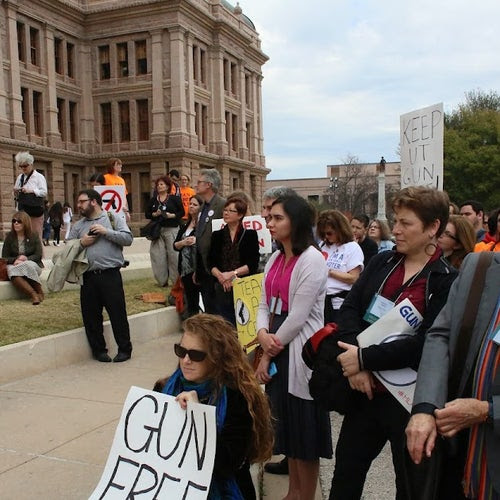


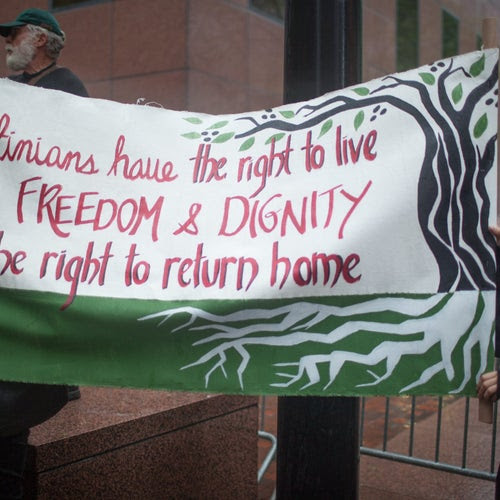



 Dean Marla F. Frederick delivered her address “And Yet, We Hope . . . ” at Harvard Divinity School’s 209th Convocation in September 2024. Photo: @lieslclarkphotography
 HDS Deans past and present: Former Dean William Graham (2002–12), former Acting and Interim Dean David Holland (spring 2021 and fall 2023), Dean Marla F. Frederick, former Acting Dean Preston Williams (1974–75), and former Dean David Hempton (2012–23) at Dean Frederick’s welcome reception in January 2024. Photo: Julia Zhogina Photography
 Dean Frederick with HDS faculty celebrating the School’s 209th Convocation in September 2024. Photo: @lieslclarkphotography
 Dean Marla F. Frederick, PhD, and Rev. Raphael G. Warnock, PhD, during their symposium conversation, “Religion and Democracy at the Crossroads,” in September 2024. Photo: @lieslclarkphotography


 When: December 10–11, 2024.
 Where: Tel Aviv University.
 Register now:
  By
By
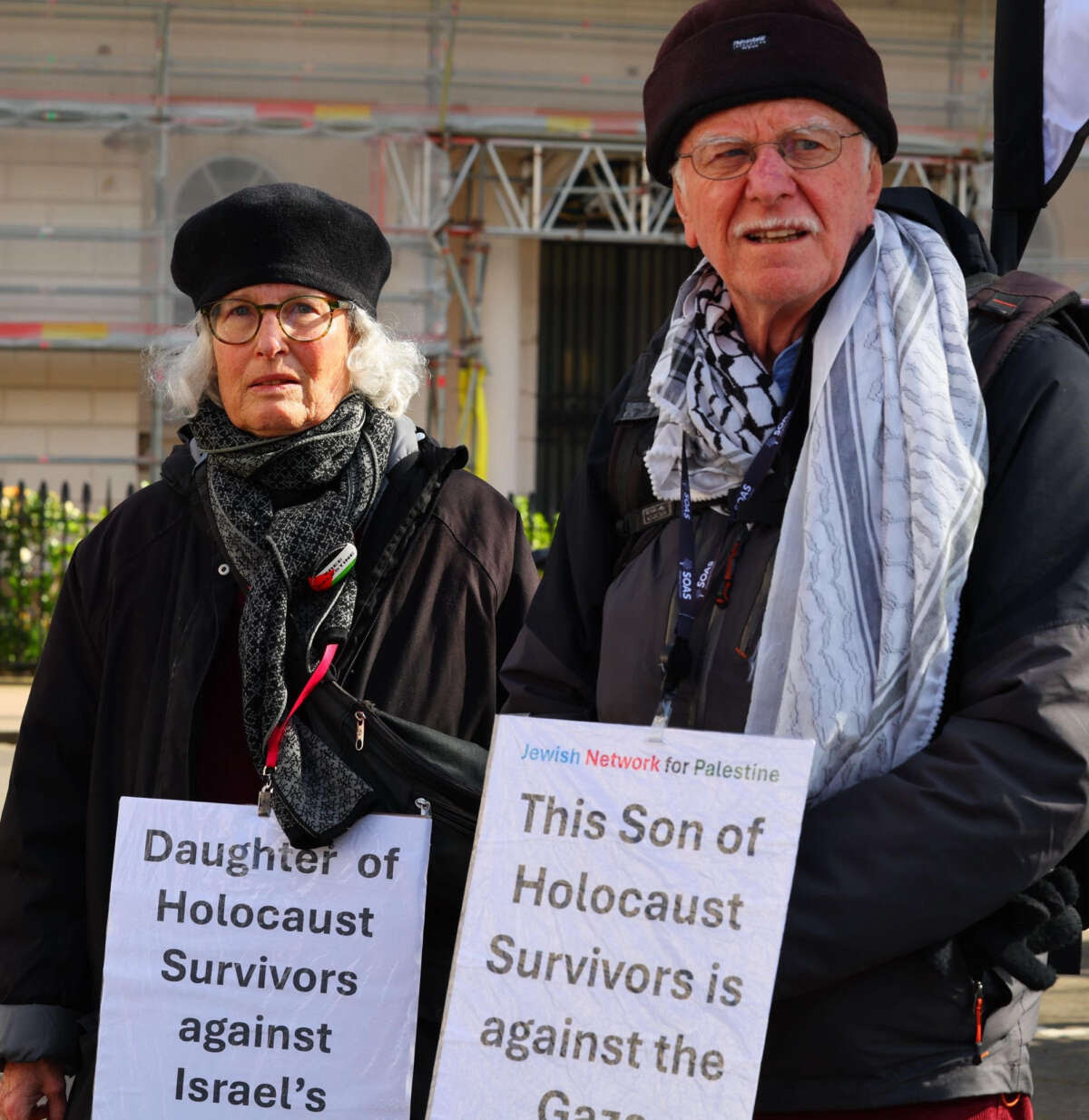 Haim Bresheeth, right, at a national demonstration in London, U.K., in October 2024.Yosefa Loshitky


 israel-academia-monitor.com