Shlomo Sand, a Prof. Emeritus at the Dept. of History, Tel Aviv University, published an article recently, “A Second Nakba or a Binational Solution,” in the Hebrew edition of Haaretz. Sand argued that a proposed “bi-nationalism” in 1947 did not materialize: “The war and the Nakba that occurred during it prevented its realization.” After the Six Day War of 1967, “Israel, which had expanded even further, began to create a bi-national existence again.” Today, according to Sand, “Despite the civil, legal, and political inequality, and the resulting bloody conflict, the two populations are becoming more and more integrated with each other.”
To recall, in his youth, Sand was a member of the radical left-wing group Matzpen, which tried to bring together Israeli Jews and Arabs. By trying hard to appease Arabs, a group of Matzpen activists was caught spying for Syria. The group included Udi Adiv who was recruited by the Syrian intelligence service. Sand, who was not part of the spy ring, befriended Mahmoud Darwish, the famous Palestinian poet.
As can be seen, Sand hasn’t changed his tune. Sand wrote, “Many Israelis secretly dream of a second Nakba. They understand that the current situation cannot last much longer. The delusional right-wing partner in the current government promotes not only a boom in settlements but also a massive explosion, which will result in the deportation of the Arab population beyond the Jordan River. But Western interests in the Middle East thwart such a perspective. Deporting two to three million Palestinians to Jordan, Saudi Arabia or Egypt will probably lead to the collapse of their regimes.” This is a straw dog argument, designed to frighten the readers. A massive expulsion of the Palestinians is not on the agenda of the current government, not to mention previous governments.
Sand’s other arguments in the article are equally specious, designed to explain why the Palestinians rejected the 1947 UN Partition Proposal. “My big surprise was when I found out that 497,000 Arabs were also supposed to belong to the Jewish state! In other words, the planned Jewish state was not really meant to be ‘Jewish,’ but much more ‘binational’. Nearly half a million Arabs were trapped in a project that nationally was not theirs, even if, at best, they would have been entitled to become ‘Israeli’ citizens in it. Therefore, it is no wonder that all the Arab institutions and movements in Palestine and the Arab world (apart from the Arab communists who were followers of Stalin) immediately opposed the partition that was perceived as unfair and started hostilities against the future Jewish state. It is likely that if the principles of the partition were reversed and inclined in favor of the Arab side, all wings of the Zionist movement, and not only the revisionist right, would reject it completely.”
Any half-decent historian would have known that the Palestinians and their Arab supporters categorically rejected the idea of a Jewish presence under any condition.
But then again, Sand is not a historian, and his books are mostly polemical and highly controversial. For instance, his most infamous book, The Invention of the Jewish People, argued that it was “a myth that the Romans expelled the Jewish people in the first century.” Rather they were converts who came from different countries, including Eastern Europe. While rejected by serious academic critics, Sand was embraced by the propaganda apparatus of Iran, among other enemies of Israel. His appearances on Press TV, the English language organ of the regime, attest to this fact.
Needless to say, the Palestinians have been thrilled with Sand as well. Just a few days ago, the Palestinian news outlet, Rai Alyoum, based in London, published an article in Arabic. It cited Arab-Israeli journalist Zuhair Andrews who referred to the book The Invention of the Jewish People, stating that “Sand concludes that the Zionist historical narrative began to disintegrate at the end of the twentieth century in Israel itself and in the world and transforms to mere literary fables separated from the actual history by an abyss that is impossible to bridge,” adding that “the irrefutable archaeological facts on the ground confirm that Israel was founded on a myth and historical lies made by global Zionism to occupy Palestine to plant a strange entity that possesses military power and serves the West.”
Another Palestinian article referred to Sand, stating, “Sand spoke one day about the friendship that brought him together with the great Palestinian poet Mahmoud Darwish on a humanitarian ground that sought love and peace for all, and admitted that Darwish had profoundly influenced his formation. And the suffering of Sand, who was serving as a soldier in the Zionist army in 67, and regretted that, as he lived dreaming of a society where love and peace prevailed. With a singing street and a lit house… I want a good heart, not loading a gun, I want a sunny day, not a crazy fascist moment of victory, I want a smiling child who laughs for the day, not a piece of the war machine.”
Sand’s new book in Hebrew, Israel-Palestine and the Question of Binationalism, is another polemical exercise. He blames the Jews for all and sundry calamities that have befallen the Palestinians without explaining the historical origin of the conflict, namely the rejection of the UN partition proposal. Moreover, Sand does not bother to explain that the Palestinian Islamists, with support from Iran, sabotaged the Oslo Peace process. If Sand were a historian, as he claimed to be, he would have researched the large volume of literature on the role of Palestinian Islamic Jihad (PIJ) and Hamas in abrogating Oslo.
Sadly, Sand has used his academic credentials as a professor of history at Tel Aviv University to push his polemics. He is not the only one, as IAM frequently pointed out.
בסוף כל משפט שאתם אומרים בעברית יושב ערבי עם נרגילה”, שורר בזמנו מאיר אריאל. ברוח זו אפשר לומר, שבשולי כל שיח על הקונפליקט הלאומי הכאוב שלנו עדיין רובצת לה הנכבה. 75 שנים עברו, והפלסטינים עדיין לא שכחו. 75 שנים, והישראלים עדיין אינם רוצים לזכור. מה עוד, שכולנו משוכנעים מעבר לכל ספק שהיתה זו אשמתם של הערבים: הרי הם פתחו במלחמה שהמיטה עליהם את אסונם.
אם עד שנות ה–90 של המאה הקודמת נהוג היה להכחיש את אופי הנכבה — לטעון בביטחון שהפליטים כלל לא גורשו והתעמולה הערבית היא שדחפה אותם לנוס, הרי מאז שהתפרסמו המחקרים של בני מוריס, אילן פפה ואחרים השתנתה הגישה: רבים התוודעו למעשי הגירוש ואפילו לשאיפות לא מוסתרות לטרנספר שעמדו מאחוריהם. ועם זאת, דבר אחד נותר יציב ושריר גם בחוגים ליברליים בעלי מצפון ומלאי הבנה: נכון שנעשה עוול, אך סירובם העיקש של הערבים לקבל את החלטת האו”ם 181 מ–29 בנובמבר 1947, שהציעה את חלוקת הארץ, והעובדה שהם פתחו בהתקפה רבתי על היישוב העברי הצעיר — הם שהוליכו לטרגדיה.
אודה על האמת, אף אני נטיתי זמן רב לקבל עקרונית את הגישה ההיסטורית הזו. כידוע, בשעה שהימין הרוויזיוניסטי דחה את הצעת החלוקה, כל השמאל אימץ אותה, אפילו השמאל היהודי הלא־ציוני. אפילו סטאלין תמך באותם ימים בהתלהבות בהקמת מדינה יהודית, ואף ציווה על כל גרורותיה של ברית המועצות ועל חסידיו המקומיים לתמוך בחלוקה. ידעתי שעשור וחצי מאוחר יותר, עם הצטרפותן של מדינות קולוניאליות לשעבר לאו”ם, קרוב לוודאי ההחלטה הגורלית לא היתה מתקבלת, לכן חשבתי שטוב שהכרונולוגיה היתה כזו, מדינת ישראל הרי הוקמה ב”נס” ברגע האחרון.
כמו רבים לא התעמקתי בעיקרי החלטת החלוקה. ידעתי בשלב מוקדם למדי שמבחינה טריטוריאלית ההחלטה העניקה יותר שטח ליהודים (62%), אך גם ידעתי שחלק גדול ממנו היה מדברי. ב–1947 היו בפלשתינה המנדטורית יותר ממיליון ורבע ערבים וכ–600 אלף יהודים, כלומר 67% ילידים מקומיים ו–33% מתיישבים, שרובם המכריע היו מהגרים חדשים יחסית. החלטת החלוקה לקחה בחשבון שעקורים יהודים נוספים יגיעו בשנים הבאות מהמחנות בגרמניה. רוב המדינות שתמכו בחלוקה לא רצו אותם בשטחן, ונוח היה להן לתמוך בהקמת מדינה יהודית במבואות העולם הערבי.
אולם מה היו עקרונות החלוקה הדמוגרפית של ההחלטה? בשטחה של המדינה הערבית המיועדת היו אמורים להיכלל 725 אלף ערבים ו–10,000 יהודים. ובשטח המדינה היהודית היו אמורים להיכלל 598 אלף יהודים, לכל הדעות מספר הגיוני למדי. הפתעתי הגדולה היתה כשגיליתי שהיו אמורים להשתייך למדינה היהודית גם 497 אלף ערבים! כלומר המדינה היהודית המתוכננת לא ממש נועדה להיות “יהודית”, אלא הרבה יותר “דו־לאומית”.
קרוב לחצי מיליון ערבים היו לכודים בפרויקט שמבחינה לאומית לא היה שלהם, גם אם במקרה הטוב הם היו זכאים להפוך בו לאזרחים “ישראלים”. לכן אין זה פלא שכל המוסדות והתנועות הערביים, בפלשתינה ובעולם הערבי (מלבד הקומוניסטים הערבים חסידי סטאלין), התנגדו מיידית לחלוקה שנתפשה כלא הוגנת, ופתחו בפעולות איבה נגד המדינה היהודית העתידית. סביר להניח שאילו עקרונות החלוקה היו הפוכים ונוטים לטובת הצד הערבי, כל אגפי התנועה הציונית, ולא רק הימין הרוויזיוניסטי, היו דוחים אותה מכל וכל.
ה”דו־לאומית” של 1947 לא התממשה. המלחמה והנכבה שהתרחשה במהלכה מנעו את מימושה. למרות שרוב האוכלוסייה המקומית של איכרים ערבים לא השתתפה בקרבות בפועל, כ–750 אלף מהם נעקרו ונאלצו לנטוש את אדמותיהם בשטח ישראל, שגבולותיה התרחבו, ורק כ–150 אלף מהם נותרו בשטחה.
ב–1967, ישראל, שהתרחבה עוד יותר, החלה שוב ליצור הוויה דו־לאומית. 150 אלף הערבים שנותרו בה ב–1948 נהפכו כיום לשני מיליון, וליותר מ–21% מאזרחי ישראל. בגדה המערבית ובמזרח ירושלים חיים תחת שלטון צבאי ישראלי עוד כ–3.25 מיליון פלסטינים, וברצועת עזה 2.25 מיליון נוספים. יחד — כ–7.5 מיליון פלסטינים. מספר זהה של ישראלים לא ערבים חיים בין הים לירדן (לא רחוק היום שקרוב למיליון מהם יתגוררו מעבר לקו הירוק). למרות האי־שוויון האזרחי, המשפטי והפוליטי, והקונפליקט המדמם הנובע מכך, שתי האוכלוסיות הולכות ומשתלבות זו בזו יותר ויותר.
ישראלים רבים חולמים בחשאי על נכבה שנייה, הם מבינים שהמצב הנוכחי לא יכול להימשך עוד זמן רב. הימין ההזוי השותף בשלטון הנוכחי מקדם לא רק תנופה בהתנחלויות אלא גם פיצוץ רבתי, שיביא לגירוש האוכלוסייה הערבית אל מעבר לנהר הירדן. אבל האינטרסים המערביים במזרח התיכון מסכלים פרספקטיבה מעין זו. גירוש שניים־שלושה מיליון פלסטינים לירדן, לסעודיה או למצרים יביא ככל הנראה להתמוטטות המשטרים בהן.
צרפת לשווייץ
בדרכי לז’נבה, ישבה מולי צעירה שווייצרית דוברת צרפתית. בהתקרב הרכבת ז’נבה, שאלתי אותה באיזו תחנה לרדת כדי להגיע למזרח העיר. היא ציינה בפני את שם התחנה, ואגב כך שאלה, בגלל מבטאי, מאין אני. עניתי לה שמישראל. כעבור כמה דקות היא חייכה והוסיפה בהומור: “תיזהר, אם תפספס את התחנה ותמשיך הלאה, תיפול ישר לידי הגרמנים”.
*פרופ’ זנד הוא היסטוריון. ספרו “ישראל־פלסטין ושאלת הדו־לאומיות” ראה אור באחרונה בהוצאת רסלינג*
ההשתלבות ההולכת וגדלה בין האוכלוסייה הישראלית והאוכלוסייה הפלסטינית נראית היום כבלתי ניתנת להתרה. יותר ויותר אנשי רוח, עיתונאים וסופרים שואלים את עצמם האם הסיסמה “שתי מדינות לשני עמים” עדיין ברת-תוקף ומהי מידת הכנות והיושרה הפוליטית להמשיך ולשאת אותה. מעטים, לעומת זאת, יודעים שרעיונות ביחס לפתרונות דו-לאומיים נולדו כבר עם ראשית הופעתו של החזון הציוני. מאחד-העם עד גרשום שולם, ממרטין בובר עד חנה ארנדט, ולאחרונה ממירון בנבנישתי עד א”ב יהושע, בכל שלב של התפתחותה ונפתוליה של ההגות הפוליטית קמו אנשים שהטילו ספק האם מדינה יהודית קטנה ובלעדית, מנוכרת לסביבתה ומסוגרת מול המזרח הערבי הגדול, מהווה מענה נכון למצוקותיהם של יהודים נרדפים בעידן המודרני. האם מלכתחילה אי-הכללתה של האוכלוסייה הילידית בתמונת העולם העתידית הייתה נבונה דיה? האם ניתן היה אי-פעם להפריד באמת בין שני העמים שהלכו והתהוו תוך קונפליקט אלים וכואב בין הים לירדן?
בתקופה הנוכחית הקיום הלא-שוויוני של שני העמים החיים תחת שלטון אחד הוא מציאות המתדרדרת למצב של אפרטהייד. 875.000 הישראלים החיים מעבר ל”קו הירוק” (500.00 בהתנחלויות ו-375.000 במזרח ירושלים) הם בעלי זכויות אזרח מלאות. שכניהם, לעומת זאת, חסרי ריבונות עצמית ונטולי כל הגנה אזרחית ומשפטית. אי-שוויון בסיסי זה המתקיים כבר למעלה מיובל שנים מייצר שוב ושוב אלימות מדממת ועלול להסתיים בקטסטרופה. האם נותר עדיין זמן לשנות את המגמה? האם ישראלים ופלסטינים עשויים יום אחד לחיות בשלום אזרחי ובשוויון פוליטי תחת מסגרת משותפת?
בספר מרתק ורב-ערך זה להבנת אפשרות התנהלותנו במרחב מעלה שלמה זנד את הסוגייה שרובנו מעדיפים להתעלם ממנה: היות ולא ניתן לחלק ארץ, האם אין להתחיל צעד אחר צעד, למרות הקשיים והמהמורות, ללמוד להתחלק בריבונות עליה?
שלמה זנד הוא היסטוריון ופרופסור אמריטוס באוניברסיטת תל אביב. מבין ספריו שתורגמו לשפות רבות ניתן למנות את “הקולנוע כהיסטוריה” (עם עובד 2002), “מתי ואיך הומצא העם היהודי?” (רסלינג 2008), “לחיות ולמות בתל אביב” (ידיעות ספרים 2019), “קיצור תולדות השמאל בעולם” (רסלינג 2021).
האם ישראלים ופלסטינים עשויים יום אחד לחיות בשלום אזרחי ובשוויון פוליטי תחת מסגרת משותפת?
רעיונות ביחס לפתרונות דו-לאומיים של הסכסוך הישראלי-פלסטיני נולדו עם ראשית הופעתו של החזון הציוני. מאחד העם עד גרשום שולם, ממרטין בובר עד חנה ארנדט, ולאחרונה ממירון בנבנישתי עד א”ב יהושע, בכל שלב של התפתחותה ונפתוליה של ההגות הפוליטית קמו אנשים שהטילו ספק האם מדינה יהודית קטנה ובלעדית, מנוכרת לסביבתה ומסוגרת מול המזרח הערבי הגדול, היא מענה נכון למצוקותיהם של יהודים נרדפים בעידן המודרני. האם מלכתחילה אי-הכללתה של האוכלוסייה הילידית בתמונת העולם העתידית הייתה נבונה דיה? האם ניתן היה אי פעם להפריד באמת בין שני העמים שהלכו והתהוו תוך קונפליקט אלים וכואב בין הים לירדן?
בישראל-פלסטין ושאלת הדו-לאומיות מעלה ההיסטוריון ו”הילד הרע” של השמאל הישראלי, פרופסור אמריטוס שלמה זנד, סוגייה שרבים מעדיפים להתעלם ממנה: בהנחה שלא ניתן לחלק ארץ, האם אין להתחיל צעד אחר צעד, למרות הקשיים והמהמורות, ללמוד להתחלק בריבונות עליה?
وها هو الاستاذ “زهير أندراوس” يلاقي “ديانا” وقد. اشار بالامس لكتاب “اختراع الشعب اليهوديّ” (The Invention of the Jewish People) للبروفيسور “شلومو ساند” (Shlomo Sand) من جامعة تل أبيب حيث يخلص “ساند” إنّ الرواية التاريخية الصهيونية بدأت تتفسخ في نهاية القرن العشرين في إسرائيل نفسها وفي العالم وتتحول إلى مجرد خرافات أدبية تفصلها عن التاريخ الفعلي هوة سحيقة يستحيل ردمها مضيفاً ان “الحقائق الأركيولوجية الدامغة على الأرض تؤكِّد أنّ إسرائيل أُسست على أسطورة وأكاذيب تاريخية صنعتها الصهيونية العالمية لاحتلال فلسطين لزرع كيانٍ غريبٍ يملك القوّة العسكريّة ويخدم الغرب.”
Published by the Palestinian Amad News, translated by Google.
Shlomo Sand and the Deconstruction of Zionist Myths
09:31 2022-03-09 By Dr. Muhammad Emara Taqi Al-Din “Israel is the most racist society in this world.. The Jewish people is a term invented in the nineteenth century.. Today’s Jews have nothing to do with the ancient Hebrews.”
These are some of the sayings of the Israeli Professor Shlomo Sand, one of the most prominent new Israeli historians at the present time, those sayings were based on serious scientific historical studies through which he was able to blow up many Zionist myths that were deepened in the global consciousness in an attempt to justify the Zionist project and claim false eligibility for the Zionists In Palestine.
Shlomo Sand was born in Austria in 1946 to a Jewish family who survived the Holocaust, then immigrated to the Zionist entity, and is now working as a professor at Tel Aviv University. He is the author of the famous trilogy (Inventing the Jewish People, Inventing the Land of Israel, How Can I no longer be a Jew).
In his most famous book, The Invention of the Jewish People, he emphasized that the Zionist talk about the Romans expelling the Jews from Palestine in the past is something for which there is no historical or archaeological evidence, and then their call to return to Palestine is invalid, as they were never there, and that the current Jews are Most of them are descendants of the historical Khazar Empire in the Caucasus region that had converted to Judaism, which refutes the well-known Zionist thesis that the Jews of the modern world are the descendants of the ancient Jews who lived in Palestine and who spread in the world after the Roman expulsion of them.
Sand asked: Why is the Torah relied upon as a true historical reference that shovels of doubt should not extend to it and that it should not be criticized despite the many myths and legends it contains? Stressing that this mistake was deliberately committed by the Zionist movement in an attempt to employ these historical religious myths to give an aura of sanctity to its political theses and to root them in the Jewish public consciousness.
Sand confirms that the historical research has confirmed that the Jews belong to many nationalities, and they are framed only by affiliation and in general with the Jewish religion, and he believes that the myth of the ethnic purity of the Jews cannot withstand serious scientific and historical research, and that it is nothing more than a Zionist invention. It was invented in the nineteenth century by the Zionists through a group of fabricated researches carried out by well-known Zionist writers. Before that, this people did not have a real existence as a group that included a single national framework. Sand says: “The fact is that, over the past two thousand years, the Jews were not a people in the sense known to the word, but they were just a religious minority.”
Rather, Shlomo Sand confirmed that all the efforts of the Israeli antiquities committees were in vain, as they did not discover anything that reinforces the Zionist myths, but rather what was discovered confirms the opposite.
And that if we arrange the world as it was two thousand years ago, as Zionism did and granted the Jews the right to Palestine, then why don’t we return the Arabs to Spain and everyone who settled in a country in a certain historical era and other similar cases that are full of human history.
Shlomo Sand moves on to direct another stab at the term Land of Israel, stressing that this concept was newly invented as part of the Zionist colonial project to give it religious justifications. Peoples and nationalities, and then he wonders: Did the Jews suddenly wake up due to the efforts of the Zionists, only to discover that they had made a mistake on their way to Palestine? And then they have to turn to it strongly and intensively to establish their historical homeland, as the Zionists, according to Sand, dealt with the Torah as a binding legal document and a historical title deed according to which they must be granted Palestine on which to establish their state.
Zionism fabricated a lot of historical scientific research for this purpose, and it also twisted the neck of religious texts and re-read them in the light of its racist political ideology to justify its theses of settler colonialism.
The Zionist entity, according to Shlomo Sand, is nothing more than a colonial project to which false religious preambles have been fabricated.
The first: Employing Western persecution of the Jews and, consequently, their right to a homeland outside Europe as a way out of this persecution.
The second: Employing the imperialist colonial tendency that prevailed in Europe at the time, and then they identified a lot with what the Europeans called for at that time to set out to establish new colonies.
Through this proposition, Sand appears to be strongly influenced by his parents’ pro-communist views and against global imperialism in its colonial form.
Accordingly, he calls for making every effort to save the Zionist entity from racism that exaggerates in its inhumanity, and to abandon the idea of the chosen people, and then open the door wide for displacement in this tumultuous Arab environment, by starting to refute the historical lies promoted by the Zionists, and even disavow them in a way Full recognition of the existence of indigenous inhabitants of this place (Palestine), and dealing with them as owners of land and right.
Sand believes, according to what the researcher Mervat Auf reported, that the Zionist entity is like a foundling child, and his analysis of that is that the Zionist gangs committed a sinful act, which is the usurpation of Palestine in 1948, so this Zionist entity emerged from the womb of that rape and as a result of it, and that this foundling child (the Zionist entity ) If he wants to live and then continue his existential continuity as a state, he must stop following the criminal behavior of his rapist father and announce his absolute disavowal of this act.
Shlomo Sand also argues that the racist regime in Israel is very similar, and even more horrible, than the outdated racist regime (apartheid) in South Africa, and that Israel is the state It is one of the most racist societies, as he saw that the victory of Israel in the Six-Day War in 1967 was what led to the growth of the Zionist ego and the liberation of the tendency to worship and glorify the power and excessive violence among its inhabitants as a satanic force from its bottle, so it exaggerated its crime against the Palestinians, and then called to save Israel from itself before the great collapse by forcing it by all means to choose the option of peace with the continuous and escalating pressure on it from the international community.
He also called for Israel to renounce its racism and become a state for all the citizens who live within it by establishing a democratic, bi-national state and completely abandoning the Jewish thesis of the state, that racist thesis in its depth.
With regard to the policy of building illegal settlements pursued by the Zionist entity, Sand believes that this matter does not concern him much because the existence of Israel as a whole is illegal, as it is like a large illegal settlement, as it was established by force after the extermination of the indigenous population.
In 2012, Shlomo Sand received a number of threats, as a sealed envelope came to him that included white powder and an explicit death threat message as belonging to the Nazi ideology and anti-Semitism, and the message stated: “Make sure that you do not live any longer.”
In his latest book, “How I Stopped Being a Jew,” Sand disavows the racist, ethnic convictions dormant in the depths of the Jewish personality, stressing that that position is a moral commitment that he pledged himself to years ago, although with this proposition he swims in the opposite direction and against a sweeping stream of racism and chauvinism. within Israeli society.
Then we find him repeating the words of the Turkish poet Nazim Hikmat, those words full of general human concern: “If I do not burn, and if you do not burn, then who will enlighten the darkness for others?”
Hence, he calls for a general human vision and formula that accommodates everyone and puts them on an equal footing.
Sand spoke one day about the friendship that brought him together with the great Palestinian poet Mahmoud Darwish on a humanitarian ground that sought love and peace for all, and admitted that Darwish had profoundly influenced his formation. And the suffering of Sand, who was serving as a soldier in the Zionist army in 67, and regretted that, as he lived dreaming of a society where love and peace prevailed. With a singing street and a lit house… I want a good heart, not loading a gun, I want a sunny day, not a crazy fascist moment of victory, I want a smiling child who laughs for the day, not a piece of the war machine.
In the final analysis, these are the theses, then, of Shlomo Sand, which are very much aligned with Arab convictions and are very supportive of Palestinian rights. These are the theses that were based on serious scientific research by a historian who was very consistent with himself and respected the results that his research leads to without prior bias, so he dealt with historical documents a lot. From impartiality and objectivity, and then he developed a complete conviction that the foundational statements from which Zionism was launched are false in their depth, and that they were widely promoted through the massive Zionist propaganda machine, in order to forcibly root the Zionist entity in the Palestinian reality.
On May 7, 2023, the Israeli Government moved to incorporate more sections of the International Holocaust Remembrance Alliance (IHRA) Working Definition of Antisemitism. In 2016, the IHRA Definition was officially adopted by the then 31-member countries organization. IHRA was the first intergovernmental body to adopt a working definition of antisemitism, a project of international experts and political representatives of member countries. The Israeli Government adopted the Definition in 2017. The Definition is non-legally binding but is adopted by a growing number of countries and organizations around the world.
Israel decided to adopt IHRA’s two new clauses, “Holocaust denial and distortion,” as well as the working definition of “anti-Roma discrimination.” Clearly, acknowledging discrimination against the Roma communities who suffered persecution by the Nazis is also important.
In 2011 IHRA published information on Holocaust distortion titled “Understanding Holocaust Distortion: Contexts, Influences and Examples,” which explains that “Although Holocaust denial remains a significant problem in many countries both within and outside of the IHRA, Holocaust distortion is a growing and perhaps more significant challenge today. This is in part due to the fact that Holocaust distortion surfaces in different contexts, and often in ways that are not punishable by law or other measures. It is also challenging because many forms of distortion overlap with one another, or moreover may be the result of unintentional ignorance of the subject and specificity of the Holocaust. Regardless, distortion is a growing challenge because its presence lends legitimacy to more dangerous forms of denial and antisemitism. Over the course of the past decade, Holocaust distortion has grown in intensity. Geographical aspects and regional historical context play important roles in the countries dealing with the Holocaust. It must be countered through clear identification of manifestations, contexts, influences, and narratives examined in this publication.”
Worth noting is that IAM reported on Holocaust distortion before. For example, in two recent IAM posts, we discussed the “Falsification of History at the Center for the Study of the Holocaust Genocide and Crimes Against Humanity.” The City University of New York (CUNY) Center for the Study of the Holocaust Genocide and Crimes Against Humanity (CHGCAH) hosted seminars such as “Beyond the Settler State: Anticolonial Pasts and Futures in Palestine/Israel,” accusing Israel of executing “a settler colonial policy of violent erasure.” In another conference, “The Bedouin Village of Rah’ma: Toward Recognition and Beyond,” CHGCAH discussed Bedouins who live in unrecognized villages in Israel. Hosting irrelevant conferences under the topic of the Holocaust – is a form of Holocaust distortion. Moreover, abusing the study of the Holocaust to promote political agenda is a manifestation of Holocaust distortion.
Another IAM post on Holocaust distortion was “Brown University Watson Institute Center for Middle East Studies Provides Holocaust Reductionism and Fabrication of History.” We pointed to the webinar panel in October 2022 that discussed “The New Antisemitism and the Contemporary Middle East.” The panelists distorted the Holocaust by stating that the Palestinians are victims of Israel and therefore are victims of the Holocaust. In fact, the Palestinians were influenced by the Nazis and instigated the riots of 1936-9. Their leader, Mufti Haj Amin Al-Husseini, was a Nazi collaborator and a Palestinian unit fought with the Nazi forces in the Balkan.
There are many more examples that IAM has covered throughout the years.
It is important to note that Palestinian and pro-Palestinian academics occasionally distort the Holocaust to blame Israel for the Palestinian refusal to accept the partition plan that proposed Jewish and Palestinian States.
IAM will report on new cases of Holocaust distortion as they occur.
Israeli gov’t adopts additional sections of IHRA antisemitism definition
The IHRA definition of antisemitism was adopted already in 2017. The additional sections relate to the alliance’s decision on “Holocaust denial and distortion” and anti-Roma discrimination.
The Israeli government on Sunday adopted a number of additional sections of the International Holocaust Remembrance Alliance’s (IHRA) definition of antisemitism that deal with “distortion and denial of the Holocaust,” as well as the “working definition of anti-Roma discrimination,” according to a joint statement by the Foreign Ministry and the Diaspora Affairs and Combating Antisemitism Ministry.
The IHRA definition of antisemitism was adopted already in 2017. The additional sections adopted on Sunday relate to the alliance’s decision on “Holocaust denial and distortion,” as received by the IHRA in 2013 as well as the working definition for “anti-Roma discrimination,” received in October 2020.
The IHRA definition has already been adopted by countries across the world. Foreign Minister Eli Cohen said that “the decision adopted today by the government will strengthen Israel’s standing in the international arena and help in the fight against antisemitism, as well as the fight against distortion and Holocaust denial.”
He added that “while the entire world is dealing with antisemitism, the Israeli government is sending a clear message. We must fight the distortion and denial of the Holocaust with all of the tools that are at our disposal.” He concluded that the Foreign Affairs Ministry and Israel’s embassies around the world “are committed to the daily fight against antisemitism and the preservation of the memory of the Holocaust.”
IHRA definition: One of the most essential tools to fight antisemitism
“The IHRA definition is currently one of the most essential and strategic tools for the fight against antisemitism, with an emphasis on ‘new antisemitism’ that strives to deny the legitimacy of the State of Israel to exist.”Amichai Chikli
Diaspora Affairs and the Combating Antisemitism Minister Amichai Chikli added that “the IHRA definition is currently one of the most essential and strategic tools for the fight against antisemitism, with an emphasis on ‘new antisemitism’ that strives to deny the legitimacy of the State of Israel to exist.”
Chikli said that the “decision will help Israel in its efforts to get organizations and countries to withdraw their recognition of the BDS movement’s decisions concerning, among other things, the denial of the Holocaust.”
According to Chikli, the move “will help Israel in its efforts to get organizations and countries to withdraw their recognition of the BDS movement’s decisions concerning, among other things, the denial of the Holocaust.” In addition, the decision to add reference to the denial and distortion of the Holocaust “is very important, especially regarding the phenomenon of attributing positive attributes to the Holocaust, such as the false representation that the State of Israel was established thanks to the Holocaust – a statement that prime minister David Ben-Gurion fought against in the early years of the state.” Chikli asked to “congratulate the Foreign Affairs Minister and the people of his office on this joint decision.”
IHRA was established in 2000 at the initiative of then-Swedish prime minister Göran Persson. 35 countries are members of the alliance and 10 additional countries, as well as organizations, are observers and partners. Israel has been a member of the alliance since its foundation.
As part of the work of the experts in the organization, a number of basic definitions were drafted and adopted to deal with phenomena and issues that pose challenges at the international level for the preservation of the memory of the Holocaust, Nazi crimes and the fight against antisemitism.
The IHRA definition of antisemitism was adopted by the Israeli government in Resolution No. 2315 on January 22, 2017 and has since been used as an important tool in the work of Israel’s ministries and missions around the world in the international fight against antisemitism and the effort to promote Holocaust remembrance.
The IHRA definition for Holocaust distortion and denial, adopted in 2013, is intended to equip countries and entities with the tools to deal with the phenomenon of Holocaust denial. The definition is an expression of recognition by countries and organizations of the need to denounce distortion and denial of the Holocaust at the national and international level.
The IHRA definition of discrimination against the Roma people received in 2020, is intended to help deal with widespread hatred that also manifested itself in World War II, during which Nazi Germany marked this group for persecution and mass murder.
נלחמים באנטישמיות ובהכחשת השואה – ביוזמת משרד החוץ ומשרד התפוצות והמאבק באנטישמיות, ממשלת ישראל אימצה היום את הגדרת הברית הבינ”ל לשימור זכר השואה (IHRA) העוסקת ב”עיוות והכחשת שואה” ואת ההגדרה ל”אפליה כנגד הצוענים/בני הרומה”.
אימוץ ההגדרות בהחלטת ממשלה ייתן בידי כלל הגורמים העוסקים במאבק באנטישמיות כלים חשובים על מנת לעורר מודעות לנושאים אלה בקרב קהלים וארגונים כמו גם בקרב קובעי מדיניות.
שר התפוצות והמאבק באנטישמיות עמיחי שיקלי:
“הגדרת IHRA היא כיום אחד הכלים הכי חיוניים ואסטרטגיים למאבק באנטישמיות, בדגש על האנטישמיות החדשה החותרת לשלילת הלגיטימציה של מדינת ישראל להתקיים.
ההחלטה תסייע לישראל במאמציה להביא לכך שארגונים ומדינות יסוגו מהכרתם בהחלטות תנועת ה-BDS הנוגעות בין היתר להכחשת השואה.
בנוסף, ההחלטה להוסיף התייחסות להכחשת ועיוות השואה היא חשובה מאוד, במיוחד בכל הנוגע לתופעת ייחוס תכונות ״חיוביות״ לשואה, דוגמת מצג השווא כביכול מדינת ישראל הוקמה בזכות השואה – אמירה שרה״מ דוד בן גוריון נלחם בה כבר בשנותיה הראשונות של המדינה. אני מבקש לברך את שר החוץ ואנשי משרדו על ההחלטה המשותפת הזו”.
The proposal was passed by a majority of 33 supporters from the coalition and the opposition against five opponents, which included MKs of the Joint List party.
It was formally endorsed by the government of Israel in 2017, but never by the Knesset.
“Antisemitism is a certain perception of Jews, which may be expressed as hatred toward Jews,” the IHRA definition states. “Rhetorical and physical manifestations of antisemitism are directed toward Jewish or non-Jewish individuals and/or their property, toward Jewish community institutions and religious facilities.”
Along with the definition, the IHRA published 11 examples of antisemitism. Some of these are relevant to Israel, including “applying double standards by requiring of it a behavior not expected or demanded of any other democratic nation,” and “denying the Jewish people their right to self-determination” by “claiming that the existence of a State of Israel is a racist endeavor.”
Contemporary definition of antisemitism
“I am proud and excited that the Knesset approved my proposal and thus joined over a thousand parliaments, organizations, local and federal governments that have adopted this definition and adopted examples of modern antisemitism, including opposition to the right of self-determination of the Jewish people. This is an important step in the battle on combating antisemitism.”MK Zvi Hauser (New Hope)
The IHRA’s working definition fits the contemporary definition of antisemitism, holding that hatred toward Israel is antisemitic.
New Hope MK Zvi Hauser, who proposed the Knesset vote, said in February he was surprised that the Knesset, unlike parliaments around the world, had not adopted the IHRA’s definition.
“I am proud and excited that the Knesset approved my proposal and thus joined over a thousand parliaments, organizations, local and federal governments that have adopted this definition and adopted examples of modern antisemitism, including opposition to the right of self-determination of the Jewish people,” he said on Thursday. “This is an important step in the battle on combating antisemitism.”
The IHRA’s working definition of antisemitism has helped guide countless governments, organizations and individuals in their efforts to identify antisemitism. The definition has also been formally adopted or endorsed by many groups, both at the national and organizational levels. As of last June, the working definition has been accepted by the European Parliament and other national and international bodies, and has been employed for internal use by a number of governmental and political institutions.
The first country to adopt the definition was the UK (2016), followed by Israel (the Israeli government), Austria, Scotland, Romania, Canada, Germany and Bulgaria in 2017.
Published in November 2021, the IHRA’s publication “Understanding Holocaust Distortion: Contexts, Influences and Examples” builds on previous resources to provide a strong, expert-produced and reviewed foundation on international manifestations of Holocaust distortion.
Read an excerpt of Understanding Holocaust Distortion: Contexts, Influences and Examples
Although Holocaust denial remains a significant problem in many countries both within and outside of the IHRA, Holocaust distortion is a growing and perhaps more significant challenge today. This is in part due to the fact that Holocaust distortion surfaces in different contexts, and often in ways that are not punishable by law or other measures. It is also challenging because many forms of distortion overlap with one another, or moreover may be the result of unintentional ignorance of the subject and specificity of the Holocaust. Regardless, distortion is a growing challenge because its presence lends legitimacy to more dangerous forms of denial and antisemitism.
Over the course of the past decade, Holocaust distortion has grown in intensity. Geographical aspects and regional historical context play important roles in the countries dealing with the Holocaust. It must be countered through clear identification of manifestations, contexts, influences, and narratives examined in this publication.
Contents of Understanding Holocaust Distortion: Contexts, Influences and Examples
An estimated 220,000 – 500,000 victims of Nazi persecution
“We, the IHRA Member Countries, remember the genocide of the Roma. We acknowledge with concern that the neglect of this genocide has contributed to the prejudice and discrimination that many Roma communities still experience today.”
— Article 4 of the 2020 IHRA Ministerial Declaration
The IHRA’s Committee on the Genocide of the RomaRaising awareness of the genocide of the Roma, or Porajmos, is critical to countering antigypsyism/anti-Roma discrimination. The IHRA’s interdisciplinary Committee on the Genocide of the Roma works to sensitize IHRA stakeholders to the prejudice towards Roma and Sinti before, during and after the Second World War, as well as to demonstrate the link between the history of persecution and the present situation of Roma communities. The Committee’s efforts to advance education, remembrance, and research of this genocide are complemented by the practical tools it develops, like the working definition of antigypsyism/anti-Roma discrimination, that can help in identifying incidents and manifestations of this form of racism, in collecting data, and in supporting the development of appropriate preventative countermeasures. The current Chair of the IHRA’s Committee on the Genocide of the Roma is Anna Míšková (Czech Republic). Raising awareness of the Romani genocide through education In addition to having co-funded the development of the educational website www.romasintigenocide.eu, a comprehensive multi-lingual online teaching resource on the genocide of the Roma and Sinti, the IHRA, though its Committee on the Genocide of the Roma, is drafting Recommendations for Teaching and Learning about the Genocide of the Roma. This formed one of the IHRA’s pledges at the Malmö International Forum on Holocaust Remembrance and Combating Antisemitism, Remember – ReAct. Supporting remembrance of Sinti and Roma victims and survivors The IHRA helps memorial sites and museums develop adequate exhibits and spaces of remembrance and reflection. IHRA delegations have worked to establish a permanent exhibition on the genocide of the Hungarian Roma at Camp Komárom in Hungary, and were instrumental in the closing of an industrial pig farm on the site of a former concentration camp in Lety u Pisku in the Czech Republic. Encouraging research on the genocide of the Roma
Emerging scholarship is helping to build more complete understanding of the persecution and genocide of European Sinti and Roma under Nazi rule, but many historical questions still remain unanswered and public awareness about the genocide remains insufficient. The IHRA’s support for research on the genocide of the Roma has taken many forms. The IHRA regularly funds research efforts of organizations around the world with IHRA Grants, published an annotated bibliography summarizing research on the topic, and organized the 50 Years of Roma Genocide Research conference.
Recently, Prof. Elad Lapidot gave a lecture, “Jews Out of the Question: How Critical Theory Fights Anti-Semitism by Denying Judaism,” at the Watson Institute Center for Middle East Studies, Brown University. Israeli Prof. Adi Ophir organized the lecture. The talk reflected on the “role that opposition to anti-Semitism has played in shaping critical theory after the Holocaust, in authors such as Adorno, Horkheimer, Jean-Paul Sartre and Hannah Arendt, Alain Badiou, and, most recently, Jean-Luc Nancy. My basic argument is that post-Holocaust critical theory diagnosed the fundamental evil of anti-Semitic though not as thinking against Jews, but as thinking of Jews.”
While the talk discussed anti-anti-Semitism as promised, the speaker had to add some anti-Israel rhetoric, such as “the outcry, the struggle against anti-Semitism is used to instrumentalize politically by different voices, different organizations. To defend Israeli politics, anti-Palestinian politics and to delegitimize critics or critiques against the politics of Israel are stamped anti-Semitic and this is a way of instrumentalizing anti-anti-Semitism. Another way of using it is to justify hostility towards Muslims and Arabs by saying there is a new kind of anti-Semitism that’s coming from Arab and Muslim and this is a way of creating a hostile discourse towards Arabs and Muslims, this is under the title instrumentalization. This is one way of problematizing anti-anti-Semitism. There is another level, another discourse that goes in this direction that is more theoretical, one of the first to have perhaps said something in this direction is Edward Said in Orientalism. He already indicated how anti-Semitism is conceptually linked to the Oriental and anti-Islamism or anti-Arabism or Islamophobia. He already pointed out that we tend to forget that there is a connection between them.”
Accusations that Israel is instrumentalizing anti-Semitism are not new, but the Watson Institute has taken this charge to another level.
In October 2022, Watson held a Webinar Panel to discuss “The New Antisemitism and the Contemporary Middle East.” The host was Nadje Al-Ali, the director of the Center, together with Dr. Katharina Galor from Brown University. The panelists included Noura Erakat, associate professor of Africana Studies and in the Program in Criminal Justice at Rutgers University, and non-resident fellow of the Religious Literacy Project at Harvard Divinity School. Amos Goldberg, Jonah M. Machover Chair in Holocaust Studies at the Department of Jewish History and Contemporary Jewry, and the Head of the Research Institute of Contemporary Jewry, at The Hebrew University of Jerusalem. Sherene Seikaly, associate professor of history at the University of California, Santa Barbara. Raef Zreik, associate professor of Jurisprudence at Ono Academic College, Israel; and a senior researcher at the Jerusalem Van Leer Institute.
Instead of discussing neo-anti-Semitism as they were planned to do, the panel mainly accused Israel of “occupation and annexation, apartheid, and settler colonialism.”
Dr. Katharina Galor started by stating, “we have at our disposal today to highlight some of the most problematic misconceptions of anti-Semitism, especially as relevant to the critique of Israel.” She invited Goldberg to expand on this issue.
Prof. Amos Goldberg explained that the IHRA Definition of anti-Semitism is “vague and clumsily.” The “flaw” of this definition is that it “disconnects anti-Semitism from any other form of racism and the fight against it from any larger emancipatory or even liberal and democratic struggle. Six years since its adoption, one can assess its actual impact, and first, let me say that there is not even one piece of evidence that it helped fight anti-Semitism anywhere. On the contrary, it diverts attention from growing right-wing violent anti-Semitism and particularly and practically legitimizes it. It also makes it very difficult to bond with other minority groups in order to fight anti-Semitism and other forms of racism taken in practice. What it actually does, it delegitimizes the UN as anti-Semitic, the Palestinian historically well-founded narrative of the conflict, which receives Israel as a settler colonial state as it states that claiming that Israel is a racist endeavor is anti-Semitic. In fact, it equates anti-Zionism with anti-Semitism then it makes any critical susceptible to being labeled as anti-Semitic under the allegation of what is called a double standard, and here, there are hundreds of documented examples of that, indeed, Israel reached a point where it cannot justify policies within a liberal discourse of equality in human rights its last resort is the discourse of anti-Semitism and this tactic extremely useful because it has a double impact. First, it has a frightening, chilling effect as any engagement with the issue of Israel-Palestine is suspected to become an issue of anti-Semitism, and second, and this is even more severe, it managed to transform the whole discourse on Israel-Palestine from focusing on reality the occupation and annexation, apartheid, settler colonialism etc. to the endless debate” on anti-Semitism.
Dr. Raef Zreik claimed that the IHRA definition of anti-Semitism could be described “how something that appears to be defending Jewish rights ending up defending Israel’s right to do ethnic cleansing.”
Prof. Sherene Seikaly argued that “Zionist Jews claims to a piece of land are more legitimate than and outweigh those of the Palestinians who have resided on that land for hundreds of years and this logic right has been used to justify um the ongoing Nakba the dispossession of Palestinians and the denial of basic civil and political rights and so I think it’s really important to understand that the struggle for Palestinian freedom is a crucial step in ending this logic of racialization and civilizational hierarchy because this logic itself in this very moment measures Palestinian life as less valuable than Israeli life and it makes Palestinians available to premature death as it often reminds us, which is really the material embodiment of racial regime when you become available to premature death as we see with Palestinians on a daily basis and so here I think that critiquing this logic of racialization of hierarchy is a moral responsibility for all of us.”
The Panel is part of a troubling trend to denigrate the 2016 definition of anti-Semitism by the International Holocaust Remembrance Alliance (IHRA). Formulated by dozens of legal scholars and historians, a binding definition was urgently needed because of the huge increase in anti-Semitism and demonization of Israel, considered a collective embodiment of the Jews. As IAM pointed out, pro-Palestinian academic activists furiously rejected the IHRA definition, which was adopted by many countries and institutions on the grounds that it works against the interests of the Palestinians. In 2021 a group of pro-Palestinian activists gathered at the Van Leer Institute in Jerusalem to produce the so-called Jerusalem Declaration on Anti-Semitism (JDA). The Jerusalem Declaration fared very poorly compared to the IRHA, but it’s architects, Amos Goldberg among them, have not given up.
But Raef Zreik’s speech is an attempt to distort history. He said, “as Palestinians, we’re not responsible for what happened to the Jews in Europe… it’s too much to ask for the Palestinians to pay the full price of the crimes that Europe committed against the Jews in Europe, so I think there must be sort of a distinction between the two and the fact that the Jews are victimized as in Palestine shouldn’t prevent us from seeing that they were victims in Europe, and the fact that they were the ultimate victims in Europe shouldn’t prevent us from seeing that they are victimizers now in Palestine.”
In her speech, Noura Erakat promoted BDS.
There is a reason why Palestinians launched a campaign to falsify history. The Palestinian Mufti Haj Amin Al-Husseini cooperated with the Nazis, and the Nazis instigated the 1936-9 riots. Jewish refugees who tried to escape the Holocaust were prevented from entering Palestine, which could have saved their lives. The Palestinian Arabs, with their Arab allied States, pressured Britain to block Jewish Holocaust refugees from entering Palestine.
As for anti-Semitism, anyone, including Palestinians, who murders Jews because they are Jewish, is an anti-Semite.
Not to mention Western campuses where numerous incidents were reported of Palestinian and pro-Palestinian activists intimidating Jewish students.
The Watson Institute panel, which distorts history and minimizes the scale of the Holocaust, is just one effort in this campaign.
About The New Antisemitism and the Contemporary Middle East
This panel will address the role of the Israeli-Palestinian conflict in the ongoing challenge of defining antisemitism. Coined in 1870 in an age of accelerating racialized mass politics, the term and its ideology metastasized in the mid-20th century as the motivators of Nazi genocide. In the 2020s, the problem of antisemitism has again intensified, with flashpoints of debate, violence, and confusion especially evident in Europe, the Middle East, and the United States. How are we to understand the so-called new antisemitism, as well as its alleged counter-discourse of anti-antisemitism? How is the scourge of antisemitism to be distinguished from its political uses? How are the realities of antisemitic violence to be distinguished from potentially tendentious accusations of antisemitism?
Noura Erakat, associate professor of Africana Studies and in the Program in Criminal Justice at Rutgers University, and non-resident fellow of the Religious Literacy Project at Harvard Divinity School.
Amos Goldberg, Jonah M. Machover Chair in Holocaust Studies at the Department of Jewish History and Contemporary Jewry, and the Head of the Research Institute of Contemporary Jewry, at The Hebrew University of Jerusalem
Sherene Seikaly, associate professor of history at the University of California, Santa Barbara.
Raef Zreik, associate professor of Jurisprudence at Ono Academic College, Israel; and a senior researcher at the Jerusalem Van Leer Institute.
This panel will address the role of the Israeli-Palestinian conflict in the ongoing challenge of defining antisemitism. Coined in 1870 in an age of accelerating racialized mass politics, the term and its ideology metastasized in the mid-20th century as the motivators of Nazi genocide. In the 2020s, the problem of antisemitism has again intensified, with flashpoints of debate, violence, and confusion especially evident in Europe, the Middle East, and the United States. How are we to understand the so-called new antisemitism, as well as its alleged counter-discourse of anti-antisemitism? How is the scourge of antisemitism to be distinguished from its political uses? How are the realities of antisemitic violence to be distinguished from potentially tendentious accusations of antisemitism? Noura Erakat, Africana Studies, Program in Criminal Justice at Rutgers University https://watson.brown.edu/cmes/people/… Amos Goldberg, Department of Jewish History and Contemporary Jewry, Hebrew University of Jerusalem https://watson.brown.edu/cmes/people/… Sherene Seikaly, Associate Professor of History at the University of California https://watson.brown.edu/cmes/people/… Raef Zreik, associate professor of Jurisprudence at Ono Academic College, Israel; and a senior researcher at the Jerusalem Van Leer Institute. https://watson.brown.edu/cmes/people/…
Transcript by YouTube
0:00 [Music] welcome my name is Nadje Al-Ali I’m the director of 0:15 the center for Middle East studies here at Brown University and it’s my great pleasure to welcome 0:21 everyone to today’s event on anti-Semitism in the Middle East the new anti-Semitism so this event actually was 0:29 suggested by my colleague professor katigalor at Brown University 0:35 and when she suggested it I immediately felt that was important to organize an 0:41 event like many I’m very concerned about 0:46 anti-Semitism the rise anti-Semitism on campuses in the U.S internationally in 0:53 Europe but I’m also concerned about the way that the discussion around anti-Semitism 1:01 has often been instrumentalized and like many I see the links between 1:08 anti-Semitism and racism and islamophobia currently Kati who I’m going to 1:15 introduce in a moment Katie and myself jointly with the colleague at Humboldt University are working on the rise of 1:23 far-right movements and the way that anti-gender and anti-feminist positions 1:29 are Central to these far-right movements and we’re looking comparatively the 1:35 Middle East and Europe and as part of those movements anti-Semitism does pay a 1:41 role so does racism now while we see these links and parallels in today’s 1:46 event we do want to focus on anti-Semitism and the discourses around it 1:52 often or most of the time the conversation about anti-Semitism excludes Palestinians 2:00 but given the implications for Palestinians we felt it was really 2:05 really important to open this state to open this space and start what will 2:11 hopefully be the beginning of a series of constructive conversations we are not 2:17 the first they’re happening they have been happening in other campuses in the US that have been happening in European 2:24 contexts and in Israel but it’s still remains to be a very fraud and limited 2:30 space so let me introduce my co-panelist first 2:36 my co-organizer and colleague at Brown Professor Katarina Galor 2:42 Kati is the Hirschfeld senior lecturer in the program of Judaic studies at 2:47 Brown she’s an art historian and archaeologist working in Israel-Palestine 2:54 hi Kati
Nadje:
I’m going to keep the BIOS to a minimum but we’re going to post them in 3:00 the chat so you can check them out if you are want to know more about 3:06 publications and so on of course everyone has a large list of Publications then I’d like to introduce Noura 3:13 Professor Noura Erakat is an associate professor at Rutgers University in the department of Africana studies and the 3:20 program in criminal justice she is also a non-resident fellow at the religious 3:25 literacy project at the Harvard Divinity School her research interests include human 3:32 rights law laws of armed conflict National Security Law as well as 3:37 critical race Theory is associate professor of history at the 3:44 University of California Santa Barbara she is a historian of capitalism 3:49 consumption and development in the modern Middle East focusing on how individuals groups and 3:57 governments deploy both Concepts and material practices to shape economy the 4:03 body the self and the other welcome Noura and Sherene 4:09 then I’d like to introduce to you Amos Goldberg Professor Amos Goldberg holds 4:14 the Jonah Mcmakova chair in Holocaust studies in the department of Jewish history and the Contemporary jury at the 4:21 Hebrew University of Jerusalem he is also a fellow at the Van Leer Jerusalem Institute 4:28 Amos is a cultural historian whose work is interdisciplinary in nature part of 4:34 which focuses on the history on the memory and on the historiography of the 4:39 Jews in the Holocaust welcome Amos 4:45 and then last but not least I’d like to introduce to you Professor Raef Zreik who is an associate professor of 4:51 jurisprudence at Ono academic College Israel the senior researcher at the Jerusalem Van Leer Institute Dr Zreik 4:59 was a guest lecturer at Georgetown law and that the Cogut institute for the Humanities at Brown University 5:05 his main fields of research include legal and political philosophy his 5:10 research addresses questions pertaining to legal and political Theory and issues 5:16 of citizenship and identity Zionism and the Palestinian question so just to tell 5:23 you about the structure the format of the event today we will be in conversation 5:29 with our guest Katie and I will be in conversation we encourage you to post 5:36 your questions and comments in the Q A function and we will have some time towards the end to engage in discussion 5:43 with you so over to you Katie.
Kati:
Thank you so much 5:52 so much for introduction, all you said at the beginning you were 5:59 immediately on board when when I approached you you shared with me the 6:05 view that there is really an urgency to engage the issue and understood of 6:12 course the highly sensitive and complicated nature of debating the 6:19 term and the phenomenon its various forms of Associated abuse verbal 6:26 physical intellectual and also political now 6:32 to me the subject has a very personal dimension as my parents and their 6:37 respective families have endorsed the most violent forms of anti-Semitism most 6:43 of them died in concentration camps only a few of them survived including my father 6:51 and I also have experienced myself verbal and physical forms of anti-Semitism as I was growing up in 6:59 Germany it is only more recently however that 7:05 I began conducting research on anti-Semitism and and writing about anti-Semitism is for example a key topic 7:13 in my co-authored book with Sa’ed Atshan the moral triangle Germans 7:20 Israelis Palestinians which was published in 2020 and then translated into German 7:27 last year and I’ve also written in the German press specifically 7:34 designed which is a national weekly newspaper 7:40 unfortunately what what I very often regret is when I hear individuals or or 7:49 groups who make sweeping statements about anti-Semitism they they very often lack 7:57 knowledge and and a true understanding of anti-Semitism of its history and it’s 8:04 really vastly different contexts and usages over time and and the the 8:12 frequent misunderstanding and and misuse of the term is such that even renowned 8:19 scholar David Engel who is the professor of Holocaust and Judaic 8:24 studies at NYU has explained why he actually has stopped to use the term 8:31 anti-Semitism altogether in his publications already some 30 years ago 8:38 including his work on the Holocaust. 8:44 The term anti-Semitism was first used in 8:50 print in Germany in 1879. 8:56 anti-Semitismos at the time was understood as a sort of Jew hatred 9:03 and I will actually not go into how it has taken on new forms of meaning how it 9:09 has been entangled with with various dimensions of religious cultural and 9:15 racial expressions of aversion and violence in different geopolitical and 9:22 historical contexts what we do want to focus on in in a very 9:28 short time frame we we have at our disposal today is to highlight some of the most 9:35 problematic misconceptions of anti-Semitism especially as relevant to the critique 9:42 of Israel and perhaps to start with with 9:47 relatively recent understandings of anti-Semitism my my suggestion would be 9:53 to begin with a 2016 IHRA in the 2021 9:59 JDA definitions IHRA being short for the International 10:05 Holocaust Remembrance Alliance and JDA being short for the Jerusalem 10:12 Declaration of anti-Semitism and I can really not think of anyone who 10:18 would be better suited to do so than Professor Arnos Goldberg 10:23 Amos could you please explain the the contexts of these two different 10:30 definitions and perhaps also your role in in this attempt to rethink redefine the 10:40 meaning of anti-Semitism and and perhaps also explain what your primary motivations were
Amos:
10:49 thank you very much for holding this literally very important webinar and for 10:54 inviting me to talk I think it’s a very 10:59 unique position to be as an Israeli Jew on my note is a minority among the 11:05 speakers and it’s a very good setting so I congratulated congratulating for that 11:12 okay to a large extent what we call today the IHRA working definition of anti-Semitism was born following the U1 11:20 Conference Against Racism that took place in Durban South Africa in September 2001. one year into the second 11:27 Durban conference expressed and symbolized the gradual penetration of 11:33 the harsh anti settler Colonial discourse on Israel and Zionism which until then was commonplace of course 11:40 among mostly among Palestinians radical activists and Marxists it penetrated 11:45 into mainstream International discussion on the highest level this I believe was one of the major 11:51 triggers that encourages the alien Jews of organizations 11:56 Scholars to articulate a definition of anti-Semitism that should counter what 12:02 they defined as the new anti-Israelian understanding that this radical critique 12:10 of Israel and Zionism is actually is is a is a Jewish entity 12:17 following years of discussion such a definition was launched by the American Jewish Committee in 2005. it was 12:24 promoted by very powerful Jewish and I I stress also non-Jewish actors on various 12:30 International Arenas benefiting from the change in global political tendencies that follows 9 11 which actually 12:37 happened three days after the closing of the Durban conference in its subsequent War Ontario and other upheavals that we 12:44 all know from the beginning of the 21st Century in 2016 an influential International 12:50 body called the international Holocaust remembrance alive or the IHRA adopted this definition with 12:58 some insignificant changes in order to fight Rising anti-Semitism particularly in you 13:03 this organization which was established in 1998 former president Swedish prime 13:09 minister going person defined its mission to promote Holocaust Education with them remembrance and research 13:17 this organization is one of the frequently mentioned examples what many see as the globalization of least 13:22 Americanization or westernization or Holocaust memory this body is currently comprised of 35 13:29 member states all except perhaps for Argentina belong to the global North I.E 13:35 European and western states to put it bluntly it’s a very wide Eurocentric 13:40 organization since its adoption by the IHRA many hundreds of organizations institutions 13:47 adopted it too from football clubs airliners and universities to the Trump and Biden administrations many European 13:54 States and the EU itself actually it is gradually becoming 13:59 the standard international accepted definition of anti-Semitism unfortunately without a significant 14:07 political pushback, the definition 14:12 is comprised perhaps you can post the the link to this definition I I sent you 14:21 the definition is comprised of a vague and clumsily articulated core what is 14:28 called core definition which actually says very little an 11 example which explain and concretize the definition 14:35 the core definition seven of the 11 examples refer to allegedly Israel 14:41 related anti-Semitism this mean even means even before looking at the content 14:46 of this example that the definition identifies the allegedly Israel related anti-Semitism is the core and the most 14:54 significant of contemporary anti-Semitism the second flow of this definition is 15:01 that it disconnects anti-Semitism from any other form of racism and the fight 15:06 against it from any larger emancipatory or even liberal and Democratic struggle 15:13 six years since its adoption one can assess its actual impact and oh my God 15:21 first let me say that there is not even one piece of evidence that it helped 15:26 fight anti-Semitism anywhere on the country it diverts attention from growing right-wing violent anti-Semitism 15:33 and particularly and practically legitimizes him it also makes it very 15:38 difficult to bond with other minority groups in order to fight anti-Semitism in other forms of racism 15:45 taken in practice what it actually does it delegitimizes the UN is anti-Semitic the 15:54 Palestinian historically well-founded Narrative of the conflict which receives Israel as a settler colonial state 16:02 as it states that claiming that Israel is a racist endeavor is anti-Semitic in 16:08 fact it equates anti-Zionism with anti-Semitism 16:15 third it makes any critical is when susceptible to being labeled as 16:21 anti-Semitic under the allegation of what is called double standard and here there are hundreds of 16:27 documented examples of that indeed Israel reached a point where it 16:33 cannot justify policies within liberal discourse of equality in human rights its last resort is the discourse of 16:39 anti-Semitism and this tactic extremely useful because it has a double impact first it has a frightening chilling 16:47 effect as any engagement with the issue of Israel-Palestine is suspected to become an issue of anti-Semitism and 16:54 second and this is even more severe it managed to transform the whole discourse 16:59 on Israel-Palestine from focusing on reality the occupation and 17:05 annexation apartheid settler colonialism etc to the endless to an endless debate 17:10 whether even talking about these issues is anti-Semitic in this discourse Israel 17:16 is not accused but the accuser who holds the higher moral grounds while the Palestinians are not victims anymore but 17:22 anti-Semitic villains I therefore perceive the eye of working definition as a direct assault on truth 17:30 and as such is part of contemporary troubling side guys but more than that I 17:36 see it as yet another manifestation of centuries-old European civilization civilizing mission in which the West 17:43 wishes to educate the East while in fact committing crimes and injustices and 17:48 causing great harm this campaign of anti-anti-Semitism has 17:54 become legitimate and become a legitimate and respectful way for many 17:59 in the west to express and enact the racism under the guise of fighting 18:04 against one of its most different forms anti-Semitism on March 2021 following an almost 18:11 year-long process of Zoom meeting and seminars an international group of some 18:17 20 Scholars of anti-Semitism and related topics launched the JDA the Jerusalem 18:23 Declaration on anti-Semitism the JDA was initiated as an opposition and fundamental alternative to the IHRA 18:29 definition which was perceived by all groups met group members as flawed and 18:34 harmful it was harmful to the fight against anti-Semitism and this was a major concern 18:41 for all it was a harmful to free speech and it was it was silencing a 18:49 Palestinians the Palestinians and supporters of Palestinian and I was among the initiators in draft by now 18:56 some 350 scholars the vast majority of whom specialize in anti-Semitism racism 19:02 Holocaust Jewish history and other related topics signed in support 19:07 [Music] unlike the narrow definition, the JDA is 19:13 not a Manifesto and does not set itself the Ten Commandments of the fight against anti-Semitism it is a political 19:20 intervention in specific time in history that aims to distinguish again between 19:27 or draw the border between anti-Semitism and Israel critique and anti-Zionism 19:32 that is not that is to raise the fight against anti-Semitism beyond the political fray 19:39 on Israel-Palestine it’s one of its in initiators and 19:44 drafters I’m well aware to the compromises and even flaws of the JDA as 19:49 it was a political intervention perhaps we can talk about it in the discussion but a year and a half after 19:57 the launch I still believe that it contributed tremendously to the fight against the IHRA and its spirit thank you
Nadja:
20:08 thank you thank you very much Amos Kati if it’s okay I’m going to turn to 20:14 arrive now and really sort of following up on this introduction 20:22 Raef I know that you are amongst the initiators of a letter that was signed 20:27 by many Arab intellectuals that condemned the rise of anti-Semitism 20:33 while also challenging the IHRA definition and and you have argued that 20:38 this definition has been instrumentalized so I was wondering if you can tell us about this initiation 20:44 and explain how you think that the definition has been instrumentalized and 20:49 by whom
Raef:
yeah I would like to thank you for 20:54 holding this event again especially in these days where it’s really becoming very difficult 21:01 to speak about these issues openly it’s even probably becoming more 21:07 difficult to be a Palestinian in this climate 21:12 let me say a few words about this idea I 21:17 don’t have to call it abuse because probably it was meant to be used this 21:23 way so the idea of abuse presumes that it was meant to do one thing and then it’s ended up doing 21:29 another thing I think the definition is doing what Israel intended at the first place to be doing 21:37 and here’s I I want to use sort of my legal expertise to explain something why 21:44 why this is something tricky about the definition first about the form of the 21:49 definition the definition is considered to be kind of a soft glow so it’s not a law so it doesn’t have to go through the 21:56 procedure that parliaments go through or the Congress so it’s a soft blow 22:01 and by saying that it’s a soft blow it gives the feeling that many people who are voting for it can send event okay 22:07 after all it’s soft law it’s it’s not really really binding and because of its soft glow also it 22:15 doesn’t have to stand in the sort of limits of constitutional laws 22:22 constitutional restriction because if you want to pass a load the law should meet sort of 22:28 a constitutional constraint regarding freedom of speech or other consideration 22:33 but when you say no no it’s just a declaration it’s not a soft law then it doesn’t have to go all these sort of 22:41 restriction and many people or money Congress or whatever money Parliament 22:47 members find it sort of easy to to accept the definition because it’s 22:52 just for educational purposes now we’ve noticed that and we’re witnessing 22:58 the last five years since its endorsement that actually what seems to 23:04 be solved it’s extremely harsh in reality so the softness shouldn’t be 23:09 actually delusional its impact is really really 23:14 is is filled in every corner all around the world in terms of 23:21 freedom of speech and limitation on Palestinian activities in and shaping 23:26 the discourse on on Palestine and putting restrictions on on several academics on self-citizenship sitting 23:34 the agenda etc so this is this is one thing 23:39 now the other thing it’s important to notice that probably one might say okay 23:44 but we have sort of legal guarantees we have the Constitution 23:49 probably in the America or the human rights regimes in Europe that actually we can still have some room for freedom 23:58 of speech and the courts can defend us and please look at the Court decisions in this regards 24:04 so probably one might say that actually don’t over exaggerate and here’s the 24:11 issue is not if the if the human rights court or 24:17 the American Constitution would allow more freedom of speech or less freedom of speech the issue is the climate 24:24 the environment that has been created in the last few years the chilling effects that it 24:32 creates the fact that you are as a university Professor all of the sudden comes a complaint against you that your 24:39 papers are having anti-Semitic flavor to them 24:45 and then a committee is being set in order to review your papers your ideas and your research and probably you spend 24:53 two years and then probably the committee would come up to the conclusion no you’re not anti-Semitic 24:58 wow I’m not anti-Semitic and you should go celebrate but clearly what’s we’re 25:03 witnessing here it’s a chilling effect that people would be far more reluctant to express their ideas to choose their 25:11 research and then the in in public now what we’ve been witnessing I I’ll say I 25:20 would just give a few examples from probably hundreds of examples there is 25:25 one side that gathers all these examples of of many pro-Palestinians group that 25:32 have been targeted but let me say one more thing about the definition and the distance between the definition 25:40 and its implication or its application actually to the point that today I think 25:46 it doesn’t make sense to speak about oh there is the definition in itself and it 25:52 should be sort of separated from its uses or its application the definition 25:57 is its application the definition is its effect the definition doesn’t stand on 26:03 its own but if we take for a moment just to to show the slippery nature of the 26:09 definition the definition is so vague it’s so open-ended and the question it’s not 26:17 what the definition mandates but what the definition allows 26:22 because it’s of its open texture it allows so many things in its 26:29 interpretation and who interpret the the Declaration those who have the power 26:36 those who have the power are mostly Israel U.S and the Western Government 26:42 and between the openness of the texture and the application lies all the story 26:50 I’ll give just one example I don’t want to go through deep analysis of of the 26:56 definition let me just give you one example just to show the fact that there is so much latitude 27:03 so much room for interpretation so what actually matters is the way it’s being 27:09 applied let’s say for example not the definition itself but the examples mentioned in the definition 27:16 one of them speaks that denying the Jewish people right of 27:22 determination is anti-Semitic now if I was sitting in a room and 27:28 there’s a discussion as a philosopher of international law and what I might say look 27:33 Jewish right for self-determination sometimes self-determination can mean 27:39 only cultural self-determination so if somebody really objects to Jews having 27:45 cultural self-determination that’s really he probably might be 27:51 anti-Semitic because to deny a group to live their cultural religious life and to celebrate their language 27:58 that’s really you must really have an attitude against the Jewish you have must have a Jewish sentiment so you 28:04 might vote for that actually because there is nothing in international law that says by definition international 28:10 law means statehood sovereignty and close borders now when it comes now you 28:18 have this definition and then you can work with it and I’m now the state of Israel and I 28:24 can work with this definition and see how things can go forward from here how it could be interpreted and applied 28:32 self-determination for most people resonate actually with the idea of 28:37 statehood that the right of the group to decide the way it want to conduct its political 28:43 life one of these things one of the issues that are connected with the idle of 28:50 self-determination is the right to close the borders that means that the state 28:56 can decide on the demographic nature of the country that 29:02 is taken for granted in the U.S for example it’s a prerogative for the set of the department to decide who’s in 29:08 who’s out and to put the regulation that decides who can 29:14 come in now that means in Israel that Israel has the right to close the border 29:19 now what does that mean that’s mean Israel can decide to say no to the right of the 29:26 return to the Palestinians now that means that if you’re a Palestinian demanding the 29:33 right of return then you’re questioning of the Jewish people right to self-determination then 29:41 you’re anti-Semitic now you see what’s going on here 29:47 the right to self-determination ends up legitimating calling those who asking 29:54 right of return anti-Semitic now what does that mean actually that that means 30:00 that you can do ethnic cleansing and get away with it that means that Israel has 30:05 the right to expel the Palestinians now does that how does that square with 30:11 any human rights discourse in international law you see houses 30:16 can I just ask you to come to close we’ll come back to you but in the 30:21 interest of time could you try to close that part now yeah yeah I can close that 30:27 part I said it all in this in in in this regard that how something that appears to be defending Jewish rights ending up 30:35 defending Israel right to do ethnic cleansing this is the distance that some 30:41 people find that they can sort of have sympathy for the for the definition but 30:48 when it comes to reality to application it could be completely flipped when it said yes do I stop here thank you
Nadje
thank 30:56 you will come back to you but now over to you Katie yes I actually would like to 31:03 to ask the next question to Sherene in a 2016 New York Times opinion 31:12 piece with a title anti-Zionism can and should be 31:18 anti-racism you you wrote and let me quote from this article 31:24 to equate opposition to Zionism with anti-Semitism is to deny the history of 31:32 both Sherene could you 31:38 contextualize the quote and and perhaps elaborate a little bit on what 31:43 exactly you thought was important to stress when engaging anti-Semitism 31:52 thank you
Sherene:
thank you Nadje and Katharina for bringing us together I’m gonna kind of step back and just 32:00 get a little bit more basic I think it’s really important for 32:06 all of us to engage with the history of anti-Semitism I think one of the ways 32:12 that anti-Semitism has been instrumentalized by 32:18 particular groups also by the state of Israel kind of obscures 32:25 the ways in which we have to really engage it as critical to our anti-racist work so anti-Semitism 32:35 is a 19th century outgrowth of Judeophobia which is has existed for as 32:41 long as there has been as there have been Jews and during the Middle Ages it 32:46 became this kind of constitutive underbelly of the Catholic Church’s claim to being a quote unquote 32:53 civilizing Force the precariousness of Jewish life began to recede in the 1700s 33:00 with the enlightenment as Jews began to gain equal legal rights at least in theory but the majority of the world’s 33:07 Jewish population lived in Russia where an autocratic monarchy not only 33:13 continued to deny them civic equality but incited deadly pilgrims against them 33:20 and even in the lands of the Enlightenment and political emancipation 33:25 Jewish people were one of a series of others groups to be transformed and 33:31 redeemed indeed much Enlightenment thought was premised on this hierarchical understanding of humanity 33:38 and during the 19th century with a shifting world order the category of 33:43 race became a dominant way to establish this hierarchy through exclusion and safe and 33:49 scapegoating Jews became a racialized understood as a quote-unquote 33:56 biologically irredeemable unassimbable other this racialization and I think 34:02 this is a really important point that I’ll come back to in the second portion uh the second question I’ll re I’ll 34:10 receive is that this racialization paralleled and built on the 34:15 racialization and violent exclusion of black brown and colonized bodies for 34:21 Jews it would lead to genocide that’s anti-Semitism what is Zionism Zionism is 34:28 a national political movement that began in the late 19th century as a response 34:34 to anti-Semitism Zionism was neither the only Jewish response to anti-Semitism 34:39 nor the most popular until the Nazi persecution of Jews began in the 1930s 34:45 and here I think it’s very important and linked to our discussion today that Zionism continued the enlightenment’s 34:53 idealization of the nation-state and its hierarchical understanding of humanity 34:59 it promised Jews that they could finally become European but only by leaving 35:05 Europe for Zionists Jews claimed to a piece of 35:10 land are more legitimate than and outweigh those of the Palestinians who 35:16 have resided on that land for hundreds of years and and this logic right has 35:23 been used to justify the ongoing Nakba the the the the the 35:29 dispossession of Palestinians and the denial of basic civil and political 35:35 rights and so I think it’s really important to understand that that the 35:42 struggle for Palestinian freedom is a crucial step in ending this logic of 35:49 racialization and civilizational hierarchy because this logic itself 35:55 in this very moment measures Palestinian life as less valuable than Israeli life 36:00 and it makes Palestinians available to premature death as our 36:08 often reminds us which is the really material embodiment of of racial uh 36:16 regime when you become available to premature death as we see with 36:22 Palestinians on a daily basis and so here I think that critiquing this logic 36:29 of of racialization of of hierarchy 36:35 is is a moral responsibility for all of us 36:40
Kati:
Sherene thank you so much I think Nadje you will ask the next 36:47 question yeah yeah thank you Sherene so Noura I’d like to ask you I know 36:53 that you have been involved in and also have been a researcher of renewals of 37:00 black Palestinian solidarity and I I wonder what this involvement and 37:07 also the research has illuminated in regard of to how we understand both 37:13 anti-Semitism and anti-racist struggles today
Noura:
37:18 thank you Nadje, Kati and all it’s exciting to go last in this 37:24 first series of questions especially because so much of this is scaffolding onto one another and will be resident so 37:31 let me answer the question directly about the relationship between anti-Semitism and other racial movements 37:36 and what’s been illuminated in my own research so let me start by saying that black uprisings more generally outside 37:42 of the solidarity framework have re-centered racism and as an analytic within academic circles as we are well 37:49 aware of as well as among movements who have have censored it once again to 37:55 move us forward the solidarity framework black Palestinian solidarity catalyzed in analytical renewal to understanding 38:02 racism and colonialism as co-constitutive in global structures of domination in a way that Shepherds or 38:09 Marshals and anti-imperial politics so one place that this happens is in 38:16 Durham North Carolina where a Jewish black and Palestinian 38:21 Coalition abolishes police exchanges the Durham Police Department’s police Exchange program in Israel now no this 38:29 is happening across over half a dozen states across the United States which 38:34 means we’re talking about who knows how many cities but Durham is the only 38:39 successful Municipal campaign in the United States to abolish such trainings although the program has existed 38:45 since 2001 across the U.S so part of my research was going into Durham to 38:51 interview the league organizers to reconstruct a chronology of the campaign from inception to Victory to understand 38:57 what made it successful I’ll spare you those details but here’s what it revealed about anti-Semitism and 39:03 anti-racism so firstly the campaign itself is iterative as most of our 39:08 thinking and our movements are it begins in 2014 when JVP ends a contract with 39:15 G4S but the organizers are unsatisfied with their Victory because one the media 39:20 completely erased Palestine in its discussion of all of g4s’s Nefarious 39:26 entanglements does not discuss its use in Israeli prisons surveillance and so 39:31 forth second the city ended up replacing G4S with another security form a firm in 39:38 the midst of black uprisings and the organizers in the midst of of those uprisings understood that replacement as 39:45 a reformist victory rather than an abolitionist Victory and so many of them had become abolitionists in the course 39:51 of black uprisings so they organized themselves Anew they Center their relationships with one another to create 39:57 this intersectional Coalition and Target the police training program in Israel the campaign ultimately passes in a 40:05 resolution a unanimous vote of 6-0 this is a big deal right and while th
37:18 thank you Nadje, Kati and all it’s exciting to go last in this 37:24 first series of questions especially because so much of this is scaffolding onto one another and will be resident so 37:31 let me answer the question directly about the relationship between anti-Semitism and other racial movements 37:36 and what’s been illuminated in my own research so let me start by saying that black uprisings more generally outside 37:42 of the solidarity framework have re-centered racism and as an analytic within academic circles as we are well 37:49 aware of as well as among movements who have have censored it once again to 37:55 move us forward the solidarity framework black Palestinian solidarity catalyzed in analytical renewal to understanding 38:02 racism and colonialism as co-constitutive in global structures of domination in a way that Shepherds or 38:09 Marshals and anti-imperial politics so one place that this happens is in 38:16 Durham North Carolina where a Jewish black and Palestinian 38:21 Coalition abolishes police exchanges the Durham Police Department’s police Exchange program in Israel now no this 38:29 is happening across over half a dozen states across the United States which 38:34 means we’re talking about who knows how many cities but Durham is the only 38:39 successful Municipal campaign in the United States to abolish such trainings although the program has existed 38:45 since 2001 across the U.S so part of my research was going into Durham to 38:51 interview the league organizers to reconstruct a chronology of the campaign from inception to Victory to understand 38:57 what made it successful I’ll spare you those details but here’s what it revealed about anti-Semitism and 39:03 anti-racism so firstly the campaign itself is iterative as most of our 39:08 thinking and our movements are it begins in 2014 when JVP ends a contract with 39:15 G4S but the organizers are unsatisfied with their Victory because one the media 39:20 completely erased Palestine in its discussion of all of g4s’s Nefarious 39:26 entanglements does not discuss its use in Israeli prisons surveillance and so 39:31 forth second the city ended up replacing G4S with another security form a firm in 39:38 the midst of black uprisings and the organizers in the midst of of those uprisings understood that replacement as 39:45 a reformist victory rather than an abolitionist Victory and so many of them had become abolitionists in the course 39:51 of black uprisings so they organized themselves Anew they Center their relationships with one another to create 39:57 this intersectional Coalition and Target the police training program in Israel the campaign ultimately passes in a 40:05 resolution a unanimous vote of 6-0 this is a big deal right and while the local 40:11 police the local fraternal police border opposed the resolution the greatest 40:16 opposition came from Jewish Zionist they accused the initiative of being anti-semitic on two grounds it singles 40:22 out Israel even though the Durham Police only trained in Israel and it suggests that the campaign is suggesting that the 40:29 U.S police are violent and anti-black because they trained in Israel which of course nobody ever said 40:36 this campaign this campaign is all sorry this 40:41 campaign is happening in the midst of anti-Semitic violence in the United States and abroad a lot of it incited by 40:47 the Trump Administration and encouragement of white supremacists to to be more bold even including in 40:53 Pittsburgh and in Charlottesville so in this context right the campaign Black uprisings targeting of the Durham Police 40:59 exchange Jewish activists across the Spectrum are eager to protect their communities and are figuring out how to 41:05 do that best what I found in Durham is that the Jewish Community seemed to 41:10 fracture along Zionist fault lines that corresponded to abolitionist ones Jewish 41:16 opponents to the city council statement were in fervent support of Israel a barricaded nuclear power and alignment 41:23 with global superpower as a necessary safe haven for Jews in contrast Jewish 41:28 Advocates of the resolution self-identified as anti-zionists and abolitionists and understood that their 41:36 safety and future is inextricable from that of other targeted communities for 41:41 the latter more policing higher walls greater violence were not the source of their survival instead they pursued an 41:47 abolitionist future where provisioned for their Collective well-being would create a safe haven for all so here let 41:53 me share with you one I don’t know what my time is so possibly two anecdotes that that share 41:59 some of this so Sandra corn is one of the jvp organizers and she in the you 42:06 know always like everybody else upon hearing neo-Nazis marching on Charlotte 42:11 chanting Jews will not replace us is in or is organizing with her synagogue of 42:16 how to respond in discussing appropriate responses with her fellow board members in the synagogue she found herself in a 42:23 minority that opposed greater law enforcement involvement the majority of her synagogues board members wanted to 42:29 get an armed officer to patrol their place of worship and enhance their collaboration with local and federal law 42:35 enforcement corn believed that they could only achieve safety through solidarity because abolition quote was 42:42 not something for black people but something for herself as a queer Jew and 42:47 made her transform from a solidarity activists for Palestine to understanding her own stake in the struggle similarly 42:54 Lara haft who is part of the campaign recalls the same moment when or a 42:59 similar moment when neo-Nazis were distributing pamphlets attacking blacks Muslims and Jews right so this is a 43:05 broad attack similar to what Amos is telling us the severing of anti-Semitism from other forms of racism is very 43:11 dangerous even though neo-Nazis are attacking everyone her rabbi’s response 43:17 was to grow stronger in his opposition to the city council statement to abolish the police training and in favor of 43:23 Greater FBI involvement to combat anti-Semitism have thought quote this was nuts because one third of the 43:29 campaign was Jewish and the neo-Nazis targeted all of us end quote more for 43:35 her greater safety meant getting police quote out of her Shoals in order to better protect Jews of color and to be 43:42 in community with black and Muslim folks were explicitly targeted by the FBI the 43:47 takeaway here is how those activists who understood anti-Semitism as flowing from a similar source of harm towards black 43:54 and Palestinian communities and other Brown and racialized communities 44:00 were flowing from white supremacist formations that these activists were committed to both abolition and 44:05 anti-Semitism it was both the understanding that anti-Semitism was not a sui generous form of racism or or 44:12 distinct unto its own and that their safety was not achieved with borders and police but in solidarity with one 44:18 another thank you well it’s so important to 44:25 actually you know delve in and we are aware of these issues often sort of macro but it really 44:32 I Feel Again a totally different level of understanding listening to 44:38 this very specific concrete example
Nadje
thank you Noura well back over to you 44:45 Kati yes thank you so I would like to ask Amos 44:53 having followed quite closely how debates on anti-Semitism have been 44:59 approached very differently in different contexts there’s also of course differences in media coverage and 45:07 policies and sanctions depending really on the national or religious context 45:14 the the discourses in the US within Palestinian Israeli societies both in 45:21 the Middle East and in also in in various diasporas are are really 45:28 hugely distinct even just within the European context we 45:34 see significant variations from country to Country and I’m thinking of course of 45:40 Germany where where I conducted research comparing it to France or or 45:46 Poland and Hungary not to speak of course of the fact that no one context 45:52 produces a monolithic engagement with anti-Semitism I’m thinking of course not 46:00 of course I’m thinking for example just on the brown campus there’s so many 46:05 different views and positions and so Amos 46:11 I know you you won’t be able to lay out all the differences within three 46:17 minutes but I would appreciate if you could perhaps highlight some of the 46:23 differences you have observed and perhaps also experienced I mean you you know these Israeli context very well and 46:31 and have lived in the US and know Europe
Amos:
46:37 thank you yeah I have five minutes so I would say that obviously 46:43 that the problem is that anti-Semitism is real and and 46:49 many places it’s on the rise so the whole discussion takes place in a 46:55 reality that does call for action and we heard the different ways how to confront it to either with 47:03 solidarity or with the aligning yourself to the power and 47:08 so first of all I think it became this issue became at least among Jews but not 47:13 only among Jews I would say a very divisive issue I would say broadly speaking in in 47:20 Jewish communities the some focus on like without proportion some focus on 47:28 the what they call left wing and the Islam islamist a Palestinian anti Israeli anti-Semitism and see it is it’s one of the most vicious and important one to 47:40 deal with and the other with right wing and this right-wing populist and and 47:46 regimes and this is a kind of a very divisive so but I think when we it comes to the 47:54 IHRA and its spirit is I as I this is objectively like looking from above and 48:00 saying something very general but I think if I think of the IHRA spirit that I’ve just spoken about I think three major 48:07 political forces are probably pushing it very forcefully for local and global scale and it’s interesting to see each 48:14 because each of them its own reasons and therefore is involved in slightly different discussion obviously Israel is pushing it for pure 48:22 political reasons I really don’t think Israel is that interested in issue of anti-Semitism per se unless it 48:28 becomes really well but it is yet another mean to push the Palestinian issue of the international 48:34 table but in fact it’s not a major issue in the Israeli public discourse at 48:41 all now Jewish Community now that the second stakeholder is if we can generalize the 48:47 Jewish communities and organizations in America and Europe most of them also push this definition 48:53 and its spirit because they tend to identify with Israel and are looking to protect it from criticism but actually 49:00 there’s much more to it in recent decades and that was proved and as Jewish emancipation in the west and 49:07 particularly in this moment the historical moment when Jewish emancipation in the west reached a point 49:12 it had never originally Jewish history Israel has become a dominant and essential part of Jewish identity in the 49:19 diaspora even among those who do not Define themselves as them so we’ve just 49:25 heard like Jewish voice for peace not everybody but it has become much more dominant than before 49:30 okay like 20 or 30 years ago and then any harsh assault on Zionism in Israel 49:36 is experienced by many Jews as attacked on I think falsely but this is how they experience 49:42 it on on Jewish identity therefore perceived as anti-Semitism moreover 49:48 sometimes a anti-Israel criticism in in demonstration indeed sleep to becoming 49:55 implicitly or explicitly anti-Semi anti-Semitic when chanting slogans in favor of Hitler or holding Jews all Jews 50:02 accountable for what Israel is doing so so and here there’s a big 50:09 difference between Europe and America whereas until some two decades ago Jewish American support of Israel was 50:14 very solid unconditional while European Jews were much more critical today they 50:20 switched sides till the big and very powerful Jewish American organizations such as the American Jewish committee 50:26 Simon Wiesenthal center, the IDL and other are promoting the IHRA and its Spirit on local and international levels 50:33 but there are very loud Progressive Jewish voices as we just heard and organization that are counterated in not 50:41 only the Jewish boys but also liberal Zionists the most successful one is the Canadian 50:48 group independent Jewish voices which reached huge successes in pushing back against the IHRA and now okay this makes 50:56 the entire discussion on the IHRA and its spirit and internal Jewish discussion in 51:02 Europe these voices are very weak and therefore the IHRA is perceived by the Europeans to represent all Jews this 51:09 bear this bears significant consequences the third actor which is currently the 51:14 strongest one pushing it most forcefully is the EU backed by most of 51:20 mainstream liberal conservative and right-wing politics in in Europe in some 51:25 different ways also in North America and this is why it’s so powerful and and devastating 51:32 I think different interests and ideologies are driving various actors in This broad spectrum to support the IHRA I 51:39 think it’s a combination of supporting Israel Israel has become very strong and desirable 51:45 implicit or explicit this is a way implicit or explicit many times 51:52 explicit islamophobia racism anti-immigrationism in some 51:58 quarters of population also grows or dislike to the Palestinian cause 52:03 but at least among some liberal Europeans there is something else playing out here this is this is the 52:09 tricky Palm the fight against anti-Semitism and fostering Jewish life after the 52:15 Holocaust became in the last two or three decades essential and dominant part of European identity 52:22 and since the major Jewish organization and communities in Europe of Zionism in Israel is a form of 52:29 anti-Semitism that makes them feel uncomfortable in their places of residence and EU and the EU 52:36 in most of the states adopt this perception in anti-Semitism they call it victims-based perspective now I think 52:43 it’s all wrong I suppose but this is part of the part of the motivation apart 52:49 from what I said before in supporting this on among liberal Europeans 52:55 obviously in Germany and for understandable reason the situation is a bit different and could but to my 53:02 opinion could only be explained with psychological and anthropological vocabulary such a moral panic exorcism 53:08 purification social paranoia and film contamination there is so much to talk 53:14 about to say about Germany on which category we’ve heard wrote extensively and beautifully but I will give just one 53:20 example to show how 53:26 the situation in Germany is off now a Palestinian artist was conceived 53:32 as anti-Semitism and anti-Semite because he worked in a cultural center in 53:37 Ramallah which is named after the Palestinian Progressive educator Khalil Sakakini who died already in 1953 and 53:46 who had very many Jewish friends in Jerusalem Olympic in a few lines in his diary expressed the hope that Roman in 53:53 the war in the second world war will liberate Palestine from British colonialism this was enough 54:00 to tag the artist with no connection to Sakakini whatsoever I mean of course 54:06 Nasaka King is also not Italian but if not and in 2022 as an anti-Semite I 54:13 think this tells it all indeed Germany holds today a real Witch Hunt get almost 54:18 any form of critique against Israel and Zionism and any Palestinian authentic View
Nadje:
54:26 yeah thank you Amos and of course brings back so many 54:31 memories of the interviews we conducted for our ethnographic study on 54:37 on the questions of anti-Semitism and and contemporary Germany when when we did our field work 54:46 in 2016 and 17 with with my colleague said 54:51 and so one of the biggest ironies for me was 54:57 that there is this genuine enthusiasm about among Germans that 55:03 there is this very significant Revival of Jews through the relatively important 55:11 migration of of Israelis I mean so many there there was a real Jewish life you 55:16 hear Hebrew in the streets you see Hebrew signs they’re Hebrew business businesses and and and I mean it’s it’s 55:24 a real presence and part of of the Berlin community and so there is this 55:31 excitement ironically many of these intellectuals and artists who come to 55:38 Berlin are lefties and and and there as as most 55:47 people in in in the world dare to criticize their their government and and 55:53 so here Germans will call these Israelis not collectively but it it happens 55:59 over and over that Israelis Germans are not happy with the way 56:05 these Israelis engage with their own government with a critical voice and 56:10 and we’ll call them anti-Semites Germans will call Israelis in Germany anti-Semitic and and that’s really the 56:17 irony yes just another example of of these really 56:27 [Music] mind-boggling contradictions yeah and on the other side of the coin 56:34 so I’m I also grew up in Germany actually very close to where Katie grew 56:39 up and so I’ve just been to a conference a big conference in Berlin and I was really was struck by the fact 56:47 but maybe not surprised that a panel on Palestine didn’t even have one single 56:52 Palestinian speaker and when I spoke to my colleagues about 56:58 it and I said well you know we have to be very careful we can’t even invite Palestinians and that really 57:04 leads me to the question that I would like to ask if which is what in your view is the relationship 57:12 between anti-Semitism and the question of Palestine 57:18 yes I mean as Amos said 57:26 Israel is trying to turn into any conversation about Palestine as a conversation about anti-Semitism 57:35 and here we have to notice there are two conversation that is being running 57:42 around and both of them are important and both of them should be dealt accordingly one is a conversation about 57:49 anti-Semitism it causes etc and fighting it and there’s an other different 57:56 conversation about Palestine the parameters the entry point to the discussion about Palestine is different 58:04 from the parameters the historical condition speaking about anti-Semitism and it’s a mistake to collapse the two 58:10 question as if they’re just one question the entry to understanding to analyzing 58:19 to thinking about Palestine is that Palestine is a question of simpler colonialism of 58:26 occupation and of disposition so this is the entry point it’s part of 58:32 parcel of a whole discussions and the whole struggle of 58:38 the 20th century about decolonization now 58:43 probably the the Palestinians were in a bad situation or a lucky situation everyone can decide on that but the 58:51 Palestinians were victims of the Jews that were the ultimate victim probably in the 58:59 20th century and here the two compositions come into 59:04 dialogue with with each other because it’s different probably 59:10 historically it’s different when speaking about why is coming to 59:16 settle in Indiana in terms of the moral appeal to the 59:21 rest of the world and when those who are coming to settle in Palestine are coming as refugees now 59:30 most settler colonies there’s the element of refugeesness I mean most 59:35 people coming to the a new world to settle our refugees 59:40 that’s probably the case of the Jews is outstanding in that given the history of 59:46 the 20th century now what does that mean after all that means different thing that means 59:53 that the case for Palestinian to prove their case is always overshadowed by the 59:58 fact that the Jews are victims of the 20th century to make their case clear 1:00:04 they have to spend sort of it’s it’s more difficult to prove to prove their 1:00:12 case in in this regard but the Palestinians 1:00:18 what they see is different from what the European see or feel or configure 1:00:24 for the Europeans they see the backs of the refugee running for his life 1:00:30 following the Nazi regime and the Holocaust and this is the image that he 1:00:36 has in his mind when he speaks about Palestine this is the main image 1:00:41 and probably when when President 1:00:48 Biden says I’m a Zionist I don’t know exactly what he was thinking when he 1:00:53 said that or what he meant by that but I’m trying to think probably he means to say that I’m for the idea of the Jews 1:01:01 having a safe place to live in their own country 1:01:06 probably is not meantime he didn’t mean to say that I’m for the expulsion of the Palestinians or for the continuation of 1:01:14 the occupation but what you see in Europe it’s different what the Palestinians see 1:01:22 we the Palestinians see the soldier the face of the soldier not the back of the 1:01:27 refugee we see him not as victims but a victimizer not as a minority but as a 1:01:34 majority not as the persecuted but the one as Persecuting us not the one that’s 1:01:40 Refugee but the one that’s turning the Palestinians into into refugees 1:01:46 so in this sense one can think of different relations between between the two but the first thing to recognize 1:01:54 that the anti-Semitism as Sherene mentioned already is basically first and 1:02:00 foremost started as a European question the Jewish question is a European 1:02:06 questions but both the Zionists and the Europeans wanted to solve this problem 1:02:12 outside Europe the Jews should go outside Europe in order to join Europe 1:02:18 but by leaving Europe Zionism didn’t reject 1:02:23 the let’s say the logic of Europe the all the logic of ethnic racial pure state 1:02:31 actually they adopt this logic and in one sense they want to extend it outside 1:02:38 Europe so in this sense the establishment of Israel is not exactly the Triumph of 1:02:45 Enlightenment it’s not the Triumph of current it’s not the Triumph of liberal cosmopolitanism and the idea that we can 1:02:53 have a liberal state that is open for all and guarantees equality for all 1:02:59 actually the establishment of Israel is one way or another is conceding to the 1:03:05 idea and to the claim that there is no way that different people from different races can live peacefully together this 1:03:14 is at the end of the day the meaning of the established at least one meaning of the establishment of the state of Israel 1:03:21 so as Palestinians we’re not responsible for what happens to the Jews in Europe 1:03:27 now that doesn’t mean that we’re under no responsibility how to deal with this 1:03:32 victimhood but it’s clearly it’s too much to ask for the Palestinians to pay 1:03:37 the full price of the crimes that Europe committed against the Jews in Europe so 1:03:44 I think there must be sort of a distinction between the two and the fact that the Jews are victimized as in 1:03:51 Palestine shouldn’t prevent us from seeing that they were victims in Europe and the fact 1:03:58 that they were the ultimate victims in Europe shouldn’t prevent us from seeing 1:04:03 that they are victimizers now in Palestine
Nadje
1:04:09 yeah thank you very much Raef we’re going to ask a couple more 1:04:15 questions before we’re going to turn to the audience questions I see they’re already a few I encourage everyone to 1:04:22 put their questions or comments in the Q A function but Kati I think you’re 1:04:27 going to ask Noura question at this point yes so it’s it’s a complicated question but 1:04:34 I think it touches upon something that I find highly relevant 1:04:40 to some of the confusions surrounding the the position of the BDS movement 1:04:47 would you be able to Enlighten us on how you personally navigate a political 1:04:55 landscape in which BDS activism is is very often equated with anti-Semitism 1:05:02 and and also Perhaps Perhaps in direct relation to this what do you think 1:05:10 is the connection between debates that take place on campuses within Civil 1:05:17 Society and also the media and government institutions and I’m thinking here specifically 1:05:25 within the U.S context
Noura:
yeah that’s an excellent question also 1:05:31 that goes back into this you know what happens in as an advocate 1:05:36 in practice by its very nature this is going to be repetitive and echo much of what my 1:05:42 colleagues have said but let me start with the latter part of your question and say something about what is the what 1:05:48 is what is the circuit of ideas between campus government 1:05:53 media and so forth and what we can see is that there has been a concerted 1:05:59 attempt a top-down attempt in order to to squash debate that is otherwise 1:06:05 resolved on the ground so several universities had filed title six suits 1:06:11 within the Department of Education accusing student activists of harassing them on campus under previous 1:06:18 terms that exist under title VI based on discrimination race nationality religion 1:06:24 and so forth in investigations at Rutgers UC Berkeley and I heard get the 1:06:29 other campus the Department of Education unanimously found that yo it’s really uncomfortable to be a student in the 1:06:35 midst of a controversial issue but there’s no discrimination here right and then we see the redefinition 1:06:42 and the adoption by the doe of IHRA in order to now make a more expansive 1:06:49 definition to to do the work that the previous iteration was unable to achieve 1:06:55 similarly think about what you know are euphoria over the democratization of 1:07:00 media and social media and so here you have for the first time we’re able to 1:07:06 see what’s happening in Gaza during these aerial strikes so we’re not just getting these perverted cartoons from 1:07:12 the Israeli Army telling us what’s happening or you know just clouds of smoke we’re actually getting 1:07:18 Palestinians running away dying children’s screens you get these stories 1:07:23 well now we just get another report that Facebook and its audit of itself has 1:07:29 demonstrated for us that there is systematic censorship of Palestinian content and not just of Palestinians in 1:07:36 Gaza but all the way to the top we see Gigi Hadid and her father Muhammad Hadid have their own social media accounts 1:07:42 suspended for their intervention so we do see a very even when we’re winning at 1:07:48 the bottom that the top will come down in order to to squash these debates 1:07:53 now I’m going to take a little bit more time because I was asked the two-part question let me get to this question about well what about BDS so in this BDS 1:08:00 part I want to emphasize that no it’s very easy for us to say that all 1:08:05 criticism of Israel is tantamount to anti-Semitism or or so we’re accused and I’m sure that all of us can put together 1:08:12 anecdotes that would demonstrate that right Palestinian breathing anti-semitic but if we actually you know get into 1:08:18 some texture of it that’s not the way that it’s that it’s actually broken down especially in in the in the short 1:08:25 life of of the BDS call since 2005. so from its initial you know 1:08:32 publication BDS has been an anathema to a spectrum of Jewish Zionists on the 1:08:37 most supportive end of that Spectrum or the liberal Zionists who oppose it only because of one of its demand the demand 1:08:43 for the right of return the liberal Zionists are in line with ending the occupation right there’s three demands 1:08:49 and the occupation meaningful equality right of return they’re okay with the ending the occupation okay with meaning 1:08:54 equality within Israel and even okay with the mode of protest of boycott they’re not even they’re not opposed to 1:09:00 boycott they’re saying go ahead boycott right but only boycott the settlements or enterprises in the West 1:09:07 Bank and Gaza unlike the other pillars however the right of return for them is equated as as an 1:09:14 existential threat because of the racist conception that a Palestinian demographic majority would signal the 1:09:20 end of the Jewish State now the the opponents to this the Ardent Jewish Zionists 1:09:25 are far different for them boycott is problematic because it’s reminiscent of European racial exclusion the belief 1:09:32 there’s a belief that the critique of Israel is tantamount with singling out Israel unfairly and of course the demand 1:09:39 for the right of return is unequivocally anti-Semitic not merely for undermining a Jewish 1:09:45 demographic majority but for for opposing this is and this is also what 1:09:50 Sherene intimated already but for opposing 1:09:55 Jewish self-determination in the form of Zionist Settler’s sovereignty and this argument conflates that Jewish 1:10:01 peoplehood in the Jewish state are the same thing but they’re not if Jewish people want to identify as a people they 1:10:07 certainly can as Benedict Anderson reminds us all peoples are imagined communities but to insist that 1:10:13 self-determination of that people is based on a territorial framework necessitating the forest removal of a 1:10:19 whole other people it’s plainly immoral it’s plainly immoral now to get to that 1:10:25 and to reject it full stop we need to you know assert this bifurcation which takes you know a little bit more work 1:10:31 than a yes or no answer and certainly for Palestinians right accepting this logic is to participate in our own 1:10:38 self-annihilation and yet we’re expected to do that just that because racial and Colonial 1:10:45 Frameworks have primed Western audiences to accept Palestinian suffering is not natural and even necessary as somehow a 1:10:53 a a sacrifice for for these Western wrongs so how do you navigate this as an 1:11:00 advocate there’s many you know there’s there’s many ways to do it I would say that the primary way is to you know 1:11:06 address the controversy head on there’s such an attempt to either not say things 1:11:12 or to say them in a different way so that you can avert right but we then put ourselves we trap ourselves and and 1:11:19 you know traps of our own making and instead we should address things very 1:11:24 head-on and invite conversation and controversy so there’s three three 1:11:31 elements or three pillars of framing that I like to use one is to address the 1:11:37 violent logic that sets up Palestinian death as a predicate element of humanity this is an opportunity for us to turn 1:11:42 the tables to highlight the contradictions that even within liberal traditions especially those captured in 1:11:48 human rights principles and human rights law to highlight what contradictions is that bringing up to highlight the racism 1:11:54 that makes this logic possible another is to actually emphasize the Universal Character of the Palestinian experience 1:12:00 by showing that Israel is not unique it’s a lot like other settler colonies including the United States Canada 1:12:06 Australia South Africa and so on and of course there’s so many differences within and between these case studies 1:12:13 but as a structure of settler colonialism Palestine is one of many which undermines the whole argument that 1:12:19 BDS singles out Israel thirdly and more and very importantly is to demand a 1:12:25 more robust conversation on anti-Semitism gave us a clinic at the beginning of this talk in less 1:12:31 than five minutes we don’t even get that in our conversations we don’t talk about anti-Semitism we need more of it we need 1:12:38 it to be more meaningful why is anti-Semitism a more form of racism how has that conversation had in the early 1:12:44 1970s what are the distinctions between religious and secular anti-Semitism what’s the relationship between 1:12:50 orientalism and anti-Semitism in Europe how is it manifested in different parts of the world and why are those 1:12:56 distinctions materially significant and so on and so forth but this conversation 1:13:01 especially in the United States is so anemic that nobody has any idea how to navigate a conversation about 1:13:08 anti-Semitism much less the accusation so the response has been a practice of Silence which is actually to to submit 1:13:15 right is to surrender our own power so in some I would encourage more 1:13:20 confrontation more robust discussion to navigate the political terrain we need to create more space so as not to be 1:13:27 pushed into a corner which is incredibly hard given all the punishments Associated just this week the hill fired 1:13:33 Kitty Helper for defending Rashida Tlieb’s statement that support for apartheid Israel is not Progressive and 1:13:39 yesterday the New York Times fighter fired Sam Salim a photojournalist in Gaza because of tweets and supportive 1:13:45 Palestinian resistance so I so how do you do this we need to talk about it you can’t talk about it 1:13:52 one way one tactic to create more space is to use the liberal argument of free 1:13:58 speech and the legal argument defending free speech and constitutional law and 1:14:03 although that approach has been the primary argument against BDS legislation I would be very careful not to rely on a 1:14:10 free speech argument because of its trappings and limits which we can discuss later suffice it to say that 1:14:16 here using the law defensively and tactically to create more space in order 1:14:21 to have other conversations is very worthwhile
1:14:28 yeah thank you so much Nora which leads me directly into the question that I 1:14:34 wanted to ask to read and it’s it’s really linked it’s what Sherene do you think is a potential 1:14:41 for political alliances to fight both anti-Semitism and stand up for 1:14:47 Palestinian rights within the U.S
Sherene:
um I don’t I think that that is actually 1:14:54 ongoing it is actually happening it isn’t a potential I think one of the 1:14:59 things that we really have to understand about this particular moment while we can 1:15:07 really kind of see it as uh a 1:15:12 time of defeat perhaps I think in many ways this is a time 1:15:17 of immense potential when we see the broad-based celebration of stupidity 1:15:24 from Hungary to more recently Italy to 1:15:30 you know the the the theater that is the Israeli Knesset to the theater that is 1:15:37 the White House right this is actually the time to continue building these 1:15:44 alliances and to continue holding on to the momentum and the labor that we’ve 1:15:50 been doing for decades right which is opposing anti-Semitism opposing all 1:15:56 forms of racism and opposing a Zionist settler colonialism this didn’t start 1:16:01 with the IHRA the the the blacklisting the containment and the confinement of 1:16:08 anybody doing critical work on Palestine and critiquing Israel has a very long 1:16:15 durray and because of that long durray because we have been accustomed to that 1:16:21 fight I think that makes the struggle for 1:16:27 Palestine actually a really important site to navigate the kinds of ways that 1:16:34 critical thought and critical expression is being targeted 1:16:39 not just in the United States but also in France also in the United Kingdom and 1:16:44 here I’m talking about Critical Race Theory right we know what that looks like because we have been under that 1:16:50 pressure it is not new to us and I think here one of the things that is really really important and the way to be able 1:16:59 to recognize this ongoing labor right and here I’ll just step back and say you 1:17:05 know I cut my teeth in post-September 11 New York 1:17:11 you know as a graduate student with Jews against the occupation right I mean which started out as an 1:17:18 organization that was called queer Jews against the occupation we were the people that were in joint struggle back 1:17:25 then this doesn’t start with the IHRA right I think if we don’t really engage 1:17:30 those long historical traditions of political mobilizing we can feel 1:17:37 ourselves besieged in the moment that we’re in now and I think that 1:17:42 the two final things I want to say is number one I think that 1:17:48 the you know the the call for boycott divestment sanctions is frightening and 1:17:54 has mobilized this amount of block of of backlash because we are actually 1:18:03 standing up together in many ways you know I grew up in this country and when I was a student in in high school you 1:18:11 know it was really hard to stand up and say anything the environment is 1:18:17 completely different now and it is in part different because of American Jewish involvement and investment so I 1:18:25 really want to encourage us to think Beyond a kind of this both this present 1:18:30 this moment and a broader kind of defeatism around what is the political moment that we’re in and I think to do 1:18:38 that we have to refuse the kinds of unified home homogenized categories that 1:18:45 the enlightenment logic imposes on us what is Europe when we’re all talking 1:18:51 about Europe in fact what is Germany I mean Berlin is arguably like the Arab 1:18:56 capital of Europe right now okay so it it is actually way more complicated when 1:19:03 we talk about the Jews it’s like mother are Palestinian Jews right what do we 1:19:08 how do we categorize those people and so I think it is those erasures that we 1:19:14 have to confront as a part of the violence of this ongoing Enlightenment 1:19:19 logic and the problem you know of Europe like we talk about you know the the 1:19:26 Jewish question the Palestinian question the black question whatever like I want to talk about the problem of Europe the 1:19:33 Europe as a problem the imagined idea of this Europe as our problem right and I 1:19:40 think that you know in this moment of immense consolidation of the right wing and the 1:19:48 rise of self-defined Fascists we actually have no choice but to 1:19:56 intensify the ongoing organizing that we’re doing together in joint struggle thank you all I mean I 1:20:06 I think this was much needed discussion I mean we 1:20:11 we’re just starting to scratch the surface I am glad that we were able to come 1:20:17 together I hope that there will be other contexts in which we will be 1:20:22 able to continue that I’d like to thank all of you
I’d like to thank Sherene, Noura, Raif and Amos I’d 1:20:31 like to thank Katie for suggesting this conversation in the first case 1:20:38 I like to say that the way that it came about 1:20:43 this this is then became like a joint venture in terms of you know thinking 1:20:48 about it how we could bring it together and I’d also like to thank the 1:20:53 audience I’m sorry we didn’t have more time to get to the questions but I think it was really 1:21:00 important and worthwhile discussion Kati would you like to say a few words 1:21:08 only thank you so much I think this was a very productive conversation and I hope we can 1:21:15 continue this informally okay thank you
PROLOGUE(pp. ix-xii)PROLOGUE(pp. ix-xii)https://doi.org/10.2307/j.ctv11sn7wt.4https://www.jstor.org/stable/j.ctv11sn7wt.4We were sitting at a table at Café Atlantic on Bergmannstraße in one of Berlin’s trendiest neighborhoods, Kreuzberg, known not so long ago for its large Turkish community but in recent years also as one of the areas in town that have attracted concentrations of Palestinians and Israelis. It was 9:00 PM, and we were both famished. We had just completed another day of interviews, running from one place to the next and barely finding the time to talk to each other and digest the reflections of the Germans, Israelis, and Palestinians we were interviewing.We were also full of…SaveCite
INTRODUCTION THE TRIANGLE(pp. 1-10)INTRODUCTION THE TRIANGLE(pp. 1-10)https://doi.org/10.2307/j.ctv11sn7wt.5https://www.jstor.org/stable/j.ctv11sn7wt.5Our study examines the triangular relationship among Germans, Israelis, and Palestinians in contemporary Berlin.¹ It poses the question of the moral responsibility of Germans with regard to Israelis and Palestinians residing in their capital city. While our temporal focus is the present, we recognize that past events such as the Holocaust and the Nakba continue to reverberate. Despite the fact that our geographic focus is Berlin, it is clear that our exploration has implications for Germany as a whole and its connections to Israel/Palestine.Germans, Israelis, and Palestinians seem to be divided among five patterns of thought on the question…SaveCite
1 TRAUMA, HOLOCAUST, NAKBA(pp. 11-24)1 TRAUMA, HOLOCAUST, NAKBA(pp. 11-24)https://doi.org/10.2307/j.ctv11sn7wt.6https://www.jstor.org/stable/j.ctv11sn7wt.6The Holocaust, known in Hebrew as “Shoah” (meaning “calamity”) — a term that also entered German usage in the 1980s by way of a tv series and a film — refers to the Nazi genocide of approximately six million Jews and five million others in the context of the National Socialist regime of World War II, which began in 1933 and ended in 1945.¹ The Holocaust was implemented in several stages, starting with legal restrictions for Jews and other victimized populations, leading from the stripping of citizenship and civil rights to segregation within the country, and finally to removal from…SaveCite
2 VICTIM AND PERPETRATOR(pp. 25-33)2 VICTIM AND PERPETRATOR(pp. 25-33)https://doi.org/10.2307/j.ctv11sn7wt.7https://www.jstor.org/stable/j.ctv11sn7wt.7Among the most commonly used characterizing nouns in literature and media that deal with Nazi Germany and the Holocaust, as well as in the context of the Israeli-Palestinian conflict, are “victim” and “perpetrator.” In the present, the Holocaust is invoked in contemporary Germany and Israel mostly in relation to memories and persistent experiences of second-, third-, and even fourth-generation descendants. The turmoil in Israel/Palestine, instead, is an ongoing process, with current events that continuously shape new realities.¹ Today, there is general agreement about the fact that, during World War II, Nazi Germans were the perpetrators, and the Jews, along with…SaveCite
3 GERMANY AND ISRAEL/PALESTINE(pp. 34-40)3 GERMANY AND ISRAEL/PALESTINE(pp. 34-40)https://doi.org/10.2307/j.ctv11sn7wt.8https://www.jstor.org/stable/j.ctv11sn7wt.8Despite claims of evenhandedness, Germany’s policies and actions are largely shaped by their proclaimed raison d’état (reason of state, or Staatsraison), rooted in the historical obligation to compensate for the crimes of the Nazi regime.¹ In this regard, no significant differences in their attitude toward the conflict exist among the major German political parties.² In the long run, the deviations of individual politicians have not altered the status quo of the triangular interaction among Germans, Israelis, and Palestinians. This reality affects not only the recalcitrant peace process in the Middle East, but also, ultimately, policies with regard to Israelis and…SaveCite
4 GERMANY AND MIGRATION(pp. 41-52)4 GERMANY AND MIGRATION(pp. 41-52)https://doi.org/10.2307/j.ctv11sn7wt.9https://www.jstor.org/stable/j.ctv11sn7wt.9Berlin, composed of twelve districts, or boroughs (Bezirke), is known as Germany’s most multicultural city. Among these, the vibrant boroughs of Kreuzberg and Neukölln are home to Israelis and Palestinians, in addition to many other ethnic communities (including Chinese, Kurdish, other Middle Eastern, North African, Polish, Russian, and Turkish residents). More than 40 percent of these populations come from an immigrant background, and the ethnic liveliness has turned the areas into popular hubs for young artists and intellectuals from around the world.¹ Alongside German, other dominant languages spoken in the streets and public spaces include Arabic, English, Turkish, and Hebrew….SaveCite
5 ELUSIVE DEMOGRAPHY(pp. 53-58)5 ELUSIVE DEMOGRAPHY(pp. 53-58)https://doi.org/10.2307/j.ctv11sn7wt.10https://www.jstor.org/stable/j.ctv11sn7wt.10The exact number of Israelis and Palestinians in Berlin is difficult, if not impossible, to establish. Discrepancies among media estimates and official statistics are often significant, though none of these sources is necessarily accurate. Although most Israelis in Berlin are Jewish and the majority of Palestinians living in the capital are Muslim, determining exact numbers for those who claim these religious identities — like the numerical size of these communities more generally — is again impossible to determine.About 60 percent of Berlin’s population has no registered religious affiliation. In fact, the city is frequently referred to as Europe’s atheist…SaveCite
6 NEUE HEIMAT BERLIN?(pp. 59-80)6 NEUE HEIMAT BERLIN?(pp. 59-80)https://doi.org/10.2307/j.ctv11sn7wt.11https://www.jstor.org/stable/j.ctv11sn7wt.11Germany’s commitment to Israel is clear. So are the country’s efforts to integrate and welcome Israelis in the capital. The question, though, of whether Israelis feel comfortable in Berlin, and even “at home,” is deeply complex and textured.Personal and psychological traumas between Germany and Israel have been slower to heal than the diplomatic ties between the two countries. These official ties were initiated some seven years after Israel was established in 1948, under the cloud of postwar crimes and irreparable human and physical losses. More Jews went into hiding and survived the war in Berlin than in any other…SaveCite
7 MORAL RESPONSIBILITY(pp. 81-90)7 MORAL RESPONSIBILITY(pp. 81-90)https://doi.org/10.2307/j.ctv11sn7wt.12https://www.jstor.org/stable/j.ctv11sn7wt.12In The Fateful Triangle: The United States, Israel, and the Palestinians, the American public intellectual Noam Chomsky explores the “special relationship” between Israel and the United States. He explicates how American state support for Israel historically has been diplomatic, material, and ideological in nature. He critiques the American mainstream perception that Israel is guided by “a high moral purpose.”¹ As Chomsky has emerged as one of the world’s most prominent Jewish intellectuals, he is equally known for his solidarity with the Palestinian struggle for human rights.Germany’s alliance with Israel (second only to the U.S. alliance with Israel) and Germany’s…SaveCite
8 RACISM, ANTI-SEMITISM, ISLAMOPHOBIA(pp. 91-115)8 RACISM, ANTI-SEMITISM, ISLAMOPHOBIA(pp. 91-115)https://doi.org/10.2307/j.ctv11sn7wt.13https://www.jstor.org/stable/j.ctv11sn7wt.13In this chapter, we examine one of the most emotionally fraught issues in our study of Germans, Israelis, and Palestinians in Berlin: the often-debated phenomena of anti-Semitism, Islamophobia, and racism more generally. These issues are discussed separately — and in dialogue — by scholars, journalists, and politicians. The increasing number of reported attacks on religious minorities, the arrival of large numbers of refugees following the summer of 2015, and the entry of the populist Alternative for Germany (AfD) party into the Bundestag are factors closely linked to these debates. Although German society is predominantly Christian, and Jews and Muslims are…SaveCite
9 URBAN SPACES AND VOICES(pp. 116-137)9 URBAN SPACES AND VOICES(pp. 116-137)https://doi.org/10.2307/j.ctv11sn7wt.14https://www.jstor.org/stable/j.ctv11sn7wt.14In recent years, the Israeli presence in Berlin has become palpable. Hebrew can be heard in the streets, most strikingly in the central neighborhood of Mitte, in the trendy area of Prenzlauer Berg, and in the largely ethnic quarters of Kreuzberg and Neukölln, not to mention in the new border zone between the two neighborhoods popularly referred to as Kreuzkölln. Some of the Hebrew voices clearly belong to Israelis who have made Berlin their new home. Others come from Israeli tourists; Israelis who come to spend a few months or a couple of years in Berlin; or the so-called wandering…SaveCite
10 POINTS OF INTERSECTION(pp. 138-148)10 POINTS OF INTERSECTION(pp. 138-148)https://doi.org/10.2307/j.ctv11sn7wt.15https://www.jstor.org/stable/j.ctv11sn7wt.15Many Palestinians in Berlin are secular or Christian, but the majority identify as Muslim or of a Muslim background, and a significant number practice Islam and consider themselves devout. While most Israelis who live in the city are secular, almost all regard their Jewish identity as having ethnic and cultural, if not religious, dimensions. Very few among those we interviewed questioned or rejected their Jewish identity. Groups such as the Salaam-Shalom Initiative, an interfaith effort that brings together Jews and Muslims from various national and ethnic backgrounds, also includes Israelis and Palestinians (figure 10.1). The initiative promotes campaigns against anti-Semitism…SaveCite
11 BETWEEN GUILT AND CENSORSHIP(pp. 149-168)11 BETWEEN GUILT AND CENSORSHIP(pp. 149-168)https://doi.org/10.2307/j.ctv11sn7wt.16https://www.jstor.org/stable/j.ctv11sn7wt.16While not all Germans in contemporary Berlin feel universally guilty for the Holocaust and the repercussions of Germany’s atrocities during World War II, a pervasive sense of collective public guilt — and a related feeling of responsibility — is palpable across the city. This shared form of guilt affects how Germans relate to Jews; Israelis individually and as a collective; and Israel as a state. As an implicit or explicit consequence of this guilt, anyone or anything that could be perceived as critical of Israel risks subjection to moral condemnation. This public form of ethical policing is at times perceived…SaveCite
CONCLUSION RESTORATIVE JUSTICE(pp. 169-174)CONCLUSION RESTORATIVE JUSTICE(pp. 169-174)https://doi.org/10.2307/j.ctv11sn7wt.17https://www.jstor.org/stable/j.ctv11sn7wt.17In the prologue, we discussed the Israeli director Yael Ronen’s play Third Generation, which features Germans, Israelis, and Palestinians examining their relationship to one another in a critical manner. The fact that the play encountered so much resistance in Israel but took off so successfully in Berlin is revelatory: while touching on the traumas of the past in a contemporary context remains a sensitive endeavor in Germany, there is a stage for this kind of work in Berlin. Such discussions exist not only among artists but also in the private sphere and among civil society activists. We are hopeful that…SaveCite
POSTSCRIPT(pp. 175-186)POSTSCRIPT(pp. 175-186)https://doi.org/10.2307/j.ctv11sn7wt.18https://www.jstor.org/stable/j.ctv11sn7wt.18I was never going to return to Germany. I left when I was nineteen and had known for as long as I was able to think about the question of belonging that I would not stay in the country. Our parents — I have one sister, Agnes, who is three years older than I am — had raised us with a typical survivor and refugee mentality, teaching us about the uncertainties of life. We grew up knowing that Germany was most likely a temporary host country and that we should know multiple languages to prepare ourselves for potential moves and…
=================================
Elad Lapidot | Jews Out of the Question: How Critical Theory Fights Anti-Semitism by Denying Judaism The talk will reflect on the role that opposition to anti-Semitism has played in shaping critical theory after the Holocaust, in authors such as Adorno, Horkheimer, Jean-Paul Sartre and Hannah Arendt, Alain Badiou, and, most recently, Jean-Luc Nancy. My basic argument is that post-Holocaust critical theory diagnosed the fundamental evil of anti-Semitic thought not as thinking against Jews, but as thinking of Jews. In other words, what anti-anti-Semitic thought has been denounced as anti-Semitic is the figure of “the Jew” in thought. The talk will suggest that, paradoxically, the opposition to anti-Semitism generates in post-Holocaust philosophy a rejection of Jewish thought, which in some respects is more radical than previous historical forms of anti-Judaism. At work in this rejection, so will be the claim, is a problematic understanding of the relations between politics and thought—a troubling contemporary political epistemology. MORE INFORMATION Center for Middle East Studies Elad Lapidot is Professor and Chair for Jewish Studies at the University of Lille, France. Holding a Ph.D. in philosophy from the Paris Sorbonne university, he has taught philosophy, Jewish thought and Talmud at the University of Bern, Switzerland, as well as the Humboldt Universität and Freie Univeristät in Berlin. His work reflects on the relation between knowledge and politics, especially in modern and contemporary cultures. Among his publications: “Jews Out of the Question. A Critique of Anti-Anti-Semitism” (Albany: SUNY Press, 2020), Hebrew translation with introduction and commentary (with R. Bar) of Hegel’s Phänomenologie des Geistes, Vol. 1 (Tel Aviv: Resling Publishing, 2020); “Heidegger and Jewish Thought. Difficult Others, edited with M. Brumlik” (London/New York: Rowman & Littlefield, 2018); and “Etre sans mot dire: La logiqe de ‘Sein und Zeit’” (Bucarest: Zeta Books, 2010).
Transcript by Youtube 0:00 [Music] 0:08 good afternoon everyone my name is Nadje Al-Ali I’m the director of 0:15 the center for Middle East studies at Brown it’s our great pleasure to host today’s 0:21 event and I should mention that today’s event is part of a series that our 0:27 colleague Professor Adi ophir is organizing a series on anti-semitism 0:35 and today uh we are very happy to welcome 0:40 Elad Lapidot who is Professor and chair of Jewish studies at the University of 0:48 Lille in France he’s holding a PhD in Philosophy from 0:54 the Paris sorbon University and he has taught philosophy 1:00 Jewish thought and talmud at the University of Bern in Switzerland as 1:06 well as at the Humboldt University and Fry University in Berlin and I 1:11 understand he’s joining us from Berlin now Professor Lapidot’s work reflects the 1:18 relation between knowledge and politics especially in modern and contemporary 1:24 cultures among his Publications Jews out of the 1:29 question a critique of anti-anti-semitism which was published in 2020 1:37 the Hebrew translation with introduction and commentary of Hegel’s phenomology 1:42 disguised us which was also published in 2020 Heidegger and joy thought difficult 1:50 others which was edited with um and broom Lake published in 2018 and 1:59 etrosom modir La logic de song design on site 2:05 which was published in 2010. so today the talk today is entitled Jews out of 2:13 the question how critical theory fights anti-Semitism by denying Judaism please 2:19 help me to welcome professor Lapidot 2:24 [Applause] um so you’re going to give a lecture for 2:30 about 40-45 minutes and then we’ll have time for a q a thank you 2:38 hello everyone I’m very happy to be here thank you very much for the invitation 2:45 Adi and Nadje I’m very honored to be 2:50 here at the university of Brown at the center of Middle East studies 2:58 um as uh is Nad already announced I will 3:04 present some ideas in the next 40 45 minutes and 3:10 then I will try to stop if I if I have difficulties help me 3:16 and and then and then we open discussion I’ll be happy to hear your questions 3:23 and we try to answer them as much as I can 3:35 that’s that’s the title very long title how critical theory fights 3:41 anti-semitism’s anti-Semitism by denying Judaism basically what I’m going to do 3:46 is just explain this title okay the next 40 minutes 3:53 so a shorter title if you wish is a critique of anti-anti semitism now I’m 4:00 quickly going to say what it is and what it’s not it’s not a defense of anti-Semitism okay I’m not calling 4:08 for you to become anti-semites that’s not the point it’s on the contrary it’s 4:13 in internal critique of um what I think is a dominant 4:20 strategy of countering fighting struggling against anti-semitism 4:27 uh after after the shoah, after Holocaust 4:32 mostly I’m focusing on attempts to counter anti-Semitism in theory in 4:38 people who are writing Theory philosophy political thought that’s that’s my focus 4:44 but I think it goes beyond that but this is what mainly what I will talk I’m talking about 4:50 now it’s an internal critique in the sense that I’m asking is this dominant strategy as I 4:56 diagnose it is it a good one uh is it a good way of countering anti-Semitism or 5:03 not and what I’m claiming that there are some problems with this strategy and to 5:08 some extent it’s uh it’s it’s even uh um counterproductive there are some 5:14 consequences of the way that has been chosen that uh that is not only 5:19 problematic but in some way even reproduces some patterns that you can 5:24 find in anti-Semitism itself so anti-anti-semitism reproduces some elements I will tell you exactly why 5:32 that you can find in anti-Semitism this is why it’s counterproductive this is why I say there is a problem we might 5:38 want to rethink how we handle with that so that’s that’s the basic idea the 5:44 structure of what I’m gonna do is first I’m gonna I’m gonna say what I’m not gonna do there are other critics of 5:50 anti-antisemitism of the way we try to fight in theory against anti-Semitism 5:56 I’m going to talk about other what other people are doing and uh and then I’m going to move to 6:02 um to talk about but I’m doing the essence of my critique that is encapsulated in this title Jews out of 6:08 the question I’m going to explain the title to you uh then I’m going to move to uh quickly try to articulate the 6:16 basic the core of my my argument uh I’m calling it The epistemicizing the Jew 6:23 I’m gonna explain to you what it means in my title it’s hidden in the words 6:28 denying Judaism then I’m gonna move uh and um I’m gonna 6:34 speak about a few consequences that follow from my core critique of anti-antisemitism I’m going to call it 6:41 um anti-anti-semitic epistemology namely I think there is a whole discourse that is built around this Theory uh theoretical 6:49 discourse of anti-anti-semitism and I’m going to talk about a few moments problematic moments of that this course 6:55 and I’m going to conclude by suggesting uh um a a an alternative a different way of 7:02 facing anti-Semitism that that is different than 7:07 anti-antisemitism that goes uh to a different direction that I’m gonna 7:14 signal using the keywords talmud okay that’s that’s the journey so I’m going 7:20 to start as I uh promised with telling you what I’m not going to do other 7:26 critics of anti-antisemitism there has been few people already discussing problematizing the the 7:33 discourse of anti-antisemitism when I’m saying anti-anti-semitism again to make 7:39 clear I’m talking about a dominant way of countering anti-Semitism okay so 7:44 there has been other critiques I think one of the most important ones uh uh has 7:50 been circling around the problem of obliterating the Muslim or the Arab so 7:56 uh fighting anti-artisemitism and forgetting the question the the figure 8:01 uh the set of phenomena that is associated with the with the Muslim and the Arab there is a a a a one way of 8:09 problematizing uh anti-antisemitism in this direction it’s under the title 8:14 instrumentalization namely how uh how the 8:19 um the outcry the struggle against anti-Semitism is used instrumentalized 8:26 politically by different uh voices different organizations to defend Israeli politics 8:35 anti-palestinian politics and delegitimize critiques or critiques against the politics of Israel are 8:42 stamped anti-semitic and this is a way of instrumentalizing anti-antisemitism another way of using 8:49 it is to justify hostility towards Muslim and Arab by saying there is a new kind 8:55 of anti-Semitism that’s coming from Arab and Muslim and this is a way of of creating and hostile discourse towards 9:01 Arabs and and Muslims this is under the title instrumentalization this is one 9:06 way of problematizing anti-antisemitism there is another level another discourse 9:12 that goes in this direction that is more theoretical uh one of the first to have perhaps 9:19 said something in this direction is Edward said in orientalism he already uh 9:24 he already indicated how anti-Semitism is conceptually linked to Oriental and 9:31 anti-islamism or anti-arabism or islamophobia he already pointed out that 9:36 we tend to forget that there is connection between them and someone who took it 9:42 forward this critique is a Gil Anijar in 9:47 few Publications he uh he spoke about how how Jewish and uh and Muslim or Arab 9:57 are two figures that we need to understand together as having been constructed uh as two enemies of Western 10:05 Christianity and we need to think about them together how they have been constructed by Western Christianity as 10:12 the enemies of Western Christianity and as enemies won against the other and uh 10:18 according to Gil gilanija by focusing on uh when we talk about anti-Semitism when 10:24 we focusing on the anti-jewish aspect of anti-Semitism and forgetting to think it 10:30 together with the anti-muslim anti-arab side of anti-Semitism we are 10:36 obliterating an important part and uh and we 10:42 reproducing reproducing the discourse of anti-Semitism itself and the even uh 10:50 more basic disorders of semitism that is based according to this critique about 10:56 an obliteration of the Muslim uh and and only focusing on the Jewish so this is 11:01 One Direction that I’m gonna not gonna talk about now you’re welcome to read Gill’s books very interesting uh I’m 11:09 gonna I’m gonna problematize anti-anti-semitism in a different way I’m not going to focus about the 11:16 question of the Arab and the Muslim I’m gonna look on the Jewish part so on the 11:24 anti-jewish aspect of anti-semitism and as I said my critique 11:31 of anti-disemitism the way I problematize anti-disemitism I encapsulated with the title Jews out of 11:39 the question book that I published and I’m gonna explain to you very 11:44 quickly what is the what is the point of my critique and why did I call it uh Jews out of the questions so if Gill uh 11:53 anija was talking about obliterating the the Muslim in the discourse of 11:58 anti-Semitism I’m talking about the obliteration of the Jewish okay so I’m 12:03 saying anti-anti-semitism is you know the dominant way of 12:09 anti-atosemitism risks and in a sense uh generate a certain obliteration of the 12:15 Jewish and Judaism and what I mean by that is that uh the 12:22 discourse of anti-antisemitism dissolves dissolves tries to uh tries to do away 12:28 remove uh abolish the Jewish question which is one of the tropes Central 12:34 tropes of uh historical anti-Semitism try to do away with the Jewish question 12:39 but excluding the Jewish Judaism from the 12:45 realm of questions of thought of what I call epistem namely the it’s it’s a word 12:53 that I use that some people use like Michelle Foucault and other people to talk about the realm of knowledge or 12:59 what we sometimes call philosophy thinking theory knowledge science I use this word epistem and what I’m saying is 13:08 by the strategy that anti-Semitism has been using to get over the Jewish 13:15 question is to say let’s not speak about Jews let’s just take the Jews out of the 13:21 question and this is the ambivalent uh uh title that I chose Jews out of the 13:28 question namely we should not ask uh talk about uh the Jewish question 13:34 anymore namely we should stop being anti-semites but at the same time uh Jews are not to be discussed at all out 13:42 of the question in the idiomatic sense of English out of the question this is not something that we’re gonna discuss 13:48 so this is the ambivalent uh movement that I’m trying to talk about in 13:53 anti-anti-semitism okay so enough with the Jewish question but also enough about Jews that’s the that’s the 14:00 ambivalence in the center uh there are two there are two contemporary debates let’s say that this kind of reflection 14:08 is connected to maybe you’ve heard about the term epistemicide 14:13 um it’s a it’s it was coined by uh boventura de Souza Santos with respect to 14:19 um uh what what is called today the knowledge of the global South so how 14:24 European civilization in different ways did not only commit genocides or killing 14:30 of peoples but also obliterated cultures of knowledge okay this is why 14:36 epistemicide the killing of knowledge so what I’m talking about is connected to that it’s a phenomena if you wish of 14:42 epistemicide that’s just one hint for you uh and a certain uh a different way 14:49 that I’m trying to generalize my reflection is also talking about what I 14:54 call negative political epistemology which is again a general phenomena of uh 15:00 of of dissociating Knowledge from politics or dissociating Knowledge from 15:06 uh the discourse about Collective subject about people Nations groups and 15:11 so forth I’m not going to go into that just give you a hint uh about the 15:16 horizons uh where I’m where I’m talking Okay so I’m going now to 15:23 tell you very quickly what is my basic argument when I’m talking about Jews out 15:30 of the question in the ambivalence of anti-anti-semitism you could uh 15:36 understand what I’m saying in the following way there is uh a very obvious way in which 15:44 anti-anti-semitic discourse functions and now I’m not talking only about theorem also actually talking about uh 15:51 operational um legal definitions of contemporary 15:57 definitions of anti-Semitism and uh the basic way if you wish of denouncing 16:05 anti-Semitism today is uh by um critiquing any kind of uh taking of a 16:15 negative position against Jews as Jews okay being hostile 16:20 against Jews as Jews Jews as such I quickly I I I gave you two uh two uh 16:29 quotes quotes from from the two uh today I think most uh prevalent definitions of 16:37 uh of anti-Semitism uh the IHRA one and the more recent one uh the Jerusalem uh 16:43 declaration and as you see uh it’s it’s only small parts of the definitions but I think it captures the core of what I’m 16:49 saying uh if you would just see it at the more recent one the Jerusalem declaration uh any any hostility 16:57 prejudice against Jews as Jews or Jewish institution as Jewish so that’s the the 17:05 idea is taking a negative uh position against uh Jews as such however and this 17:12 is why I’m coming to the problematization what I’m claiming is a 17:17 uh a certain catch or a danger or a problem in this uh in this strategy 17:23 precluding any negative evaluation as such for jewishness or Jews as Jews 17:31 precluding any evaluation of Jews as Jews leads or can lead or tends to lead to 17:39 precluding any value of jewishness 17:44 namely precluding any possibility that’s what I’m trying to think about of 17:52 giving any what I call epistemic content for Jews as Jews namely associating 17:58 jewishness or Judaism with any idea and now you could choose whatever word 18:04 you like idea world view concept ethics thought principles anything that you 18:11 could criticize that you could be against and anything that you could be 18:17 embracing okay if in principle you say there is nothing that you can be against it means 18:22 that there is also nothing that you can embrace that you could like 18:27 which means there is no content I call it epistemic content 18:33 this is this is the problematization the basic promotization of saying in principle you could not say could not 18:40 take a negative attitude position towards Jews as Jews what I’m saying then you could also not any positive 18:48 position towards uses Jews and basically what it means is that you preclude that there is any content that you can like 18:54 or not like in Judaism and the radical way that I’m formulating this problem is 19:02 denying or precluding the very existence of Judaism 19:08 namely as a world of knowledge that has some context some identifiable contents whatever that 19:16 may be that’s the basic argument the basic way I problematize 19:22 anti-anti-semitism and now I’m talking on the level of of operative definitions 19:28 not yet the theory now I wanna 19:34 go on the level of theory and I want to talk about a few 19:42 consequences a few manifestations of this problematic 19:48 that arise from the way in which anti-anti-semitism becomes a certain 19:54 discourse that has different aspects that I want to point out by looking at different 20:03 thinkers post Holocaust thinkers that were writing in a theoretical way 20:09 conceptual way about anti-semitism so I’m gonna quickly look at a few 20:16 elements What I Call Elements of anti-anti-semitic political epistemology these elements of is a 20:22 uh quote of adona and Hawkeye they talk about elements of anti-semitism so I’m 20:28 talking about elements of anti-anti-semitism so the first element that I want to 20:34 point at is what happens when you preclude 20:41 any epistemic value or content of Jewish 20:46 as Jewish jewishness or Judaism what it means is that 20:53 the only Collective subjectivity that you are 20:59 left with to talk about as a real Collective subjectivity that does have any kind of content are not Jews but 21:08 anti-semites so the anti-semite the anti-semitic Collective becomes the 21:15 real Collective that anti-anti-semitic discourse talks about this is the real Collective that is 21:24 being discussed and because anti-Semitism because there 21:29 is no real Jewish knowledge or content 21:35 anti-Semitism has no object when anti-semite speaks against Jews and 21:43 we preclude there is any content for Judaism or jewishness we preclude that 21:49 anti-semitic discourse talks about a real thing in the world 21:54 means an anti-Semitism has no real object there is no Jew as Jew there is no 22:01 jewishness or Judaism namely so goes the argument 22:07 anti-Semitism has no real object or has nothing to do with real 22:13 Jews that’s something that you will hear very often in the context of anti-Semitism or anti-anti-semitism 22:19 there is no connection between anti-Semitism and real Jews what it means and uh 22:27 very quickly I will point out a a language rule that is being produced 22:35 from this idea it means that you should not think about anti-Semitism as a kind 22:41 of knowledge that is a real anti against something and this means that even the word itself 22:48 anti-Semitism should not be understood as anti-something but should just be understood as one word anti-semitism 22:56 and there is in the last decade uh I don’t know if in brown you uh embraced 23:01 that or not but in different universities there is a a regulation that you should stop writing 23:07 anti-Semitism with a hyphen and you should write it dehyphenated 23:12 anti-Semitism because there is no object there is no real anti there is nothing 23:17 at the other side uh it’s a real thing um what it means 23:24 second is that the way that the people 23:29 who deal with anti-semitism the way that they perceive the phenomena 23:36 that they’re talking about is is basically not a knowledge 23:41 phenomena namely not as a certain position anti-Semitism is not a certain position towards something in the world 23:47 but it is a psychological State anti-Semitism is like a some kind of a 23:52 mental state it is a psychological condition 23:58 of the anti-semite as I said the anti-semite is the real subject we’re talking about and anti-Semitism is some 24:04 kind of psychological usual of course pathological condition and uh the first 24:11 who have um developed this kind of understanding of anti-Semitism uh or the most famous One 24:18 are adorno and horkheimer uh who are already in the 40s published one of the 24:25 first theoretical discussion of anti-Semitism in their book dialectic of of clerong of 24:32 Enlightenment and they described anti-cities anti-Semitism as a state of 24:37 paranoia and later adorno participated in a project that is called the authoritarian 24:44 personality where he uh used also Empirical research to try to 24:50 characterize the anti-semitic personality and I quote very quickly uh what he wrote in 1950 anti-Semitism is 24:58 not so much dependent upon the nature of the object semitism or Jews as upon the subject’s 25:06 own psychological wants and needs so you so to speak blare out there is no uh 25:14 Jews that anti-Semitism refers to it is some kind of an inner psychological 25:19 purpose and the anti-semite second element that I want to talk about 25:25 is what happens about uh Judaism what happened about Jewish thought what happens about any kind of discourse that 25:33 does try to identify an epistemic content of Judaism I I the key words I 25:39 use is Jewish thought what is Jewish thought what happens with Jewish thought namely with the idea that there is some 25:45 kind of a epistemic uh Jewish World it becomes in these this course anti-anti 25:53 this course is based on the premises that I was talking about Jewish thought becomes an anti-semitic 25:59 fantasy fantasy myth another word that is used 26:05 very often it goes like is conspiracy there is a conspiracy theory I mean if you talk about Jewish thought it means 26:11 that you speak about the conspiracy of different individuals and the uh the way that uh that 26:21 anti-antismatic theory the one that I’m talking about try to understand what the Jewish 26:27 thought is that it’s a creation a fantastic creation of anti-semites these 26:32 are the real subjects so to say very succinctly anti-Semitism creates Judaism 26:38 it’s Judaism is an idea a fantasy that is being created by anti-semites and 26:45 this is one of the basic ideas that you will find in a Dawn and horchheimer’s Analysis in their book that I mentioned 26:52 dialectic they’re off Club 44 the paranoid anti-semite creates everything 26:57 in his own image there is a psychological disturbance that is called anti-Semitism and this psychological 27:03 disturbance creates certain fantasies about Judaism about Jewish thought 27:10 this is uh what is very often um 27:16 articulated by the word projection it’s a projection Judaism or Jewish thought or Jewish knowledge or Jewish ethics and 27:23 so forth or Jewish philosophy it’s a projection of anti-semites so this is the second element the first 27:30 one that the actual subjectivity the actual subject the collective subject is anti-semites second one is that Jewish 27:38 thought is a projection fantasy of this Collective third element 27:45 is a consequence of the second namely if it is anti-Semitism that creates Judaism 27:54 if Jewish thought is a fantasy or the semites it means that any talk 28:02 any discourse any claim that there is Jewish thought 28:08 is akin to anti-Semitism is somehow already 28:14 tainted it’s already complicit with anti-Semitism speaking about Jewish 28:19 thought is in a way already somehow anti-semitic because 28:24 Judaism is a creation of anti-Semitism what this means and this is the difficult 28:31 move here and this is where I’m starting to talk about complicity or Affinity 28:37 between anti-anti semitism and anti-semitism is that even a self claim 28:45 by Jews themselves about when they speak about Judaism or Jewish thought or 28:51 Jewish ethics is becoming identified or problematized as 28:58 in a sense complicit with anti-Semitism namely 29:04 Judaism itself the discourse about Judaism about Jewish thought 29:10 Jews who speak about Jewish thought are being problematized as in a sense cooperating 29:16 with anti-Semitism that’s the difficult turn in this discourse and which is what 29:22 I call the anti-ju anti-jewish term of anti-anti-semitism so anti-anti-semitic 29:29 discourse becomes in a sense anti-jewish and the two the two um 29:38 thinkers that I think uh in the last 50 60 years have produced this kind of 29:45 problematic turn of anti-books of anti-anti-semitism toward anti-judaism 29:51 are Hannah Arend and alambaju I 29:58 for the sake of uh formulation I called it the position that they both in different 30:04 ways developed I call it Judaism creates anti-Semitism namely 30:10 Judaism is a real tradition but it is a problematic tradition pragmatic 30:15 tradition that precisely created this kind of myth about Jewish thought that 30:21 at certain point gave birth to anti-Semitism so this is a 30:27 problematic turn that I try to to talk about I will not go into the here the 30:34 specifics of how these two thinkers I think produced each in their way this 30:40 kind of a position where they were trying to criticize anti-antisemitism at a certain point their critique became a 30:48 critique against Judaism Hana aren’t in her origins of totalitarianism and 30:54 alambadu in his different books the books the book on Sample from 97 and 31:03 his collection of essays from 2005 about about basically Judaism 31:11 so this was this was the third element how anti-anti-semitism becomes anti-jewish 31:19 which is the problematic I think the most problematic aspect of this discourse now I want to turn to the last 31:28 uh the last element of what I call anti-anti-semitic discourse or 31:34 anti-industemitic epistemology what is happening here 31:42 is uh the um the phenomena that anti-anti semitism 31:51 does not of course explicitly want to abolish eradicate obliterate uh 32:01 jewishness or Jews obviously especially after the Holocaust 32:08 anti-antisemitism is a pro Jewish discourse in the most basic sense 32:16 now what it means is as anti-antisemitism does have 32:23 some kind of a notion an idea a figure a positive figure of jews as a collective 32:30 it’s not that there is a complete negation or denial that there is a 32:38 Jewish Collective that are Jews so the question is what kind of jewishness what kind of Jewish Collective is positive is 32:46 accepted admitted and in a sense produce or generate it by 32:53 anti-anti-semitic discourse so what I claim is that there is a certain Collective figure of Jews that is 33:00 identified and produced by anti-anti semitism 33:07 and this is precisely the figure of a collective subject that has 33:13 no Collective knowledge what I call succinctly the epistemized 33:20 collective a collective without knowledge I think the way that it is 33:25 usually this Collective is usually designated in the discourse I’m talking 33:32 about is through Notions such as living Jews 33:38 real Jews Jews flesh and blood and it’s usually 33:43 these terms are polemic terms they mean and not 33:49 Jews with knowledge not Jews with thought 33:55 this is the way that the de-epustomized collective of Judaism is being 34:01 designated now the question of course who are these Jews living Jews that don’t have Judaism 34:06 and of course here uh there are different candidates with what you can associate them you can 34:12 associate them with modern Jews Jews who indeed uh lost any connection with any 34:19 traditional knowledge practice of Judaism secular 34:24 Jews assimilated Jews non-jewish Jews there are different way we can identify 34:29 these Jews I wanna offer one very quickly uh 34:37 because they’re almost out of time very quickly I’m going to point out that one thinker Jean-Paul Sartre a French 34:44 philosopher who offered I think an interesting take on that on who are 34:49 these Jews without Judaism Jews without Jewish knowledge he wrote one of the 34:55 first texts on anti-Semitism after the Holocaust uh it’s called Reflections 35:02 in 1946 I think it was called it was translated to English as uh the Jew the 35:08 anti-semite and the Jew and his point was similarly to what a Dawn and hawkheimer 35:15 said that Judaism is created by anti-semites he said something very 35:23 similar he said it’s the anti-semite and quoting who makes the Jew but his Point 35:28 South was not that it’s a fantasy that the anti-semites creates who makes the Jew as a figure of fantasy what he 35:36 claimed and it’s connected to his entire philosophy is that the Gaze of the 35:41 anti-semite the way anti-semites look at Jews hate are being hostile or Jews 35:49 generates an actual consciousness within the people that are being exposed 35:56 to anti-Semitism generates a certain Jewish Consciousness so there is an actual creation of Jews through 36:04 anti-semites anti-Semitism actually creates Jews not only as a fantasy but in reality 36:13 now this is a very this was an interesting point that he made and it was actually uh it had a huge influence 36:20 in France after the war because many Jews actually felt that he said something true that this is was their 36:27 own experience mostly precisely assimilated Jews that did not have any 36:32 anything to do with Jose anymore and only through anti-Semitism so they discovered that they were uh they were 36:40 Jews so it was a very influential uh Theory 36:48 and South was able to actually describe a real phenomena of what I call 36:54 a de-epustomized Jewish Collective that was created so to speak through 37:00 anti-semitism now the problem is of course is that forsat 37:07 that is that is Judaism this is the uh 37:12 the model of Judaism the model of the Jewish subject this is the problem in 37:17 what he was saying although he was describing something that was actually true now I want to point out and and end 37:26 with that that 37:31 there is you could say there is actually a very Central 37:36 Collective phenomena of jewishness in modernity that you could say has been created in a 37:45 sense that uh has been described by South namely a 37:50 certain jewishness that was created as a response to 37:57 anti-semitism and was developed as an anti-anti-semitic subject a Jewish 38:04 subject who’s so Jewish knowledge is that they 38:09 are against anti-Semitism and this is what uh you owe 38:16 probably know under the title of Zionism so in many ways if you look at a Zionist 38:24 writings you see that the way that Zionist thinkers the 38:30 founder of Zionism described so to speak how they came to their project to their 38:35 understanding to their own self-understanding as Jews was as a reaction of their exposure to 38:42 anti-Semitism so I brought you a letter by uh Theodore Herzel uh one of the 38:49 great founders of of of Zionism writing to a friend in 1895 I was indifferent to 38:57 my jewishness but anti-Semitism forced my jewishness to the surface 39:04 and if you look at a healthy project you can see how precisely 39:10 anti-anti-semitism in a sense for him is the the force that moves Zionism 39:17 so that was the fourth element of what I call the anti-anti-semitic epistemology 39:22 which is the most uh I think um realistic in a sense in his actual creation of a real 39:28 political Collective Jewish subject I conclude 39:34 I conclude I promised that I will end by pointing Beyond anti-anti-semitism 39:42 and uh what I want to suggest is that there is 39:47 not only a theoretical way but an actual way of countering resisting fighting 39:52 anti-semitism by understanding anti-Semitism as a form 40:00 of anti-judaism that reacts to Something Real in the world to actual what I call 40:07 Jewish knowledge or Jewish epistem namely not as adult and hawkheimer and 40:13 South were thinking however 40:19 understanding this Jewish episteme not as a proto-anti-semitic one 40:24 namely not as the real model by which anti-Semitism was produced which is I think what is 40:30 has been done by arant and a lumba due 40:36 but as a tradition of knowledge that offers a different political 40:42 epistemology a different way of understanding politics a different way of understanding knowledge itself which 40:48 I’m not going to develop now what I will do quickly I will just point out that 40:54 this way of reacting to anti-Semitism namely by going back to a real tradition 41:00 of Jewish knowledge that is different from anti-semitism has been developed by different people 41:09 in the 20th century one of the most I think important uh person to do so is the French Jewish 41:17 French philosopher Emmanuel vinas I just sketched for you a few uh steps 41:24 of what he was doing I will not repeat them I would just say that if you trace his thought from the 41:31 mid-30s to the mid 60s you could see that he developed 41:38 from a position of a assimilated Jew who in fact had nothing to do really with 41:44 any Jewish knowledge he was studying philosophy in France but by encountering anti-Semitism in the 30s 41:50 he developed a certain movement of return to Jewish 41:56 traditions of knowledge that he at a certain point in the 60s 42:01 identified as uh tradition of thought and texts and this 42:10 is where if you know something about the Venus this is where his entire Corpus of talmudic readings is 42:17 coming from is a representative of a Beyond 42:23 anti-anti-semitism as I promised Beyond anti-anti-semitism lies talmud thank you 42:30 very much for your intention I’ll be very happy for any questions that you have 42:43 [Music] to set towards them okay well thank you 42:49 thank you very much for a very thought provoking and provocative talk 42:56 we have time for questions uh maybe I 43:02 will take the chance and ask a question and give you a chance to think about your comments or questions 43:09 so I guess the first thing that sort of comes to my mind or the first question 43:14 that comes to our mind as a feminist scholar is how if and how 43:21 this Jewish knowledge is contested and contested along for me the immediate 43:27 thing that comes to mind is long-gendered lines around racialized lines and I I know that 43:34 you’re speaking on the level of I made a much more kind of abstract philosophical religious 43:41 um but I guess also being an anthropologist I can’t help but think about I guess 43:47 the real Jews who are producing interpreting and contesting that 43:53 tradition and knowledge and I guess I was wondering if you have some Reflections on that yes thank you for 44:00 the question um [Music] I think one of the basic problems is 44:06 what I called political epistemology and I mean the association of knowledge with the collective subjects 44:15 there is a certain um resistance or 44:20 problem of of accepting uh so to speak that knowledge has a 44:25 can have a historical Collective subjectivity can be carried by groups that are defined by 44:33 knowledge and I think one of the paradigms for this kind of a political epistemology 44:40 has been Judaism has been Judaism and 44:46 um I think you can already find it in a theological pre-modern layers of 44:53 Christian universalism against any attempt to associate not knowledge but let’s say faith or 45:00 relation to God or whatever you want to call it with a specific uh ethno specific group and I think many of these 45:07 tensions has been secularized into uh to spec to the specific context of 45:12 anti-Semitism into racial uh uh racial discourse and I think this is what you can find in 45:20 the anti-semitic discourse and this is what you will find transferred into the anti-antimatic 45:26 discourse this figure of knowledge or certain tradition of thought recitation of text that Associated also with the 45:33 with the collective practice over history and I mean people is something that is over and over being uh posing a 45:40 problem and I think the the so to speak pre-h Holocaust strategy of doing of of 45:47 expressing this problem was being anti-jewish the post Holocaust way of 45:52 dealing with it was being so to speak denying 45:58 that’s more or less what I uh what I’m thinking about 46:04 thank you I’m going to take uh three questions uh yes 46:11 uh yes please sorry 46:20 thank you you mentioned liviness I wonder what you think of derida and the reason I ask is because it seems 46:27 to me that the whole um problem that you were you were outlining so beautifully is 46:34 um the the the problem with the dialectic so you have the turn of the 46:40 screw what you know you have the paranoia and then you have the return and so forth and so what Daddy does 46:46 doing it seems to me is doing a critique of the dialectical turn of the screw and 46:54 some of that has to do the talmud and so what would you I’m 46:59 curious why you mentioned living us and not derida sorry do you mind if it does take a few 47:05 questions are you okay do you need some paper are you okay you can yes um Michael 47:12 can you pass it up thanks so you may be aware of a pace of 47:18 a of a politician recently elected to a congress who turns out to have lied all 47:24 the way through his curriculum vitae and and one of his lies was that some of his 47:30 ancestors were Jews and Holocaust Survivors and when he was asked about this he said I never said they were Jews 47:36 I said they were Jewish uh so in a way my question which I attend seriously about the epistemology 47:44 of the Jewish because it seems to me uh that one understanding or perhaps 47:50 misunderstanding of the corrective uh you’re proposing is the creation of a 47:55 certain kind of essentialized jewishness which is built on value rather than on 48:01 history so I I would actually in a way defend the the Jewish as a construction at 48:09 least of the Enlightenment that is taken seriously and that is a kind of um critique of nationalism Zionism Etc in 48:18 other words various modern forms of the essentialization of an identity so I 48:23 wonder I’m sure you’ve considered this I wonder how that fits into your opening 48:28 thank you one more question Ariella 48:35 thank you a lot it was very uh interesting to listen to your talk and I 48:40 liked very much the way that you speak about that the anti-anti-semite these 48:45 are actually the community or the anti-semite becoming the community and there are no Jews but my question to you 48:52 would be about the Jews how come did the Jews continue to be the Jews when we 48:58 know that the history of the Jews with the not a capital letter but with a 49:04 meniscule letter is a history of diverse Jews so uh you started with gilani jar and 49:11 you started with the exclusion of the Arab or the Muslim but it seems like 49:16 it’s the exclusion of the hour of the Muslim as the others but what about the exclusion of the Arab and the Muslim 49:21 within the Jews and I’m speaking about Arab Jews or Muslim Jews or Berber Jews 49:27 so this would be my first question how do you deal in these the Jews out of the question with the diversity of Jews 49:33 diversity of community of Jews um my second question very brief is that 49:38 you spoke about Jews who lost connection to Judaism you spoke about assimilation and it seems like it happened by itself 49:46 but there is a very strong European project prior to the Holocaust which is 49:52 killing the Jews within the Jews in diverse communities in Europe and later 49:57 on in North Africa in the Middle East when they wanted to actually regenerate the Muslim Jews or Arab Jews and to make 50:04 them into European Jews which means Jews without Jews so where I know that you’re 50:10 you know you had only 40 minutes and you couldn’t give all the history but how do you deal with this history in order for 50:15 it not to sound like they lost their connection to Judaism and 50:21 um I add one last question yeah sorry okay uh you speak about knowledge uh 50:29 Collective without knowledge and you are very seriously showed us what happened 50:34 to this Collective without knowledge and he’s perceived without knowledge but knowledge doesn’t uh exist outside of a 50:40 worldliness and I think that when we uh take for example the Jews of North Africa knowledge is inseparable from 50:49 Craft and this is also true for Eastern Europe I don’t know about Western Europe but for Eastern Europe it’s also true so 50:57 how do you approach knowledge in its worldliness and not just as a body of knowledge that the talmud can now stand 51:04 for three became five but I will do my best 51:11 it was my base I hope I remember all the questions if I don’t just remind me I’ll start with the Ridah if I had UH 60 51:19 Minutes instead of 45 I would Edward uh that’s that’s that’s the uh so so thank 51:25 you for the question the I I completely agree with you that terida was uh very 51:31 much uh in reaction to the Venus was trying to problematize and warn about uh 51:36 uh what’s going to happen uh if we go with the political consequences of what 51:43 leaving us was doing going back to the talmud and so forth and are we not and that was this point are we not then 51:49 reproducing anti-Semitism uh that that was his basic problem and and concern 51:54 and uh and I think it’s uh it’s it’s it’s it’s it’s it’s it’s it’s the next step and after we uh we we uh we we 52:03 reached the point of leaving us then we can understand what Delhi was doing I think however the Ridah was asking a 52:10 question Visa vilavinas namely he uh he uh he he did not uh want to and he 52:17 repeated it in the last two decades uh did not want to uh deny in any way any 52:22 kind of connection to a certain tradition of something that he was very careful by saying what but I think it’s 52:29 always important to see that he read the final very carefully and he saw that this is has to be the way to go namely 52:37 go to some kind of tradition of knowledge that I think uh uh Taj mood 52:42 would be one options of that and there are others uh and and and only then you 52:48 can work with the reader that that would be my my Direction with Elita is to um 52:55 as to um jewishness and essentialization 53:01 um I think what I was calling the the epistemized collective 53:07 is essentialization is precisely creating a collective that uh is in a 53:13 sense Essence it’s a certain entity that uh that uh exists somehow as is in 53:22 history and uh you either are or not that and this is this uh this 53:28 installation I think the only way of go of fighting against digitalization is to 53:33 re-epustomize namely to see in what way precisely there is a Ness ISM some kind of a tradition of 53:42 knowledge when I’m speaking about knowledge I’m speaking about not only about theoretical knowledge of course about some kind of practices mostly 53:48 social political practices and so forth uh so I would say if you start to 53:54 acknowledge a certain existence of social political practices that you could call Jewish or not then it starts 54:01 to make sense to say I am that or not and it’s not just a uh uh a declaration 54:07 of origins or of uh some kind of uh mysterious belongings but an actual 54:13 practice of are you doing that or not uh and and then it makes or starts to make 54:19 sense uh can you talk about being somehow Associated or connected to 54:25 jewishness without being associated with Judaism namely non-halahic Jews and so 54:30 forth but I think this would be the way of treating this and I think the problem precisely results from this 54:36 sensitization of an I would say it’s an entity without practice 54:42 as to the um as to the diversity 54:48 I um I don’t treat this really in my book because my book is kind of a trying 54:53 to deal with the very possibility of starting a intelligent discourse about uh about Jewish Jewish something Jewish 55:00 practice Jewish thought and so forth and so forth of course I agree with you that once we start the discussion yes uh we 55:08 need to see I I just throat and moods as a you know as a as a suggestion others 55:13 other others say Kabbalah other yes others say midrash okay we can debate 55:19 what exactly we’re talking about and then start talking about the different directions that there is an actual uh 55:26 intellectual history of that that has a geography and have uh temporality and so 55:31 forth and then it makes of course start making sense about talking about uh 55:36 about the about the diversity and also about the let’s say the European uh 55:41 Christian maybe German jewishness or Judaism vis-a-vis the Muslim Arab North 55:47 Africa or have a jewishness and I think this is what one of the projects that Derrida was was starting to talk about 55:56 um as to the Emancipation and prod European project 56:01 of uh of Jews without Judaism yes uh I 56:06 think this is when I when I asked in Nadje that uh what what I think is the 56:12 problem uh uh with Jewish knowledge and that the problem is associating a 56:19 knowledge or practice or thought with a historical Collective I think precisely this is the secularization of 56:25 theological critique again Judaism it that took place in the form of the 56:31 modern Republic in which the Jews are to become citizens that can be Jews at home 56:38 but uh but uh but human beings in the street and I think this is definitely 56:44 the process of assimilation connected to emancipation that eventually also and this is the 56:52 more provocative theories that did not talk about uh also gave rise to the suspicions of anti-semites if you read 56:59 the anti-semitic text from 19th century it’s all about the suspicion about where 57:05 are the Jews uh you tell us that they all become citizens but uh what does it 57:11 mean where is Judaism so uh I think uh in this sense the it is 57:16 a very complex problematic that you are absolutely right to point at at the 57:22 um at the emergence of let’s say modern European political epistemology that uh 57:28 it faces Judaism and by uh way of consequence also in a sense gave rise to 57:34 anti-semitism the third question about Praxis yes when 57:40 I say that mood I think this is precisely when I say that because talmud is uh is not only it’s it’s not a theory 57:46 uh talmud is definitely uh as text it’s all around taxes 57:52 and of course talmudi culture is artemudic of uh of uh of of of of social 57:58 political uh practice of building communities and so forth so I think this is one of the interesting things for me 58:05 specifically going to talmuda not for example to Kabbalah or to midrash because I think that precisely you have 58:11 a very important element of Praxis and connectivity 58:16 thank you okay so we have time for another round uh what do you want yes uh 58:22 can we have the microphone please 58:27 foreign thank you can you hear me yes thank you so much for this really incredibly 58:33 thought-provoking talk um I hesitated to actually ask my question because it will repeat or 58:40 reiterate but then I thought reiteration is maybe another Not a Bad Thing Elizabeth weed’s question and in a way 58:48 also ariela azul’s question so I was really struck as as Elizabeth by the the 58:55 very strong um dialectical thread that that runs 59:01 through your presentation um and I was also struck that’s where my 59:07 question is maybe more a footnote than reiteration also struck by the fact that 59:13 negative dialectics becomes included in the dialectic dialectical movement of 59:20 anti-antianti Etc um but then what I thought is that 59:26 um if this this dialectic of Jewish identity this dialectical identity let’s 59:32 say if it is hyper dialectical or negative dialectic identity still there 59:40 is some kind of of nucleus of identity that this whole dialectic circles around 59:47 or comes back to in in various complex ways and so I was wondering this is 59:53 where um I I thought both about the da as continuing leaving us while criticizing 1:00:00 him and and about ariela’s question too I was wondering what about 1:00:05 um let’s say radical plurality of of the very notion of to I I don’t mean only 1:00:13 the Jewish diaspora the empirical historical dissemination to take one of dareda’s 1:00:20 words but also what about a radical dissemination that would work or inhabit 1:00:27 or haunt the very notion of jewishness thank you Adi 1:00:38 thank you thank you so much I would like to take you back to the very beginning of your talk and and take the 1:00:46 conversation a little bit down from its lofty height uh you you excluded uh two 1:00:54 paths from the beginning in distance I’m not doing this I’m not doing that 1:01:01 instrumentalization and the exclusion of the Arab of the Muslim hmm 1:01:07 as if taking juice out of the question what 1:01:13 you are doing is is this independent separate route 1:01:19 I think that from your from the point of view that you propose to us 1:01:27 they’re very much related and that you actually uh 1:01:33 you uncovered a discursive structure that they inhabit together 1:01:40 because at the core of of the present at least instrumentalization of 1:01:45 anti-semitism there is a denial of questioning of Israel 1:01:51 Israel is out of the question so you you are not supposed to ask what 1:01:57 kind of regime is this um Jewish Collective 1:02:02 and and what kind of policies are they practicing and etc etc uh 1:02:08 instrumentalization is the practice of taking political Jews Sovereign Jews 1:02:15 out of the question and I think that this the the other is 1:02:20 is a little more complicated to show how the exclusion of the Arab is related to 1:02:25 the Christian actually basically Christian Universal universality and 1:02:32 universalization uh that all that is all in in operation in the exclusion of of 1:02:38 the um of real Jews from the anti-anti-semite critically 1:02:48 [Music] okay uh yes so I take two more questions the gentleman and then 1:02:56 uh um Mark Perlman from the music department thank you for this again very 1:03:03 thought-provoking uh talk I would like to try to put it in a maybe a different 1:03:08 framework and you can tell me if I’ve done so with if I’ve done Justice to it 1:03:14 um I’m thinking of the what in political theory is called the identity dilemma 1:03:19 which is that claiming an identity has you know it it makes you something 1:03:25 someone but it also limits you and normally the pros and cons correlate 1:03:32 with whether you are claiming the identity yourself or whether someone is projecting an identity upon you 1:03:38 and when you’re claiming it yourself it seems like Freedom when someone is projecting it upon you it seems like a 1:03:45 prison house and I suspect that this is what that what 1:03:52 you’re saying I’m not I’m not exactly sure about the the epistemalize the epistemizing uh issue I thought I 1:04:00 understood it but then in your answer I started to doubt but the other 1:04:07 big example that strikes me as analogous is the American discourse on Race which 1:04:15 in Progressive circles centers around the uh the statement that race does not 1:04:21 exist and racism is what exists 1:04:30 so it seems to me there might be an interesting comparison and contrast 1:04:36 between this idea that Jews do not exist only anti-Semitism exists and race does 1:04:43 not exist all the racists thank you 1:04:48 um yes so this last question and then we’ll have to uh well overtune 1:04:55 I think yes I want to go back to this question of negation as uh definitely this was 1:05:01 for adono one of the main impact of his own thinking and he shared it and 1:05:07 therefore I think it’s interesting that you made this difference to say your answer is a talmuda not the Kabbalah 1:05:13 about the answer would be strong why because there you know you would 1:05:19 have a kind of sort of a negation in the in the system and so on so and so I 1:05:24 think this is a important because this would be let’s say an integration of 1:05:31 Jewish knowledge as a practice of thinking a practice of thinking so I 1:05:36 would not go for uh for your argument um that by analyzing anti-Semitism they 1:05:46 were denying Judaism not at all not at all so I don’t know why you are so 1:05:51 insisting on this because I think you make a link between what is this kind of 1:05:57 you know implementation of Jewish thoughts and thinking and practices of life and so in 1:06:06 the critical series you mentioned and you say they have none and I think it’s just 1:06:12 only half of the reading so I wonder how you would bring this together and does 1:06:18 this is a cons is it let’s say as a consequence it’s a difference between you your point of view and the one in in 1:06:25 the series and believing us um indeed about uh negativity 1:06:31 I mean you cannot stand negativity so to say I mean what you know was actually adarno’s point in negative dialectics to 1:06:39 say one has to overcome negativity it was not negative dialectic as an end 1:06:44 state it was seen as and and that’s where he would go with uh 1:06:49 and so I I doubt a little bit your I mean very I mean it’s very convincing 1:06:55 when one hears it but I doubt it um more when I go back to the text themselves 1:07:01 thank you well over to you again I will try uh I will start from 1:07:08 the end the other side of the reading is the book uh you’re absolutely right that uh 1:07:15 not only I don’t know in hoga also Arlington but you are more complex than what I presented 1:07:22 here what I what I did is I tried to use them so to speak uh at certain moments in their text to show a certain 1:07:29 overarching uh broader narrative in the book I show how each of them also have 1:07:37 other moments in their readings that counter that so that’s not representative of what they were doing 1:07:42 and I agree with you when this is I’m trying to show it in the book that uh 1:07:49 that that Don and alkheimer there are also other moments precisely what you’re talking about this trying to going later 1:07:55 to Kabbalah or to uh specifically in the text about anti-Semitism they are going to uh 1:08:01 they’re trying to compare the negativity in Hegel to uh not to the Tsum but to 1:08:09 the building for about the uh the prohibition on images so so they are 1:08:15 trying to to negotiate that so I agree with you it’s it’s it’s it’s not a fair 1:08:20 position of I don’t know what I showed here I was really uh using them 1:08:27 that’s about uh I’ve done in Hawkeye about uh maybe I just took the reader 1:08:33 um uh continuing this yes I I I I completely agree that the 1:08:41 next step well how I see that the next step will be to uh uh go and problematize what we mean 1:08:49 by a collective a collective subjectivity uh in general and what we 1:08:55 mean by Jewish and I think that he dies definitely has done a lot to help us do precisely this 1:09:02 what I would suggest and what I think that doesn’t do himself but this is why I think it’s important to read him 1:09:09 together with leaving us is that terida left it as a as a more of 1:09:14 a kind of theoretical subjective understanding you know I’m the last two 1:09:19 I’m the last of the Jews and so forth but then of course the question is how does it become a uh a collective thing 1:09:26 how this become a politics even uh and I think with this question you 1:09:32 should go to the tablet and and and and and I think and it seems to me that many 1:09:38 also showed that he was thinking something similar that if there is any 1:09:44 way of making sense of uh some kind of a Jewish knowledge tradition which would 1:09:50 not just repetition of uh of uh Collective chauvinism it would have to be along these lines I I think he for 1:09:58 different reasons he never did it himself actually stepped into the talmudic or whatever other Jewish texts 1:10:04 and tried to show that I’m not sure why but I think one of the reasons because he was looking closely about leaving us 1:10:09 was doing by the way I think leaving us was not able to do that 1:10:15 that’s a different issue I I think that talmud is interestingly read as a kind 1:10:22 of a collective performance of what did I was answering and by the way the talmuda Arnold juice 1:10:29 the the the speaking subject in the mood doesn’t call themselves Jewish it’s a and there is a reason for that they knew 1:10:35 that that there is Jewish but they were not calling themselves this okay 1:10:40 so that about uh um about the race there 1:10:46 is no race there are only racist yes I think the analogies uh is is very strong 1:10:53 and I think it is precisely South who established this analogy textually uh 1:10:58 and also at the same moment uh precisely when he was writing uh uh the Jews in 1:11:04 anti-semite he was also writing uh black or foes and uh almost the same year and 1:11:10 this is exactly where he was making the point uh of what he called anti-racist racism finally the uh assertion of uh in 1:11:19 this context the black uh the black uh identity the Black Culture uh the 1:11:25 negative the entire discus of negritude that was the exactly uh and and I think 1:11:30 there is an analogy between his his suggestion you need to assert the Jewish 1:11:36 identity as a in in a political fight against Autism as as a Jewish and you 1:11:43 need to assert the black Consciousness and black culture in a kind of so to speak a counter uh an answer to European 1:11:51 colonialism I think and it was influential voice both sides the only 1:11:57 thing that I would add to that is that I I think I I don’t know enough about you 1:12:02 know African context and so forth I think other people made similar arguments that there is a way of 1:12:08 mobilizing politically uh Jewish identity and and history that is not 1:12:15 only in response to anti-Semitism but has its own resources this is this is 1:12:20 what I uh what I suggest and I think people who are talking about Africa and epistemology and also uh of the global 1:12:26 South try to do the same thing saying it’s not only a reaction there are only resources that have been uh obliterated 1:12:35 uh Israel yes I think there is an Israel out of 1:12:40 the question uh I think that this is precisely right this is precisely the 1:12:45 what I what I find still problematic in the in the Jerusalem declaration uh 1:12:51 Jewish institution as Jewish uh I mean there is a state that uh it’s 1:12:58 called itself Jewish and does politics explicitly as Jewish politics and uh if 1:13:05 you wanna deal with that effectively then you need to acknowledge there is a claim for uh Jewish politics that also 1:13:12 claims to realize some kind of uh Jewish history and tradition and so forth and if you uh 1:13:19 you cannot just ignore that so there is definitely a way that you should criticize uh Israeli Politics as Jewish 1:13:24 and not as anti-Jewish but so to speak as an inner 1:13:29 critic within Judaism itself and I think it is today uh something that should be 1:13:36 uh should be done which diverges from a traditional kind of liberal way of 1:13:42 dealing with politics of Israel only in the name so to speak of uh human rights 1:13:48 universality and so forth and obliterating the fact that there is an entire Jewish uh world of discourse and 1:13:53 thought that is a very essential part of that so I agree with you about that as 1:13:59 to how that then connects to the question of the Muslim and Arab okay politically we see that very clearly 1:14:05 um I still not sure what would it mean then if uh so to say we go beyond 1:14:11 anti-anti Semitism to Jewish knowledge how you then deal with that and how is 1:14:16 it connected I guess it goes probably to the direction that that really was 1:14:21 pointing about and uh showing you know uh precisely how within Jewish knowledge 1:14:27 itself there is uh precisely the Muslim Arab Jewish you know that Visa with a European one that and and inner so to 1:14:36 speak tension with it the Jewish epistem that needs to be uh problematized but okay that’s that’s maybe just a kind of 1:14:43 hunch idea that I have it’s not something that I can say much warm up now 1:14:49 I think I uh remembered everybody I didn’t forget any yeah you did an amazing job of 1:14:55 holding all the questions thank you so much please help me and thank you 1:15:04 and also many thanks to all of you who attended in person and those of you who 1:15:11 are attending online thank you thank you.
On May 3, the Institute for Holocaust, Genocide, and Memory Studies [IHGMS] at the University of Massachusetts, Amherst, is holding a conference, “Encounters” Aftermaths annual series, on Zoom, together with the Avraham Harman Research Institute of Contemporary Jewry at the Hebrew University of Jerusalem. In the event, a conversation with Adel Manna will take place, on his 2022 book, Nakba and Survival: The Story of Palestinians Who Remained in Haifa and the Galilee, 1948-1956. The event is organized by Prof. Alon Confino, the Director of IHGMS, and Prof. Amos Goldberg, the Jonah M. Machover Chair in Holocaust Studies at the Department of Jewish History and Contemporary Jewry and the Head of the Avraham Harman Research Institute of Contemporary Jewry, at The Hebrew University of Jerusalem.
Dr. Adel Manna is a Palestinian specializing in the history of Palestine during the Ottoman period and Palestine in the 20th century. He has taught at The Hebrew University and Bir Zeit University since the early 1980’s. He is currently a senior research fellow at the Jerusalem Van Leer Institute.
Manna would hold the conversation with Amos Goldberg.
In his book Nakba and Survival, Manna “tells the story of the Palestinians in Haifa and Galilee during, and in the decade after, mass dispossession. Manna uses oral histories, diaries, memoirs, and archival sources to reconstruct the social history of the Palestinians who remained and returned to become Israeli citizens. Manna shows in his path-breaking book that remaining in Israel in the aftermath of the Nakba under the Israeli military government were acts of resilience in their own right.”
What Manna neglects to inform his readers is that less than a decade before the “Nakba,” the Palestinians, under the influence of Nazi Germany, were rioting against the British and the Jews.
A new book by Oren Kessler discusses the 1936-39 riots. A book review published last month states: “Describing the situation in 1936, just prior to the Great Revolt, Kessler reminds us that Hitler and the Nazis had been in power in Germany for three years, and that his intention to emasculate his Jewish population was already evident. In Palestine, the fanatical Izz al-Din al-Qassam, killed by the British police, had become the first Arab martyr and cult hero. Meanwhile, Jewish immigrants had been flooding into Palestine. By 1936 there were some 400,000. As Kessler puts it: ‘The Arabs of Palestine started to wonder…whether a world war was looming, one that might rid their country of Britain and the Jews for good.'”
Dina Porat, Professor Emeritus of Modern Jewish History at the Department of Jewish History, Head of the Kantor Center for the Study of Contemporary European Jewry, and holds the Alfred P. Slaner Chair for the Study of Contemporary Antisemitism and Racism at Tel Aviv University, who, since 2011 served as Chief Historian of Yad Vashem, is an expert on the Holocaust. According to Porat, the Palestinian leader, Mufti Haj Amin al-Husseini, “was no lover of the Jewish people. He was an ardent antisemite… [He] had a specific agenda in meeting Hitler in 1941. The Protocol from this fateful meeting specifically states that ‘The Fuehrer replied that Germany stood for uncompromising war against the Jews and that naturally included active opposition to the Jewish national home in Palestine.’ Hitler promised that he would carry on the battle to the total destruction of the ‘Judeo-Communistic Empire’ in Europe.”
Moreover, in 1946, the American Christian Palestine Committee published its 50 pages report titled “The Arab war effort, a documented account.” The report details the Palestinian Arabs, including the Mufti, liaising with Nazi Germany.
At the very least, this evidence implies that the Palestinians had hopes that a Mediterranean-style Final Solution would solve their “Jewish Problem.” After the defeat of the Nazis, the Palestinian leadership put their faith in the Arab countries to wipe out Israel from the map. Needless to say, this mindset prevented them from accepting the 1947 UN Partition proposal.
Manna, like many Palestinian and pro-Palestinian historians, tries to hide the nexus between the Nazis and the Palestinians. As a result, not enough research has been conducted on this topic.
What is most troubling is the position of Goldberg, the chair of Holocaust Studies, who emerged as a major voice for those who push to equate the Holocaust with the Nakba – a fact IAM emphasized before. Goldberg was hired to teach and research the Holocaust, not to propagate his political agenda at the expense of the Israeli taxpayers.
Palestine 1936 is essentially the story of how two nationalist movements took root and developed, leading to the Great Arab Revolt and the start of today’s Arab-Israeli conflict.
Palestine 1936: The Great Revolt and the Roots of the Middle East Conflict is an eminently readable account of how the State of Israel emerged from the flames of Mandate Palestine, but it is much more. It is the first scholarly, extensively researched, investigation into the formative events of 1936-39 in the Holy Land – events that its author, Oren Kessler, demonstrates to be the origin and model for the subsequent unresolved, and perhaps unresolvable, Arab-Israel conflict. He shows how, during what he calls “the Great Revolt,” the concept of Arab Palestinianism was born while, at the same time, the decades-long Zionist dream of a Jewish state – Jewish nationalism – began to solidify into reality.
The Arab Revolt of 1936–39 was the first sustained uprising of Palestinian Arabs in more than a century. Thousands of Arabs from all classes were mobilized, and nationalistic ideas were disseminated throughout Arab society. The British, mandated to govern Palestine and create a national home for the Jewish people, were taken aback by the extent and intensity of the revolt. They shipped more than 20,000 troops into Palestine, and by 1939 the Zionists had armed more than 15,000 Jews in their own nationalist movement.
Dealing with the period leading up to 1936, Kessler describes the short, but deadly, pre-Mandate attacks on Jews – 1920 in the Old City of Jerusalem, and May Day 1921 in Jaffa – but he categorizes much of the later 1920s as “the Mandate’s calmest chapter.” The number of Jewish immigrants reached 80,000; agricultural settlements doubled to over 100; the Hebrew University was founded; and it was a time of economic and trade growth and development.
But it was the calm before the storm. In 1929, Tisha Be’av (the 9th of Av) – the day both First and Second Temples in Jerusalem were destroyed – marked the start of the deadliest clash so far between Jews and Arabs. British officialdom had promulgated new severe restrictions on Jewish access to the Western Wall. Mass protests by Jews generated counter protests by Arabs. The clashes between them got out of hand. Bloodthirsty Arab mobs embarked on a six-day killing spree which included lynching, rape and other unspeakable brutality. In addition to hundreds of wounded on both sides, 133 Jews died.
Britain set up a commission of inquiry. Its report, in the spring of 1930, concluded: “The outbreak…was from the beginning an attack by Arabs on Jews.”
An explosion is seen in Jaffa in 1939 amid the Arab revolt. (credit: Wikimedia Commons)
“The outbreak…was from the beginning an attack by Arabs on Jews.”
Describing the situation in 1936, just prior to the Great Revolt, Kessler reminds us that Hitler and the Nazis had been in power in Germany for three years, and that his intention to emasculate his Jewish population was already evident. In Palestine, the fanatical Izz al-Din al-Qassam, killed by the British police, had become the first Arab martyr and cult hero. Meanwhile, Jewish immigrants had been flooding into Palestine. By 1936 there were some 400,000. As Kessler puts it: “The Arabs of Palestine started to wonder…whether a world war was looming, one that might rid their country of Britain and the Jews for good.”
The incident that sparked the Great Revolt occurred on April 15, 1936. A Jewish poultry dealer, ambushed by Arabs seeking money for weapons intended to avenge the death of Qassam, could not meet their demands and was shot. Kessler recounts, with the pin-point accuracy only achieved through assiduous research, the details, one after another, that built up to a full-scale riot in Jaffa, known as the Bloody Day, while the British police attempted, and failed, to control the situation.
Shortly afterwards, an Arab National Committee was formed in Nablus, to be followed by local branches across the country, all urging the Arab public to withhold their taxes. Then came the establishment of an Arab Higher Committee (AHC), chaired by the mufti of Jerusalem, Hajj Amin al-Husseini, a visceral hater of the Jewish people. The AHC masterminded a general strike of Arab workers, demanding an end to Jewish immigration, an end of land sales by Arabs to Jews, and the establishment of a representative government to reflect the country’s Arab majority.
The Arabs’ anti-British action continued for months, with waves of armed rebellion, arson, bombings, and assassinations. Masterminded by the mufti, British soldiers and Jewish civilians were slaughtered indiscriminately, to say nothing of suspected Arab collaborators. In desperation, the government agreed to a step it had previously resisted – arming and training Jews for self-defense. The Jewish Supernumerary Police was founded.
Kessler describes how the mufti, alarmed at the effect the revolt was having on the Arab economy, maneuvered his way out of the uprising. The strike was called off in October and, with peace restored, Britain reverted to its time-honored device of a royal commission of inquiry.
Presided over by Lord Robert Peel, the commission was dispatched to investigate the volatile situation. The mufti, Hajj Amin, sent them a brief letter of welcome “to this holy Arab land” but declined to appear before them, given Britain’s efforts to “Judaize…this purely Arab country.”
Its star witness, Kessler tells us, was Chaim Weizmann, head of the World Zionist Organization. During the Peel Commission’s two months in Palestine, he testified five times. In July 1937, the commission reported. In their view, the revolt was caused by an Arab desire for independence and the fear of the Jewish national home. They declared the Mandate unworkable and also that separate undertakings given by Britain to the Arabs and the Jews were irreconcilable. Consequently, the commission recommended that the region be partitioned. For the first time, a British official body explicitly spoke of a Jewish state. The Arabs, horrified by the commission’s conclusions, increased the ferocity of the revolt during 1937 and 1938.
Kessler charts how a change of direction within the British government led to the London conference of 1939, where the concept of limiting permitted Jewish immigration to Palestine and restrictions on Jewish land purchase surfaced. These concepts were later embodied in what is known in British parliamentary terms as a White Paper (the precursor to legislative action by the government), which was rejected by Arabs as inadequate and by Jews as oppressive. The Zionist opposition led to violent anti-government protests in Palestine and a flood of illegal immigration.
One Arab figure features prominently throughout the book. Musa Alami was the very opposite of extremist in temperament. The son of a one-time mayor of Jerusalem, he was probably the first Arab from Palestine to attend Cambridge University, which he did in the years following WW I. Mature and generous in disposition, he studied law but read widely in philosophy. He is also known to have read History of Zionism by Nahum Sokolov, a future head of the Zionist Congress.
It was after the 1929 riots that David Ben-Gurion first met Musa Alami. He described him as “a nationalist and a man not to be bought by money or by office, but who was not a Jew-hater either.” He was, Ben-Gurion wrote, “extraordinarily intelligent,” judicious and trustworthy. Their discussions in the early 1930s were Ben-Gurion’s first attempt to find common ground with the Arabs of Palestine.
The two men maintained a life-long relationship. After the Six Day War, Ben-Gurion phoned him in London, urging him to return to the Middle East to help make a viable peace out of Israel’s extraordinary victory, but this was a step too far for Alami. Two years later, they met in London and, according to Alami, Ben-Gurion discussed how Israel’s territorial gains might be used to achieve a permanent accord between Israel and the Arab world: In return for peace, said Ben-Gurion, Israel should relinquish all the territories conquered in 1967, with the exception of Jerusalem and the Golan Heights.
According to Kessler, Ben-Gurion reported these discussion to the Foreign Ministry, but it is unclear whether any attention was paid to them. By then, Ben-Gurion was near the end of his active career. He died in 1973. His friend Musa Alami passed away in 1984.
Palestine 1936 is essentially the story of how two nationalist movements took root and developed. Oren Kessler tells us that he is no academic. He is, though, an accomplished journalist who, some years ago, became fascinated by the then under-recorded history of the Great Arab Revolt of 1936-39 and decided to research and write about it. The extent and depth of his research is evidenced in the 49 pages of references that he includes in his work. But it is his journalistic skills that make the book so absorbing a read for everyone – scholar and general public alike. This detailed account of a seminal period in the history of both Israel and the Arab world is highly recommended. ■
Palestine 1936: The Great Revolt and the Roots of the Middle East Conflict Oren Kessler Rowman & Littlefield Publishers, 2023 334 pages, $26.95 orenkessler.com
EVENT: [IHGMS] “Encounters”: A conversation with Adel Manna on his book “Nakba and Survival: The Story of Palestinians Who Remained in Haifa and the Galilee, 1948-1956” (University of California Press, 2022) via ZOOM Webinar (May 3)
by Alon Confino (IHGMS)
[The Institute for Holocaust, Genocide, and Memory Studies at the University of Massachusetts, Amherst and the Avraham Harman Research Institute of Contemporary Jewry at the Hebrew University of Jerusalem present their “Encounters” annual series: Aftermaths]
In Nakba and Survival, Adel Manna tells the story of the Palestinians in Haifa and Galilee during, and in the decade after, mass dispossession. Manna uses oral histories, diaries, memoirs, and archival sources to reconstruct the social history of the Palestinians who remained and returned to become Israeli citizens. Manna shows in his path-breaking book that remaining in Israel in the aftermath of the Nakba under the Israeli military government were acts of resilience in their own right. In conversation with Manna will be Amos Goldberg.
Dr. Adel Manna is a Palestinian historian specializing in history of Palestine during the Ottoman period and Palestine in the 20th century. He has taught since the early 1980’s at The Hebrew University and Bir Zeit University. Currently, he is a senior research fellow at the Jerusalem Van Leer Institute.
Prof. Amos Goldberg is the Jonah M. Machover Chair in Holocaust Studies at the Department of Jewish History and Contemporary Jewry and the Head of the Avraham Harman Research Institute of Contemporary Jewry, at The Hebrew University of Jerusalem.
Bosnia and Herzegovina, Haj Amin al-Husseini, the Mufti of Jerusalem, reviewing a unit of Muslim Bosnians in the service of the Nazis
It is a well-documented and undisputable fact that many years before his rise to power, Adolf Hitler was already obsessed by the notion that the Jews constituted an existential danger to the humankind, and thus world Jewry needed to be eliminated at all costs.
This ideology began to be formed by Hilter when he was a solider during World War I. Hitler believed that the war had not only been caused by the Jews, but also that the Jews had stabbed Germany in the back. Hitler went on to develop his obsession with the Jewish problem in his infamous manifest, Mein Kampf, and later in other central documents of the Nazi Party that began to establish itself in the 1920s. Finally, in a speech at the Reichstag on January 30, 1939, Hitler stated outright that if world Jewry would ‘once again drag the entire world into a World War’ then the only possible outcome would be the extermination of the Jewish people.
All of these facts clearly show that Adolf Hitler was determined to annihilate the Jews, and subsequent historical events demonstrate how this mania developed them into official Nazi policies. Hitler didn’t need anyone else, including the Grand Mufti of Jerusalem, Haj Amin al-Husseni, to come up with the idea to implement the “Final Solution.”
The Grand Mufti’s visit, over two years after the outbreak of WWII, came once many “Final Solution policies were already in full swing. Almost immediately following the invasion of Poland in September 1939, Reinhard Heydrich received instructions from Berlin giving the orders to establish ghettos and Jewish Councils in the occupied Polish territories. It was widely understood amongst the SS that the ghettoization process of the Jews in Europe was a stepping stone for the implementation of the “Final Solution.” In addition, after the invasion of the Soviet Union in June 1941 the SS Einsatzgruppen began the mass murders of the 1.5 million Jews in Lithuania, Russia, and the Ukraine. The first extermination camp, Chelmno, began operations at the beginning of December 1941 just days after the meeting with the Grand Mufti. The building of the death camp had already been underway for several months when these two leaders met.
The Mufti had a specific agenda in meeting Hitler in 1941. The Protocol from this fateful meeting specifically states that “The Fuehrer replied that Germany stood for uncompromising war against the Jews and that naturally included active opposition to the Jewish national home in Palestine.” Hitler promised that he would carry on the battle to the total destruction of the “Judeo-Communistic Empire” in Europe. The Mufti of Jerusalem was no lover of the Jewish people. He was an ardent antisemite, but the idea of the “Final Solution” was Hitler’s alone, as was the implementation of its appalling policies and actions.
Dina Porat is Professor Emeritus of Modern Jewish History at the Department of Jewish History, Head of the Kantor Center for the Study of Contemporary European Jewry, and holds the Alfred P. Slaner Chair for the Study of Contemporary Antisemitism and Racism at Tel Aviv University. Since 2011 she has served as Chief Historian of Yad Vashem.
Pitzer College, Claremont, California, is under attack by the BDS groups to suspend its Study Abroad Program with the University of Haifa.
The University of Haifa Study Abroad Program at the International School, promises “an experience that you will never forget!” The courses are taught in English by faculty from various departments within the University. All classes are academically accredited per the standards and criteria of North American and European universities. The disciplines include Anthropology, Arabic Language and Culture, Communications, English Language and Literature, Economics and Business Management, Hebrew Language, History, Holocaust Studies, Law, Literature, Maritime Civilizations, Middle Eastern Studies, Peace and Conflict Studies, Philosophy, Political Science, Psychology, Religious and Jewish Studies, and Sociology.
The University of Haifa is considered the most diverse in Israel, boasting a 35 percent Arab student enrollment.
On March 30, the Claremont Students for Justice in Palestine (SJP) relaunched their academic boycott campaign to suspend Pitzer College’s study abroad program with the University of Haifa. SJP held an event with over 40 students and community members. The event is part of a series of festivities SJP organized to celebrate Palestine Freedom Weeks. The call to suspend the program is based on “Israel’s discrimination.” SJP says the “University of Haifa’s systematic discrimination against Palestinian, Arab and Muslim students. Most Palestinian students are barred from entry into the program” which undermines Pitzer’s commitment to academic freedom. “Because of the violence and discrimination faced by Palestinians at the University of Haifa and in occupied Palestine, we believe that no student should study abroad at a university operating on occupied land — especially considering that many Palestinian students cannot attend this program.” SJP’s demands the program be suspended until “the Israeli state ends its restrictions on entry to Israel based on ancestry and/or political speech and the Israeli state adopts policies granting visas for exchanges to Palestinian universities on a fully equal basis as it does to Israeli universities.” SJP organizer Miriam Farah told the press, “It’s important for us to target the institutions that we’re currently at and ask ourselves, ‘how does our current institution further perpetuate Israeli violence and Israeli apartheid?’” The Suspend Pitzer Haifa campaign circulated a petition in support of the demands for suspension.
Daniel A. Segal, Jean M. Pitzer Professor of Anthropology and Professor of History, whose expertise areas are:The Caribbean; post-Columbian world history; the social construction of race, as the Pitzer website reveals, is among the leading voices calling to suspend the Pitzer-Haifa program. He posted on his website, “Recent Public Statements I Endorse(all issued by organizations within which I serve on the executive committee or equivalent),” which includes a letter by Jewish Voice for Peace,fromJune 9. 2022; and, a letter by USACBI, the U.S. campaign focused on a boycott of Israeli academic and cultural institutions, from April 12, 2022.
However, the protest groups against the Pitzer study abroad with Haifa have a long history.
In 2018, the Pitzer faculty voted to suspend the Study Abroad Israel program, which started in 2007, to suspend the collaboration because of a “violation of Palestinian rights.”
Segal, who is Jewish spearheaded the motion. He declared that “the college should stand against Israel’s restrictions on academic exchange, including a 2017 law to bar entry to those who support BDS against the Jewish state.” The BDS supporters urged the study program to be resumed only after Israel ends its entry restrictions based on “ancestry and/or political speech,” and grants visas to Palestinian students on a “fully equal basis.” In 2017, the Pitzer Student Senate voted to bar the use of student funds by five firms, including Caterpillar and Hewlett-Packard, that were complicit in “suppressing Palestinian rights.”
Segal said that the concerns about singling out Israel should not be used to impede social justice. While students and faculty members complainants of the statement “From the River to the Sea, Palestine Will Be Free” as an anti-Semitic threat, Segal dismissed this claim. He stated, “that claim about that expression is a common lie of Zionist propaganda, precisely to trick people like her into censoring pro-Palestinian speech… Some naïve people might even have been duped by this lie, this propaganda, and genuinely think that the phrase means that, but it’s nonsense — malicious nonsense.”
The then-Pitzer President, Melvin L. Oliver condemned the vote and, together with the college trustees, nullified it.
Interestingly, also in 2018, Segal was accepted to participate in the Palestinian American Research Center (PARC) US Faculty Development Seminar on Palestine. PARC’s mission is to “promote and facilitate scholarly research on Palestine, build a broader and deeper knowledge base of scholarship on Palestine, initiate and encourage exchange between U.S. and Palestinian scholars and institutions, and widely disseminate scholarly research on Palestine.”
Segal was one of the dozen US faculty members participating in the ninth annual Faculty Development Seminar on Palestine which is Jerusalem-based, and includes visits to Palestinian universities, research institutes and cultural institution and roundtable discussions, tours of historic cities, and meetings with Palestinian colleagues. PARC states that seminar participants will “deepen their knowledge of their fields of interest in Palestine and build relationships with Palestinian colleagues and institutions.”
Segal’s courses at Pitzer College include a two-semester world history sequence and a seminar on Donald Trump’s America.
Segal is an example of how Palestinians recruit Jewish or Israeli academics. For him, it doesn’t matter if the Palestinians are ruled by dictatorships that execute gays and dissidents and suffer the worse types of human rights abuses, as long as Israel is to be blamed.
Program Title: Semester at the University of Haifa
Location: Haifa, Israel
Host Website: University of Haifa International School – https://uhaifa.org
Eligibility Students must be in good academic standing and have a 3.00 or higher GPA. Preference given to juniors and first semester seniors but sophomores are eligible if space is available.
Preparation Suggested general preparation options include: Comparative Politics; Intercultural Communications; Language Culture and Society; Introduction to International/ Intercultural Studies; Introduction to Sociocultural Anthropology; Engaging Difference.
Application Students must first apply through Pitzer’s Office of Study Abroad and International Programs. If accepted by Pitzer, students will then be asked to complete the Haifa application.
Program Dates Fall program: Early August to early January. Note: Students will take Intensive Hebrew Ulpan or Intensive Arabic from early August to late August. The actual semester program runs from mid October to early January.Spring program: Late January to early June – Intensive Hebrew Ulpan or Intensive Arabic winter program runs late January to mid February. Semester program runs late February to early June.
Required Courses Pre-semester Intensive Hebrew Ulpan or Intensive Arabic, and the minimum full-time course-load equivalent to four PItzer course credits during the regular semester, and the Pitzer course MLLC110 Intercultural Learning: Portfolio Writing via Sakai.
Intensive Language Students will take either an Intensive Hebrew Ulpan or Intensive Arabic prior to the semester program. Students may choose to continue their language study during the regular semester.
Independent Study The university does not offer support for independent study projects.
Course Options The semester program will consist of courses offered by the University of Haifa International School, which are taught in English. For course offerings, go the course catalog
Students have course options outside the International School. If a student is proficient in Hebrew, he/she can select courses offered by other departments within the University of Haifa. The English Language and Literature Department as well as the Fine Arts Department are options for students who are not proficient in Hebrew but wish to take courses outside the International School. It should be noted that the University of Haifa and International School calendars differ. Students who take courses outside the International School should be prepared for a longer semester.
Credit Possible Pre-semester Intensive Hebrew Ulpan or Intensive Arabic (5 credits), and 12 or 13 credits during the regular semester. Additionally, students will receive 0.5 Pitzer course credits for the writing course via Sakai. (See above under Required Courses.) In total, students should end up with 4.75 or 5.00 course credits.
Housing and Board Options There are two types of dormitory accommodations available to international students: modest apartments of three double rooms and a shared bathroom, kitchen, and living space or apartments of six single rooms, each room with its own bathroom, and a shared kitchen and living space. All international students will be sharing their suite with Israeli students, a diverse population of Hebrew, Arabic, English, Russian, and Spanish speakers. There is no meal plan. Students receive a stipend to prepare meals in their suites.
Approved Study Abroad Programs for Pitzer College Students
Africa and Middle East GHANA – SIT Ghana Globalization and Afro-Chic ISRAEL – University of Haifa LEBANON – American University of Beirut MOROCCO – Al Akhawayn University RWANDA – SIT Rwanda SOUTH AFRICA – University of KwaZulu Natal MULTI-COUNTRY – *Pitzer in Southern Africa The Americas ARGENTINA – ISEP Universidad del Salvador; ISEP Universidad Católica de Córdoba BRAZIL – Pitzer in Brazil Summer Program CHILE – ISEP Pontificia Universidad Católica de Valparaíso COSTA RICA – *Pitzer in Costa Rica Semester Program; *Pitzer in Costa Rica Summer Health CUBA – Sarah Lawrence College in Cuba ECUADOR – *Pitzer in Ecuador MEXICO – Autonomous University of the Yucatan Asia and Oceania AUSTRALIA – University of Adelaide; ISEP Direct at La Trobe University; ISEP Direct at University of Technology in Sydney BHUTAN- Royal Thimphu College HONG KONG – Lingnan University JAPAN – Kwansei Gakuin University Semester and Summer Program KOREA – ISEP Ewha Womans University; ISEP Korea University; ISEP Yonsei University KYRGYZSTAN – Bard Abroad in Bishkek NEPAL – *Pitzer in Nepal NEW ZEALAND – ISEP Massey University in Palmerston North VIETNAM – *Pitzer in Vietnam Summer Program Europe DENMARK- ISEP University of Aalborg ENGLAND – Sarah Lawrence College with University of Oxford; Sarah Lawrence College London Theatre Program with the British American Drama Academy; University of Birmingham; University of Bristol; University of Essex FRANCE- Sarah Lawrence College in Paris; Sciences Po; University of Nantes GERMANY- Bard Abroad in Berlin; ISEP Justus-Liebig Universtät Giessen; Leuphana University of Lüneburg GREECE – College Year in Athens IRELAND – University College Cork ITALY – *Pitzer in Italy; The Centro: Intercollegiate Center for Classical Studies in Rome NETHERLANDS – ISEP Tilburg University SCOTLAND – University of Aberdeen SPAIN – University of León; ISEP University of Murcia; Spanish Institute for Global Education with University of Sevilla, University of Pablo de Olavide or EUSA Centro Universitario SWEDEN – ISEP Mälardalen University; ISEP Södertörn University Domestic Exchanges Arizona Northern Arizona University – School of Indigenous Studies Maine Colby College New York Bard College – BGIA, New York City New York Sarah Lawrence College Pennsylvania Haverford College * Indicates a Pitzer College run program. Program options subject to change each year. Pitzer College Direct Run Programs Pitzer College embraces a unique set of educational objectives that encourage students from all majors to think about the world in ways that expand their understanding of other cultures. To further its educational objective of intercultural understanding, Pitzer has carefully developed its own study abroad programs. These programs employ a nationally recognized cultural immersion model integrating intensive language instruction, study trips, family stays, a core course on the host culture, community service, and the opportunity to pursue an independent study project. The Pitzer in Brazil Summer Program provides students with an unparalleled opportunity to engage with a city that has retained and celebrated its African roots and improve their Portuguese language skills. The program takes place over six weeks in Salvador, Bahia, Brazil. The city is an UNESCO World Heritage site, the first colonial capital of Brazil, and the center of Afro-Brazilian culture. During the Pitzer in Costa Rica Summer Health Program students explore important public health concepts, develop their Spanish language abilities, and have an opportunity to become immersed in the health care industry in Costa Rica. Through the Pitzer in Vietnam Summer Program students study Vietnamese language, history, culture, political structures, and environmental issues. The program is based in Hue, Vietnam which underwent significant damage during the war but recently many of its extraordinary historical monuments, including its Imperial (“Forbidden”) City have been extensively restored. The Pitzer in Costa Rica Semester Program is a great option for students who want to develop their Spanish language abilities and have an interest in ecology, environmental studies, chemistry, engineering, biology, ecotourism, and cultural studies. The Pitzer in Ecuador Semester Program provides a dynamic setting for studying the Ecuadorian economic, political, cultural, and environmental reality. The program is based in Quito, the one of the most beautiful cities in South America and is affiliated with Universidad San Francisco de Quito (USFQ). The Pitzer in Italy Semester Program goes beyond an acquaintance of Italian culture. The program is based in Parma which provides students with a high degree of integration into Italian family life and community. Students learn about the Emilia-Romagna region and how it has played a vital role in Italy’s economic, cultural, and political life. Pitzer in Nepal Semester Program is the college’s longest-running program and has gained recognition for its highly effective approach to language and cultural training. Through the program, students become acquainted with some of the main historical, social, and political issues fundamental to Nepal’s modern identity. Pitzer in Southern Africa Semester Program is a multi-country comparative studies semester program in Botswana and South Africa. It provides students with an opportunity to learn about the multiple ways governments, NGOs, and local communities choose to approach issues such as the colonial legacy, development, power, human rights, big game conservation, tourism, health care, education, and poverty alleviation.
On Wednesday, April 12, Claremont Students for Justice in Palestine (SJP) announced an April 14 event to repaint the Pitzer College Free Wall.
This followed an April 11 email from Pitzer’s Vice President of Student Affairs Sandra Vasquez to Pitzer students confirming that the Pitzer administration removed pro-Palestinian artwork and messages painted by Claremont Students for Justice in Palestine (SJP) on the wall.
Prior to the administration’s repainting, the wall contained Palestinian symbols such as a keffiyeh pattern, an olive leaf and an outline of the state of Palestine with the Palestinian flag inside of it. It also featured statements like “Suspend Pitzer Haifa,” “Free Palestine” and “From the River to the Sea, Palestine will be Free.” SJP initially spray-painted the messages on March 30, the day of their Suspend Pitzer Haifa campaign relaunch.
Vasquez explained that she directed the removal following concerns from a Pitzer student and a faculty member.
“[The] Office of Student Affairs leadership took immediate steps to share our acknowledgement of [the] error, an explanation of how it occurred, and an apology with a concerned faculty leader, both in-person and in writing via email,” Vasquez said in the email. “Our office made an honest error, and again, I sincerely apologize.”
Pitzer Professor of Anthropology and History and proponent of SJP’s campaign Dan Segal contacted Vasquez on Thursday, April 6, confirming the administration’s involvement after hearing about the issue. Segal shared that Vasquez explained that the student and faculty member complainants had interpreted the statement “From the River to the Sea, Palestine Will Be Free” as an anti-Semitic threat.
“I told her the truth: that that claim about that expression is a common lie of Zionist propaganda, precisely to trick people like her into censoring pro-Palestinian speech,” Segal said. “Some naïve people might even have been duped by this lie, this propaganda, and genuinely think that the phrase means that, but it’s nonsense — malicious nonsense.”
He sent an email to Pitzer faculty later that day stating that the painted over wall constituted “a grievous violation of speech rights” and targeted Palestinian-identified students.
“In wider U.S. society, anti-Palestinian bigotry —racism, to speak honestly — is normalized. And rather than Pitzer being an exception to this wickedness, it is especially true at Pitzer,” Segal said in an email to TSL. “This new censorship by the Pitzer administration hardens that normalization of anti-Palestinian racism by this Pitzer administration.”
SJP was not consulted prior to their artwork and messages being painted over, Palestinian student and SJP member Jacob Brittain PZ ’23 explained.
“It was a complete falling apart of the administration structure and their communication, since it was not even clearly communicated [that] when [they] do remove anything from the Free Wall, this is supposed to happen,” Brittain said.
Brittain clarified that the “From the River to the Sea, Palestine Will Be Free” statement is a common phrase used in support of Palestinian freedom.
“Understanding the [intentions] of where [the statement] comes from is the key purpose,” Brittain said. “I think that’s something that allows me to feel like I have a voice when I hear it or when I say it.”
Segal criticized Vasquez’s email response, sharing that the administrative apology was too abstract in mentioning the censorship.
“This so-called apology thus fails to acknowledge, and fails to accept responsibility for, the harms done by this administrative censorship to Palestinian and Palestinian-American students at Pitzer and at the 5Cs,” Segal said via email.
According to Brittain, Pitzer administration has offered to reimburse the spray paint and materials needed to reinstate the mural.
SJP member Evelyn Lillimoe PZ ‘25 stated that she was not completely surprised at Pitzer’s actions given their precedent of opposing student support for Palestinian liberation, referencing former Pitzer President Melvin Oliver using two vetoes during his tenure in response to resolutions in support of Palestine.
“Pitzer has a long history of silencing student voices that are for Palestinian immigration and specifically Palestinian student voices,” Lillimoe said. “I think this act of censorship was shocking but not necessarily unsurprising.”
In reparation for the act of censorship, Brittain and Lillimoe ask that Pitzer support their Suspend Haifa Pitzer campaign.
“If Pitzer is truly dedicated to social responsibility and uplifting student voices, then what they need to do is support our campaign to conditionally suspend the study abroad program at the University of Haifa because that is a way that we can materially contribute to the fight for Palestinian Liberation,” Lillimoe said.
The addition of the “inadequate” apology to the censorship and previous veto of the Suspend Pitzer Haifa resolution signals a broader anti-Palestinian trend, according to Segal.
“My response to this administration is this: your anti-Palestinian racism is showing,” Segal said in his April 11 email.
On Thursday, March 30, Claremont Students for Justice in Palestine (SJP) relaunched their academic boycott campaign to suspend Pitzer College’s direct enrollment study abroad program with the University of Haifa in Israel.
SJP held the relaunch at Pitzer’s Grove House, where over 40 students and community members gathered to listen to a presentation held by club organizers. The event, which was announced on the club’s Instagram page, is part of a series of festivities SJP organized as part of Palestine Freedom Weeks.
The boycott campaign announced last Thursday models after its iteration in the 2018-2019 school year, when SJP addressed grievances with the Haifa program and called upon its conditional suspension based on their demands. The call to suspend the program based on Israel’s discrimination and its subsequent Pitzer College Council motion was a source of tension and controversy between students, faculty and Pitzer’s then-administration.
In their campaign statement published last Thursday, SJP emphasized the University of Haifa’s systematic discrimination against Palestinian, Arab and Muslim students. Most Palestinian students are barred from entry into the program, which they said undermines Pitzer’s commitment to academic freedom.
“Because of the violence and discrimination faced by Palestinians at the University of Haifa and in occupied Palestine, we believe that no student should study abroad at a university operating on occupied land — especially considering that many Palestinian students cannot attend this program,” SJP said in their statement.
Currently, SJP’s demands include that the program be suspended until “the Israeli state ends its restrictions on entry to Israel based on ancestry and/or political speech and the Israeli state adopts policies granting visas for exchanges to Palestinian universities on a fully equal basis as it does to Israeli universities,” SJP said in their campaign statement.
If they were to suspend the Haifa program, Pitzer would become the first institution nationally to endorse the academic boycott, according to SJP.
“It’s important for us to target the institutions that we’re currently at and ask ourselves, ‘how does our current institution further perpetuate Israeli violence and Israeli apartheid?’” SJP organizer Miriam Farah CM ‘23 told TSL.
In 2019, the Pitzer College Council, which is composed of students, faculty and staff, voted 67 to 28 in favor of conditionally suspending the program, following more than a year of organizing. Pitzer became the first higher education institution to pass such a motion.
However, former Pitzer President Melvin Oliver vetoed the vote less than three hours after it occurred, citing the political nature that would be implicated in the suspension, stating that “[i]t is rarely, if ever, the role of the college to be taking such positions” in a press release.
Oliver has since retired from his role as president and Strom Thacker is set to take on his role this July. Farah added that with this new campaign, SJP hopes to make the feelings of the Pitzer community clear to Thacker.
“It’s very important for us to consider these shifting dynamics of concern and how students and faculty can have an active role in the new president’s agenda,” Farah said.
The campaign is part of a wider trend advocating for Palestinian liberation internationally, namely the Palestinian-led Boycott, Divestment and Sanctions (BDS) movement that was adopted by the National Students for Justice in Palestine in 2005.
SJP cited the wave of support in academia, including the Middle East Studies Association vote to endorse the Palestinian call for BDS on March 23, 2022. However, SJP organizers like Anna Babboni SC ‘24 hope that the 5C community becomes more engaged in such conversations about BDS on campus..
“There’s been some loss of momentum about taking up BDS on these campuses, so even just talking about the academic boycott […] is a huge way to create a domino effect on our campuses to get people interested and committed to Palestinian liberation and freedom,” Babboni said.
Pitzer Professor of Anthropology and History Dan Segal is a strong proponent for the Suspend Pitzer Haifa campaign and was previously involved in leading the initial faculty vote in 2018 that catalyzed the College Council motion the following year.
As a person of Jewish background, Segal has been active in Palestinian solidarity work in the United States for decades by showing support for Palestinian freedom and liberation. He said he cannot support Pitzer in facilitating the program.
“We shouldn’t have an exchange relationship with a university, for instance, in which Palestinian students don’t have equal rights at those universities to Jewish students,” Segal said.
Segal also called upon Haifa’s involvement with occupation forces as a reason that Pitzer should not maintain an exchange relationship with the university. In addition, he endorses the BDS movement in providing a nonviolent path for institutions to show that they are unwilling to support the Israeli state.
“When that message gets across, that’s when Israel will come finally to the negotiating table and will negotiate an end to their atrocities [and] their human rights violations,” Segal said.
Segal also called upon the next Pitzer president to act differently than his predecessor.
“We have to count on him […] not to support the denial of freedom to other people [and] not to support other people living under repression,” Segal said. “If he were to veto a successful suspension of the Pitzer Haifa program and show that he, like Melvin Oliver is a supporter of apartheid, is a supporter of murderous ethnic cleansing, then very clearly he’s unfit to serve.”
The launch of the boycott campaign is part of the Palestinian Freedom Weeks that SJP is currently hosting through March and April. According to Babboni, SJP aims to promote cultural events, conduct political education and advocate for the Claremont community to take up BDS.
On April 2, SJP and the 5C Prison Abolition co-hosted a talk titled “Policing in the US and Palestine.” Around 30 students attended the discussion with the Stop LAPD Spying Coalition, an organization that builds community power to abolish police surveillance and its deliberate harm toward Black and Brown people.
During the talk, members of the Coalition spoke about abolitionist organizing and the connection between US and Israeli policing and human rights.
Farah said the talk was important in drawing connections between the Los Angeles Police Department (LAPD) and the Israeli Defense Fund (IDF).
“What I found most interesting was how police organizations and forces in LA have close ties to Zionist and Israeli organizations,” Farah said. “I think oftentimes people forget how much funding the U.S. government gives to Israel, nearly 4 billion [dollars] per year, and most of it goes to military aid, so I think it’s important for us to draw these connections.”
On Tuesday, March 28, SJP also held an Academic Boycott 101 event, along with a history of BDS at the 5Cs. Farah said she sees these events as a way for students from any background to participate in the BDS movement and provide feedback.
The Suspend Pitzer Haifa campaign circulated a petition in support of the demands for the conditional suspension.
“We want to reiterate the point that the Pitzer community voted to suspend this program during the 2018-2019 school year and there is continued support for that resolution,” Farah said.
Babboni emphasized the importance of the petition in guiding SJP’s future actions.
“We want to show that this is a community ask, that this is what the Pitzer community wants,” Babboni said. “We want to pulse check where people are at with how committed they feel to taking up the academic boycott and what the boycott means to them and get the ball rolling for our future campaign strategy.”
Segal called upon the 5C community and administration to show continued support for the campaign and expand throughout the consortium.
“The challenge ought to be to the faculty, students and staff at each of the other colleges which have not ended their exchange relations with Pomona [College], Scripps [College] and [Claremont McKenna College],” Segal said. “Every college and university in this consortium should ask itself, ‘Can they support a program that is bolstering apartheid, a program that denies academic freedom to Palestinians?’”
In an April 4 email to TSL, Assistant Vice President of College Communications Wendy Shattuck told TSL that Pitzer was aware of the campaign but had no further comments at the time.
We, Claremont Students for Justice in Palestine, call on Pitzer College to suspend its exchange with the University of Haifa until
(a) Israel ends its discriminatory restrictions on entry based on ancestry and/or political speech and
(b) Israel adopts policies granting visas for exchanges to Palestinian universities on a fully equal basis as it does to Israeli universities
BECAUSE
In 2018, Pitzer College’s faculty voted to conditionally suspend the College’s exchange with University of Haifa until the above conditions were met. The resolution then moved to the College Council, where it passed again with ⅔ majority
This marked a historic win for the BDS movement and Palestinian freedom, making Pitzer the first institution of higher education in the country to cut ties with an Israeli study abroad program
However, merely four hours after the bill passed, President Melvin Oliver nullified the vote and flew to the University of Haifa to affirm his support of Israeli apartheid, thus undermining the Pitzer community’s embrace of the academic boycott in support of Palestinian freedom
Throughout Pitzer’s 60-year history, the Pitzer administration and board of trustees have twice unilaterally rejected a democratic motion set by its College Council or the Student Senate. Both vetoes addressed bills that fought for Palestinian liberation, demonstrating the extent to which Pitzer College disregards community calls for justice in Palestine
Pitzer’s “core” values include “social responsibility,” “intercultural understanding,” and “student engagement.” We must hold the college to an ethical and democratic standard regarding their stance on Palestinian freedom, justice, and equality
Between 1947 and 1948, more than 40,000 Palestinians were forced out of their homes in Haifa alone, and refugees still, to this day, cannot return to their homes. Descendants of these refugees who study at the Claremont Colleges would likely be barred from this study abroad program. How can we have a program that some of our own students cannot participate in due to their ethnicity?
Prioritizing human rights, ethical considerations, and supporting the academic boycott is the pinnacle of academic freedom and a larger fight for justice internationally
Palestinian and Arab students and faculty at the University of Haifa have urged us to take up this fight: “Since we the Palestinian students in Haifa University are banned from supporting or calling for the boycott of Israeli universities and Israeli academia in general, we thank the rallying students for rising the Palestinian cause in American universities.”
Given President Oliver’s recent retirement and the reasons described above, it is time for President-Designate Strom Thacker to abide by the Pitzer community’s overwhelming support of Palestinian freedom by cutting its ties with the University of Haifa. One tangible way we can support Palestinian freedom in our campuses is by making sure we’re not supporting institutions that contribute to discrimination and oppression. As the US Campaign for the Academic and Cultural Boycott of Israel asserts, “To enroll, or participate in any way, in a study abroad program at an Israeli institution means ignoring if not perpetuating the ongoing violation of the academic- and, indeed, human- freedoms of Palestinians.” Join us to demand the conditional suspension of Pitzer’s study abroad program at the University of Haifa by signing this petition. You can also access further resources at our website.
The Pitzer College Council will vote today on whether to suspend the school’s study abroad program with the University of Haifa in Israel. Advocates for suspending the program, including Pitzer College professor Dan Segal cite Israel’s “discrimination on the basis of ancestry and legitimate political speech” as motivation for bringing the motion forward.
Here are the key players on both sides of the debate and events which have occurred in the lead-up to the vote.
SUSPEND THE PROGRAM
Dan Segal
Dan Segal, a professor of anthropology and a faculty representative on Pitzer’s Study Abroad and International Programs Committee, brought forward the initial motion to suspend the Haifa program at the Nov. 8 faculty meeting. He has been the most vocal faculty member in support of suspending the program.
In comments to the Pitzer Board of Trustees, Segal wrote that participating in the study abroad program “exposes [Pitzer students] to discrimination on the basis of ancestry and legitimate political speech — specifically speech in favor of the nonviolent pursuit of social justice” and that the original motion passed by faculty “lends crucial support for academic freedom for Palestinian universities.”
On Tuesday, Segal co-sponsored an amended motion with Faculty Executive Committee Chair Claudia Strauss that lays out a uniform policy ending study abroad programs in countries that “restrict entry on the basis of either (a) legally protected political speech or (b) race or ancestry (as distinct from citizenship).”
Under the resolution, the FEC would initiate a case study of any program violating the aforementioned policies before having Pitzer College Council vote on its suspension.
This policy would be applied to all Pitzer study abroad programs.
After establishing this policy, the motion would apply it to Haifa — suspending the program.
This amended motion is a “direct response to the concern voiced by some faculty and students that absent such an initial statement of uniform policy, some outside audiences will misread and/or misrepresent the motion as somehow having a double-standard about the Israeli state,” Segal said via email.
Students for Justice in Palestine
Students for Justice in Palestine is a “grassroots student organization that is part of a national coalition of college chapters,” SJP chair Lea Kayali PO ’19 said via email. “SJP raises awareness about the situation in Palestine and advocates for an end to the Israeli occupation through educational initiatives, college motions … and student actions.”
In advance of the Haifa vote, the organization has focused on outreach to Pitzer faculty and student senators, and on building a coalition of other campus groups, according to SJP member Jorj Chisam-Majid PZ ’20. Several Pitzer affinity groups have provided statements of support for the Haifa motion.
SJP feels “very confident about the vote because we have received a lot of support and have had very successful outreach campaigns,” Chisam-Majid said. “What we are more worried out is a situation where [Pitzer] President [Melvin] Oliver and the Board of Trustees veto the vote — which would be another huge blow to the shared governance and Pitzer’s commitment to social justice.”
Added Kayali: “In the U.S., we have a unique obligation to be attentive to and act on Israeli human rights violations. The U.S. gives Israel $3.8 billion in military aid annually, and routinely defends Israel’s violations of international human rights.”
DON’T SUSPEND THE PROGRAM
Pitzer President Melvin Oliver
At a Pitzer College Council meeting last November, President Melvin Oliver opposed the faculty motion, questioning why the resolution targeted Israel only, and not other countries that have allegedly perpetrated human rights abuses, including China and Nepal.
After the College Council vote, Oliver will make a final decision on the Haifa program’s fate, taking into consideration the council decision. However, the president has historically honored College Council decisions, according to Pitzer Student Senate member Isaiah Kramer PZ ’20.
Claremont Jewish Organizations (Claremont Progressive Israel Alliance, Claremont Colleges Hillel, J Street U Claremont Colleges)
The Claremont Colleges Hillel, J Street U Claremont Colleges and Claremont Progressive Israel Alliance released a joint statement March 13 urging the Pitzer College Council to apply the same standards to all of Pitzer’s study abroad programs or “vote down the motion if it remains as-is.”
The statement mentions a Jewish student leader in opposition to the Haifa motion who was targeted by “menacing emails and had their name placed on a hate site,” and condemns Islamophobic rhetoric targeting Muslim and Arab students at Pitzer.
Zachary Freiman PO ’20, who is on the board of the Claremont Progressive Israel Alliance, said “the effort to delegitimize the State of Israel, whether through the anti-Semitic [Boycott, Divestment and Sanctions] campaign or other means, and scrub the Jewish connection to the Land of Israel is a modern-day form of anti-Semitism.”
Claremont Colleges Hillel, a 5C Jewish student organization, posted a statement on its Facebook page.
“We have heard from many students, especially Jewish students, that they have felt ostracized and confused by the rhetoric surrounding the upcoming vote,” the post states. “We certainly empathize with this perspective as the movement to suspend the Haifa program seems to have been selectively chosen to single out Israel.”
The joint statement from Hillel, J Street and CPIA also acknowledged that “there is no question that Palestinians live under occupation and are subject to discrimination.”
EVENTS ON CAMPUS
Israel on Campus Coalition
The Israel on Campus Coalitionposted a video on its Facebook page March 11 in opposition to suspending the Haifa program. The text in the video, which featured interviews with 5C students read, “How would you feel if your student exchange program was cancelled … Only because of where you come from?”
The ICC is an organization that “unite[s] and empower[s] pro-Israel campus organizations,” according to its website. It is unclear whether the organization is working with 5C students or groups.
Jessi Hjelle SC ’21 said her comments in the video were misconstrued to seem like she supported the Haifa program when she actually opposes it.
Hjelle said she was approached by a group of people who appeared to be students, asking her if she wanted to be in a study abroad video. They asked if she planned to study abroad and where, and what she would do if she was told she could not study abroad in her preferred country.
“At no point during this time did these people mention Israel or Haifa to me,” Hjelle said via message. “They took my answers and used them out of context for their own propaganda.”
When Hjelle reached out to ICC to ask if they would edit her out of the video, she said they ignored her.
SJP released a statement condemning the video as “unethical propaganda” and stating that they “denounce ICC’s disingenuous distortion of student opinion, designed to fabricate a false narrative.”
Posters on campus and other threats
Posters have appeared across Pitzer’s campus depicting a tweet from several years ago allegedly from the Palestinian Sunni-Islamist fundamentalist organization Hamas, which the U.S. State Department classifies as a terrorist organization, expressing support for the Boycott, Divestment and Sanctions movement, accompanied by a photo of masked Hamas militants carrying rifles.
The posters urge Pitzer to keep the Haifa program and have become a source of fear for some Muslim and Palestinian students on campus.
Chisam-Majid said they were “terrified” by the posters, which “clearly draw on old racist and Islamophobic tropes that insinuate any activism by us is similar to ‘terrorism’ and that the BDS movement is somehow violent.”
Posters like these often come before a round of doxxing and harassment — especially by outside actors, they said.
At the March 10 Pitzer Student Senate meeting, Kramer said he had filed a safety report. He also said there was security camera footage of someone putting up posters, and security will attempt to identify the responsible individual.
Pitzer’s Dean of Faculty Nigel Boyle said administrative offices have also received anonymous harassment via phone calls and emails. IT was able to trace some of the emails to Pennsylvania, he said.
“Obviously the fear is that that’s something that could escalate quite nastily,” Boyle said. “You always worry how certain individuals might react to inflammatory pieces they might read.”
Pitzer Professor Daniel A. Segal Selected for Palestinian American Research Center Seminar
Claremont, Calif. (March 28, 2018)—Pitzer College Professor Daniel A. Segal has been accepted to participate in the Palestinian American Research Center (PARC) US Faculty Development Seminar on Palestine this summer. The PARC 2018 Faculty Development Seminar will be held from June 20 to July 3, 2018, in Jerusalem and the West Bank.
Segal, Jean Pitzer professor of anthropology and professor of history, will be one of approximately a dozen US faculty members participating in the ninth annual Faculty Development Seminar on Palestine. The seminar’s Jerusalem-based activities will include visits to Palestinian universities, research institutes and cultural institution as well as roundtable discussions, tours of historic cities and meetings with Palestinian colleagues. PARC says seminar participants will “deepen their knowledge of their fields of interest in Palestine and build relationships with Palestinian colleagues and institutions.”
Daniel A. Segal is an anthropologist and historian whose courses at Pitzer College include a two-semester world history sequence and a seminar on Donald Trump’s America. In 2017, he was awarded a Fulbright US Scholar research fellowship to examine the entry of the Brazilian state into the northern Amazon. He was the inaugural director of Pitzer’s Munroe Center for Social Inquiry and is a former fellow of the Center for Advanced Study in the Behavioral Sciences at Stanford University, as well as the past secretary of the American Anthropological Association and past president of the Society for Cultural Anthropology. He graduated summa cum laude from Cornell University and earned his MA and PhD from the University of Chicago.
About Pitzer College
Pitzer College is a nationally top-ranked undergraduate liberal arts and sciences institution. A member of The Claremont Colleges, Pitzer offers a distinctive approach to a liberal arts education by linking intellectual inquiry with interdisciplinary studies, cultural immersion, social responsibility, and community involvement. For more information, please visit www.pitzer.edu.
American Jewish Committee (AJC) praised Pitzer College President Melvin L. Oliver for his principled stance in affirming that a study abroad partnership with the University of Haifa in Israel will continue despite a vote by the school’s College Council recommending that the program cease to operate.
“Some will say that I am taking my own position on the Israeli-Palestinian conflict in choosing not to implement the recommendation of the College Council. I am not. Instead, I am refusing to permit Pitzer College to take a position that I believe will only harm the College,” Oliver wrote in a strong statement issued soon after the vote.
The drive to end the Haifa University partnership was initiated by a Pitzer professor and other Boycott, Divestment and Sanctions (BDS)-affiliated activists on campus.
“By singling out Israel, the recommendation itself is prejudiced,” wrote Oliver. “If implemented, the recommendation would unnecessarily alienate a large cross section of the College’s constituencies. The reputational harm to the College would be irreparable and as president of his institution, I cannot permit that to happen.”
Calling the College Council recommendation “an academic boycott of Israel,” Oliver wrote, “I categorically oppose any form of academic boycott of any country. We cannot allow our objections to the policies of any nation’s government to become a blanket indictment of the nation itself and, by extension, its citizens.”
AJC has advocated for months for a rejection of the proposed boycott of Haifa University.
“The College Council action was an outrageous attack on academic freedom,” said AJC Los Angeles Assistant Director Siamak Kordestani and AJC Director of Campus Affairs Zev Hurwitz. “The measure threatened to allow a dangerous precedent – that it is acceptable for outside political influence to limit student experiences.”
Oliver has been vigorously supportive of academic freedom since the fall semester, when the attempt to end relations with the Haifa campus began. At the time Oliver also spoke out strongly against ending this academic opportunity for Pitzer students.
“By preventing the implementation of an effort to sever ties with Israel’s most diverse campus, President Oliver demonstrates moral courage, support for true academic freedom, and the preservation of neutrality for Pitzer College on contentious conflicts,” said Kordestani and Hurwitz.
BY TERESA WATANABESTAFF WRITER DEC. 8, 2018 5 AM PT
Pitzer College faculty have voted to suspend a study abroad program in Israel, sparking widespread controversy over what is believed to be the nation’s first such campus action in support of Palestinian rights.
The program with the University of Haifa is tiny — only 11 students have participated since it began in 2007 — but its potential suspension has sparked outsized response from those who hail it as a human rights breakthrough and others who say it unfairly singles out Israel and denies academic opportunities to Pitzer students.
Faculty and students on a college governing council will vote next semester on whether to support last month’s faculty decision at the small liberal arts college in Claremont. Last week, Pitzer President Melvin L. Oliver condemned the vote at the governing council meeting, saying it was a repudiation of the college’s educational mission to promote intercultural understanding.
But Daniel Segal, the anthropology and history professor who spearheaded the motion, said the college should stand against Israel’s restrictions on academic exchange, including a 2017 law to bar entry to those who support boycotts, divestment or sanctions against the Jewish state. The faculty motion calls for the study abroad program to be resumed only after Israel ends its entry restrictions based on “ancestry and/or political speech” and begins to grant visas for exchanges to Palestinian universities on a “fully equal basis”to those it grants for exchanges to Israeli ones.
Segal, who is Jewish, said his tradition’s ethics obliged him to support the human rights not only of Jews but of all people.
The recent faculty vote marked the latest controversy at Pitzer over the Israeli-Palestinian conflict. Last year, the Pitzer Student Senate voted to bar the use of student funds for goods or services provided by five firms, including Caterpillar and Hewlett-Packard, that the students believed were complicit in suppressing Palestinian rights. But Oliver and college trustees nullified the vote in what they acknowledged was an unprecedented move against student autonomy.
The Pitzer faculty also voted last month to oppose that action by Oliver and the trustees.
Ron Robin, president of the University of Haifa, said it was particularly ironic that faculty chose to target the study abroad program on his campus because it is the most diverse in Israel, with the proportion of Arab students — 35% — higher than the Arab population in Israel at large. His said the university’s social mission is to create a broad middle class inclusive of all religions, races and ethnicities.
“We have Jews and Arab faculty and students coexisting and this seems to contradict the narrative about Israel as an apartheid state,” Robin said in an interview. “We hope we’re a crystal ball of what Israeli society could look like.”
Students at Pitzer haven’t made a lot of use of the program. None have participated in it since 2016, a college spokeswoman said.
Claire Wengrod, a senior majoring in political studies and member of the college Faculty Executive Committee, said the program should remain an option for students. She and other student senators are sponsoring a resolution to oppose suspension of the program, criticizing faculty for not consulting students first. The Student Senate is set to vote Sunday.
“I support students having the choice where they want to study,” Wengrod said. “I don’t think it’s right for the school or faculty to prevent students from doing it.”
But Lea Kayali, president of Students for Justice in Palestine at the Claremont Colleges consortium of Pitzer and four other undergraduate campuses, said her organization feels differently.
“We are really ecstatic to see the faculty supporting Palestinian students and all those effected by Israel’s atrocious border and visa policies,” she said in an email. “For us, it is time that the college stand in support of students denied educational experiences in occupied Palestine.”
In the past two years, Israel’s restrictions on visas have sharply decreased the number of international academics at Palestinian universities, jeopardizing their programs, according to the Committee on Academic Freedom of the Middle East Studies Assn. of North America. But the Israeli Supreme Court recently ruled that a student’s political views alone could not be used to deny entry for studying in Israel.
Advocates for Israel said they feared the Pitzer action could embolden faculty on other campuses to follow suit. AMCHA Initiative, a California-based nonprofit that fights anti-Semitism on college campuses, this week launched a national campaign with 100 other organizations to urge college leaders to condemn faculty who promote academic boycotts of Israel.
AMCHA organized a similar effort in 2013 after the American Studies Association endorsed an academic boycott of Israel.
“Curtailing student academic freedom and educational opportunities for political reasons is reprehensible and a very dangerous precedent,” said Tammi Rossman-Benjamin, the nonprofit’s director.
Oliver, in his remarks to the college council, said that Pitzer continues exchanges with countries such as China and Nepal with “significant human rights abuses.”
“We need to reject this restriction and double down on our engagement with communities we disagree with, whose political systems we decry, and where discrimination and bias are endemic,” he said.
Segal said concerns about singling out Israel should not be used to impede social justice.
2023 U.S. Faculty Development Seminar on Palestine Travel Fellowships
Two program dates: April 24 – May 7, 2023 or May 15 – May 28, 2023 in Jerusalem and the West Bank
EXTENDED DEADLINE: Applications due December 28, 2022 Awards announced January 30, 2023
The Palestinian American Research Center (PARC) announces its 14th annual Faculty Development Seminar (FDS) on Palestine competition for U.S. faculty members with a demonstrated interest in, but little travel experience to, Palestine. Applicants may come from any field of study. Each of our 2023 programs will host 12 U.S. faculty members to participate in roundtable discussions; visits to Palestinian universities, research institutes, and cultural institutions; tours of historic cities; as well as meetings with Palestinian colleagues. Through these activities, participants will learn about the region, deepen their knowledge about their fields of interest in Palestine, and build relationships with Palestinian colleagues and institutions.
Applicants must:
Be U.S. citizens.
Be full-time faculty members at recognized U.S. colleges or universities. Applicants may come from any academic discipline, including the arts, humanities, social sciences, economics, law, health, and sciences.
Have a demonstrated interest in Palestine.
Have little previous travel experience to Palestine.
Be willing to integrate their experiences from the seminar into their own teaching, research and/or other projects.
Be willing to use their skills and experience to benefit Palestinian colleagues and institutions.
Be a member of PARC. Visit the PARC membership page for more information.
PARC will make all arrangements for the program, including hotel, site visits, tours, and meetings with Palestinian colleagues. PARC will cover all expenses for in-country, group ground travel, accommodations, and group meals. International travel and personal and free day expenses will be the responsibility of each faculty member and/or their university. In cases of demonstrated need, there is limited funding available to cover partial costs for international travel.
Professors from Minority Serving Institutions and Community Colleges are especially encouraged to apply. PARC will provide three travel stipends up to $1,000 each for airfare for professors from these institutions.
Funding for these three participants is provided by the U.S. State Department’s Bureau of Educational and Cultural Affairs through an agreement with CAORC.
The Center for the Study of the Holocaust Genocide and Crimes Against Humanity (CHGCAH) at the City University of New York (CUNY) is “dedicated to the study and prevention of mass violence and its legacies.” Its mission is to “promote the exchange of ideas across disciplines and generations. Serving as a hub for a vibrant community of scholars from many fields with convergent interests, the Center is a forum for innovative research, graduate student mentoring, and public programming. Reaching beyond the university, the Center is enriched by linkages with NGOs, cultural institutions, and supra-national organizations.”
According to Prof. Deborah Dwork, its Director, CHGCAH is hosting a year-long virtual series on “The Marginalized and the Erased,” explaining that “The historical record is marked by voids: elided events; disappeared people; erased accounts; marginalized communities.” CHGCAH aims “to tackle a number of those blank spots.”
As part of this series, a conference titled “Beyond the Settler State: Anticolonial Pasts and Futures in Palestine/Israel,” will take place on Apr 27, 2023. The conference description states, “Born in the Bronx or Berlin, Jews of a certain age remember the justificatory slogan for the establishment of Israel, ‘A land without a people for a people without a land.’ Persuasive as this may have been at the time, it spoke and continues to speak today to a settler colonial policy of violent erasure. Erasure that the November 2022 Israeli election and subsequent ministerial choices promise to intensify. Looking forward, what futures beyond the settler state might there be? Please join a conversation between sociocultural anthropologist and Feminist Studies scholar Sarah Ihmoud (College of the Holy Cross) and Holocaust and Genocide Studies scholar Raz Segal (Stockton University) about possible paths toward anticolonial futures, particularly in light of anticolonial pasts, in the land between the Jordan River and the Mediterranean Sea.”
Interestingly, Prof. Raz Segal, Stockton University, published a paper, “Israeli Apartheid and Its Apologists” in 2022 and “Distorting the definition of antisemitism to shield Israel from all criticism” in 2019. Prof. Sarah Ihmoud of the College of the Holy Cross published a paper “Antiblackness and the Womb of Zionist Settler Colonialism” in 2021 and “Mohammed Abu-Khdeir and the Politics of Racial Terror in Occupied Jerusalem” in 2015.
These events are also supported by The Center for Jewish Studies, The Graduate Center—CUNY; CUNY Academy for the Humanities and Sciences, The Graduate Center–CUNY; The School of General Studies and the Master of Arts in Holocaust and Genocide Studies, Stockton University; The Skirball Department of Hebrew and Judaic Studies, New York University.
Two weeks ago, CHGCAH hosted “The Bedouin Village of Rah’ma: Toward Recognition and Beyond,” where, according to the invitation, “The Bedouin of the Negev desert have long sought legal recognition from the State of Israel. Without legal status, they are denied their basic rights as Israeli citizens: access to public health services, water, electricity, public transportation, is inadequate or unavailable. Rah’ma is one of the few unrecognized villages that has been promised recognition, yet that promise remains unfulfilled. Still: a school has been approved and built, public utilities have improved, and village residents see some hope. What makes Rah’ma different from other Bedouin villages in the Negev? What paved the way to the promise of recognition? What changes will recognition bring? And can Rah’ma be a model for Israeli-Bedouin relations going forward?”
The conference featured a discussion between Sliman Elfregat, Rah’ma school principal; Debbie Golan, co-founder and president of Atid Bamidbar; and Dvir Warshavsky, Ministry of Education project director. Chair and moderator: Eli Karetny, deputy director of the Ralph Bunche Institute.
Last month, CHGCAH organized a conference titled “Israel/Palestine: What the Archives Reveal and Conceal.” According to the invitation, “The story of the past calls for extensive use of archival documents. But, adducing risk to state security, Israeli archives, especially the state archives, block access to key collections that pertain to the state’s history in general and the Palestinian Nakba and ongoing Israeli-Palestinian conflict in particular. Palestinian researchers who seek to tell the story of the Palestinian past using Palestinian personal papers and archival materials face additional, unofficial, obstacles.”
This event was chaired and moderated by Professor Amos Goldberg, head of the Avraham Harman Research Institute for Contemporary Jewry at the Hebrew University. The speakers, Areej Sabbagh-Khoury, professor of sociology at the Hebrew University and a 2022 Guggenheim Distinguished Scholar, and Yaacov Lozowick, a historian who served as Israel’s chief archivist from 2011-2018. The conference discussed the “role of archives in the power dynamics of the conflict.”
Clearly, the Center for the Study of the Holocaust, Genocide, and Crimes Against Humanity, with its partners – have all lost their moral and academic compass. A conference’s use of the slogan “A land without a people for a people without a land” is a cheap shot catering to the popular theory that the Jews were and are colonizers who had no historical connection or right to the land. No one in the Zionist movement, or anyone else, had any illusion that the Palestinians would disappear from the land. For much of its history, the Zionist movement has emphasized the need to share the land: the Jews accepted the 1947 UN Partition Proposal, which the Palestinians rejected. Right after the Six-Day War in 1967, the Palestinian and their Arab supporters gathered at the Khartoum Conference, the capital of Sudan. The resolution contained what became known as the “Three Noes”: “No peace with Israel, no negotiation with Israel, no recognition of Israel.” Even as recently as 2001, in Camp David II, Yasser Arafat rejected the Israeli proposal to return virtually the entire West Bank and the Gaza Strip. When Israel unilaterally withdrew from Gaza, Hamas, supported by the Islamist regime of Iran, turned it into a launching pad for missiles and rockets against Israeli villages and towns.
IAM, which has periodically dealt with CUNY, has uncovered the incessant focus on the Israeli-Palestinian conflict. Far from being “marginalized and disappeared,” there is a vast literature on Palestinians, probably more than on any other ethnic group.
There is a simple answer to the question as to why CHGCAH has deviated from its mission in researching the Holocaust, genocide and crimes against humanity. The false Palestinian narrative gives the activist Center a handy tool to bash Israel.
The story of the past calls for extensive use of archival documents. But, adducing risk to state security, Israeli archives, especially the state archives, block access to key collections that pertain to the state’s history in general and the Palestinian Nakba and ongoing Israeli-Palestinian conflict in particular. Palestinian researchers who seek to tell the story of the Palestinian past using Palestinian personal papers and archival materials face additional, unofficial, obstacles. Areej Sabbagh-Khoury, professor of sociology at the Hebrew University and a 2022 Guggenheim Distinguished Scholar, and Yaacov Lozowick, a historian who served as Israel’s chief archivist from 2011-2018, will discuss what Israeli archives reveal and conceal. Please join for a challenging conversation that will range from the role of archives in the power dynamics of the conflict to the stories still to be told if access to the archives were unfettered. Chair and moderator: Hebrew University professor Amos Goldberg, head of the Avraham Harman Research Institute for Contemporary Jewry.
This event is hosted in association with:
The Center for Jewish Studies, The Graduate Center—City University of New York
CUNY Academy for the Humanities and Sciences, The Graduate Center–CUNY
The School of General Studies and the Master of Arts in Holocaust and Genocide Studies, Stockton University
The Skirball Department of Hebrew and Judaic Studies, New York University
Beyond the Settler State: Anticolonial Pasts and Futures in Palestine/IsraelDescription
Born in the Bronx or Berlin, Jews of a certain age remember the justificatory slogan for the establishment of Israel, “A land without a people for a people without a land.” Persuasive as this may have been at the time, it spoke and continues to speak today to a settler colonial policy of violent erasure. Erasure that the November 2022 Israeli election and subsequent ministerial choices promise to intensify. Looking forward, what futures beyond the settler state might there be? Please join a conversation between sociocultural anthropologist and Feminist Studies scholar Sarah Ihmoud (College of the Holy Cross) and Holocaust and Genocide Studies scholar Raz Segal (Stockton University) about possible paths toward anticolonial futures, particularly in light of anticolonial pasts, in the land between the Jordan River and the Mediterranean Sea.
This event is hosted by the Center for the Study of the Holocaust, Genocide, and Crimes Against Humanity in association with:
The Center for Jewish Studies, The Graduate Center—CUNY
CUNY Academy for the Humanities and Sciences, The Graduate Center–CUNY
The School of General Studies and the Master of Arts in Holocaust and Genocide Studies, Stockton University
The Skirball Department of Hebrew and Judaic Studies, New York UniversityTime
ISRAEL/PALESTINE: WHAT DO THE ARCHIVES REVEAL AND CONCEAL?
ISRAEL/PALESTINE: WHAT DO THE ARCHIVES REVEAL AND CONCEAL?
Wednesday, February 15, 2023
12:00 pm — 1:00 pm
Online
Open to the Public
A conversation about how archival materials about the state’s history in general and the Palestinian Nakba and ongoing Israeli-Palestine conflict are blocked from public access.
The story of the past calls for extensive use of archival documents. But, adducing risk to state security, Israeli archives, especially the state archives, block access to key collections that pertain to the state’s history in general and the Palestinian Nakba and ongoing Israeli-Palestinian conflict in particular. Palestinian researchers who seek to tell the story of the Palestinian past using Palestinian personal papers and archival materials face additional, unofficial, obstacles. Areej Sabbagh-Khoury, professor of sociology at the Hebrew University and a 2022 Guggenheim Distinguished Scholar, and Yaacov Lozowick, a historian who served as Israel’s chief archivist from 2011-2018, will discuss what Israeli archives reveal and conceal. Please join for a challenging conversation that will range from the role of archives in the power dynamics of the conflict to the stories still to be told if access to the archives were unfettered.
CHAIR AND MODERATOR
Amos Goldberg, professor at Hebrew University, and head of the Avraham Harman Research Institute for Contemporary Jewry.
SPEAKERS
Yaacov Lozowick Areej Sabbagh-Khoury
THIS EVENT IS HOSTED IN ASSOCIATION WITH
The Center for Jewish Studies, CUNY Graduate Center CUNY Academy for the Humanities and Sciences, CUNY Graduate Center The School of General Studies and the Master of Arts in Holocaust and Genocide Studies, Stockton University The Skirball Department of Hebrew and Judaic Studies, New York University
Feb 16, 2023 The story of the past calls for extensive use of archival documents. But, adducing risk to state security, Israeli archives, especially the state archives, block access to key collections that pertain to the state’s history in general and the Palestinian Nakba and ongoing Israeli-Palestinian conflict in particular. Palestinian researchers who seek to tell the story of the Palestinian past using Palestinian personal papers and archival materials face additional, unofficial, obstacles. Areej Sabbagh-Khoury, professor of sociology at the Hebrew University and a 2022 Guggenheim Distinguished Scholar, and Yaacov Lozowick, a historian who served as Israel’s chief archivist from 2011-2018, will discuss what Israeli archives reveal and conceal. Please join for a challenging conversation that will range from the role of archives in the power dynamics of the conflict to the stories still to be told if access to the archives were unfettered. Chair and moderator: Hebrew University professor Amos Goldberg, head of the Avraham Harman Research Institute for Contemporary Jewry. This event is hosted in association with: The Center for Jewish Studies, The Graduate Center—City University of New York CUNY Academy for the Humanities and Sciences, The Graduate Center–CUNY The School of General Studies and the Master of Arts in Holocaust and Genocide Studies, Stockton University The Skirball Department of Hebrew and Judaic Studies, New York University
Feb 16, 2023 The story of the past calls for extensive use of archival documents. But, adducing risk to state security, Israeli archives, especially the state archives, block access to key collections that pertain to the state’s history in general and the Palestinian Nakba and ongoing Israeli-Palestinian conflict in particular. Palestinian researchers who seek to tell the story of the Palestinian past using Palestinian personal papers and archival materials face additional, unofficial, obstacles. Areej Sabbagh-Khoury, professor of sociology at the Hebrew University and a 2022 Guggenheim Distinguished Scholar, and Yaacov Lozowick, a historian who served as Israel’s chief archivist from 2011-2018, will discuss what Israeli archives reveal and conceal. Please join for a challenging conversation that will range from the role of archives in the power dynamics of the conflict to the stories still to be told if access to the archives were unfettered. Chair and moderator: Hebrew University professor Amos Goldberg, head of the Avraham Harman Research Institute for Contemporary Jewry. This event is hosted in association with: The Center for Jewish Studies, The Graduate Center—City University of New York CUNY Academy for the Humanities and Sciences, The Graduate Center–CUNY The School of General Studies and the Master of Arts in Holocaust and Genocide Studies, Stockton University The Skirball Department of Hebrew and Judaic Studies, New York University
Transcripts generated by Youtube
Introduction 2:33 Deborah Dwork: Hello. My name is Deborah Dwark, and I am the director of the Center for the study of the holocaust genocide and crimes against humanity at the graduate Center City University of New York. 2:50 Deborah Dwork: It is my great pleasure to welcome you to the force Deborah Dwork: of a year long virtual series on the marginalized and the erased. 3:02 Deborah Dwork: The historical record is marked by voids alighted, events 3:07 Deborah Dwork: disappeared. People Deborah Dwork: erased accounts, marginalized communities. This series tackles a number of those blank spots in history and in our own time. 3:24 Deborah Dwork: I thank our series partners, and why use Professor Emerita of Hebrew, and today studies Marion Kaplan and Stockton University. Professor Raz. Segal. 3:37 Deborah Dwork: I thank 2 Center associate, one as Avedo, and who’s help? I rely. Dr. Eli correct me. Deputy director of the Ralph Bunch Institute for his support and the DC’s. Terrific it people. 3:54 Deborah Dwork: Above all, I am grateful t0 0ur speakers and to everyone who has tuned in. 4:02 Deborah Dwork: Thank you for your engagement. Deborah Dwork: It is now my pleasure to introduce almost Goldberg the chair of our panel, and it is he who has the honor of introducing our speakers 4:18 Deborah Dwork: almost holds the Jonah Mac over chair in Holocaust Studies in the Department of Jewish History and contemporary jewelry at the Hebrew University of Jerusalem. 4:30 Deborah Dwork: He heads the Abraham Armen Research Institute of Contemporary Jewelry at the same institution. 4:40 Deborah Dwork: An audacious scholar. Deborah Dwork: Amos’s Anna analyses of the past and of the present are as unflinching 4:52 Deborah Dwork: as they are erudite both qualities. Deborah Dwork: his encyclopedic knowledge and his steadfast honesty 5:04 Deborah Dwork: shine bright in his scholarship, public engagement, and teaching. 5:11 Deborah Dwork: I have learned from him over and over again his books push me. 5:18 Deborah Dwork: actually demand of me to rethink questions long held as settled 5:27 Deborah Dwork: not only what to think about the past. but how to think about the past. 5:35 I mentioned just 2 0f his works. Deborah Dwork: trauma in first person, dire rewriting during the holocaust. 5:42 Deborah Dwork: which probes the effects of violent oppression on the inner self 5:49 Deborah Dwork: and a co-edited volume with the sociologist and political scientist, Bashir Bashir. 5:57 Deborah Dwork: the Holocaust and the Nakba. Deborah Dwork: a new grammar of trauma and history. 6:05 Deborah Dwork: which brings us t0 0ur panel today. Deborah Dwork: which I hastened to say 6:11 Deborah Dwork: came into being, thanks to the generosity of our speakers, Arish and Yakov 6:20 Deborah Dwork: and our chair almost Deborah Dwork: Hamas. The floor is yours. Israel today 6:30 Amos Goldberg: Thank you, the Bora very much for this very generous introduction of myself, and I really thank you and all 6:38 Amos Goldberg: the bora and all the institutions, sponsoring, and the individuals organizing this important event. You are 6:46 Amos Goldberg: an example of academic leadership. AIM Amos Goldberg: I. I will frame this a talk within what’s happening today in Israel. 6:57 Amos Goldberg: We are experiencing today in Israel a very dramatic and very frightening political moment. The constitutional basis of this country. 7:05 Amos Goldberg: the actual that actually lacks the constitution is, we made. The 3 classical branches of government are restructed to collapse into the executive branch. The government. 7:15 Amos Goldberg: in order to become an authoritarian regime. Amos Goldberg: I participated in some of the demonstration in Jerusalem, including the big one. Just 2 days ago. It was huge between 100,000 t0 360000 participant, and estimated to participate in Depends who, you ask. 7:33 Amos Goldberg: But there were very few Palestinians there. Amos Goldberg: They could not feel welcome within the sea of Israeli flags, while Palestinian slag were particularly both practically banned. 7:43 Amos Goldberg: Palestinians and liberal Jews tend to experience the events very differently. Pull or a poll and frightening. 7:51 Amos Goldberg: But why liberal Israel is 10 again. This is, of course, not cute, but 7:56 Amos Goldberg: some kind of a was typology. Amos Goldberg: Israeli Jews tend to think of it in terms of revolution which turns inside from being a liberal democracy to become a totalitarian regime 8:08 Amos Goldberg: similar to Turkey or Hungary. Palestinians tend to see it again. Amos Goldberg: All Palestinians, but 8:14 Amos Goldberg: in terms of typology is a continuation of a long historical process and an almost inevitable outcome of the settler colonial setting of this country and its apartheid regime that it established since 1,948, 8:28 Amos Goldberg: I think more or less, is the same. Would be said the same could be said about the archives, which is our theme today. 8:36 Amos Goldberg: All agree that there are big problems in the Israeli archives. They conceal much more than they reveal. 8:42 Amos Goldberg: but only a small portion of the files are open to the public to see Amos Goldberg: the Mossad in the Shabbat. The 2 main secret services archives are completely sealed, and it is to the best of my loan, and I was told by Adam R. As another 8:57 Amos Goldberg: expert in archives. The Idf archive open only some 56,000 files out of 2 mill 12 million, which is half a percent. 9:06 Amos Goldberg: Nonetheless. Amos Goldberg: I think Palestinian scholars and liberal Israeli scholars tend to perceive the Israeli archives very differently, while many, again a technologically liberal Jews approach the archive for not adhering to democratic standouts. Many Palestinians see it as yet another hostile 9:25 Amos Goldberg: settler colonial institution, even if it could bring some benefit under some certain circumstances. 9:31 Amos Goldberg: and also the experience physically encountering the archivists, and and then in the archives themselves are very different. 9:39 Amos Goldberg: Today we have 2 very imminent scholars. Both are experts on Israeli archives. 9:46 Amos Goldberg: After I introduce to talk about these issues or other issues that they will choose to talk 9:51 Amos Goldberg: about Amos Goldberg: After I introduce them they will talk for about 15 min each. Then we will open the floor for questions. You are most invited to post your questions 10:01 in the Q. And a. Books Amos Goldberg: on the bottom ball. They already, during the talks, and not Don’t, wait for them to the end. 10:13 Amos Goldberg: so we will. Then we will have some 20 0r 25 min Talk a. Amos Goldberg: And Q. And a. And we will close in 1 h. 10:22 Amos Goldberg: First, we’ll speak. Dr. Yako Blasovic is a chief archivist. 20112018, and currently running research project into the history of Israel’s settlement project at the top center for Israeli. Start Israel studies at New York University. 10:35 Amos Goldberg: and he’s also proud Grandpa. Amos Goldberg: He will talk on Israel’s National Archives Online or bloke. 10:44 Amos Goldberg: Second, we’ll speak. Dr. Ariza, Bahouri, Senior Lecturer of Sociology, and on Topology at the Hebrew University of Jerusalem. The research in Swiss line, Political and historical Sociology, Settler Colonialism memory, gender indigenous studies and critical to a social theory. A forthcoming book colonizing Palestine and Zion is left in the making of the Palestinian N. Akbar by Stanford University Press 11:09 Amos Goldberg: is coming soon, and it examines encounters between kibut settlers and palestinians inhabitants in northern Palestine Israel Valley before during and after 1,948 11:21 Amos Goldberg: she’s I would she’s a My person is on it. She is a proud mother. 11:27 Amos Goldberg: So Yakov please go ahead. Yaacov Lozowick: Thank you almost for the invitation. Thank you to Nora for the Opening remarks 11:35 Yaacov Lozowick: greater invitation, and thank always what this once you come to listen to us this evening, it’s the evening 11:45 Yaacov Lozowick: I i’m speaking in 2 capacities between 2,011 and 2,018. I was ahead of the I was the State archivist, which means basically I was the head of the of Israel’s national archives and of race, other entities. 11:58 And then, at late in late, 2,018, I left that job and crossed the lines, and literally the next week 12:05 Yaacov Lozowick: became a major. one of the one of the major users 12:12 Yaacov Lozowick: of the archive system in a project in which we will get ordered 12:17 Yaacov Lozowick: millions of pages of documentation, and some of them we’ve gotten. Yaacov Lozowick: So i’m bringing 2 perspectives. So what about about the person running the archives and trying to keep the as good or possible as as good as possible service to the public. 12:34 Yaacov Lozowick: and then following on that a user who is much more aware of the failures of the system. 12:41 Yaacov Lozowick: So let me start with the good news. The good news Yaacov Lozowick: that for those of us who use archival documentation, and our kind of documentation is 12:50 Yaacov Lozowick: exceedingly important. If you want to understand all sorts of aspects of the past, not all of them, but many 12:56 Yaacov Lozowick: so for those of you. Thus us who use our kind of documentation, some of the archive of documentation of the state of Israel is actually very, very easily accessible. 13:06 Yaacov Lozowick: Let me start with the best place of all. The rest of the wall is the website of the Knesset. which has simply put up on its website just about 13:14 Yaacov Lozowick: all the protocols and the deliberations of the Yaacov Lozowick: plan them and of the committees The Knesset website 13:21 Yaacov Lozowick: since the beginning of the State, and it’s all up there, maybe not all of it, but almost all of us up there, and what it is not yet is going on 13:29 Yaacov Lozowick: starting from 1,948 until until this morning. Any Any meeting or deliberation in the Knesset today will be online tomorrow with the 13:39 Yaacov Lozowick: it’s not for a searchable. It’s you have to know what you’re looking for in order to find it. But if you know what looking for, you can find it. 13:48 Yaacov Lozowick: and just this morning not in connection with this meeting I had a discussion with the head of the woman who runs their archive, and she was telling me, among other things, about the project they have now of 14:00 Yaacov Lozowick: of constructing a very intelligent search engine capacity that they don’t yet have and hold. She hopes at some some point in the near future, they will have that and make the material even more accessible. So that’s the 14:15 Yaacov Lozowick: at the opposite end of the because it is almost mentioned. The intelligence agencies. There’s no Assad in the in the in the in the Shabbat. 14:23 Yaacov Lozowick: Some of those, some of the intelligence agencies of the military are basically sealed. For all practical purposes those materials are not going to be open in our lifetime. 14:33 Yaacov Lozowick: For better or for worse. Yaacov Lozowick: it can be explained, it could be justified. It’s not a particularly good thing. It’s a fact. State and military archives 14:41 Yaacov Lozowick: However, those agencies produce only a very small percentage of the archival records of the state of Israel and the government in the 14:49 Yaacov Lozowick: so the fact that it’s all is sealed is problematic. But doesn’t affect the broader picture 14:55 Yaacov Lozowick: and a broader picture. There are 2 major archives legally in the same archive, but in reality there are 2 archives, the State archive and the military outcome. 15:04 Yaacov Lozowick: Theoretically a military archive is subordinates. The stay in Archive and as part of it. Yaacov Lozowick: but in reality it doesn’t work that way, and the stair are kind of has very little influence over what happens in the 15:16 Yaacov Lozowick: military archive when I was a state archives they were always very respectful and different to me as long as I did exactly what they wanted. In other words, if I was the front 15:25 Yaacov Lozowick: for there, for for whatever they were doing. Then they gave me all the respect to somebody who’s Who so, who has a high position and and represents them. 15:35 Yaacov Lozowick: The moment that I tried not to to, to to their line, I found that I had absolutely no power whatsoever. 15:42 Yaacov Lozowick: and the State archive. The State archive is probably the largest in so depending how you measure it, and the State archive is contains all of the documentation of the government of the state of future, of meaning the Government Ministries. 15:57 Yaacov Lozowick: There is material there from from the Presidents, the ministry which is actually not ministry. There’s some material from the from the military agencies. 16:06 Yaacov Lozowick: and there’s a lot of material which are not from ministries at all, but from various other agencies in the, in, the in, the in, the in the general administration. State archives online 16:20 Yaacov Lozowick: about 10 years ago. Yaacov Lozowick: we, the Government, a cabinet in a, you know, in a process of which I was very proud to participate, decided to put what for archives are very large sums of money, and hundreds of millions of dollars 16:35 on to pour them on to the state archives in, or that the State archives g0 0nline. Yaacov Lozowick: And to the best of my knowledge, even today the state of Israel is one of the few countries in the world. I know of 2, but there could be another one or 2 that i’m not aware of. The United States is not one of them. 16:53 Yaacov Lozowick: Where there is the intention to put the entire archival record online. 16:59 Yaacov Lozowick: everything Yaacov Lozowick: online for free and online for use by anybody where wherever they are, and whenever they are, and when there’s a lockdown because of Covid and the archives remain open because they 17:12 Yaacov Lozowick: that was the attempt, and between the moment the Government made that decision until I left in 2,018, we made significant strides in achieving that goal 17:23 Yaacov Lozowick: such that today. I don’t. I don’t i’m not there anymore, and I try and stay away from them. 17:29 Yaacov Lozowick: I don’t know the number today, but I would. My estimate is that there are 50 0r 60 million pages 17:36 Yaacov Lozowick: of documentation online at the website of the usual. Say Archive, and they’re there, and anybody can go and use them. 17:44 Yaacov Lozowick: The archive is continuing to put online materials according to their own reports. 17:50 Yaacov Lozowick: to the tune of about let’s say 40 0r 50,000 files a year times a 100, so it will give you 400. They’re putting on a couple of more 1000000 0f pages every every year. 18:05 Yaacov Lozowick: and so that’s that’s the good news, if what you’re interested in is has already been opened. It’s a smallish percentage, but it’s not tiny. 18:15 Yaacov Lozowick: If what you just use has already been open, then it’s there, and if what you’re interested in has not yet been open, you can order it. 18:22 Yaacov Lozowick: and they will open it for you free of charge and put it online for you in favor of everybody to see it. And that’s the end of the bit of the good news. Now it’s going to 18:31 Yaacov Lozowick: the bad news is that far more documentation is not online than his online. 18:37 Yaacov Lozowick: And the raids of opening. I said 40 0r 50,000 Yaacov Lozowick: files a year is actually smaller than the rate of documentation which becomes which should be going online according to the law documentation, which is 15 years old, should be online. 18:55 Yaacov Lozowick: and unless it’s diplomatic or Yaacov Lozowick: classified secret to a certain extent, in which case it with 25 years, or 3 years or 50 years, and there’s some issues of privacy that capability keep it sealed even longer. But privacy issues, for example, from very rarely will keep a file sealed, because, since it’s all digital lines all online. 19:15 Yaacov Lozowick: The archive is figured out wasn’t Very hard to do is figure out a way of redacting names in such a way that the entire file can g0 0nline without minus the names. 19:25 Yaacov Lozowick: So Yaacov Lozowick: the the archives have a tremendous backlog, and the back of is growing every year. 19:33 Yaacov Lozowick: There’s more material that comes of age and should be online. That is open. The second thing is that even when you do all order something, and and as a general rule in most cases, what the archive does is it opens what’s being ordered? In other words. 19:48 Yaacov Lozowick: they would like to have enough resources t0 0pen systematically entire part segments of the archive, but they don’t have those resources. 19:57 Yaacov Lozowick: and in reality most of what is open every year is what the public has ordered. 20:03 Yaacov Lozowick: and from my own personal experience. I can tell you that when you order material that you sometimes will get it within a week it will come online for you, and sometimes it takes 3 0r 4 years. 20:12 Yaacov Lozowick: And why does it sometimes take 3 0r 4 years? Well, this is a big and tough question, and I’m give the very, very few minutes. I mean this that I have here. I’m not going to delve into it in any great depth. 20:24 I will say that there are Yaacov Lozowick: basically a number of motivations for slowing down the process of opening 20:31 Yaacov Lozowick: the archival material. Yaacov Lozowick: The largest motivation is that the archive does not have the budget and the funds, and the resources to deal with the with the problem. 20:42 Yaacov Lozowick: But, on the other hand, it’s also not doing its best to utilize the resources that it does have. Yaacov Lozowick: and the possibilities that it does have. So that is an excuse which they love to use, but which I find only partially convincing. There’s something to it. 20:56 Yaacov Lozowick: but it’s not as convincing as they would like you to believe when they say we don’t have the resources to be. 21:02 Yaacov Lozowick: The second reason is that there’s material in there. They don’t want that. They don’t want you to see. But here, actually, the reality is that this is not a major issue. The archives the only have their act together, and they’re working much slower than they ought to be, but it’s not primarily, because they’re trying to keep 21:20 Yaacov Lozowick: so so specific things secret. And the proof of that is in the fact that you look at what they have opened. 21:27 Yaacov Lozowick: and you will find that in the 50 for 60 million pages that they’ve opened there is endless amounts of damning and incredibly incriminating things that do not like, make the state of Israel, and his policies look particular and particularly nice. 21:41 Yaacov Lozowick: And yet the archives are not. Yaacov Lozowick: They’re not blocking that material for that reason, according to the law, they’re not allowed to use that reason. In other words, embarrassing findings are not a legal reason that you’re allowed to 21:56 Yaacov Lozowick: to it so. Yaacov Lozowick: But the fact is that that is not generally what’s going on. What’s going on is 22:05 Yaacov Lozowick: sometimes a broader interpretation of what might harm the States 22:11 Yaacov Lozowick: security and foreign relations, then in reality is justified. Those are the 2, the the 2 principles that they’re allowed to use. If opening something will harm either the the the foreign relations, or the security of the state of Israel and the archivist are allowed not t0 0pen it. 22:30 Yaacov Lozowick: As I said, embarrassing material is not doesn’t. Fall under that. 22:36 Yaacov Lozowick: but they do at times use those interpretations in a broader way than 22:41 Yaacov Lozowick: and then then they should be, and there’s no political oversight, and there’s no public oversight. It’s very opaque. You can’t. You can’t see what it is and what it is that there that there’s not opening because they’re not opening it. There’s no way of 22:54 Yaacov Lozowick: of, of of of supervising their their their internal processes. 22:59 Yaacov Lozowick: So that is one part of what’s going on, and the second part of what’s going on is bureaucratic inertia and non-interest. The current administration of the archives 23:11 Yaacov Lozowick: is very excited about adapting AI to archival material, which is indeed a very fascinating topic. 23:18 Yaacov Lozowick: and they’re putting a lot of effort into that. And they’re doing all sorts of other things which are interesting to them into the system around the matter which are not particularly interest. I’m. Interested in public, which means that even the resources they do have. 23:30 they do not Yaacov Lozowick: puts as much effort int0 0pening material as they ought to. 23:36 Yaacov Lozowick: And the bottom line is that a lot of what the public by law should be allowed to see? It cannot see, or it can see only if it’s. If If researchers are willing to to put pressure on them and to and also to have a lot of patients. And Indeed, i’m talking from personal experience. There’s material that I ordered 4 years ago, which is not yet built. 24:04 Yaacov Lozowick: Finally, my last comment. Yaacov Lozowick: The reality is that at the moment in the entire state of Israel, and over the entire globe there are fewer than 5 people in the entire world. No public pressure 24:15 Yaacov Lozowick: We know enough about the laws of archives in Israel, and care enough. and are willing to stand up to the archives to make a fuss. One of the reasons that the archives allows itself not to. 24:27 Yaacov Lozowick: To. To. To hit the schedule and not to do things in a satisfactory way is because they know that nobody is going to complain that it doesn’t make any difference when I was a State, or I ever said I would use to say, the public demands this to be open. Everybody would look at me, and they would as if I was crazy, and they would say, Yaku! If there’s no public they want it t0 0pen. There may be an individual researcher, but even the individual researcher is not going to make this team. 24:51 Yaacov Lozowick: and they were Basically, right. Yaacov Lozowick: There are almost no users of the archives who stand up to them, face them, demand 25:01 Yaacov Lozowick: from knowledge what the rules really are, and demand that their material be open; and since there’s no public pressure on them like any other bureaucracy. There’s no public pressure on that, and there are other things that they’re more interested in, and so they don’t do it. 25:16 Yaacov Lozowick: And my final comment to that is that my experience has been that when I do 25:22 Yaacov Lozowick: argue with them, first of all, they open more material than otherwise. Yaacov Lozowick: and secondly, when they have redacted parts of a file, and I point out to them, if this doesn’t make any sense in about 25% of the cases that I say that 25:37 Yaacov Lozowick: they eventually agree with me in the open the full they open the full file. I mean 75 0f the cases they don’t, but it does mean that when you face them they will back down 25% of the cases 25:49 Yaacov Lozowick: roughly Yaacov Lozowick: so My request and suggest is that if any of you out there want to join us, instead of there will be, instead of our being 4 0r 5 people putting pressure on them. If we could be 50 0r 500 it would probably make a difference. 26:04 Yaacov Lozowick: And with that I finished with this. 26:09 Amos Goldberg: Thank you very much. A cold, knowing it from within and from without. And now, Orange, go ahead. 26:18 Areej Sabbagh-Khoury: Hi, everyone! Thank you all for the introduction, and of course thank you with the border for the organization. I’m grateful for the invitation to speak today on this important panel. 26:30 Areej Sabbagh-Khoury: and to share my insight as a sociologist who has long been working with Israeli and Palestinian archives. My historical sociological findings derive from field work in numerous archives in Israel. 26:45 Areej Sabbagh-Khoury: Local Kibbut’s archive of Hashemer had Sahar’s settlement movement especially in Mar, Haymek, Hazoria, and the Gizral Valley, which intensively documented interactions with the ultimately displaced neighboring Palestinian villages 27:01 Areej Sabbagh-Khoury: and 5 national archives. Yet the Ii research and Documentation Center, and has to be on Institute for Labour Movement Research, Hagana Historical Archives is real estate archives, and the central same archives 27:15 Areej Sabbagh-Khoury: dedicated to the history of the Areej Sabbagh-Khoury: my years of archival mining engaged systematic analysis of 27:25 Areej Sabbagh-Khoury: protocols, interview files, photographic collections, correspondences, memoirs, theologies, books 27:34 Areej Sabbagh-Khoury: that the Kibu team and other historians produced on their own initiative and recurring newsletters. 27:43 Areej Sabbagh-Khoury: I reconstruct the sediment processes on the frontier between 36 and 56, the zenith of the process of Zionist Colonization and Palestine and Palestinian resistance, using also post hoc recollections 28:00 Areej Sabbagh-Khoury: recorded between sixties and the Ninetys, and preserved in the archives through my field work in Kibbut’s archives, tracing ruler named 28:11 Areej Sabbagh-Khoury: Occupation, and take over, I transformed my relationship from one of Positivists 28:19 Areej Sabbagh-Khoury: extraction t0 0ne of ethnographic participant observation. Realizing that these archives can be useful in explicating the informational mechanisms of settler colonial rule and the Palestinian past. 28:35 Areej Sabbagh-Khoury: In this talk I speak to how the Zionist left during the British mandate, and following the Israeli State establishment, archived as means of appropriating land, and ultimately eliminating neighbouring Palestinians 28:51 Areej Sabbagh-Khoury: from desired space, and in doing so preserved both a history of indigenous presence and of settler colonial violence. 29:02 Areej Sabbagh-Khoury: I describe this process as archives of apprehension. Areej Sabbagh-Khoury: by which I mean information gathering on the indigenous as as a. As a reconnaissance and ethnographic practice of settler, colonial conquest and apprehension As an effective state of anxious 29:22 Areej Sabbagh-Khoury: archival subjects concerned with the reversibility of settler territorial sovereignty. 29:29 Areej Sabbagh-Khoury: He puts archives during the British mandate period, and shortly after we’re organized as a practice of colonization. 29:38 Areej Sabbagh-Khoury: Local examples from Hashemer had saire the allegedly radical lift as faction within the Zenous settlement movement, and other forms of apprehension, such as the Hagana village files project in the forties. Mandatory Palestine show how archives of apprehension include what colonization s0 0ften aims to eliminate. 30:02 Areej Sabbagh-Khoury: even as lift the stainless archives reflect a selectivity around terms of perpetuation and guilt. They document encounters with and observation of the indigenous, whose resistance shaped inclusion, and exclusion in the archives. 30:23 Areej Sabbagh-Khoury: This talk emerges in response to an epistemic context in Israeli social science and history in which the critical archival theories, long in play, in the study of transatlantic slavery and settler colonialism in the Americas and Antipodes have only recently trickled into the historical study of Palestine. Israel 30:48 generally, by way of cultural studies Areej Sabbagh-Khoury: as positivism, largely rains in historic historiographic methods. Archives of apprehension can partially recover histories of Palestinian villages and their inhabitants, especially regarding records of life on the frontier. 31:09 Areej Sabbagh-Khoury: A populated rural zone, marked by a collision over land between Jew settlers Palestinians and British forces. 31:19 Areej Sabbagh-Khoury: I argue that these archives of apprehension can reconstruct the historicity of a protracted colonization otherwise and preserved 31:31 Areej Sabbagh-Khoury: in the case of Palestine Israel archives have often been treated as repositories for extracting contempt on territorial conflict. 31:43 Areej Sabbagh-Khoury: Most scholars have relied on and continue to rely on elite sources in national Israeli British and Arab archives, and therefore depict a macro political account of 1,948 war based on details, of battles and war maneuvers. 32:04 Areej Sabbagh-Khoury: diplomacy elite decisions and planning, or demographic and geographic accounts of transformation. This approach sidelined ambivalences, contingency and local variations wherever it neglects constitutive interactions between settlers one 32:23 Areej Sabbagh-Khoury: and the indigenous that preceded the watershed moment of the 1,948 to grasp micro and meso-level processes. It is beneficial. Consider 32:36 Areej Sabbagh-Khoury: to consider the resources produced in settler colonial archives, instrumentalizing such archives for historical sociological work, in tales, examining archival forms and processes of meaning, making 32:51 Areej Sabbagh-Khoury: alongside, attempting to historically situate their functions in the constitution of settler sovereignty. 32:59 Areej Sabbagh-Khoury: Settler colonial archives are conflict archives, in which political violence, physical and epistemic, is seen chronically documented and encoded these partial and fragmented archives vitally disclose otherwise unknowable aspects of indigenous life 33:18 Areej Sabbagh-Khoury: on the frontier, and ultimately of settler colonial governance, including mechanism of classification and contribution attribution. In preserving phenomenological moments of the past. This archive became central to colonize their self-understanding 33:37 Areej Sabbagh-Khoury: as they work to displace indigenous sovereignty and ensure the irreversibility of settlers accumulations 33:47 Areej Sabbagh-Khoury: archive of apprehension, should be formulated and reconstructed a set of tools to trace colonization practices and to potentially reappropriate indigenous historicity 34:01 Areej Sabbagh-Khoury: prior to the israeli founding in 4 in 48 Zionist colonial Nikolai in the populated frontier, prepared for land purchase by gathering detailed information about the Palestinian villages. 34:17 Areej Sabbagh-Khoury: geography, typography, demography, political activity, customs, and culture, a strategy that in able design is move movement, albeit minimal initial foothold. In late Ottoman and mandatory Palestine. 34:32 Areej Sabbagh-Khoury: The same is colonies among these those of Hashomer had Sair came to constitute pockets of a semi-sovereign rule listed within British Imperial view. 34:43 Areej Sabbagh-Khoury: the archival institution and ethnographic practices of apprehension that appears through our design. This movement contributed to a colonial information, and Field used to entrench surveillance and control. 34:59 Areej Sabbagh-Khoury: The goal was to a certain to rhetori at every visibility in the rural frontier. and to consolidate continuous presence outside urban centers. These archives, then. 35:13 Areej Sabbagh-Khoury: would merge the history of the settler colonizer and the indigenous as dialectically intertwined, especially on the constitutive violence enacted against the indigenous population and practices of land control and resistant to replacement. 35:31 Areej Sabbagh-Khoury: He boots settlers first fare faced a question of how to frame the story of the existence and ultimate disappearance of the Palestinian villages nested. Besides him. 35:47 Areej Sabbagh-Khoury: I want to share a screen showing. I hope I can share. 35:54 If you are with me. Areej Sabbagh-Khoury: It’s just 1 s, and I think it will share. Can you see the screen? 36:06 Areej Sabbagh-Khoury: I’m sorry it’s a slow, but Areej Sabbagh-Khoury: a second, and I will be with you. Then you see the screen. 36:15 Areej Sabbagh-Khoury: Yes. Areej Sabbagh-Khoury: yes, okay. 36:22 Areej Sabbagh-Khoury: Take a look at how the kibbut’s Archive documented 36:28 Areej Sabbagh-Khoury: The documents. Each are a village that it’s helped to displace on a large map hanging prominently on the wall in the entrance of the keyboard archive representational discourse of the Palestinian Arab villages 36:45 Areej Sabbagh-Khoury: shaped how settlers perceive the history of the indigenous, and their exit, as has she met, had saved settlers articulated indigenous life. Their information, gathering practices became a legitimation mechanisms as they attempt 37:01 Areej Sabbagh-Khoury: to reconfigure Palestinian history as prehistory, and as they became intensely interested in the question of the Palestinian ethnic origin. The colonial archive captured captures the displaced Palestinian villages, just as it re 37:19 Areej Sabbagh-Khoury: structures the historical narrative Areej Sabbagh-Khoury: representation of the Palestinian villages and their inhabitants persisted in the archive, despite systematic endeavors, to silence what preceded the distraction of property, renaming of places and etc. Many of the kibut’s archives contain media collections with images of the later displaced Palestinian village 37:46 Areej Sabbagh-Khoury: villages and Kib boots. Member encounters with the Palestinian, indigenous in the vicinity 37:53 Areej Sabbagh-Khoury: at Kibbutza, and Hashofet Archive, For instance, I located photographs of one of the one time Palestinian village Dramara. 38:03 Areej Sabbagh-Khoury: a hilltop village which the Kibbutz colony subsumed in 37 after its residents were displaced. 38:13 Areej Sabbagh-Khoury: I will share. Can you see the screen. 38:19 Areej Sabbagh-Khoury: Ramos? Yes. 38:25 Areej Sabbagh-Khoury: great. This is the Palestinian village, Johara I actually discovered in the Archive. 38:38 Areej Sabbagh-Khoury: Neither Johara nor its occupation appear in Israeli and Palestinian historical sources on the displaced Palestinian villages, and yet detailed R. Of these villages and other others that elsewhere are lost remains in the keyboards archive. 39:00 Areej Sabbagh-Khoury: Another another instance is in the project of the village files a completion of documents containing detailed information about the Palestinian villages and cities in mandatory Palestine, collected by the Hagana, the Zionist Free State militia between 43 and 48. The projects astounding delivers of cartographic visual and discursive detail can still be found in the Hagana Historical archives. 39:30 Areej Sabbagh-Khoury: facilitated by hundreds of Hagana scouts, reconnaissance commanders, and intelligence officers. The settler militia apparatus inclusive of lyftusky wood settlers and Arab experts sought to apprehend the basic structure of the Arab village in their terms. Even as as the settler’s goals for the file wharfed over time scouts surveyed the village, topographic 39:57 Areej Sabbagh-Khoury: geographic architecture, socio-cultural and political features, including infrastructure elements like roads, land, quality, water sources, and demographic data, including religious affiliation and age Details of the male Population 40:15 Areej Sabbagh-Khoury: mit Ctl. And informants, Kitchen villages, maths, and viewpoints in my field work. Investigating the shermer, had saved colonies at Hagana historical archives, I encountered thousands of files detailing a range of information about the Palestinian villages, one 40:33 Areej Sabbagh-Khoury: among them those that neighbor that would seem. I examine Areej Sabbagh-Khoury: files, detailed anything from your aura. So from a Bosre village newly planted through trees, or the number of students enrolled in it’s girls schools to the location of 29 0r up coffee houses in hyphen where political activity was presumed to take place to the names and ages of the Arab activity. Activists in Tantura obtained from an in for 41:07 Areej Sabbagh-Khoury: this slide that I’m. Showing now depicts the first page of a 41:26 Areej Sabbagh-Khoury: practices, and these 2 images, this, one and the other one. 41:32 Areej Sabbagh-Khoury: Our drawings created by Hagan’s count on 41:39 Areej Sabbagh-Khoury: efforts to apprehend Areej Sabbagh-Khoury: just a second. I I see there is object. Efforts to apprehend. The Palestinians are important to resource are important resources, not least because they outline how Zenus lift us on the frontier understood themselves. There are numerous 42:02 Areej Sabbagh-Khoury: erez 42:21 Areej Sabbagh-Khoury: a value Hashemer had surre often profaced alongside their value of class liberation. For these lift, test. The archive reflected, and produced their self perception by preserving the Palestinian villages in Archival Iv. Even as the villages were being displaced, they simultaneously recognized, and this about the settlement rule in the village distraction, the constant colonial anxiety over impairments reinforced 42:49 by persistent violent violent scrimmage. Required a iterative reaffirmation of the colonial legitimacy and the Zionist militia attempt to so to secure it. 43:01 Areej Sabbagh-Khoury: Second, the inclusion forms part of an appropriation come substantial process settlers did not express feeling jeopardized by their explicit inclusion of the Palestinian path they legitimized their practices of territorialization and their right to claim space 43:20 Areej Sabbagh-Khoury: by de-linking Palestinians as non-sover, non-historical, and rooted and unproductive from the land the kibut settlers substantiated their claims by linking themselves to 43:33 Areej Sabbagh-Khoury: to conting just a jewish history extending to ancient time to position their claim to land as indisputable. They also aligned the right to belonging with Hashomer had say, Socialism claims that Lang belonged to those who productively worked it. 43:51 Areej Sabbagh-Khoury: Therefore the Palestinian on these settlers believed to be unproductive, despite their long history of cultivation, were not deemed legitimate processors of desired space, and their inclusion and archival form was no threat of 44:07 Areej Sabbagh-Khoury: a redistribution. Third and loss. Some left as them as settlers expressed on few occasions, and in various locations across the archive effects of uneasiness and hunting over their own actions, and all over the sordid fate of their previous Palestinian neighbors, including the Palestinian in the archives, then may be one way. The settlers attempted to preserve this past 44:31 Areej Sabbagh-Khoury: and all its features to depict what they turned an inevitable and intentional outcome and lost hyper inclusion in the archives pissed pits entirely. The Zionist policy of details. Palestine was not 44:47 Areej Sabbagh-Khoury: only the promised land, it was a specific territory with a specific characteristic that was surveyed down to the laws. 44:55 Areej Sabbagh-Khoury: Millimeters settled on, planned for in detail, as it were. To it, argues Zenus Sittler historiography has dual function to inhabit the claims of settler and legitimacy on one hand, and to preserve the history of settler violence. On the other hand, thereby settler colonial archives are a significant but totally in adequate resource that we can that can be called up on to revive a past elsewhere denied 45:23 Areej Sabbagh-Khoury: Such archives, offer tools to challenge the inevitability of colonization and the valence of this position through the attempt to collect and eternalize settler national sovereignty. Such a process, paradoxically and dialectically preserve indigenous collective presence. Thank you. 45:44 Amos Goldberg: Thank you very much. We have already a number of questions, and I asked you also to prepare questions to each other. But let’s first. They go to the audience that they have, they. So I I I will. I will Audience Questions 46:01 Amos Goldberg: collect together a couple of questions. I think you mostly 46:07 Amos Goldberg: a both of you. But you decide what you so many, many ask about those things that 46:16 Amos Goldberg: not open. Amos Goldberg: and for a it can. The speakers give an idea of what is the unavailable part of the archive? In other words, what are the authorities trying to hide? And what are the mechanisms? 46:30 Amos Goldberg: Another question in this direction is Amos Goldberg: a a for for for for a a Dr. Lassovi. One example of the unavailable parts would be their Ghana photographer, Shaga pellets, photos taking a April 1,948 during the Delia scene. Massacre 46:47 Amos Goldberg: and documentary movie make a Neta Sushani and many others have tried to have looked at the these photos during the years, but the request have always been denied. So with the kind of material from 1947 1949 will ever be released. 47:02 Amos Goldberg: So and there are several more questions on Amos Goldberg: what is what is unavailable. So perhaps you start the Yakub, and then I leave you at your jump in and add your 47:14 Amos Goldberg: what Amos Goldberg: unmute? Yaacov Lozowick: Yes, Sorry about that. State Archive 47:21 Yaacov Lozowick: First of all in in the State Archive. There’s almost nothing from 1,948, which is still sealed. Yaacov Lozowick: And no should there be there’s no law that would allow it still to be sealed up to almost 75 years. 47:33 Yaacov Lozowick: It’ll say like, have. So I, as I said, there’s that that’s I mean. I suppose there may be a file here out there that somebody missed, or for whatever reason. But there’s no policy of hiding material from 1,948 the family matter is in the State archive. There’s no policy abiding information at all. 47:51 Yaacov Lozowick: There is in the State archive and in the Military Archive. Yaacov Lozowick: What is hidden is much more a question of what they have not yet gotten to, and they’re not in any hurry to get to. I’ll give you an example. The protocols of the cabinet meetings. according to law, should be open up until 1,992 is nice. Remain seal for 30 years, and 92 t0 23 is. 48:13 Yaacov Lozowick: is it? Where that’s that’s a 30 year period. So it it should be that all the cabinet meetings from 1,948, until 1,992 should all be open. In reality they’re open until 1,977 and from 1977 0n They’re not open. 48:28 Yaacov Lozowick: Is this a policy decision to say that we’re not going t0 0pen? What was done for the big and gave government? I don’t think so. I honestly don’t think that’s what’s going on. Opening cabinet to protocols is a is a is a lengthy process. 2 different people have to read it. A third person has to has to look over at what they did. It’s a lot of work. They’re not in any particular way to do so. This is very aggravating. 48:52 Yaacov Lozowick: but I don’t think it’s a policy of saying we don’t want people to know what the vacant government is. 48:58 Yaacov Lozowick: As a general statement, I would say, even in the military archive, which is far more sealed than the state of 49:04 Yaacov Lozowick: you’ve been in the military archive. There is rarely a policy of saying, we don’t want this sort of material to be to a certain extent in the military archive. There is, indeed military material from 1,948, which is not yet open. 49:19 Yaacov Lozowick: There is a lot of material in the State in the military, from from more recent years which is an open. 49:26 Yaacov Lozowick: I again I I I mean I will be the first to admit that this is very frustrating and aggravating. 49:33 Yaacov Lozowick: but I have to say that I think it is more Yaacov Lozowick: a question of 49:40 Yaacov Lozowick: focusing their Yaacov Lozowick: limited resources on things that interest them rather than things interest the public More than a policy of this is what we want to hide. I I don’t think that they are certainly not in state archive 49:54 Yaacov Lozowick: in the military archive I don’t know, but in the standard I have. There is no policy that says we’re going to hide the events of 1948 0r 1967 0r or anything else. And so it’s a question of they don’t care enough, and the public is not putting pressure on them, and so they’re not getting around to doing. 50:17 Amos Goldberg: Please, do you want to add something? Areej Sabbagh-Khoury: I think I want to add another layer of say of what Yakov, they say. Thank you, Yako, I think. First of all, the question is not about hiding or not. It’s not to just that. Discussion 50:36 Areej Sabbagh-Khoury: First of all, how the percentage of materials that are exposed in this or cars. They, as as far as I know, they don’t exceed 5%. This is first. 50:47 so we, the the general information from the archives are just 5, so we have 95 around 95% 50:57 Areej Sabbagh-Khoury: that are not a a a open to the public. The second thing is, i’m not sure about the your opinion, Yakov. About their. They They rarely hide information or etc. I myself find in different files 51:18 Areej Sabbagh-Khoury: places where a paper was added. A file was removed from here, especially after the a. After the the archives were opened, and there were information about the 48 the like, the and etc. So this is one. The second thing the harm was, I think, we should like the the that we should raise is also which kind of archive we are looking for, and for which, what is the AIM of this? 51:46 Areej Sabbagh-Khoury: As I said on my port in in my talk, and I want to in a certain that that the the this state archived as as the State archive, or the Hagan, or etc., they give us to just a general a general pictures, and if we go to the local archives, the one that I examine, they really expose 52:11 Areej Sabbagh-Khoury: mit Ctl, and a different kind of history of past of information and the possibility to read against the archivally grain. That means not to just what they AIM. By the collections of this archive archival material is more open to us. One. 52:27 Areej Sabbagh-Khoury: So I would move if from the question of hiding or not, because I I think, and and the other people actually Benny Morris himself talks about, for example, how the how the Zionist leaders would themselves 52:44 Areej Sabbagh-Khoury: through their right, through their writing, their preserving the protocols of committees, Bingarian himself and his diaries would eliminate part of what the 52:58 Areej Sabbagh-Khoury: in the beginning role in this journals or in these menu. So the question is for for me is to they construct and to read the critically the archives. It’s not the just what they include, but how we read them. What are the information that we can extract from them. 53:19 Yaacov Lozowick: I I would agree with her. She’s right. 53:29 Yaacov Lozowick: and what she’s describing is a way of a very intelligently analyzing what’s in there in order to see 53:37 Yaacov Lozowick: the outlines of what’s not in there. That’s great, that that’s that’s that’s good historical research doesn’t it doesn’t change the fact that the archives are open or not open. 53:53 Amos Goldberg: I don’t know if you mentioned it, that they Amos Goldberg: they unlock unlawfully. It sends out the archives and a a and it’s it’s, it’s, it’s it’s the archives and in and of it and UN unlawfully. 54:10 Yaacov Lozowick: No, no, I don’t. I don’t. There is no such committee not that i’m aware of. There’s a process again in this. In the in the in the military archives they have a committee which has no legal standing, but it’s very. It’s very much there which a a decides in the case of each researcher, if they’re going to be, if they’re going to be helpful or not, which is totally illegal. 54:30 Yaacov Lozowick: and I’ve told them any number of times. This is illegal, but they continue to it, and that’s the way it is. But there there’s no committee which is deciding that this is, or that can’t be open. What there is is a process of 54:43 Yaacov Lozowick: checking files before they open to the public. Yaacov Lozowick: and some of that was done many years ago. When, when I really says correctly, she’s right. When I read, says that she gets files that have entire pages removed. She’s right. But the fact is, those files are probably the pages. We probably will removed in the 19 nineties, or maybe even in the 19 eighties. 55:04 Yaacov Lozowick: or certainly 20 years ago, and if you, if you, if you say to them, wait a minute that you could have done that then, but you can’t do it now. They will back up. They’ll feel back off. I I have this experience with the military archive. Last week they sent me a pile of files took me a long time to get them, but they sent me a pile of files. 55:23 Yaacov Lozowick: about 20,000 pages of files, and there were about 760 pages that were there, were they were it it said that they were removed. 55:31 Yaacov Lozowick: I said, what’s going on? You You can’t do that that’s illegal, and they said you’re right, Yako. But the files were checked in in 2,006, and in 2,006. It was still legal, because it was less than 50 years, and we since you call our attention to fact, we will now go and re-examine those files, but I assume that they’re probably open most of the pages. 55:48 Yaacov Lozowick: This will take months to waste of their time in line. It’s aggravating. Yaacov Lozowick: But and this is what I said before, if there were more users who were insisting on 55:59 Yaacov Lozowick: who knew the law and insisted that they live according to the law, they would be more careful. 56:07 Areej Sabbagh-Khoury: Yeah. Cove a, and that’s Yaku. Sorry almost. Can I have the small thing about the digitization, Yakov? I would think I I I I think we need to complicate our our perspective of the digitization and make the archive accessible to general to public. Because if we, if we 56:34 Areej Sabbagh-Khoury: try to deeply understand this process. This is, I see it as part of surveillance that the original materials before they’re digitizing are scrutinized to the public. I am afraid that this process might take out out 56:53 Areej Sabbagh-Khoury: further information. Further, a files that could that we, as researchers, can approach them differently. This is first, second, almost, if they, if you may let me. I see one questions from Dr. Sal about the the significance of using left in this case 57:16 Areej Sabbagh-Khoury: to this is the question I I address deeply in my book. But here I want to say that 57:25 Areej Sabbagh-Khoury: the 57:48 Areej Sabbagh-Khoury: there’s an in interaction with these movements. So they, the the question of left here is in the Archive, specifically dealing with the archives, I think, and according to my work, in different archives, the list test archives quote, and was left us. Zen is left us include more information about the Palestinians, because they address also the question. 58:17 Areej Sabbagh-Khoury: the Arabic question intensely, and they are occupied with. So, in terms of how these archives can help us 58:26 Areej Sabbagh-Khoury: reconstruct the Palestinian House. It’s beneficial, but E. As to the other question about left, I I will leave it to my book, because it will take more time from me to explain 58:46 Areej Sabbagh-Khoury: almost. You are still in a muted Amos Goldberg: Thank you. So let’s take one very brief. We fair question, and I I encourage also the public, the audience 58:58 Amos Goldberg: to search a to a search, the website of a keyboard? 59:04 Amos Goldberg: A. What do we do? Do we do a an extensively and an impressive work in the archives, and search there and see the reports on 59:15 Amos Goldberg: on, on various aspects, on various topics that we have discussed here. So 59:20 Amos Goldberg: we Google a you vote and see how Ak or v it, and and you can see it there. A very brief question to to to you a 59:33 Amos Goldberg: a it. Amos Goldberg: a Los Angelesen, and it’s, please be. We have 1 min to answer it as a a taking the add, a history is told by the oppressive victims. It face value and seeking an alternative narrative. What forms of archival or historical knowledge are available from Palestinian projectives. 59:55 Amos Goldberg: a perspectives either through all this or less institutional, any means of information collection. Please be brief, because we have only 1 min. 1:00:05 I just want to say that the the answer to this is, I can share in in an article that I published, which is settler colonialism, and the Archives of Apprehension, where I based my talk on it’s that I can’t relate to this question. But the oral history projects by the Palestinian Institute and different Palestinian Institute are very important and crucial a oral history projects and the family 1:00:35 Areej Sabbagh-Khoury: files, of course, and there are other, a Palestinian documents and resources. I think that should be, including, while we a right the history of Palestine and the Palestinian I myself did around 50 0ral history interviews, and this will be this in on my second book. Project. 1:00:57 Amos Goldberg: Okay. Amos Goldberg: Thank you very much. 1:01:04 Deborah Dwork: and I add my thanks. Thank you, Ari Shakov, and almost for the work each of you does for these fabulous presentations for your participation in this event. 1:01:18 Deborah Dwork: Indeed, many thanks to everyone, speakers and listeners for Jo for joining today. The conversation prompts all of us to think and to think a new, and to send in requests to the Archive for the opening of documents. 1:01:38 Deborah Dwork: So I thank you. Deborah Dwork: and have a good evening. All 1:01:44 Deborah Dwork: those who are in Jerusalem, and a good afternoon for those of us in New York. Thank you so very, very much. 1:01:52 Yaacov Lozowick: Thank you. Areej Sabbagh-Khoury: Thank you. The Board and everyone. Thank you.
Mar 17, 2023 The Bedouin of the Negev desert have long sought legal recognition from the State of Israel. Without legal status, they are denied their basic rights as Israeli citizens: access to public health services, water, electricity, public transportation, is inadequate or unavailable. Rah’ma is one of the few unrecognized villages that has been promised recognition, yet that promise remains unfulfilled. Still: a school has been approved and built, public utilities have improved, and village residents see some hope. What makes Rah’ma different from other Bedouin villages in the Negev? What paved the way to the promise of recognition? What changes will recognition bring? And can Rah’ma be a model for Israeli-Bedouin relations going forward? Please join for a discussion between Sliman Elfregat, Rah’ma school principal; Debbie Golan, co-founder and president of Atid Bamidbar; and Dvir Warshavsky, Ministry of Education project director. Chair and moderator: Eli Karetny, deputy director of the Ralph Bunche Institute.
Transcript
0:59 Deborah Dwork: Hello. Deborah Dwork: My name is to Deborah Dwork, and I am the director of the Center for the study of the holocaust 1:07 Deborah Dwork: genocide and crimes against humanity at the graduate Center City University of New York. 1:15 Deborah Dwork: It is my great pleasure to welcome you to the fifth of a year long series on the marginalized 1:24 Deborah Dwork: and the displaced. Deborah Dwork: The historical record is marked by voids. Delighted events disappeared. People erased to counts marginalized communities. 1:38 Deborah Dwork: This series tackles a number of those blank spots in history. and in our own time. 1:48 Deborah Dwork: I thank our series partners, and why You’s Professor Emerita, of Hebrew and Judic Studies, Marion Kaplan and Stockton, University, Professor Ros. Sagon. 2:02 Deborah Dwork: I think, to center associate one as a vehicle on whose help I rely 2:09 Deborah Dwork: Michael X. From for his outreach activities and the Gc’s terrific it people Brad, Wholesh and Steve Thomas. 2:20 Deborah Dwork: Above all. Deborah Dwork: I am grateful to our speakers and to everyone who has tuned in. Thank you for your engagement. 2:30 Deborah Dwork: It is now my pleasure to introduce my colleague, Dr. Eli. Correct me. Deputy Director of the Ralph Bunch Institute for International Studies, and a lecturer in Political science at Baruch College at Cuny. 2:48 Deborah Dwork: Eli will have the honor of introducing our esteemed guests. 2:55 Deborah Dwork: the son of immigrants. Deborah Dwork: not by their own reckoning refugees, so as I say, the son of immigrants from the Ukraine. As it was then 3:08 Deborah Dwork: Eli returned to his parents homeland as a Peace Corps volunteer. His life path took him from there to scholarship 3:19 Deborah Dwork: on the intellectual foundations of American neo-conservatism the wartime origins of the United Nations. 3:29 Deborah Dwork: And now a research project on the negative Bedouin 3:36 Deborah Dwork: in the course of the discussion today you may catch a glimpse of a core interest. 3:44 Deborah Dwork: What factors influence the path Deborah Dwork: to recognition of Bedouin villages by the state of Israel. I will leave you with that cliffhanger. 3:58 Deborah Dwork: Eli. Deborah Dwork: It is with great appreciation that I seed the floor to you. 4:07 Eli Karetny: Thank you, Professor Dork. Eli Karetny: It is my honor and privilege on behalf of the Cuny Graduate Center, the Route Bunch Institute 4:14 Eli Karetny: and the center for the study of the holocaust genocide and crimes against humanity. To moderate this discussion of the Bedouin of the negative. 4:21 Eli Karetny: Our second discussion of the topic Eli Karetny: This is a follow up to our October, 2021 event which looked at the Bedouin issue through the lens of emptied lands and displaced people there we discussed the situation of the unrecognized villages and now Israeli Policies of displacement and urbanization 4:39 Eli Karetny: have led to hopeless conditions in these villages, leaving some to become symbols of Sumud. Eli Karetny: a Bedouin tradition of steadfastness that animates an attitude of nonviolent resistance which the Palestinian writer, Raja Shahade, has described as a third way between mute submission and blind rage. 4:57 Eli Karetny: But an ethic of resistance that links identity and political struggle to reclaiming ancestral land is not the only way the better, and have chosen to pursue their goals 5:06 Eli Karetny: better when Sumud expresses itself differently from village to village. Some villages even choose to focus on the tools of engagement 5:13 Eli Karetny: by deepening relations with neighboring Jewish towns. Eli Karetny: The village of Ahma is a case study, and how good neighborly relations between Bedouins and Jews on the periphery can overcome challenges at the national level. 5:26 Eli Karetny: The plan for today’s discussion is to focus on. Eli Karetny: to compare it to other unrecognized Bedouin villages, discuss what makes it unique, but also what makes it representative of those Bedouin villages that resist urbanization while seeking recognition by working closely with neighboring Jewish communities 5:43 Eli Karetny: and local government agencies rather than emphasizing the tools of resistance. Eli Karetny: But in light of what’s happening now in Israel? We’re reminded that resistance is often required 5:52 Eli Karetny: when state policies threaten the basic rights of citizens. Eli Karetny: Some commentators like Youval Harari, have called the government’s proposed changes to the judiciary. 6:02 Eli Karetny: a cool. Eli Karetny: an anti-democratic plan, that endangers the fundamental rights of all Israeli citizens, particularly minorities. the nature, and maybe even the existence of Israeli. Democracy appears to be at stake. Certainly the liberal character of Israeli. Democracy is at stake. 6:18 Eli Karetny: but Israel’s Arab citizens never experienced Israel State power as liberal Eli Karetny: Israeli Arabs understand the State can deny its citizens their basic rights. 6:27 Eli Karetny: and if the State privileges the Jewish character of his democracy. so Eli Karetny: how much of what we fear could happen in Israel and not just in Israel is already happening, maybe has always been happening. The logic of the modern state can be ruthless, and the logic of ideologies that privilege, certain chosen groups, is always so. 6:45 Eli Karetny: The better one of the negative have their own story to tell about their experience as indigenous Arabs confronting a modern State, which granted them citizenship soon after its founding. 6:55 Eli Karetny: but never protected the basic rights that accompany this legal status. Eli Karetny: But there seems to be a positive shift in recent years and State policy towards some guideline villages. 7:04 Eli Karetny: even as the Supreme Court ruled definitively against all Bedouin claims to ancestral land ownership. It also insisted that the State cannot deny it’s bed on the citizens their basic rights. 7:15 Eli Karetny: the act of recognizing Bedou and villages, but forced the State to build schools, provide electricity, water, health services. 7:23 Eli Karetny: But the State continues to deny that recognition. So all but a few villages and treat the bedroom as trespassers on their own historic lands. 7:32 Eli Karetny: The State has favored Jewish settlement of the land since it’s founding, which is meant that some Bedou and villages are relocated to make room for new Jewish towns. 7:40 Eli Karetny: How this would change, if at all, under a transformed Israeli regime is unclear 7:46 Eli Karetny: for some bedroom villages nothing will change at all. Eli Karetny: Pressure to urbanize will continue demolitions, relocations with the dial of recognition. This will continue 7:56 Eli Karetny: some villages of long known. They would never be recognized by the State. Eli Karetny: and even as they differ amongst themselves as to how best to proceed with honor, Young Bedouin may be turning toward new legal and political tools. Some of them may turn to international law and the protections offered by undrip the UN Declaration on the rights of indigenous peoples. 8:14 Eli Karetny: Some may turn to their king in the Palestinian national movement. Some will remain steadfast in their samood. 8:20 Eli Karetny: but Rafael has pursued a different path, and it now finds itself at the doorstep of legal recognition which should facilitate further development. I’m delighted to introduce our panelists who have each played in their own way a role in the changes that Akma is now undergoing, centered around an elementary school that was built in 2,020. 8:38 Eli Karetny: I’ll introduce our speakers and invite each to share a few thoughts about what’s happening in Israel at the national level. But then we’ll shift our focus to Rahma, which may offer some insight into changing social dynamics in Israel. 8:51 Eli Karetny: Debbie Goldman and Golan was born in the Us. And made Aliyat to Israel in 1,972 ultimately settling in the town of Utaham in the negative desert She’s, the co-founder of ate Buttoni, Butter, which means future in the desert. 9:05 Eli Karetny: which does important work in several areas, including as an incubator for Bedou and Jewish initiatives that support women’s, empowerment programs, capacity development projects for Bedouin farmers and other educational health initiatives. 9:17 Eli Karetny: A Tee Bami Bar is a co-founder and leading member of the good neighbors network, and the negative, which includes 9 Grassroots, Bedouin and Jewish organizations, and 40 activists in 14 Bedouin and Jewish localities. 9:31 Eli Karetny: The Network’s mission is to build a foundation of trust and collaboration between residents of Jewish and Bedouin communities share best practices, create grassroots, social change 9:41 Eli Karetny: and influenced public policy. Eli Karetny: Slim on Alpha-gat has been the Rahma school principal since it opened in 2,020. 9:49 Eli Karetny: He was born in Rahma got a master’s degree in history and geography from Jadata University in Jordan. 9:55 Eli Karetny: has a teacher certificate from Ben Gurion University, and is a graduate of the principals training program at Ahma College 10:02 Eli Karetny: for 17 years. Lemon was a nature education teacher and one of the biggest bedroom schools in the Mega. Eli Karetny: He believes better when education requires blending modern pedagogy with traditional cultural knowledge 10:13 Eli Karetny: via. Or Shevsky. Eli Karetny: He’s a social activist, engage in education, policy, reform. He has managed projects for the Ministry of Education consulted for various foundations and currently works. The Rashi Foundation. 10:25 Eli Karetny: via is a lifelong resident of, and has worked closely with, the Bedouin of Rahma for many years, including developing educational programs at the Rahma School 10:34 Eli Karetny: landscaping projects after-school robotics programs, student mentoring even helping Rachman residents defend against demolition orders 10:43 Eli Karetny: the format of Today’s talk is a. Q. A. About the Bedouin of Rahma. I’ll ask each speaker, as I said, to say a few words about the national situation. But then we’ll shift our focus to Rahma. 10:53 Eli Karetny: A note to the audience. The final round of questions will come directly from you, so please use the Q. A. Box and zoom to ask questions of our panelists. 11:03 Eli Karetny: So the first question is to each of you, we I I want to apologize. We were hoping Sliman would, would would be here by now. But 11:12 Eli Karetny: I’m sorry. Okay, that’s great. I see perfect. So 11:18 Eli Karetny: that is excellent Welcome, Shalom. The first question is for you. How concerned are you about the this this situation happening nationally the political situation? How is it affecting life for for you? And in 11:37 Eli Karetny: Hi, let me just say, Slamine, who was aware that this question would be coming, prepared a few remarks. He will speak in Hebrew, and I will share a screen of his translated remarks, which they’d be translated earlier today. So i’m going to share that screen and 11:53 Eli Karetny: slim on police. The floor is yours. 12:08 Debbie Golan: Hey, man Dvir Warshavsky: again. 12:41 Dvir Warshavsky: and a to. Aye, aye, Sierra Leone. 13:01 Dvir Warshavsky: Oh, now she hmm! 13:17 Dvir Warshavsky: And of the Kazakh. 13:25 Eli Karetny: So the Sliman 13:30 Dvir Warshavsky: David Eli Karetny: to be here. Maybe I i’ll shift to you to beer, just to say a few words, please, about the you know your thoughts about the national political situation. How far do you think some of these proposed changes could actually go. Do you? Do you see this as a threat to? Is Israeli democracy? 13:49 Dvir Warshavsky: Yeah. So I would say, in short, that all I think all of us Really, we don’t really know what’s gonna happen, but it’s it. It’s it’s quite scary, and we we don’t really know. But the direction is. 14:05 Dvir Warshavsky: I don’t know it. It looks very problematic. 14:11 Dvir Warshavsky: but I have to say that I think that it’s important to to to point about the distinction between the things that going on in the political level 14:21 Dvir Warshavsky: and the things that happened in the civic level of the the level of the communities, especially in the periphery context. 14:29 Dvir Warshavsky: I mean, there is a it’s. Of course, there is connection between these levels. but definitely not 14:36 Dvir Warshavsky: total correlation, like there is other trends that happen in the same time, maybe sometimes in a very paradoxical way. 14:46 Dvir Warshavsky: And there’s many new connections in the level of communities 14:51 Dvir Warshavsky: that they that Dvir Warshavsky: exist, although we don’t really know how. 15:00 Dvir Warshavsky: in the long run the the political level will influence them. So it’s an important thing to note and let’s see. 15:08 Eli Karetny: Thank you to be here and and Debbie. Maybe you could just share a few thoughts about how you understand what what’s happening. 15:14 Debbie Golan: I I really identify with the words of the President of Israel Hertzog. It’s a character of last night, he said. We’re either on the edge of a cliff, but also maybe on a potential for moving off to a new rising to a new future. And I think 15:31 Debbie Golan: that we have a tremendous opportunity here as well as tremendous. What looks like danger to basic democratic rights and 15:39 Debbie Golan: balances, and 15:45 Debbie Golan: I think my my personal take is to Debbie Golan: a Debbie Golan: work harder to to do what we can to connect communities and people 15:57 Debbie Golan: of differing opinions, and also differing nationalities here in Israel, and also between Rahma and Yvonne, in the hope that the interpersonal and intercommunal relationships that we’re building will be strong enough to weather any top down. 16:15 Debbie Golan: Kind of decisions. I’m. I’m. Very concerned. But I want to spend my energy 16:21 Debbie Golan: on the the building of the better foundations which I think are necessary, and I think that I see them also emerging. 16:29 Debbie Golan: New groups are coming into the protest movement. Who are, I mean right wing, and 16:34 Debbie Golan: not only left wing, and that Debbie Golan: for me is the kind of awakening of the silent majority what’s called a silent majority that gives me great hope that there is a lot of people who don’t want to rush down 16:47 Debbie Golan: this too fast road to Debbie Golan: to what looks dangerous 16:54 Eli Karetny: today. Thank you for that, Debbie, just knowing a little bit about just how hard you you work. I can’t imagine what what it looks like for you to work even harder. So with that I wouldn’t want to shift to to talking about Rahma and what’s happening with the Bedouin in the negative. 17:10 Eli Karetny: and Debbie might maybe we can begin with you sharing some some of the experiences with the the work of your organization that 17:20 Eli Karetny: I know You’ve done a lot of important work over the years with the Bedouin. Maybe you can tell us about how the relationship between the residents of Utah and the bedroom of Rahma serves as a kind of model for the work of the good good neighbors network. 17:36 Debbie Golan: I’ll be happy to the Our nonprofit is over it’s almost 33 years old, from 1,990, and from the in the inception one of our goals was creating connections, mutual acquaintance and joint 17:53 Debbie Golan: work, joint action, collaboration between diverse population groups, both within your and and between Yuru Khan and Rahma, and between different population groups in the negative region as a whole, and I think the key to our work is working with, and not for, and being very 18:12 Debbie Golan: listening really carefully to what what hurts other people, but also what we have in common, and what? What will work 18:22 Debbie Golan: together, maybe to to make things better. The the work with the Rasma sits on of between you are common. It’s on a very solid foundation of relationships that we’re built because a lot of the Presidents of are Arabic, speaking North African Jews and some of the Persian Jews who Don’t speak Arabic. 18:41 Debbie Golan: but they come from agricultural backgrounds and found a a common language also. Many of the men in Raqhma. The older men especially served in the Idf as trackers for many years, and some lived in Yurucham. So that was like a kind of foundation of mutual acquaintance. 150 18:57 Debbie Golan: and good neighborly relations that a group called a Citizens group called Milk is only need. Your original texture and neighbors that we started about 17 years ago. One 19:08 Debbie Golan: built on that. And then we decided to. We began talking with our Bedwin neighbors and seeing, okay, what’s one of the big issues? What are the big issues that you’re dealing with. 19:19 Debbie Golan: and one area was education. There were no kindergartens. They, the Government ministry of education assumed that 3 to 5 year olds, would be bused 35 kilometers to another tribe or another town, and and that just didn’t happen. So the people in Rahma said the first thing we water kindergartens 19:35 Debbie Golan: so our kids can get prepared for school. And then after that there was a 5 year struggle. That also was about 5 years, 4 and a half years, and then a 5 year struggle to get the elementary school open again, so the children wouldn’t have to be bust, and there wouldn’t be the dropout situation. That’s often new case in Bedwin schools, and 19:53 Debbie Golan: the work that we do together today is based on Debbie Golan: both. As you mentioned Women’s empowerment a a joint Yurukam Rahma Women’s group that became a model for a rod. Telerad, the robotics program that beer headed that he’ll he’ll speak about. I think Yuri Khan is a robotics empire for children, and and that’s also 20:15 Debbie Golan: benefiting the residents of Raja. But also there’s something called a youth home that a lawyer, you know, a police set up for disadvantaged neighborhoods around Israel. And this is his first time to set up such a program in Rothman and unrecognized Bedwin village. 20:30 Debbie Golan: It’s basically giving afternoon enrichment activities and help with homework. 20:36 Debbie Golan: But we also see that bed with women that we’ve worked with, that we work now with. There are 3 groups of women studying Hebrew in their homes, and some some of them started help with the homework for the kids in their area of Rahma. I think I should say that Rahman is not like a concentrated in one spot village. It’s 16 20:55 Debbie Golan: clubs of settlement surrounding your and 300 degrees, and very spread out. It’s a kind of way of preserving something of the nomadic distance between people that existed also in a sedentary format, and 21:11 Debbie Golan: therefore you need buses for everything to get people to the school and to the kindergarten, and also to activities enrichment activities in your 21:22 Debbie Golan: which provides services. De facto is a mixed city Debbie Golan: for for Eli Karetny: Debbie. Can you say a little more about about this unique relationship? What seems to me like a unique relationship, or maybe, or maybe tell us just how unique is this, and also what what is what? Some of the kind of historical experiences that have contributed to this to the relationship. Some, you know you do harm is not like other Israeli cities, right? So maybe give us a feel for what makes you, Tom unique, and how that contributes to to this special relationship. 21:53 Debbie Golan: Okay, I I think I mentioned that that maybe i’ll make it clear. Your hum is a small town of not even yet 13,000 people 22:01 Debbie Golan: by extremely diverse with representatives from most of the major immigrant groups that came to Israel, I would say about 40% North African, 12% Indian Jews, maybe 5% Persian Jews, and about 25% Russian speaking Jews from all over the former Soviet Union, and 22:21 Debbie Golan: and Debbie Golan: also a religious Zionist community and and secular and ultra orthodox. 22:29 Debbie Golan: So it’s a very, very mixed community and a poor community. The socioeconomic ranking of Israeli localities has us, in the third from the bottom 22:40 Debbie Golan: level, and it’s about 30% of your home’s budget goes to welfare. 22:47 Debbie Golan: elderly immigrants, etc., and Debbie Golan: therefore there is maybe a commonality of 22:56 Debbie Golan: the the the need to deal with issues of being in a periphery, and the negative periphery far from the center of country, far from centers of power. And 23:06 Debbie Golan: one of the things that’s also unique about your home, I think, is that it always, from the beginning actually had this entrepreneurial spirit in areas of education and culture, and even businesses, to some extent that that has 23:22 Debbie Golan: maybe interacted with and and helped Debbie Golan: promote some of those initiatives, also with our neighbors and friends in Rahma the 23:32 Debbie Golan: I. When we founded the good neighbors network with chateau, and and then later, the Council for unrecognized villages in Israel, we said, the model of promoting 23:45 Debbie Golan: good health. Okay, which is a critical issue for poor communities where it’s cheaper to buy junk food and 23:51 Debbie Golan: get Debbie Golan: obese and diabetes and heart problems, especially if you’re leading a sedentary life now instead of a nomadic one. It’s also in in your and it’s I mean it’s. It’s a common problem in poor populations in the negative. 24:06 Debbie Golan: And Debbie Golan: so we we said, okay, we Debbie Golan: We can 24:13 Debbie Golan: teach other activists in Bedwin and Jewish villages and towns in the Negative how to 24:20 Debbie Golan: News Debbie Golan: Women’s Empowerment. Hebrew Instruction. Arabic Language Studies Sports for Children and Tourism Development as so community-based tourism. The kind of tourism that a Tibet Bar believes in as a social change tool, because it adds. 24:38 Debbie Golan: it gives a stage for personal stories. It gives income. Debbie Golan: and it gives 24:44 Debbie Golan: a new way to encounter the other. Okay, whether you’re from the center of the country or from abroad, and you you, you are no longer trapped by the images that the media sells, and this is important for Yurukan no less than for Raja. 25:02 Eli Karetny: Thank you, Debbie. Thank you. In in our discussions you’ve helped me understand the complexity of the Bedouin issue, both as a subset of the broader Israeli Palestinian struggle and a separate challenge related to indigenous rights, Ancestral land claims and the protection of basic citizenship rights. 25:23 Eli Karetny: So the Bedouin are Israeli citizens. They are Palestinian Arabs. They’re Muslim, but above all, they’re better win. Even if the Bedouin way of life is no longer an option, the traditional better one way of life. 25:36 Eli Karetny: But you often remind me that these identity questions can actually create obstacles to progress, and it’s better to think in terms of village strategies. And here we’ve discussed 2 different approaches to kind of sets of tools, some mood and engagement. 25:54 Eli Karetny: Can you talk about what each of these mean to you? Why, some villages would emphasize one approach over the other, and why Rahma has tended to opt for engagement. 26:06 Dvir Warshavsky: sure. So I can say that in general, when we are thinking about the different strategies. 26:12 Dvir Warshavsky: I should say that even though every every village, every community, bedroom community have its own story, which is quite unique. The challenges the big challenges is a is most of the time quite similar. Like all of the villages 26:31 Dvir Warshavsky: doesn’t matter, if they are recognized or unrecognized, suffer by demolition orders by lack of 26:39 Dvir Warshavsky: infrastructures, and many, many challenges which is very similar. 26:45 Dvir Warshavsky: So so it’s not so trivial, and it’s, maybe may surprise us that different villages choose different strategies of how of how to deal with 26:56 Dvir Warshavsky: the very challenging and difficult situation that they are deal with. 27:02 Dvir Warshavsky: So Dvir Warshavsky: if if I I will start with talking about this full mode. 27:08 Dvir Warshavsky: so we know about, and maybe it’s more famous about a few villages that they are like the role model of how a bedroom, local community, a struggle, and and 27:21 Dvir Warshavsky: and in in in more or less effective way try to to get the 27:29 Dvir Warshavsky: rights on on lens, sometimes to to. 27:36 Dvir Warshavsky: So it’s create processes of recognition. So one case study which is very famous is the Omar Khran is a village next to me, and Fora to to my town, maybe more. 27:57 Dvir Warshavsky: which is. Dvir Warshavsky: which is a unrecognized village, who there was a plan to build the 28:06 Dvir Warshavsky: Jewish down above it. Dvir Warshavsky: And then there was a big, like many, many ways. They tried many strategies in many ways, and then some of them was to collaborate with the Jewish actors, and I was part of some of that. This 28:28 Dvir Warshavsky: projects and and Dvir Warshavsky: the same time, and after after a while it was more a central, also more a 28:39 Dvir Warshavsky: protests and and active strategies also, with many times with the Jewish bedroom collaboration. 28:50 Dvir Warshavsky: And then. Dvir Warshavsky: but but in a way. That is more, I can say more like 28:58 Dvir Warshavsky: a classical way in in an active term, because it’s more complicated, but 29:05 Dvir Warshavsky: not for now. Now I will be a quite simplistic, and then i’ll try to to make it more complicated. 29:13 Dvir Warshavsky: So there is a story of which is also a village that destroyed hundreds of times, and every time, like the police destroyed and 29:26 Dvir Warshavsky: the activists and the inhabitants. Dvir Warshavsky: it’s the original I mean the the owners of the land come again and build it again. And it’s like very repetitive. 29:37 Dvir Warshavsky: and that’s maybe the classical a form in the the most famous form of a so what there is many other ways that I will not mention all of them, but also 29:50 Dvir Warshavsky: is also a very interesting case studio. If one of you want to see, I think it’s a very interesting, and and you can you can check after 29:59 Dvir Warshavsky: after the Webinar Dvir Warshavsky: and and I want to mention to mention a different way different strategy. which which is a more typical to 30:13 Dvir Warshavsky: community Dvir Warshavsky: in. I think that the during all the history of the village and it’s the village, as I said that suffered by the the same challenges, like every other unrecognized village. 30:29 Dvir Warshavsky: still the strategy focus on Dvir Warshavsky: for operations and then working with 30:38 Dvir Warshavsky: Jewish communities, and also most of the time with the authorities. 30:43 Dvir Warshavsky: and to try to find find out together solutions. I have to say that today that we feel that the political level is, is less an address than 30:56 Dvir Warshavsky: a year ago. So when we have a demolition order, it’s more like a collaboration between communities. 31:04 Dvir Warshavsky: And that’s that’s I think the the most important thing here. 31:10 Dvir Warshavsky: and it’s it’s independent in what’s going on in the politic 11 like. I think that there is a stable infrastructure of connections between the communities, which is also a strategy of how to deal with demolition, all those how to deal with the lack of infrastructures. And I think that 31:29 Dvir Warshavsky: thinking about what’s happened in the last 10 years, this last 10 years in we we can see a few very successful processes that we can. 31:43 Dvir Warshavsky: We we can see as a Dvir Warshavsky: outcome of of this strategy. Starting with creating a building. 31:54 Dvir Warshavsky: the kindergarten, the first indoor garden in the village about 15 years ago, I think if i’m right, maybe 17, yeah. And no 15. Yeah. Okay. And then and also 3 years ago, after a very long and intensive process. 32:12 Dvir Warshavsky: And that was, it Dvir Warshavsky: was a a project that there was also a collaboration between a actors from Italian and from the leadership of last me, and they established a elementary school, which is Lima now is the the manager of the size of this school. 32:34 Dvir Warshavsky: which which is an official school of the Ministry of education and everything. And so it’s not. Of course there is many, many things that we still have to do. It’s only one step, and then the go, of course. 32:49 Dvir Warshavsky: is to have a service center is to recognize this village, but I think that that the steps that we already did, and I say we because I think that it’s a a share shirt project. Of that many will come people. 33:05 Dvir Warshavsky: I think that we did something that is very unique, and it makes me to think that 33:12 Dvir Warshavsky: the strategy of collaborations between communities Dvir Warshavsky: is a is a very effective way. 33:19 Dvir Warshavsky: Maybe I will add Dvir Warshavsky: that I think that this choice, the choice of rasm to 33:25 Dvir Warshavsky: to take this Dvir Warshavsky: strategy. Dvir Warshavsky: Connect I. There is many factors here, but one of them, maybe 2 of them, is what they’d be mentioned that Las Vegas, in fact, part of it will come, and it will come surrounded by rasm. And actually the center of it will come. The commercial center is also. 33:45 Dvir Warshavsky: and and the services center of real time is also the services and the commercial center of. So the connection between the the communities is very like it’s very basic. It’s daily. 33:58 Dvir Warshavsky: and it it makes more levels of of connections, of of collaborations, and which is very, extremely important. 34:05 Dvir Warshavsky: and also the cultural background, which is also something that the that we mentioned mentioned. And I think that it’s also a very important point. 34:17 Dvir Warshavsky: and maybe I will adjust to say Dvir Warshavsky: to to Con as a conclusion that when we talk about solid. 34:27 Dvir Warshavsky: I think that some more have Dvir Warshavsky: many applications like there is more active applications that we can see in many villages. 34:36 Dvir Warshavsky: and also sometimes in. But I think that an important application that we we can see in Rasman, and it’s 34:43 Dvir Warshavsky: also a form of Simon is Dvir Warshavsky: is also about patience. He is also about the understanding. 34:53 Dvir Warshavsky: and that’s something that Simon told me 2 months ago, when the Government just elected, and I was really worried, and I went to Slim on, and I asked him what what we’re going to do right now. It’s really scary, and and we don’t really know what’s going to happen to all the projects that we we do. And Simon told me, okay, see 35:11 Dvir Warshavsky: if it will be and not democratic government, you know. It’s not the first one in this area. 35:19 Dvir Warshavsky: The Ottoman Empire was here. Dvir Warshavsky: It wasn’t the most democratic, you know, political system. The British Mand that was here, and they left, and we are still here. 35:33 Dvir Warshavsky: and you and me. We’re still gonna be here, and and and we just have to wait. 35:39 Dvir Warshavsky: And I think that this form of so mode is is is an important point, because 35:46 Dvir Warshavsky: I really believe that all of us like in in this the communities. The society is gonna be here, anyway, in any case. So all all the infrastructures, all the all the connections that we create in this level, I think that it’s is is really 36:06 Dvir Warshavsky: so standing by the way to to to look on on on this very complicated situation. 36:12 Dvir Warshavsky: Yeah, thank you very much and lots of important things. 36:18 Eli Karetny: and I I wanna shift the to talking about the school and hearing about from both Debbie and and Suliman about the process of, you know, getting the approvals getting the school bill. What are kind of all the different moving parts. But I I do want to first follow up with with something you said one of the things you said, you know, in thinking about this special relationship between Raqqa and and you know, Ham, and the way that the the tools of of engagement have been effective for Rahma. 36:48 Eli Karetny: Remember you telling me in the past that other bedroom villages also tried, you know, tried engagement, tried other approaches, and and they they weren’t effective. So the kind of turning to kind of some mood as a kind of long term resistance. Strategy was seemed to be for some villages the the only alternative left 37:08 Eli Karetny: but for for Rahmah engagement has been effective, so I maybe help us see again, or or further. W. Why, Why, it’s worked there, and it doesn’t work elsewhere. And you mentioned the location, the kind of the closeness. 37:21 Eli Karetny: proximity, the geographical closeness to to you know you also mentioned the kind of for the cultural history of of, and the kind of the make up of of of you to hom. But I wonder if if leadership plays any role. There’s civic leadership. 37:37 Eli Karetny: but also political leadership leaders in Rahma leaders in Utahom. What makes them different than maybe a a leaders elsewhere throughout Israel. 37:48 Dvir Warshavsky: Yeah, that’s a good point. So I think that basically the the connections in the more like daily level in so small place like it will come in last me. 38:01 Dvir Warshavsky: so that immediately affects also the decision making in the political level in the municipality of it will come. And of course, in the Council of Rasm, which exists, I have to say, and 101. 38:18 Dvir Warshavsky: So that’s that’s one thing that it’s. I think that it’s important to to note. 38:24 Dvir Warshavsky: And yeah, and and also Dvir Warshavsky: it may be. 38:30 Dvir Warshavsky: I I may say that the I think that the in different Dvir Warshavsky: in different communities in different villages it’s Sometimes there is 38:41 Dvir Warshavsky: similarities to what’s to the situation here in in your, for example, and also in Diamonda, which is about 15 min north from Iraq, and there is also a a village next to the Mona, who called the Casino. 38:58 Dvir Warshavsky: And then Dvir Warshavsky: and there is many connections like there is many people from the man who works in the educational system inside Casara sale, and also people from 39:09 Dvir Warshavsky: it work in the man I like. There is Dvir Warshavsky: connections, and also there is also in the political level. There is a dialogue at least. 39:17 Dvir Warshavsky: and between the communities. Dvir Warshavsky: but I think that the the geographical distance which exist there and have a very big influence, because it’s not in your Also, I think that we we, in a way we can call it a mixed city. 39:31 Dvir Warshavsky: So Dvir Warshavsky: whatever we do in last may effect immediately, it will come if there is a problem, and the people of of last now afraid to be in a roof, and they will not 39:45 Dvir Warshavsky: the the of of of the local communities, so they they will not. The I don’t know, go to come to go to shops, and they will not be at work, and, like the friends of them in your home, will ask why we don’t You don’t come in the opposite like 40:04 Dvir Warshavsky: It’s the it’s a it’s one city in many ways in the Mona and Castle assail there is many connections. 40:10 Dvir Warshavsky: but it’s not the same. You got geographical Dvir Warshavsky: space. 40:16 Dvir Warshavsky: So so in a way, it creates also, I think, different connections and a less connections, I think also, and and it affects. It affects also the 40:32 Dvir Warshavsky: the nature of the of the dialogue between the leadership in both sides. 40:38 Debbie Golan: But but it’s not the dichotomy. Okay, there’d be one. I want to add something. So I I would like to add that in the neighbour good neighbors network between the mits paramount, and 40:52 Debbie Golan: even though there is geographical distance. There’s a lot of interactions, especially around joint tourism, entrepreneurship, and also and now the recognition of Abe, which is a large 41:03 Debbie Golan: hereto for unrecognized village that was one of the 3 Rahma Abde, and in Hashemzana that were recognized by the Government by the preceding government, and and 41:16 Debbie Golan: are in some kind of recognition process, and Jews and Bedwin are working together both on the leadership level and also on the grassroots level in that area, and to a lesser extent, but also in Arad Telescope there is a interaction between especially education and Women’s groups 41:35 Debbie Golan: at the schools in Bolt, Arad, the Democratic School, and the school in Elfura and Tallahad, and and the around enrichment activities. I wanted to maybe translate for Suleiman. 41:47 Debbie Golan: Your question maybe, has something to add about leadership, because I think it is an important question 42:11 Debbie Golan: the the 42:16 Debbie Golan: so you should be my bedroom ab day. 42:24 Debbie Golan: But but the kidu she’s Debbie Golan: sharing to him 42:30 Debbie Golan: tagat Al-miye tad license 42:39 Dvir Warshavsky: and 43:00 Dvir Warshavsky: she 43:09 Dvir Warshavsky: a 43:15 Dvir Warshavsky: hey? 43:28 Dvir Warshavsky: I mean 43:42 Dvir Warshavsky: a 44:23 Debbie Golan: all kinds of interactions. The the commercial center is to be able mentioned the the fact that I mentioned also the residents of roughly get their services from you will come. So there is that interaction. But also there’s a lot of opportunities through a Tibet bar and other communal organizations for mutual. 44:42 Debbie Golan: a consultation for mutual interaction, and that he it Part of that is also that the leadership 44:49 Debbie Golan: in both towns in both the knows knows each other, and also the last point was very important. In other words, Tai Kyle is invited to Rahma to speak. When we had demonstrations to open the school in in Raqqa. So she came to speak, and her, the leader of the opposition to the municipal council also came to speak. 45:08 Debbie Golan: and the the a lot of people in Rahma about 300 Bedwin are registered as voters in Yukon, because a lot of roughness it’s in the 45:17 Debbie Golan: jurisdiction. The the boundaries, the the municipal boundaries of your will have 45:23 Debbie Golan: which Yukon has decided to give up. Debbie Golan: and Ramat, negative Regional Council have decided to give up about 2,000. Do not for the betterment, for the for the planned recognized dropway in the future. So 45:38 Debbie Golan: there’s a sense here that it’s going to be better for both communities. If situation in Rahma will improve, and that we have a mutual responsibility to help each other. I think that’s right. That’s what 45:50 Debbie Golan: So I was trying to say. 46:33 Dvir Warshavsky: who are we? 46:41 Dvir Warshavsky: And Dvir Warshavsky: my time T. V. 46:55 Dvir Warshavsky: The I have the 47:09 Dvir Warshavsky: but it’s it’s. Maybe it’s. 47:21 Eli Karetny: Thank you, because i’m on. We don’t have too much time I want to take at least a few questions from the audience. I have, you know, tons more questions, but i’ll be able to follow up with you guys, you know, after the Webinar about lots of. But here’s a a question from from Carol sitcherman, and it’s a question that also kind of 47:40 Eli Karetny: frames there our whole discussion today, and Eli Karetny: it’s about to what extent Rahma can be a model or or the relationship between you, Don’t, have to be a model. Carol asks, Can the cooperation cooperative relationship between the Bedouin village of Rahma and the Jewish town of Gilcombe be emulated in other communities that Don’t have the demography of you know how. 48:02 Eli Karetny: To what extent does that demography demographics make the town receptive to cooperation? So to? Is there something here or that that can be a model to to others. 48:13 Debbie Golan: and maybe maybe I think that’s the whole idea of the good neighbors network was to use Euro-com Rahma relations and mutual projects, joint projects as models for other places. And when we have funding we could do a lot, and even without funding, we’re still doing. 48:28 Debbie Golan: Not a not Not so, not very. We. We’re we’re doing significant things together. And I think that 48:36 Debbie Golan: I spoke about the demography right. If there’s a Debbie Golan: a kind of mutual culture of hospitality and 48:46 Debbie Golan: live and let live. Okay, that is characteristic of your hub, then. 48:51 Debbie Golan: That’s it. I think. Le Man also mentioned right now in what he was saying, that people in Alaska want to live their lives 48:59 Debbie Golan: quietly. If there is a theft Debbie Golan: in in your home, and it’s bed when it’s never bed, when from Rahma it’s from other places. And there’s a there’s been offers of cooperation in in the the Civil Civil Civil Civil Guard, so to speak, of the 49:22 Debbie Golan: There’s Debbie Golan: this. The brief answer is, Yes, I I think that there this can be a model, and the kinds of projects that we’re doing. There’s a lot that we can learn and teach other places to 49:37 Eli Karetny: the farm that we have only a few minutes left, and we’re getting a couple of really good questions on from from Mary and Kaplan. She asks whether the schools are integrated. I I know they’re not, but maybe you can just say something more about. You know better when schools being for the better when children and separated from the Jewish schools. 50:24 Dvir Warshavsky: you a mute 50:40 Dvir Warshavsky: Yeah, it’s the growth. Dvir Warshavsky: Yes, that mode 51:17 Dvir Warshavsky: they had to be on a bedroom. I for not here. I need no idea. 51:22 Debbie Golan: I’m not i’m not as a mentality currently in Rahma and in your home won’t. 51:33 Debbie Golan: won’t, be amenable to having a a a a bilingual school, or a by national school. People are interested in having education systems or institutions that reflect their own cultures and help them 51:48 Debbie Golan: advance their children. But it it doesn’t contradict the deep desire for coexistence and mutual respect. 51:57 Debbie Golan: The question of land, he said if we had. There are also examples of people from Raqqa who’s children studied in Yoruhan schools. 52:05 Debbie Golan: but also went back to out of your office and move back to Rosma Debbie Golan: A, 52:12 Debbie Golan: and we can go into this. But there’s not really a lot of time. Debbie Golan: if not always. I think integration is the best. 52:21 Debbie Golan: The way to enable people to move ahead. That’s my permission. That’s my take on things. But another very important issue that he mentioned is that 52:30 Debbie Golan: the whole question of land and the Bedouin claims to only about 3% of the territory of the negative. But he said, okay, if the Government doesn’t think that 52:40 Debbie Golan: we. We even have that land. So where am I going to live right? So 52:46 Debbie Golan: he thinks that that maybe Debbie Golan: in a in a mixed school some of the politics might get in the way of mutual joint education that would be beneficial to both communities. 52:58 Eli Karetny: Thank you. 53:06 Dvir Warshavsky: is shared. Debbie Golan: He wants to. So they might have something urgent that came up. 53:11 Dvir Warshavsky: and he’s he’s apologizing that he has to 53:17 Debbie Golan: You’ll have another question a last question he’d be. You’ll be happy to answer before he goes. Maybe something about the the the role that the school plays in the kind of unfolding process of recognition. What what comes next? Water, electricity, paved roads like. What w that? That that sequencing work? 53:53 Dvir Warshavsky: Say a classic. Dvir Warshavsky: And it’s no 54:02 Dvir Warshavsky: I I 54:08 Dvir Warshavsky: the 54:15 Dvir Warshavsky: Hello, Akara! Dvir Warshavsky: No. Can I make sure 54:23 Dvir Warshavsky: De Luca, my and Shehma comes here in my there. Dvir Warshavsky: you know no relevant. It’s no. I heard you from a car 54:34 Dvir Warshavsky: that’s it through. 54:52 Dvir Warshavsky: It’s the they that I had no 55:01 Dvir Warshavsky: myself but Debbie Golan: the fact, the fact, he says, that the fact that there is a school, one of the factors in the recognition of the town, and that he, he. 55:15 Debbie Golan: he what he sees and what he feels Bedwin in is recognition, and on their own terms, in other words, a a a model of a town that will be also agricultural, and enable them to pursue certain traditional ways of life that they have. 55:32 Debbie Golan: But what are the things that they’re aiming for is this kind of Mo shave, which is an Israeli Jewish, cooperative, agricultural village that can combine tourism with agriculture with people who live there and do engage in other professions, and there’s no reason that it can’t be a model for 55:51 Debbie Golan: Rahm and other Bedwin villages in the negative, so that it’s not a completely urban settlement, but something that’s more integrated with the way of life of Bedwin traditionally, and just to say that next week there’s a visit of the ministry of Agriculture people, and in the text that I’m sent the third text. He talks about 56:11 Debbie Golan: how when we work together getting Debbie Golan: higher-ray ranking officials down to discuss making a Bedwin moshave is something that Jews can do more easily with Bedwin, and then, when the Bedwin talk, it’s a different perspective when it’s backed up by Yurujan, by the mayor, and by leadership 56:34 Debbie Golan: and by civilian activists, that Debbie Golan: that can explain why it’s so important to do something that will have sustainability and relevance for bedwin way of life. 56:48 Eli Karetny: Thank you, Debbie Toda Sliman. Eli Karetny: Maybe we just to to close things off. We only have a few minutes left. It would be great to learn to to understand little more about what recognition means, like what? What was the process of getting here now that it it’s kind of happened. What what does it mean now? Does it? Does it really pave the way for further developments? Is it a kind of 57:12 Eli Karetny: you know? Is it a symbolic thing, because it it always I thought of it as something more than symbolic, that it really has legal weight right? But but but what’s changed since recognition, so maybe help us understand that 57:25 Debbie Golan: you can complete my my my answer. But I think that the answer is that it’s not so clear for everyone like 57:38 Dvir Warshavsky: we. We are looking on the recognized villages, and like on the like, Officially. 57:44 Dvir Warshavsky: Yeah, when you were recognized on a village legally. Dvir Warshavsky: so you can hope that there will be like a a plan for this like planning 57:56 Dvir Warshavsky: a process, and then Dvir Warshavsky: recognition will mean that there will be like a services center, and we see that sometimes there is sometimes not. And 58:09 Dvir Warshavsky: but but it’s it’s it’s an important step, because I I will. I would say that without recognition. There is no chance 58:17 Dvir Warshavsky: to these processes. Dvir Warshavsky: but with the recognition it’s an option. It’s not necessarily will happen, because it’s really not so clear. What’s 58:24 Dvir Warshavsky: the immediate effect of this act, but it’s a necessary necessary step 58:30 Dvir Warshavsky: before all of the of the all the other processes that we want to add something 58:36 Dvir Warshavsky: Yeah. Eli Karetny: muted. Debbie Golan: so they might apologize that he had to really leave. Now I think I completely agree that the Government still Hasn’t discovered the most 58:52 Debbie Golan: the best practices for recognizing a Bedouin village, and it’s definitely more than symbolic, because it means that along with a municipal plan, there’s also the possibility of building legally so. There theoretically, wouldn’t be any demolition orders needed. 59:11 Debbie Golan: and that it would mean there are infrastructures like sewage, like paved roads like electricity from the national grid like 59:20 Debbie Golan: after school and the leisure activities like a community center. These things Don’t exist in in as well. 59:30 Debbie Golan: and also water in a in a better way, and and then, as Saliman said in our preparatory meeting, he said that he would. He’s he’s dying to pay municipal taxes, because it’ll mean he’ll be getting the services that are due to him, and not only that, but negative towns 59:47 Debbie Golan: and other towns in Israel that are low in the lower ranking of Israeli socioeconomic ranking of Israeli settlements. They get discounts and taxes in your home residents. We pay 10% less taxes, and he’s saying, i’m, i’m dying to get a 10% discount on my taxes. So far my salary goes mostly to taxes. 1:00:05 Debbie Golan: so it’s definitely something promising. He also mentioned in the preparatory meeting. It’s in the text a translator for him that 1:00:13 Debbie Golan: he he wants a house, a permanent settlement, not pertinent building right, not a metal shack that he may have to change the roof if the weather is bad, and and might leak and stuff, and 1:00:25 Debbie Golan: and it’s true that some of the Bedwin have made nice homes out of those metal shacks, but it’s no 1:00:31 Debbie Golan: a comparison to a home that has a paved road, and that has a neighborhood, and it has the infrastructures that hopefully future Rahma will. And, as beer mentioned, the so far the examples of some of those recognized bedroom villages 1:00:47 Debbie Golan: not talking about the towns initiated by by Israel are not that attractive to to to Bedwin? So what we’re trying to do here, I think, in Rahma together. 1:00:59 Debbie Golan: the Bedwin of Rahma and the Jews in the and the leadership in both communities is to create a model of what 1:01:06 Debbie Golan: could work for the best Debbie Golan: right? And that’s what we’re working on. Eli Karetny: Thank you, Debbie. Thank you, Devere, and I’ll thanks, Sliman again. It’s time to wrap up. I wish we had more time, and our conversations will continue. But I invite the Bora back to to to wrap things up. Thank you again. 1:01:26 Eli Karetny: Thanks, David. Deborah Dwork: Tomorrow, please. What I add my thanks. For some reason I I press the 1:01:35 Deborah Dwork: it start Video. Deborah Dwork: Okay. So I add my thanks to Eli. And I thank you, Eli, for moderating this really riveting conversation. So many thanks to Debbie to Sulimon, to beer, and to everyone who has joined to listen. Today 1:01:57 Deborah Dwork: the discussion prompts us to think a new and in light of the current political situation, and what we have learned to plum new perspectives. 1:02:10 Deborah Dwork: so warmest wishes to all stay safe. Stay well.
Among the most progressive of Zionist settlement movements, Hashomer Hatzair proclaimed a brotherly stance on Zionist-Palestinian relations. Until the tumultuous end of the British Mandate, movement settlers voiced support for a binational Jewish-Arab state and officially opposed mass displacement of Palestinians. But, Hashomer Hatzair colonies were also active participants in the process that ultimately transformed large portions of Palestine into sovereign Jewish territory. Areej Sabbagh-Khoury investigates this ostensible dissonance, tracing how three colonies gained control of land and their engagement with Palestinian inhabitants on the edges of the Jezreel Valley/Marj Ibn ‘Amer.
Based on extensive empirical research in local colony and national archives, Colonizing Palestine offers a microhistory of frontier interactions between Zionist settlers and indigenous Palestinians within the British imperial field. Even as left-wing kibbutzim of Hashomer Hatzair helped lay the groundwork for settler colonial Jewish sovereignty, its settlers did not conceal the prior existence of the Palestinian villages and their displacement, which became the subject of enduring debate in the kibbutzim. Juxtaposing history and memory, examining events in their actual time and as they were later remembered, Sabbagh-Khoury demonstrates that the dispossession and replacement of the Palestinians in 1948 was not a singular catastrophe, but rather a protracted process instituted over decades. Colonizing Palestine traces social and political mechanisms by which forms of hierarchy, violence, and supremacy that endure into the present were gradually created.
About the author
Areej Sabbagh-Khoury is Assistant Professor of Sociology and Anthropology at the Hebrew University of Jerusalem.
Reviews
“Colonizing Palestine guides us with great precision and acumen through the memory lanes of Israelis and Palestinians. Those who think they have read it all about the Nakba and its impact on our present realities will need to consult this impressive and crucial addition to the literature on settler colonialism and Palestine.”—Ilan Pappé, University of Exeter
“Areej Sabbagh-Khoury’s groundbreaking book sheds light on the structures and events that facilitated Zionist settler colonialism in Palestine. A must-read for anyone who wants to understand exactly how the tensions between socialism and Zionism played out on the ground.”—Maha Nassar, University of Arizona
The Center for Middle Eastern Studies (CMES) at Harvard University will host on March 30, 2023, Prof. Nadera Shalhoub-Kevorkian, chair in Law, Institute of Criminology-Faculty of Law, The Hebrew University; and Chair in Global Law, Queen Mary University of London.
The invitation states, “Her research focuses on trauma, state crimes and criminology, surveillance, gender violence, law and society. She studies the crime of femicide and other forms of gendered based violence, violence against children in conflict ridden areas, crimes of abuse of power in settler colonial contexts, surveillance, securitization and social control. As a resident of the old city of Jerusalem, Shalhoub-Kevorkian is a prominent local activist. She engages in direct actions and critical dialogue to end the inscription of power over Palestinian children’s lives, spaces of death, and women’s birthing bodies and lives.”
The CMES homepage directs the reader to “Readings and Digital Resources on Palestine,” a list of readings on Palestine gathered by Rosie Bsheer and Cemal Kafadar, CMES core faculty members. The reading list aims to “contextualize current events in Palestine,” offering “analyses and histories of expulsion, occupation, settler colonialism, forced evictions, home demolitions, and annexation that situate the current struggle as part of the ongoing Nakba of 1948 and in relation to the Naksa of 1967. These resources also point to the myriad attempts to control knowledge production on Palestine and to silence critical speech that attempts to humanize Palestinians.”
The Center’s one-sided list of readings includes: “Fayez Abdullah Sayegh, Zionist Colonialism in Palestine, Vol. 1 (Beirut, Lebanon: Research Center, Palestine Liberation Organization, 1965). Walid Khalidi, From Haven to Conquest: Readings in Zionism and the Palestine Problem Until 1948 (Institute for Palestine Studies, 1971). Fouzi Al-Asmar, To Be an Arab in Israel (Institute for Palestine Studies, 1978). Rosemary Sayigh, The Palestinians: From Peasants to Revolutionaries (Zed Press, 1979). Edward W. Said, The Question of Palestine (Vintage, 1992). Nadia Abu El-Haj, Facts on the Ground: Archaeological Practice and Territorial Self-Fashioning in Israeli Society (University of Chicago Press, 2002). Rafi Segal and Eyal Weizman, A Civilian Occupation: The Politics of Israeli Architecture (Verso, 2003). Sara Roy, Failing Peace: Gaza and the Israeli-Palestinian Conflict (Pluto Press, 2006). Ussama Makdisi and Paul A. Silverstein, Memory and Violence in the Middle East and North Africa (Indiana University Press, 2006). Omar Jabary Salamanca, Mezna Qato, Kareem Rabie, and Sobhi Samour, “Past is Present: Settler Colonialism in Palestine,” Settler Colonial Studies 2.1 (2012). Shira Robinson, Citizen Strangers: Palestinians and the Birth of Israel’s Liberal Settler State (Stanford University Press, 2013). Jasbir Puar, “Rethinking Homonationalism,” International Journal of Middle East Studies 45.2 (2013), 336-39. Ella Shohat, On the Arab-Jew, Palestine, and Other Displacements (Pluto Press, 2017). Tareq Baconi, Hamas Contained: The Rise and Pacification of Palestinian Resistance (Stanford University Press, 2018). Rana Barakat, “Lifta, the Nakba, and the Museumification of Palestine’s History,” Native American and Indigenous Studies 5.2 (Fall 2018), pp. 1-15. Sherene Seikaly, “How I Met My Great-Grandfather: Archives and the Writing of History,” Comparative Studies of South Asia, Africa, and the Middle East 38.1 (May 2018), p. 6-20. Ussama Makdisi, Age of Coexistence: The Ecumenical Frame and the Making of the Modern Arab World (University of California Press, 2019). Matthew Hughes, Britain’s Pacification of Palestine: The British Army, the Colonial State, and the Arab Revolt, 1936–1939 (Cambridge University Press, 2019). Noura Erakat, Justice for Some: Law and the Question of Palestine (Stanford University Press, 2019). Rashid Khalidi, The Hundred Years’ War on Palestine: A History of Settler Colonialism and Resistance, 1917–2017 (Metropolitan Books, 2020). Seth Anziska, Preventing Palestine: A Political History from Camp David to Oslo (Princeton University Press, 2020).”
Clearly, Harvard’s Center for Middle Eastern Studies was hijacked by Palestinian and pro-Palestinian advocates, providing anti-Israel bias. As can be seen, the first monograph on the reading list is Zionist Colonialism in Palestine, published by the Palestinian Liberation Organization research center in Beirut. The author, Fayez Abdullah Sayegh, was born in 1922 in Kharaba, Mandatory Syria; as a child, the family moved to Tiberias, and he went to school in Safed. He joined the Syrian Social Nationalist Party in 1938 and was later expelled. In 1949, he earned his Ph.D. in philosophy, with a minor in political science, from Georgetown University. Sayegh worked for the Lebanese Embassy in Washington, DC and at the United Nations. He taught at several universities, including Yale, Stanford, and Macalester College, as well as at The American University of Beirut – his alma mater and the University of Oxford. Sayegh founded the Palestine Research Center in Beirut in 1965. That year, the Center published his historical study entitled Zionist Colonialism in Palestine.
Nothing on the CMES reading list acknowledges that the Palestinians and their Arab allies were belligerent and attacked the Jewish Yishuv. They lost the war between November 30, 1947, and July 20, 1949, which they started. As a result, the Palestinian Nakba in 1948 and Naksa in 1967 were the outcomes of their own making. Moreover, during this period, both Jordan, which occupied the West Bank, and Egypt, which occupied the Gaza Strip, did not find the Palestinians meritorious for independence.
Shalhoub-Kevorkian, who wrote in the past about the “Honor Killing” in Palestinian society, where family members kill the daughter of the family because she is independent, switched her focus to blaming Israel for the “unchilding” (that is, “the authorized eviction of children from childhood for political goals”) of Palestinian children, who are fighting against the Israeli security forces. Stone-throwing, knifing, and shooting are among the Palestinian children’s methods.
Equally important, her switch to writing on settler colonialism is equally egregious. The settler colonialism in Palestine began during the Ottoman Empire era and lasted 402 years.
Contrary to Shalhoub-Kevorkian and CMES assertion, the Jews received the right to establish their national home in their ancestral homeland in Palestine from the League of Nations in 1922. Britain was appointed the executor of this decision. At this time, Transjordan was created for the Arabs in Palestine. The CMES at Harvard University should teach facts, not false.
The CMES has a long history of catering to Palestinians. In one infamous case, it received a donation from the Alawi Foundation, a regime’s charity that specialized in tarnishing Israel in American universities. In return, it hosted as a visiting scholar Ali Akbar Alikhani from the Faculty of Worlds Studies at the University of Tehran, an anti-Semite and a propagandist for the regime. Alikhani suggested that criticisms of the modern Israeli state are immaterial given the “historical violence of Zionism… Israel is a country that from its inception was based on force, coercion and oppression of others.” Among Alikhani’s “academic” sources was the notorious Holocaust denier Roger Garaudy.
An Ivy League University such as Harvard should provide its students with a marketplace of ideas, not one-sided propaganda.
Jerusalem: Examining Settler Colonialism and Undoing Colonial Knowledge Production
Date:
Thursday, March 30, 2023, 4:30pm to 6:00pm
Location:
CGIS Knafel 262, 1737 Cambridge St, Cambridge, MA 02138
The WCFIA/CMES Middle East Seminar is pleased to present
Nadera Shalhoub-Kevorkian Lawrence D Biele Chair in Law, Institute of Criminology-Faculty of Law, The Hebrew University of Jerusalem; and Chair in Global Law, Queen Mary University of London
Discussant: M. Brinton Lykes, PhD, Professor of Community-Cultural Psychology and Co-Director of the Center for Human Rights and International Justice, Boston College
Nadera Shalhoub-Kevorkian is the Lawrence D. Biele Chair in Law at the Faculty of Law-Institute of Criminology and the School of Social Work and Public Welfare at the Hebrew University of Jerusalem and the Global Chair in Law- Queen Mary University of London. Her research focuses on trauma, state crimes and criminology, surveillance, gender violence, law and society. She studies the crime of femicide and other forms of gendered based violence, violence against children in conflict ridden areas, crimes of abuse of power in settler colonial contexts, surveillance, securitization and social control.
Shalhoub-Kevorkian is the author of numerous books among them “Militarization and Violence Against Women in Conflict Zones in the Middle East: The Palestinian Case Study” published in 2010; “Security Theology, Surveillance and the Politics of Fear”, published by Cambridge University Press, 2015. She just published a new book examining Palestinian childhood entitled: “Incarcerated Childhood and the Politics of Unchilding”, and a new edited book entitled: Understanding Campus-Community Partnerships in Conflict Zones”, and is currently co-editing two new book on the sacralization of politics and its effect on human suffering, and Islam and gender based violence.
She has published articles in multi-disciplinary fields including British Journal of Criminology, Feminist Studies, Ethnic and Racial Studies, State Crime, Violence Against Women, Social Science and Medicine, Signs, Law & Society Review, International Journal of Applied Psychoanalytic Studies. As a resident of the old city of Jerusalem, Shalhoub-Kevorkian is a prominent local activist. She engages in direct actions and critical dialogue to end the inscription of power over Palestinian children’s lives, spaces of death, and women’s birthing bodies and lives
Rosie Bsheer, Assistant Professor of History, and Cemal Kafadar, Vehbi Koç Professor of Turkish Studies, both core faculty members of the Center for Middle Eastern Studies, recommend the following English-language materials and resources to contextualize current events in Palestine. These resources offer analyses and histories of expulsion, occupation, settler colonialism, forced evictions, home demolitions, and annexation that situate the current struggle as part of the ongoing Nakba of 1948 and in relation to the Naksa of 1967. These resources also point to the myriad attempts to control knowledge production on Palestine and to silence critical speech that attempts to humanize Palestinians.
Samir Mansour Bookshop in Gaza, Before and After Israeli attack, May 18, 2021. Credit: @samirbookshop
ACADEMIC READINGS
Fayez Abdullah Sayegh, Zionist Colonialism in Palestine, Vol. 1 (Beirut, Lebanon: Research Center, Palestine Liberation Organization, 1965).
Mohammed El-Kurd, “Tomorrow My Family and Neighbors May Be Forced From Our Homes by Israeli Settlers,” The Nation, November 20, 2020.
Noura Erakat and Mariam Barghouti, “Sheikh Jarrah Highlights the Violent Brazenness of Israel’s Colonialist Project, The Washington Post, May 10, 2021.
CMES: Political Thought In The Islamic World: Findings From A Study Of 280 Muslim Scholars From The 7th Century To The Present
Date:
Tuesday, April 26, 2016, 12:30pm to 2:00pm
Location:
CMES, Room 102, 38 Kirkland St, Cambridge, MA
The CMES Middle East Forum presents
Ali Akbar Alikhani Associate Professor of Political Thought in the Islamic World, Chair, Arab World Studies Department, University of Tehran; Visiting Scholar, Center for Middle Eastern Studies
Arnold Schwarzenegger, the American actor, and politician who served as the governor of California between 2003 and 2011, emerged as an unexpected combatant against antisemitism. In a compelling video, Schwarzenegger spoke about the rising hate and antisemitism that “we have seen all over the world.” He talked about his visit to Auschwitz, the Nazi concentration camp where more than a million Jewish men, women, and children lost their lives. “Once you’ve spent the time to really think about all those things, then your imagination has no choice but to start the real work, how do we stop this from ever happening again? After a trip to Auschwitz, you will never question why never again is the rallying cry of all of the people who fight to prevent another Holocaust.”
Having been deeply touched by his experience in Auschwitz, he decided to appeal to those full of hatred. “I don’t want to preach to the choir. Here is the day I want to talk to the people out there who might have already stumbled into the wrong direction, into the wrong path. I want to talk to you if you have heard some conspiracies about Jewish people or people of any race or gender orientation and thought that makes sense to me. I want to talk to you if you found yourself thinking that anyone is inferior and how to get you because of their religion or the color of their skin, or their gender. I don’t know the road that has brought you here, but I’ve seen enough people throw away their futures for hateful beliefs.״
He ended by pleading, “I don’t care how many hateful things you may have written online. I don’t care how often you have marched with carrying that hateful flag or what hateful things you may have said in anger, there’s still hope for you, there’s still time for you to choose strength, choose life. Conquer your mind. You Can Do It.״
Schwarzenegger did not identify those who wave the flag of hatred by name, but some academic groups and individuals stand out. Earlier this month, the Palestinians and their supporters announced “Israeli Apartheid Week” on campus.
In the US, at UC Davis, Apartheid Week is about to begin. Organized by Students for Justice in Palestine, an on-campus political advocacy group for Palestinian Liberation, it is recognized by chapters nationwide. UC Berkeley’s Apartheid Week is also coming up, where an apartheid wall is erected in conjunction with Bears for Palestine. Apartheid Week is focused on the “right of return for Palestinian refugees and the end of the Israeli occupation in the West Bank in Gaza.”
In the Netherlands, Israeli Apartheid Week is taking place in the Hague, Groningen, Amsterdam, Haarlem, Utrecht, and Leiden under the banner #UnitedAgainstRacism.
In Ireland, the Ireland-Palestine Solidarity Campaign organized an “Israel Apartheid Week” in Celbridge, Dublin, Ennis, and Wexford under the banner of “Boycott Israeli Goods Action” on March 4, 2023. The group asked shoppers “not to buy Israeli products on sale in Irish stores.” According to the organizers, the BDS campaign “aims to apply economic pressure through people power, on the Israeli state to compel it to comply with international law and end the apartheid regime it imposes upon the Palestinian people.”
Closter to home, the BDS campaign has targeted Ben Gurion University. The Philosophy Department at BGU is hosting a conference in Israel titled “Anti-theory in the Philosophy of Science and Ethics” between July 4, 2023, to July 6, 2023. The invitation explains that two philosophical movements emerged in the 1970s and 80s, the philosophy of science and ethics. Both challenged the prevailing conception of philosophical theorizing. Despite the undeniable differences between science and ethics, there is an important similarity between the two anti-theory movements. The aim of the conference is to “bring together scholars from philosophy of science and ethics to provide a comparative assessment of anti-theory movements in the philosophy of science and in ethics and to explore ways in which insights gleaned from one subfield can shed light on the other.” The confirmed speakers included Sophie-Grace Chappell (Open University, UK), K. Brad Wray (Aarhus University, Denmark), Nora Hämäläinen (University of Helsinki), Jamie Shaw (Leibniz Universität Hannover), Shlomit Wygoda Cohen (Polonsky Fellow, Van Leer Institute), it says.
However, Prof. Sophie-Grace Chappell has declined the invitation. In a Facebook post, she explained her decision as a response to what she saw as a “brutal” oppression of the Palestinians. She said it is a protest “In light of the longstanding failure of the State of Israel to accord basic human rights to the Palestinian people living within its legitimate territory.” The BDS movement congratulated Chappell on her decision and urged others to follow.
Like most pro-Palestinian advocates, Chappell has never seen fit to discuss the appalling lack of basic human rights in the Gaza Strip and the only marginally better situation in the West Bank. The latest statistics of the Freedom House, which measures civil, religious, and political freedoms around the globe, gave very low marks to the PLO, which runs the West Bank, and especially Hamas, which is in charge of the Strip. Corruption, an integral part of Palestinian self-rule, is also sky-high.
Schwarzenegger’s plea would behoove the BDS movement for an open-minded dialogue as an antidote to hatred of Israel.
During the 1970s and 80s two movements emerged—one in the philosophy of science and the other in ethics—that challenged the prevailing conception of philosophical theorizing in their respective fields. In PoS, Paul Feyerabend (1970, 1975) criticized attempts to identify a scientific method and to formulate a theory of scientific rationality. Scientists, he claimed, do not—and should not—follow strict rules of a fixed method. In ethics, a diverse group of prominent philosophers questioned the purpose and value of moral theorizing. They insisted that excellent moral behavior does not consist in following strict moral principles and that organizing our lives on dictates of moral theory is morally pernicious (MacIntyre 1981; Williams 1985; Baier 1985; Taylor 1989).
Despite the undeniable differences between science and ethics, there is, nevertheless, a deep and important similarity between the two anti-theory movements—they both reject the presumption that a chief task of their field is to formulate strict principles for practical guidance. Interestingly, this principal similarity has been overlooked and the debates in the philosophy of science and in ethics have developed independently one from the other. The aim of the workshop is to bring together scholars from philosophy of science and ethics to provide a comparative assessment of anti-theory movements in the philosophy of science and in ethics and to explore ways in which insights gleaned from one subfield can shed light on the other.
Confirmed Speakers: Sophie-Grace Chappell (Open University, UK), K. Brad Wray (Aarhus University, Denmark), Nora Hämäläinen (University of Helsinki), Jamie Shaw (Leibniz Universität Hannover), Shlomit Wygoda Cohen (Polonsky Fellow, Van Leer Institute)
The workshop is organized by Dr. Uri D. Leibowitz (urileib@bgu.ac.il) and Dr. Klodian Coko (klodian.coko.hps@gmail.com) from the Philosophy Department at Ben-Gurion University of the Negev in conjunction with a research project funded by the Israeli Science Foundation (ISF 1943/20).
Chappell withdrew over “the longstanding failure of the State of Israel to accord basic human rights to the Palestinian people” and the “increasingly extreme, inhumane, and violently oppressive policies currently being deployed against innocent Palestinians by the Settler movement in the West Bank and elsewhere, with the connivance and at times active support of the Israeli [occupation forces] and of members of the present Israeli government.”
We appreciate the fact that Chappell chose to heed Palestinian and anti-colonial Israeli appeals urging her not to allow Israel’s decades-long apartheid regime, currently under its most racist, homo- and trans- phobic government ever, to use her name and standing as a stamp of approval.
With her withdrawal, Chappell joins the many principled scholars who are refusing to participate in complicit conferences that whitewash Israeli apartheid. It sends a message to Israel that, like apartheid South Africa, it cannot continue to commit the crime against humanity of apartheid without consequences. It also signals to Israeli institutions that are complicit in apartheid that scholars will not continue business-as-usual relations with them.
The conference host, Ben Gurion University, is deeply complicit in Israel’s system of oppression against Palestinians. As early as 2011, the University of Johannesburg in South Africa severed all institutional ties with Ben Gurion University after a fact-finding mission found it guilty of “institutional complicity and active collaboration with the Israeli military, occupation and apartheid practices.”
We urge all remaining speakers to follow Chappell’s ethical example by withdrawing from the conference at Ben Gurion University. Apartheid was the antithesis of ethics in South Africa, and it is the same with Israel. Organizing a conference on ethics in apartheid Israel makes a travesty of ethics.
In light of the longstanding failure of the State of Israel to accord basic human rights to the Palestinian people living within its legitimate territory, or adjacent to that territory; in light of the increasingly extreme, inhumane, and violently oppressive policies currently being deployed against innocent Palestinians by the Settler movement in the West Bank and elsewhere, with the connivance and at times active support of the Israeli Defence Force and of members of the present Israeli government; in light of the Netanyahu administration’s continuing attacks upon the judiciary and the rule of law in Israel; in light of my perception that if I went to Israel and was arrested for protesting about these things, the probability of effective lobbying for my release from the British Government is extremely low; and in light of the advice of friends both Palestinian and Israeli; I have reached the conclusion that I must withdraw from the speaking engagement at a conference in Israel in June that I entered into last November, when consequences of the result of the last Israeli General Election that are now obvious to all, were not yet apparent to me.
I must apologise to the organisers of the conference for any inconvenience caused to them by my decision, which is not reversible except by a drastic alteration in the political situation in Israel.
A large Palestinian flag hung from a tree in the quad, waving in the sunshine as students gathered around on Wednesday to hear personal stories about life in Palestine and precautions when visiting there.
Organized by Students for Justice in Palestine, an on-campus political advocacy group for Palestinian Liberation, the teach-in was day three in a weeklong event at UC Davis known as Apartheid Week, recognized by chapters nationwide. Focused on the right of return for Palestinian refugees and the end of the Israeli occupation in the West Bank in Gaza, throughout the week, educational events also included a Hunger Banquet: Living on $1.90 a Day and work on an apartheid wall at UC Berkeley in conjunction with Bears for Palestine.
The World Bank’s previous definition of “extreme poverty”, $1.90 per person per day, was updated last September, measuring at $2.15 per person per day. According to the World Bank, about 648 million people were in extreme poverty in 2019.
President of SFJ UCD Yara (who requested her last name be withheld for safety reasons) said Apartheid Week highlights how “the system perpetuates apartheid” and how different experiences of Palestinians differ depending on gender, age, where they are geographically in Palestine. “Even within the West Bank, Palestinians, some different towns and cities are living under different forms of restrictions of movement, economic suppression, political and civil suppression from the Israeli military. So throughout the week, we’re just going to be having educational events highlighting these forms of violent oppression that Palestinians are subjected to,” she said.
The Apartheid Wall invites community members to question its symbolism. “There’s an apartheid wall in the West Bank and around Gaza right now, so people struggle to get in or leave, especially when it comes to Gaza. Palestinians can’t leave Gaza, and Palestinians can enter if they live outside,” Yara said.
Seena
Born in the U.S., Seena, the vice president of Students for Justice in Palestine, travels each summer to visit family outside of Palestine. Their village was demolished and her grandparents became refugees in Jordan and Kuwait. She returns every summer to visit family and work in the refugee camps.
“(Working in the camps) is a world within itself,” she said. “Seeing your people that way is challenging, but they have so much hope and resistance. It’s very hard coming into contact with settlers or Israeli forces, but at the end of the day, Palestinian people are the most resilient people I know. It’s a beautiful culture and a beautiful place. While everything we talked about is so sad, I always have shown and shed light on the beauty of the land and the people in the culture.”
What follows is a personal account Seena shared at the teach-in regarding her visit to Palestine last summer. It has been edited for clarity:
I got to go to Palestine for three months, see my family, see my land, and be with my people. And a big thing for me is to go pray in Jerusalem. I got the privilege of doing that this summer, and I couldn’t be more grateful. But I must say it’s not easy for me to get in as a Palestinian woman. My American passport means nearly nothing to them. When I was in Jerusalem, going through all of the little vendors selling food, shirts and little knickknacks, I was stopped by an IOF (Israeli Occupation Forces) soldier. I was asked to present my visa and passport, which I did without argument.
As I waited to get those things returned to me, I had a sweet older man who asked me what village I was from. And I, of course, I’m so proud of where I’m from, and I immediately began to tell him about how the beautiful village my family is from is sadly in ruins, and he was actually able to know and understand, which was very fun and interesting for me. And then, it came time for me to get my passport back.
Before giving my passport back, I was asked to recite the opening verse of the Quran. I was asked, as a Muslim woman, why I was there. Upon being asked to recite the opening verse in the Quran, I couldn’t really bite my tongue, and I looked at him, and I said, “Are you kidding me? Because in what way are you to make me feel so low? It makes me feel as though I have to prove myself as a Muslim woman, on my ground and land, to pray in a mosque for my people?”
And not long after the second those words left my mouth, the environment around me completely changed. He had a gun larger than me on him. He began to explicitly tell me, “Do you understand where you are? I don’t care if you’re from California. This isn’t California. I will have you forcibly removed. I will have you arrested, and I will not allow you to pray in your mosque.” This all happened to me in 10 minutes with my cousin right next to me in absolute and utter shock that I was being treated this way.
But at the same time, I expect nothing less. I expect nothing less of this military occupation. It is something that I do not fear. I do not fear these soldiers. I do not fear these people because, at the end of the day, their main basis, their main foundation, is absolutely nothing. It’s empty words. It’s empty promises. So at the end of the day, I looked at him and said “really” again, and he was starting to get very frustrated. I saw his hand moving to his gun, and I knew that they shoot before they ask.
And, immediately, all I could think about was my family. My mother, my cousin who is a martyr, and at that moment, I knew I couldn’t do that to my family. The countless stories you hear of them shooting up Palestinians are devastating. At that moment, my cousin and I began to recite the verse. And at that moment, he gave us our passports back. But I wasn’t going to go without that being said. Midway through the recitation, he asked me to stop after giving me my passport. I continued with my recitation.
I could see the anger on his face because he could tell that I was not bothered. He could tell that there was no effect on me. I walked away with a smile because, at the end of the day, I was still home. That’s my home. I have the right to return to my home, and I wish nothing but that for every Palestinian brother and sister.
My story is no different than thousands of others. My story is not the worst; if anything, it’s a great story. I’m here to tell you about it today. But I want you to know that this is ongoing. Palestinians face going through checkpoints through these interactions, just getting into Palestine. All of that is a struggle for us. But we continue to go because we know that’s home that will forever be home. I am sharing one of my many stories of Palestine’s beautiful land and beautiful people, and I am so proud to call it home.
“Apartheid week” is being held this week, hosted by student groups Bears for Palestine, or BFP, and Berkeley Law Students for Justice in Palestine, with the goal of covering “the origins of Israeli apartheid and how it affects Palestinians today.”
Events began Monday and will continue throughout the week, ending with an “apartheid wall assemble” Friday.
“Apartheid week” was planned in collaboration with various Palestinian clubs across campuses in the United States and Canada, said a BFP representative who wished to remain anonymous due to security reasons, in an email.
They noted that the topics and discussions brought up during this week are important to Palestinian Americans and international students, since many have family members who have been “directly affected by the occupation.”
“This year, the United States has already given $3.8 billion to Israel. It’s only March. Since the year started, we have heard reports almost every week about different villages Israeli Defense Forces have been raiding,” the BFP representative said in the email. “We’re constantly worried that the next person we hear about dead will join our long list of family members who have passed at the hands of the regime.”
On Monday, they hosted a workshop discussing the debate around “greenwashing” in Palestine.
Tuesday’s event, titled “Apartheid: The Matrix of Control,” consisted of a workshop with Palestine DeCal facilitators, covering how Israel “controls” Palestinians in occupied territories, the representative said.
On Wednesday, they hosted a screening of “Farha” and had a Q&A with the director Darin Sallam. Thursday’s event, titled “Youth: The Yearn for Return,” consisted of a workshop about Palestinian activism over the years, the representative said, along with a panel discussing questions accumulated throughout the week.
Friday’s planned event consists of a makeshift wall, which they plan to plaster on campus. The BFP representative added that the event and wall were supposed to represent the separation of Palestinians.
“As Palestinians, we’re always attacked when we try to speak about our injustices. The truth is hard to hear, and many choose to be ignorant,” the BFP representative said in the email. “We’re just asking for our basic human rights. We demand our right to return and live in our ancestral homeland without the constant fear of death and erasure.”
A campus sophomore, who wishes to remain anonymous for safety concerns, said in an email that it was “wonderful” to see many people on campus coming together to discuss Palestine.
The source added that the events serve as a reminder of the reality of the “trauma, difficulties, and hardships” Palestinians face.
“It’s incredibly heartbreaking that people have become so desensitized to violence, specifically violence occurring in the MENA region,” the source said in the email. “These events not only bring people together, but they educate us on what a free Palestine really is, and challenges us to unlearn false narratives that have been embedded in our education system and the general media.
Israeli Apartheid Week kicks off next week! For the 18th time, thousands of events and actions are organized worldwide under the banner of Israeli Apartheid Week (IAW) and #UnitedAgainstRacism.
Numerous panel discussions, demonstrations, workshops, film evenings, etc. will also be organized in the Netherlands this year. The Hague, Groningen, Amsterdam, Haarlem, Utrecht and Leiden are #UnitedAgainstRacism
Inspired by the ongoing resistance in Palestine, we hope to contribute to the Palestinian liberation struggle with Israeli Apartheid Week 2023. We have listed all events. View them below in the IAW Calendar.
Activists, students, organizations and everyone else making #IAW23 possible: You are amazing!
The goal of IAW is to highlight Israel’s regime of settler colonialism and apartheid over the Palestinian people, and mobilize global action to help dismantle it. Thanks in part to IAW, it is becoming increasingly difficult for apartheid Israel to hide the institutionalized racism and systematic oppression of the Palestinians.
IAW fuels the unstoppable growth of the global Boycott, Divestment and Sanctions (BDS) movement in solidarity with the Palestinian struggle for freedom, justice and equality.
[Celbridge] Israeli Apartheid Week – Boycott Israeli Goods Action Sat, 4 March 2023, 11:00AM (Outside Castletown Gates) [Celbridge] Israeli Apartheid Week – Boycott Israeli Goods ActionSat, 4 March 2023, 11:00 Outside Castletown GatesAs part of #IsraeliApartheidWeek 2023, the North Kildare Branch of the Ireland-Palestine Solidarity Campaign will hold a Boycott Israeli Goods information stall outside Castletown Gates on Saturday 4th March from 11:00am, asking shoppers not to buy Israeli products on sale in Irish stores.The Boycott, Divestment and Sanctions (BDS) campaign aims to apply economic pressure through people power, on the Israeli state to compel it to comply with international law and end the apartheid regime it imposes upon the Palestinian people.
[Dublin] Israeli Apartheid Week – Boycott Israeli Goods Action Sat, 4 March 2023, 12:30PM (Outside the old Debenhams Shop, Henry Street, Dublin 1) [Dublin] Israeli Apartheid Week – Boycott Israeli Goods ActionSat, 4 March 2023, 12:30 Outside the old Debenhams Shop, Henry Street, Dublin 1As part of #IsraeliApartheidWeek 2023, the Dublin Branch of the Ireland-Palestine Solidarity Campaign will hold a Boycott Israeli Goods leafleting action, meeting outside the old Debenhams shop on Henry Street in Dublin on Saturday 4th March from 12.30pm, asking shoppers not to buy Israeli products on sale in Irish stores.The Boycott, Divestment and Sanctions (BDS) campaign aims to apply economic pressure through people power, on the Israeli state to compel it to comply with international law and end the apartheid regime it imposes upon the Palestinian people.
[Ennis] Israeli Apartheid Week – Boycott Israeli Goods Action Sat, 4 March 2023, 11:30AM (Tesco and Aldi, Frances Street, Ennis) [Ennis] Israeli Apartheid Week – Boycott Israeli Goods ActionSat, 4 March 2023, 11:30 Tesco and Aldi, Frances Street, EnnisAs part of #IsraeliApartheidWeek 2023, the Clare Branch of the Ireland-Palestine Solidarity Campaign will hold a Boycott Israeli Goods leafleting action at Tesco and Aldi in Ennis on Saturday 4th March from 11:30am, asking shoppers not to buy Israeli products on sale in these stores and others such as Dunnes Stores, Lidl etc.The Boycott, Divestment and Sanctions (BDS) campaign aims to apply economic pressure through people power, on the Israeli state to compel it to comply with international law and end the apartheid regime it imposes upon the Palestinian people.
As part of #IsraeliApartheidWeek 2023, the South East Branch of the Ireland-Palestine Solidarity Campaign will hold a Boycott Israeli Goods leafleting action at The Bullring in Wexford on Saturday 4th March from 2pm, asking shoppers not to buy Israeli products on sale in Irish stores.
The Boycott, Divestment and Sanctions (BDS) campaign aims to apply economic pressure through people power, on the Israeli state to compel it to comply with international law and end the apartheid regime it imposes upon the Palestinian people
The construct of Israel as an apartheid state has deep academic roots. Encouraged by the boycott and the subsequent collapse of the apartheid regime in South Africa, academic activists decided to apply the formula to Israel. Members of Matzpen, the radical group, were the first to use the term ‘apartheid’ to describe the Israeli political system. For example, Uri Davis wrote Israel: An Apartheid State in 1987. However, the early radicals were too marginal and too few to affect a serious change in perception.
The Islamist government in Iran provided a more decisive impetus in the 1990s. Alarmed by the Oslo peace, which would have established a Palestinian state alongside Israel, the regime deployed its formidable propaganda apparatus to push the apartheid narrative, mostly by collaborating with the rapidly growing number of left-wing NGOs. Tehran was triumphant at the 2001 human rights Durban Conference when some three thousand NGSs declared Israel an apartheid state and called for BDS, seen in Tehran as a significant achievement. Propaganda aside, Iran, working through the Quds Force (QF), the foreign operations division of the Revolutionary Guards, did its best to undermine the Israeli trust in the Oslo peace process. The QF activated the Palestinian Islamic Jihad (PIJ) and Hamas in a wave of terror attacks, including the devastating suicide bombings which killed and injured thousands of Israelis. Yasser Arafat, who lost control of the Palestinian Authority, refused to sign the Camp David II peace agreement, an act that triggered the bloody Second Intifada.
Unmoved by these developments, the activist-academic community worked assiduously on promoting the “Israel as an apartheid” construct. In 2002 the British newspaper the Guardianpublished an exposé on how David Slater, the editor of an academic journal Political Geography rejected articles by Israeli authors just because of their nationality. The exception was a co-authored article by Dr. Oren Yiftachel. After months of negotiations, the editor accepted the article on the condition that it would reference the Israeli polity as an apartheid state. Since then, Yiftachel has published numerous writings using the false narrative that Israel is an apartheid State.
IAM reported in 2021 on Yiftachel’s activism in “BGU Oren Yiftachel’s Two Decades of Apartheid Analogy.” Yiftachel mentioned in his 2021 Haaretz article a report published by the Israeli human rights group B’tselem, which he referred to as an “apartheid document.” Yiftachel, a board member of B’tselem, co-authored this report. It was this report that Amnesty International and Human Rights Watch cited and adopted the apartheid fallacy.
Having emerged as the leader of the activists, Yiftachel was under pressure to explain why Israel should be considered an apartheid country. He took a stab at this in his book Land and Power: from Ethnocracy and Creeping Apartheid in Israel/Palestine, in Hebrew, which is full of confounding statements. For instance, in Yiftachel’s view, Ethiopian Jews, who are full Israeli citizens, are “white.” Israeli Arabs are not white. He never bothered to explain why a “white colonial government” would bring African blacks as immigrants to Israel and even proceed to give them full citizenship.
Despite the glaring contradictions – the construct of apartheid based on racial differences in Israel – the academic community has forged on. According to Google Scholar, over twelve thousand scholarly articles and books discuss the apartheid analogy in Palestine/Israel.
In February 2023, the Israeli social sciences network published a call for papers for a conference titled “A Partnership Based Israeli-Palestinian Peace – Toward a Changed Paradigm.” The conference will occur at the Van Leer Jerusalem Institute on May 10, 2023, and at the Hebrew University on May 11, 2023. The invitation explains that it has been twenty years since the collapse of the Israeli-Palestinian peace process and the intensification of the “Jewish apartheid regime between the Jordan and the sea.”
Unsurprisingly, Yiftachel is on the conference’s steering committee. The committee includes, among others, Dr. Yael Barda of the Hebrew University, another political activist, as IAM reported in 2019.
According to the organizers, there is a growing recognition that “the two-state solution has reached an impasse.” Therefore, “an alternative paradigm for the resolution of the Israeli-Palestinian conflict, based on equality and partnership (the partnership paradigm), has begun to take shape in academic and public discourse. The most significant change is not rooted in a specific political model; instead, this new paradigm signifies a shift in the basic assumptions for evaluating the desired political arrangements and the social processes that may lead to their realization. The new partnership paradigm assumes that it is not possible, nor is it appropriate, to strive to abolish the existing integration of Israeli Jews and Palestinian Arabs throughout the country, and recognizes the strong affiliation of the two nationalities to the entire space between the Jordan and the sea. It assumes that national (collective) and individual rights are of equal importance to everyone—Jews and Palestinians—and that their realization is justified insofar as it is consistent with equality between the nations and the individuals.”
The conference aims to “examine, from a multidisciplinary, theoretical, and comparative point of view the possible future implications of this paradigm shift for academic research, social action, and cultural production in the [sic] Israel.”
In other words, the conference promotes an imaginary vision that should replace reality. “According to the commonly accepted approach, Israeli-Palestinian peace will materialize only in a framework of two national states, based on political and geographic separation between Israeli Jews and Palestinian Arabs. This separation paradigm has far-reaching implications for academic research and social action. One particular consequence is the restriction of constitutional, social, economic, and political discourse to the land within the Green Line—effectively categorizing anything beyond it as not representative of the ‘Israeli reality,’ and thus outside the acceptable boundaries for research, discussion, and action. Thus, the partnership paradigm requires corrections in all these aspects and their interplay.”
Among other points, the conference aims to “encourage and facilitate the growing discourse in academia and civil society that focuses on paradigms of peace and decolonization based on equality and partnership.” Also, the conference seeks to establish an “egalitarian political framework” and the “Presentation and examination of grassroots activism aimed at propelling social, cultural, and economic processes for implementing the new paradigm.”
The steering committee “invites proposals related to the conference topic from scholars in a variety of disciplines and using various research methods as well as from individuals involved with the topic in civil society organizations.”
Of course, there is nothing wrong with holding a conference that promotes peace. But the neo-Marxist, critical jargon indicates that the organizers live in a bubble separated from the reality in the region and, indeed, the global scene. The Palestinians are not independent agents that can make peace. Hamas and the PIJ – along with Hezbollah, the Popular Mobilization Forces in Iraq, and the Houthis in Yemen – are part of the network of Iranian proxies in the Middle East. Having established dominance in the Gaza Strip and parts of the West Bank, they would continue to serve as opponents to peace. Indeed, more so now than during the Oslo process. Iran has vastly improved its position by becoming a close ally of Russia and China against the background of the war in Ukraine. The regime has supplied drones to the Russian army; there are concerns that, in return, Moscow would help Tehran to develop its nuclear project. Iran has recently been admitted as a member of the Shanghai Cooperation Organization, a Russian-Chinese alliance to counter the American-led international order.
No amount of critical rhetoric can hide these facts. Without explaining the pernicious doings of the Iranian regime, the conference would be just another exercise in Israel-bashing.
Van Leer has used its considerable resources to promote the narrative of apartheid by providing a platform for political activist academics like Yiftachel. It is unfortunate that the Hebrew University is legitimizing Van Leer’s endeavor.
References:
[SocSci-IL] קול קורא להגשת הצעות להשתתפות בכנס ״שלום ישראלי-פלסטיני מבוסס שותפות – לקראת שינוי פרדיגמה״ – מאי 10-11, 2023 ירושלים
On Tue, 14 Feb 2023 at 07:14, limor yehuda wrote:
מכון ון ליר, המחלקה לסוציולוגיה ולאנתרופולוגיה והמרכז לחקר המגוון והרב תרבותיות באוניברסיטה העברית מזמינים הצעות להשתתפות בכנס בנושא״שלום ישראלי-פלסטיני מבוסס שותפות – לקראת שינוי פרדיגמה״.הכנס יתקיים בימים 10-11 במאי, 2023 במכון ון-ליר ובאוניברסיטה העברית בירושלים, וילווה בתרגום סימולטאני מעברית וערבית לאנגלית.מצורף קול קורא בעברית, ערבית ואנגלית.
מועד אחרון להגשת הצעות 1.3.2023.
Limor Yehuda, PhD |
ليمور يهودا ، د. |
לימור יהודה, ד״ר
Research Fellow, The Harry S. Truman Research Institute
A Partnership-Based Israeli-Palestinian Peace – Toward a Changed Paradigm
The conference will take place at the Van Leer Jerusalem Institute on Wednesday 10.5.23
and at the Hebrew University of Jerusalem on Thursday 11.5.23
Background
A Partnership-Based Israeli-Palestinian Peace – Toward a Changed Paradigm
Twenty years after the collapse of the Israeli-Palestinian peace process and the intensification of the Jewish apartheid regime between the Jordan and the sea there is a growing recognition that the two-state solution has reached
an impasse. In light of this, in recent years an alternative paradigm for the resolution of the Israeli-Palestinian conflict, based on equality and partnership (the partnership paradigm), has begun to take shape in academic and public discourse. The most significant change is not rooted in a specific political model; instead, this new paradigm signifies a shift in the basic assumptions for evaluating the desired political arrangements and the social processes that may lead to their realization.
The new partnership paradigm assumes that it is not possible, nor is it appropriate, to strive to abolish the existing integration of Israeli Jews and Palestinian Arabs throughout the country, and recognizes the strong affiliation of the two nationalities to the entire space between the Jordan and the sea. It assumes that national (collective) and individual rights are of equal importance to everyone—Jews and Palestinians—and that their realization is justified insofar as it is consistent with equality between the nations and the individuals.
Topic and Rationale
According to the commonly accepted approach, Israeli-Palestinian peace will materialize only in a framework of two national states, based on political and geographic separation between Israeli Jews and Palestinian Arabs. This separation paradigm has far-reaching implications for academic research and social action. One particular consequence is the restriction of constitutional, social, economic, and political discourse to the land within the Green Line—effectively categorizing anything beyond it as not representative of the “Israeli reality,” and thus outside the acceptable boundaries for research, discussion, and action. Thus, the partnership paradigm requires corrections in all these aspects and their interplay.
The goal of this conference is to encourage and facilitate the growing discourse in academia and civil society that focuses on paradigms of peace and decolonization based on equality and partnership. In this context, the conference aims to examine, from a multidisciplinary, theoretical, and comparative point of view the possible future implications of this paradigm shift for academic research, social action, and cultural production in the Israel.
Possible Proposal Topics
1. Change in the analysis and understanding of the conflict and the local situation, in their various dimensions, arising from the adoption of an approach that assumes political partnership and equality
2. New approaches to measuring and evaluating local social, economic, political, cultural, and spatial data and processes
3. Learning comparatively—historically and theoretically—from other places that have undergone a transition from an exclusionary political framework to a more multinational or multi-communal inclusionary and egalitarian political framework
4. Presentation and examination of approaches to Palestinian and Jewish reconciliation and where they overlap or contradict each other
5. The place of local and regional government and of urban spaces in the approach to peace based on equality and partnership
6. Presentation and examination of grassroots activism aimed at propelling social, cultural, and economic processes for implementing the new paradigm
7. The influence of the new geopolitics, including the changes in regional politics and Israel’s status
8. Examination of the roles of the law and the international community, including states, the United Nations, and other international organizations
9. An examination of class, religious, and gender issues and their expression in the partnership paradigm
Submission of Proposals
The steering committee invites proposals related to the conference topic from scholars in a variety of disciplines and using various research methods as well as from individuals involved with the topic in civil society organizations. Each proposal must include the following
details: (1) the proposer’s full name and academic or organizational affiliation;
(2) an abstract of 200–250 words. Proposals for unconventional formats are welcome.
Deadline for Submission of Proposals: 1.3.23
Please send proposals to Nogaf@vanleer.org.il and write in the subject line “Proposal for the conference on partnership-based peace.”
The Conference Steering Committee
Dr. Limor Yehuda, The Hebrew University of Jerusalem and The University of Haifa
Mr. Ameer Fakhoury, Polonsky Academy, The Van Leer Jerusalem Institute
Prof. Oren Yiftachel, Ben-Gurion University of the Negev
Dr. Rula Hardel, Shalom Hartman Institute
Dr. Yael Barda, The Hebrew University of Jerusalem
Dr. Assaf David, The Van Leer Jerusalem Institute.
‘It’s water on stone – in the end the stone wears out’
This summer, a little-known Manchester academic caused an international storm when she sacked two Israeli scholars from the editorial board of her journal. But was it an isolated freelance protest – or the first skirmish in a wider academic boycott?
Until a few months ago, Dr Oren Yiftachel was the kind of Israeli dissident that foreign critics of his country found admirable. He was born on a socialist kibbutz half a century ago. During his 20s and 30s, as that strain of cosmopolitan idealism began to lose its influence on Israel, he went abroad to live and travel. In 1994, he returned to Israel to work in the geography department at Ben Gurion University in the arid south of the country, where the particular proximity of Palestinian settlements and the challenges of desert life in general had made collaboration with Palestinian academics a local tradition.
Over the next eight years, with his open-necked shirt and his open, inquisitive face, Yiftachel became a familiar irritant to Israeli rightwingers. He made a point of working with Palestinians whenever possible. He published books and articles about his government’s illicit appetite for Palestinian land. He told Israeli newspapers that, “Israel is almost the most segregated society in the world.” He set up an Arab-Israeli journal that so enraged some Israeli conservatives that they campaigned to have it banned.
Given these radical credentials, Yiftachel did not anticipate any problems when, last spring, he submitted a paper to a left-leaning periodical called Political Geography. He had written for the respected British journal before. It specialised in the same probings of territory and power as he did. This time Yiftachel’s paper, co-written with a Palestinian academic, Dr Asad Ghanem of Haifa University, described Israel as “a state dedicated to the expansion and control of one ethnic group”; the paper concluded that such societies “cannot be classified as democracies in a substantive sense”.
Yet when Yiftachel heard back from Political Geography, he got a shock. The precise details of what happened are disputed but, according to Yiftachel, the paper was returned unopened. An explanatory note had been attached, he says, stating that Political Geography could not accept a submission from Israel.
“I hadn’t read the paper,” says David Slater, one of the periodical’s editors, who is also a geography professor at Loughborough University and a prominent British supporter of Palestinian causes. “But I was familiar with some of the author’s previous work… I was not sure to what extent he had been critical of Israel.” Slater says he hesitated about what to do with the paper, “for a while”.
“I protested,” Yiftachel says. Through the summer and autumn, it is agreed by both sides, there was a tense exchange of email. Among the editors of the periodical, Slater admits, there was “a slight disagreement” over how to proceed: his colleagues were keener on the paper than he was. Eventually, Yiftachel says, Political Geography was “forced” to consider his work; but between May and November, whenever he asked if it was actually going to be published, the journal simply responded that the paper was “under consideration”.
Finally, in mid-November, between six and eight months after Yiftachel first submitted his paper, depending on whose account you believe, Political Geography informed him that it would publish his article as long as he made “substantial revisions”. Yiftachel was asked to include a comparison between his homeland and apartheid South Africa.
Yiftachel agreed. Yet he still sounds slightly puzzled at how he ran into such difficulties with an apparent political kindred spirit like David Slater. Slater maintains that Political Geography is not officially hostile to contributions from Israel. But then, almost in passing, he mentions something interesting. At some point last spring or summer, while he was pondering Yiftachel’s paper, Slater signed a petition calling for an academic boycott of Israel.
The idea first surfaced as a polite, almost diffident letter to this newspaper on April 6. “Despite widespread international condemnation for its policy of violent repression against the Palestinian people, the Israeli government appears impervious,” the letter began, somewhat predictably. Yet then it proposed a novel solution: “Many national and European cultural and research institutions regard Israel as a European state for the purposes of awarding grants and contracts. Would it not therefore be timely if a moratorium was called upon any further such support unless and until Israel abides by UN resolutions and opens serious peace negotiations with the Palestinians… “
The letter had been written by two British academics: Steven Rose, professor of biology at the Open University, and his wife, Hilary, professor of social policy at Bradford University. Besides their signatures, the letter listed 123 other academics as supporters, mostly European but a few from the US and Israel.
All this did not come completely out of the blue. Nine months earlier, the Palestine Solidarity Campaign had called for a British boycott of Israeli agricultural produce, with some success. Other boycotts of Israeli tourist resorts, Israeli-manufactured goods and Israeli investment opportunities had been long been mooted on the internet. In liberal British academic and literary circles, which for years had contained critics of Israel, there had been renewed stirrings of protest against the Israeli government during 2001 and early 2002: circular letters of support for Palestinian writers, collective statements of outrage at Israeli military tactics, and occasional flashes of public anger, such as the poet Tom Paulin’s repeated comparisons of Israeli nationalists to Nazis. Finally, in the fortnight before the Roses published their letter, there were the daily television and newspaper images from Israel and the Palestinian territories. As invading Israeli tanks ground parts of Jenin to dust and Palestinians bombed chattering cafes in Tel Aviv and civilians on both sides were killed in greater numbers than for decades, it was hard for the politically conscious in Britain and elsewhere not to take sides. “There was this cumulative frustration,” says Steven, “that European governments were not doing more to stop things.”
However, what seemed straightforward in April now seems less so. The original, quite limited, boycott proposed then has grown into something larger and less well-defined. As the Roses’ petition has acquired hundreds more signatures, other, more radical calls for academic boycotts of Israel have been launched from Britain and abroad. Rival counter-petitions condemning the boycotts have been set in motion. And around all this has swirled a vast and ferocious debate about Israel and the Palestinians, about anti-semitism, about academic freedom, about boycotts in general. International political figures have been drawn in: from Archbishop Desmond Tutu, who issued a statement supporting the Roses and comparing their protest to the struggle against apartheid, to Tony Blair, who last month reportedly told Britain’s chief rabbi that he was “appalled” at the academic boycott and would “do anything necessary” to stop it.
One obvious but significant feature of a political dispute involving academics is that they tend to relish arguments. They have access to the internet. They have international contacts and horizons. And since April, as the violence in Israel and the Palestinian territories has continued almost unabated, universities in both places have been directly affected. Israeli campus buildings have been bombed; Palestinian universities have been blockaded by Israeli troops. Whatever your view of the academic boycott, it has become increasingly difficult to dismiss it as pure ivory tower politics.
Yet the extent to which an actual academic boycott of Israel exists, beneath all the rhetoric for and against, has remained mysterious. In April, the National Association of Teachers in Further and Higher Education voted for “all UK institutions of higher and gurther education… to review – with a view to severing any academic links they may have with Israel”. In May, the Association of University Teachers voted for a funding boycott of Israeli universities. But when I rang both unions almost six months later to ask what concrete effect these resolutions had had, a Natfhe press officer said, “I’m unaware of any action being taken so far. Given the size and complexity of higher education institutions, implementing a boycott will take a long time… We’ve asked our branches to engage in a discussion as to what an academic boycott should be.” At the AUT, no one even seemed able to remember what boycott they had agreed.
There have been instances of individual British academics boycotting Israel. In June, two Israeli professors were removed from advisory positions on a pair of small academic journals put out by a Manchester publishing firm called St Jerome. The editor of the journals and the co-owner of St Jerome, Mona Baker, was and is – for the time being at least – a professor of translation studies at the University of Manchester Institute of Science and Technology (Umist). She briefly became the most infamous academic in Britain and is currently subject to an investigation by Umist, the limits of which have remained ominously unstated. The inquiry is expected to conclude within weeks.
In April, an English lecturer at Birmingham University called Sue Blackwell removed the links to Israeli institutions from her personal website. A dispute about her underlying attitude to Israel has flickered intermittently since, between her and the Board of Deputies of British Jews. Blackwell’s website has been scrutinised by Birmingham University; last month it was cleared of alleged breaches of university regulations. As with Baker, the very length of the controversy generated by what originally seemed a small political gesture suggests that openly boycotting Israel may be a hard and lonely road to take.
More discreet withdrawals of cooperation, however, may be another matter. As Yiftachel discovered, the workings of academic journals and academia in general, with its intricate, stop-start machinery of international collaborations, research grants and references, paper submissions and promotions and assessments – much of this screened from outsiders by traditions of confidentiality, and by anxiety about damaging careers – provides plenty of opportunities for boycotts and semi-boycotts and temporary boycotts that never declare themselves as such. At some Israeli and British universities, and in some Jewish pressure groups, there are persistent and growing murmurs about boycott-related discrimination. Some cases are minor but revealing. “I am concerned about my return to England at the end of the academic year,” a British lecturer at an Israeli university writes to a friend in London. “English friends have made me feel like a settler for being here.” Other cases are more substantial – a thesis supervisor at a British university, it is alleged, is currently refusing to support an Israeli student’s work due to the student’s nationality – but impossible to prove without the breaking of professional confidences. Other cases are verifiable but add little to the overall picture: St Jerome Publishing recently refused to fulfil an order for a single book placed by Bar-Ilan University in Israel.
On British campuses, the Union of Jewish Students (UJS) claims that anti-Israeli posters and pamphlets and stickers are appearing and anti-Israeli meetings are being held with increasing frequency. Alleged hostility to Jewish student societies and Jewish individuals is also on the rise. “Students are incredibly worried,”says Michael Phillips, the campaigns director of the UJS. “The boycott may have started with reasonably legitimate aims, but it’s a very different thing now.”
In Israel, it is starting to have an effect on everyday academic life. “Every year we send most of our research papers abroad for refereeing,” says Professor Paul Zinger, the outgoing head of the Israel Science Foundation. “We send out about 7,000 papers a year. This year, for the first time, we had people writing back – about 25 of them – saying, ‘We refuse to look at these.'” At the Academic Study Group on Israel and the Middle East, a fund for joint projects between Israeli and British universities, the number of people applying for grants has fallen by a third. “There is a palpable slowing down of academic activity,” says John Levy, who helps run the fund. “We’re not even attempting to set up [joint] workshops. What we’re encountering is very many people who are saying, ‘Can we simply delay matters?'”
Not all of this change, Levy says, is directly because of the boycott. Anxiety about visiting Israel amid the current violence is putting off foreign academics, too. But security concerns can be a useful cover for people who want to withdraw cooperation without causing a fuss. “Since the intifada began we’ve had conferences that people have said they would come to but haven’t,” says Frank Schuldenfrei of the British Council in Tel Aviv. “If someone looks you in the face and says, ‘I’m not coming over because my wife doesn’t want me to come,’ who can say if that’s the reason? There is no doubt that in certain circles Israel has become less popular in the last six months.”
In one of the curious symmetries of politics, strong supporters of the boycott offer the same sort of vague-but-potent anecdotes about its impact as the boycott’s opponents. “We’ve had specific instances of people reporting in, as it were, saying they’ve cancelled such and such a project with Israeli colleagues,” says Steven Rose.
Colin Blakemore, an Oxford University professor of physiology who was one of the original signatories of the Rose letter, says with certainty, “I do not know of any British academic who has been to a conference in Israel in the last six months.”
This matters more to Israel than you might imagine. Academic activity, and particularly science, are areas in which the country excels. “In physiology and neuroscience, physics and computer science, the Israelis certainly punch above their weight,” says Blakemore. Schuldenfrei calls Israel “a very important player in the academic marketplace”. For a small nation without abundant natural resources, this has had obvious benefits. From agriculture to arms manufacturing, Israel has become more technology-driven and successful than comparable nations.
At the same time, though, the nature of Israel’s academic pre-eminence makes it vulnerable to a boycott. “We are top of the world league with Switzerland and, I think, Sweden for the proportion of research projects that are international collaborations,” says Zinger. “Close to 40% of papers published in Israel involve cooperation abroad.” For complicated and expensive scientific research, there is often no alternative; yet for the weightiest historical and political reasons, campus links between Israel and its Arab neighbours have always been limited. Instead, Israel has developed academic connections with the west, and Europe in particular – which has its own equally weighty historical reasons, notably the holocaust, to treat it generously. Israel receives subsidies from EU funds for scientific research, the only non-member state to do so. “In the most recent four-year framework programme, we paid in €150m,” says Zinger, “and we got research grants of €165m.”
Back in April, when Steven and Hilary Rose composed their letter, targeting this cashflow seemed clever politics. “We both had an academic-political interest in EU science policy,” says Hilary, as if this were the most natural thing in the world. “We tried out the letter on a few friends, and they said it was a goer.” There is a pause. Then her husband says: “It’s not the first time we’ve done something like this.”
The Roses are sitting side by side, sharp-eyed and slouching confidently in their casual, donnish clothes, on a low sofa in their living room in north London. Together and separately, they have been involved in left-wing political causes for decades. They speak in long, fluently argued paragraphs.Since April, the Roses have written newspaper letters and articles defending the boycott and the right of people such as Mona Baker to interpret it in their own way. In August, Steven Rose, who is Jewish, publicly renounced his entitlement to Israeli residence and citizenship. At times, he and Hilary can make the boycott sound almost beyond criticism. It has generated important debates, they say. It has put pressure on an unjust government. It has Palestinian support: “It is rather touching,” says Hilary, “to have the chancellor of Bir Zeit [the main Palestinian university] write to you.” Finally, the boycott has reasserted the important right of people to challenge Israel without being anti-semitic. Steven Rose gets up from the sofa and disappears upstairs to fetch a piece of paper. It is a copy of a letter from Albert Einstein, Hannah Arendt and dozens of other prominent Jews to the New York Times in 1948, condemning the then brand-new state of Israel for containing extreme Jewish nationalists of a “fascist” nature, who had recently carried out a “massacre” of Palestinian villagers. The boycott, the Roses say, is in this tradition of constructive criticism.
Yet occasionally an unease slows their rhetoric. “Our initiative has produced a certain number of would-be supporters,” says Steven, choosing his words carefully, “who are pathologically anti-Jewish.” He produces another letter, this time with a recent date and a plastic folder around it as if it were poisonous.
“Dear Professor Rose,” it begins, “I write to congratulate you on the campaign to boycott Israel which I believe you and your husband are sponsoring. The problem is that it does not go far enough. We need to set up a boycott of all Jewish businesses, organizations and individuals. Hit the Zionist Yids where it hurts them – in their pockets… ” The typed letter ends with a shaky blue signature and an address in south London. “We called the commission for racial equality,” says Hilary crisply.”We are keeping the letter in plastic so we can give it to the police.”
Since April, the boycott has awakened other ugly impulses. The Roses’ email addresses, like those of many people drawn into the debate have been flooded daily with abusive messages. “Become a suicide bomber and blow yourself up… if you died the world would be a better place… what you are doing is worse than what the Nazis did… you sonderkommando [concentration camp collaborator] scum… ” From the day the first boycott petition appeared, what you could call a counter-boycott has been organised against the Roses and their allies. Like the boycott itself, this campaign has its moderates and extremists, its public gestures and undeclared initiatives, its concrete steps and carefully directed threats.
In June, Patrick Bateson, a professor of animal behaviour and provost of King’s College, Cambridge, who had signed the Rose letter, became involved in a correspondence with Henry Gee, a senior editor at the science magazine Nature. Gee made clear his objections “as a Jew” to the academic boycott. Then he continued: “I would not, of course, do anything as crass as ‘boycott’ papers from you and your colleagues that might happen to pass across my desk at Nature, though I would get much less pleasure in reading them… knowing what I do of your attitudes… [These] confirm my view… that Cambridge, and particularly the university, would be an uncomfortable place for me to visit.”
“The implicit threat was plain,” Bateson says. When contacted recently, Gee declined to discuss their correspondence further. Bateson says he will continue sending articles to Nature: “It may be an interesting test case.”
Colin Blakemore’s experience since he signed the Roses’ petition has been more bruising. “I was contacted by Steven just two days before it was submitted,” he says. “I was a bit hesitant about signing, because I saw a lack of balance. I asked for a sentence condemning Palestinian terrorism. But there was not enough time – the letter was about to be sent out.”
So he signed it anyway. Shortly afterwards, a French translation of the petition began circulating, which was significantly more aggressive than the original, with Blakemore and the other initial signatories’ names attached.
“I found myself being sucked in,” he says. Over the summer, although he still had links with Israeli academia Blakemore found himself facing a public campaign. He was, and is, president of the Physiological Society. Without naming him, a motion was proposed by a Jewish member for the society’s annual general meeting stating that, by supporting the boycott, Blakemore was breaking an important international convention on academic freedom, statute five of the International Council of Scientific Unions (ICSU). Since the 30s, the Physiological Society and other ICSU members had agreed to behave “without any discrimination on the basis of… citizenship, religion, creed, political stance, ethnic origin, race, colour, language, age or sex”. For many opponents of the academic boycott, this is a clinching argument.
In the end, Blakemore never faced a hostile annual general meeting. “My train was late.” The motion was withdrawn, he says, “after a lot of talk”. But he remains anxious about the consequences of his involvement in the boycott and how his stance became distorted: “I am deeply concerned for relations with my Jewish colleagues. The misrepresentation sticks. You can’t explain your personal position to everyone.”
In truth, boycotts are blunt weapons. Even the most apparently straightforward and justified ones, on closer inspection, have their controversies and injustices. Since the academic boycott of Israel began, both its supporters and its opponents have frequently cited the cutting of campus links with apartheid South Africa as an example of a less contentious action. But the South African boycott did not necessarily seem like that at the time.
The first calls for a general boycott of South Africa came in the 50s. Yet it was not until 1980 that the UN passed a resolution urging “all academic and cultural institutions to terminate all links with South Africa”. Opposition to this boycott persisted throughout the 80s: conservatives around the world disliked such anti-apartheid initiatives; campus libertarians perceived a loss of academic freedom; and some liberal South Africans argued that their universities, as centres of resistance to apartheid, made precisely the wrong targets.
Then, as now over Israel, some boycott participants seemed to become infamous almost by accident. In 1985, it was Professor Peter Ucko of Southampton University, who reluctantly banned South Africans, including personal friends, from an archaeological convention. This time, the boycott’s anti-heroes have been Mona Baker and her husband Ken.
Unlike the Roses, and many of their petition’s signatories, the Bakers are not prominent or politically connected academics. They now move in a lurid new world of death threats, feverish messages of support, conspiracy theories about Zionist networks, and computer viruses sent almost monthly to sabotage their business. For critics of the Bakers, they have received support from some awkward quarters. The leftwing, anti-Zionist Israeli historian, Ilan Pappe, is in regular, approving contact; Ken describes him as “fabulous”. In Israel, Pappe’s career has been regularly threatened by right-wingers who disapprove of his pro-Palestinian views. Like the harassment of Palestinian students by the Israeli army, this is a tricky fact to take on board for those who oppose the academic boycott on the grounds that it threatens campus freedoms in Israel and the Palestinian territories.
So far, the boycott feels less substantial than the issues around it. “It is annoying but there is no damage,” says Paul Zinger of the Israel Science Foundation. “It doesn’t seem that it has gathered any momentum.” The Roses insist it is too early to judge the boycott’s effectiveness. “Boycotts are slow,” says Hilary. “We didn’t eat South African oranges for about 1,000 years.” Steven adds: “It’s water on stone – eventually water on stone wears away.”
There are signs that the turbulent experiences of some of the boycott signatories have made them more, not less militant. At the Physiological Society, Colin Blakemore has set up a study group to examine when conventions about academic freedom should give way to boycotts. Its conclusions, he hints, are not likely to be favourable to Israel. More broadly, he has come to question whether academia should be insulated from politics at all: “Is it really true that scientific research is such a special activity that it should be last on the list when it comes to boycotts?” Steven Rose goes further: “Academic freedom I find a completely spurious argument in a world in which science is so bound up with military and corporate funding.”
Even Oren Yiftachel, for all his difficulties with Political Geography, agrees that academia cannot and should not function in a vaccuum. Yet that does not mean he has become a convert to the academic boycott of Israel. His objections are not just personal or philosophical, but tactical. Recently, he went to America with a Palestinian colleague to speak about Israel. “In all our lectures, we would talk about roadblocks, terrorists, a colonial situation. Everyone in the crowd would ask about whether the boycott was anti-semitic.”
In this report we referred to the treatment of a paper written by Professor Oren Yiftachel of Ben Gurion University and Dr Asad Ghanem of Haifa University, which was submitted to the journal Political Geography. We reported that Professor Yiftachel had, after a protracted dispute, agreed to revise the paper according to suggestions made by Political Geography, including the insertion of a comparison of Israel and apartheid South Africa, and that on this basis the paper had been accepted for publication. We now understand that the paper’s acceptance for publication has not been guaranteed, and that agreement has not been reached between Professor Yiftachel and Dr Ghanem and Political Geography over all the changes the journal suggested – in particular the comparison of Israel and South Africa. Professor Yiftachel and Dr Ghanem have received a list of comments and suggestions from three academic referees appointed by Political Geography, and they are considering what revisions are most appropriate for the paper, purely on scholarly grounds. Whatever revisions are finally made, the paper will then be refereed again. Professor Yiftachel, as we reported, has consistently opposed the academic boycott, and he remains committed to his position, as well as to the ending of Israeli occupation of Palestinian territories.
The following correction was printed in the Guardian’s Corrections and Clarifications column, Wednesday January 15 2003
In this article, we quoted from correspondence between Patrick Bateson of King’s College Cambridge and Henry Gee, a senior editor of the science magazine, Nature. Dr Gee, has asked us to make it clear that the correspondence was quoted without his agreement or permission.
In November 2022, IAM reported that “(Hebrew U) Amos Goldberg Continues Comparing the Palestinian Self-Inflicted Nakba to the Holocaust of the Jews by the Nazis.”
Professor Amos Goldberg, a Hebrew University Holocaust researcher, and Dr. Bashir Bashir of the Van Leer Institute, Jerusalem, co-authored a 2018 book that contends “the Shoah [Holocaust] and the Nakba are two interlinked catastrophes.” According to them, when a Palestinian is asked about the Holocaust, he often brings up the Nakba, “the displacement of Palestinians associated with the founding of the state of Israel.” Goldberg and Bashir have “developed a concept aimed at promoting dialogue about these two interlinked national traumas.”
According to Goldberg and Bashir, The “Shoah was, in terms of its scale, not comparable with any other event that as such is considered singular.” But since “the Holocaust has become the ultimate symbol of evil… any attempt to connect it even loosely with other chapters of the history of violence is quickly suspected of being an attempt to trivialize the Holocaust.” They argue, “while the Shoah is over as an historical event and the Jewish people have, despite the trauma, been able to get back on its feet again, the Palestinians are to this day, in a position of political, military, economic, and cultural weakness because of the consequences of the Nakba.” This “asymmetry in the national catastrophes of both peoples from a moral point of view: the Palestinians were not to blame for the Holocaust, but the Israelis were responsible for the displacement and flight of the Palestinians and for their discrimination in Israel and oppression in the Occupied Territories.” The “rapprochement between Israelis and Palestinians, who both see themselves as victim communities, is made more difficult above all because the Shoah and the Nakba are used equally to legitimize national claims.” They wish to integrate the catastrophe of the other into one’s own narrative without abandoning the “ultimate claim to justice.”
As IAM explained, an event hosting Goldberg and Bashir titled “Understanding the pain of the others.” by the Goethe institute in Tel Aviv and the Rosa Luxemburg Foundation was supposed to take place on November 13, 2022, but a week earlier, Goethe institute postponed the event.
According to the Goethe Institute, “The public discourse that has developed in Germany and Israel in the run-up to the event has made it impossible to carry out the event appropriately. Since we are expecting disruptions to the event, we cannot guarantee a safe implementation of the panel discussion at this point. The important topic of remembrance culture cannot be addressed in the way it needs to under these circumstances. The Goethe-Institute and the Rosa Luxemburg Foundation have therefore decided to postpone the event.”
Dani Dayan, the chairman of Yad Vashem, announced that the event would be canceled entirely.
However, disregarding the protest, the event took place in Germany on February 2, 2023. The Einstein Forum at the University of Potsdam held the roundtable discussion.
The speakers included Bashir, Goldberg, and Charlotte Wiedemann. According to the invitation, “In her book Understanding the Pain of Others, the author Charlotte Wiedemann pleads for a new inclusive memory culture that promotes solidarity instead of competition among victims. Doing justice to the victims of colonial crimes and their descendants does not call into question the specificity of the Shoah. On the contrary: the importance of human rights for all is a central lesson from the Holocaust. But tragically, Holocaust memory has not brought us much closer to such universal values. In their co-edited volume The Holocaust and the Nakba: A New Grammar of Trauma and History Amos Goldberg, Bashir Bashir, and the contributors to the volume explore the possibility of creating a shared language for discussing the memories of two entangled, but entirely different historical events: the genocide of European Jews and the displacement of Palestinians. At the center of this new language is the concept of empathic unsettlement which challenges the mutual denial of the suffering of the Other, recognizes the political asymmetries in Israel-Palestine, and gives rise to an egalitarian binationalism.”
The following day, Francesca Albanese, UN Special Rapporteur oPt, wrote on Twitter: “‘Understanding the Pain of Others: The Holocaust, the Nakba and German Memory Culture’- An outstanding event yesterday night at the @einsteinforum , in Potsdam. I was deeply moved by it, & the eloquence & strength of the speakers on such a sensitive topic.”
As IAM indicated, efforts to equate the Holocaust and the Nakba are insidious cases of propaganda to demonize the Jewish state.
Goldberg, a Professor of Holocaust Studies, should know well that Jews had no choice when loaded on trains to be murdered in extermination camps. On the other hand, the Palestinians made their own choice, albeit flawed. The Palestinian leader, Mufti Haj Amin al Husseini, a Nazi collaborator, ordered the riots of 1936-39, where numerous Jews were killed. His ultimate goal, which he discussed with Hitler in Berlin, was establishing extermination camps in Palestine. The British victory over the Nazis in El Alamein spared the Jews in Palestine the fate of their European brethren.
In 1947, when the United Nations voted to divide Palestine into two states – a larger one for the Palestinians and a smaller one for the Jews – the Palestinians made another flawed decision. They rejected the Partition Proposal and – together with their Arab Allied States started a war against the new Jewish states, which they lost.
It is easy to understand why the Palestinians would want to minimize their responsibility. It is more difficult to explain why Goldberg would spend much of his academic career producing propaganda-like literature to this effect. Unfortunately, he is not the only one. IAM has repeatedly pointed out that radical academic activists have used the lax rules of academic freedom to write about topics that further their political agenda. The Israeli taxpayer who supports the universities deserves better.
Understanding the Pain of Others The Holocaust, the Nakba and German Memory Culture
Gesprächsleitung: Susan Neiman, Potsdam
Live im Einstein Forum. Das Tragen einer medizinischen Maske wird empfohlen. Auch im Live-Stream via Zoom (hier registrieren)
In her book Understanding the Pain of Others, the author Charlotte Wiedemann pleads for a new inclusive memory culture that promotes solidarity instead of competition among victims. Doing justice to the victims of colonial crimes and their descendants does not call into question the specificity of the Shoah. On the contrary: the importance of human rights for all is a central lesson from the Holocaust. But tragically, Holocaust memory has not brought us much closer to such universal values. In their co-edited volume The Holocaust and the Nakba: A New Grammar of Trauma and History Amos Goldberg, Bashir Bashir, and the contributors to the volume explore the possibility of creating a shared language for discussing the memories of two entangled, but entirely different historical events: the genocide of European Jews and the displacement of Palestinians. At the center of this new language is the concept of empathic unsettlement which challenges the mutual denial of the suffering of the Other, recognizes the political asymmetries in Israel-Palestine, and gives rise to an egalitarian binationalism. This debate was originally scheduled to take place in the Goethe Institute Tel Aviv but was cancelled due to political pressure.
Charlotte Wiedemann is a journalist and author. She has published numerous books on international topics, most recently Den Schmerz der Anderen begreifen. Holocaust und Weltgedächtnis (2022). Afflicted by silence in her own family, she has followed debates about German responsibility for National Socialism for four decades. Bashir Bashir is associate professor of political theory at the Open University of Israel and senior research fellow at the Van Leer Jerusalem Institute. His research interests are: democratic theory, nationalism and citizenship studies, liberalism, decolonization, and reconciliation. His most recent publication is The Arab and Jewish Questions: Geographies of Engagement in Palestine and Beyond (2020).
Amos Goldberg is associate professor of Jewish History and Contemporary Jewry at the Hebrew University of Jerusalem. For decades he has researched Holocaust memory at the intersection of history, critical theory, and literature. His publications include Trauma in First Person: Diary Writing during the Holocaust (2017) and his co-edited volume Marking Evil: Holocaust Memory in the Global Age (2015).
===============================================
Bashir Bashir, Amos Goldberg, Charlotte Wiedemann: Understanding the Pain of Others
Einstein Forum 3.29K subscribers
Feb 5, 2023
Understanding the Pain of Others: The Holocaust, the Nakba and German Memory Culture In her book »Understanding the Pain of Others«, the author Charlotte Wiedemann pleads for a new inclusive memory culture that promotes solidarity instead of competition among victims. Doing justice to the victims of colonial crimes and their descendants does not call into question the specificity of the Shoah. On the contrary: the importance of human rights for all is a central lesson from the Holocaust. But tragically, Holocaust memory has not brought us much closer to such universal values. In their co-edited volume »The Holocaust and the Nakba: A New Grammar of Trauma and History« Amos Goldberg, Bashir Bashir, and the contributors to the volume explore the possibility of creating a shared language for discussing the memories of two entangled, but entirely different historical events: the genocide of European Jews and the displacement of Palestinians. At the center of this new language is the concept of empathic unsettlement which challenges the mutual denial of the suffering of the Other, recognizes the political asymmetries in Israel-Palestine, and gives rise to an egalitarian binationalism. This debate was originally scheduled to take place in the Goethe Institute Tel Aviv but was cancelled due to political pressure. Chair: Susan Neiman, Potsdam Charlotte Wiedemann is a journalist and author. She has published numerous books on international topics, most recently »Den Schmerz der Anderen begreifen. Holocaust und Weltgedächtnis« (2022). Afflicted by silence in her own family, she has followed debates about German responsibility for National Socialism for four decades. Bashir Bashir is associate professor of political theory at the Open University of Israel and senior research fellow at the Van Leer Jerusalem Institute. His research interests are: democratic theory, nationalism and citizenship studies, liberalism, decolonization, and reconciliation. His most recent publication is »The Arab and Jewish Questions: Geographies of Engagement in Palestine and Beyond« (2020). Amos Goldberg is associate professor of Jewish History and Contemporary Jewry at the Hebrew University of Jerusalem. For decades he has researched Holocaust memory at the intersection of history, critical theory, and literature. His publications include »Trauma in First Person: Diary Writing during the Holocaust« (2017) and his co-edited volume »Marking Evil: Holocaust Memory in the Global Age« (2015).
====================================
"Understanding the Pain of Others: The Holocaust, the Nakba and German Memory Culture"- An outstanding event yesterday night at the @einsteinforum, in Potsdam.
I was deeply moved by it, & the eloquence & strength of the speakers on such a sensitive topic. Recording available. https://t.co/RkYZnrUxzf
— Francesca Albanese, UN Special Rapporteur oPt (@FranceskAlbs) February 3, 2023
If you took the time to listen to the event & the speakers you would realize that no one here or there is trying to equate anything. As Professor Goldberg masterfully said, it is about understanding the nexus between the two tragedies as key to understand ‘the pain of the other’.
The German state-funded Goethe Institute pulled the plug on a slated Sunday event in Tel Aviv that draws a line of connection between the Holocaust and the Palestinian “Nakba,” Yad Vashem chairman Dani Dayan announced on Friday.
Nakba (catastrophe) is the term Palestinians use for their defeat and exile at the hands of Israeli forces during the 1948 War of Independence.
Dayan wrote on Twitter: “At the end of our in-depth conversation, [Goethe Institute Board chairman Mr. Johannes] Ebert assured me that the event will not take place. Wise decision.”
Earlier today, I spoke at length with the Chairman of the Board of the worldwide Goethe Institute Mr. Johannes Ebert. At the end of our in-depth conversation, Mr. Ebert assured me that the event will not take place. Wise decision. https://t.co/O60L0CYtQM— Dani Dayan (@AmbDaniDayan) November 11, 2022
When The Jerusalem Post queried the institute on Monday, Jessica Kraatz Magri, a spokeswoman for Goethe, told the Post that the organization “postponed the event” until Sunday and provided an updated link to the discussion. The event was sponsored by left-wing German political party Rosa Luxemburg Foundation (RLS).
Foreign Ministry, Jewish and Zionist organizations express outrage at planned panel
Following a hailstorm of criticism on Wednesday about the event just as Jews around the world were commemorating Kristallnacht, Goethe stuck with its postponement.
The Foreign Ministry called for the cancellation of the event and expressed “shock and disgust” after the original announcement, calling it “blatant contempt of the Holocaust” and a “cynical and manipulative intent to create a connection whose entire purpose is to defame Israel.”
Dayan tweeted prior to the event that it “constitutes intolerable distortion of the Holocaust. Holding it on the anniversary of the November Pogrom (‘Kristallnacht’) is unforgivable.”
The event planned by the German cultural institute @goetheinstitut in Israel constitutes intolerable distortion of the Holocaust. Holding it on the anniversary of the November Pogrom (“Kristallnacht”) is unforgivable. pic.twitter.com/T1ifmEwVqc— Dani Dayan (@AmbDaniDayan) November 8, 2022
Israel’s Ambassador to Germany Ron Prosor told 103FM Radio that the event is “an attempt to make an inappropriate comparison at the expense of Holocaust survivors.” He added that “if it wasn’t ironic it would be tragic. This must not become an accepted discourse under the pretense of ‘holding a civilized discussion.’ It’s not.”
Alrun Kaune-Nüßlein, the director of political communication for RLS, told the Post that “we try to enable a debate between different democratic and emancipatory positions, as it corresponds to the tasks of an institution for social analysis and political education. As a left-wing institution in and from Germany, dealing with the numerous Nazi mass crimes – and in particular the murder of six million Jews – is central to us. Relativizing the Shoah is unacceptable for the Rosa Luxemburg Foundation,” she said.
“We regret that the date of the event caused irritation. We are therefore postponing the event to November 13, 2022.”
Journalist at center of panel has faced criticism for anti-Israel views
At the now-canceled event, journalist Charlotte Wiedemann was set to discuss her book Grasping the Pain of the Others with Bashir Bashir, associate professor of Political Theory at the Open University of Israel; Amos Goldberg, associate professor of Holocaust History and director of the Research Institute for Contemporary Judaism at the Hebrew University of Jerusalem; and Inge Gunther, a journalist covering Israeli and Palestinian affairs.
Wiedemann has faced criticism for her attacks on Israel’s existence. She wrote in the left-wing German daily newspaper taz: “There is no need to agree on the extent to which the founding of the State of Israel was also an act of settler colonialism.”
The left-wing and pro-Israel weekly paper Jungle World criticized the author for her pro-Iran regime views. Danyal Casar wrote that “Charlotte Wiedemann can nowhere see such an opposition in the taz.” Wiedemann wrote that ‘there is no opposition’ which could take responsibility in Tehran if the current system implodes.”

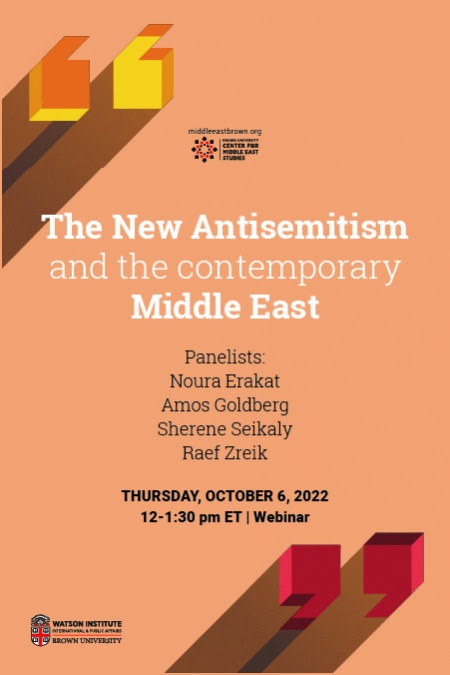

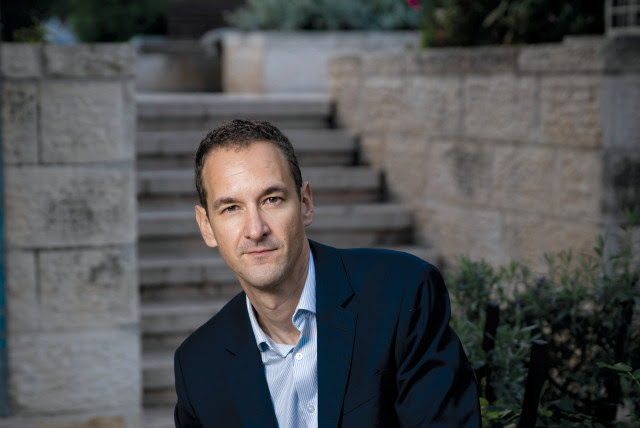
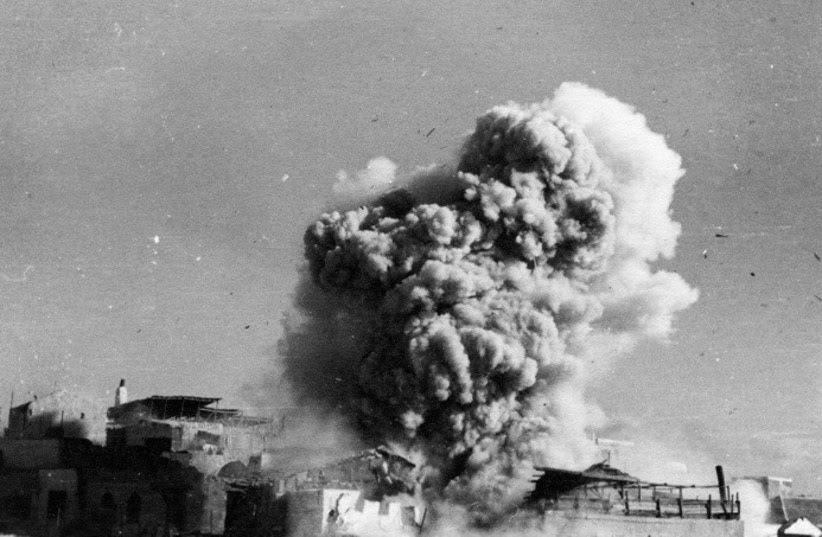 An explosion is seen in Jaffa in 1939 amid the Arab revolt. (credit: Wikimedia Commons)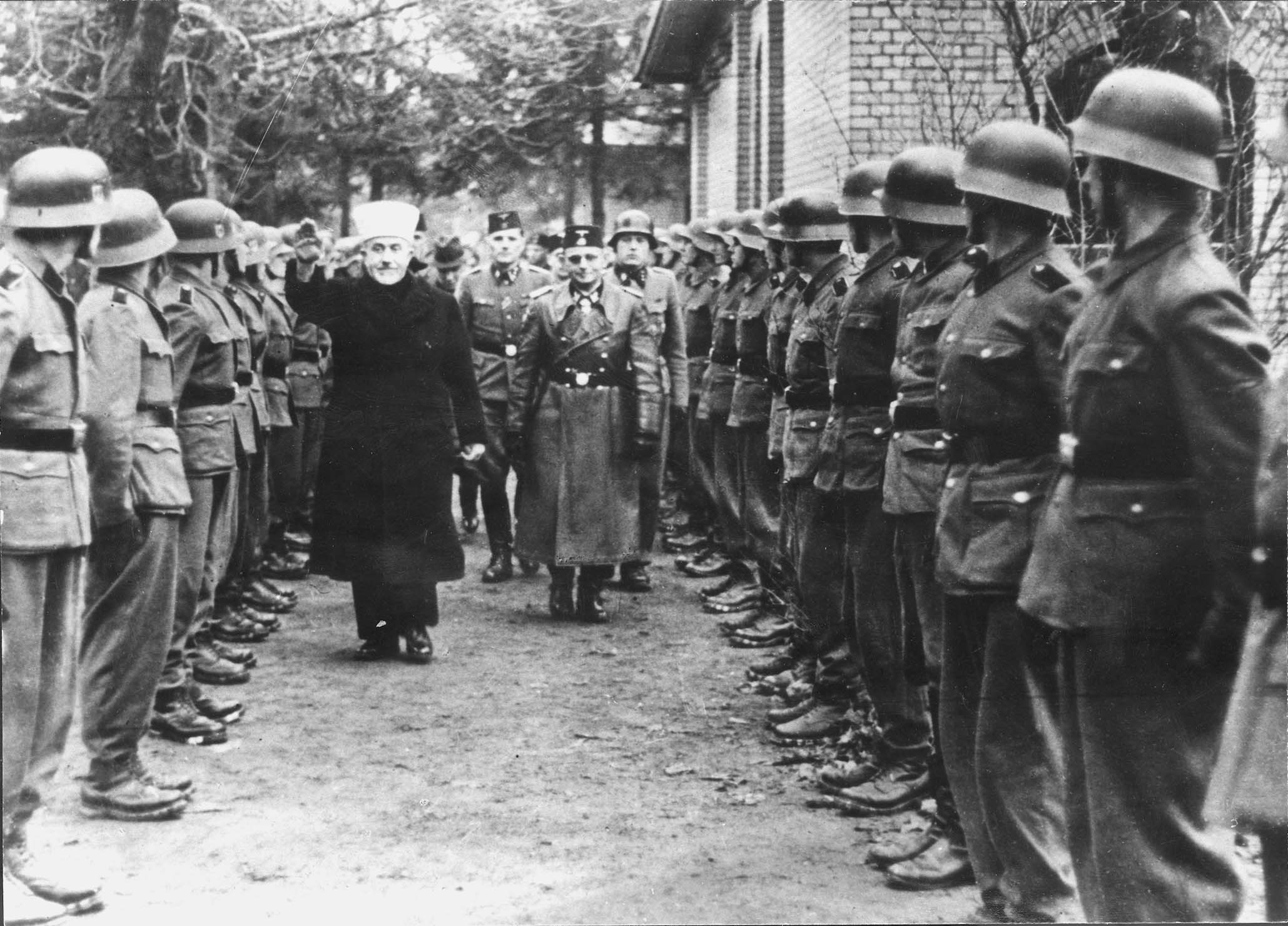
 Claremont, Calif. (March 28, 2018)—Pitzer College Professor Daniel A. Segal has been accepted to participate in the Palestinian American Research Center (PARC) US Faculty Development Seminar on Palestine this summer. The PARC 2018 Faculty Development Seminar will be held from June 20 to July 3, 2018, in Jerusalem and the West Bank.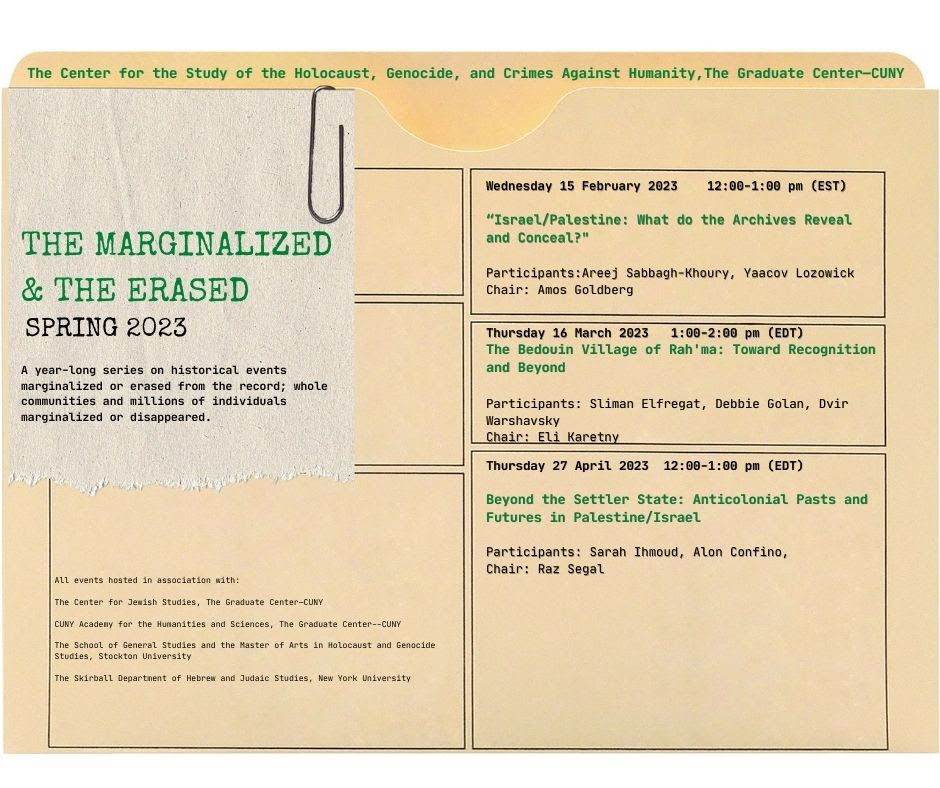
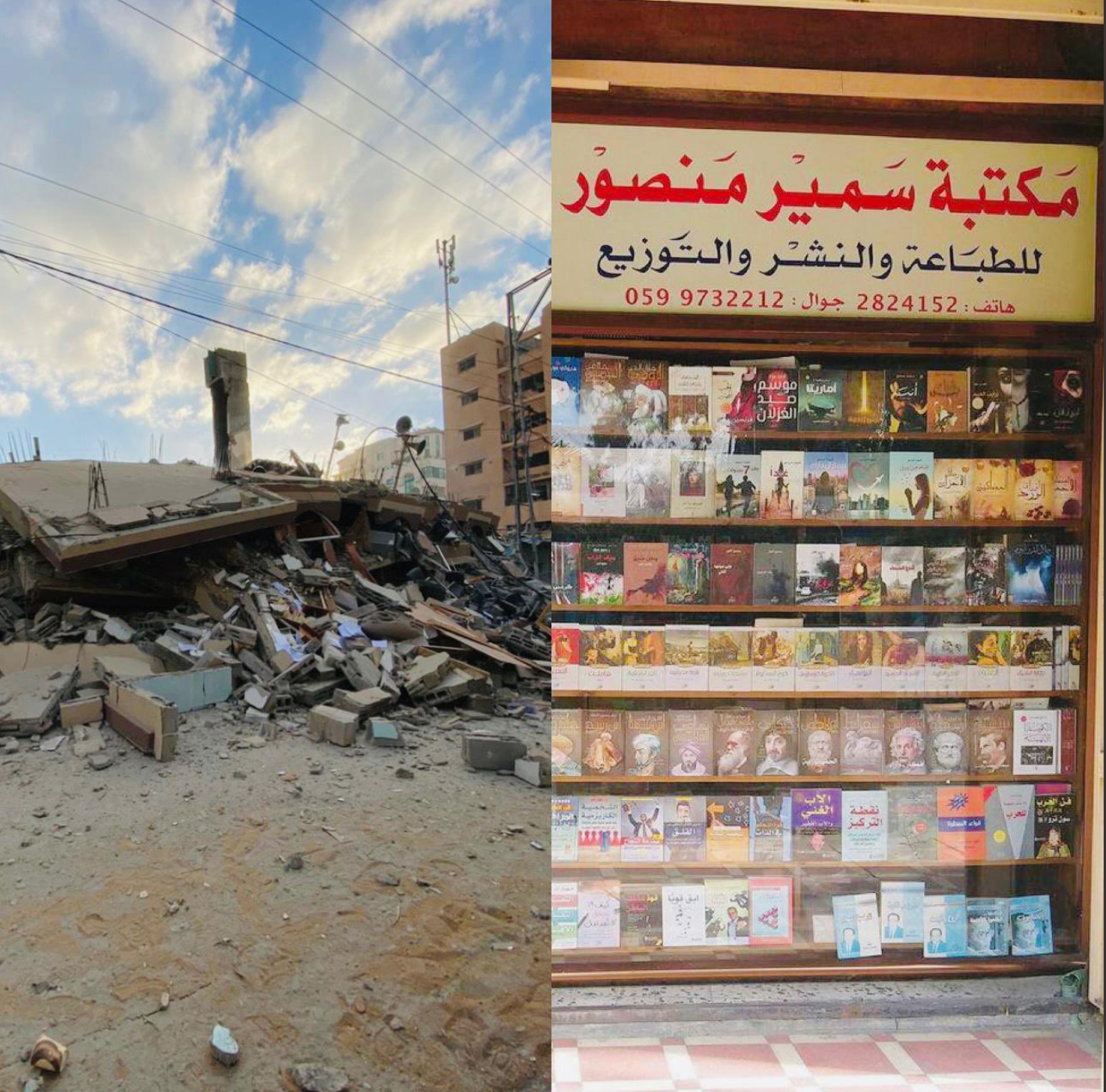
![[here goes you know what sign]](https://ci4.googleusercontent.com/proxy/9jcbj9ZSkcifIw7mx_ueVFLwR9fkn-IvKIg8gcRtSTrzbhTFQAoXeqzXvLKT2nuy86h-dxUi=s0-d-e1-ft#https://philevents.org/images/o.gif)




 israel-academia-monitor.com