Mahmoud Abbas’s visit to Germany and his accusation of 50 Holocausts that Israel causes the Palestinians are in line with the long-standing efforts of pro-Palestinians in Germany against Israel that have been taking place for years.
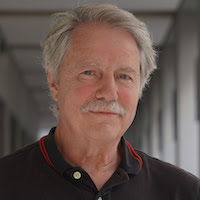
For example, the German emeritus Professor Norman Paech is the founder of the Alliance for Justice between Israelis and Palestinians (BIP – Bündnis für Gerechtigkeit zwischen Israelis und Palästinensern). According to journalist Jan-Philipp Hein, Paech frequently puts Israel near state terrorism and racism, while regarding anti-Israeli terrorism as mere resistance.(“Linkspartei: Ein Problem namens Israel.” Stern, 28 May 2016). Paech, however, denied the article’s claims of him belittling Palestinian violence. (“Warum meine Kritik an der israelischen Politik nicht zur Denunziation taugt”) [Why my criticism of Israeli politics does not indicate denunciation] (in German). Worth noting that Paech was on board the infamous Gaza-bound flotilla in 2010 that Israel prevented its arrival.
In May, BIP held a three-day conference titled “Israelis and Palestinians – living under discrimination and lawlessness?” The conference was a pro-Palestinian assault against Israel. In his opening remarks, Prof. Paech (BIP): “Justice between Israelis and Palestinians” Paech remembered how in 1975, he was against dropping the UN accusation of “Zionism is Racism.” He also suggested that during the conference, “At the end of every discussion, every speech has to ask itself what we can do to close the wound that has been open to the occupation for more than 50 years and to create justice. No one is obligated to join or support the Palestinian BDS movement. Even those who decide to do so must ask themselves whether that is enough and what alternatives there are. This is not a question of resignation. There are many ways of showing solidarity with the resistance and this conference should be a sign of that. The lectures over these three days will prove that.”
Other speakers at the conference included Omar Shakir (Human Rights Watch): “The threshold to apartheid has been crossed.” Michael Sfard: “Human rights against occupation and annexation.” Orly Noy (B’tselem): “Jewish supremacy from the Jordan to the Mediterranean?” Dr. Shir Hever:” Apartheid? Ambivalence in Israeli Politics.” Rania Muhareb and Wesam Ahmad (Irish Center for Human Rights, Al-Haq): “Self-determination, freedom, justice and equality.” Among others.
Several Israeli academics are involved with BIP. Dr. Shir Hever, according to his website, “studies the economic aspects of the Israeli occupation of the Palestinian territory. He is a correspondent for the Real News Network. He published two books and gives talks on various topics related to his research.”
Hever holds a Ph.D. from the Free University of Berlin. His most recent book, based on his Ph.D. dissertation, is titled The Privatization of Israeli Security (Pluto Press, 2017). “Affiliations: Jüdische Stimme für gerechten Frieden in Nahost (board member) – a Jewish German organization promoting just peace in Israel/Palestine. The organization is a member of the EJJP: European Jews for Just Peace. Alternative Information Center, a joint Palestinian-Israeli organization active in Jerusalem and Beit Sahour.”
The Real News Network published an interview with Hever on Apr 2, 2014, who promoted BDS and discussed the “BDS movement including large scale divestment by big corporations and approaching the level of government sanctions.”
Dr. Tamar Amar-Dahl, whom IAM mentioned before in connection to Moshe Zuckermann, was born in Nahariya, Israel, in 1968. She is an Israeli-German historian. Amar-Dahl studied history, philosophy, and general studies in humanities at Tel Aviv University. In a Hebrew article published by Haaretz in 2011, titled “Zionism or Peace,” Amar-Dahl wrote that “Jewish national existence in Israel was largely achieved by the sword. The Israeli leadership for generations has held to the principle that the Zionist project was built on the basis of the Jewish people’s historical possession of the Land of Israel. Israel was established with a tremendous military effort, and since then it has conducted a war policy whose main goal is to preserve its territorial gains. The occupation of the land and Jewish colonization while suppressing the Palestinian residents of Zion are one of the main policies of Zionist Israel since its foundation. The Zionist left actually led this policy.” She continues, “The possibility of a Palestinian state scares the Israeli leadership, and not just the Zionist right. So the fear and helplessness of the order imposed by the international community sharpen the historical impasse into which Zionism has fallen as a solution to the “Jewish problem”: On the one hand, Jewish nationalism is still perceived as the only option for a secure Jewish existence. On the other hand, there is a growing recognition that a Jewish national existence in the Land of Israel does not provide security, and certainly does not go hand in hand with peace. Dr. Tamar Amar-Dahl teaches history at the University of Berlin.”
BIP has been pushing for divestment from the settlements. Last month, BIP announced that “More than 100 civil society organizations are launching a campaign to collect 1 million signatures from EU citizens to stop the European trade in illegal settlements in occupied territories to end. The European Citizens’ Initiative is an official tool to amplify the voices of EU citizens and improve their democratic participation. If the initiative collects one million signatures from citizens in all EU member states within a year of its launch, the European Commission will be legally obliged to examine the proposal, discuss it with the signatories and take legislative action. The European Citizens’ Initiative (ECI) is subject to EU regulations.”
The people of Germany need to know that Palestinians have recruited many Germans, Jews, and non-Jews, to help them in their war against Israel. The aim is to whitewash Palestinian terrorism against Israelis and deflect accusations of antisemitism.
The Alliance for Justice between Israelis and Palestinians eV was founded in 2016 to influence German politics and the media
– for the unlimited validity of human rights in Israel and Palestine
– for the implementation of international law also in this conflict
– for a peaceful coexistence of the Israeli and Palestinian
Nationality based on justice.
Unfortunately, Israel’s policy has met with a response from right-wing nationalists worldwide in recent years, and unfortunately a wind of change is blowing in parts of the German public
Repression of opposition to Israel’s nationalist course. Therefore, our mission has also become a fight for freedom of expression, freedom of assembly and democracy in Germany. One means to that end is this conference.
BIP eV organizes lectures, seminars, trips to Palestine and Israel and other educational events.
Israelis and Palestinians – living under discrimination and lawlessness?
This week we publish the contributions of the speakers at the BIP conference in Nuremberg, which took place on May 27th and 27th. The text below is the presentation by BIP member and co-founder Prof. Dr. Norman Paech entitled: Justice between Israelis and Palestinians. ************************************************** ******************* More than 100 civil society organizations are launching a campaign to collect 1 million signatures from EU citizens to stop the European trade in illegal settlements in occupied territories to end. The European Citizens’ Initiative is an official tool to amplify the voices of EU citizens and improve their democratic participation. If the initiative collects one million signatures from citizens in all EU member states within a year of its launch, the European Commission will be legally obliged to examine the proposal, discuss it with the signatories and take legislative action. The European Citizens’ Initiative (ECI) is subject to EU regulations: https://www.cidse.org/de/2022/04/07/take-action-to-end-european-trade-with-illegal-settlements/ Here you can participate . ************************************************** *******************
Dear friends, dear guests,
I would like to extend a warm welcome to you on behalf of the “Alliance for Justice between Israelis and Palestinians”. When we were planning this conference, it went without saying that Rolf Verleger should welcome you and give this presentation. Now he is no longer with us, he died on November 8th last year. So incredibly early and sad for all who knew him. He was the spiritus rector of our association, the authentic voice of a Judaism of reconciliation and of the great humanistic Jewish tradition. He was such a friendly and at the same time ironic conversationalist, it was always a particularly stimulating and pleasant encounter to be with him. We should commemorate him here for a short minute before our lectures and discussions, which are influenced by his contributions…… Thank you.
Protests in London. Source: Alisdare Hickson, 2021, Flickr .
Our association had a different name when it was founded: “Alliance to End the Israeli Occupation” . However, after two years, in 2018, we changed it to “ Covenant for Justice between Israelis and Palestinians“. This is not a retreat from calling for an end to the occupation, it just says something about what we consider to be justice and what I am talking about here. For us, justice does not derive from the order of creation, as in the Greek Stoa and later in Christianity, in which the higher law is the standard of justice for the subordinate law. This means that the justice of human law is derived from natural law and ultimately from divine law – and accordingly embodies a claim to absoluteness and eternity. We – which is particularly true for me as a lawyer – orientate ourselves more towards the materialism of the Epicureans, which, in Marx and Engels, freed justice from all transcendence and predetermination. For him there is no justice per se, but only as a contract between people living together. The basic principle of such a contract, which the Epicurean/Materialist defines as inherently just, is the requirement “not to harm one another and not to be harmed”. In this way, the concept of justice is materialized, relativized and historicized, because it can be changed over time and geographically. This frees us from some of the dogmatic burdens that weigh on the justice debate between Israelis and Palestinians. because it is temporally and geographically changeable. This frees us from some of the dogmatic burdens that weigh on the justice debate between Israelis and Palestinians. because it is temporally and geographically changeable. This frees us from some of the dogmatic burdens that weigh on the justice debate between Israelis and Palestinians.
I was leafing through my early work and came across a topic that has been largely taboo and scandalized since its formulation. In 1975, under the title “Zionism – State Ideology and Racism”, I wrote a commentary on the then notorious Resolution 3379, with which the General Assembly by a majority vote (72:35:32) “proclaimed Zionism (as) a form of racism and racial discrimination “ condemned. I wrote at the time: “The National Socialist-anti-Semitic legacy may still be too fresh to expect the Federal Government to recognize the Zionist ideology in the same way as the majority of UN members. But the federal government simultaneously voted against two other resolutions in which, among other things, the Palestinians’ right to self-determination and state-building and the equal rights of the Palestine Liberation Front (PLO) to participate in all UN Middle East negotiations. A month later, 101 UNO states condemned the collaboration, in particular by Great Britain, the USA, France, the FRG, Japan and Italy, with the Republic of South Africa and called on them to stop working with the “racist regime”. The federal government also voted against this: they will continue to condemn apartheid while at the same time giving it strong support through trade and scientific and technical cooperation. In its Resolution 3151 of December 14, 1974, the UN already stated that there is a close relationship between Zionism, apartheid and colonialism. Resolution 3379 was repealed in December 1991 after the dissolution of the Soviet Union, but the racism of Israeli politics was not. And we have to admit that since then all federal governments have slid further and further down this precipitous path of moral decay towards the wrong side of history in their Middle East policy, as Ilan Pappe recently accused German politicians of doing. Because it’s not about justice, but – according to Ilan Pappe – probably still about absolving oneself of the Holocaust. as Ilan Pappe recently accused of German politics. Because it’s not about justice, but – according to Ilan Pappe – probably still about absolving oneself of the Holocaust. as Ilan Pappe recently accused of German politics. Because it’s not about justice, but – according to Ilan Pappe – probably still about absolving oneself of the Holocaust.
I could now answer my question about justice about the evictions and destruction in Silwan/East Jerusalem or the current eviction of 2400 Palestinians from Masafer Yatta and the ruling of the Israeli High Court to report. I must point out the murder of Shirin Abu Akleh in cold blood while she was observing a military raid on the Jenin refugee camp. This cowardly act has rightly created horror and sadness around the world. Will there ever be a trial by which the shooter and his superiors will be held accountable? The answer is no. Foreign Minister Baerbock is dismayed, but the Foreign Office only issues a press statement condemning a deadly Palestinian attack in Eilat five days earlier as a despicable act. These perpetrators will no doubt be brought to justice. But who names the 79 dead since Naftali Bennett took office in June 2021? In March of this year 12 dead, in April 22, more dead than not since 2008 – and 18 dead,
But that’s not the point now. All illusions associated with the names of Oslo, Camp David and Taba are gone. The dispute over a one-state or two-state solution is purely speculative and academic. And let’s face it, even arguing about whether apartheid and settler-colonialism are just hateful defamations or accurate socio-economic notions of Israeli reality doesn’t change that reality. We shall be presented with a wealth of depressing examples in the course of our lectures and discussions. I am concerned here with the question of why politicians and the media are so unconditionally behind the crimes – because settlement policy, displacement and the regular death toll are crimes – and how can this consensus be broken in order to end the miserable occupation, in order to achieve justice gain?
When our advisory board member Alfred Grosser spoke in Frankfurt’s Paulskirche on November 9, 2010 on the 72nd anniversary of the Night of Broken Glass, he was heavily criticized by the Central Council of Jews beforehand. And Rafael Seligman accused him from Tel Aviv that it was improper on such a day to criticize the Israeli government for its dealings with the Palestinians. Grosser replied: “Yes, you have to do it. I even go so far as to say that young Germans are only allowed to commemorate Auschwitz if they also stand up for the equality of people everywhere in the world, including the Palestinians. That is the compelling consequence of Auschwitz, and a commemoration of it demands that it be said openly.” That is the interpretation of Auschwitz as given by Felicia Langer, Lea Tsemel, Amira Hass, Gideon Levy, Avraham Burg, Moshe Zuckermann and many other Jews are represented – but it is still a minority opinion, especially in Germany. But this argument about the correct interpretation of Auschwitz is obviously at the core not only of the strong accusations of anti-Semitism, but also of the paralysis of German politics in the question of justice and their siding with the Israeli side.
Anyone who remembers the past campaigns against Achille Mbembe from Cameroon because of a planned speech at the Bochum Ruhr Triennial, against Farid Esack from South Africa because of a speech in Hamburg City Hall or Kamila Shamsie from Great Britain because of the Nelly Sachs Prize from the city of Dortmund in reminders and has followed the fight for venues up to the highest courts, has to realize that with the intensification of land grabbing and displacement, i.e. apartheid in Israel and the occupied territories, the defense against any criticism of these conditions has intensified to the same extent . The statement that the BDS movement is anti-Semitic and therefore cannot be a means of resistance has even received parliamentary consecration. While this is strange for a state that is imposing increasingly severe sanctions on Iran, Syria and Russia even go to their own pain threshold, but this becomes understandable when we take into account the overwhelming power of Holocaust remembrance. This decision by the Bundestag is the current high point of “political orthodoxy”, as the historian Wolfgang Reinhard has called it, and a low point in parliamentary judgment.
The uniqueness of the Holocaust and the ongoing responsibility of the Germans for the Nazi crimes have long been understood as the foundation of German raison d’état. With the decision, however, the Bundestag is reaching beyond its sphere of influence by making a resistance movement in Palestine illegal with this taboo, so to speak.
Memory no longer remains in the open field of culture, but becomes a power factor with executive powers. This dictate of remembrance not only superimposes all decisions about the future of the coexistence or coexistence of Israelis and Palestinians, but also places all discussions about the conflict under the commandment of mourning.
This is related, for example, to the refusal to classify the Holocaust as a crime of colonialism. The canonization of Holocaust memory prohibits comparison with other genocides. Like an irremovable mortgage, it weighs on all attempts to overcome the past and redesign the future. With the sharp sword of the accusation of anti-Semitism, it can not only block criticism and censor freedom of expression, but also prevent discussions and declare those who are themselves fighting anti-Semitism, whether Palestinians or non-Zionist Jews, to be anti-Semites themselves. Suffice it to say the far-fetched rumor of an obscure anti-fascist one-man group from the anti-German milieu to set in motion the media scandal machine against the organizers of the Documenta exhibition. The attempt of ruangrupa to clarify the allegations with the suddenly numerous critics in an open forum is blocked. It is clear that this smear campaign has racist traits and uses anti-Semitism to devalue the Global South perspective in the exhibition makers’ concept. The occasion is the invitation of the Palestinian artist collective “ The Question of Funding“. It also shows that there is more at stake than just questioning the exhibition concept. It is about the stigmatization of the Palestinians as anti-Semitic and thus about their exclusion from the cultural circle. The myth of uniqueness demands not only total commitment to the Israeli state, but at the same time the exclusion of the Palestinians with their legitimate claims against colonial oppression. Because anti-Zionism is anti-Semitism. And just as the Holocaust does not tolerate any other genocides, the culture of remembrance as the moral foundation of German politics does not tolerate equal treatment of the Palestinians. It is fixated on unconditional support for Israeli policy as a matter of state, which excludes support for the Palestinian side.
This prevents non-material aid deliveries and development projects to alleviate the miserable situation. It makes them more bearable, but without changing them. A justice treaty between Israelis and Palestinians is impossible on this basis and is not on the agenda of German politics. With this claim to singularity, the Holocaust is completely unhistorical. He downplays his place in a history of genocide and cements his exclusivity against any relaxation of violence and apartheid. We know that the Holocaust remembrance culture, with all its rituals, memorials, obligations and reparations, helped the Federal Republic to achieve its geopolitical legitimacy. To this day, neither the unification of the two German states nor the fall of the Soviet Union and the socialist camp have changed anything in this ideological foundation of Germany. But we also have to recognize that it puts itself like a straitjacket around everything that would be necessary for a justice treaty with the Palestinians: self-determination, independence, non-violence and human dignity. To avoid misunderstanding, I am not denying the uniqueness of the Nazi genocide, the Holocaust, but I oppose its instrumentalization to prevent criticism and to justify the occupation. We cannot accept that its claim to totality extends to demanding impunity for flagrant crimes by the settlers and the Israeli army, which the federal government, despite all its professed values, supports. She joined Israel in opposing the jurisdiction of the International Criminal Court to investigate possible settlement crimes and possible war crimes in the 2014 war against Gaza and during the 2018 Gaza Memorial March. unimpressed, the federal government made itself available to defend Israel before the court. The preliminary investigations have been going on for a year. It is not known whether an investigator from the International Criminal Court has turned up in Israel or Gaza or whether an indictment is being prepared. This will not happen in the foreseeable future either, because the new chief prosecutor, Karim Khan, began investigating Russia for possible war crimes and crimes against humanity immediately after Russian troops invaded Ukraine. He has now sent 42 experts to Ukraine to secure evidence. The limited resources of the criminal court obviously do not allow further investigations in other theaters of war. Khan had already dropped investigations into alleged atrocities committed by US soldiers in Bagram, Afghanistan, due to a lack of personnel.
But let’s get back to the culture of remembrance, which, like a claim to civilization, does not tolerate any relief. As long as this claim exists, it serves to legitimize a policy that, in lockstep with the respective Israeli governments, supports all crimes – albeit with expressions of regret, sometimes even dismay. The implication is clear. Only when this claim to totality no longer superimposes all of the Palestinians’ claims to justice and suffocates them from the start will there be a balance between the two peoples that deserves the term justice. This will require the separation from an expansive and militant Zionism in the tradition of Vladimir Zeev Jabotinsky and the acceptance of a liberal Zionism, say, in the tradition of Uri Avneri. It would require Israeli society to agree to a bootless peace of a colonized people. German politics should also free itself from the shackles of its dogma of remembrance and recognize the Palestinians’ claim to justice free from the burden of the Holocaust. Of course, this does not mean that I dispute the legitimacy of remembering the crimes of the Nazi era. However, remembrance should be separated from a Palestine policy to the extent that it allows for an independent handling of the legitimate interests of Palestinian society. Palestinian demands do not have to go through the Holocaust filter before they can be considered legitimate and fulfilled.
At the moment, however, both Israeli and German politics are far from it. It is amazing that when it comes to Israel, German politicians belie their own values, which they constantly invoke with the greatest emphasis. Nothing, neither the countless UN resolutions nor the horrendous sacrifices of the Palestinians, have led to a correction of the policy. It is therefore also highly unlikely that the Palestinian BDS movement will lead to a rapid change in policy. However, it is the only remaining means of resistance left for the Palestinians to appeal to the international public for justice. The overwhelming majority of votes which regularly comes together in the UN General Assembly for resolutions condemning the Israeli occupation policy, has so far not been able to move Israeli politics. No country is currently willing to impose sanctions that are otherwise unhesitatingly imposed on Iran, Syria, North Korea, Venezuela or Cuba. Decades later, they led to the fall of the white racist regime in South Africa. Many reasons can be given against sanctions, but no one has the right to discredit the BDS movement, the last resort of peaceful resistance to decades of violence and oppression, as anti-Semitic. This is in ours Venezuela or Cuba will be imposed. Decades later, they led to the fall of the white racist regime in South Africa. Many reasons can be given against sanctions, but no one has the right to discredit the BDS movement, the last resort of peaceful resistance to decades of violence and oppression, as anti-Semitic. This is in ours Venezuela or Cuba will be imposed. Decades later, they led to the fall of the white racist regime in South Africa. Many reasons can be given against sanctions, but no one has the right to discredit the BDS movement, the last resort of peaceful resistance to decades of violence and oppression, as anti-Semitic. This is in ours Alliance for Justice between Israelis and Palestinians e. V. (BIP) undisputed.
At the end of every discussion, every speech has to ask itself what we can do to close the wound that has been open to the occupation for more than 50 years and to create justice. No one is obligated to join or support the Palestinian BDS movement. Even those who decide to do so must ask themselves whether that is enough and what alternatives there are. This is not a question of resignation. There are many ways of showing solidarity with the resistance and this conference should be a sign of that. The lectures over these three days will prove that.
In 1934 Bertolt Brecht wrote his “In Praise of Dialectics” in Berlin. Imagine if he had written it yesterday in Jerusalem:
Injustice today goes hand in hand with a sure step. The oppressors prepare themselves for ten thousand years. Violence assures: It stays the way it is. No voice is heard except that of the rulers. And on the markets, exploitation says loudly: Now I’m just beginning. But many of the oppressed now say: What we want will never work. If you’re still alive, don’t say never! The safe is not safe. It won’t stay the way it is. When the rulers have spoken Will the ruled speak Who dares say never? Who is responsible if the oppression remains? To us. Who cares if it breaks? Also to us. Let those who are crushed rise! Who is lost, fight! Whoever has recognized his situation, how can he be stopped? Because today’s vanquished are tomorrow’s winners And it will never be: today.
************************************************** ******************* A new episode of the BIP Talk is out. This week we speak to BIP member Dieter Kaltenhäuser. ************************************************** *******************
On July 13th, BIP invites you to an event with Dr. Tamar Amar-Dahl on “Israel in the new millennium: occupation, civil militarism, neo-Zionism”. Here ‘s the invitation.
BIP Aktuell reports here regularly on human rights violations in occupied Palestine, which are mostly not mentioned in our media.
Another Palestinian journalist killed by the Israeli military
“JUST 21 DAYS after the killing of Palestinian-American Al Jazeera journalist Shireen Abu Akleh by the Israel Defense Forces (IDF), another journalist has been killed. The latest victim is 31-year-old Ghufran Harun Warasneh, who was shot dead by IDF soldiers on June 1 while being interrogated at an Israeli checkpoint at the entrance to al-‘Arroub refugee camp near Hebron. The camp, set up by the United Nations Relief and Works Agency (UNRWA) after the Nakba in 1949, has been under Israeli occupation since 1967 and is now home to more than 10,000 displaced Palestinians. Warasneh was murdered while she was with a friend on her way to her new job as a radio host at Dream, a local news agency in Hebron. Middle East Eye reports that their first assignment was a report on Shireen Abu Akleh. According to Israeli media reports, the shooting happened when Varasneh tried to stab a soldier, after which the soldiers opened fire to repel a “terrorist threat”. However, eyewitnesses dispute this statement, saying that the journalist did nothing wrong. Her brother Mohammad said she was shot “twice in the left side, in the armpit and in the chest” and had to lie in her blood for 20 minutes because a Palestinian Red Crescent ambulance was stopped at the checkpoint. Middle East Eye reported: “After her body was prepared for burial, her family and neighbors carried Warasneh to her final resting place, passing by the spot where she was killed. A group of Israeli soldiers were waiting for them there. The funeral ceremony was attacked when the soldiers tried to prevent it by firing flashbangs and tear gas and beating the pallbearers. Her brother Mohammad was quoted in the same article as saying: “Abu Akleh was a journalist. My sister was a journalist. Abu Akleh was killed at her work. My sister was killed at her job.” In January of this year, after covering a pro-Palestinian march, Warasneh was detained for three months and her camera equipment was confiscated and destroyed. This is an indication that she was targeted by the Israeli authorities long before she was killed. Without international pressure to conduct an unbiased, impartial, comprehensive and transparent investigation into her death, it is highly unlikely that the Israeli authorities will find fault with the IDF. Following the usual Israeli pattern, a narrative will be created accusing Warasneh of complicity in her own death. The targeted killing of Shireen Abu Akleh and now the wanton killing of Ghufran Harun Warasneh amounts to an open season killing of journalists by IDF forces. This latest killing brings the number of (mostly Palestinian) journalists killed by the IDF since 2000 to 45.” Phil Pasquini, Published June 15, 2022 at https://www.wrmea.org/web-exclusives/ another-palestinian-journalist-killed-by-the-idf.html Also among others: https://www.womeninjournalism.org/threats-all/israel-ghufran-harun-warasneh-second-palestinian-woman-journalist-killed -in-west-bank-in-a-month
The editorial team of BIP-Aktuell consists of the board and the managing director Dr. Shir Hever. V. i. s.d. Fr Dr Götz Schindler, BIP board member.
IAM reported before on anti-Israel Israeli academics such as Prof. Eyal Weizman and Dr. Hagar Kotef, who deliberately obfuscate the Palestinian war against Israel.
They are now joined by Dr. Daniel Mann, a King’s College London research fellow.
Daniel Mann’s book, Occupying Habits: Everyday Media as Warfare in Israel-Palestine was published by I.B.Tauris this year. According to Mann, Israel and the IDF have been able to “increase their oppression and colonial violence against Palestinian civilians.” The book is about the IDF’s media technology. According to a Palestinian book reviewer,
the book is showing how “The defensive stance which the Israeli colonial state has so successfully disseminated is also entrenched within Israeli society.” As Mann notes: “The model of the defense self that kills the other.” According to the reviewer, “Other forms of impunity which exist within Israel include the use of sniper teams, as well as public lynching of Palestinian civilians by Israeli settler-colonists.” The reviewer sums up decrying the “limited understanding we can have of media technology in Israel, unless its use is analyzed from within the colonial framework.”
The book’s chapters are as follows: Introduction; Domestic inspectors: The First Gulf War and the militarization of the home; The death of a cameraman: The al-Aqsa Intifada and the demise of the military film units; The split wall: Homes to return to and homes to destroy; Saving face: Between uniformity and isolation; The Azaria Case: The selective enforcement of the visual; The regime of the self: Between the one and the many; Conclusion.
Mann was born in the USA and went to the Film School at Tel Aviv University. He completed his Ph.D. thesis at Goldsmiths, University of London, on “image warfare and the integration of media into armed conflict.” Using his “deep knowledge of the Palestinian-Israeli conflict and reality.”
Mann has collaborated with the notoriously anti-Israel Israeli activist Eyal Weizman’s Forensic Architecture in an investigation titled “Killing in Umm al-Hiran” (2017).
Mann’s book is based on his Ph.D. thesis. He researched the Israeli Defence Forces’ archives. He discovered that the “expansion of media technology has actually created a form of impunity for the military and the state, while desensitizing Israeli soldiers and the settler population in the process.” The reviewer wrote that Mann’s “desensitization” is “intertwined” with the writing of Hagar Kotef, as she discussed in her book, The Colonising Self Or, Home and Homelessness in Israel/Palestine. Mann refers to it in his treatise “to show how the colonial experience is attached to violence, while also detached from the consequences which the Palestinian victims suffer.” In particular, “the IDF’s violence against Palestinian civilians. Building upon Kotef’s research, Mann writes how the home rooted in colonial violence sanctifies life for the colonizers and vilifies, as well as constructs a site of violence, the homes of Palestinians.” Mann writes that “media technologies were incorporated into the very fabric of the occupation.”
His Ph.D. advisors at Goldsmiths were Profs. Susan Schuppli and Pasi Valiaho. Susan Schuppli’s books include JUSTice: Cold Rights in a Warming World (monograph in-progress), Singing Ice: Ladakhi folk songs about mountains, glaciers, rivers, and steams, a book project with Morup Namgyal, Faiza Ahmad Khan, Radha Pandey, Jigmet Anjmo, British Council / Delhi India, 2022 “Learning from Ice: Notes from the Field by Susan Schuppli.” Fieldwork for Future Ecologies / Radical Practice for Art and Art-based Research. Eds. Bridget Crone, Sam Nightingale, Polly Stanton, Onomatopee 225, Eindhoven, 2022.
Pasi Valiaho’s books include Projecting Spirits: Speculation, Providence, and Early Modern Optical Media (Stanford University Press, 2022; in press), Biopolitical Screens: Image, Power, and the Neoliberal Brain (MIT Press, 2014), Mapping the Moving Image: Gesture, Thought, and Cinema circa 1900 (Amsterdam University Press, 2010).
As can be seen, none of his supervisors has any expertise in Israel Studies or similar. But Schoppli is the board chair of Eyal Weizman’s Forensic Architecture.
Mann has “received guidance from Eyal Weizman,” as he wrote in the introduction, and added, “I also feel greatly indebted to the SOAS Palestine Studies series editors Dina Matar and Adam Hanieh for their trust in the project.”
In his book, Mann states that “In the last three decades of documentation, “both Israeli soldiers and Palestinian activists has routinely exposed grave abuses of state power, such as illegal arrests or unlawful killings. The increasingly visible use of excessive military force by the IDF has posed a new problem for it and Israeli society at large: violent incidents have been photographed and filmed, providing representations of punishing acts performed by Israeli soldiers.”
In other words, when speaking of Israel, the author considers it violent, abusive, and unlawful—thus hinting that he possibly sees the Palestinians’ attacks against Israel as lawful.
According to the author, the IDF’s approach to media coverage was an “integration of visual media into their strategies of public relations and propaganda… media technologies were incorporated into the very fabric of the occupation.”
This should come as no surprise because Mann is one of a growing number of scholars engaged in what Harvard University recently described as “advocacy writing.” Unlike standard research, advocacy writing is designed to provide academic legitimacy to a pre-selected ideological platform, in this case, the permanent victimhood of Palestinians. Blaming Israel only requires an intellectual sleight of hand: Palestinians are not responsible for any decisions their leadership has made over time: Rejecting the 1947 UN Partition Plan, squashing the Oslo peace process through a violent Intifada sponsored by Iran, and the repeated missile assault on Israel from the Gaza Strip, a territory run with singular brutality by Hamas and Palestinian Islamic Jihad, the latter a wholly-owned subsidiary of the Islamist regime in Iran. Little wonder that Mann’s book does not mention the thousands of Israelis killed and wounded after the Oslo peace agreement in 1993. To contextualize the conflict would have meant acknowledging that the Palestinians are at fault.
Advocacy writing does not serve the Palestinian case, nor does it help to understand the changes that the Abraham Accords triggered in the Middle East. Israel is now a core partner in this new anti-Iranian, pro-Western alliance.
Rather than recruiting more anti-Israeli activists, King’s College London should follow the example of Harvard and repudiate activist writing.
“Beginning from the early 2000s, constant and pervasive documentation using mobile phone cameras by both Israeli soldiers and Palestinian activists has routinely exposed grave abuses of state power, such as illegal arrests or unlawful killings. Two decades on, the Israeli authorities have not only learned to cope with the deluge of images, they have in fact appropriated everyday habits of communication in flexible and innovative ways. This book explores the impact that mobile phone cameras and social media have had on Israel’s security regime. Daniel Mann shows that although visual media poses a threat to Israel’s modus operandi in the West Bank and Gaza, it is also paving the way for new modes of surveillance and control that are becoming ubiquitous. By examining photos, film and footage – and identifying the individuals that created them – the book reveals how Israel has expanded its capacity to shape the narrative of the military occupation of the Palestinian territories and how it delegates the responsibility of image production and distribution to soldiers and civilians. In doing so, everyday media practises are becoming part of Israel’s arsenal of weapons for military ends. The book argues that this is a radical remodelling of its modes of governance and a reconfiguration of the stakes of political action, showing the growing function of media shaping warfare.”
Book Author(s) : Daniel Mann Published Date : February 2022 Publisher : I.B. Tauris ISBN-13 : 9780755633906
Ramona Wadi
June 26, 2022 at 10:13 am
“Sovereignty is made out of a patchwork, weaved together from institutions, private companies, and most significantly technology itself, which dictates certain behaviour and habits.” Israel’s security narrative has become heavily reliant on media technology, as Daniel Mann’s book “Occupying Habits: Everyday Media as Warfare in Israel-Palestine” (I.B.Tauris, 2022) shows. Drawing upon the Israeli Defence Forces’s archives, the author discovers that the expansion of media technology has actually created a form of impunity for the military and the state, while desensitising Israeli soldiers and the settler population in the process.
The desensitisation which Mann writes about is intertwined with the perception of home and violence, which in Israel are synonymous and which Hagar Kotef discussed in her book, “The Colonising Self Or, Home and Homelessness in Israel/Palestine” and which the author refers to in his treatise to show how the colonial experience is attached to violence, while also detached from the consequences which the Palestinian victims suffer. The home is also the place where Israelis can view through media technology and in a detached manner, the IDF’s violence against Palestinian civilians. Building upon Kotef’s research, Mann writes how the home rooted in colonial violence sanctifies life for the colonisers and vilifies, as well as constructs a site of violence, the homes of Palestinians.
Mann writes, “the more media technologies were incorporated into the very fabric of the occupation, the less evidence I could find of its application by the IDF.” The increasing use of social media has expanded Israel’s control and as a result, the way Israel’s military occupation is portrayed, or promoted, depending on who is behind the lens, has also altered. With such alterations, Israel and the IDF have been able to increase their oppression and colonial violence against Palestinian civilians, and create alternative options when it comes to deciding or declining accountability and responsibility.
While media technology can record the state’s abusive power, it can also be incorporated into the state’s apparatus, as Israel and the IDF did, creating a new form of warfare that is manipulative and also strengthens the state’s narrative of security threats.#
Spacing Debt. Obligations, Violence, and Endurance in Ramallah, Palestine
The author notes that the IDF’s film unit traces its roots back to 1948, its role changing through decades from accompanying combatants to taking the role of journalists in recent decades, when the military started reassessing the role of media technology and media coverage. Mann writes of how phone companies play a role in structuring the IDF’s media technology, noting that Motorola had signed a $100 million contract with the IDF. “The central role of cellular companies strengthened the know between private communication companies and surveillance,” Mann writes. As media technology use increased in Israel by 2006, the IDF had to content with the singular use of social media by its soldiers as well, thus opening a possibility of liability for both state and institution. “Individuating soldieries through the exposure of their faces, therefore, constitute an inherent threat to this collective authority.”
On one hand, the author notes, such liability could, possibly, contribute to evidence of Israeli military violence against Palestinian civilians as a result of the soldiers’ individual use of social media and posting. However, the IDF has also emphasised the singular use of media technology to differentiate between the soldier posting acts of violence and the institution itself. “The IDF can afford the admission of a singular violent act in order to spare the system itself.” Additionally, instances where individual soldiers’ violence was recorded and disseminated on social media rarely sparked the majority’s outrage within Israel, as happened in the case of Elor Azaria, where only 30 per cent of the Israeli public condemned the extrajudicial killing of a Palestinian civilian.
The defensive stance which the Israeli colonial state has so successfully disseminated is also entrenched within Israeli society, as Mann notes: “The model of the defence self that kills the other.”
Other forms of impunity which exist within Israel include the use of sniper teams, as well as public lynching of Palestinian civilians by Israeli settler-colonists. “When violence takes place out in the open, in front of the cameras, it hides in plain sight,” Mann writes. Even if the culprits are identified, the crowd is still protected through the same impunity which the IDF generates for itself when a soldier is identified and his action described as a singular violent act with allegedly no links to the IDF or the Israeli state itself.
In his introduction, Mann notes that Israel has constantly blurred the lines between the military and civil society. The widespread use of media technology has enabled the IDF to make use of the ambiguity which enables the state the strengthen its survival – by transferring responsibility solely upon the individual, the state’s institutions are permanently safeguarded. It is the obfuscation which the book seeks to delve into, which in turn also exposes the limited understanding we can have of media technology in Israel, unless its use is analysed from within the colonial framework.
My PhD research examines how state and military actors in Israel embrace digital media technologies to activate citizens and soldiers as mediators between civil society and state authority. Based on materials gathered from social media platforms and military archives in Israel, the dissertation documents and conceptualises the role of media practices and images in shaping governance. The study gives particular attention to the technological and social circumstances that led the Israeli Defense Forces (IDF) to incorporate and utilise vernacular media in its day-to-day and tactical military activities.
I argue that the threat of hyper-visibility introduced by mobile phone cameras and social media applications have had a profound impact on military policy; and that the spread of new media persuaded the IDF that ubiquitous personal use of social media technologies by citizens and soldiers presented new possibilities for shaping state sovereignty in the complex set of challenges faced by the Israeli military and civil society. Starting in the early 1990s policy makers in the Israeli army began to sense that with the rise of social media the army was losing control of the circulation of still photographs and moving images. This phenomenon fits into a larger global picture of structural changes in information circulation. Media scholars have argued that the permeation of distribution networks and digital media into mundane patterns of life destabilises vertical structures of power. For the Israeli military, by 2017 the omnipresence of social media changed the relationship between the military command and the individual, generating new configurations of power and influence. The hierarchical exercise of authority predicated upon official media outlets was upended, creating a decentralised, diffused ‘soft power’. In this new dynamic, the modes of suppressing individuality within an institutionalised military collective were adjusted significantly, actively taking advantage of decentralised use of digital media. Against the backdrop of what has been described as technological determinism, my study contends that the overwhelming influence of militarism on civilian life has been significantly reorganised by media practices and online image circulation.
‘The Glow that Illuminates and the Glare that Obscures’ Habitual Media As Warfare In Israel And Palestine
Hebrew Studies
Public Talks
Faculty of Asian and Middle Eastern Studies
The depth of Israeli military control and surveillance of the West Bank, together with the routine use of mobile phone cameras and social media by both civilians and soldiers, have turned the Occupied Palestinian Territories into a highly visible stretch of land. Alongside traditional forms of state surveillance, the rapid circulation of images online exposes the abuses of state power. In light of this, how does the military itself respond to preserve its structural invisibility and control? After decades of trying to censor any compromising or scandalous images, Israel finally embraced the overwhelming flood of images and online data. Instead of containing it, the levees of censorship have been lifted and the overabundance of visual evidence is used to obscure and over-saturate the public image of the security regime. In light of the co-option of everyday media practices into warfare, this talk asks how the Israeli military has come to rely on vernacular media in its routine monitoring and control of the West Bank. Dr. Daniel Mann is a postdoctoral fellow at the Film Studies Department at King’s College London. Mann completed his doctoral degree at the Media and Communications Department at Goldsmiths College, where he was also a member of the Centre for Research Architecture. His writing has been published with Media, Culture & Society, Visual Cultures Journal and World Records. Mann is also a filmmaker. His films were screened at festival and venues such the Berlin Film Festival, the Rotterdam Film Festival and the Institute for Contemporary Art, London. Tuesday 29th of January 2019, 5:15 to 7:00 pm Common Room, FAMES, Cambridge, CB3 9DA
Daniel Mann (1983) was born in the USA and went to Film School at Tel Aviv University. He is completing his PhD thesis at Goldsmiths on image warfare and the integration of media into armed conflict. Investigating the notion of habit both visually and conceptually, his work revolves around the embedding and embodying of media technologies into life within conflict zones. The visuality produced by everyday practices and its political (re)appropriation is at the core of his general inquiry. Mann’s films and writing seek to redefine the politics of images through the entanglement of representations, users, media practices and the automated operation of data. With deep knowledge of the Palestinian-Israeli conflict and reality, Mann has also made films in collaboration with Sasha Litvintseva (“Salarium”, 2018), Sirah Foighel Brutmann and Eitan Efrat (“Complex”, 2009). He has collaborated with Forensic Architecture in the investigation “Killing in Umm al-Hiran” (2017).
===============================
‘I Am Spartacus’: individualising visual media and warfare
The constant presence of cameras and social media has become a given during day-to-day military activities in Israel and the Occupied Palestinian Territories. Such technologies shift the focus of warfare onto the individual, and in particular onto the faces of soldiers and Palestinians caught on camera. Due to the habitual use of mobile phones and social media by both soldiers and civilians, the face is singled out as a new battleground, where political action is substituted for individual responsibility. On one hand, the co-option of personal social media into armed conflict enables state actors to zero in on the faces and identities of Palestinian dissidents and alleged terrorists. On the other hand, the faces of Israeli soldiers are also captured and circulated on social media as digital images, posing a new threat to state authority, which depends on remaining faceless. Images of IDF soldiers’ faces, once recorded and shared, figuratively strip off the improvised masks they often wear to hide their identity and preserve their impunity. In Israel and Palestine, where everyday social media habits have become inseparable from routines of security and armed conflict, the image of a soldier’s face individualises his or her actions and demands accountability.
By command of His Most Merciful Excellency, your lives are to be spared. Slaves you were and slaves you remain. But the terrible penalty of crucifixion has been set-aside on the single condition that you identify the body or the living person of the slave called Spartacus.
In August 2015, a Palestinian activist filmed a routine arrest carried out by Israeli soldiers in the village of Nabi Saleh in the West Bank. Almost immediately, videos of the incident were circulated widely on social media platforms. One such video shows a masked soldier chasing down the 12-year-old Mohammad Tamimi, who has allegedly thrown a rock towards a nearby patrol. The soldier is wearing a balaclava to cover his face (Figure 1). He grabs and tries to detain the boy, who gasps for air under the weight of the soldier’s body. Unwilling to abort the arrest, the masked soldier struggles with the Palestinian activists surrounding him, warning them against intervening. The activists ignore his warnings. They reach into the entanglement of limbs and eventually tear off the soldier’s mask to reveal his face to the camera lens. The soldier suddenly looks bewildered like an actor who has lost his costume in the midst of a scene. The lifting of the mask, and the revelation of his face, is a tipping point, beyond which the mission cannot continue.
The incident in Nabi Saleh was not an isolated event. On a number of occasions in 2015, Israeli soldiers (IDF) and Israeli law enforcement officers were seen or photographed wearing masks of various kinds, which were often improvised during regular security exercises in Israel and the Occupied Palestinian Territories. ‘A new phenomenon: Policemen in Jerusalem wear masks in concern of being exposed on Facebook’, one newspaper headline ran (Eli, 2015). Media commentators suggested that due to the omnipresence of cameras, both border police and soldiers were becoming worried that their faces could end up on social media and that, as a result, they might become targets for Palestinian reprisal. ‘It’s not an official instruction’, one policeman explained. ‘[M]asks were usually worn only by special units for particular operations, but today it’s essential for everyone’ (Eli, 2015). But such comments divert the attention from a more pressing problem: the circulation of images of faces can potentially expose legally questionable military procedures. Once a camera captures the faces of a soldier engaged in such a procedure, his or her image is likely to circulate virally on social media and to force the soldier to confront the social and legal implications of his or her actions. What, in such a situation, does the hidden face have to hide? And why does its uncovering seem to pose a new threat to the Israeli military regime? How does the face – unlike the body – undermine authority?
In this article, I argue that the human face has emerged as a new site of politics driven by the use of social media in warfare. While IDF soldiers have begun to hide their faces, the Israeli government has begun to track down the faces of Palestinians on social media platforms with increasing urgency. In 2015, the Israeli government and the IDF updated their surveillance tactics in accordance with growing social media usage. Supplementing their own advanced facial recognition technologies, the IDF began to exploit social media extensively to facilitate preemption strategies, including arrests of Palestinians. At the same time, Facebook has gradually become an online forum for public adjudication: videos of IDF soldiers and Israeli police officers killing or attempting to kill Palestinians are frequently uploaded to social media platforms for public discussion. Israeli leaders, meanwhile, have been quick to accuse social media of inciting violence.
As a result of the rapid co-option of vernacular media technologies and practices into the military routine, the collective appearance of Israeli soldiers is gradually being replaced by an individualised appearance. Images of the faces, I argue below, can be singled out as a new Achilles heel for a long-standing and highly media-conscious military regime. The state derives its power, in part, from the way its agents appear as a homogeneous whole and cohere into an undifferentiated group of representatives. Individualising soldiers through the exposure of their faces, therefore, constitutes an inherent threat to authority. The disclosure of images of the face undermines the military’s attempt to present its agents as abstract figures. Nicholas Mirzoeff (2011) argues that power relies on the ability to visualise a territory from the widest possible angle, while limiting its subjects’ capacity to see. In this way, the subjects of power are prevented from shaping a collective political identity. Authority remains faceless while framing the faces of those subjugated to it. The facemask is, thus, a shield against a gaze that threatens to fragment and divide the military’s homogeneous collective body and to penetrate the layers of impunity that protect the soldier as a representative of state authority.
Particularly in Israel and the Occupied Palestinian Territories, where everyday life and habits are shaped by and inseparable from military and security routines, the face becomes a symptom of individualisation. The term ‘individualisation’ here refers to the rapid concentration of media attention on identifiable individuals. This process, accelerated by social media, is inextricably linked to two broader developments: first, the outsourcing of governance onto supra-national private companies such as Facebook, and second, the shifting of media focus from the collective to the individual (Beck and Beck-Gernshein, 2002; Foucault, [1977] 1978; Giddens, 1991; Luhmann, 1996).
Furthermore, where every soldier and civilian is likely to be holding a mobile phone, and with more than 1700 security cameras installed in the West Bank and East Jerusalem alone, visibility is inevitable (Harel, 2017). Vast networks of video cameras have been installed to facilitate military rule in the West Bank and to capture the faces of Palestinians. Today, this system of surveillance is gradually being turned against the face of authority itself. In an unexpected boomerang effect, the technologies that were set up to govern and control are now being used by the colonised population itself to document the faces of soldiers.
The risks and political dynamics created by this constant visibility are shifting over time; rather than attempting to hide themselves entirely, today IDF soldiers are more concerned with keeping their faces shielded from the cameras and, hence, from the social media algorithms that disseminate and individualise their images. Thus, the soldier’s concealment of his face is not an attempt to hide from view altogether. Rather, the dichotomy of visibility and invisibility turns increasingly around the face itself. This dichotomy, therefore, must be redefined against a new political context that emphasises similitude and distinction – collectivity and individuality.
In the context of the Israeli occupation West Bank and the Gaza Strip, social media initially introduced a new threat to military practices before being adopted wholesale to extend the reach of the military itself. As I will argue, due to the military co-option of social media, the human face now constitutes a battlefield where collective groupings are atomised and personalised. The surface of the face lends itself to measurement and calculations that make it a central target for this kind of identification and individuation.
Examining photographs and videos that have gone viral on social media, I aim to make the often-invisible connection between disparate images tangible. The sources used here are compiled from available data shared on social media platforms – Facebook in particular. Following the connections made by social media algorithms can shed light on the ramifications of new media on the exercise of state power. By analysing photographs and videos produced and circulated by soldiers and civilians over the last 3 years, I attempt to rethink how such images function, both as representation–showing what happened at a particular place and time–and as information.
Looking back over the history of portrait photography, I contend that the photographic image of the face has long been torn between its representational mode and its biometric calculability; today, this split function has been renewed by social media and by facial recognition algorithms embedded into its operating systems (Belting, 2016; Sekula, 1986). To focus on the face is to frame it as both an image and a vehicle for communication and information. Sigrid Weigel reminds us of the wider historical significance of portraits by considering both what the images represent and how the faces operate as media. As she explains, on one hand, ‘[T]he face has become a concentrated image of the human’; on the other, ‘emotional codes and cultural technologies show the history of the face as first and foremost a history of media’ (2015; 26 cited in Belting). The face is torn between its representational and medial values. For Emmanuel Levinas, the face is that which stands between the ‘I’ and the Other. The human face, in his view, forces a confrontation with the Other, ‘exceeding the idea of the other in me’: ‘the face of the Other at each moment destroys and overflows the plastic image it leaves me’ (Levinas, 1985: 50–51). For Levinas, the face is a conduit precisely because it refuses to be fossilised into a picture – what he referred to as a plastic image. Hans Belting, on the other hand, approaches the visual history of the face through its masked counterpart. The expressions of the living face reveal and proclaim as much as they conceal and deceive.
Whereas Levinas spoke of an unfathomable depth, Belting insists that the face is first and foremost a vehicle for an array of images, and an image in itself. ‘The concept of the face as mask is ambiguous because it is not merely a face that resembles a mask’, writes Belting, ‘but also a face that creates its own masks when we react to, or engage with, other faces’. (p. 5)
Theorists of visual media, meanwhile, have analysed the face as a surface subject to measurements and calculations. For Zach Blas, the face has become the target of numerous recording devices from CCTV cameras to mobile phones, which derive information from human bodies. Blas adopts Shoshana Magnet’s conception of the ‘Information Cage’ to depict the way the face is recorded and held captive in information networks. ‘The cage is always with us’, writes Blas (2016), ‘hovering over the surface of our bodies – softly and virtually – awaiting activation’ (p. 87).
Such perspectives encompassing the history of the portrait, as well as the face in contemporary visual cultures, together shed light on various tensions that surround images of faces on social media: between representation and quantification, depth and surface, and presence and absence. Such digital images both represent individuals and operate on them by activating automated protocols and algorithms through which the individual is singled out and disembodied. To understand the significance of faces caught on camera in the context of highly charged political and military conflicts, representation and quantification should be thought together, both supporting and contradicting each other. It is this duality that makes the face a unique target within the context of war and security.
Facing social media
War has always been a testing lab for new media. During the 2006 Israel–Lebanon War, the wide availability of mobile phones and digital cameras resulted in an unexpected surge of images taken by soldiers on the battlefield (Shavit, 2016). Soldiers, conscripts and reservists deployed in Lebanon took hundreds of photographs that collectively substituted the official photographs and videos released by public affairs officers. Before the Lebanon war, Miri Regev, the IDF spokesperson at the time, dismissed the importance of online images, claiming that ‘they pose no problem whatsoever to military conduct’ (Rid and Hecker, 2009: 82). Regev failed to recognise a paradigmatic shift, underestimating the unofficial channels soldiers would use to publicise their videos such as YouTube and Flickr. Together, these alternative channels painted a grim image of the IDF’s incompetence during the war.
At the same time, Hezbollah, Israel’s long-standing opponent in Lebanon, proved that its media strategy was superior. In comparison to the IDF, Hezbollah’s flexibility and spontaneity allowed it to disseminate more images and at a much faster pace. Hezbollah operated a YouTube channel followed by thousands of users, while the IDF relied on traditional strategies of communication. To avoid being spotted by the Israeli army, reporters for Al-Manar, Hezbollah’s broadcasting agency, disguised themselves as civilians, riding motorbikes and taking photos on the go.
During the military operation in the Gaza Strip in 2008, Israel shifted its attention to social media. When the operation began, the IDF was already armed with its own YouTube channel, embracing wholesale the hype of self-promotional slogans from social media textbooks. In their book ‘War 2.0’, Thomas Rid and Marc Hecker show how the IDF embraced social media as a platform for its public affairs, continuing to run its YouTube channel even when it enforced a comprehensive press ban (Rid and Hecker, 2009). Two weeks after the operation in Gaza was launched, more than 40 videos were already uploaded, some showing footage recorded from drones of targeted killings of Hamas officials. In the end, however, the IDF relied too heavily on the spectacle of advanced technology, which seemed proof of its own technological superiority, and its social media strategy failed to recognise the importance of the bottom-up, amateurish media practices of soldiers on the ground. As Rebecca Stein and Adi Kuntsman (2016) have shown, in addition to the military’s foray into social media, the 2008–2009 military operation was a moment of mass civilian engagement with new media technologies.
Only in the aftermath of the war did the IDF realise that Facebook had unleashed a new and popular way for combatants to share photos and videos on the ground, across all sites of conflict, including even the refugee camps within the Gaza Strip. Posting thousands of photographs on their personal Facebook pages, soldiers documented their deployment and activities in Gaza, exhibiting raids into houses, violent arrests, explosions and more than anything else–their own faces.
Coincidentally, in the same year, the German software company Betaface introduced an online facial recognition search engine called MyFaceID, which allows users to upload photos of faces and match them with others in the MyFaceID database. In Betaface’s words, MyFaceID allows you to ‘automatically process your photos, find all faces, help you tag them and let you search for similar people’ (Gates, 2011). The company was immediately contracted by Facebook, which began to actively encourage users to tag faces and names, and to search for resemblances between them. This shift turned the face into a pivotal site of identification, not only for governments and institutions attempting to monitor and control populations but also for social media users themselves. The face became a means of self-branding through which users could maintain and personalise their online personas. A new database of faces was in the making, fed by what Mark Andrejevic (2005) calls ‘lateral surveillance’, the two-fold process through which users follow and search for one another, while tagging and assisting the processes of identification.
While soldiers use social media for their own self-expression, their adoption of this technology also serves broader institutional aims. By tagging and naming pictures of themselves, IDF soldiers unknowingly maintain and feed the algorithms that connect geographic locations, identities and real bodies, making it increasingly easy for the algorithm to identify faces and link additional personal information. Social media turns IDF soldiers into constant contributors to a multifaceted database of images, which in the future might be used as incriminating evidence of military actions in the Occupied Territories.
In 2010, more than a year after the operation in Gaza, the head of information security for the IDF, Lieutenant Ami Weissberg, sent a warning to high-ranking commanders. The subject line read ‘regarding your own personal safety and the information you disclose on the Internet’. The letter contained a cautionary request against sharing images and data on social media: ‘Your pictures, together with additional personal information on social media, will allow the enemy to locate your home address’ (Buchbutt, 2010). The letter was strongly worded and expressed grave concerns about the circulation of images on social media and the ease with which the personal identities of soldiers can be extracted from them.
Anxiety about the use of new media was aggravated further when an anonymous source published a list of 200 Israeli soldiers who had participated in Operation Cast Lead in Gaza. This came against the backdrop of the United Nation (UN) verdict on the war, declaring it a potential violation of international law. The list, which came to be known within the IDF as the ‘200 List’, included a compilation of selfies that had been shared on social media by the soldiers themselves or tagged by their friends. From these images, it was possible to trace the identities of the soldiers and to attach them to names, military units and even home addresses (The Guardian, 2010). An inversion of a typical ‘most wanted’ terrorist list, the 200 List was comprised of faces of alleged accomplices in a military campaign that took the lives of 1385 Palestinians, of which 960 were civilians (B’tselem, 2009). Combining photographs of soldiers taken during both family events and military operations, the list marked a shift in the traditional role of the mug shot in juridical and policing procedures. That is to say, given that image aggregation has been developed by state institutions to monitor governed populations, the 200 List showed that social media can flip the cameras onto the faces of soldiers and reverse the processes of control. Facebook algorithms, in allowing users to pin down specific individuals, briefly turned social media into an open-source counter-surveillance system, which could be used to identify those responsible for the outcomes of war.
In 2011, the year that saw the Arab Spring in Egypt propelled by Facebook users, Palestinian dissidents also used Facebook as a key instrument for investigating and demanding accountability for the unlawful actions of IDF soldiers. In December of that year, one of the weekly demonstrations in Nabi Saleh ended with the violent killing of a Palestinian activist. A mobile phone documented an IDF soldier shooting a gas canister at 28-year-old Mustafa Tamimi and directly striking his head. A frame extracted from the video, showing the tip of a rifle poking out of a military jeep, caught the exact moment the IDF soldier fired the canister, milliseconds before it hit Tamimi. This frame, which included both the weapon and Tamimi, was the catalyst of a Facebook page titled ‘Who Killed Mustafa Tamimi?’, devoted to unveiling the identity of the rogue soldier. The Facebook campaign was initiated by residents of Nabi Saleh and Israeli activists, who together conducted an independent investigation into the unlawful killing of Tamimi (2013). While the soldier’s face was not exposed in the frame, the viral campaign allowed users to explore social media databases and to narrow down the number of soldiers who might have fired the deadly shot. Following a trail of links and hashtags, users eventually arrived at the perpetrator’s Facebook profile, where he openly boasted of his actions (Figure 2). The soldier, whose name was Aviram Boniel, actually facilitated the investigation by uploading numerous selfies from his profile, linking them to specific times and locations (Cohen, 2013). The identification of his face marked the success of the investigation, which had taken full advantage of the digital footprint left by the soldier’s habitual practices of photographing, tagging and sharing.
The Who Killed Mustafa Tamimi? Facebook campaign utilised social media algorithms to zero in on the individual behind the killing. Such algorithms accelerate the process of individualisation and maintain direct links between selfies and embodied subjects. Facial recognition technologies today are deeply embedded into social media platforms but too easily ignored. ‘Our media matter most when they seem not to matter at all’ (2016: 1), Wendy Chun reminds us, referring to the influx of media into everyday life, which brings with it constant self-identification: capturing, uploading, tagging, updating, sharing and linking. As a ubiquitous self-detection instrument, Facebook contributes to the splitting up and atomising of a military network into its individual agents, the soldiers themselves.
Facial recognition technologies use various techniques to convert the image of a face into a ‘facial template’. This template contains a condensed amount of data that can be compared to existing images stored in a database. The digitisation of the face is only one step within the multiple procedures performed by an algorithm: faces are detected in images and then extracted from the background, torn from their context, before being standardised to fit a given format. Using this condensed template as an index, facial recognition systems aim to link an image to a real and embodied person (1999: 253–263).
Facial recognition technologies are most often used in security and surveillance equipment by state actors. Today, not only public spaces are surveyed by a panoptic gaze but also everyday patterns of communication using mobile phone cameras and social media are automatically tracked and recorded. Still more importantly, whereas technologies of state surveillance often spark debate around privacy and extra-juridical actions, it is rarely taken into consideration that the ubiquity of social media proliferates the use of algorithms that capture, analyse and detect individuals in everyday life. And it is rarely taken into account that these procedures require the active participation of users, who willingly tag images and, thus, expand the databases which algorithms search and analyse.
Mass individualisation
Facial recognition technologies have historically depended on the ability to capture in photographs the data that identifies a face, while excluding the particular variations in facial expression that have such a significant role in face-to-face communication. In the 1960s, technologies of facial recognition were developed to address growing concerns around the problem of ‘disembodied identities’, a term used by Kelly A. Gates (2011) to refer to individuals that exist and circulate only as visual and textual representations, independently of real bodies. The ‘disembodiment of identities’ results from floods of images that detach embodied individuals from their physical presences, culminating in what Frederic Myers, as far back as 1886, coined ‘phantasms of the living’. ‘What men and women in the late nineteenth century faced with alarm’, writes John Durham Peters (1999), ‘is something we have had over a century to get used to: a superabundance of phantasms of the living appearing in various media’ (p. 141). Whereas such replicas are today embedded into the fabric of everyday life, social media platforms have intensified image circulation and with it the issue of how to reconnect images to individuals.
Facial recognition algorithms aim both to automate the procedure of connecting faces to identities and to allow the sharing of those identities across computer networks, leading to a regime of mass individualisation (Gates, 2011; Tagg, 1988). The idea of ‘mass individualisation’, surely an oxymoron, points to a long-standing ambiguity in the photography of faces: on one hand, photographs of faces represent particular individuals; on the other, photography from its early days envisaged categories or types of human faces, sharing natural and physiognomic qualities. The term ‘mass identification’, originally coined by John Tagg, describes a technique of individuation, central to the emergence of a liberal form of governance in the 19th century, whereby individuals were converted into images. These images, in turn, could be meticulously examined one by one and categorised in filing systems and archives. Mass individuation names the procedure for subjecting entire populations to scrutiny, individuating each specific case according to pre-existing categories. This process is augmented by computerisation and the advent of networked databases. ‘Mass individuation is a modern governmental strategy for security provision and population management’, writes Kelly A. Gates, ‘[…] a social regulatory model that involves knowing in precise detail the identity of each member of the population in order to differentiate individuals according to variable levels of access, privilege and risk’ (2011; 15–16).
Social media and facial recognition algorithms represent the culmination of mass individualisation, which has expanded from state-controlled social regulation to omnipresent social media platforms. While facial recognition technologies were initially developed for military purposes, like many other technologies they are by now part of everyday communication. The habituation of facial recognition technologies implies that the detection of the face and the subsequent identification of the individual have been co-opted into a network that no longer distinguishes between military prerogatives and the habits of everyday communication. The embedding of facial recognition into everyday communication is facilitated predominantly by social media, which has become a new site of social regulation and governance, where users offer their personal information as a means of communicating with friends and other interested parties, while similarly partaking in the monitoring of other users online.
Hiding in photographs
The significance of the human face as a site of incriminating information is deeply rooted in the history of portrait photography, used as a tool for classification and identification. The notion that portrait photography can be used to produce vast archives of potential criminals and prevent unruly behaviour by individualising the collective dates back to scientific, medical and epistemological shifts during the mid-19th century. In parallel with these shifts, photography became adopted as a new instrument for scientific studies of the human body, and in particular the human face. The fundamental assumption underlying studies in physiognomy and phrenology was that faces, once compared, juxtaposed and superimposed, reveal similarities and likenesses from which categories of classification can be produced. These studies sought to demonstrate that the face not only marks the individuality of the person but also exposes natural connections that tie groups together through shared characteristics.
As Allan Sekula (1986) notes, ‘from 1860 photography produced a system of representation capable of functioning both honorifically and repressively’ (p. 6; emphasis in original). On one hand, Sekula (1986) argues, the photographic portrait is inseparable from a cultural tradition of portraiture in which the image of the face provides a ‘ceremonial presentation of the bourgeois self’ (p. 6). That is, photography marked the face as an icon of social class and familial heritage, which celebrated individuality. On the other hand, photographs also lent themselves to anatomical illustration. What connected these two modes of portraiture was not merely the face as a site of identity but the assumption that an image of a face can tip over from its socially individuating function to its mere indexical use for identification.
Already in the 1840s, photography was accepted as having juridical reliability. The use of photography for juridical purposes can be seen in the way it was used to categorise and archive populations on the basis of class types. In turning the new objectifying lens towards socially excluded and out-cast ‘types’, a new form of degenerate ‘social body’ was posited. The human face was arrested in order to ‘read’ criminal states of mind in its features. An archival process was undertaken to subordinate and territorialise faces into predefined social strata, categorising them by different criminal propensities (Sekula, 1986; Tagg, 1988).
The idea of a typology of human behaviour arose from the assumption that ideal or representative ‘types’ could be deduced from the physiological characteristics of individuals, as though by superimposing photographs upon one another, a new face emerges that combines all other faces, illuminating the generic image of the criminal. This technique was explored in the summer of 1877 by the Victorian biologist, anatomist and physician Francis Galton who presented his new findings in photography and portraiture to the British Anthropology Association (Gillham, 2001: 87). Galton began his research by collecting hundreds of photographs of prisoners. Through multiple exposures, he then developed a technique of superimposing one image upon another, creating a combination of multiple portraits consolidated into a single face; in this way, he created an ideal type that both concealed the individuals and revealed an imaginary typology. Galton (1879) first published his research in Nature in 1878, where he wrote,
The photographic process enables us to obtain with mechanical precision a generalised picture; one that represents no man in particular, but portrays an imaginary figure, possessing the average features of any given group of men. (p. 97)
One of Galton’s more zealous followers adapted this technique to produce an image of the ideal soldier. A Professor of Physiology at Harvard University in 1876, Henry Pickering Bowditch, was particularly interested in identifying resemblances among soldiers, merging the faces together to detect the ‘average soldier’ (Bowditch, 1894).1 The ideal-type soldier was deduced from this process, clearly identifiable in the resultant image and simultaneously hidden within it. This composite image supported the idea that soldiers were merely nodes that together formed the ideal face of authority. Put together, the soldiers projected an imaginary figure of authority, which then materialised as a singular generic face, belonging to no one and to everyone.
Bowditch’s experiment supports the view that the perfectly generic face is another kind of mask. It conceals individuality and as such plays a crucial military role in shielding individuals underneath a cloak of generality. Where bodies appear to be uniform, the soldier is partially hidden; this is a long-standing principle of military concealment based on uniformity among the men. In fact, military uniform itself forms a visual insignia that connects subjects together under the same banner; it is precisely this shared costume, or disguise, that allows the military to cohere as a whole. The word uniform is a derivation from the Latin uniformis, meaning ‘having only one form or shape’; the word is comprised of the una (one) and the forma (form), which merges the heterogeneous into one homogeneous entity by rendering the average image in the manner prescribed by Bowditch.
From the early 20th century, the uniformity of soldiers’ uniforms was inseparable from various techniques of concealment, which were developed as visual media became integrated into combat. How the soldier disappears was, thus, indivisible from the technologies that made him visible. In 1914, the French general and artist Lucien-Victor Guirand de Scévola coined the term ‘camouflage’ to refer to systematic dissimulation to avoid photographic detection (Shell, 2012). The better the enemy could see with the aid of optical technologies, the better and more precise camouflage needed to be. As Hanna Rose Shell emphasises, techniques of camouflage reveal much more than military tactics; they form part of political imagery and articulate indirectly what a given state wants to keep hidden. Military concealment always seeks to incorporate the enemy’s mechanised gaze and to envision the battle through its enemy’s eyes. While the extension of the human eye through visual technologies allowed armies to perceive the battlefield more clearly and to take control of it, such technologies at the same time exposed soldiers to the camera. In 1896, Abbott Thayer, an American portrait painter and one of the pioneers of camouflage, introduced the principle of ‘snapshot invisibility’. The idea took inspiration from how animals conceal themselves in a moment of danger; Thayer suggested that a camera’s snapshot presents exactly the same kind of danger to the combatant. With camouflage, he explained, the 20th-century soldier could find a way to ‘hide in photographs’ through an alteration in his or her dress, just as the primitive warier once hid in the undergrowth, and just as animals adapt to his or her natural environment (Shell, 2012: 64).
The conditions of visibility when policing dense urban areas are hardly similar to those of trench warfare; nevertheless, the historical origins of war camouflage shed light on how visual technologies dictate the way authority ‘appears’ in the eyes of others. The masked face is part of the history that links concealment both to the photographic medium and to the increased threshold of visibility that photography introduced. The resolution and proximity of visual technologies have radically increased, and as a result, the face has become a focal point of individuation and distinction. The history of camouflage reveals the conditions of visibility and invisibility, pointing to a desire to dissolve and disintegrate into the environment by shedding off personal traits. Camouflage was once used to mimic the environment; now the masked face is used to dissolve, not into the environment but into the group, that is, into the average face. Consequently, soldiers no longer hide their location or actions but their identities, not their existence but their individuality, not their bodies but their faces.
Camouflage is a phenomenological articulation of what the psychiatrist Roger Caillois (1984) called ‘depersonalization’. In his essay Mimicry and Psychasthenia, Caillois conceived of mimicry as a kind of blurring of the singularity of the individual by dissolving them into space. ‘From whatever side one approaches things’, he writes, ‘the ultimate problem turns out in the final analysis to be that of distinction […] Among distinctions there is assuredly none more clear-cut than that between the organism and its surroundings’ (54). In Callois’ view, distinctions are identified and delineated by a gaze that seeks to distinguish the body from its surroundings. Providing numerous examples from animal life, Caillois contends that mimicry allows animals to diminish the distinction between themselves and their environments, so that they begin to resemble the very spaces they inhabit. This ‘depersonalization by assimilation to space’, as Caillois puts it, requires the animal or the human being to eradicate the visual attributes that mark them out from their surroundings. Rather than defining camouflage in terms of exposure and concealment, Caillois proposes the alternative dichotomy of distinction and resemblance. The act of blending in, for him, requires the erasure of the self and what he calls the ‘pathological evacuation’ of identity. In Caillois’ terms, then, the act of hiding the face becomes an extension of military camouflage, the aim of which is not so much disappearance as the erasure of personality. As I have argued, visual technologies define the tactics of concealment. Accordingly, where the presence of the camera is a given, the line between visibility and invisibility increasingly hinges on markers of personal distinction, such as the human face.
Collective selfie
The ubiquity of mobile phones and social media, which increasingly substitute traditional forms of military reconnaissance, reintroduces the traditional notion of camouflage. The facemask enables the combatant to ‘depersonalise’ his or her appearance, and hence, hide his or her face from algorithms. In this way, the soldier protects his or her impunity through depersonalisation and uniformity.
The omnipresence of capture devices within conflict zones requires militaries to pursue new tactics of obfuscation. The word ‘obfuscation’, notes Helen Nissenbaum, suggests bewilderment and ambiguity; in this way, it differs from disappearance and erasure. ‘Obfuscation assumes that the signal can be spotted in some way and adds a plethora of related, similar, and pertinent signals – a crowd which an individual can mix, mingle, and, if only for a short time, hide’ (Nissenbaum, 2015: 47). To illustrate, Nissenbaum refers to one of the simplest and most memorable examples of obfuscation during a scene in the film Spartacus in which the rebel slaves are asked by Roman soldiers to identify their leader for crucifixion. As Spartacus is about to speak, one by one the others around him stand up and say, ‘I am Spartacus!’ until the entire crowd is on its feet (Nissenbaum, 2015: 21). By becoming identical, the rebels save the one true Spartacus from detection and crucifixion.
One particular incident vividly exemplifies this conflict between similitude and distinction. In April of 2014, an IDF soldier was caught on camera, cocking his weapon and threatening to kill a young Palestinian man who refused to follow his orders while passing through a checkpoint in the Palestinian city of Hebron. The video, which clearly showed the soldier, whose name was David Adamov, grossly abusing his authority, was uploaded to YouTube and circulated on social media (Rotner, 2014). Following the public controversy that the video sparked, Adamov was arrested and tried in a military court. After the release of this video, IDF soldiers initiated a spontaneous Facebook campaign trying to justify Adamov’s behaviour. As part of this campaign, which slowly went viral, the soldiers released photos of themselves, all covering their faces (Figure 3). They also displayed a sign with the slogan ‘We are all David the Nahlawi’, deliberately and ironically echoing the title of the well-known Facebook page ‘We Are All Khaled Said’, which spearheaded the Egyptian revolution (‘Nahlawi’ refers to his military unit). The juxtaposition of the hidden faces and a slogan that directly articulated a speech act of identification aimed to construe the rogue soldier as a kind of ‘everyman’.
By taking these self-portraits, which nonetheless hid their faces, the soldiers produced selfless selfies. The removal of the self from the selfie invokes, once again, Caillois’ notion of mimicry as a technique of self-evacuation. Implicitly, this gesture also expresses a refusal to be subjected to the individuating force of social media. If Facebook contributes to the mass individuation of its users, the repeated gesture of hiding the face aims at ‘de-individuation’ in order to counteract the algorithms that lock faces to individuals. The succession of concealed faces sought to pull Adamov back into the shadows of generality; although Adamov’s face was caught in the net of visual media, the campaign was intended to reinstate his impunity. ‘I am Adamov!’ says each soldier to save the real Adamov from crucifixion by algorithms.
Conclusion
The potential of social media to restrain state authority and empower Palestinians routinely subjected to advanced surveillance systems is turned inside-out. While soldiers hide their faces to maintain the unity of the military group, Israeli authorities capture and identify the faces of Palestinians, even before they are politically mobilised. After a decade of online activism during which social media has opened new windows for political mobilisation and counter-visualities, today this window appears to be quickly shutting down. State authorities are co-opting what initially posed a challenge to their seamless operation: social media and everyday practices are appropriated to cater for security needs, while individualisation is used as a weapon to single out activists from wider political groupings.
Unlike modern camouflage tactics, which protect the body of the soldier from both the cameras and gunfire, the erasure of the face is essentially an inoculation against accountability; it is a shield against ethical critique. Not being seen no longer means becoming invisible; rather, it means becoming indistinguishable from others. Soldiers themselves recognise that their faces have become sites of contestation due to the way images are circulated, analysed and identified on social media. These technologies, thoroughly embedded in everyday life, are now increasingly integrated into military routines and practice.
As I have argued, the image of the face is split by two contrasting readings. On one hand, portrait photographs are inextricably tied to the individuals they represent; on the other, the image of the face is a mere surface that lends itself to automated calculations and algorithms, which assimilates it along with additional data online. As such, the face defines what is at stake for state authority: a fine slicing and dissecting of the body politic into the sum of its individualised parts. In other words, the soldier’s personal use of media technologies and intimate engagement with social media decentralise and individualise authority. The image of the soldier’s face is the visual expression of this individualisation; the algorithms that distribute and identify such images deprive the soldier of an impunity rooted in the facelessness of sovereignty. The masked face preserves the uniformity and generality exemplified in Bowditch’s ‘average appearance’. But while Bowditch’s ideal face is the construct of national imagery, its equivalent today is the erasure of the face altogether, counteracting the individualising effects of social media to shield soldiers from accountability.
Funding The author(s) received no financial support for the research, authorship and/or publication of this article.
Andrejevic, M (2005) The work of watching one another: lateral surveillance, risk, and governance. Surveillance and Society 2(4): 479–497. Google Scholar
Beck, U, Beck-Gernshein, E (2002) Individualization: Institutionalized Individualism and its Social and Political Consequences (Published in association with Theory, Culture & Society). London: Sage Publications. Google Scholar | Crossref
Belting, H (2016) The Face and the Mask (trans. Hansen, ST, Hansen, AJ). Princeton, NJ: Princeton University Press. Google Scholar
Blas, Z (2016) ‘A cage of information’, or, ‘what is a biometric diagram?’ In: Balsom, E, Peleg, H (eds) Documentary Across Disciplines. Cambridge, MA: MIT Press, pp. 80–90. Google Scholar
Bowditch, HP (1894) Are composite photographs typical pictures? Mcclure’s Magazine, August, pp. 331–342. Google Scholar
B’tselem (2009) A year to cast lead. Report, B’tselem, Israel, December. Google Scholar
Durhman Peters, J (1999) Speaking Into the Air: A History of the Idea of Communication. Chicago, IL: Chicago University Press. Google Scholar | Crossref
Foucault, M ([1977] 1978) Security, Territory, Population: Lectures at the Collège De France (trans. Burchell, G ). New York; Basingstoke: Palgrave Macmillan. Google Scholar
Galton, F (1879) Composite portraits. Journal of the Anthropological Institute of Great Britain and Ireland 8: 132–144. Google Scholar | Crossref
Gates, KA (2011) Our Biometric Future: Facial Recognition Technology and the Culture of Surveillance. New York: New York University Press. Google Scholar | Crossref
Giddens, A (1991) Modernity and Self-Identity. Cambridge: Polity Press. Google Scholar
Gillham, NW (2001) A Life of Sir Francis Galton: From African Exploration to the Birth of Eugenics: From African Exploration to the Birth of Eugenics. Oxford: Oxford University Press. Google Scholar
Sekula, A (1986) The body and the archive. October 39, Winter: 3-64. Google Scholar
Shavit, M (2016) Media Strategy and Military Operations in the 21st Century: Mediatizing the Israeli Defense Forces. Oxford: Routledge. Google Scholar | Crossref
Tagg, J (1988) The Burden of Representation: Essay of Histories and Photographies. Minneapolis, MN: University of Minnesota Press. Google Scholar | Crossref
When Bashir watches Sylvester Stallone riding a horse in the desert, he sees much more than Rambo. In between the frames, he sees the Naqab desert in Palestine, a land once confiscated by Israel and turned into popular locations for epic Hollywood films. He sees his lost home. No doubt, Israel’s climate simulates the Afghan steppe. But it was another advantage that made Israel a ‘natural’ stand-in for oriental warzones. Declassified papers from the Israeli Military Archive reveal bureaucratic exchanges between Hollywood executives and military officers, containing pitches and lists of weapons to be used as props in the making of action films. Guns, tanks, aeroplanes and, above all, desert lands, regularly used by the army for training purposes, were offered as lucrative film locations. Back in 1987 Bashir has been hired to make special effects and explosion for the film Rambo. Today he returns to those same locations to gather evidence that may prove that this land is tribal land.
DIRECTOR
Daniel Mann – Israel
FILMOGRAPHY
The Magic Mountain / 2020 / 68′
Salarium / 2018 / 43
Low Tide / 2017 / 80′
The Birdman / 2015 / 83′
Complex / 2010 / 9’
Daniel Mann
TECHNICAL SHEET
Genre : Documentary Runtime (min) : 80′
Production country : Israel Production company : Laila Films Producer’s name : Itai Tamir
Project status : development Estimated budget : 140 000 € Acquired Budget : 10 000 €
Shooting countries : Israel, Palestine
Production company’s filmography: Laila Films – Abu Omar / Roy Krispel / 2021 / 90′ – Deads of Jaffa / Ram Loevy / 2019 / 96′ – Red Cow / Zivya Barkai / 2018 / 90′ – The Cake Maker / Ofir Raul Grizer / 2017 / 113′ – Low Tide / Daniel Mann / 2017 / 80′ – Above the Hill / Raphaël Nadjari / 2016 / 119′ – Closed Season / Franziska Schlotterer / 2012 / 100′ – Sharqiya / Ami Livne / 2012 / 85′ – Not in Tel Aviv / Nony Geffen / 2012 / 84′ – Policeman / Nadav Lapid / 2011 / 112′
The US Committee on Ethics by the House of Representatives recently published an Employee Post-Travel Disclosure Form by Ruben Goddard, the legislative Assistant of Rep. Donald Payne (D-NJ). Goddard’s trip was sponsored by an American NGO, Rebuilding Alliance, to visit Israel and the Palestinian territories.
According to their website, “Rebuilding Alliance is dedicated to advancing equal rights for the Palestinian people through education, advocacy, and support that assures Palestinian families the right to a home, schooling, economic security, safety, and a promising future… Our Life-Affirming Vision: To realize a just and enduring peace in Palestine and Israel founded upon equal rights, equal security, and equal opportunity for all.”
But this is not true.
As seen from Goddard’s Employee Post-Travel Disclosure Form, Rebuilding Alliance aims to support the Palestinians’ struggle against Israel. In particular, in Area C. The Palestinians and Israel have signed an interim agreement whereby the Palestinian Arabs belong to the Palestinian Authority, yet they live in an area under Israeli control. Rebuilding Alliance provides material support to the Palestinians, so they can seize land and build without having legal permits. The delegation’s visit to Area C is described as “seeing this will allow House staff to consider how U.S. policy and aid can support the aspirations of Palestinian village who seek to stay on their land by preventing the demolition of Palestinian homes.”
The Disclosure Form states, “The separation wall has been called a security measure by some and a land grab by others. It has long been controversial due to its route- which cuts deep into Palestinian territory and separates Palestinian communities. One of the missions of this trip is to discuss barriers to peace and the separation wall has long been considered by the Palestinians to be an Israeli attempt to create more facts on the ground, and to include as much Palestinian land on the Israeli side as possible.”
The document did not mention that the security barrier was erected to prevent terrorists from crossing into Israel.
Goddard’s delegation went on a tour of the City of David, that “provides a lens into the foundations of the City of Jerusalem and how that archaeological foundation has been used to expand Israeli settlements in East Jerusalem, as well as appropriating the field of archaeology to achieve those ends.”
In particular, the delegation is interested in house demolitions and evictions ordered by the Israeli Supreme Court. The delegation was provided with background information on the case of the Sumarin family who described “the challenges they have faced and are facing in their appeal of the eviction order.”
The delegation was told about demolitions of houses that had no building permits. “The Abu Khyara family had their home demolished in recent years. Our partner in the planning of this delegation, the Holy Land Trust, funded and assisted in the rebuilding of the family’s home. Why: One of the goals of this delegation is to discuss the remedies to some of the issues in the area, and how those remedies can lead to a longer lasting peace. Organizations that are rebuilding demolished homes are working towards that goal.”
Israeli academics are also involved with Rebuilding Alliance. The delegation has met with Dr. Laura Wharton, a political scientist from the Hebrew University, who is, according to the Disclosure Form, “an ally of the Palestinian communities in Jerusalem,” who “exemplifies what it means to ‘cross the aisle.'” As stated, Wharton has been one of the only advocates for “fair housing” on the Jerusalem City Council. “She discussed issues related to home demolition orders and planning policies in the area.”
The delegation also meets the “Military Court Watch” (MCW), a Palestinian NGO, to “prepare them with context and background information to their visit to Ofer Prison. They were to explore how the “peaceful aspirations of all can be furthered when Palestinians and Israelis both enjoy equal rights.” it is important to “observe this separate, unequal form of juvenile justice.” The delegation observes court proceedings for cases of Palestinian child prisoners. MCW’s work is guided by the basic principle that “children detained by the Israeli military authorities are entitled to all the rights and protections guaranteed under international law. Further, and in accordance with the principle that no State is permitted to discriminate between those over whom it exercises penal jurisdiction, there is no legal justification for treating Palestinian and Israeli children differently under Israel’s military and civilian legal systems. In accordance with these principles, MCW advocates, and where appropriate, litigates, to ensure that all children that come in contact with the military legal system are treated fairly and in accordance with the law.”
The delegation is not interested in preventing the abuse of Palestinian children by Palestinian adults who instruct them on stone-throwing so that the Israeli military would detain them. The delegation ignores that children should be protected at home by their families and not become child soldiers.
There are more Israeli academics involved with Rebuilding Alliance. One of them is Prof. David Shulman, an expert on Indian culture and literature. A long-time peace activist who co-founded the activist group Taayush, Shulman would want us to believe that he is evenhanded when discussing the absence of peace between the two communities. However, a closer look at his writings, such as on the website of Rebuilding Alliance, reveals a different picture. By his own admission, he seems to preferer the Palestinians over the Israelis and, as a result, has nothing to say about the persistence and violent refusal of the former to accept the Oslo peace agreement or any other reasonable solutions. As a matter of fact, one cannot find in his writings any reference to the fact that the PLO rejected the offer of Camp David II in 2000 and launched a bloody Intifada. Needless to say, the professor has never mentioned the role of Hamas and Palestinian Islamic Jihad and their sponsor, the Islamic Republic of Iran, in destroying any subsequent opportunity for peace.
This type of one-sided presentation is known as de-contextualization, whereby the complex dynamics of a conflict are ignored. The technique is favored by Israeli peace activists who portray the Palestinians as passive victims of Israeli brutality. Of course, it makes a great story for visiting delegations whose members are probably unfamiliar with the history and reality of the Palestinian-Israeli conflict. They go back home and help to gain material support for the Palestinian struggle against Israel.
PRIMARY TRIP SPONSOR FORM This form should be completed by private entities offering to provide travel or reimbursement for travel to House Members, officers, or employees under House Rule 25, clause 5. A completed copy of the form (and any attachments) should be provided to each invited House Member, officer, or employee, who will then forward it to the Committee together with a Traveler Form at least 30 days before the start date of the trip. The trip sponsor should NOT submit the form directly to the Committee. The Committee website (ethics.house.gov) provides detailed instructions for filling out the form. NOTE: Willful or knowing misrepresentations on this form may be subject to criminal prosecution pursuant to 18 U.S.C. § 1001. Failure to comply with the Committee’s Travel Regulations may also lead to the denial of permission to sponsor future trips. 1. Sponsor who will be paying for the trip: 2. o I represent that the trip will not be financed, in whole or in part, by a registered federal lobbyist or foreign agent. Signify that the statement is true by checking box. 3. Check only one. I represent that: a. o The primary trip sponsor has not accepted from any other source, funds intended directly or indirectly to finance any aspect of the trip: OR b. o The trip is arranged without regard to congressional participation and the primary trip sponsor has accepted funds only from entities that will receive a tangible benefit in exchange for those funds: OR c. o The primary trip sponsor has accepted funds from other source(s) intended directly or indirectly to finance all or part of this trip and has enclosed disclosure forms from each of those entities. If “c” is checked, list the names of the additional sponsors: 4. Provide names and titles of ALL House Members and employees you are inviting. For each House invitee, provide an explanation of why the individual was invited (include additional pages if necessary): 5. Yes o No o Is travel being offered to an accompanying family member of the House invitee(s)? 6. Date of departure: _______________________________ Date of return: _ ___________________________________ 7. a. City of departure: _ ____________________________________________________________________________ b. Destination(s): ________________________________________________________________________________ c. City of return: _ _______________________________________________________________________________ 8. Check only one. I represent that: a. o The sponsor of the trip is an institution of higher education within the meaning of section 101 of the Higher Education Act of 1965: OR b. o The sponsor of the trip does not retain or employ a registered federal lobbyist or foreign agent: OR c. o The sponsor employs or retains a registered federal lobbyist or foreign agent, but the trip is for attendance at a _ one-day event and lobbyist / foreign agent involvement in planning, organizing, requesting, or arranging the trip was de minimis under the Committee’s travel regulations. 9. Check only one of the following: a. o I checked 8(a) or (b) above; OR b. o I checked 8(c) above but am not offering any lodging; OR c. o I checked 8(c) above and am offering lodging and meals for one night; OR d. o I checked 8(c) above and am offering lodging and meals for two nights. If you checked this box, explain why the second night of lodging is warranted: Version date 3/2021 by Committee on Ethics 10. o Attached is a detailed agenda of the activities House invitees will be participating in during the travel (i.e., an hourly description of planned activities for trip invitees). Indicate agenda is attached by checking box. 11. Check only one of the following: a. o I represent that a registered federal lobbyist or foreign agent will not accompany House Members or employees on any segment of the trip. Signify that the statement is true by checking box; OR b. o Not Applicable. Trip sponsor is a U.S. institution of higher education. 12. For each sponsor required to submit a sponsor form, describe the sponsor’s interest in the subject matter of the trip and its role in organizing and/or conducting the trip: 13. Answer parts a and b. Answer part c if necessary: a. Mode of travel: Air o Rail o Bus o Car o Other o (specify:_______________________________ ) b. Class of travel: Coach o Business o First o Charter o Other o (specify:_____________________ ) c. If travel will be first class, or by chartered or private aircraft, explain why such travel is warranted: 14. o I represent that the expenditures related to local area travel during the trip will be unrelated to personal or recreational activities of the invitee(s). Signify that the statement is true by checking the box. 15. Check only one. I represent that either: a. o The trip involves an event that is arranged or organized without regard to congressional participation and that meals provided to congressional participants are similar to those provided to or purchased by other event attendees; OR b. o The trip involves events that are arranged specifically with regard to congressional participation. If “b” is checked: 1) Detail the cost per day of meals (approximate cost may be provided): 2) Provide the reason for selecting the location of the event or trip: 16. Name, nightly cost, and reasons for selecting each hotel or other lodging facility: Hotel Name: ____________________________ City: _______________________ Cost Per Night:_ ____________ Reason(s) for Selecting:___________________________________________________________________________ Hotel Name: ____________________________ City: _______________________ Cost Per Night:_ ____________ Reason(s) for Selecting:___________________________________________________________________________ Hotel Name: ____________________________ City: _______________________ Cost Per Night:_ ____________ Reason(s) for Selecting:___________________________________________________________________________ 17. o I represent that all expenses connected to the trip will be for actual costs incurred and not a per diem or lump sum payment. Signify that the statement is true by checking the box. 18. Total Expenses for each Participant: o Actual Amounts o Good Faith Estimates Total Transportation Expenses per Participant Total Lodging Expenses per Participant Total Meal Expenses per Participant For each Member, Officer, or Employee For each Accompanying Family Member Other Expenses (dollar amount per item) Identify Specific Nature of “Other” Expenses (e.g., taxi, parking, registration fee, etc.) For each Member, Officer, or Employee For each Accompanying Family Member NOTE: Willful or knowing misrepresentations on this form may be subject to criminal prosecution pursuant to 18 U.S.C. § 1001. 19. Check only one: a. o I certify that I am an officer of the organization listed below; OR b. o Not Applicable. Trip sponsor is an individual or a U.S. institution of higher education. 20. I certify by my signature that a. I read and understand the Committee’s Travel Regulations; b. I am not a registered federal lobbyist or registered foreign agent; and c. The information on this form is true, complete, and correct to the best of my knowledge. Signature:_ _______________________________________________________ Date: ___________________________ Name:___________________________________________________________ Title: ___________________________ Organization:_ ____________________________________________________________________________________ Address: _________________________________________________________________________________________ Email:_ ______________________________________________________Telephone: ___________________________ INSTRUCTIONS Complete the Primary Trip Sponsor Form and submit the agenda, invitation list, any attachments, and any Additional Trip Sponsor Forms directly to the Travelers. Written approval from the Committee on Ethics is required before traveling on this trip. The Committee on Ethics will notify the House invitees directly and will not notify the trip sponsors. Willful or knowing misrepresentation on this form may be subject to criminal prosecution under 18 U.S.C. § 1001. Signatures must comply with section 104(bb) of the Travel Regulations. For questions, please contact the Committee on Ethics at: 1015 Longworth House Office Building Washington, D.C. 20515 ethicscommittee@mail.house.gov | 202-225-7103 More information and forms available at ethics.house.gov ______________________________________ 1 Please be aware that the Committee’s review of the proposed trip does not extend to either the security situation in the destination country or security related to foreign travel in general. We recommend you contact the Office of House Security (OHS) for a safety and security briefing prior to your departure. OHS may be reached at (202) 226-2044 or ohsstaff@mail.house.gov. House travelers should also register for the U.S. State Department’s Smart Traveler Enrollment Program at https://step.state.gov. May 10, 2022 Mr. Ruben Goddard Office of the Honorable Donald M. Payne, Jr. 106 Cannon House Office Building Washington, DC 20515 Dear Mr. Goddard: Pursuant to House Rule 25, clause 5(d)(2), the Committee on Ethics hereby approves your proposed trip to Israel,1 scheduled for May 27 to June 4, 2022, sponsored by Rebuilding Alliance. You must complete an Employee Post-Travel Disclosure Form (which your employing Member must also sign) and file it, together with a Sponsor Post-Travel Disclosure Form completed by the trip sponsor, with the Clerk of the House within 15 days after your return from travel. As part of that filing, you are also required to attach a copy of this letter and both the Traveler and Primary Trip Sponsor Forms (including attachments) you previously submitted to the Committee in seeking pre-approval for this trip. If you are required to file an annual Financial Disclosure Statement, you must also report all travel expenses totaling more than $415 from a single source on the “Travel” schedule of your annual Financial Disclosure Statement covering this calendar year. Finally, Travel Regulation § 404(d) also requires you to keep a copy of all request forms and supporting information provided to the Committee for three subsequent Congresses from the date of travel. Because the trip may involve meetings with foreign government representatives, we note that House employees may accept, under the Foreign Gifts and Decorations Act (FGDA), gifts “of minimal value [currently $415] tendered as a souvenir or mark of courtesy” by a foreign government. Any tangible gifts valued in excess of minimal value received from a foreign government must, within 60 days of acceptance, be disclosed on a Form for Disclosing Gifts from Foreign Governments and either turned over to the Clerk of the House, or, with the written approval of the Committee, retained for official use. Theodore E. Deutch, Florida Chairman Jackie Walorski, Indiana Ranking Member Susan Wild, Pennsylvania Dean Phillips, Minnesota Veronica Escobar, Texas Mondaire Jones, New York Michael Guest, Mississippi Dave Joyce, Ohio John H. Rutherford, Florida Kelly Armstrong, North Dakota ONE HUNDRED SEVENTEENTH CONGRESS COMMITTEE ON ETHICS Thomas A. Rust Staff Director and Chief Counsel David W. Arrojo Counsel to the Chairman Kelle A. Strickland Counsel to the Ranking Member 1015 Longworth House Office Building Washington, D.C. 20515–6328 Telephone: (202) 225–7103 Facsimile: (202) 225–7392 If you have any further questions, please contact the Committee’s Office of Advice and Education at extension 5-7103. Sincerely, Theodore E. Deutch Jackie Walorski Chairman Ranking Member TED/JW:adw Rebuilding Alliance LLM StaffDel May 28-Jun 4 2022: Confirmed Travellers Congressional Office State or District Staff Position Staffer Reason for Invitation 1 2 Rep. Al Lawson D-FL-05 Foreign Policy/Leg. Director Amber Milenkevich Amber has been to Israel before and would like to see the West Bank. Her boss, Rep. Lawson, has an interest in the region, as stated by the staffer. As a foreign policy staffer, this region is relevant to her official duties. Rep. Donald Payne D-NJ-10 Foreign Policy Ruben Goddard As a foreign policy staffer, Ruben is looking for first hand knowledge in the area. His boss has been very involved in issues related to Israel and the West Bank, and the staffer would benefit from seeing conditions on the ground. 3 Rep. Gwen Moore D-WI-04 Foreign Policy/ Senior Legislative Adviser Izmira Aitch Izmira’s boss has been involved in these issues. Staffer herself has been invited to and attended our briefings on Israel and the West Bank in the past. 50 Woodside Plaza, Ste. 627, Redwood City CA 94061 Phone: (650) 440-9667 Email: Contact@RebuildingAlliance.org www.RebuildingAlliance.org Congressional StaffDel Leadership Learning Mission to Jerusalem and the West Bank With financial support provided by Rebuilding Alliance, an American 501(c)3 organization May 28 – June 3, 2022 Detailed Agenda as Completed MISSION GOALS: The overall goal of this Leadership Learning Mission is to explore how the peaceful aspirations of all can be furthered when Palestinians and Israelis both enjoy the benefits of equal rights, and how U.S. policy and aid can support those aspirations. RELEVANCE TO OFFICIAL DUTIES: The Leadership Learning Mission offers senior Congressional staff the opportunity to further their understanding of this region of the world and to better understand the implications of American policies in the region, to better support constituents. This fact-finding trip will: ● Provide participants with an understanding of the history of Jerusalem, the West Bank, and Gaza leading to the current conditions; ● Consider the implications and impact of Israeli control of building and planning rights in East Jerusalem and the West Bank and explore successful ways to prevent the demolition of Palestinian homes, schools, water systems, and neighborhoods; ● Visit Palestinians and Israelis who work for peace and justice to understand the challenges they are facing, learn about their efforts including joint efforts to address those challenges, consider what Congress is uniquely able to do to support such efforts, and how this makes a difference; and ● Show how US aid benefits the health and education of Palestinian children. LOCATION: The purpose of travel to Jerusalem and the West Bank is to give senior Congressional staff the opportunity to see the evolving facts on the ground, attend on-site meetings, and where possible, to hear from Palestinians and Israelis working together to keep neighborhoods standing and safeguard human rights. Of Note: Holy Land Trust is the tour operator selected by Rebuilding Alliance to implement this fact-finding mission. Friday, May 27th: Travel 22:45 United Flight 72 Departing IAD at 10:45 PM, Nonstop Boeing 787 w Dinner Nonstop Boeing 787 w Dinner Arriving at TLV 4:40 PM Note: One staff member was delayed and and arrived a day later. Saturday, May 28th: Arrival 15:00 16:40 Arrival at Ben Gurion Airport, Tel Aviv 16:40-17:30 Transportation by minibus to the St. George Hotel in East Jerusalem. The St. George Hotel is conveniently located, recently renovated, and known for great breakfasts. Location: St. George Hotel 19:30-21:00 Welcome! Hotel dining room dinner with introductions. Presenters: Donna Baranski-Walker, Exec. Dir. of Rebuilding Alliance and Matthew Walsh, Assistant Leadership Learning Coordinator. A warm welcome, discussion of safety guidelines of the trip. Accommodations: Overnight at the St. George Hotel, Jerusalem Rebuilding Alliance NoDel May 28-Jun 3 2022 Page 2 Start Time End Time Sunday May 29, 2022: Bethlehem. Note: Many people anticipated that violence would erupt in Jerusalem due to the controversial flag march. Because the U.S. Embassy issued a Security Alert preventing U.S. employees from entering the Old City on Sunday, May 29th, Rebuilding Alliance changed our schedule to start our LLM 3.0 in Bethlehem instead of Jerusalem. We notified the House Ethics Committee and the U.S. Embassy’s Regional Security Officer of this change, and asked if it would be possible for us to stay overnight in Bethlehem if safe return to our Jerusalem hotel was not possible. We received the following reply, “If there is an emergency situation and you need to change lodging, then that would likely be an exceptional circumstance and would be allowable. It would just need to be reflected on the post-travel paperwork.” At 6pm Sunday, when our driver, who lives in East Jerusalem, expressed concern about our return to Jerusalem, we relocated to stay at the Manger Square Hotel in Bethlehem, just across from the Nativity Church and down the street from the office of our tour agency, Holy Land Trust. 8:00 8:45 Breakfast 9:00 9:05 Meet in the Saint George Hotel lobby to depart to first destination 9:05 9:30 Transportation by mini bus to Bethlehem 1:15:00 9:30 10:45 Discussion with Holy Land Trust What: Delegation begins the trip by learning about Rebuilding Alliance and our partner for this delegation, the Holy Land Trust., as well as getting to know one another. We also were introduced to the historical, political, and geographic issues in the area. Why: This information provides context and setting for what we will be learning throughout the week. Location: Holy Land Trust office, Old City Bethlehem Tour Guide: Elias D’eis, Executive Director of HLT and facilitator, Said Zarzar Assurance: The entirety of allotted time will be covering officially-connected activity. 1:45:00 10:45 12:30 Tour of Rachel Tomb Area from Bethlehem side/ The Wall What: A look at the wall and the area around Rachel’s Tomb (inaccessible from the Bethlehem side), a site that is important for both Palestinians and Israelis but that is now almost entirely encircled by the wall- and accessible only to Israelis. This visit includes a walk along the separation wall and an introduction to the geo-politics of the Bethlehem area. Why: The separation wall has been called a security measure by some and a land grab by others. It has long
been controversial due to its route- which cuts deep into Palestinian territory and seprates Palestinian communities.
One of the missions of this trip is to discuss barriers to peace and the separation wall has long been considered by
the Palestinians to be an Israeli attempt to create more facts on the ground, and to include as much Palestinian land
on the Israeli side as possible. Presenter: Said Zarzar, HLT Tour Guide Rebuilding Alliance NoDel May 28-Jun 3 2022 Page 3 Location: Bethlehem Assurance: The entirety of allotted time will be covering officially-connected activity. 12:30 13:15 Lunch at Memories of Bethlehem restaurant, Bethlehem 13:30 14:15 Shopping at Local Souvenir Shop: Mitri Souvenir Shop, Bethlehem 14:15 14:30 Transit to Church of the Nativity, Bethlehem 1:15:00 14:45 16:00 Visit the Church of Nativity, Old City of Bethlehem, Star Street area What: Walking tour of the Old City area of Bethlehem- to include Manger Square and the Church of the Nativity. The Church of the Nativity is the oldest site continuously used as a place of worship in Christianity, and the basilica, dating back to 325/26 is the oldest major church in the Holy Land. Why: “This presentation is relevant to the mission of the trip and the Congressional staff’s official duties because it meets one major goal of this trip: to provide participants with an understanding of the history of the region, which includes religious and historical. Location: Manger Square, Bethlehem Tour Guide: Sana Sansour Assurance: The entirety of allotted time will be covering officially-connected activity 0:20:00 16:00 16:20 Drive to Al Walajeh Village 0:55:00 16:20 17:15 Meeting with Khader Al-Araj, head of Village Council, and Adv. Ibrahim Al-Araj, attorney What: Al-Walajeh provides a unique introduction to the administrative and military “areas” of the West Bankportions of the village are located in Areas B, and C. The village also is an example of the impact of vast settlement blocs on Palestinian villages in the area. Home demolitions are considered to be disruptive to the establishment of conditions that should lead to a future peace deal- and Al-Walajeh currently has large numbers of homes facing demolition. Why: This presentation is relevant to the mission of the trip and the Congressional staff’s official duties because it addresses many of the issues that are seen to impact peace in the region: settlement takeover of Palestinian village lands, home demolitions, and discriminatory planning policies. Understanding these issues and seeing a village that is being impacted by them will give staff insight into the challenges faced by Palestinian communities on mulitple fronts. Location: Al-Walajeh Village Presenter: Khader Al-Araj; Ibrahim Al-Araj Assurance: The entirety of allotted time will be covering officially-connected activity. 0:45:00 17:15 18:00 Visit with Khaled Abu Khyara Family Rebuilding Alliance NoDel May 28-Jun 3 2022 Page 4 What: The Abu Khyara family had their home demolished in recent years. Our partner in the planning of this delegation, the Holy Land Trust, funded and assisted in the rebuilding of the family’s home. Why: One of the goals of this delegation is to discuss the remedies to some of the issues in the area, and how those remedies can lead to a longer lasting peace. Organizations that are rebuilding demolished homes are working towards that goal. Location: Al-Walajeh Village Presenter: The Abu Khayra family Assurance: The entirety of allotted time will be covering officially-connected activity 18:00 18:05 Ruben Goddard, Jr. arrived at Ben Gurion airport and joined our team 18:05 18:30 Transportation by mini bus to Manger Square Hotel, Bethlehem for check-in 0:30:00 18:45 20:00 Taxies to Dinner at Shepherd’s Tent Restaurant, Beit Sahour 6:45:00 20:00 Overnight at Manger Square Hotel, Bethlehem Start Time End Time Monday May 30, 2022: Jerusalem Area 8:00 9:00 Breakfast 9:00 10:30 Free time in Bethlehem 0:30:00 10:30 11:00 Transit by Minibus to Haas Promenade What: The drive between Bethlehem and Jerusalem provides the opportunity to see the block of settlements that separates the two areas, effectively cutting the Bethlehem area from Jerusalem- the city to which it has been connected for several thousand years. In our case it also offered a sense of what closure is like because the Bethlehem/Jerusalem checkpoint was entirely shut down. Our bus driver had to take an alternate route. Why: Settlement construction has been described as one of the main impediments to peace and to realizing a two state solution. Seeing the layout of settlements helps one understand how the future prospect of peace is impacted by the Gilo Settlement bloc. Where: Bethlehem-Jerusalem Presenter: Itamar Shapirra, LLM Guide Assurance: The entirety of allotted time will be covering officially-connected activity. 0:30:00 11:00 11:30 Haas Promenade, view over Jerusalem Rebuilding Alliance NoDel May 28-Jun 3 2022 Page 5 What: Overview of Jerusalem’s evolution as a center point in the Israeli-Palestinian conflict, including the 1948 Green Line, the 1967 conquests, East Jerusalem and West Bank annexations, Jewish neighborhoods/settlements, Palestinian neighborhoods, and discussion of civil status in the city of Jerusalem. Why: This presentation is relevant to the mission of the trip and the Congressional Staff’s official duties because it is providing the Staff with the base of information that they will need and draw upon throughout the remainder of the trip. Presenter: Itamar Shapirra, LLM tour leader Location: Jerusalem’s Haas Promenade, Daniel Yanofsky Street, Jerusalem, Israel Assurance: The entirety of allotted time will be covering officially-connected activity. 0:15:00 11:30 11:45 Transportation by bus to Damascus Gate for Old City Tour 1:15:00 11:45 13:00 Guided walking tour of Old City, Jerusalem What: Entry via Damascus Gate. This will include an overlook of the Wailing Wall, the Dome of the Rock and Al Aqsa Mosque, Church of the Holy Sepulchre, and other significant religious, historical, and cultural sites and neigbhborhoods to help Congressional staffers and constituents begin to understand the varied aspirations of Palestinians and Israelis and provide a better understanding of what the New York Times calls, “a distinctly 20th century story, with roots in colonialism, nationalism, and anti-Semitism.” Why: A major objective is to provide the Congressional staff with an understanding of the history of the area leading up to the current conditions. Any discussion of that history must include the historical sites in the Old City of Jerusalem. Tour Guide: Itamar Shapirra, LLM tour guide Location: Old City of Jerusalem Assurance: The entirety of allotted time will be covering officially-connected activity. 0:20:00 13:00 13:20 Guided discussion as we passed the public area of the City of David (delegation will walk out the Dung Gate of the Old City and walk over to the City of David which is just adjacent to the Sumarin Family’s home) What: The City of David, one of the largest and richest settler groups in Jerusalem, is in the oldest part of Jerusalem, predating the walled Old City, and was believed to be the area that the ancient Israelites first inhabited. Why: This is relevant to the mission and the staffer’s official duties because it provides a lens into the foundations of the City of Jerusalem and how that archaeological foundation has been used to expand Israeli settlements in East Jerusalem, as well as appropriating the field of archaeology to achieve those ends. Tour Guide: Itamar Shapirra, LLM tour guide Location: City of David, Jerusalem Assurance: The entirety of allotted time will be covering officially-connected activity. Our guide will take us, walking, next door to the Sumarin Family’s home Rebuilding Alliance NoDel May 28-Jun 3 2022 Page 6 Presenter: Itamar Shapirra, LLM tour leader Assurance: The entirety of allotted time will be covering officially-connected activity. 0:40:00 13:20 14:00 Participants will have a catered lunch in the family’s gated courtyard and meet with the family and many of the Israeli Jewish groups that have been advocating to save their home. 0:30:00 14:00 14:30 Meeting with the Sumarin Family and Sumarin Coalition What: Meeting will update the delegation and provide background on the case of the Sumarin family. They will describe the challenges they have faced and are facing in their appeal of the eviction order. Why: Silwan has served as a flashpoint in recent years. Understanding the various legal mechanisms and laws that allow settler groups and NGOs is vital. Discussion also includes the issue of American NGOs that are listed as charities funding some of these activities. Presenters: Sumarin Family, Rabbi Arik Ascherman- Torat Tzedek, Rabbi Moshe Silver and Reza Green, Seek Peace Jerusalem Location: Silwan, Sumarin family home Assurance: The entirety of allotted time will be covering officially-connected activity. 1:00:00 14:30 15:30 Discussion with Sumarin Coalition Partners What: Meeting will update the delegation and provide background on the case of the Sumarin family; will also introduce staff to the coalition of groups that worked together to save the family home. Why: The coalition exemplifies various groups coming together and working to save a home- starting small, with one home, but that home being very important to that family. This will serve as an introduction to some of the advocacy work RA has undertaken. Presenters: Sumarin Family, Rabbi Arik Ascherman- Torat Tzedek, Rabbi Moshe Silver and Reza Green, Seek Peace Jerusalem Location: Silwan, Sumarin family home Assurance: The entirety of allotted time will be covering officially-connected activity. 0:15:00 15:30 15:45 Walk from the Sumarin home to the Bustan neighborhood of Silwan 1:00:00 16:00 17:00 Meeting Dr. Laura Wharton Rebuilding Alliance NoDel May 28-Jun 3 2022 Page 7 What: Dr. Wharton has been one of the only advocates for fair housing on the Jerusalem City Council. She discussed issues related to home demolition orders and planning policies in the area. Why: One of the goals of the trip is to understand planning issues in Jerusalem and how the system does not work for all of the people of Jerusalem. Dr. Wharton, an ally of the Palestinian communities in Jerusalem, exemplafies what it means to “cross the aisle” and is a model of cooperation and of diverse communities coming together in Jerusalem to find solutions that will lead to a prosperous and thriving Jerusalem for all. Presenters: Dr. Laura Wharton Location: Bustan neighborhood, Silwan Assurance: The entirety of allotted time will be covering officially-connected activity 1:00:00 17:00 18:00 Discussion with Dr. Amani Odeh and Fakhri Abu Diab of Al Bustan neighborhood What: Local leaders discuss the issues that are impacting their community, including home demolitions, lack of planning and services, and one of the highest rates of child arrests in Jerusalem. Why: This presentation is relevant to the mission of the trip and the Congressional Staff’s official duties because it provides insight into local issues from the perspective of female members of the community, as well as other local leaders. Presenter: Mr. Fahkri Abu Diab and Dr. Amani Odeh Location: Al Bustan neighborhood, Silwan Assurance: The entirety of allotted time will be covering officially-connected activity 18:00 18:15 Minibus to St. George Hotel 18:15 18:30 Free Time 0:45:00 18:30 19:15 Dinner at Saint George Hotel with Andrea DiDomenico of UNOCHA 0:15:00 19:15 19:30 Walking to U.N. Office near hotel 1:30:00 19:30 21:00 Discussion with Samer Abdel Jaber & Andrea DiDomenico What: Discussion of the humanitarian need and relief required in the West Bank, East Jerusalem and Gaza, and possible underlying reasons for this ongoing crisis. Why: Discussing the impact of U.S. aid in the region is relevant to the mission of this trip. This discussion revolved around funding to UNOCHA and the World Food Programme, and what funds are needed; discussing the potential humanitarian and security concerns that are related to the lack of funding for these food and social programs. Presenters: Samer Abdel Jaber (WFP head and U.N. Deputy Humanitarian Coordinator), Andrea DiDomenico (special assistant to the UN Humanitarian Coordinator) Location: U.N. Office, East Jerusalem Rebuilding Alliance NoDel May 28-Jun 3 2022 Page 8 Assurance: The entirety of allotted time will be covering officially-connected activity. 21:00 21:15 Walking back to hotel; Overnight at St. George Hotel, East Jerusalem 9:45:00 Start Time End Time Tuesday May 31, 2022: Ramallah, Al Aqaba, Al Maleh, Al Auja, Dead Sea, Jericho 8:00 9:00 Breakfast at Saint George Hotel 9:00 Meet in lobby to depart for day 1:00:00 9:00 10:00 Transportation by bus to Ramallah What: Guide to discuss route between Jerusalem and Ramallah, including checkpoints/separation wall, and introduce Ramallah as the current capital of the P.A. Tour Guide: Itamar Shapirra, LLM tour guide Location: Jerusalem-Ramallah Assurance: The entirety of allotted time will be covering officially-connected activity. 1:00:00 10:00 11:00 Meeting with P.A. Minister of Health, Dr. Mai Kaleh What: Our delegation will meet with the Minister of Health to discuss current challenges facing the P.A. in the health care sector, including Covid-19, malnutrition, PKU, etc. Why:This presentation is relevant to the mission of the trip and the Congressional staff’s official duties because this visit meets one major goal of this trip: to provide participants with an understanding of how US aid benefits the health and education of Palestinian children. Presenter: Minister of Health Dr. Mai Kaleh Location: Ministry of Health building in Ramallah Assurance: The entirety of allotted time will be covering officially-connected activity 1:00:00 11:00 12:00 Transportation by bus to Firing Zone 900 What: Tour Guide to discuss the previous meeting with P.A. Health Ministry, as well as introduce the Jordan Valley area we will be visiting. Tour Guide: Itamar Shapirra, LLM tour guide Location: Ramallah-Al Aqaba Assurance: The entirety of allotted time will be covering officially-connected activity Rebuilding Alliance NoDel May 28-Jun 3 2022 Page 9 0:45:00 12:00 12:45 Al Aqaba Village Meeting What: This is the first Palestinian Village in Area C to issue its own building permits — and for the 12 years, no demolition orders were issued agains the new homes — that changed in January, placing the whole village at risk of demolition and expecially the homes under construction. The walking tour of Al Aqaba’s kindergarten, tea factory, community park, goat cheese factory, and past the homes that were finished without demolition orders. Rebuilding Alliance was instrumental in helping build the kindergarten and in 2011, we organized a design charrette to help villagers design and build their own homes. Rebuilding Alliance worked with the Al Aqaba Housing Cooperative to launch the Rebuilding to Remain home construction finance program, and we crowd-funded affordable loans for the construction of three homes. The people of the village have continued to build in accordance with their village-issued building permits and a remarkable town has taken shape. Why: This tour is relevant to the House staff’s official duties because (1) it is important to see what a Palestinian village looks like when the village is allowed to thrive, (2) seeing this will allow House staff to consider how U.S. policy and aid can support the aspirations of Palestinian village who seek to stay on their land by preventing the demolition of Palestinian homes, schools, and neighborhoods, and (3) to hear from this important Palestinian leader who is working to safeguard human rights. Note: Rebuilding Alliance continues to crowdfund and provide grants for the kindergarten in Al Aqaba as well as to the Al Aqaba Housing Cooperative Association for their home construction finance program. Tour Guide: Khaled Sawafta (Head of Village Council), Rawheye Alsbaih (Chair of the Rural Women’s Association), Hisham Sbaih (Chair of the Al Aqaba Cooperative Assembly for Housing the Displaced & Head of Agricultural Association) Location: Al Aqaba Assurance: The entirety of allotted time will be covering officially-connected activity. 0:55:00 12:45 13:40 Walking Tour, visit Sahar & Ismael’s home, and possibly other homes too 13:40 14:15 Lunch at the Rural Women’s Association Dining Room 14:15 15:00 Minibus Departure 0:30:00 15:00 15:30 Meet with principal of Al-Maleh School What: Al Maleh School is an important school to the local inhabitants- it allows children from nearby areas the chance to have an education. Last year, the Israeli Army confiscated the portable classroom and shade structures. Israeli settlers stole their water tanks. RA has partnered with Middle East Children’s Alliance to bring this back Why: Staff will learn about the the issues impacting education for Palestinian children, particularly in remote and rural areas. They will also have the opportunity to be introduced to RA advocacy work to see the impact that the occupation has on education. Presenter: Principal Jafar Fuqha Location: Al Maleh Elementary School Assurance: The entirety of allotted time will be covering officially-connected activity. Rebuilding Alliance NoDel May 28-Jun 3 2022 Page 10 15:30 16:00 Transportation by bus to al-Auja 1:00:00 16:00 17:00 Meeting with Rabbi Arik Ascherman and Bedouin Shepherds in al-Auja What: The Israeli settlement movement openly advocates for the creation of “agricultural settlements” to plunder or destroy Palestinian crops, and disrupt traditional sheepherding to damage the food supply and threaten the farmers and herders to make them up and leave. Palestinians in this rural area face land, crop, and water theft and settler violence. Why: This is related to the mission of the trip and the Congressional staff’s official duties because part of our mission is to meet with people and groups working to bring peace and security for all. Presenters: Rabbi Arik Ascherman, from Torat Tzedek, Bedouin shepherds Location: Al-Auja countryside Assurance: The entirety of allotted time will be covering officially-connected activity. 17:00 17:30 Transportation by bus to Dead Sea 0:30:00 17:30 18:30 Discussion of the day’s activities, debrief What: Debriefing of a long day of activities, and a visit to the Dead Sea Why: Discussion time to process and reflect on the large amount of various activities and a time for questions is essential. Presenters: Donna Baranski-Walker (Executive Director, Rebuilding Alliance), Elias (Executive Director, HLT), Location: Dead Sea Assurance: The entirety of allotted time will be covering officially-connected activity. 18:30 19:00 Minibus to the Green Valley Restaurant, Jericho 19:00 20:30 Dinner at The Green Valley, a Jericho Restaurant 6:40:00 20:30 22:00 Minibus back to Saint George Hotel; Overnight at St. George Hotel Start Time End Time Wednesday June 1, 2022: Ofer Prison, then Tel Aviv 7:00 8:00 Breakfast 1:30:00 8:30 10:00 Presentation by Military Court Watch Rebuilding Alliance NoDel May 28-Jun 3 2022 Page 11 What: Military Court Watch will introduce their work to the delegation, and prepare them with context and background information to their visit to Ofer Prison. Why: Because the key goal of this LLM is to explore how the peaceful aspirations of all can be furthered when Palestinians and Israelis both enjoy equal rights, it is important for Congressional staff to observe this separate, unequal form of juvenile justice. Presenters: Gerard Horton and Salwa Duiabis, Military Court Watch Location: Meeting room in the St. George Hotel, East Jerusalem Assurance: The entirety of allotted time will be covering officially-connected activity. 0:30:00 10:00 10:30 Transportation by bus to Ofer Military Prison 2:00:00 10:30 12:30 Observation of court proceedings What: Observation of court proceedings for cases of Palestinian child prisoners. Military Court Watch (MCW)’s work is guided by the basic principle that children detained by the Israeli military authorities are entitled to all the rights and protections guaranteed under international law. Further, and in accordance with the principle that no State is permitted to discriminate between those over whom it exercises penal jurisdiction, there is no legal justification for treating Palestinian and Israeli children differently under Israel’s military and civilian legal systems. In accordance with these principles, MCW advocates, and where appropriate, litigates, to ensure that all children that come in contact with the military legal system are treated fairly and in accordance with the law. Why: Because the key goal of this LLM is to explore how the peaceful aspirations of all can be furthered when Palestinians and Israelis both enjoy equal rights, it is important for Congressional staff to observe this separate, unequal form of juvenile justice. Tour Guides: Gerard Horton, Salwa Duaibis, Military Court Watch Location: Ofer Military Court, just outside the Palestinian town of Beitunia Assurance: The entirety of allotted time will be covering officially-connected activity. 12:30 13:45 Lunch on the bus enroute to Tel Aviv 13:45 14:00 Security to enter US Embassy-Tel Aviv Annex 1:30:00 14:00 15:30 Brian M. Grimm, Political Counselor, | U.S. Department of State, U.S. Embassy Jerusalem – Embassy Branch Office Tel Aviv Rebuilding Alliance NoDel May 28-Jun 3 2022 Page 12 What: Meeting with Political Counselor at the U.S. Embassy Tel Aviv Branch Why: Discussing the structure of the U.S. Embassy and State Dept. presence in the region and why there are different entities to deal with the Israeli and Palestinian governments.We will have just come from visiting Ofer Prison with Military Court Watch, amongst many other visits. The group will likely have an opportunity to ask questions regarding official U.S. policies in the region. Presenter: Brian M. Grimm, Political Counselor and Nicholas A. Engquist Location: U.S. Embassy Branch Office, Tel Aviv Assurance: The entirety of allotted time will be covering officially-connected activity. 15:30 15:45 Transportation by minibus to office of Gisha 0:30:00 15:45 16:15 Meeting with representatives from the NGO Gisha What: Gisha is an organization that works to protect the freedom of movement of Palestinians, mostly those that live in Gaza. Why: This is relevant to the mission of the trip and the Congressional staff’s official duties because one of the goals of our trip is to meet groups working towards peace. Meeting Israelis who work and advocate on behalf of Palestinians is part of this. The siege on Gaza has had a major impact on peace and security in the entire region. Presenter: Rebecca Lederkramer Location: Office of Gisha, Tel Aviv Assurance: The entirety of allotted time will be covering officially-connected activity. 16:15 16:30 Walking to the nearby law office of Adv. Michael Sfard 0:45:00 16:30 17:15 Meeting with Michael Sfard What: Meeting with a prominent Israeli attorney that Rebuilding Alliance works with. One of the discussion topics will center on Palestinian civil society and the recent designation of 6 key Palestinian CSOs as illegalthis designation was made last October and still has not been seen as having any merit for most of the international community. Solutions for how to continue to support Palestinian civil society will be discussed. Both speakers will present an overview of history, policies, and what has led to the current crisis. Why: This is relevant to the mission of the trip and the Congressional staff’s official duties because one of the goals of our trip is to meet groups working towards peace. Meeting Israelis who work and advocate on behalf of Palestinians is part of this. For peace and stability to be achieved, Palestinian civil society must be supported and strengthened. Presenter: Adv. Michael Sfard Yesh Din Location: Michael Sfard’s Law Office in Tel Aviv Assurance: The entirety of allotted time will be covering officially-connected activity. 17:15 17:30 Walking back to the Office of Gisha Rebuilding Alliance NoDel May 28-Jun 3 2022 Page 13 0:45:00 17:30 18:15 Teleconference with Gazans What: We will meet, via teleconference, with RA staff and partner organizations that are based in Gaza to hear about their work and their lives, and the challenges faced with living under a prolonged siege. Why: This is relevant to the mission and to the Congressional staff’s official duties because Gaza has been under blockade for nearly 15 years now. This has brought humanitarian issues to the forefront- but also security issues. Discussing life in Gaza will allow staffers to see what is happening there, and how it impacts the prospect for peace and security for all in the region. Presenter: Heba Khozondar and Nesbah, RA staff in Gaza Location: Gisha Offices, Tel Aviv Assurance: The entirety of allotted time will be covering officially-connected activity. 18:15 19:15 Transportation by minibus to the Saint George Hotel 19:15 20:15 Late Dinner at the St George Hotel; Overnight at the St George Hotel, Jerusalem 7:30:00 Start Time End Time Thursday June 2, 2022: J Hebron, then South Hebron Hills/Masafer Yatta 7:00 8:00 Early Breakfast 1:00:00 8:00 9:00 Transportation by bus to Hebron 2:00:00 9:00 11:00 Tour of Palestinian Access Side Hebron What: The issue of Palestinian homes being taken over by Israeli settlers is prevalent in Hebron. An understanding of the city will help the delegation learn what this means for Palestinian homeowners. The delegation will also visit the Ibrahimi Mosque and other historical sites of importance. Why: A major objective is to provide the Congressional Staff with an understanding of the history of the Israeli-Palestinian conflict leading to the current conditions and any discussion of that history must include discussion of the historical sites and current conditions in Hebron. Presenter: Tariq Tamimi, Founding Director, Hebron Chamber of Commerce and industry Location: Old City, Hebron Assurance: The entirety of allotted time will be covering officially-connected activity. 0:45:00 11:00 11:45 Transit from Hebron to Susiya 0:45:00 11:45 12:30 Overview of the history of the Palestinian village of Susiya Rebuilding Alliance NoDel May 28-Jun 3 2022 Page 14 What: Overview of the history of the Palestinian village of Susiya. In 2013, the Sub-Committee for Planning and Licensing of the Civil Administration’s Supreme Planning Council rejected the village’s proposed master plan stating that the “women and children would be better off living somewhere else.” In 2015, Israel’s High Court decided that the Palestinian Village of Susiya can be demolished before its case is even heard, and the case is still pending. We’ll hear their story and learn of their aspirations to see the recognition of their master plan and live and build their future on their land without fear of demolition. Why: A key goal of this LLM is to consider the implications and impact of Israeli control of building and planning rights in Jerusalem and the West Bank and explore ways to prevent the demolition of Palestinian homes, schools, barns, and neighborhoods. Susiya is also an example of a place that is still standing today because of Congressional intervention. Presenters: Nasser Nawaja, spokesperson of the Susiya Village Council and B’Tselem Regional Staff, Fatma Nawaja – head of Susiya Rural Women’s Association and Social Worker with Rebuilding Alliance Location: Inside the tent home of the spokesperson for the Palestinian village of Susiya in the South Hebron Hills Assurance:The entirety of allotted time will be covering officially-connected activity. 12:30 1:30 Lunch in Susya 1:30 1:45 Transit by tour bus to village of At-Tuwani 1:15:00 1:45 3:00 At-Tuwani meeting w/ Youth of Sumud What: At-Tuwani is one of only six villages in Area C granted a master plan by the Israeli Army (2013). As such, it should be safe from demolition — but five homes and a youth center are facing demolition orders. Youth of Sumud, founded in 2017, is a Palestinian grassroots human rights org that advocates principles of nonviolence in all community-building activities in the South Hebron Hills Region of the West Bank. The Youth of Sumud Center is an activities center and a guest house for Americans, Canadians, and Israelis. It serves as the main office of Youth of Sumud since settlers destroyed their building in nearby Sarura in June 2021. Why: A core goal of the trip is to bring staffers to visit Palestinians and Israelis who work for peace and justice, to understand the challenges they are facing, learn about their efforts including joint efforts to address those challenges, and consider what Congress is uniquely able to do to support such efforts. Location: Youth of Sumud Center, At-Tuwani Presenters: Sami Hureini, Youth of Sumud, co-Founder. Assurance: The entirety of allotted time will be covering officially-connected activity. 0:30:00 15:00 15;30 Meet Nidal Younis, Masafer Yatta Village Council Head Rebuilding Alliance NoDel May 28-Jun 3 2022 Page 15 What: At-Tuwani is also the gateway to the threatened Masafer Yatta region. Currently designated as Firing Zone 918. Despite having inhabited the area for generations, 12 villages are facing eviction and demolition in this area. These actions are widely perceived as a preliminary to Israeli seizure of the land. A pivotal court ruling in May allows the military to forcibly evict the residents. Why: A core goal of the trip is to consider the implications and impact of Israeli control of building and planning rights in the West Bank and explore successful ways to prevent the demolition of Palestinian homes, schools, water systems, and neighborhoods. Presenter: Nidal Younis, Head of Masafer Yatta Villages Council Location: At-Tuwani Youth of Sumud Center Assurance: The entirety of allotted time will be covering officially-connected activity. 15:30 16:15 Walk to the village of Rakeez (10 min); discussion. What: Rakeez is one of the 12 Masafer Yatta villages whose case will soon be decided by Israel’s High Court. Demolition of their homes has meant that many families returned to living in caves. A young man from this village, Harun abu Aram, was shot by the Israeli military last year and remains paralyzed. Why: This discussion and visit is relevant to the mission of the trip and the Congressional staff’s duties because the forced relocation of the villages of Masafer Yatta is illegal under international law. The case is gaining international attention with 2 Congressional letters having been sent to the U.S. Secretary of State urging intervention. Presenter: Nidal Younis, Head of Masafer Yatta Villages Council Location: Village of Rakeez Assurance:The entirety of allotted time will be covering officially-connected activity. 1:45:00 16:15 18:00 Transit by tour bus past Mufaqarra, and Khirbet Al Dale to Um Al Kheir Village What:The drive will provide a sense of the cost to these communities of the Firing Zone areas. The delegation then travels to the Palestinian Bedouin village of Umm Al Kheir, immediately adjacent to the Israeli settlement of Carmel. Why: This is relevant to the mission of the trip and the staff’s official duties because it shows the challenges of settler incursion into village lands and the impact of discriminatory planning regimens. Presenter: Eid Suleiman, artist, activist, and staff of Rebuilding Alliance, a resident of Umm Al Kheir who presented to Congress in 2017 and 2018 Location: Masafer Yatta Assurance: The entirety of allotted time will be covering officially-connected activity. 18:00 19:30 Transit back to hotel 19:30 20:30 Dinner at hotel 8:00:00 Overnight at the St George Hotel, Jerusalem Rebuilding Alliance NoDel May 28-Jun 3 2022 Page 16 Start Time End Time Friday June 3, 2022: US Embassy, Journalist Safety, Khan al Ahmar, Wahat al-Salam 6:30 7:00 Quick, early breakfast at the Hotel 7:00 7:15 Check out of hotel 7:15 8:00 Minibus to U.S. Embassy Jerusalem 8:00 8:15 Clear Security check at U.S. Embassy, Jerusalem 0:50:00 8:15 9:05 Meeting with Desiree Baron and Jill Hutchings, U.S. Embassy, Jerusalem What: Meeting with PAU political affairs officers at the U.S. Embassy. This meeting will include a discussion about the State Department’s role in Jerusalem, the West Bank, and Gaza. Congressional staff and guests will have the opportunity to ask questions about the “on the ground” operating environment. Why: This ‘off the record’ disscussion is relevant to the House staff’s official duties because the U.S. Embassy will present the official U.S. policy on the many topics of special interest to the delegation including discussions we held earlier in the week: East Jerusalem and Palestinian Area C planning issues, human rights, child detentions, Gaza aid, Israel and Palestinian safety and security, prospects for return of confiscated portable school classrooms, and hope for peace agreements. Presenter: Desiree Baron, Jill Hutchings Location: U.S. Embassy annex, Jerusalem, 18 Agron Road Assurance: The entirety of allotted time will be covering officially-connected activity. 9:15 10:15 Coffee break at Mamilla Shopping Center 0:15:00 10:15 10:30 Minibus to meet with Shirin Abu Akhleh’s family, Beit Hanina 1:00:00 10:30 11:30 Meeting with the family of journalist Shirin Abu Akhleh, Beit Hanina What: In recent weeks, the issue of journalist safety and threats to journalism in Israel and the West Bank have come to the forefront of news, even in the United States, as Shireen was killed by an Israeli soldier and she is an American citizen. Why: According to Reporters Without Borders, 35 journalists have been killed in the Occupied Palestinian Territories by the Israeli military since 2000. The U.S. State Dept. has visited the Abu Akleh family and offered condolences. A Congressional letter to the State Dept. and the FBI calls for an American investigation, since Israel announced they won’t investigate further. Meeting with the family will give the delegation an opportunity to discuss what happened to Shireen, and also discuss the broader issue of journalism under attack in the area. Presenter: Anton Abu Akleh (Shireen’s uncle) Location: Beit Hanina (East Jerusalem) Rebuilding Alliance NoDel May 28-Jun 3 2022 Page 17 Assurance: The entirety of allotted time will be covering officially-connected activity. 0:30:00 11:30 12:00 Minibus to Khan al Ahmar 1:00:00 12:00 13:00 Meeting Abu Khamees and residents of Khan al Ahmar What: Khan Al Ahmar, a Bedouin community standing between Jerusalem and the E1 corridor/Maale Adumim settlelemnt bloc, has long been threatened with forced displacement. This village, which predates the settlements around it, is one of the last Palestinian villages standing in the way of connecting the massive Maale Adumim settlement bloc to Jerusalem. Our meetings are with local leaders and residents to discuss the history of the area, the current legal standing of the court case filed against the community pressing for relocation, the recurring attacks by some of the settlers who live in the neighboring Kfar Adumim, and the efforts by other Kfar Adumim settlers to keep them safe. Why: E1 refers to the area between Jerusalem and the Maale Adumim- a massive bloc of settlements outside Jerusalem and in the West Bank. The small Bedouin community of Khan Al Ahmar has been at the center of court cases in Israel for years, with the State wanting the community evacuated, and moved elsewhere. They say it is for the community’s own good, but the skeptics say it is to remove the final barrier to making Maale Adumim part of the Greater Jerusalem area and Israel proper. This area has received much international support from Europe and the U.S., that has helped keep it standing for now. Presenter: Eid Abu Khamees Jahalin Location: Khan Al Ahmar Assurance: The entirety of allotted time will be covering officially-connected activity 13:00 14:00 Lunch in Khan al Ahmar 1:00:00 14:00 15:00 Meeting with Dr. Danny Turner of Kfar Adumim What: Meeting with a local leader from the settlement nearby to Khan Al Ahmar, Kfar Adumim Why: This is relevant to the mission of the trip because one of the things that our program is exploring is ways that various groups, from both sides, are able to come together to work towards peace. Contrary to the overriding narrative, there are some Israelis living in Israeli settlements who are working to help ensure that their Palestinian neighbors are able to stay on their land. Khan Al Ahmar, long a community facing court cases and potential displacement, is one such community. Some of the Israelis in Kfar Adumim speak out to keep Khan Al Ahmar standing. Presenter: Dr. Danny Turner Location: Khan Al Ahmar Assurance: The entirety of allotted time will be covering officially-connected activity 15:00 15:30 Minibus to Lifta Park next to Bayt Iqsa. Because the road to Bayt Iqsa was in disrepair, we transferred to private SUV’s to make the drive. 1:30 15:00 16:30 Meeting with Mahmoud Salhiah Rebuilding Alliance NoDel May 28-Jun 3 2022 Page 18 What: Mahmoud Salhiah and his wife Lital had their home in Sheikh Jarrah demolished in January. Rebuilding Alliance brought their case before Congressional staff to explain what it was that happened and possible remedies. The family now hopes to buy land in the town of Bayt Iqsa, overlooking historical Lifta and the village of Ein Karem (where Mahmoud’s grandfather and his family lived before being expelled in 1948) and build a new home and work the land. Why: This is related to the mission of the trip because one the goals of the trip is to understand the impact of home demolitions on Palestinian communities- and to discuss the broader implications of actions such as home demolitions, and what impact they have on the possibility of peace and reconciliation. Presenter: Mahmoud Salhiah and guide Itamar Shapirra Location: a private home in Bayt Iqsa Assurance: The entirety of allotted time will be covering officially-connected activity 16:30 17:00 Minibus to Wahat al- Salam/Neve Shalom 0:30 17:00 17:30 Meeting with Mayor Rita Boulos of Wahat al- Salam/Neve Shalom 17:30 19:15 Farewell Dinner at Wahat al-Salam Restaurant What: Farewell Dinner and time for reflection in this intentionally mixed Jewish/Palestinianin Community. Why: Wahat al-Salam – Neve Shalom (WAS- is a village of Palestinian and Jewish citizens of Israel dedicated to building justice, peace and equality in the country and the region. Situated equidistant from Jerusalem and Tel Aviv-Jaffa, the community was established in 1970 by Fr. Bruno Hussar on land of the Latrun Monastery. It is a model of equality, mutual respect and partnership that challenges existing patterns of racism and discrimination as well as the continued conflict. The community has established educational institutions based on its ideals and conducts activities focused on social and political change. Many of the village members work in peace, justice and reconciliation projects. It has a population of 70+ families and will grow to 150 families. Location: Wahat al-Salam/Neve Shalom (a village in Israel) Presenter: Donna Baranski-Walker (RA Executive Director), Elias D’eis (HLT Executive Director), Itamar Shapirra (LLM Tour Guide) Assurance: The entirety of allotted time will be covering officially-connected activity 6:35 19:15 19:45 Minibus Tel Aviv, delegation ends
He was like one of those rocky hills in South Hebron, a living, breathing, feeling mass of sunlight, rain, wind, earth, and stone. Though he wasn’t all that tall, he always dwarfed everyone around him. The soldiers and the border police were afraid of him, because he told them the truth and gave no quarter.
He was unafraid. He hated violence. Israel hurt him into fiery protest—everywhere where wrong was being done, he was there, that is, everywhere in South Hebron. Countless times he faced the soldiers down and shamed them with his words. He was the father of our good friend, ‘Id. I’ve known him for close to twenty years. I thought he was indestructible. I was wrong. They got him. He died a particularly horrible death at the hands of his enemies. His name was Hajj Suleiman Hadhalin.
I last saw him about a month ago, at Tuba, where, as so often, the soldiers had arrested him. He had turned up to harangue them for what they were doing to the people of Tuba. They had him sitting, handcuffed, for some hours in an army jeep with a soldier. The soldier was sick and at one point passed out. Hajj Suleiman, true to character, managed somehow to catch the soldier’s head and hold it in his hands before it collided with the metal dashboard.
January 5, 2022. Hajj Suleiman came home to Umm al-Khair from a funeral. It was early afternoon. The driver of a police tow-truck, accompanied by another car with a policeman and a soldier, was busy confiscating unlicensed cars. I’d better say something about the unlicensed cars, mashtubot, as they’re called in Arabized Hebrew. There are lots of them in the South Hebron hills. That’s partly because the army won’t let Palestinians build roads, so they are left with the dirt paths filled with potholes and jagged rocks, and they have to use those roads to get water and other necessities. Any car wears out after a couple of years on those paths. For cars to be roadworthy, it helps to have roads.
Apart from that, Israel controls the importing of any vehicles from Israel into the West Bank. The supply is severely limited, and the price of second-hand vehicles is over ten times higher than their cost in Israel. Since Palestinian shepherds and farmers can’t afford to buy halfway-decent second-hand cars, they buy these barely viable wrecks, most of them brought into Palestine allegedly for repairs but then sold. There is no way they would be licensed. Then the police, and sometimes even the Palestinian Authority, come, as logic demands, to confiscate them. For the owners, the risk of driving an unlicensed car is no doubt less than the risk of death by thirst or starvation.
That afternoon the confiscation was proceeding apace, and the villagers came to watch, and some of them may have thrown some rocks, though Hajj Suleiman pleaded with them not to. Then he stood, as always, smack in front of the tow-truck and wouldn’t budge. And the driver, a settler from Kiryat Arba’, drove right over him and dragged him for some ten meters over the rocks. Later, the police released an obviously mendacious version of what happened, including a poignant, also ironic, final sentence affirming that “the police will continue to do whatever has to be done in order to ensure good governance (mshilut).” They said the driver of the tow-truck and the other two were afraid, which might be true. The camera in the tow-truck probably recorded those moments, but it’s not at all certain, or even likely, that anyone will ever get to watch that footage.
There wasn’t much left of Hajj Suleiman after being run over. He had a gaping hole in his skull, his spinal cord, his pelvis, and many of his inner organs were crushed, he was bleeding profusely, and of course he was unconscious. The driver and the other police car took off without even stopping to see what had happened to their victim, the person they had just mortally injured, or calling an ambulance—as anyone involved in an accident is required to do by Israeli law. They presumably didn’t think that an elderly Palestinian man fits the category of “person.”
The villagers got him to hospital, where he lingered, unconscious, for a few days, but in fact, as ‘Id says, he was no longer alive in any meaningful sense when he got there. The people of Umm al-Khair have been orphaned.
The South Hebron Hills were closed down today in his honor, and thousands came to accompany him to his grave in the village cemetery deep in the wadi, at the edge of the desert. Umm al-Khair has never seen such a crowd.
The slopes were alive with people, mostly men, a vast cascade pouring downhill to the grave site. No one, with the possible and intermittent exception of our activists, was wearing a mask. Some men had their faces covered with their white or checked keffiyeh.
The bier passed beside me, the body draped in a Palestinian flag. Women are not supposed to come to the cemetery, so Peg joined them at a high vantage point in the village …
where a ban on photographing the women’s faces, and reticence, prevented her from documenting the tears, prayers, the warm welcome from old and new friends, and the occasional outburst that greeted her.
I couldn’t walk all the way down because of a torn ligament, but I hobbled far enough to be able to hear the eulogy and the prayers. The words were moderate and restrained compared to other speeches I’ve heard. “The Palestinian people continuously faces the forces of oppression, zulum—settlements, army, police, all of them stealing more and more land. We face them here in Umm al-Khair and in Twaneh and in Susya and in Mufagara and in Yata and in al-Khalil and everywhere else. We refuse to give in. We persist, we will face them in the name of Hajj Suleiman, who died a martyr; for his sake, and for the nobility of his soul and his courage, we will go on, if necessary forever, or until justice is done. God will be with us.”
It was like listening to the desert singing, in wave after wave, a threnody for a rare being. A cold, sun-drenched day, the hills of Moav across the River glowing in every crack and crevice. I sat on a rock, trying to believe that Hajj Suleiman, one of the most alive human beings I’ve known, had somehow been compressed into that green-draped bier. I watched the men go down and, an hour later, climb back up. Many friends were there: ‘Ali ‘Awad from Tuba; Nasser from Susya; Ramzi, Harun’s father, from A-Rakiz. Enough tragedy and suffering to go around. Many I didn’t know greeted me with words of welcome. Everyone knows of Ta’ayush in the South Hebron hills.
I was thinking: there is no end to the utter foolishness of Israel; they think they can pen all these people in as if they were goats and leave them to die of sorrow and thirst, they think they can take all their land and kill some of them day by day, and get away with it, since no one even notices, and someday the Palestinians will give up; but the very idea is absurd. Someday there will be an end.
For what it’s worth, I mention this thought to Amiel as we sit outside the mourners’ tent after we have made the rounds inside, speaking the formulas of comfort. “May the days he—Hajj Suleiman—wasn’t able to live be accredited to your account.” And so on. And Amiel says, “So far that absurd idea is working quite well.”
Two months ago, Irish courts ordered Prof. Ronit Lentin, a radical Israeli academic living in Ireland, to apologize and compensate Yoseph Haddad, a pro-Israeli Arab activist, after she defamed him on social media.
Lentin served as a professor of social sciences and the director of the Ethnic Studies program at Trinity College Dublin until her retirement in 2014.
Haddad explained that “When I announced my visit to Ireland, my identity was denigrated and I was wrongly labelled a “ collaborator” by Ronit Lentin. As an Israeli Arab I am pleased to have now received Ms Lentin’s apology below for her defamatory tweets.”
Lentin wrote on social media that “‘Yoseph’ Haddad is a Palestinian collaborator with the racial colony. Having Hebrew-ised his first name, having volauntarily served in the IOF, he is employed full time as a propaganda officer, disregarding the ongoing colonisation of Palestine by the apartheid state. Shame.”
This is not the first time. Last year, Lentin was ordered by the Irish courts to apologize and compensate an Irish Jewish member of Parliament for defamation. Alan Shatter, who served as Ireland’s Justice Minister from 2011 to 2014, was the target of a barrage of her tweets which included two outrageous and defamatory claims about his character.
Lentin has been a radical activist for a range of issues for decades. She advocates for open-door immigration to Ireland and opposes all deportations. She is also an activist for Palestinian liberation and the right to turn to “one democratic state in historic Palestine where Palestinians, Jews, and migrants live in full equality.”
Her books on the Israeli-Palestinian conflict reflect the view that the Palestinians cannot do any wrong and the Israelis cannot do any right. Accordingly, the Palestinians are presented as lacking in agency, passive and mindless victims of alleged Israeli brutality. Thinking Palestine and Co-memory and Melancholia: Israelis Memorializing the Palestinian Nakba are prime examples of this genre of writing.
The underlying message is even more insidious. Lentin tries very hard to present the Holocaust as a physical and moral equivalence of the Nakba, the Palestinian catastrophe. For instance, Thinking Palestine – based on a workshop of a group of Palestinian, Israeli, British, and Irish scholars “critically committed to supporting the Palestinian quest for self-determination”- offers a theorization of Palestine as a camp, ghetto and prison.” In a piece of psychobabble characteristic of this genre, Lentin claims that “the memory of the trauma of the Holocaust and of Israel’s war dead competes with the memory claims of the dispossessed Palestinians.”
Lentin is also a prolific blogger on her blog named Free Radikal. No doubt that her affiliation with the highly respectable Trinity College helps in her advocacy work.
Her views were picked up in 2008 by Al Quds al Arabi, an Arabic newspaper published in Britain, which wrote that Lentin spoke at an event held by the School of Oriental and African Studies at the University of London, at the invitation of the Palestinian Society. There Lentin explained that the direction of her book “indicates that Israel is a racist state, and that the large number of Israeli researchers and academics who conduct studies on the Palestinians do so from an orientalist perspective.” She was also quoted as saying that there are “many years of Nakba denial, land appropriation, political discrimination against the Palestinians within Israel and the denial of rights to Palestinian refugees.” And that “the State of Israel’s continued positioning itself in a state of emergency, makes it more and more vulnerable to violent attacks (called terrorism) by its Palestinian opponents and others.”
Lentin is among the numerous academics who use their writings to push for favorite causes. Unfortunately, “advocacy scholarship” has become commonplace in many universities.
Harvard University recently denied tenure to a scholar whose output was described as “advocacy writings.” The case triggered a huge public debate, with many accusing liberal arts departments of tolerating activist scholars who tarnish the university’s image as a venue for the dispassionate pursuit of truth.
Although Lentin is retired, her high-octane activism reflects poorly on Trinity College.
בפברואר האחרון הגעתי לאירלנד לסבב הסברה וגם נאמתי שם בפרלמנט. לפני ההגעה שלי הייתה מחאה גדולה שם וניסיון למנוע זאת. אחת מאלו שניסו לפעול נגדי היא רונית לנטין, ישראלית שחיה באירלנד ומגדירה עצמה כאנטי ציונית.
בשורה של ציוצים היא הכפישה אותי וסילפה את האמת נגדי ולמעשה הציגה אותי ואת כל הערבים שמזדהים עם המדינה ופועלים למענה כמשת”פים.
לאחר שניהלתי מולה הליך משפטי באירלנד היא נאלצה לפרסם מכתב התנצלות וגם להעביר 2,500 יורו לעמותה שלי.
אני מקווה שהיא תשמח לדעת שאת כל הכסף הזה שלה אנחנו מעבירים לטובת ערב מפנק ליחס”ר הבדואי, לוחמים ערבים שמשרתים את מדינת ישראל ומגנים על כל אזרחיה בגאווה.
נמשיך להילחם בגאווה למען האמת!
When I announced my visit to Ireland, my identity was denigrated and I was wrongly labelled a “collaborator” by Ronit Lentin. As an Israeli Arab I am pleased to have now received Ms Lentin’s apology below for her defamatory tweets.
Rhetoric such as hers is deeply damaging to those pursuing peace between Arabs & Jews. Her donation to Together Vouch for Each Other will be put to good use for the Israeli Arab soldiers of the IDF as they defend Israeli Arabs and Jews alike!
Dr Ronit Lentin has apologised and withdrawn tweets containing ‘untruthful assertions’
BY JC REPORTER
OCTOBER 24, 2021 13:02
Alan Shatter
A pro-Palestine Israeli academic has been forced to issue an apology and pay damages after libelling a former Irish minister during a debate about Israel.
Alan Shatter, the former Dublin South TD, who is a lawyer and author, was taking part in a discussion on Irish broadcaster RTE about the controversy surrounding writer Sally Rooney’s refusal to print her latest book in Hebrew.
Listening to the show was Dr Ronit Lentin who launched a barrage of tweets against Mr Shatter, including two which made outrageous and libellous claims about his character.
Mr Shatter, who served as Ireland’s Justice Minister from 2011 to 2014, told the JC he often received abuse online for his defence of Israel but mostly from anonymous accounts.
However he said Dr Lentin’s tweets were so “egregious” he had no option but to launch legal proceedings.
The JC has seen the tweets which were not antisemitic but made damaging claims about Mr Shatter’s character.
The JC will not repeat the substance of the libel which left Dr Lentin having to make a public apology and pay thousands in damages to the charity which Mr Shatter is chairman of.
Mr Shatter said: “I am sadly well used to being abused on social media and I am well used to being targeted with antisemitic abuse on social media but most people do this from the heroic stance of being anonymous.
“Dr Lentin’s depictions of me were so despicable, so egregious that they need to be addressed.”
In a tweet on Thursday, Dr Ronit Lentin said she had deleted two tweets “containing untruthful assertions” about Mr Shatter.
She added: “I apologise for any hurt caused and damage done to his good name and reputation.”
At Dr Shatter’s request, Dr Lentin paid a sum of 2,000 euros in damages to Magen David Adom, Israel’s National Blood and Medical Emergency Service which works across the religious divide.
This is not the first time Ireland’s former Minister for Justice and the pro-Palestine Israeli academic have clashed.
Mr Shatter, a lawyer who was the last Jewish member of the Irish Government until his resignation in 2014, wrote a letter to the Irish Times to rebut a letter from the retired sociology professor Dr Lentin in which he accused her of “failing to take antisemitism seriously”.
Dr Lentin, a supporter of the Ireland Palestine Solidarity Campaign and Jewish Voice for Just Peace Ireland, argued she did not believe that “elevating antisemitism above other forms of racism, particularly Islamophobia and anti-migrant racism, is helpful in tackling racism”.
She claimed the debate about antisemitism was “masquerading” as anti-racism and that it undermined “the understanding of racism as a colonial technology of power aimed at maintaining a white supremacy”.
In his response, Mr Shatter wrote that her view had “no relevance to my being spat at and also being called a dirty Jew on Dublin’s streets when a TD (the Irish equivalent of an MP), my being targeted with antisemitic abuse on social media which still occurs, the posting to my home when Minister for Justice of ashes, together with images of skeletal concentration camp survivors and Nazi symbols.”
And he slammed Dr Lentin’s “extreme” views which he said represented only an “infinitesimal number of members of the Jewish community”.
The apology follows a report published earlier this month into antisemitism by journalist David Collier which exposed the extent to which antisemitic views had become commonplace in mainstream politics and within academia.
Mr Shatter told the JC Mr Collier had “done an extraordinary job and produced an important piece of research” but it was being “largely ignored” by a media and political class that did not want to confront the antisemitism rife within Irish society.
UK Prime Minister Boris Johnson this week promised to speed up the introduction of the Online Safety Bill amid mounting concerns about the levels of abuse on major sites like Twitter. Among the measures now being called for is identity verification for Twitter accounts so users can be better held to account for what they write.
The 1948 war that led to the creation of the State of Israel also resulted in the destruction of Palestinian society, when some 80 per cent of the Palestinians who lived in the major part of Palestine upon which Israel was established became refugees. Israelis call the 1948 war their ‘War of Independence’ and the Palestinians their ‘Nakba’, or catastrophe. After many years of Nakba denial, land appropriation, political discrimination against the Palestinians within Israel and the denial of rights to Palestinian refugees, in recent years the Nakba is beginning to penetrate Israeli public discourse. This book explores the construction of collective memory in Israeli society, where the memory of the trauma of the Holocaust and of Israel’s war dead competes with the memory claims of the dispossessed Palestinians. Taking an auto-ethnographic approach, it makes a contribution to social memory studies through a critical evaluation of the co-memoration of the Palestinian Nakba by Israeli Jews. Against a background of the Israeli resistance movement, the book’s central argument is that co-memorating the Nakba by Israeli Jews is motivated by an unresolved melancholia about the disappearance of Palestine and the dispossession of the Palestinians, a melancholia which shifts mourning from the lost object to the grieving subject. The book theorises Nakba co-memory as a politics of resistance, counterpoising co-memorative practices by internally displaced Israeli Palestinians with Israeli Jewish discourses of the Palestinian right of return, and questions whether return narratives by Israeli Jews are ultimately about Israeli Jewish self-healing.eISBN: 9781847793225DOI: https://doi.org/10.7765/9781847793225Online Publication Date: 19 Jul 2013
رونيت لينتن: استمرار حالة الطوارئ في اسرائيل يعرضها للمزيد من الاعتداءات والحل يكمن في تخليها عن العنصرية ضد الفلسطينيين
4 – أكتوبر – 2008
محاضرة في جامعة ايرلندية تؤكد ان السلام الاسرائيلي مع الفلسطينيين هو في رأس القائمةلندن ـ ‘القدس العربي’ من سمير ناصيف:اكدت رونيت لينتن، المحاضرة في جامعة ترينيتي في دبلن (ايرلندا)، ومحققة كتاب بعنوان: ‘التفكير حول فلسطين’ صدر مؤخرا عن دار ‘زد’ في لندن وجمع آراء مفكرين من سائر انحاء العالم، موئدين لحقوق الفلسطينيين ان ‘استمرار دولة اسرائيل في وضع نفسها في حالة طوارئ، يجعلها اكثر فأكثر عرضة للتعرض للهجمات العنيفة (المسماة ارهابية) من قبل خصومها الفلسطينيين وغيرهم’.وكانت لينتن تتحدث في ‘كلية الدراسات الشرقية والافريقية’ في جامعة لندن، بدعوة من ‘الجمعية الفلسطينية’ في الكلية، وكان من المفترض ان يشارك في الندوة المفكر والاستاذ في جامعة اكستر البريطانية ايلان بابي، الذي اضطر للغياب لاسباب عائلية، علما انه كتب فصلا في الكتاب بعنوان ‘دولة اسرائيل المخابراتية: الدولة القمعية ليست دولة استثنائية’.واوضحت لينتن ان ‘توجه كتابها يشير الى ان اسرائيل دولة عنصرية، وان كثرة الباحثين والاكاديميين الاسرائيليين الذين يقومون بدراسات حول الفلسطينيين يفعلون ذلك من منطلق استشراقي حسب مفهوم المفكر الفلسطيني الراحل ادوارد سعيد ـ وانهم يركزون على كون الاسرائيليين هم الضحايا’.وتساءلت لينتن حول ‘علمية’ المفهوم الذي ‘يعتبر اليهود وكأنهم جنس بشري’ والذي ركز ثيودور هيرتزل، أب الصهيونية، نظرياته حوله، وتبعه في ذلك مفكرون آخرون بينهم عدد من مدعي التوجه الليبرالي اليهودي.وبما ان لينتن هي استاذة في العلوم الاجتماعية، ومديرة برنامج الدراسات الاثنية في كلية ترينيتي في دبلن فانها دحضت وتحدت ‘هذا المفهوم الخاطئ المؤدي الى توجه ايديولوجي عنصري يفرق ما بين البشر’. واتهمت لينتن مستخدمي هذا التوجه العنصري بأنهم يستعملونه ‘كأداة لفرض الايديولوجية القومية في اسرائيل على حساب الفلسطينيين العرب، الذين يعاملون وكأنهم مواطنون من الدرجة الثانية، وبشر لا تنطبق عليهم حقوق الانسان’.وتساءلت لينتن: ‘كيف يحق ليهود العالم العودة الى فلسطين ـ اسرائيل، ويحرم العرب الفلسطينيون من هذا الحق؟ واي ذريعة علمية او ايديولوجية تسمح بذلك؟’.واكدت بان’ الوجه الديمقراطي الذي تعرضه اسرائيل للعالم مخصص ليهود هذا البلد، وليس للسكان العرب الفلسطينيين فيه ايضا، وبالتالي فانه وجه ديمقراطي عنصري’.وسئلت لينتن لماذا يتم قتل او عزل القياديين السياسيين الاسرائيليين الذين يحاولون التوصل الى سلام مع الفلسطينيين، او مع جيرانهم العرب، بطريقة تحفظ الجانبين؟ ولماذا تظل الآراء المطروحة في هذه المجال محصورة في توجهات مثقفين اسرائيليين يساريين لا يملكون القرار السياسي؟ فهل في ذلك توجه لتبييض صفحة وساحة دولة عنصرية عبر مثقفيها، بدلا من اتخاذ الخطوات السياسية الفعالة لالغاء العنصرية كما تم في جنوب افريقيا في العقود الماضية؟ولعل السؤال طرح بشكل وكأنه دفاع عن رئيس الحكومة الاسرائيلي السابق اسحق رابين ورئيس الحكومة المستقيل ايهود اولمرت، فكان الرد عليه من المحاضرة سلبيا، اذ اعتبرت بأن اولمرت استحق اقالته، وان قيادات الاحزاب الاسرائيلية الحاكمة عموما لم ترغب بالقضاء على العنصرية في اسرائيل ولعلها على حق في موقفها.وسألتها البروفسورة ناديا العلي،(الاستاذة في الكلية)، التي ادارت الندوة، عن الدور المخابراتي للباحثين الاسرائيليين في دولة المخابرات الاسرائيلية حسب ما وصفه ايلان بابي؟ فقالت: ‘ان ايلان بابي على حق في ان الديمقراطية في اسرائيل مخصصة لليهود الاسرائيليين فقط ، وليس للسكان العرب، وبالتالي فانه من حق العرب الفلسطينيين المقاومة وان مقاومتهم شرعية’.واضافت: ‘انني شعرت بالتزامي مواقف العرب الفلسطينيين خصوصا بعد استماعي الى اخبار المآسي التي يتعرض اليها الفلسطينيون على الحواجز الاسرائيلية في اماكن سكنهم، وبشكل خاص النساء، حيث ماتت اعداد منهن على هذه الحواجز، وهن في طريقهن للمعالجة الطبية’. واضافت: ‘القضية انسانية قبل اي شيء آخر، ولعل النساء ابرز ضحاياها، ولا يحق لاسرائيل ان تستثني نفسها من شرائع حقوق الانسان في هذا المجال بحجة ان اليهود تعرضوا للتنكيل من قبل النازية’. واستطردت قائلة ‘اذا أردنا استثناء اي مجموعة من بعض ملتزمات حقوق الانسان، فان هذا الامر ينطبق على الفلسطينيين وليس على الاسرائيليين’.وفي ردها على اسئلة حول حل الدولتين او الدولة الواحدة، قالت لينتن: ‘يقولون ان السلام يجب ان يوقع مع العرب (مع الاردنيين او مع المصريين او غيرهم) انا لا اوافق على هذا التوجه، السلام الاسرائيلي يجب ان يتم مع الفلسطينيين مهما كان قالبه دولتين او دولة واحدة’.
Several Canadian scholars co-authored a new book Advocating for Palestine in Canada Histories, Movements, Action.
As has been the norm in pro-Palestinian academic circles, the book and its review are mostly focused on attacking Israel rather than discussing Palestinian issues.
The review proclaims the book to be “a valuable and positive examination of the Palestinian solidarity movement located in Canada. It highlights… efforts to disguise Israeli transgressions against human rights and demonstrates that there is an ongoing and growing solidarity and understanding of Palestinian interests in a peaceful equitable solution to Israeli colonial-settlerism.”
In the book, “advocacy may result in personal attacks from pro-Zionist organizations working from the top down. In Canada that top-down starts with the government of Justin Trudeau, down through the media (much of which is owned by the Asper family who strongly supports Israeli objectives), continuing on down through a powerful variety of pro-Israeli NGOs to the identities of a white, Christian, conservative base within the populace.”
The first chapter, “The Elephant in the Room” discusses the colonialism, and racism the author encountered as “cobbled together through some combination of Zionist historical narrative and contemporary Israeli propaganda… This has helped Israel enjoy widespread and institutionalized impunity while committing violations of international law on an ongoing basis.”
The chapter “Zionist Loyalty and Euro-Jewish Whiteness” discusses how the Jews in Canada maintain a position of eternal victim to an “ascent…into whiteness by permission… Pro-Palestianism is not tolerated by an institutional Jewish community which strives for acceptance in white settler societies like Canada which are incontrovertibly racist in both their colonial histories and contemporary exclusionist postures and structures.”
The chapter “Singled Out” talks about the new antisemitism, that Israel “may not be unique after all but is like that experienced by other states” such as South Africa.
The chapter “Israel Apartheid Week” (IAW) discusses the problems and successes of Israeli apartheid week and its associated boycott, divestment, and sanctions activism. the IAW examines similarities between settler colonialism in Palestine and “Turtle Island” (North America). As recognized elsewhere, “pro-Israeli attempts at censorship and oppression have only encouraged popular dissent and creative interventions in support of Palestine.”
The chapter “Two Jews, Three Opinions” Cites recent Canadian polls, which “undermine the legitimacy of the Canadian government’s claims to be acting on behalf of Jews when it sides with Israel.”
The chapter “Knowing and Not Knowing – Canada, Indigenous Peoples, Israel and Palestine” examines Canadian history of racism, ethnic cleansing, and genocide and its – mostly – similarities with Israel-Palestine. Violence and dispossession are still elements of current Canadian society against its indigenous people.
The chapter “Canadian Media and Pro-Israel Bias – An Insider’s Perspective” examines media and its alleged pro-Israel bias. Journalists are unwilling to do their “role in dissuading the public from working to hold Israel to account.” They should “give readers the tools to combat the pro-Israeli Bias.”
The chapter “Palestinian Solidarity Work in Canada” looks at the “intersectionality with other groups working against racism and other societal concerns.”
The final chapter, “Campus Palestine Activism in Ottawa from the 1970s to the 2010s”, compares “two universities and the different levels of activism through the author’s experiences. The activism derives from Arab student movements, anti-war interests (vis a vis the Gulf wars), the rise and fall of the Oslo process, and the renewed attacks on Gaza after the 2006 elections. The BDS movement is currently becoming more active as the “now dysfunctional PLO and discredited PA.” Focusing on international law through the BDS movement, the recognition very recently of the apartheid nature of Israel, and the discussions around the vague and poorly stated IHRA definition of anti-Semitism.”
The book concludes that the Palestinian solidarity movement “is at its core an inclusionary movement closely linked to anti-apartheid, anti-colonial, and anti-racist values, resonating with people seeking social justice and basic human rights.”
Intersectionality, as IAM repeatedly pointed out, is a fashionable academic movement that postulates that all minorities should speak against the alleged misdeeds of the oppressors. Since the Palestinians are considered a “minority,” all other minorities should form a coalition to target Israel, their alleged oppressor.
Clearly, the book cares little about real Palestinian issues like the tyrannical rule of Hamas and Palestinian Islamic Jihad in Gaza and the corruption and mismanagement of the PLO rule in the West Bank led by the octogenarian Mahmoud Abbas. The incessant attacks on Israel do little to help the Palestinians who live under brutal or inept rules.
The book authors are shackled by the ideological dogmas of intersectionality and the social justice movement to acknowledge that the Abraham Accords have created momentum toward peace and prosperity in the Middle East. According to reports, the Palestinians were given a choice to join Israel and Arab countries such as UAE, Morocco, Egypt, Jordan, Sudan, and others to create a more prosperous future. Hopefully, they will make this choice.
Why is it so difficult to advocate for Palestine in Canada and what can we learn from the movement’s successes? This account of Palestine solidarity activism in Canada grapples with these questions through a wide-ranging exploration of the movement’s different actors, approaches and fields of engagement, along with its connections to different national and transnational struggles against racism, imperialism and colonialism. Led by a coalition of students, labour unions, church groups, left wing activists, progressive presses, human rights organizations, academic associations and Palestinian and Jewish community groups, Palestine solidarity activism is on the rise in Canada and Canadians are more aware of the issues than ever before. Palestine solidarity activists are also under siege as never before. The movement advocating for Palestinian rights is forced to contend with relentless political condemnation, media blackouts, administrative roadblocks, coordinated smear campaigns, individual threats, legal intimidation and institutional silencing. Through this book and the experiences of the contributing authors in it, many seasoned veterans of the movement, Advocating for Palestine in Canada offers an indispensable and often first-hand view into the complex social and historical forces at work in one of our era’s most urgent debates, and one which could determine the course of what it means to be Canadian going forward.
Emily Regan Wills is an associate professor of comparative politics at the University of Ottawa. She is the co-director of the Community Mobilization in Crisis project, which develops and implements innovative multilingual digital pedagogical tools for teaching community mobilization skills in the Middle East and elsewhere.
Jeremy Wildeman is a Fellow at the Human Rights Resource and Education Centre (HRREC), University of Ottawa. He is a scholar of international relations, Middle East politics, Canadian foreign policy, human security and development aid.
Michael Bueckert is Vice President at Canadians for Justice and Peace in the Middle East (CJPME), a national advocacy organization based in Montreal. He has a PhD in Sociology with a specialization in Political Economy from Carleton University; his dissertation explored the opposition to boycott movements.
Nadia Abu-Zahra is an Associate Professor and Joint Chair in Women’s Studies at the University of Ottawa and Carleton University, and a member of the University of Ottawa’s Human Rights Research and Education Centre, Centre for Research on Educational and Community Services, and Centre for International Policy Studies.
Libby Davies has been a social activist for 45 plus years and began as a community organizer in Vancouver’s Downtown Eastside in 1972. She was elected to Vancouver City Council for 5 consecutive terms, 1982-1993. As the Member of Parliament for Vancouver East for six consecutive terms, 1997-2015, she became NDP House Leader, (2003-2011) and Deputy Leader (2007-2015). Libby continues to be an outspoken advocate for human rights, housing, peace, and social justice. She was awarded the Order of Canada in 2016.
Libby was appointed to the board of governors of Vancouver Community College in 2018, and serves as Vice Chair. She is also a board member and Vice Chair, of the Portland Hotel Community Services Society (PHS).
She is the author of “Outside In: A Political Memoir” (May 2019, published by Between The Lines, Toronto) and is a frequent public speaker on progressive transformative change and its relationship to politics. Libby is currently writing a new book.
(Advocating for Palestine in Canada – Histories, Movements, Actions. Ed.: Emily Wills, Jeremy Wildeman, Michael Beuckert, Nadia Abu-Zahra. Fernwood Publishing, Halifax/Winnipeg, 2022.)
Different groups advocate for Palestine from a variety of perspectives while developing several common themes. Advocating for Palestine contains nine presentations looking at Palestine from the viewpoint of students, Jewish activism, indigenous issues, being Palestinian-Arab in Canada, and Zionism and Euro-Jewish whiteness. Several themes are common to all the discussions.
The book starts with fear from a global perspective, recognizing that advocacy may result in personal attacks from pro-Zionist organizations working from the top down. In Canada that top-down starts with the government of Justin Trudeau, down through the media (much of which is owned by the Asper family who strongly supports Israeli objectives), continuing on down through a powerful variety of pro-Israeli NGOs to the identities of a white, Christian, conservative base within the populace.
This fear is connected to “a broader project of liberation from all forms of systemic injustice”, an “anti-racist movement” with “people of all backgrounds who are critical of the globalized Israeli military-industrial complex and its link to global militarism.” On the other side of fear is “in transforming fear into solidarity, in seeing ourselves as in relation to one another, we can build those futures [of a free Palestine and world] in the present.”
The first essay “The Elephant in the Room” discusses the unseen internalized colonialism that permeates Canadian society and the author’s recognition as to how it affects her encounters within different social situations. Most of the racism she encounters includes “highly educated scholars, professional writers, journalists, newspaper columnists, clergy and the like.”
This racism is “cobbled together through some combination of Zionist historical narrative and contemporary Israeli propaganda, in combination with the sheer laziness of media commentators who could not …decolonize their viewpoints….This has helped Israel enjoy widespread and institutionalized impunity while committing violations of international law on an ongoing basis.”
The essay “Zionist Loyalty and Euro-Jewish Whiteness” discusses how the Jew “must be understood as simultaneously under attack and as the beneficiaries of racial privilege.” Jews in Canada maintain a position of eternal victim to an “ascent…into whiteness by permission,” a combination of Holocaust memorials and contemporary positioning within the western world today. “Pro-Palestianism is not tolerated by an institutional Jewish community which strives for acceptance in white settler societies like Canada which are incontrovertibly racist in both their colonial histories and contemporary exclusionist postures and structures.”
The essay “Singled Out” talks about the new antisemitism, being essentially how Israel is singled out but with comparisons to South Africa showing that criticizing Israel “may not be unique after all but is like that experienced by other states.” The ‘new’ standard is composed of demonization (negative attacks), double standards (other countries do it to), and delegitimization (right to exist) as the new currents of antisemitism. However, activism does focus on a particular target and in this case on a state “which refuses to be held accountable.”
“Israel Apartheid Week” [IAW] discusses the problems and successes of Israeli apartheid week and its associated boycott, divestment, and sanctions activism. In Canada, the IAW examines similarities between settler colonialism in Palestine and “Turtle Island” (North America). As recognized elsewhere, “pro-Israeli attempts at censorship and oppression have only encouraged popular dissent and creative interventions in support of Palestine.”
The Jewish community’s values are examined in “Two Jews, Three Opinions”. Citing recent Canadian polls, it is found they “undermine the legitimacy of the Canadian government’s claims to be acting on behalf of Jews when it sides with Israel.” The author concludes “Neither public opinion nor a significant proportion of Jewish Canadians share our government’s uncritical support of Israel.”
Canada is an example of British colonial settlerism that compares readily to the colonial settlerism in Palestine. The essay “Knowing and Not Knowing – Canada, Indigenous Peoples, Israel and Palestine” examines Canadian history of racism, ethnic cleansing, and genocide and its – mostly – similarities with Israel-Palestine. Contemporary events still uphold our “enacted values” which are “for the most part those of the corporate and security-state interests that have guided public policy.” Violence and dispossession are still elements of current Canadian society against its indigenous people.
The media and its pro-Israel bias is critically examined in “Canadian Media and Pro-Israel Bias – An Insider’s Perspective.” CanWest Global Communications owns a disproportionate share of Canadian media and its original owner Israel Asper maintained a strong pro-Zionist bias (now within family control). The CBC, supposedly independent of government, carries the Trudeau government pretense of balance while extolling the virtues of Israel while ignoring Israel’s ongoing settler-colonialism in Palestine. The word Palestine is not allowed to be used by CBC broadcasters.
“The core journalistic function of informing the public,” the “unwillingness of journalists to address the power imbalances” and the resulting “role in dissuading the public from working to hold Israel to account” when exposed will hopefully “give readers the tools to combat the pro-Israeli Bias.”
The problems and successes of Canadian activism are presented in “Palestinian Solidarity Work in Canada.” From the discussion of strengths and opportunities the “PSM must try to keep its focus on human rights and international law.” Part of that is the intersectionality with other groups working against racism and other societal concerns.
The final essay focuses on “Campus Palestine Activism in Ottawa from the 1970s to the 2010s”, comparing two universities and the different levels of activism through the author’s experiences. The activism derives from Arab student movements, anti-war interests (vis a vis the Gulf wars), the rise and fall of the Oslo process, and the renewed attacks on Gaza after the 2006 elections. The BDS movement is currently becoming more active as the “now dysfunctional PLO and discredited PA” have been abandoned.
Political rhetoric/programs have transformed to one that is more directed at international law through the BDS movement, the recognition very recently of the apartheid nature of Israel, and the discussions around the vague and poorly stated IHRA definition of anti-Semitism.
In their conclusion the editors state, “the Palestinian solidarity movement as described in this book is at its core an inclusionary movement closely linked to anti-apartheid, anti-colonial, and anti-racist values, resonating with people seeking social justice and basic human rights.”
“Advocating for Palestine in Canada” is a valuable and positive examination of the Palestinian solidarity movement located in Canada. It highlights the government, corporate, and media efforts to disguise Israeli transgressions against human rights and demonstrates that there is an ongoing and growing solidarity and understanding of Palestinian interests in a peaceful equitable solution to Israeli colonial-settlerism.
– Jim Miles is a Canadian educator and a regular contributor/columnist of opinion pieces and book reviews to Palestine Chronicles. His interest in this topic stems originally from an environmental perspective, which encompasses the militarization and economic subjugation of the global community and its commodification by corporate governance and by the American government.
Why is it so difficult to advocate for Palestine in Canada and what can we learn from the movement’s successes? This account of Palestine solidarity activism in Canada grapples with these questions through a wide-ranging exploration of the movement’s different actors, approaches and fields of engagement, along with its connections to different national and transnational struggles against racism, imperialism and colonialism. Led by a coalition of students, labour unions, church groups, left wing activists, progressive presses, human rights organizations, academic associations and Palestinian and Jewish community groups, Palestine solidarity activism is on the rise in Canada and Canadians are more aware of the issues than ever before. Palestine solidarity activists are also under siege as never before. The movement advocating for Palestinian rights is forced to contend with relentless political condemnation, media blackouts, administrative roadblocks, coordinated smear campaigns, individual threats, legal intimidation and institutional silencing. Through this book and the experiences of the contributing authors in it, many seasoned veterans of the movement, Advocating for Palestine in Canada offers an indispensable and often first-hand view into the complex social and historical forces at work in one of our era’s most urgent debates, and one which could determine the course of what it means to be Canadian going forward.
Introduction (Emily Regan Wills, Nadia Abu-Zahra, Michael Bueckert and Jeremy Wildeman)
Anti-Palestinian Racism: A Personal Account (Nyla Matuk)
Campus Palestine Activism in Ottawa from the 1970s to the 2010s (Hassan Husseini)
Israeli Apartheid Week: Popular Dissent, Creative Intervention (Rana Nazzal)
Two Jews, Three Opinions: Jewish Canadians’ Diverse Views on Israel- Palestine (Diana Ralph)
Canadian Media and Pro-Israel Bias: An Insider’s Perspective (Davide Mastracci)
A SWOT Analysis for Palestinian Solidarity Work in Canada (Thomas Woodley)
Knowing and Not Knowing: Canada, Indigenous Peoples, Israel and Palestine (Michael Keefer)
Singled Out: South Africa, Israel and Accusations of Unfair Criticism (Michael Bueckert)
Zionist Loyalty and Euro-Jewish Whiteness: Untangling the Threads of a Lethal Complicity (Sheryl Nestel)
Conclusion (Nadia Abu-Zahra, Michael Bueckert, Jeremy Wildeman and Emily Wills)
AUTHORS
Emily Regan WillsUniversity of OttawaEmily Regan Wills is an associate professor of comparative politics at the University of Ottawa. She is the co-director of the Community Mobilization in Crisis project, which develops and implements innovative multilingual digital pedagogical tools for teaching community mobilization skills in the Middle East and elsewhere.
Jeremy WildemanUniversity of Ottawa, HRRECJeremy Wildeman is a Fellow at the Human Rights Resource and Education Centre (HRREC), University of Ottawa. He is a scholar of international relations, Middle East politics, Canadian foreign policy, human security and development aid.
Michael BueckertCanadians for JusticeMichael Bueckert is Vice President at Canadians for Justice and Peace in the Middle East (CJPME), a national advocacy organization based in Montreal. He has a PhD in Sociology with a specialization in Political Economy from Carleton University; his dissertation explored the opposition to boycott movements.
Nadia Abu-ZahraUniversity of Ottawa and Carleton UniversityNadia Abu-Zahra is an Associate Professor and Joint Chair in Women’s Studies at the University of Ottawa and Carleton University, and a member of the University of Ottawa’s Human Rights Research and Education Centre, Centre for Research on Educational and Community Services, and Centre for International Policy Studies.
Libby DaviesLibby Davies has been a social activist for 45 plus years and began as a community organizer in Vancouver’s Downtown Eastside in 1972. She was elected to Vancouver City Council for 5 consecutive terms, 1982-1993. As the Member of Parliament for Vancouver East for six consecutive terms, 1997-2015, she became NDP House Leader, (2003-2011) and Deputy Leader (2007-2015). Libby continues to be an outspoken advocate for human rights, housing, peace, and social justice. She was awarded the Order of Canada in 2016.Libby was appointed to the board of governors of Vancouver Community College in 2018, and serves as Vice Chair. She is also a board member and Vice Chair, of the Portland Hotel Community Services Society (PHS).She is the author of “Outside In: A Political Memoir” (May 2019, published by Between The Lines, Toronto) and is a frequent public speaker on progressive transformative change and its relationship to politics. Libby is currently writing a new book.================== https://www.palestinechronicle.com/advocating-for-palestine-in-canada-histories-movements-actions-book-review/ Advocating for Palestine in Canada: Histories, Movements, Actions – Book ReviewJuly 14, 2022Articles, Commentary, ReviewsAdvocating for Palestine in Canada – Histories, Movements, Actions. (Photo: Book cover)By Jim Miles(Advocating for Palestine in Canada – Histories, Movements, Actions. Ed.: Emily Wills, Jeremy Wildeman, Michael Beuckert, Nadia Abu-Zahra. Fernwood Publishing, Halifax/Winnipeg, 2022.)Different groups advocate for Palestine from a variety of perspectives while developing several common themes. Advocating for Palestine contains nine presentations looking at Palestine from the viewpoint of students, Jewish activism, indigenous issues, being Palestinian-Arab in Canada, and Zionism and Euro-Jewish whiteness. Several themes are common to all the discussions.The book starts with fear from a global perspective, recognizing that advocacy may result in personal attacks from pro-Zionist organizations working from the top down. In Canada that top-down starts with the government of Justin Trudeau, down through the media (much of which is owned by the Asper family who strongly supports Israeli objectives), continuing on down through a powerful variety of pro-Israeli NGOs to the identities of a white, Christian, conservative base within the populace.This fear is connected to “a broader project of liberation from all forms of systemic injustice”, an “anti-racist movement” with “people of all backgrounds who are critical of the globalized Israeli military-industrial complex and its link to global militarism.” On the other side of fear is “in transforming fear into solidarity, in seeing ourselves as in relation to one another, we can build those futures [of a free Palestine and world] in the present.”The first essay “The Elephant in the Room” discusses the unseen internalized colonialism that permeates Canadian society and the author’s recognition as to how it affects her encounters within different social situations. Most of the racism she encounters includes “highly educated scholars, professional writers, journalists, newspaper columnists, clergy and the like.”This racism is “cobbled together through some combination of Zionist historical narrative and contemporary Israeli propaganda, in combination with the sheer laziness of media commentators who could not …decolonize their viewpoints….This has helped Israel enjoy widespread and institutionalized impunity while committing violations of international law on an ongoing basis.”The essay “Zionist Loyalty and Euro-Jewish Whiteness” discusses how the Jew “must be understood as simultaneously under attack and as the beneficiaries of racial privilege.” Jews in Canada maintain a position of eternal victim to an “ascent…into whiteness by permission,” a combination of Holocaust memorials and contemporary positioning within the western world today. “Pro-Palestianism is not tolerated by an institutional Jewish community which strives for acceptance in white settler societies like Canada which are incontrovertibly racist in both their colonial histories and contemporary exclusionist postures and structures.”The essay “Singled Out” talks about the new antisemitism, being essentially how Israel is singled out but with comparisons to South Africa showing that criticizing Israel “may not be unique after all but is like that experienced by other states.” The ‘new’ standard is composed of demonization (negative attacks), double standards (other countries do it to), and delegitimization (right to exist) as the new currents of antisemitism. However, activism does focus on a particular target and in this case on a state “which refuses to be held accountable.”“Israel Apartheid Week” [IAW] discusses the problems and successes of Israeli apartheid week and its associated boycott, divestment, and sanctions activism. In Canada, the IAW examines similarities between settler colonialism in Palestine and “Turtle Island” (North America). As recognized elsewhere, “pro-Israeli attempts at censorship and oppression have only encouraged popular dissent and creative interventions in support of Palestine.”The Jewish community’s values are examined in “Two Jews, Three Opinions”. Citing recent Canadian polls, it is found they “undermine the legitimacy of the Canadian government’s claims to be acting on behalf of Jews when it sides with Israel.” The author concludes “Neither public opinion nor a significant proportion of Jewish Canadians share our government’s uncritical support of Israel.”Canada is an example of British colonial settlerism that compares readily to the colonial settlerism in Palestine. The essay “Knowing and Not Knowing – Canada, Indigenous Peoples, Israel and Palestine” examines Canadian history of racism, ethnic cleansing, and genocide and its – mostly – similarities with Israel-Palestine. Contemporary events still uphold our “enacted values” which are “for the most part those of the corporate and security-state interests that have guided public policy.” Violence and dispossession are still elements of current Canadian society against its indigenous people.The media and its pro-Israel bias is critically examined in “Canadian Media and Pro-Israel Bias – An Insider’s Perspective.” CanWest Global Communications owns a disproportionate share of Canadian media and its original owner Israel Asper maintained a strong pro-Zionist bias (now within family control). The CBC, supposedly independent of government, carries the Trudeau government pretense of balance while extolling the virtues of Israel while ignoring Israel’s ongoing settler-colonialism in Palestine. The word Palestine is not allowed to be used by CBC broadcasters.“The core journalistic function of informing the public,” the “unwillingness of journalists to address the power imbalances” and the resulting “role in dissuading the public from working to hold Israel to account” when exposed will hopefully “give readers the tools to combat the pro-Israeli Bias.”The problems and successes of Canadian activism are presented in “Palestinian Solidarity Work in Canada.” From the discussion of strengths and opportunities the “PSM must try to keep its focus on human rights and international law.” Part of that is the intersectionality with other groups working against racism and other societal concerns.The final essay focuses on “Campus Palestine Activism in Ottawa from the 1970s to the 2010s”, comparing two universities and the different levels of activism through the author’s experiences. The activism derives from Arab student movements, anti-war interests (vis a vis the Gulf wars), the rise and fall of the Oslo process, and the renewed attacks on Gaza after the 2006 elections. The BDS movement is currently becoming more active as the “now dysfunctional PLO and discredited PA” have been abandoned.Political rhetoric/programs have transformed to one that is more directed at international law through the BDS movement, the recognition very recently of the apartheid nature of Israel, and the discussions around the vague and poorly stated IHRA definition of anti-Semitism.In their conclusion the editors state, “the Palestinian solidarity movement as described in this book is at its core an inclusionary movement closely linked to anti-apartheid, anti-colonial, and anti-racist values, resonating with people seeking social justice and basic human rights.”“Advocating for Palestine in Canada” is a valuable and positive examination of the Palestinian solidarity movement located in Canada. It highlights the government, corporate, and media efforts to disguise Israeli transgressions against human rights and demonstrates that there is an ongoing and growing solidarity and understanding of Palestinian interests in a peaceful equitable solution to Israeli colonial-settlerism.– Jim Miles is a Canadian educator and a regular contributor/columnist of opinion pieces and book reviews to Palestine Chronicles. His interest in this topic stems originally from an environmental perspective, which encompasses the militarization and economic subjugation of the global community and its commodification by corporate governance and by the American government.
The Israeli Coordination of Government Activities in the Territories (COGAT) published on February 20, 2022, new procedures for entry and stay of foreigners to the West Bank. The document appears in Hebrew and English.
The Hebrew document explains that in the 1990s, as part of the Interim Agreement between the Palestinians and Israel, the “responsibility was partially transferred to the Palestinian Authority to allow the entry of foreigners into the Judea and Samaria area. A visitor’s permit is issued by the PA, with the approval of the Israeli side. In those days, the Interim Agreement left powers in the hands of the Israeli side, stating that foreigners from countries that maintain diplomatic relations with Israel would also be able to enter Judea and Samaria through a valid entry visa to Israel. Relocating to Judea and Samaria with an Israeli visa is the responsibility of the IDF, which operates in coordination with the Population and Immigration Authority in the Ministry of the Interior.”
The document also states, “The implementation of the procedure is subjected to the security situation and the policy of the Israeli government, which it examines and changes from time to time.”
The document discusses all types of entry requests for journalists, businesspersons, and students. It also discusses lecturers and researchers in higher education wishing to work in Palestinian universities.
For them, two types of visas are available:
The first is for “Lecturers and guest researchers” who come for “Conferences, seminars and semester courses.” The Academic requirement is at least a Master’s degree. The duration of the visa will be determined according to the duration of the academic activity and up to 5 months in the case of a semester course. At the end of the visa period, the foreigner leaves the area, and if he wishes to return, he will be able to submit a new application for this type of visa at least nine months after his departure date. In the case of a semester course, it is impossible to approve a period exceeding the length of one course in a calendar year.
The second type of visa is for “Outstanding lecturers and researchers in required subjects.” This criterion is designated for a limited number of 100 outstanding researchers.
The application shall be approved if it has been proven to the satisfaction of COGAT that the “lecturer has a significant contribution to academic education, the region’s economy or the promotion of cooperation and regional peace.” The academic should hold at least a doctorate. The visa will be issued for one year and renewable for a period not exceeding 27 months. If the term of office of an outstanding lecturer or researcher exceeds 27 months, he will submit a new application after departure, provided that the total period of stay does not exceed five years.
From the procedures, it is possible to understand that COGAT is concerned that foreign academics invited to Palestinian universities are mostly involved in political activism. It seems the procedures aim to prevent this.
However, many in Israel objected to the new procedures. Amira Hass, the pro-Palestinian Haaretz journalist, published a complaint against the new procedures in March, stating that “Israel will permit Palestinian institutions of higher education to employ lecturers from overseas only if they teach in fields that have been designated as essential by Israel, and only if the lecturers and researchers are accomplished and possess at least a doctorate, according to a new set of procedures by the Defense Ministry.”
In June, a letter was addressed to Ghassan Alyan, the head of COGAT, from the Weizmann Institute, signed by Prof. Daniela Goldfarb, Chairman of the Scientific Council, and Prof. Maya Schuldiner, Deputy Chairman of the Scientific Council, on behalf of the Scientific Council of the Weizmann Institute of Science (which includes all the professors at the Institute). Soon after, the General Assembly of the Hebrew University also sent a similar letter.
The two letters that are almost identical state as follows:
“We believe that academic institutions have the right to determine which areas will be studied and researched and who are the lecturers who will do so within the framework of academic freedom. There is no room for the intervention of the military government in the fields of study and research and to decide on the academic skills of researchers. There is no security consideration that justifies such an intervention since, in any case, it is clear that all lecturers, researchers, and students need to obtain personal entry clearance from the security agencies.” The letter state that “The General Assembly of the Hebrew University discussed the matter at the University Senate meeting on June 22 and approved a request to change the procedure so that the military government does not interfere in the academic considerations of choosing research areas, the identity of lecturers and their number in various institutions, but only security considerations.”
In late June Israeli newspaper YNET also published an article warning that the regulations might cause a surge in BDS.
Likewise, Prof. Neve Gordon, a pro-Palestinian activist, published an article on Al-Jazeera last week, claiming that “Palestinian universities are under attack once again.” For him, the procedures “grant the Israeli Ministry of Defence and thus, the military, absolute power to determine how many and which foreign academics and students can visit.” Gordon complained that “a permit under this section will be approved if it is demonstrated, to the satisfaction of the authorized [military] official, that the lecturer contributes significantly to academic learning, to the area’s economy, or to advancing regional cooperation and peace.”
Gordon stressed that “under the new ordinance, the Israeli authorities will not only determine who can or cannot teach in Palestinian universities but will also restrict the time foreign academics can reside in the West Bank to one semester, which ensures that foreign professors will no longer be able to become permanent members of the academic staff at any of West Bank’s institutions of higher education.”
According to Gordon, during the Intifada of 1987, Israel, “Seeing the prominent role students and graduates took on during the first Intifada, Israel swiftly learned its lesson and began imposing severe restrictions on Palestinian universities. Birzeit University, for instance, was practically closed year-round from 1988 to 1992. All of the other universities also faced long-term closures.”
Gordon also referred to the letter of the Hebrew University General Assembly decrying that it “accepts the basic assumptions informing Israeli rule over Palestinians: the legitimacy of one ethnic group dominating another ethnic group, and the use of laws and official policies to sustain and enhance that domination.” For Gordon, Israeli academics are “probably more concerned about their own academic standing among their international peers. They are aware of the Palestinian Boycott, Divestment, Sanctions (BDS) movement, and particularly the threat of an international boycott of Israeli academic institutions due to their complicity with Israeli apartheid. It is likely that in their eyes this letter distances Hebrew University from the government’s policies, and absolves them of any blame. Indeed, reading the letter carefully, Hebrew University’s complaint sounds more like an effort to protect its own reputation than support Palestinian universities. While criticizing a particular policy proposal, the university implies there is a possibility that academic freedom can exist under an apartheid regime. Thus, the letter does not challenge the structures of domination. Rather, it serves as a shield against those calling for an academic boycott on Israeli universities.”
Gordon ends by stating, “Today, Palestinian universities are facing yet another attack. As they work to try and preserve something that at least resembles academic life under a brutal apartheid regime, they deserve real solidarity – not attempts by privileged academic institutions to save their own reputations.” Gordon concluded.
Coincidentally, Birzeit UniversityappointedProfessor Beshara Doumani as President, from the academic year of 2021/2022. Before moving to Birzeit University, Doumani has hosted a number of anti-Israel guest lecturers, includingGordonat Brown University.
Clearly, both Gordon and the Israeli academics of the Hebrew University and Weizmann Institute do not consider the security concerns.
Worth noting that Hamas is trying to take over the West Bank. Arguably, it is only with the help of the Israeli security forces that this is not happening. For example, there have been recurrent violent incidents on campuses between rival Palestinian factions, according to journalist Khaled Abu Toameh. The violence at Birzeit University was the latest in a series of incidents that hit other leading academic institutions in the West Bank. Palestinian Authority security forces arrested several Birzeit University students on suspicion of involvement in the violence. A Palestinian academic described the tensions on campus as “dangerous and intolerable… We can’t allow our academic institutions to turn into battlefields for settling scores between rival factions and gangs… We call on the Palestinian Authority to assume its responsibilities and take tough measures to enforce law and order.” The tension at Birzeit University began in December 2021, when a fight erupted between students affiliated with Fatah and others belonging to Hamas and the Popular Front for the Liberation of Palestine (PFLP).
Meanwhile, on June 29, 2022, COGAT announced an update regarding the Judea and Samaria area entry and stay of foreigners, that it has ordered to postpone the implementation date of the procedures until the 5th of September 2022.
Lawyers working for the NGO Hamokedpetitionedthe Supreme Court on this issue.
IAM will follow the events and shall report in due course.
Update regarding the postponement of the Judea and Samaria area entry and stay of foreigners in for the procedure of date implementation
On the 29th of June 2022, COGAT has ordered to postpone the implementation date of the procedure for the entry and stay of foreigners in Judea and Samaria until the 5th of September 2022.
Procedures for entry and stay of foreigners to the Judea and Samaria area
Coordination of Government Operations in the Occupied Territories (MATPASH)
Operations Department.
Update date: 20.02.22
This order contains 62 pages.
A. In the 1990s, as part of the Interim Agreement, the authority was partially transferred to the Palestinian Authority to allow the entry of foreigners into the Judea and Samaria area. Holding a visitor permit is issued by the PA, with the approval of the Israeli side.
B. At the time, the interim agreement left powers in the hands of the Israeli side, stating that foreigners from countries that maintain diplomatic relations with Israel will also be able to enter Judea and Samaria through a valid entry visa to Israel.
C. The issue of moving to Judea and Samaria through an Israeli visa is the responsibility of the IDF, which operates in coordination with the Population and Immigration Authority in the Ministry of the Interior.
H. The implementation of the procedure will be subject to the security situation and the policy of the Israeli government at that time, which is examined and changed from time to time.
3. Lecturers and researchers in the field of higher education:
A. The purpose of this chapter is to regulate the procedure for issuing visas to lecturers and researchers in the Palestinian Academy.
B. A visa under this section shall also be regarded as an employment permit.
C. Lecturers and guest researchers:
1) Objectives: Conferences, seminars and semester courses in the area.
2) Academic requirement: The foreigner must have at least a master’s degree.
3) Duration of visa: will be determined according to the duration of the academic activity and up to a period of 5 months in the case of a semester course.
4) At the end of the visa period, the foreigner leaves the area, and if he wishes to return to the area, he will be able to submit a new application for this type of visa, at least 9 months after the date of his departure from the area. In the case of a semester course, it is not possible to approve a period exceeding the length of one course in a calendar school year.
D. Outstanding lecturers and researchers in required subjects:
1) Designated for a limited number of outstanding researchers in accordance with the quota to be determined by the competent body in the IDF and specified in Appendix A to this procedure.
2) An application for approval under this chapter shall be approved in the event that it has been proven to the satisfaction of the competent body in the MATPASH that the lecturer has a significant contribution to academic education, the region’s economy or the promotion of cooperation and regional peace.
3) Academic requirement: Holds at least a doctorate.
4) Duration of visa: The visa will be issued for a period of one year, and will be renewable for a period not exceeding 27 months. If the term of office of an outstanding lecturer or researcher exceeds 27 months, he will submit a new application after Departure abroad, provided that the total period of stay does not exceed five years in total.
5) At the end of the visa period, the lecturer leaves the area, and if he wishes to return to the area, he will be able to submit a new application for this type of visa for entry at least 9 months after the date of his departure from the area.
6) Entry of Accompanying Family Members: Entry will be made possible for the entry of spouses and children of an outstanding lecturer and researcher who has received a visa in accordance with this section, using an “Accompanying Family Members” visa in accordance with section 7 of this chapter.
E. Method:
1) All applications for a visa for lecturers and researchers in the field of higher education of all kinds shall be submitted to the Israeli representation in the foreign country of origin, together with an official invitation from the PA, at least 60 days before the requested entry date. Each application will be accompanied by the documents as detailed in the “Terms and Conditions” section below.
2) The authority of the competent body in the IDF to determine a quota for the entry of lecturers and researchers. The quotas will be published in Appendix A to this procedure.
3) To the extent that the application documents are found to be valid and satisfactory, the application will be approved subject to a vacant quota. If documents are missing for the application, a response will be returned according to which documents can be completed within 21 days.
F. Terms and requirements:
1) Minimum age for obtaining a visa – 25.
2) An application for a lecturer and guest researcher visa will include the following documents:
A (Application form for a visa, a statement regarding the reasons for applying for entry into the area and a resume and family and marital relationships questionnaire in the area. B (Documents and documentation regarding the education and training of the applicant, including official confirmation regarding the academic degree on behalf of the institution that granted the degree.
C. (Photocopy of the guest’s birth certificate. If a name change (private or family) has been made, a public certificate attesting to the name change must be presented. This must be stated and given its details. The (official invitation from the PA). And (official invitation from the academic institution that includes the requested dates of his visit, the nature of the academic activity and the employment contract.
D (up-to-date frontal photograph of the applicant’s face.
E. (Certificate of medical insurance for the period of the requested stay.
3) Outstanding lecturers and researchers will also attach the following documents:
A (signed and verified document on behalf of the Rector of the academic institution (or used in a similar position, even if described differently) that will include reference to the nature of the position requested, its contribution to academic education, the region’s economy or promoting cooperation and regional peace.
B. All the details about the family of the invitee in which he complied with section 7 of this chapter.
F. Outstanding Researcher / Lecturer Visa:
1) Applications for a visa extension will be submitted to the Ministry of Civil Affairs in the PA at least two months before the start of the following school year.
2) The application for a visa extension will be accompanied by proof of actual employment in the past school year (approval from the academic institution, including proof of payment of the salary in accordance with the contract). A health insurance certificate must also be attached For the period of stay requested.
3) The application will also include the details of the lecturer’s spouses and children.
אני מעביר מכתב שאושר על ידי האסיפה הכללית של האוניברסיטה העברית בעניין הנהלים החדשים של מתאם הפעולות בשטחים. מכון ויצמן שלח מכתב דומה ואני מקווה שגם אוניברסיטאות אחרות תצטרפנה
ירושלים, 23 ביוני 2022
לכבוד האלוף רסאן עליאן, מתאם פעולות הממשלה בשטחים
מכותבים: מר בנימין גנץ, שר הביטחון
מר נפתלי בנט, ראש הממשלה
מר יאיר לפיד, ראש הממשלה החליפי ושר החוץ
אדוני הנכבד,
לאחרונה פורסם נוהל חדש של מתאם פעולות הממשלה בשטחים לכניסת זרים לשטחים, שאמור להיכנס
לתוקף בתחילת יולי. בפרט מפורטים בנוהל השיקולים לכניסת מרצים, חוקרים וסטודנטים למוסדות ההשכלה
הגבוהה הפלסטיניים. הנוהל קובע “מכסה” של 100 “מרצים וחוקרים מצטיינים במקצועות נדרשים” שיורשו
להיכנס, אך לא ברור מהם המקצועות הנדרשים האלה, ושיקול הדעת ניתן למינהל האזרחי. כמו כן הנוהל אינו
מאפשר קבלת קביעות משום שהוא מגביל את פרקי הזמן של השהיה בשטחים. הנוהל גם קובע מה הדרישות
האקדמיות ממרצים וחוקרים שיורשו להיכנס לתקופה העולה על סמסטר אחד, ונקבע שמרצים יקבלו אשרה
של מרצים מצטיינים רק אם “הוכח להנחת דעתו של הגורם המוסמך במתפ”ש כי למרצה תרומה משמעותית
להשכלה האקדמית, לכלכלת האזור, או לקידום שיתוף פעולה ושלום אזורי”. לבסוף, הנוהל גם מגביל גם את
מספר הסטודנטים הזרים וקובע מכסה של 150 סטודנטים.
אנו מברכים על כל נוהל שיסייע בקידום ההשכלה הגבוהה והמחקר במוסדות ההשכלה הגבוהה הפלסטיניים,
ובכניסת מרצים, חוקרים וסטודנטים אליהם. אולם, אנו סבורים שלמוסדות אקדמיים שמורה הזכות לקבוע
אלו תחומים יילמדו וייחקרו בהם, ומי המרצים שיעשו זאת, במסגרת החופש האקדמי. אין מקום להתערבות
של השלטון הצבאי בתחומי הלימוד והמחקר, ולקבל הכרעה לעניין כישורים אקדמיים של חוקרים. אין שום
שיקול בטחוני המצדיק התערבות כזו, מאחר שבכל מקרה ברור שכל המרצים, החוקרים והסטודנטים צריכים
לקבל אישור כניסה אישי מגורמי הביטחון.
האסיפה הכללית של האוניברסיטה העברית דנה בעניין במסגרת ישיבת סנאט האוניברסיטה ב- 22 ביוני,
ואישרה את הבקשה לשנות את הנוהל, כך שהשלטון הצבאי לא יתערב בשיקולים האקדמיים של בחירת
תחומי המחקר, זהות המרצים ומספרם במוסדות השונים, אלא ישקול שיקולים ביטחוניים בלבד.
כ”ד אייר תשפ” ב
25 במאי, 2022
לכבוד: האלוף רסאן עליאן, מתאם פעולות הממשלה בשטחים
אדוני הנכבד ,
לאחרונה פורסם נוהל חדש של מתאם פעולות הממשלה בשטחים לכניסת זרים לאזור יהודה ושומרון,
שאמור להיכנס לתוקף במאי. בפרט מפורטים בנוהל השיקולים לכניסת מרצים, חוקר ים וסטודנטים
למוסדות ההשכלה הגבוהה הפלסטיניים. הנוהל קובע מכסה של 100 מרצים ב”מקצועות נדרשים”
שיורשו להיכנס, אך לא ברור מהם המקצועות הנדרשים האלה. כמוכן הנוהל קובע מה הדרישות
האקדמיות ממרצים וחוקרים שיורשו להיכנס, ונקבע שמרצים יקבלו אשרה של מרצים מצטיינים רק א ם
יש להם “תרומה משמעותית להשכלה האקדמית, לכלכלת האזור, או לקידום שיתוף פעולה ושלום
אזורי “.
אנו מברכים על כל נוהל שיסייע בקידום ההשכלה הגבוהה והמחקר במוסדות ההשכלה הגבוהה
הפלסטיניים, ובכניסת מרצים, חוקרים וסטודנטים אליהם. אולם, אנו סבורים שלמוסדות אקדמיים שמורה
הזכות לקבוע אילו תחומים יילמדו וייחקרו בהם, ומי המרצים שיעשו זאת, במסגרת החופש האקדמי. אין
מקום להתערבות של השלטון הצבאי בתחומי הלימוד והמחקר, ובכישורים האקדמיים של החוקרים. אין
שום שיקול בטחוני המצדיק התערבות כזו, מאחר שבכל מקרה ברור שכל המרצים, החוקרים
והסטודנטים צריכים לקבל אישור כניסה אישי מגורמי הביטחון .
על כן, המועצה המדעית של מכון ויצמן למדע מבקשת לשנות את הנוהל, כך שהשלטון הצבאי לא יתערב
בשיקולים האקדמיים של בחירת תחומי המחקר, זהות המרצים ומספרם במוסדות השונים, אלא ישקול
שיקולים ביטחוניים בלבד באישורי הכניסה .
בכבוד רב ,
פרופ’ דניאלה גולדפרב פרופ’ מאיה שולדינר
יו”ר המועצה המדעית סגנית יו”ר המועצה המדעית
בשם המועצה המדעית של מכון ויצמן למדע (המכילה את כל הפרופסורים במכון)
העתק: מר בנימין גנץ, שר הביטחון
מר נפתלי בנט, ראש הממשלה
מר יאיר לפיד, ראש הממשלה החליפי ושר החוץ
קובץ פקודות קבע
נוהל כניסה ושהייה של זרים
לאזור יהודה ושומרון
תיאום פעולות הממשלה בשטחים
מחלקת מבצעים.
תאריך עדכון: 20.02.22
הפקודה מכילה 62 עמודים.
א. בשנות ה – 90′, במסגרת הסכם הביניים, הועברה חלקית לרשות הפלסטינית הסמכות להתיר כניסת זרים לאזור יהודה והשומרון (איו”ש). בהסכם הביניים נקבע כי, זר המבקש להיכנס לאיו”ש, יידרש
להחזיק ברישיון ביקור שיונפק על ידי הרש”פ, באישור הצד הישראלי .
ב. לצד זאת, הסכם הביניים הותיר סמכויות בידי הצד הישראלי, בקובעו כי זרים ממדינות המקיימות יחסים דיפלומטיים עם ישראל, יוכלו להיכנס לאיו”ש גם באמצעות אשרת כניסה תקפה לישראל.
ג. סוגיית המעבר לאיו”ש באמצעות אשרה ישראלית נמצאת תחת אחריות מתפ”ש, הפועל בתיאום עם רשות האוכלוסין וההגירה במשרד הפנים.
ח. יישום הנוהל יהיה בכפוף למצב הביטחוני ולמדיניות ממשלת ישראל הנהוגה באותה העת, והנבחנת ומשתנה מעת לעת.
3 . מרצים וחוקרים בתחום ההשכל ה הגבוהה :
א. מטרת פרק זה להסדיר את הליך הנפקת האשרות למרצים וחוקרים באקדמיה הפלסטינית.
ב. אשרה לפי סעיף זה, יראו בה גם כהיתר עיסוק.
ג. מרצים וחוקרים אורחים:
1 ) יעד: כנסים, השתלמויות וקורסים סימסטריאליים באזור .
2 ) דרישה אקדמית: על הזר להיות בעל תואר שני לפחות .
3 ) משך האשרה: יקבע בהתאם למשך הפעילות האקדמית ועד לתקופה של 5 חודשים במקרה של קורס סמסטריאלי.
4 ) בתום תקופת האשרה יצא הזר מהאזור, וככל שברצונו לשוב לאזור, יהיה באפשרותו להגיש בקשה חדשה לאשרה מסוג זה, בחלוף 9 חודשים לפחות ממועד יציאתו את האזור. במקרה של קורס סימסטריאלי, לא ניתן לאשר תקופה העולה על אורכו של קורס אחד בשנת לימודים קלנדרית.
ד. מרצים וחוקרים מצטיינים במקצועות נדרשים:
1 ) מיועד למספר מצומצם של חוקרים מצטיינים בהתאם למכסה שתיקבע ע”י הגורם המוסמך במתפ”ש ותפורט בנספח א’ לנוהל זה.
2 ) בקשה לאשרה לפי פרק זה תאושר במקרה כי הוכח להנחת דעתו של הגורם המוסמך במתפ” ש כי למרצה תרומה משמעותית להשכלה האקדמית, לכלכלת האזור או לקידום שיתוף פעולה ושלום אזורי .
3 ) דרישה אקדמית: בעל תואר דוקטור לפחות.
4 ) משך אשרה: האשרה תינתן לתקופה של שנה, ויהיה ניתן לחדשה לפרק זמן שלא יעלה על 27 חודשים. אם תקופת עבודתו של מרצה או חוקר מצטיין תעלה על 27 חודשים, יגיש בקשה חדשה לאחר
יציאה לחו”ל, ובלבד שסך כל תקופת השהות לא תעלה על חמש שנים במצטבר.
5 ) בתום תקופת האשרה יצא המרצה מהאזור, וככל שברצונו לשוב לאזור, יהיה באפשרותו להגיש בקשה חדשה לאשרה מסוג זה לצורך כניסה בחלוף 9 חודשים לפחות ממועד יציאתו את האזור.
6 ) כניסת בני משפחה נלווים: תינתן אפשרות לכניסת בני זוג וילדים של מרצה וחוקר מצטיין שקיבל אשרה בהתאם לסעיף זה, באמצעות אשרת “בני משפחה נלווים” בהתאם לסעיף 7 לפרק זה .
ה. השיטה :
1 ) כלל הבקשות לקבלת אשרת מרצים וחוקרים בתחום ההשכלה הגבוהה לסוגיהן תוגשנה לנציגות הישראלית במדינת המוצא של הזר, בצירוף מסמך הזמנה רשמי מטעם הרש״פ, לכל הפחות 60
ימים טרם מועד הכניסה המבוקש. לכל בקשה יצורפו המסמכים כמפורט בסעיף “תנאים ודרישות” להלן .
2 ) בסמכות הגורם המוסמך במתפ”ש לקבוע מכסה לכניסת מרצים וחוקרים. המכסות יפורסמו בנספח א ‘ לנוהל זה .
3 ) ככל שמסמכי הבקשה ימצאו תקינים ומספקים, תאושר הבקשה בכפוף למכסה פנויה. ככל שחסרים מסמכים לבקשה, יוחזר מענה לפיו ניתן לבצע השלמת מסמכים תוך 21 יום.
ו. תנאים ודרישות :
1 ) גיל מינימום לקבלת אשרה – 25 .
2 ) בקשה לאשרת מרצה וחוקר אורח תכלול את המסמכים הבאים:
א( טופס בקשה לאשרה, הצהרה לגבי טעמי הבקשה לכניסה לאזור ושאלון קורות חיים וקשרים משפחתיים וזוגיים באזור .
ב( מסמכים ותיעוד לגבי ההשכלה וההכשרה של המבקש, לרבות אישור רשמי על אודות התואר האקדמי מטעם המוסד שהעניק את התואר.
ג( צילום תעודת הלידה של המוזמן. אם בוצע שינוי שם (פרטי או משפחה) יש להציג תעודה ציבורית המעידה על שינוי השם.
ד( דרכון זר של המבקש התקף לתקופה העולה על 6 חודשים לפחות מעבר לתקופת השהות המבוקשת. אם קיים דרכון ממדינה נוספת, יש להצהיר על כך ולמסור את פרטיו.
ה( הזמנה רשמית מטעם הרש״פ .
ו( הזמנה רשמית של המוסד האקדמי הכולל את התאריכים המבוקשים לביקורו, מהות הפעילות האקדמית וחוזה העסקה .
ז( צילום חזיתי עדכני של פני המבקש .
ח( אישור על ביטוח רפואי לתקופת השהייה המבוקשת.
3 ) מרצים וחוקרים מצטיינים יצרפו בנוסף את המסמכים הבאים:
א( מסמך חתום ומאומת מטעם רקטור המוסד האקדמי (או המשמש בתפקיד דומה, גם אם תוארו שונה) שיכלול התייחסות למהות המשרה המבוקשת, תרומתה להשכלה האקדמית, לכלכלת האזור או לקידום שיתוף פעולה ושלום אזורי .
ב( כלל הפרטים אודות משפחת המוזמן בה תאם לסעיף 7 לפרק זה.
ז. הארכת אשרת חוקר/מרצה מצטיין:
1 ) בקשות להארכת אשרה יוגשו למשרד לעניינים אזרחיים ברש״פ חודשיים לפחות טרם תחילתה של שנת הלימודים העוקבת .
2 ) לבקשה להארכת אשרה יצורפו הוכחות על העסקה בפועל בשנת הלימודים החולפת (אישור מהמוסד האקדמי לרבות הוכחות על תשלום השכר בהתאם לחוזה). כן יש לצרף אישור ביטוח רפואי
לתקופת השהייה המבוקשת.
3 ) הבקשה תכלול גם את פרטיהם של בני הזוג והילדים של המרצה .
“מכסות ביקור” לאוניברסיטאות פלסטיניות? “לא לתת תחמושת ל-BDS”
נשיאי האוניברסיטאות ת”א והעברית ביקשו מגנץ לבטל נוהל חדש שלפיו הצבא יקבע מכסות לביקורים אקדמיים במוסדות פלסטיניים. “פגיעה לא נאותה בחופש האקדמי, זה יחזור אלינו כבומרנג”, הזהירו. ממשרד הביטחון לא נמסרה תגובה
תמר טרבלסי חדד
28.06.22 | 17:22
נשיאי אוניברסיטת תל אביב והאוניברסיטה העברית פנו לאחרונה לשר הביטחון בני גנץ והביעו את התנגדותם לנוהל שהפיץ מתאם פעולות הממשלה בשטחים באשר לביקורים במוסדות אקדמיים פלסטיניים בשטחי יהודה ושומרון. על פי הנוהל שאמור להיכנס לתוקפו בקרוב, הצבא יקבע בין היתר מכסות לביקורים אקדמיים של חוקרים מצטיינים – ורק למי שהצבא סבור שעשוי לתרום תרומה משמעותית להשכלה האקדמית.
במכתבם לגנץ, שהגיע לידי ynet, מציינים נשיא אוניברסיטת תל אביב פרופ’ אריאל פורת ונשיא האוניברסיטה העברית פרופ’ אשר כהן, כי הנוהל קובע תנאים לאירוח מרצים וחוקרים במוסדות אקדמיים בשטחים. בין היתר נקבע לדבריהם כי אשרה לביקורים אקדמיים של שנה תינתן רק “למספר מצומצם של חוקרים מצטיינים בהתאם למכסה”. האשרה תינתן רק למי שהוכח לגביו, להנחת דעתו של גורם צבאי, כי יתרום “תרומה משמעותית להשכלה האקדמית, לכלכלת האזור או לקידום שיתוף פעולה ושלום אזורי”. כמו כן נקבעה מכסה של עד 100 מרצים אורחים ו-150 סטודנטים זרים לשנה.
“אנחנו סבורים שהנוהל פוגע ללא הצדקה נאותה בחופש האקדמי”, הדגישו פרופ’ פורת ופרופ’ כהן. “הקביעה של מכסה של אורחים היא שרירותית, וכמוה ההסמכה של גורם צבאי לקבוע מהי מידת התרומה האקדמית הצפויה של חוקר אורח זה או אחר. המפקד הצבאי אמון על שמירת הביטחון וההגבלה היחידה שניתן להצדיק היא זו הקשורה לסיכון ביטחוני שנשקף מאדם מסוים. הגבלה שקשורה להערכת האיכות האקדמית של מועמדים ולמספרם מעצימה את הפגיעה בפעילות האקדמית בשטחים”.
פרופ’ פורת ופרופ’ כהן הזהירו במכתבם מההשלכות של המהלך, שעלול לחזק את תנועת החרם הבינלאומית נגד ישראל, ה-BDS. “פעולה כזו של מדינת ישראל כנגד מוסדות אקדמיים בשטחים עלולה לחזור אלינו כבומרנג: לא חסרים ארגונים וגופים שונים בעולם אשר רק מחכים להזדמנות לחזק את תנועת החרם על האקדמיה הישראלית. אל לנו לשמש כלי בידם ולספק להם ‘תחמושת’ נגדנו. לאור כל זאת אנו קוראים לביטולו של הנוהל והמרתו בהסדר שמבטא התחשבות ראויה בחשיבותם של החופש האקדמי ושל האפשרות לרכוש השכלה אקדמית בשטחי יהודה ושומרון”.
Palestinian universities are once again under attack
And as they fight for their survival under apartheid rule, they are receiving no real solidarity from their Israeli counterparts.
By Neve Gordon
Published On 15 Jul 202215 Jul 2022
Palestinian universities are under attack once again.
Later this month, the Israeli authorities are expected to put into effect a 97-page ordinance, called Procedure for Entry and Residence for Foreigners in Judea and Samaria Area (PDF), which would grant the Israeli Ministry of Defence and thus, the military, absolute power to determine how many and which foreign academics and students can visit, study or work at all 15 Palestinian universities and colleges in the West Bank.
The “procedure” limits the number of staff allowed to work for any of these 15 universities and colleges to no more than 100 “distinguished lecturers and researchers,” noting that “applications for a permit under this section will be approved if it is demonstrated, to the satisfaction of the authorised [military] official, that the lecturer contributes significantly to academic learning, to the area’s economy, or to advancing regional cooperation and peace”.
Moreover, under the new ordinance, the Israeli authorities will not only determine who can or cannot teach in Palestinian universities but will also restrict the time foreign academics can reside in the West Bank to one semester, which ensures that foreign professors will no longer be able to become permanent members of the academic staff at any of West Bank’s institutions of higher education.
Finally, the procedure will only allow up to 150 foreign students to study in the West Bank at any given moment, while restricting their stay to one semester as well.
Universities as sites of resistance
Israel’s attempt to exert total control over Palestinian universities is, of course, nothing new. But its approach to Palestinian higher education was once significantly different.
Back in the early 1970s, when Israel’s occupation of the West Bank was in its early years, the Israeli authorities provided Palestinians with permits to establish universities in the occupied territories. Security officials were under the impression that the establishment of universities could help Israel normalise the occupation and thus foster Palestinian support for Israeli rule.
This policy backfired. The universities established under occupation rapidly became sites for political organising and mobilisation for Palestinian liberation.
Furthermore, within a relatively short period, these universities produced a fairly large Palestinian professional class. The labour market in the occupied territories did not have much to offer these young graduates – Israel was almost exclusively hiring unskilled manual labourers for its construction and agricultural industries, and military authorities were blocking almost all attempts by Palestinians to establish independent industries or develop the service sector.
Not surprisingly, the lack of jobs created bitterness among unemployed and underemployed graduates. Alongside thousands of university students – who were equally concerned about their future prospects – these graduates eventually served as a primary force in bringing about the first wave of mass resistance to Israeli rule: the Intifada of 1987.
Seeing the prominent role students and graduates took on during the first Intifada, Israel swiftly learned its lesson and began imposing severe restrictions on Palestinian universities. Birzeit University, for instance, was practically closed year round from 1988 to 1992. All of the other universities also faced long-term closures.
In the decades that followed, numerous procedures have been introduced to restrict Palestinian higher education. The primary aim of these policies, ranging from limiting the movement of lecturers and students to putting restrictions on subjects that can be taught, was to undermine Palestinian economic development and the circulation of knowledge that can be used to mobilise younger generations against colonial rule.
Protecting academic freedom
Given this half-century-long history of academic restrictions, obstructions and repression, it is difficult to find anything new in the restrictions to academic freedom that Israel is due to introduce in the West Bank later this month. The “procedure” is, after all, just one more draconian policy in a long line of draconian policies targeting Palestinian higher education. And yet, there has been an interesting development since the announcement of the procedure in February.
In addition to Palestinian universities themselves, international human rights organisations, and professional associations such as the Middle East Studies Association and the British Society for Middle Eastern Studies (in which I serve as chair of the Committee on Academic Freedom), an Israeli university publicly voiced concern in an official capacity over an Israeli policy that would undermine the academic freedom of Palestinians.
In an arguably unprecedented move, the General Assembly of the Hebrew University sent an official letter to the Israeli military commander of the West Bank, emphasising the problematic restrictions set out in the procedure.
At first glance, the penning of this letter appears to be a step in the right direction – until now, the only support Palestinian higher education institutions received from Israeli academia came from Israeli academics organising, protesting and at times, issuing open letters criticising the state’s attacks on Palestinian academic freedom in their personal capacity.
Nevertheless, a careful reading of the letter quickly shows that this is hardly the important gesture of solidarity it first appears to be.
The general assembly insists that the military should not intervene in decisions regarding a person’s academic qualifications, but still accepts that the occupying military has the right to determine whether a lecturer, researcher or student poses a security threat and deny them access to Palestinian universities.
“There are,” it argues, “no security considerations that justify this kind of intervention because it is clear that in any case all lecturers, researchers and students need to receive an individual entry permit from security officials.”
In other words, the Hebrew University accepts the basic assumptions informing Israeli rule over Palestinians: the legitimacy of one ethnic group dominating another ethnic group, and the use of laws and official policies to sustain and enhance that domination.
The letter is tepid, at best. But it does raise an important question: why, after nearly half a century did an Israeli university suddenly decide to voice concern about repressive policies directed at Palestinian universities?
Undoubtedly, some professors from Hebrew University are sincerely alarmed about the ongoing efforts to clamp down on Palestinian higher education. However, others are probably more concerned about their own academic standing among their international peers. They are aware of the Palestinian Boycott, Divestment, Sanctions (BDS) movement, and particularly the threat of an international boycott of Israeli academic institutions due to their complicity with Israeli apartheid. It is likely that in their eyes this letter distances Hebrew University from the government’s policies, and absolves them of any blame.
Indeed, reading the letter carefully, Hebrew University’s complaint sounds more like an effort to protect its own reputation than support Palestinian universities. While criticising a particular policy proposal, the university implies there is a possibility that academic freedom can exist under an apartheid regime. Thus, the letter does not challenge the structures of domination. Rather, it serves as a shield against those calling for an academic boycott on Israeli universities.
Today, Palestinian universities are facing yet another attack. As they work to try and preserve something that at least resembles academic life under a brutal apartheid regime, they deserve real solidarity – not attempts by privileged academic institutions to save their own reputations.
******
Neve Gordon is a Marie Curie Fellow and Professor of International Law at Queen Mary University of London. He is also the author of Israel’s Occupation and co-author of The Human Right to Dominate.
Palestinians concerned about growing violence on campuses
There have been recurring violent incident on university campuses between rival Palestinian factions.
By KHALED ABU TOAMEH Published: DECEMBER 21, 2021 16:12
Updated: DECEMBER 21, 2021 16:40
The administration of Bir Zeit University near Ramallah has expressed deep concern over the recurrence of violent incidents on campus between students belonging to rival Palestinian factions.
The violence at Bir Zeit University, which describes itself as “the most prestigious Palestinian university,” is the latest in a series of incidents that hit other leading academic institutions in the West Bank in recent weeks.
Palestinian Authority security forces arrested several Bir Zeit University students on suspicion of involvement in the violence. A Palestinian academic described the tensions on campus as “dangerous and intolerable.”
“We can’t allow our academic institutions to turn into battlefields for settling scores between rival factions and gangs,” the academic told The Jerusalem Post. “We call on the Palestinian Authority to assume its responsibilities and take tough measures to enforce law and order.”
The latest tensions at Bir Zeit University began earlier this month when a fight erupted between students affiliated with Fatah and others belonging to Hamas and the Popular Front for the Liberation of Palestine (PFLP).
The Fatah supporters on campus were reportedly outraged by a statement, signed by Hamas and PFLP students, condemning security coordination between the PA and Israel.
The statement also condemned the PA security forces for raiding and searching the nearby dormitories.
The PA is dominated by the Fatah faction headed by President Mahmoud Abbas.
According to sources on campus, Fatah supporters beat up a number of students affiliated with Hamas and PFLP because of the statement.
Earlier, another fight erupted on campus, this time between rival Fatah factions. The sources said that some of the Fatah-affiliated students were carrying guns, but did not use them.
Tensions on campus escalated last week when Hamas and PFLP held separate paramilitary parades to celebrate the anniversary of each group.
Hamas recently marked the 34th anniversary of its founding, while the PFLP celebrated its 54th anniversary.
The tensions reached their peak when hundreds of students participated in the Hamas parade on campus. The university administration had banned all student activities in closed areas because of concerns related to coronavirus.
According to the university administration, masked Hamas supporters nevertheless forced their way into the Martyr Kamal Nasser Hall on campus and beat a number of university security guards.
The hall is named after Kamal Nasser, a Palestinian Christian poet, author and political activist from the Gaza Strip who grew up in the town of Bir Zeit.
“Violations were committed against the university guards by masked men, and unauthorized tools and equipment were brought into the hall, which was generally closed to any activities due to public health considerations,” the administration said. “Unfortunately, instead of respecting the regulations and instructions, a number of masked men who were wearing the banner of the [Hamas-affiliated] Islamic Bloc broke the windows and doors, and forcibly entered the hall and gathered inside.”
THE ADMINISTRATION stressed that it was determined to make all possible efforts to address the phenomenon of violence on campus “due to its devastating effects on the university’s progress and its ability to achieve its goals.”
The incident came hours after IDF soldiers raided the campus and searched the faculties of Graduate Studies; Science; and Pharmacy, Nursing and Health Professions. The soldiers are also reported to have removed a large Palestinian flag from the center of campus.
It was not clear whether the IDF raid was linked to the Hamas and PFLP celebrations.
After the violence at the Martyr Kamal Nasser Hall, the university administration announced that it had temporarily suspended one of the students involved in the incident.
“The manifestations of violence, which have increased in the recent period, contradict the spirit of the university, which is keen on providing the widest space for freedom of opinion and expression and mutual respect,” the administration emphasized.
But just when the tensions appeared to wind down, another crisis erupted after Bir Zeit University vice president Ghassan al-Khatib reportedly likened the incident at the Martyr Kamal Nasser Hall to the IDF raid on campus.
Khatib said in an interview with the Palestinian Al-Quds Network that the current tension between student blocs “has to do with issues that are not related to the university, but rather to political or behavioral and external differences.”
In response, five student blocs called on Khatib to apologize for his alleged remarks.
The blocs also demanded that the administration rescind punitive and disciplinary measures against a number of students.
On Monday, hundreds of students staged a sit-in strike in front of the university administration building to express their rejection of a decision to limit the activities of student blocs on campus.
The protesters gave the administration until Tuesday evening to backtrack on its measures, saying they will close down the administration offices when the deadline expires.
Walid al-Awad, a senior official with the Palestinian People’s Party (formerly the Palestinian Communist Party), said the crisis at Birzeit University “requires urgent national action at the highest levels.”
The crisis, he added, calls for urgent action, especially since most of the leaders of the Palestinian factions and important national institutions have graduated from Bir Zeit University.
Three other Palestinian universities also witnessed violent incidents in recent weeks, prompting their administrations to close them down temporarily.
Al-Quds University in Abu Dis, near Jerusalem, was shut after masked gunmen threatened students and faculty members because of a dispute over a parking lot.
Days later, Hebron University was shut following clashes on campus between rival clans in the city.
More recently, a student was fatally stabbed during a brawl at Arab American University in Jenin, the first private Palestinian university. The victim was identified as Mahran Khaliliyeh, a nursing student from a village near Jenin. PA security forces arrested 10 Fatah-affiliated students on suspicion of involvement in the murder.
In May 2021, IAM reported on the “Committee of University Heads’ Complexities with Ariel University.” At the time, the Committee of University Heads (VERA) debated whether to admit Ariel University to its ranks. VERA is a voluntary group, yet it has made decisions with far-reaching implications for the higher education system in Israel. VERA has advised and liaised on university matters since the 1960s. The office of VERA deals with the administrative and logistical coordination, monitoring, and implementation, of the relations between VERA and the different regulatory bodies, such as the Planning and Budgeting Committee of the Council for Higher Education (VATAT-MALAG), Knesset committees, and government ministries, requests from student unions, the public, and others.
Last month, after a long delay, VERA admitted Ariel University to its ranks. When in 2012, Ariel College received university status, VERA, apparently out of concern for becoming a target of BDS, refused to allow Ariel to join its rank. Publicly, VERA explained that recognizing Ariel College as a university would strain the budget, arguing there was no need for more universities. VERA’s opposition fitted well with the objection of left-leaning groups that argue that a university located in a West Bank settlement could damage the international standing of Israel.
Radical leftists are still at it. Academia for Equality (A4E), a group of radical left-wing academics based at Tel Aviv University,postedan angry post on Facebook titled, “Dangerous Normalization of Occupation and Theft.” A4E wrote, “Like many in the academic world in Israel and worldwide, we were shocked to read about the decision to include Ariel ‘University’ as a full member of the Committee of University Heads. The very existence of this Institution, which stands on occupied territory and serves the population of the occupying state exclusively, is a war crime, an expression of a clear apartheid policy, and a heavy distortion of professional academic ethics. The legitimacy of such institutions degrades Israeli society and turns the entire Israeli academy into a legitimate target for a boycott. ‘Ariel University’ was founded with the political aim of supporting the settlements and a continuation of military occupation in the Palestinian Territories. Naturally, all scholars who oppose the establishment of settlements and the continuation of the occupation refrain from being faculty members and cooperating with it, and so do members of the international scientific community who share this principled opposition.”
But the worst reaction came from Adv. Michael Sfard, who used antisemitic verbiage to denounce VERA, Ariel University, and Jewish settlements.
“Rhinos On You Israel” by Michael Sfard was published a few days ago by Haaretz. Sfard borrows from the play Rhinoceros by Eugène Ionesco, written in 1959, on humans who succumb to a mass metamorphosis. Sfard states as follows:
“Smelling the stench that has hit Israel in recent days? No, it’s not the usual summer stench or a mountain of garbage not collected from the street corner. It’s much deeper—the stink of rhinos. A new (additional) herd has been roaming around Israel in recent days, trampling on carpets of solidarity and uprooting the shrubs of decency. Rhinos of academia and culture. They think they are beautiful deer, radiant with a refined aesthetic and inspiring to the world, but their actions indicate that they are rhinos devoted to the sewage. The news of the decision of the Committee of University Heads (“VERA”) to accept the demand of an institution called ‘Ariel University’ to be admitted to their committee passed almost unnoticed. After years of struggle by the Israeli universities against recognizing the Institution in the settlement of Ariel as an Israeli university (to tell the truth, this opposition stemmed only from the fear of reducing their slice in the budget cake, it is now clear). After several years of resistance not to admit the heads of the Institution of Samaria to VERA, the presidents of the Hebrew University, Tel Aviv University, the University of Haifa, Ben Gurion University, Weizmann Institute, the Technion, and the Open University (and of course, Bar Ilan University) not only reconciled with the Israeli Anschluss of the West Bank but contributed to strengthening it. They agreed to include in VERA an institution located on occupied and stolen land, which does not serve the non-Jewish residents of its surroundings (except, at best, as a labor provider for cleaners and gardeners). An institution part of a Settlement used to harm the liberties of the oppressed communities it surrounds. This way, VERA has turned its committee into a body that contributes to the project of deprivation and fixation of deprivation of fundamental rights from millions of people and is an active partner in deepening apartheid. From today, do not say the Heads of Universities of Israel, but the Heads of Universities of Greater and Jewish Land of Israel.”
He ends by saying, “The political dividends given by admitting Ariel to VERA, the silencing of critical voices in culture are all the asphalt used to pave a two-lane, modern and pleasant-looking road on the crime scene. And this way, Academics and Artists provide stamp approvals to the rotten occupation. May the people eat it for pleasure—woe to the smell. You stink, friends and the smell is hard to block. It sticks to you and will not erase. It will accompany you wherever you go. It is like the bloodstains on Lady Macbeth’s hands.”
Sfard, who litigates on behalf of Palestinians, is known for his theatrics. Still, his declaration is misleading in asserting that the Institution does not serve non-Jews. Sfard should be aware that thousands of Arabstudents have attended and graduated from Ariel University over time. Needless to say, Sfard had nothing to say about the Palestinian universities which do not enroll Jewish-Israeli students. More troubling is Sfard’s suggestion that VERA colludes with the Israeli “Anschluss,” a reference to the Nazi annexation of Austria in 1938. Israel has recently adopted the IHRA Definition of Antisemitism which states that comparing Israeli policies to Nazi tactics is antisemitic.
On a different note, Sfard’s use of smelly, stinky elements is as puzzling as offensive.
Calling Israeli academics stinking and smelly just because you disagree with their actions is egregious. Would Haaretz ever publish an article in which the Palestinians are compared to smelly and dirty animals? Unfortunately, Haaretz is not the only perpetrator in a trend that calls Jews and Israelis highly odious names. Not coincidentally, the movement was pioneered by the Islamic Republic of Iran, the leading purveyor of antisemitism and antizionism, according to the Anti-Defamation League. In his Shiite theology, Ayatollah Khomeini and his successor as Supreme Leader have described Jews and Israelis as dogs, pigs, and unclean animals. While Jewish organizations worldwide have mounted a campaign to condemn the Islamists in Tehran, Haaretz and Sfard have indulged in antisemitic practices.
After decade of refusal, Ariel University accepted into key education organization
Bennett welcomes move, says educational institute no longer a ‘stepchild’; other lawmakers see move as a refusal to bow to boycotts of the West Bank
By TOBIAS SIEGAL 20 June 2022, 3:38 pm
Ariel University in the West Bank on Sunday officially was granted a seat on the Committee of University Heads, ending a years-long fight for acceptance.
The decision to exclude the university until now meant that it wasn’t part of the national decision-making processes connected to higher education, and had difficulties related to shared research programs and other academic collaborations.
“After discussing a request on the issue and based on legal advice given to us, it was decided to include [Ariel University] in the forum,” a statement issued by the committee read.
Ariel University is set to join the eight other committee members, which are: the Hebrew University of Jerusalem, Tel Aviv University, the University of Haifa, Ben-Gurion University of the Negev, Bar-Ilan University, the Weizmann Institute, the Technion, and the Open University (which holds observer status.)
Prime Minister Naftali Bennett, who spearheaded the issue of establishing a medical school at Ariel University in 2018 while serving as education minister, welcomed the decision.
“Ariel University is no longer a ‘stepchild,’” Bennett said on Twitter. “It was officially accepted into the Committee of University Heads. Everyone knows how much I love Ariel University. At the time I fought and managed to approve the establishment of its medical school despite great opposition.”
Bennett had also initiated a failed attempt to accept Ariel University into the commission in 2018, and went as far as referring to the commission as a “cartel” at the time.
Education Minister Yifat Shasha-Biton and Knesset Education Committee chair MK Sharren Haskel also welcomed the announcement.
Shasha-Biton touted the university’s “excellent researchers and impressive academic accomplishments.”
Haskel, meanwhile, framed the decision as an important move in the face of international boycotts. “It can’t be that we fight boycotts on the international arena only to find that within the State of Israel there is a declared boycott of Zionist institutions,” she said.
Joining the Committee of University Heads “is an important step for academia and another step toward the nation’s unity,” said Ariel University president Prof. Yehuda Shoenfeld.
“The decision is another step toward recognizing the significant contribution of Ariel University to academia and science,” he added.
The Committee of University Heads, established in the 1960s, deals with issues of policy common to all universities in Israel, such as salaries for academic staff, tuition, research budgets, and policies for accepting students. It is currently chaired by Hebrew University president Asher Cohen.
While the committee is a voluntary body, it has a remit with far-reaching implications for higher education in Israel and for the education system as a whole. The committee has been known to comment on current events and offer recommendations on various education-related issues.
The committee had refused to accept Ariel University as a member ever since it received university status in 2012 — a move it was strongly opposed to as well.
At the time, the committee said recognizing the institution as a university would only strain academic budgets, arguing that Israel had no need for another university. The step was also opposed by left-wing groups that said granting university status to an academic institution in a West Bank settlement would damage Israel’s standing internationally.
The other universities in the group were also concerned that the inclusion of Ariel University could make them all a target for boycotts.
The suggested upgrade — which had political and security implications — was also opposed by the Council for Higher Education in Israel, but was eventually approved under mounting pressure from right-wing ministers and politicians.
In October 2020, the US under the Trump administration and Israel under then-prime minister Benjamin Netanyahu signed an agreement that removed all previous geographic-related restrictions from any future scientific cooperation, meaning more budgets and investments in academic institutions in the West Bank and primarily Ariel University.
כמו רבים בעולם האקדמי בארץ ובעולם , הזדעזענו לקרוא על ההחלטה לצרף את ” אוניברסיטת ” אריאל כחברה מן המניין בוועד ראשי האוניברסיטאות . עצם קיומו של מוסד זה , העומד על שטח כבוש ומשרת באופן בלעדי את אוכלוסיית המדינה הכובשת , הוא פשע מלחמה , ביטוי למדיניות אפרטהייד ברורה ועיוות חמור של האתיקה האקדמית המקצועית . הלגיטימציה של מוסדות כאלו מדרדרת את החברה הישראלית והופכת את האקדמיה הישראלית כולה למטרה לגיטימית לחרם . ” אוניברסיטת אריאל ” הוקמה מתוך מטרה פוליטית מובהקת של תמיכה בהתנחלויות והמשך הכיבוש הצבאי בשטחים הפלסטיניים . באופן טבעי , כל החוקרים שמתנגדים להקמת התנחלויות ולהמשך הכיבוש נמנעים מלהיות חברי סגל במקום ולשתף אתו פעולה , וכך גם חברי וחברות הקהילה המדעית הבינלאומית השותפים להתנגדות העקרונית הזו . כפי שכתב הבוקר עו ” ד Michael Sfard: ” נירמול של מה שמוכרח להישאר כבלתי נורמלי הוא פשע בפני עצמו . הדבר מוביל לכך שאנשים שלא בוערות בהם גזענות , אלימות , או תשוקת גזל מגויסים , משוכנעים , או מוסללים לסייע ביצירת מציאות גזענית , אלימה ומנשלת . השלמה עם הבלתי נורמלי ו ” זרימה ” עמו עלולות לגרום בטווח הארוך נזק חמור יותר מאשר הפעולות המעוולות הישירות . במקרה הנוכחי , תרומת המנרמלים לפשע הכיבוש אינה קטנה מזאת של גוש אמונים , מועצת יש ” ע , הכהניסטים ונוער הגבעות ” אנו באקדמיה לשוויון נמשיך להתנגד לנורמליזציה של הכיבוש ולמדיניות הסיפוח , מתוך דאגה ותקווה לעתיד האקדמיה והחברה בישראל .
מריחים את משב הסירחון שתקף את ישראל בימים האחרונים ? לא , זה לא הסירחון הרגיל של הקיץ או הר זבל שלא נאסף מקרן הרחוב . זה סירחון הרבה יותר עמוק . סירחון של קרנפים . עדר חדש ( נוסף ) שעט ברחבי ישראל בימים האחרונים , רומס מרבדי סולידאריות ועוקר מן השורש שיחי הגינות . קרנפי האקדמיה והתרבות . הם חושבים שהם עופר איילים יפיפה , קורן מאסתטיקה מעודנת ומעניק השראה לעולם , אבל מעשיהם מעידים עליהם שהם קרנפים שהתמסרו לשופכין . הידיעה על החלטת ראשי האוניברסיטאות להסכים לדרישת המוסד המתקרא ” אוניברסיטת אריאל ” לצרפה לפורום ועד ראשי האוניברסיטאות (” ור ” ה “), עברה כמעט ללא ששמנו לב . אחרי שנים של מאבק של האוניברסיטאות הישראליות בהכרה שכפה הדרג הפוליטי במוסד שבהתנחלות אריאל כאוניברסיטה ישראלית ( כדאי לומר את האמת , התנגדות שנבעה , כך ברור עתה , רק מהחשש מהקטנת הפרוסה שלהן בעוגה התקציבית ), ואחרי התעקשות של מספר שנים שלא לצרף את ראשי המוסד מהשומרון לור ” ה , נשיאי העברית , תל אביב , חיפה , בן – גוריון , ויצמן , הטכניון והפתוחה ( וכמובן בר אילן ) לא רק השלימו עם האנשלוס הישראלי של הגדה , אלא תרמו לו והעצימו אותו . הם הסכימו לצרף לור ” ה מוסד הממוקם על אדמה כבושה וגזולה , שאינו משרת את תושבי סביבתו הלא יהודים ( למעט , במקרה הטוב , כספק עבודה למנקים וגננים ). מוסד שכחלק מההתנחלות שבעיבורה הוא יושב משמש עילה לפגיעה בחירויות של הקהילות המדוכאות שסביבה . בכך ראשי ור ” ה הפכו את הועד שלהם לגוף שתורם לפרוייקט הנישול והקיבוע של מניעת זכויות יסוד ממיליוני אנשים , ושותף אקטיבית להעמקת האפרטהייד . מהיום אל תגידו ועד ראשי האוניברסיטאות של ישראל אלא ועד ראשי האוניברסיטאות של ארץ ישראל השלמה והיהודית . כמה ימים לאחר מכן , קיים פורום היוצרים הדוקומנטרים – ארגון שבאמצעותו מקדמים יוצרים תיעודיים ישראלים את הענף בו הם עוסקים – אירוע שנועד להציג ליוצרים את קרנות הקולנוע האזוריות והקריטריונים לקבל מהם תמיכה . לאירוע הזמינו ראשי הפורום גם את הקרן המתקראת ” קרן קולנוע שומרון “, המעודדת יצירה קולנועית בגדה המערבית , להציג עצמה ליוצרים . ושוב מדובר בשיתוף פעולה עם גוף שהוא חלק ממנגנון האפרטהייד הישראלי בגדה . קרן קולנוע שומרון מעניקה סיוע ליצירה קולנועית לאזרחים ישראלים בלבד ( שזה לא היה נורא אילו היה מדובר בקרן שפועלת בישראל ) ובתנאים שמבטיחים שחלק גדול מההפקה מתבצע בהתנחלויות או ע ” י צוות שמתגורר בהן . לפיכך הקרן , אף שהיא חולשת על הגדה המערבית כולה , מדירה יוצרים שאינם יהודים של האזור , וגם יוצרת ישראלית טהורה לא תעמוד בתנאי הסף , אם סרטה מופק בכפר או בעיירה פלסטינית שאינם באיזור C או עושה שימוש בצוות פלסטיני ( באזור C חיים אחוזים בודדים מהציבור הפלסטיני , ובכל מקרה למתקשים , באתר הקרן יש רשימת ” ישובים ביהודה ושומרון “. זו רשימה שהיא התגשמות הפנטזיה הגזענית של העליונות היהודית – אין בה אף יישוב פלסטיני ). ולקרן הזו פורום היוצרים הדוקומנטריים מעניק במה ולגיטימציה . מזל שהיוצר לירן עצמור ( המפיק בין היתר של הסרטים התיעודיים ” שלטון החוק ” ו ” מראה “), צדיק בסדום , נכנס לאירוע המקוון וגינה קשות את הפורום על המעשה הבזוי . הוא הציל במעט את כבודה של קהילת היוצרים התיעודיים בישראל . וכאילו לא די בזה , ביום ראשון כיבדו ראשי תעשיית הטלוויזיה והקולנוע בישראל בנוכחותם את אירוע הפתיחה של ” פסטיבל הקולנוע שומרון “, ויוצרים מרכזיים הסכימו לקבל בו פרסים . אתם יכולים לדמיין במאית אמריקאית שתסכים לקבל פרס המוענק בפסטיבל קולנוע המיועד ליוצרים לבנים בלבד , אליו מוזמן קהל לבן בלבד , וכשהכל מתרחש באזור שבו השחורים נעדרי זכויות אזרח ? ובזמן שנשיאי האוניברסיטאות והרקטורים שלהם מתרגלים לחבריהם החדשים מאזור סלפית ומחזקים את כל החרמות המוטלים על האקדמיה הישראלית , ובעת שפורום היוצרים מעודד את חבריו להנות מכספים שניתנים למי שישתף פעולה עם פשעי הכיבוש ומסייע להבאשת ריחו של הקולנוע הישראלי בעולם , תיאטרון הפרינג ‘ בבאר שבע ביטל את ההצגה ” אינסטינקט בסיסי ” המבוסס על טקסטים של חיילות שהעידו בפני אנשי ” שוברים שתיקה “, והוצאת ספרים גנזה את ספרו של ניר אבישי , לשעבר דובר שוברים שתיקה , מחשש ” שהספר יפגע ברגשות של הלקוחות שלנו “. אכן , קרנפים עליך ישראל . נירמול של מה שחייב להשאר כבלתי – נורמלי הוא פשע בפני עצמו . הוא מוביל לכך שאנשים שלא בוערת בהם גזענות , אלימות או תשוקת גזל , מגוייסים , משוכנעים או מוסללים לסייע ביצירת מציאות גזענית אלימה ומנשלת . השלמה עם הבלתי נורמלי ו ” זרימה ” עימו עלולה לגרום בטווח הארוך נזק חמור מהפעולות המעוולות הישירות , ובמקרה הנוכחי תרומתם של המנרמלים לפשע הכיבוש לא קטנה מזו של גוש אמונים , מועצת יש ” ע , הכהניסטים ונוער הגבעות . הכספים שמעניקה קרן שומרון להפקות סרטים , הדיבידנדים הפוליטיים שמעניק צירוף אריאל לור ” ה , ההשתקה של קולות ביקורתיים בתרבות הם כולם האספלט המשמש לסלילת כביש דו מסלולי , חדיש ונעים למראה , על גבי זירת הפשע . וכך , אקדמאים ואנשי תרבות נותנים חותמות כשרות לפיגולי הכיבוש , שיאכל העם בתיאבון . אבל הריח , אבוי הריח . אתם מסריחים חברים , ואת הריח קשה לחסום . הוא נדבק אליכם ולא ימחה . הוא ילווה אתכם באשר תלכו . הוא כמו כתמי הדם שעל ידיה של ליידי מקבת.
After a long delay, the Israeli Knesset adopted the International Holocaust Remembrance Alliance (IHRA) Working Definition of Antisemitism.
As IAM reported, the Working Definition was initiated in 2005 and officially adopted by the IHRA planetary session in 2016.
The document states that “the targeting of the state of Israel, conceived as a Jewish collectivity,” is antisemitic but asserts that “criticism of Israel similar to that leveled against any other country cannot be regarded as antisemitic.”
The definition explains that “Antisemitism is a certain perception of Jews, which may be expressed as hatred toward Jews. Rhetorical and physical manifestations of antisemitism are directed toward Jewish or non-Jewish individuals and/or their property, toward Jewish community institutions and religious facilities.”
The document provides the following examples of contemporary antisemitism:
– Calling for, aiding, or justifying the killing or harming of Jews in the name of a radical ideology or an extremist view of religion.
– Making mendacious, dehumanizing, demonizing, or stereotypical allegations about Jews as such or the power of Jews as collective — such as, especially but not exclusively, the myth about a world Jewish conspiracy or of Jews controlling the media, economy, government or other societal institutions.
– Accusing Jews as a people of being responsible for real or imagined wrongdoing committed by a single Jewish person or group, or even for acts committed by non-Jews.
– Denying the fact, scope, mechanisms (e.g. gas chambers) or intentionality of the genocide of the Jewish people at the hands of National Socialist Germany and its supporters and accomplices during World War II (the Holocaust).
– Accusing the Jews as a people, or Israel as a state, of inventing or exaggerating the Holocaust.
– Accusing Jewish citizens of being more loyal to Israel, or to the alleged priorities of Jews worldwide, than to the interests of their own nations.
– Denying the Jewish people their right to self-determination, e.g., by claiming that the existence of a State of Israel is a racist endeavor.
– Applying double standards by requiring of it a behavior not expected or demanded of any other democratic nation.
– Using the symbols and images associated with classic antisemitism (e.g., claims of Jews killing Jesus or blood libel) to characterize Israel or Israelis.
– Drawing comparisons of contemporary Israeli policy to that of the Nazis.
– Holding Jews collectively responsible for actions of the state of Israel.
Many countries and international organizations adopted or endorsed the Working Definition, as IAM reported.
It was not surprising, therefore, that the radical pro-Palestinian and anti-Israel cohorts – adherents of the critical, neo-Marxist school of thought – rejected the Working Definition. As well-known, they comprise Israeli and Jewish academics, who are radical political activists disguised as academics.
MK Dr. Ofer Cassif is a classic example of this trend. Cassif is a member of the Knesset on behalf of the Joint List, a political alliance of four of the Arab-majority political parties in Israel. Before his work in the Knesset, Cassif was a lecturer at the Political Science Department of the Hebrew University. His 2006 Ph.D. dissertation on Marxist examination at the London School of Economics and Political Science, UK, landed him the position at the Hebrew University. However, Cassif was considered controversial even by the Hebrew University, as IAM reported many times.
When the Knesset proposed adopting the IHRA definition of antisemitism, Cassif objected. In his Knesset speech, Cassif stated, “this proposal is so disgusting and blood boiling, to add insult to injury, then the Honorable Chairman also says that it is not political. So first of all, it’s political, and I’ll also explain why it’s political and why this proposal is so despicable.”
Instead of explaining why it is “despicable,” Cassif moves on to say that “In March 2021, the Jerusalem Declaration on Antisemitism was published, signed by about 350 Israeli and international scholars, historians, experts in Holocaust research and Jewish studies, Israeli and Palestinian studies, Middle Eastern and Islamic studies, and more – 350 experts, professors, and scholars. In this paper, the same experts with diverse political views oppose the definition of work given by the International Alliance for the Remembrance of the Holocaust, IHRA, against antisemitism. The Jerusalem Declaration objects to the IHRA’s focus on criticism of the State of Israel instead of on the crime of antisemitism itself. Thus, 7 of the 11 examples of antisemitism cited by IHRA deal with Israel, but not with hatred of Israel. The proposal before us, like the definition and examples of the IHRA, is politically motivated and biased and, in fact, turns any criticism of the State of Israel and Zionism into antisemitism. This anti-democratic, rude approach infringes on freedom of expression and criticism and may even encourage real antisemitism. The purpose of the Jerusalem Declaration that I mentioned is to clarify, without political bias and prejudice, what antisemitism is and how it is expressed. This has a dual purpose: first, to fight fearlessly against antisemitism – but really fight it and only it. Second, to protect freedom of expression and allow for factual and legitimate criticism of Israel and Zionism without being discredited for denial and falsehood. According to the Jerusalem Declaration, antisemitism is a form of racism, one of many, and means: discrimination, prejudice, hostility, or violence against Jews or Jewish institutions for being Jews. In this definition lies elements that necessarily characterize all racism.”
Cassif moves on to discuss what the Jerusalem Declaration on Antisemitism defines as not in itself antisemitic:
“A. Support for Palestinian demands, for example, for human rights;
B. Criticizing or opposing Zionism and supporting full equality of rights for all residents between the river and the sea, in the form of two states, one state, or any other form;
C. Criticism of Israel as a state, including its institutions and its basic principles;
D. Comparing Israel to other cases, including colonialism or apartheid;
E. Boycott and sanctions – in non-violent forms of political protest.
All of these are not antisemitism. It’s a lie.”
He ends his speech by stating, “We must severely fight antisemitism and all forms of racism.”
Of course, Cassif is wrong. As mentioned above, the IHRA definition clearly states that “criticism of Israel similar to that leveled against any other country cannot be regarded as antisemitic.” Cassif is also wrong because, since the establishment of the State of Israel, the old hatred against Jews morphed into hatred against Israeli-Jews. Equally important, no definition of antisemitism should include a passage concerning the Palestinians; Palestinian human rights should not come at the expense of Jewish human rights.
Israel should be congratulated for adopting the IHRA Definition. In this, Israel joins many countries and organizations that made the same decision. According to various monitoring organizations, antisemitic attacks on Jews and Jewish institutions have been at their peak. The IHRA definition is an important tool to fight the antisemitic scourge.
June 23, 2022Knesset approves proposal to adopt IHRA’s working definition of antisemitism
By a vote of 33 to 5, the Knesset plenum on Wednesday approved the proposal to adopt the International Holocaust Remembrance Alliance (IHRA) working definition of antisemitism, for the purpose of identifying and preventing anti-Semitic incidents and displays of antisemitism. The proposal was submitted by MK Zvi Hauser (New Hope).
The IHRA’s definition describes various behaviors considered anti-Semitic, including the denial of the Holocaust. According to this definition, “antisemitism is a certain perception of Jews that can manifest itself in hatred towards them. The rhetorical and physical manifestations of antisemitism target Jewish and non-Jewish individuals and/or their property, community institutions and places of worship.”
Following the vote, Speaker of the Knesset MK Mickey Levy (Yesh Atid) said “The Knesset made history today, and is joining more than 1,000 parliaments, governments, local councils and organizations around the world that have adopted the IHRA’s definition of antisemitism. This is another step in the Knesset’s fight, as the legislature of the Jewish state, against antisemitism in all its ugly forms. It’s time that expressions of antisemitism, in the guise of criticism of the State Israel, be defined as such. It cannot be that a position expressing double standards against the State of Israel, or a position that revokes the Jewish people’s right to self-determination, will be legitimate positions in the international discourse.
“The decision we took today will encourage parliaments and government bodies around the world to also adopt this definition of antisemitism, and this will help our Jewish brothers and sisters around the world who, unfortunately, experience antisemitism first-hand on a daily basis.”
A proposal tabled by the Joint List parliamentary group to adopt the definition of antisemitism that was presented in the Plenum by MK Ofer Cassif (Joint List) was rejected.
Mr. Speaker, Members of the Knesset, this proposal is so disgusting and blood boiling, and if sin should be added to a crime, then the Honorable Chairman also says that it is not political. So first of all, it’s political, and I’ll also explain why it’s political, and why this proposal is so despicable.
In March 2021, the Jerusalem Declaration on Antisemitism was published, signed by about 350 Israeli and international scholars, historians, experts in Holocaust research and Jewish studies, Israeli and Palestinian studies, Middle Eastern and Islamic studies, and more – 350 experts, professors, and scholars. In this paper, the same experts with diverse political views oppose the definition of work given by the International Alliance for the Remembrance of the Holocaust, IHRA, against antisemitism.
The Jerusalem Declaration objects to the IHRA’s focus on criticism of the State of Israel instead of on the crime of antisemitism itself. Thus, 7 of the 11 examples of antisemitism cited by IHRA deal with Israel, but not with hatred of Israel. The proposal before us, like the definition and examples of the IHRA, is politically motivated and biased, and in fact, turns any criticism of the State of Israel and Zionism into antisemitism. This is an anti-democratic, rude approach that infringes on freedom of expression and criticism and may even encourage real antisemitism.
The purpose of the Jerusalem Declaration that I mentioned, then, is to clarify without political bias and prejudice, what antisemitism is and how it is expressed, this is with a dual purpose: first, to fight fearlessly against antisemitism – but really fight it and only it. Second, to protect freedom of expression and allow for factual and legitimate criticism of Israel and Zionism without being discredited for denial and falsehood. According to the Jerusalem Declaration, antisemitism is a form of racism, one of many, and means: discrimination, prejudice, hostility, or violence against Jews or against Jewish institutions by virtue of being Jews. In this definition lies elements that necessarily characterize all racism, including, for example, essentialism – the inclusion of so-called innate traits, and negativity mainly toward an entire group.
The statement also defines actions that are not in themselves antisemitic:
A. Support for Palestinian demands, for example, for human rights;
B. Criticizing or opposing Zionism and supporting full equality of rights for all residents between the river and the sea, in the form of two states, one state, or any other form;
C. Criticism of Israel as a state, including its institutions and its basic principles;
D. Comparing Israel to other cases, including colonialism or apartheid;
E. Boycott and sanctions – in non-violent forms of political protest. All of these are not antisemitism. It’s a lie.
We must fight antisemitism and all forms of racism, severely.
Precisely for this purpose – and no less important, for the right to pass criticism – this specific definition must not be adopted.
עופר כסיף (הרשימה המשותפת):
אדוני היושב-ראש, חברי הכנסת, ההצעה הזאת כל-כך נבזית ומרתיחה, ואם צריך להוסיף חטא על פשע, אז גם האדון כבוד היושב-ראש אומר שזה לא פוליטי. אז קודם כול, זה פוליטי, ואני אסביר גם מדוע זה פוליטי, ומדוע ההצעה הזאת כל-כך בזויה.
במרץ 2021 פורסמה הצהרת ירושלים על אנטישמיות, שעליה חתומים כ-350 חוקרים ישראלים ובין-לאומיים, היסטוריונים, מומחים בחקר השואה ובלימודי יהדות, לימודי ישראל ופלסטין, לימודי המזרח התיכון והאסלאם ועוד – 350 מומחים, פרופסורים וחוקרים. במסמך זה יוצאים אותם מומחים בעלי השקפות פוליטיות מגוונות נגד הגדרת העבודה שנתנה הברית הבין-לאומית לזיכרון השואה, IHRA, לאנטישמיות – נגד. הצהרת ירושלים מסתייגת מהתמקדותה של IHRA בביקורות על מדינת ישראל במקום בפשע האנטישמיות עצמו. כך 7 מתוך 11 הדוגמאות לאנטישמיות שמציינת IHRA עוסקות בישראל, אך לא בשנאת ישראל.
ההצעה שלפנינו, כמו ההגדרה והדוגמאות של IHRA, מונעת ומוטה פוליטית, והופכת למעשה כל ביקורת על מדינת ישראל ועל הציונות לאנטישמיות.
זוהי גישה אנטי-דמוקרטית, גסה הפוגעת בחופש הביטוי והביקורת ואף עלולה דווקא לעודד אנטישמיות אמיתית. הבושה היא שלך, חבר כנסת גינזבורג, על הבורות ועל השקרנות.
מטרת הצהרת ירושלים שהזכרתי, אם כך, היא להבהיר ללא הטיה פוליטית ומשוא פנים, מהי אנטישמיות וכיצד היא באה לידי ביטוי, זאת במטרה כפולה: אחד, להיאבק ללא חת באנטישמיות – אבל באמת בה ורק בה. שתיים, להגן על חופש הביטוי ולאפשר ביקורת עניינית ולגיטימית על ישראל ועל הציונות מבלי להיות מוכפשים בכחש ובכזב.
לפי הצהרת ירושלים, אנטישמיות היא סוג של גזענות, אחד מני רבים, ומשמעה: אפליה, דעה קדומה, עוינות או אלימות נגד יהודים או נגד מוסדות יהודיים מעצם היותם יהודים. בהגדרה הזאת טמונים מרכיבים שבהכרח מאפיינים כל גזענות, בהם, למשל, מהותנות – הכללת תכונות מולדות, כביכול, ושליליות בעיקרן על קבוצה שלמה.
ההצהרה גם מגדירה פעולות שהן כשלעצמן אינן אנטישמיות:
א. תמיכה בדרישות הפלסטינים, למשל, לזכויות אדם;
ב. העברת ביקורת על הציונות או התנגדות לה ותמיכה בשוויון זכויות מלא לכל התושבים בין הנהר והים, בצורה של שתי מדינות, מדינה אחת או כל צורה אחרת;
ג. ביקורת על ישראל כמדינה, לרבות על מוסדותיה ועל עקרונות היסוד שלה;
ד. השוואה של ישראל למקרים אחרים, לרבות קולוניאליזם או אפרטהייד;
ה. חרם וסנקציות – בצורות לא אלימות של מחאה פוליטית.
כל אלה הם לא אנטישמיות. זה שקר.
אנחנו חייבים להילחם באנטישמיות ובכל סוגי הגזענות מלחמת חורמה. בדיוק לשם כך – ולא פחות חשוב, למען הזכות להעביר ביקורת – אסור לאמץ את ההגדרה הספציפית הזאת.
Bucharest, 26 May 2016 In the spirit of the Stockholm Declaration that states: “With humanity still scarred by …antisemitism and xenophobia the international community shares a solemn responsibility to fight those evils” the committee on Antisemitism and Holocaust Denial called the IHRA Plenary in Budapest 2015 to adopt the following working definition of antisemitism. On 26 May 2016, the Plenary in Bucharest decided to: To guide IHRA in its work, the following examples may serve as illustrations: Manifestations might include the targeting of the state of Israel, conceived as a Jewish collectivity. However, criticism of Israel similar to that leveled against any other country cannot be regarded as antisemitic. Antisemitism frequently charges Jews with conspiring to harm humanity, and it is often used to blame Jews for “why things go wrong.” It is expressed in speech, writing, visual forms and action, and employs sinister stereotypes and negative character traits. Contemporary examples of antisemitism in public life, the media, schools, the workplace, and in the religious sphere could, taking into account the overall context, include, but are not limited to: Calling for, aiding, or justifying the killing or harming of Jews in the name of a radical ideology or an extremist view of religion. Making mendacious, dehumanizing, demonizing, or stereotypical allegations about Jews as such or the power of Jews as collective — such as, especially but not exclusively, the myth about a world Jewish conspiracy or of Jews controlling the media, economy, government or other societal institutions. Accusing Jews as a people of being responsible for real or imagined wrongdoing committed by a single Jewish person or group, or even for acts committed by non-Jews. Denying the fact, scope, mechanisms (e.g. gas chambers) or intentionality of the genocide of the Jewish people at the hands of National Socialist Germany and its supporters and accomplices during World War II (the Holocaust). Adopt the following non-legally binding working definition of antisemitism: “Antisemitism is a certain perception of Jews, which may be expressed as hatred toward Jews. Rhetorical and physical manifestations of antisemitism are directed toward Jewish or non-Jewish individuals and/or their property, toward Jewish community institutions and religious facilities.” 2 Accusing the Jews as a people, or Israel as a state, of inventing or exaggerating the Holocaust. Accusing Jewish citizens of being more loyal to Israel, or to the alleged priorities of Jews worldwide, than to the interests of their own nations. Denying the Jewish people their right to self-determination, e.g., by claiming that the existence of a State of Israel is a racist endeavor. Applying double standards by requiring of it a behavior not expected or demanded of any other democratic nation. Using the symbols and images associated with classic antisemitism (e.g., claims of Jews killing Jesus or blood libel) to characterize Israel or Israelis. Drawing comparisons of contemporary Israeli policy to that of the Nazis. Holding Jews collectively responsible for actions of the state of Israel. Antisemitic acts are criminal when they are so defined by law (for example, denial of the Holocaust or distribution of antisemitic materials in some countries). Criminal acts are antisemitic when the targets of attacks, whether they are people or property – such as buildings, schools, places of worship and cemeteries – are selected because they are, or are perceived to be, Jewish or linked to Jews. Antisemitic discrimination is the denial to Jews of opportunities or services available to others and is illegal in many countries.
On June 16, the IAM received an announcement from a group of scholars titled “The Jewish Studies Zionist Network.”
The group comprises scholars and educators in the field of Jewish Studies who “affirm that Zionism is a legitimate movement for the national self-determination of the Jewish people in their ancestral homeland.”
Members embrace a “commitment to the peace and welfare of all communities in Israel, the world’s sole Jewish State, we reject characterizations of Zionism and Israel that seek to discredit their legitimacy and that judge them according to standards not applied to any other nation. The uncritical use of concepts such as ‘European settler colonial project,’ ‘genocidal,’ ‘Jewish supremacist,’ or ‘apartheid,’ to describe Zionism and Israel is agenda-driven, manipulative, and therefore antithetical to promoting knowledge and scholarship in our communities.”
Their mission is:
“1) To reaffirm as scholars and educators intimately familiar with the history of the Jewish people and Zionism, to our colleagues, our students, and the wider community the legitimacy of Zionism as the historical movement of Jewish self-determination and of the State of Israel as a Jewish State in the community of nations.
2) To thwart efforts to demonize Zionism and Israel, via such charges as “apartheid,” “a racist endeavor,” “genocide,” and “Jewish supremacy,” which are driven by ideological rather than scholarly considerations.
3) To foster scholarship in our respective disciplines that gives voice to multiple approaches and perspectives contributing to better intellectual and educational outcomes.
4) To ensure that a safe space exists on college campuses for Jewish students and faculty to express their identities as Jewish Zionists in public, just as this safe space is provided to members of other minority communities.”
The announcement was also posted on the Facebook page of Bashaar Academia-IL, the Israeli network of scholars, and on H-Net: Humanities & Social Sciences Online.
Interestingly, however, the mainstream media has ignored the new group. The only two outlets to report on the issue are Israel National News and JNS, which interviewed the founder, Jarrod Tanny, an associate professor of Jewish History at the University of North Carolina Wilmington. Tanny said, “As a professor of Jewish history I grew troubled at the extent to which anti-Zionism has become pervasive in academia. The animosity directed against ‘Zionists’ and Israel on college campuses, fueled by frequent condemnatory statements and petitions issued by scholarly associations and departments, BDS resolutions, and ‘Apartheid Week’ events, has led to an alarming uptick in antisemitism. Rather than speaking out against this, numerous Jewish studies scholars have publicly endorsed this trend, or at the very least have looked the other way… So we created the Jewish Studies Zionist Network to show the world that there are scholars and professors of Jewish and Israel studies who will no longer remain silent. We are speaking out, collectively, as experts in the history and culture of the Jewish people and Israel.”
Adam Fuller, a coordinating committee member, is an associate professor of Politics and International Relations at Youngstown State University. He noted, “It is our responsibility as educators to offer diverse perspectives to our students… But unfortunately, students are getting a very distorted picture of the Middle East conflict. They aren’t being exposed to Israel’s side of the story. And major academic organizations are going along with it, such as the Middle East Studies Association, which has now officially adopted BDS. It is unbelievable that the most prominent association of scholarship of the region is boycotting scholars and institutions from one of the countries that it is supposedly devoted to studying.”
Naya Lekht, an independent scholar, is also a member of the cordoning committee. Lekht said, “If once the epicenter of anti-Zionism was to be found in universities, today Jewish teens encounter anti-Israel bias in the classroom. How did this happen? It happened because for far too long anti-Zionism has remained unchecked in academia. This is why JSZN is such a vital initiative.” Other than its members’ unified belief that Zionism is a valid political movement and legitimate expression of Jewish peoplehood, the network is non-partisan and has a politically diverse array of signatories.
The mission statement states, “We have no unified position on Israeli or Jewish politics generally, or on the resolution of the Israeli-Palestinian conflict specifically, other than to uphold the right of the Jewish people to national self-determination and of Israelis to craft their own future.“ We believe that the double standard to which Israel is held in the academy has not only stifled scholarship but has created a climate of fear among faculty and students who wish to express their Jewish identity – a Zionist Jewish identity – in public.”
Over 80 scholars have signed this announcement.
As IAM reported, for more than a decade now, the campuses have been a hotbed of anti-Zionist activity. The new group should provide a much-needed push back against the academic crusade to delegitimize the Jewish State.
The Jewish Studies Zionist Network Mission Statement The Jewish Studies Zionist Network is composed of scholars and educators in Jewish Studies who affirm that Zionism is a legitimate movement for the national self-determination of the Jewish people in their ancestral homeland.
As experts in Jewish studies with a commitment to the peace and welfare of all communities in Israel, the world’s sole Jewish State, we reject characterizations of Zionism and Israel that seek to discredit their legitimacy and that judge them according to standards not applied to any other nation.
The uncritical use of concepts such as “European settler colonial project,” “genocidal,” “Jewish supremacist,” or “apartheid,” to describe Zionism and Israel is agenda-driven, manipulative, and therefore antithetical to promoting knowledge and scholarship in our communities.
Higher education plays a crucial role in shaping the minds and attitudes of younger generations. It is therefore incumbent on higher education to deepen and enhance younger generations’ understanding of the history of Zionism and the Jewish State in ways that do justice to their nuance and complexity.
We have no unified position on Israeli or Jewish politics generally, or on the resolution of the Israeli-Palestinian conflict specifically, other than to uphold the right of the Jewish people to national self-determination and of Israelis to craft their own future.
We welcome scholars of all religious, national, and ethnic backgrounds who seek to advance Jewish and Israel studies, and who accept the existence of the State of Israel as a legitimate expression of Jewish peoplehood.
Our mission is the following: 1) To reaffirm as scholars and educators intimately familiar with the history of the Jewish people and Zionism, to our colleagues, our students, and the wider community the legitimacy of Zionism as the historical movement of Jewish self-determination and of the State of Israel as a Jewish State in the community of nations. 2) To thwart efforts to demonize Zionism and Israel, via such charges as “apartheid,” “a racist endeavor,” “genocide,” and “Jewish supremacy,” which are driven by ideological rather than scholarly considerations. 3) To foster scholarship in our respective disciplines that gives voice to multiple approaches and perspectives contributing to better intellectual and educational outcomes. 4) To ensure that a safe space exists on college campuses for Jewish students and faculty to express their identities as Jewish Zionists in public, just as this safe space is provided to members of other minority communities.
Coordinating Committee* Dr. Jarrod Tanny, Associate Professor and Block Distinguished Scholar in Jewish History, University of North Carolina Wilmington Dr. Adam L. Fuller, Associate Professor of Politics and International Relations, Youngstown State University Dr. Naya Lekht, Independent Scholar
Signatories* Dr. Victoria Aarons, O.R. & Eva Mitchell Distinguished Professor of Literature, Trinity University Dr. Baruch Alster, Senior Lecturer, Givat Washington Academic College of Education, Israel Michael Bazyler, JD, Professor of Law and The 1939 Society Scholar in Holocaust and Human Rights Studies, Fowler School of Law, Chapman University Dr. Raphael BenLevi, Postdoctoral Fellow, Department of Political Science, University of Haifa Dr. Moshe Y. Bernstein, Independent Scholar Dr. Corinne E. Blackmer, Professor of English and Judaic Studies, Southern CT State University Dr. Gabriel Noah Brahm, Professor of English and World Literature, Northern Michigan University; Senior Research Fellow, Herzl Institute for the Study of Zionism, University of Haifa Dr. Justin Cammy, Professor of Jewish Studies, World Literatures, and Middle East Studies, Smith College Dr. Ellen Cannon, Professor of Political Science and Jewish Studies at Northeastern Illinois University Dr. Zvi Y. Cohen, Independent Scholar and Educator at Beth Tfiloh Dahan Community (High) School Dr. Avram Davis, Independent Scholar Dr. Donna Robinson Divine, Morningstar Professor Emerita of Jewish Studies and Professor Emerita of Government, Smith College Dr. Stanley Dubinsky, Professor of Linguistics, University of South Carolina Dr. Miriam F. Elman, Associate Professor, Syracuse University Dr. Ari Engelberg, Associate Professor, Department of Behavioral Sciences, Hadassah Academic College, Jerusalem Dr. Norman J.W. Goda, Norman and Irma Braman Professor of Holocaust Studies, University of Florida Stanley Goldman, JD, Professor of Law, Founder and Director of The Center for the Study of Law and Genocide, Loyola Marymount University Dr. David Hazony, Independent Scholar Dr. Yoram Hazony, President, The Herzl Institute, Jerusalem Dr. David Hirsh, Senior Lecturer, Goldsmiths, University of London Dr. Motti Inbari, Professor, Department of Philosophy and Religion, The University of North Carolina at Pembroke Dr. Oleg Ivanov, Independent Scholar Dr. Seth (Avi) Kadish, Oranim Academic College of Education, Kiryat Tivon Dr. Olga Kirschbaum-Shirazki, Independent Scholar Dr. Nancy Koppelman, American Studies, The Evergreen State College Dr. Phyllis Lassner, Professor Emerita Northwestern University Dr. Holli Levitsky, Director of Jewish Studies, Professor of English, Loyola Marymount University Dr. David A. Meola, Director of Jewish & Holocaust Studies, Meisler Assistant Professor of History & Jewish Studies, University of South Alabama Dr. Natan Meir, Lorry I. Lokey Professor of Judaic Studies, Portland State University Dr. Meir Muller, Associate Professor, University of South Carolina Dr. Josef Olmert, Adjunct Professor, University of South Carolina Dr. Monica Osborne, Independent Scholar; Editor-at-Large, The Jewish Journal of Los Angeles Jon Papernick, MFA, Senior Writer-In-Residence, Emerson College Dr. David Patterson, Hillel Feinberg Distinguished Chair in Holocaust Studies, Ackerman Center for Holocaust Studies, University of Texas at Dallas Dr. Andrew Pessin, Professor of Philosophy, Connecticut College Dr. Joshua Schwartz, Emeritus Professor of Historical Geography of Ancient Israel, Bar-Ilan University, Ramat-Gan, Israel and, Chair, Board of Directors, Israel Antiquities Authority Dr. Andrey Shlyakhter, Postdoctoral Fellow, Zvi Yavetz School of Historical Studies, Tel Aviv University Dr. Malka Z. Simkovich, Crown-Ryan Chair of Jewish Studies, Director of Catholic-Jewish Studies Program, Catholic Theological Union Dr. Saba Soomekh, Independent Scholar Dr. Nehemia Stern, Lecturer, Department of Sociology and Anthropology, Ariel University of Samaria Dr. Gil Troy, Professor, Distinguished Scholar of North American History at McGill University Dr. Jeffrey R. Woolf, Associate Professor, Talmud Department, Bar Ilan University
*Any referenced titles or affiliations are included for identification purposes only. Signing this statement reflects personal views; we are not speaking for or in the name of any university, department, or program.
INSTRUCTIONS FOR ADDING YOUR SIGNATURE: If you would like to sign the mission statement, please email us at: jsznetwork@gmail.com Please write that you would like your signature added. You must include, besides your name, your institutional affiliation. If you would like to include your title (associate professor, postdoctoral researcher, etc.) then that is fine as well. If you are presently unaffiliated with a university or a think tank or a Jewish publication of record, but otherwise meet the criteria for membership (hold a doctorate and do Jewish-related scholarly/educational work) then you may write “independent scholar.” I would recommend putting Dr. Before your name if applicable. See the above signatures. And if you are affiliated with an institution, please email us from your institutional email address.
The Jewish Studies Zionist Network Mission Statement The Jewish Studies Zionist Network is composed of scholars and educators in Jewish Studies who affirm that Zionism is a legitimate movement for the national self-determination of the Jewish people in their ancestral homeland. As experts in Jewish studies with a commitment to the peace and welfare of all communities in Israel, the world’s sole Jewish State, we reject characterizations of Zionism and Israel that seek to discredit their legitimacy and that judge them according to standards not applied to any other nation. The uncritical use of concepts such as “European settler colonial project,” “genocidal,” “Jewish supremacist,” or “apartheid,” to describe Zionism and Israel is agenda-driven, manipulative, and therefore antithetical to promoting knowledge and scholarship in our communities. Higher education plays a crucial role in shaping the minds and attitudes of younger generations. It is therefore incumbent on higher education to deepen and enhance younger generations’ understanding of the history of Zionism and the Jewish State in ways that do justice to their nuance and complexity. We have no unified position on Israeli or Jewish politics generally, or on the resolution of the Israeli-Palestinian conflict specifically, other than to uphold the right of the Jewish people to national self-determination and of Israelis to craft their own future. We welcome scholars of all religious, national, and ethnic backgrounds who seek to advance Jewish and Israel studies, and who accept the existence of the State of Israel as a legitimate expression of Jewish peoplehood. Our mission is the following: 1) To reaffirm as scholars and educators intimately familiar with the history of the Jewish people and Zionism, to our colleagues, our students, and the wider community the legitimacy of Zionism as the historical movement of Jewish self-determination and of the State of Israel as a Jewish State in the community of nations. 2) To thwart efforts to demonize Zionism and Israel, via such charges as “apartheid,” “a racist endeavor,” “genocide,” and “Jewish supremacy,” which are driven by ideological rather than scholarly considerations. 3) To foster scholarship in our respective disciplines that gives voice to multiple approaches and perspectives contributing to better intellectual and educational outcomes. 4) To ensure that a safe space exists on college campuses for Jewish students and faculty to express their identities as Jewish Zionists in public, just as this safe space is provided to members of other minority communities
Coordinating Committee* Dr. Jarrod Tanny, Associate Professor and Block Distinguished Scholar in Jewish History, University of North Carolina Wilmington Dr. Adam L. Fuller, Associate Professor of Politics and International Relations, Youngstown State University Dr. Naya Lekht, Independent Scholar
Signatories* Dr. Victoria Aarons, O.R. & Eva Mitchell Distinguished Professor of Literature, Trinity University Dr. Baruch Alster, Senior Lecturer, Givat Washington Academic College of Education, Israel Michael Bazyler, JD, Professor of Law and The 1939 Society Scholar in Holocaust and Human Rights Studies, Fowler School of Law, Chapman University Dr. Raphael BenLevi, Postdoctoral Fellow, Department of Political Science, University of Haifa Dr. Alan L. Berger, Raddock Family Eminent Scholar Chair in Holocaust Studies, Florida Atlantic University Dr. Moshe Y. Bernstein, Independent Scholar Dr. Corinne E. Blackmer, Professor of English and Judaic Studies, Southern CT State University Dr. Gabriel Noah Brahm, Professor of English and World Literature, Northern Michigan University; Senior Research Fellow, Herzl Institute for the Study of Zionism, University of Haifa Dr. Justin Cammy, Professor of Jewish Studies, World Literatures, and Middle East Studies, Smith College Dr. Ellen Cannon, Professor of Political Science and Jewish Studies at Northeastern Illinois University Dr. Zvi Y. Cohen, Independent Scholar and Educator at Beth Tfiloh Dahan Community (High) School Dr. Avram Davis, Independent Scholar Dr. Donna Robinson Divine, Morningstar Professor Emerita of Jewish Studies and Professor Emerita of Government, Smith College Dr. Stanley Dubinsky, Professor of Linguistics, University of South Carolina Dr. Miriam F. Elman, Associate Professor, Syracuse University Dr. Ari Engelberg, Associate Professor, Department of Behavioral Sciences, Hadassah Academic College, Jerusalem Dr. Norman J.W. Goda, Norman and Irma Braman Professor of Holocaust Studies, University of Florida Stanley Goldman, JD, Professor of Law, Founder and Director of The Center for the Study of Law and Genocide, Loyola Marymount University Dr. David Hazony, Independent Scholar Dr. Yoram Hazony, President, The Herzl Institute, Jerusalem Dr. Jeffrey Herf, Distinguished University Professor, Department of History, University of Maryland, College Park Dr. David Hirsh, Senior Lecturer, Goldsmiths, University of London Dr. Motti Inbari, Professor, Department of Philosophy and Religion, The University of North Carolina at Pembroke Dr. Oleg Ivanov, Independent Scholar Dr. Seth (Avi) Kadish, Oranim Academic College of Education, Kiryat Tivon Dr. Olga Kirschbaum-Shirazki, Independent Scholar Dr. Nancy Koppelman, American Studies, The Evergreen State College Dr. Phyllis Lassner, Professor Emerita Northwestern University Dr. Berel Dov Lerner, Associate Professor, Western Galilee College Dr. Holli Levitsky, Director of Jewish Studies, Professor of English, Loyola Marymount University Dr. Natan Meir, Lorry I. Lokey Professor of Judaic Studies, Portland State University Dr. David A. Meola, Director of Jewish & Holocaust Studies, Meisler Assistant Professor of History & Jewish Studies, University of South Alabama Dr. Meir Muller, Associate Professor, University of South Carolina Dr. Josef Olmert, Adjunct Professor, University of South Carolina Dr. Monica Osborne, Independent Scholar; Editor-at-Large, The Jewish Journal of Los Angeles Jon Papernick, MFA, Senior Writer-In-Residence, Emerson College Dr. David Patterson, Hillel Feinberg Distinguished Chair in Holocaust Studies, Ackerman Center for Holocaust Studies, University of Texas at Dallas Dr. Andrew Pessin, Professor of Philosophy, Connecticut College Dr. Joshua Schwartz, Emeritus Professor of Historical Geography of Ancient Israel, Bar-Ilan University, Ramat-Gan, Israel and, Chair, Board of Directors, Israel Antiquities Authority Dr. Andrey Shlyakhter, Postdoctoral Fellow, Zvi Yavetz School of Historical Studies, Tel Aviv University Dr. Malka Z. Simkovich, Crown-Ryan Chair of Jewish Studies, Director of Catholic-Jewish Studies Program, Catholic Theological Union Dr. Natan Slifkin, Director, the Biblical Museum of Natural History Dr. Cherryl Smith, Professor Emerita, California State University, Sacramento Dr. Saba Soomekh, Independent Scholar Dr. Nehemia Stern, Lecturer, Department of Sociology and Anthropology, Ariel University of Samaria Dr. Gil Troy, Professor, Distinguished Scholar of North American History at McGill University Dr. Jeffrey R. Woolf, Associate Professor, Talmud Department, Bar Ilan University *Any referenced titles or affiliations are included for identification purposes only. Signing this statement reflects personal views; we are not speaking for or in the name of any university, department, or program.
INSTRUCTIONS FOR ADDING YOUR SIGNATURE: If you would like to sign the mission statement, please email us at: jsznetwork@gmail.com Please write that you would like your signature added. You must include, besides your name, your institutional affiliation. If you would like to include your title (associate professor, postdoctoral researcher, etc.) then that is fine as well. If you are presently unaffiliated with a university or a think tank or a Jewish publication of record, but otherwise meet the criteria for membership (hold a doctorate and do Jewish-related scholarly/educational work) then you may write “independent scholar.” I would recommend putting Dr. Before your name if applicable.
Over 80 college educators and researchers have established a new alliance advocating balance in Israel education. The Jewish Studies Zionist Network, as it is called, is specifically for individuals within Jewish Studies, Israel Studies, and adjacent fields who believe that academia has become unjustly hostile to Israel. Its mission statement reads, “As experts in Jewish studies with a commitment to the peace and welfare of all communities in Israel, the world’s sole Jewish State, we reject characterizations of Zionism and Israel that seek to discredit their legitimacy and that judge them according to standards not applied to any other nation.”
The network was founded by Jarrod Tanny, associate professor of Jewish History at the University of North Carolina Wilmington.
Explaining why he started the movement, Tanny said, “As a professor of Jewish history I grew troubled at the extent to which anti-Zionism has become pervasive in academia. The animosity directed against ‘Zionists’ and Israel on college campuses, fueled by frequent condemnatory statements and petitions issued by scholarly associations and departments, BDS resolutions, and ‘Apartheid Week’ events, has led to an alarming uptick in antisemitism. Rather than speaking out against this, numerous Jewish studies scholars have publicly endorsed this trend, or at the very least have looked the other way.”
Also on the coordinating committee are Adam Fuller, associate professor of Politics and International Relations at Youngstown State University, and Naya Lekht, an independent scholar. Fuller said that the network is vital for promoting balance in higher education.
“It is our responsibility as educators to offer diverse perspectives to our students,” he said. “But unfortunately, students are getting a very distorted picture of the Middle East conflict. They aren’t being exposed to Israel’s side of the story. And major academic organizations are going along with it, such as the Middle East Studies Association, which has now officially adopted BDS. It is unbelievable that the most prominent association of scholarship of the region is boycotting scholars and institutions from one of the countries that it is supposedly devoted to studying.”
Lekht highlighted the impact academic anti-Zionism has had on Jewish youth even before they begin college. She said, “If once the epicenter of anti-Zionism was to be found in universities, today Jewish teens encounter anti-Israel bias in the classroom. How did this happen? It happened because for far too long anti-Zionism has remained unchecked in academia. This is why JSZN is such a vital initiative.”
Other than its members’ unified belief that Zionism is a valid political movement and legitimate expression of Jewish peoplehood, the network is non-partisan and has a politically diverse array of signatories. The mission statement states, “We have no unified position on Israeli or Jewish politics generally, or on the resolution of the Israeli-Palestinian conflict specifically, other than to uphold the right of the Jewish people to national self-determination and of Israelis to craft their own future.
“We believe that the double standard to which Israel is held in the academy has not only stifled scholarship but has created a climate of fear among faculty and students who wish to express their Jewish identity – a Zionist Jewish identity – in public,” Tanny said. “So we created the Jewish Studies Zionist Network to show the world that there are scholars and professors of Jewish and Israel studies who will no longer remain silent. We are speaking out, collectively, as experts in the history and culture of the Jewish people and Israel.”
More than 80 scholars form group to fight anti-Zionism on campus
“We believe that the double standard to which Israel is held in the academy has not only stifled scholarship, but has created a climate of fear among faculty and students,” Jarrod Tanny, associate professor of Jewish history, said.
(June 29, 2022 / JNS)
More than 80 scholars of Jewish and Israel studies have joined together to form an initiative to combat on-campus anti-Zionism: The Jewish Studies Zionist Network.
The organization is the brainchild of Jarrod Tanny, an associate professor of Jewish history at the University of North Carolina-Wilmington.
The scholars who signed up for the initiative include Israeli political philosopher and author of The Virtue of Nationalism Yoram Hazony of the Herzl Institute, the University of Florida Holocaust historian Norman J.W. Goda and Georgetown University Center for Jewish Civilization Director Bruce Hoffman.
“As experts in Jewish studies with a commitment to the peace and welfare of all communities in Israel, the world’s sole Jewish state, we reject characterizations of Zionism and Israel that seek to discredit their legitimacy and that judge them according to standards not applied to any other nation,” the scholars wrote in an open letter published on the project’s website.
Tanny said that he founded the network after being “troubled at the extent to which anti-Zionism has become pervasive in academia,” according to a news release.
“We believe that the double standard to which Israel is held in the academy has not only stifled scholarship, but has created a climate of fear among faculty and students who wish to express their Jewish identity—a Zionist Jewish identity—in public,” Tanny said, adding that the network would “show the world that there are scholars and professors of Jewish and Israel studies who will no longer remain silent.”
The organization has a four-part mission to achieve its goal, according to its website. The plan includes stressing to the academic community that Israel is a legitimate state and that Zionism is a national self-determination movement like any other.
To that end, the network seeks to combat academic portrayals of Israel and Zionism that rely on misinterpretations of social science concepts such as apartheid, genocide and racial supremacy.
“It is our responsibility as educators to offer diverse perspectives to our students,” said Youngstown State University Associate Professor of Politics and International Relations Adam Fuller, who is also a member of the group’s coordinating committee.
The organization also seeks to ensure that campuses remain a “safe space” for students and scholars who identify as Jews and Zionists, according to its website.
Last week, Ursula von der Leyen, the European Commission President, received an honorary doctorate from Ben-Gurion University (BGU) in Beer-Sheva.
BGU President Prof. Daniel Chamovitz told her, “We bestow the doctorate honoris causa upon individuals who exemplify the characteristics that we wish to hold up as inspiration to our students, and as role models for our own community of scientists, scholars and supporters… President von der Leyen, when I look at your myriad accomplishments, and your priorities, I am pleased to see some of the directions that we as a university have also committed to. Your “roadmap for a green transition” to battling climate change is perfectly aligned with our new Goldman Sonnenfeldt School of Sustainability and Climate Change. For over 50 years we’ve been learning how to live in our desert, and now the world comes to learn from our experience,” he said.
“I feel honored and humbled by this recognition,” President von der Leyen began her speech, “The fact that the honorary doctorate comes from this prestigious institution, the Ben-Gurion University of the Negev, has a very special meaning for me. This is not only because the list of your doctors honoris causa is truly impressive – from Simone Veil to Yitzhak Rabin. There is also a more personal reason for me. I am a European woman of German nationality. And no longer than 80 years ago, millions of Jewish people were murdered by Germans, in the greatest crime of all human history. We, in Germany, take historical and enduring responsibility for this inhuman disruption of civilization. It is an indelible stain on my country’s conscience, which we must never and will never forget. So, it feels like a miracle that a German like me is welcomed and honored here, in the State of Israel, as a friend among friends, only a few generations after the Shoah. But it is no miracle. My being here is the consequence of a choice made by the State of Israel, and by one man above all: The great David Ben-Gurion. It was he who took the first, historic step towards reconciliation with the Germans. He believed that the best way to honor the victims’ memory was to build a better future… Europe and Israel are bound to be friends and allies. Because the history of Europe is the history of the Jewish people… Today, almost 80 years after the Shoah, Jewish life in Europe is thriving again… And yet, European Jewish life is also embattled and endangered. Antisemitism has not disappeared. It still poisons our societies. And antisemitic attacks happen, today, in Europe. It is a new threat but it is the same old evil. Every new generation must take responsibility so that the past does not return. This is why, I have put the fight against antisemitism and fostering Jewish life in Europe at the core of the European Commission’s agenda. Our democracy flourishes if Jewish life in Europe flourishes, too. Throughout the centuries, the Jewish people have been ‘a light unto the nations’. And they shall be a light unto Europe for many centuries ahead.”
Not surprisingly, the Palestinian BDS movement did not sit idle. In response, Dr. Ramy Abdu, a Palestinian financial expert and the chairman of Euro-Med Human Rights Monitor, a pro-Palestinian human rights group based in Geneva, sent a letter to the European Parliament demanding that EU Commission President Ursula von der Leyen withdraw her acceptance of an honorary doctorate from Ben-Gurion University. The letter charged that von der Leyen’s “acceptance of the BGU doctorate signals condoning the role Israeli academic institutions play in the occupation of Palestine.”
Abdu also demanded an investigation into the circumstances that led to von der Leyen’s acceptance of the doctorate. The Euro-Med Monitor questioned whether the EU Commission was “aware of the moral and political controversies surrounding the university.”
The letter addressed Marie Arena, the European Parliament’s Subcommittee on Human Rights Chair. It detailed alleged “BGU’s complicity in enhancing the Israeli army’s capabilities and increasing its recruits” of the army’s function as an “instrument of systematic oppression, and its violations against Palestinians.” This is a “whitewashing the role Israeli academic institutions play in supporting the occupation of Palestinians and collaborating with the Israeli army despite its track record of egregious human rights violations.” Euro-Med Monitor argued that “in collaborating with Israel’s army and providing support to its soldiers, BGU can be accused of aligning its policies and practices with the Israeli state’s restrictions on academic freedom and the right to protest and voice dissent,” Ramy Abdu wrote.
Interestingly, in September 2020, Benny Gantz, the Israeli Defense Minister, signed four seizure and restriction orders related to Hamas funds and property in Gaza and worldwide. It included an order restricting the transfer of property and funds to Ramy Abdu, who also serves as a member of the board of IPALESTINE, an organization operating in Britain that belongs to Hamas, which was designated as a terror organization in Israel. Also, According to another website, “The Global Muslim Brotherhood Daily Watch,” created to monitor the Global Muslim Brotherhood, Ramy Abdu was formerly the Regional Director of the Council of European Palestinian Relations, the pro-Hamas lobbying group for the European Union. Before that, Abdu was known as the spokesperson for the European Campaign To End The Siege On Gaza, a central player in the two Hamas-backed Gaza flotillas of 2010 and 2011.
Hamas’s activities in Europe did not go unnoticed. In 2014, a report published by the Israel Security Agency (aka the Shabak) stated that “Hamas intends to create an alternative civilian infrastructure that will enable the replacement of the PA’s secular government with an Islamic government whose ideology will be similar to that of Hamas… The Dawa network – Hamas’ socio-economic infrastructure – is a central element in Hamas’ activity and a principal method employed to achieve its goals… Hamas’ goal is to expand and strengthen its status among the Palestinians, bring them closer to its ideology, including the notion of Jihad against Israel, and recruiting on its behalf supporters and partakers in terrorist activities.” According to the Shabak, some of the charities in Hamas’ global financial network are: Interpal – Palestinian Relief and Development Fund in Britain; The Al Aqsa Fund and its European branches; Le Comité de Benfaisance et de Secours aux Palestiniens (CBSP) – France; Holy Land Foundation for Relief and Development (HLF) – USA (until the US announced it an unlawful foundation and stopped its activity); The World Assembly of Muslim Youth (WAMY) – Saudi Arabia; Many other foundations in the Gulf Emirates. Specific Hamas societies in Europe include Sweden (Sanabil Al Aqsa), Denmark (The Al Aqsa Fund), Netherlands (The Al Aqsa Fund, Al Israa Foundation), Switzerland (ASP, SHS), Italy (ABSPP: Associazione Beneficia di Solidarieta col Popolo Palestinese), Austria (PHV: Palestinian Humanitarian Association, PVO), Belgium (The Al Aqsa Fund), the report stated.
Despite the frantic lobbying, von der Leyen received the honorary doctorate from Ben-Gurion University in Beer-Sheva without interference. In her acceptance speech, she praised Israel as a democracy in an autocratic region and pointed out BGU’s important work in environmental research, notably greening the environment. Von der Leyen also focused on three challenges that Europe faces, “The first is the challenge stemming from autocracies, the second is climate change, and the third is democratic backsliding. The most direct challenge comes from authoritarian regimes outside our borders.”
While the two challenges she mentioned focus on autocracies and democratic backsliding, in reality, the EU generously supports the undemocratic Palestinian regime. According to a media report, just a day before the honorary doctorate award, the European Commission voted to release some delayed $220 million funding to the Palestinian Authority. Sums which were held up in a fight over whether to condition the aid on reforms to PA textbooks. The decision to release the funding came as von der Leyen began her three-day visit to Israel and the West Bank.
According to the media, the European Union is the PA’s largest donor. It helps to pay the salaries of the PA’s many civil servants, constituting a significant chunk of the West Bank economy. Between 2008 and 2020, Brussels sent around $2.5 billion in direct budget support to the PA.
While ostensibly the honorary doctorate ceremony has a “happy ending,” the episode highlights how Islamist groups have penetrated academic, human rights, and political circles in Europe and beyond. As well known, Hamas and its junior partner, the Palestinian Islamic Jihad, are terror groups with strong links to Iran.
European Commission President Ursula von der Leyen awarded Honorary Doctorate from BGU
Jun. 14, 2022
European Commission President Ursula von der Leyen received an honorary doctorate from Ben-Gurion University of the Negev on Tuesday, June 14, 2022, on the Marcus Family Campus in Beer-Sheva.
“We bestow the doctorate honoris causa upon individuals who exemplify the characteristics that we wish to hold up as inspiration to our students, and as role models for our own community of scientists, scholars and supporters,” Ben-Gurion University of the Negev President Prof. Daniel Chamovitz told her.
“President von der Leyen, when I look at your myriad accomplishments, and your priorities, I am pleased to see some of the directions that we as a university have also committed to. Your “roadmap for a green transition” to battling climate change is perfectly aligned with our new Goldman Sonnenfeldt School of Sustainability and Climate Change. For over 50 years we’ve been learning how to live in our desert, and now the world comes to learn from our experience.
“And your long-term commitment to women’s rights, gay marriage and an inclusive democratic society is built into the DNA of our university, which sees its mission as building a shared academic society that uses higher education as a tool for societal transformation,” he said during the ceremony.
“I feel honoured and humbled by this recognition,” President von der Leyen began, “The fact that the honorary doctorate comes from this prestigious institution, the Ben-Gurion University of the Negev, has a very special meaning for me. This is not only because the list of your doctors honoris causa is truly impressive – from Simone Veil to Yitzhak Rabin. There is also a more personal reason for me. I am a European woman of German nationality. And no longer than 80 years ago, millions of Jewish people were murdered by Germans, in the greatest crime of all human history. We, in Germany, take historical and enduring responsibility for this inhuman disruption of civilisation. It is an indelible stain on my country’s conscience, which we must never and will never forget. So, it feels like a miracle that a German like me is welcomed and honoured here, in the State of Israel, as a friend among friends, only a few generations after the Shoah.
“But it is no miracle. My being here is the consequence of a choice made by the State of Israel, and by one man above all: The great David Ben-Gurion. It was he who took the first, historic step towards reconciliation with the Germans. He believed that the best way to honour the victims’ memory was to build a better future.”
Turning to Jewish life and history in Europe, “The very reason why the European Union was founded lies in two simple words: Never again. As long as I can remember, I was convinced of two very simple facts. First, there is no Europe without European Jews. And second, Europe and Israel are bound to be friends and allies. Because the history of Europe is the history of the Jewish people. Europe is Simone Veil and Hannah Arendt. Europe is Mahler and Kafka, and Freud. Europe is the values of the Talmud, the Jewish sense of personal responsibility, of justice and solidarity.
“Today, almost 80 years after the Shoah, Jewish life in Europe is thriving again. Countries like Portugal and Austria are rediscovering their Jewish heritage. I see it in Brussels, too. Just a few months ago, I had the honour to light the Chanukah Menorah in the heart of the European quarter. What an experience. And yet, European Jewish life is also embattled and endangered. Anti-Semitism has not disappeared. It still poisons our societies. And anti-Semitic attacks happen, today, in Europe. It is a new threat but it is the same old evil. Every new generation must take responsibility so that the past does not return. This is why, I have put the fight against anti-Semitism and fostering Jewish life in Europe at the core of the European Commission’s agenda. Our democracy flourishes if Jewish life in Europe flourishes, too. Throughout the centuries, the Jewish people have been ‘a light unto the nations’. And they shall be a light unto Europe for many centuries ahead.”
Shifting to the threat to democracies and Russian aggression, “Today more than ever before, democracies like Europe and Israel should come closer together. Not because our democracies are perfect. They are not. No democracy is. Democracies offer the environment in which diverse societies can thrive. And they are challenged like never before. And we can help each other overcome these challenges. Together, we can get one step closer to the ideals of our founding fathers and mothers.
“Russia’s aggression of Ukraine is a war against democracy itself. It is a war against the idea that the people of Ukraine can take sovereign decisions about their own future. Year after year, Ukraine’s diverse and vibrant civil society has pushed for positive change and has strengthened the country’s democratic institutions. This is exactly what the Kremlin is fighting against. It could not be more symbolic that the first Russian bombs on Kyiv fell right by the gate of a Holocaust memorial and that the Russian propaganda is built on the abominable rhetoric of ‘denazification’ against a democratic Ukraine. We see with great worry the age-old threat of scapegoating the Jewish people in times of war. I know that Israel has helped Ukraine with tons of humanitarian aid and a field hospital, and you have welcomed tens of thousands of Ukrainian refugees to your land.
“In a war against democracy, we all have a stake. And for us, Europeans, the stakes could not be higher. The Kremlin has used our dependency on Russian fossil fuels to blackmail us. And since the beginning of the war, Russia has deliberately cut off its gas supplies to Poland, Bulgaria and Finland, and Dutch and Danish companies, in retaliation for our support of Ukraine. But the Kremlin’s behaviour only strengthens our resolve to break free of our dependence on Russian fossil fuels.”
President von der Leyen highlighted two future projects with Israel, “For instance, we are exploring ways to step up our energy cooperation with Israel. We have two major projects in preparation: The world’s longest and deepest underwater power cable, connecting Israel with Cyprus and Greece. This will eventually come from renewable sources. And a gas and clean hydrogen pipeline in the Eastern Mediterranean. This is an investment in both Europe’s and Israel’s energy security. And this infrastructure will also contribute to decarbonising our energy mix. It is a great example of democracies sticking together not only in times of conflict but mostly to fight this huge enemy, the climate crisis.”
She stressed the climate crisis and the role Ben-Gurion University and Israel could play, “Climate change is indeed the second great challenge that our democracies must face. And no one understands this better than you, here in the Negev. David Ben-Gurion believed that here in the Negev, Israel’s creativity and its pioneering spirit would be tested. He always spoke about ‘the duty to make the desert bloom’. And that is exactly what you have done ever since. As we can see in your School of Sustainability and Climate Change. I marvel at how you are testing new building materials that can withstand the desert heat, nature-based solutions, and how you have managed to adapt food crops to the desert climate. With the looming food crisis, we know that these will be the solutions that will determine if countries have independent food production capabilities. You have, quite literally, made the desert bloom. Today, the solutions that you have been researching for decades can change the life of millions across the world.”
President von der Leyen delivered a ringing endorsement of democracy, especially its ability to make corrections in its path, “We must strengthen our democratic way of life every single day. We must nurture our openness, and our diversity. We must defend the freedom of our media, the independence of our judges, the equality of all people before the law. Keeping democracy in good health is hard work. But it is worthwhile work. Imperfect though it may be, this is the best thing about democracy. Autocrats cannot admit mistakes. Democracies can always improve and correct. Because we, the people, can always make it better. Because we, the people, are the ultimate guardians of democracy,” she told the audience.
The scroll President von der Leyen received reads:
“In recognition of an exceptional stateswoman, President of the European Commission, guiding the European Union towards a promising future by promoting democracy, peace and unity among its members; in acknowledgement of her inspiring leadership, confidently steering the Union through upheavals and storms, including during the current war on the continent; with appreciation for the extraordinary skills she has applied in service of the public throughout multiple cabinet appointments in Germany, including as federal Minister of Defense, Minister of Family Affairs and Youth and Minister of Labor and Social Affairs; with sincere regard for her contributions to Germany’s security and social justice, and her efforts on behalf of its women, children and youths in particular; in gratitude to a true friend and ally, for her uncompromising efforts to eradicate antisemitism and ensure the wellbeing of Jews throughout Europe, as well as her commitment to enhancing the standing of the State of Israel and deepening its ties with the EU; and with great esteem for her dedication to environmental protection and economic growth, and for her dauntless perseverance in advancing equal rights and opportunities for all people and for future generations.”
EU Commission President must return Ben-Gurion University honorary doctorateAR
20 Jun 2022
Geneva – In an urgent letter to the European Parliament on Friday, Euro-Med Human Rights Monitor demanded that EU Commission President Ursula von der Leyen withdraw her acceptance of an honorary doctorate from Ben-Gurion University (BGU) in Israel.
The Geneva-based human rights organization explained that von der Leyen’s acceptance of the BGU doctorate signals condoning the role Israeli academic institutions play in the ever-entrenched occupation of Palestine, as evidenced by BGU’s deep and multifaceted relations with the Israeli military and its discriminatory practices against pro-Palestinian activists.
The letter, addressed to Parliament’s Subcommittee on Human Rights Chair Marie Arena, details at length BGU’s complicity in enhancing the Israeli army’s capabilities and increasing its recruits—its condoning of the army’s function as an instrument of systematic oppression, and its violations against Palestinians.
The list of examples provided by Euro-Med Monitor includes the Israeli Defense Forces (IDF) being one of BGU’s main donors; BGU being the first Israeli university to create a nearby “Advanced Technologies Park” for the benefit of the IDF; its constructing a new “IDF Technology Campus”; and its incentivising Israelis to join the military by providing them with technology-related education to enhance their quality of service in Israeli intelligence units.
It is wholly unjustifiable to contribute to whitewashing the role Israeli academic institutions play in supporting the occupation of Palestinians and collaborating with the Israeli army despite its track record of egregious human rights violations
Ramy Abdu, Chairman of Euro-Med Monitor
The letter argues that “BGU offers space, facilities, education, and research collaboration opportunities to IDF units implicated in violations against Palestinians”, including the signal intelligence Unit 8200, which maintains covert listening units in the Palestinian territories that gather people’s private information with the intent to abuse Palestinians.
Euro-Med Monitor has documented further examples of how BGU provides financial aid and scholarships to active duty and reserve soldiers, in order to encourage Israelis to join the army. During the 2008 war on Gaza—also known as Operation Cast Lead—in which Israel killed about 926 Palestinian civilians, BGU offered scholarships and extra tuition to students serving in active combat units. The university similarly offered a special grant for each day of service to students who went on reserve duty, in addition to other benefits.
“Such exclusive benefits for Israelis serving the army not only provide incentive for enlisting in the IDF, including units in the occupied territories, but also discriminate against Arab citizens of Israel who do not serve in the IDF”, the letter reads.
Moreover, Euro-Med Monitor argues that “in collaborating with Israel’s army and providing support to its soldiers, BGU can be accused of aligning its policies and practices with the Israeli state’s restrictions on academic freedom and the right to protest and voice dissent.”
The letter provides multiple examples of the university or its personnel cracking down on pro-Palestinian speech, including reprimanding students for protesting the Israeli state’s actions, as well as prohibiting or restricting certain pro-Palestinian activities. The letter also points out BGU’s collaborating with the Weitzmann Institute, Israel’s Public Affairs Department, and the Israeli Ministry of Diaspora Affairs to counteract pro-Palestinian activities abroad, such as Israeli Apartheid Week (IAW) in the UK and elsewhere.
“It is wholly unjustifiable to contribute to whitewashing the role Israeli academic institutions play in supporting the occupation of Palestinians and collaborating with the Israeli army despite its track record of egregious human rights violations”, said Euro-Med Monitor Chairman Ramy Abdu. “The EU Commission President’s acceptance of Ben-Gurion University’s honorary doctorate gives a stamp of approval to BGU’s complicity and support for the IDF”.
Euro-Med Monitor also demanded an investigation into the circumstances that led to von der Leyen’s acceptance of the doctorate and whether the EU Commission is aware of the moral and political controversies surrounding the university.
Subject: Protesting the EU Commission President’s acceptance of Ben Gurion
University’s honorary doctorate
EU Parliament,
Bâtiment Paul Henri Spaak
Rue Wiertz 60, 1047
Bruxelles, Belgium
email:maria.arena@europarl.europa.eu
H.E. MEP Maria Arena, Chair of the Subcommittee on Human Rights
19 June 2022
Dear MEP Arena,
I am writing, on behalf of Euro-Med Monitor, regarding the EU Commission
President Ursula von der Leyen’s acceptance of an honorary doctorate from the Ben
Gurion University (BGU) in Israel last week. We fear that this could regrettably
signal condoning the role Israeli academic institutions, particularly BGU, play in the
ever-entrenched occupation of Palestinians. We believe that Ms. Von der Leyen
should return the honorary doctorate to BGU.
BGU and the Israeli military complex are deeply intertwined, where the former is
strongly complicit in enhancing the army’s capabilities and increasing its recruits
while condoning its systematic oppression and violations against Palestinians.
Aiding and Collaborating with Israel’s Army
In a clear example of collaborations and resource sharing between the University
and the Israeli Defense Force (IDF), BGU has Israel’s first technology park situated
on a university campus. The park is divided into civilian and military sections, with
a portion set aside to house a government-developed training facility for the IDF.
The BGU technology park also houses Intelligence, Communications and Training
bases of the IDF and has served to initiate the transfer of major army bases from
the center of Israel into the Negev.
In 2019, Israel’s Defense Ministry and BGU inaugurated the first building of the IDF
Technology Campus in Be’er-Sheva, next to the BGU Advanced Technologies Park.
This is part of a project aimed at building a 150,000 square meters campus that
would serve the needs of thousands of soldiers from the most elite IDF units, which
according to IDF Brig. Gen. (res.) Itzik Cohen, would have “the ability to reinforce
the military’s operational capabilities,” and “turn the Negev into Israel’s cyber
capital.”
The year before, Israel’s government allocated $15 million to Ben-Gurion University
to specifically accommodate and absorb thousands of active Israeli soldiers into
technology-related subjects, as the IDF continues to transfer it technology units to
the Negev region, where the university is located.
The IDF’s technology units include the Negev-based Unit 8200, which specializes
in collecting signal intelligence (SIGINT) and code decryption. Unit 8200 is known
for maintaining covert listening units in the Palestinian territories, which in 2014,
prompted 43 veterans of the unit to sign a protest letter decrying the 8200 unit’s
abusive gathering of Palestinians’ private information.
In that sense, not only is BGU offering space and facilities to IDF units implicated
in violations against Palestinians, but BGU is also working with the Israeli defense
establishment to incentivize Israeli students who undertake academic studies while
serving in IDF intelligence and computer corps to enroll in technology-related
subjects to enhance their qualities and expertise during their military service.
Providing Exclusive and Discriminatory Benefits to IDF Soldiers
Furthermore, BGU has traditionally aided and provided academic scholarships and
support Israeli army reservist students and active-duty soldiers. For instance,
during Israel’s 2008 war on Gaza, known as operation Cast Lead, in which Israel
killed about 926 Palestinian civilians, BGU offered scholarships and extra tuition to
students who served in active combat units. The University similarly offered a
special grant for each day of service to students who went on reserve duty, in
addition to other benefits.
BGU provides “Application Fees Refund” to students who possess a “Certificate of
Fighting” issued by the IDF. The university is one of higher education institutes
falling on the periphery of the Negev, Galilee, Judea and Samaria that provides the
first schooling year free to students who have completed military or national service
in the IDF. It also provides a specialized fast-tracked program to Israeli Airforce
Pilots to obtain bachelor’s degrees in one year.
Such exclusive benefits to Israelis serving the army not only provide incentive for
enlisting in the IDF, including in the occupied territories, but they also discriminate
against Arab citizens of Israel who do not serve in the IDF.
These issues have prompted the University of Johannesburg in 2011 to sever its
ties with BGU after a lengthy investigation has shown damning evidence of BGU’s
institutional complicity and active collaboration with the Israeli occupation, its
military and apartheid practices.
Silencing Legitimate Criticism of Israeli Actions and Policies
While collaborating with Israel’s army and providing support to its soldiers, BGU
has been accused of aligning its policies and practices with the Israeli state’s
restrictions on academic freedom and the right to protest and voice dissent.
For instance, in 2009, BGU Professor Neve Gordon, who then headed the politics
department, faced opposition from the University’s president, Professor Rivka
Carmi, for supporting the non-violent boycott of Israeli companies and institutions
which profit from or are complicit in the Israeli occupation. Professor Carmi argued
that Professor Gordon’s views threaten the existence of BGU as a “proudly Zionist
Institution” and compromise its sources of funding, and consequently worked on
passing a resolution through BGU’s senate that sets boundaries on lecturers’
freedom of expression. The said resolution states that “the university is entitled to
control the lecturers’ political or religious expressions, even though they are part
of their civilian liberties, so that teaching and research will not be used for the sake
of political or religious goals.” This sets a prohibition on lecturers that prevents
them from voicing their political opinions during classes, as well as using their
university titles when speaking publicly about politics or their personal opinions.
In late 2010, two BGU students were reprimanded by a disciplinary tribunal for
taking part in a protest over Israel’s attack on the Gaza Freedom flotilla that was
seeking to deliver humanitarian aid to Gaza. The BGU tribunal stated that it would
suspend the students if they repeated their actions. In December of the same year,
BGU prohibited students from the “Solidarity Against Fascism” student organization
from distributing flyers that criticized a series of proposed Israel laws while other
Israeli universities had permitted the flyers to be distributed. Furthermore, multiple
BGU students have complained about the university’s security guards
photographing and intrusively monitoring anti-occupation political activists.
Finally, BGU has been collaborating with the Weitzmann Institute and the Public
and Diaspora Affairs department in Israel to counteract the activities of Israeli
Apartheid Week (IAW) in Britain. For instance, in 2011 BGU was amongst
stakeholders that funded a student delegation to go together with local pro-Israeli
groups and Israeli representatives in Britain to counter the IAW week of activities.
In light of such concerning facts and many other examples of BGU’s complicity and
active collaboration with the Israeli military and occupation, we demand that the
European Parliament exerts pressure on Ms. von der Leyen to return the honorary
doctorate to BGU as a statement of support for Palestinian rights and opposition to
their oppression. We also demand that you question the commission over the
circumstances that led to Ms. von der Leyen’s acceptance of the doctorate in the
first place.
Please accept the assurances of our highest consideration.
Kindest regards,
Dr. Ramy Abdu
Euro-Med Monitor Chairman Ramy@euromedmonitor.org
President of the European Commission, Ursula von der Leyen, gave a speech at Ben-Gurion University where she received an honorary doctorate.
Thank you very much, mazel tov,
President Chamovitz,
Professor Hames,
Professor Pardo,
Professor Mizrahi,
Excellencies,
Dear faculty,
Dear students,
Shalom,
I feel honoured and humbled by this recognition. The fact that the honorary doctorate comes from this prestigious institution, the Ben-Gurion University of the Negev, has a very special meaning for me. This is not only because the list of your doctors honoris causa is truly impressive – from Simone Veil, as we have seen, to Yitzhak Rabin. There is also a more personal reason for me. I am a European woman of German nationality. And not longer than 80 years ago, millions of Jewish people were murdered by Germans, in the greatest crime of all human history. We, in Germany, take historical and enduring responsibility for this inhuman disruption of civilisation. It is an indelible stain on my country’s conscience, which we must never and will never forget. So it seems like a miracle that a German like me is welcomed and honoured here, in the State of Israel, as a friend among friends, only a few generations after the Shoah.
But it is no miracle. My being here is the consequence of a choice made by the State of Israel, and by one man above all: The great David Ben-Gurion. It was he who took the first, historic step towards reconciliation with the Germans. He believed that the best way to honour the victim’s memory was to build a better future. It is also to the credit of David Ben-Gurion that my country looked the victims of our crimes in the eyes for the first time. The young German democracy grew stronger because of its developing friendship with the new State of Israel. We faced our guilt and our responsibility. And all this while the European project was taking its first steps. The very reason why the European Union was founded lies in two simple words: Never again. A new generation of Germans was raised with that premise, including myself. I can say, without reservation, that I would not be here today if it was not for David Ben-Gurion.
As long as I can think, I was convinced of two very simple facts. First, there is no Europe without European Jews. And second, Europe and Israel are bound to be friends and allies. Because the history of Europe is the history of the Jewish people. Europe is Simone Veil and Hannah Arendt. Europe is Mahler and Kafka, and Freud. Europe is the values of the Talmud, the Jewish sense of personal responsibility, of justice and of solidarity.
Today, almost 80 years after the Shoah, Jewish life in Europe is thriving again. Countries like Portugal and Austria are rediscovering their Jewish heritage. I see it in Brussels, too. As the little film showed: Just a few months ago, I had the honour to light the Chanukah Menorah in the heart of the European quarter. What an experience. And yet, European Jewish life is also embattled and endangered. Anti-Semitism has not disappeared. It still poisons our societies. And anti-Semitic attacks happen today in Europe. It is a new threat, but it is the same old evil. Every new generation must take responsibility so that the past does not return. This is why I have put the fight against anti-Semitism and fostering Jewish life in Europe at the core of the European Commission’s agenda. Our democracy flourishes if Jewish life in Europe flourishes, too. Throughout the centuries, the Jewish people have been ‘a light unto the nations’. And they shall be a light unto Europe for many centuries ahead.
We have more in common than the geography would suggest. Our shared culture and values have created a deep connection between Europe and Israel. And I am not just talking about Israel’s participation in the Eurovision Song Contest and the Champions League. The strongest bond we share is our belief in democracy and in democratic values. And here again, Ben-Gurion’s legacy is enduring. Ben-Gurion believed that Israel’s strength depends on its democratic institutions. And only in a democracy, would citizens feel compelled to take responsibility for their common home. He is so right. Thanks to this conviction, the State of Israel has flourished ever since. You have become a prosperous nation, even in the most challenging of circumstances and in a complicated region. You championed women’s rights in unlikely times, and Golda Meir’s leadership inspired women across the world. Me, as a young girl, too. Your freedom of thought has turned a small country of just a few million into a global trailblazer for science and innovation. And democracy has strengthened our special bond of friendship through the decades. Today, more than ever before, democracies like Europe and Israel should come closer together. Not because our democracies are perfect. They are not. No democracy is. Democracies offer the environment in which a diverse society can thrive. And they are challenged like never before. And we can help each other to overcome these challenges. So together, we can get one step closer to the ideals of our founding fathers and mothers.
Ladies and Gentlemen,
Today, I would like to focus briefly on three of these challenges. The first is the challenge stemming from autocracies, the second is climate change, and the third is democratic backsliding. The most direct of these challenges comes from authoritarian regimes outside our borders. And indeed, what we witness in these days, Russia’s aggression of Ukraine, is a war against democracy itself. It is a war against the idea that the people of Ukraine can take sovereign decisions about their own future. Year after year, Ukraine’s diverse and vibrant civil society has pushed for positive change and has strengthened the country’s democratic institutions. This is exactly what the Kremlin is fighting against. It could not be more symbolic that the first Russian bombs on Kyiv fell right by the gate of a Holocaust memorial and that the Russian propaganda is built on the abominable rhetoric of ‘denazification’ against a democratic Ukraine. We see with great worry the age-old threat of scapegoating the Jewish people in times of war. I know that Israel has helped Ukraine with tonnes of humanitarian aid and a field hospital, and you have welcomed tens of thousands of Ukrainian refugees to your land.
In a war against democracy, we all have a stake. And for us, Europeans, the stakes could not be higher. The Kremlin has used our dependency on Russian fossil fuels to blackmail us. And since the beginning of the war, Russia has deliberately cut off its gas supplies to Poland, to Bulgaria, to Finland, to Dutch companies, to Danish companies, in retaliation for our support to Ukraine. But the Kremlin’s behaviour only strengthened our resolve to break free of our dependency on Russian fossil fuels. For instance, we are now exploring ways to step up our energy cooperation with Israel. We have two major projects in preparation: The world’s longest and deepest underwater power cable, connecting Israel with Cyprus and Greece. This will over time be electrification from renewable energies. That is where the investment has to go into. You have an abundance of these natural resources to produce renewable energy. And the second is a gas and clean hydrogen pipeline in the Eastern Mediterranean. This is an investment in both Europe’s and Israel’s energy security. And this infrastructure will also contribute to decarbonising our energy mix. It is a great example of democracies sticking together not only in times of conflict but mostly to fight this huge enemy we have, and that is climate change. This is the big looming crisis in the background. And we have to take all our knowledge, all our engineering and entrepreneurial spirit that we have to innovate, to bring about the innovative technologies, to work to fight climate change, to make this world a better place, and to hand it over to our children with still a spring, a summer, a fall and a winter to experience.
Climate change is the great challenge that our democracies are fighting. And no one understands that better than you, here in the Negev. David Ben-Gurion believed that here in the Negev, Israel’s creativity and its pioneering spirit would be tested, as he said. He always spoke about ‘the duty to make the desert bloom’. And that is exactly what you have done ever since. And I have listened to what I was told about this university, as we can see in your School of Sustainability and Climate Change. I marvel at how you are testing new building materials that can withstand the desert heat – nature-based solutions – and how you have managed to adapt food crops to the desert climate. With the looming food crisis, we know that these will be the technologies that will make the difference whether we will master the food crisis and over time have independent production in the vulnerable countries, or not. You have with all that, quite literally, made the desert bloom. Today, the solutions that you have been researching for decades can change the life of millions across the world.
A few weeks ago, I was in Davos, where President Herzog spoke exactly about that. It was an important speech, which resonated well beyond our region. President Herzog called for a new alliance – and I quote – ‘to shape not only a new Middle East, but a renewable Middle East. A Middle East that thrives as a global hub of sustainable solutions in food, water and health, and as a source of solar energy to Europe, Asia and Africa.’ I could not agree more with his vision. For decades, Europe and Israel have cooperated closely on science and innovation. Just last December, Israel joined the EU’s massive research and innovation programme. It is called Horizon Europe and has a budget of almost EUR 100 billion. It is now time to put our cooperation at the service of the ones who need it most, and at the service of the fight against climate change.
Ladies and Gentlemen,
The third and final challenge to democracy that I would like to address is perhaps the most subtle one. This challenge is within. It is the risk of backsliding that all our democracies face. Democracy is necessarily a work in progress. It must be exercised and renewed, each and every day. Each of our democracies is different and unique. But ultimately, democracy in all its forms comes down to the same thing. As Ben-Gurion always said: ‘The outstanding attribute of democracy is not government for the people. It is government by the people.’ Democracy gives people a voice. It gives them the power to change things with their vote. In democracies, we even fight for other people’s freedom to disagree with us. The freedom to speak your mind; the freedom to change your mind. The freedom to be yourself – so that if you are different from the majority, you are always equal before the law. And this is what binds democracies together. The recognition that we are all different, yet all equal.
Today, this is challenged in many ways. Societies are becoming more fragmented. Public debate has become more polarised, and it gets harder and harder to focus on the common good. From the attacks against the rule of law and free press, and free research in some parts of Europe, to minority rights and coexistence here in the region. Democracies must have room for everyone, including those who think differently, who believe differently, or who come from a different region.
Israel is a vibrant democracy, its resilience is admired worldwide. Israeli society is incredibly diverse. For example, I was impressed to learn that over 800 students from the Bedouin community are studying here at the Ben-Gurion University. Israel is a small slice of land where people of all faiths and born on all continents live together. Families who have lived here for generations, and families who have just arrived. Diversity can be an immense strength. Yet the path towards peaceful coexistence is long. And democracy is never accomplished once and for all. This is also true for the European Union. Like other democracies, Europe faces external threats ranging from disinformation to interference in our elections; as well as challenges from within our societies, ranging from nationalism to xenophobia, from revisionism to anti-Semitism. We must strengthen our democracies and democratic way of life every single day. We must nurture our openness, and our diversity. We must defend the freedom of our media, the independence of our judges, the equality of all people before the law. Keeping democracy in good health is hard work. But it is worthwhile work. Imperfect though it might be, this is the best thing about democracy. Autocrats cannot admit mistakes. Democracies can always improve and correct. Because we, the people, can always make it better. Because we, the people, are the ultimate guardians of democracy.
Ladies and Gentlemen,
On each one of the challenges that I have addressed today, I feel my generation’s responsibility to leave you a better world than the one we inherited. But it is you – the young generation that I see here in the room –, each and every one, who will write the next chapter. It is your energy, your empathy, it is your knowledge, your tolerance, it is your hard work, your love that will shape the world and the democracies of tomorrow. And that makes me confident. Because your generation is also the most educated, the most climate-conscious and the most open-minded the world has ever seen.
Ben-Gurion said in the early days of the State of Israel: ‘Independence does not mean only liberation from a foreign yoke. Independence has a positive meaning, and that is the most important. The positive content of independence means responsibility. It is independence of the heart. And it is independence of the will.’
Will dirty EU deal with Israel really tackle climate change?
David Cronin
15 June 2022
Honorary doctorates sometimes get handed to the least honorable people.
This week the Ben-Gurion University of the Negev gave such an award to Ursula von der Leyen, the European Commission’s head. Based on her acceptance speech, the only degree which von der Leyen really deserved was an “MD” – a master’s in deception.
Von der Leyen had the audacity to present cooperation with Israel as a step towards “decarbonizing our energy mix.”
The “world’s longest and deepest underwater power cable, connecting Israel with Cyprus and Greece” will “over time” result in “electrification from renewable sources,” she claimed. Both the cable and a “gas and clean hydrogen pipeline” for the Eastern Mediterranean were, von der Leyen added, a “great example of democracies sticking together not only in times of conflict but mostly to fight this huge enemy that we have, and that is climate change.”
It would be foolish to trust von der Leyen’s assurances.
The companies taking part in the projects she praised include ExxonMobil, Chevron and Shell. All of those firms profit from fossil fuels – the single largest cause of global warming.
Environmental destruction is indeed a huge enemy for humanity. But why would fossil fuel giants want to fight it?
Breaking free?
Von der Leyen portrayed energy cooperation with Israel as a way to “break free of our dependency on Russian fossil fuels.”
Not everyone is so enthusiastic. Victoria Nuland, a US State Department veteran, does not believe that the EastMed pipeline will allow Europe to find a replacement for Russian gas swiftly enough.
Nuland has long been determined to keep Brussels bureaucrats in their place.
Back in 2014, a recording was leaked of Nuland dictating whose opinion mattered about Ukraine. “Fuck the EU,” she said at that time.
Von der Leyen displays the kind of deference which Nuland demands. Since Russia invaded Ukraine, the European Commission boss has stressed her “unity” with the US.
By groveling to Israel this week, von der Leyen will surely have pleased Joe Biden’s administration. Her comments involved the kind of duplicity that American politicians have got away with for way too long.
At Ben-Gurion University, she complained about “authoritarian regimes beyond our borders.” To avoid any doubt about which regime she was focusing on, von der Leyen then singled out Russia.
Selective
The EU and the US have a selective approach to authoritarian regimes. Authoritarian regimes which buy Western arms and humor Western businesses are regarded as valued partners.
As part of her trip, von der Leyen signed a trilateral agreement on energy cooperation between the EU, Egypt and Israel.
Under Abdulfattah al-Sisi, Egypt is the epitome of an authoritarian regime. Thousands are now in jail for expressing views with which al-Sisi and his handlers disagree.
Egypt plays an essential role in blockading Gaza, too, but that does not appear to have been on von der Leyen’s agenda.
Von der Leyen also paid a visit this week to Mohammed Shtayyeh from the Palestinian Authority, which detains and tortures Palestinians to keep Israel and the EU happy.
Shtayyeh patted von der Leyen on the back over Europe’s nominal commitment to the search for peace and justice.
That was a sick joke.
For the past year, the EU has withheld funding for Palestinian hospitals. There is nothing just about depriving cancer patients of treatment.
Although von der Leyen has trumpeted a decision allowing the funding to resume, she has never denounced – at least not publicly – the man who blocked the funding, Hungary’s EU commissioner Olivér Várhelyi. Her silence is inexcusable considering that she is Várhelyi’s boss and could exert considerable pressure on him if she so desired.
Cowardly
Palestinian rights barely got a mention from von der Leyen this week. The only notable exception was when she stated that the EU “strongly condemns” the killing of the journalist Shireen Abu Akleh.
As condemnations go, it was a cowardly one. Von der Leyen did not acknowledge that there was a clear culprit in this killing – the Israeli military.
Nor did von der Leyen say anything this week about the violence of the Israeli police during Abu Akleh’s funeral.
Von der Leyen has described aggression ordered by Vladimir Putin as “barbaric” and called Russia’s occupation of parts of Ukraine “terrifying.”
But she would never dare to use such strong words when alluding to Israel.
That said, every EU criticism of Israel rings hollow. The same police force which baton charged Abu Akleh’s pallbearers participates in EU-financed research activities.
In her Ben-Gurion University speech, von der Leyen praised Israel as a “global trailblazer for science and innovation.”
Eager to embrace the “global trailblazer,” the EU gives research grants to Israel’s weapons industry and even a firm established by a former head of Mossad, the spying and assassination agency.
Von der Leyen did not draw attention to the murky aspects of the EU-Israel partnership this week. Rather, she advocated that the partnership should be put to use in the fight against climate change.
Once again, von der Leyen omitted some important details.
The Israel Electric Corporation is a major participant in the energy projects that von der Leyen endorsed. The same company is actively involved in Israel’s theft and colonization of the West Bank.
If the projects are completed, energy generated in settlements which violate international law will be imported into Europe.
There is something obscene about suggesting that Israel is keen to solve the world’s environmental problems. That kind of obscenity is exactly what we should expect from someone who merits a master’s in deception.
European Commission votes to send over $200 million to PA; unclear if funds sent on condition alleged incitement be removed from curricula
By AARON BOXERMAN
13 June 2022, 11:47 pm
The European Commission voted on Monday night to release some long-delayed funding to the Palestinian Authority, after months in which hundreds of millions of euros were held up in a fight over whether to condition the aid on reforms to PA textbooks, three sources told The Times of Israel.
A vote was held in the European Commission to release aid for the year 2021, reportedly about $220 million in direct budget support to the PA. EU Commissioner Oliver Varhelyi had proposed conditioning some of the money on reforms to Palestinian textbooks to remove alleged incitement, sparking a months-long battle in Brussels as officials argued for and against.
Palestinian officials claimed the funding was ultimately released without any strings attached. But the vote’s results are not yet public, and the EU’s envoy to the Palestinians declined to comment.
The decision to release the funding comes as EU Commission President Ursula von der Leyen begins a three-day visit to Israel and the West Bank. She is set to meet with PA Prime Minister Mohammad Shtayyeh Tuesday in Ramallah.
The European Union, the PA’s largest donor, helps to pay the salaries of the PA’s many civil servants, constituting a significant chunk of the West Bank economy. Between 2008 and 2020, Brussels sent around $2.5 billion in direct budget support to the PA.
But PA textbooks have long been a subject of controversy. Watchdogs have slammed the curricula for allegedly promoting violence and glorifying terrorism. The PA defends them as a faithful reflection of their national narrative.
In late 2021, senior EU Commission official Oliver Varhelyi – a conservative appointee close to Hungarian strongman Viktor Orban – proposed conditioning about $10 million of the EU’s aid to the PA on reforming the textbooks.
Ramallah has been plagued by repeated financial difficulties and dwindling international support, making the loss of EU funding a serious blow.
Both Palestinian and Israeli officials have warned that the PA could face fiscal collapse, in part due to the lack of aid.
Many PA civil servants had to get by on partial or delayed wages for months. Meanwhile, the PA has fallen ever further behind on payments to Israel for electricity and water, and has struggled to pay medical costs for Palestinians seeking treatment in Israeli hospitals.
European states have been debating Varhelyi’s proposal heatedly ever since, with strong feelings for and against it in Brussels. The delay compounded a two-year period in which the funds were already frozen for technical reasons.
“The broader question is: Should such substantive financial aid be linked to one element of the relationship between Europe and the Palestinians?” one European diplomat critical of the proposal said in a February interview.
By contrast, the IMPACT-se nonprofit, which regularly issues reports analyzing Palestinian curricula, hailed the proposal.
“There is now too much opposition from the European Parliament, the Commission, and the Council itself to transfer massive sums of money to the PA while it brazenly continues to produce antisemitic and violent textbooks,” IMPACT-se director Marcus Sheff said in March.
Palestinian Authority officials have repeatedly said that they will not accept conditioning the aid on changes to Palestinian textbooks. The PA has also consistently rejected the accusation that its textbooks promote violence and terrorism.
“We are made to explain and justify what appears in our educational materials, even though it explains our narrative and our national identity. Meanwhile, no one demands to review Israeli curricula and media, so the world can see the true incitement by Israeli institutions,” PA President Mahmoud Abbas said in a speech to the United Nations last year.
Facing gas ‘blackmail’ by Russia, EU turns to Israel: AFP
AFP , Tuesday 14 Jun 2022
The European Union wants to strengthen its energy cooperation with Israel in light of Russia’s use of gas supplies to “blackmail” its members over the Ukraine conflict, European Commission chief Ursula von der Leyen said Tuesday.
“The Kremlin has used our dependency on Russian fossil fuels to blackmail us,” she said in a speech at the Ben Gurion University in the southern Israeli city of Beersheba.
“Since the beginning of the war, Russia has deliberately cut off its gas supplies to Poland, Bulgaria and Finland, and Dutch and Danish companies, in retaliation for our support to Ukraine.”
But Moscow’s conduct “only strengthens our resolve to break free of our dependence on Russian fossil fuels,” she said, noting the EU was “exploring ways to step up our energy cooperation with Israel,” with work on an underwater power cable and a gas pipeline in the eastern Mediterranean.
Israel exports gas to Egypt, some of which is then liquefied and shipped to Europe. A significant increase in gas exports would require major long-term infrastructure investments.
In talks with Energy Minister Karine Elharrar on Monday, von der Leyen reiterated “the EU need for Israeli gas,” the minister’s spokesperson said.
The spokesperson said there had been talks since March on establishing the legal framework to enable more Israeli gas exports to Europe via Egypt.
Another option would be the EastMed project, a proposal for a seafloor pipeline linking Israel with Cyprus and Greece. But US President Joe Biden’s administration has questioned the viability of the project, given its huge cost and the time it would take to complete.
Another proposal is a pipeline connecting Israel to Turkey.
Israel’s ties with Ankara have thawed in recent months after more than a decade of frosty relations and analysts have said Turkey’s desire for joint energy projects has partly triggered its outreach to Israel.
That pipeline project would cost $1.5 billion and take two to three years to complete, according to estimates.
Israel is estimated to have gas reserves of at least one trillion cubic metres, with domestic use over the next three decades expected to total no more than 300 billion.
Von der Leyen was due to hold talks with Prime Minister Naftali Bennett later Tuesday, before travelling on to Egypt.